

The global epidemiology and health burden of the autism spectrum: findings from the Global Burden of Disease Study 2021.
Open accessThe DOI matches its Crossref record; 39 of the 41 references it cites were found in a registry or an index; 26 of the 39 sources its claims cite were checked for support.
Abstract
An estimated 61.8 million individuals (one in every 127 people) were on the autism spectrum globally in 2021.
Overview
CoChat Summary
TL;DR
In GBD 2021, an estimated 61·8 million people (one in 127) were on the autism spectrum globally, with 11·5 million DALYs. Autism spectrum disorder ranked in the top ten causes of non-fatal health burden for people younger than 20 years.
Key findings
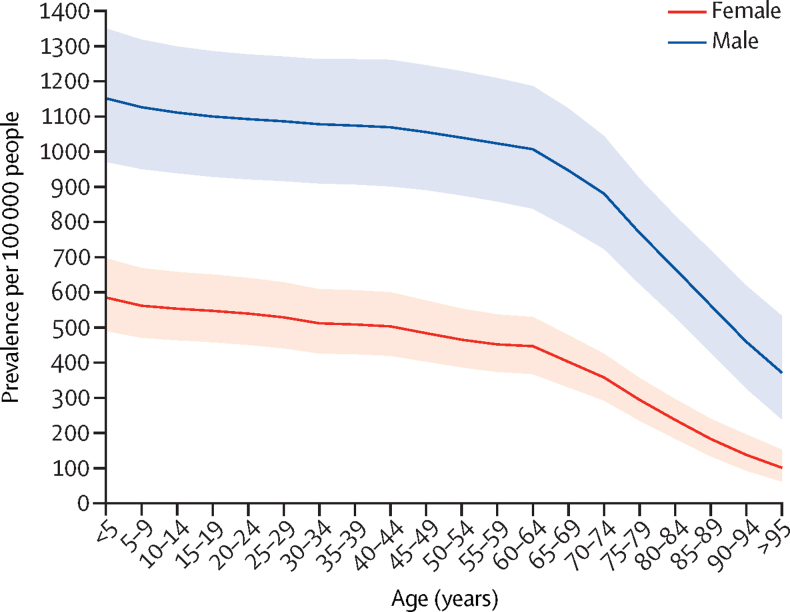
- Global age-standardised prevalence was 788·3 (95% UI 663·8–927·2) per 100 000 people, equivalent to 1064·7 autistic males per 100 000 males and 508·1 autistic females per 100 000 females; the global age-standardised sex ratio was 2·1 to 1.
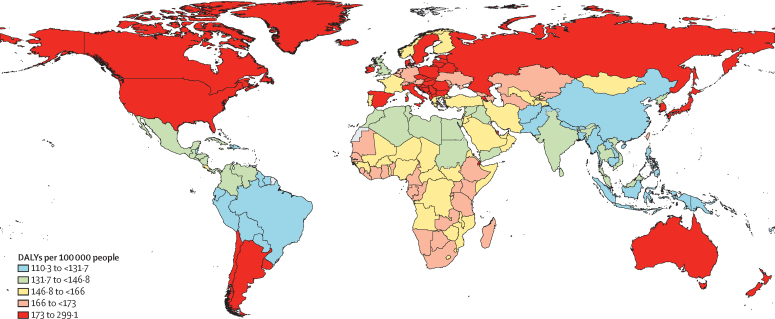
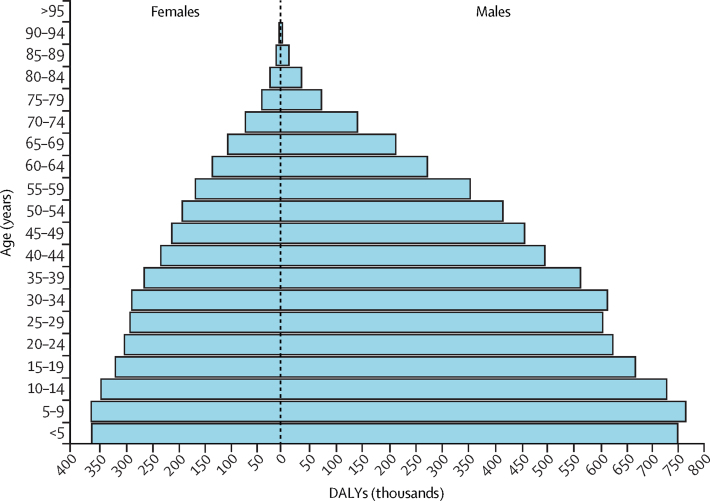
- Autism spectrum disorder accounted for 11·5 million (7·8–16·3) DALYs globally, or 147·6 (100·2–208·2) DALYs per 100 000 people age-standardised; DALYs were composed entirely of YLDs.
- Age-standardised DALY rates ranged from 126·5 (86·0–178·0) per 100 000 in southeast Asia, east Asia, and Oceania to 204·1 (140·7–284·7) per 100 000 in the high-income super-region.
- DALYs emerged for children younger than 5 years (169·2 [115·0–237·4] per 100 000) and decreased with age; autism spectrum disorder was the seventh leading cause of YLDs for children younger than 5 years, eighth for ages 5–14 years, and tenth for ages 15–19 years.
Methods
- A systematic review updated on April 12, 2021 searched PubMed, Embase, PsycINFO, the Global Health Data Exchange, and consulted experts; eligible data reported prevalence, incidence, or excess mortality in general-population-representative samples, and GBD 2021 excluded prevalence estimates relying on passive case finding.
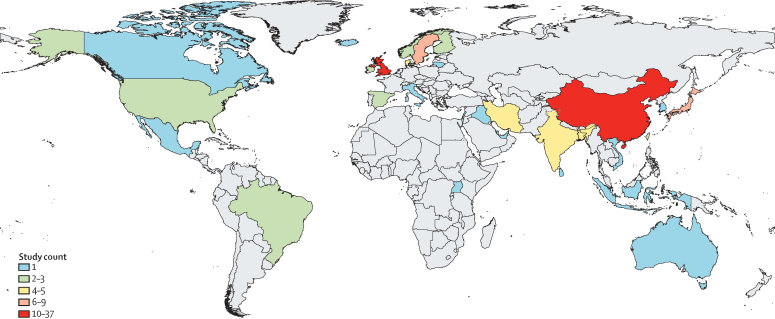
- Prevalence, incidence, and excess mortality were estimated with the Bayesian meta-regression tool DisMod-MR 2.1 by sex, 25 age groups, 1990–2021, and 204 countries and territories; 105 studies reporting 228 prevalence estimates across 33 countries and 11 of 21 regions informed the model.
- Severity proportions came from 19 studies and meta-analyses in R using the metafor package; disability weights were applied to sequela-specific prevalence to calculate YLDs, with comorbidity adjustment, and DALYs were composed entirely of YLDs because no deaths were attributable to autism spectrum disorder as the underlying cause in GBD 2021.
Limitations
- The authors state that geographical coverage was limited: analyses were informed by data from 34 countries (of 204) across 12 (of 21) GBD regions, with wide uncertainty; excluding passive case-finding estimates improved prevalence estimation but reduced coverage, and excess mortality data still relied on passive case finding, which might overestimate excess mortality and underestimate adult prevalence.
- The authors state that disability weights do not vary by location and the lay descriptions used may be simplistic, incomplete, and potentially stigmatising; severity distribution was only an overall pooled estimate with insufficient data by location, age, or sex; GBD does not estimate by gender; and the comorbidity adjustment assumes independent comorbidity.
- The authors state that GBD 2021 could not estimate YLLs for autism spectrum disorder, although a separate analysis estimated 13 400 excess suicide deaths and 621 000 excess YLLs among autistic people globally in 2021. All limitations listed are stated by the authors; no additional limitations are evident from the text.
Model-written summary. Check it against the paper before relying on it.
Integrity signals
Registry
Cites
Statistics
Figures
Verification
Claims the paper makes
16 Valid · 2 Not valid · 6 Not checked · 104 Own results and interpretations
The cited sources support only part of this claim — read each source’s verdict below.
In the paper
“This higher prevalence was derived from a review of case notes from clinical and educational records to establish whether individuals likely met diagnostic criteria for probable autism spectrum disorder.”
§ The global epidemiology and health burden of the autism spectrum: findings from the Global Burden of Disease Study 2021 > Discussion
What the sources say
- Partly supportedcites [26] Maenner MJ Warren Z Williams AR Prevalence and characteristics of autism spectrum disorder among children aged 8 years: autism and developmental disabilities monitoring network, 11 sites, United States, 2020 MMWR Surveill Summ 72 2023 1 14 PMC10042614 36952288 sourceExperimental — accuracy not yet measured
The Methods (Case Ascertainment and Surveillance Case Definition; page not provided) say ADDM staff reviewed medical and education records, supporting the records-review portion. But the 2020 estimate used documented ASD diagnoses, special education classifications, or ICD codes—not a review to determine whether children probably met diagnostic criteria. The Discussion describes symptom-based review as part of the previous case definition. (LLM, conf=0.87)
plainstates a cause- Asserted: passes — The authors put it forward as true.
- Checkable: passes — It can be checked against evidence.
- Load-bearing: unclear — It is unclear whether the paper’s conclusions depend on it.
- Based: passes — The paper gives a reason why it holds.
- Partly supported
The cited sources support only part of this claim — read each source’s verdict below.
In the paper
“The high prevalence in high-income Asia Pacific was driven by high-quality data from South Korea and Japan indicating high prevalence in this region.12, 13, 28, 29”
§ The global epidemiology and health burden of the autism spectrum: findings from the Global Burden of Disease Study 2021 > Discussion
What the sources say
- Not checked — no full text of the sourcecites [12] Kim YS Leventhal BL Koh Y-J Prevalence of autism spectrum disorders in a total population sample Am J Psych 168 2011 904 912 21558103 source
- Partly supportedcites [13] Saito M Hirota T Sakamoto Y Prevalence and cumulative incidence of autism spectrum disorders and the patterns of co-occurring neurodevelopmental disorders in a total population sample of 5-year-old children Mol Autism 11 2020 35 32410700 PMC7227343 sourceExperimental — accuracy not yet measured
The Discussion (page not available) describes rigorous case ascertainment in a Japanese population sample and says its ASD prevalence estimate was higher than estimates in other Asian studies. The Introduction reports a high estimate from a South Korean study. The paper does not assess whether data from those two countries drove a high-income Asia Pacific regional prevalence estimate, and it cautions that its findings may not generalize to other communities. (LLM, conf=0.84)
- Not checked — no full text of the sourcecites [28] Kamio Y Inada N Koyama T Inokuchi E Tsuchiya K Kuroda M Effectiveness of using the modified checklist for autism in toddlers in two-stage screening of autism spectrum disorder at the 18-month health check-up in Japan J Autism Dev Disord 44 2014 194 203 23740200 source
- Not checked — no full text of the sourcecites [29] Sasayama D Kudo T Kaneko W Brief report: cumulative incidence of autism spectrum disorder before school entry in a thoroughly screened population J Autism Dev Disord 51 2021 1400 1405 32696286 source
plainstates a cause- Asserted: passes — The authors put it forward as true.
- Checkable: passes — It can be checked against evidence.
- Load-bearing: unclear — It is unclear whether the paper’s conclusions depend on it.
- Based: passes — The paper gives a reason why it holds.
The cited sources support only part of this claim — read each source’s verdict below.
In the paper
“Autistic individuals are often at an increased risk of experiencing a range of other mental and physical health conditions compared with people who are not autistic.35”
§ The global epidemiology and health burden of the autism spectrum: findings from the Global Burden of Disease Study 2021 > Discussion
What the sources say
- Partly supportedcites [35] Lord C Brugha TS Charman T Autism spectrum disorder Nat Rev Dis Primer 6 2020 5 PMC8900942 31949163 sourceExperimental — accuracy not yet measured
The Introduction says psychiatric and neurological conditions are common in people with ASD. The Co-occurring disorders section says adults with ASD are more likely than adults in the general population to be diagnosed with several physical conditions. It does not make the same comparison for mental health conditions, and its physical-health comparison is specific to adults. (LLM, conf=0.84)
plainstates an association- Asserted: passes — The authors put it forward as true.
- Checkable: passes — It can be checked against evidence.
- Load-bearing: passes — The paper’s conclusions depend on it.
- Based: passes — The paper gives a reason why it holds.
- Partly supported
The cited sources support only part of this claim — read each source’s verdict below.
In the paper
“which was relatively low compared with the prevalence of autism spectrum disorder from active case-finding methods (in which prevalence is estimated using a diagnostic instrument in a general population survey supplemented by a search in case registries or special education facilities).11, 12, 13”
§ The global epidemiology and health burden of the autism spectrum: findings from the Global Burden of Disease Study 2021 > Introduction
What the sources say
- Supportedcites [11] Brugha TS Spiers N Bankart J Epidemiology of autism in adults across age groups and ability levels Br J Psychiatry 209 2016 498 503 27388569 source
The Method describes a general-population survey combined with an intellectual-disability case-register survey, using direct diagnostic assessments. The Results report an adult autism prevalence of 1.1% in England. This paper therefore supplies the active-case-finding prevalence used as a comparator; the comparison with GBD 2019 is the citing authors’ framing, not a finding attributed to this 2016 paper. (LLM, conf=0.86)
- Not checked — no full text of the sourcecites [12] Kim YS Leventhal BL Koh Y-J Prevalence of autism spectrum disorders in a total population sample Am J Psych 168 2011 904 912 21558103 source
- Partly supportedcites [13] Saito M Hirota T Sakamoto Y Prevalence and cumulative incidence of autism spectrum disorders and the patterns of co-occurring neurodevelopmental disorders in a total population sample of 5-year-old children Mol Autism 11 2020 35 32410700 PMC7227343 sourceExperimental — accuracy not yet measured
The Methods (Study design; page unavailable) describe population-wide screening of 5-year-olds in Hirosaki followed by comprehensive diagnostic assessment, and the Results report an adjusted ASD prevalence of 3.22%. This supports using the study as an example of active case-finding prevalence. The Methods do not describe supplementing the survey with a search of case registries or special-education facilities, and the paper does not compare its estimate with GBD 2019. (LLM, conf=0.82)
plain- Asserted: passes — The authors put it forward as true.
- Checkable: passes — It can be checked against evidence.
- Load-bearing: passes — The paper’s conclusions depend on it.
- Based: passes — The paper gives a reason why it holds.
- Supported
The cited sources support only part of this claim — read each source’s verdict below.
In the paper
“the prevalence of autism spectrum disorder e stimated for the USA remains more conservative than findings from the US Centers for Disease Control and Prevention that indicate that one in 36 children aged 8 years in the USA were autistic in 2020.26”
§ The global epidemiology and health burden of the autism spectrum: findings from the Global Burden of Disease Study 2021 > Discussion
What the sources say
- Partly supportedcites [26] Maenner MJ Warren Z Williams AR Prevalence and characteristics of autism spectrum disorder among children aged 8 years: autism and developmental disabilities monitoring network, 11 sites, United States, 2020 MMWR Surveill Summ 72 2023 1 14 PMC10042614 36952288 sourceExperimental — accuracy not yet measured
The Results > ASD Prevalence section reports that one in 36 children aged 8 years had ASD in 2020 across the 11 US surveillance sites. The Limitations section says those findings do not necessarily generalize to all US children aged 8 years, so the nationwide wording is broader than the source supports. The GBD comparison is the citing authors’ framing, not a finding attributed to this source. (LLM, conf=0.86)
hedged- Asserted: passes — The authors put it forward as true.
- Checkable: passes — It can be checked against evidence.
- Load-bearing: unclear — It is unclear whether the paper’s conclusions depend on it.
- Based: passes — The paper gives a reason why it holds.
- Partly supported
76 more claims · 1 with their cited sources checked
Create a free account to see all 128 claims and to verify the 2 references still open.
- It may state two separate claims as one. 28
- Probably not a substantial claim. 27
Self-check
Percentages, sums and reported differences re-computed from the paper’s own numbers.
Each contradiction between two passages listed here was confirmed by an independent check.
Rated major: it would touch a result — a value a result rests on, reported and recomputed p-values on opposite sides of the significance level, two passages that conflict with no sign which is right, or a cited work retracted before this paper was published.
In the paper
§ The global epidemiology and health burden of the autism spectrum: findings from the Global Burden of Disease Study 2021 > Results
“prevalence ranged between 169·2 (115·0–237·4) per 100 000 people in children younger than 5 years”
§ The global epidemiology and health burden of the autism spectrum: findings from the Global Burden of Disease Study 2021 > Abstract > Findings
“emerging for children younger than age 5 years (169·2 [115·0–237·4] DALYs per 100 000 people)”
Rated major: it would touch a result — a value a result rests on, reported and recomputed p-values on opposite sides of the significance level, two passages that conflict with no sign which is right, or a cited work retracted before this paper was published.
In the paper
§ The global epidemiology and health burden of the autism spectrum: findings from the Global Burden of Disease Study 2021 > Results
“Between birth and age 59 years, prevalence ranged between 169·2 (115·0–237·4) per 100 000 people in children younger than 5 years to 132·0 (90·9–183·6) in adults aged 55–59 years. The rate of decline in prevalence increased from aged 60 years with prevalence ranging between 127·6 (87·8–178·2) per 100 000 people in adults aged 60–64 years and 27·9 (17·1–42·8) in adults aged 95 years and older.”
§ The global epidemiology and health burden of the autism spectrum: findings from the Global Burden of Disease Study 2021 > Results
“The global age-standardised prevalence of autism spectrum disorder in 2021 was 788·3 (95% UI 663·8–927·2) per 100 000 people.”
Citations
Cites
The PRISMA 2020 statement: An updated guideline for reporting systematic reviews
Page, M. J., McKenzie, J. E., Bossuyt, P. M., Boutron, I., Hoffmann, T. C., Mulrow, C. D., Shamseer, L., Tetzlaff, J. M., Akl, E. A., Brennan, S. E., et al. (2021) · BMJ · doi:10.1136/bmj.n71 · Cited by 108,283
Preferred reporting items for systematic reviews and meta-analyses: The PRISMA statement
Moher, D., Liberati, A., Tetzlaff, J., Altman, D. G., & the PRISMA Group* (2009) · Annals of Internal Medicine · doi:10.7326/0003-4819-151-4-200908180-00135 · Cited by 37,554
Conducting Meta-Analyses in R with the metafor Package
Viechtbauer, W. (2010) · Journal of Statistical Software · doi:10.18637/jss.v036.i03 · Cited by 20,464
Vos, T., Lim, S. S., Abbafati, C., Abbas, K. M., Abbasi, M., Abbasifard, M., Abbasi-Kangevari, M., Abbastabar, H., Abd-Allah, F., Abdelalim, A., et al. (2020) · The Lancet · doi:10.1016/s0140-6736(20)30925-9 · Cited by 19,358
Self-citationThe PRISMA 2020 statement: an updated guideline for reporting systematic reviews
Page, M. J., McKenzie, J., Bossuyt, P., Boutron, I., Hoffmann, T., mulrow, C., Shamseer, L., Tetzlaff, J., Akl, E., Brennan, S. E., et al. (2020) · doi:10.31222/osf.io/v7gm2_v1 · Cited by 8,090
The PRISMA 2020 statement: an updated guideline for reporting systematic reviews
Page, M. J., McKenzie, J., Bossuyt, P., Boutron, I., Hoffmann, T., mulrow, C., Shamseer, L., Tetzlaff, J., Akl, E., Brennan, S. E., et al. (2020) · doi:10.31222/osf.io/v7gm2 · Cited by 5,177
Ferrari, A. J., Santomauro, D. F., Aali, A., Abate, Y. H., Abbafati, C., Abbastabar, H., Abd ElHafeez, S., Abdelmasseh, M., Abd-Elsalam, S., Abdollahi, A., et al. (2024) · The Lancet · doi:10.1016/s0140-6736(24)00757-8 · Cited by 5,112
Self-citationWhat Is the Male-to-Female Ratio in Autism Spectrum Disorder? A Systematic Review and Meta-Analysis
Loomes, R., Hull, L., & Mandy, W. P. L. (2017) · Journal of the American Academy of Child & Adolescent Psychiatry · doi:10.1016/j.jaac.2017.03.013 · Cited by 2,804
Maenner, M. J., Warren, Z., Williams, A. R., Amoakohene, E., Bakian, A. V., Bilder, D. A., Durkin, M. S., Fitzgerald, R. T., Furnier, S. M., Hughes, M. M., et al. (2023) · MMWR. Surveillance Summaries · doi:10.15585/mmwr.ss7202a1 · Cited by 2,706 · cited 1×
“26 This higher prevalence was derived from a review of case notes from clinical and educational records to establish whether individuals likely met diagnostic criteria for probable autism spectrum disorder.”
Which terms should be used to describe autism? Perspectives from the UK autism community
Kenny, L., Hattersley, C., Molins, B., Buckley, C., Povey, C., & Pellicano, E. (2016) · Autism · doi:10.1177/1362361315588200 · Cited by 1,941 · cited 1×
“The hierarchy of metaanalyses that we did is shown in appendix 2 (pp 3–4, 8).”
Research works printed but not linked: 2
- American Psychiatric Association Diagnostic and statistical manual of mental disorders: DSM-5-TR 5th edition, text revision 2022 American Psychiatric Association Publishing Washington, DC
- Flaxman A Vos T Murray C An integrative metaregression framework for descriptive epidemiology 1st edn. 2015 University of Washington Press Seattle
Cited by
Szücs, A., van der Lubbe, S. C. C., de la Torre, J. A., Valderas, J. M., Hay, S. I., Bisignano, C., Morgan, B. W., Acharya, S., Adnani, Q. E. S., Apostol, G. L. C., et al. (2025) · The Lancet Public Health · doi:10.1016/s2468-2667(25)00098-2 · Cited by 79
Self-citationWijeratne, T., Oh, J., Kim, S., Yim, Y., Kim, M. S., Shin, J. I., Oh, Y., Jung, R., Kim, Y. S., Smith, L., et al. (2025) · Cell Reports Medicine · doi:10.1016/j.xcrm.2025.102348 · Cited by 65
Self-citationAging Across the Autism Spectrum
Stewart, G. R., & Happe, F. G. E. (2025) · Annual Review of Developmental Psychology · doi:10.1146/annurev-devpsych-111323-090813 · Cited by 39
Automated AI based identification of autism spectrum disorder from home videos
Kim, D. Y., Do, R., Shin, Y., Sim, H., Kim, H., Cho, S., Lee, G., Park, S., Jang, B., Lim, H., et al. (2025) · npj Digital Medicine · doi:10.1038/s41746-025-01993-5 · Cited by 29
Self-citationJang, W., Cho, H., Kim, S., Boyer, L., Fond, G. B., Kang, J., Nehs, C. J., Pizzol, D., Lee, S., Oh, J., et al. (2025) · Journal of Affective Disorders · doi:10.1016/j.jad.2025.120201 · Cited by 17
Self-citationZhang, Z., Xue, X., Liu, P., Zhang, C., Li, J., Liu, Y., Jiang, Y., Lv, S., Wang, L., Zhou, H., et al. (2025) · Photodiagnosis and Photodynamic Therapy · doi:10.1016/j.pdpdt.2025.104712 · Cited by 15
Pinna, G., & Bortolato, M. (2025) · Neuroscience & Biobehavioral Reviews · doi:10.1016/j.neubiorev.2025.106438 · Cited by 13
Global prevalence of autism in changing times
Charman, T. (2024) · The Lancet Psychiatry · doi:10.1016/s2215-0366(24)00412-7 · Cited by 13
Gharaibeh, M., Ayasrah, M. N., Al‐Rousan, A. H., Khasawneh, Y. J. A., & Khasawneh, M. A. S. (2025) · Clinical Psychology & Psychotherapy · doi:10.1002/cpp.70100 · Cited by 11
Xun, N., Zhang, X., Zhang, H., et al. (2025) · Environmental Pollution · doi:10.1016/j.envpol.2025.126810 · Cited by 8
Multimodal Morphometric Similarity Network Analysis of Autism Spectrum Disorder
CASALE, A. D., Shehu, D., Rossi‐Espagnet, M. C., Zocchi, C., Bilotta, I., Arena, J. F., Alcibiade, A., Adriani, B., Longo, D., Gandolfo, C., et al. (2025) · Brain Sciences · doi:10.3390/brainsci15030247 · Cited by 7
He, J., Gao, Z., Li, X., Zhao, L., Tian, X., & Gao, B. (2025) · Brain Research · doi:10.1016/j.brainres.2025.149656 · Cited by 7
Drake‐Brockman, T. F. E., Dodd, M., Cooney, S., Stepanovic, B., Sommerfield, D. L., Locke, V., Sommerfield, A., & von Ungern-Sternberg, B. S. (2025) · Acta Anaesthesiologica Scandinavica · doi:10.1111/aas.70135 · Cited by 12
Lin, D., Shi, Z., Hao, Z., Xie, X., Fang, J., Li, M., Zhang, W., Luo, S., & Xue, A. (2025) · Frontiers in Public Health · doi:10.3389/fpubh.2025.1681565 · Cited by 7
Bacterial genomic structural variations in children with autism serve as diagnostic biomarkers
Liu, W., Lu, Y., Ng, S. C., Chan, F. K., Sung, J. J. Y., & Yu, J. Q. (2026) · Gut · doi:10.1136/gutjnl-2025-337280 · Cited by 6
“1 The dramatic rise in the prevalence of ASD in children has emerged as a major public health challenge, 2 while the underlying pathogenesis remains poorly understood.”
Autism is on the rise: what’s really behind the increase?
Pearson, H. (2025) · Nature · doi:10.1038/d41586-025-02636-1 · Cited by 7
Liu, L., Zhou, X., Ma, Z., Liu, R., Zhang, Y., Wang, Y., Liu, Y., Xia, X., & Wang, J. (2025) · Toxics · doi:10.3390/toxics13060465 · Cited by 6
Georgiou, G. P. (2025) · Acoustics · doi:10.3390/acoustics7040072 · Cited by 4
“Globally, ASD affects roughly 1 in 100 children and about 1 in 127 individuals across the lifespan [2,3].”
Gastrointestinal health and nutritional strategies in autism spectrum disorder
Wu, Y., Wong, O. W. H., Chen, S., Ng, S. C., Su, Q., & Chan, F. K. L. (2025) · Journal of Gastroenterology · doi:10.1007/s00535-025-02269-1 · Cited by 7
“Autism spectrum disorder (ASD) represents a clinically heterogeneous neurodevelopmental condition that affects 1 out of 68 children, according to the latest epidemiological data [1].”
Ryszkiewicz, P., Malinowska, B., & Jasińska-Stroschein, M. (2025) · Cells · doi:10.3390/cells14151180 · Cited by 6
Ghai, S., Eshetu, A., Corbett, A., Ballard, C. G., Aarsland, D., Hampshire, A., O’Nions, E., Mandy, W., Stott, J. C. H., Stewart, G. R., et al. (2025) · The Gerontologist · doi:10.1093/geront/gnaf096 · Cited by 5
“Recent estimates suggest that Autism has a global prevalence of ~1% (Santomauro et al., 2024).”
Yang, F., Chen, R., Xiong, J., & Liu, B. (2025) · Child Psychiatry & Human Development · doi:10.1007/s10578-025-01880-w · Cited by 6
Zhao, Z., Fan, Y., Sun, P., Zhang, S., Xu, M., Li, J., & Xu, P. (2025) · Frontiers in Nutrition · doi:10.3389/fnut.2025.1613737 · Cited by 7
Chidera Stanley Anthony, M., Agbo, C. E., Ogieuhi, I. J., Ajekiigbe, V. O., Agu, M. C., Jagunmolu, H. A., Oyetola, E. O., Adejumo, T. J., Umenzeakor, K. H., Akinmeji, O. S., et al. (2025) · European Child & Adolescent Psychiatry · doi:10.1007/s00787-025-02843-1 · Cited by 3
Wu, Y., Chan, S. S. M., Leung, P. W. L., Lo, H., Ho, S. W. S., Mo, F. Y. M., Ho, C. S. W., Shea, C. K., Su, Q., Leung, T. F., et al. (2025) · Journal of Autism and Developmental Disorders · doi:10.1007/s10803-025-07133-y · Cited by 6
Lima, J. G., Macedo, M. T. S., Baldo, T. D. O. F., & Baldo, M. P. (2026) · Quality of Life Research · doi:10.1007/s11136-026-04176-1 · Cited by 3
Wang, Y., Lv, R., Jiang, Z. H. E. N. G. M., Liu, Y., Zhang, J., Zhao, Z., Liu, Y., Zheng, Y., Liu, B., Clauw, D., et al. (2026) · Molecular Psychiatry · doi:10.1038/s41380-026-03542-2 · Cited by 10
The inactive X chromosome as a female protector in autism and beyond
Talukdar, M., & Page, D. C. (2026) · Nature Genetics · doi:10.1038/s41588-026-02534-w · Cited by 8
Bridging gaps in autism spectrum disorder care
Widiastuti, A. A., Atmoko, A., Eva, N., et al. (2025) · The Lancet Psychiatry · doi:10.1016/s2215-0366(25)00093-8 · Cited by 3
Liu, J., Xie, X., Li, Y., Pu, Y., Li, Y., & Yang, L. (2025) · Frontiers in Psychiatry · doi:10.3389/fpsyt.2025.1619085 · Cited by 5
Tian, W., Yan, G., Zhang, X., Zhang, Y., Zhang, J., Peng, J., Zhao, W., Shui, D., Zhou, Y., Liu, T., et al. (2025) · Molecular Psychiatry · doi:10.1038/s41380-025-03172-0 · Cited by 6
Long, Z., Liu, J. S., & Sun, R. (2025) · Current Opinion in Pharmacology · doi:10.1016/j.coph.2025.102579 · Cited by 3
Radiomics vs. Deep Learning in Autism Classification Using Brain MRI: A Systematic Review
Nalentzi, K., Ioannidis, G., Bougias, H., Bisdas, S., Balafouta, M., Sgouropoulou, C., Klontzas, M. E., Marias, K., & Papavasileiou, P. (2025) · Applied Sciences · doi:10.3390/app151910551 · Cited by 5
Zhang, J., Han, Y., Li, W., Zhang, Q., Chen, D., & Bao, C. (2025) · Journal of Affective Disorders · doi:10.1016/j.jad.2025.120453 · Cited by 3
Philippou, S., Voskarides, K., & Chatzittofis, A. (2025) · Brain and Behavior · doi:10.1002/brb3.70999 · Cited by 2
Zhao, Y., Chen, J., Zhu, S., Xu, Y., Zhu, J., Yang, J., Zhou, W., Yang, Y., Lin, M., Chen, Q., et al. (2025) · The ISME Journal · doi:10.1093/ismejo/wraf238 · Cited by 2
“Coronary artery disease (CAD), resulting from atherosclerotic lesions in coronary arteries, remains the leading cause of mortality and a major contributor to global disability [1, 2].”
Paediatric neurological care in Sub-Saharan Africa: Current status and future directions
Frimpong, M., Mohamed, S., Ibukun, M. O., Asieduwaa, O. Y., & Wireko, A. A. (2025) · Brain and Development · doi:10.1016/j.braindev.2025.104490 · Cited by 2
Deshpande, N. R., Nair, S., Taylor, E. J., Someren, E. J. W. V., & Chellappa, S. L. (2025) · Journal of Affective Disorders · doi:10.1016/j.jad.2025.121019 · Cited by 3
Applying artificial intelligence in neurodevelopmental disorders management and research
Mohamed, S., Ben-Jaafar, A., Frimpong, M., Roy, S., Sanker, V., Nkrumah-Boateng, P. A., Imran, S., Mumeen, A. A., Mohamed, S., & Awuah, W. A. (2026) · European journal of medical research · doi:10.1186/s40001-025-03740-8 · Cited by 9
“ASD ranks among the top ten causes of non-fatal health burden in individuals under 20 years, reinforcing the global need for early screening and sustained support services [34].”
Nuzum, E., Medeisyte, R., Eshetu, A., Hoare, S., Corbett, A., Ballard, C. G., Hampshire, A., O’Nions, E., John, A., Stewart, G. R., et al. (2026) · Nature Mental Health · doi:10.1038/s44220-025-00579-0 · Cited by 3
“…more men with high autistic traits than women, so the high AST group included comparable numbers of males and females, suggesting that the AQ-10 provided a relatively gender-inclusive measure of autistic traits in this sample, which is consistent with recent meta-analytic prevalence estimates 1 .”
Yang, K., Geng, Y., Zhou, W., Zhang, L., Xu, Z., Wang, J., Li, F., & Qiu, Z. (2026) · Biological Psychiatry · doi:10.1016/j.biopsych.2026.03.999 · Cited by 3
Microbiome biomarkers in autism spectrum disorder: Toward prediction, diagnosis, and prognosis
Wong, O. W. H., Zheng, Z., Wang, M., Cao, A., Chan, F. K. L., Ng, S. C., & Su, Q. (2026) · Cell Reports Medicine · doi:10.1016/j.xcrm.2026.102780 · Cited by 3
Lepski, G., & Arévalo, A. L. (2026) · Frontiers in Cellular Neuroscience · doi:10.3389/fncel.2026.1844360 · Cited by 3
“…people worldwide were autistic in 2021 (with burden persisting across the lifespan), while a large systematic review similarly supports a global prevalence on the order of ~1% of children, though estimates vary substantially by region and methodology (Santomauro et al., 2024; Zeidan et al., 2022).”
Wang, X., Tong, J., Lu, M., Luo, L., Liu, Y., Huang, Q., Lv, P., Zheng, Y., Gan, H., Geng, M., et al. (2026) · Environmental Science & Technology · doi:10.1021/acs.est.6c01402 · Cited by 2
Machine learning classification of autistic adults using vowel acoustic features
Georgiou, G. P., & Paphiti, M. (2026) · Research in Autism · doi:10.1016/j.reia.2026.202995 · Cited by 2
Plasma exosomal miR-30b-5p attenuates neuroinflammation in a rat model of autism spectrum disorder
Zheng, Z., Wu, Q., & Zhang, X. (2025) · Frontiers in Psychiatry · doi:10.3389/fpsyt.2025.1630782 · Cited by 1
Lundwall, R. A., Cutrer‐Párraga, E. A., Lundwall, R., Squires, M. E., Beck, J. S., & Gabrielsen, T. P. (2025) · Research in Autism · doi:10.1016/j.reia.2025.202725 · Cited by 1
Advancing Autism Spectrum Disorder Diagnosis Through Machine Learning
Uday Shankar., G., Radha, N., Ahamad, T. R., & Patil, P. (2025) · International Conference on Intelligent Algorithms for Computational Intelligence Systems (IACIS) · doi:10.1109/iacis65746.2025.11211005 · Cited by 1
“In traditional tools, including the Autism Diagnostic Observation Schedule (ADOS) and Autism Diagnostic Interview-Revised (ADI-R) are strongly tied to the expert experience of the clinician and observation of the behavior, and often lead to essential decisions being made late or inconsistently [3].”
Wang, L., Li, W., Yao, Y., Jiang, X., Ma, D., Liu, Y., Deng, Y., Sun, L., Li, H., Zhao, Y., et al. (2025) · Environmental Research · doi:10.1016/j.envres.2025.123274 · Cited by 1
Carty, A., Green, R. R., Goodman, C. V., McLaughlin, J. R., Hu, H., Lanphear, B. P., Martinez-Mier, E. A., MacFarlane, A. J., Muckle, G., Brook, J. R., et al. (2025) · Environmental Health · doi:10.1186/s12940-025-01237-9 · Cited by 2
Xie, Y., Shao, Y., Li, Y., Liu, H. Y., Zhang, B., Wu, J., Jiang, C., & Wu, H. (2025) · International Journal of Developmental Disabilities · doi:10.1080/20473869.2025.2581660 · Cited by 4
Long, J., Liao, X., Chen, J., Han, K., Tang, Z., Dong, L., Wang, X., Liu, J., Zhang, Y., & Zhang, H. (2025) · Food and Chemical Toxicology · doi:10.1016/j.fct.2025.115882 · Cited by 1
Management of Autism Spectrum Disorder through Ayurveda
Annasaheb, G., Seshagiri, S., & Dhayagude, K. T. (2025) · Journal of Ayurveda Case Reports · doi:10.4103/jacr.jacr_158_24 · Cited by 1
Robles, V., Valentí, M., Mendibe, M., Hidalgo, Á., Albamonte, F., Berrocoso, E., Lara, M., Calvo, R., López, C., Deshpande, O., et al. (2025) · Neuroscience Applied · doi:10.1016/j.nsa.2025.106879 · Cited by 3
Wan, L., Wu, Y., Tang, Y., Guo, X., Sun, L., & He, Q. (2026) · Scientific Reports · doi:10.1038/s41598-025-34876-6 · Cited by 1
Zhu, H., Gan, Y., Ye, J., Li, Y., Yu, J. Z., & Li, X. (2026) · BMJ Open · doi:10.1136/bmjopen-2025-102277 · Cited by 2
Uglik‐Marucha, N., Show, S., Vitoratou, S., Happe, F. G. E., & Belcher, H. (2026) · PLoS ONE · doi:10.1371/journal.pone.0337600 · Cited by 4
Long, J., Liao, X., Han, K., Chen, J., Tang, Z., Wang, W., Wang, X., Qianqian, C., Zhang, X., & Zhang, H. (2026) · Cellular and Molecular Life Sciences · doi:10.1007/s00018-026-06096-2 · Cited by 3
Xu, Z. N., Ni, Y., Chu, M., Yang, J., Hongchao, Q., Shi, L., & Wang, F. (2026) · Scientific Reports · doi:10.1038/s41598-026-40865-0 · Cited by 1
Mohammad, S. R., Kadaei, F., & Mohkam, M. (2026) · International Journal of Medical Informatics · doi:10.1016/j.ijmedinf.2026.106378 · Cited by 1
Zhu, H., Yan, H. K., Ye, J., Li, Y., Xiao, L., Yu, Z., Wang, X., & Li, X. (2026) · Pediatric Research · doi:10.1038/s41390-026-04843-6 · Cited by 4
Griffin, B., Gosrani, R., & Eccles, J. (2026) · Evolutionary Applications · doi:10.1111/eva.70221 · Cited by 1
“They also emerge early in development and are relatively prevalent in the population, with estimated rates of approximately 5%–8% for ADHD (Song et al. 2021; Ayano et al. 2023; Salari et al. 2023) and 0.6%– 3% for autism (Global Burden of Disease Study 2021 Autism Spectrum Collaborators 2025; Shaw et al. 2025) (Box 2).”
InfluentialEstablishing the Evidence Base of the Power Card Strategy for Children with ASD: A Meta-Analysis
Gülboy, E., & Bayrakdar, U. (2026) · Review Journal of Autism and Developmental Disorders · doi:10.1007/s40489-026-00549-x · Cited by 1
Martelli, M. E., Colella, S., Meloni, R., Gigliotti, F., Rosato, A., Panella, M., & Sogos, C. (2026) · NeuroSci · doi:10.3390/neurosci7020041 · Cited by 1
Quality-of-life assessment in autistic adults with lower support needs: gaps and emerging challenges
Fernández, M., Wojcik, D. Z., & Díez, E. G. (2026) · Frontiers in Psychiatry · doi:10.3389/fpsyt.2026.1756393 · Cited by 4
Getzler, I., Malachy, A., Fremder, A., & Stolar, O. E. (2026) · Journal of Autism and Developmental Disorders · doi:10.1007/s10803-026-07282-8 · Cited by 2
Herrero-Martín, J., Fonseca, D., Mauri, S. A., Caro-Via, S., & Canaleta, X. (2026) · International Journal of Human-Computer Interaction · doi:10.1080/10447318.2026.2655930 · Cited by 1
Adamou, M., Kehagias, A., & Antoniou, G. (2026) · Frontiers in Psychiatry · doi:10.3389/fpsyt.2026.1787120 · Cited by 1
Organoids: From Bench to Bedside Applications
Li, K., Cao, R., Li, M., Tian, Z., Fan, H., Hong, B., & Liu, X. (2026) · MedComm · doi:10.1002/mco2.70768 · Cited by 2
Liu, Y., Yan, Y., Wu, C., et al. (2026) · Journal of Chromatography B · doi:10.1016/j.jchromb.2026.125134 · Cited by 1
Autism Spectrum Disorder: Integrating Genetic and Environmental Risk
Kamijo, S., Miwa, H., & Ikeda, K. (2026) · Cells · doi:10.3390/cells15110985 · Cited by 3
Iron dysregulation in the central nervous system: implications for autism spectrum disorder
Bjørklund, G., Harutyunyan, H. S., Mkrtchyan, Z., Baghdasaryan, E., Avetisyan, T., Meguid, N. A., Hussein, F., & Yenkoyan, K. B. (2026) · BioMetals · doi:10.1007/s10534-026-00833-7 · Cited by 3
Tsen, A. S. F., Bantalani, M. A., Rahim, M. N. A., Amat, S. Z. A., & Mokti, K. (2026) · Family Medicine and Community Health · doi:10.1136/fmch-2026-004072 · Cited by 1
KOÇAK, Ç. V., Ergin, M., Koçak, C., Nebol, M. S., Erbaş, M. K., Canlı, U., & Aldhahi, M. I. (2026) · Healthcare · doi:10.3390/healthcare14131838 · Cited by 1
“The global prevalence of ASD is estimated to be approximately 61.8 million people in 2021 (95% uncertainty range: 52.1–72.7 million), which corresponds to approximately 1 in 127 people worldwide [2].”
InfluentialJacob, U. S., Nurhayati, S., & Maguvhe, M. O. (2026) · Frontiers in Sports and Active Living · doi:10.3389/fspor.2026.1793290 · Cited by 1
“Quantify the magnitude of intervention effects 4.”
InfluentialArtificial intelligence, autism care, and health equity: a public health narrative review
Han, X., Weng, L., & Xu, H. (2026) · Frontiers in Public Health · doi:10.3389/fpubh.2026.1898818 · Cited by 1
Genomic landscape of rare variants in a Chinese autism cohort and discovery of novel risk genes
Tan, S., Lyu, Y., Sun, X., Guo, R., Zhang, X., Song, Z., Chen, K., Li, C., Zheng, Y., Jiang, C., et al. (2026) · Molecular Psychiatry · doi:10.1038/s41380-026-03754-6 · Cited by 2
Heterogeneity in autism — challenges and opportunities
Yu, X. (2026) · Current Opinion in Neurobiology · doi:10.1016/j.conb.2026.103250 · Cited by 1
Wilson, R. J., Panesar, H. K., Dursun, İ., Mendieta, R., Andrew, P. M., Li, X., Lehmler, H., & Lein, P. J. (2026) · Frontiers in Toxicology · doi:10.3389/ftox.2026.1816944 · Cited by 1
Yang, J., Gao, L., Strodl, E. S., Chen, J., Tong, F., & Chen, W. (2025) · Nutrients · doi:10.3390/nu17050836 · Cited by 1
Liu, M., Ma, G., Zhang, Y., Li, K., Li, F., Peng, T., Qin, C., López-Huerta, V. G., Arias-García, M. A., Wang, W., et al. (2025) · Fundamental Research · doi:10.1016/j.fmre.2025.09.011 · Cited by 1
Social isolation and loneliness in adults over 50 with high autistic traits
Medeisyte, R., Nuzum, E., Eshetu, A., Hoare, S., Corbett, A., Ballard, C., Hampshire, A., Onions, E., John, A., Stott, J., et al. (2026) · Research in Neurodiversity · doi:10.21203/rs.3.rs-6838818/v1 · Cited by 1
Muse, H. L., Luedecke, E., Mandy, W., Charlton, R. A., Happe, F. G. E., & Stewart, G. R. (2026) · Research Square · doi:10.21203/rs.3.rs-9092197/v1 · Cited by 1
A Survey on Privacy-Preserving Emotion and Attention Recognition for Children with ASD
Bruno, H., Ramos, R., Machado, M., Palhares, L., Vale, A., Barbosa, B., Souza, I., & Grassiotto, F. (2026) · 2026 11th International Digital Public Health Conference (DPH) · doi:10.1109/dph70309.2026.11649985
“Impacting about 61.8 million individuals in the world [2], ASD imposes complex and urgent challenges on global health and education systems.”
InfluentialFunctional connectivity; ASDQ screen; health burden of autism
Adams, J. U. (2025) · The Transmitter · doi:10.53053/ucpe4350
Zhou, X., Liu, J., Xia, X., Wang, L., & Li, X. (2025) · Research Square · doi:10.21203/rs.3.rs-5827863/v1
Advancing Dermatologic Equity for Individuals With Autism Through Awareness and Structural Reform
Misra, R., Chang, R., Adebiyi, O., Orbe, M., Pham, D., Miner, K., & Frasier, K. M. (2025) · Cureus · doi:10.7759/cureus.83829 · Cited by 4
Fonseca, D., Herrero-Martín, J., Canaleta, X., & Caro-Via, S. (2025) · SSRN Electronic Journal · doi:10.2139/ssrn.5247478
Tafla, T. L., Woodcock, K. A., Mecca, T. P., & Teixeira, M. C. T. V. (2025) · Child Care Health and Development · doi:10.1111/cch.70098
Yu, Z., Luo, Z., Zheng, J., Lu, L., Tang, C., & Qu, C. (2025) · Brain Research · doi:10.1016/j.brainres.2025.149781
“(Santomauro, 2024) Moreover, individuals with autism and their families are confronted with significant financial challenges in a multitude of domains, resulting in considerable overall lifetime costs.”
Autismo no Reddit: um estudo de sentimentos e tópicos por meio de modelos de aprendizado de máquina
Miranda, C., Alves, J. D. S., da Silva, L. R. S., Bergamo, T. M. D. M., Matos, F. B., Silva, A. C., Santos, L. A. O., & Camargos, A. S. (2025) · Caderno Pedagógico · doi:10.54033/cadpedv22n8-117
Cai, D., Cai, M., Cai, X., Wang, M., & Zou, Q. (2025) · International Journal of Developmental Disabilities · doi:10.1080/20473869.2025.2525936
Stewart, G., Eshetu, A., Ghai, S., Corbett, A., Ballard, C. G., Hampshire, A., O’Nions, E., Mandy, W., Stott, J. C. H., John, A., et al. (2026) · Nature Mental Health · doi:10.1038/s44220-026-00654-0 · Cited by 2
“2,23 .”
Gestational diabetes linked to autism in study: what scientists say
Fieldhouse, R. (2025) · Nature · doi:10.1038/d41586-025-03024-5
Sleep Problems and Mental Health in Middle‐Aged and Older Autistic and Non‐Autistic Adults
Roper, S., Barbinta, A., Quinton, A. M. G., Charlton, R. A., Happe, F. G. E., & Stewart, G. R. (2026) · International Journal of Geriatric Psychiatry · doi:10.1002/gps.70259 · Cited by 1
Classification of Autism Spectrum Disorder Subtypes based on Graph Attention Network
Wang, S., Martínez-Tejada, L. A., & Yoshimura, N. (2025) · International Conference on Artificial Intelligence, Computer, Data Sciences and Applications (ACDSA) · doi:10.1109/acdsa65407.2025.11166344
“As estimated in the Global Burden of Disease Study in 2021, approximately 61.8 million individuals suffer from ASD [1].”
InfluentialSyriopoulou–Delli, C. K., & Chaudhuri, D. (2025) · Journal of Autism and Developmental Disorders · doi:10.1007/s10803-025-07047-9 · Cited by 1
Arenas, D. L., Viduani, A. C., Rosa, R. F. M., & Graeff‐Martins, A. S. (2025) · Autism in Adulthood · doi:10.1177/25739581251384466
Guo, J., Zhang, H., Wang, B., Liang, Z., Li, X., Li, R., Ma, Y., Chen, L., Yu, Y., Tian, Y., et al. (2025) · Research Square · doi:10.21203/rs.3.rs-7626996/v1
O’Reilly, M. J., Drewett, A., & Tromans, S. J. (2025) · Discourse & Society · doi:10.1177/09579265251376045
“While there are multiple neurodevelopmental conditions, two of the most common are autism, with a global prevalence of approximately 0.8% (see Santomauro et al., 2025), and ADHD, with a global prevalence of approximately 5.3% (see Polanczyk et al., 2007).”
InfluentialSelf-citation
Metadata
- Authors
- Santomauro, D. F., Erskine, H. E., Mantilla Herrera, A. M., Miller, P. A., Shadid, J., Hagins, H., Addo, I. Y., Adnani, Q. E. S., Ahinkorah, B. O., Ahmed, A., Alhalaiqa, F. N., Ali, M. U., Al-Marwani, S., Almazan, J. U., Almustanyir, S., Alvi, F. J., Amer, Y. S. A. D., Ameyaw, E. K., Amiri, S., Andrei, C. L., Angappan, D., Antony, C. M., Aravkin, A. Y., Ashraf, T., Ayuso-Mateos, J. L., Barrow, A., Batra, K., Bemanalizadeh, M., Bhagavathula, A. S., Bhaskar, S., Bhatti, J. S. S., Bolla, S. R., Britton, G., Castaldelli-Maia, J. M., Catalá-López, F., Caye, A., Chattu, V. K., Chong, Y. Y., Ciobanu, L. G., Cortese, S., Cruz-Martins, N., Dachew, B. A., Dai, X., Darwish, A. H., Dashti, M., de la Torre-Luque, A., Diaz, D., Ding, D. D., Dy, A. B. C., Dziedzic, A. M., Ebrahimi Meimand, S., El Meligy, O. A. A., El Sayed, I., Elgar, F. J., Fagbamigbe, A. F., Faris, P. S., Faro, A., Ferreira, N., Filip, I., Fischer, F., Gandhi, A. P., Ganesan, B., Gebregergis, M. W., Gebrehiwot, M., Ghaderi Yazdi, B., Ghasemi, M.-R., Ghasemzadeh, A., Gunturu, S., Gupta, V. B., Gupta, V. K., Halim, S. A., Hall, B. J., Han, F., Haro, J. M., Hasaballah, A. I., Hay, S. I., Hedley, D., Helfer, B., Hossain, M. M., Hwang, B.-F., Ibrahim, U. I., Ilaghi, M., Islam, M. R., Islam, S. M. S., Iyer, M., Jaggi, K., Jahrami, H., Jamshidi, E., Khaleghi, A., Khan, A. A., Khan, M. J., Khidri, F. F., Kim, K., Koh, H. Y., Kumar, M., Landires, I., Le, L. K. D., Lee, S. W., Li, Z., Lim, S. S., Martinez-Raga, J., Marzo, R. R., Matthew, I. L., Maugeri, A., Mestrovic, T., Mitchell, P. B., Mohammed, S., Mokdad, A. H., Monasta, L., Montazeri, F., Mrejen, M., Mughal, F., Murray, C. J. L., Myung, W., Nauman, J., Newton, C. R. J., Nguyen, H. L. T., Nri-Ezedi, C. A., Nwatah, V. E., Oladunjoye, A. O., Olufadewa, I. I., Ordak, M., Otstavnov, N., Palma-Alvarez, R. F., Parikh, R. R., Park, S., Pasovic, M., Patel, J., Pereira, M., Pereira, M. O., Phillips, M. R., Polanczyk, G. V., Pourfridoni, M., Puvvula, J., Radfar, A., Rahim, F., Rahman, M., Rahman, M. A., Rahmani, A. M., Rahmati, M., Ratan, Z. A., Rhee, T. G., Ronfani, L., Roy, P., Saddik, B. A., Saghazadeh, A., Sakshaug, J. W., Salehi, S., Samuel, V. P., Sankararaman, S., Saravanan, A., Satpathy, M., Schumacher, A. E., Schwebel, D. C., Šekerija, M., Shafiee, A., Shahabi, S., Shamim, M. A., Silva, J. P., Solomon, Y., Sumpaico-Tanchanco, L. B. C., Swain, C. K., Tabarés-Seisdedos, R., Temsah, M.-H., Tromans, S. J., Tzivian, L., Varma, R. P., Vinueza Veloz, A. F., Vinueza Veloz, M. F., Walde, M. T., Waqas, M., Wickramasinghe, N. D., Yesodharan, R., Yon, D. K., Youm, Y., Zaman, B. A., Zeng, Y., Zielińska, M., Whiteford, H. A., Brugha, T., Scott, J. G., Vos, T., & Ferrari, A. J.
- Corresponding author
- Santomauro, Damian F
- ORCID
- Santomauro, Damian F
- Erskine, Holly E
- Miller, Paul Anthony
- Shadid, Jamileh
- Addo, Isaac Yeboah
- Ahinkorah, Bright Opoku
- Ahmed, Ayman
- Alhalaiqa, Fadwa Naji
- Ali, Mohammed Usman
- Al-Marwani, Sabah
- Almazan, Joseph Uy
- Almustanyir, Sami
- Amer, Yasser Sami Abdel Dayem
- Ameyaw, Edward Kwabena
- Amiri, Sohrab
- Angappan, Dhanalakshmi
- Aravkin, Aleksandr Y
- Ashraf, Tahira
- Barrow, Amadou
- Batra, Kavita
- Bemanalizadeh, Maryam
- Bhagavathula, Akshaya Srikanth
- Bhaskar, Sonu
- Bhatti, Jasvinder Singh Singh
- Bolla, Srinivasa Rao
- Britton, Gabrielle
- Catalá-López, Ferrán
- Caye, Arthur
- Chattu, Vijay Kumar
- Chong, Yuen Yu
- Ciobanu, Liliana G
- Cortese, Samuele
- Dachew, Berihun Assefa
- Dai, Xiaochen
- Darwish, Amira Hamed
- Dashti, Mohsen
- Ding, Delaney D
- Dy, Angel Belle Cheng
- Dziedzic, Arkadiusz Marian
- Elgar, Frank J
- Fagbamigbe, Adeniyi Francis
- Faris, Pawan Sirwan
- Ferreira, Nuno
- Filip, Irina
- Fischer, Florian
- Gandhi, Aravind P
- Ganesan, Balasankar
- Gebrehiwot, Mesfin
- Ghasemi, Mohammad-Reza
- Ghasemzadeh, Afsaneh
- Gunturu, Sasidhar
- Gupta, Veer Bala
- Gupta, Vivek Kumar
- Hall, Brian J
- Han, Fulei
- Haro, Josep Maria
- Hasaballah, Ahmed I
- Hay, Simon I
- Hedley, Darren
- Helfer, Bartosz
- Hossain, Md Mahbub
- Hwang, Bing-Fang
- Ibrahim, Umar Idris
- Ilaghi, Mehran
- Islam, Md Rabiul
- Islam, Sheikh Mohammed Shariful
- Iyer, Mahalaxmi
- Jahrami, Haitham
- Jamshidi, Elham
- Khaleghi, Ali
- Khan, Abdul Aziz
- Khan, Mohammad Jobair
- Khidri, Feriha Fatima
- Kim, Kwanghyun
- Koh, Hyun Yong
- Kumar, Manasi
- Landires, Iván
- Le, Long Khanh Dao
- Lee, Seung Won
- Li, Zhihui
- Lim, Stephen S
- Marzo, Roy Rillera
- Maugeri, Andrea
- Mitchell, Philip B
- Mohammed, Salahuddin
- Mokdad, Ali H
- Monasta, Lorenzo
- Mrejen, Matías
- Mughal, Faraz
- Murray, Christopher J L
- Myung, Woojae
- Nauman, Javaid
- Newton, Charles Richard James
- Nguyen, Huong Lan Thi
- Nri-Ezedi, Chisom Adaobi
- Nwatah, Vincent Ebuka
- Oladunjoye, Adeolu Olufunso
- Olufadewa, Isaac Iyinoluwa
- Otstavnov, Nikita
- Parikh, Romil R
- Park, Seoyeon
- Pasovic, Maja
- Patel, Jay
- Pereira, Marcos
- Pereira, Maria Odete
- Polanczyk, Guilherme V
- Pourfridoni, Mohammad
- Puvvula, Jagadeesh
- Radfar, Amir
- Rahim, Fakher
- Rahman, Mosiur
- Rahman, Muhammad Aziz
- Rahmani, Amir Masoud
- Rahmati, Masoud
- Ratan, Zubair Ahmed
- Ronfani, Luca
- Roy, Priyanka
- Saddik, Basema Ahmad
- Saghazadeh, Amene
- Sakshaug, Joseph W
- Salehi, Sana
- Sankararaman, Senthilkumar
- Saravanan, Aswini
- Satpathy, Maheswar
- Schumacher, Austin E
- Schwebel, David C
- Šekerija, Mario
- Shafiee, Arman
- Shahabi, Saeed
- Shamim, Muhammad Aaqib
- Silva, João Pedro
- Solomon, Yonatan
- Sumpaico-Tanchanco, Lourdes Bernadette C
- Swain, Chandan Kumar
- Temsah, Mohamad-Hani
- Tromans, Samuel Joseph
- Tzivian, Lilian
- Varma, Ravi Prasad
- Waqas, Muhammad
- Wickramasinghe, Nuwan Darshana
- Yesodharan, Renjulal
- Yon, Dong Keon
- Youm, Yoosik
- Zaman, Burhan Abdullah
- Zeng, Youjie
- Zielińska, Magdalena
- Whiteford, Harvey A
- Brugha, Traolach
- Scott, James G
- Vos, Theo
- Ferrari, Alize J
- Venue
- The Lancet Psychiatry
- Publisher
- Elsevier BV
- Published
- 2025-02
- Volume
- 12
- Issue
- 2
- Pages
- 111-121
- ISSN
- 2215-0366 (ISSN-L)
- PMC
- PMC11750762
- OpenAlex
- W4405618469
- Cited by
- 223
- References
- 41
- Citations by year
- 2026: 155 · 2025: 67
- FWCI
- 14.37
- Type
- journal article
- Language
- en
- Open access
- hybrid
- doi.org
- Licence
- cc-by
- www.elsevier.com/tdm/userlicense/1.0/ (tdm)
- www.elsevier.com/legal/tdmrep-license (tdm)
- creativecommons.org/licenses/by/4.0/ (vor)
- Locations
- The Lancet Psychiatry (publishedVersion, cc-by)
- PubMed Central (publishedVersion, cc-by)
- PubMed (publishedVersion)
- ePrints Soton (University of Southampton) (acceptedVersion)
- Figshare (submittedVersion, cc-by)
- Qatar University QSpace (Qatar University) (submittedVersion)
- Biblos-e Archivo (Universidad Autónoma de Madrid) (submittedVersion, public-domain)
- Funders
- Queensland Health
- Queensland Government
- Bill & Melinda Gates Foundation
- Topics
- Life Sciences › Neuroscience › Cognitive Neuroscience › Autism Spectrum Disorder Research
- Health Sciences › Medicine › Public Health, Environmental and Occupational Health › Down syndrome and intellectual disability research
- Social Sciences › Psychology › Clinical Psychology › Family and Disability Support Research
- Keywords
- autism spectrum disorder, global prevalence, health burden, disability-adjusted life years, years lived with disability, sex differences in autism, disability weights, Global Burden of Disease 2021, autism epidemiology
- MeSH terms
- Autism Spectrum Disorder, Global Burden of Disease, Disability-Adjusted Life Years, Adolescent, Adult, Bayes Theorem, Child, Child, Preschool, Female, Humans, Male, Global Health, Prevalence, Cost of Illness, Quality-Adjusted Life Years, Young Adult
About these checks
Registry, retraction, Cites and statistics results are computed, not judged, with one exception: a printed reference that no index lists is read once by a model before it counts as a citation error. Claims are extracted by a model and kept only when their quote appears verbatim in the text; each cited source is then checked, with a model’s help, for whether it says what the claim relies on. Those verdicts can be wrong — read the claim’s quote and the cited source before relying on one.
The claim verdicts this report counts are experimental: their accuracy is not yet measured.
A language model drew the claims from the paper on 2026-10-10, under version 3 of the claim definition (model deepseek-v4.1-flash, prompt extract-v3).
A second model labelled each claim on 2026-10-10 (model jev-1.13-20260917, definition revision gold-guideline-v0.2).
Cited sources are checked with a language model’s help (gpt-6-sol).
Statistics and arithmetic are recomputed, not judged.
Confidence bands are shown only for fields calibrated on our annotated test set. None is calibrated yet, so no band is shown.
What counts as a claim ›How we measure confidence ›How we check this ›
Are you an author, or do you see a problem with this page? Request a review
Data sources
Bibliographic data: Semantic Scholar, OpenAlex, Crossref.
Contains information from the Semantic Scholar Academic Graph Datasets, made available under the ODC Attribution License (ODC-BY 1.0).
Semantic Scholar’s data is described in: Kinney, R., et al. (2023). The Semantic Scholar Open Data Platform. arXiv:2301.10140.
