

The global epidemiology and health burden of the autism spectrum: findings from the Global Burden of Disease Study 2021.
Open accessThe DOI matches its Crossref record; 39 of the 41 references it cites were found in a registry or an index; 26 of the 39 sources its claims cite were checked for support.
Abstract
An estimated 61.8 million individuals (one in every 127 people) were on the autism spectrum globally in 2021.
Overview
CoChat Summary
TL;DR
In GBD 2021, an estimated 61·8 million people (one in 127) were on the autism spectrum globally, with 11·5 million DALYs. Autism spectrum disorder ranked in the top ten causes of non-fatal health burden for people younger than 20 years.
Key findings
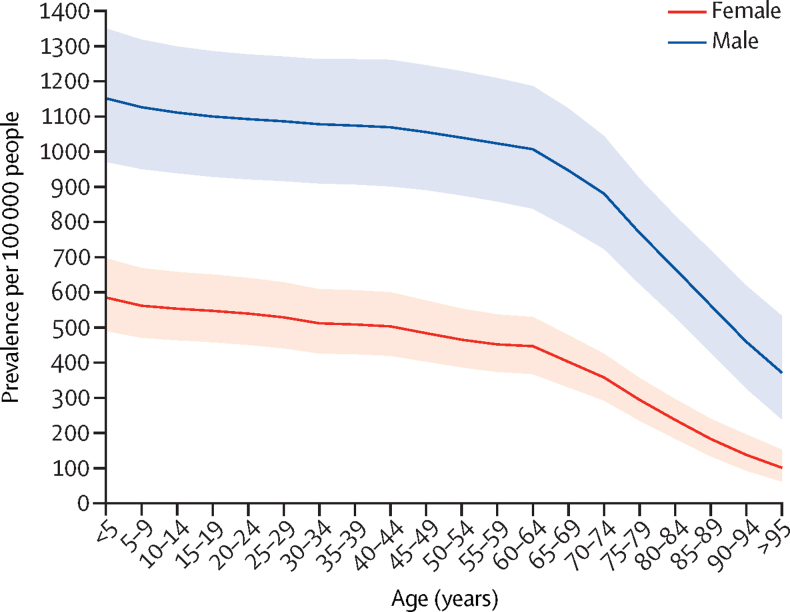
- Global age-standardised prevalence was 788·3 (95% UI 663·8–927·2) per 100 000 people, equivalent to 1064·7 autistic males per 100 000 males and 508·1 autistic females per 100 000 females; the global age-standardised sex ratio was 2·1 to 1.
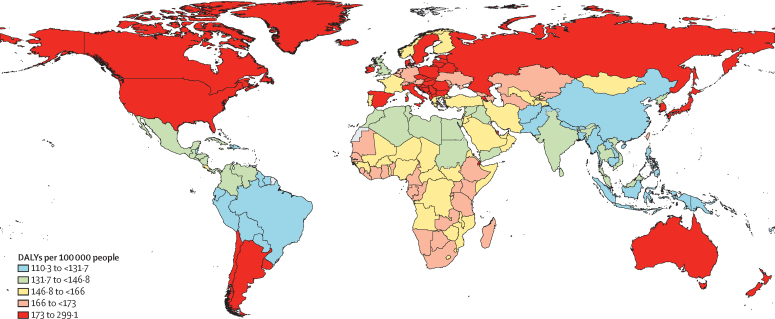
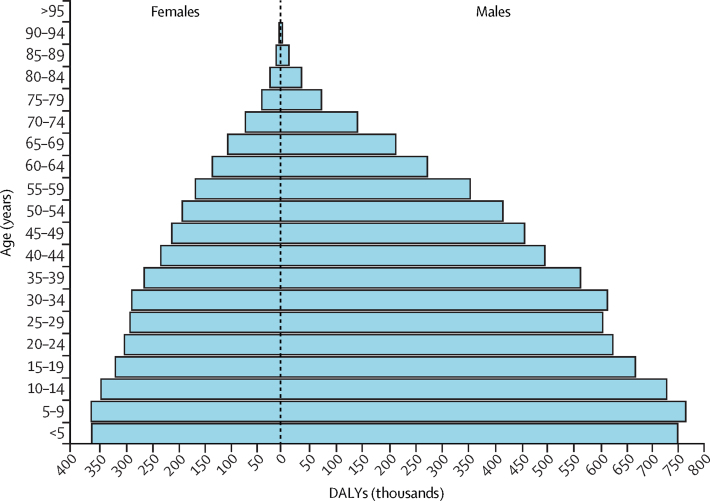
- Autism spectrum disorder accounted for 11·5 million (7·8–16·3) DALYs globally, or 147·6 (100·2–208·2) DALYs per 100 000 people age-standardised; DALYs were composed entirely of YLDs.
- Age-standardised DALY rates ranged from 126·5 (86·0–178·0) per 100 000 in southeast Asia, east Asia, and Oceania to 204·1 (140·7–284·7) per 100 000 in the high-income super-region.
- DALYs emerged for children younger than 5 years (169·2 [115·0–237·4] per 100 000) and decreased with age; autism spectrum disorder was the seventh leading cause of YLDs for children younger than 5 years, eighth for ages 5–14 years, and tenth for ages 15–19 years.
Methods
- A systematic review updated on April 12, 2021 searched PubMed, Embase, PsycINFO, the Global Health Data Exchange, and consulted experts; eligible data reported prevalence, incidence, or excess mortality in general-population-representative samples, and GBD 2021 excluded prevalence estimates relying on passive case finding.
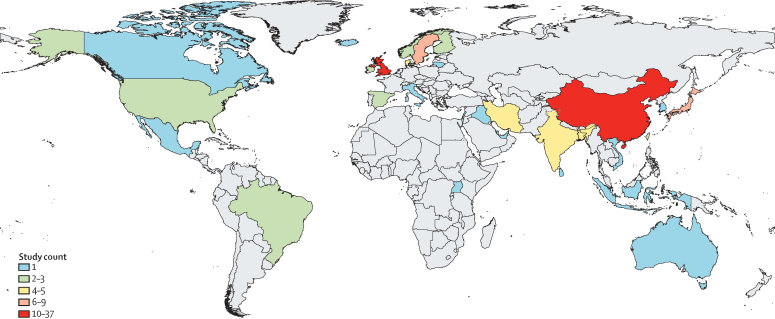
- Prevalence, incidence, and excess mortality were estimated with the Bayesian meta-regression tool DisMod-MR 2.1 by sex, 25 age groups, 1990–2021, and 204 countries and territories; 105 studies reporting 228 prevalence estimates across 33 countries and 11 of 21 regions informed the model.
- Severity proportions came from 19 studies and meta-analyses in R using the metafor package; disability weights were applied to sequela-specific prevalence to calculate YLDs, with comorbidity adjustment, and DALYs were composed entirely of YLDs because no deaths were attributable to autism spectrum disorder as the underlying cause in GBD 2021.
Limitations
- The authors state that geographical coverage was limited: analyses were informed by data from 34 countries (of 204) across 12 (of 21) GBD regions, with wide uncertainty; excluding passive case-finding estimates improved prevalence estimation but reduced coverage, and excess mortality data still relied on passive case finding, which might overestimate excess mortality and underestimate adult prevalence.
- The authors state that disability weights do not vary by location and the lay descriptions used may be simplistic, incomplete, and potentially stigmatising; severity distribution was only an overall pooled estimate with insufficient data by location, age, or sex; GBD does not estimate by gender; and the comorbidity adjustment assumes independent comorbidity.
- The authors state that GBD 2021 could not estimate YLLs for autism spectrum disorder, although a separate analysis estimated 13 400 excess suicide deaths and 621 000 excess YLLs among autistic people globally in 2021. All limitations listed are stated by the authors; no additional limitations are evident from the text.
Model-written summary. Check it against the paper before relying on it.
Integrity signals
Registry
Cites
Statistics
Figures
Verification
Claims the paper makes
16 Valid · 2 Not valid · 6 Not checked · 104 Own results and interpretations
The cited sources support only part of this claim — read each source’s verdict below.
In the paper
“This higher prevalence was derived from a review of case notes from clinical and educational records to establish whether individuals likely met diagnostic criteria for probable autism spectrum disorder.”
§ The global epidemiology and health burden of the autism spectrum: findings from the Global Burden of Disease Study 2021 > Discussion
What the sources say
- Partly supportedcites [26] Maenner MJ Warren Z Williams AR Prevalence and characteristics of autism spectrum disorder among children aged 8 years: autism and developmental disabilities monitoring network, 11 sites, United States, 2020 MMWR Surveill Summ 72 2023 1 14 PMC10042614 36952288 sourceExperimental — accuracy not yet measured
The Methods (Case Ascertainment and Surveillance Case Definition; page not provided) say ADDM staff reviewed medical and education records, supporting the records-review portion. But the 2020 estimate used documented ASD diagnoses, special education classifications, or ICD codes—not a review to determine whether children probably met diagnostic criteria. The Discussion describes symptom-based review as part of the previous case definition. (LLM, conf=0.87)
plainstates a cause- Asserted: passes — The authors put it forward as true.
- Checkable: passes — It can be checked against evidence.
- Load-bearing: unclear — It is unclear whether the paper’s conclusions depend on it.
- Based: passes — The paper gives a reason why it holds.
- Partly supported
The cited sources support only part of this claim — read each source’s verdict below.
In the paper
“The high prevalence in high-income Asia Pacific was driven by high-quality data from South Korea and Japan indicating high prevalence in this region.12, 13, 28, 29”
§ The global epidemiology and health burden of the autism spectrum: findings from the Global Burden of Disease Study 2021 > Discussion
What the sources say
- Not checked — no full text of the sourcecites [12] Kim YS Leventhal BL Koh Y-J Prevalence of autism spectrum disorders in a total population sample Am J Psych 168 2011 904 912 21558103 source
- Partly supportedcites [13] Saito M Hirota T Sakamoto Y Prevalence and cumulative incidence of autism spectrum disorders and the patterns of co-occurring neurodevelopmental disorders in a total population sample of 5-year-old children Mol Autism 11 2020 35 32410700 PMC7227343 sourceExperimental — accuracy not yet measured
The Discussion (page not available) describes rigorous case ascertainment in a Japanese population sample and says its ASD prevalence estimate was higher than estimates in other Asian studies. The Introduction reports a high estimate from a South Korean study. The paper does not assess whether data from those two countries drove a high-income Asia Pacific regional prevalence estimate, and it cautions that its findings may not generalize to other communities. (LLM, conf=0.84)
- Not checked — no full text of the sourcecites [28] Kamio Y Inada N Koyama T Inokuchi E Tsuchiya K Kuroda M Effectiveness of using the modified checklist for autism in toddlers in two-stage screening of autism spectrum disorder at the 18-month health check-up in Japan J Autism Dev Disord 44 2014 194 203 23740200 source
- Not checked — no full text of the sourcecites [29] Sasayama D Kudo T Kaneko W Brief report: cumulative incidence of autism spectrum disorder before school entry in a thoroughly screened population J Autism Dev Disord 51 2021 1400 1405 32696286 source
plainstates a cause- Asserted: passes — The authors put it forward as true.
- Checkable: passes — It can be checked against evidence.
- Load-bearing: unclear — It is unclear whether the paper’s conclusions depend on it.
- Based: passes — The paper gives a reason why it holds.
The cited sources support only part of this claim — read each source’s verdict below.
In the paper
“Autistic individuals are often at an increased risk of experiencing a range of other mental and physical health conditions compared with people who are not autistic.35”
§ The global epidemiology and health burden of the autism spectrum: findings from the Global Burden of Disease Study 2021 > Discussion
What the sources say
- Partly supportedcites [35] Lord C Brugha TS Charman T Autism spectrum disorder Nat Rev Dis Primer 6 2020 5 PMC8900942 31949163 sourceExperimental — accuracy not yet measured
The Introduction says psychiatric and neurological conditions are common in people with ASD. The Co-occurring disorders section says adults with ASD are more likely than adults in the general population to be diagnosed with several physical conditions. It does not make the same comparison for mental health conditions, and its physical-health comparison is specific to adults. (LLM, conf=0.84)
plainstates an association- Asserted: passes — The authors put it forward as true.
- Checkable: passes — It can be checked against evidence.
- Load-bearing: passes — The paper’s conclusions depend on it.
- Based: passes — The paper gives a reason why it holds.
- Partly supported
The cited sources support only part of this claim — read each source’s verdict below.
In the paper
“which was relatively low compared with the prevalence of autism spectrum disorder from active case-finding methods (in which prevalence is estimated using a diagnostic instrument in a general population survey supplemented by a search in case registries or special education facilities).11, 12, 13”
§ The global epidemiology and health burden of the autism spectrum: findings from the Global Burden of Disease Study 2021 > Introduction
What the sources say
- Supportedcites [11] Brugha TS Spiers N Bankart J Epidemiology of autism in adults across age groups and ability levels Br J Psychiatry 209 2016 498 503 27388569 source
The Method describes a general-population survey combined with an intellectual-disability case-register survey, using direct diagnostic assessments. The Results report an adult autism prevalence of 1.1% in England. This paper therefore supplies the active-case-finding prevalence used as a comparator; the comparison with GBD 2019 is the citing authors’ framing, not a finding attributed to this 2016 paper. (LLM, conf=0.86)
- Not checked — no full text of the sourcecites [12] Kim YS Leventhal BL Koh Y-J Prevalence of autism spectrum disorders in a total population sample Am J Psych 168 2011 904 912 21558103 source
- Partly supportedcites [13] Saito M Hirota T Sakamoto Y Prevalence and cumulative incidence of autism spectrum disorders and the patterns of co-occurring neurodevelopmental disorders in a total population sample of 5-year-old children Mol Autism 11 2020 35 32410700 PMC7227343 sourceExperimental — accuracy not yet measured
The Methods (Study design; page unavailable) describe population-wide screening of 5-year-olds in Hirosaki followed by comprehensive diagnostic assessment, and the Results report an adjusted ASD prevalence of 3.22%. This supports using the study as an example of active case-finding prevalence. The Methods do not describe supplementing the survey with a search of case registries or special-education facilities, and the paper does not compare its estimate with GBD 2019. (LLM, conf=0.82)
plain- Asserted: passes — The authors put it forward as true.
- Checkable: passes — It can be checked against evidence.
- Load-bearing: passes — The paper’s conclusions depend on it.
- Based: passes — The paper gives a reason why it holds.
- Supported
The cited sources support only part of this claim — read each source’s verdict below.
In the paper
“the prevalence of autism spectrum disorder e stimated for the USA remains more conservative than findings from the US Centers for Disease Control and Prevention that indicate that one in 36 children aged 8 years in the USA were autistic in 2020.26”
§ The global epidemiology and health burden of the autism spectrum: findings from the Global Burden of Disease Study 2021 > Discussion
What the sources say
- Partly supportedcites [26] Maenner MJ Warren Z Williams AR Prevalence and characteristics of autism spectrum disorder among children aged 8 years: autism and developmental disabilities monitoring network, 11 sites, United States, 2020 MMWR Surveill Summ 72 2023 1 14 PMC10042614 36952288 sourceExperimental — accuracy not yet measured
The Results > ASD Prevalence section reports that one in 36 children aged 8 years had ASD in 2020 across the 11 US surveillance sites. The Limitations section says those findings do not necessarily generalize to all US children aged 8 years, so the nationwide wording is broader than the source supports. The GBD comparison is the citing authors’ framing, not a finding attributed to this source. (LLM, conf=0.86)
hedged- Asserted: passes — The authors put it forward as true.
- Checkable: passes — It can be checked against evidence.
- Load-bearing: unclear — It is unclear whether the paper’s conclusions depend on it.
- Based: passes — The paper gives a reason why it holds.
- Partly supported
76 more claims · 1 with their cited sources checked
Create a free account to see all 128 claims and to verify the 2 references still open.
- It may state two separate claims as one. 28
- Probably not a substantial claim. 27
Self-check
Percentages, sums and reported differences re-computed from the paper’s own numbers.
Each contradiction between two passages listed here was confirmed by an independent check.
Rated major: it would touch a result — a value a result rests on, reported and recomputed p-values on opposite sides of the significance level, two passages that conflict with no sign which is right, or a cited work retracted before this paper was published.
In the paper
§ The global epidemiology and health burden of the autism spectrum: findings from the Global Burden of Disease Study 2021 > Results
“prevalence ranged between 169·2 (115·0–237·4) per 100 000 people in children younger than 5 years”
§ The global epidemiology and health burden of the autism spectrum: findings from the Global Burden of Disease Study 2021 > Abstract > Findings
“emerging for children younger than age 5 years (169·2 [115·0–237·4] DALYs per 100 000 people)”
Rated major: it would touch a result — a value a result rests on, reported and recomputed p-values on opposite sides of the significance level, two passages that conflict with no sign which is right, or a cited work retracted before this paper was published.
In the paper
§ The global epidemiology and health burden of the autism spectrum: findings from the Global Burden of Disease Study 2021 > Results
“Between birth and age 59 years, prevalence ranged between 169·2 (115·0–237·4) per 100 000 people in children younger than 5 years to 132·0 (90·9–183·6) in adults aged 55–59 years. The rate of decline in prevalence increased from aged 60 years with prevalence ranging between 127·6 (87·8–178·2) per 100 000 people in adults aged 60–64 years and 27·9 (17·1–42·8) in adults aged 95 years and older.”
§ The global epidemiology and health burden of the autism spectrum: findings from the Global Burden of Disease Study 2021 > Results
“The global age-standardised prevalence of autism spectrum disorder in 2021 was 788·3 (95% UI 663·8–927·2) per 100 000 people.”
Citations
Cites
The PRISMA 2020 statement: An updated guideline for reporting systematic reviews
Page, M. J., McKenzie, J. E., Bossuyt, P. M., Boutron, I., Hoffmann, T. C., Mulrow, C. D., Shamseer, L., Tetzlaff, J. M., Akl, E. A., Brennan, S. E., et al. (2021) · BMJ · doi:10.1136/bmj.n71 · Cited by 108,283
Preferred reporting items for systematic reviews and meta-analyses: The PRISMA statement
Moher, D., Liberati, A., Tetzlaff, J., Altman, D. G., & the PRISMA Group* (2009) · Annals of Internal Medicine · doi:10.7326/0003-4819-151-4-200908180-00135 · Cited by 37,554
Conducting Meta-Analyses in R with the metafor Package
Viechtbauer, W. (2010) · Journal of Statistical Software · doi:10.18637/jss.v036.i03 · Cited by 20,464
Vos, T., Lim, S. S., Abbafati, C., Abbas, K. M., Abbasi, M., Abbasifard, M., Abbasi-Kangevari, M., Abbastabar, H., Abd-Allah, F., Abdelalim, A., et al. (2020) · The Lancet · doi:10.1016/s0140-6736(20)30925-9 · Cited by 19,358
Self-citationThe PRISMA 2020 statement: an updated guideline for reporting systematic reviews
Page, M. J., McKenzie, J., Bossuyt, P., Boutron, I., Hoffmann, T., mulrow, C., Shamseer, L., Tetzlaff, J., Akl, E., Brennan, S. E., et al. (2020) · doi:10.31222/osf.io/v7gm2_v1 · Cited by 8,090
The PRISMA 2020 statement: an updated guideline for reporting systematic reviews
Page, M. J., McKenzie, J., Bossuyt, P., Boutron, I., Hoffmann, T., mulrow, C., Shamseer, L., Tetzlaff, J., Akl, E., Brennan, S. E., et al. (2020) · doi:10.31222/osf.io/v7gm2 · Cited by 5,177
Ferrari, A. J., Santomauro, D. F., Aali, A., Abate, Y. H., Abbafati, C., Abbastabar, H., Abd ElHafeez, S., Abdelmasseh, M., Abd-Elsalam, S., Abdollahi, A., et al. (2024) · The Lancet · doi:10.1016/s0140-6736(24)00757-8 · Cited by 5,112
Self-citationWhat Is the Male-to-Female Ratio in Autism Spectrum Disorder? A Systematic Review and Meta-Analysis
Loomes, R., Hull, L., & Mandy, W. P. L. (2017) · Journal of the American Academy of Child & Adolescent Psychiatry · doi:10.1016/j.jaac.2017.03.013 · Cited by 2,804
Maenner, M. J., Warren, Z., Williams, A. R., Amoakohene, E., Bakian, A. V., Bilder, D. A., Durkin, M. S., Fitzgerald, R. T., Furnier, S. M., Hughes, M. M., et al. (2023) · MMWR. Surveillance Summaries · doi:10.15585/mmwr.ss7202a1 · Cited by 2,706 · cited 1×
“26 This higher prevalence was derived from a review of case notes from clinical and educational records to establish whether individuals likely met diagnostic criteria for probable autism spectrum disorder.”
Which terms should be used to describe autism? Perspectives from the UK autism community
Kenny, L., Hattersley, C., Molins, B., Buckley, C., Povey, C., & Pellicano, E. (2016) · Autism · doi:10.1177/1362361315588200 · Cited by 1,941 · cited 1×
“The hierarchy of metaanalyses that we did is shown in appendix 2 (pp 3–4, 8).”
Research works printed but not linked: 2
- American Psychiatric Association Diagnostic and statistical manual of mental disorders: DSM-5-TR 5th edition, text revision 2022 American Psychiatric Association Publishing Washington, DC
- Flaxman A Vos T Murray C An integrative metaregression framework for descriptive epidemiology 1st edn. 2015 University of Washington Press Seattle
Cited by
Items 101–200 of 211
Tromans, S. J., Deb, S. S., Mahmood, H., Triantafyllopoulou, P., Jamieson, T., Gookey, G., Bassett, P., Malak, Z., Sawhney, I., Korb, L., et al. (2025) · BJPsych Open · doi:10.1192/bjo.2025.10875
Self-citationBatterjee, M. (2025) · International Breastfeeding Journal · doi:10.1186/s13006-025-00777-7
“Recent global estimates indicate that more than 62 million people may live with ASC [8].”
Autism spectrum disorder disrupts brain network connectivity maturation during childhood development
Tiawongsuwan, L., Klomchitcharoen, S., Chumanee, W., Tangwattanasirikun, T., Saksittikorn, S., Chawaruechai, S., Jatupornpoonsub, T., & Wongsawat, Y. (2025) · Scientific Reports · doi:10.1038/s41598-025-30971-w · Cited by 2
Reflections on the future of child & adolescent mental health
van der Gaag, R. J. (2025) · International Review of Psychiatry · doi:10.1080/09540261.2025.2596169
Cui, Y. X., Chen, Y., Liu, Y.-W., Zheng, S., Cui, J., Li, T., Tsai, Y.-C., Gu, S., Ji, M., Zhang, W., et al. (2025) · bioRxiv (Cold Spring Harbor Laboratory) · doi:10.64898/2025.12.15.694366
“In recent years, ASD has emerged as a major public health concern due to its rising global prevalence [2, 3].”
Strang, M., & Sakdalan, J. A. (2025) · Neurodiversity · doi:10.1177/27546330251400335 · Cited by 3
“However, only six of the 105 studies that informed this prevalence estimate focused on adults (Santomauro et al., 2024).”
InfluentialБІОЕТИЧНІ ПРОБЛЕМИ ВЕДЕННЯ ДІТЕЙ З РОЗЛАДАМИ АУТИСТИЧНОГО СПЕКТРА ТА ЯКІСТЬ ЖИТТЯ ОПІКУНІВ
Bratkova, L. B. (2025) · Art of Medicine · doi:10.21802/artm.2025.4.36.6
Far Out: Psychedelics are Becoming a Current Treatment Option in Psychiatry
Borgogna, N. C., & Aita, S. L. (2025) · Current Treatment Options in Psychiatry · doi:10.1007/s40501-025-00374-9
“The increases have been observed across disorder classes, and in problems as common as anxiety [4] and as severe as autism [ 5].”
Exploring the Association Between Parental Age and Autism Spectrum Disorder Risk in Qatar
Alshaban, F. A. W., Fombonne, E. J., Ghazal, I., Al‐Faraj, F., Aqel, S., Thompson, I. R., Al‐Shammari, H., Elhag, S. F., & Nasir, B. (2026) · Journal of Autism and Developmental Disorders · doi:10.1007/s10803-025-07190-3
Exploring the impact of technology-based interventions on the mental health of children with autism
Cilar, L., & Kovac, V. (2026) · Advances in Autism · doi:10.1108/aia-05-2025-0045
Li, J., Wang, Y. S., Bi, L., Yang, X., Yang, Y., Zhang, Q., Mei, X., Dang, W., Feng, G., Zhang, X., et al. (2026) · BMC Pediatrics · doi:10.1186/s12887-025-06501-y · Cited by 2
“Currently, the prevalence of ASD continues to rise globally, with the lat-est epidemiological data indicating rates of 1–3% [2, 3], and males being significantly more affected than females [4].”
Dzanko, E., Pištoljević, N., & Erjavec, M. (2026) · Journal of Autism and Developmental Disorders · doi:10.1007/s10803-025-07205-z
Gut Microbiota and Mitochondrial Dysfunction in Autism: Clinical Correlations and Future Directions
Bhalla, S., & Srivastava, R. (2026) · Molecular Neurobiology · doi:10.1007/s12035-026-05702-5 · Cited by 1
“Globally, the age-standardized prevalence is 788.3 individuals per 100,000 people, which is equivalent to 1064.7 male autistic patients per 100,000 males and 508.1 autistic female patients per 100,000 females [8].”
InfluentialAftab, M. J., Sarwar, M. N., & Shah, R. (2026) · Research Square · doi:10.21203/rs.3.rs-8296192/v1
Laurenti, F., Presta, V., Compiani, M., Zobbi, G., Ilari, B., Picchi, M. P., Maré, E., Severini, F., Guarnieri, A., Mazzei, S., et al. (2026) · Sports · doi:10.3390/sports14020080
Park, J.-H., Kim, S.-J., Cho, S., Kwon, S.-H., Kang, D.-W., & Lee, E.-K. (2026) · Journal of Autism and Developmental Disorders · doi:10.1007/s10803-026-07254-y
Current options for the treatment of anxiety in adults with autism spectrum disorder
López‐Arvizu, C., & Muniz, J. A. (2026) · Expert Review of Neurotherapeutics · doi:10.1080/14737175.2026.2635445 · Cited by 2
Primarti, R. S., Yohana, W., & Sasmita, I. S. (2026) · Journal of international oral health · doi:10.4103/jioh.jioh_251_25
Bùi, T.-M. N., Desai, N., Dunphy, M., Xu, X., Mathisen, M., Kjersem, F. W., & Nuske, H. J. (2026) · BMC Digital Health · doi:10.1186/s44247-026-00242-3
Jiang, X., Zhang, X., & Drani, S. (2026) · Review Journal of Autism and Developmental Disorders · doi:10.1007/s40489-026-00544-2 · Cited by 2
Neurodevelopmental comorbidities in juvenile systemic autoimmune and autoinflammatory diseases
Ellul, P., & Melki, I. (2026) · Nature Reviews Rheumatology · doi:10.1038/s41584-026-01356-8 · Cited by 3
Khamenehei, N., & Tokarskaya, L. V. (2026) · Consortium Psychiatricum · doi:10.17816/cp15700
Uzoechina, G., Osajiuba, T., & Elochukwu, M. (2026) · Research Square · doi:10.21203/rs.3.rs-8933754/v1 · Cited by 1
Autistic Children’s Wellbeing at School: A Systematic Review
Carroll, A., Simpson, K., & Adams, D. (2026) · Review Journal of Autism and Developmental Disorders · doi:10.1007/s40489-026-00540-6 · Cited by 5
Zhang, Z. Y., Zhang, L., Zhu, G., Liang, Y., Pang, P., Yan, H., Cao, X., Wang, J., Shi, X., Hu, L., et al. (2026) · Neurology and Therapy · doi:10.1007/s40120-026-00914-2
Zhu, H., Ho, K. C., Wu, X. V., Ye, J., Xiao, L., Li, Y., Yu, Z., Wang, X., & Li, X. (2026) · Autism · doi:10.1177/13623613261422944 · Cited by 3
Effect of diet intervention on symptoms in autism spectrum disorder: An umbrella review
Shi, J., Cheng, Y., Wei, Y., Shi, Y., & Jiang, Z. (2026) · Research in Developmental Disabilities · doi:10.1016/j.ridd.2026.105270
Research hotspots and trends of empathy in autism spectrum disorder based on CiteSpace analysis
Zhang, P., Qiu, S., Ding, L., Wang, M., & Liu, Y. (2026) · Current Psychology · doi:10.1007/s12144-026-09338-5 · Cited by 1
“Its complex etiology and diverse clinical presentations have drawn global research attention, establishing ASD as a significant neurodevelopmental condition(Santomauro et al., 2025).”
Muthuka, J. K., Onyango, C., Nzioki, J. M., Chebungei, L., Zimunya, R., Simengwa, A., Kim, S., Nshimirimana, D. A., & Nabaweesi, R. (2026) · Cureus · doi:10.7759/cureus.106260 · Cited by 4
Williams, E.-D. G., Vakil, F., Abubakare, O., Latin, A., Ware, L., Nelson, D., & Smith, M. J. (2026) · Frontiers in Psychiatry · doi:10.3389/fpsyt.2026.1766641
“Youth with untreated depression face heightened risks for suicide, self-harm, and substance abuse, and the suicide rate among autistic youth is estimated to be nearly ten times higher than the national average (19, 20).”
Domaradzki, J. (2026) · Research in Autism · doi:10.1016/j.reia.2026.202917 · Cited by 1
Alterations in Amygdala and Hippocampal Volumes in Autism Spectrum Disorder: Meta-analysis
Deniz, Y., Maidi, A. Z. M., An, S.-J. L., & Hong, Y. (2026) · Journal of Autism and Developmental Disorders · doi:10.1007/s10803-026-07312-5 · Cited by 1
Kaur, K., & Bhatti, J. S. (2026) · Elsevier eBooks · doi:10.1016/b978-0-443-43986-5.00008-4
Self-citationAutismusspektrumstörungen – Transition vom Jugend- in das Erwachsenenalter
Freitag, C. M., & van Elst, L. T. (2026) · Der Nervenarzt · doi:10.1007/s00115-026-01960-9
Health systems strengthening and autism care: governance, equity and developmental inclusion
Dutta, S. (2026) · Development in Practice · doi:10.1080/09614524.2026.2656865
Epigenetic Signatures in Family Clusters: Links Between Male Fertility and Autism Risk
Dehghanbanadaki, H., Chen, J., Thorogood, S. L., Ramsay, J. M., & Hotaling, J. M. (2026) · Urology · doi:10.1016/j.urology.2026.04.032
Cultural Considerations in Global Autism Research: a Systematic Short Review
Genç, H. A., Albayrak, Z. S., Kurt, Ş., Ilki, D., Konakci, B. O., & Özulucan, M. T. (2026) · Current Developmental Disorders Reports · doi:10.1007/s40474-026-00352-7
Bourote, B., Bouaddi, O., Affane, A., Malki, C. A., Souidi, Y., Belakbir, O., Kisra, H., & Khalis, M. (2026) · Research Square · doi:10.21203/rs.3.rs-9321351/v1
Chen, W., Gregorio, R. D., Astorkia, M., Sze, J. Y., & Zheng, D. (2026) · bioRxiv (Cold Spring Harbor Laboratory) · doi:10.64898/2026.05.11.724399
Akbaş, B., Akbaş, A., Hacım, N. A., Ercan, G., Aygun, H., Erdoğan, M. A., Uyanıkgil, Y., & Erbaş, O. (2026) · Developmental Neurobiology · doi:10.1002/dneu.70041
Lee, J., Sayes, C. M., Mu, Y., Giesy, J. P., & Shin, H. (2026) · Journal of Hazardous Materials · doi:10.1016/j.jhazmat.2026.142401 · Cited by 2
Mapping, displaying, and facilitating access to autism services: an Italian eHealth solution
Caruso, A., Micai, M., Gila, L., Sabbioni, M., Galati, G., Fulceri, F., & Scattoni, M. L. (2026) · International Journal of Medical Informatics · doi:10.1016/j.ijmedinf.2026.106490 · Cited by 1
Heavy Metal Exposure and Autism Spectrum Disorder: Evidence from Hair Analysis in Jordanian Children
Al-Omari, L., Beirat, M. A., Hunaiti, A. A., & Bustanji, Y. (2026) · Research Journal of Pharmacy and Technology · doi:10.52711/0974-360x.2026.00325
Embracing the Theme “Autism and Humanity: Every Life Has Value”
Upadhyay, S. (2026) · Journal of South Asian Association of Pediatric Dentistry · doi:10.5005/jp-journals-10077-3437
Li, X., Yan, F., Wu, Y., Zhou, Y., He, L., & Gao, J. (2026) · International Journal of Medical Informatics · doi:10.1016/j.ijmedinf.2026.106526 · Cited by 1
Yang, D., Liu, Q., Ran, H., Xue, T., Lu, Y., Yang, X., Wang, J., Liu, L., Wang, W., Nie, B., et al. (2026) · Neuroscience Bulletin · doi:10.1007/s12264-026-01648-9
Kaur, K., & Bhatti, J. S. (2026) · International Journal of Developmental Disabilities · doi:10.1080/20473869.2026.2679725 · Cited by 1
Self-citationSarbassova, Z., Seyduanova, L., Yelzhanova, Z., Kosherbayeva, L., Zhylkybayev, G., Akhmetzhanova, Z., Kurmanalina, S., & Kozhageldiyeva, L. (2026) · Advances in Medical Education and Practice · doi:10.2147/amep.s602638
Atashgahi, M., Madani, F., & Webster, T. J. (2026) · International Journal of Nanomedicine · doi:10.2147/ijn.s599496
Ma, C., Wang, Y., Ding, Z., Liang, X., Yuan, M., Liu, X., Li, Q., Lv, H., Qiao, N., Zhao, Y., et al. (2026) · Child Psychiatry & Human Development · doi:10.1007/s10578-026-02040-4
A systematic review of the prevalence of ADHD and autism among those experiencing gambling harm
Timms-McLean, L., Huy, N. V., Thomas, S. A., Browning, C. J., Young, A., Chamberlain, D., & Rintoul, A. (2026) · Addictive Behaviors · doi:10.1016/j.addbeh.2026.108776
Autism Spectrum Disorder in Childhood
Sterrett, K., Schiltz, H. K., Byrne, K., & Lord, C. (2026) · Cambridge University Press eBooks · doi:10.1017/9781009706896
Abdolmaleky, H. M., Nohesara, S., Subramonian, R., Duraiarasan, K., Dorzin, M., Zhou, J., Pettinato, G., & Thiagalingam, S. (2026) · International Journal of Molecular Sciences · doi:10.3390/ijms27125456
“Major mental illnesses such as schizophrenia (SCZ) and bipolar disorder (BD) are chronic and debilitating neuropsychiatric disorders characterized by symptoms including delusions, hallucinations, and behavioral dysregulation, each affecting approximately 0.5–1% of the global population [1–3].”
InfluentialRibolsi, M., D’Onofrio, A. M., Koukopoulos, A. E., Nastro, F. F., Pelle, M., Giannico, A. M., Barbonetti, S., Balzoni, L. M., Zaza, M. C., Lorenzo, G. D., et al. (2026) · Journal of Clinical Medicine · doi:10.3390/jcm15124659
“Conceptualized as a spectrum encompassing a wide range of neurodevelopmental profiles [2,3], ASD affects approximately 1 in 127 individuals worldwide, over 61.8 million people [4], with an adult prevalence of 2.21% in the United States and a male-to-female ratio of 3.8:1 [5].”
InfluentialChen, Y., & Chen, D. (2026) · Frontiers in Human Neuroscience · doi:10.3389/fnhum.2026.1752706
“The prevalence of ASD has significantly risen over the past two decades, with current estimates indicating that approximately one in 127 children is diagnosed with ASD globally (Santomauro et al., 2025).”
Zhang, Z., Wang, G., Han, F., Zhou, H., Liang, Y., Zhang, L., Pang, P., Cao, X., Hu, P., Yao, X., et al. (2026) · Stem Cell Research & Therapy · doi:10.1186/s13287-026-05091-5
Self-citationGao, B., Lin, L., Smith, R. C., Tobe, R. H., Zamora, D., Wang, L., Li, X., Shi, X., Zhang, H., Shao, P., et al. (2026) · Biological Psychiatry · doi:10.1016/j.biopsych.2026.06.007 · Cited by 1
Wang, Q., Zheng, W., Zhang, C., Lv, S., Peng, L., Chen, J., & Lu, A. (2026) · Genes & Diseases · doi:10.1016/j.gendis.2026.102315
Stereotypic Repetitive Behavior Monitoring Using Human Body Communication
Kumar, R., Ali, A., & Eltawil, A. M. (2026) · IEEE Sensors Journal · doi:10.1109/jsen.2026.3705190
Traslaviña, G. A. A., Achcar, J. A., Contrucci, B. A., Éckeli, Á. L., Dach, F., Fernandes, R. M. F., Caldas, C. A. T. C., Sakamoto, A. C., & Hamad, A. P. A. (2026) · Neuroepidemiology · doi:10.1159/000553275 · Cited by 4
Yu, J., Wan, Y., Peng, Y., Liang, S., Chan, F. K., Ng, S. C., & Tun, H. M. (2026) · Psychiatry Research · doi:10.1016/j.psychres.2026.117317
dos Santos, S. P. L., Vaca, D. J. G., Veloz, A. F. V., Navarrete-Veloz, J., Carpio-Arias, T. V., & Veloz, M. F. V. (2026) · Journal of Autism and Developmental Disorders · doi:10.1007/s10803-026-07419-9
Self-citationAlexander, A. G., Mbughuni, C., Theonest, N. O., Mpepo, A., Njau, R., Uggh, I. H. P., Tibenderana, J. R., Kabwe, T., Swai, E. A., Mmbaga, B. T., et al. (2026) · medRxiv · doi:10.64898/2026.07.12.26357871
Huang, Y., Wang, Y., Zhang, H.-H., Zhou, M.-W., Su, Z., Cheung, T. C. C., Ungvari, G. S., Smith, R. D., Ng, C. H., & Xiang, Y. (2026) · Journal of Autism and Developmental Disorders · doi:10.1007/s10803-026-07438-6
Analysis of intervention effects of three different models on children with autism spectrum disorder
Lv, L., Xu, L., Sun, J., Hu, Y., Yue, Z., Lv, Y., & Ke, X. (2026) · Frontiers in Psychiatry · doi:10.3389/fpsyt.2026.1856696 · Cited by 1
Muse, H. L., Luedecke, E., Mandy, W., Charlton, R. A., Happe, F. G. E., & Stewart, G. R. (2026) · Autism in Adulthood · doi:10.1177/25739581261470597 · Cited by 3
Naveed, F., Islam, D. K., & Nayaab*, B. (2026) · Qlantic journal of social sciences. · doi:10.55737/qjss.vii-ii.26532
Baikatov, A., Assemov, A., Alimbetov, D., & Kustubayeva, A. (2026) · Frontiers in Psychiatry · doi:10.3389/fpsyt.2026.1880419 · Cited by 1
Sarti, T. D., Victor, F. D. O. F. R., Costa, V. S., et al. (2026) · The Lancet Primary Care · doi:10.1016/j.lanprc.2026.100195
Ouma, S., Estlin, E. J., Okello, K. K., Okello, M. O., Akello, F., Okello, J., Odong, F., Ssebyala, E., Idro, R., Abbo, C., et al. (2026) · Autism · doi:10.1177/13623613261468802 · Cited by 2
“Autism prevalence is estimated at one in 127 globally, one in 113 in Sub-Saharan Africa, and one in 112 in the East African region (Santomauro et al., 2025).”
Risk of Neurodevelopmental Disorders Following the Herpesviral Infection in Preschooler Children
Chen, L.-C., Huang, W., Hsu, J.-W., Bai, Y., Tsai, S., Su, T., Chen, T., & Chen, M. (2026) · Autism Research · doi:10.1002/aur.70336
Normative EEG Effective Connectivity as a neural marker of Autism Spectrum DisorderPreprint
Amato, L. G., Fattorini, F., Vergani, A. A., Pagani, M., Meneghetti, N., Mazzoni, A., & Fabbrizzi, M. (2026) · medRxiv · doi:10.64898/2026.07.27.26359031
Shi, Y., Gao, F., Liu, Z., Cai, K., Sun, Z., Xu, Y., Zou, L., & Chen, A. (2026) · Frontiers in Psychology · doi:10.3389/fpsyg.2026.1902127
“In recent decades, the reported prevalence of ASD has increased substantially, making it a major public health concern for children, families, schools, and healthcare systems (Santomauro et al., 2025; Zeidan et al., 2022).”
Mohsen, M. A., Zaki, S. T., El-Din, E. M. S., Kamel, I. H., Elsaeid, A., Orban, H. A., AbuShady, M. M., & Elabd, M. A. (2026) · Egyptian Pediatric Association Gazette · doi:10.1186/s43054-026-00596-3
“Globally, ASD affected approximately one in 127 individuals in 2021, representing a substantial increase compared with earlier estimates [8].”
Beg, A., & Proctor, C. (2026) · Dental Nursing · doi:10.12968/denn.2026.22.8.388
Willig, T.-N., Joseph, F., Sürig, L., Fongaro, E., Iannuzzi, S., & Purper‐Ouakil, D. (2026) · American Journal of Pharmaceutical Education · doi:10.1016/j.ajpe.2026.102048
Yang, F., Tang, Q., Wang, X., Chen, J., Li, Y., Liu, W., Ma, B., & Shi, W. (2026) · Frontiers in Immunology · doi:10.3389/fimmu.2026.1883650
Maternal NKG2D-mediated immune activation shapes fetal neural development
Liu, R., Zhao, Y., Song, X., Chen, R., Jiang, J., Du, Y., Liu, D., Zhang, P., Zhang, X., Verkhratsky, A., et al. (2026) · Molecular Psychiatry · doi:10.1038/s41380-026-03809-8
Ticona, J. P. A., Ferreira-Stagliorio, A. F., Costa, G. N. D. O., Moreira, L., Dias, A. S. B., Costa, C., Santos, A. O., de Queiroz, A. A., Pacheco, R. R. D. O., Montaño-Castellón, I., et al. (2026) · medRxiv · doi:10.64898/2026.08.04.26359668
Kabrah, A. M., Alghamdi, S. A., Khan, A. A., & Kabrah, S. M. (2026) · Journal of Disability Research · doi:10.57197/jdr-2026-0956
Self-citationBonner-Reid, F. T. (2026) · Cureus · doi:10.7759/cureus.114142 · Cited by 1
“This is an average worldwide number, and prevalence varies widely between studies, with it being unclear in many low-and middle-income countries [3].”
Xin, X., Guo, Y., Qi, Z., Liu, Q., Liu, L., & Ma, X. (2026) · Frontiers in Behavioral Neuroscience · doi:10.3389/fnbeh.2026.1927011 · Cited by 2
“…core symptoms and often require long-term, interdisciplinary, and family-centered support (Lord et al., 2018; Lai et al., 2019; Hyman et al., 2020; Lane et al., 2022; Salari et al., 2022; Zeidan et al., 2022; Hirota and King, 2023; Micai et al., 2023; Sidhu et al., 2024; Santomauro et al., 2025).”
Further Considerations on Autism Diagnosis
Feder, J. D., & Davis, A. (2026) · Archives of Pediatrics and Adolescent Medicine · doi:10.1001/jamapediatrics.2026.3411
Subtle and unseen: Understanding the nuanced autism profiles in female individuals
Lacroix, A., & Lai, M. (2026) · Annales Médico-psychologiques revue psychiatrique · doi:10.1016/j.amp.2026.07.014
Barak, E. N., Kolskår, K. K., Dahl, C., Alnæs, D., Andreassen, O. A., Nærland, T., Sønderby, I. E., Tamnes, C. K., & Westlye, L. T. (2026) · Child Psychiatry & Human Development · doi:10.1007/s10578-026-02090-8
Adisu, M. A., Derso, Y. A., Gessesse, Z. A., Gessesse, A. D., Molla, B., Zemariam, A. B., & Habtie, T. E. (2026) · BJPsych Open · doi:10.1192/bjo.2026.12076
“6,17,22 However, this observed male predominance should be interpreted with caution in the Ethiopian context.”
Barbalat, G., Guilbert, A., Davidovic, L., Charles, M.-A. A., Hough, I., Launay, L., Kloog, I., & Lepeule, J. (2026) · Environmental Science & Technology · doi:10.1021/acs.est.5c18062
Doka, G., Gega, V., Alicka, Y., Belicari, E., Saraci, J., & Berdufi, A. (2026) · Malque Health · doi:10.31893/health.2027003
Tan, H., Zhang, L., Xie, Z., Chen, L., Xu, W., Zhou, W., Ren, T., & Li, F. R. (2026) · Autism · doi:10.1177/13623613261481552
Waiting well: support for children awaiting neurodevelopmental assessment
Parker, J., Tanwar, M., Liang, H., Toulmin, H., & Williams, C. L. (2026) · Paediatrics and Child Health · doi:10.1016/j.paed.2026.08.005
Nguyen, T. B. N., Ngo, H. K. T., Dinh, G., & Nguyen, N. A. (2026) · Egyptian Pediatric Association Gazette · doi:10.1186/s43054-026-00615-3
“The Global Burden of Disease Study 2021 estimated that approximately 61.8 million individuals worldwide, equivalent to 1 in 127 people, were on the autism spectrum [14].”
InfluentialLiang, X., Jin, W., Bu, X., Yuan, M., Zheng, M., Feng, S., Zhu, L., Lu, Y., Zhou, J.-X., Hamdy, N. Μ., et al. (2026) · Frontiers in Public Health · doi:10.3389/fpubh.2026.1930391
“Existing comparative estimates show a substantial global burden of ASD, but national averages are poorly suited to identifying where services are failing children and families (1, 11–14).”
Understanding disparities in autism diagnosis and care: A socioecological perspective
Bala, A., Deban, C. A., Hoskinson, H., Mukhtar, M., Shah, A., Syeda, A., & Hashmi, A. O. (2026) · PLOS mental health. · doi:10.1371/journal.pmen.0000703
Wang, X., Tong, J., Luo, L., Lv, P., Huang, Q., Zheng, Y., Zhou, S., Gan, H., Geng, M.-L., Tao, S., et al. (2026) · Environment International · doi:10.1016/j.envint.2026.110510
Han, X., Weng, L., & Xu, H. (2026) · Frontiers in Public Health · doi:10.3389/fpubh.2026.1840171
Designing transport systems for people with non-visible disabilities
Chloe, C. S. Q., & Chatzimichailidou, M. M. (2026) · Transportation Research Part A Policy and Practice · doi:10.1016/j.tra.2026.105270
Taha, H. A., AlAhmad, M., Altawil, Z., Albakri, A., Alshamasneh, M., Daas, O., Masri, A. T., Tutunji, L., & Jönsson, L. (2026) · Children · doi:10.3390/children13091228
Young minds in distress: Exploring the global rise in youth mental health diagnoses
Chiang, H., Chien, Y., & Gau, S. S. (2026) · Molecular Psychiatry · doi:10.1038/s41380-026-03884-x
Zhao, H., Niu, H., Jiang, Y., Li, X., Han, W., Yang, X., & Pang, W. (2026) · Journal of Psychiatric Research · doi:10.1016/j.jpsychires.2026.09.019
Metadata
- Authors
- Santomauro, D. F., Erskine, H. E., Mantilla Herrera, A. M., Miller, P. A., Shadid, J., Hagins, H., Addo, I. Y., Adnani, Q. E. S., Ahinkorah, B. O., Ahmed, A., Alhalaiqa, F. N., Ali, M. U., Al-Marwani, S., Almazan, J. U., Almustanyir, S., Alvi, F. J., Amer, Y. S. A. D., Ameyaw, E. K., Amiri, S., Andrei, C. L., Angappan, D., Antony, C. M., Aravkin, A. Y., Ashraf, T., Ayuso-Mateos, J. L., Barrow, A., Batra, K., Bemanalizadeh, M., Bhagavathula, A. S., Bhaskar, S., Bhatti, J. S. S., Bolla, S. R., Britton, G., Castaldelli-Maia, J. M., Catalá-López, F., Caye, A., Chattu, V. K., Chong, Y. Y., Ciobanu, L. G., Cortese, S., Cruz-Martins, N., Dachew, B. A., Dai, X., Darwish, A. H., Dashti, M., de la Torre-Luque, A., Diaz, D., Ding, D. D., Dy, A. B. C., Dziedzic, A. M., Ebrahimi Meimand, S., El Meligy, O. A. A., El Sayed, I., Elgar, F. J., Fagbamigbe, A. F., Faris, P. S., Faro, A., Ferreira, N., Filip, I., Fischer, F., Gandhi, A. P., Ganesan, B., Gebregergis, M. W., Gebrehiwot, M., Ghaderi Yazdi, B., Ghasemi, M.-R., Ghasemzadeh, A., Gunturu, S., Gupta, V. B., Gupta, V. K., Halim, S. A., Hall, B. J., Han, F., Haro, J. M., Hasaballah, A. I., Hay, S. I., Hedley, D., Helfer, B., Hossain, M. M., Hwang, B.-F., Ibrahim, U. I., Ilaghi, M., Islam, M. R., Islam, S. M. S., Iyer, M., Jaggi, K., Jahrami, H., Jamshidi, E., Khaleghi, A., Khan, A. A., Khan, M. J., Khidri, F. F., Kim, K., Koh, H. Y., Kumar, M., Landires, I., Le, L. K. D., Lee, S. W., Li, Z., Lim, S. S., Martinez-Raga, J., Marzo, R. R., Matthew, I. L., Maugeri, A., Mestrovic, T., Mitchell, P. B., Mohammed, S., Mokdad, A. H., Monasta, L., Montazeri, F., Mrejen, M., Mughal, F., Murray, C. J. L., Myung, W., Nauman, J., Newton, C. R. J., Nguyen, H. L. T., Nri-Ezedi, C. A., Nwatah, V. E., Oladunjoye, A. O., Olufadewa, I. I., Ordak, M., Otstavnov, N., Palma-Alvarez, R. F., Parikh, R. R., Park, S., Pasovic, M., Patel, J., Pereira, M., Pereira, M. O., Phillips, M. R., Polanczyk, G. V., Pourfridoni, M., Puvvula, J., Radfar, A., Rahim, F., Rahman, M., Rahman, M. A., Rahmani, A. M., Rahmati, M., Ratan, Z. A., Rhee, T. G., Ronfani, L., Roy, P., Saddik, B. A., Saghazadeh, A., Sakshaug, J. W., Salehi, S., Samuel, V. P., Sankararaman, S., Saravanan, A., Satpathy, M., Schumacher, A. E., Schwebel, D. C., Šekerija, M., Shafiee, A., Shahabi, S., Shamim, M. A., Silva, J. P., Solomon, Y., Sumpaico-Tanchanco, L. B. C., Swain, C. K., Tabarés-Seisdedos, R., Temsah, M.-H., Tromans, S. J., Tzivian, L., Varma, R. P., Vinueza Veloz, A. F., Vinueza Veloz, M. F., Walde, M. T., Waqas, M., Wickramasinghe, N. D., Yesodharan, R., Yon, D. K., Youm, Y., Zaman, B. A., Zeng, Y., Zielińska, M., Whiteford, H. A., Brugha, T., Scott, J. G., Vos, T., & Ferrari, A. J.
- Corresponding author
- Santomauro, Damian F
- ORCID
- Santomauro, Damian F
- Erskine, Holly E
- Miller, Paul Anthony
- Shadid, Jamileh
- Addo, Isaac Yeboah
- Ahinkorah, Bright Opoku
- Ahmed, Ayman
- Alhalaiqa, Fadwa Naji
- Ali, Mohammed Usman
- Al-Marwani, Sabah
- Almazan, Joseph Uy
- Almustanyir, Sami
- Amer, Yasser Sami Abdel Dayem
- Ameyaw, Edward Kwabena
- Amiri, Sohrab
- Angappan, Dhanalakshmi
- Aravkin, Aleksandr Y
- Ashraf, Tahira
- Barrow, Amadou
- Batra, Kavita
- Bemanalizadeh, Maryam
- Bhagavathula, Akshaya Srikanth
- Bhaskar, Sonu
- Bhatti, Jasvinder Singh Singh
- Bolla, Srinivasa Rao
- Britton, Gabrielle
- Catalá-López, Ferrán
- Caye, Arthur
- Chattu, Vijay Kumar
- Chong, Yuen Yu
- Ciobanu, Liliana G
- Cortese, Samuele
- Dachew, Berihun Assefa
- Dai, Xiaochen
- Darwish, Amira Hamed
- Dashti, Mohsen
- Ding, Delaney D
- Dy, Angel Belle Cheng
- Dziedzic, Arkadiusz Marian
- Elgar, Frank J
- Fagbamigbe, Adeniyi Francis
- Faris, Pawan Sirwan
- Ferreira, Nuno
- Filip, Irina
- Fischer, Florian
- Gandhi, Aravind P
- Ganesan, Balasankar
- Gebrehiwot, Mesfin
- Ghasemi, Mohammad-Reza
- Ghasemzadeh, Afsaneh
- Gunturu, Sasidhar
- Gupta, Veer Bala
- Gupta, Vivek Kumar
- Hall, Brian J
- Han, Fulei
- Haro, Josep Maria
- Hasaballah, Ahmed I
- Hay, Simon I
- Hedley, Darren
- Helfer, Bartosz
- Hossain, Md Mahbub
- Hwang, Bing-Fang
- Ibrahim, Umar Idris
- Ilaghi, Mehran
- Islam, Md Rabiul
- Islam, Sheikh Mohammed Shariful
- Iyer, Mahalaxmi
- Jahrami, Haitham
- Jamshidi, Elham
- Khaleghi, Ali
- Khan, Abdul Aziz
- Khan, Mohammad Jobair
- Khidri, Feriha Fatima
- Kim, Kwanghyun
- Koh, Hyun Yong
- Kumar, Manasi
- Landires, Iván
- Le, Long Khanh Dao
- Lee, Seung Won
- Li, Zhihui
- Lim, Stephen S
- Marzo, Roy Rillera
- Maugeri, Andrea
- Mitchell, Philip B
- Mohammed, Salahuddin
- Mokdad, Ali H
- Monasta, Lorenzo
- Mrejen, Matías
- Mughal, Faraz
- Murray, Christopher J L
- Myung, Woojae
- Nauman, Javaid
- Newton, Charles Richard James
- Nguyen, Huong Lan Thi
- Nri-Ezedi, Chisom Adaobi
- Nwatah, Vincent Ebuka
- Oladunjoye, Adeolu Olufunso
- Olufadewa, Isaac Iyinoluwa
- Otstavnov, Nikita
- Parikh, Romil R
- Park, Seoyeon
- Pasovic, Maja
- Patel, Jay
- Pereira, Marcos
- Pereira, Maria Odete
- Polanczyk, Guilherme V
- Pourfridoni, Mohammad
- Puvvula, Jagadeesh
- Radfar, Amir
- Rahim, Fakher
- Rahman, Mosiur
- Rahman, Muhammad Aziz
- Rahmani, Amir Masoud
- Rahmati, Masoud
- Ratan, Zubair Ahmed
- Ronfani, Luca
- Roy, Priyanka
- Saddik, Basema Ahmad
- Saghazadeh, Amene
- Sakshaug, Joseph W
- Salehi, Sana
- Sankararaman, Senthilkumar
- Saravanan, Aswini
- Satpathy, Maheswar
- Schumacher, Austin E
- Schwebel, David C
- Šekerija, Mario
- Shafiee, Arman
- Shahabi, Saeed
- Shamim, Muhammad Aaqib
- Silva, João Pedro
- Solomon, Yonatan
- Sumpaico-Tanchanco, Lourdes Bernadette C
- Swain, Chandan Kumar
- Temsah, Mohamad-Hani
- Tromans, Samuel Joseph
- Tzivian, Lilian
- Varma, Ravi Prasad
- Waqas, Muhammad
- Wickramasinghe, Nuwan Darshana
- Yesodharan, Renjulal
- Yon, Dong Keon
- Youm, Yoosik
- Zaman, Burhan Abdullah
- Zeng, Youjie
- Zielińska, Magdalena
- Whiteford, Harvey A
- Brugha, Traolach
- Scott, James G
- Vos, Theo
- Ferrari, Alize J
- Venue
- The Lancet Psychiatry
- Publisher
- Elsevier BV
- Published
- 2025-02
- Volume
- 12
- Issue
- 2
- Pages
- 111-121
- ISSN
- 2215-0366 (ISSN-L)
- PMC
- PMC11750762
- OpenAlex
- W4405618469
- Cited by
- 223
- References
- 41
- Citations by year
- 2026: 155 · 2025: 67
- FWCI
- 14.37
- Type
- journal article
- Language
- en
- Open access
- hybrid
- doi.org
- Licence
- cc-by
- www.elsevier.com/tdm/userlicense/1.0/ (tdm)
- www.elsevier.com/legal/tdmrep-license (tdm)
- creativecommons.org/licenses/by/4.0/ (vor)
- Locations
- The Lancet Psychiatry (publishedVersion, cc-by)
- PubMed Central (publishedVersion, cc-by)
- PubMed (publishedVersion)
- ePrints Soton (University of Southampton) (acceptedVersion)
- Figshare (submittedVersion, cc-by)
- Qatar University QSpace (Qatar University) (submittedVersion)
- Biblos-e Archivo (Universidad Autónoma de Madrid) (submittedVersion, public-domain)
- Funders
- Queensland Health
- Queensland Government
- Bill & Melinda Gates Foundation
- Topics
- Life Sciences › Neuroscience › Cognitive Neuroscience › Autism Spectrum Disorder Research
- Health Sciences › Medicine › Public Health, Environmental and Occupational Health › Down syndrome and intellectual disability research
- Social Sciences › Psychology › Clinical Psychology › Family and Disability Support Research
- Keywords
- autism spectrum disorder, global prevalence, health burden, disability-adjusted life years, years lived with disability, sex differences in autism, disability weights, Global Burden of Disease 2021, autism epidemiology
- MeSH terms
- Autism Spectrum Disorder, Global Burden of Disease, Disability-Adjusted Life Years, Adolescent, Adult, Bayes Theorem, Child, Child, Preschool, Female, Humans, Male, Global Health, Prevalence, Cost of Illness, Quality-Adjusted Life Years, Young Adult
About these checks
Registry, retraction, Cites and statistics results are computed, not judged, with one exception: a printed reference that no index lists is read once by a model before it counts as a citation error. Claims are extracted by a model and kept only when their quote appears verbatim in the text; each cited source is then checked, with a model’s help, for whether it says what the claim relies on. Those verdicts can be wrong — read the claim’s quote and the cited source before relying on one.
The claim verdicts this report counts are experimental: their accuracy is not yet measured.
A language model drew the claims from the paper on 2026-10-10, under version 3 of the claim definition (model deepseek-v4.1-flash, prompt extract-v3).
A second model labelled each claim on 2026-10-10 (model jev-1.13-20260917, definition revision gold-guideline-v0.2).
Cited sources are checked with a language model’s help (gpt-6-sol).
Statistics and arithmetic are recomputed, not judged.
Confidence bands are shown only for fields calibrated on our annotated test set. None is calibrated yet, so no band is shown.
What counts as a claim ›How we measure confidence ›How we check this ›
Are you an author, or do you see a problem with this page? Request a review
Data sources
Bibliographic data: Semantic Scholar, OpenAlex, Crossref.
Contains information from the Semantic Scholar Academic Graph Datasets, made available under the ODC Attribution License (ODC-BY 1.0).
Semantic Scholar’s data is described in: Kinney, R., et al. (2023). The Semantic Scholar Open Data Platform. arXiv:2301.10140.
