

Effects of gastroprotectant drugs for the prevention and treatment of peptic ulcer disease and its complications: a meta-analysis of randomised trials
Open accessThe DOI matches its Crossref record; 27 of the 27 references it cites were found in a registry or an index.
Abstract
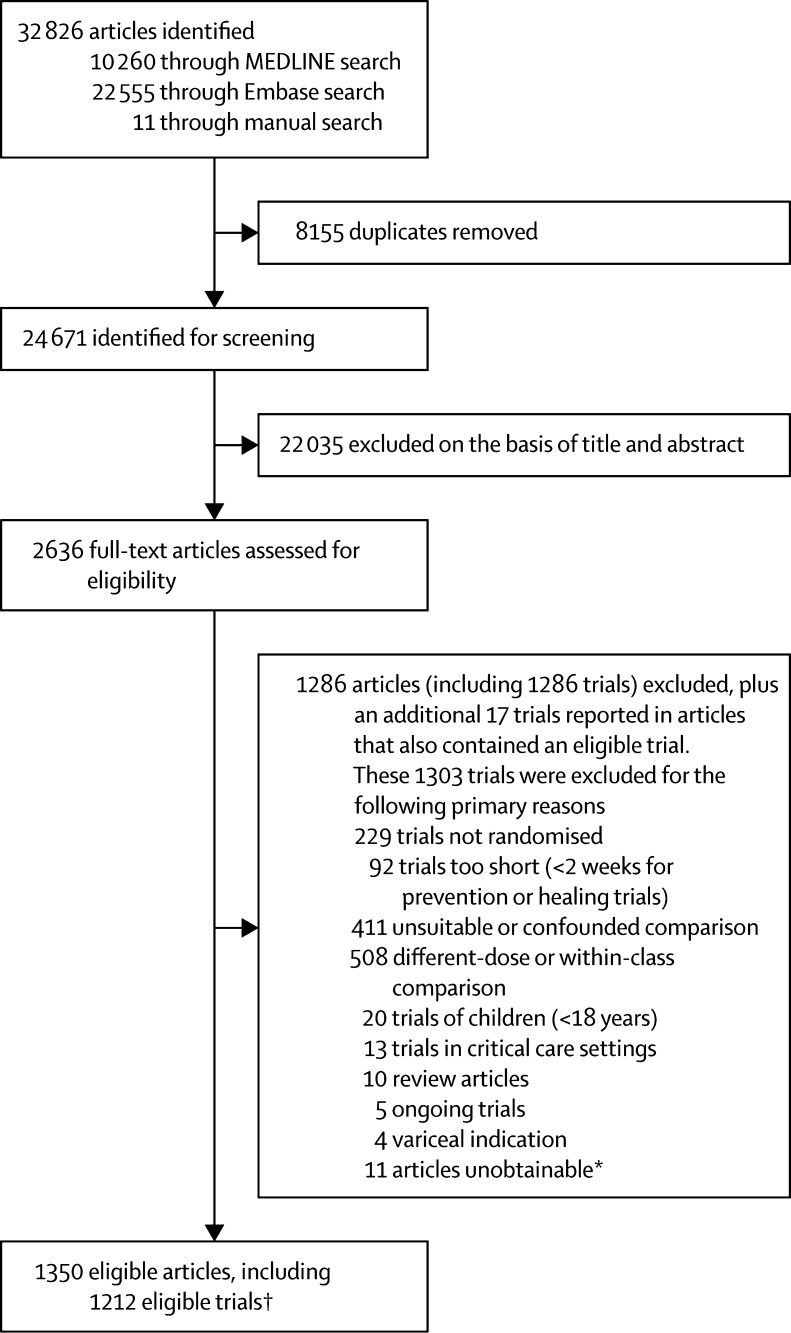
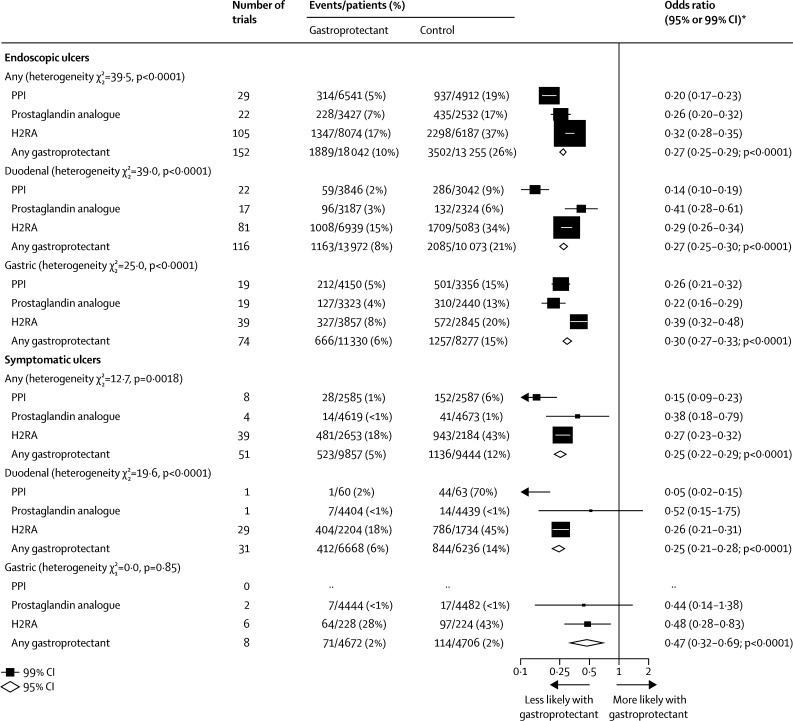
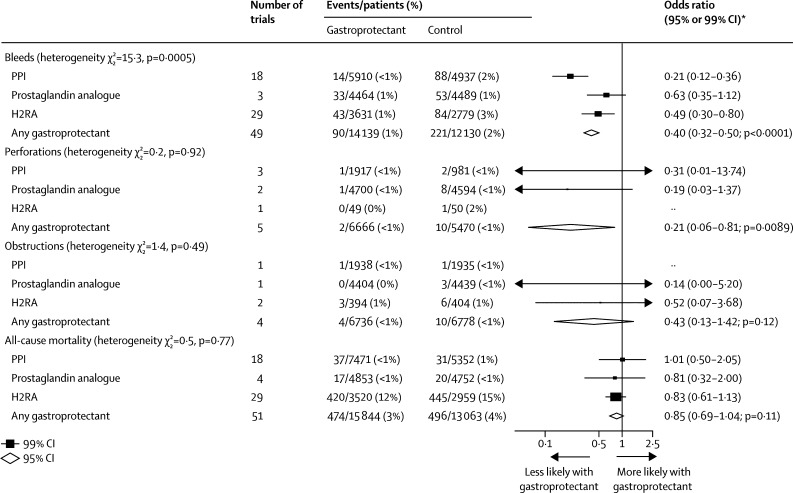
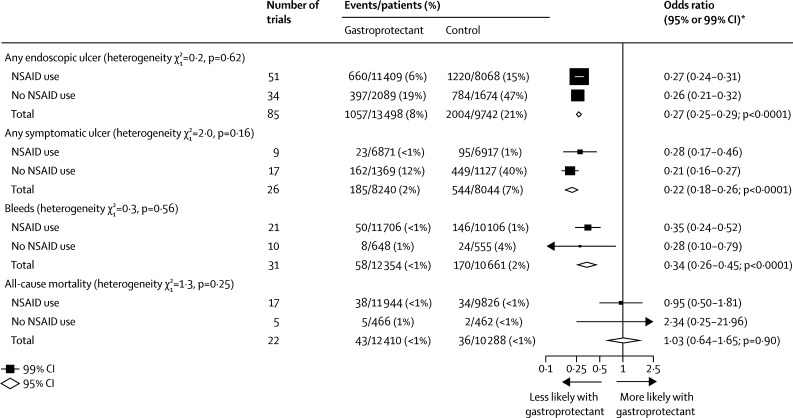
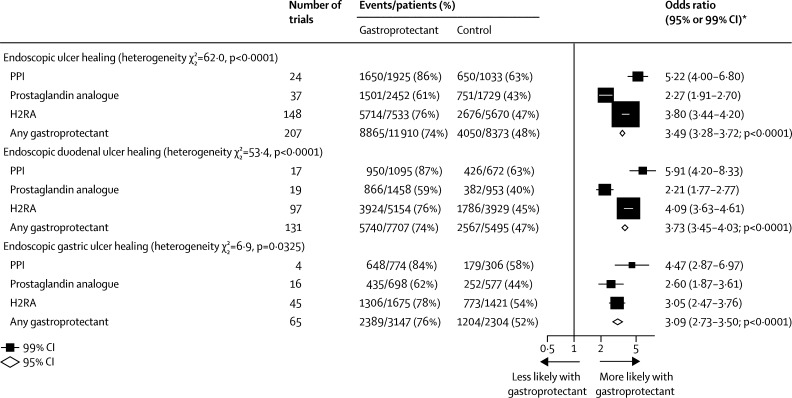
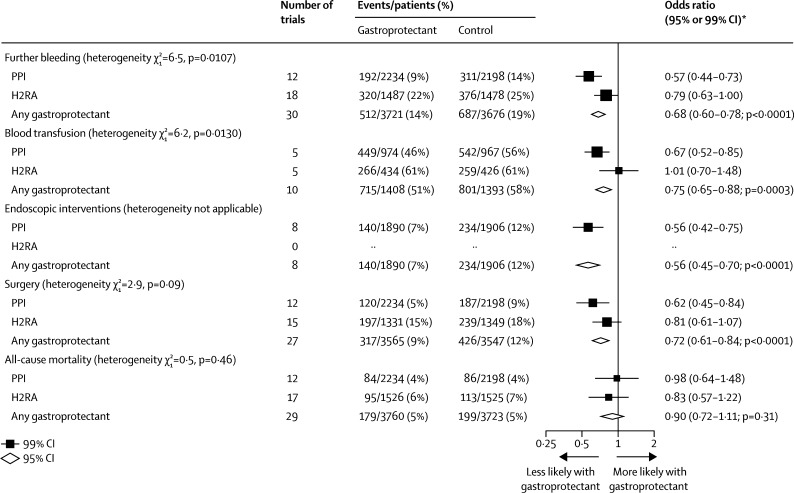
BackgroundGastroprotectant drugs are used for the prevention and treatment of peptic ulcer disease and might reduce its associated complications, but reliable estimates of the effects of gastroprotectants in different clinical settings are scarce. We aimed to examine the effects of proton-pump inhibitors (PPIs), prostaglandin analogues, and histamine-2 receptor antagonists (H2RAs) in different clinical circumstances by doing meta-analyses of tabular data from all relevant unconfounded randomised trials of gastroprotectant drugs.MethodsWe searched MEDLINE and Embase from Jan 1, 1950, to Dec 31, 2015, to identify unconfounded, randomised trials of a gastroprotectant drug (defined as a PPI, prostaglandin analogue, or H2RA) versus control, or versus another gastroprotectant. Two independent researchers reviewed the search results and extracted the prespecified outcomes and key characteristics for each trial. We did meta-analyses of the effects of gastroprotectant drugs on ulcer development, bleeding, and mortality overall, according to the class of gastroprotectant, and according to the individual drug within a gastroprotectant class.FindingsWe identified comparisons of gastroprotectant versus control in 849 trials (142 485 participants): 580 prevention trials (110 626 participants), 233 healing trials (24 033 participants), and 36 trials for the treatment of acute upper gastrointestinal bleeding (7826 participants). Comparisons of one gastroprotectant drug versus another were available in 345 trials (64 905 participants), comprising 160 prevention trials (32 959 participants), 167 healing trials (28 306 participants), and 18 trials for treatment of acute upper gastrointestinal bleeding (3640 participants). The median number of patients in each trial was 78 (IQR 44·0–210·5) and the median duration was 1·4 months (0·9–2·8). In prevention trials, gastroprotectant drugs reduced development of endoscopic ulcers (odds ratio [OR] 0·27, 95% CI 0·25–0·29; p<0·0001), symptomatic ulcers (0·25, 0·22–0·29; p<0·0001), and upper gastrointestinal bleeding (0·40, 0·32–0·50; p<0·0001), but did not significantly reduce mortality (0·85, 0·69–1·04; p=0·11). Larger proportional reductions in upper gastrointestinal bleeding were observed for PPIs than for other gastroprotectant drugs (PPIs 0·21, 99% CI 0·12–0·36; prostaglandin analogues 0·63, 0·35–1·12; H2RAs 0·49, 0·30–0·80; phet=0·0005). Gastroprotectant drugs were effective in preventing bleeding irrespective of the use of non-steroidal anti-inflammatory drugs (phet=0·56). In healing trials, gastroprotectants increased endoscopic ulcer healing (3·49, 95% CI 3·28–3·72; p<0·0001), with PPIs more effective (5·22, 99% CI 4·00–6·80) than prostaglandin analogues (2·27, 1·91–2·70) and H2RAs (3·80, 3·44–4·20; phet<0·0001). In trials among patients with acute bleeding, gastroprotectants reduced further bleeding (OR 0·68, 95% CI 0·60–0·78; p<0·0001), blood transfusion (0·75, 0·65–0·88; p=0·0003), further endoscopic intervention (0·56, 0·45–0·70; p<0·0001), and surgery (0·72, 0·61–0·84; p<0·0001), but did not significantly reduce mortality (OR 0·90, 0·72–1·11; p=0·31). PPIs had larger protective effects than did H2RAs for further bleeding (phet=0·0107) and blood transfusion (phet=0·0130).InterpretationGastroprotectants, in particular PPIs, reduce the risk of peptic ulcer disease and its complications and promote healing of peptic ulcers in a wide range of clinical circumstances. However, this meta-analysis might have overestimated the benefits owing to small study bias.FundingUK Medical Research Council and the British Heart Foundation.
Overview
The claims and statistics of this paper haven’t been checked yet.
Free: it reads the open-access text and checks the first 5 claims that cite a source we can check. Create a free account to check every claim.
Integrity signals
Registry
Cites
Statistics
Figures
Verification
Claims the paper makes
The claims and statistics of this paper haven’t been checked yet.
Free: it reads the open-access text and checks the first 5 claims that cite a source we can check. Create a free account to check every claim.
Claims other papers make about this one
Each is checked against this paper’s own text: does it say what the citing paper says it does?
The cited source doesn’t support the claim as written.
In the citing paper
“This benefit was also observed in the pre-specified subgroup of 6732 patients with diabetes in the COMPASS trial”
From 2023 ESC guidelines for the management of cardiovascular disease in patients with diabetes. (2023) · cites this paper as [352]
Checked by a reasoning model — may be wrong.
Experimental — accuracy not yet measuredThe check wasn’t confident either way, so it gives no verdict — never disputed.
In the citing paper
“Regarding CV safety, the composite of MI, stroke, CV death, CHD, and acute limb ischaemia was similar between pantoprazole and placebo, as was the rate of new-onset diabetes.”
From 2023 ESC guidelines for the management of cardiovascular disease in patients with diabetes. (2023) · cites this paper as [352]
Experimental — accuracy not yet measured
Self-check
Percentages, sums and reported differences re-computed from the paper’s own numbers.
The self-check needs the paper’s full text.
Citations
Cites
Rivaroxaban with or without aspirin in stable cardiovascular disease
Eikelboom, J. W., Connolly, S. J., Bosch, J., Dagenais, G. R., Hart, R. G., Shestakovska, O., Diaz, R., Alings, M., Lonn, E. M., Anand, S. S., et al. (2017) · New England Journal of Medicine · doi:10.1056/nejmoa1709118 · Cited by 2,438
Malfertheiner, P., Chan, F. K., & McColl, K. E. (2009) · The Lancet · doi:10.1016/s0140-6736(09)60938-7 · Cited by 1,488
Clopidogrel with or without Omeprazole in Coronary Artery Disease
Bhatt, D. L., Cryer, B. L., Contant, C. F., Cohen, M., Lanas, A., Schnitzer, T. J., Shook, T. L., Lapuerta, P., Goldsmith, M. A., Laine, L., et al. (2010) · New England Journal of Medicine · doi:10.1056/nejmoa1007964 · Cited by 1,240
Self-citationLanas, A., & Chan, F. K. L. (2017) · The Lancet · doi:10.1016/s0140-6736(16)32404-7 · Cited by 984
Publication bias in clinical trials due to statistical significance or direction of trial results
Hopewell, S., Loudon, K., Clarke, M. J., Oxman, A. D., & Dickersin, K. (2009) · Cochrane Database of Systematic Reviews · doi:10.1002/14651858.mr000006.pub3 · Cited by 898
Gomm, W., von Holt, K., Thomé, F., Broich, K., Maier, W., Fink, A., Doblhammer, G., & Haenisch, B. (2016) · JAMA Neurology · doi:10.1001/jamaneurol.2015.4791 · Cited by 563
Small study effects in meta-analyses of osteoarthritis trials: meta-epidemiological study
Nuesch, E., Trelle, S., Reichenbach, S., Rutjes, A. W. S., Tschannen, B., Altman, D. G., Egger, M., & Juni, P. (2010) · BMJ · doi:10.1136/bmj.c3515 · Cited by 559
Clostridium difficile-associated diarrhea and proton pump inhibitor therapy: a meta-analysis
Janarthanan, S., Ditah, I., Adler, D. G., & Ehrinpreis, M. N. (2012) · American Journal of Gastroenterology · doi:10.1038/ajg.2012.179 · Cited by 538
Research works printed but not linked: 1
- Early Breast Cancer Trialists' Collaborative Group Treatment of early breast cancer: worldwide evidence 1985–1990 1990 Oxford University Press Oxford
Cited by
KDIGO 2024 clinical practice guideline for the evaluation and management of chronic kidney disease
Stevens, P. E., Ahmed, S. B., Carrero, J. J., Foster, B., Francis, A., Hall, R. K., Herrington, W. G., Hill, G., Inker, L. A., Kazancıoğlu, R., et al. (2024) · Kidney International · doi:10.1016/j.kint.2023.10.018 · Cited by 8,530
2021 ESC Guidelines on cardiovascular disease prevention in clinical practice
Visseren, F. L. J., Mach, F., Smulders, Y. M., Carballo, D., Koskinas, K. C., Bäck, M., Benetos, A., Biffi, A., Boavida, J.-M., Capodanno, D., et al. (2021) · European Heart Journal · doi:10.1093/eurheartj/ehab484 · Cited by 6,485
Cosentino, F., Grant, P. J., Aboyans, V., Bailey, C. J., Ceriello, A., Delgado, V., Federici, M., Filippatos, G., Grobbee, D. E., Hansen, T. B., et al. (2020) · European Heart Journal · doi:10.1093/eurheartj/ehz486 · Cited by 4,763
Self-citationVan Gelder, I. C., Rienstra, M., Bunting, K. V., Casado-Arroyo, R., Caso, V., Crijns, H. J. G. M., De Potter, T. J. R., Dwight, J., Guasti, L., Hanke, T., et al. (2024) · European Heart Journal · doi:10.1093/eurheartj/ehae176 · Cited by 3,024
2024 ESC Guidelines for the management of chronic coronary syndromes
Vrints, C., Andreotti, F., Koskinas, K. C., Rossello, X., Adamo, M., Ainslie, J., Banning, A. P., Budaj, A., Buechel, R. R., Chiariello, G. A., et al. (2024) · European Heart Journal · doi:10.1093/eurheartj/ehae177 · Cited by 2,774
2023 ESC guidelines for the management of cardiovascular disease in patients with diabetes.
Marx, N., Federici, M., Schütt, K., Müller-Wieland, D., Ajjan, R. A., Antunes, M. J., Christodorescu, R. M., Crawford, C., Di Angelantonio, E., Eliasson, B., et al. (2023) · European Heart Journal · doi:10.1093/eurheartj/ehad192 · Cited by 1,642
Self-citationEffects of aspirin for primary prevention in persons with diabetes mellitus
The ASCEND Study Collaborative Group (2018) · New England Journal of Medicine · doi:10.1056/nejmoa1804988 · Cited by 1,200
2021 ESC Guidelines on cardiovascular disease prevention in clinical practice
Visseren, F. L. J., Mach, F., Smulders, Y. M., Carballo, D., Koskinas, K. C., Bäck, M., Benetos, A., Biffi, A., Boavida, J.-M., Capodanno, D., et al. (2022) · European Journal of Preventive Cardiology · doi:10.1093/eurjpc/zwab154 · Cited by 542
2025 ESC Guidelines for the management of myocarditis and pericarditis
Schulz-Menger, J., Collini, V., Gröschel, J., Adler, Y., Brucato, A., Christian, V., Ferreira, V. M., Gandjbakhch, E., Heidecker, B., Kerneis, M., et al. (2025) · European Heart Journal · doi:10.1093/eurheartj/ehaf192 · Cited by 434
Cardiovascular effects and safety of (non-aspirin) NSAIDs
Schjerning, A.-M., McGettigan, P., & Gislason, G. (2020) · Nature Reviews Cardiology · doi:10.1038/s41569-020-0366-z · Cited by 387
Evidence-based clinical practice guidelines for peptic ulcer disease 2020
Kamada, T., Satoh, K., Itoh, T., Ito, M., Iwamoto, J., Okimoto, T., Kanno, T., Sugimoto, M., Chiba, T., Nomura, S., et al. (2021) · Journal of Gastroenterology · doi:10.1007/s00535-021-01769-0 · Cited by 265
Xie, X., Ren, K., Zhou, Z., Dang, C., & Zhang, H. (2022) · BMC Gastroenterology · doi:10.1186/s12876-022-02130-2 · Cited by 260
“Acid suppressant drugs, mainly PPIs, seem to be the most effective class of gastroprotectants for the management of PUD [52].”
BackgroundXie, Y., Bowe, B., Yan, Y., Xian, H., Li, T., & Al-Aly, Z. (2019) · BMJ · doi:10.1136/bmj.l1580 · Cited by 228
Role of aspirin in primary prevention of cardiovascular disease
Patrono, C., & Baigent, C. (2019) · Nature Reviews Cardiology · doi:10.1038/s41569-019-0225-y · Cited by 173
Self-citationPeptic Ulcer Disease: A Review
Vakil, N. B. (2024) · JAMA · doi:10.1001/jama.2024.19094 · Cited by 192
Gastrointestinal and cardiovascular adverse events associated with NSAIDs
Domper-Arnal, M. J., Hijos, G., & Lanas, Á. (2021) · Expert Opinion on Drug Safety · doi:10.1080/14740338.2021.1965988 · Cited by 176
Moayyedi, P., Eikelboom, J. W., Bosch, J., Connolly, S. J., Dyal, L., Shestakovska, O., Leong, D., Anand, S. S., Störk, S., Branch, K. R. H., et al. (2019) · Gastroenterology · doi:10.1053/j.gastro.2019.04.041 · Cited by 158
Mahady, S. E., Margolis, K. L., Chan, A. T., Polekhina, G., Woods, R. L., Wolfe, R. S., Nelson, M. R., Lockery, J. E., Wood, E. M., Reid, C. M., et al. (2020) · Gut · doi:10.1136/gutjnl-2020-321585 · Cited by 166
Almadi, M. A., Lu, Y., Alali, A. A., & Barkun, A. N. (2024) · The Lancet · doi:10.1016/s0140-6736(24)00155-7 · Cited by 162
A Review of the Role of Flavonoids in Peptic Ulcer (2010–2020)
Serafim, C. A. D. L., Araruna, M. E. C., Júnior, E. A., Diniz, M. D. F. F. M., Hiruma-Lima, C. A., & Batista, L. M. (2020) · Molecules · doi:10.3390/molecules25225431 · Cited by 163
“pylori infection occurs, the use of antimicrobials is necessary [21].”
BackgroundChinese Guideline on the Primary Prevention of Cardiovascular Diseases
Chinese Society of Cardiology of Chinese Medical Association, C. D. P. A. R. C. O. C. A. O. R. M. (2021) · Cardiology Discovery · doi:10.1097/cd9.0000000000000025 · Cited by 133
Sverdén, E., Agréus, L., Dunn, J. M., & Lagergren, J. (2019) · BMJ · doi:10.1136/bmj.l5495 · Cited by 149
Singh, A., Malhotra, D., Singh, K., Chadha, R., & Bedi, P. M. S. (2022) · Journal of Molecular Structure · doi:10.1016/j.molstruc.2022.133479 · Cited by 118
EHA Guidelines on Management of Antithrombotic Treatments in Thrombocytopenic Patients With Cancer
Falanga, A., Leader, A., Ambaglio, C., Bagoly, Z., Castaman, G., Elalamy, I., Lecumberri, R., Niessner, A., Pabinger, I., Szmit, S., et al. (2022) · HemaSphere · doi:10.1097/hs9.0000000000000750 · Cited by 129
Low-dose aspirin for the prevention of atherosclerotic cardiovascular disease
Patrono, C. (2024) · European Heart Journal · doi:10.1093/eurheartj/ehae324 · Cited by 120
Self-citationIvashkin, V. T., Maev, I. V., Tsarkov, P., Korolev, M. P., Андреев, Д. Н., Baranskaya, Е. К., Burkov, S. G., Derinov, А. А., Efetov, S. K., Lapina, T. L., et al. (2020) · Russian Journal of Gastroenterology Hepatology Coloproctology · doi:10.22416/1382-4376-2020-30-1-49-70 · Cited by 93
Guía ESC 2021 sobre la prevención de la enfermedad cardiovascular en la práctica clínica
Visseren, F. L. J., Mach, F., Smulders, Y. M., Carballo, D., Koskinas, K. C., Bäck, M., Bénétos, A., Biffi, A., Boavida, J. M., Capodanno, D., et al. (2022) · Revista Española de Cardiología · doi:10.1016/j.recesp.2021.10.016 · Cited by 125
Périco, L. L., Emílio-Silva, M. T., Ohara, R., Rodrigues, V. P., Bueno, G. M., Barbosa‐Filho, J. M., da Rocha, L. R. M., Batista, L. M., & Hiruma-Lima, C. A. (2020) · Biomolecules · doi:10.3390/biom10020265 · Cited by 97
“NSAIDs NSAIDs r o e of th most widely used drugs i the world, ca sing a substantial increase in the risk of upper gastrointestinal complications [21].”
BackgroundSiau, K., Hearnshaw, S., Stanley, A. J., Estcourt, L. J., Rasheed, A. M., Walden, A., Thoufeeq, M., Donnelly, M., Drummond, R. S., Veitch, A., et al. (2020) · Frontline Gastroenterology · doi:10.1136/flgastro-2019-101395 · Cited by 94
Guo, Y., Wu, Y., Huang, T., Huang, D., Zeng, Q., Wang, Z., Hu, Y., Liang, P., Chen, H., Zheng, Z., et al. (2024) · Journal of Ethnopharmacology · doi:10.1016/j.jep.2024.117739 · Cited by 73
Potent Acid Suppression with PPIs and P-CABs: What’s New?
Hunt, R. H., & Scarpignato, C. (2018) · Current Treatment Options in Gastroenterology · doi:10.1007/s11938-018-0206-y · Cited by 76
Self-citationAcute, periprocedural and longterm antithrombotic therapy in older adults
Andreotti, F., Geisler, T., Collet, J., Gigante, B., Gorog, D. A., Halvorsen, S., Lip, G. Y. H., Morais, J., Navarese, E. P., Patrono, C., et al. (2022) · European Heart Journal · doi:10.1093/eurheartj/ehac515 · Cited by 70
Self-citationPlants with Anti-Ulcer Activity and Mechanism: A Review of Preclinical and Clinical Studies
Prayoga, D. K., Aulifa, D. L., Budiman, A., & Levita, J. (2024) · Drug Design Development and Therapy · doi:10.2147/dddt.s446949 · Cited by 79
“10 Based on the findings, it has been reported by the World Health Organization (WHO) that approximately 80–85% of the global population relies on natural products for disease management and nutritional supplementation.”
BackgroundMahmud, N., Serper, M., Taddei, T. H., & Kaplan, D. E. (2022) · Gastroenterology · doi:10.1053/j.gastro.2022.03.052 · Cited by 60
Plants and phytochemicals for treatment of peptic ulcer: An overview
Gupta, M., Kapoor, B., Gupta, R., & Singh, N. (2021) · South African Journal of Botany · doi:10.1016/j.sajb.2020.11.030 · Cited by 68
Country-wide medical records infer increased allergy risk of gastric acid inhibition
Jordakieva, G., Kundi, M., Untersmayr, E., Pali‐Schöll, I., Reichardt, B., & Jensen‐Jarolim, E. (2019) · Nature Communications · doi:10.1038/s41467-019-10914-6 · Cited by 56
Wang, G.-Y., Chen, S.-Y., Chen, Y., Hong, C., Hsu, Y., & Yen, G. (2020) · Phytomedicine · doi:10.1016/j.phymed.2020.153382 · Cited by 53
Begg, M., Tarhuni, M., Fotso, M. N., Gonzalez, N. A., Sanivarapu, R. R., Osman, U., Kumar, A. L., Sadagopan, A., Mahmoud, A., & Khan, S. (2023) · Cureus · doi:10.7759/cureus.44341 · Cited by 66
“Clinical guidelines recommend PPIs as first-choice gastroprotection drugs, supported by systematic reviews and meta-analyses in clinical settings [9] [3].”
InfluentialKurlander, J. E., Rubenstein, J. H., Richardson, C. R., Krein, S. L., Vries, R. G. D., Zikmund‐Fisher, B. J., Yang, Y., Laine, L., Weissman, A., & Saini, S. D. (2020) · The American Journal of Gastroenterology · doi:10.14309/ajg.0000000000000558 · Cited by 53
Self-citationAspirin in the primary prevention of cardiovascular disease in diabetes mellitus: A new perspective
Rocca, B., & Patrono, C. (2020) · Diabetes Research and Clinical Practice · doi:10.1016/j.diabres.2020.108008 · Cited by 48
Self-citationHelicobacter pylori Infection: New Facts in Clinical Management
Malfertheiner, P., Venerito, M., & Schulz, C. (2018) · Current Treatment Options in Gastroenterology · doi:10.1007/s11938-018-0209-8 · Cited by 53
Kurlander, J. E., Barnes, G. D., Fisher, A., Gonzalez, J. J., Helminski, D., Saini, S. D., Sengupta, N., Yang, Y., Scheiman, J. M., & Laine, L. (2022) · The American Journal of Medicine · doi:10.1016/j.amjmed.2022.05.031 · Cited by 52
Self-citationGelder, I. C. V., Rienstra, M., Bunting, K. V., Casado-Arroyo, R., Caso, V., Crijns, H. J. G. M., Potter, T. J. R. D., Dwight, J., Guasti, L., Hanke, T., et al. (2025) · Giornale Ialiano di Cardiologia · doi:10.1714/4419.44150 · Cited by 42
Aspirin in the Prevention of Cardiovascular Disease and Cancer
Ricciotti, E., & FitzGerald, G. A. (2021) · Annual Review of Medicine · doi:10.1146/annurev-med-051019-102940 · Cited by 46
Effects of aspirin on the gastrointestinal tract: Pros vs. cons (Review)
Li, Z., Wang, Z., Shen, B., Chen, C., Ding, X., & Song, H. (2020) · Oncology Letters · doi:10.3892/ol.2020.11817 · Cited by 45
Song, H., Hou, X., Zeng, M., Chen, X., Chen, X., Yang, T., Xu, F., Peng, J., Peng, Q., Cai, X., et al. (2020) · Journal of Ethnopharmacology · doi:10.1016/j.jep.2020.112979 · Cited by 39
Li, L. J., Du, Y., Wang, Y., He, N., Wang, B., & Zhang, T. (2022) · Journal of Inflammation Research · doi:10.2147/jir.s372389 · Cited by 40
“Although several medications (eg, proton pump inhibitors, antibiotics, antihistamines, and antacids) have been used in clinic to alleviate the symptoms of GU, their therapeutic efficiencies are unsatisfactory owing to various adverse effects.(1,8) Therefore, it is particularly important to use natural medicines with l…”
BackgroundAcid Suppressant Therapy: a Step Forward with Potassium-Competitive Acid Blockers
Scarpignato, C., & Hunt, R. H. (2021) · Current Treatment Options in Gastroenterology · doi:10.1007/s11938-020-00330-x · Cited by 41
Self-citationHarakeh, S., Saber, S. H., Akefe, I. O., Ali, S. S., Hussain, M. B., Almasaudi, A. S., Saleh, S. M. M., & Almasaudi, S. B. (2022) · Saudi Journal of Biological Sciences · doi:10.1016/j.sjbs.2022.01.031 · Cited by 39
“The cure or even prevention of gastric ulcers is a challenge facing medicine because most of the drugs that are currently sold on market have limited efficacy against the illness and mostly associated with adverse side effects (Kawai et al., 2018; Scally et al., 2018).”
BackgroundThe year in cardiology 2018: prevention
Reiner, Ž., Laufs, U., Cosentino, F., & Landmesser, U. (2019) · European Heart Journal · doi:10.1093/eurheartj/ehy894 · Cited by 50
Coyle, C., Symonds, R., Allan, J. D. O. M., Dawson, S., Russell, S., Smith, A., Daff, C., & Kotze, H. L. (2019) · BJGP Open · doi:10.3399/bjgpopen19x101651 · Cited by 37
Chen, L.-Y., Lin, H., Wu, W., Chen, Y., Chen, C., Kao, J., You, S., Chou, Y., & Sun, C. (2020) · International Journal of Environmental Research and Public Health · doi:10.3390/ijerph17218271 · Cited by 39
“The development of PPIs further improved suppression of gastric acid secretion and ensured very high healing rates for duodenal and gastric ulcers [8].”
BackgroundNonsteroidal Antiinflammatory Drugs, Anticoagulation, and Upper Gastrointestinal Bleeding
Lee, M. W., & Katz, P. O. (2020) · Clinics in Geriatric Medicine · doi:10.1016/j.cger.2020.08.004 · Cited by 41
Who Needs Gastroprotection in 2020?
Kanno, T., & Moayyedi, P. (2020) · Current Treatment Options in Gastroenterology · doi:10.1007/s11938-020-00316-9 · Cited by 38
“There was early promise [65] that this would translate into a reduction in PU complications, but this was not supported by a systematic review of three RCTs involving almost 9000 patients, where there was no statistically significant reduction in PU bleeding [85].”
BackgroundResultInfluentialde Araújo, E. R. D., Guerra, G. C. B., Andrade, A. W. L., Fernandes, J. M., da Silva, V. C., Tavares, E. D. A., de Araújo, A. A., Júnior, R. F. D. A., & Zucolotto, S. M. (2021) · Frontiers in Pharmacology · doi:10.3389/fphar.2021.744192 · Cited by 39
Autoren, & Collaborators: (2023) · Zeitschrift für Gastroenterologie · doi:10.1055/a-1975-0414 · Cited by 33
Nonsteroidal Anti-Inflammatory Drug-Induced Peptic Ulcer Disease
Ko, K. A., & Lee, D. K. (2025) · The Korean Journal of Helicobacter and Upper Gastrointestinal Research · doi:10.7704/kjhugr.2025.0004 · Cited by 32
“39 Additionally, a comparative study evaluating famotidine versus pantoprazole for the prevention of aspirin-related peptic ulcer recurrence found a significantly higher cumulative ulcer recurrence rate at 48 weeks in the famotidine group compared to the pantoprazole group (17.6% vs. 3.8%, p…”
InfluentialProtective Effects of Chitosan-Bilirubin Nanoparticles Against Ethanol-Induced Gastric Ulcers
Huang, Z., Shi, Y., Wang, H., Chun, C., Chen, L., Wang, K., Lu, Z., Zhao, Y., & Li, X. (2021) · International Journal of Nanomedicine · doi:10.2147/ijn.s344805 · Cited by 32
“However, these traditional drugs have unavoidable adverse effects.(5) Therefore, development of an effective and safe strategy for protecting the gastric mucosa through anti-inflammatory and antioxidant actions is clinically important and urgent.”
BackgroundProton Pump Inhibitors in the Elderly, Balancing Risk and Benefit: an Age-Old Problem
Kanno, T., & Moayyedi, P. (2019) · Current Gastroenterology Reports · doi:10.1007/s11894-019-0732-3 · Cited by 36
Gong, H., Han, D., Luo, Z., Zhu, Q., Zhu, X., Liu, S., & Di-ping, C. (2023) · Phytomedicine · doi:10.1016/j.phymed.2023.154954 · Cited by 33
Management of bleeding and procedures in patients on antiplatelet therapy
Swan, D., Loughran, N., Makris, M., & Thachil, J. V. (2019) · Blood Reviews · doi:10.1016/j.blre.2019.100619 · Cited by 31
“Proton pump inhibition (PPI) is recommended in all patients unless contraindicated, as it has been shown to improve outcomes in both the acute bleed (46) and prevention of re-bleeds in patients continuing both single-agent and dual-agent antiplatelet therapy (47, 48).”
BackgroundOuyang, M., Zou, S., Cheng, Q., Shi, X., Zhao, Y., & Sun, M. (2024) · Pharmaceuticals · doi:10.3390/ph17060698 · Cited by 30
“Further studies are needed to clarify the long-term efficacy and safety of P-CABs in clinical practice to guide clinical decisions and provide better treatment options.”
BackgroundGaregnani, L., Oltra, G. V., Burgos, M. A., Ivaldi, D., Varela, L. B., Menai, S. D., Puga‐Tejada, M., Liquitay, C. M. E., & Franco, J. V. A. (2025) · Cochrane Database of Systematic Reviews · doi:10.1002/14651858.cd014585.pub2 · Cited by 29
Ahmed, O. A. A., Fahmy, U. A., Bakhaidar, R. B., El‐Moselhy, M. A., Alfaleh, M. A., Ahmed, A. F., Hammad, A. S. A., Aldawsari, H. M., & Alhakamy, N. A. (2020) · International Journal of Nanomedicine · doi:10.2147/ijn.s247252 · Cited by 32
“Research has been carried out to investigate the potential efficacy of the aforementioned drug as a potent antioxidant for management and protection against peptic ulcer; yet data with this regard remain scarce in literature.(9) PSO is rich in mono- and polyunsaturated fatty acids, mainly oleic and linoleic acid (37–4…”
BackgroundRetractedCarlotto, J., Ferreira, D. M., de Souza, L. M., da Luz, B. B., Dallazen, J. L., Werner, M. F. D. P., & Cipriani, T. R. (2019) · Carbohydrate Polymers · doi:10.1016/j.carbpol.2019.115239 · Cited by 29
Yasin, H., Tariq, F., Sameen, A., Ahmad, N., Manzoor, M. F., Yasin, M., Tariq, T., Iqbal, M. W., Ishfaq, B., Mahmood, S., et al. (2020) · Food Science & Nutrition · doi:10.1002/fsn3.1963 · Cited by 28
“Long-term usage of drugs causes many side effects including gynecomastia, arrhythmia, hematopoietic changes, and impotence, and also recurrence of ulcer (Scally et al., 2018).”
BackgroundGigante, B., Levy, J. H., Gorp, E. C. M. V., Bartoloni, A., Bochaton‐Piallat, M., Bäck, M., Cate, H. T., Christersson, C., Ferreiro, J. L., Geisler, T., et al. (2023) · European Heart Journal · doi:10.1093/eurheartj/ehad388 · Cited by 31
Ben‐Eltriki, M., Green, C. J., Maclure, M., Musini, V. M., Bassett, K. L., & Wright, J. M. (2020) · Pharmacology Research & Perspectives · doi:10.1002/prp2.651 · Cited by 29
Gough, S. L., Hallowell, G. D., & Rendle, D. I. (2022) · Veterinary Medicine and Science · doi:10.1002/vms3.728 · Cited by 26
“…also be a factor as treatment of gastric lesions in humans typically necessitates greater than one month of acid suppressant therapy (Scally et al., 2018) and experienceofORLO indicates that somehorseswhich fail to respond to treatmentwith28days of treatmentmayheal after…”
BackgroundJiang, T., Du, S., Wang, Z., Hu, Q., Zeng, L., Chen, Y., Tan, X., Zeng, Y., Fu, L., Hu, F., et al. (2025) · Phytomedicine · doi:10.1016/j.phymed.2025.156887 · Cited by 26
Epithelial protective therapy in comorbid diseases. Practical Guidelines for Physicians
Simanenkov, V. I., Maev, I. V., Ткачева, О. Н., Alekseenko, S. A., Андреев, Д. Н., Бакулина, Н. В., Бакулин, И. Г., Bordin, D. S., Vlasov, T. D., Vorobyeva, N. M., et al. (2022) · Terapevticheskii arkhiv · doi:10.26442/00403660.2022.08.201523 · Cited by 29
Giannopoulos, S., Athanasiadis, D. I., Clapp, B. L., Lyo, V., Ghanem, O. M., Puzziferri, N., & Stefanidis, D. (2022) · Surgery for Obesity and Related Diseases · doi:10.1016/j.soard.2022.10.002 · Cited by 25
Laucirica, I., García‐Iglesias, P., & Calvet, X. (2023) · Medicina Clínica · doi:10.1016/j.medcli.2023.05.008 · Cited by 32
Diabetes and Vascular Disease: Is It All About Glycemia?
Vecchié, A., Montecucco, F., Carbone, F., Dallegri, F., & Bonaventura, A. (2019) · Current Pharmaceutical Design · doi:10.2174/1381612825666190830181944 · Cited by 24
ASMBS literature review on the treatment of marginal ulcers after metabolic and bariatric surgery
Vosburg, R. W., Nimeri, A. A., Azagury, D. E., Grover, B. T., Noria, S. F., Papasavas, P. K., & Carter, J. T. (2024) · Surgery for Obesity and Related Diseases · doi:10.1016/j.soard.2024.10.003 · Cited by 26
Adebayo-Gege, G. I., Uthman, Z. S., Adams, M. D., FLORENCE, T., Haruna, D. U., Audu, N. M., Jabba, H. L., Ozegbe, Q. E. B., Chinedu, O., Ajibola, M., et al. (2023) · Biomedicine & Pharmacotherapy · doi:10.1016/j.biopha.2023.114531 · Cited by 22
Fischbach, W., Bornschein, J., Hoffmann, J., Koletzko, S., Link, A., Macke, L., Malfertheiner, P., Schütte, K., Selgrad, D.-M., Suerbaum, S., et al. (2024) · Zeitschrift für Gastroenterologie · doi:10.1055/a-2181-2225 · Cited by 28
Chazova, I. E., Shestakova, M. V., Zhernakova, Y. V., Blinova, N. V., Маркова, Т. Н., Mazurina, N. V., Владиславович, Е. М., Tereshchenko, S. N., Жиров, И. В., Komarov, A. L., et al. (2021) · Eurasian heart journal · doi:10.38109/2225-1685-2021-2-6-61 · Cited by 27
Barriers to Guideline-Based Use of Proton Pump Inhibitors to Prevent Upper Gastrointestinal Bleeding
Kurlander, J. E., Helminski, D., Kokaly, A. N., Richardson, C. R., Vries, R. G. D., Saini, S. D., & Krein, S. L. (2022) · The Annals of Family Medicine · doi:10.1370/afm.2734 · Cited by 17
Linee guida ESC 2024 per la gestione delle sindromi coronariche croniche
Vrints, C. J., Andreotti, F., Koskinas, K. C., Rosselló, X., Adamo, M., Ainslie, J., BANNING, A. P., Budaj, A., Buechel, R. R., Chiariello, G. A., et al. (2024) · Giornale Ialiano di Cardiologia · doi:10.1714/4375.43725 · Cited by 18
Ivashkin, V. T., Mayev, I. V., Tsarkov, P., Korolev, M. P., Андреев, Д. Н., Baranskaya, Е. К., Bordin, D. S., Burkov, S. G., Derinov, А. А., Efetov, S. K., et al. (2024) · Russian Journal of Gastroenterology Hepatology Coloproctology · doi:10.22416/1382-4376-2024-34-2-101-131 · Cited by 18
Yadav, S., Mali, S. N., & Pandey, A. (2024) · Biological Trace Element Research · doi:10.1007/s12011-024-04446-4 · Cited by 16
Romstad, K. K., Detlie, T. E., Søberg, T., Ricanek, P., Jahnsen, M. E., Lerang, F., & Jahnsen, J. (2020) · Scandinavian Journal of Gastroenterology · doi:10.1080/00365521.2020.1819405 · Cited by 15
Gastric Enzyme Supplementation Inhibits Food Allergy in a BALB/c Mouse Model
Samadi, N., Heiden, D., Klems, M., Salzmann, M., Rohrhofer, J., Weidmann, E., Koidl, L., Jensen‐Jarolim, E., & Untersmayr, E. (2021) · Nutrients · doi:10.3390/nu13030738 · Cited by 18
“Anti-ulcer drugs are applied for treatment of dyspeptic disorders of the gastrointestinal tract [18].”
Chronic pain in older and senile patients. Clinical guidelines
Tkacheva, O. N., Naumov, A. V., Kotovskaya, Y. V., Рунихина, Н. К., Milto, A. S., Alexanyan, L. A., Khovasova, N. O., Мороз, В. И., Маневич, Т. М., Розанов, А. В., et al. (2021) · Russian Journal of Geriatric Medicine · doi:10.37586/2686-8636-3-2021-275-312 · Cited by 15
Peptic ulcer: the current state of the problem
Maev, I. V., Андреев, Д. Н., Samsonov, A. A., & Cheryomushkina, A. S. (2022) · Meditsinskiy sovet = Medical Council · doi:10.21518/2079-701x-2022-16-6-100-108 · Cited by 14
ten Berg, J. M., Rocca, B., Angiolillo, D. J., & Hayashida, K. (2022) · European Heart Journal · doi:10.1093/eurheartj/ehac385 · Cited by 16
Laucirica, I., García‐Iglesias, P., & Calvet, X. (2023) · Medicina Clínica (English Edition) · doi:10.1016/j.medcle.2023.05.015 · Cited by 13
Acupuncture therapy for gastric ulcer: A protocol for systematic review and meta-analysis
Wang, H., Jiang, H., Zhao, J., Liu, X., Li, T., Chai, J., Meng, M., Pan, T. J., Xu, K., & Wang, F. (2021) · Medicine · doi:10.1097/md.0000000000027656 · Cited by 13
Aspirin for primary prevention: Is this the end of the road?
Singal, A. K., & Karthikeyan, G. (2019) · Indian Heart Journal · doi:10.1016/j.ihj.2019.04.001 · Cited by 14
Huang, Y.-E., Chen, S.-Y., Li, T., Tsai, Y., Chen, C., & Yen, G. (2024) · Food & Function · doi:10.1039/d4fo04106b · Cited by 13
Cioeta, R., Muti, P., Rigoni, M., Morlando, L., Siragusa, F., Cossu, A., & Giovagnoni, E. (2022) · Frontiers in Drug Safety and Regulation · doi:10.3389/fdsfr.2022.969831 · Cited by 12
“Mucosal protective agents (MPAs) are also commonly used, alone or as an add-on to PPIs, that have proven effective in reducing symptoms (Scally et al., 2018).”
da Silva, E. C. S., Guerra, G. C. B., de Araújo, E. R. D., Schlamb, J., da Silva, V. C., Tavares, E. D. A., Dantas-Medeiros, R., Abreu, L. S., Tavares, J. F., Júnior, R. F. D. A., et al. (2023) · Food & Function · doi:10.1039/d2fo03735a · Cited by 15
Durak, M. B., Şimşek, C., & Yüksel, İ. (2023) · The Turkish Journal of Gastroenterology · doi:10.5152/tjg.2023.23226 · Cited by 13
“30-day mortality, n (%) 40 (16) 17 (22) 4 (15) 19 (12)”
Petersen, S. R., Bonnesen, K., Larsen, J. B., Pedersen, L. H., & Schmidt, M. (2025) · European Heart Journal - Quality of Care and Clinical Outcomes · doi:10.1093/ehjqcco/qcaf076 · Cited by 11
Kurlander, J. E., Laine, L., Kim, H. M., Roberts, C. B., Saffar, D., Myers, A., Holleman, R. G., Gao, Y., Shank, M., Nelson, R. E., et al. (2024) · BMJ · doi:10.1136/bmj-2023-076484 · Cited by 11
“31 This is in spite of high quality evidence on the efficacy of PPIs for prevention of upper gastrointestinal bleeding, 32 recommendations in professional guidance statements, 15-17 33 34 and a clinical practice update from the American Gastroenterological Association clarifying that “the decision…”
BackgroundSelf-citationAcute upper gastrointestinal bleeding: a guide for nurses
Chapman, W., Siau, K., Thomas, F., Ernest, S., Begum, S., Iqbal, T. H., & Bhala, N. B. (2019) · British Journal of Nursing · doi:10.12968/bjon.2019.28.1.53 · Cited by 11
Self-citationIvashkin, V. T., Maev, I. V., Трухманов, А. С., Sheptulin, A. A., Simanenkov, V. I., Lapina, T. L., Борисович, Х. И., Дехнич, Н. Н., Lopina, O. D., Alekseeva, O. P., et al. (2020) · Russian Journal of Gastroenterology Hepatology Coloproctology · doi:10.22416/1382-4376-2020-30-6-7-18 · Cited by 11
The pharmacotherapeutic management of duodenal and gastric ulcers
Mousavi, T., Nikfar, S., & Abdollahi, M. R. (2021) · Expert Opinion on Pharmacotherapy · doi:10.1080/14656566.2021.1959914 · Cited by 12
A review on computer-aided diagnostic system to classify the disorders of the gastrointestinal tract
Ramzan, M. R., Raza, M., Khan, Z. F., Khan, M. A., Bačanin-Džakula, N., Damaševičius, R., Jeon, S., & Nam, Y. (2025) · European journal of medical research · doi:10.1186/s40001-025-02718-w · Cited by 11
“The disease due to cells that are damaged by gastric juices is known as a peptic disease [16].”
Metadata
- Authors
- Scally, B., Emberson, J. R., Spata, E., Reith, C., Davies, K., Halls, H., Holland, L., Wilson, K., Bhala, N., Hawkey, C., Hochberg, M., Hunt, R., Laine, L., Lanas, A., Patrono, C., & Baigent, C.
- Affiliations
- Glasgow Royal Infirmary (GB)
- MRC Population Health Research Unit (GB)
- University of Oxford (GB)
- Queen Elizabeth Hospital Birmingham (GB)
- Queen's Medical Centre (GB)
- University of Maryland, Baltimore (US)
- McMaster University (CA)
- Yale University (US)
- Università Cattolica del Sacro Cuore (IT)
- Corresponding author
- Baigent, Colin
- ORCID
- Venue
- The Lancet Gastroenterology & Hepatology
- Publisher
- Elsevier BV
- Published
- 2018-04
- Volume
- 3
- Issue
- 4
- Pages
- 231-241
- ISSN
- 2468-1156 (ISSN-L)
- 2468-1253
- PMC
- PMC5842491
- OpenAlex
- W2788189477
- Semantic Scholar
- 56970a7095af478974a1d3579bf2a1e8bc7d4ceb
- Cited by
- 259
- References
- 27
- Citations by year
- 2026: 25 · 2025: 37 · 2024: 35 · 2023: 30 · 2022: 34 · 2021: 25 · 2020: 38 · 2019: 23 · 2018: 12
- FWCI
- 5.45
- Type
- journal article
- Language
- en
- Open access
- hybrid
- doi.org
- Licence
- cc-by
- www.elsevier.com/tdm/userlicense/1.0/ (tdm)
- creativecommons.org/licenses/by/4.0/ (vor)
- Locations
- The Lancet. Gastroenterology & hepatology (publishedVersion, cc-by)
- PubMed Central (publishedVersion, cc-by)
- PubMed (publishedVersion)
- Zaguan (Universidad de Zaragoza) (submittedVersion, cc-by)
- Funders
- British Heart Foundation
- Medical Research Council
- Topics
- Health Sciences › Medicine › Gastroenterology › Helicobacter pylori-related gastroenterology studies
- Health Sciences › Medicine › Gastroenterology › Gastrointestinal Bleeding Diagnosis and Treatment
- Health Sciences › Medicine › Pharmacology (medical) › Inflammatory mediators and NSAID effects
- Keywords
- peptic ulcer, proton pump inhibitors, prostaglandin analogues, H2 receptor antagonists, ulcer prevention, ulcer healing, upper gastrointestinal bleeding, peptic ulcer mortality, drug comparison, adverse effects, drug safety, bleeding complications, drug interactions with anticoagulants, drug
- MeSH terms
- Anti-Inflammatory Agents, Non-Steroidal, Anti-Ulcer Agents, Histamine H2 Antagonists, Humans, Peptic Ulcer, Peptic Ulcer Hemorrhage, Prostaglandins, Synthetic, Proton Pump Inhibitors, Secondary Prevention
About these checks
Registry, retraction, Cites and statistics results are computed, not judged, with one exception: a printed reference that no index lists is read once by a model before it counts as a citation error. Claims are extracted by a model and kept only when their quote appears verbatim in the text; each cited source is then checked, with a model’s help, for whether it says what the claim relies on. Those verdicts can be wrong — read the claim’s quote and the cited source before relying on one.
Statistics and arithmetic are recomputed, not judged.
Confidence bands are shown only for fields calibrated on our annotated test set. None is calibrated yet, so no band is shown.
What counts as a claim ›How we measure confidence ›How we check this ›
Are you an author, or do you see a problem with this page? Request a review
Data sources
Bibliographic data: Semantic Scholar, OpenAlex, Crossref.
Contains information from the Semantic Scholar Academic Graph Datasets, made available under the ODC Attribution License (ODC-BY 1.0).
Semantic Scholar’s data is described in: Kinney, R., et al. (2023). The Semantic Scholar Open Data Platform. arXiv:2301.10140.
