

Forecasting the care needs of the older population in England over the next 20 years: estimates from the Population Ageing and Care Simulation (PACSim) modelling study
Open accessThe DOI matches its Crossref record; 33 of the 34 references it cites were found in a registry or an index.
Abstract
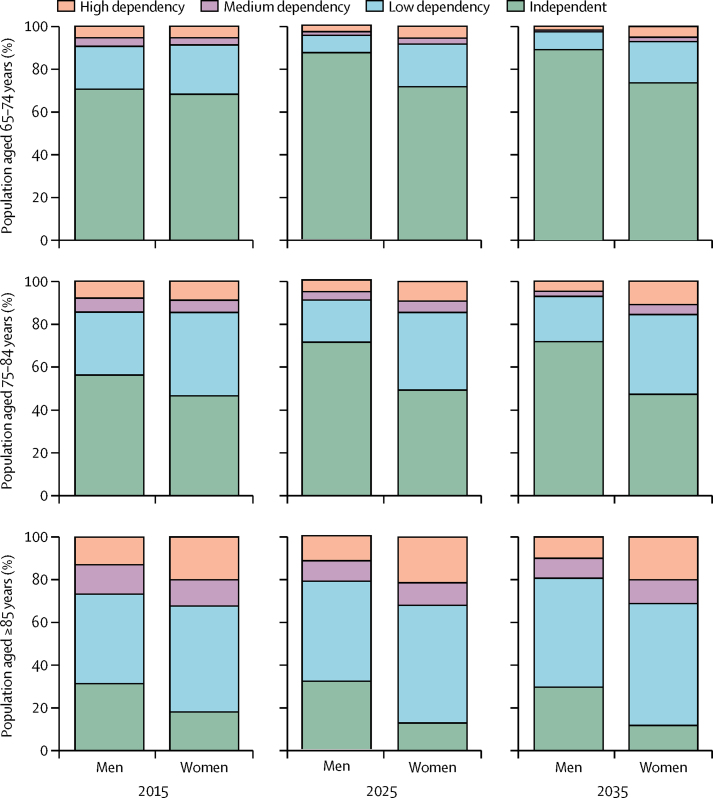
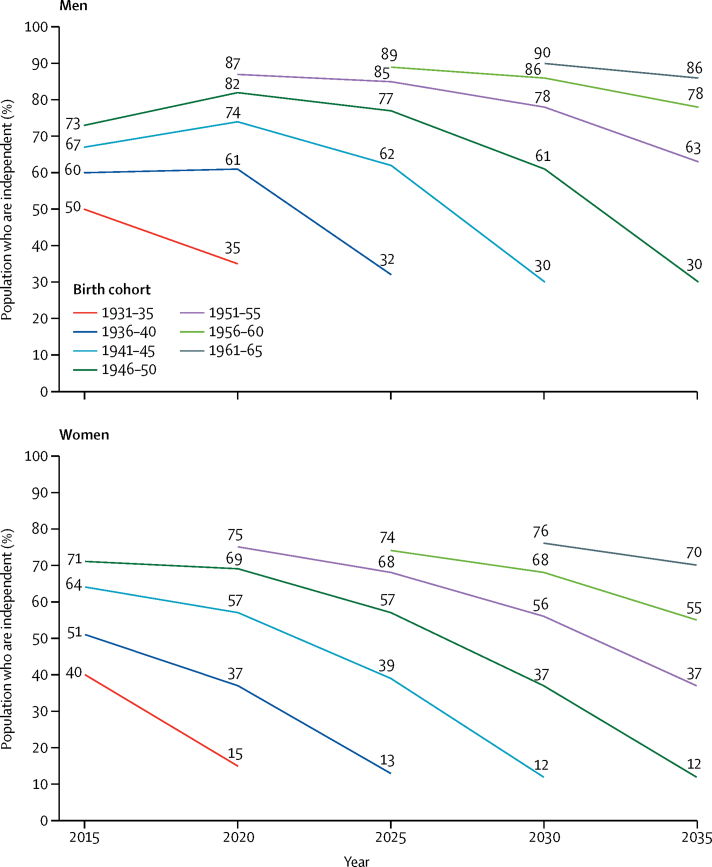
BACKGROUND: Existing models for forecasting future care needs are limited in the risk factors included and in the assumptions made about incoming cohorts. We estimated the numbers of people aged 65 years or older in England and the years lived in older age requiring care at different intensities between 2015 and 2035 from the Population Ageing and Care Simulation (PACSim) model. METHODS: PACSim, a dynamic microsimulation model, combined three studies (Understanding Society, the English Longitudinal Study of Ageing, and the Cognitive Function and Ageing Study II) to simulate individuals' sociodemographic factors, health behaviours, 12 chronic diseases and geriatric conditions, and dependency (categorised as high [24-h care], medium [daily care], or low [less than daily] dependency; or independent). Transition probabilities for each characteristic were estimated by modelling state changes from baseline to 2-year follow-up. Years in dependency states were calculated by Sullivan's method. FINDINGS: Between 2015 and 2035 in England, both the prevalence of and numbers of people with dependency will fall for young-old adults (65-74 years). For very old adults (≥85 years), numbers with low dependency will increase by 148·0% (range from ten simulations 140·0-152·0) and with high dependency will almost double (increase of 91·8%, range 87·3-94·1) although prevalence will change little. Older adults with medium or high dependency and dementia will be more likely to have at least two other concurrent conditions (increasing from 58·8% in 2015 to 81·2% in 2035). Men aged 65 years will see a compression of dependency with 4·2 years (range 3·9-4·2) of independence gained compared with life expectancy gains of 3·5 years (3·1-4·1). Women aged 65 years will experience an expansion of mainly low dependency, with 3·0 years (3·0-3·6) gained in life expectancy compared with 1·4 years (1·2-1·4) with low dependency and 0·7 years (0·6-0·8) with high dependency. INTERPRETATION: In the next 20 years, the English population aged 65 years or over will see increases in the number of individuals who are independent but also in those with complex care needs. This increase is due to more individuals reaching 85 years or older who have higher levels of dependency, dementia, and comorbidity. Health and social care services must adapt to the complex care needs of an increasing older population. FUNDING: UK Economic and Social Research Council and the National Institute for Health Research.
Overview
The claims and statistics of this paper haven’t been checked yet.
Free: it reads the open-access text and checks the first 5 claims that cite a source we can check. Create a free account to check every claim.
Integrity signals
Registry
Cites
Statistics
Figures
Verification
Claims the paper makes
The claims and statistics of this paper haven’t been checked yet.
Free: it reads the open-access text and checks the first 5 claims that cite a source we can check. Create a free account to check every claim.
Claims other papers make about this one
Each is checked against this paper’s own text: does it say what the citing paper says it does?
The cited source says what the claim attributes to it.
In the citing paper
“Models also suggest that there will be future increases both in the number of individuals who are independent and those with complex care needs.6”
From Dementia prevention, intervention, and care: 2020 report of the Lancet Commission (2020) · cites this paper as [6]
The check wasn’t confident either way, so it gives no verdict — never disputed.
In the citing paper
“In contrast, age-specific dementia prevalence in Japan, South Korea, Hong Kong, and Taiwan looks as if it is increasing, as is Alzheimer's in LMIC, although whether diagnostic methods are always the same in comparison studies is unclear.5, 6, 7”
From Dementia prevention, intervention, and care: 2020 report of the Lancet Commission (2020) · cites this paper as [6]
Experimental — accuracy not yet measured
Self-check
Percentages, sums and reported differences re-computed from the paper’s own numbers.
The self-check needs the paper’s full text.
Citations
Cites
Folstein, M. F., Folstein, S. E., & McHugh, P. R. (1975) · Journal of Psychiatric Research · doi:10.1016/0022-3956(75)90026-6 · Cited by 88,282
Kok, J. S., Berg, I. J., & Scherder, E. J. A. (2013) · Dementia and Geriatric Cognitive Disorders Extra · doi:10.1159/000353441 · Cited by 20,589
Older Adults' Reasons for Using Technology while Aging in Place
Peek, S. T. M., Luijkx, K. G., Rijnaard, M. D., Nieboer, M. E., van der Voort, C. S., Aarts, S., van Hoof, J., Vrijhoef, H. J. M., & Wouters, E. J. M. (2016) · Gerontology · doi:10.1159/000430949 · Cited by 19,690
Sensitivity and False Alarm Rate of a Fall Sensor in Long-Term Fall Detection in the Elderly
Kangas, M., Korpelainen, R., Vikman, I., Nyberg, L., & Jämsä, T. (2015) · Gerontology · doi:10.1159/000362720 · Cited by 18,909
Global status report on noncommunicable diseases 2010.
Alwan, A. (2011) · Cited by 8,494
Aging with multimorbidity: A systematic review of the literature
Marengoni, A., Angleman, S., Melis, R., Mangialasche, F., Karp, A., Garmen, A., Meinow, B., & Fratiglioni, L. (2011) · Ageing Research Reviews · doi:10.1016/j.arr.2011.03.003 · Cited by 3,092
Stuck, A. E., Walthert, J. M., Nikolaus, T., Büla, C. J., Hohmann, C., & Beck, J. C. (1999) · Social Science & Medicine · doi:10.1016/s0277-9536(98)00370-0 · Cited by 1,868
A Single Index of Mortality and Morbidity
Sullivan, D. F. (1971) · HSMHA Health Reports · doi:10.2307/4594169 · Cited by 1,450
Multiple Imputation by Chained Equations (MICE): Implementation in Stata
Royston, P., & White, I. (2011) · Journal of Statistical Software · doi:10.18637/jss.v045.i04 · Cited by 1,248
National, regional, and global trends in adult overweight and obesity prevalences
Stevens, G. A., Singh, G. M., Lu, Y., Danaei, G., Lin, J. K., Finucane, M. M., Bahalim, A. N., McIntire, R. K., Gutierrez, H. R., Cowan, M., et al. (2012) · Population Health Metrics · doi:10.1186/1478-7954-10-22 · Cited by 929
Cited by
Items 101–200 of 285
Spiers, G., Tan, M. M. C., Astbury, J. L., Hall, A., Ahmed, N., Lanyi, K., Williams, O., Beyer, F. R., Craig, D., & Hanratty, B. (2024) · BMC Geriatrics · doi:10.1186/s12877-024-04897-3 · Cited by 11
“Together, these changes in population health are likely to result in an increased need for care– a scenario that is already predicted for England [4].”
BackgroundMessiha, K., Thomas, N., Brayne, C., Agnello, D. M., Delfmann, L. R., Giné‐Garriga, M., Lippke, S., & Downey, J. (2025) · BMC Medical Research Methodology · doi:10.1186/s12874-025-02577-3 · Cited by 12
“However, as the demographic landscape of the UK has evolved to become more diverse, the findings from these past studies, which predominantly involved white residents, are no longer fully representative of the UK population as a whole [4– 6].”
Yang, J., Song, G., Zhang, M., Liu, H., & Hou, M. (2025) · BMJ Mental Health · doi:10.1136/bmjment-2025-301749 · Cited by 14
Maximising the engagement of older people with mental health needs and dementia with social care
Wilberforce, M., Newbould, L., Tucker, S., Mitchell, W., & Niman, D. (2022) · Health & Social Care in the Community · doi:10.1111/hsc.14091 · Cited by 10
Developing frailty friendly hospitals: the Specialised Clinical Frailty Network
Hall, N., Fluck, R., Imam, T., Jacob, T., Thompson, D., Tite, M., Backhouse, E., Dhesi, J. K., & Conroy, S. (2022) · Future Healthcare Journal · doi:10.7861/fhj.2022-0071 · Cited by 9
Home-based supportive and health care services based on functional ability in older adults in Iran
Mobasseri, K., Matlabi, H., Allahverdipour, H., & Kousha, A. (2024) · Journal of Education and Health Promotion · doi:10.4103/jehp.jehp_422_23 · Cited by 11
“[40,41] Results from this study indicated that most health services were not provided at home.”
BackgroundInformal long-term care and its gender distribution: a systematic review
Gösenbauer, B., Braun, A. L., & Bilger, M. (2025) · Journal of Integrated Care · doi:10.1108/jica-10-2024-0058 · Cited by 8
Nossa, P. N. (2020) · Saúde e Sociedade · doi:10.1590/s0104-12902020200081 · Cited by 16
Stephens, M., & Knight, A. (2022) · Journal of Long-Term Care · doi:10.31389/jltc.137 · Cited by 13
Healthy ageing trends in England between 2002 to 2018: Improving but slowing and unequal
Old, J., & Scott, A. J. (2023) · The Journal of the Economics of Ageing · doi:10.1016/j.jeoa.2023.100470 · Cited by 10
“Similarly, improvements in health at older ages can reduce the costs associated with age-related diseases and care (Kingston et al. 2018).”
BackgroundPapadaki, A., Wakeham, M., Ali, B., Armstrong, M. E. G., Willis, P. B., & Cameron, A. (2023) · Health Expectations · doi:10.1111/hex.13943 · Cited by 7
“7,8 In England, MoWs have been traditionally provided by local councils with responsibilities for adult social care, which deliver a daily hot meal, but also chilled and/or frozen meals, either in addition to the hot meal provision, or as a substitute.”
BackgroundVernon, M. J. (2020) · Age and Ageing · doi:10.1093/ageing/afaa023 · Cited by 8
Evenden, D., Brailsford, S., Kipps, C., Roderick, P. J., & Walsh, B. M. (2020) · Public Health · doi:10.1016/j.puhe.2020.07.018 · Cited by 9
Dambha‐Miller, H., Simpson, G., Hobson, L., Olaniyan, D., Hodgson, S., Roderick, P., Fraser, S. D., Little, P. S., Everitt, H., & Santer, M. (2021) · BJGP Open · doi:10.3399/bjgpo.2021.0035 · Cited by 7
Research priorities for homecare for older people: A UK multi‐stakeholder consultation
O’Rourke, G., & Beresford, B. (2022) · Health & Social Care in the Community · doi:10.1111/hsc.13991 · Cited by 18
“This increase will be accompanied by a greater number aged 75+ living with multiple long- term health conditions and associated support needs (Falkingham et al., 2010; Kingston et al., 2018).”
BackgroundLaditka, S. B., Laditka, J. N., & Hoyle, J. (2021) · Journal of Aging and Health · doi:10.1177/08982643211018918 · Cited by 10
“Dependent Variables—Interval Need and Mortality We adopted a World Health Organization care model called “intervals of need” (Kingston et al., 2018; Laditka et al., 2020), using specific ADL/IADL combinations and impairment levels, together with cognitive status, to estimate the average time…”
MethodCognitive activity at work and the risk of dementia
Martin‐Bassols, N., de New, S. C., Johnston, D. W., & Shields, M. A. (2023) · Health Economics · doi:10.1002/hec.4679 · Cited by 8
Preferences of People 50 Years and Older when Thinking of their Future Care Needs
Walbaum, M., Knapp, M. R. J., Wittenberg, R., & McDermott, J. (2024) · Journal of Long-Term Care · doi:10.31389/jltc.200 · Cited by 8
Jonuscheit, S., Geue, C., Laidlaw, R., Fischbacher, C., Melia, B., Lewsey, J., & King, C. (2021) · Public Health · doi:10.1016/j.puhe.2021.04.029 · Cited by 7
Nelson, M. L. A., Armas, A., Thombs, R., Singh, H., Fulton, J., Cunningham, H., Munce, S., Hitzig, S. L., & Bettger, J. P. (2021) · BMJ Open · doi:10.1136/bmjopen-2021-050479 · Cited by 8
Rosendal, K. A., Lehn-Christiansen, S., & Overgaard, D. (2022) · Nursing Inquiry · doi:10.1111/nin.12503 · Cited by 5
“…resulting in difficulty in managing daily life and increased dependence on assistance with body care in home care, residential care institutions, and during hospitalization due to deteriorating health (Greysen et al., 2014; Kingston et al., 2018; Nicholson et al., 2013; van Seben et al., 2019).”
BackgroundControlled Human Infection Challenge Studies with RSV
Dayananda, P., Chiu, C., & Openshaw, P. (2022) · Current topics in microbiology and immunology · doi:10.1007/82_2022_257 · Cited by 11
Olaskoaga, L. Z., Ibarrondo, O., Rubio, R. D. P., Zapiain, A., Larrañaga, I., & Mar, J. (2024) · Value in Health · doi:10.1016/j.jval.2024.10.3855 · Cited by 6
Bellelli, F., Delrieu, J., van Kan, G. A., Peluso, A., Soriano, G., Vellas, B. J., Angioni, D., & Sourdet, S. (2026) · Alzheimer s Research & Therapy · doi:10.1186/s13195-026-01966-0 · Cited by 6
Nakubulwa, M. A., Junghans, C., Novov, V., Lyons-Amos, C., Lovett, D., Majeed, A., Aylin, P. P., & Woodcock, T. (2022) · Age and Ageing · doi:10.1093/ageing/afac038 · Cited by 7
Seghieri, C., Ferré, F., Tortù, C., Bertarelli, G., Mavrogianni, C., Usheva, N., Toti, F., Moreno, L. A., Agapidaki, E., & Μanios, Y. (2024) · European Journal of Public Health · doi:10.1093/eurpub/ckae070 · Cited by 6
Thompson, J., Brown, Z., Baker, K., Naisby, J., Mitchell, S., Dodds, C., Storey, P., Tiplady, S., & Collins, T. L. (2020) · Educational Gerontology · doi:10.1080/03601277.2020.1770469 · Cited by 8
“However, many others live with frailty and/or disability, have complex and unpredictable conditions including high levels of cognitive impairment, have limited functional reserve, and are highly dependent (Kingston et al., 2018; Rohrmann, 2020).”
BackgroundPapadaki, A., Wakeham, M., Ali, B., Armstrong, M. E. G., Cameron, A., & Willis, P. B. (2023) · Health & Social Care in the Community · doi:10.1155/2023/6054895 · Cited by 7
“In addition, a rising number of adults live with long-term illnesses or disability [3] and multiple morbidities [4] and experience complex and multiple needs [5], including functional limitations, poor mental health, and cognitive impairment [6].”
BackgroundManson, J., Gardiner, C., & McTague, L. (2020) · International Journal of Palliative Nursing · doi:10.12968/ijpn.2020.26.1.32 · Cited by 6
The Development of a Quality of Life Scale for Informal Carers for Older Adults
Maltby, J., Hogervorst, E., Stephan, B. C. M., Sun, X. S., Tang, P., Law, E. L., & Mukaetova-Ladinska, E. B. (2020) · Gerontology and Geriatric Medicine · doi:10.1177/2333721420920424 · Cited by 8
“…for older aged individuals is increasing with the rapidly aging population, resulting in caregivers providing for aging individuals with usually more complex care needs related to both physical and mental dependency due to dementia, psychiatric, and physical comorbidities (Kingston et al., 2018).”
BackgroundFrailty: time for a new approach to health care?
Conroy, S., & Maynou, L. (2021) · The Lancet Healthy Longevity · doi:10.1016/s2666-7568(20)30064-7 · Cited by 7
Adeboye, O. R., Annesley, S. H., Young‐Murphy, L., Greaves, P. J., & Steven, A. (2024) · Nurse Education Today · doi:10.1016/j.nedt.2024.106504 · Cited by 11
Zhang, J., Zhang, Y., & Bennett, M. (2024) · Social Science & Medicine · doi:10.1016/j.socscimed.2024.117530 · Cited by 8
Wei, Z., Nie, G., Li, J., Zhang, J., Liu, H., & Ma, M. (2025) · Frontiers in Aging Neuroscience · doi:10.3389/fnagi.2025.1488124 · Cited by 5
“Instrumental Activities of Daily Living (IADL) extend beyond basic ADL and involve more complex activities associated with independent living, including housekeeping, meal preparation, shopping, financial management, and medication adherence (Kingston et al., 2018).”
Chalitsios, C. V., Santoso, C. M. A., Nartey, Y., Khan, N., Simpson, G., Islam, N., Stuart, B. L., Farmer, A. A., & Dambha‐Miller, H. (2024) · BMJ Open · doi:10.1136/bmjopen-2023-074902 · Cited by 7
“We used data provided in the nearest subsequent waves if they were missing at baseline.”
Implications of Mucin-Type O-Glycosylation in Alzheimer’s Disease
Navarro, N. V., Mundim, G. D. N., & Čudić, M. (2025) · Molecules · doi:10.3390/molecules30091895 · Cited by 5
“Since this disease mainly affects people older than 60 years, the increased lifespan translates into the exponential growth of AD cases [2,4], resulting in extensive attempts aimed at disease treatment.”
Biswas, S., Sen, A., & Roy, S. (2025) · CSI Transactions on ICT · doi:10.1007/s40012-025-00416-w · Cited by 6
Allain, L., Bell, L. S. A., Carter, E., & Hingley‐Jones, H. (2022) · Social Work Education · doi:10.1080/02615479.2021.2021170 · Cited by 5
“Reference is also made in the 2018 King’s Fund report to a study by Kingston et al. (2018) which ‘ forecasts that the number of people over the age of 85 with high care needs will almost double in the next 20 years’ (Kings Fund, 2018, p. 6).”
BackgroundHeavey, E., Baxter, K., & Birks, Y. F. (2022) · Ageing and Society · doi:10.1017/s0144686x22000599 · Cited by 11
“In the context of an ageing population, the number of older people needing social care in England is set to rise (Kingston et al ., 2018; Office for National Statistics, 2019).”
BackgroundDesign and psychometric properties of the family support for older people questionnaire
Shamsikhani, S., Ahmadi, F., Kazemnejad, A., & Vaismoradi, M. (2023) · Frontiers in Public Health · doi:10.3389/fpubh.2023.1068839 · Cited by 6
O’Neill, M., & Ryan, A. A. (2023) · International Journal of Research in Nursing · doi:10.3844/ijrnsp.2023.1.18 · Cited by 8
“As the ageing population increases, so too do the levels of complex health care needs of people living with co-morbidity, dependency, and dementia (Kingston et al., 2018); requiring both informal and formal social care services (Kelly and Kenny, 2018).”
Backgroundvan Allen, Z., & Boisgontier, M. P. (2025) · Physiotherapy Canada · doi:10.3138/ptc-2024-0136 · Cited by 7
Forecasting Health Expectancy – What the Future Might Hold
Jagger, C., & Kingston, A. (2020) · International handbooks of population · doi:10.1007/978-3-030-37668-0_10 · Cited by 5
Self-citationCare navigators decision‐making in prescribing Telecare for older people
MacInnes, J. D. (2020) · Health & Social Care in the Community · doi:10.1111/hsc.13066 · Cited by 5
EU and UK targets for healthy life expectancy – are they achievable?
Jagger, C. (2020) · Vienna Yearbook of Population Research · doi:10.1553/populationyearbook2021.deb01 · Cited by 6
Self-citationWittenberg, R., Read, S., Erens, B., Knapp, M. R. J., Wistow, G., Dickinson, F., Cyhlarova, E., & Mays, N. (2022) · Journal of Social Policy · doi:10.1017/s0047279421001045 · Cited by 5
Development of the Elder Abuse and Emotional Consequences Scale (EACS)
Neise, M., Brijoux, T., & Zank, S. (2022) · GeroPsych · doi:10.1024/1662-9647/a000297 · Cited by 5
Mohabey, D. P., Nongkynrih, J. M., & Kumar, U. (2023) · Land Degradation and Development · doi:10.1002/ldr.4608 · Cited by 5
“Many methods such as arithmetic progression, geometric increase, decreasing rate of growth, logistic curve, graphical extension method etc., (Kingston et al., 2018) are available to calculate population forecasting based on previous data.”
MethodChung, P. (2019) · British Journal of Occupational Therapy · doi:10.1177/0308022619856555 · Cited by 7
Li, Y., Babazono, A., Jamal, A., Liu, N., & Yamao, R. (2021) · Clinical Epidemiology · doi:10.2147/clep.s327404 · Cited by 5
A clinically effective primary wound dressing that supports self-care for chronic and acute wounds
Elliott, S. (2019) · British Journal of Community Nursing · doi:10.12968/bjcn.2019.24.sup6.s30 · Cited by 5
González‐González, C., Stampini, M., Cafagna, G., Ruiz, M. C. H., & Ibarrarán, P. (2019) · doi:10.18235/0002091 · Cited by 5
Roy, S., Maity, S., Dutta, S., Thakur, A. K., & Banerjee, A. (2025) · IEEE Guwahati Subsection Conference (GCON) · doi:10.1109/gcon65540.2025.11173350 · Cited by 6
“Alzheimer’s disease (AD) is a progressive neurodegenerative disorder predominantly affecting the elderly and is the leading cause of dementia, responsible for 60% – 80% of cases [1].”
Li, C., Ding, H., Zhang, L., Ma, C., Ma, C., Wen, H., & Zhao, X. (2025) · Journal of Orthopaedic Surgery and Research · doi:10.1186/s13018-025-06157-5 · Cited by 6
“Long-term chronic pain can cause depression, disability, and a lower quality of life, resulting in significant distress to patients [4].”
Davies, L. E., Todd, A., Robinson, L. A., & Kingston, A. (2022) · Age and Ageing · doi:10.1093/ageing/afac227 · Cited by 5
“there are known differences in prescribing [13] and dependency [2] between very old men and women.”
BackgroundSelf-citationSattar, Z., Young‐Murphy, L., Craig, L., Steven, A., & Wilson, G. (2023) · BMC Geriatrics · doi:10.1186/s12877-023-03742-3 · Cited by 5
“However, a key priority remains the reduction of quality concerns and enhancement of care provision in care homes [1, 7, 13, 14].”
BackgroundWood, R. M., Budiman, T. A., Hassey, N., Onen-Dumlu, Z., Vasilakis, C., Budd, F. J., Hollier, S. E., Thomson, P. M., & Kenward, C. (2023) · International Journal of Healthcare Management · doi:10.1080/20479700.2023.2232980 · Cited by 4
“However, previous studies either focus on population projections for speci fi c types of diseases (e.g. Type 2 diabetes) or speci fi c age groups in the population using dynamic microsimulation models [37,38].”
“I never planned for it”—Exploration of expectations about caring for older parents
Poli, C. D., Wittenberg, R., Rehill, A., Stevens, M., & Brimblecombe, N. (2024) · Social Policy and Administration · doi:10.1111/spol.13030 · Cited by 6
Madyaningrum, E., Bintoro, B. S., Chuang, Y., Chuang, K., & Chi, W. (2020) · Disability and health journal · doi:10.1016/j.dhjo.2020.101009 · Cited by 4
Lee, J., Lee, S., Han, K., & Han, J. (2021) · The International Journal of Prosthodontics · doi:10.11607/ijp.7334 · Cited by 4
“For further analysis, the participants were divided according to whether or not they used removable prostheses: (1) “no removable dentures” group (including the NP and FDP groups), (2) “removable dentures” group (including the RPD and CD groups).”
BackgroundMethodHave outcomes of trauma in centenarians changed in the last 15 years?
Fraser, T. R., Wilson, M., Donovan, R. L., & Kent, M. J. R. (2023) · Injury · doi:10.1016/j.injury.2023.111274 · Cited by 4
Exploring the association of early life physical activity and risk of dementia: a systematic review
Gatta, F. D., Lacorte, E., Fabrizi, E., Remoli, G., Cipollini, V., Troili, F., Vanacore, N., & Giubilei, F. (2021) · Minerva Medica · doi:10.23736/s0026-4806.21.07542-x · Cited by 6
Hva betyr økt levealder for den framtidige (potensielle) arbeidsstyrken?
Syse, A., & Strand, B. H. (2022) · Søkelys på arbeidslivet · doi:10.18261/spa.39.2.4 · Cited by 7
Scarlett McNally: Exercise can do wonders for social care
McNally, S. A. (2022) · BMJ · doi:10.1136/bmj.o2538 · Cited by 4
The management of anticoagulated fragility femoral fracture patients
Farhan-Alanie, M. M. H., & Eardley, W. (2024) · Hip International · doi:10.1177/11207000241282303 · Cited by 4
Hasenauer, R. P., Ehrenmüller, I., & Belviso, C. (2022) · Portland International Conference on Management of Engineering and Technology (PICMET) · doi:10.23919/picmet53225.2022.9882746 · Cited by 7
“The quality of care changes due to the high age [14].”
BackgroundOral medicine in regional oral and maxillofacial surgery units: a five-year review
Lin, Y. M., Simms, M. L., & Atkin, P. A. (2023) · BDJ · doi:10.1038/s41415-023-5691-2 · Cited by 3
Zhang, Y., Luo, H., Lum, T. Y. S., Knapp, M. R. J., Vetrano, D. L., Chui, C. S. L., Wang, P., & Wong, G. H. Y. (2023) · Dementia · doi:10.1177/14713012231177593 · Cited by 4
“The fact that people living with dementia often live with comorbidity (Chen et al., 2017; Kingston et al., 2018) has been identi fi ed as a key contributor to healthcare utilization among this population (Browne et al., 2017).”
BackgroundReflections on implementing an evidence-based educational intervention in residential aged care
O'Connell, B. O., Ostaszkiewicz, J., & Ockerby, C. M. (2020) · Collegian Journal of the Royal College of Nursing Australia · doi:10.1016/j.colegn.2020.06.003 · Cited by 3
Chaney, P. (2021) · Global Social Policy · doi:10.1177/14680181211008141 · Cited by 3
Life-course Factors and Later Life Health in Eastern and Western Europe
Abuladze, L., Rudissaar, U., Sakkeus, L., & Schwanitz, K. (2023) · Comparative Population Studies · doi:10.12765/cpos-2023-10 · Cited by 7
“Cognitive limitations may also lead to activity restrictions and disability in later life (Cambois et al. 2013), and contribute to future increased complex care needs as longevity increases (Kingston et al. 2018).”
BackgroundComas‐Herrera, A., Cyhlarova, E., Rajagopalan, J., Govia, I., & Feng, Z. (2025) · Cambridge University Press eBooks · doi:10.1017/9781009563444.005 · Cited by 2
Self-citationEconomic impacts of changing technologies on New Zealand homecare delivery
Hennessy, J., & Rodrigues, A. (2019) · Journal of Enabling Technologies · doi:10.1108/jet-11-2018-0055 · Cited by 5
Willis, R., Channon, A. A., Viana, J., Valle, M. H. L., & Hutchinson, A. J. (2019) · Health & Social Care in the Community · doi:10.1111/hsc.12769 · Cited by 3
“The recent PACSim study (Kingston et al. 2018) using ELSA, classified most individuals as low (long interval), followed by high (critical interval), and then medium (short interval) dependency.”
MethodInfluentialMicrosimulation of Health Expectancies, Life Course Health, and Health Policy Outcomes
Laditka, S. B., Laditka, J. N., & Jagger, C. (2020) · International handbooks of population · doi:10.1007/978-3-030-37668-0_9 · Cited by 3
Self-citationUpdates and new challenges in the prevention of dementia
Giubilei, F. (2021) · Minerva Medica · doi:10.23736/s0026-4806.21.07626-6 · Cited by 3
Kowal, P. R., Corso, B., Anindya, K., Andrade, F. C. D., Giang, L. T., Guitierrez, M. T. C., Pothisiri, W., Quashie, N. T., Reina, H. A. R., Rosenberg, M., et al. (2022) · Research Square · doi:10.21203/rs.3.rs-2203996/v1 · Cited by 3
Association of Frailty, Balance, and Depression with Activities of Daily Living in Older Adults
Baysal, G., & Saka, S. (2024) · Topics in Geriatric Rehabilitation · doi:10.1097/tgr.0000000000000440 · Cited by 2
Dementia-related needs through the lens of social robotics: a scoping review protocol
Zafer, B., Carragher, L., Share, P., Ward, J., & Brady, F. (2025) · Disability and Rehabilitation Assistive Technology · doi:10.1080/17483107.2025.2471483 · Cited by 2
“…and hearing impairments, which can pose an elevated risk for falls [33]. these combined factors culminate in high dependency among this population [32]. therefore, it is recognised that individuals with dementia aged 85 and older (often referred to as very old adults) with multiple illnesses have…”
Chandragiri, S. S., Baral, B., Hammerle, F. P., Litvinova, O., Opriessnig, E., Matin, M., Mondal, H., Mickael, M., Kletečka-Pulker, M., Atanasov, A. G., et al. (2025) · Frontiers in Digital Health · doi:10.3389/fdgth.2025.1622983 · Cited by 2
Spies, C., Schmidt, K., Kiselev, J., Buchka, S., Blobner, M., Borchers, F., Fabian, M., Loidl, V., Marschall, U., Mörgeli, R., et al. (2026) · The Lancet Healthy Longevity · doi:10.1016/j.lanhl.2026.100899 · Cited by 2
Elevated levels of hair cortisol concentrations in professional dementia caregivers
Rippon, D., McDonnell, A., Bristow, M., Smith, M., McCreadie, M., & Wetherell, M. A. (2021) · Stress · doi:10.1080/10253890.2021.1968821 · Cited by 4
“Caring for older people with dementia, who have complex health and social care needs, can be a highly demanding profession in the care home sector (Kingston et al., 2018).”
BackgroundThe Effects of Social Factors on Elderly Well-being
Fadzil, S. N. M., Osman, I., Ismail, S. B., Hashim, M. J., & Khamis, M. R. (2022) · GATR Journal of Management and Marketing Review · doi:10.35609/jmmr.2022.7.3(7 · Cited by 2
Downer, B. G., Samper‐Ternent, R., Cantu, P. A., Miller, M., & Wong, R. (2023) · The Journals of Gerontology Series B · doi:10.1093/geronb/gbad192 · Cited by 3
Alperin, M. N. P., Perquin, M., & Giordana, G. A. (2024) · The Journal of the Economics of Ageing · doi:10.1016/j.jeoa.2024.100517 · Cited by 4
Hu, Y., Yu, J., Xu, Z., & Li, L. (2025) · Archives of Gerontology and Geriatrics · doi:10.1016/j.archger.2025.105849 · Cited by 3
Modelling the growing need for social care in older people
Brunner, E. J., & Ahmadi‐Abhari, S. (2018) · The Lancet Public Health · doi:10.1016/s2468-2667(18)30143-9 · Cited by 2
Thompson, J., Tiplady, S., & Cook, G. A. (2020) · Working with Older People · doi:10.1108/wwop-01-2020-0003 · Cited by 4
Enhancing the Quality of Care in Long-Term Care Settings
Devi, R., Gordon, A. L., & Dening, T. (2022) · International Journal of Environmental Research and Public Health · doi:10.3390/ijerph19031409 · Cited by 2
“The quality of care in long-term care settings is a concern felt across the world given the growing number of dependent older people [1]; a population whose health and care needs are increasing over time [2].”
BackgroundTrends in health expectancy at age 60 in Bangladesh from 1996 to 2016
Tareque, M. I. (2022) · PLoS ONE · doi:10.1371/journal.pone.0278101 · Cited by 5
“These have become very important for projecting future levels of care needs and assistance for the older adults in the developed regions of the world [14].”
Bradwell, H. L., Edwards, K. J., Baines, R., Page, T., Chatterjee, A., & Jones, R. (2023) · Frontiers in Digital Health · doi:10.3389/fdgth.2023.1066327 · Cited by 2
Zhou, Y., Pan, T. S., Wang, L., & Li, R. (2023) · International Journal of Human-Computer Interaction · doi:10.1080/10447318.2023.2197530 · Cited by 2
“In addition, there are gender differences in the time and rate of decline in physical functions and cognitive abilities, which leads to gender differences in care needs (Bloomberg et al., 2021; Kingston et al., 2018).”
Exploring the Economic Implications and Challenges of an Ageing Population in the UK and China
Yue, X. (2023) · Lecture Notes in Education Psychology and Public Media · doi:10.54254/2753-7048/9/20230260 · Cited by 2
Kang, Y., & Lee, G. (2024) · Sustainability · doi:10.3390/su16135719 · Cited by 2
Home Care Support for Older Adults in England: Perceptions of Quality and Safety Standards
Healey, J. M., Hignett, S. M., & Gyi, D. E. (2021) · Lecture notes in networks and systems · doi:10.1007/978-3-030-74611-7_44 · Cited by 2
A Simulation Approach to Evaluate the Effect of Demographic Changes on Healthcare DemandPreprint
Mielczarek, B. (2020) · doi:10.21203/rs.3.rs-62933/v1 · Cited by 2
“Abbreviations DES: discrete event simulation; SD: system dynamics; ABS: agent-based simulation, MSM: microsimulation; WR: Wrocław region; NHF: National Health Fund Declarations Ethics approval and consent to participate Administrative approval for the use of patients’ data from internal databases that were not publicl…”
MethodInfluentialRahman, M. M., Rosenberg, M., Flores, G., Parsell, N., Akter, S., Alam, M. A., Rahman, M. M., & Edejer, T. T.-T. (2022) · Research Square · doi:10.21203/rs.3.rs-1485184/v1 · Cited by 2
The Effectiveness of Advance Care Planning Training for Care Home Staff: a Systematic ReviewPreprint
Barber-Fleming, V., Mann, M. K., Mead, G. E., & Gleeson, A. (2023) · medRxiv · doi:10.1101/2023.02.28.23286494 · Cited by 2
“Models for England predict that the increase in numbers of ‘older old’ adults will result in this cohort experiencing double the number of people living with low-dependency and almost double living with high dependency (Kingston et al., 2018).”
BackgroundAn Overview on Dementia: A Major Symptom of Alzheimer's Disease
Kaur, J., Melkani, I., Singh, A., Singh, A. P., & Bala, K. (2022) · Journal of Drug Delivery and Therapeutics · doi:10.22270/jddt.v12i4.5445 · Cited by 2
Gouveia, C., Kalakou, S., & Cardoso-Grilo, T. (2023) · Socio-Economic Planning Sciences · doi:10.1016/j.seps.2023.101552 · Cited by 2
Metadata
- Authors
- Kingston, A., Comas-Herrera, A., & Jagger, C.
- Affiliations
- Newcastle University (GB)
- Corresponding author
- Jagger, Carol
- Venue
- The Lancet Public Health
- Publisher
- Elsevier BV
- Published
- 2018-09
- Volume
- 3
- Issue
- 9
- Pages
- e447-e455
- ISSN
- 2468-2667 (ISSN-L)
- PMC
- PMC6123499
- OpenAlex
- W2888964760
- Semantic Scholar
- db8569efdd695f1540ca459ab93f742ed5a3ee3f
- Cited by
- 287
- References
- 34
- Citations by year
- 2026: 18 · 2025: 43 · 2024: 39 · 2023: 43 · 2022: 43 · 2021: 40 · 2020: 38 · 2019: 19 · 2018: 3
- FWCI
- 51.55
- Type
- journal article
- Language
- en
- Open access
- gold
- doi.org
- Licence
- cc-by
- www.elsevier.com/tdm/userlicense/1.0/ (tdm)
- creativecommons.org/licenses/by/4.0/ (vor)
- Locations
- The Lancet Public Health (publishedVersion, cc-by)
- Europe PMC (PubMed Central) (publishedVersion, cc-by)
- PubMed Central (publishedVersion, cc-by)
- PubMed (publishedVersion)
- London School of Economics and Political Science Research Online (London School of Economics and Political Science) (acceptedVersion)
- DOAJ (DOAJ: Directory of Open Access Journals) (submittedVersion)
- Newcastle University ePrints (Newcastle Univesity) (cc-by)
- Funders
- London School of Economics and Political Science
- National Institute for Health and Care Research (SPCR-136, ES/L001896/1)
- AXA Research Fund (2010-15)
- Economic and Social Research Council (ES/L001896/1, ES/I017399/1)
- Australian Research Council
- Topics
- Social Sciences › Demography › Insurance, Mortality, Demography, Risk Management
- Health Sciences › Medicine › Public Health, Environmental and Occupational Health › Aging, Health, and Disability
- Health Sciences › Medicine › Geriatrics and Gerontology › Geriatric Care and Nursing Homes
- Keywords
- older adults, dependency, long-term care, microsimulation model, population aging, dementia, multimorbidity, life expectancy, gender differences, oldest old, England, chronic disease, geriatric conditions
- MeSH terms
- Aged, Aged, 80 and over, Computer Simulation, England, Female, Forecasting, Health Services for the Aged, Health Services Needs and Demand, Humans, Longitudinal Studies, Male
About these checks
Registry, retraction, Cites and statistics results are computed, not judged, with one exception: a printed reference that no index lists is read once by a model before it counts as a citation error. Claims are extracted by a model and kept only when their quote appears verbatim in the text; each cited source is then checked, with a model’s help, for whether it says what the claim relies on. Those verdicts can be wrong — read the claim’s quote and the cited source before relying on one.
Statistics and arithmetic are recomputed, not judged.
Confidence bands are shown only for fields calibrated on our annotated test set. None is calibrated yet, so no band is shown.
What counts as a claim ›How we measure confidence ›How we check this ›
Are you an author, or do you see a problem with this page? Request a review
Data sources
Bibliographic data: Semantic Scholar, OpenAlex, Crossref.
Contains information from the Semantic Scholar Academic Graph Datasets, made available under the ODC Attribution License (ODC-BY 1.0).
Semantic Scholar’s data is described in: Kinney, R., et al. (2023). The Semantic Scholar Open Data Platform. arXiv:2301.10140.
