

The DOI matches its Crossref record; 48 of the 51 references it cites were found in a registry or an index.
Life course health consequences and associated annual costs of adverse childhood experiences across Europe and North America: a systematic review and meta-analysis
Open accessAbstract
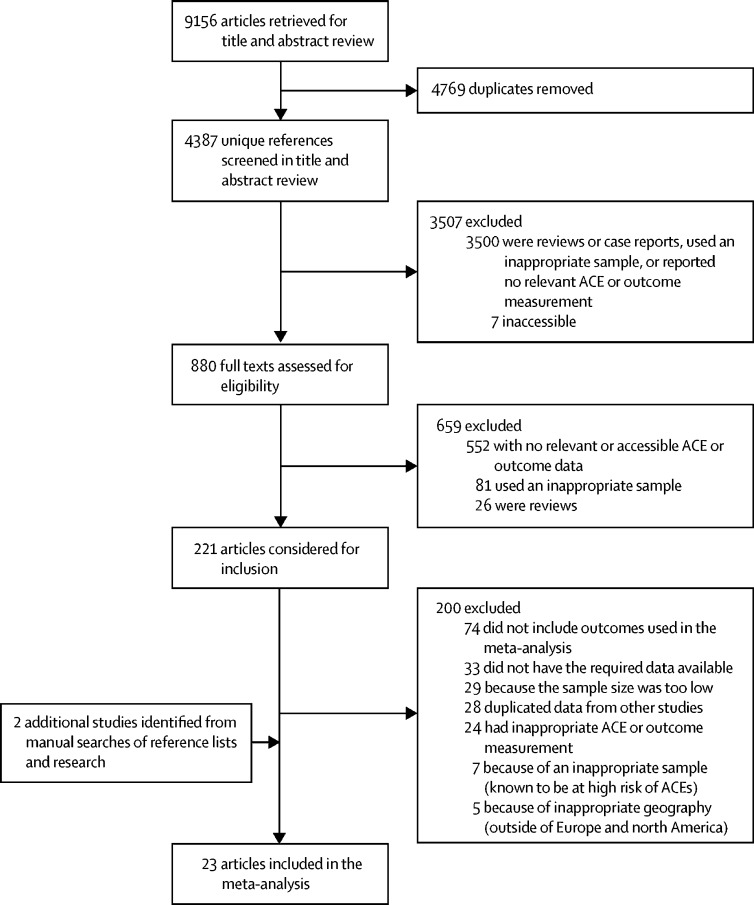
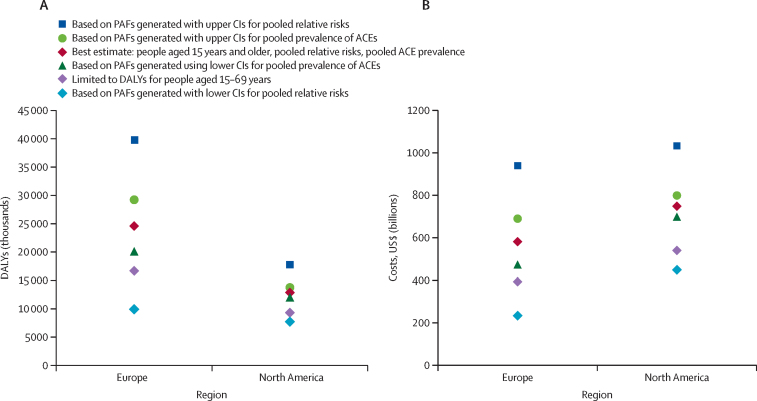
BACKGROUND: An increasing number of studies are identifying associations between adverse childhood experiences (ACEs) and ill health throughout the life course. We aimed to calculate the proportions of major risk factors for and causes of ill health that are attributable to one or multiple types of ACE and the associated financial costs. METHODS: In this systematic review and meta-analysis, we searched for studies in which risk data in individuals with ACEs were compared with these data in those without ACEs. We searched six electronic databases (MEDLINE, CINAHL, PsycINFO, Applied Social Sciences Index and Abstracts, Criminal Justice Databases, and the Education Resources Information Center) for quantitative studies published between Jan 1, 1990, and July 11, 2018, that reported risks of health-related behaviours and causes of ill health in adults that were associated with cumulative measures of ACEs (ie, number of ACEs). We included studies in adults in populations that did not have a high risk of ACEs, that had sample sizes of at least 1000 people, and that provided ACE prevalence data. We calculated the pooled RR for risk factors (harmful alcohol use, illicit drug use, smoking, and obesity) and causes of ill health (cancer, diabetes, cardiovascular disease, respiratory disease, anxiety, and depression) associated with ACEs. RRs were used to estimate the population-attributable fractions (PAFs) of risk attributable to ACEs and the disability-adjusted life-years (DALYs) and financial costs associated with ACEs. This study was prospectively registered in PROSPERO (CRD42018090356). FINDINGS: Of 4387 unique articles found following our initial search, after review of the titles (and abstracts, when the title was relevant), we assessed 880 (20%) full-text articles. We considered 221 (25%) full-text articles for inclusion, of which 23 (10%) articles met all selection criteria for our meta-analysis. We found a pooled prevalence of 23·5% of individuals (95% CI 18·7-28·5) with one ACE and 18·7% (14·7-23·2) with two or more ACEs in Europe (from ten studies) and of 23·4% of individuals (22·0-24·8) with one ACE and 35·0% (31·6-38·4) with two or more ACEs in north America (from nine studies). Illicit drug use had the highest PAFs associated with ACEs of all the risk factors assessed in both regions (34·1% in Europe; 41·1% in north America). In both regions, PAFs of causes of ill health were highest for mental illness outcomes: ACEs were attributed to about 30% of cases of anxiety and 40% of cases of depression in north America and more than a quarter of both conditions in Europe. Costs of cardiovascular disease attributable to ACEs were substantially higher than for most other causes of ill health because of higher DALYs for this condition. Total annual costs attributable to ACEs were estimated to be US$581 billion in Europe and $748 billion in north America. More than 75% of these costs arose in individuals with two or more ACEs. INTERPRETATION: Millions of adults across Europe and north America live with a legacy of ACEs. Our findings suggest that a 10% reduction in ACE prevalence could equate to annual savings of 3 million DALYs or $105 billion. Programmes to prevent ACEs and moderate their effects are available. Rebalancing expenditure towards ensuring safe and nurturing childhoods would be economically beneficial and relieve pressures on health-care systems. FUNDING: World Health Organization Regional Office for Europe.
Overview
The claims and statistics of this paper haven’t been checked yet.
Run the check — free, no account needed. It reads the open-access text and checks the sources it cites.
Integrity signals
Registry
Cites
Statistics
Figures
Verification
Claims the paper makes
The claims and statistics of this paper haven’t been checked yet.
Run the check — free, no account needed. It reads the open-access text and checks the sources it cites.
Self-check
Percentages, sums and reported differences re-computed from the paper’s own numbers.
The self-check needs the paper’s full text.
Citations
Cites
Felitti, V. J., Anda, R. F., Nordenberg, D., Williamson, D. F., Spitz, A. M., Edwards, V., Koss, M. P., & Marks, J. S. (1998) · American Journal of Preventive Medicine · doi:10.1016/s0749-3797(98)00017-8 · Cited by 18,943
Child abuse: Adolescent records vs. adult recall
Femina, D. D., Yeager, C. A., & Lewis, D. O. (1990) · Child Abuse & Neglect · doi:10.1016/0145-2134(90)90033-p · Cited by 8,820
Hughes, K., Bellis, M. A., Hardcastle, K. A., Sethi, D., Butchart, A., Mikton, C., Jones, L., & Dunne, M. P. (2017) · The Lancet Public Health · doi:10.1016/s2468-2667(17)30118-4 · Cited by 5,255
Self-citationAnda, R. F., Felitti, V. J., Bremner, J. D., Walker, J. D., Whitfield, C., Perry, B. D., Dube, S. R., & Giles, W. H. (2006) · European archives of psychiatry and clinical neuroscience · doi:10.1007/s00406-005-0624-4 · Cited by 4,292
The Lancet Commission on global mental health and sustainable development
Patel, V., Saxena, S., Lund, C., Thornicroft, G., Baingana, F., Bolton, P., Chisholm, D., Collins, P. Y., Cooper, J. L., Eaton, J., et al. (2018) · The Lancet · doi:10.1016/s0140-6736(18)31612-x · Cited by 3,692
García‐Moreno, C., Pallitto, C., Devries, K. M., Stöckl, H., Watts, C. G., & Abrahams, N. (2013) · Cited by 3,342
The global prevalence of common mental disorders: a systematic review and meta-analysis 1980–2013
Steel, Z., Marnane, C., Iranpour, C., Chey, T., Jackson, J. W., Patel, V., & Silove, D. (2014) · International Journal of Epidemiology · doi:10.1093/ije/dyu038 · Cited by 2,846
Validity of adult retrospective reports of adverse childhood experiences: review of the evidence
Hardt, J., & Rutter, M. (2004) · Journal of Child Psychology and Psychiatry · doi:10.1111/j.1469-7610.2004.00218.x · Cited by 2,827
Adverse childhood experiences, allostasis, allostatic load and age-related disease
Danese, A., & McEwen, B. S. (2012) · Physiology & Behavior · doi:10.1016/j.physbeh.2011.08.019 · Cited by 2,140
Use and misuse of population attributable fractions
Rockhill, B., Newman, B., & Weinberg, C. (1998) · American Journal of Public Health · doi:10.2105/ajph.88.1.15 · Cited by 1,683
Cited by
Sorted by citations
Items 401–500 of 999
Trivedi, R. G., Kumar, A., Soundappan, K., Trivedi, G. Y., Ramani, H., & Kumar, S. (2024) · Indian Journal of Community Medicine · doi:10.4103/ijcm.ijcm_419_23 · Cited by 7
Caregiver satisfaction with their child’s trauma-focused cognitive behavioral therapy.
Lange, B. C. L., Loser, A., & Lang, J. M. (2020) · Psychological Trauma Theory Research Practice and Policy · doi:10.1037/tra0000834 · Cited by 10
Akasaki, M., Nicholas, O., Abell, J. G., Valencia‐Hernández, C. A., Hardy, R., & Steptoe, A. (2021) · American Journal of Preventive Cardiology · doi:10.1016/j.ajpc.2021.100220 · Cited by 7
Surakka, A., Vengeliene, V., Skorodumov, I., Meinhardt, M., Hansson, A., & Spanagel, R. (2021) · Alcoholism: Clinical and Experimental Research · doi:10.1111/acer.14640 · Cited by 8
Trauma-informed servant leadership in health and social care settings
Mahon, D. (2021) · Mental Health and Social Inclusion · doi:10.1108/mhsi-05-2021-0023 · Cited by 14
Kotah, J. M., Hoeijmakers, L., Nutma, E., Lucassen, P. J., & Kőrösi, A. (2021) · Neurobiology of Stress · doi:10.1016/j.ynstr.2021.100379 · Cited by 7
“Individuals with a history of early-life stress (ES) are at increased risk to develop psychopathologies and negative mental health outcomes later in life (Bellis et al., 2019; Ferraro et al., 2016; Hughes et al., 2017; Schafer and Ferraro, 2012).”
Gaylord, N. M., Bland, T., Muñoz, L., Ross, R. A., & Olson, C. (2022) · Journal of Pediatric Health Care · doi:10.1016/j.pedhc.2021.09.003 · Cited by 7
Koçak, O., Ergin, M., & Younis, M. Z. (2022) · Healthcare · doi:10.3390/healthcare10061004 · Cited by 8
Vu, T. H., Bishop, J., McGill, L., Valmadrid, L. C., Golden, S. D., Emmerling, D., & Saeugling, S. (2022) · PLoS ONE · doi:10.1371/journal.pone.0273361 · Cited by 8
Hartwell, M. L., Hendrix-Dicken, A., Terry, R. M., Schiffmacher, S., Conway, L., & Croff, J. M. (2023) · Journal of Osteopathic Medicine · doi:10.1515/jom-2022-0221 · Cited by 7
“These chronic conditions, such as cardiovascular disease, obesity, and diabetes, among others, create an increased healthcare burden for both patients and healthcare systems [18, 34].”
Role of Adverse Childhood Experiences in the Onset of Overweight/Obesity
Koball, A. M., Ames, G. E., & Grothe, K. B. (2024) · Current Obesity Reports · doi:10.1007/s13679-024-00563-2 · Cited by 7
“Experiencing poverty in childhood increases the likelihood of ACEs [7], while research has also consistently found that experiencing aspects of poverty like historical and systemic racism and housing or food insecurity worsens the impact of ACEs on physical and mental health [2, 5, 6].”
InfluentialMarcoux, T. B. (2021) · Journal of Osteopathic Medicine · doi:10.1515/jom-2020-0322 · Cited by 7
“A 2019 study [13] calculated the human capital cost of ACE related disability adjusted life years (DALYs) with data from the 2017 Global Burden of Disease Study and estimated the annual North American cost attributable to ACEs at $748 billion.”
MethodSchnarrs, P. W., Bond, M. A., Stone, A. L., Salcido, R., Young, L. E., Dean, J. A., & Grigsby, T. J. (2022) · AIDS and Behavior · doi:10.1007/s10461-022-03690-w · Cited by 7
“Two studies have reported on the relationship between ACEs and HIV testing [15, 33] with mixed results.”
BackgroundResultRepositioning Social Work Practice in Mental Health in Nova Scotia
Brown, C. G., Johnstone, M., & Ross, N. (2021) · DalSpace (Dalhousie University) · Cited by 7
Almulla, A. F., Algon, A. A. A., & Maes, M. (2023) · medRxiv · doi:10.1101/2023.06.19.23291597 · Cited by 6
Sheehan, C. A., Butler, J. E., & Neill, C. O. (2023) · Early Childhood Education Journal · doi:10.1007/s10643-023-01565-w · Cited by 6
“For example, although $748 billion of annual government expenditure is directly attributed to ACEs in North America (Bellis et al., 2019), one study that examined the impact of child abuse and violence in East Asia and Pacific countries found that the cost of childhood maltreatment was $209 billion (UNICEF, 2015), sim…”
InfluentialShin, M., & Brunton, R. (2024) · Personality and Individual Differences · doi:10.1016/j.paid.2024.112565 · Cited by 11
Protective factors for adverse childhood experiences: Scoping review and evidence gap map.
Valrie, C. R., Kliewer, W. L., Gary, K. W., Cyrus, J. W. W., Hood, K. B., Williams, C. D., Lytle, L., & Shipman-Lacewell, J. R. (2024) · Psychological Trauma Theory Research Practice and Policy · doi:10.1037/tra0001676 · Cited by 10
Moheize, S., Hsu, M., Matiz, L. A., Peretz, P. J., Medina, K., Esteves, A., Meyer, D. D., Maletz, B., Pineda, L., & Berger‐Jenkins, E. (2024) · Journal of Primary Care & Community Health · doi:10.1177/21501319241234478 · Cited by 6
Niño, M., Angton, A., Norton-Smith, K., & Allison, K. (2024) · Socius Sociological Research for a Dynamic World · doi:10.1177/23780231241284942 · Cited by 5
“…being exposed to and having to cope with stressors such as adverse familial experiences and/ or socioeconomic disadvantages in childhood significantly shape health and mortality trajectories in adulthood (Austin 2018; Bellis et al. 2019; Gruenewald et al. 2012; Haas 2008; Montez and Hayward 2014).”
Zhou, Q., Chew, P., Oei, A. C., Chu, C. M., Ong, M. S. Y., & Hoo, E. (2024) · Adversity and Resilience Science · doi:10.1007/s42844-024-00161-0 · Cited by 12
den Camp, S. O., Schulkens, J. E. M., van Alphen, S. P. J., Gielkens, E. M. J., Licher, S., van Amelsvoort, T., & Sobczak, S. (2025) · Clinical Gerontologist · doi:10.1080/07317115.2025.2487673 · Cited by 6
“The association between PDs and multimorbidity aligns with prior research in adult populations, which links PDs to increased morbidity (Bellis et al., 2019; Jackson & Burgess, 2000, 2004; Olssøn & Dahl, 2009; Powers & Oltmanns, 2012).”
Kataja, E., Tuulari, J. J., Karlsson, L., Sinisalo, S., Autere, T.-A., Perasto, L., Juusola, A., Salama, E., Aatsinki, A., & Karlsson, H. (2025) · Journal of Experimental Child Psychology · doi:10.1016/j.jecp.2025.106238 · Cited by 6
Zhu, Y., Yin, H., Zhong, X., Wang, L., Tang, X., Zhang, Q., & Jia, P. (2025) · Scientific Reports · doi:10.1038/s41598-025-12822-w · Cited by 6
“Adverse childhood experiences (ACEs), defined as potentially traumatic events occurring before age 18 (e.g., abuse, neglect, household dysfunction, or socioeconomic adversity) 8 , a growing body of evidence has underscored their pivotal role in shaping future health 9–11 .”
The Shadow of Childhood Harm Behind Prison Walls
Wolff, N. (2022) · doi:10.1093/oso/9780197653135.001.0001 · Cited by 7
Hu, Y., Wang, Y., Zhao, Z., & Zhao, B. (2023) · Eco-Environment & Health · doi:10.1016/j.eehl.2023.10.003 · Cited by 6
“…economic assessments of disease burden, we estimated economic losses ( EL ) or reductions of economic losses ( REL ) using the human capital approach under the assumption that one DALY is equal to one GDP per capita ( GDP p ) loss [33]: GDP p in 330 Chinese cities in 2019 is presented in Table S5.”
Fipps, D. C., Nguyen, T. A., Meyer, R., Smith, B. H., Roden, R., Clark, M. M., Watt, K. D. S., & Jowsey‐Gregoire, S. G. (2024) · Journal of the Academy of Consultation-Liaison Psychiatry · doi:10.1016/j.jaclp.2024.06.006 · Cited by 6
Chen, J., Cheng, X., Wang, Q., Wang, R., Zhang, J., & Liu, J. (2024) · Journal of Affective Disorders · doi:10.1016/j.jad.2024.07.122 · Cited by 6
Zou, L., Wang, S., Chen, J., Krewski, D. R., Wen, S. W., Lai, X., & Xie, R. (2024) · Birth · doi:10.1111/birt.12871 · Cited by 6
Mefford, L. C., Phillips, K. D., & Chung, M. L. (2020) · Issues in Mental Health Nursing · doi:10.1080/01612840.2020.1828514 · Cited by 6
“However, systematic reviews of research about ACE effects indicate that this phenomenon has not been studied in this specific population (Bellis et al., 2019; Hughes et al., 2017; Petrucelli et al., 2019); therefore, this finding of persistent and strong long-term effects of ACE within this sample is notable.”
BackgroundInfluentialMartínez, P., Gloger, S., de Medina, D. D., González, A., Carrasco, M. I., Schilling, S., & Vöhringer, P. A. (2021) · Frontiers in Psychiatry · doi:10.3389/fpsyt.2021.650706 · Cited by 6
Merians, A. N., Mischel, E. R., Frazier, P. A., & Lust, K. A. (2022) · Journal of American College Health · doi:10.1080/07448481.2021.2024205 · Cited by 6
Childhood Maltreatment and the Subjective Roots of Mental Health Suffering.
Poletti, M., Gebhardt, E., & Raballo, A. (2022) · PubMed · doi:10.36131/cnfioritieditore20220102 · Cited by 6
“…al., 1998), the phenomenon of childhood maltreatment has been progressively acknowledged 1) as epidemiologically relevant also in western societies (Bellis et al., 2019), and 2) as a robust prognostic risk factor for subsequent somatic illnesses and psychopathological outcomes (Hughes et al.,…”
BackgroundIannarelli, N. J., Wade, T. J., Dempster, K. S., Moore, J., MacNeil, A. J., & O’Leary, D. D. (2022) · Journal of the American Heart Association · doi:10.1161/jaha.122.026619 · Cited by 5
Associations of Childhood Maltreatment with Binge Eating and Binge Drinking in Emerging Adult Women
Friedman, J. K., Yoon, C. Y., Emery, R. L., Mason, S. M., & Neumark‐Sztainer, D. (2022) · Preventive Medicine Reports · doi:10.1016/j.pmedr.2023.102217 · Cited by 7
Mi, X. Y., Hou, S. S., Fu, Z. Y., Zhou, M. L., Li, X., Meng, Z., Jiang, H., & Zhou, H. (2023) · PubMed Central · doi:10.19723/j.issn.1671-167x.2023.03.004 · Cited by 6
LaRocca, D., Puma, J. E., Rosten, T., Lacy, R., Risendal, B., Martinez, M., & Leiferman, J. (2023) · Health & Social Care in the Community · doi:10.1155/2023/3865025 · Cited by 8
“Since this study, there has been a surge of research on ACEs linking the accumulation of ACEs to risk for poor physical and mental health outcomes later in life [4–6].”
BackgroundDeGue, S. A., Ray, C. M., Bontempo, D. E., Niolon, P. H., Tracy, A. J., Estefan, L. F., Le, V. D., & Little, T. D. (2023) · Violence and Victims · doi:10.1891/vv-2022-0033 · Cited by 6
Long, T. M., Murphy, A. D., Elbarazi, I., Ismail-Allouche, Z., Horen, N. M., Masuadi, E., Trevithick, C., & Arafat, C. (2024) · Child Abuse & Neglect · doi:10.1016/j.chiabu.2024.106734 · Cited by 6
von Känel, R., Princip, M., Holzgang, S. A., Giannopoulos, A. A., Kaufmann, P. A., Buechel, R. R., Zuccarella‐Hackl, C., & Pazhenkottil, A. P. (2024) · Journal of Psychosomatic Research · doi:10.1016/j.jpsychores.2024.111672 · Cited by 7
Havers, L., Bhui, K. S., Shuai, R., Fonagy, P., Fazel, M. S., Morgan, C., Fancourt, D. E., McCrone, P., Smuk, M., Hosang, G. M., et al. (2024) · Journal of Adolescence · doi:10.1002/jad.12347 · Cited by 6
“This adversity is strongly linked to mental health di ffi culties throughout the life course (Bellis et al., 2019).”
The lasting effects of childhood trauma
Verma, S., & Agrawal, R. (2021) · Current Psychiatry · doi:10.12788/cp.0101 · Cited by 7
Crenshaw, M. M., Owens, C. R., Dow‐Smith, C., Olm-Shipman, C. M., & Monroe, R. T. (2021) · Pediatric Quality and Safety · doi:10.1097/pq9.0000000000000482 · Cited by 6
“20 This suggests that (1) our population is at higher risk than the general population, (2) the delivery method used makes them feel safer to disclose, and/or (3) this population is more comfortable disclosing than the general population.”
Oikawa, M., Kawamura, A., Kang, C., Yamagata, Z., & Noguchi, H. (2021) · Child Abuse & Neglect · doi:10.1016/j.chiabu.2021.105430 · Cited by 7
Bentovim, A., Chorpita, B. F., Daleiden, E. L., Gray, J., Pizzey, S., & Vizard, E. (2020) · Child Abuse & Neglect · doi:10.1016/j.chiabu.2020.104703 · Cited by 6
“Their cost to society is enormous (Bellis et al., 2019).”
Lavallée, A., Pang, L., Warmingham, J. M., Atwood, G. D., Ahmed, I., Lanoff, M. R., Finkel, M. A., Xu, R., Arduin, E., Hamer, K. K., et al. (2022) · medRxiv · doi:10.1101/2022.10.29.22281681 · Cited by 7
Evidence review: The primary prevention of mental health conditions
VicHealth (2020) · doi:10.37309/2020.po906 · Cited by 6
Predictability Can Reduce the Burden of Adverse Childhood Experiences: Policies to Promote It
Glynn, L. M. (2024) · Policy Insights from the Behavioral and Brain Sciences · doi:10.1177/23727322241304354 · Cited by 5
“As little as a ten percent reduction in rates of those exposed to two or more ACEs in the U.S. and Europe alone, would translate into an annual savings of $105 billion (Bellis et al., 2019).”
Wei, M., Deng, W., Wang, M., Li, C., Jiang, Y., Wang, Y., & Zhang, J. (2024) · Trauma Violence & Abuse · doi:10.1177/15248380241302410 · Cited by 5
“…caregiver mental illness, and household violence before or during the age of 18, represent a concerning public health issue due to their widespread global prevalence, enduring adverse health effects throughout life, and substantial economic burden (Bellis et al., 2019; Nelson et al., 2020).”
Lasheen, R. A., Khudair, S. A., Khader, Y. S., Tanaka, E., & Nsour, M. A. (2025) · Pediatric Reports · doi:10.3390/pediatric17010022 · Cited by 5
“These behaviours include increased smoking [8], substance use [9], obesity [10], chronic diseases [11–13], and adverse psychological conditions [8,14], among others [8,15].”
The age of onset and duration of childhood abuse: An extension of the childhood trauma screener
Klinger-König, J., Krause, E., Wittfeld, K., Friedrich, N., Völzke, H., & Grabe, H. J. (2025) · Child Abuse & Neglect · doi:10.1016/j.chiabu.2025.107354 · Cited by 7
Karnes, B., Hanissian, A., White, B. M., Yaun, J. A., Shaban‐Nejad, A., & Schwartz, D. L. (2025) · npj Mental Health Research · doi:10.1038/s44184-025-00138-6 · Cited by 5
“Estimatedcosts relatedtoACEstotaled$581billioninEuropeand$748billioninNorth America,intermsof2017USDdollarvalue 9 .”
Psouni, E., Andersson, C., Storm, S., & Hamad, H. (2025) · School Mental Health · doi:10.1007/s12310-025-09769-8 · Cited by 5
“…with ACEs are more prone to conflictual interactions with teachers (Fazel et al., 2014) and at increased risk of low academic achievement, irregular attendance, early drop-out, or expulsion (Bellis et al., 2019; Cook et al., 2005; Ford et al., 2006; Jackson et al., 2021; Porche et al., 2016).”
Qeadan, F., France, J., & Barbeau, W. A. (2025) · Journal of Affective Disorders · doi:10.1016/j.jad.2025.119923 · Cited by 5
Han, Y., Rong, J., Chen, J., Lv, Y., & Jing, F. (2025) · Social Science & Medicine · doi:10.1016/j.socscimed.2025.118446 · Cited by 7
Zhang, L., Zhang, L., & Testa, A. M. (2022) · International Journal of Environmental Research and Public Health · doi:10.3390/ijerph192013194 · Cited by 6
“Notably, despite representing nearly one-fifth of the global population, research on the influence of ACEs on Chinese persons over their life-course remains understudied [14,89].”
BackgroundSlater, C. B. (2024) · Child Protection and Practice · doi:10.1016/j.chipro.2024.100007 · Cited by 7
Sarkar, S., Jackson, B., Manzo, L. L., Jeon, S., & Poghosyan, H. (2024) · PLoS ONE · doi:10.1371/journal.pone.0299918 · Cited by 5
Adverse Childhood Experiences and Health Outcomes Among Transition-Age Autistic Youth
Song, W., McLean, K. J., Gifford, J., Kissner, H., & Sipe, R. (2024) · Journal of Autism and Developmental Disorders · doi:10.1007/s10803-024-06401-7 · Cited by 5
Le, D. Q., Le, L. K., Le, P. H., Yap, M. B. H., & Mihalopoulos, C. (2024) · Child Abuse & Neglect · doi:10.1016/j.chiabu.2024.106863 · Cited by 5
Agrawal, J., Lei, Y. Y., Shah, V. V., Bui, A. L., Halfon, N., & Schickedanz, A. B. (2024) · Adversity and Resilience Science · doi:10.1007/s42844-024-00140-5 · Cited by 5
McGovern, R., Balogun-Katung, A., Artis, B., Alderson, H., Brown, E. H., Diggle, T. T. J., Lingam, R., McArdle, P., Rankin, J. M., Thomason, P., et al. (2024) · BMC Public Health · doi:10.1186/s12889-024-19770-6 · Cited by 7
“Further, we identified convincing evidence of an association between CYP adversity and mental health problems identified within our on-going engagement with research literature [46–50].”
BackgroundStewart-Tufescu, A., Fortier, J., Salmon, S., Taillieu, T., Dávila, I. G., & Afifi, T. O. (2024) · Child Abuse & Neglect · doi:10.1016/j.chiabu.2024.107099 · Cited by 5
Xu, J., Han, G., & Xiulian, X. (2024) · Frontiers in Public Health · doi:10.3389/fpubh.2024.1455750 · Cited by 5
You, Y., Wu, X., Zhang, Z., Zhao, Z., Lv, D., Xie, F., Lin, Y., Xie, W., Shang, Q., Meng, X., et al. (2025) · Journal of Affective Disorders · doi:10.1016/j.jad.2025.119877 · Cited by 5
Elisha, I. M., & Collins, R.-N. (2022) · Policy Insights from the Behavioral and Brain Sciences · doi:10.1177/23727322211068015 · Cited by 8
“However, the effects of ACEs can account for as much as 30% of childhood anxiety-disorder cases and 40% of childhood-depression cases (Bellis et al., 2019).”
BackgroundAdverse Childhood Experiences (ACEs) in Adults with Cystic Fibrosis
O’Leary, C., Edwards, V., Hardcastle, K. A., McCulloch, A., & Duckers, J. M. (2022) · Psychology Research and Behavior Management · doi:10.2147/prbm.s322425 · Cited by 5
Saba, S. K., Godwin, J., Hong, S. H., Pan, T., Chang, Y., Brindle, E., & Herrenkohl, T. I. (2023) · Child Abuse & Neglect · doi:10.1016/j.chiabu.2023.106369 · Cited by 5
“Notably, the prevalence and associated costs of childhood maltreatment in the U.S. are generally comparable to other countries (Bellis et al., 2019; Stoltenborgh et al., 2015).”
Li, W., Li, Q., Zhang, P., Liu, H., & Ye, Z. (2023) · Behavioral and Brain Functions · doi:10.1186/s12993-023-00224-9 · Cited by 4
“Childhood trauma is one of the most studied environmental risk factors for the development of mental disorders [6].”
BackgroundAdverse Childhood Experiences and Trajectories of Firearm Exposure in Childhood
Novak, A. S., Semenza, D. C., Gutman, C. K., Heard‐Garris, N., Testa, A. M., & Jackson, D. B. (2024) · The Journal of Pediatrics · doi:10.1016/j.jpeds.2024.114008 · Cited by 6
Trauma Informed Care for Nursing Action Bachelor of Science in Nursing Course
Schimmels, J., & Schneider, J. (2024) · Journal of Nursing Education · doi:10.3928/01484834-20240207-06 · Cited by 6
Hughes, K. E., Bellis, M. A., Cresswell, K., Hill, R. A., Ford, K., & Hopkins, J. C. (2024) · BMJ Open · doi:10.1136/bmjopen-2023-081924 · Cited by 7
“47 48 This alone may help avert further financial crises but reducing ACEs would also potentially leave populations more resilient to crises that arise from other causes.”
BackgroundSelf-citationComprehensiveness of State Insurance Laws and Perceived Access to Pediatric Mental Health Care
Foster, A. A., Hoffmann, J. A., Douglas, M. D., Monuteaux, M. C., Douglas, K., Benevides, T. W., Hudgins, J. D., & Stewart, A. M. (2024) · JAMA Network Open · doi:10.1001/jamanetworkopen.2024.26402 · Cited by 5
Adverse Childhood Experiences and Adult Household Firearm Ownership
Testa, A. M., Fu, K., Jackson, D. B., Semenza, D. C., & McKay, S. (2024) · JAMA Network Open · doi:10.1001/jamanetworkopen.2024.28027 · Cited by 5
Huang, Y. Y., Zhang, W. S., Jiang, C. Q., Zhu, F., Jin, Y. L., Yeung, S. L. A., Wang, J., Cheng, K. K., Lam, T. H., & Xu, L. (2024) · European Psychiatry · doi:10.1192/j.eurpsy.2024.1760 · Cited by 5
“Our findings in a setting with social development patterning very different from Western populations are consistent with previous studies mostly from Western countries showing that childhood adversities were associated with late-life depressive symptoms with dose-response patterns [5, 30 – 32].”
ResultIannaccone, P. M., Ryznar, R. J., & Winkle, L. J. V. (2024) · International Journal of Environmental Research and Public Health · doi:10.3390/ijerph21111522 · Cited by 6
“Moreover, adults exposed to more than one ACE (e.g., child abuse and inter-parental violence) develop health-threatening behaviors, such as drug abuse, as well as anxiety, cancer, and diabetes more often than their unexposed counterparts [15].”
InfluentialBigler, M. E., Schuurmans, I. K., Zhu, Y., Siddique, N., Hoffman, N., Koen, N., Zar, H. J., Stein, D. J., Cecil, C. A. M., & Dunn, E. C. (2025) · Child Abuse & Neglect · doi:10.1016/j.chiabu.2025.107315 · Cited by 5
Risk and Protective Factors for Treatment Dropout in a Child Maltreatment Population
Eirich, R., Racine, N. M., Garfinkel, D. A., Dimitropoulos, G., & Madigan, S. L. (2020) · Adversity and Resilience Science · doi:10.1007/s42844-020-00011-9 · Cited by 5
Illustrating a novel methodology and paradigm applied to Emergency Department research
Binnie, V., Brocque, R. M. L., Jessup, M., & Johnston, A. N. B. (2021) · Journal of Advanced Nursing · doi:10.1111/jan.15017 · Cited by 5
Beasley, T. E., McDaniel, K. L., Oshiro, W. M., MOSER, V. C., MacMillan, D. K., & Herr, D. W. (2021) · Neurotoxicology and Teratology · doi:10.1016/j.ntt.2021.107061 · Cited by 5
Human Females as a Dispersal-Egalitarian Species: A Hypothesis about Women and Status
Benenson, J. F. (2022) · Adaptive Human Behavior and Physiology · doi:10.1007/s40750-022-00191-x · Cited by 5
“Children of higher SES mothers in Western cultures also experience fewer adverse childhood experiences, such as maltreatment and interparental violence and familial substance abuse, which predict poorer adult outcomes (Bellis et al., 2019).”
BackgroundBisagno, E., Cadamuro, A., Dierickx, S., Mosleh, D. B., Groenen, A., Linde‐Ozola, Z., Kandāte, A., Varga‐Sabján, D., Morva, D., Noémi, L., et al. (2023) · Children · doi:10.3390/children10050858 · Cited by 5
“Each year, approximately one in four children and adolescents are exposed to child abuse and trauma or one or more adverse childhood experiences (ACEs) [1,2] (Figure 1).”
BackgroundAre childhood factors predictive of adult health literacy? A longitudinal birth cohort analysis
Solis‐Trapala, I., Campbell, P., Lacey, R. J., Rowlands, G., Dunn, K. M., & Protheroe, J. (2023) · SSM - Population Health · doi:10.1016/j.ssmph.2023.101426 · Cited by 6
Szalas, N., & Bryńska, A. (2023) · Psychiatria i Psychologia Kliniczna · doi:10.15557/pipk.2023.0007 · Cited by 5
Hosang, G. M., Havers, L., Shuai, R., Fonagy, P., Fazel, M. S., Morgan, C., Karamanos, A., Fancourt, D. E., McCrone, P., Smuk, M., et al. (2023) · PLoS ONE · doi:10.1371/journal.pone.0289438 · Cited by 4
“Youth adversity is a robust risk factor for later mental and physical health problems [9, 10].”
BackgroundTrinh, H. H., Nguyen, T. T., Nguyen, T. Q., Ngo, N. T., Nguyen, S. T., Nguyen, C. V., Mac, T. D., & Nguyen, H. T. (2025) · Psychiatry Investigation · doi:10.30773/pi.2025.0068 · Cited by 4
Adverse childhood experiences and adult psychopathology: A latent class analysis approach
Mildred-Short, G., & Tashjian, S. M. (2025) · Child Abuse & Neglect · doi:10.1016/j.chiabu.2025.107672 · Cited by 6
Wang, D., Wang, W., Liao, Y., Zhang, H., Lu, Y., Liu, H., Zhang, Y., Yuan, L., Wu, M., Gao, Y. H., et al. (2025) · European Archives of Psychiatry and Clinical Neuroscience · doi:10.1007/s00406-025-02124-7 · Cited by 4
Muzi, S., Rogier, G., & Pace, C. S. (2025) · Current Psychology · doi:10.1007/s12144-025-08250-8 · Cited by 4
Wang, F., & Ma, X. (2025) · BMC Psychiatry · doi:10.1186/s12888-025-07179-3 · Cited by 5
“Contemporary adversity research predominantly operationalizes this through the cumulative risk model [34–36], which posits that psychological maladjustment escalates with each additional ACEs exposure due to stress accumulation [34, 36].”
Childhood Maltreatment and Its Long-Term Psychosocial Outcomes: An Umbrella Review of Meta-Analyses
Zhang, L., Hu, L., Chau, P. H., Wu, C., Taylor, J. S., & Choi, E. P. H. (2025) · Trauma Violence & Abuse · doi:10.1177/15248380251388134 · Cited by 8
Çiçek, İ. (2025) · Journal of Interpersonal Violence · doi:10.1177/08862605251399674 · Cited by 4
Adverse Childhood Experiences Predict Diurnal Cortisol Throughout Gestation
Panisch, L. S., Murphy, H. R., Wu, Q., Brunner, J., Duberstein, Z. T., Arnold, M. S., Best, M., Barrett, E. S., Miller, R. K., Qiu, X., et al. (2023) · Psychosomatic Medicine · doi:10.1097/psy.0000000000001218 · Cited by 6
Testa, A. M., Jacobs, B., Zhang, L., Jackson, D. B., Ganson, K. T., & Nagata, J. M. (2023) · BMC Pregnancy and Childbirth · doi:10.1186/s12884-023-05925-7 · Cited by 4
“…on ACEs demonstrates that they are highly powerful, with exposure to ACEs increasing the chance of poor outcomes later in life, including negative physical and mental health [11, 12], diminished employment prospects [13], barriers to health care utilization [14], and premature mortality [15].”
BackgroundSurviving the Storm: Exploring Lives Through Personal Stories of Childhood Trauma
Kashyap, K., Panda, S., & Bhuyan, B. (2024) · Indian Journal of Psychological Medicine · doi:10.1177/02537176241228032 · Cited by 4
Sullivan, A. D. W., Rancher, C. E., & Moreland, A. D. (2024) · Early Childhood Education Journal · doi:10.1007/s10643-024-01638-4 · Cited by 6
“This finding aligns with the sparse literature on teachers (e.g., Hubel et al., 2020, Rancher & Moreland, 2023; Whitaker et al., 2013) and the better-established literature on general samples of adults (e.g., Bellis et al., 2019; Brindle et al., 2022; Hughes et al., 2017; Poole et al., 2018).”
Ross, D., McCallum, N., Truuvert, A. K., Butt, A., Behdinan, T., Rojas, D., Soklaridis, S., & Vigod, S. N. (2024) · Journal of Mental Health · doi:10.1080/09638237.2024.2332797 · Cited by 4
“…a 2003 report to the Law Commission of Canada estimated the annual socioeconomic cost of child abuse to be over 15 billion dollars, in terms of health care, social services, education, judicial system, employment, and personal costs (Bellis et al., 2019; Bowlus et al., 2003; Graziani et al., 2022).”
Willoughby, K., Atallah, S., Arbeau, K., Pearce, J., Ketelaars, T., & Pierre, J. S. (2024) · International Journal of Environmental Research and Public Health · doi:10.3390/ijerph21111441 · Cited by 5
Adverse childhood experiences and cardiometabolic biomarkers: A causal analysis
He, F., Zhang, H., Zheng, G., Zhou, B., Fang, Z., Zhu, H., Dong, Y., & Hao, G. (2025) · Journal of Affective Disorders · doi:10.1016/j.jad.2025.04.039 · Cited by 5
Yin, M., Chen, Z., Wáng, Q., Tang, S., Huang, C., & Huang, X. (2025) · Child Abuse & Neglect · doi:10.1016/j.chiabu.2025.107573 · Cited by 4
Metadata
- Authors
- Bellis, M. A., Hughes, K., Ford, K., Ramos Rodriguez, G., Sethi, D., & Passmore, J.
- Affiliations
- Bangor University (GB)
- World Health Organization Regional Office for Europe (DK)
- Corresponding author
- Bellis, Mark A
- Venue
- The Lancet Public Health
- Publisher
- Elsevier BV
- Published
- 2019-10
- Volume
- 4
- Issue
- 10
- Pages
- e517-e528
- ISSN
- 2468-2667 (ISSN-L)
- PMC
- PMC7098477
- OpenAlex
- W2971937136
- Cited by
- 1,032
- References
- 51
- Citations by year
- 2026: 132 · 2025: 178 · 2024: 216 · 2023: 161 · 2022: 167 · 2021: 118 · 2020: 57 · 2019: 2
- FWCI
- 13.65
- Type
- journal article
- Language
- en
- Open access
- gold
- doi.org
- Licence
- Locations
- The Lancet Public Health (publishedVersion, cc-by)
- PubMed Central (publishedVersion, cc-by)
- PubMed (publishedVersion)
- Bangor University Research Portal (Bangor University) (publishedVersion, other-oa)
- Liverpool John Moores University (acceptedVersion)
- DOAJ (DOAJ: Directory of Open Access Journals) (submittedVersion)
- Topics
- Social Sciences › Psychology › Clinical Psychology › Child Abuse and Trauma
- Social Sciences › Sociology and Political Science › Child Welfare and Adoption
- Social Sciences › Health › Intimate Partner and Family Violence
- Keywords
- adverse childhood experiences, life course health, population attributable fraction, disability-adjusted life years, health care costs, alcohol consumption, illicit drug use, smoking, obesity, cancer, diabetes mellitus, cardiovascular disease, respiratory diseases, anxiety, depression, health disparities
- MeSH terms
- Adult Survivors of Child Adverse Events, Adverse Childhood Experiences, Costs and Cost Analysis, Europe, Health Status, Humans, North America
About these checks
Registry, retraction, Cites and statistics results are computed, not judged, with one exception: a printed reference that no index lists is read once by a model before it counts as a citation error. Claims are extracted by a model and kept only when their quote appears verbatim in the text; each cited source is then checked, with a model’s help, for whether it says what the claim relies on. Those verdicts can be wrong — read the claim’s quote and the cited source before relying on one.
Statistics and arithmetic are recomputed, not judged.
Confidence bands are shown only for fields calibrated on our annotated test set. None is calibrated yet, so no band is shown.
What counts as a claim ›How we measure confidence ›How we check this ›
Are you an author, or do you see a problem with this page? Request a review
