

The DOI matches its Crossref record; 48 of the 51 references it cites were found in a registry or an index.
Life course health consequences and associated annual costs of adverse childhood experiences across Europe and North America: a systematic review and meta-analysis
Open accessAbstract
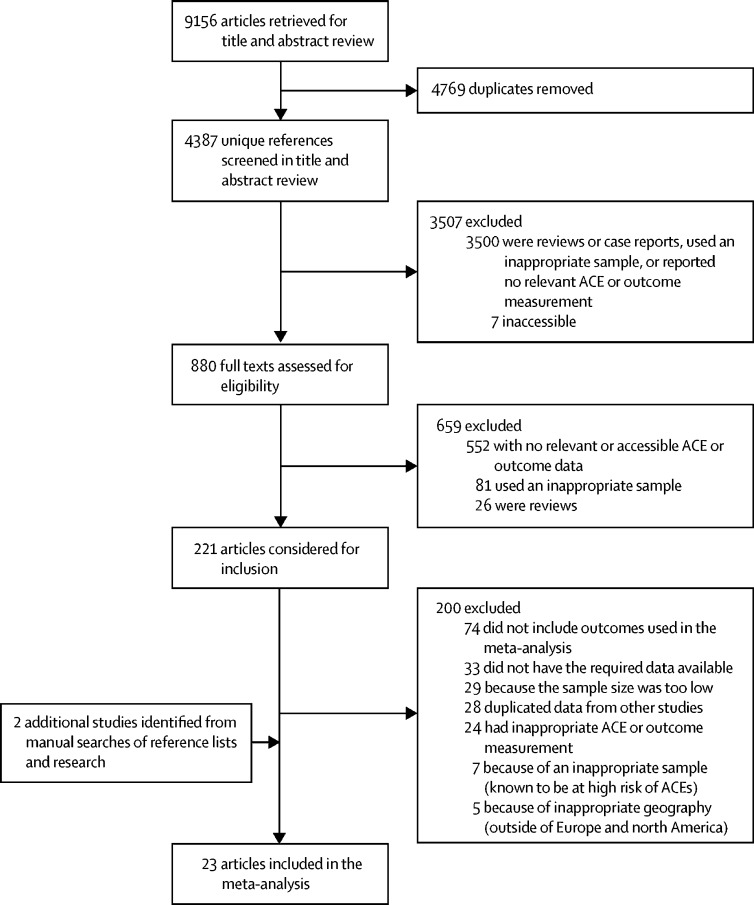
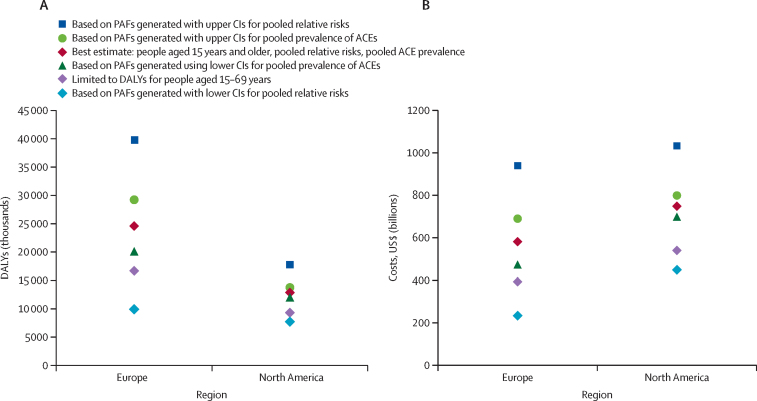
BACKGROUND: An increasing number of studies are identifying associations between adverse childhood experiences (ACEs) and ill health throughout the life course. We aimed to calculate the proportions of major risk factors for and causes of ill health that are attributable to one or multiple types of ACE and the associated financial costs. METHODS: In this systematic review and meta-analysis, we searched for studies in which risk data in individuals with ACEs were compared with these data in those without ACEs. We searched six electronic databases (MEDLINE, CINAHL, PsycINFO, Applied Social Sciences Index and Abstracts, Criminal Justice Databases, and the Education Resources Information Center) for quantitative studies published between Jan 1, 1990, and July 11, 2018, that reported risks of health-related behaviours and causes of ill health in adults that were associated with cumulative measures of ACEs (ie, number of ACEs). We included studies in adults in populations that did not have a high risk of ACEs, that had sample sizes of at least 1000 people, and that provided ACE prevalence data. We calculated the pooled RR for risk factors (harmful alcohol use, illicit drug use, smoking, and obesity) and causes of ill health (cancer, diabetes, cardiovascular disease, respiratory disease, anxiety, and depression) associated with ACEs. RRs were used to estimate the population-attributable fractions (PAFs) of risk attributable to ACEs and the disability-adjusted life-years (DALYs) and financial costs associated with ACEs. This study was prospectively registered in PROSPERO (CRD42018090356). FINDINGS: Of 4387 unique articles found following our initial search, after review of the titles (and abstracts, when the title was relevant), we assessed 880 (20%) full-text articles. We considered 221 (25%) full-text articles for inclusion, of which 23 (10%) articles met all selection criteria for our meta-analysis. We found a pooled prevalence of 23·5% of individuals (95% CI 18·7-28·5) with one ACE and 18·7% (14·7-23·2) with two or more ACEs in Europe (from ten studies) and of 23·4% of individuals (22·0-24·8) with one ACE and 35·0% (31·6-38·4) with two or more ACEs in north America (from nine studies). Illicit drug use had the highest PAFs associated with ACEs of all the risk factors assessed in both regions (34·1% in Europe; 41·1% in north America). In both regions, PAFs of causes of ill health were highest for mental illness outcomes: ACEs were attributed to about 30% of cases of anxiety and 40% of cases of depression in north America and more than a quarter of both conditions in Europe. Costs of cardiovascular disease attributable to ACEs were substantially higher than for most other causes of ill health because of higher DALYs for this condition. Total annual costs attributable to ACEs were estimated to be US$581 billion in Europe and $748 billion in north America. More than 75% of these costs arose in individuals with two or more ACEs. INTERPRETATION: Millions of adults across Europe and north America live with a legacy of ACEs. Our findings suggest that a 10% reduction in ACE prevalence could equate to annual savings of 3 million DALYs or $105 billion. Programmes to prevent ACEs and moderate their effects are available. Rebalancing expenditure towards ensuring safe and nurturing childhoods would be economically beneficial and relieve pressures on health-care systems. FUNDING: World Health Organization Regional Office for Europe.
Overview
The claims and statistics of this paper haven’t been checked yet.
Run the check — free, no account needed. It reads the open-access text and checks the sources it cites.
Integrity signals
Registry
Cites
Statistics
Figures
Verification
Claims the paper makes
The claims and statistics of this paper haven’t been checked yet.
Run the check — free, no account needed. It reads the open-access text and checks the sources it cites.
Self-check
Percentages, sums and reported differences re-computed from the paper’s own numbers.
The self-check needs the paper’s full text.
Citations
Cites
Felitti, V. J., Anda, R. F., Nordenberg, D., Williamson, D. F., Spitz, A. M., Edwards, V., Koss, M. P., & Marks, J. S. (1998) · American Journal of Preventive Medicine · doi:10.1016/s0749-3797(98)00017-8 · Cited by 18,943
Child abuse: Adolescent records vs. adult recall
Femina, D. D., Yeager, C. A., & Lewis, D. O. (1990) · Child Abuse & Neglect · doi:10.1016/0145-2134(90)90033-p · Cited by 8,820
Hughes, K., Bellis, M. A., Hardcastle, K. A., Sethi, D., Butchart, A., Mikton, C., Jones, L., & Dunne, M. P. (2017) · The Lancet Public Health · doi:10.1016/s2468-2667(17)30118-4 · Cited by 5,255
Self-citationAnda, R. F., Felitti, V. J., Bremner, J. D., Walker, J. D., Whitfield, C., Perry, B. D., Dube, S. R., & Giles, W. H. (2006) · European archives of psychiatry and clinical neuroscience · doi:10.1007/s00406-005-0624-4 · Cited by 4,292
The Lancet Commission on global mental health and sustainable development
Patel, V., Saxena, S., Lund, C., Thornicroft, G., Baingana, F., Bolton, P., Chisholm, D., Collins, P. Y., Cooper, J. L., Eaton, J., et al. (2018) · The Lancet · doi:10.1016/s0140-6736(18)31612-x · Cited by 3,692
García‐Moreno, C., Pallitto, C., Devries, K. M., Stöckl, H., Watts, C. G., & Abrahams, N. (2013) · Cited by 3,342
The global prevalence of common mental disorders: a systematic review and meta-analysis 1980–2013
Steel, Z., Marnane, C., Iranpour, C., Chey, T., Jackson, J. W., Patel, V., & Silove, D. (2014) · International Journal of Epidemiology · doi:10.1093/ije/dyu038 · Cited by 2,846
Validity of adult retrospective reports of adverse childhood experiences: review of the evidence
Hardt, J., & Rutter, M. (2004) · Journal of Child Psychology and Psychiatry · doi:10.1111/j.1469-7610.2004.00218.x · Cited by 2,827
Adverse childhood experiences, allostasis, allostatic load and age-related disease
Danese, A., & McEwen, B. S. (2012) · Physiology & Behavior · doi:10.1016/j.physbeh.2011.08.019 · Cited by 2,140
Use and misuse of population attributable fractions
Rockhill, B., Newman, B., & Weinberg, C. (1998) · American Journal of Public Health · doi:10.2105/ajph.88.1.15 · Cited by 1,683
Cited by
Sorted by citations
Items 501–600 of 999
Divorcescapes: Family Conflicts and Children's Lived Spaces
Warming, H., & Alminde, S. (2025) · Child & Family Social Work · doi:10.1111/cfs.70051 · Cited by 4
Love, G., Helgason, Á. R., & Kristjánsson, Á. L. (2021) · Scandinavian Journal of Public Health · doi:10.1177/14034948211022431 · Cited by 4
“[8] Bellis mA, Hughes K, ford K, et al.”
BackgroundServant leadership informed trauma peer support
Mahon, D. (2021) · Mental Health and Social Inclusion · doi:10.1108/mhsi-06-2021-0029 · Cited by 4
van Driessche, A., van Stel, H. F., Vink, R. M., & Staal, I. I. E. (2021) · International Journal of Environmental Research and Public Health · doi:10.3390/ijerph18189585 · Cited by 4
Gatto, N. M., Thordardottir, E. B., Tómasson, G., Rúnarsdóttir, H., Song, H., Jakobsdóttir, J., Aspelund, T., Valdimarsdóttir, U. A., & Hauksdóttir, A. (2022) · Brain Sciences · doi:10.3390/brainsci12111559 · Cited by 4
“For the latter, the number of affirmative responses for each ACE was summed and then grouped into categories of 0, 1–2, ≥3 ACEs based on the distribution in the study population and following previous work [38].”
MethodDo Families Exposed to Adverse Childhood Experiences Report Family Centered Care?
Lombardi, B. M., Zerden, L. D. S., Lee, H., & Geffel, K. M. (2022) · Societies · doi:10.3390/soc12060168 · Cited by 4
Alkhattabi, F., Faryan, N. A., Alsaleh, M., Long, M., Alkhani, A., Alwahibah, S., Frederico, M., & Alhuthil, R. T. (2022) · International Journal of Pediatrics and Adolescent Medicine · doi:10.1016/j.ijpam.2022.12.002 · Cited by 4
“Costs attributed to the presence of ACEs were estimated to be US$581 billion in Europe and US$748 billion in North America [13].”
BackgroundOkediji, P. T., Troy, D. M., Heron, J., Kipping, R., Martin, R. M., & Wright, C. (2024) · BMC Public Health · doi:10.1186/s12889-023-17516-4 · Cited by 4
“A number of studies have pointed at the role of childhood adversities, also referred to as adverse childhood experiences, in the engagement of individuals in health-damaging behaviours such as harmful alcohol consumption, smoking and drug use [14, 15].”
BackgroundGuo, R., Yang, L., Pan, Y., Shen, J., & Zhao, F. (2024) · Journal of Psychosomatic Research · doi:10.1016/j.jpsychores.2024.111692 · Cited by 4
Patterns of adverse childhood experiences and mental health symptoms among young adults
Tomlinson, C. A., Shin, S. H., Corso, C. B., & Jiskrova, G. K. (2024) · Children and Youth Services Review · doi:10.1016/j.childyouth.2024.107680 · Cited by 7
Findings from the Michigan EITC Access Project: ACEs Prevention Through Economic Intervention
Maguire‐Jack, K., Park, Y., Chang, O. D., Solomon, A., Quinn, J., Greenberg, S., Coggins, H., & Hinton, J. (2024) · Child and Adolescent Social Work Journal · doi:10.1007/s10560-024-00971-2 · Cited by 4
“A large body of research has documented negative consequences resulting from ACEs including increased depression, anxiety, substance use, cardiovascular disease, cancer, diabetes, and respiratory disease (Bellis et al., 2019).”
Gussin, H. A., Shiu, C. A., Danguilan, C., Mihaila, I., Acharya, K., & Berg, K. L. (2024) · Journal of Autism and Developmental Disorders · doi:10.1007/s10803-024-06338-x · Cited by 7
“…of ACEs on adult physical health (i.e., cancer, cardiovascular disease, diabetes, autoimmune disease, premature mortality; Anda et al., 2006 ; Bellis et al., 2019 ; Brown et al., 2009 ; Brown et al., 2013 ; Dube et al., 2003 ; Felitti et al., 1998 ; Hughes et al., 2017; Melchior et al., 2007…”
Golsäter, M., Randell, E., Engström, M., & Lucas, S. (2024) · BMC Pediatrics · doi:10.1186/s12887-024-05064-8 · Cited by 4
“Studies have identified the importance of early life experiences for people’s health throughout the life course, and studies have established the link between adverse childhood experiences (ACE) and ill-health in adult-hood [29, 30].”
BackgroundQeadan, F., O’Neil, S., Barbeau, W. A., & English, K. C. (2024) · Discover Public Health · doi:10.1186/s12982-024-00254-2 · Cited by 4
“Individuals who have four or more ACEs are more likely to experience impairments in physical and mental health in adulthood [16, 17].”
A study of impulsivity and adverse childhood experiences in a population health setting
Read, R. W., Schlauch, K. A., Elhanan, G., Neveux, I., Koning, S. M., Cooper, T., & Grzymski, J. J. (2024) · Frontiers in Public Health · doi:10.3389/fpubh.2024.1447008 · Cited by 4
Syed, S., Howe, L. D., Lacey, R. E., Deighton, J., Arfeen, M. Q. U., Feder, G. S., & Gilbert, R. E. (2025) · The Lancet Public Health · doi:10.1016/s2468-2667(24)00301-3 · Cited by 4
Ng, A. E., Swedo, E. A., Zablotsky, B., Black, L. I., Niolon, P. H., Bose, J., & Blumberg, S. J. (2025) · Child Abuse & Neglect · doi:10.1016/j.chiabu.2025.107339 · Cited by 4
Lansing, A. E., Romero, N. J., Siantz, E., & Gilmer, T. (2025) · BMC Public Health · doi:10.1186/s12889-025-22268-4 · Cited by 4
Logan, T., Cole, J., & Schroeder, M. (2021) · Journal of Drug Issues · doi:10.1177/00220426211056601 · Cited by 4
“One study found that even a modest 10% reduction in adverse childhood experiences can save around $105 billion annually (Bellis et al., 2019).”
BackgroundStea, T. H., Shatri, H., Haugland, S. H., & Kleppang, A. L. (2022) · International Journal of Environmental Research and Public Health · doi:10.3390/ijerph19031395 · Cited by 5
“USD 581 billion, and a modest 10% reduction in prevalence of ACEs has suggested to be equivalent to annual savings of 3 million disability-adjusted life years (DALYs) [13].”
BackgroundShevlin, M. E., Redican, E., McElroy, E., Ben‐Ezra, M., Karatzias, T., & Hyland, P. (2022) · Current Psychology · doi:10.1007/s12144-022-03220-w · Cited by 5
“ACEs are estimated to account for three million disability adjusted life years (DALYs) per annum (Bellis et al., 2019) and 29.”
BackgroundLurie, J. M., Pilato, T. C., & Kaur, G. (2022) · Journal of Global Health · doi:10.7189/jogh.12.03059 · Cited by 4
Coordinating a National Approach to Violence Prevention
Sakran, J. V., Hargarten, S. W., & Rivara, F. P. (2022) · JAMA · doi:10.1001/jama.2022.14076 · Cited by 4
Prevalence of medically induced psychological trauma and its influence on women's health
Krolak, M., Keller, K. H., Schmidt, R., Nobel, G., Germann, N., Schmid, D. A., & Hornung, R. (2023) · International Journal of Gynecology & Obstetrics · doi:10.1002/ijgo.14691 · Cited by 4
Dierickx, S., Malisse, L., Bisagno, E., Cadamuro, A., Haeken, S. V., Wuyts, D., Linde‐Ozola, Z., Kandāte, A., Morva, D., Rózsa, M., et al. (2023) · Children · doi:10.3390/children10061035 · Cited by 4
Touloumakos, A. Κ., Adamopoulou, E., & Evangelou-Tsitiridou, M. (2023) · Psychology the Journal of the Hellenic Psychological Society · doi:10.12681/psy_hps.26786 · Cited by 6
Li, Y., & Chen, H. (2024) · Death Studies · doi:10.1080/07481187.2024.2306471 · Cited by 4
“Although initial bereavement outcomes in children often attenuate over time (Rodie & June, 2011), the enduring consequences of early parental loss into later adulthood remain largely unexplored (Bellis et al., 2019).”
InfluentialSpending on public benefit programs and exposure to adverse childhood experiences
Collins, M. E., Hall, M., Chung, P. J., Bettenhausen, J. L., Keys, J. R., Bard, D., & Puls, H. T. (2024) · Child Abuse & Neglect · doi:10.1016/j.chiabu.2024.106717 · Cited by 4
Enduring strengths: How childhood adversity shapes adult resilience in Kosovo
Kelmendi, K., & Hamby, S. L. (2024) · Child Protection and Practice · doi:10.1016/j.chipro.2024.100070 · Cited by 4
Who Is Talking About Adverse Childhood Experiences? Evidence From Twitter to Inform Health Promotion
Srivastav, A., Park, K.-Y., Koziarski, A., Strompolis, M., & Purtle, J. (2021) · Health Education & Behavior · doi:10.1177/10901981211019280 · Cited by 4
“This in turn can lead to negative consequences in adulthood including engaging in risk behaviors, ultimately leading to poor physical and mental health (Bellis et al., 2019; Felitti, 2009; Hughes et al., 2017; Srivastav, Strompolis, Kipp, et al., 2020).”
BackgroundWomen Under Pressure: Sex‐Specific Cardiovascular Consequences of Childhood Trauma in Black Adults
Maki, K. A., Farmer, N. M., & Wallen, G. R. (2025) · Journal of the American Heart Association · doi:10.1161/jaha.124.039825 · Cited by 4
“20 Public health and community-based preventative interventions, along with trauma-informed care models in primary and cardiovascular health settings could also play a valuable role in mitigating long-term risks by integrating mental health support with CVD prevention efforts.”
Combinations of Parent-Related Risk Factors Explaining Family Violence Toward Children and Spouse
Leppäkoski, T. H., Vuorenmaa, M., & Paavilainen, E. (2023) · Journal of Interpersonal Violence · doi:10.1177/08862605231208421 · Cited by 3
“Furthermore, there is evidence-based research identifying associations between ACEs and poor health later in life (e.g., Bellis et al., 2019; Mosley-Johnson et al., 2019), and multiple ACEs have also been found to be related to ACE risks for the following generation (Hughes et al., 2017).”
BackgroundSmith, G. C., Dolbin‐MacNab, M. L., Infurna, F. J., Crowley, D. M., Castro, S. A., Musil, C. M., & Webster, B. A. (2024) · Journal of Child and Family Studies · doi:10.1007/s10826-024-02803-4 · Cited by 3
“Since ACEs may increase vulnerability to negative outcomes even into late adulthood, efforts to mitigate the impact of ACEs through early detection and intervention are imperative (Assmusen et al, 2020; Bellis et al. 2019; Crouch et al., 2019; Hu 2021).”
Haugland, S. H., Carvalho, B., Strandheim, A., & Stea, T. H. (2024) · Journal of Child & Adolescent Trauma · doi:10.1007/s40653-024-00651-4 · Cited by 3
Adverse childhood experiences and firearm storage patterns
Testa, A. M., Fu, K., Jackson, D. B., Semenza, D. C., & McKay, S. (2025) · Annals of Epidemiology · doi:10.1016/j.annepidem.2025.02.001 · Cited by 3
Stewart-Tufescu, A., Kurbatfinski, S., Ross, K. M., Pohl, C., Graham, I. D., & Letourneau, N. (2025) · Child Protection and Practice · doi:10.1016/j.chipro.2025.100116 · Cited by 3
Fares‐Otero, N. E., Amoretti, S., Solé, B., Halligan, S. L., Vieta, E., Leucht, S., Seedat, S., & Harrer, M. (2025) · European Journal of Psychotraumatology · doi:10.1080/20008066.2025.2508548 · Cited by 4
“Given the substantial individual, societal, and economic costs of CM (Bellis et al., 2019; Gilbert et al., 2009; Grummitt et al., 2024), improving social functioning in the context of CM by identifying modifiable mechanisms is relevant not only for an individual’s personal health and well-being,…”
Gezahegn, Y., Dubale, B. W., Pain, C., & Mihretu, A. (2025) · BMJ Open · doi:10.1136/bmjopen-2024-091138 · Cited by 3
Barrera, P., Manríquez-Reyes, K., Undurraga, C., Santelices, M. P., Valenzuela, E., Paola Viviani, G., Hamilton, J., & Murillo, J. (2025) · Journal of Aggression Maltreatment & Trauma · doi:10.1080/10926771.2025.2572807 · Cited by 3
“The economic burden of ACEs is substantial; in Europe, ACE-related costs exceed 1% of GDP (Hughes et al., 2021), and they are associated with up to 40% of depression cases (Bellis et al., 2019).”
Huang, H., Yang, G., Jiang, X., Wang, J., Shi, S., Feng, N., & Zhong, V. W. (2025) · Journal of Affective Disorders · doi:10.1016/j.jad.2025.120546 · Cited by 5
Jiskrova, G. K., Ksinan, A. J., Pikhart, H., Bobák, M., Klánová, J., & Lacey, R. E. (2025) · Child and Adolescent Psychiatry and Mental Health · doi:10.1186/s13034-025-01004-1 · Cited by 3
“ACE are costly for society – the annual costs attributable to ACE were estimated to be $581 billion in Europe and $748 billion in north America [9].”
Chen, Z., Zhao, W. J., Chen, Z., Tian, K., Qin, Y., Yu, Y., & Xie, R. (2026) · General Hospital Psychiatry · doi:10.1016/j.genhosppsych.2026.01.010 · Cited by 4
Gong, Z., Yang, J., Wang, Y., Liang, W., & Yue, G. (2026) · Journal of Affective Disorders · doi:10.1016/j.jad.2026.121529 · Cited by 4
Ren, Z., Lian, X., Du, Y., Liu, Y., Han, Y., & Liu, J. (2022) · Global Transitions · doi:10.1016/j.glt.2022.12.001 · Cited by 3
The feasibility and utility of trauma screening for children involved in the juvenile justice system
Lang, J. M., Lange, B. C. L., Connell, C. M., & Duran, T. (2023) · Journal of Traumatic Stress · doi:10.1002/jts.22953 · Cited by 4
Bellis, M. A., Hughes, K. E., Ford, K., & Lowey, H. (2023) · BMC Public Health · doi:10.1186/s12889-023-16549-z · Cited by 3
“Around half of adults in Europe and North America have experienced at least one ACE and many have suffered multiple ACEs [5] (e.”
BackgroundSelf-citationSá, M., Pereira, P. A., & Castro-Vale, I. (2023) · Healthcare · doi:10.3390/healthcare11172450 · Cited by 3
Hamad, H., Angelöw, A., & Psouni, E. (2023) · European Journal of Psychotraumatology · doi:10.1080/20008066.2023.2263322 · Cited by 7
“Adversities during childhood have profound and far-reaching consequences for the child ’ s development and well-being, constituting a signi fi cant risk of mental illness, unemployment, poverty, and criminality in adulthood (Bellis et al., 2019; Davidson et al., 2010).”
BackgroundTowards a Unified Account of Aberrant Salience in Psychosis: Proximate and Evolutionary Mechanisms
Savva, C., Griffin, B., & Abed, R. (2024) · Evolutionary Psychological Science · doi:10.1007/s40806-024-00384-5 · Cited by 4
“ACEs represent major contributors to the disease burden of developed countries; the annual financial impact on health outcomes is thought to cost $750bn in the US alone (Bellis et al., 2019).”
Older mothers and their difficult adult children: a life course exploration
Smith, J. R. (2024) · Journal of Elder Abuse & Neglect · doi:10.1080/08946566.2024.2325558 · Cited by 3
“Adverse childhood experiences (ACES) continue to have negative effects on mental and physical well-being throughout the life course (Bellis et al., 2019; Nurius et al., 2015; Rebbe et al., 2018).”
BackgroundCapasso, A., Tozan, Y., DiClemente, R. J., & Pahl, K. (2024) · Journal of Interpersonal Violence · doi:10.1177/08862605241243372 · Cited by 3
“Our findings are also consistent with prior research implicating ACEs in the etiology of mood and somatic depressive symptomatology, as well as of anxiety disorders.”
InfluentialTrauma-informed care beliefs scale-comprehensive for child welfare carers using Rasch analysis
Beehag, N., Dryer, R., McGrath, A., Krägeloh, C., & Medvedev, O. N. (2024) · Child Abuse & Neglect · doi:10.1016/j.chiabu.2024.106966 · Cited by 3
“ACE are linked to a range of childhood and adult psychiatric disorders and medical conditions across the lifespan (Bellis et al., 2019).”
BackgroundBao, C.-Q., Zhang, Q.-Y., Zou, H.-W., He, C., Yan, R., Hua, L., Lu, Q., & Yao, Z. (2024) · Biological Psychiatry: Cognitive Neuroscience and Neuroimaging · doi:10.1016/j.bpsc.2024.08.014 · Cited by 6
Chandy, B. R., Davey, C., Oswald, W. E., Kaliappan, S. P., Aruldas, K., Banks, L. M., Jasper, S., Nagarajan, G., Galagan, S. R., Kennedy, D. S., et al. (2024) · Journal of Epidemiology and Global Health · doi:10.1007/s44197-024-00293-7 · Cited by 3
Hales, G. K., Debowska, A., Rowe, R., Boduszek, D., & Levita, L. (2024) · Development and Psychopathology · doi:10.1017/s0954579424001470 · Cited by 3
Chen, Y., Lu, Y., Wen, X., Zhou, T., & Ke, X. (2024) · Frontiers in Public Health · doi:10.3389/fpubh.2024.1453517 · Cited by 4
Lagged effects of childhood depressive symptoms on adult epigenetic aging
Han, L. K. M., Aghajani, M., Penninx, B. W. J. H., Copeland, W., Åberg, K. A., & van den Oord, E. J. C. G. (2024) · Psychological Medicine · doi:10.1017/s0033291724001570 · Cited by 4
“For example, the initial impact of trauma may magnify over time due to subsequent increases in health-risk behaviors such as smoking, substance use, and high-risk activities (Bellis et al., 2019; Hughes et al., 2017) that then over time accelerate epigenetic aging.”
BackgroundCoughlan, B., Marshall, N., Woolgar, M., Mannes, J., Erkiert, P., Humphrey, A., Smith, J., Drayak, T., Crozier‐Roche, F., Morgan, T., et al. (2024) · Comprehensive Psychiatry · doi:10.1016/j.comppsych.2024.152568 · Cited by 3
Childhood Maltreatment and Borderline Personality Disorder
Salavati, M., & Selby, E. A. (2024) · Springer eBooks · doi:10.1007/978-3-031-75503-3_4 · Cited by 3
Hanetz‐Gamliel, K., & Dollberg, D. G. (2025) · Stress and Health · doi:10.1002/smi.70025 · Cited by 5
dos Santos, A. C. G., da Silva, A. B., Libório, M. P., Nobre, C. N., Mannan, H., & D’Ângelo, M. F. S. V. (2025) · PLoS ONE · doi:10.1371/journal.pone.0326239 · Cited by 3
“Given the high prevalence of adverse childhood experiences and the growing evidence of their contribution to most classes of mental disorders [16], adverse childhood experiences are strategic targets for prevention [24].”
Guo, N., Luk, T. T., Zhao, S. Z., & Weng, X. (2025) · Child Abuse & Neglect · doi:10.1016/j.chiabu.2025.107628 · Cited by 3
Ethical Implications of AI‐Driven Chatbots in Domestic Violence Support
Mielismäki, H., & Husso, M. (2025) · Social Inclusion · doi:10.17645/si.9998 · Cited by 3
“It may significantly damage the mental and physical health of victim‐survivors of DV (Bellis et al., 2019; Ellsberg et al., 2015; Miller & McCaw, 2019; Stubbs & Szoeke, 2022).”
Cull, J., Thomson, G., Downe, S. M., Fine, M., & Topalidou, A. (2025) · BMJ Open · doi:10.1136/bmjopen-2024-097815 · Cited by 3
Williams, W. A., Jain, M., Laguna, T., & McColley, S. (2020) · Pediatric Pulmonology · doi:10.1002/ppul.25243 · Cited by 3
Henriot-Jéhel, C., Lemire, J., Teulier, C., Bussières, A., & Lardon, A. (2022) · Scientific Reports · doi:10.1038/s41598-021-04060-7 · Cited by 3
Experiences of Trauma and DNA Methylation Profiles among African American Mothers and Children
Barcelona, V., Huang, Y.-F., Caceres, B. A., Newhall, K. P., Hui, Q., Cerdeña, J., Crusto, C. A., Sun, Y. V., & Taylor, J. Y. (2022) · International Journal of Molecular Sciences · doi:10.3390/ijms23168951 · Cited by 4
“Potentially traumatic experiences over the life course are common and have a strong, cumulative impact on adult health [1].”
BackgroundKawahara, T., Doi, S. K., Isumi, A., Ochi, M., & Fujiwara, T. (2022) · Injury Prevention · doi:10.1136/ip-2022-044721 · Cited by 3
Positive Development and Parenting in the Face of Adversity: A Survey of Emerging Adults
Chainey, C., Burke, K., & Haynes, M. A. (2022) · Adversity and Resilience Science · doi:10.1007/s42844-022-00082-w · Cited by 3
The moment is now: Strengthening communities and families for the future of our nation
Rostad, W. L., Ports, K. A., Merrick, M. T., & Hughes, L. (2022) · Children and Youth Services Review · doi:10.1016/j.childyouth.2022.106745 · Cited by 3
“…between CAN and longer-term health consequences, including changes in physiological development; physical and mental health problems; engagement in health risk behaviors such as smoking and substance use; and premature death (Anda et al., 2006; Bellis et al., 2019; Merrick et al., 2019).”
BackgroundUccellini, O., Benlodi, A., Caroppo, E., Cena, L., Esposito, G., Fernández, I., Ghazanfar, M., Imbasciati, A., Longo, F., Mazza, M., et al. (2022) · International Journal of Environmental Research and Public Health · doi:10.3390/ijerph192416741 · Cited by 3
“ACEs have in Europe and in Italy a prevalence of about 20% [13].”
BackgroundKim, H., Gundersen, C., & Windsor, L. C. (2023) · Annals of Epidemiology · doi:10.1016/j.annepidem.2023.01.008 · Cited by 3
Ossai, O. V. (2023) · International Journal of Home Economics Hospitality and Allied Research · doi:10.57012/ijhhr.v2n1.004 · Cited by 3
“In 2014 and 2015, approximately 1 billion children worldwide suffered from ACEs (Bellis, 2019).”
BackgroundAbbas, H., Takeuchi, K., Kiuchi, S., Kondo, K., & Osaka, K. (2023) · Journal of Public Health Dentistry · doi:10.1111/jphd.12582 · Cited by 3
Early Life Adversity as a Risk Factor for Alcohol Use Disorder
Schwandt, M. L. (2023) · Springer eBooks · doi:10.1007/978-3-031-32483-3_34 · Cited by 3
Hege, A. (2024) · North Carolina Medical Journal · doi:10.18043/001c.91428 · Cited by 3
“In sum, it has been estimated that the United States spends nearly three-quarters of a billion dollars annually to address the health burdens associated with ACEs, and cardiovascular disease is overwhelmingly the primary culprit due to disability-adjusted life years (DALYs) [5].”
Schroeder, K., Dumenci, L., Day, S. E., Konty, K., Noll, J. G., Henry, K., Suglia, S. F., Wheeler, D. C., Argenio, K. L., & Sarwer, D. B. (2024) · Childhood Obesity · doi:10.1089/chi.2024.0215 · Cited by 3
Wang, Y., Ge, F., Aspelund, T., Ask, H., Hauksdóttir, A., Hu, K., Jakobsdóttir, J., Zoëga, H., Shen, Q., Whalley, H. C., et al. (2024) · BMC Medicine · doi:10.1186/s12916-024-03399-8 · Cited by 6
“…adulthood [10], more likely to have suboptimal health behaviours (e.g. smoking) [20] and immune function [21], and to be at higher risk of obesity [12], cardiovascular disease [22], psychiatric disorders [11], and other chronic diseases in adulthood [13], all of which are associated with severe…”
BackgroundInfluentialKapp, J. M., Dicke, R., & Quinn, K. J. (2024) · JMIR Pediatrics and Parenting · doi:10.2196/56722 · Cited by 3
“Illicit drug use had the highest population-attributable fractions associated with ACEs, and population-attributable fractions of causes of ill health were highest for mental illness outcomes: ACEs were attributed to about 30% of cases of anxiety and 40% of cases of depression in North America [14].”
BackgroundPan, Z., Chapman, D. A., Sullivan, T. N., Bishop, D. L., & Kimmel, A. D. (2024) · Prevention Science · doi:10.1007/s11121-024-01729-z · Cited by 3
“Collectively, these events result in an economic burden of more than $487 billion (Bellis et al., 2019), suggesting potential investment returns both in the short-term and over generations.”
BackgroundDörner, M., von Känel, R., Pazhenkottil, A. P., Altwegg, R., König, N., Nager, L., Attanasio, V., Guth, L., Zirngast, S., Menzi, A., et al. (2025) · Journal of Psychosomatic Research · doi:10.1016/j.jpsychores.2024.112033 · Cited by 3
Thapa, K., Shen, Y., Cordero, J. F., Vall, E. A., & Rajbhandari‐Thapa, J. (2025) · Journal of Epidemiology & Community Health · doi:10.1136/jech-2024-223342 · Cited by 3
“…analysed separately, we found that school support was directly associated with reduced mortality independent of ACEs and other social support sources, and ACEs were significantly associated with greater mortality risk among those who had poor family support (online supplemental eTables 3 and 4).”
Adverse Childhood Experiences in Youth: Trauma-Informed Assessment, Diagnosis, and Management
Kameg, B., & Fradkin, D. (2020) · The Journal for Nurse Practitioners · doi:10.1016/j.nurpra.2020.04.026 · Cited by 3
Perceptions of a short animated film on adverse childhood experiences: a mixed methods evaluation
Ford, K., Bellis, M. A., Isherwood, K. R., & Hughes, K. E. (2021) · BMJ Open · doi:10.1136/bmjopen-2021-050398 · Cited by 3
Self-citationDaily, S. M., Dyer, A., Lilly, C. L., Sarkees, E. A., & Bias, T. K. (2021) · Evaluation and Program Planning · doi:10.1016/j.evalprogplan.2021.102044 · Cited by 3
Martins, M. I. S., Rocha, H. A. L., Leite, Á. J. M., Rocha, S. G. M. O., Araújo, D. A. B. S., Machado, M. M. T., Campos, J. S., Sampaio, E. G. M., Silva, A. C. E., & Correia, L. L. (2022) · Revista Brasileira de Epidemiologia · doi:10.1590/1980-549720220035 · Cited by 3
Effects of cross-fostering experience on emotion in adolescent Kunming mice
Zhu, Y., Wang, Y., Wang, Y., Feng, Y., Wang, Q., Wang, Q., Tian, Y., Tai, F., & Jia, R. (2023) · Behaviour · doi:10.1163/1568539x-bja10200 · Cited by 3
McKelvey, L. M., Zhang, D., Whiteside-Mansell, L., & Selig, J. P. (2022) · Adversity and Resilience Science · doi:10.1007/s42844-022-00066-w · Cited by 3
Development and initial validation of a short form of the Memories of Home and Family Scale
Redican, E., Rawers, C., McElroy, E., Hyland, P., Karatzias, T., Ben‐Ezra, M., & Shevlin, M. E. (2023) · Adversity and Resilience Science · doi:10.1007/s42844-023-00097-x · Cited by 3
Farrell, D., Fadeeva, A., Zat, Z., Knibbs, L., Miller, P. W., Barron, I., Matthess, H., Mattheß, C., Gazit, N., & Kiernan, M. (2021) · Research Square · doi:10.21203/rs.3.rs-886940/v1
Skjærvø, I., Martinsen, M., Næss, A., Jensen, T. K., Fagermoen, E. M., Skagemo, C. U., Dyrdal, G. M., Knutsen, M., Michaelsen, K., Nymoen, R. C., et al. (2022) · Research Square · doi:10.21203/rs.3.rs-1253190/v1 · Cited by 3
“Every year, a substantial number of children are exposed to violence or other potentially traumatizing events (1, 2).”
BackgroundMaguire‐Jack, K., Solomon, A., Greenberg, S., Chang, O. D., Coggins, H., Schuster-Wachsberger, E., & Hinton, J. (2022) · International Journal on Child Maltreatment Research Policy and Practice · doi:10.1007/s42448-022-00119-8 · Cited by 2
Olstad, K., Sørensen, T., Lien, L., & Danbolt, L. J. (2023) · Frontiers in Psychology · doi:10.3389/fpsyg.2023.946394 · Cited by 2
“In research or clinical contexts, there is a clear correlation between violent childhood experiences and mental and physical health problems, daily functioning, and social relationships (Hughes et al., 2017; Bellis et al., 2019; Rueness et al., 2020; Birkeland et al., 2021).”
BackgroundDu, Y., Luo, Y., Ren, Z., Zheng, X., & Liu, J. (2023) · Child Abuse & Neglect · doi:10.1016/j.chiabu.2023.106383 · Cited by 2
Tarquinio, C., Trousselard, M., Rotonda, C., & Tarquinio, C. (2023) · Annales Médico-psychologiques revue psychiatrique · doi:10.1016/j.amp.2023.06.008 · Cited by 3
Tomlinson, C. A., McDonald, S. E., Brown, S. M., & Shin, S. H. (2023) · Children and Youth Services Review · doi:10.1016/j.childyouth.2023.107242 · Cited by 2
Agwogie, M. O., Kliewer, W. L., & Ibrahim, M. B. (2024) · Journal of Traumatic Stress · doi:10.1002/jts.23043 · Cited by 2
Binnie, V., & Johnston, A. N. B. (2024) · International Emergency Nursing · doi:10.1016/j.ienj.2024.101481 · Cited by 2
Ricks, J. M., Liebhard, B. M., Dush, C. M. K., Manning, W. D., & LoVette, A. (2024) · Partner Abuse · doi:10.1891/pa-2023-0040 · Cited by 3
Besera, G., Annor, F., Swedo, E. A., Aslam, M. V., & Massetti, G. M. (2024) · American Journal of Preventive Medicine · doi:10.1016/j.amepre.2024.08.001 · Cited by 2
Metadata
- Authors
- Bellis, M. A., Hughes, K., Ford, K., Ramos Rodriguez, G., Sethi, D., & Passmore, J.
- Affiliations
- Bangor University (GB)
- World Health Organization Regional Office for Europe (DK)
- Corresponding author
- Bellis, Mark A
- Venue
- The Lancet Public Health
- Publisher
- Elsevier BV
- Published
- 2019-10
- Volume
- 4
- Issue
- 10
- Pages
- e517-e528
- ISSN
- 2468-2667 (ISSN-L)
- PMC
- PMC7098477
- OpenAlex
- W2971937136
- Cited by
- 1,032
- References
- 51
- Citations by year
- 2026: 132 · 2025: 178 · 2024: 216 · 2023: 161 · 2022: 167 · 2021: 118 · 2020: 57 · 2019: 2
- FWCI
- 13.65
- Type
- journal article
- Language
- en
- Open access
- gold
- doi.org
- Licence
- Locations
- The Lancet Public Health (publishedVersion, cc-by)
- PubMed Central (publishedVersion, cc-by)
- PubMed (publishedVersion)
- Bangor University Research Portal (Bangor University) (publishedVersion, other-oa)
- Liverpool John Moores University (acceptedVersion)
- DOAJ (DOAJ: Directory of Open Access Journals) (submittedVersion)
- Topics
- Social Sciences › Psychology › Clinical Psychology › Child Abuse and Trauma
- Social Sciences › Sociology and Political Science › Child Welfare and Adoption
- Social Sciences › Health › Intimate Partner and Family Violence
- Keywords
- adverse childhood experiences, life course health, population attributable fraction, disability-adjusted life years, health care costs, alcohol consumption, illicit drug use, smoking, obesity, cancer, diabetes mellitus, cardiovascular disease, respiratory diseases, anxiety, depression, health disparities
- MeSH terms
- Adult Survivors of Child Adverse Events, Adverse Childhood Experiences, Costs and Cost Analysis, Europe, Health Status, Humans, North America
About these checks
Registry, retraction, Cites and statistics results are computed, not judged, with one exception: a printed reference that no index lists is read once by a model before it counts as a citation error. Claims are extracted by a model and kept only when their quote appears verbatim in the text; each cited source is then checked, with a model’s help, for whether it says what the claim relies on. Those verdicts can be wrong — read the claim’s quote and the cited source before relying on one.
Statistics and arithmetic are recomputed, not judged.
Confidence bands are shown only for fields calibrated on our annotated test set. None is calibrated yet, so no band is shown.
What counts as a claim ›How we measure confidence ›How we check this ›
Are you an author, or do you see a problem with this page? Request a review
