

Healthy ageing through internet counselling in the elderly (HATICE): a multinational, randomised controlled trial
Open accessThe DOI matches its Crossref record; 30 of the 30 references it cites were found in a registry or an index.
Abstract
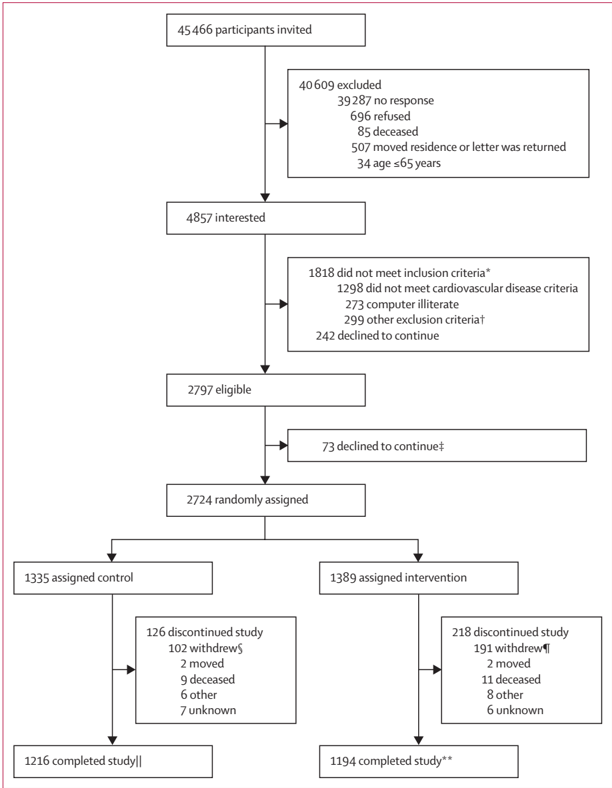
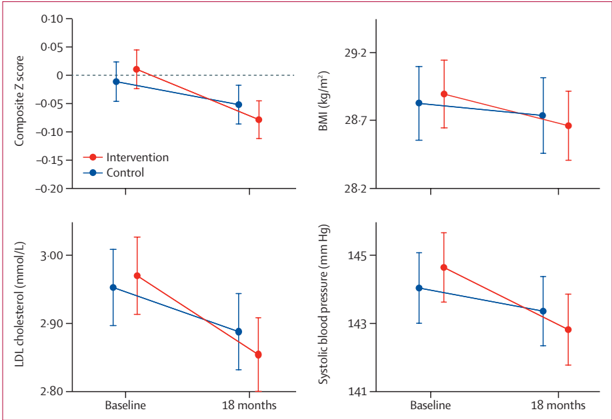
Background Although web-based interventions have been promoted for cardiovascular risk management over the past decade, there is limited evidence for effectiveness of these interventions in people older than 65 years. The healthy ageing through internet counselling in the elderly (HATICE) trial aimed to determine whether a coach-supported internet intervention for self-management can reduce cardiovascular risk in community-dwelling older people. Methods This prospective open-label, blinded endpoint clinical trial among people age 65 years or over at increased risk of cardiovascular disease randomly assigned participants in the Netherlands, Finland, and France to an interactive internet intervention stimulating coach-supported self-management or a control platform. Primary outcome was the difference from baseline to 18 months on a standardised composite score (Z score) of systolic blood pressure, LDL cholesterol, and body-mass index (BMI). Secondary outcomes included individual risk factors and cardiovascular endpoints. This trial is registered with the ISRCTN registry, 48151589, and is closed to accrual. Findings Among 2724 participants, complete primary outcome data were available for 2398 (88%). After 18 months, the primary outcome improved in the intervention group versus the control group (0·09 vs 0·04, respectively; mean difference −0·05, 95% CI −0·08 to −0·01; p=0·008). For individual components of the primary outcome, mean differences (intervention vs control) were systolic blood pressure −1·79 mm Hg versus −0·67 mm Hg (−1·12, −2·51 to 0·27); BMI −0·23 kg/m 2 versus −0·08 kg/m 2 (−0·15, −0·28 to −0·01); and LDL −0·12 mmol/L versus −0·07 mmol/L (−0·05, −0·11 to 0·01). Cardiovascular disease occurred in 30 (2·2%) of 1382 patients in the intervention versus 32 (2·4%) of 1333 patients in the control group (hazard ratio 0·86, 95% CI 0·52 to 1·43). Interpretation Coach-supported self-management of cardiovascular risk factors using an interactive internet intervention is feasible in an older population, and leads to a modest improvement of cardiovascular risk profile. When implemented on a large scale this could potentially reduce the burden of cardiovascular disease. Funding European Commission Seventh Framework Programme.
Overview
The claims and statistics of this paper haven’t been checked yet.
Free: it reads the open-access text and checks the first 5 claims that cite a source we can check. Create a free account to check every claim.
Integrity signals
Registry
Cites
Statistics
Figures
Verification
Claims the paper makes
The claims and statistics of this paper haven’t been checked yet.
Free: it reads the open-access text and checks the first 5 claims that cite a source we can check. Create a free account to check every claim.
Claims other papers make about this one
Each is checked against this paper’s own text: does it say what the citing paper says it does?
The source backs part of the claim, not all of it — or backs it for a different population, condition or comparison.
In the citing paper
“This composite Z-score reduction of −0.09 was associated with hazard ratios (95% CIs) of 0.86 (0.52–1.43) and 0.30 (0.10–0.93) for incident total CVD and stroke risk, respectively, compared to the control group in 2724 older adults”
From Aerobic, resistance, or combined exercise training and cardiovascular risk profile in overweight or obese adults: the CardioRACE trial (2024) · cites this paper as [39]
Experimental — accuracy not yet measuredThe cited source says what the claim attributes to it.
In the citing paper
“A small improvement in the cardiovascular risk composite primary outcome was observed in the intervention group compared with the control group at 18 months, mainly through weight loss”
From Dementia prevention, intervention, and care: 2020 report of the Lancet Commission (2020) · cites this paper as [158]
The cited source says what the claim attributes to it.
In the citing paper
“A larger effect was observed in the younger age group (65–70 years) and those with the lowest level of education, who had a higher baseline risk”
From Dementia prevention, intervention, and care: 2020 report of the Lancet Commission (2020) · cites this paper as [158]
The cited source says what the claim attributes to it.
In the citing paper
“and the dementia risk score was slightly lower in those who received the intervention (mean difference −0·15, 95% CI −0·3 to −0·0).”
From Dementia prevention, intervention, and care: 2020 report of the Lancet Commission (2020) · cites this paper as [158]
The cited source says what the claim attributes to it.
In the citing paper
“The Healthy Ageing through Internet Counselling in the Elderly (HATICE) trial observed a reduction of −0.09 in their composite average Z-score, derived from systolic blood pressure, LDL-C, and BMI after an 18-month healthy lifestyle intervention including physical activity counselling.39”
From Aerobic, resistance, or combined exercise training and cardiovascular risk profile in overweight or obese adults: the CardioRACE trial (2024) · cites this paper as [39]
Self-check
Percentages, sums and reported differences re-computed from the paper’s own numbers.
The self-check needs the paper’s full text.
Citations
Cites
In search of how people change: Applications to addictive behaviors.
Prochaska, J. O., DiClemente, C. C., & Norcross, J. C. (1992) · American Psychologist · doi:10.1037/0003-066x.47.9.1102 · Cited by 8,596
Forouzanfar, M. H., Afshin, A., Alexander, L. T., Anderson, H. R., Bhutta, Z. A., Biryukov, S., Brauer, M., Burnett, R., Cercy, K., Charlson, F. J., et al. (2016) · The Lancet · doi:10.1016/s0140-6736(16)31679-8 · Cited by 7,698
Self-citationA Randomized Trial of Intensive versus Standard Blood-Pressure Control
The SPRINT Research Group (2015) · New England Journal of Medicine · doi:10.1056/nejmoa1511939 · Cited by 6,325
Naghavi, M., Abajobir, A. A., Abbafati, C., Abbas, K. M., Abd-Allah, F., Abera, S. F., Aboyans, V., Adetokunboh, O., Afshin, A., Agrawal, A., et al. (2017) · The Lancet · doi:10.1016/s0140-6736(17)32152-9 · Cited by 4,821
Gorelick, P. B., Scuteri, A., Black, S. E., DeCarli, C., Greenberg, S. M., Iadecola, C., Launer, L. J., Laurent, S., Lopez, O. L., Nyenhuis, D., et al. (2011) · Stroke · doi:10.1161/str.0b013e3182299496 · Cited by 3,811
Ngandu, T., Lehtisalo, J., Solomon, A., Levälahti, E., Ahtiluoto, S., Antikainen, R., Bäckman, L., Hänninen, T., Jula, A., Laatikainen, T., et al. (2015) · The Lancet · doi:10.1016/s0140-6736(15)60461-5 · Cited by 3,689
Self-citationPatient Self-management of Chronic Disease in Primary Care
Bodenheimer, T. (2002) · JAMA · doi:10.1001/jama.288.19.2469 · Cited by 3,598
Health promotion from the perspective of Social Cognitive Theory
Bandura, A. (1998) · Psychology & Health · doi:10.1080/08870449808407422 · Cited by 3,087
Cardiovascular effects of intensive lifestyle intervention in type 2 diabetes
The Look AHEAD Research Group (2013) · New England Journal of Medicine · doi:10.1056/nejmoa1212914 · Cited by 2,908
Gakidou, E., Afshin, A., Abajobir, A. A., Abate, K. H., Abbafati, C., Abbas, K. M., Abd-Allah, F., Abdulle, A. M., Abera, S. F., Aboyans, V., et al. (2017) · The Lancet · doi:10.1016/s0140-6736(17)32366-8 · Cited by 2,406
Cited by
Dementia prevention, intervention, and care: 2020 report of the Lancet Commission
Livingston, G., Huntley, J., Sommerlad, A., Ames, D., Ballard, C., Banerjee, S., Brayne, C., Burns, A., Cohen-Mansfield, J., Cooper, C., et al. (2020) · The Lancet · doi:10.1016/s0140-6736(20)30367-6 · Cited by 10,430
“157,158 It compared an interactive internet platform plus remote support by a coach, aiming to improve self-management of vascular risk factors, with a non-interactive control platform with basic health information.”
Self-citationRetractedDementia prevention, intervention, and care: 2024 report of the Lancet standing Commission
Livingston, G., Huntley, J., Liu, K. Y., Costafreda, S. G., Selbæk, G., Alladi, S., Ames, D., Banerjee, S., Burns, A., Brayne, C., et al. (2024) · The Lancet · doi:10.1016/s0140-6736(24)01296-0 · Cited by 3,860
Self-citationWorld‐Wide FINGERS Network: A global approach to risk reduction and prevention of dementia
Kivipelto, M., Mangialasche, F., Snyder, H. M., Allegri, R., Andrieu, S., Arai, H., Baker, L., Belleville, S., Brodaty, H., Brucki, S. M., et al. (2020) · Alzheimer's & Dementia · doi:10.1002/alz.12123 · Cited by 553
“35,36 Still in Europe, Germany is assessing key issues related to the implementation of the FINGER model, in a pragmatic 2-year trial (AgeWell.de, German Clinical Trials Register DRKS00013555) enrolling 1152 at-risk seniors through general practitioners.”
BackgroundSelf-citationDominguez, L. J., Veronese, N., Vernuccio, L., Catanese, G., Inzerillo, F., Salemi, G., & Barbagallo, M. (2021) · Nutrients · doi:10.3390/nu13114080 · Cited by 433
“For example, the Healthy Aging Through Internet Counselling in the Elderly (HATICE), a European open-label 18-month RCT testing the efficacy of an Internet platform in improving self-management of CV risk factors for prevention of CV disease and cognitive decline in over-65 participants reported a modest but significa…”
MethodMönninghoff, A., Kramer, J. N., Hess, A. J., Ismailova, K., Teepe, G. W., Tudor Car, L., Müller-Riemenschneider, F., & Kowatsch, T. (2021) · Journal of Medical Internet Research · doi:10.2196/26699 · Cited by 183
“Owing to the increasing dissemination and ubiquity of mobile technology, mobile technology–based interventions, that is, mobile health (mHealth), have been discussed as a solution for overcoming scalability challenges [10,11].”
BackgroundDigital Technologies for Health Promotion and Disease Prevention in Older People: Scoping Review
De Santis, K. K., Mergenthal, L., Christianson, L., Busskamp, A., Vonstein, C., & Zeeb, H. (2023) · Journal of Medical Internet Research · doi:10.2196/43542 · Cited by 162
Multi-domain interventions for the prevention of dementia and cognitive decline
Hafdi, M., Hoevenaar-Blom, M. P., & Richard, E. (2021) · Cochrane Database of Systematic Reviews · doi:10.1002/14651858.cd013572.pub2 · Cited by 124
Self-citationYassine, H. N., Samieri, C., Livingston, G., Glass, K., Wagner, M., Tangney, C., Plassman, B. L., Ikram, M. A., Voigt, R. M., Gu, Y., et al. (2022) · The Lancet Healthy Longevity · doi:10.1016/s2666-7568(22)00120-9 · Cited by 116
“Although it is a substantial overhaul of a typical diet, previous small studies suggest that following a ketogenic diet for a short duration can improve memory scores for people with mild cognitive impairment.”
Self-citationDigital health promotion: promise and peril
Koh, A., Swanepoel, D. W., Ling, A. M. C., Ho, B. L., Tan, S. Y., & Lim, J. F. Y. (2021) · Health Promotion International · doi:10.1093/heapro/daab134 · Cited by 128
“In addition, challenges remained in lowresourced settings to bring appropriate content and customize them into local languages that are digestible to the targeted populations (Royston et al., 2015).”
Zülke, A. E., Pabst, A., Luppa, M., Roehr, S., Seidling, H., Oey, A., Cardona, M. I., Blotenberg, I., Bauer, A., Weise, S., et al. (2024) · Alzheimer's & Dementia · doi:10.1002/alz.13486 · Cited by 90
“38,39 The CG received GPTAU and advice on the intervention components.”
MethodLee, D.-C., Brellenthin, A. G., Lanningham-Foster, L. M., Kohut, M. L., & Li, Y. (2024) · European Heart Journal · doi:10.1093/eurheartj/ehad827 · Cited by 108
“39 This composite Z -score reduction of − 0.09 was associated with hazard ratios (95% CIs) of 0.86 (0.52–1.43) and 0.30 (0.10–0.93) for incident total CVD and stroke risk, respectively, compared to the control group in 2724 older adults, although 95% CIs were wide, and the hazard ratios were likely…”
ResultInfluentialLehtisalo, J., Rusanen, M., Solomon, A., Antikaínen, R., Laatikainen, T. K., Peltonen, M., Strandberg, T. E., Tuomilehto, J., Soininen, H. S., Kivipelto, M., et al. (2022) · European Heart Journal · doi:10.1093/eurheartj/ehab922 · Cited by 104
“A 2-year multi-domain lifestyle intervention among older adults was effective in preventing cerebrovascular events and also total CVD events among those with a history of CVD. - - - - - - - - - - - - - - - - - - - - - - - - - - - - - - - - - - - - - - - - - - - - - - - - - - - - - - - - - - - - - - - - - - - - - - - -…”
InfluentialSelf-citationA meta-analysis of technology use and cognitive aging
Benge, J. F., & Scullin, M. K. (2025) · Nature Human Behaviour · doi:10.1038/s41562-025-02159-9 · Cited by 116
groups, F. T. M.-A. A. H., Rosenberg, A., Coley, N., Soulier, A., Kulmala, J., Soininen, H., Andrieu, S., Kivipelto, M., & Barbera, M. (2020) · BMC Geriatrics · doi:10.1186/s12877-020-1493-4 · Cited by 69
Self-citationMulti-domain interventions for the prevention of dementia and cognitive decline
Hafdi, M., Hoevenaar-Blom, M. P., & Richard, E. (2020) · Cochrane Database of Systematic Reviews · doi:10.1002/14651858.cd013572 · Cited by 65
Self-citationCurran, E. M., Chong, T. W. H., Godbee, K., Abraham, C., Lautenschlager, N. T., & Palmer, V. J. (2021) · PLoS ONE · doi:10.1371/journal.pone.0257540 · Cited by 73
“However, health and behavioural outcomes in dementia risk reduction have been mixed [13, 25].”
Coley, N., Giulioli, C., Aisen, P. S., Vellas, B., & Andrieu, S. (2022) · Ageing Research Reviews · doi:10.1016/j.arr.2022.101777 · Cited by 62
Self-citationMulti-Domain Interventions for Dementia Prevention–A Systematic Review
Castro, C. B., Costa, L. M., Dias, C. B., Chen, J., Hillebrandt, H., Gardener, S. L., Brown, B. M., Loo, R. L., Garg, M. L., Rainey‐Smith, S. R., et al. (2023) · The journal of nutrition health & aging · doi:10.1007/s12603-023-2046-2 · Cited by 81
“Nine of the fifteen publications had high methodological quality (19, 24-26, 28, 32, 33, 36, 38) according to the PEDro scale (Table 3).”
Diets to promote healthy brain ageing
Charisis, S., Yannakoulia, M., & Scarmeas, N. (2024) · Nature Reviews Neurology · doi:10.1038/s41582-024-01036-9 · Cited by 70
“Approaches such as interactive web-based interventions or electronic health record-derived end points could be used to enhance the scalability of these studies 138,139 .”
Tsai, Y. I., Beh, J., Ganderton, C. L., & Pranata, A. (2024) · BMC Geriatrics · doi:10.1186/s12877-023-04617-3 · Cited by 74
“Only three studies specifically focused on improving the cognitive health of older adults [19, 22, 43] ( n = 13,651 participants), whereas two study interventions [17, 35] ( n = 2,871 participants) aimed to improve healthy ageing and cognitive health.”
BackgroundMethodInfluentialGhaddaripouri, K., Mousavi Baigi, S. F., Abbaszadeh, A., & Mazaheri Habibi, M. R. (2023) · Health Science Reports · doi:10.1002/hsr2.1156 · Cited by 54
Epidemiologic Trends, Social Determinants, and Brain Health: The Role of Life Course Inequalities
Hilal, S., & Brayne, C. (2022) · Stroke · doi:10.1161/strokeaha.121.032609 · Cited by 62
Self-citationBarreto, P. D. S., Pothier, K., Soriano, G., Lussier, M., Bherer, L., Guyonnet, S., Piau, A., Ousset, P., & Vellas, B. J. (2021) · The Journal of Prevention of Alzheimer s Disease · doi:10.14283/jpad.2020.70 · Cited by 61
“In the HATICE (25) web-based multidomain trial (focused on counselling and motivation through a coaching system), participants in the intervention group connected in average 1.8 times per month, during almost 18 months; HATICE’s participants were not required to connect on a regular frequency as in eMIND.”
BackgroundMethodInfluentialColey, N., Andre, L., Hoevenaar‐Blom, M. P., Ngandu, T., Beishuizen, C. R. L., Barbera, M., van Wanrooij, L. L., Kivipelto, M., Soininen, H. S., van Gool, W. A., et al. (2022) · Journal of Medical Internet Research · doi:10.2196/32006 · Cited by 64
“Similarly, compared with those in the control group, there was a significantly greater decrease in systolic blood pressure and BMI and significantly less decline in physical activity and Mediterranean Diet Adherence Screener score (all indicating improvement of cardiovascular or dementia risk) in the high engagement c…”
BackgroundMethodInfluentialSelf-citationDigital Health in Primordial and Primary Stroke Prevention: A Systematic Review
Feigin, V. L., Owolabi, M. O., Hankey, G. J., Pandian, J. D., & Martins, S. C. O. (2022) · Stroke · doi:10.1161/strokeaha.121.036400 · Cited by 54
Is more always better? Dose effect in a multidomain intervention in older adults at risk of dementia
Belleville, S., Cloutier, S., Mellah, S., Willis, S. L., Vellas, B. J., Andrieu, S., Coley, N., Ngandu, T., & MAPT/DSA group (2022) · Alzheimer s & Dementia · doi:10.1002/alz.12544 · Cited by 58
Self-citationDigital health intervention at older ages
Gulliford, M. C., & Alageel, S. (2019) · The Lancet Digital Health · doi:10.1016/s2589-7500(19)30194-3 · Cited by 46
Perlman, A., Vodonos Zilberg, A., Bak, P., Dreyfuss, M., Leventer-Roberts, M., Vurembrand, Y., Jeffries, H. E., Fisher, E., Steuerman, Y., Namir, Y., et al. (2020) · Journal of Medical Internet Research · doi:10.2196/23197 · Cited by 42
“Indeed, recent research suggests that digital solutions tailored for older adults improve health management [30].”
BackgroundPark, Y., Kim, E., Park, S., & Lee, M. (2025) · Journal of Medical Internet Research · doi:10.2196/63168 · Cited by 56
“In total, 3 papers [26,31,36] were included in the meta-analysis; 2929 patients participated and provided information on moderate-to-vigorous physical activity.”
InfluentialFarrow, M., Fair, H. L., Klekociuk, S. Z., & Vickers, J. C. (2022) · PLoS ONE · doi:10.1371/journal.pone.0267205 · Cited by 63
Eggink, E., Hafdi, M., Hoevenaar-Blom, M. P., Song, M., Andrieu, S., Barnes, L. E., Birck, C., Brooks, R. L., Coley, N., Ford, E., et al. (2021) · BMJ Open · doi:10.1136/bmjopen-2021-049762 · Cited by 37
Self-citationZülke, A. E., Luppa, M., Köhler, S., & Riedel-Heller, S. G. (2022) · PLOS ONE · doi:10.1371/journal.pone.0277037 · Cited by 34
“Recently, the Healthy Aging Trough Internet Counselling in the Elderly (HATICE)-trial, conducted across several European countries, provided evidence that a guided eHealth-program can improve health-related lifestyles and reduce risk for several cardiovascular diseases in the elderly general population [27].”
BackgroundTrials and Treatments for Vascular Brain Health: Risk Factor Modification and Cognitive Outcomes
Kivipelto, M., Palmer, K., Hoang, T. D. M., & Yaffe, K. S. (2022) · Stroke · doi:10.1161/strokeaha.121.032614 · Cited by 42
Self-citationStephan, B. C. M., Siervo, M., & Brayne, C. (2020) · Alzheimer s & Dementia · doi:10.1002/alz.12127 · Cited by 35
Self-citationRosenberg, A., Untersteiner, H., Guazzarini, A. G., Bödenler, M., Bruinsma, J., Buchgraber-Schnalzer, B., Colombo, M., Crutzen, R., Diaz, A., Fotiadis, D. I., et al. (2024) · Alzheimer s Research & Therapy · doi:10.1186/s13195-024-01615-4 · Cited by 36
Self-citationvan Charante, E. P. M., Hoevenaar‐Blom, M. P., Song, M., Andrieu, S., Barnes, L., Birck, C., Brooks, R. L., Coley, N., Eggink, E., Georges, J., et al. (2024) · The Lancet Healthy Longevity · doi:10.1016/s2666-7568(24)00068-0 · Cited by 40
Self-citationMilne, R., Altomare, D., Ribaldi, F., Molinuevo, J. L., Frisoni, G. B., Brayne, C., & on behalf of the European Task Force for Brain Health Services (2021) · Alzheimer s Research & Therapy · doi:10.1186/s13195-021-00885-6 · Cited by 33
“To make a significant difference, BHSs should have a robust model of the complexity of health behaviors and their change [29].”
BackgroundSelf-citationParuchuri, K., Finneran, P., Marston, N., Healy, E. W., Andreo, J., Lynch, R., Blood, A. J., Jones‐O’Connor, M., Lander, B. S., Kelly, N., et al. (2021) · EBioMedicine · doi:10.1016/j.ebiom.2021.103593 · Cited by 33
Hafdi, M., Eggink, E., Hoevenaar‐Blom, M. P., Witvliet, M., Andrieu, S., Barnes, L., Brayne, C., Brooks, R. L., Coley, N., Georges, J., et al. (2021) · Frontiers in Neurology · doi:10.3389/fneur.2021.733878 · Cited by 35
Self-citationBelleville, S., Cuesta, M., Bieler-Aeschlimann, M., Giacomino, K., Widmer, A., Hager, A. G. M., Pérez-Marcos, D., Cardin, S., Boller, B., Bier, N., et al. (2022) · GeroScience · doi:10.1007/s11357-022-00674-5 · Cited by 30
Röhr, S., Arai, H., Mangialasche, F., Matsumoto, N., Peltonen, M., Raman, R., Riedel-Heller, S. G., Sakurai, T., Snyder, H. M., Sugimoto, T., et al. (2021) · Alzheimer s & Dementia Translational Research & Clinical Interventions · doi:10.1002/trc2.12143 · Cited by 32
Self-citationThe Current Landscape of Prevention Trials in Dementia
Lee, J., Howard, R. S., & Schneider, L. S. (2022) · Neurotherapeutics · doi:10.1007/s13311-022-01236-5 · Cited by 33
Web-Based Interventions to Promote Healthy Lifestyles for Older Adults: Scoping Review
Lavoie, A., & Dubé, V. (2022) · Interactive Journal of Medical Research · doi:10.2196/37315 · Cited by 31
“A total of 9% (1/11) of the interventions targeted all the cardiovascular risk factors such as PA, blood pressure, diabetes, weight, nutrition, and smoking cessation, and participants could choose their health priorities [12,19,20,48-50].”
BackgroundInfluentialSoldevila‐Domenech, N., Ayala‐García, A., Barbera, M., Lehtisalo, J., Forcano, L., Diaz-Ponce, A. M., Zwan, M. D., van der Flier, W. M., Ngandu, T., Kivipelto, M., et al. (2025) · Alzheimer s Research & Therapy · doi:10.1186/s13195-025-01691-0 · Cited by 27
“1B), because participants might be less likely to adhere, as evidenced by the AgeWell.de or HATICE results [25, 26].”
Self-citationChallenges and Opportunities of Using Telemedicine During Covid-19 Epidemic: A Systematic Review
Baigi, S. F. M., Baigi, S. M. M., & Habibi, M. R. M. (2022) · Frontiers in Health Informatics · doi:10.30699/fhi.v11i1.346 · Cited by 30
“The provision of education to health care providers and patients is of particular importance [13].”
BackgroundInfluentialWindle, G., Flynn, G., Hoare, Z., Goulden, N., Edwards, R. T., Anthony, B. F., Masterson‐Algar, P., Kurana, S., Spector, A. E., Hughes, G., et al. (2024) · The Lancet Regional Health - Europe · doi:10.1016/j.lanepe.2024.101125 · Cited by 27
Kim, Y., Kang, Y., Kim, B. R., Kim, J., & Kim, G. H. (2024) · Behaviour and Information Technology · doi:10.1080/0144929x.2024.2362406 · Cited by 27
“…of dementia by intensive vascular care (PreDIVA) (van Charante et al. 2016) and healthy aging through internet counselling in the elderly (HATICE) (Richard et al. 2019), where it signi fi cantly enhanced participant motivation, which is critical for the behaviour modi fi cation necessary to…”
Eggink, E., Hafdi, M., Hoevenaar‐Blom, M. P., Richard, E., & van Charante, E. P. M. (2022) · BMJ Open · doi:10.1136/bmjopen-2021-055984 · Cited by 23
Self-citationWu, Z., Woods, R. L., Chong, T. T. ‐., Orchard, S. G., Shah, R. C., Wolfe, R. S., Storey, E., Sheets, K. M., Murray, A. M., McNeil, J. J., et al. (2022) · Frontiers in Medicine · doi:10.3389/fmed.2022.917254 · Cited by 24
Mohanty, M., & Kumar, P. (2022) · Geriatrics · doi:10.3390/geriatrics8010004 · Cited by 23
Simulating the multicausality of Alzheimer's disease with system dynamics
Uleman, J. F., Melis, R. J. F., Ntanasi, E., Scarmeas, N., Hoekstra, A. G., Quax, R., Rikkert, M. G. M. O., & Initiative, T. A. D. N. (2023) · Alzheimer s & Dementia · doi:10.1002/alz.12923 · Cited by 22
“Healthy dietary patterns** Mediterranean diet score (1-55) 34.”
Noach, S. D., Witteman, B. J. M., Boss, H. M., & Janse, A. (2023) · Cerebral Circulation - Cognition and Behavior · doi:10.1016/j.cccb.2023.100166 · Cited by 21
The need for systems thinking to advance Alzheimer's disease research
Uleman, J. F., Quax, R., Melis, R. J. F., Hoekstra, A. G., & Rikkert, M. G. M. O. (2024) · Psychiatry Research · doi:10.1016/j.psychres.2024.115741 · Cited by 17
“Furthermore, while large-scale multifactorial randomized controlled trials aimed at dementia prevention have shown promising results (Ngandu et al., 2015), their overall outcomes are mixed (Andrieu et al., 2017; Richard et al., 2019; van Charante et al., 2016).”
BackgroundWhitfield, T., McConnell, B., Renouf, P., Mansour, H., Zabihi, S., Aguirre, E., Walker, Z., Cooper, C., & Marchant, N. (2021) · Ageing Research Reviews · doi:10.1016/j.arr.2021.101505 · Cited by 12
“Amongst the remaining three multidomain studies, two used minimal intervention comparators (Richard et al., 2019; Vanoh et al., 2019), while one utilized a remote active comparator (Roh et al.”
InfluentialGregory, S., Ritchie, C. W., Ritchie, K. A., Shannon, O. M., Stevenson, E., & Terrera, G. M. (2022) · Frontiers in Aging · doi:10.3389/fragi.2022.1012598 · Cited by 17
“The questionnaire was developed for the HATICE study, designed to serve as a MedDiet adherence screener and is available on request (Richard et al., 2019).”
MethodSakurai, T., Sugimoto, T., & Arai, H. (2025) · Geriatrics and gerontology international/Geriatrics & gerontology international · doi:10.1111/ggi.70088 · Cited by 16
“…the Prevention of Dementia by Intensive Vascular Care (preDIVA), 11 the Multi-domain Alzheimer Preventive Trial (MAPT), 12 the Look Action for Health in Diabetes (AHEAD) study 13 and the Healthy Aging Through Internet Counseling in the Elderly (HATICE) study 14 were published in 2016 – 2019.”
den Brok, M. G. H. E., Hoevenaar‐Blom, M. P., Coley, N., Andrieu, S., van Dalen, J. W., Meiller, Y., Guillemont, J., Brayne, C., van Gool, W. A., van Charante, E. P. M., et al. (2021) · The Journal of Prevention of Alzheimer s Disease · doi:10.14283/jpad.2021.53 · Cited by 15
Self-citationCurran, E. M., Palmer, V. J., Ellis, K. A., Chong, T. W. H., Rego, T. W. H., Cox, K. L., Anstey, K. J., Westphal, A., Moorhead, R. A., Southam, J., et al. (2023) · Journal of Alzheimer s Disease · doi:10.3233/jad-221216 · Cited by 14
“However, further data to support effective and efficient BCT selection in DRR remain limited andmostclinicaltrialsapplynon-systematicandnon-targetedapproaches[34,35].”
Welberry, H., Chau, T., Heffernan, M., Jose, J. C. S., Jorm, L. R., Singh, M. F., Sachdev, P. S., Anstey, K. J., Lautenschlager, N. T., Valenzuela, M., et al. (2023) · Journal of Alzheimer s Disease · doi:10.3233/jad-220990 · Cited by 13
“The lower participation rate of 6% (HATICE)trial[28].”
Meng, X., Su, J.-P., Gao, T., Ma, D., Zhao, Y., Fang, S., Zhi, S., Li, H., & Sun, J. (2024) · International Journal of Nursing Studies · doi:10.1016/j.ijnurstu.2024.104701 · Cited by 15
de Jager, C. A., Price, G. J., Barbera, M., Neely, A. S., Gavelin, H. M., Lehtisalo, J., Ngandu, T., Solomon, A., Mangialasche, F., & Kivipelto, M. (2024) · Frontiers in Dementia · doi:10.3389/frdem.2024.1331741 · Cited by 12
Self-citationBruinsma, J., Visser, L. N. C., Abaci, A., Rosenberg, A., Diaz, A., Hanke, S., Crutzen, R., Mangialasche, F., Kivipelto, M., & Thunborg, C. (2024) · Frontiers in Psychiatry · doi:10.3389/fpsyt.2024.1386688 · Cited by 14
Self-citationNeter, E., Chachashvili‐Bolotin, S., Erlich, B., & Ifrah, K. (2021) · JMIR Aging · doi:10.2196/25706 · Cited by 11
Khalili‐Mahani, N., & Sawchuk, K. (2022) · JMIR Aging · doi:10.2196/43564 · Cited by 14
“65+ years; the Netherlands, Finland, and France; 47% women; 97% White Memory, depression, and chronic illness ✓ (18 months) — RCT Healthy aging (cardiovascular health) Healthy aging through internet counseling in the elderly (HATICE): a multinational, randomized controlled trial [85] 2797 or 344”
BackgroundInfluentialEvaluating risk of dementia in older people: a pathway to personalized prevention?
Sommerlad, A., & Mukadam, N. (2020) · European Heart Journal · doi:10.1093/eurheartj/ehaa691 · Cited by 12
Tegegne, T. K., Shifti, D. M., Rawstorn, J. C., Jansons, P., Zhang, Y., Daryabeygi‐Khotbehsara, R., Islam, S. M. S., & Maddison, R. (2024) · Health Policy and Technology · doi:10.1016/j.hlpt.2024.100879 · Cited by 13
Sex and gender differences in genetic and lifestyle risk and protective factors for dementia
Sindi, S., Toopchiani, S. T., Barbera, M., Håkansson, K., Lehtisalo, J., Rosenberg, A., Stephen, R., Udeh‐Momoh, C. T., & Kivipelto, M. (2021) · Elsevier eBooks · doi:10.1016/b978-0-12-819344-0.00013-2 · Cited by 15
Self-citationSumarsono, S., Sakkinah, I. S., Permanasari, A. E., & Pranggono, B. (2022) · Journal of Ambient Intelligence and Humanized Computing · doi:10.1007/s12652-022-04322-w · Cited by 22
Zhang, J., Eggink, E., Zhang, X., Li, X., Jiang, B., Liu, H., Ge, S., Zhang, W., Lyu, J., Niu, Y., et al. (2022) · BMJ Open · doi:10.1136/bmjopen-2022-061111 · Cited by 16
Self-citationZhang, J., Liu, X., Gong, D., Peng, Y., Li, H., & Yang, Y. (2022) · Frontiers in Public Health · doi:10.3389/fpubh.2022.1028679 · Cited by 13
The effects of a mobile-based multi-domain intervention on cognitive function among older adults
Kim, J., Ko, M., Lee, J., & Kim, Y. (2023) · Preventive Medicine Reports · doi:10.1016/j.pmedr.2023.102165 · Cited by 14
“Prior studies support the idea of the effectiveness of digital health platforms accessible through mobile-based programs as an intervention for dementia prevention (Eggink et al., 2021; Hafdi et al., 2021; Richard et al., 2019).”
BackgroundCOVID-19 and agricultural fire pollution in the Amazon: Puzzles and solutions
Morello, T. F. (2020) · World Development · doi:10.1016/j.worlddev.2020.105276 · Cited by 13
Snigdha, A., Majumdar, V., Manjunath, N. K., & Jose, A. (2024) · GeroScience · doi:10.1007/s11357-024-01149-5 · Cited by 16
“…improvement of cardiovascular risk scores (mean difference = − 0·05, 95% CI − 0·08 to − 0·01) composed of the standardized composite score (z-score) of systolic blood pressure, LDL cholesterol, and body mass index (BMI) in an older population by coach-supported internet-based self-management [25].”
InfluentialSoldevila‐Domenech, N., Fagundo, A. B., Cuenca‐Royo, A., Forcano, L., Gomis‐González, M., Boronat, A., Pastor, A., Castañer, O., Zomeño, M. D., Goday, A., et al. (2024) · Nutrition Journal · doi:10.1186/s12937-024-00966-w · Cited by 13
“Several other large lifestyle trials, such as the HATICE study (multinational) [77], the Diabetes Prevention Program Outcome Studies (USA) [78], and the Look AHEAD study (USA) [79, 80], also reported no sex differences in cognitive outcomes.”
BackgroundGregory, S., Blennow, K., Ritchie, C. W., Shannon, O. M., Stevenson, E., & Terrera, G. M. (2023) · Neurobiology of Aging · doi:10.1016/j.neurobiolaging.2023.07.012 · Cited by 11
Reliability of Self-Screening for Intrinsic Capacity Impairments Using the ICOPE Monitor App
González-Bautista, E., Barreto, P. D. S., Tavassoli, N., Ranarijhon, C., Pons, J. S., Rolland, Y., Andrieu, S., & Delrieu, J. (2023) · The Journal of Frailty & Aging · doi:10.14283/jfa.2023.34 · Cited by 12
“Although challenging (3), deploying digital tools has improved agency, self-health control, and health outcomes (4, 5).”
BackgroundSelf-citationUnderstanding Health Beliefs and Health Behaviors in Older Adults at Risk for Alzheimer’s Disease
Zakrzewski, J. J., Davis, J. D., Gemelli, Z. T., & Korthauer, L. E. (2024) · Journal of Alzheimer s Disease · doi:10.3233/jad-230977 · Cited by 11
“However, at best each study has only managed modest behavioral changes in their specific areas of intervention [13–16].”
van der Endt, A. R., Hoevenaar‐Blom, M. P., Galenkamp, H., Kas, M. J., van den Berg, E., Handels, R. L. H., van Charante, E. P. M., & Richard, E. (2025) · BMJ Open · doi:10.1136/bmjopen-2024-088324 · Cited by 8
“The baseline mean and SD will be used to calculate composite z-scores at both time points to be able to detect a change.”
Self-citationBroadening the reach of dementia risk-reduction initiatives: strategies from dissemination models
Fair, H. L., Doherty, K., Klekociuk, S. Z., Eccleston, C. E. A., & Farrow, M. (2021) · Scandinavian Journal of Public Health · doi:10.1177/14034948211055602 · Cited by 8
“[13] Richard E, Moll Van Charante EP, Hoevenaar-Blom MP, et al.”
BackgroundLooze, C. D., Williamson, W., Demnitz, N., O’Connor, D. M. A., Hernández, B., & Kenny, R. A. (2022) · The Journals of Gerontology Series A · doi:10.1093/gerona/glac024 · Cited by 8
Digital Health Innovations: Advancing Climate–Health–Sustainability Synergies
Saxena, S., & Joshi, H. (2024) · Springer eBooks · doi:10.1007/978-3-031-56564-9_13 · Cited by 12
Cognitive resilience in ageing: determinants and interventions
Powell, A., Chan, K., Shepherd, C. E., & Brodaty, H. (2026) · The Lancet Neurology · doi:10.1016/s1474-4422(26)00027-x · Cited by 13
Siette, J., Dodds, L., Brooks, C., & Deckers, K. (2023) · Frontiers in Public Health · doi:10.3389/fpubh.2023.1205001 · Cited by 6
Barber, P., Schaeffer, M. J., & Chan, L. (2021) · Neural Regeneration Research · doi:10.4103/1673-5374.303011 · Cited by 6
“Table 2 | Multi-domain preventative trials for dementia and cognitive decline Multi-domain prevention trials Sample size Study design Biomarkers Primary outcome Results Follow-up period (yrs) FINGER (Ngandu et al., 2015) 1260, age 60–77 yr Double-blind placebo-controlled trial None Change in cognitive function measure…”
BackgroundMethodInfluentialRangel, C. A., Noble, Y., Radd‐Vagenas, S., Mavros, Y., Flood, V. M., O’Leary, F., Brodaty, H., Sachdev, P. S., Heffernan, M., Valenzuela, M., et al. (2021) · British Journal Of Nutrition · doi:10.1017/s0007114521001859 · Cited by 7
“risk factors reduction for CVD as well as dementia(30).”
BackgroundMcEvoy, C. T., McCarthy, G. M., Townsend, R. F., Dolan, C., Regan‐Moriarty, J., Cardwell, C. R., McGuinness, B., Kennelly, S., Kelly, J., McHugh, C., et al. (2025) · European Journal of Ageing · doi:10.1007/s10433-025-00862-0 · Cited by 5
“While we attempted to overcome this barrier by enrolling those with access to a digital device for BRAIN-Diabetes, we were unable to provide the necessary one–one coaching and supervision shown to be critical for building computer self-efficacy in older adults (Richard et al. 2019).”
Reetz, K., Liepelt‐Scarfone, I., Haeger, A., Flöel, A., Schulz, J. B., the Dementia Commission of the German Society for Neurology (DGN), Arnim, C. A. F. V., Dodel, R. C., Duning, T., Kaluza, L., et al. (2026) · Neurological Research and Practice · doi:10.1186/s42466-026-00494-4 · Cited by 8
Belleville, S., Anderson, N. D., Bherer, L., Camicioli, R. M., Carrier, J., Chan, S., Cuesta, M., Dang‐Vu, T. T., Dwosh, E., Fiocco, A. J., et al. (2025) · The Journal of Prevention of Alzheimer s Disease · doi:10.1016/j.tjpad.2025.100134 · Cited by 9
“Research suggests that older adults may benefit from online educational courses on dementia risk reduction [ 4 ] and evidence suggests that online educational interventions may improve dementia risk pro-files in middle-aged adults [ 36 , 37 ].”
Hilberger, H., Buchgraber-Schnalzer, B., Huber, S., Weitlaner, T., Bödenler, M., Abaci, A., Bruinsma, J., Diaz-Ponce, A. M., Guazzarini, A. G., Lehtisalo, J., et al. (2025) · JMIR Aging · doi:10.2196/66660 · Cited by 6
Self-citationRichardson, C. D., Roscoe, H., Green, E., Brooks, R. L., Barnes, L., Matthews, F. E., & Brayne, C. (2022) · Journal of the American Geriatrics Society · doi:10.1111/jgs.18099 · Cited by 6
Self-citationMcEvoy, C. T., Regan‐Moriarty, J., Dolan, C., Bradshaw, C., Mortland, V., McCallion, M., McCarthy, G. M., Kennelly, S., Kelly, J., Heffernan, M., et al. (2022) · Diabetic Medicine · doi:10.1111/dme.15034 · Cited by 7
Interpersonal communication may improve equity in dementia risk education
Fair, H. L., Klekociuk, S. Z., Eccleston, C. E. A., Doherty, K., & Farrow, M. (2022) · Health Promotion Journal of Australia · doi:10.1002/hpja.602 · Cited by 5
Gutiérrez, M., Cabello, V., SanMartín, C. D., Mauro, J., Musa, G., Torres, M., Martín, C. S., Márquez, C., Beltrán, R., Rogers, N., et al. (2025) · JMIR Aging · doi:10.2196/71936 · Cited by 5
“Recent evidence supports the effectiveness of web-based and smartphone interventions in promoting cardiovascular health (CVH) in adults [16,19], providing insights for the design of user-friendly and accessible health technologies for older adults [20,21].”
Coates, A., Fair, H. L., Lea, E. J., & Doherty, K. (2025) · International Journal for Equity in Health · doi:10.1186/s12939-025-02386-6 · Cited by 7
“Several large-scale studies have demonstrated the feasibility [30, 33–36] of multidomain dementia risk reduction interventions targeted to individuals – though these have been in mostly older (50–60 + years) and relatively high-income and educated populations.”
Baseline cognition and demographic, lifestyle, and cardiovascular risk factors in US POINTER
Papp, K. V., Farias, S. T., Howard, M. J., Thro, A. A., Ngandu, T., Caudle, B. A., Sachs, B. C., Chan, M., Krueger, K. R., Hartman, E. R. T., et al. (2025) · Alzheimer s & Dementia · doi:10.1002/alz.70216 · Cited by 5
Self-citationThe Next Steps in Reducing Risk for Dementia
Matovic, D., Ahern, M., & Wuthrich, V. M. (2023) · Advances in Psychiatry and Behavioral Health · doi:10.1016/j.ypsc.2023.03.019 · Cited by 4
Drijver, A. J., Reijneveld, J. C., Wesselman, L. M. P., & Klein, M. (2021) · JMIR Research Protocols · doi:10.2196/22670 · Cited by 4
“The first results showed that this web-based intervention was feasible and effective [24].”
Amos, J. G., Zheng, L., Eramudugolla, R., Andrews, S. C., & Anstey, K. J. (2024) · Journal of Alzheimer s Disease Reports · doi:10.3233/adr-230160 · Cited by 6
“Currently,we seedigitalcomponentsemployedinavarietyofways, includingdistributingeducationalmaterialsthrough onlinemodules(e.g.,[12–14]),offeringcomputer-basedcognitivetraining(e.g.,[12,13,15,16]), incorporatingcoach-ledadviceviavideoconferenc-ing[17],aswellastablet-basedphysicalactivities [18].”
Coley, N., Hoevenaar‐Blom, M. P., Shourick, J., van Charante, E. P. M., van Dalen, J. W., van Gool, W. A., Richard, E., Andrieu, S., & the preDIVA study group and the MAPT/IHU HealthAge Open Science group (2025) · Alzheimer s & Dementia · doi:10.1002/alz.14472 · Cited by 4
“15 Thus, a more tailored approach to multidomain dementia prevention, targeting interventions to those most likely to benefit from them, could be more effective than a one-size-fits-all approach applied to general/unselected populations.”
Self-citationBeyer, F., Kleine, L., Zülke, A. E., Luppa, M., Mildner, T., Gensichen, J. S., Frese, T., Czock, D., Wiese, B., König, H., et al. (2025) · NeuroImage Clinical · doi:10.1016/j.nicl.2025.103796 · Cited by 6
Metadata
- Authors
- Richard, E., Moll van Charante, E. P., Hoevenaar-Blom, M. P., Coley, N., Barbera, M., van der Groep, A., Meiller, Y., Mangialasche, F., Beishuizen, C. B., Jongstra, S., van Middelaar, T., Van Wanrooij, L. L., Ngandu, T., Guillemont, J., Andrieu, S., Brayne, C., Kivipelto, M., Soininen, H., & Van Gool, W. A.
- Affiliations
- Radboud University Nijmegen (NL)
- Inserm (FR)
- University of Eastern Finland (FI)
- ESCP Business School (FR)
- Stockholm University (SE)
- Amsterdam University Medical Centers (NL)
- Karolinska Institutet (SE)
- University of Cambridge (GB)
- Corresponding author
- Richard, Edo
- ORCID
- Venue
- The Lancet Digital Health
- Publisher
- Elsevier BV
- Published
- 2019-12
- Volume
- 1
- Issue
- 8
- Pages
- e424-e434
- ISSN
- 2589-7500 (ISSN-L)
- OpenAlex
- W2985616448
- Semantic Scholar
- 8600201cf1863f6da0267e36a2c6e622077f0742
- Cited by
- 150
- References
- 30
- Citations by year
- 2026: 14 · 2025: 28 · 2024: 25 · 2023: 18 · 2022: 32 · 2021: 23 · 2020: 9 · 2019: 1
- FWCI
- 22.26
- Type
- journal article
- Language
- en
- Open access
- gold
- doi.org
- Licence
- cc-by
- www.elsevier.com/tdm/userlicense/1.0/ (tdm)
- www.elsevier.com/legal/tdmrep-license (tdm)
- creativecommons.org/licenses/by/4.0/ (vor)
- Locations
- The Lancet Digital Health (publishedVersion, cc-by)
- PubMed (publishedVersion)
- Pure Amsterdam UMC (publishedVersion, other-oa)
- HAL (submittedVersion, other-oa)
- Data Archiving and Networked Services (DANS) (submittedVersion, other-oa)
- DOAJ (DOAJ: Directory of Open Access Journals) (submittedVersion)
- Pure Amsterdam UMC (submittedVersion, other-oa)
- Radboud Repository (Radboud University) (submittedVersion)
- STM:n Hallinnonalan avoin julkaisuarkisto (Julkari) (submittedVersion)
- Radboud Repository (Radboud University) (submittedVersion, other-oa)
- Funders
- Seventh Framework Programme (305374)
- Topics
- Health Sciences › Health Professions › General Health Professions › Mobile Health and mHealth Applications
- Social Sciences › Psychology › Applied Psychology › Digital Mental Health Interventions
- Health Sciences › Medicine › Geriatrics and Gerontology › Technology Use by Older Adults
- Keywords
- healthy aging, online intervention, cardiovascular risk management, self-management, older adults, systolic blood pressure, LDL cholesterol, body mass index, cardiovascular disease prevention, community-dwelling older adults, cardiovascular risk profile, Finland, France, lifestyle modification, feasibility and acceptability, cost-effectiveness
- MeSH terms
- Self-Management, Healthy Aging, Aged, Cardiovascular Diseases, Female, Finland, France, Humans, Male, Netherlands, Prospective Studies, Risk, Internet, Directive Counseling
About these checks
Registry, retraction, Cites and statistics results are computed, not judged, with one exception: a printed reference that no index lists is read once by a model before it counts as a citation error. Claims are extracted by a model and kept only when their quote appears verbatim in the text; each cited source is then checked, with a model’s help, for whether it says what the claim relies on. Those verdicts can be wrong — read the claim’s quote and the cited source before relying on one.
Statistics and arithmetic are recomputed, not judged.
Confidence bands are shown only for fields calibrated on our annotated test set. None is calibrated yet, so no band is shown.
What counts as a claim ›How we measure confidence ›How we check this ›
Are you an author, or do you see a problem with this page? Request a review
Data sources
Bibliographic data: Semantic Scholar, OpenAlex, Crossref.
Contains information from the Semantic Scholar Academic Graph Datasets, made available under the ODC Attribution License (ODC-BY 1.0).
Semantic Scholar’s data is described in: Kinney, R., et al. (2023). The Semantic Scholar Open Data Platform. arXiv:2301.10140.
