

Randomised controlled trials evaluating artificial intelligence in clinical practice: a scoping review
Open accessThe DOI matches its Crossref record; 50 of the 51 references it cites were found in a registry or an index; 6 of the 16 sources its claims cite were checked for support.
Abstract
This scoping review of randomised controlled trials on artificial intelligence (AI) in clinical practice reveals an expanding interest in AI across clinical specialties and locations. The USA and China are leading in the number of trials, with a focus on deep learning systems for medical imaging, particularly in gastroenterology and radiology. A majority of trials (70 [81%] of 86) report positive primary endpoints, primarily related to diagnostic yield or performance; however, the predominance of single-centre trials, little demographic reporting, and varying reports of operational efficiency raise concerns about the generalisability and practicality of these results. Despite the promising outcomes, considering the likelihood of publication bias and the need for more comprehensive research including multicentre trials, diverse outcome measures, and improved reporting standards is crucial. Future AI trials should prioritise patient-relevant outcomes to fully understand AI's true effects and limitations in health care.
Overview
CoChat Summary
TL;DR
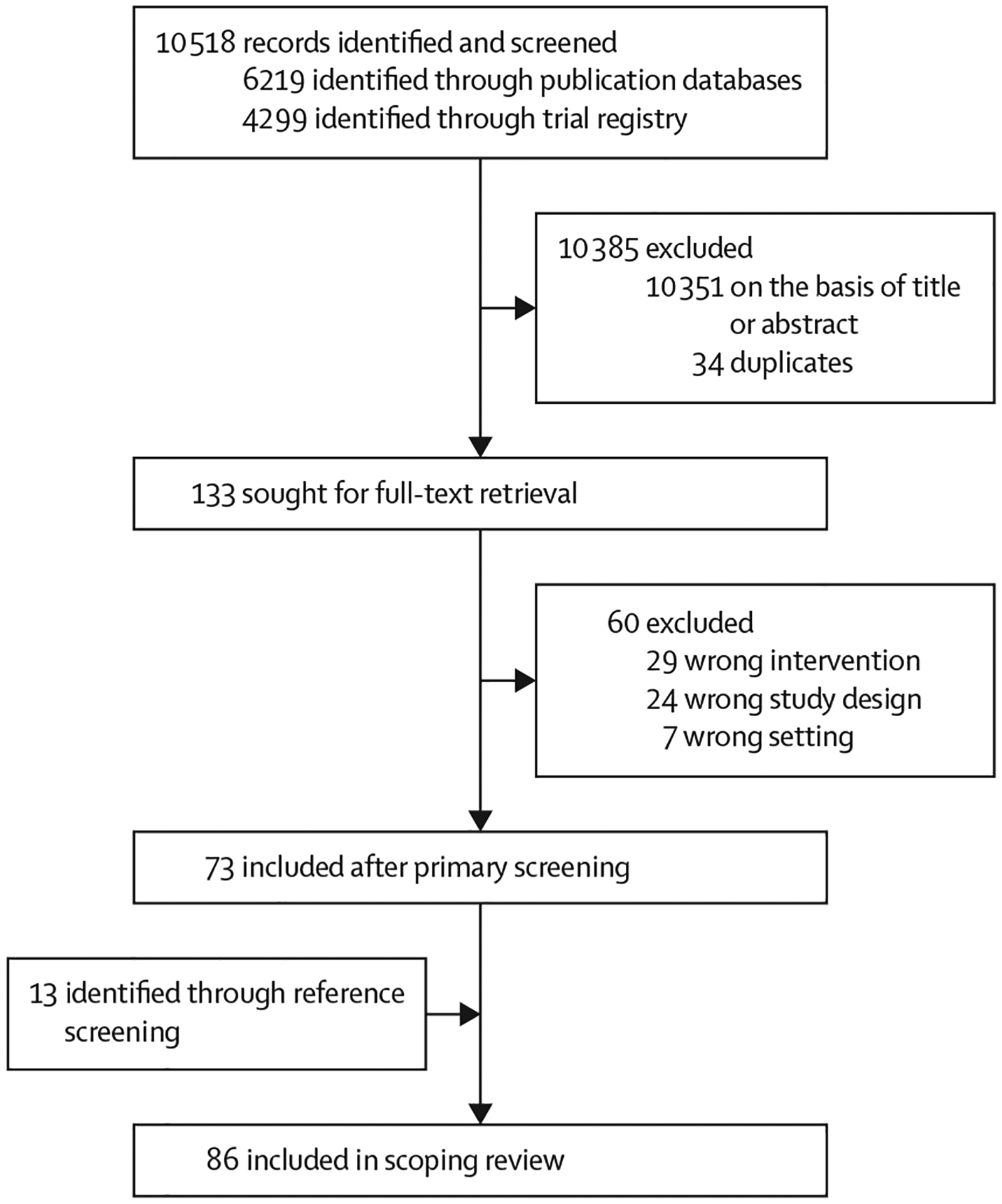
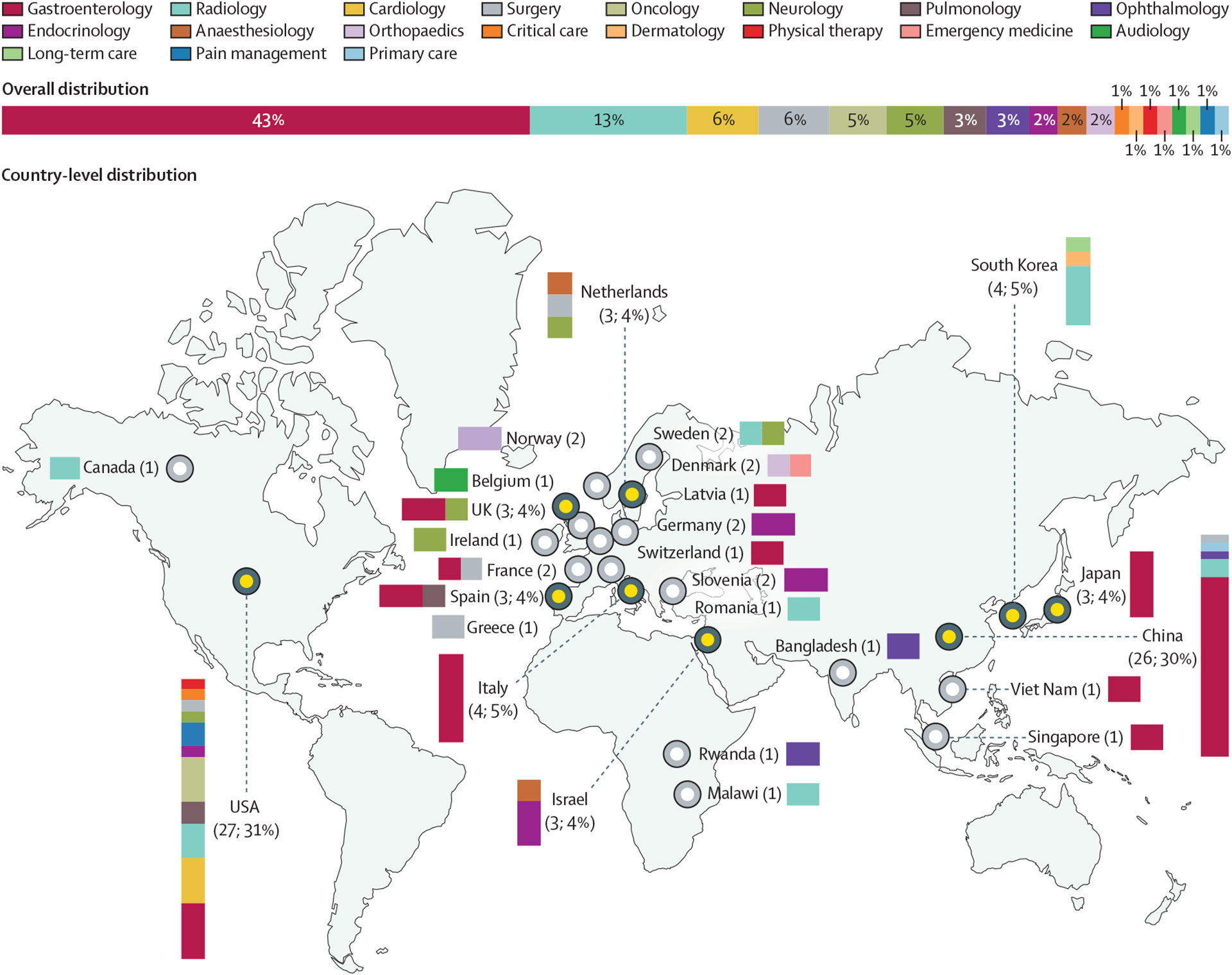
This scoping review identified 86 randomised controlled trials of AI integrated into clinical practice published up to Nov 14, 2023, with most trials concentrated in gastroenterology and radiology and in the USA and China. Although 70 (81%) of 86 trials reported a favourable primary endpoint, the authors caution that single-centre designs, limited demographic reporting, variable operational-efficiency results, and likely publication bias limit generalisability.
Key findings
- Of 86 included RCTs, 70 (81%) reported a favourable result for their primary endpoint; among 81 trials designed to show improvement, 65 (80%) reported significant improvement, while 3 of 5 non-inferiority trials established non-inferiority.
- Diagnostic yield or performance was the most common primary endpoint category (46 [54%] of 86), followed by care management (18 [21%]), patient behaviour and symptoms (15 [17%]), and clinical decision making (7 [8%]).
- Trials were predominantly single-centre (54 [63%] of 86) and single-country (79 [92%] of 86), with the USA conducting 27 (31%) and China 26 (30%); median final-analysis sample size was 359 patients (IQR 150–1050).
- Among 52 trials reporting operational time, 18 (35%) found a significant decrease, 13 (25%) a significant increase, and 21 (40%) no significant change.
Methods
- Scoping review following PRISMA-ScR, registered with PROSPERO (CRD42022326955), searching PubMed, SCOPUS, CENTRAL, and the International Clinical Trials Registry Platform for studies published Jan 1, 2018–Nov 14, 2023.
- Inclusion required RCTs with a substantial non-linear AI component integrated into clinical practice and full-text publication in a peer-reviewed English-language journal; linear risk scores, secondary studies, abstracts, and non-integrated interventions were excluded.
- Screening and extraction were done by independent investigators, with discrepancies resolved by a third reviewer; due to heterogeneity, no formal meta-analysis was conducted and simple descriptive statistics were presented.
Limitations
- The paper states two limitations: the search was English-only, potentially excluding relevant non-English trials, and the review does not address updated trends in trial risk of bias.
- Evident from the text: the authors emphasise likely publication bias, noting that a 2023 systematic review identified 627 AI-enabled technology trials registered on ClinicalTrials.gov but only nine (1%) readily identified as published.
- Evident from the text: the predominance of single-centre trials, limited race or ethnicity reporting (22 trials, of which 18 were from the USA), and heterogeneous operational-time results raise concerns about generalisability and practicality.
Model-written summary. Check it against the paper before relying on it.
Integrity signals
Registry
Cites
Statistics
Figures
Verification
Claims the paper makes
5 Valid · 0 Not valid · 4 Not checked · 39 Own results and interpretations
Every source the paper cites for this claim was checked and supports it.
In the paper
“Of the 63 trials published since the start of 2021, 12 (19%) cited the 2020 CONSORT-AI reporting guidelines for clinical trials assessing AI interventions.16”
§ Randomised controlled trials evaluating artificial intelligence in clinical practice: a scoping review > Results
What the sources say
- Supportedcites [16] Liu X, Cruz Rivera S, Moher D, Reporting guidelines for clinical trial reports for interventions involving artificial intelligence: the CONSORT-AI extension. Nat Med 2020; 26: 1364– 74. 32908283 PMC7598943 source
The citation identifies the 2020 CONSORT-AI guidelines, rather than sourcing the citing authors’ count of later trials. The Abstract describes this paper as the CONSORT-AI reporting guideline for clinical trials evaluating AI interventions. (LLM, conf=0.93)
plain- Asserted: passes — The authors put it forward as true.
- Checkable: passes — It can be checked against evidence.
- Load-bearing: unclear — It is unclear whether the paper’s conclusions depend on it.
- Based: passes — The paper gives a reason why it holds.
- Supported
A result the paper reports from its own data — it cites no other source for it, so there is none to check. The quote shows it is in the paper.
In the paper
“Approximately half (46 [54%] of 86) of the trials had primary endpoints relating to diagnostic yield or performance, such as detection rate or mean absolute error.”
§ Randomised controlled trials evaluating artificial intelligence in clinical practice: a scoping review > Results
plain- Asserted: passes — The authors put it forward as true.
- Checkable: passes — It can be checked against evidence.
- Load-bearing: unclear — It is unclear whether the paper’s conclusions depend on it.
- Based: passes — The paper gives a reason why it holds.
A result the paper reports from its own data — it cites no other source for it, so there is none to check. The quote shows it is in the paper.
In the paper
“79 (92%) of 86 RCTs were conducted in a single country, with the USA conducting the most trials (27 [31%]), followed by China (26 [30%]).”
§ Randomised controlled trials evaluating artificial intelligence in clinical practice: a scoping review > Results
plain- Asserted: passes — The authors put it forward as true.
- Checkable: passes — It can be checked against evidence.
- Load-bearing: unclear — It is unclear whether the paper’s conclusions depend on it.
- Based: passes — The paper gives a reason why it holds.
A result the paper reports from its own data — it cites no other source for it, so there is none to check. The quote shows it is in the paper.
In the paper
“Among these trials, the median percentage of White (non-Hispanic or Latino) participants was 70·5% (range 0–98·4; IQR 35·0–81·8).”
§ Randomised controlled trials evaluating artificial intelligence in clinical practice: a scoping review > Results
plain- Asserted: passes — The authors put it forward as true.
- Checkable: passes — It can be checked against evidence.
- Load-bearing: unclear — It is unclear whether the paper’s conclusions depend on it.
- Based: passes — The paper gives a reason why it holds.
A result the paper reports from its own data — it cites no other source for it, so there is none to check. The quote shows it is in the paper.
In the paper
“24 (65%) of the 37 gastroenterology trials were conducted by only four groups (eight trials from Wuhan University, six from Wision AI, six from Medtronic, and four from Fujifilm).”
§ Randomised controlled trials evaluating artificial intelligence in clinical practice: a scoping review > Results
plain- Asserted: passes — The authors put it forward as true.
- Checkable: passes — It can be checked against evidence.
- Load-bearing: unclear — It is unclear whether the paper’s conclusions depend on it.
- Based: passes — The paper gives a reason why it holds.
21 more claims
Create a free account to see all 48 claims and to verify the 1 reference still open.
- It may state two separate claims as one. 14
- Probably not a substantial claim. 10
Claims other papers make about this one
Each is checked against this paper’s own text: does it say what the citing paper says it does?
The cited source says what the claim attributes to it.
In the citing paper
“This pattern is also consistent with previous findings19,22.”
From A quantitative analysis of global AI medical studies: gaps in randomized controlled trials (2026) · cites this paper as [19]
The check wasn’t confident either way, so it gives no verdict — never disputed.
In the citing paper
“The evaluation of their capacity for ongoing improvement is based on the system’s ability to incorporate model updates and integrate feedback loops.122,123”
From A foundational architecture for AI agents in healthcare (2025) · cites this paper as [122]
Experimental — accuracy not yet measuredIn the citing paper
“To the authors’ knowledge, this is the first RCT to compare a fully automated DPP to standard care and adds to the limited evidence evaluating AI interventions against established standards in medicine.38,39”
From An AI-Powered Lifestyle Intervention vs Human Coaching in the Diabetes Prevention Program: A Randomized Clinical Trial (2025) · cites this paper as [38]
In the citing paper
“To the authors’ knowledge, this is the first RCT to compare a fully automated DPP to standard care and adds to the limited evidence evaluating AI interventions against established standards in medicine.38,39”
From An AI-Powered Lifestyle Intervention vs Human Coaching in the Diabetes Prevention Program: A Randomized Clinical Trial (2025) · cites this paper as [38]
Citations
Cites
PRISMA Extension for Scoping Reviews (PRISMA-ScR): Checklist and Explanation
Tricco, A. C., Lillie, E., Zarin, W., O'Brien, K. K., Colquhoun, H., Levac, D., Moher, D., Peters, M. D. J., Horsley, T., Weeks, L., et al. (2018) · Annals of Internal Medicine · doi:10.7326/m18-0850 · Cited by 43,565
Dissecting racial bias in an algorithm used to manage the health of populations
Obermeyer, Z., Powers, B., Vogeli, C., & Mullainathan, S. (2019) · Science · doi:10.1126/science.aax2342 · Cited by 7,137 · cited 1×
“Other primary endpoints were grouped according to care management (18 [21%]), patient behaviour and symptoms (15 [17%]), and clinical decision making (7 [8%]).”
BackgroundRajpurkar, P., Chen, E., Banerjee, O., & Topol, E. J. (2022) · Nature Medicine · doi:10.1038/s41591-021-01614-0 · Cited by 3,212 · cited 1×
“…with several publications reporting that medical AI models can perform as well as or better than clinicians across a number of tasks and specialties; 1–3 however, many of these models have only been tested retrospectively, using surrogate endpoints, and outside of real-world clinical settings.”
BackgroundSelf-citationLiu, X., Faes, L., Kale, A. U., Wagner, S. K., Fu, D. J., Bruynseels, A., Mahendiran, T., Moraes, G., Shamdas, M., Kern, C., et al. (2019) · The Lancet Digital Health · doi:10.1016/s2589-7500(19)30123-2 · Cited by 1,883
Self-citationLiu, X., Cruz Rivera, S., Moher, D., Calvert, M. J., Denniston, A. K., The SPIRIT-AI and CONSORT-AI Working Group, SPIRIT-AI and CONSORT-AI Steering Group, Chan, A.-W., Darzi, A., Holmes, C., et al. (2020) · Nature Medicine · doi:10.1038/s41591-020-1034-x · Cited by 1,421
Acosta, J. N., Falcone, G. J., Rajpurkar, P., & Topol, E. J. (2022) · Nature Medicine · doi:10.1038/s41591-022-01981-2 · Cited by 1,365
Self-citationBenjamens, S., Dhunnoo, P., & Meskó, B. (2020) · npj Digital Medicine · doi:10.1038/s41746-020-00324-0 · Cited by 1,215 · cited 1×
“%] of 86) followed by academia (35 [41”
BackgroundWong, A., Otles, E., Donnelly, J. P., Krumm, A., McCullough, J., DeTroyer-Cooley, O., Pestrue, J., Phillips, M., Konye, J., Penoza, C., et al. (2021) · JAMA Internal Medicine · doi:10.1001/jamainternmed.2021.2626 · Cited by 995 · cited 1×
“5 It might not be uncommon for AI to perform worse when deployed prospectively, and the difficulty of adopting AI systems in a clinical setting can further impede any potential benefits in terms of important outcomes.”
BackgroundSeyyed-Kalantari, L., Zhang, H., McDermott, M. B. A., Chen, I. Y., & Ghassemi, M. (2021) · Nature Medicine · doi:10.1038/s41591-021-01595-0 · Cited by 928 · cited 1×
“6,7 10 To provide a clearer understanding of the AI landscape in health care, this scoping review aims to examine the state of RCTs for AI algorithms being used in clinical practice.”
BackgroundBeede, E., Baylor, E., Hersch, F., Iurchenko, A., Wilcox, L., Ruamviboonsuk, P., & Vardoulakis, L. M. (2020) · Proceedings of the 2020 CHI Conference on Human Factors in Computing Systems · doi:10.1145/3313831.3376718 · Cited by 614 · cited 1×
“6,7 10 To provide a clearer understanding of the AI landscape in health care, this scoping review aims to examine the state of RCTs for AI algorithms being used in clinical practice.”
Background
Research works printed but not linked: 1
- Mallick A, Hsieh K, Arzani B, Joshi G. Matchmaker: data drift mitigation in machine learning for large-scale systems. 2022. https://proceedings.mlsys.org/paper_files/paper/2022/file/069a002768bcb31509d4901961f23b3c-Paper.pdf (accessed March 30, 2024).
Cited by
Items 201–300 of 323
Hjort, P. B., Skovhus, K., Jensen, J. B., & Ernst, A. (2026) · Cancers · doi:10.3390/cancers18111739 · Cited by 1
Lihui, L., Hu, K., & Zhou, Y. (2026) · Digital Chinese Medicine · doi:10.1016/j.dcmed.2026.05.004 · Cited by 1
Clinical Evidence and FDA Recalls of Artificial Intelligence–Enabled Medical Devices
Ren, Y., Zheng, Y., Windecker, D., Fraser, A. G., Siontis, G. C. M., & Caiani, E. G. (2026) · JAMA Network Open · doi:10.1001/jamanetworkopen.2026.17920 · Cited by 4
Căliman-Sturdza, O. A., Gheorghita, R. E., Filip, R., & Lobiuc, A. (2026) · Diagnostics · doi:10.3390/diagnostics16121827 · Cited by 5
“The quality of evidence is on the rise, and the general situation remains in the retrospective assessment and workflow-oriented implementation research instead of patient-centered randomized trials [4].”
Ensuring the clinical impact of medical artificial intelligence
Andreoletti, M., Senkalfa, B., Vayena, E., & Blasimme, A. (2026) · The Lancet Digital Health · doi:10.1016/j.landig.2026.101030 · Cited by 3
Ostrovsky, D. A., Haran, U., & Novack, V. (2026) · European Journal of Internal Medicine · doi:10.1016/j.ejim.2026.107032 · Cited by 2
Arab, R. A. E., Mustafa, M. H., Almagharbeh, W. T., Ayoub, M. Y., Alsanawi, F., Almathen, F., Almosabeh, R., & Talaq, M. A. (2026) · Healthcare · doi:10.3390/healthcare14142052 · Cited by 3
“Our review therefore complements rather than duplicates the RCT literature: where Han et al. (2024) [52] map interventional evidence on AI tools in practice, the present synthesis highlights that comparable interventional evidence for monitoring systems, response pathways, and post-deployment…”
Johansson, J. V., & Slokenberga, S. (2026) · Health Care Analysis · doi:10.1007/s10728-026-00588-9 · Cited by 5
Ong, Q. C., Ang, C., Bojić, I., Johnson, C. L., Aggour, H., Ng, F. S., Car, J., Leeson, P., Gonçalves, J., & Lai, N. M. (2026) · EClinicalMedicine · doi:10.1016/j.eclinm.2026.104123 · Cited by 4
“Contrary to the tendency of healthcare AI trials to be single-centre with small sample size, 15 this review shows a relatively high proportion of multicentre cardiovascular AI trials, including several large, pragmatic trials enrolling more than 10,000 participants.”
Leibovitch, L., Ahituv, A., Gorenshtein, A., Aran, D., Sorka, M., Miron, K., & Shelly, S. (2026) · Nature Medicine · doi:10.1038/s41591-026-04601-5 · Cited by 7
Large language medicine: defining a new paradigm in human health
Guni, A., Hu, W., Morley, J., Cohen, I. G., Barnaghi, P. M., & Ashrafian, H. (2026) · Frontiers in Science · doi:10.3389/fsci.2026.1810095 · Cited by 3
Is Strong Artificial Intelligence Skepticism Justified or Counterproductive?
Hänscheid, T., & Grobusch, M. P. (2024) · Clinical Infectious Diseases · doi:10.1093/cid/ciae443 · Cited by 1
Matava, C. T., Dosani, A., Bordini, M., et al. (2025) · Anesthesia & Analgesia · doi:10.1213/ane.0000000000007407 · Cited by 1
Educating medical trainees about artificial intelligence should not be optional
Stretton, B., Cook, B., Menz, B. D., Arnold, M., Gao, C., Vanlint, A. S., Seth, I., Kovoor, J. G., Gupta, A. K., & Bacchi, S. (2025) · Internal Medicine Journal · doi:10.1111/imj.70082 · Cited by 1
Andreoletti, M., Senkalfa, B., & Blasimme, A. (2024) · medRxiv · doi:10.1101/2024.07.09.24310133 · Cited by 5
“Notably, our findings align closely with the results of reviews on published RCTs of medical AI 19–23 .”
ResultSchaarup, J. R., Isaksen, A. A., Norman, K., et al. (2025) · medRxiv · doi:10.1101/2025.02.24.25322734 · Cited by 1
Zhang, R., Zou, J., Beecy, A., Zhang, Y., Bian, J., Melton, G. B., & Tao, C. (2025) · npj Health Systems · doi:10.1038/s44401-025-00014-7 · Cited by 1
Navigating Explainable Ai in Healthcare: A Taxonomic Guide for Clinical Decision Support SystemsPreprint
Ranwala, R. A. D. L. M. K., Roughead, E. E., Calabretto, J., & Andrade, A. Q. D. (2025) · SSRN Electronic Journal · doi:10.2139/ssrn.5221506 · Cited by 1
Agweyu, A., Mwaniki, P., Musau, W., Korom, R., Isaaka, L., Wanyama, C. W., Kiptinness, S., Adan, N., Emmanuel-Fabula, M., & Mateen, B. A. (2025) · medRxiv · doi:10.1101/2025.09.05.25335163 · Cited by 1
“Of the limited high-quality evidence available from LMICs (randomized controlled trials), we identified only one economic evaluation of an AI-based tool 26,27 , and it suggests the technology is not cost-effective 28 .”
Cotte, F., Schmude, M., Bode, P., Suliman, O., Lourenço, F. D., Pereira, M. P., Kini, N., Hartenstein, V., Muscoloni, A., Stroux, L., et al. (2025) · medRxiv · doi:10.1101/2025.09.20.25336227 · Cited by 1
Adams, L. C., Marx, L., Orberg, E. T., Bressem, K. K., Ziegelmayer, S., Bernhardt, D., Graf, M., Makowski, M. R., Combs, S. E., Matthes, F., et al. (2026) · Research Square · doi:10.21203/rs.3.rs-9227402/v1 · Cited by 1
LLM-as-a-Judge in Healthcare: A Scoping Analysis of Applications, Methods, and Human Alignment
Li, L., Li, D., Chen, C., Ma, R., Yu, R., Lin, M., Yin, R., Fan, L., Shyr, C., Ma, S., et al. (2026) · arXiv · doi:10.48550/arxiv.2605.25273 · Cited by 1
Wilhelm, C., Steckelberg, A., & Rebitschek, F. G. (2024) · SSRN Electronic Journal · doi:10.2139/ssrn.4943764
Validation of an AI for Skin Diseases in Korea and Global Usage StatisticsPreprint
Han, S. S., Cho, S. I., Chang, S. E., Kim, S. H., & Na, J. (2025) · medRxiv · doi:10.1101/2025.01.27.25321219
Bell, J. A. H., Yeh, N., & Anderson, J. A. (2025) · The American Journal of Bioethics · doi:10.1080/15265161.2025.2457740
Yang, L., Wu, C., Lee, J., Wang, W. K., Chen, Y., Huang, C., Hung, C., Chiang, K.-C., Ho, Y., & Wu, H. (2025) · Journal of Medical Internet Research · doi:10.2196/68929
Artificial intelligence capabilities in multiple sclerosis
Belova, A. N., Sheiko, G. Е., Rakhmanova, E. M., & Boyko, A. N. (2025) · S S Korsakov Journal of Neurology and Psychiatry · doi:10.17116/jnevro202512505114
Oikonomou, E. K., & Khera, R. (2025) · The Lancet Digital Health · doi:10.1016/j.landig.2025.100893
Empowering Heart Failure Management Through Artificial Intelligence
Levra, A. G. (2025) · Springer eBooks · doi:10.1007/978-3-031-95256-2_10 · Cited by 1
Anikina, A., Ibragimova, D., Mustafaev, T., Mello-Thoms, C. R., & Ibragimov, B. (2025) · Lecture notes in computer science · doi:10.1007/978-3-032-04981-0_30 · Cited by 1
Development of a machine learning model to predict short duration HCV treatment responsePreprint
Carson, J. M., Barbieri, S., Verich, A., et al. (2025) · medRxiv · doi:10.1101/2025.09.19.25336147
Wu, P., Li, F.-X., Jia, Y., Yin, J., Shen, Y., Gao, Y., Li, Y., Sha, F., Yang, Z., & Tang, J. (2025) · Gastroenterology & Endoscopy · doi:10.1016/j.gande.2025.09.003
Cotte, F., Schmude, M., Bode, P., Suliman, O., Lourenço, F. D., Pereira, M. P., Kini, N., Hartenstein, V., Muscoloni, A., Stroux, L., et al. (2025) · Research Square · doi:10.21203/rs.3.rs-8022874/v1
da Silva, M. C. B., de Andrade, P. B. M., Lee, H. M. H., Silva, P. V. A. S., Ferreira, A. C., Kuss, C. P., Rodrigues, M. G. D. A., Ribeiro, G., de Camargo, T. F. O., Fan, W. Y. C., et al. (2025) · doi:10.2196/preprints.88626
Lei, I. I., Marlicz, W. M., Arasaradnam, R. P., & Koulaouzidis, A. (2025) · Mayo Clinic Proceedings Digital Health · doi:10.1016/j.mcpdig.2025.100310 · Cited by 1
Multimorbidity measurement strategies for predicting hospital visits
Neves, B. D., Moreira, J. M., Gonçalves, S., Cerejo, J., Mota, I., Silva, N. A., Leite, F., & Silva, M. J. (2025) · BMC Health Services Research · doi:10.1186/s12913-025-13817-z
Schaarup, J. R., Isaksen, A. A., Norman, K., Bjerg, L., & Hulmán, Á. (2025) · BMJ Digital Health & AI · doi:10.1136/bmjdhai-2025-000090 · Cited by 3
Quality Evaluation of Voice AI Software
Das, S. (2026) · Springer eBooks · doi:10.1007/978-3-032-03134-1_9
Editorial: Mental health in the age of artificial intelligence
Noble, J. M., Ha, K., & Greenshaw, A. (2026) · Frontiers in Psychiatry · doi:10.3389/fpsyt.2025.1750256
Wu, J., Wu, J., Zheng, Z., & Chen, S. (2026) · International Journal of Colorectal Disease · doi:10.1007/s00384-025-05073-8
Baugh, C. W., Gibson, C. M., Giannitsis, E., Morrow, D. A., Januzzi, J. L., Papendick, C., Rocca, H. B., Daniels, L. B., Palau, H., Visciola, L., et al. (2026) · Critical Pathways in Cardiology A Journal of Evidence-Based Medicine · doi:10.1097/hpc.0000000000000412
Varghese, C., Choudhary, A., Starlinger, P., Kendrick, M., Smoot, R., Warner, S. G., Truty, M. J., Habermann, E. B., Salehinejad, H., & Thiels, C. A. (2026) · Surgery · doi:10.1016/j.surg.2025.109976 · Cited by 1
Large Language Models (LLMs) in Medicine and the Human Role: Between Complement and Transformation
Malek, M. A., & García‐Valiña, L. (2026) · Springer eBooks · doi:10.1007/978-3-031-89820-4_17 · Cited by 1
Walders, J., Wetz, S., Costa, A. S., Hofmann, A., Schulz, J. B., Kathrin, R., & Dadsena, R. (2026) · Scientific Reports · doi:10.1038/s41598-026-37635-3
“Recent systematic reviews have further confirmed the growing evidence base for artificial intelligence applications in clinical practice 13–15 .”
Forschung und der Einsatz von Künstlicher Intelligenz (KI)
Heinrichs, J.-H., & Heinrichs, B. (2026) · Springer eBooks · doi:10.1007/978-3-662-72839-0_12
Generative AI for Clinical Communication, Healthcare Worker Wellbeing, and Patient Care
Alsufi, M. I., Alsayed, S., Alsufi, M., & Qtaishat, F. A. (2026) · Advances in computational intelligence and robotics book series · doi:10.4018/979-8-3373-8247-0.ch003 · Cited by 1
Maas, L. M., Yaylali, A., & Hiligsmann, M. (2026) · Expert Review of Pharmacoeconomics & Outcomes Research · doi:10.1080/14737167.2026.2642648
“One prominent trend in AI healthcare applications is the development of image-based radiology algorithms [8].”
da Silva, M. C. B., de Andrade, P. B., Lee, H. M. H., Silva, P. V. A., Ferreira, A. C., Kuss, C. P., Rodrigues, M., Ribeiro, G., de Camargo, T. F. O., Fan, W. Y. C., et al. (2026) · JMIR Research Protocols · doi:10.2196/88626
“Indeed, studies show positive primary outcomes for AI in clinical practice, but concerns remain due to mostly single-center trials, limited demographic data, and inconsistent reports on operational efficiency, which affect generalizability and practical use [45,46].”
Schell, B., Bourillon, C., Azoulay, C., Baran, I., Brunier, J., Charbonnier, A., Chery, L., Dangleterre, I., Cuniac, I. D., Montdidier, P. D., et al. (2026) · Reviews on Environmental Health · doi:10.1515/reveh-2025-0134
Risks and benefits of probabilistic suicide risk tools: commentary, Fazel et al
Fazel, S., Runeson, B., Fanshawe, T. R., & Sharpe, M. (2026) · The British Journal of Psychiatry · doi:10.1192/bjp.2026.10566
Cancer biology and the principles of targeted cancer drug discovery
Davies, A., Jones, G., Krishnan, S., Krishnamoorthy, M., Maruggi, M., Kaneda, M., & Marjon, K. (2026) · Elsevier eBooks · doi:10.1016/b978-0-443-29808-0.00035-2
Mahmoud, A. M., Touti, J. P., Zaidi, S. R., Kodipad, A. A., & Deambrogi, C. (2026) · Cancers · doi:10.3390/cancers18071173
Stress-testing scientific narratives
(2026) · Nature Reviews Bioengineering · doi:10.1038/s44222-026-00434-6
Artificial intelligence for early detection of aortic stenosis: The emerging role of NPs
Dellise, N. R., Cantey, C., & Hopkins, L. (2026) · The Nurse Practitioner · doi:10.1097/01.npr.0000000000000431
Role of AI in Hospital Administration Decision-Making: A Narrative Review on Saudi Healthcare System
Alfuraih, A. I., Alshalhoob, M. A., Altuwayjiri, M. A., Alferm, O. B., & Maneea, A. S. B. (2025) · Annals of dental specialty · doi:10.51847/nblgwmopbv
Health justice, resource allocation and age in suicide risk assessment
Hart, J., Lignou, S., & Fazel, S. (2026) · Nature Mental Health · doi:10.1038/s44220-026-00635-3 · Cited by 1
“A prediction model may still be better at picking out higher-risk individuals, than clinical judgement or suicide risk screening questions alone 58–60 .”
Jani, Y., Ali, A., Koutsos, C., Poron, A., Salathe, V., Ou, S., Shah, A., & Frasier, K. (2026) · Journal of Service Science and Management · doi:10.4236/jssm.2026.192008
Large language surgery in the era of AI and digital standards
Guni, A., Collins, G. S., Darzi, A. W., & Ashrafian, H. (2026) · International Journal of Surgery · doi:10.1097/js9.0000000000005360
Andreassen, O. A., Heimer, H., Aarsland, D., et al. (2026) · Nature Medicine · doi:10.1038/s41591-026-04575-4
Dai, Y., & Fei, J. (2026) · Current Treatment Options in Oncology · doi:10.1007/s11864-026-01392-2
Adapa, K., Metta, M., Kotte, S., Sathuluri, A., Mithal, V., Sethi, R., Kabaniha, G. A., & Mazur, L. M. (2026) · Asia-Pacific Journal of Oncology Nursing · doi:10.1016/j.apjon.2026.100972 · Cited by 2
“11,15,17,18,20,38,39 Harmonisation efforts must accommodate the regulatory heterogeneity of the Asia – Pacific region, where countries with mature governance instruments coexist with jurisdictions that lack AI-specific regulation entirely.”
Artificial Intelligence in the Diagnosis and Management of Ocular Fungal Infections
Rojas-Carabali, W., Cifuentes‐González, C., de‐la‐Torre, A., et al. (2026) · Springer eBooks · doi:10.1007/978-3-032-19923-2_12
Lin, H., Huang, Z., Liu, M., Li, X., & Guo, Y. (2026) · Frontiers in Surgery · doi:10.3389/fsurg.2026.1780015
Roxas, R. C. D. (2026) · Journal of Artificial Intelligence Research and Innovation · doi:10.29328/journal.jairi.1001018
Toward trustworthy healthcare AI: designing academic research for translation readiness
Hekler, A., & Buettner, F. (2026) · Molecular Systems Biology · doi:10.1038/s44320-026-00219-4
Glass, G. F., Ang, C.-S., Weiss, M., Fan, X., Cleland, J., & Manski-Nankervis, J.-A. E. (2026) · BMJ Open · doi:10.1136/bmjopen-2026-118394 · Cited by 1
“16 Trust and acceptance of artificial intelligence by healthcare professionals Despite growing evidence of their technical performance, trust and acceptance of AI in routine clinical decision-making remain major barriers to widespread uptake.”
Sujan, M. A., & Pickup, L. (2026) · Cambridge University Press eBooks · doi:10.1017/9781047755993 · Cited by 3
Adib, K., Dunning, H. E., Letchford, N., Salama, N., Tolias, Y. S., Barros, J. D., Muscat, N. A., Kluge, H. H. P., & Novillo-Ortiz, D. (2026) · International Journal of Medical Informatics · doi:10.1016/j.ijmedinf.2026.106532 · Cited by 2
Yang, W., Li, S., Du, Y., Chen, M., Yang, F., Zhang, F., Zhao, J., Li, Y., & Xu, X. (2026) · npj Digital Medicine · doi:10.1038/s41746-026-02729-9
Meeting clinicians where they are through signal-guided AI innovation
Rader, B. M., Nagy, R. D., Nelson, H. L., Laussen, P. C., & Brownstein, J. S. (2026) · BMJ Digital Health & AI · doi:10.1136/bmjdh-2026-000064 · Cited by 1
Talib, A. M., Abdelwahab, S. İ., Taha, M. M. E., Daadaa, Y., Alomary, F. O., Obaid, E. M., Alhathli, M. A. E., Farasani, A. M., Moshi, J. M., Khamjan, N. A., et al. (2026) · Digital Health · doi:10.1177/20552076261461041
Kolbinger, F. R., Kirchner, M., Pfeiffer, K., Bodenstedt, S., Jenke, A. C., Barthel, J., Carstens, M., Dehlke, K., Dietz, S., Emmanouilidis, S., et al. (2026) · Scientific Data · doi:10.1038/s41597-026-07593-6 · Cited by 2
“Increasing evidence from prospective clinical trials supports the clinical applicability and benefit of Artificial Intelligence (AI)-based tools 1 .”
Reassessing the evidence linking clinical leadership to AI deployment outcomes
Bair, H. M. (2026) · npj Digital Medicine · doi:10.1038/s41746-026-02911-z
Zhang, Y., Wu, G., Sun, F., Wang, B., Guo, Y., & Wu, J. (2026) · Frontiers in Oncology · doi:10.3389/fonc.2026.1838755
Artificial intelligence in headache care
Stubberud, A. (2026) · Nature Reviews Neurology · doi:10.1038/s41582-026-01226-7
Ahuja, A., Malik, S., & Chawla, S. (2026) · Journal of Digestive Endoscopy · doi:10.1055/s-0046-1824586
Zah, V., Grbic, D., Asche, C. V., & Stanicic, F. (2026) · Journal of Market Access & Health Policy · doi:10.3390/jmahp14030038 · Cited by 2
“Statistical tests varied based on the outcome measures and data characteristics [96].”
Wei, Q., Cui, M., Qi, Y., Zhang, Q., Liu, Z., Yu, C., Hobbs, F. D. R., Christiani, D. C., Li, Y., Zhang, R., et al. (2026) · The Innovation Medicine · doi:10.59717/j.xinn-med.2026.100229
Yan, Y., Liu, C., Fu, H., Xu, K., & Xu, H. (2026) · European Radiology · doi:10.1007/s00330-026-12715-0 · Cited by 1
Chen, B., Fang, X., Yu, W., Wu, J., Fang, C., Liang, Y., Yu, J., Tse, G. M.-K., To, K. F., Lin, H., et al. (2026) · 中国科学通报:英文版 · doi:10.1016/j.scib.2026.07.024
Liao, L., Li, Y., He, T., Xiao, Z., Shu, X., Wang, P., Qiu, L., Li, P., Guo, Q., Yuan, Q., et al. (2026) · doi:10.2196/preprints.106359
Kattamuri, L. P. V., Sharma, K., & Mukherjee, D. (2026) · International Journal of Angiology · doi:10.1055/a-2904-8847
Bridging the Gap — Translating AI in Pathology into Clinical Impact
Su, F.-Y., Marostica, E., Wang, X., Yang, S., Chiang, J.-H., Ogino, S., Golden, J. A., Kather, J. N., Qiu, Y., Chen, D., et al. (2026) · NEJM AI · doi:10.1056/aip2600029
Nordic AI-Health: a unique opportunity for discovery and clinical impact
Andreassen, O. A., Heimer, H., Brunak, S., et al. (2026) · The Lancet Regional Health - Europe · doi:10.1016/j.lanepe.2026.101769
Can AI assist in reducing diagnostic error? A narrative review
Scott, I. A. (2026) · Diagnosis · doi:10.1515/dx-2026-0021
The technological blind spot: Why pharma is missing the human element
Baumeister, J., & Doron, G. (2026) · Drug Discovery Today · doi:10.1016/j.drudis.2026.104745
Jia, H., Qian, B., Qu, Y., Wang, J., Chen, J. H., Li, T., Zheng, C., Han, J., Zhang, G., Jin, Y., et al. (2026) · Nature Medicine · doi:10.1038/s41591-026-04545-w · Cited by 2
“This step is crucial to properly evaluate their real-world performance and limitations 35,36 .”
Mapping outcomes in randomised radiology trials: Protocol for a scoping review
Kaas‐Hansen, B. S., Müller, C. F., Hansen, M. L., Kolmos, M., Gentile, S., Pehrson, L. M., Offersen, C. M., Ingala, S., & Lönn, L. (2026) · Acta Radiologica Open · doi:10.1177/20584601261473871
“8,9 Indeed, the randomised clinical trial (RCT) is the gold standard for ascertaining or refuting clinical effectiveness and the prime source for health-economical evaluations of cost-effectiveness.”
Zhou, Y., Yu, B., Chang, R., Ding, Y., Wang, Y., & Han, M. (2026) · Frontiers in Immunology · doi:10.3389/fimmu.2026.1792331 · Cited by 1
From Reactive Care to Predictive Prevention
Mehran, R., & Topol, E. J. (2026) · Journal of the American College of Cardiology · doi:10.1016/j.jacc.2026.07.021
Self-citationYang, Y. (2026) · JMIR Formative Research · doi:10.2196/94172
Industry Practitioners Developing or Implementing AI Platforms for Healthcare and Life Sciences
Atul Kumar Dnyaan Prasad Global University, Pulatov, M., Rejabbayevich, N. D., Almat, S., Рустамович, Х. Т., & Mardonovich, N. A. (2026) · Advances in computational intelligence and robotics book series · doi:10.4018/979-8-3373-8904-2.ch017
Ilic, A., Juvet, L. K., Cairns, P., Thornton, K. E. T., & Lie, H. C. (2026) · JMIR mhealth and uhealth · doi:10.2196/94793
“However, it remains unclear whether AI-enabled DHTs adequately address the complex physical, emotional, and social needs of cancer survivors [18].”
Schaffernak, I., Cecil, J., Kokje, E., Kleine, A., Saad, A., Zemo, F., & Lermer, E. (2026) · Journal of Medical Internet Research · doi:10.2196/93172 · Cited by 1
“Background AI-based clinical decision support systems (AI-CDSS) are increasingly integrated into health care, where they are expected to improve clinical decision-making and, ultimately, patient outcomes [1,2].”
Patient factors in medical artificial intelligence: a systematic review
Lai, S., Guan, Z., Zhang, Y., Hong, J., Zeng, D., Echouffo-Tcheugui, J. B., Qin, Y., Shen, J., Li, H., Jiang, Z., et al. (2026) · Nature Health · doi:10.1038/s44360-026-00190-2 · Cited by 1
Alzughaibi, S. (2026) · Frontiers in Digital Health · doi:10.3389/fdgth.2026.1882716
“Prospective workflow evaluation — measuring time to final sign-off, addendum rates, and reviewer workload — is needed to determine whether metric improvements translate into clinical benefit (4, 10, 23, 27, 29 – 31).”
Huang, L., Xu, M., Yang, Y., Tian, Y., Xu, Z., Wang, Y., Hou, A., Zhu, L., Lin, Y., Wang, L., et al. (2026) · Journal of Medical Internet Research · doi:10.2196/100216 · Cited by 1
“In addition, unlike broader scoping reviews of clinical AI applications that have reported higher-level evidence, including randomized controlled trials, for evaluating AI interventions [44], AI research in older adult palliative care remains largely exploratory.”
Hooshmand-Moghadam, B., Talebpour, M., & Keshtidar, M. (2026) · Journal of Translational Medical Research · doi:10.66224/jbums.33.60
Simões, C., Viana, J., Couvaneiro, J., Proença, L., Machado, V., Hua, F., Su, N., Mendes, J. J., & Botelho, J. (2026) · AI · doi:10.3390/ai7090337
“…predominantly focused on algorithmic or diagnostic performance, including measures such as accuracy, sensitivity, specificity, and the area under the receiver operating characteristic curve, and has largely relied on retrospective, observational, or model-development and validation studies [3–5].”
Metadata
- Authors
- Han, R., Acosta, J. N., Shakeri, Z., Ioannidis, J. P. A., Topol, E. J., & Rajpurkar, P.
- Affiliations
- Harvard University (US)
- Yale University (US)
- University of Toronto (CA)
- Stanford Medicine (US)
- Scripps Research Institute (US)
- Corresponding author
- Topol, Eric J
- Venue
- The Lancet Digital Health
- Publisher
- Elsevier BV
- Published
- 2024-05
- Volume
- 6
- Issue
- 5
- Pages
- e367-e373
- ISSN
- 2589-7500 (ISSN-L)
- PMC
- PMC11068159
- OpenAlex
- W4395067202
- Semantic Scholar
- e3bf7828195316276fe3457ecb9ca3c01a12281f
- Cited by
- 336
- References
- 51
- Citations by year
- 2026: 152 · 2025: 151 · 2024: 33
- FWCI
- 7.66
- Type
- journal article
- Language
- en
- Open access
- gold
- doi.org
- Licence
- cc-by-nc-nd
- www.elsevier.com/tdm/userlicense/1.0/ (tdm)
- www.elsevier.com/legal/tdmrep-license (tdm)
- creativecommons.org/licenses/by-nc-nd/4.0/ (vor)
- Locations
- The Lancet Digital Health (publishedVersion, cc-by-nc-nd)
- PubMed (publishedVersion)
- PubMed Central (acceptedVersion, cc-by-nc-nd)
- Funders
- NIH
- NIGMS
- Topics
- Health Sciences › Medicine › Health Informatics › Artificial Intelligence in Healthcare and Education
- Physical Sciences › Computer Science › Artificial Intelligence › AI in cancer detection
- Health Sciences › Health Professions › Health Information Management › Artificial Intelligence in Healthcare
- Keywords
- clinical implementation of AI, randomized controlled trials, deep learning, diagnostic imaging, diagnostic performance, gastroenterology, radiology, generalizability, publication bias, reporting guidelines, patient-relevant outcomes
- MeSH terms
- Deep Learning, Artificial Intelligence, Humans, Randomized Controlled Trials as Topic
About these checks
Registry, retraction, Cites and statistics results are computed, not judged, with one exception: a printed reference that no index lists is read once by a model before it counts as a citation error. Claims are extracted by a model and kept only when their quote appears verbatim in the text; each cited source is then checked, with a model’s help, for whether it says what the claim relies on. Those verdicts can be wrong — read the claim’s quote and the cited source before relying on one.
The claim verdicts this report counts are experimental: their accuracy is not yet measured.
A language model drew the claims from the paper on 2026-10-01, under version 3 of the claim definition (model deepseek-v4.1-flash, prompt extract-v3).
A second model labelled each claim on 2026-10-01 (model jev-1.13-20260917, definition revision gold-guideline-v0.2).
Cited sources are checked with a language model’s help (gpt-6-sol).
Statistics and arithmetic are recomputed, not judged.
Confidence bands are shown only for fields calibrated on our annotated test set. None is calibrated yet, so no band is shown.
What counts as a claim ›How we measure confidence ›How we check this ›
Are you an author, or do you see a problem with this page? Request a review
Data sources
Bibliographic data: Semantic Scholar, OpenAlex, Crossref.
Contains information from the Semantic Scholar Academic Graph Datasets, made available under the ODC Attribution License (ODC-BY 1.0).
Semantic Scholar’s data is described in: Kinney, R., et al. (2023). The Semantic Scholar Open Data Platform. arXiv:2301.10140.
