

Randomised controlled trials evaluating artificial intelligence in clinical practice: a scoping review
Open accessThe DOI matches its Crossref record; 50 of the 51 references it cites were found in a registry or an index; 6 of the 16 sources its claims cite were checked for support.
Abstract
This scoping review of randomised controlled trials on artificial intelligence (AI) in clinical practice reveals an expanding interest in AI across clinical specialties and locations. The USA and China are leading in the number of trials, with a focus on deep learning systems for medical imaging, particularly in gastroenterology and radiology. A majority of trials (70 [81%] of 86) report positive primary endpoints, primarily related to diagnostic yield or performance; however, the predominance of single-centre trials, little demographic reporting, and varying reports of operational efficiency raise concerns about the generalisability and practicality of these results. Despite the promising outcomes, considering the likelihood of publication bias and the need for more comprehensive research including multicentre trials, diverse outcome measures, and improved reporting standards is crucial. Future AI trials should prioritise patient-relevant outcomes to fully understand AI's true effects and limitations in health care.
Overview
CoChat Summary
TL;DR
This scoping review identified 86 randomised controlled trials of AI integrated into clinical practice published up to Nov 14, 2023, with most trials concentrated in gastroenterology and radiology and in the USA and China. Although 70 (81%) of 86 trials reported a favourable primary endpoint, the authors caution that single-centre designs, limited demographic reporting, variable operational-efficiency results, and likely publication bias limit generalisability.
Key findings
- Of 86 included RCTs, 70 (81%) reported a favourable result for their primary endpoint; among 81 trials designed to show improvement, 65 (80%) reported significant improvement, while 3 of 5 non-inferiority trials established non-inferiority.
- Diagnostic yield or performance was the most common primary endpoint category (46 [54%] of 86), followed by care management (18 [21%]), patient behaviour and symptoms (15 [17%]), and clinical decision making (7 [8%]).
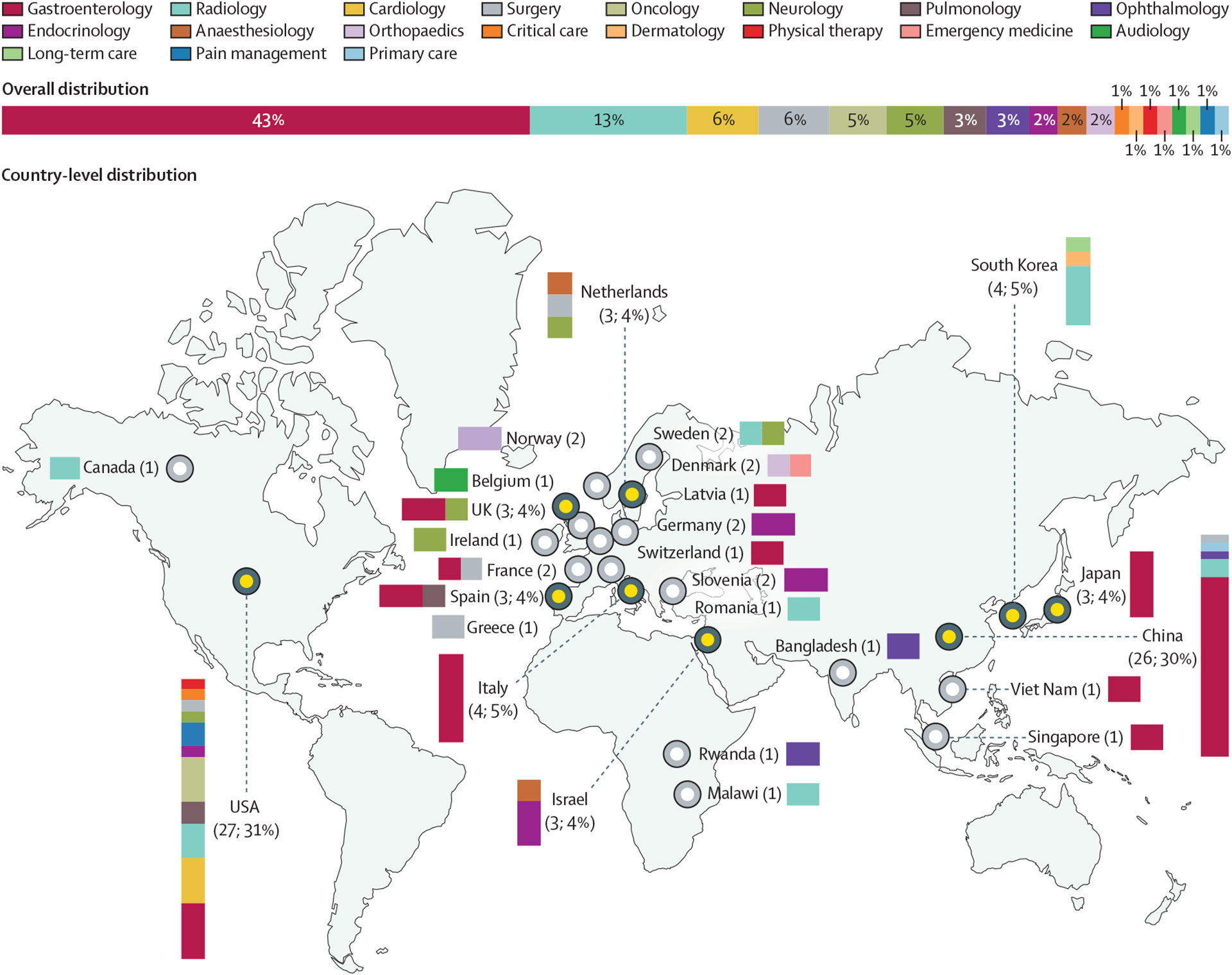
- Trials were predominantly single-centre (54 [63%] of 86) and single-country (79 [92%] of 86), with the USA conducting 27 (31%) and China 26 (30%); median final-analysis sample size was 359 patients (IQR 150–1050).
- Among 52 trials reporting operational time, 18 (35%) found a significant decrease, 13 (25%) a significant increase, and 21 (40%) no significant change.
Methods
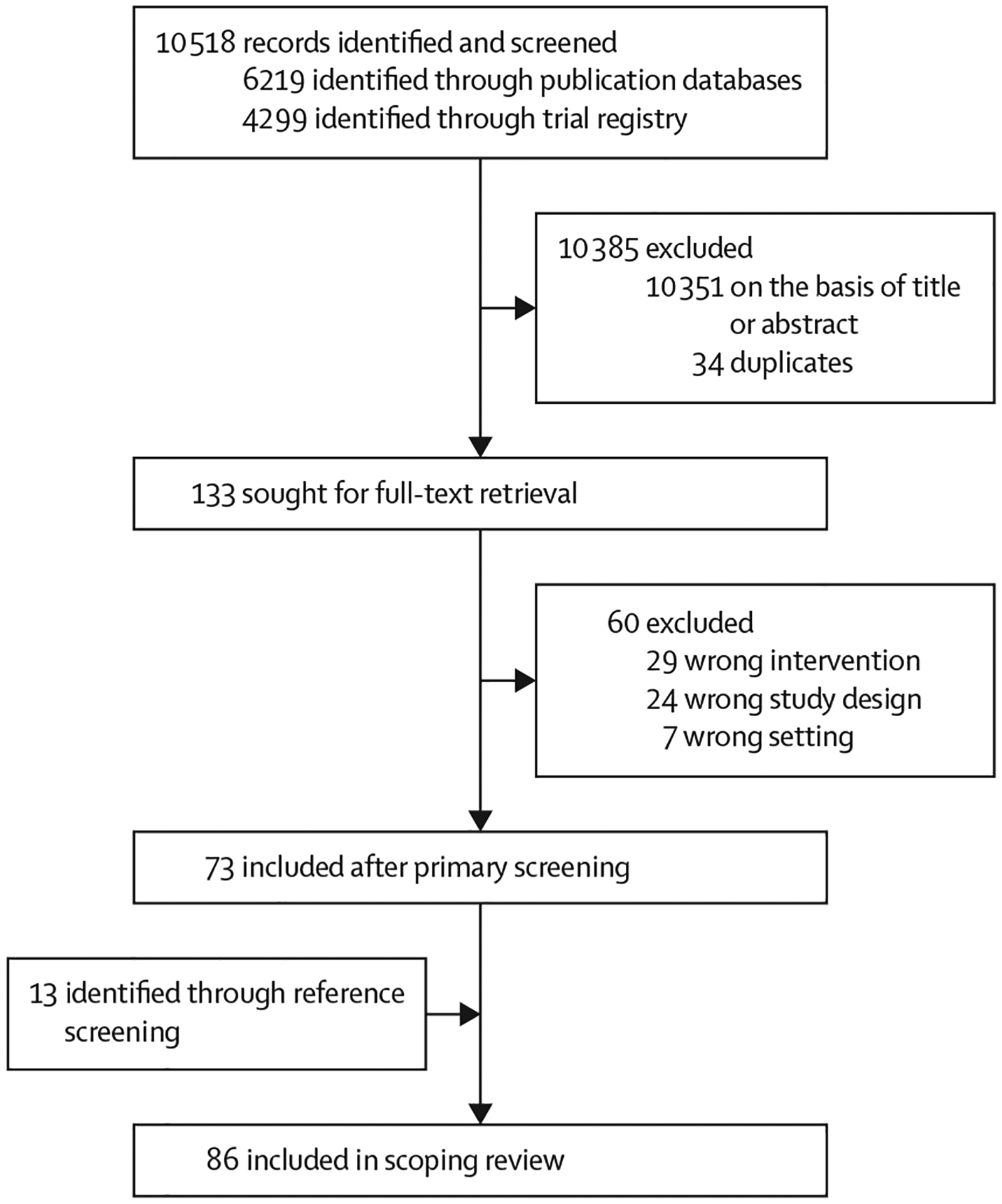
- Scoping review following PRISMA-ScR, registered with PROSPERO (CRD42022326955), searching PubMed, SCOPUS, CENTRAL, and the International Clinical Trials Registry Platform for studies published Jan 1, 2018–Nov 14, 2023.
- Inclusion required RCTs with a substantial non-linear AI component integrated into clinical practice and full-text publication in a peer-reviewed English-language journal; linear risk scores, secondary studies, abstracts, and non-integrated interventions were excluded.
- Screening and extraction were done by independent investigators, with discrepancies resolved by a third reviewer; due to heterogeneity, no formal meta-analysis was conducted and simple descriptive statistics were presented.
Limitations
- The paper states two limitations: the search was English-only, potentially excluding relevant non-English trials, and the review does not address updated trends in trial risk of bias.
- Evident from the text: the authors emphasise likely publication bias, noting that a 2023 systematic review identified 627 AI-enabled technology trials registered on ClinicalTrials.gov but only nine (1%) readily identified as published.
- Evident from the text: the predominance of single-centre trials, limited race or ethnicity reporting (22 trials, of which 18 were from the USA), and heterogeneous operational-time results raise concerns about generalisability and practicality.
Model-written summary. Check it against the paper before relying on it.
Integrity signals
Registry
Cites
Statistics
Figures
Verification
Claims the paper makes
5 Valid · 0 Not valid · 4 Not checked · 39 Own results and interpretations
Every source the paper cites for this claim was checked and supports it.
In the paper
“Of the 63 trials published since the start of 2021, 12 (19%) cited the 2020 CONSORT-AI reporting guidelines for clinical trials assessing AI interventions.16”
§ Randomised controlled trials evaluating artificial intelligence in clinical practice: a scoping review > Results
What the sources say
- Supportedcites [16] Liu X, Cruz Rivera S, Moher D, Reporting guidelines for clinical trial reports for interventions involving artificial intelligence: the CONSORT-AI extension. Nat Med 2020; 26: 1364– 74. 32908283 PMC7598943 source
The citation identifies the 2020 CONSORT-AI guidelines, rather than sourcing the citing authors’ count of later trials. The Abstract describes this paper as the CONSORT-AI reporting guideline for clinical trials evaluating AI interventions. (LLM, conf=0.93)
plain- Asserted: passes — The authors put it forward as true.
- Checkable: passes — It can be checked against evidence.
- Load-bearing: unclear — It is unclear whether the paper’s conclusions depend on it.
- Based: passes — The paper gives a reason why it holds.
- Supported
A result the paper reports from its own data — it cites no other source for it, so there is none to check. The quote shows it is in the paper.
In the paper
“Approximately half (46 [54%] of 86) of the trials had primary endpoints relating to diagnostic yield or performance, such as detection rate or mean absolute error.”
§ Randomised controlled trials evaluating artificial intelligence in clinical practice: a scoping review > Results
plain- Asserted: passes — The authors put it forward as true.
- Checkable: passes — It can be checked against evidence.
- Load-bearing: unclear — It is unclear whether the paper’s conclusions depend on it.
- Based: passes — The paper gives a reason why it holds.
A result the paper reports from its own data — it cites no other source for it, so there is none to check. The quote shows it is in the paper.
In the paper
“79 (92%) of 86 RCTs were conducted in a single country, with the USA conducting the most trials (27 [31%]), followed by China (26 [30%]).”
§ Randomised controlled trials evaluating artificial intelligence in clinical practice: a scoping review > Results
plain- Asserted: passes — The authors put it forward as true.
- Checkable: passes — It can be checked against evidence.
- Load-bearing: unclear — It is unclear whether the paper’s conclusions depend on it.
- Based: passes — The paper gives a reason why it holds.
A result the paper reports from its own data — it cites no other source for it, so there is none to check. The quote shows it is in the paper.
In the paper
“Among these trials, the median percentage of White (non-Hispanic or Latino) participants was 70·5% (range 0–98·4; IQR 35·0–81·8).”
§ Randomised controlled trials evaluating artificial intelligence in clinical practice: a scoping review > Results
plain- Asserted: passes — The authors put it forward as true.
- Checkable: passes — It can be checked against evidence.
- Load-bearing: unclear — It is unclear whether the paper’s conclusions depend on it.
- Based: passes — The paper gives a reason why it holds.
A result the paper reports from its own data — it cites no other source for it, so there is none to check. The quote shows it is in the paper.
In the paper
“24 (65%) of the 37 gastroenterology trials were conducted by only four groups (eight trials from Wuhan University, six from Wision AI, six from Medtronic, and four from Fujifilm).”
§ Randomised controlled trials evaluating artificial intelligence in clinical practice: a scoping review > Results
plain- Asserted: passes — The authors put it forward as true.
- Checkable: passes — It can be checked against evidence.
- Load-bearing: unclear — It is unclear whether the paper’s conclusions depend on it.
- Based: passes — The paper gives a reason why it holds.
21 more claims
Create a free account to see all 48 claims and to verify the 1 reference still open.
- It may state two separate claims as one. 14
- Probably not a substantial claim. 10
Claims other papers make about this one
Each is checked against this paper’s own text: does it say what the citing paper says it does?
The cited source says what the claim attributes to it.
In the citing paper
“This pattern is also consistent with previous findings19,22.”
From A quantitative analysis of global AI medical studies: gaps in randomized controlled trials (2026) · cites this paper as [19]
The check wasn’t confident either way, so it gives no verdict — never disputed.
In the citing paper
“The evaluation of their capacity for ongoing improvement is based on the system’s ability to incorporate model updates and integrate feedback loops.122,123”
From A foundational architecture for AI agents in healthcare (2025) · cites this paper as [122]
Experimental — accuracy not yet measuredIn the citing paper
“To the authors’ knowledge, this is the first RCT to compare a fully automated DPP to standard care and adds to the limited evidence evaluating AI interventions against established standards in medicine.38,39”
From An AI-Powered Lifestyle Intervention vs Human Coaching in the Diabetes Prevention Program: A Randomized Clinical Trial (2025) · cites this paper as [38]
In the citing paper
“To the authors’ knowledge, this is the first RCT to compare a fully automated DPP to standard care and adds to the limited evidence evaluating AI interventions against established standards in medicine.38,39”
From An AI-Powered Lifestyle Intervention vs Human Coaching in the Diabetes Prevention Program: A Randomized Clinical Trial (2025) · cites this paper as [38]
Citations
Cites
PRISMA Extension for Scoping Reviews (PRISMA-ScR): Checklist and Explanation
Tricco, A. C., Lillie, E., Zarin, W., O'Brien, K. K., Colquhoun, H., Levac, D., Moher, D., Peters, M. D. J., Horsley, T., Weeks, L., et al. (2018) · Annals of Internal Medicine · doi:10.7326/m18-0850 · Cited by 43,565
Dissecting racial bias in an algorithm used to manage the health of populations
Obermeyer, Z., Powers, B., Vogeli, C., & Mullainathan, S. (2019) · Science · doi:10.1126/science.aax2342 · Cited by 7,137 · cited 1×
“Other primary endpoints were grouped according to care management (18 [21%]), patient behaviour and symptoms (15 [17%]), and clinical decision making (7 [8%]).”
BackgroundRajpurkar, P., Chen, E., Banerjee, O., & Topol, E. J. (2022) · Nature Medicine · doi:10.1038/s41591-021-01614-0 · Cited by 3,212 · cited 1×
“…with several publications reporting that medical AI models can perform as well as or better than clinicians across a number of tasks and specialties; 1–3 however, many of these models have only been tested retrospectively, using surrogate endpoints, and outside of real-world clinical settings.”
BackgroundSelf-citationLiu, X., Faes, L., Kale, A. U., Wagner, S. K., Fu, D. J., Bruynseels, A., Mahendiran, T., Moraes, G., Shamdas, M., Kern, C., et al. (2019) · The Lancet Digital Health · doi:10.1016/s2589-7500(19)30123-2 · Cited by 1,883
Self-citationLiu, X., Cruz Rivera, S., Moher, D., Calvert, M. J., Denniston, A. K., The SPIRIT-AI and CONSORT-AI Working Group, SPIRIT-AI and CONSORT-AI Steering Group, Chan, A.-W., Darzi, A., Holmes, C., et al. (2020) · Nature Medicine · doi:10.1038/s41591-020-1034-x · Cited by 1,421
Acosta, J. N., Falcone, G. J., Rajpurkar, P., & Topol, E. J. (2022) · Nature Medicine · doi:10.1038/s41591-022-01981-2 · Cited by 1,365
Self-citationBenjamens, S., Dhunnoo, P., & Meskó, B. (2020) · npj Digital Medicine · doi:10.1038/s41746-020-00324-0 · Cited by 1,215 · cited 1×
“%] of 86) followed by academia (35 [41”
BackgroundWong, A., Otles, E., Donnelly, J. P., Krumm, A., McCullough, J., DeTroyer-Cooley, O., Pestrue, J., Phillips, M., Konye, J., Penoza, C., et al. (2021) · JAMA Internal Medicine · doi:10.1001/jamainternmed.2021.2626 · Cited by 995 · cited 1×
“5 It might not be uncommon for AI to perform worse when deployed prospectively, and the difficulty of adopting AI systems in a clinical setting can further impede any potential benefits in terms of important outcomes.”
BackgroundSeyyed-Kalantari, L., Zhang, H., McDermott, M. B. A., Chen, I. Y., & Ghassemi, M. (2021) · Nature Medicine · doi:10.1038/s41591-021-01595-0 · Cited by 928 · cited 1×
“6,7 10 To provide a clearer understanding of the AI landscape in health care, this scoping review aims to examine the state of RCTs for AI algorithms being used in clinical practice.”
BackgroundBeede, E., Baylor, E., Hersch, F., Iurchenko, A., Wilcox, L., Ruamviboonsuk, P., & Vardoulakis, L. M. (2020) · Proceedings of the 2020 CHI Conference on Human Factors in Computing Systems · doi:10.1145/3313831.3376718 · Cited by 614 · cited 1×
“6,7 10 To provide a clearer understanding of the AI landscape in health care, this scoping review aims to examine the state of RCTs for AI algorithms being used in clinical practice.”
Background
Research works printed but not linked: 1
- Mallick A, Hsieh K, Arzani B, Joshi G. Matchmaker: data drift mitigation in machine learning for large-scale systems. 2022. https://proceedings.mlsys.org/paper_files/paper/2022/file/069a002768bcb31509d4901961f23b3c-Paper.pdf (accessed March 30, 2024).
Cited by
Items 101–200 of 323
Artificial intelligence in inflammatory bowel disease: Current applications and future directions
Minea, H. O., Sîngeap, A.-M., Minea, M., Chiriac, S. A., Stanciu, C., & Trifan, A. V. (2025) · World Journal of Gastroenterology · doi:10.3748/wjg.v31.i39.111353 · Cited by 8
Susanto, A. P., Lyell, D., Widyantoro, B., Juzar, D. A., Santoso, A., Berkovsky, S., & Magrabi, F. (2025) · Journal of Medical Internet Research · doi:10.2196/73131 · Cited by 9
“In a recent review of AI tools in routine care, only 7 studies examined clinical decision-making, none of the 86 randomized controlled trials published in the last 6 years focused on risk assessment for cardiovascular disease (CVD), and only 4 were conducted in resource-constrained settings [14].”
PRIMARY-AI: outcomes-based standards to safeguard primary care in the AI era
Zeng, D., Car, L. T., Khunti, K., Liu, Y., Bärnighausen, T., Chavannes, N. H., Keane, P. A., Kunz, H., Xue, L., Sung, J. J. Y., et al. (2026) · Nature Medicine · doi:10.1038/s41591-025-04178-5 · Cited by 11
Marsden, M. E. R., Perkins, Z., Pisirir, E., et al. (2025) · Emergency Medicine Journal · doi:10.1136/emermed-2024-214396 · Cited by 5
“28 Recently produced guidelines for introducing AI into practice emphasise the importance of early-stage clinical evaluations.”
He, Z., Yang, L., Li, X., & Du, J. (2025) · EClinicalMedicine · doi:10.1016/j.eclinm.2024.103066 · Cited by 12
Quo Vadis, AI-Empowered Doctor?
Takahashi, G., von Liechti, L., & Tarshizi, E. (2025) · JMIR Medical Education · doi:10.2196/70079 · Cited by 5
Panagiotopoulos, K. N., Tsiknakis, N., Zaridis, D. I., Tzioufas, A. G., Fotiadis, D. I., & Goules, A. V. (2025) · Autoimmunity Reviews · doi:10.1016/j.autrev.2025.103916 · Cited by 5
Schaffernak, I., Cecil, J., Kleine, A., & Lermer, E. (2025) · BMC Health Services Research · doi:10.1186/s12913-025-13620-w · Cited by 12
“In line with reviews finding that newly introduced AI-CDSS do not always yield clinical benefits [20, 21, 50], participants with and without AI-CDSS experience identified a range of requirements for effective use of AI-CDSS in their daily work, such as good training and support structures.”
Verma, H., Mistry, S., Jayam, K. V., Shrestha, P., Adkins, L., Liang, M., Fares, A. F., Zarrinpar, A., Braithwaite, D., & Karanth, S. D. (2025) · Cancers · doi:10.3390/cancers17213537 · Cited by 5
“Despite the rapid development of diverse AI technologies, the thorough evaluation of their performance in real-world medical settings remains limited [17–19].”
Reimagining cancer treatments in the era of generative AI
Derbal, Y. (2025) · DIGITAL HEALTH · doi:10.1177/20552076251394631 · Cited by 4
Current State of Artificial Intelligence in Assessing Cardiac Function
Yuan, V., Lee, K. K., Ambrosy, A. P., Ouyang, D., & Ieki, H. (2025) · Current Cardiology Reports · doi:10.1007/s11886-025-02314-8 · Cited by 5
Barbati, C., Viviani, L., Vecchio, R., Arzilli, G., Angelis, L. D., Baglivo, F., Sacchi, L., Bellazzi, R., Rizzo, C., & Odone, A. (2025) · Artificial Intelligence in Medicine · doi:10.1016/j.artmed.2025.103321 · Cited by 11
Transforming the self: Individual-level changes arising from collaboration with generative AI
Nandagopal, S. (2025) · Computers in Human Behavior Artificial Humans · doi:10.1016/j.chbah.2025.100232 · Cited by 11
Josephson, C. B., Beniczky, S., Denaxas, S., Ikeda, A., Jehi, L. E., Mwesige, A. K., Jetté, N., Jones, G. D., Ryvlin, P., Sen, A., et al. (2025) · Epilepsia · doi:10.1002/epi.70058 · Cited by 8
“As of early 2024, 50 a scoping review revealed that only one epilepsy AI algorithm has undergone formal evaluation in an RCT 51 (a model that uses natural language processing to promote early identification of candidates for resective epilepsy surgery 52 ).”
Challenges in applying the EU AI act research exemptions to contemporary AI research
Mészáros, J., Huys, I., & Ioannidis, J. P. A. (2026) · npj Digital Medicine · doi:10.1038/s41746-025-02263-0 · Cited by 4
Self-citationMachine Learning and Artificial Intelligence-Based Clinical Decision Support for Modern Hematology
Zhang, C., Lam, B. D., Lucas, F. M., & Foy, B. H. (2025) · Clinics in Laboratory Medicine · doi:10.1016/j.cll.2025.07.011 · Cited by 8
Lin, Y., Cheng, M., Wu, C., Huang, Y., Zhu, T., Li, J., Gao, H., & Wang, K. (2024) · The Lancet Regional Health - Western Pacific · doi:10.1016/j.lanwpc.2024.101254 · Cited by 6
Maru, S., Kuwatsuru, R., Matthias, M. D., & Simpson, R. J. (2025) · Journal of Medical Internet Research · doi:10.2196/60148 · Cited by 6
“This pattern was consistent with recent systematic reviews of RCTs on AI, where single-center designs accounted for 62.8% (54/86) [33,34] and 59% (23/39) [34].”
InfluentialWeicken, E., Mittermaier, M., Hoeren, T., Kliesch, J., Wiegand, T., Witzenrath, M., Ballhausen, M., Karagiannidis, C., Sander, L. E., & Gröschel, M. I. (2025) · Die Innere Medizin · doi:10.1007/s00108-025-01861-0 · Cited by 4
Kovoor, J. G., Tyagi, D., Hopkins, A. M., Gorcilov, J., Stretton, B., Gupta, A. K., & Bacchi, S. (2025) · Internal Medicine Journal · doi:10.1111/imj.70007 · Cited by 4
Applied intelligence in clinical drug development: Potential benefits and emerging concerns
Bhatt, A. (2025) · Perspectives in Clinical Research · doi:10.4103/picr.picr_37_25 · Cited by 3
“[20] Over 60% of RCTs were reported from the USA and China.”
Zhang, P.-F., Ting, H.-N., & Chang, S. (2025) · IEEE Access · doi:10.1109/access.2025.3584401 · Cited by 5
“Considering the likelihood of publication bias and the need for more comprehensive research including multicentre trials, diverse outcome measures, and improved reporting standards is crucial [219].”
Kerth, J.-L., Bischops, A., Hagemeister, M., Reinhart, L., Konrad, K., Heinrichs, B., & Meißner, T. (2025) · Bundesgesundheitsblatt - Gesundheitsforschung - Gesundheitsschutz · doi:10.1007/s00103-025-04096-4 · Cited by 5
Artificial Intelligence and Clinical Care: JAMA Internal Medicine Call for Papers
Gross, C. P., Richman, I. B., Stall, N. M., Kneifati-Hayek, J. Z., Allore, H. G., Rittenberg, E., Katz, M. H., Grady, D., Durant, R. W., Anderson, T. S., et al. (2025) · JAMA Internal Medicine · doi:10.1001/jamainternmed.2025.4911 · Cited by 3
Artificial intelligence for epilepsy decision support
Loushy, I., & Sperling, M. R. (2025) · Epilepsia · doi:10.1111/epi.18709 · Cited by 5
van Kessel, R., Schmidt, J., van Kolfschooten, H., Feudo, S., Young, K., Valtere, L., Minssen, T., & Mossialos, E. A. (2025) · npj Health Systems · doi:10.1038/s44401-025-00050-3 · Cited by 10
Chavoshi, M., Trivedi, H., Mansuri, A., Newsome, J. M., Sanyika, C. R., Isaac, R., Li, F., Dapamede, T., & Gichoya, J. W. (2025) · Radiology Artificial Intelligence · doi:10.1148/ryai.250477 · Cited by 7
“In recent years, there has been a growing trend toward large-scale, post-deployment evaluations of AI tools in medical imaging to assess their true clinical utility and robustness(1).”
AI for screening in healthcare: promise and challenges
Saito, K., Walston, S. L., Takita, H., Mitsuyama, Y., Arita, Y., & Ueda, D. (2026) · Abdominal Radiology · doi:10.1007/s00261-025-05370-4 · Cited by 3
Clinical research on artificial intelligence medical diagnostic devices: A scoping review
Zhang, X., Liu, C., Sun, Y., Liangzhen, Y. O. U., Zhang, X., & Shang, H. (2026) · EngMedicine · doi:10.1016/j.engmed.2026.100120 · Cited by 3
Elmaleh, Y. D., Guessous, K., & Delvaux, B. V. (2026) · Frontiers in Medicine · doi:10.3389/fmed.2026.1811197 · Cited by 8
“In addition, much of the current literature emphasizes model discrimination, often summarized by area under the receiver operating characteristic curves, while less attention is devoted to calibration, clinical utility, behavioral impact or unintended consequences (13– 14).”
InfluentialA systematic review of economic evidence of artificial intelligence in healthcare
Schmidt, J., Carter, A. W., McGuire, A. J., Mossialos, E. A., & van Kessel, R. (2026) · Health Policy · doi:10.1016/j.healthpol.2026.105715 · Cited by 5
Current Perspectives on the Artificial Intelligence in Critical Care Medicine
Lee, J., & Yoon, J. H. (2025) · Anesthesiology Clinics · doi:10.1016/j.anclin.2025.05.005 · Cited by 5
AI-Assisted Spirometry Interpretation in Primary Care: A Randomized Controlled Trial
Doe, G. E., BANYA, W. A. S., Edwards, G. D., Topalovic, M., El‐Emir, E., Evans, R. A., Russell, R. E. K., Smets, E., Orshoven, K. V., Sylvester, K. P., et al. (2025) · NEJM AI · doi:10.1056/aioa2400804 · Cited by 6
Hu, F., Shao, Y., Liu, J., Liu, J., Xiao, X., Shi, K., Zheng, Y., Zhang, J., & Wang, X. (2025) · Frontiers in Medicine · doi:10.3389/fmed.2025.1667087 · Cited by 12
Lyell, D., Dinh, M. M. Q., Gillett, M., Abraham, N., Symes, E. R., Susanto, A. P., Chakar, B., Seimon, R. V., Coiera, E. W., & Magrabi, F. (2025) · Emergency Medicine Journal · doi:10.1136/emermed-2024-214781 · Cited by 6
Establishing a Multi-Society Generative AI Task Force Within Radiology
Hsiao, S., Treat, R. M., & Javan, R. (2024) · Cureus · doi:10.7759/cureus.64475 · Cited by 3
“Caution is also warranted to prevent medical errors, as evidenced by a study in which ChatGPT4 generated responses to cancer patient inquiries, with 7% deemed unsafe by participating radiation oncologists if left unedited [7].”
BackgroundIntroduction to Artificial Intelligence for General Surgeons: A Narrative Review
Lee, B., & Narsey, N. (2025) · Cureus · doi:10.7759/cureus.79871 · Cited by 3
Cherubini, A. (2024) · AI in Precision Oncology · doi:10.1089/aipo.2024.0025 · Cited by 3
Obong’o, C. O., Njenga, G., Otiangala, D., Jepleting, E., Wairimu, S., Emmanuel-Fabula, M., Kiptinness, S., Korom, R., Taliesin, B., & Mateen, B. A. (2025) · medRxiv · doi:10.1101/2025.08.14.25333740 · Cited by 3
“…in high-resource settings is rapidly advancing, and an increasing number of effective solutions are being identified (Heinz et al., 2025) the evidence base for the effectiveness of AI generally is significantly sparser where it concerns resource-constrained environments (Han et al., 2024).”
Kolbinger, F. R., Kirchner, M., Pfeiffer, K., Bodenstedt, S., Jenke, A. C., Barthel, J., Carstens, M., Dehlke, K., Dietz, S., Emmanouilidis, S., et al. (2025) · medRxiv · doi:10.1101/2025.09.05.25335174 · Cited by 4
Lee, J. T., Shen, T. K.-B., Liu, V. T.-N., Chen, T. H.-H., Lee, C., Lu, C., Huang, C., & Atun, R. A. (2025) · medRxiv · doi:10.1101/2025.10.27.25338867 · Cited by 3
“care 1 2 , utilizing computational techniques, often rooted in machine learning, to enable to perform tasks once dependent on human cognition.”
Zhang, S., Nguyen, T. X., Liu, X., Szeto, S., Cheung, C. Y.-L., & Ran, A. R. (2025) · Eye · doi:10.1038/s41433-025-03708-2 · Cited by 3
“Instead, it is insufficient to use only surrogate endpoints, such as the model performances, as they do not necessarily translate to improved patient outcomes [15].”
Bianchi, V., Misuriello, F., Piras, E., Nesci, C., Chiarello, M. M., & Brisinda, G. (2025) · International Journal of Surgery · doi:10.1097/js9.0000000000002347 · Cited by 4
“But it was not until the 21st century, that AI began to truly transform medicine with the advent of big data, more powerful computing resources, and significant break-throughs both in ML and deep learning (DL) [ 13 ] .”
Carrillo-Larco, R. M., Orrillo, E. D. E. M., Castillo‐Cara, M., García, R., Yovera-Aldana, M., & Bernabé‐Ortiz, A. (2025) · International Journal of Diabetes in Developing Countries · doi:10.1007/s13410-025-01490-1 · Cited by 2
Aligning incentives: the importance of behavioral economic perspectives in AI adoption
Li, J., Navathe, A. S., & Zhang, Y. (2025) · npj Health Systems · doi:10.1038/s44401-025-00026-3 · Cited by 3
The Clinical Considerations for Trustworthy AI in Oncologic Imaging
Bobowicz, M., Koh, D., Penzkofer, T., Regge, D., Riklund, K., Martínez-Gironés, P. M., Fütterer, J. J., Lekadir, K., Tsakou, G., & Martí‐Bonmatí, L. (2025) · Springer eBooks · doi:10.1007/978-3-031-89963-8_2 · Cited by 4
Kwon, C. (2025) · Healthcare · doi:10.3390/healthcare13162018 · Cited by 6
“Geographic analysis revealed that the United States and China dominated clinical AI trials, with China leading in gastroenterology applications while the United States maintained a more diverse specialty distribution [8].”
InfluentialÜçdal, M. T., Yurtsever, K., Yildiz, P., Akalın, A., Mert, K. U., & Guven, G. S. (2025) · Cureus · doi:10.7759/cureus.91363 · Cited by 3
“…in underrepresented populations where training data may be limited; (3) developing uncertainty quantification mechanisms to allow AI systems to express confidence levels; and (4) assessing AI’s capacity to adapt to patient values by incorporating preference-sensitive decision points [22,23].”
Reshaping Anesthesia with Artificial Intelligence: From Concept to Reality
Dost, A., Alaraj, R., Mayet, R., & Agrawal, D. K. (2025) · Anesthesia and Critical Care · doi:10.26502/acc.087 · Cited by 12
“…functioned as critical precursors to AI by making the large amounts of organized data necessary for predictive modelling and decision aid systems [2–4 , 8 More recently, AI evolution has been marked by several milestones, including the application of forecasting intraoperative and postoperative…”
Influentialvan der Vegt, A. H., Campbell, V. K., Webb, R. T., Venkatesh, B., Lane, P. J., Wilks, K. M., McPhail, S., Rice, M., Isaacs, T., Abdel‐Hafez, A., et al. (2025) · Journal of the American Medical Informatics Association · doi:10.1093/jamia/ocaf192 · Cited by 8
Clinical evaluation of GenAI adaptive cancer therapy
Derbal, Y. (2025) · EngMedicine · doi:10.1016/j.engmed.2025.100116 · Cited by 3
Yang, M., Luo, Y., He, T., Diao, S., Li, H., Zou, K., Hazlewood, G. S., Vandvik, P. O., Kawano-Dourado, L. B., Dourado, D. D. A., et al. (2025) · npj Digital Medicine · doi:10.1038/s41746-025-02156-2 · Cited by 7
Wang, X., Tang, X., Wei, C., Xu, J., Sun, K., & Zhou, G. (2026) · Journal of Pain Research · doi:10.2147/jpr.s570481 · Cited by 2
“Bringing advanced predictive models from research to clinical practice is the final mile to realizing their value, a journey filled with both opportunities and challenges.”
Obong’o, C. O., Njenga, G., Otiangala, D., Jepleting, E., Wairimu, S., Emmanuel-Fabula, M., Kiptinness, S., Korom, R., Taliesin, B., & Mateen, B. A. (2026) · BMJ Digital Health & AI · doi:10.1136/bmjdhai-2025-000207 · Cited by 6
Oleribe, O. O., Brash, M., Tarfa, A., Izurieta, R., & Taylor-Robinson, S. D. (2026) · Healthcare · doi:10.3390/healthcare14060775 · Cited by 4
“The increased use of AI in health and the expanding science around AI in clinical medicine have not eliminated the concerns people have, requiring that developers and users prioritize patient-relevant outcomes to fully understand AI’s true effects and limitations in healthcare [36].”
The role of AI in oncology: present applications and future horizons
Weitzner, A. S., Singla, N., & Rai, A. (2026) · npj Precision Oncology · doi:10.1038/s41698-026-01408-y · Cited by 6
Muñoz, J., Fernández-Araujo, N. J., Ruíz-Cacho, R., & Muñoz-Visedo, J. (2026) · Journal of Critical Care · doi:10.1016/j.jcrc.2026.155600 · Cited by 5
Brain fry: Navigating the cognitive burden of artificial intelligence implementation in healthcare
Hopkins, A. M., Menz, B. D., Bacchi, S., & Rowland, A. (2026) · The American Journal of Medicine · doi:10.1016/j.amjmed.2026.04.038 · Cited by 3
Tersalvi, G., James, J. K., Attia, Z. I., CHANG, I. C., Frantz, J. G., Adigun, R. O., Dispenzieri, A. A., Alkhouli, M. A., López-Jiménez, F. A., Pellikka, P. A., et al. (2026) · Journal of Cardiac Failure · doi:10.1016/j.cardfail.2026.02.023 · Cited by 3
Brusnic, O., Boicean, A., Ichim, C., Anderco, P., & Onișor, D. M. (2026) · Life · doi:10.3390/life16050845 · Cited by 5
“This distinction is essential because many AI studies in medicine still evaluate diagnostic or predictive performance rather than clinically meaningful outcomes [123,124].”
Duwe, G., Knoll, T., & Kowalewski, K. (2026) · European Urology · doi:10.1016/j.eururo.2026.05.026 · Cited by 3
Katsigiannis, G., Panoutsopoulos, G., Perrea, A., & Detopoulou, P. (2026) · Journal of Nutrition · doi:10.1016/j.tjnut.2026.101667 · Cited by 4
Ethics of Autonomous AI Clinical Trials: Delphi Study
Nichol, A. A., Youssef, A., Larson, D. B., Abràmoff, M. D., Wolf, R. M., Char, D. S., & Martinez‐Martin, N. (2026) · Journal of Medical Internet Research · doi:10.2196/91472 · Cited by 1
“…is further supported by evidence that addressing AI bias requires both technical and social approaches [29,32], that most FDA-evaluated AI tools do not report demographic characteristics of training data [33], and that most AI clinical trials internationally are single-center studies [34].”
How to critically appraise and direct the trajectory of AI development and application in oncology
Fehrmann, R. S. N., van Kruchten, M., & de Vries, E. G. E. (2024) · ESMO Real World Data and Digital Oncology · doi:10.1016/j.esmorw.2024.100066 · Cited by 5
Cortes-Penfield, N. W., & Schwartz, I. S. (2024) · Clinical Infectious Diseases · doi:10.1093/cid/ciae446 · Cited by 4
Ethik in der datenintensiven medizinischen Forschung
Ranisch, R., & Haltaufderheide, J. (2024) · Ethik in der Medizin · doi:10.1007/s00481-024-00844-3 · Cited by 1
Perceptions of Artificial Intelligence Among Gastroenterologists in Italy: A National Survey
Maida, M. F., Sferrazza, S., Calabrese, G., Marasco, G., Vitello, A., Furnari, M., Boškoski, I., Sinagra, E., & Facciorusso, A. (2025) · Cancers · doi:10.3390/cancers17081353 · Cited by 5
“[2].”
Large language models for infectious diseases require evidence generation and regulation
Gao, C., Satheakeerthy, S., Guo, C. W., Pradhan, A., Booth, A. E. C., Chan, W. O., Kanjilal, S., Roberts, M. B., Kotton, C. N., & Bacchi, S. (2025) · Internal Medicine Journal · doi:10.1111/imj.70072 · Cited by 3
Mateen, B. A., & Reid, M. J. A. (2025) · NEJM AI · doi:10.1056/aip2401190 · Cited by 2
Lemin, M. E., Bustinduy, A. L., & Roberts, C. H. (2025) · Parasitology · doi:10.1017/s0031182025100826 · Cited by 5
A quantitative analysis of global AI medical studies: gaps in randomized controlled trials
Wang, Q., Yang, Y., Qiu, L., Xu, Y., Sun, R., Xue, P., & Qiao, Y. (2026) · npj Digital Medicine · doi:10.1038/s41746-026-02698-z · Cited by 4
Meeting the Artificial Intelligence Needs of U.S. Health Systems
Lyons, P. G., Dorr, D. A., Melton, G. B., Singh, K., & Payne, P. (2024) · Annals of Internal Medicine · doi:10.7326/annals-24-00396 · Cited by 1
de Souza, A. S. C., Rodrigues, V. M. C. P., Magalhães, B. M. B. D. S., Fonseca, L. M. M., Vásquez, C. J. A., Fernandes, R., Palombo, C. N. T., Whitaker, M. C. O., Santos, C. O., Brito, M. L., et al. (2025) · Salud Ciencia y Tecnología · doi:10.56294/saludcyt20251528 · Cited by 3
AI in healthcare: what does good evidence and regulation look like?
Mahase, E. (2025) · BMJ · doi:10.1136/bmj.r692 · Cited by 1
AI in Clinical Trial Design and Patient Recruitment
Yingngam, B. (2025) · Advances in computational intelligence and robotics book series · doi:10.4018/979-8-3693-6270-9.ch002 · Cited by 2
Integrating Artificial Intelligence into Hematology: New Frontiers and Practical Applications
Soffer, S., & Klang, E. (2025) · Acta Haematologica · doi:10.1159/000546889 · Cited by 1
Selecting the Right AI Algorithm for the Job: A Guide for Navigating the AI Jungle in Ophthalmology
Arnould, L., Anwer, A., Grzybowski, A. E., & Mériaudeau, F. (2025) · Ophthalmology and Therapy · doi:10.1007/s40123-025-01191-2 · Cited by 2
“While hundreds of AI-based medical devices have entered the market, only a few have been rigorously tested in randomized controlled trials (RCTs), especially in ophthalmology [28].”
Zakharov, A. V., Shirolapov, I. V., Khivintseva, E., Pavlova, O. N., Romanchuk, N., Колсанов, А. В., Sergeeva, M. S., & Komarova, Y. (2025) · IntechOpen eBooks · doi:10.5772/intechopen.1010000 · Cited by 1
Human-Centred Artificial Intelligence: Pilot Design of a Virtual Patient
Samson, J., Lameras, P., Taylor, N., Holliday, N., Castleberry, M. M. C., Arnoczki, S., & Kneafsey, R. (2025) · SeGAH ... IEEE ... International Conference on Serious Games and Applications for Health/IEEE International Conference on Serious Games and Applications for Health · doi:10.1109/segah65397.2025.11168432 · Cited by 1
“The use of conversational AI systems in VPs for healthcare simulation education is one application within a vastly growing landscape of AI in healthcare [33], [34].”
Danish cardiologists' attitude towards clinical AI support: a survey study
Rand, S. A., Ringgaard, A. K., Riis-Jensen, A. C., Bundgaard, H., Gjødsbøl, I. M., & Bundgaard, J. S. (2025) · Danish Medical Journal · doi:10.61409/a01250019 · Cited by 2
Planet-wide performance of a skin disease AI algorithm validated in Korea
Han, S. S., Cho, S. I., Fabian, G., Navarini, A. A., Kim, M. S., Lee, D. H., Lee, J. H., Kim, J., Won, C. H., Bae, K.-N., et al. (2025) · npj Digital Medicine · doi:10.1038/s41746-025-01980-w · Cited by 2
Oyler, D. R., Black, E. P., Brandon, H. H., Kebodeaux, C. D., Talbert, J., & Romanelli, F. (2025) · American Journal of Pharmaceutical Education · doi:10.1016/j.ajpe.2025.101885 · Cited by 1
Song, J., Gao, Y., Liu, W., Sun, X., Chen, C., & Wu, X. (2025) · Journal of the American College of Radiology · doi:10.1016/j.jacr.2025.11.003 · Cited by 2
Can, E., Uller, W., Kotter, E., Vogt, K., Doppler, M. C., Brönnimann, M. P., Alshinibr, R., Elkilany, A., Busch, F., Kader, A., et al. (2025) · CardioVascular and Interventional Radiology · doi:10.1007/s00270-025-04287-1 · Cited by 2
Artificial Intelligence in UK Hospital Medicine: From Innovation to Implementation
Carroll, D., Boodhoo, V., Lowe, D. J., & Carlin, C. M. (2025) · British Journal of Hospital Medicine · doi:10.12968/hmed.2025.0468 · Cited by 1
Caprioli, C., Morscio, J., Chui, J. S., González‐Blas, C. B., Vandereyken, K., Voet, T., Antoranz, A., Vleeschouwer, S. D., Clement, P., Bosisio, F. M., et al. (2025) · Elsevier eBooks · doi:10.1016/b978-0-443-14064-8.00053-9 · Cited by 1
Myers, L., Brereton, T. A., Overgaard, S. M., Greenwood, J. D., Zheng, L., Ohde, J. W., Spiten, M. J., Ihrke, K., Lang, K., Peterson, K., et al. (2025) · Contemporary Clinical Trials · doi:10.1016/j.cct.2025.108209 · Cited by 5
Maas, L. M., Contreras-Meca, C., Ghezzo, S., et al. (2026) · Expert Review of Pharmacoeconomics & Outcomes Research · doi:10.1080/14737167.2026.2615683 · Cited by 1
“Despite its potential in healthcare, the implementation of AI in clinical practice requires careful evaluation and whilst the number of AI publications for healthcare have more than doubled since 2021, little is known about its economic implications [6,7].”
Moffett, A. T., & Weissman, G. E. (2026) · Critical Care Medicine · doi:10.1097/ccm.0000000000007024 · Cited by 3
Zheng, Y., Siontis, K. C., Attia, Z. I., Shiri, I., Roten, L., Baj, G., Kazaj, P. M., López-Jiménez, F. A., Gersh, B. J., Gräni, C., et al. (2026) · European Heart Journal - Digital Health · doi:10.1093/ehjdh/ztag025 · Cited by 1
Physician-centered monitoring of AI-enabled medical devices
Siontis, G. C. M., Ren, Y., Caiani, E. G., & Fraser, A. G. (2026) · The American Journal of Medicine · doi:10.1016/j.amjmed.2026.02.024 · Cited by 1
Clinical Applications of Artificial Intelligence in Cardiovascular Imaging: Where Do We Stand?
Singhal, A., Bowyer-Howell, T., Sabharwal, N. K., Lewis, A. C. W., Mitchell, A. R. J., Rider, O. J., & Henry, J. (2026) · Life · doi:10.3390/life16030507 · Cited by 2
Beyond the algorithm: why oncology nursing in Asia–Pacific needs evidence-based AI evaluation
Adapa, K., Kotte, S., Metta, M., Escobar-Agreda, S., Sethi, R., Patil, G., & Mazur, L. M. (2026) · Asia-Pacific Journal of Oncology Nursing · doi:10.1016/j.apjon.2026.100939 · Cited by 2
“8 The vast majority of evidence on AI in health thus derives from settings that bear little resemblance to many Asia – Pacific contexts, where infrastructure varies enormously, workforce shortages are acute, and patient populations differ in genetics, disease burden, and cultural expectations of…”
Physicians’ attitudes toward artificial intelligence and ChatGPT: a cross-sectional study
Tosun, N., Tosun, M., & Güner, A. (2026) · Journal of Health Organization and Management · doi:10.1108/jhom-12-2025-0889 · Cited by 2
Jiang, L., Du, B., Wu, Y., Cai, T., Zhang, G., Zhu, Y., Ding, B., Xue, H., Wu, X., Lin, H., et al. (2026) · Ultrasonics · doi:10.1016/j.ultras.2026.108119 · Cited by 2
How can we prevent clinical deskilling when using AI?
Scott, I., van der Vegt, A. H., & Douglas, P. (2026) · BMJ Quality & Safety · doi:10.1136/bmjqs-2026-020130 · Cited by 2
Blood Pressure Assessment Across the Lifespan: Improving Clinical Research and Clinical Practice
Abdalla, M., Juraschek, S. P., Biaggioni, I., Bowling, C. B., Balijepalli, R. C., Brady, T. M., Bress, A. P., Brook, R. D., Cohen, J. B., Commodore-Mensah, Y. Y., et al. (2026) · Journal of the American College of Cardiology · doi:10.1016/j.jacc.2026.02.5124 · Cited by 2
Xu, Z., Li, C., Guan, C., Xu, L. H., Wang, X., Jiang, S., Zhang, N., Gu, M., Xin, Y., & Xu, Y. (2026) · BMC Medical Informatics and Decision Making · doi:10.1186/s12911-026-03561-7 · Cited by 3
Syailendra, E. A., Arshad, H., Lopez‐Ramirez, F., Tixier, F., Kawamoto, S., Fishman, E. K., & Chu, L. C. H. (2026) · Korean Journal of Radiology · doi:10.3348/kjr.2026.0003 · Cited by 2
Designing AI tools to advance health equity in resource-constrained low- and middle-income countries
Susanto, A. P., Lyell, D., Widyantoro, B., Berkovsky, S., & Magrabi, F. (2026) · Digital Health · doi:10.1177/20552076261438662 · Cited by 3
“2 For instance, a real-world RCT assessing AI support during emergency calls demonstrated no significant difference in operators’ ability to recognise cardiac arrest.”
Metadata
- Authors
- Han, R., Acosta, J. N., Shakeri, Z., Ioannidis, J. P. A., Topol, E. J., & Rajpurkar, P.
- Affiliations
- Harvard University (US)
- Yale University (US)
- University of Toronto (CA)
- Stanford Medicine (US)
- Scripps Research Institute (US)
- Corresponding author
- Topol, Eric J
- Venue
- The Lancet Digital Health
- Publisher
- Elsevier BV
- Published
- 2024-05
- Volume
- 6
- Issue
- 5
- Pages
- e367-e373
- ISSN
- 2589-7500 (ISSN-L)
- PMC
- PMC11068159
- OpenAlex
- W4395067202
- Semantic Scholar
- e3bf7828195316276fe3457ecb9ca3c01a12281f
- Cited by
- 336
- References
- 51
- Citations by year
- 2026: 152 · 2025: 151 · 2024: 33
- FWCI
- 7.66
- Type
- journal article
- Language
- en
- Open access
- gold
- doi.org
- Licence
- cc-by-nc-nd
- www.elsevier.com/tdm/userlicense/1.0/ (tdm)
- www.elsevier.com/legal/tdmrep-license (tdm)
- creativecommons.org/licenses/by-nc-nd/4.0/ (vor)
- Locations
- The Lancet Digital Health (publishedVersion, cc-by-nc-nd)
- PubMed (publishedVersion)
- PubMed Central (acceptedVersion, cc-by-nc-nd)
- Funders
- NIH
- NIGMS
- Topics
- Health Sciences › Medicine › Health Informatics › Artificial Intelligence in Healthcare and Education
- Physical Sciences › Computer Science › Artificial Intelligence › AI in cancer detection
- Health Sciences › Health Professions › Health Information Management › Artificial Intelligence in Healthcare
- Keywords
- clinical implementation of AI, randomized controlled trials, deep learning, diagnostic imaging, diagnostic performance, gastroenterology, radiology, generalizability, publication bias, reporting guidelines, patient-relevant outcomes
- MeSH terms
- Deep Learning, Artificial Intelligence, Humans, Randomized Controlled Trials as Topic
About these checks
Registry, retraction, Cites and statistics results are computed, not judged, with one exception: a printed reference that no index lists is read once by a model before it counts as a citation error. Claims are extracted by a model and kept only when their quote appears verbatim in the text; each cited source is then checked, with a model’s help, for whether it says what the claim relies on. Those verdicts can be wrong — read the claim’s quote and the cited source before relying on one.
The claim verdicts this report counts are experimental: their accuracy is not yet measured.
A language model drew the claims from the paper on 2026-10-01, under version 3 of the claim definition (model deepseek-v4.1-flash, prompt extract-v3).
A second model labelled each claim on 2026-10-01 (model jev-1.13-20260917, definition revision gold-guideline-v0.2).
Cited sources are checked with a language model’s help (gpt-6-sol).
Statistics and arithmetic are recomputed, not judged.
Confidence bands are shown only for fields calibrated on our annotated test set. None is calibrated yet, so no band is shown.
What counts as a claim ›How we measure confidence ›How we check this ›
Are you an author, or do you see a problem with this page? Request a review
Data sources
Bibliographic data: Semantic Scholar, OpenAlex, Crossref.
Contains information from the Semantic Scholar Academic Graph Datasets, made available under the ODC Attribution License (ODC-BY 1.0).
Semantic Scholar’s data is described in: Kinney, R., et al. (2023). The Semantic Scholar Open Data Platform. arXiv:2301.10140.
