

Effects of physical exercise on physical function in older adults in residential care: a systematic review and network meta-analysis of randomised controlled trials
Open accessThe DOI matches its Crossref record; 55 of the 55 references it cites were found in a registry or an index.
Abstract
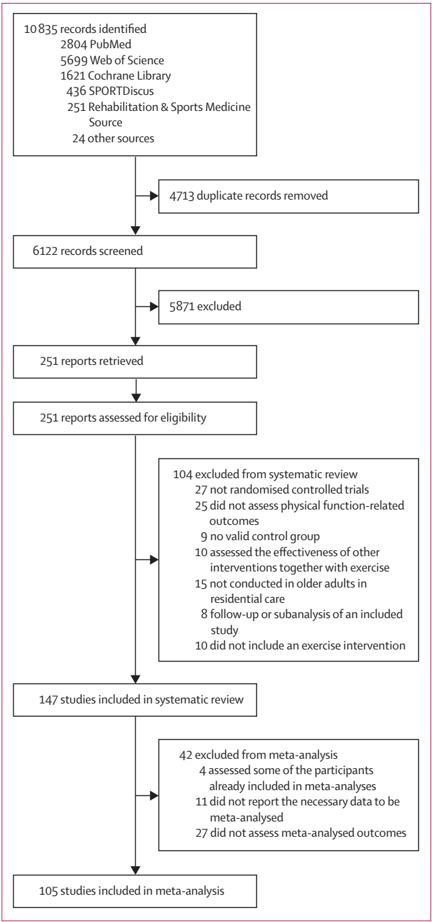
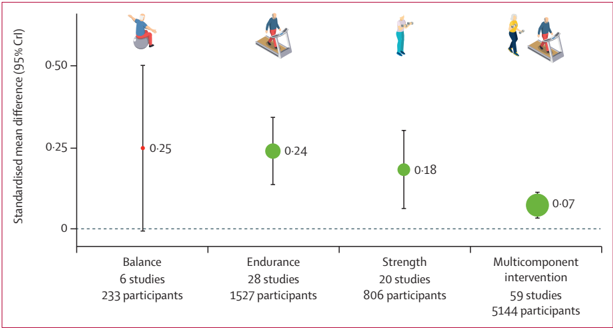
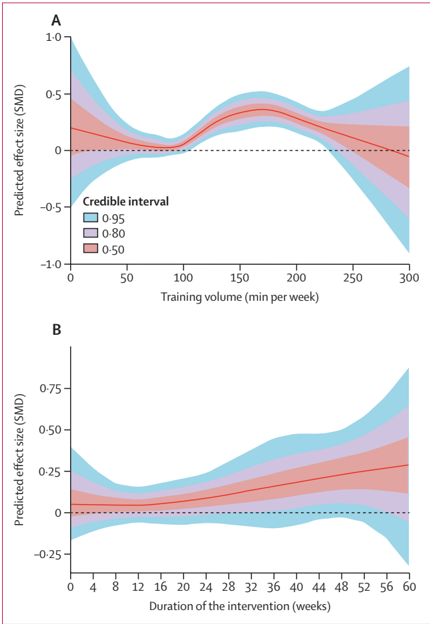
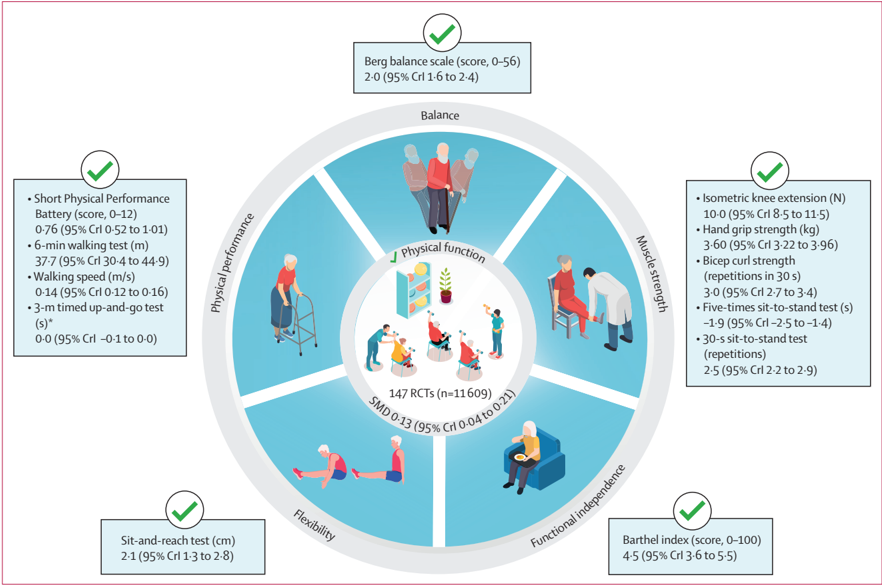
BACKGROUND: Physical exercise is effective at attenuating ageing-related physical decline in general, but evidence of its benefits for older adults in residential care, who often have functional dependency, multimorbidity, and polypharmacy, is inconclusive. We aimed to establish the effects of exercise interventions on the physical function of this population. METHODS: For this systematic review and network meta-analysis, we searched PubMed, Web of Science, Cochrane Library, Rehabilitation & Sports Medicine Source, and SPORTDiscus to identify randomised controlled trials assessing the effects of exercise interventions (vs usual care) on physical function (ie, functional independence, physical performance, and other related measures, such as muscle strength, balance, or flexibility) in adults aged 60 years or older living in residential care. Relevant studies published in English or Spanish up to Jan 12, 2023, were included in the systematic review. The quality of studies was assessed using the Tool for the Assessment of Study Quality and Reporting in Exercise (TESTEX) score. A network meta-analysis was performed for physical function-related outcomes reported in at least ten studies, with subanalyses for specific intervention (ie, exercise type, training volume, and study duration) and participant (eg, having cognitive impairment or dementia, pre-frail or frail status, and being functionally dependent) characteristics. The study protocol was registered on PROSPERO (CRD42021247809). FINDINGS: 147 studies (11 609 participants, with mean ages ranging from 67 years [SD 9] to 92 years [2]) were included in the systematic review, and were rated as having overall good quality (median TESTEX score 9 [range 3-14]). In the meta-analysis (including 105 studies, n=7759 participants), exercise interventions were associated with significantly improved overall physical function, with a standardised mean difference [SMD] of 0·13 (95% credible interval [CrI] 0·04-0·21), which was confirmed in all analysed subpopulations. The strongest association was observed with 110-225 min per week of exercise, and the greatest improvements were observed with 170 min per week (SMD 0·36 [95% CrI 0·20-0·52]). No significant differences were found between exercise types. Subanalyses showed significant improvements for almost all analysed physical function-related outcomes (Barthel index, five-times sit-to-stand test, 30-s sit-to-stand test, knee extension, hand grip strength, bicep curl strength, Short Physical Performance Battery, 6-min walking test, walking speed, Berg balance scale, and sit-and-reach test). Large heterogeneity was found between and within studies in terms of population and intervention characteristics. INTERPRETATION: Exercise interventions are associated with improved physical function in older adults in residential care, and should, therefore, be routinely promoted in long-term care facilities. FUNDING: None. TRANSLATION: For the Spanish translation of the abstract see Supplementary Materials section.
Overview
The claims and statistics of this paper haven’t been checked yet.
Free: it reads the open-access text and checks the first 5 claims that cite a source we can check. Create a free account to check every claim.
Integrity signals
Registry
Cites
Statistics
Figures
Verification
Claims the paper makes
The claims and statistics of this paper haven’t been checked yet.
Free: it reads the open-access text and checks the first 5 claims that cite a source we can check. Create a free account to check every claim.
Claims other papers make about this one
Each is checked against this paper’s own text: does it say what the citing paper says it does?
The source backs part of the claim, not all of it — or backs it for a different population, condition or comparison.
In the citing paper
“The strongest association and improvement were found in exercise interventions with a length of 110-170 min per week, 58 similar to the current study ' s intervention duration.”
From Mixed reality technology for older adults: Evaluating the impact of a novel virtual humanoid coach in a community-based physical exercise program in the Philippines (2024) · cites this paper as [58]
Experimental — accuracy not yet measuredThe source backs part of the claim, not all of it — or backs it for a different population, condition or comparison.
In the citing paper
“On the one hand, a recent systematic review involving 147 studies reported a significant association between exercise interventions and the overall bodily function of older adults from various physical function tests. 58”
From Mixed reality technology for older adults: Evaluating the impact of a novel virtual humanoid coach in a community-based physical exercise program in the Philippines (2024) · cites this paper as [58]
Experimental — accuracy not yet measuredThe cited source says what the claim attributes to it.
In the citing paper
“Key benefits included enhanced functional independence in activities of daily living (as reflected by higher Barthel Index scores) and notable gains in muscle strength, physical performance, balance, and flexibility.”
From Global consensus on optimal exercise recommendations for enhancing healthy longevity in older adults (ICFSR) (2025) · cites this paper as [491]
The cited source says what the claim attributes to it.
In the citing paper
“A more recent systematic review and meta-analysis of randomized controlled trials (including 105 studies, n = 7759 participants) demonstrated that exercise interventions significantly improve overall physical function in older adults living in care facilities.”
From Global consensus on optimal exercise recommendations for enhancing healthy longevity in older adults (ICFSR) (2025) · cites this paper as [491]
The cited source says what the claim attributes to it.
In the citing paper
“Notably, the most consistent improvements were achieved with approximately three hours of exercise per week, with no significant differences observed across various types of exercise [491].”
From Global consensus on optimal exercise recommendations for enhancing healthy longevity in older adults (ICFSR) (2025) · cites this paper as [491]
4 more claims about this paper
Create a free account to see every claim other papers make about this one.
Self-check
Percentages, sums and reported differences re-computed from the paper’s own numbers.
The self-check needs the paper’s full text.
Citations
Cites
The PRISMA 2020 statement: An updated guideline for reporting systematic reviews
Page, M. J., McKenzie, J. E., Bossuyt, P. M., Boutron, I., Hoffmann, T. C., Mulrow, C. D., Shamseer, L., Tetzlaff, J. M., Akl, E. A., Brennan, S. E., et al. (2021) · BMJ · doi:10.1136/bmj.n71 · Cited by 108,283
Sarcopenia: revised European consensus on definition and diagnosis
Cruz-Jentoft, A. J., Bahat, G., Bauer, J., Boirie, Y., Bruyère, O., Cederholm, T., Cooper, C., Landi, F., Rolland, Y., Sayer, A. A., et al. (2019) · Age and Ageing · doi:10.1093/ageing/afy169 · Cited by 13,818
Wan, X., Wang, W., Liu, J., & Tong, T. (2014) · BMC Medical Research Methodology · doi:10.1186/1471-2288-14-135 · Cited by 11,735
Hutton, B., Salanti, G., Caldwell, D. M., Chaimani, A., Schmid, C. H., Cameron, C., Ioannidis, J. P. A., Straus, S., Thorlund, K., Jansen, J. P., et al. (2015) · Annals of Internal Medicine · doi:10.7326/m14-2385 · Cited by 8,269
The PRISMA 2020 statement: an updated guideline for reporting systematic reviews
Page, M. J., McKenzie, J., Bossuyt, P., Boutron, I., Hoffmann, T., mulrow, C., Shamseer, L., Tetzlaff, J., Akl, E., Brennan, S. E., et al. (2020) · doi:10.31222/osf.io/v7gm2_v1 · Cited by 8,090
The PRISMA 2020 statement: an updated guideline for reporting systematic reviews
Page, M. J., McKenzie, J., Bossuyt, P., Boutron, I., Hoffmann, T., mulrow, C., Shamseer, L., Tetzlaff, J., Akl, E., Brennan, S. E., et al. (2020) · doi:10.31222/osf.io/v7gm2 · Cited by 5,177
Sarcopenia: revised European consensus on definition and diagnosis
Cruz-Jentoft, A. J., Bahat, G., Bauer, J., Boirie, Y., Bruyère, O., Cederholm, T., Cooper, C., Landi, F., Rolland, Y., Sayer, A. A., et al. (2019) · Age and Ageing · doi:10.1093/ageing/afz046 · Cited by 3,803
The World report on ageing and health: a policy framework for healthy ageing
Beard, J. R., Officer, A., de Carvalho, I. A., Sadana, R., Pot, A. M., Michel, J.-P., Lloyd-Sherlock, P., Epping-Jordan, J. E., Peeters, G. M. E. E. (., Mahanani, W. R., et al. (2016) · The Lancet · doi:10.1016/s0140-6736(15)00516-4 · Cited by 3,287
Checking consistency in mixed treatment comparison meta-analysis
Dias, S., Welton, N. J., Caldwell, D. M., & Ades, A. E. (2010) · Statistics in Medicine · doi:10.1002/sim.3767 · Cited by 2,521
Meaningful change and responsiveness in common physical performance measures in older adults.
Perera, S., Mody, S. H., Woodman, R. C., & Studenski, S. A. (2006) · Journal of the American Geriatrics Society · doi:10.1111/j.1532-5415.2006.00701.x · Cited by 2,513
Research works printed but not linked: 1
- Cheour S, Cheour C, Bragazzi NL, et al. Dose-response relationship between endurance training prescription variables and increases in aerobic performance of healthy and unhealthy middle and very old individuals aged 70 years and older: a systematic review and meta- analysis of randomized controlled trials. Life (Basel) 2021; 11: 1-11.
Cited by
Items 101–172 of 172
Ballesteros, L. M. G., Ospina, L. E. M., Riveros, S., Vanegas, V., Gómez, A., Otero, M. D. P., Chaves, F. A. M., Velásquez, M. A. J., López, V., Ramírez, L. M. R., et al. (2025) · medRxiv · doi:10.1101/2025.08.18.25333703
“Reference (20) reported significant improvements in muscle strength, gait speed, balance, and functional independence among institutionalized older adults, with the greatest effect observed with 170 minutes of exercise per week.”
Sakaue, Y., Kondo, Y., Makikawa, M., Shiozawa, N., Iemitsu, M., Yoshimoto, T., & Okada, S. (2025) · Frontiers in Sports and Active Living · doi:10.3389/fspor.2025.1512002
Elliott, E., Ventre, J. P., Smith, S. K., Carey, W. P., Eost‐Telling, C., Money, A., Bryce-Jones, T., Dickens, V., Todd, C. J., & Vardy, E. R. L. C. (2025) · European Geriatric Medicine · doi:10.1007/s41999-025-01304-x
Zhang, Z., Chen, Y. Q., & Ochoa, M. C. (2025) · Frontiers in Public Health · doi:10.3389/fpubh.2025.1612187
Physical Function Training Strategies for Improving Tennis Players’ Baseline Movement Stroke Ability
Lu, L., Wu, D., & Lei, Y. (2025) · Applied Bionics and Biomechanics · doi:10.1155/abb/7898511 · Cited by 3
“Valenzuela et al. [7] analyzed the concepts and characteristics of PFT theory and explored the feasibility of its integration into college physical education curriculum.”
Rui, P., & Wei, W. (2025) · Acta Psychologica · doi:10.1016/j.actpsy.2025.105857 · Cited by 4
He, H., Muñoz, D., An, L., & Pedell, S. (2025) · Australian Conference on Human-Computer Interaction (OzCHI) · doi:10.1145/3764687.3769927
Ruiz-Fernández, A., Irazusta, J., Martín-Pérez, A., Espin, A., Carbonell‐Baeza, A., Alda, M., Mañas, A., Rodriguez‐Larrad, A., & Urquiza, M. (2025) · Journal of Geriatric Physical Therapy · doi:10.1519/jpt.0000000000000478 · Cited by 1
Qualitative Study on the Exercise Experiences and Health Perceptions of Older Women
Jeong, Y. H. (2025) · The Korean Journal of Community Living Science · doi:10.7856/kjcls.2025.36.4.645
Vendramini, I. C., Machado, R. O., Ribeiro, D. C., Papcke, C., Lisboa, T., & Scheeren, E. M. (2025) · Advances in Gerontology · doi:10.1134/s2079057025600454
“The positive relationship of physical exercise on strength, muscle mass, physical performance, and balance in the older adult is well-established in aiding the reduction of sarcopenia effects, as well as in improving physical function and preventing falls [3, 11–13].”
Impact of multicomponent training on functional fitness among older adults in rural India
Krishnapriya, K., Soman, S., Jacob, J., & Nair, A. S. (2025) · European Journal of Clinical and Experimental Medicine · doi:10.15584/ejcem.2025.4.12
Scott, S., Raynor, A., Dare, J., Grieve, J., & Costello, L. (2026) · BMC Health Services Research · doi:10.1186/s12913-026-14012-4
“While the physiological benefits of exercise are well documented in the field of exercise research [80–84], this study contributed to the aged care transition literature by highlighting exercise as a tool for enhancing well-being during a period marked by declining health, grief and loss [12].”
Zhao, M., Sun, C., Bogale, B. A., Hu, Y., Chen, S., & Li, M. (2026) · Research Square · doi:10.21203/rs.3.rs-8520226/v1
Zhang, X., Pan, Y., Qin, C., Wang, A., Hua, N., Gu, H., Yang, Y., Chen, J., & Zhang, Q. (2026) · BMC Geriatrics · doi:10.1186/s12877-026-07132-3
“A meta-analysis supports the efficacy of physical exercise interventions in improving physical function among older adults in long-term care facilities [12], highlighting the need for routine implementation of structured exercise programs.”
Levin, O., Just, I., Klepochová, R., Helsper, S., Vints, W. A. J., Silva, A. F., Langeard, A., Shalom, S. B., Karatzaferi, C., Ziaei, M., et al. (2026) · Experimental Gerontology · doi:10.1016/j.exger.2026.113082
Evaluation of the Impact of Digital Music and Movement on Care Home Staff and Resident Outcomes
Phillips, A. C., Hapca, S. M., & Hunt, D. (2026) · Advances in Geriatric Medicine and Research · doi:10.20900/agmr20260004
“Systematic reviews have shown that digital resources to promote PA in older adults in residential care across a range of cognitive and functional ability are feasible and well accepted [16,17].”
Khezrpour, A., Sarrafzadeh, S., Ebrahimpur, M., Khojaste, M., Rezaei, N., Payab, M., & Sharifi, F. (2026) · Scientific Reports · doi:10.1038/s41598-026-42828-x
Nakamura, M., Imai, T., Hirata, A., Tabira, K., Manabe, T., Kikuchi, K., Ito, T., Hirakawa, K., Ando, Y., Saito, Y., et al. (2026) · Contemporary Clinical Trials · doi:10.1016/j.cct.2026.108283
Yen, C.-L., Lim, K.-J., Hung, W.-S., Liao, K., Tsai, T.-S., Ho, W.-B., Lin, C.-Y., Wen, M.-S., & Chen, Y.-J. (2026) · doi:10.2196/preprints.95209
Liu, S., Wang, H., & Kong, Y. (2026) · Frontiers in Public Health · doi:10.3389/fpubh.2026.1772195
Burin-Chu, S., Agbangla, N. F., Caby, I., & Bossede, F. (2026) · BMJ Open · doi:10.1136/bmjopen-2025-114665
Heinrich, S., Schwarz, A., & Staudacher, D. (2026) · Geriatric Nursing · doi:10.1016/j.gerinurse.2026.104021
Langridge, N., Bright, K. L., & Lowe, S. (2026) · Nursing and Residential Care · doi:10.12968/nrec.2026.0004
Huang, X., Zhang, Y., Zou, T., Liu, J., Zhang, E., Lu, Y., Dong, A., Zhang, X., & Fang, Q. (2026) · Experimental Gerontology · doi:10.1016/j.exger.2026.113128
Schmid-Ellinger, V., Siegrist, M., Schaller, N., Isaak, J., Weiß, M., Wenzke, J. W., Fegers‐Wustrow, I., Haller, B., Halle, M., & Adams, V. (2026) · European Journal of Heart Failure · doi:10.1093/ejhf/xuag133
Madden, A. M., Soepnel, L. M., Africa, C., Rhoda, J. L., Morar, Z., Lambert, E. V., Gutterman, S., Millard, F., Bolnick, H. J., Davies, J. C., et al. (2026) · BMC Geriatrics · doi:10.1186/s12877-026-07541-4 · Cited by 1
SYSTEMATIC MAPPING OF KNOWLEDGE FRONTIER TRENDS IN ADAPTED PHYSICAL ACTIVITY AND HEALTH
Pugas, A. F., Tavares, L. M., Barcelos, F. V. L., Walkowski, A. L. I., da Silva, E. C. F., & Silva, R. D. (2026) · Revista de Geopolítica · doi:10.56238/revgeov17n5-002
Luna, A. F. H., Cedeño, C. S. S., & Velázquez, E. M. (2026) · ASCE MAGAZINE · doi:10.70577/asce.v5i2.815
Takeshita, S., & Harada, K. (2026) · Japanese Journal of Sport Psychology · doi:10.4146/jjspopsy.2026-2517
Geriatric Physical Disabilities and Technological Advancements
Sheraz, S. (2026) · SpringerBriefs in modern perspectives on disability research. · doi:10.1007/978-981-92-1343-6_5
Measures of wellbeing in the elderly and links with frailty
Mier, A., Casals, C., & Corral‐Pérez, J. (2026) · Elsevier eBooks · doi:10.1016/b978-0-443-27346-9.00002-9
Hossain, K., Hossain, M. Z., Jahan, S., Hossain, K. M. A., Rahman, E., Hossain, M. K., Galeb, A. H., Akter, M. S., Rikti, J. F., & Kabir, M. F. (2026) · Trials · doi:10.1186/s13063-026-09825-x
“However, cost-effective, evidence-based exercise should be integrated into healthcare to improve functional independence, prevent falls, and enhance older adults’ quality of life, with more prospective clinical trials needed to determine the most effective community-level programs [1, 10].”
Deng, Y., Hirano, Y., Hasui, M., Oshio, Y., Suzuki, M., Takashima, S., Sato, C., Isobe, T., Ojima, T., & Yamauchi, K. (2026) · Research Square · doi:10.21203/rs.3.rs-9638330/v1
Multimorbidity, physical function, and risk of falls in middle-aged adults
George, P., Bharat, C., Murray, K., Hunter, M. L., Hoey, M. A., & Zhu, K. (2026) · Bone · doi:10.1016/j.bone.2026.117974
Kitamura, M., Izawa, K. P., Kurihara, K., Yamamoto, S., Ozawa, S., Uchida, E., Umeo, J., & Inagawa, T. (2026) · Discover Public Health · doi:10.1186/s12982-026-02292-4
“Previous studies have shown that such programs improve gait speed, balance, and muscle strength, and systematic reviews have confirmed their effectiveness in enhancing physical function among frail or care-dependent older adults [3–7].”
Suksatan, W. (2026) · Home Health Care Services Quarterly · doi:10.1080/01621424.2026.2689563
Morón-Duarte, L. S., Acevedo, K. R. C., Ossa, W. D., Gomez, O., Stampini, M., Aranco, N., & Yomayusa-González, N. (2026) · Archives of Gerontology and Geriatrics Plus · doi:10.1016/j.aggp.2026.100305 · Cited by 1
Attoh-Mensah, E., Pouilloux, G., Giannouli, E., Langeard, A., Billot, M., & Perrochon, A. (2026) · Journal of the American Medical Directors Association · doi:10.1016/j.jamda.2026.106305
Tang, Y., Shi, J., Meng, Z., & Zhang, Y. (2026) · Healthcare · doi:10.3390/healthcare14142187
“Instead, it may be related to differences between studies, including baseline participant characteristics, control-group interventions, intervention duration, frequency, and intervention model [80].”
Effects of Sports and Physical Activity on Physical Health
Sütlü, S. (2026) · IGI Global eBooks · doi:10.4018/979-8-3373-9430-5.ch005
Harandi, A. J. (2026) · German Journal of Sports Medicine · doi:10.5960/dzsm.2026.657
Aiikulola, O. I. (2026) · Journal of Population Ageing · doi:10.1007/s12062-026-09582-4
Choi, E. J., Choi, S., & Jang, S. (2026) · Journal of Exercise Science & Fitness · doi:10.1016/j.jesf.2026.200500
“23,24 Therefore, this study contributes to the literature by distinguishing exercise according to supervision status and showing that the incremental economic benefit of professional supervision requires further evaluation.”
Michalski, N., & Chmielarska, A. (2026) · Health Problems of Civilization · doi:10.29316/hpc/225438
“Interdisciplinary studies assessing the effectiveness of multidomain interventions in promoting healthy ageing [20,21]”
InfluentialWang, J., Guo, S., Yang, Y., Liang, Y., Guo, C., Cheng, Y., Li, Y., Qiu, B., Ma, S., Chen, P., et al. (2026) · Ageing Research Reviews · doi:10.1016/j.arr.2026.103303
Carvalho, N., Llamas‐Ramos, R., & Llamas‐Ramos, I. (2026) · Journal of Clinical Medicine · doi:10.3390/jcm15166327
“In long-term care, exercise can improve physical function and reduce factors associated with falls [2,3].”
Wang, Y., Lin, R., Wang, M., Zhang, X., Zhang, S., Zhou, K., & Shuai, Z. (2026) · Complementary Therapies in Medicine · doi:10.1016/j.ctim.2026.103423
Mehta, P., Costa, E. C., Galliano, L. M., Vlietstra, L., Saragiotto, B. T., Cadore, E. L., Izquierdo, M., & Waters, D. L. (2026) · The Journal of Frailty & Aging · doi:10.1016/j.tjfa.2026.100187
“Of note, our findings are consistent with previous meta-analyses showing that multicomponent exercise programmes improve physical function in older adults, including both community-dwelling and residential care settings [51].”
Ageing in Unani medicine: Conceptual framework and modulatory approaches
Sameen, A., Ali, S., Rather, F., Rasool, I., & Nayab, H. (2026) · Journal of Ayurveda and Integrative Medicine · doi:10.1016/j.jaim.2026.101364
“Thus, regular moderate exercise serves as a cornerstone for maintaining physical vitality, cognitive health, and overall well-being during ageing [47].”
Ojo, E. O., Loerzel, V. W., Ng, B. P., Xie, R., & Thiamwong, L. (2026) · Journal of Gerontological Nursing · doi:10.3928/00989134-20260817-01
Lee, K. Y., Siew, S. K. H., Teo, T. L., Chua, K. C., Yu, J., Mahendran, R., & Rawtaer, I. (2026) · Frontiers in Sports and Active Living · doi:10.3389/fspor.2026.1768808
“Beyond cognition, the benefits of exercise extend to physical function and frailty-related outcomes (13, 14).”
Computational precision nutrition for sarcopenia and associated multimorbidity in ageing
Fu, G., Chen, L., Wang, Z., & Fang, H. (2026) · Ageing Research Reviews · doi:10.1016/j.arr.2026.103335
Chang, Y., Wang, C., Ho, H.-H., Chu, I., Kuwamizu, R., Chang, Y., & Chen, F. (2026) · Mental health and physical activity · doi:10.1016/j.mhpa.2026.100816
Liu, R., Chen, Y., Niu, T., Zhang, D., Li, Y., Yang, D., & Lu, Y. (2026) · Frontiers in Public Health · doi:10.3389/fpubh.2026.1885713
Karkauskienė, E., Coll‐Planas, L., Fuente-Vidal, A., Sanchez, D., Barth, N., Dallmeier, D., Socorro-Cumplido, J. L., Giné‐Garriga, M., Caserotti, P., Lefebvre, G., et al. (2026) · European Geriatric Medicine · doi:10.1007/s41999-026-01547-2
Cui, X., & Zheng, J. (2026) · Healthcare · doi:10.3390/healthcare14172832
“Physical activity, as an important lifestyle behavior for maintaining physical function and promoting healthy aging, provides an important perspective for understanding differences in functional health among older women [6].”
Su, L., AGUDAMU, & Long, B. (2026) · Frontiers in Public Health · doi:10.3389/fpubh.2026.1890213
Progress of nursing management for delirium in critically ill geriatric patients: a narrative review
Mei, Q., & Chen, X. (2026) · Frontiers in Human Neuroscience · doi:10.3389/fnhum.2026.1849325
de Oliveira, H. (2026) · Revista Sociedade Científica · doi:10.61411/rsc2026146119
Sulistyana, C. S., Kumaat, N. A., Nurseskasatmata, S. E., Sulistyawati, W., Fauzi, A., Soares, D., & Sunanto (2026) · BIO Web of Conferences · doi:10.1051/bioconf/202625504010
Microbial-derived exerkines as a model of drug discovery
Burke, B. I., Valentino, T. R., Ismaeel, A., Wen, Y., & McCarthy, J. J. (2026) · American Journal of Physiology-Cell Physiology · doi:10.1152/ajpcell.90006.2026
Zhang, Y., Ying, X., Meng, Z., & Zhang, Y. (2026) · Healthcare · doi:10.3390/healthcare14193236
“These studies primarily focused on the content framework of functional health [8–10], assessment methods [9,11], and intervention strategies [5,12].”
InfluentialBaşer, G., DEMİR, G., & GERCEK, H. (2026) · Research Square · doi:10.21203/rs.3.rs-10638271/v1
Wang, W., & Yao, L. (2026) · Frontiers in Psychology · doi:10.3389/fpsyg.2026.1958928
“The beneficial effects of physical activity on Active Ageing identified in this review are consistent with findings from prior meta-analyses (Chi et al., 2021; Valenzuela et al., 2023).”
Yuan, Y., Qiu, B., Park, Y., Li, Y., SHIN, Y.-H., Diao, P., An, S.-Y., Jeon, J. Y., & Lee, D. H. (2026) · Maturitas · doi:10.1016/j.maturitas.2026.109132
Chun, S.-W., Jang, J.-H., Seong, J.-H., Jang, J.-W., Song, H.-U., Song, M. J., Han, K., & An, N.-Y. (2026) · Journal of Exercise Science & Fitness · doi:10.1016/j.jesf.2026.200530
McNally, S. J. (2026) · Frontiers in Sports and Active Living · doi:10.3389/fspor.2026.1960508
Madeira, R., Esteves, D., Neiva, H. P., Pinto, N., Nunes, C., Maia, A., Vercelli, A., & Pato, M. V. (2026) · Healthcare · doi:10.3390/healthcare14203539
“Recent systematic reviews and meta-analyses specifically conducted in residential and long-term care settings indicate that structured exercise can improve physical performance, muscular strength, mobility, balance, and functional independence in institutionalized older adults [31,32].”
Hämäläinen, O., Sipilä, S., Tirkkonen, A., Savikangas, T., Alén, M., & Hautala, A. J. (2026) · European Journal of Applied Physiology · doi:10.1007/s00421-026-06475-4
Zambrano, J. L., Zurita-Pinto, D., & Hermo-Rebollido, L. (2026) · Research Square · doi:10.21203/rs.3.rs-10986704/v1
Bekchanova, M. R., Khakimova, D. U., & Ismailova, R. N. (2026) · doi:10.66073/refocus-conf/0910087
Belando‐Pedreño, N., Ballester-Sánchez, Á., Alcocer, I. B., & García-Orea, G. P. (2026) · Research Square · doi:10.21203/rs.3.rs-11555442/v1
Metadata
- Authors
- Valenzuela, P. L., Saco-Ledo, G., Morales, J. S., Gallardo-Gómez, D., Morales-Palomo, F., López-Ortiz, S., Rivas-Baeza, B., Castillo-García, A., Jiménez-Pavón, D., Santos-Lozano, A., del Pozo Cruz, B., & Lucia, A.
- Affiliations
- Universidad de Alcalá (ES)
- Universidad de Cádiz (ES)
- Corresponding author
- Valenzuela, Pedro L
- Venue
- The Lancet Healthy Longevity
- Publisher
- Elsevier BV
- Published
- 2023-06
- Volume
- 4
- Issue
- 6
- Pages
- e247-e256
- ISSN
- 2666-7568 (ISSN-L)
- OpenAlex
- W4376630707
- Semantic Scholar
- 85dc80b1b91f6733370ce776493bcb2f80c8310a
- Cited by
- 173
- References
- 53
- Citations by year
- 2026: 78 · 2025: 57 · 2024: 31 · 2023: 7
- FWCI
- 7.42
- Type
- journal article
- Language
- en
- Open access
- gold
- doi.org
- Licence
- cc-by-nc-nd
- www.elsevier.com/tdm/userlicense/1.0/ (tdm)
- www.elsevier.com/legal/tdmrep-license (tdm)
- creativecommons.org/licenses/by-nc-nd/4.0/ (vor)
- Locations
- The Lancet Healthy Longevity (publishedVersion, cc-by-nc-nd)
- PubMed (publishedVersion)
- RODIN (Universidad de Cádiz) (submittedVersion, cc-by-nc-nd)
- University of Southern Denmark Research Portal (University of Southern Denmark) (submittedVersion, cc-by-nc-nd)
- RUIdeRA - Institutional University Repository (University of Castilla-La Mancha) (submittedVersion, other-oa)
- Zenodo (CERN European Organization for Nuclear Research) (submittedVersion, cc-by-nc-nd)
- Funders
- Instituto de Salud Carlos III (CD21/00138)
- Centro de Investigación Biomédica en Red Fragilidad y Envejecimiento Saludable
- Ministerio de Ciencia e Innovación (FPU19/02117)
- European Commission (CB16/10/00477, EMERGIA 2020/00158)
- Gobierno de Espana Ministerio de Economia y Competitividad
- Federación Española de Enfermedades Raras
- Junta de Andalucía (POSTDOC_21_00725)
- Ministerio de Economía y Competitividad (PI18/00139)
- Secretaría de Estado de Investigacion, Desarrollo e Innovacion
- Universidad de Sevilla (PIF20/VI-PPITUS)
- Topics
- Health Sciences › Medicine › Geriatrics and Gerontology › Frailty in Older Adults
- Health Sciences › Medicine › Geriatrics and Gerontology › Geriatric Care and Nursing Homes
- Health Sciences › Medicine › Public Health, Environmental and Occupational Health › Physical Activity and Health
- Keywords
- physical activity, physical function, older adults, residential care, functional independence, physical performance, muscle strength, balance, flexibility, exercise volume, frailty, dementia, cognitive impairment, exercise type, exercise duration, exercise frequency, exercise intensity
- MeSH terms
- Aged, Aged, 80 and over, Exercise Therapy, Humans, Exercise, Randomized Controlled Trials as Topic, Hand Strength, Muscle Strength
About these checks
Registry, retraction, Cites and statistics results are computed, not judged, with one exception: a printed reference that no index lists is read once by a model before it counts as a citation error. Claims are extracted by a model and kept only when their quote appears verbatim in the text; each cited source is then checked, with a model’s help, for whether it says what the claim relies on. Those verdicts can be wrong — read the claim’s quote and the cited source before relying on one.
Statistics and arithmetic are recomputed, not judged.
Confidence bands are shown only for fields calibrated on our annotated test set. None is calibrated yet, so no band is shown.
What counts as a claim ›How we measure confidence ›How we check this ›
Are you an author, or do you see a problem with this page? Request a review
Data sources
Bibliographic data: Semantic Scholar, OpenAlex, Crossref.
Contains information from the Semantic Scholar Academic Graph Datasets, made available under the ODC Attribution License (ODC-BY 1.0).
Semantic Scholar’s data is described in: Kinney, R., et al. (2023). The Semantic Scholar Open Data Platform. arXiv:2301.10140.
