

The DOI matches its Crossref record.
The Emerging Uses of 3D Technologies in the Practice of Repatriation and Revitalization
Abstract
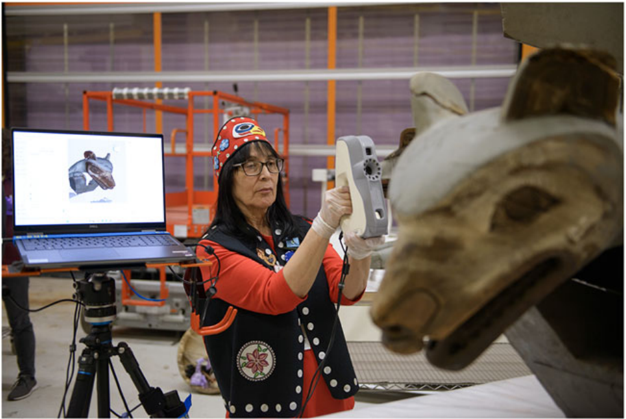
Overview: Digital technologies, including 3D digitization and replication, are increasingly integrated into repatriation-related work by museums and Indigenous communities. Repatriation laws began being adopted in the United States at state level in 1976, followed by federal repatriation laws in 1989 with the National Museum of the American Indian (NMAI) Act, which applies only to the museums of the Smithsonian Institution, and in 1990 with the Native American Graves Protection and Repatriation Act (NAGPRA). Early repatriation, therefore, was in the predigital age, but the use of computers and databases, including digital imaging, email, and file-sharing, has had a significant impact, first with 2D digital technologies and more recently with the incorporation of 3D digitization. These, and the creation of surrogates of archival and object collections, have led to an explosion of information-sharing between museums and Indigenous partners. 2D digitization and 3D digitization and replication, in consultation and collaboration with Indigenous communities, are emerging as important tools alongside repatriation efforts—not in lieu of repatriation but as supplements to mutual interests that go beyond it. Here, the experiences of the Smithsonian’s National Museum of Natural History and others are offered as examples of such new applications of 3D in the context of repatriation and beyond.
Overview
The claims and statistics of this paper haven’t been checked yet.
Run the check — free, no account needed. It reads the open-access text and checks the sources it cites.
Integrity signals
Registry
Cites
Statistics
Figures
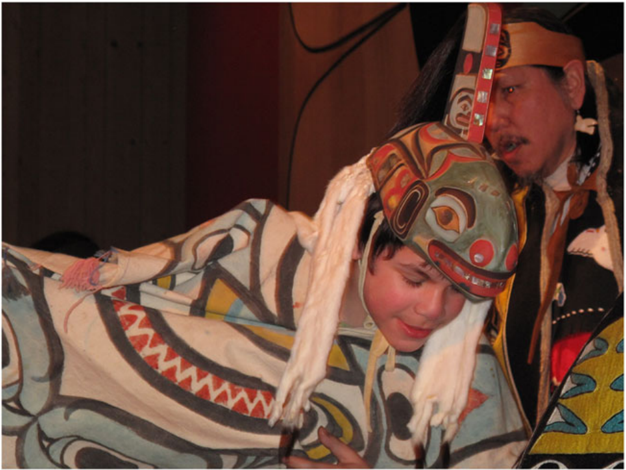
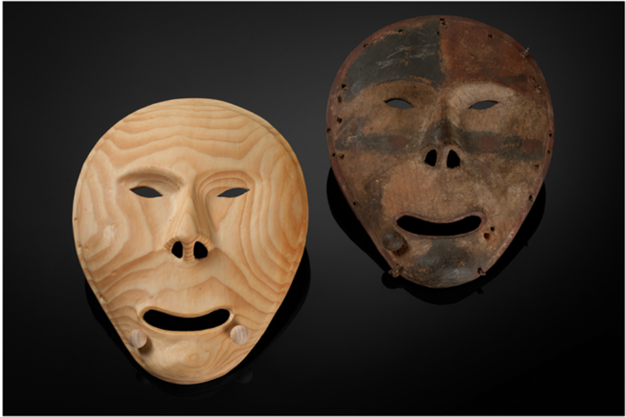
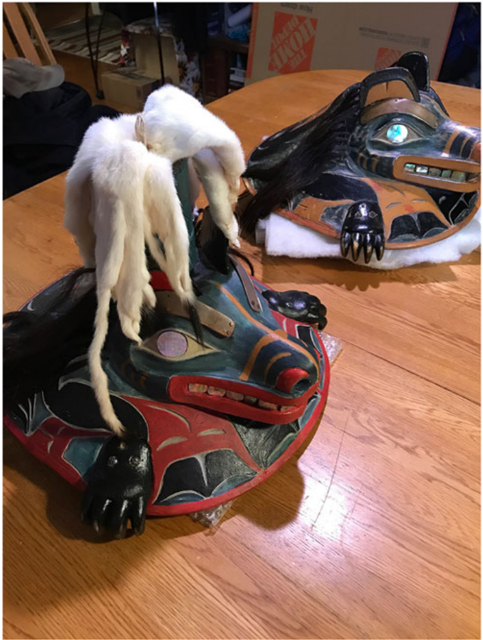
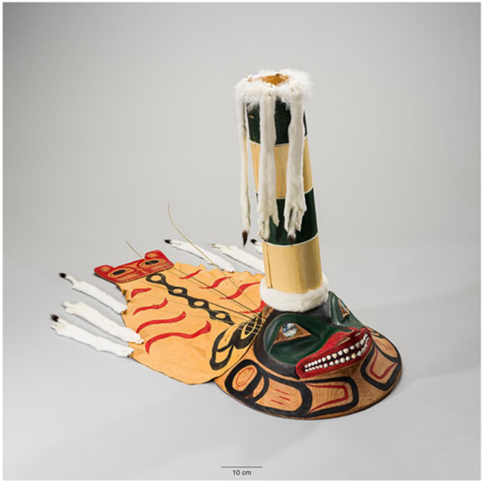
Verification
Claims the paper makes
The claims and statistics of this paper haven’t been checked yet.
Run the check — free, no account needed. It reads the open-access text and checks the sources it cites.
Claims other papers make about this one
Each is checked against this paper’s own text: does it say what the citing paper says it does?
The source backs part of the claim, not all of it — or backs it for a different population, condition or comparison.
In the citing paper
“The updated regulations are timely, in that some museums and federal agencies were already making large-scale changes toward decolonization and organizational fairness, access, representation, and belonging.”
From Pathways to Repatriation for NAGPRA Practitioners: Introduction (2025) · cites this paper as Hollinger 2025
Experimental — accuracy not yet measuredIn the citing paper
“For example, new emphasis on Tribal traditional and Indigenous knowledge is returning the conversation on sovereignty and authority over Native bodies to Indigenous voices (Presidential Memorandum 2022) and collaborative relationships between museums, federal agencies, and Tribal representatives are more and more frequent (Hollinger 2025;Teeter et al. 2021;Thompson et al. 2023).”
From Pathways to Repatriation for NAGPRA Practitioners: Introduction (2025) · cites this paper as Hollinger 2025
Self-check
Percentages, sums and reported differences re-computed from the paper’s own numbers.
The self-check needs the paper’s full text.
Citations
Cites
No references could be resolved yet.
Research works printed but not linked: 14
- 10.1016/j.culher.2017.12.001 · DOI
- Hollinger, 2022, Handbook of North American Indians, Volume 1: Introduction, 182
- Hollinger, 2024, 3D Replication of the Mother Bear Hat for the Teikweidi Clan of Angoon, Alaska, Arctic Studies Center Newsletter, 31, 22
- Bell, 2013, Introduction: After the Return, Museum Anthropology Review, 7, 1
- 10.5334/jcaa.140 · DOI
- Faulkner, 2023, Technology and Tradition: Shaping Indigenous Collections for the Future
- 10.1017/aap.2022.7 · DOI
- 10.1017/aap.2019.39 · DOI
- 10.1017/aap.2023.41 · DOI
- Csoba DeHass, 2018, 3D Heritage Preservation and Indigenous Communities in the Circumpolar North, Arctic Yearbook, 1
- 10.1017/aaq.2020.59 · DOI
- Hollinger, 2013, Tlingit-Smithsonian Collaborations with 3D Digitization of Cultural Objects, Museum Anthropology Review, 7, 201
- 10.1111/muan.12280 · DOI
- 10.1017/aaq.2024.82 · DOI
Cited by
Sorted by citations
Pathways to Repatriation for NAGPRA Practitioners: Introduction
Yann, J., Domeischel, J., Roberts Thompson, A., & Schreiner, N. M. (2025) · Advances in Archaeological Practice · doi:10.1017/aap.2025.10107 · Cited by 2
Metadata
- Authors
- Hollinger, R. E.
- Affiliations
- National Museum of Natural History, Smithsonian Institution
- Venue
- Advances in Archaeological Practice
- Publisher
- Cambridge University Press (CUP)
- Published
- 2025-08
- Volume
- 13
- Issue
- 3
- Pages
- 472-479
- ISSN
- 2326-3768
- Cited by
- 2
- References
- 0
- Language
- en
About these checks
Registry, retraction, Cites and statistics results are computed, not judged, with one exception: a printed reference that no index lists is read once by a model before it counts as a citation error. Claims are extracted by a model and kept only when their quote appears verbatim in the text; each cited source is then checked, with a model’s help, for whether it says what the claim relies on. Those verdicts can be wrong — read the claim’s quote and the cited source before relying on one.
Statistics and arithmetic are recomputed, not judged.
Confidence bands are shown only for fields calibrated on our annotated test set. None is calibrated yet, so no band is shown.
What counts as a claim ›How we measure confidence ›How we check this ›
Are you an author, or do you see a problem with this page? Request a review
How to cite
Cite CoChat for the checks on this page, and the paper for its own findings.
- This page
- CoChat. (2026). Citation check: The Emerging Uses of 3D Technologies in the Practice of Repatriation and Revitalization. https://app.cochat.ai/papers/10.1017/aap.2025.10096
- The paper
- Hollinger, R. E. (2025). The Emerging Uses of 3D Technologies in the Practice of Repatriation and Revitalization. Advances in Archaeological Practice. https://doi.org/10.1017/aap.2025.10096
