

The DOI matches its Crossref record; 1 of the 1 references it cites were found in a registry or an index.
CHRONOLOGY OF THE GOLDEN HORDE IN KAZAKHSTAN: 14C DATING OF JOCHI KHAN MAUSOLEUM
Abstract
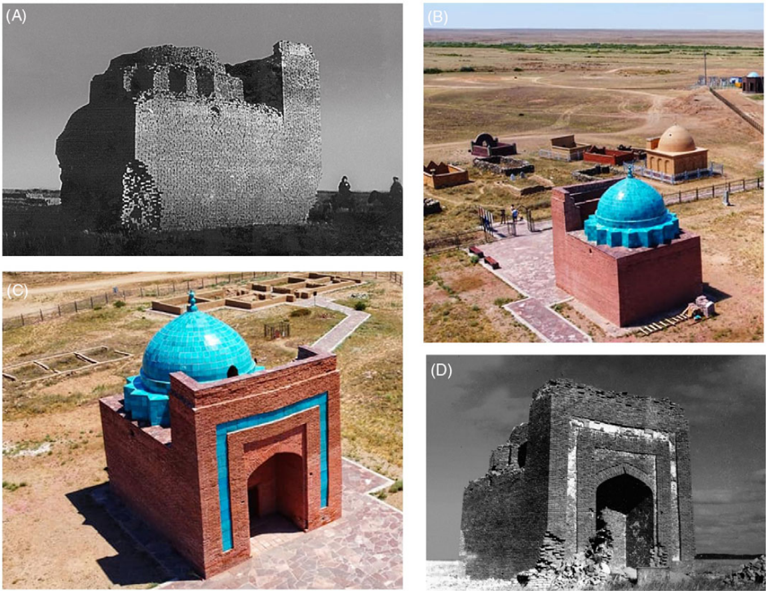
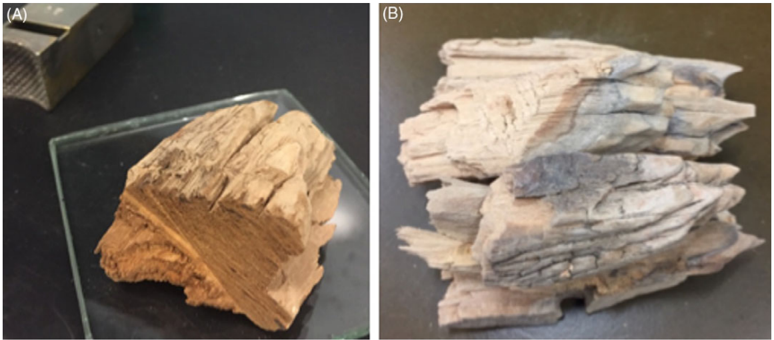
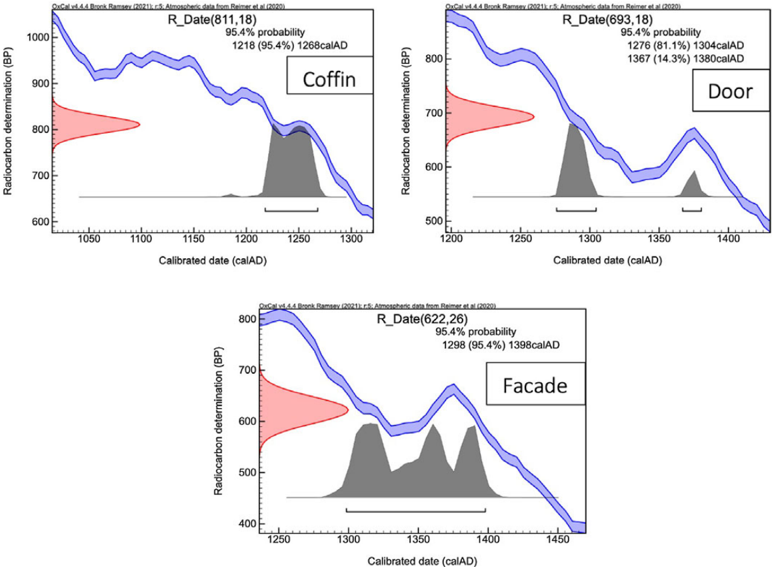
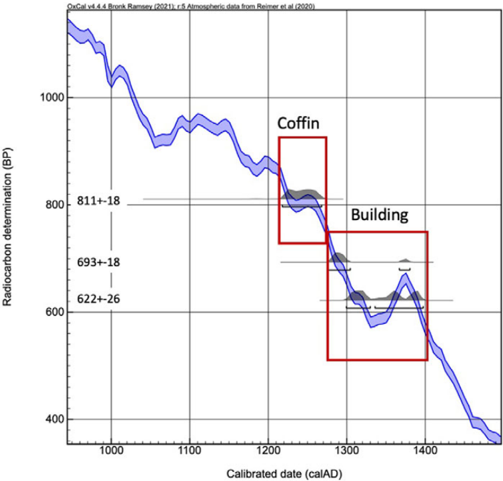
We present accelerator mass spectrometry radiocarbon (AMS 14 C) dating results of the “Jochi Khan Mausoleum”—the proposed burial place of the oldest son of Gengghis Khan in Ulytau, Kazakhstan. The Ulytau region retains 34 burial complexes of Islamic tradition associated with the Golden Horde history (1221–1438 CE). However, there is no calendar-dated chronology of the medieval mausoleums in this region, which complicates their historical interpretation. Three 14 C dates from construction timbers and burial of the Jochi Khan mausoleum are calibrated to 1220–1400 CE interval (95.4% range) with the mid-point at 1245 CE for the coffin, 1330 CE for the entry door, and 1350 CE for a masonry wall. The 14 C-calibration suggests that the mausoleum was built about 100 years after the death of Jochi (1225 CE) and renovated at least once in the middle of the 14th century. Apparently, the wood for the coffin was harvested sometime in the interval 1220–1270 CE. The calendar ages of the coffin and the mausoleum are ca. 75 years apart. It is possible that the old coffin was placed into a newly constructed mausoleum. However, there is no historical evidence confirming this important re-burial of Jochi. The dating results challenge the attribution of the mausoleum to Jochi Khan. This study demonstrates that the age of the Islamic mausoleums in Ulytau can be successfully dated with 14 C. While requiring further data assembly, this first 14 C dataset can form the basis of the calendar chronology of the Golden Horde in Kazakhstan. Historical attribution of the mausoleums must be collaborated with the calendar chronology.
Overview
The claims and statistics of this paper haven’t been checked yet.
Run the check — free, no account needed. It reads the open-access text and checks the sources it cites.
Integrity signals
Registry
Cites
Statistics
Figures
Verification
Claims the paper makes
The claims and statistics of this paper haven’t been checked yet.
Run the check — free, no account needed. It reads the open-access text and checks the sources it cites.
Claims other papers make about this one
Each is checked against this paper’s own text: does it say what the citing paper says it does?
In the citing paper
“As a recent study reported (34), radiocarbon age estimates of the mausoleum’s building materials appeared younger than the lifetime of Joshi, as well.”
From Genomes of the Golden Horde elites and their implications for the rulers of the Mongol Empire (2026) · cites this paper as [34]
Self-check
Percentages, sums and reported differences re-computed from the paper’s own numbers.
The self-check needs the paper’s full text.
Citations
Cites
The IntCal20 Northern Hemisphere Radiocarbon Age Calibration Curve (0–55 cal kBP)
Reimer, P. J., Austin, W. E. N., Bard, E., Bayliss, A., Blackwell, P. G., Bronk Ramsey, C., Butzin, M., Cheng, H., Edwards, R. L., Friedrich, M., et al. (2020) · Radiocarbon · doi:10.1017/rdc.2020.41 · Cited by 7,900 · cited 1×
“…was performed using the 3MV Pelletron AMS (National Electrostatics Corporation) operated at 2.5 MV in Tucson, Arizona, and a 200kV MICADAS (ETHZ, Zürich, CH) in Debrecen, Hungary using standard facility protocols (Jull et al. 2008; Molnar et al. 2013b; Rinyu et al. 2013; Janovics et al. 2018).”
MethodInfluential
Research works printed but not linked: 28
- Halperin, 1985, Russia and the Golden Horde: Mongol Iipact on Medieval Russian history, 180 p
- Ginsburg, VV. 1956. Ancient population of eastern and central Kazakh SSR from anthropological data. Proceedings of NN Muklukho-Maklaya Institute of Ethnography XXXIII: 239–266. Moscow: USSR Academy of Sciences.
- 10.1017/S0033822200057453 · DOI
- Yurchenko, 2008, Steppes of Europe in the Middle Ages, 287
- Margulan, 1978, Remains of sedentary settlements in central Kazakhstan, Archeological Monuments of Kazakhstan., 3
- Margulan, AKh . 1974. Jochi Khan Mausoleum. Kazakh Soviet Encyclopedia. Vol. 4. Almaty. p. 481–482.
- Gerasimov, 1957, Historical complexes of the Karagengir River basin in central Kazakhstan, Alma-Ata: Nauka., 123 p
- 10.1016/S1569-4860(07)11007-X · DOI
- Margulan, AKh . 1948. Archaeological survey of central Kazakhstan (1946). Proceedings of KazakhSSR Academy of Sciences, History 49(4).
- 10.1017/RDC.2018.110 · DOI
- Hillenbrand, 1999, Islamic art and architecture, 288 p
- Khorosh, EKh . 2010. Mausoleum of Alasha Khan. Scientific readings in memory of NE Masanov. Proceedings of the International Conference on the role of nomads in the formation of cultural heritage of Kazakhstan, April 23–24, 2009. Almaty: Dayk-Press. p. 359–378.
- 10.1021/ac00049a017 · DOI
- Usmanova, ER , Kozha, MB , Uskenbay, K , Akhatov, GA , Dzhumabekov, DA. 2021. On the question of secret burials of the Golden Horde in Ulytau. Proceedings of XI International conference on ancient cultures of Mongolia, southern Siberia and northern China. Abakan. p. 249–257. · DOI
- 10.1017/S0033822200003672 · DOI · Paper page
- 10.1017/S0033822200057829 · DOI
- 10.1016/j.nimb.2009.10.078 · DOI
- Yegenbayuly, 2001, Studies of Jochi Khan Mausoleum, History of Homeland, 2, 90
- DeWeese, 1994, Baba Tükles and conversion to Islam in historical and epic tradition, 638
- Khorosh, EKh . 2009. To the question of the construction history of the Jochi-khan mausoleum. Scientific readings in memory of Masanov N.E. Almaty: Dayk-Press. p. 101–109.
- 10.17746/1563-0110.2018.46.2.106-113 · DOI
- Khorosh, EKh . 2011. Mausoleum of Jochi Khan. From Altai to Caspian Sea, atlas of monuments and highlights of nature, history and culture of Kazakhstan. Vol. 1. Almaty. p. 549–555.
- 10.1016/j.nimb.2012.08.042 · DOI
- Rykin, 2010, From being to not being: folk and burial ritual in traditional culture of Siberian and America, 239
- Masanov, NE , Abylkhozhin Zh, B , Yerofeeva, IV. 2007. Scientific knowledge and myth-making in modern historiography of Kazakhstan. Almaty: Dayk-Press. ISBN 9965-798-35-4. 296 p.
- 10.1017/S0033822200040121 · DOI
- Barthold, 1970, The burial rites of the Turks and Mongols, Central Asiatic Journal, 14, 195
- Uskenbay, KZ. 2003. Eastern Dasht-I Qypchaq as the part of Ulus Jochi in the 13th–late 15th centuries. Political History of Ak-Orda [PhD dissertation]. Almaty. 165 p.
Cited by
Genomes of the Golden Horde elites and their implications for the rulers of the Mongol Empire
Askapuli, A., Kanzawa-Kiriyama, H., Kakuda, T., Kassenali, A., Yessen, S., Schamiloglu, U., Schrodi, S. J., Hawks, J., & Saitou, N. (2026) · Proceedings of the National Academy of Sciences · doi:10.1073/pnas.2531003123 · Cited by 5
Metadata
- Authors
- Panyushkina, I. P., Usmanova, E. R., Uskenbay, K. Z., Kozha, M. B., Dzhumabekov, D. A., Akhatov, G. A., & Jull, A. J. T.
- Venue
- Radiocarbon
- Publisher
- Cambridge University Press (CUP)
- Published
- 2022-04
- Volume
- 64
- Issue
- 2
- Pages
- 323-331
- ISSN
- 0033-8222
- 1945-5755
- Cited by
- 4
- References
- 1
- Language
- en
About these checks
Registry, retraction, Cites and statistics results are computed, not judged, with one exception: a printed reference that no index lists is read once by a model before it counts as a citation error. Claims are extracted by a model and kept only when their quote appears verbatim in the text; each cited source is then checked, with a model’s help, for whether it says what the claim relies on. Those verdicts can be wrong — read the claim’s quote and the cited source before relying on one.
Statistics and arithmetic are recomputed, not judged.
Confidence bands are shown only for fields calibrated on our annotated test set. None is calibrated yet, so no band is shown.
What counts as a claim ›How we measure confidence ›How we check this ›
Are you an author, or do you see a problem with this page? Request a review
How to cite
Cite CoChat for the checks on this page, and the paper for its own findings.
- This page
- CoChat. (2026). Citation check: CHRONOLOGY OF THE GOLDEN HORDE IN KAZAKHSTAN: 14C DATING OF JOCHI KHAN MAUSOLEUM. https://app.cochat.ai/papers/10.1017/rdc.2022.24
- The paper
- Panyushkina, I. P., Usmanova, E. R., Uskenbay, K. Z., Kozha, M. B., Dzhumabekov, D. A., Akhatov, G. A., & Jull, A. J. T. (2022). CHRONOLOGY OF THE GOLDEN HORDE IN KAZAKHSTAN: 14C DATING OF JOCHI KHAN MAUSOLEUM. Radiocarbon. https://doi.org/10.1017/rdc.2022.24
