

Overview of anti-inflammatory diets and their promising effects on non-communicable diseases
Open accessThe DOI matches its Crossref record; 306 of the 306 references it cites were found in a registry or an index.
Abstract
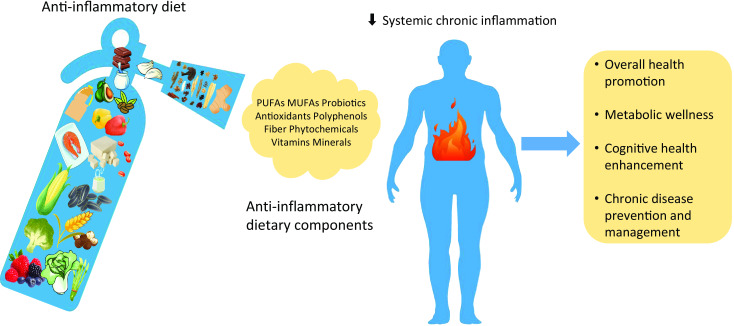
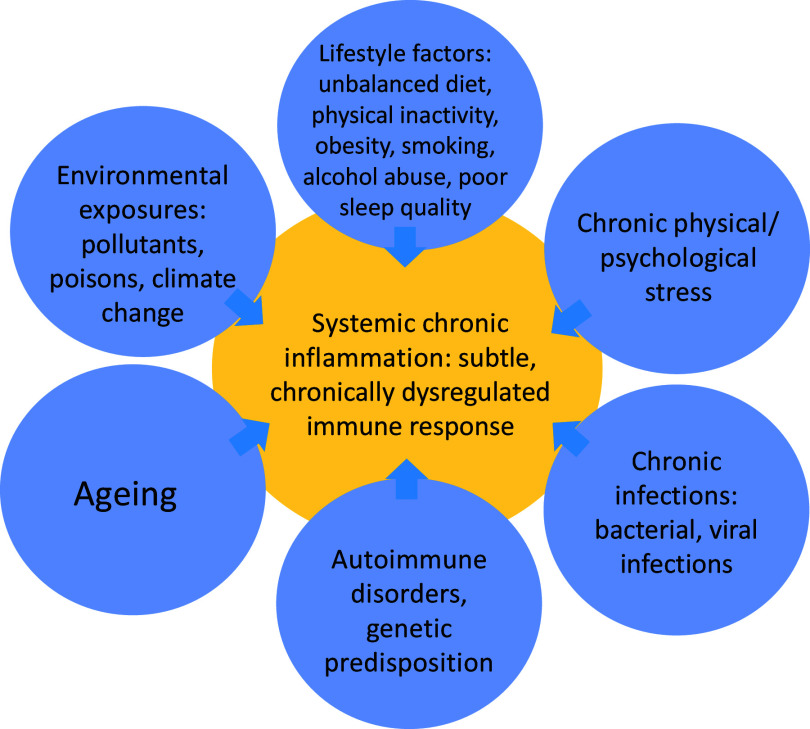
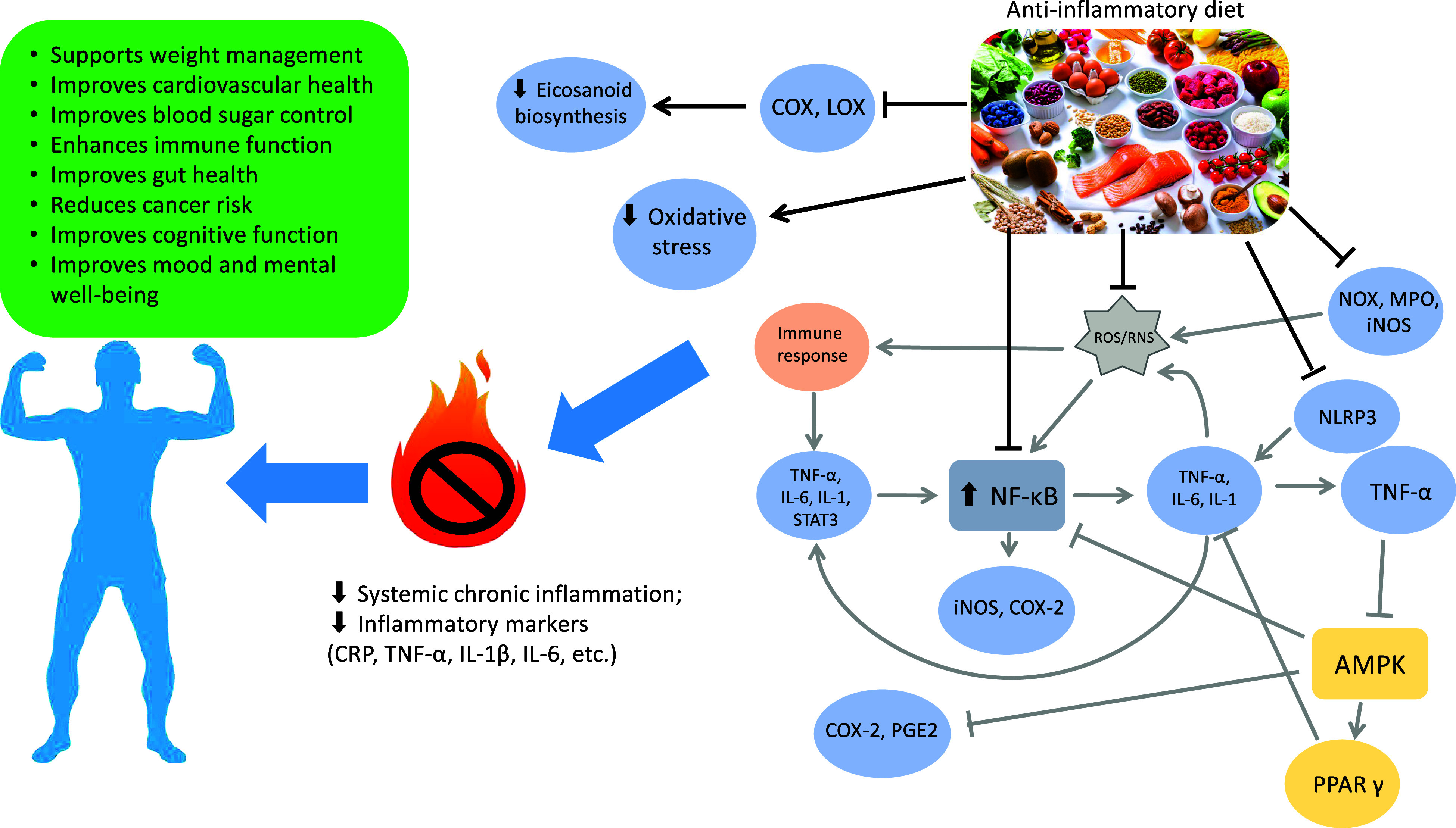
An anti-inflammatory diet is characterised by incorporating foods with potential anti-inflammatory properties, including fruits, vegetables, whole grains, nuts, legumes, spices, herbs and plant-based protein. Concurrently, pro-inflammatory red and processed meat, refined carbohydrates and saturated fats are limited. This article explores the effects of an anti-inflammatory diet on non-communicable diseases (NCD), concentrating on the underlying mechanisms that connect systemic chronic inflammation, dietary choices and disease outcomes. Chronic inflammation is a pivotal contributor to the initiation and progression of NCD. This review provides an overview of the intricate pathways through which chronic inflammation influences the pathogenesis of conditions including obesity, type II diabetes mellitus, CVD, autoinflammatory diseases, cancer and cognitive disorders. Through a comprehensive synthesis of existing research, we aim to identify some bioactive compounds present in foods deemed anti-inflammatory, explore their capacity to modulate inflammatory pathways and, consequently, to prevent or manage NCD. The findings demonstrated herein contribute to an understanding of the interplay between nutrition, inflammation and chronic diseases, paving a way for future dietary recommendations and research regarding preventive or therapeutic strategies.
Overview
The claims and statistics of this paper haven’t been checked yet.
Free: it reads the open-access text and checks the first 5 claims that cite a source we can check. Create a free account to check every claim.
Integrity signals
Registry
Cites
Statistics
Figures
Verification
Claims the paper makes
The claims and statistics of this paper haven’t been checked yet.
Free: it reads the open-access text and checks the first 5 claims that cite a source we can check. Create a free account to check every claim.
Claims other papers make about this one
Each is checked against this paper’s own text: does it say what the citing paper says it does?
The source backs part of the claim, not all of it — or backs it for a different population, condition or comparison.
In the citing paper
“Traditional diets rich in whole grains, legumes and antioxidant-rich foods can reduce neuroinflammation and support biological resilience155.”
From Resilience and brain health in global populations (2025) · cites this paper as [155]
Experimental — accuracy not yet measured
Self-check
Percentages, sums and reported differences re-computed from the paper’s own numbers.
The self-check needs the paper’s full text.
Citations
Cites
Coussens, L. M., & Werb, Z. (2002) · Nature · doi:10.1038/nature01322 · Cited by 15,111 · cited 1×
“Similarly, chronic inflammation is a recognised feature of cancer, where it facilitates tumour progression and metastasis (6) , and cognitive disorders have also been linked to systemic inflammation, which is believed to promote neuronal damage and cognitive decline (7) .”
Antiinflammatory Therapy with Canakinumab for Atherosclerotic Disease
Ridker, P. M., Everett, B. M., Thuren, T., MacFadyen, J. G., Chang, W. H., Ballantyne, C., Fonseca, F., Nicolau, J., Koenig, W., Anker, S. D., et al. (2017) · New England Journal of Medicine · doi:10.1056/nejmoa1707914 · Cited by 9,482 · cited 1×
“Additionally, randomised trials have also provided evidence for the causal link between inflammatory cytokines and CVD pathogenesis, such as IL-1 β and IL-6 (191,192) .”
Inflammation, Atherosclerosis, and Coronary Artery Disease
Hansson, G. K. (2005) · New England Journal of Medicine · doi:10.1056/nejmra043430 · Cited by 8,773 · cited 1×
“Chronic inflammation may contribute to the development of CVD (187 – 189) .”
Inflammation in atherosclerosis
Libby, P. (2002) · Nature · doi:10.1038/nature01323 · Cited by 8,315
Inflammation and Atherosclerosis
Libby, P., Ridker, P. M., & Maseri, A. (2002) · Circulation · doi:10.1161/hc0902.104353 · Cited by 7,724 · cited 1×
“Chronic inflammation may contribute to the development of CVD (187 – 189) .”
Neuroinflammation in Alzheimer's disease
Heneka, M. T., Carson, M. J., Khoury, J. E., Landreth, G. E., Brosseron, F., Feinstein, D. L., Jacobs, A. H., Wyss-Coray, T., Vitorica, J., Ransohoff, R. M., et al. (2015) · The Lancet Neurology · doi:10.1016/s1474-4422(15)70016-5 · Cited by 6,226 · cited 2×
“Similarly, chronic inflammation is a recognised feature of cancer, where it facilitates tumour progression and metastasis (6) , and cognitive disorders have also been linked to systemic inflammation, which is believed to promote neuronal damage and cognitive decline (7) .”
Chronic inflammation in the etiology of disease across the life span
Furman, D., Campisi, J., Verdin, E., Carrera-Bastos, P., Targ, S., Franceschi, C., Ferrucci, L., Gilroy, D. W., Fasano, A., Miller, G. W., et al. (2019) · Nature Medicine · doi:10.1038/s41591-019-0675-0 · Cited by 4,915 · cited 2×
“Additional biomarkers, such as monocytes, B cells, CD8 þ T cell subsets, natural killer cells and CD4 þ T cell subsets, that exhibit considerable variation among individuals are suggested as helpful diagnostic additions to gain insight into mechanisms and underlying causes of inflammation (142) .”
Adipokines in inflammation and metabolic disease
Ouchi, N., Parker, J. L., Lugus, J. J., & Walsh, K. (2011) · Nature Reviews Immunology · doi:10.1038/nri2921 · Cited by 4,625 · cited 1×
“Moreover, imbalances in adipokines released by fat tissue contribute to inflammation-related metabolic issues (146) , and obese individuals are at a higher risk of acquiring dyslipidaemia, hypertension, T2DM and CVD (147 – 150) .”
Inflammation, stress, and diabetes
Wellen, K. E., & Hotamisligil, G. S. (2005) · Journal of Clinical Investigation · doi:10.1172/jci25102 · Cited by 4,143 · cited 4×
“These mediators actively resolve inflammation by reducing the production and activity of pro-inflammatory cytokines like TNF-α , IL-1 β and IL-6, which are critically involved in the inflammatory cascade of RA (221,222) .”
InfluentialTherapeutic potential of resveratrol: the in vivo evidence
Baur, J. A., & Sinclair, D. A. (2006) · Nature Reviews Drug Discovery · doi:10.1038/nrd2060 · Cited by 3,958
Research works printed but not linked: 3
- 210. Neustadt J (2006) Western diet and inflammation. Integr Med 5, 14– 18.
- 199. Singh RB, Hristova K, Fedacko J, et al. (2015) Antioxidant vitamins and oxidative stress in chronic heart failure. World Heart J 7, 257– 264.
- 196. Giugliano D, Ceriello A & Esposito K (2006) The effects of diet on inflammation. J Am Coll Cardiol 48, 677– 685. 16904534 10.1016/j.jacc.2006.03.052 · DOI · Paper page
Cited by
Nutrition and Lifestyle Interventions in Managing Dyslipidemia and Cardiometabolic Risk
Berisha, H., Hattab, R., Comi, L., Giglione, C., Migliaccio, S., & Magni, P. (2025) · Nutrients · doi:10.3390/nu17050776 · Cited by 96
“Diets rich in food with abundant anti-inflammatory components, such as polyphenols, ω -3 fatty acids, fiber and essential micronutrients, modulate lipid metabolism, reduce oxidative stress and improve dyslipidemia by targeting chronic inflammation [72].”
Resilience and brain health in global populations
Udeh-Momoh, C. T., Migeot, J., Blackmon, K., Mielke, M. M., Melloni, M., Cox, L., Yaffe, K., Santamaria-Garcia, H., Stern, Y., & Ibanez, A. (2025) · Nature Medicine · doi:10.1038/s41591-025-03846-w · Cited by 42
“Traditional diets rich in whole grains, legumes and antioxidant-rich foods can reduce neuroinflammation and support biological resilience 155 .”
Frías-Toral, E., Chapela, S. P., González, V. C., Martinuzzi, A. L. N., Locatelli, J., Llobera, N. D., Manrique, E., Sarno, G., Mingo, M., Marchese, F., et al. (2025) · Nutrients · doi:10.3390/nu17040688 · Cited by 37
“…weight within 1 to 2 years post-surgery [163]. while avoiding nutritional deficiencies [132]. balanced diets, such as the Mediterranean On the other hand, WR is more prevalent in the bariatric population. or DASH diets, that provide However, inconsistencies in de fi ning WR complicate the estimation”
Unraveling the Gut–Skin Axis: The Role of Microbiota in Skin Health and Disease
Munteanu, C., Turti, S., & Mârza, S. M. (2025) · Cosmetics · doi:10.3390/cosmetics12040167 · Cited by 25
Dietary Patterns, Kidney Function, and Sarcopenia in Chronic Kidney Disease
Kim, J., & Yang, S. J. (2025) · Nutrients · doi:10.3390/nu17030404 · Cited by 21
“An anti-inflammatory diet in CKD may be beneficial for reducing cardiovascular risk in that anti-inflammatory nutrients (e.g., omega-3 PUFAs and antioxidants) may improve endothelial function and reduce atherosclerosis progression [68,73].”
Andreou, E. P., & Papaneophytou, C. P. (2025) · Nutrients · doi:10.3390/nu17101685 · Cited by 24
“Nutritional strategies that include anti-inflammatory diets, probiotic interventions, and adequate intake of essential micronutrients have shown promise in regulating immune responses and potentially reducing the burden of multimorbidity [25].”
Protein Source, Dietary Fibre Intake, and Inflammation in Older Adults: A UK Biobank Study
Jain, M., Celis-Morales, C. A., Ozanne, S. E., Burden, S. T., Gray, S. R., & Morrison, D. J. (2025) · Nutrients · doi:10.3390/nu17091454 · Cited by 16
“Plant proteins derived from, for example, legumes are also rich in fibre which support a healthy gut microbiome, support gut barrier function, and may be important in reducing inflammation [58].”
den Bruel, K. V., Kulyk, M., Neerinckx, B., & de Vlam, K. (2025) · Frontiers in Medicine · doi:10.3389/fmed.2025.1655165 · Cited by 18
“…dietary patterns designed to reduce chronic inflammation by emphasizing the consumption of foods with anti-inflammatory properties, such as fruits, vegetables, whole grains, nuts, seeds, and fatty fish, while minimizing pro-inflammatory foods like processed foods, added sugars, and red meats (6).”
Gut–brain axis in health and brain disease
Olasunkanmi, O. I., Zheng, L., & Zheng, P. (2026) · Chinese Medical Journal · doi:10.1097/cm9.0000000000003920 · Cited by 14
“[266] Omega-3 fatty acids, which are abundant in the Mediterranean diet, play a role in regulating dopaminergic and serotonergic neurotransmission, thereby potentially modifying depressive burden and offering benefits as an adjunctive therapy for depression and anxiety disorders.”
Poon, E., Li, C., Schweitzer, D. R., & Akefe, I. O. (2026) · Frontiers in Nutrition · doi:10.3389/fnut.2025.1754492 · Cited by 17
Unraveling Spinal Cord Injury Nutrition: Effects of Diet on the Host and Microbiome
Li, Z., Wang, X., Du, H., Liu, W., Zhang, C., Talifu, Z., Xu, X. P., Pan, Y., Zhang, J., Ke, H., et al. (2025) · Advances in Nutrition · doi:10.1016/j.advnut.2025.100448 · Cited by 13
A Fresh Look at Problem Areas in Research Methodology in Nutrition
Temple, N. J. (2025) · Nutrients · doi:10.3390/nu17060972 · Cited by 9
“Examples include C-reactive protein, interleukin-6 (IL-6), and tumor necrosis factor (TNF) [50].”
Ciamarra, P., Alessandro de, S. I. R. E., Aksoyler, D. Y., Paolino, G., Cantisani, C., Sabbatino, F., Schiavo, L., Cuocolo, R., Campobasso, C. P., & Losco, L. (2025) · Medicina · doi:10.3390/medicina61081327 · Cited by 11
“Furthermore, low-glycemic-index diets may help control insulin resistance and adipogenesis, indirectly supporting lymphatic health [151].”
Borrego-Ruiz, A., & Borrego, J. J. (2025) · Future · doi:10.3390/future3040022 · Cited by 8
Motevalli, M. S., & Stanford, F. C. (2025) · Cancers · doi:10.3390/cancers17081255 · Cited by 12
“Diets rich in anti-inflammatory foods (such as omega-3 fatty acids, antioxidants, and fiber) and regular moderate-intensity aerobic exercise can help lower inflammatory markers and reduce cancer risk [91,97].”
The Role of Plant-Based Nutrition and Exercise in Metabolic Syndrome: A Narrative Review
Stavitz, J., Porcelli, R., & Gentile, J. T. (2025) · Nutrients · doi:10.3390/nu17091498 · Cited by 17
“These bioactive compounds help suppress pro-inflammatory pathways, neutralize free radicals, and lower oxidative stress [19].”
InfluentialOpuntia ficus‐indica fruit consumption improves insulin resistance in mice with diet‐induced obesity
Terzo, S., Calvi, P., Restivo, I., Massaro, A., Tesoriere, L., Fernández‐Real, J. M., Giardina, M., Amato, A., Mulè, F., & Allegra, M. (2025) · Journal of the Science of Food and Agriculture · doi:10.1002/jsfa.70038 · Cited by 7
Cui, Y. (2025) · Brain Behavior and Immunity · doi:10.1016/j.bbi.2025.106106 · Cited by 6
Beyond seasoning nutrients bioactive ingredients and healthcare effects of Allium vegetables
Ahmed, H. G. M. D., Yang, J., Zhu, T., Iqbal, R., Sheng, Q., Dong, R., Tian, W., Xiao, L., Zeng, Y., & Ding, Y. (2025) · Frontiers in Nutrition · doi:10.3389/fnut.2025.1597788 · Cited by 11
“Garlic has been consumed since the time of ancient Mesopotamia and the Egyptian civilization for its culinary and medicinal uses (6, 7).”
Valero-Bover, D., Monterde, D., Carot-Sans, G., Vela, E., González, R., Roca, J., Pontes, C., Vegas, X. M., Nogueras, M. M., Aparicio, P., et al. (2026) · npj Digital Medicine · doi:10.1038/s41746-026-02395-x · Cited by 4
Sanghvi, G. V., Bishoyi, A. K., Joshi, K., Kaneriya, J. P., & Pattani, V. B. (2026) · Clinical Nutrition ESPEN · doi:10.1016/j.clnesp.2026.103422 · Cited by 7
Valenzuela, R. E. R., Artacho, R., Ruiz‐López, M. D., & Molina‐Montes, E. (2025) · Nutrients · doi:10.3390/nu17172764 · Cited by 10
Chapela, S. P., Locatelli, J., Toral-Noristz, M., Saettone, F., Llobera, N. D., BASTIDAS, S., SÁNCHEZ, M., Arteaga-Pazmiño, C. L., Chedraui, P., Ceriani, F., et al. (2026) · Minerva Endocrinology · doi:10.23736/s2724-6507.25.04483-5 · Cited by 5
Xu, J., Zhu, M., Shi, Y. P., Chen, Q., & Zhu, Y. (2025) · Frontiers in Nutrition · doi:10.3389/fnut.2025.1538378 · Cited by 4
Dietary and Nutrition Interventions for Breast Cancer Survivors: An Umbrella Review
Tan, J. E. X., Kon, M. W. R., Tan, C. S. M., Zhou, K. X., Siah, K. T. H., Goh, S. S. N., & Ng, Q. X. (2025) · Nutrients · doi:10.3390/nu18010030 · Cited by 4
“Diets rich in polyphenols, monounsaturated fats, and fibre reduce systemic inflammatory markers (CRP, IL-6) and improve insulin sensitivity [31].”
Noormohammadi, M., Ghoreishy, S. M., Ghasemisedaghat, S., Rashedi, M. H., Saeedirad, Z., Eslamian, G., Kazemi, S. N., Nematifard, E., Rashidkhani, B., Taheripanahe, R., et al. (2025) · Scientific Reports · doi:10.1038/s41598-025-04593-1 · Cited by 7
“MIND diet (Mediterranean-dietary approach to stop hypertension (DASH) diet intervention for neurodegenerative delay), which benefits from the principals of the Mediterranean and DASH diets, is a low fat, anti inflammatory dietary pattern, rich in high fiber food items 18,19 .”
Autoimmunity, diet and autophagy
Blaise, S. A., & Muller, S. (2026) · Autoimmunity Reviews · doi:10.1016/j.autrev.2026.104040 · Cited by 4
Sprengel, M. L., Mansoor, R., Latsou, N., Allen, S., Lubarsky, O., Mark, K., Gizzi, L., & Vieten, C. (2026) · Frontiers in Nutrition · doi:10.3389/fnut.2026.1795350 · Cited by 3
Optimizing Nutritional Balance: Integrating the Mediterranean Diet into Low-FODMAP Nutrition
Dimitriou, A., Aggeletopoulou, I., & Triantos, C. K. (2025) · Microorganisms · doi:10.3390/microorganisms13092085 · Cited by 4
“In contrast, the Mediterranean Diet (MD) is a dietary pattern rich in antioxidants, fiber, good fats, and anti-inflammatory components, with recognized benefits for cardiometabolic and digestive health [12].”
Insights on the Health Benefits and Functional Potential of Food Bioactive Compounds
Morales, D. (2025) · Foods · doi:10.3390/foods14111984 · Cited by 8
“The rising prevalence of chronic non-communicable diseases such as cardiovascular disease, cancer, and neurodegenerative disorders has positioned diet as a central pillar of both prevention and intervention [1,2].”
Marine Phytoplankton Bioactive Lipids and Their Perspectives in Clinical Inflammation
Cutolo, E. A., Campitiello, R., Dato, V. D., Orefice, I., Angstenberger, M., & Cutolo, M. (2025) · Marine Drugs · doi:10.3390/md23020086 · Cited by 2
“Anti-inflammatory diets typically include plant-based sources of lipids that are capable of modulating the pathways involved in the pathogenesis of chronic inflammation [2].”
Pandemic Recipes—Nutritional Values of Recipes in Legacy Media
Gaba, A., Bennett, R., Flórez, K. R., & Soliman, G. A. (2025) · Nutrients · doi:10.3390/nu17111830 · Cited by 2
“These have been identified as having antioxidative and anti-inflammatory properties [77] and potential benefits in the prevention and treatment of cardio-metabolic disorders, autoinflammatory diseases, cancer, and cognitive disorders [76].”
Zhao, C., Yang, Y., Yang, Y., Yang, W. H., Mu, L., & Jia, Y. (2025) · Frontiers in Nutrition · doi:10.3389/fnut.2025.1608603 · Cited by 3
Analysis based on SOR model of food brand experience in consumers in Peru
Vera-Falcón, D., Del-Aguila-Arcentales, S., & Espíritu-Rojas, G. (2025) · Journal of Agriculture and Food Research · doi:10.1016/j.jafr.2025.102488 · Cited by 6
Verga, G. I., Baltă, A. A. Ș., Costin, S. A., Ailene, D. M., Apostol, L. L., Gurau, T. V., Dinu, C. A., Stuparu-Crețu, M., & Voinescu, D.-C. (2025) · Nutrients · doi:10.3390/nu17223499 · Cited by 2
“These diets contribute to obesity, insulin resistance, and metabolic syndrome, all of which aggravate inflammatory responses and accelerate joint damage [20].”
Kwiatkowska, I., Olszak, J., & Formanowicz, D. (2025) · Nutrients · doi:10.3390/nu17233634 · Cited by 5
“While the Mediterranean diet remains the most extensively studied, other anti-inflammatory dietary models include vegetarian, pescatarian, vegan, and planetary diets [5,21–25].”
Asiri, R., & Alashmali, S. M. (2025) · Nutrients · doi:10.3390/nu17243851 · Cited by 2
“Diet plays a key role in the development and prevention of chronic diseases by influencing metabolic health and inflammatory processes [1].”
Gómez-Cao, M., Maroto-Rodríguez, J., Ortolá, R., Carballo‐Casla, A., Rodríguez-Artalejo, F., & Sotos‐Prieto, M. (2025) · Mayo Clinic Proceedings · doi:10.1016/j.mayocp.2025.07.035 · Cited by 5
Longevity, Centenarians, and Lifestyle: Any ‘’Tips’’ to Live Longer?
Vetrani, C., Frias-Toral, E., Annunziata, G., Amatrudo, F., Mayol, D., Suárez, R., Verde, L., Negri, M., Piscitelli, P., Colao, A., et al. (2026) · Current Nutrition Reports · doi:10.1007/s13668-025-00724-2 · Cited by 4
“Indeed, the Mediterranean diet and similar dietary approaches have demonstrated the ability to modulate key cellular and molecular mechanisms of aging [101 ], while specific anti-inflammatory dietary components can modulate key cellular and molecular mechanisms of aging [102].”
Jovanović, G. K., Krešić, G., Dujmić, E., Sabljak, M., & Žeželj, S. P. (2026) · International Journal of Environmental Research and Public Health · doi:10.3390/ijerph23010083 · Cited by 3
“DII scores were calculated using 36 [20] and 42 [21,23] dietary components, depending on the available data from the FFQ, and following the standardized Shivappa et al. [33] protocol.”
Dina, M. A., Hanif, A., Karamat, A., Basit, M. S., Ahmed, M. K., Siddique, S., & Bhutta, M. A. (2026) · Bulletin of the National Research Centre/Bulletin of the National Research Center · doi:10.1186/s42269-026-01404-z · Cited by 2
“Diets that are high in processed foods and with saturated fats have a tendency to promote inflammation, glucose intolerance and lipid accumulation (Mann et al. 2024). while diets rich in fruits, vegetables and whole grains are linked with supportive anti-inflammatory gene profiles (Yu et al. 2024).”
Tağraf, B., Oğul, Ö. E., Yerlikaya, D., & Hanoğlu, L. (2026) · Journal of Parkinson s Disease · doi:10.1177/1877718x261422067 · Cited by 8
Chronic Kidney Disease, Sarcopenia, and Hormonal-Metabolic Alterations: An Intriguing Association
Quercia, A. D., Cavigiolo, B., & Mele, C. (2026) · Kidney & Blood Pressure Research · doi:10.1159/000551499 · Cited by 4
Stein, E., Garbelotto, C., Marcadenti, A., Burgel, C. F., Teixeira, P. P., Veleda, L., da Silva, D. S., Gottschall, C. B. A., Waclawovsky, G., & Peres, A. (2026) · Nutrition Research · doi:10.1016/j.nutres.2026.03.010 · Cited by 2
Unravelling Sarcopenia in Chronic Kidney Disease: From Pathogenesis to Diagnosis and Therapeutics
Vallianou, N. G., Evangelopoulos, A. A., Christodoulatos, G. S., Tantsi, I., Mantouvalos, N., Chatzis, D., Stratigou, T., Geladari, E. V., Constantinou, K., Tousis, A., et al. (2026) · Diagnostics · doi:10.3390/diagnostics16071063 · Cited by 4
“Nevertheless, a well-balanced plant-based diet may actually result in the amelioration of PEW and prevention of hyperkalemia [74,75].”
Lifestyle and Environment Aspects Challenging Kidney Health
Cupisti, A., D’alessandro, C., Paolo, A. D., Ferraro, P. M., Porta, E. L., Noce, A., Panichi, V., Parisi, A., & Messa, P. (2026) · Kidney & Blood Pressure Research · doi:10.1159/000552770 · Cited by 2
Obeagu, E. I., & Bluth, M. H. (2025) · Annals of Medicine and Surgery · doi:10.1097/ms9.0000000000003195 · Cited by 7
Pătraș, D., Ciubară, A., Ciubară, A. B., & Anghel, L. (2025) · BRAIN BROAD RESEARCH IN ARTIFICIAL INTELLIGENCE AND NEUROSCIENCE · doi:10.70594/brain/16.2/15 · Cited by 2
BMI-Specific Nutritional Education Priorities for Weight Management in Osteoarthritis
Buck, A. N., Gross, D. C., Kim, J. (., Rauff, E. L., DiNallo, J. M., Abbate, L. M., Schwartz, T. A., Beresic, N. J., Newman, C. B., & Shultz, S. P. (2025) · Nutrients · doi:10.3390/nu17132056 · Cited by 1
“Foods with anti-inflammatory properties can promote healthy weight, such as whole grains, vegetables, fruits, and nuts [43].”
Pimentel, M. D. G. C., Pereira, A. P., Neto, O. J. M., Zimmermann, L. R., & Elui, V. M. C. (2025) · International Journal of Environmental Research and Public Health · doi:10.3390/ijerph22071034 · Cited by 3
“Furthermore, emerging review research underscores the crucial role of inflammation in the pathogenesis of various NCDs, including obesity, diabetes, cardiovascular diseases (CVD), and cancer, thus offering a potential avenue for therapeutic interventions through dietary changes [4].”
Duo, R.-X., Long, X., Bing, L.-J., Duan, C.-H., Li, P., Ma, H.-H., Han, J., & Shen, H.-L. (2025) · Medicine · doi:10.1097/md.0000000000043518 · Cited by 2
Nishimoto, J., Deguchi, N., Hatanaka, S., Shida, T., Ohta, T., Kojima, N., Shirobe, M., Motokawa, K., Hirano, H., Okamura, T., et al. (2025) · Archives of Gerontology and Geriatrics · doi:10.1016/j.archger.2025.106035 · Cited by 2
Gianfredi, V., Baldini, L., Deledda, A., Patruno, M. M., Galluzzo, L., Velluzzi, F., Rogoli, D., Valoriani, F., Veronese, N., Volpe, M., et al. (2025) · Nutrition · doi:10.1016/j.nut.2025.113013 · Cited by 5
Effects of Marine Compounds on Macrophage Signaling
Mildenberger, J., & Rebours, C. (2025) · IntechOpen eBooks · doi:10.5772/intechopen.1013411 · Cited by 1
Rhubarb as a Potential Component of an Anti-Inflammatory Diet
Kołodziejczyk-Czepas, J., & Czepas, J. (2025) · Foods · doi:10.3390/foods14244219 · Cited by 3
Wang, H., Shi, Y., Wang, W., & Li, X. (2026) · Food Science & Nutrition · doi:10.1002/fsn3.71497 · Cited by 1
Ke, J., Wang, S., Liao, X., Qian, Y., Tang, H., & Liu, X. (2026) · Frontiers in Nutrition · doi:10.3389/fnut.2026.1760675 · Cited by 3
Kittibunchakul, S., Inthachat, W., Sahasakul, Y., Boonjoong, T., Suttisansanee, U., Thangsiri, S., Pitchakarn, P., Temviriyanukul, P., & Kemsawasd, V. (2026) · Future Foods · doi:10.1016/j.fufo.2026.100966 · Cited by 1
Retrospective analysis of dietary risk factors and cardiovascular outcomes in angiocardiopathy
Yin, H., Zhou, Y., Zhou, Y., Ren, L., & Ma, L. (2026) · Frontiers in Nutrition · doi:10.3389/fnut.2026.1780549 · Cited by 1
“Large cohort and population-based studies have consistently reported significant associations between unhealthy, pro-inflammatory dietary patterns and a higher incidence and progression of angio-cardiopathic conditions (11, 12).”
Exploring the Neuroprotective Promise of Functional Fruit Phytochemicals
Lehlaleroa, T., Chukwuma, C. I., Mari, M. C., Mashele, S. S., & Ntsapi, C. (2026) · Journal of Food Biochemistry · doi:10.1155/jfbc/9919054 · Cited by 1
Cardiovascular diseases burden attributable to dietary risk factors in 204 countries and territories
Mei, Y., Wang, X., Xu, H., Yin, P., Xu, X., Zhou, M., & Feng, G. (2026) · The Innovation Nutrition · doi:10.59717/j.xinn-nutri.2026.100015 · Cited by 1
Cardiovascular–Kidney–Metabolic (CKM) Syndrome Staging and Relevance to Precision Nutrition
Soliman, G. A. (2026) · Nutrients · doi:10.3390/nu18091430 · Cited by 2
“However, in the anti-inflammatory diet, the researchers address the anti-inflammatory properties of food and report on the anti-inflammatory or pro-inflammatory cytokines, such as interleukins, tumor necrosis factor, and other cytokines, as biomarkers, and calculate the DII [71].”
Mengist, B., Lotfaliany, M., Pasco, J. A., Agustini, B., Berk, M., Forbes, M., Marx, W., Orchard, S. G., Ryan, J. L., Owen, A. J., et al. (2026) · GeroScience · doi:10.1007/s11357-026-02313-9 · Cited by 2
Cakala, M., Domaszewska-Szostek, A., & Puzianowska‐Kuźnicka, M. (2026) · International Journal of Molecular Sciences · doi:10.3390/ijms27125605 · Cited by 2
Batarseh, N., Al-Dalaeen, A. M., Abdulla, F. A., & Abdelhadi, N. N. (2026) · Nutrition and Health · doi:10.1177/02601060261477833 · Cited by 1
Preventive Effect of Upland Pigmented Potatoes Against LPS‐Induced Inflammation in THP‐1 Macrophages
Toccaceli, M., Marinelli, A., Ballabio, F., Bassolino, L., Scalzo, R. L., Parisi, B., Pacifico, D., Nicoletti, F., Camilloni, C., Mandolino, G., et al. (2025) · Molecular Nutrition & Food Research · doi:10.1002/mnfr.70073
“…dietary strategies to prevent the progression of inflammation into a chronic state are attracting great interest, since the consumption of a balanced diet, rich in fruits and vegetables, has been inversely correlated with the incidence of many inflammatory-related chronic diseases [5, 6].”
Kerna, N. A., Nicely, T. M., Umoudoh, U. A., Boulos, A., Arisi, O. P., Eze, C., Jomsky, B. M., Ngwu, D. C., & Holets, H. M. (2025) · European Journal of Medical and Health Research · doi:10.59324/ejmhr.2025.3(2).12
Zhang, R., Zhang, Z., Ji, S., Yang, W., & Long, T. (2025) · Frontiers in Nutrition · doi:10.3389/fnut.2025.1590694 · Cited by 4
Sukawati, C. I. M. D., & Harimawan, A. I. W. (2025) · Bali Journal of Anesthesiology · doi:10.4103/bjoa.bjoa_71_25
Sivashankari, M. (2025) · Food science and nutrition · doi:10.5772/intechopen.1011367
Dietary Modulation of the NLRP3 Inflammasome in Inflammatory Skin Disease: A Targeted Review
Parga, A. D., Coven, H., Hebo, N., Hodzic, L., Olivia, L., Babaei, N., & Kizy, S. M. (2025) · International Journal of Dermatology and Clinical Research · doi:10.17352/2455-8605.000055
Effects of dietary interventions on senescence processes in cardiometabolic diseases
Исмаиловна, А. Р., KhKh, S., Плотникова, О. А., & Пилипенко, В. В. (2025) · Medical alphabet · doi:10.33667/2078-5631-2025-19-28-34
Do TikTok ‘anti-inflammatory diets’ really work?
Ball, L., & Burch, E. (2025) · The Conversation · doi:10.64628/aa.75nttgrne
Wang, X., Xu, Y., Zhang, H., Cheng, Y., Zhu, Y. W., Chen, Z., Meng, Z., & Zhao, M. (2025) · doi:10.2196/preprints.85622
Li, X., Wang, Q., Wang, Y., & Zhang, M. (2025) · Nutrition Research · doi:10.1016/j.nutres.2025.09.012
Carrera‐Bastos, P., Rydhög, B., Granfeldt, Y. E., Sundquist, K., Sonestedt, E., Nilsson, P. M., & Jönsson, T. (2025) · European Journal of Nutrition · doi:10.1007/s00394-025-03838-z
Adherence to the MIND diet and onset of neuromyelitis optica spectrum disorder: A case-control study
Khodadadi, S., Rezaeimanesh, N., Noormohammadi, M., Jahromi, S. R., Sahraian, M. A., & Moghadasi, A. N. (2025) · Multiple Sclerosis and Related Disorders · doi:10.1016/j.msard.2025.106868
Exploring the Impact of Foods and Dietary Patterns on Melanoma Risk
Kalavsky, M., & Gafoor, S. M. A. (2025) · Cureus · doi:10.7759/cureus.99404
“Similarly, anti-inflammatory foods, such as fruits, vegetables, whole grains, legumes, nuts, herbs, spices, and other plant-based proteins [8], may lower melanoma risk, possibly through modulation of the systemic immune response by natural phytochemicals and effects on the host gut microbiome [9].”
Agro-industrial By-Products: Alternative Solution for Functional Food Ingredients
Orozco-Sifuentes, M. M., Salas-Tovar, J. A., Alexandra, S.-M. L. D. A., Guadalupe, C.-M. L., Daniel, N.-F. S., Lissethe, P.-L., Cecilia, E.-G. S., Edith, S.-V., & Raúl, R.-H. (2025) · Springer eBooks · doi:10.1007/978-981-95-1217-1_14 · Cited by 1
Lu, S., Gao, M., Kuttappan, D. A., & Amalaradjou, M. A. R. (2025) · Foods · doi:10.3390/foods15010066
“Dietary modulation has been shown to prevent several chronic diseases, including allergy, obesity, inflammation, and cancer [22,23].”
Dementia and Diet: How Nutrients Can Influence Cognitive Decline
Sonkar, P., Saif, M., & Sonkar, A. (2026) · Springer eBooks · doi:10.1007/978-981-95-4169-0_10 · Cited by 1
Biological Factors Affecting Effective Dietary and Nutrition Strategies/Interventions
Prakash, D., Bisht, D., Manglik, I., & Verma, O. (2026) · Springer eBooks · doi:10.1007/978-981-95-4169-0_13 · Cited by 1
Inflammatory potential of the diet and self-rated quality of life in Italian adults
Giampieri, F., Godos, J., Caruso, G., Olvera-Moreira, M. A., Furnari, F., Mauro, A. D., Azpíroz, I. D., Zambrano-Villacres, R., Frias-Toral, E., Galvano, F., et al. (2026) · Frontiers in Nutrition · doi:10.3389/fnut.2026.1744444
“…and antioxidant-rich foods, such as fruits, vegetables, legumes, whole grains and nuts, have been consistently associated with reduced levels of key inflammatory biomarkers, including C-reactive protein (CRP), various pro-inflammatory interleukins, and tumor necrosis factor-α (TNF-α ) (11).”
Posidonia oceanica (L.) Delile in Focus: In Vitro and In Vivo Evidence for Biomedical Potential
Vasarri, M., Marchi, L. D., Pretti, C., & Degl’Innocenti, D. (2026) · International Journal of Molecular Sciences · doi:10.3390/ijms27041727 · Cited by 2
Longworth, S., & Panayiotou, B. (2026) · Journal of Aging and Health · doi:10.1177/08982643261423579
Pu, H., Wang, H., Gao, J., Chang, Y., Jiang, H., Yu, X., & Zhu, Y. (2026) · Natural Product Communications · doi:10.1177/1934578x261433094
Self-citationXu, X., He, M., Wang, N., Liu, X., Wei, M., Jiang, Y., Peng, Q., Shi, J., He, D., & Zhao, G. (2026) · Nutrients · doi:10.3390/nu18091355
“Additionally, legumes are rich in proteins, folic acid, flavonoid bioactive compounds, and various micronutrients such as iron, zinc, calcium, and magnesium, exerting antioxidant and anti-inflammatory effects [41,42].”
Anti-Inflammatory Nutrition Strategy for Athletes' Performance and Recovery
Banerjee, S., Mamodiya, U., & Auttawetchasakoon, P. (2026) · IGI Global eBooks · doi:10.4018/979-8-3373-9544-9.ch011
Wu, S., Lyu, S. Q., Yang, Z., Gu, T., Wang, Y., Wang, J., Zhu, J., Yang, Y., Chen, Y. C., & Zheng, L. (2026) · Genes & Nutrition · doi:10.1186/s12263-026-00804-0
“Diet is a key aspect of lifestyle that significantly influences the onset and progression of chronic diseases [5, 6].”
Kant, R., Roy, P., Kaur, A., Princy, R. S., Kosey, S., Kumar, S., & Kumar, R. (2026) · Current Hypertension Reviews · doi:10.2174/0115734021411649251121111135
Lakhani, H. A., & Nada, M. M. (2026) · Obesity Medicine · doi:10.1016/j.obmed.2026.100714
Medicinal Plants: Bridging Traditional Medicine and Modern Healthcare
Bashir, A., Al‐Qaaneh, A. M., Asfandyar, Younis, T., Ishaq, A. R., Singab, A. N. B., & El‐Nashar, H. A. S. (2026) · Sustainability Sciences in Asia and Africa · doi:10.1007/978-981-95-8910-4_7
Wicks, S. M., Lawal, T. O., Adeniyi, B. A., Adeniyi, G. P., & Mahady, G. B. (2026) · Exploration of Endocrine and Metabolic Diseases · doi:10.37349/eemd.2026.101474
Ambreen, S., Din, Z. U., Ullah, N., & Iqbal, Z. (2026) · Current Nutrition & Food Science · doi:10.2174/0115734013454294260115054037
Glisic, M., Hoogland, I. E., Chatelan, A., Maham, K., Mattmann, S., Marques-Vidal, P. M., Rubinelli, S., & Perret, C. (2026) · Nutrients · doi:10.3390/nu18111737
“…and pathological processes involved in health complications following SCI. Dietary patterns influence systemic inflammation and oxidative stress through nutrient intake, diet quality and balance, thereby affecting metabolic health, immune responses, gut function, and tissue integrity [15].”
InfluentialYoung, J., George, E. S., Marx, W., Mayr, H. L., Hebert, J. R., Price, S., Thomas, C. J., Itsiopoulos, C., Moschonis, G., Cao, Y., et al. (2026) · Nutrients · doi:10.3390/nu18111732
“Consequently, our findings do not provide evidence for a clear longitudinal association between DII score and the assessed CVD risk outcomes [35].”
DIETARY INFLUENCES ON INFLAMMATORY PATHWAYS IN ENDOMETRIOSIS: BIOLOGICAL AND CLINICAL PERSPECTIVES
Iancu, M. A., Călin, R. D., Ticărău, A., POPESCU, D., Dragomir, R. E., Bucharest, R. “.-R. N. I. F. M. A. C. H., Popovici, C., Bucharest, R. “.-R. N. I. F. M. A. C. H., Kozma, A., & Toader, O. D. (2026) · Annals of the Academy of Romanian Scientists Series on Biological Sciences · doi:10.56082/annalsarscibio.2026.1.123
Defying inflammation-driven early-onset colorectal cancer: predict, prevent, and personalize
Samuel, T. M., Samuel, S. M., Varghese, E., Sreenesh, B., & Büsselberg, D. (2026) · Trends in cancer · doi:10.1016/j.trecan.2026.05.005
Dietary strategies in the management of dyslipidemias: current approaches and evidence
О.Г., Р., К.В., В., Sherstiuk, L. L., Власенко, О. А., & Kratenko, H. (2026) · Zaporozhye Medical Journal · doi:10.14739/2310-1210.2026.3.343044
“…споживання великої кількості протизапальних компонентів (клітковина, поліфеноли, омега-3 жирні кислоти, незамінні мікронутрієнти), спри - яють зменшенню оксидативного стресу та корекції дис - ліпідемії, впливаючи на хронічне запалення, й у такий спосіб поліпшують метаболізм ліпідів [ 50].”
Metadata
- Authors
- Yu, X., Pu, H., & Voss, M.
- Affiliations
- Chengdu University (CN)
- Chengdu University of Traditional Chinese Medicine (CN)
- Syracuse University (US)
- Corresponding author
- Pu, Haomou
- Venue
- British Journal of Nutrition
- Publisher
- Cambridge University Press (CUP)
- Published
- 2024-10-14
- Volume
- 132
- Issue
- 7
- Pages
- 898-918
- ISSN
- 0007-1145 (ISSN-L)
- 1475-2662
- PMC
- PMC11576095
- OpenAlex
- W4403471107
- Cited by
- 134
- References
- 306
- Citations by year
- 2026: 78 · 2025: 56
- FWCI
- 11.78
- Type
- journal article
- Language
- en
- Open access
- hybrid
- doi.org
- Locations
- British Journal Of Nutrition (publishedVersion, cc-by)
- PubMed Central (publishedVersion, cc-by)
- PubMed (publishedVersion)
- Funders
- National Natural Science Foundation of China (82073539)
- Topics
- Health Sciences › Medicine › Public Health, Environmental and Occupational Health › Nutritional Studies and Diet
- Health Sciences › Nursing › Nutrition and Dietetics › Fatty Acid Research and Health
- Health Sciences › Medicine › Biochemistry (medical) › Phytochemicals and Antioxidant Activities
- Keywords
- anti-inflammatory diet, non-communicable diseases, chronic inflammation, dietary bioactive compounds, obesity, type 2 diabetes, cardiovascular disease, autoinflammatory disease, cancer, cognitive disorders, plant-based foods, red and processed meat
- MeSH terms
- Noncommunicable Diseases, Anti-Inflammatory Agents, Chronic Disease, Diabetes Mellitus, Type 2, Diet, Fruit, Humans, Inflammation, Obesity
About these checks
Registry, retraction, Cites and statistics results are computed, not judged, with one exception: a printed reference that no index lists is read once by a model before it counts as a citation error. Claims are extracted by a model and kept only when their quote appears verbatim in the text; each cited source is then checked, with a model’s help, for whether it says what the claim relies on. Those verdicts can be wrong — read the claim’s quote and the cited source before relying on one.
Statistics and arithmetic are recomputed, not judged.
Confidence bands are shown only for fields calibrated on our annotated test set. None is calibrated yet, so no band is shown.
What counts as a claim ›How we measure confidence ›How we check this ›
Are you an author, or do you see a problem with this page? Request a review
Data sources
Bibliographic data: Semantic Scholar, OpenAlex, Crossref.
Contains information from the Semantic Scholar Academic Graph Datasets, made available under the ODC Attribution License (ODC-BY 1.0).
Semantic Scholar’s data is described in: Kinney, R., et al. (2023). The Semantic Scholar Open Data Platform. arXiv:2301.10140.
