

Sleeping with one eye open: loneliness and sleep quality in young adults
Open accessThe DOI matches its Crossref record; 48 of the 49 references it cites were found in a registry or an index.
Abstract
Background: Feelings of loneliness are common among young adults, and are hypothesized to impair the quality of sleep. In the present study, we tested associations between loneliness and sleep quality in a nationally representative sample of young adults. Further, based on the hypothesis that sleep problems in lonely individuals are driven by increased vigilance for threat, we tested whether past exposure to violence exacerbated this association. Method: Data were drawn from the Environmental Risk (E-Risk) Longitudinal Twin Study, a birth cohort of 2232 twins born in England and Wales in 1994 and 1995. We measured loneliness using items from the UCLA Loneliness Scale, and sleep quality using the Pittsburgh Sleep Quality Index. We controlled for covariates including social isolation, psychopathology, employment status and being a parent of an infant. We examined twin differences to control for unmeasured genetic and family environment factors. Results: Feelings of loneliness were associated with worse overall sleep quality. Loneliness was associated specifically with subjective sleep quality and daytime dysfunction. These associations were robust to controls for covariates. Among monozygotic twins, within-twin pair differences in loneliness were significantly associated with within-pair differences in sleep quality, indicating an association independent of unmeasured familial influences. The association between loneliness and sleep quality was exacerbated among individuals exposed to violence victimization in adolescence or maltreatment in childhood. Conclusions: Loneliness is robustly associated with poorer sleep quality in young people, underscoring the importance of early interventions to mitigate the long-term outcomes of loneliness. Special care should be directed towards individuals who have experienced victimization.
Overview
The claims and statistics of this paper haven’t been checked yet.
Free: it reads the open-access text and checks the first 5 claims that cite a source we can check. Create a free account to check every claim.
Integrity signals
Registry
Cites
Statistics
Figures
Verification
Claims the paper makes
The claims and statistics of this paper haven’t been checked yet.
Free: it reads the open-access text and checks the first 5 claims that cite a source we can check. Create a free account to check every claim.
Claims other papers make about this one
Each is checked against this paper’s own text: does it say what the citing paper says it does?
The source backs part of the claim, not all of it — or backs it for a different population, condition or comparison.
In the citing paper
“Loneliness can be directly alleviated through seeking comfort through social media; it can be indirectly alleviated trough sleep deprivation, which serves as a mediator between loneliness and SMA [83,84].”
From Correlations between social media addiction and anxiety, depression, FoMO, loneliness and self-esteem among students: A systematic review and meta-analysis (2025) · cites this paper as [84]
Experimental — accuracy not yet measuredThe source backs part of the claim, not all of it — or backs it for a different population, condition or comparison.
In the citing paper
“Additionally, lonelier individuals experience poorer sleep quality in young adulthood, potentially worsening their long-term mental health [91].”
From The prospective association of adolescent loneliness and low resilience with anxiety and depression in young adulthood: The HUNT study (2025) · cites this paper as [91]
Experimental — accuracy not yet measuredThe check wasn’t confident either way, so it gives no verdict — never disputed.
In the citing paper
“Loneliness can be directly alleviated through seeking comfort through social media; it can be indirectly alleviated trough sleep deprivation, which serves as a mediator between loneliness and SMA [83,84].”
From Correlations between social media addiction and anxiety, depression, FoMO, loneliness and self-esteem among students: A systematic review and meta-analysis (2025) · cites this paper as [84]
Experimental — accuracy not yet measured
Self-check
Percentages, sums and reported differences re-computed from the paper’s own numbers.
The self-check needs the paper’s full text.
Citations
Cites
Diagnostic and Statistical Manual of Mental Disorders
Williams, J. B. W., & First, M. (2013) · Encyclopedia of Social Work · doi:10.1093/acrefore/9780199975839.013.104 · Cited by 109,519
The Pittsburgh Sleep Quality Index: a new instrument for psychiatric practice and research
Buysse, D. J., Reynolds, C. F., Monk, T. H., Berman, S. R., & Kupfer, D. J. (1989) · Psychiatry Research · doi:10.1016/0165-1781(89)90047-4 · Cited by 35,234
The Multidimensional Scale of Perceived Social Support
Zimet, G. D., Dahlem, N. W., Zimet, S. G., & Farley, G. K. (1988) · Journal of Personality Assessment · doi:10.1207/s15327752jpa5201_2 · Cited by 13,339
Genetics of Food Intake Self-Regulation in Childhood: Literature Review and Research Opportunities
Faith, M. S., Carnell, S., & Kral, T. V. E. (2013) · Human Heredity · doi:10.1159/000353879 · Cited by 7,601
Loneliness and Social Isolation as Risk Factors for Mortality: A Meta-Analytic Review
Holt-Lunstad, J., Smith, T. B., Baker, M., Harris, T., & Stephenson, D. (2015) · Perspectives on Psychological Science · doi:10.1177/1745691614568352 · Cited by 6,043
UCLA loneliness scale (version 3): reliability, validity, and factor structure
Russell, D. W. (1996) · Journal of Personality Assessment · doi:10.1207/s15327752jpa6601_2 · Cited by 5,800
Psychometric Characteristics of the Multidimensional Scale of Perceived Social Support
Zimet, G. D., Powell, S. S., Farley, G. K., Werkman, S., & Berkoff, K. A. (1990) · Journal of Personality Assessment · doi:10.1080/00223891.1990.9674095 · Cited by 4,855
Psychometric Characteristics of the Multidimensional Scale of Perceived Social Support
Zimet, G., Powell, S., Farley, G., Werkman, S., & Berkoff, K. (1990) · Journal of Personality Assessment · doi:10.1207/s15327752jpa5503&4_17 · Cited by 4,854
A Note on Robust Variance Estimation for Cluster‐Correlated Data
Williams, R. L. (2000) · Biometrics · doi:10.1111/j.0006-341x.2000.00645.x · Cited by 2,501 · cited 1×
“To correct for this, we used tests based on the Huber–White or sandwich variance (Williams, 2000), which adjusts the estimated standard errors to account for the dependence in the data.”
MethodCacioppo, J. T., Hughes, M. E., Waite, L. J., Hawkley, L. C., & Thisted, R. A. (2006) · Psychology and Aging · doi:10.1037/0882-7974.21.1.140 · Cited by 2,380 · cited 3×
“An evolutionary account of loneliness proposes that for members of a social species, being embedded within a group provides safety, and the perception of being socially cut off gives rise to feelings of vulnerability (Cacioppo et al. 2006a).”
Background
Research works printed but not linked: 5
- Office for National Statistics (2014). Measuring National Well-Being: European Comparisons, 2014. ONS: London.
- Robins L, Cottler L, Bucholz K, Compton W (1995). Diagnostic Interview Schedule for DSM-IV. Washington University School of Medicine: St Louis, MO.
- StataCorp (2015). Stata Statistical Software: Release 14. StataCorp LP: College Station, TX.
- Finkelhor D, Hamby SL, Turner HA, Ormrod RK (2011). The Juvenile Victimization Questionnaire: 2nd Revision (JVQ-R2). Crimes Against Children Research Center: Durham, NH.
- American Psychiatric Association (1994). Diagnostic and Statistical Manual of Mental Disorders, 4th edn American Psychiatric Association: Washington, DC.
Cited by
Items 101–166 of 166
Examining the Social Signaling and Person Perception Functions of Loneliness
Floyd, K., Woo, N., Custer, B., Dinsmore, D., Duncan, K., & Maré, J. (2022) · OBM Neurobiology · doi:10.21926/obm.neurobiol.2202119 · Cited by 4
Addressing loneliness in emerging adults in primary care: a pilot feasibility study
Ma, K. P. K., Keiser, B., Garcia, M., Hsu, C., Cortez, K., Johnson, A., Pleho, A., Curran, M. C., Schloredt, K. A., Chan, K. C. G., et al. (2025) · Frontiers in Psychiatry · doi:10.3389/fpsyt.2025.1470725 · Cited by 4
“Unaddressed loneliness in emerging adults is associated with poorer physical and mental health, including hypertension, anxiety and depression (10), substance use (11), poor sleep (12), and long-term mental illness (13).”
Analysis of the factors influencing sleep quality of university students in Hainan Province of China
Wang, X., Gao, Y., Li, Q., Chen, Y., & Li, W. (2019) · Biological Rhythm Research · doi:10.1080/09291016.2019.1566989 · Cited by 4
“A previous study by Matthews et al. (2017) reported a strong positive correlation between mental health, including a sense of happiness, and sleep quality.”
BackgroundHusu, H. (2021) · Emotions and Society · doi:10.1332/263169020x16065613191228 · Cited by 5
Uso excesivo del celular, calidad de sueño y soledad en jóvenes de la ciudad de Arequipa
Velásquez, A. S., López, M. M., Cusirramos, M. Y., Torres, M. D. C. C., & Carpio, Y. C. (2021) · Revista de Psicología · doi:10.36901/psicologia.v11i1.1368 · Cited by 4
“Un estudio realizado por Matthews et al. (2017) se encontró que la reducción en la calidad del sueño es una de las muchas formas en las que la soledad afecta a las personas.”
BackgroundDeterminants and health consequences of modifiable sleep health disparities
Jackson, C. L. (2021) · Elsevier eBooks · doi:10.1016/b978-0-12-815501-1.00014-4 · Cited by 6
KASSIM, S. N. F., & Badayai, A. R. A. (2023) · International Journal of Academic Research in Business and Social Sciences · doi:10.6007/ijarbss/v13-i6/17549 · Cited by 7
“Loneliness has been described as a sad feeling that an individual experiences when they do not receive adequate social relations from the people around them (Peplau & Perlman, 1982; Matthews et al., 2017).”
BackgroundSocial Media Use and Sleep Outcomes among Adolescents at High Risk for Suicide
Hamilton, J. L., Jorgensen, S. L., Crichlow, Z. R., Biernesser, C. L., Zelazny, J. M., Franzen, P. L., Goldstein, T. R., & Brent, D. A. (2023) · International Journal of Cognitive Therapy · doi:10.1007/s41811-023-00177-x · Cited by 5
“However, it is also possible that SMU provides young people with social connection and support, as well as distraction or coping strategies that reduces stress or distress (Biernesser et al., 2022) and promotes some sleep outcomes (Matthews et al., 2017).”
Floyd, K., Hesse, C., Ray, C. D., & Mikkelson, A. C. (2024) · The Journal of Psychology · doi:10.1080/00223980.2024.2378418 · Cited by 4
“Loneliness also impairs the quality of sleep (Matthews et al., 2017).”
Riboldi, I., Crocamo, C., Capogrosso, C. A., Bartoli, F., Armes, J., Taylor, C., & Carrà, G. (2025) · Brain Sciences · doi:10.3390/brainsci15080787 · Cited by 6
“While loneliness is associated with symptoms often reported by trauma-exposed individuals, including intrusions and avoidance [42,43], its typical features, like feelings of alienation and detachment, may conceptually overlap with symptoms of post-traumatic stress, potentially complicating the…”
Synergistic Impact of Sleep Disturbance and Social Isolation in Adult but Not Adolescent Female Mice
Egebjerg, C., & Kornum, B. R. (2025) · Journal of Sleep Research · doi:10.1111/jsr.70213 · Cited by 3
“They concluded that individuals who reported perceived lone-liness had decreased sleep quality (Matthews et al. 2017).”
Liu, C., Shu, L., Zhao, X., Ning, L., Li, C., & Yang, X. (2025) · BMC Psychiatry · doi:10.1186/s12888-025-07424-9 · Cited by 4
“Matthews et al. [38]also found that loneliness was associated with an overall decline in sleep quality, particularly in subjective sleep quality and daytime dysfunction, which is consistent with the findings of this study.”
Reimagining belonging: a post-pandemic exploration of student perspectives
Dost, G. (2026) · Journal of Further and Higher Education · doi:10.1080/0309877x.2026.2622993 · Cited by 2
“Additionally, lonely individuals have been linked with poorer quality sleep (Matthews et al. 2017) and even suicidal attempt behaviours themselves (McClelland et al. 2020).”
Predictors of emotional intelligence amongst university students
Cronjé, J. (2019) · Cited by 2
Hawkley, L. C. (2020) · Springer eBooks · doi:10.1007/978-3-030-39903-0_812 · Cited by 2
Dubar, R. T., Schindler-Ruwisch, J. M., Verghese, M., & Watkins, N. K. (2023) · Sleep Health · doi:10.1016/j.sleh.2023.07.006 · Cited by 2
Dalbah, J., Zadeh, S. A. M., & Kim, M.-Y. (2024) · Journal of Clinical Medicine · doi:10.3390/jcm13092566 · Cited by 2
“However, it is known that sleep disorders begin at a younger age because of rapid lifestyle changes and growing responsibilities, including university and work [25,26].”
BackgroundNielson, S. A., Boyle, J. T., & Dzierzewski, J. M. (2025) · Behavioral Sleep Medicine · doi:10.1080/15402002.2025.2542297 · Cited by 1
“In general, the results are consistent with existing literature demonstrating a relationship between different aspects of multidimensional sleep health and loneliness (Benson et al., 2021; Deng et al., 2023; Matthews et al., 2017).”
Mota, C. P., & Ferreira, M. H. (2025) · Current Psychology · doi:10.1007/s12144-025-08292-y · Cited by 2
Does Performance Pay Increase the Risk of Worker Loneliness?
Baktash, M. B. (2025) · Kyklos · doi:10.1111/kykl.70018 · Cited by 5
“2 Second, loneliness is associated with numerous negative consequences for individual health and well-being (Hakulinen et al. 2018; Hawkley et al. 2010; James et al. 2011; Cacioppo et al. 2002, 2006; Holt-Lunstad et al. 2010, 2015; Fawaz and Mira 2023; Horigian et al. 2021; Matthews et al. 2017).”
Understanding Latine disparities in nocturnal wakefulness as a suicide risk factor
Fernandez, F., Tubbs, A. S., Perlis, M. L., & Grandner, M. A. (2025) · Sleep Epidemiology · doi:10.1016/j.sleepe.2025.100117 · Cited by 1
Nelson, M. A., Nakamura, J. S., Chen, F. S., & Mikami, A. Y. (2025) · Journal of Social and Personal Relationships · doi:10.1177/02654075251401692 · Cited by 1
“…(e.g., loneliness, social isolation) during adolescence and young adulthood has been associated with depression and anxiety (McIntyre et al., 2018), as well as poorer sleep quality, health behaviors, and physical health (Christiansen et al., 2021; Matthews et al., 2017; Simone et al., 2022).”
Ezzatvar, Y., Muñoz‐Pardeza, J., Yáñez-Sepúlveda, R., Almonacid, J. G. H., Hormazábal‐Aguayo, I., Martínez‐de‐Quel, Ó., & García‐Hermoso, A. (2026) · Child and Adolescent Psychiatry and Mental Health · doi:10.1186/s13034-025-01020-1 · Cited by 3
“Prior research has shown that loneliness is closely linked to heightened vigilance, perceived threat, and cognitive–emotional arousal, all of which interfere with sleep regulation [30, 32].”
Herdian, Nur’aeni, Nordin, N. A., & Nuryana, Z. (2026) · SN Social Sciences · doi:10.1007/s43545-026-01317-8 · Cited by 1
“This suggests that the relationships may be shaped by unmeasured constructs such as emotion regulation, resilience, or perceived social support, which have been shown to mediate loneliness–well-being associations in prior research (Matthews et al. 2017 ).”
InfluentialAhmadabadi, Z. K., Kianimoghadam, A. S., & Piryaee, S. (2025) · international journal high risk behaviors & addiction · doi:10.5812/ijhrba-163680 · Cited by 1
Parlikar, N., Power, J. M., Hyland, P., Coogan, A. N., Kvaløy, K., Strand, L. B., Espnes, G. A., Krokstad, S., & Moksnes, U. K. (2026) · SLEEP Advances · doi:10.1093/sleepadvances/zpag004 · Cited by 3
“Our findings build on prior research showing that loneliness predicts sleep disturbances over short-to medium-term periods [34, 35, 82, 102], but suggest that this link may not extend across longer spans like adolescence to mid-adulthood.”
Hajal, C. E., AlAchkar, M. S., Sakr, F., Habre, M. A., & Akiki, Z. (2026) · Medical Education Online · doi:10.1080/10872981.2026.2639215 · Cited by 2
“In fact, it has been reported that young adults who reported loneliness had lower subjective sleep quality and more daytime dysfunction than their non-lonely counterparts did, even after adjusting for depression and other variables [53].”
Trost, S., & Hast, M. (2024) · Journal of Sleep And Sleep Disorder Research · doi:10.14302/issn.2574-4518.jsdr-24-5287 · Cited by 3
Floyd, K., Ray, C. D., & Hesse, C. (2025) · Cognitive Behaviour Therapy · doi:10.1080/16506073.2025.2465760 · Cited by 2
“Lonely individuals also experience increased pain (Jaremka et al., 2013), impaired sleep (Matthews et al., 2017), and increased risks of coronary heart disease (Thurston & Kubzansky, 2009), cardiovascular disease (Paul et al., 2021), and later-life dementia (Wilson et al., 2007).”
Li, H., Gao, J., Sun, H., Wang, P., Keyi, Z., Liang, W., & Liu, F. (2025) · The Journal of Psychology · doi:10.1080/00223980.2025.2542565 · Cited by 2
“Previous studies on sleep problems and loneliness have predominantly examined their association at the total construct level (Matthews et al., 2017).”
InfluentialBitzur, A., & Fisher, E. (2017) · International Journal of Social Science Studies · doi:10.11114/ijsss.v6i1.2873 · Cited by 3
“Loneliness is therefore not a feeling exclusively experienced by the elderly, as we will discuss in the next chapter, but is also common among young people, and has been found, for example, to greatly impair the quality of their sleep (Matthews et al, 2017).”
BackgroundThe Precursor of Loneliness in Sports Sciences Students: Psychological Resilience
Turan, S., Dönmez, A., Baykara, C., & Soyer, F. (2020) · AMBIENT SCIENCE · doi:10.21276/ambi.2020.07.sp1.oa13
Psychosocial dimensions of sleep health
Szklo‐Coxe, M., Leser, K. A., & Lubas, M. M. (2021) · Elsevier eBooks · doi:10.1016/b978-0-12-815501-1.00007-7 · Cited by 1
Letter to the Editor: Is poor sleep, and loneliness linked by increased use of technology?
Carter, B. (2017) · Psychological Medicine · doi:10.1017/s0033291717002070 · Cited by 1
“Using data from a UK nationally-representative cohort, Matthews and colleagues found that young adults who report feeling lonely were also likely to report poor sleep (Matthews et al. 2017).”
Leon, M. D. C., Moreira, J. F. G., Saragosa-Harris, N. M., Waizman, Y. H., Sedykin, A. E., Peris, T. S., & Silvers, J. A. (2020) · doi:10.31234/osf.io/kesj5 · Cited by 1
The Relationship Between Social Media Use, Loneliness and Social Isolation
Doolan, E. L. (2019) · NORMA
REVISTA DE PSICOLOGÍA VOLUMEN 11, NÚMERO 1, ENERO - JUNIO 2021
Pablo, U. C. S. (2021) · Revista de Psicología · doi:10.36901/psicologia.v11i1.1358
Shankar, A. (2019) · Oxford University Press eBooks · doi:10.1093/obo/9780199828340-0253
Hawkley, L. C. (2019) · Springer eBooks · doi:10.1007/978-1-4614-6439-6_812-3
Does Reducing Social Media Use Have an Effect on Loneliness and Social Comparisons?
Mahboob, W. (2022) · Carleton University's Institutional Repository (MacOdrum Library, Carleton University) · doi:10.22215/etd/2022-15227
“It is important to examine loneliness because if left untended, loneliness can have significant consequences for mental and physical health, including sleep problems (Matthews et al., 2017), impaired cognitive performance (Badcock et al.”
BackgroundHe, Y., Liao, R., Wang, D., Wu, Y., & Ren, K. (2023) · Research Square · doi:10.21203/rs.3.rs-3074589/v1 · Cited by 1
Einsamkeit schädigt Gesundheit
Bucher, A. A. (2023) · Springer eBooks · doi:10.1007/978-3-662-67022-4_5 · Cited by 1
Leite, R. O., Llabre, M. M., Timpano, K. R., Broos, H. C., & Saab, P. G. (2023) · Psychology and Health · doi:10.1080/08870446.2023.2245426
“…linking loneliness to sleep problems are unclear, researchers have suggested that rumination (ye et al., 2022), hypervigilance (Cacioppo & Cacioppo, 2014; Hom et al., 2020), and increased cortisol levels (Doane & Adam, 2010; Matthews et al., 2017) may be potential explanations of this relationship.”
The lonely island: A design game to explore loneliness through co-creation.
Bärenholdt, M. (2023) · International Association of Societies of Design Research Congress (IASDR) · doi:10.21606/iasdr.2023.672
Tools for opening the lonely black box and changing young adults' perspectives of their loneliness.
Bärenholdt, M. (2023) · International Association of Societies of Design Research Congress (IASDR) · doi:10.21606/iasdr.2023.664
“…encounter – which can have fatigue consequences for the lonely, e.g. due to sleep loss which can lead to depression, among other consequences (Matthews et al., 2017), and have an impact on how the lonely are perceiving themselves (Jones et al., 1982; Lodder et al., 2016; Wittenberg & Reis,…”
BackgroundCochilo em adolescentes e fatores relacionados
Inazumi, C. K. (2019) · doi:10.47749/t/unicamp.2019.1230326
dos Santos, F. T. A. R., do Prado, L. B. F., de Carvalho, L. B. C., & do Prado, G. F. (2024) · Journal of Clinical Sleep Medicine · doi:10.5664/jcsm.11338
“22,23 Most study participants denied changes in their waking hours after the social isolation measures, as they did not have the option to change their work schedule since they needed to be in the hospital to care for patients with COVID-19.”
Lau, Y., Chemas, N., Gokani, H. A., Morrell, R., Phannarus, H., Cooper, C., Walker, Z., Demnitz‐King, H., & Marchant, N. L. (2025) · medRxiv · doi:10.1101/2025.01.16.25320671
Research Progress of the Association between Loneliness and Sleep Quality
刘, 悦. (2025) · Advances in Clinical Medicine · doi:10.12677/acm.2025.153653
Restrepo, A., Silver, E. M., Smith, K. E., Raja, S., Rockwood, F., Wohlrab, C., Faig, K. E., & Norman, G. J. (2025) · PLoS ONE · doi:10.1371/journal.pone.0333167 · Cited by 1
Shankar, A. (2025) · Springer eBooks · doi:10.1007/978-3-032-02959-1_14
Hu, W., Feng, X., Luo, S., Xu, D., Xu, Z., Chen, W., & Guo, V. Y. (2025) · Journal of Affective Disorders · doi:10.1016/j.jad.2025.120775 · Cited by 2
Zhang, W. S., Zhou, B., Jiang, C., Jin, Y., Zhu, T., Zhu, F., Cheng, K. K., Lam, T. H., & Xu, L. (2023) · Figshare · doi:10.6084/m9.figshare.24872991
Smart wearable sensing systems mediating the digital monitoring of loneliness – A review
Mexia, N., Molteni, E., Ratcliffe, J., Probst, F., Matcham, F., Rees, J., Ourselin, S., Antonelli, M., Tinker, A., Liu, W., et al. (2026) · Materials Today Electronics · doi:10.1016/j.mtelec.2026.100202
Hutchison, M., Henderson‐Matthews, B., Wood, Z. J., Kothe, R., Runner, G. H., Johnson, L. R., Lafromboise, M. E., Malatare, M., Salois, E. M., Carter, J. R., et al. (2026) · International Journal of Behavioral Medicine · doi:10.1007/s12529-025-10420-8
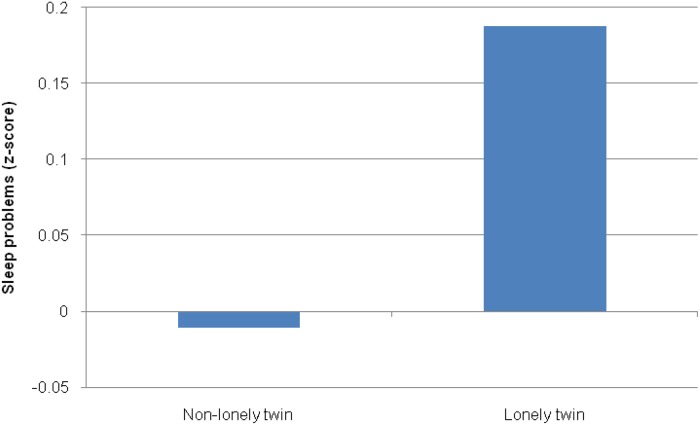
“A longitudinal study examining twins found that when one twin felt lonelier than the other, they were more likely to experience disrupted sleep [13].”
IoT-Based Loneliness Monitoring for Older Adults: Lessons From Japanese and US Communities
Mizumoto, T., Erdélyi, V., Ji, X., Yuh, A., Nakagawa, T., Suehiro, T., Nagahara, H., Gondo, Y., Demiris, G., Sokolsky, O. V., et al. (2026) · IEEE Access · doi:10.1109/access.2026.3667333
“For example, prior studies have found that higher loneliness correlates with increased sleep disruption and shorter sleep duration [8], [9], [10].”
Maniragaba, F., Nzabona, A., Lwanga, C., Ariho, P., & Zakumumpa, H. (2026) · Ageing International · doi:10.1007/s12126-026-09660-0
“…studies which found that loneliness has an adverse impact on mental health, leading to negative emotions that exacerbates depression, cause undesirable feelings, such as sadness, numbness, pain, hopelessness, and low self-worth among older per - sons (Jia & Yuan, 2020 ; Matthews et al., 2017).”
Wong, T. Y., Wong, T. S., Hou, W. K., Leung, A. N. M., Xiao, J., Yuen, K. S. L., Lui, S. S. Y., Qiu, A., Moore, T. M., & Gur, R. C. (2026) · Journal of Child Psychology and Psychiatry · doi:10.1111/jcpp.70178
“Additionally, similar to mental health, sleep quality and medical problems demonstrated significant but modest effect sizes associated with prospective loneliness, in line with the literature (Matthews et al., 2017).”
Philbrook, L. E., Hinnant, J. B., & Garcia, S. M. (2026) · Biological Psychology · doi:10.1016/j.biopsycho.2026.109328
Worrying about future finances and sleep problems: loneliness as a psychosocial pathway
Chai, L., & Ding, X. (2026) · International Journal for Equity in Health · doi:10.1186/s12939-026-02921-z
Hall, A., Barreto, M., Victor, C., Qualter, P., & Pitman, A. (2026) · Current Research in Behavioral Sciences · doi:10.1016/j.crbeha.2026.100219
Wu, Y., Xian, X., Cao, S., Jiang, L., Chen, X., Ji, X., Xu, J., Ran, Q., Zhang, X., & Niu, T. (2026) · Psychology Health & Medicine · doi:10.1080/13548506.2026.2711447
Toenders, Y. J., Remmerswaal, D., Luijk, M. P. C. M., & Achterberg, M. (2026) · PsyArXiv (OSF Preprints) · doi:10.21203/rs.3.rs-10087737/v1
Sleep disturbances as an early indicator of psychotic disorders in adolescents and young adults
Jaromirska, J., Strzelecki, D., Kotlicka‐Antczak, M., Białasiewicz, P., & Gabryelska, A. (2026) · Frontiers in Synaptic Neuroscience · doi:10.3389/fnsyn.2026.1949833
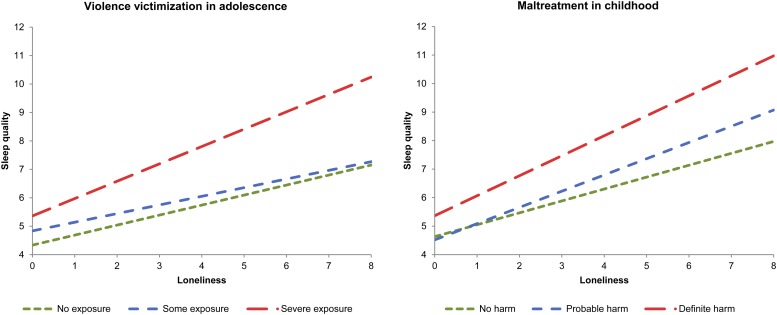
“In addition, loneliness was found to be an independent factor influencing sleep quality, especially among individuals subjected to victimization in adolescence or maltreatment in childhood (Matthews et al., 2017).”
Gong, Y., Xie, T., & Ma, N. (2026) · Sleep research. · doi:10.1002/slp2.70060
“40 During the presleep period, anxiety ‐ related rumination and physiological hyperarousal may interfere with sleep initiation and maintenance.”
Children with more sleep problems could also feel lonelier: a latent profile analysisPreprint
Marinca, A. A., Michalek, J. E., Gregory, A. M., Ali, A., & Lau, J. Y. F. (2026) · Research Square · doi:10.21203/rs.3.rs-11164007/v1
Self-citation
Metadata
- Authors
- Matthews, T., Danese, A., Gregory, A. M., Caspi, A., Moffitt, T. E., & Arseneault, L.
- Affiliations
- King's College London (GB)
- National Health Service (GB)
- Goldsmiths University of London (GB)
- Duke University (US)
- Corresponding author
- Arseneault, L.
- Venue
- Psychological Medicine
- Publisher
- Cambridge University Press (CUP)
- Published
- 2017-05-17
- Volume
- 47
- Issue
- 12
- Pages
- 2177-2186
- ISSN
- 0033-2917 (ISSN-L)
- 1469-8978
- PMC
- PMC5551384
- OpenAlex
- W2596330303
- Cited by
- 167
- References
- 49
- Citations by year
- 2026: 18 · 2025: 26 · 2024: 13 · 2023: 29 · 2022: 14 · 2021: 28 · 2020: 17 · 2019: 11 · 2018: 7 · 2017: 4
- FWCI
- 13.79
- Type
- journal article
- Language
- en
- Open access
- hybrid
- doi.org
- Locations
- Psychological Medicine (publishedVersion, cc-by)
- PubMed Central (publishedVersion, cc-by)
- PubMed (publishedVersion)
- Goldsmiths (University of London) (acceptedVersion)
- Funders
- Jacobs Foundation (G1002190, HD077482)
- Medical Research Council (HD077482, G1002190)
- Economic and Social Research Council (ES/P010113/1)
- National Institute on Aging (P30AG034424)
- National Institute of Child Health and Human Development (G1002190, HD077482)
- Eunice Kennedy Shriver National Institute of Child Health and Human Development (R01HD077482)
- Topics
- Social Sciences › Psychology › Experimental and Cognitive Psychology › Sleep and related disorders
- Social Sciences › Health › Health disparities and outcomes
- Social Sciences › Psychology › Clinical Psychology › COVID-19 and Mental Health
- Keywords
- loneliness, sleep quality, young adults, threat vigilance, violent victimization, child abuse, social isolation, daytime dysfunction, subjective sleep quality
- MeSH terms
- Exposure to Violence, Adult Survivors of Child Adverse Events, Adolescent, England, Female, Humans, Loneliness, Longitudinal Studies, Male, Sleep, Sleep Wake Disorders, Wales, Adult Survivors of Child Abuse
About these checks
Registry, retraction, Cites and statistics results are computed, not judged, with one exception: a printed reference that no index lists is read once by a model before it counts as a citation error. Claims are extracted by a model and kept only when their quote appears verbatim in the text; each cited source is then checked, with a model’s help, for whether it says what the claim relies on. Those verdicts can be wrong — read the claim’s quote and the cited source before relying on one.
Statistics and arithmetic are recomputed, not judged.
Confidence bands are shown only for fields calibrated on our annotated test set. None is calibrated yet, so no band is shown.
What counts as a claim ›How we measure confidence ›How we check this ›
Are you an author, or do you see a problem with this page? Request a review
Data sources
Bibliographic data: Semantic Scholar, OpenAlex, Crossref.
Contains information from the Semantic Scholar Academic Graph Datasets, made available under the ODC Attribution License (ODC-BY 1.0).
Semantic Scholar’s data is described in: Kinney, R., et al. (2023). The Semantic Scholar Open Data Platform. arXiv:2301.10140.
