

Translating a rodent measure of negative bias into humans: the impact of induced anxiety and unmedicated mood and anxiety disorders
Open accessPublished version of a preprint
The DOI matches its Crossref record; 50 of the 53 references it cites were found in a registry or an index.
Abstract
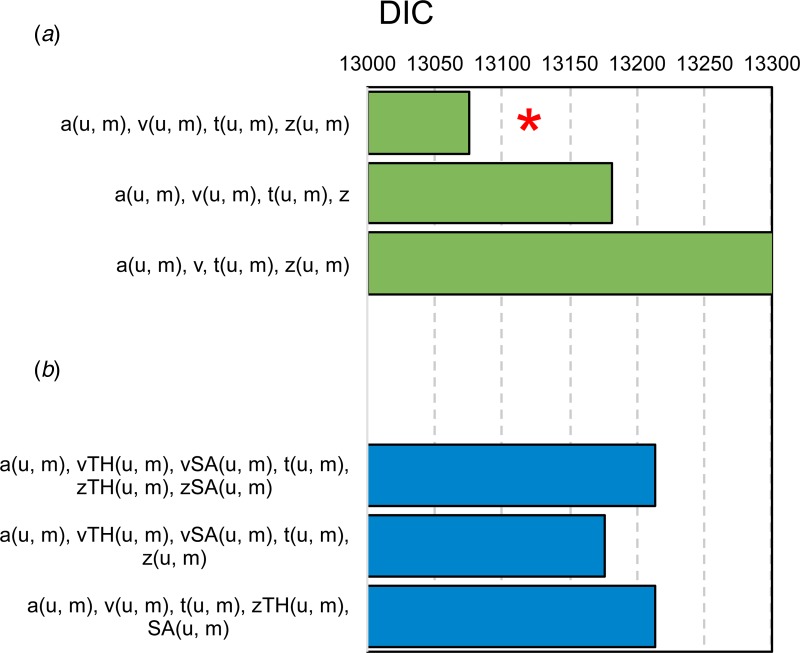
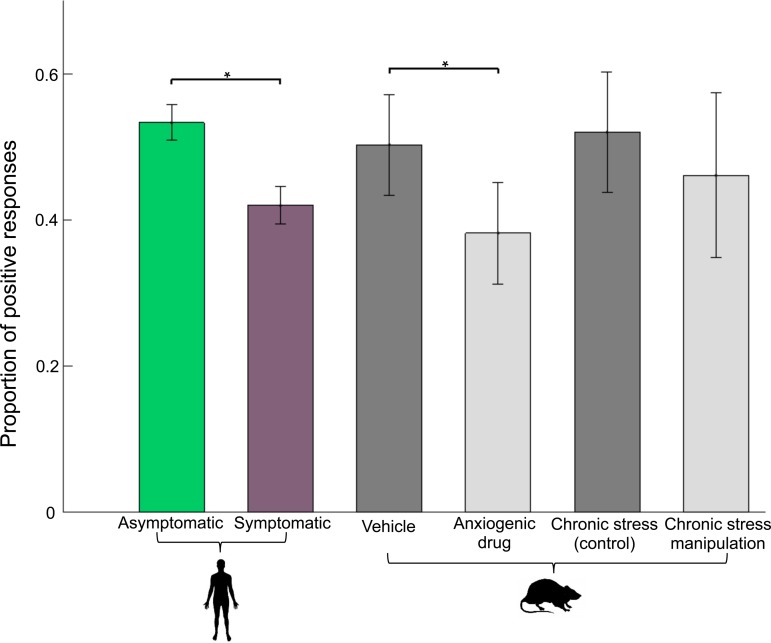
Background: Mood and anxiety disorders are ubiquitous but current treatment options are ineffective for many sufferers. Moreover, a number of promising pre-clinical interventions have failed to translate into clinical efficacy in humans. Improved treatments are unlikely without better animal–human translational pipelines. Here, we translate a rodent measure of negative affective bias into humans, exploring its relationship with (1) pathological mood and anxiety symptoms and (2) transient induced anxiety. Methods: Adult participants (age = 29 ± 11) who met criteria for mood or anxiety disorder symptomatology according to a face-to-face neuropsychiatric interview were included in the symptomatic group. Study 1 included N = 77 (47 = asymptomatic [female = 21]; 30 = symptomatic [female = 25]), study 2 included N = 47 asymptomatic participants (25 = female). Outcome measures were choice ratios, reaction times and parameters recovered from a computational model of reaction time – the drift diffusion model (DDM) – from a two-alternative-forced-choice task in which ambiguous and unambiguous auditory stimuli were paired with high and low rewards. Results: Both groups showed over 93% accuracy on unambiguous tones indicating intact discrimination, but symptomatic individuals demonstrated increased negative affective bias on ambiguous tones [proportion high reward = 0.42 ( s.d. = 0.14)] relative to asymptomatic individuals [0.53 ( s.d. = 0.17)] as well as a significantly reduced DDM drift rate. No significant effects were observed for the within-subjects anxiety-induction. Conclusions: Humans with pathological anxiety symptoms directly mimic rodents undergoing anxiogenic manipulation. The lack of sensitivity to transient anxiety suggests the paradigm might be more sensitive to clinically relevant symptoms. Our results establish a direct translational pipeline (and candidate therapeutics screen) from negative affective bias in rodents to pathological mood and anxiety symptoms in humans.
Overview
The claims and statistics of this paper haven’t been checked yet.
Free: it reads the open-access text and checks the first 5 claims that cite a source we can check. Create a free account to check every claim.
Integrity signals
Registry
Cites
Statistics
Figures
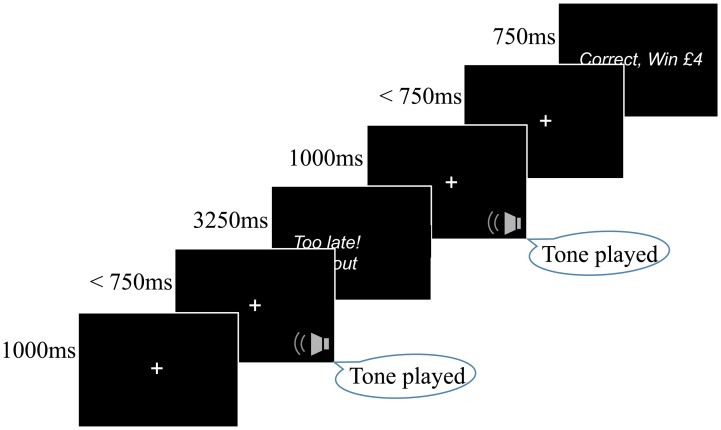
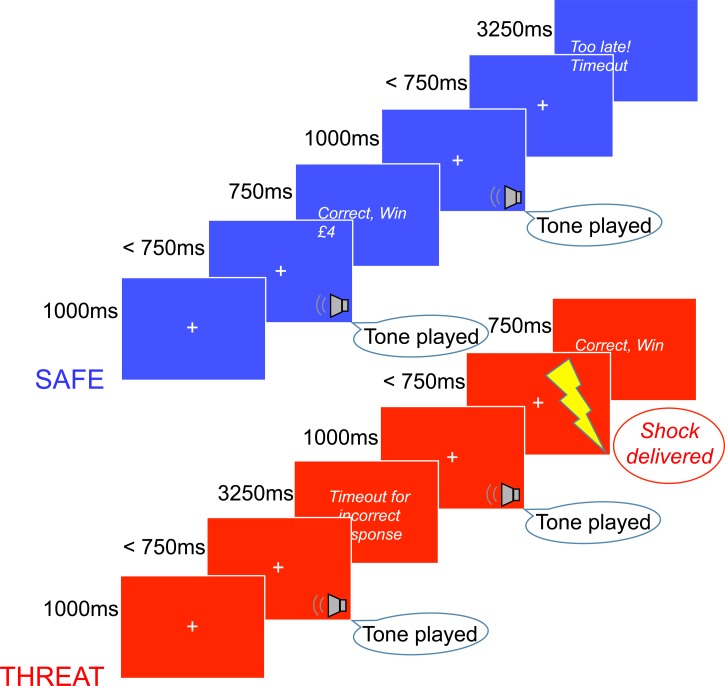
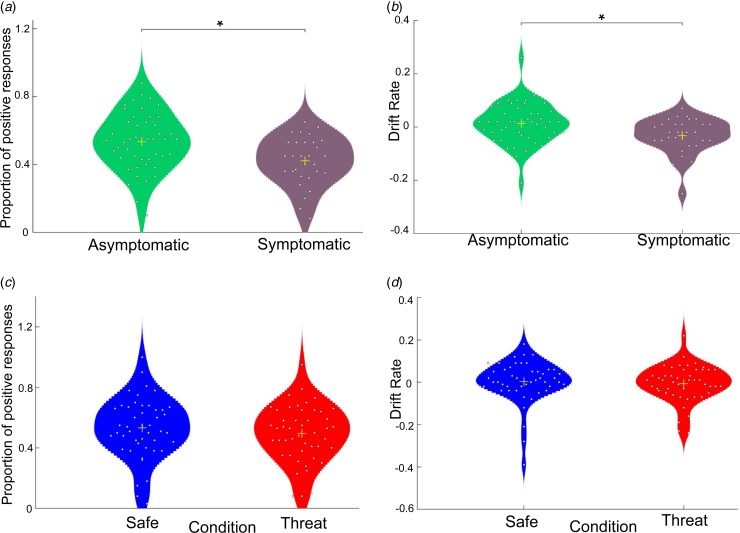
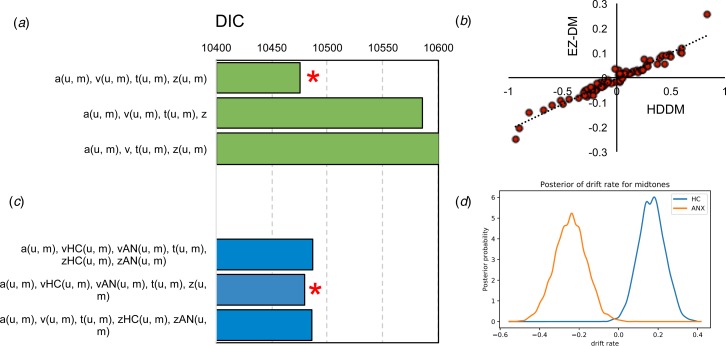
Verification
Claims the paper makes
The claims and statistics of this paper haven’t been checked yet.
Free: it reads the open-access text and checks the first 5 claims that cite a source we can check. Create a free account to check every claim.
Self-check
Percentages, sums and reported differences re-computed from the paper’s own numbers.
The self-check needs the paper’s full text.
Citations
Cites
(1970) · Cited by 24,983
Behavioral despair in mice: a primary screening test for antidepressants.
Porsolt, R. D., Bertin, A., & Jalfre, M. (1977) · PubMed · Cited by 4,063
A randomized trial of an N-methyl-D-aspartate antagonist in treatment-resistant major depression.
Zarate, C. A., Singh, J. B., Carlson, P. J., Brutsche, N. E., Ameli, R., Luckenbaugh, D. A., Charney, D. S., & Manji, H. K. (2006) · Archives of General Psychiatry · doi:10.1001/archpsyc.63.8.856 · Cited by 3,766 · cited 1×
“Both pharmacological and psychological treatments (Dimidjian et al., 2006; Zarate et al., 2006; Fournier et al., 2010), are thought to exert their effects via altering affective biases (Roiser et al.”
BackgroundThe tail suspension test: A new method for screening antidepressants in mice
Steru, L., Chermat, R., Thierry, B., & Simon, P. (1985) · Psychopharmacology · doi:10.1007/bf00428203 · Cited by 3,534 · cited 1×
“, 1977), or tail suspension test (Steru et al., 1985) – do not have clear human analogues.”
BackgroundLecrubier, Y., Sheehan, D., Weiller, E., Amorim, P., Bonora, I., Sheehan, K. H., Janavs, J., & Dunbar, G. (1997) · European Psychiatry · doi:10.1016/s0924-9338(97)83296-8 · Cited by 3,513 · cited 1×
“(Lecrubier et al., 1997)] were included in the symptomatic group, those who did not meet any (past/present) criteria according to the M.”
BackgroundAttentional bias in emotional disorders
MacLeod, C., Mathews, A., & Tata, P. (1986) · Journal of Abnormal Psychology · doi:10.1037/0021-843x.95.1.15 · Cited by 3,152
The Diffusion Decision Model: Theory and Data for Two-Choice Decision Tasks
Ratcliff, R., & McKoon, G. (2008) · Neural Computation · doi:10.1162/neco.2008.12-06-420 · Cited by 3,059 · cited 1×
“Crucially, the parameters of this model are thought to be biophysically plausible; they can be computed by populations of neurons (Ratcliff and McKoon, 2008); taking us closer to being able to link underlying neural activity to psychiatric symptoms.”
BackgroundAntidepressant Drug Effects and Depression Severity: A Patient-Level Meta-analysis
Fournier, J. C., DeRubeis, R. J., Hollon, S. D., Dimidjian, S., Amsterdam, J. D., Shelton, R. C., & Fawcett, J. (2010) · JAMA · doi:10.1001/jama.2009.1943 · Cited by 2,009
Learning Bayesian Networks with the bnlearnR Package
Scutari, M. (2010) · Journal of Statistical Software · doi:10.18637/jss.v035.i03 · Cited by 1,733
Diffusion decision model: Current issues and history
Ratcliff, R., Smith, P. L., Brown, S. D., & McKoon, G. (2016) · Trends in Cognitive Sciences · doi:10.1016/j.tics.2016.01.007 · Cited by 1,630 · cited 2×
“This model parameterises decision-making as a process of noisy accumulation of evidence (Ratcliff et al., 2016) and is able to accurately model the reaction times to stimuli on two-alternative forced choice tasks.”
BackgroundMethod
Cited by
Prefrontal cortex and depression
Pizzagalli, D. A., & Roberts, A. C. (2022) · Neuropsychopharmacology · doi:10.1038/s41386-021-01101-7 · Cited by 667
Halahakoon, D. C., Kieslich, K., O’Driscoll, C., Nair, A., Lewis, G., & Roiser, J. P. (2020) · JAMA Psychiatry · doi:10.1001/jamapsychiatry.2020.2139 · Cited by 222
Advances in the computational understanding of mental illness
Huys, Q. J. M., Browning, M., Paulus, M. P., & Frank, M. J. (2021) · Neuropsychopharmacology · doi:10.1038/s41386-020-0746-4 · Cited by 179
Identifying Transdiagnostic Mechanisms in Mental Health Using Computational Factor Modeling
Wise, T., Robinson, O. J., & Gillan, C. M. (2023) · Biological Psychiatry · doi:10.1016/j.biopsych.2022.09.034 · Cited by 108
“…sensitive (or potentially distinct) measure of this can be gleaned from studying how values that we learn to associate with cues spread or “ generalize ” to other similar cues (50,144) and change the way that evidence is accumulated [as modeled by drift diffusion modeling of reaction times (145)].”
Self-citationLearning and Choice in Mood Disorders: Searching for the Computational Parameters of Anhedonia
Robinson, O. J., & Chase, H. W. (2017) · Computational Psychiatry · doi:10.1162/cpsy_a_00009 · Cited by 70
Self-citationBrown, V. M., Price, R. B., & Dombrovski, A. Y. (2023) · Cognitive Affective & Behavioral Neuroscience · doi:10.3758/s13415-023-01080-w · Cited by 69
Pleasure, Reward Value, Prediction Error and Anhedonia
Kieslich, K., Valton, V., & Roiser, J. P. (2022) · Current topics in behavioral neurosciences · doi:10.1007/7854_2021_295 · Cited by 64
Gibbs-Dean, T., Katthagen, T., Tsenkova, I., Ali, R., Liang, X., Spencer, T. J., & Diederen, K. M. J. (2023) · Neuroscience & Biobehavioral Reviews · doi:10.1016/j.neubiorev.2023.105087 · Cited by 58
Transdiagnostic computations of uncertainty: towards a new lens on intolerance of uncertainty
Sandhu, T. R., Xiao, B., & Lawson, R. P. (2023) · Neuroscience & Biobehavioral Reviews · doi:10.1016/j.neubiorev.2023.105123 · Cited by 51
Prefrontal Regulation of Threat-Elicited Behaviors: A Pathway to Translation
Roberts, A. C. (2020) · Annual Review of Psychology · doi:10.1146/annurev-psych-010419-050905 · Cited by 50
“…toward negative stimuli (Carlisi & Robinson 2018) and enhanced sensitivity to negative feedback (Murphy et al. 2003), commonly associated with mood and anxiety disorders, can be effectively studied across species using similar paradigms (Bari et al. 2010, Rygula et al. 2015, Aylward et al. 2019).”
BackgroundComputational perspectives on human fear and anxiety
Yamamori, Y., & Robinson, O. J. (2022) · Neuroscience & Biobehavioral Reviews · doi:10.1016/j.neubiorev.2022.104959 · Cited by 46
Self-citationJoyful by nature: approaches to investigate the evolution and function of joy in non‐human animals
Nelson, X. J., Taylor, A. H., Cartmill, E. A., Lyn, H., Robinson, L. M., Janik, V. M., & Allen, C. (2023) · Biological reviews/Biological reviews of the Cambridge Philosophical Society · doi:10.1111/brv.12965 · Cited by 46
Daniel‐Watanabe, L., McLaughlin, M., Gormley, S., & Robinson, O. J. (2020) · Biological Psychiatry Cognitive Neuroscience and Neuroimaging · doi:10.1016/j.bpsc.2020.02.010 · Cited by 26
Self-citationThe Importance of Common Currency Tasks in Translational Psychiatry
Pike, A. C., Lowther, M., & Robinson, O. J. (2021) · Current Behavioral Neuroscience Reports · doi:10.1007/s40473-021-00225-w · Cited by 22
Self-citationAffect-congruent attention modulates generalized reward expectations
Bennett, D., Radulescu, A., Zorowitz, S., Felso, V., & Niv, Y. (2023) · PLoS Computational Biology · doi:10.1371/journal.pcbi.1011707 · Cited by 20
Test-Retest Reliability of Two Computationally-Characterised Affective Bias Tasks
Pike, A. C., Tan, K. R. A., Tromblee, H., Wing, M., & Robinson, O. J. (2024) · Computational Psychiatry · doi:10.5334/cpsy.92 · Cited by 19
Self-citationAnxiety Shapes Amygdala-Prefrontal Dynamics During Movie Watching
Kirk, P. A., Holmes, A. J., & Robinson, O. J. (2022) · Biological Psychiatry Global Open Science · doi:10.1016/j.bpsgos.2022.03.009 · Cited by 19
Self-citationComputational modelling of attentional bias towards threat in paediatric anxiety
Thompson, A., & Steinbeis, N. (2020) · Developmental Science · doi:10.1111/desc.13055 · Cited by 18
Lewis, L. R., Benn, A., Dwyer, D. M., & Robinson, E. S. J. (2019) · Behavioural Brain Research · doi:10.1016/j.bbr.2019.112051 · Cited by 17
Self-citationAffective Bias Through the Lens of Signal Detection Theory
Locke, S. M., & Robinson, O. J. (2021) · Computational Psychiatry · doi:10.5334/cpsy.58 · Cited by 16
Self-citationUnder Threat, Weaker Evidence Is Required to Reach Undesirable Conclusions
Globig, L. K., Witte, K., Feng, G., & Sharot, T. (2021) · Journal of Neuroscience · doi:10.1523/jneurosci.3194-20.2021 · Cited by 15
Saramandi, A., Crucianelli, L., Koukoutsakis, A., Nisticò, V., Mavromara, L., Goeta, D., Boido, G., Gonidakis, F., Demartini, B., Bertelli, S., et al. (2024) · Computational Psychiatry · doi:10.5334/cpsy.109 · Cited by 14
Ventromedial Prefrontal Cortex Activity and Sympathetic Allostasis During Value-Based Ambivalence
Dundon, N. M., Shapiro, A. D., Babenko, V., Okafor, G. N., & Grafton, S. T. (2021) · Frontiers in Behavioral Neuroscience · doi:10.3389/fnbeh.2021.615796 · Cited by 14
Slaney, C., Hinchcliffe, J. K., & Robinson, E. S. J. (2018) · Current topics in behavioral neurosciences · doi:10.1007/7854_2018_44 · Cited by 13
Self-citationCastagna, P. J., Waters, A. C., & Crowley, M. J. (2022) · Research on Child and Adolescent Psychopathology · doi:10.1007/s10802-022-01012-1 · Cited by 12
“Bigger” or “better”: the roles of magnitude and valence in “affective bias”
Love, J., & Robinson, O. J. (2019) · Cognition & Emotion · doi:10.1080/02699931.2019.1662373 · Cited by 11
Self-citationRutherford, L. G., & Milton, A. L. (2021) · Neuroscience & Biobehavioral Reviews · doi:10.1016/j.neubiorev.2021.104514 · Cited by 10
Iotzov, V., Saulin, A., Kaiser, J., Han, S., & Hein, G. (2022) · Social Neuroscience · doi:10.1080/17470919.2022.2115550 · Cited by 10
Hales, C. A., Bartlett, J. M., Arban, R., Hengerer, B., & Robinson, E. S. J. (2021) · European Journal of Neuroscience · doi:10.1111/ejn.15127 · Cited by 10
Self-citationNeville, V., Dayan, P., Gilchrist, I. D., Paul, E. S., & Mendl, M. (2021) · Journal of Cognitive Neuroscience · doi:10.1162/jocn_a_01776 · Cited by 9
Neural representations of ambiguous affective stimuli and resilience to anxiety in emerging adults
Saragosa‐Harris, N. M., Moreira, J. F. G., Waizman, Y. H., Sedykin, A., Silvers, J. A., & Peris, T. S. (2023) · Biological Psychology · doi:10.1016/j.biopsycho.2023.108624 · Cited by 9
Rappaport, B. I., Shankman, S. A., Glazer, J. E., Buchanan, S. N., Weinberg, A., & Letkiewicz, A. M. (2024) · Cognitive Affective & Behavioral Neuroscience · doi:10.3758/s13415-024-01222-8 · Cited by 8
Induced worry increases risk aversion in patients with generalized anxiety
Sporrer, J. K., Johann, A., Chumbley, J. R., Robinson, O. J., & Bach, D. R. (2024) · Behavioural Brain Research · doi:10.1016/j.bbr.2024.115192 · Cited by 7
Self-citationLin, X., Si, S., Gao, R., Sun, Y., Wang, Y., Wang, N., Luo, F., & Wang, J. (2020) · Cognitive Therapy and Research · doi:10.1007/s10608-020-10133-0 · Cited by 7
Value-based decision-making between affective and non-affective memories
Pulcu, E., Guinea, C., Clemens, H., Harmer, C. J., & Murphy, S. E. (2024) · iScience · doi:10.1016/j.isci.2024.109329 · Cited by 6
Lütkenherm, I. K., Locke, S. M., & Robinson, O. J. (2024) · Computational Psychiatry · doi:10.5334/cpsy.102 · Cited by 4
Self-citationSaramandi, A. (2024) · UCL Discovery (University College London) · Cited by 2
Elin Maulida Rahmawati (2023) · Repository at Universitas Pendidikan Indonesia (Universitas Pendidikan Indonesia) · Cited by 2
Iotzov, V., Saulin, A., Kaiser, J., Han, S., & Hein, G. (2021) · bioRxiv (Cold Spring Harbor Laboratory) · doi:10.1101/2021.03.23.436445 · Cited by 1
Using Movies to Probe the Neurobiology of Anxiety
Kirk, P. A. (2023) · UCL Discovery (University College London) · Cited by 1
Tan, Q., & Zhou, H. X. (2026) · The Journal of Genetic Psychology · doi:10.1080/00221325.2026.2672975
The Rat Affective Bias Test and Reward Learning Assay
Hinchcliffe, J. K., Jackson, M. G., & Robinson, E. S. J. (2026) · Neuromethods · doi:10.1007/978-1-0716-5599-3_8
Self-citationTrait anxiety selectively amplifies reward learning under uncertainty, while N3 sleep attenuates it
Deshmukh, R., & Ramakrishnan, A. (2026) · iScience · doi:10.1016/j.isci.2026.117745
Influence of aversive cue detection sensitivity on extinction in adult male ratsPreprint
Cahill, E., Sherman, E. R., Jollans, J., Deiana, S., & Hengerer, B. (2024) · bioRxiv (Cold Spring Harbor Laboratory) · doi:10.1101/2024.04.30.591853
The Effect of Anxiety Disorder on Reward and Punishment Learning and Its Mechanism
黄, 俊. (2025) · Advances in Psychology · doi:10.12677/ap.2025.157418
Chang, S. (2024) · UCL Discovery (University College London)
Poblete, C. M. (2026) · UCL Discovery (University College London)
CBT and the neural circuits of anxiety
Patel, S. (2025) · UCL Discovery (University College London)
Paul, E. S., & Neville, V. (2026) · Wiley eBooks · doi:10.1002/9781394182237.ch7
The Effects of Negative Affect and Dispositional Pessimism on Decision-Making Under Ambiguity
Davidson, M., Neville, V., Fennell, J., Paul, E. S., Gilchrist, I. D., & Mendl, M. (2026) · Computational Psychiatry · doi:10.5334/cpsy.167
When School Hurts: A Case Report of Educational Anxiety and Oral Mucosal Trauma in an Adolescent
Rajasa, A. S. W., Oktaviani, D., & Amtha, R. (2026) · Journal of Indonesian Oral Medicine Society · doi:10.32793/jioms.v3i1.1430
Algorithms of anxiety: Computational neuroscience approaches to translational measures of anxiety
Yamamori, Y. (2025) · UCL Discovery (University College London)
Hrelja, K. M. (2024) · cIRcle (University of British Columbia) · doi:10.14288/1.0441287
Changing Evidence Accumulation and Sharing Behaviour Through Incentives
Globig, L. K. (2024) · UCL Discovery (University College London)
A Review of Translational Behavioral Assays in Depression Research
Sabherwal, A., Peña, J. E., Lopez, A. T., & Hitti, F. L. (2026) · Biology · doi:10.3390/biology15090667
Saulin, A. C. (2023) · Online Publication Service of Würzburg University (Würzburg University) · doi:10.25972/opus-30555
Dai, T., Jaeschke-Angi, L., Penrose-Menz, M., Rosenow, T., & Rodger, J. (2026) · Translational Psychiatry · doi:10.1038/s41398-026-04511-7
Decision Making and Error Monitoring in Patients With Anxiety Disorder
Runyun, Ş. L. (2020) · DSpace@FSM (FSM Vakif University)
Dai, T. (2026) · UWA Profiles and Research Repository (UWA) · doi:10.26182/705n-s137
Jannata, A. H., & Nuraeni, N. (2021) · PSIMPHONI · doi:10.30595/psimphoni.v2i1.8064
Dhea Fathiyyah Nahdah (2024) · Repository at Universitas Pendidikan Indonesia (Universitas Pendidikan Indonesia)
Metadata
- Authors
- Aylward, J., Hales, C., Robinson, E., & Robinson, O. J.
- Affiliations
- University College London (GB)
- University of Bristol (GB)
- Corresponding author
- Robinson, Oliver J.
- Venue
- Psychological Medicine
- Publisher
- Cambridge University Press (CUP)
- Published
- 2019-01-26
- Volume
- 50
- Issue
- 2
- Pages
- 237-246
- ISSN
- 0033-2917 (ISSN-L)
- 1469-8978
- PMC
- PMC7083556
- OpenAlex
- W2950504490
- Cited by
- 49
- References
- 53
- Citations by year
- 2026: 5 · 2025: 1 · 2024: 6 · 2023: 8 · 2022: 6 · 2021: 13 · 2020: 5 · 2019: 3
- FWCI
- 7.87
- Type
- journal article
- Language
- en
- Open access
- hybrid
- doi.org
- Locations
- Psychological Medicine (publishedVersion, cc-by)
- bioRxiv (Cold Spring Harbor Laboratory) (acceptedVersion, cc-by)
- PubMed Central (publishedVersion, cc-by)
- PubMed (publishedVersion)
- Explore Bristol Research (submittedVersion, cc-by)
- UCL Discovery (University College London) (submittedVersion)
- Bristol Research (University of Bristol) (submittedVersion, cc-by)
- Funders
- Medical Research Council (MR/K024280/1, MR/R020817/1)
- Topics
- Social Sciences › Psychology › Experimental and Cognitive Psychology › Anxiety, Depression, Psychometrics, Treatment, Cognitive Processes
- Life Sciences › Neuroscience › Cognitive Neuroscience › Neural and Behavioral Psychology Studies
- Life Sciences › Neuroscience › Cognitive Neuroscience › Memory and Neural Mechanisms
- Keywords
- anxiety disorders, mood disorders, animal-to-human translation, induced anxiety, drift-diffusion model, reaction time, two-alternative forced-choice task, computational modeling
- MeSH terms
- Adolescent, Adult, Affect, Animals, Anxiety Disorders, Disease Models, Animal, Female, Humans, Male, Reaction Time, Reward, Rodentia, Bias, Mood Disorders, Young Adult, Translational Research, Biomedical
About these checks
Registry, retraction, Cites and statistics results are computed, not judged, with one exception: a printed reference that no index lists is read once by a model before it counts as a citation error. Claims are extracted by a model and kept only when their quote appears verbatim in the text; each cited source is then checked, with a model’s help, for whether it says what the claim relies on. Those verdicts can be wrong — read the claim’s quote and the cited source before relying on one.
Statistics and arithmetic are recomputed, not judged.
Confidence bands are shown only for fields calibrated on our annotated test set. None is calibrated yet, so no band is shown.
What counts as a claim ›How we measure confidence ›How we check this ›
Are you an author, or do you see a problem with this page? Request a review
Data sources
Bibliographic data: Semantic Scholar, OpenAlex, Crossref.
Contains information from the Semantic Scholar Academic Graph Datasets, made available under the ODC Attribution License (ODC-BY 1.0).
Semantic Scholar’s data is described in: Kinney, R., et al. (2023). The Semantic Scholar Open Data Platform. arXiv:2301.10140.
