

A randomised controlled trial of acceptance and commitment therapy for improving quality of life in people with muscle diseases.
Open accessThe DOI matches its Crossref record; 47 of the 48 references it cites were found in a registry or an index, and 1 are not checked yet; 17 of the 30 sources its claims cite were checked for support.
Abstract
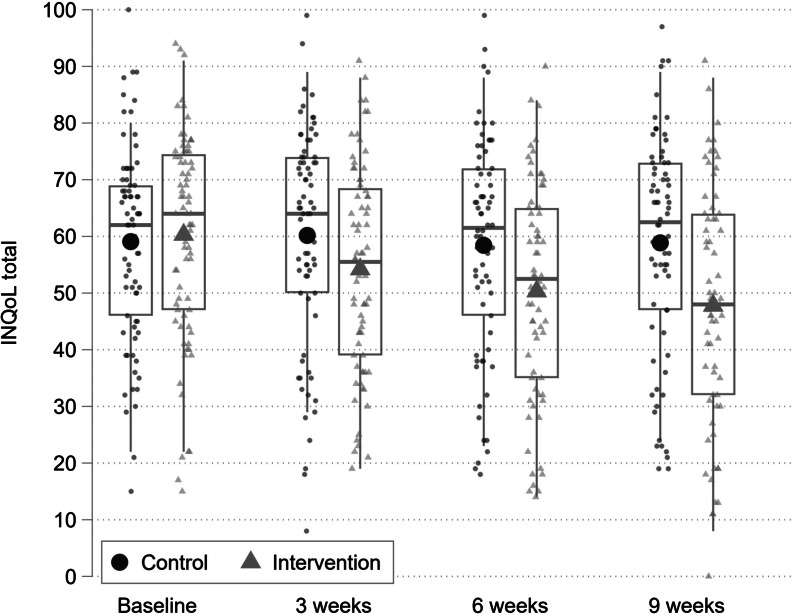
Abstract Background: Chronic muscle diseases (MD) are progressive and cause wasting and weakness in muscles and are associated with reduced quality of life (QoL). The ACTMuS trial examined whether Acceptance and Commitment Therapy (ACT) as an adjunct to usual care improved QoL for such patients as compared to usual care alone. Methods: This two-arm, randomised, multicentre, parallel design recruited 155 patients with MD (Hospital and Depression Scale ⩾ 8 for depression or ⩾ 8 for anxiety and Montreal Cognitive Assessment ⩾ 21/30). Participants were randomised, using random block sizes, to one of two groups: standard medical care (SMC) (n = 78) or to ACT in addition to SMC (n = 77), and were followed up to 9 weeks. The primary outcome was QoL, assessed by the Individualised Neuromuscular Quality of Life Questionnaire (INQoL), the average of five subscales, at 9-weeks. Trial registration was NCT02810028. Results: 138 people (89.0%) were followed up at 9-weeks. At all three time points, the adjusted group difference favoured the intervention group and was significant with moderate to large effect sizes. Secondary outcomes (mood, functional impairment, aspects of psychological flexibility) also showed significant differences between groups at week 9. Conclusions: ACT in addition to usual care was effective in improving QoL and other psychological and social outcomes in patients with MD. A 6 month follow up will determine the extent to which gains are maintained.
Verified 2026-11-19 · 1 reference not checked yet
Overview
CoChat Summary
## TL;DR
This multicentre randomized controlled trial found that guided self-help Acceptance and Commitment Therapy (ACT) added to standard medical care improved quality of life in people with muscle diseases over 9 weeks. The intervention also improved several secondary outcomes, including mood and some aspects of psychological flexibility.
## Key findings
- 155 participants were randomized: 77 to ACT plus standard medical care and 78 to standard medical care alone; 138 (89.0%) completed the 9-week follow-up.
- For the primary outcome, the adjusted group difference favoured ACT at all three time points and was significant with moderate to large effect sizes; at 9 weeks the standardized mean difference was −0.71, with a sensitivity analysis giving −0.75 per protocol and −0.64 under baseline observation carried forward.
- Secondary outcomes including mood, functional impairment, and aspects of psychological flexibility also showed significant differences at week 9; in the discussion, the authors note improvements in acceptance and committed action, but not mindfulness.
- Treatment exposure was high: 53 (68.8%) participants in the intervention arm completed all five ACT sessions; adverse events were similar between groups (27/57? not stated as denominator in the text; reported as 27 (47.4%) in control vs 30 (52.6%) in intervention), and four serious events occurred overall, none judged related to the trial.
## Methods
- Design: Two-arm, randomized, multicentre, parallel trial comparing guided self-help ACT + standard medical care (SMC) versus SMC alone, with follow-up at 3, 6, and 9 weeks.
- Sample: 155 adults with one of four muscle diseases, recruited from three NHS MD clinics, MD-UK, and MD registers; eligibility required HADS ≥8 for depression or anxiety and MoCA ≥21/30, plus internet/computer access.
- Analysis: Primary outcome was INQoL life area domains; treatment effects were estimated using adjusted mean differences in linear mixed models under an intention-to-treat framework, with sensitivity analyses for missing data and protocol deviations.
## Limitations
- The paper states that the follow-up was short, and longer-term maintenance of gains was not yet known; a 6-month follow-up had been completed separately.
- The authors state they did not assess cost-effectiveness and that future trials should examine delivery by less experienced therapists and should better separate treatment effects from attention/expectancy effects.
- Evident from the text: the sample may not be fully representative because the authors note it was mostly white British and that the trial was closer to an explanatory than a pragmatic trial.
Model-written summary. Check it against the paper before relying on it.
Integrity signals
Registry
Cites
Statistics
Figures


Verification
Claims the paper makes
12 Valid · 0 Not valid · 6 Not checked · 44 Own results and interpretations
Every source the paper cites for this claim was checked and supports it.
In the paper
“Although in common with the other trials of psychological interventions in the area (Okkersen et al., 2018; Voet et al., 2014), the comparator arm (SMC alone) did not control for the effect of attention or placebo response to the intervention.”
§ A randomised controlled trial of acceptance and commitment therapy for improving quality of life in people with muscle diseases > Discussion > Limitations and ideas for future research Although we recruited widely, it remains possible our sample was not representative of the population with muscle disease. Indeed, most participants were white British. This trial is closer to the definition of an explanatory trial within the PRECIS-2 framework (Loudon et al., 2015). We had a short follow up, necessitated by the nature of funding. To know whether gains were maintained longer term, a follow-up assessment of outcomes at 6 months has been completed as an additional study. To fully comply with CONSORT recommendations (Schulz, Altman, & Moher, 2010) this will be reported separately to this per-protocol paper. We did not assess whether the intervention was cost-effective. The issue of whether the treatment could be delivered by less experienced therapists should be evaluated in future trials. Encouragingly, a recent trial reported the benefits of a brief ACT intervention for people with a rare chronic disease that was delivered via peer support (Depping et al., 2021). Although in common with the other trials of psychological interventions in the area (Okkersen et al., 2018; Voet et al., 2014), the comparator arm (SMC alone) did not control for the effect of attention or placebo response to the intervention. Therefore, future trials may want to disentangle the specific treatment effects from the effects of attention or expectancy. Finally, our intervention is fully deliverable within the remote medical and psychological therapy services that have become usual clinical practice since the onset of the coronavirus disease-2019 (COVID-19) pandemic. In conclusion, this appropriately powered randomised controlled trial found that a brief self-help form of ACT with minimal input from a therapist was more efficacious than SMC. Additional studies are needed to assess whether this finding is replicable, and whether effects persist in the longer term.
What the sources say
- Supportedcites Okkersen et al., 2018 matched to “Cognitive behavioural therapy with optional graded exercise therapy in patients with severe fatigue with myotonic dystrophy type 1: a multicentre, single-blind, randomised trial” (2018) source
The Study procedures and interventions section says the comparison group received standard care, while the intervention group received standard care plus CBT. The Randomisation and masking section says patients could not be blinded to allocation. Thus, the comparator did not match the intervention for therapist attention or control for a placebo response. (LLM, conf=0.91)
- Supportedcites Voet et al., 2014 matched to “Both aerobic exercise and cognitive-behavioral therapy reduce chronic fatigue in FSHD: An RCT” (2014) source
The intervention description (page not available in our copy) says the usual-care group received no specific treatment for fatigue, while CBT involved therapist-led sessions. The trial was assessor-blinded, but the comparator was not an attention-matched or placebo intervention, as the citing sentence states. (LLM, conf=0.90)
plain- Asserted: passes — The authors put it forward as true.
- Checkable: passes — It can be checked against evidence.
- Load-bearing: unclear — It is unclear whether the paper’s conclusions depend on it.
- Based: passes — The paper gives a reason why it holds.
- Supported
Every source the paper cites for this claim was checked and supports it.
In the paper
“The results suggest that psychological intervention has applicability in MD beyond being an adjunct treatment for severe fatigue, which has been demonstrated in earlier trials (Okkersen et al., 2018; Voet et al., 2014).”
§ A randomised controlled trial of acceptance and commitment therapy for improving quality of life in people with muscle diseases > Discussion
What the sources say
- Supportedcites Okkersen et al., 2018 matched to “Cognitive behavioural therapy with optional graded exercise therapy in patients with severe fatigue with myotonic dystrophy type 1: a multicentre, single-blind, randomised trial” (2018) source
The citation supports the sentence’s reference to earlier trials of psychological intervention for severe fatigue. In the Primary and secondary outcomes section, Okkersen et al. report less fatigue with CBT than with standard care in severely fatigued adults with myotonic dystrophy type 1. The broader suggestion about applicability beyond fatigue is the citing authors’ interpretation, not a finding attributed to this trial. (LLM, conf=0.88)
- Supportedcites Voet et al., 2014 matched to “Both aerobic exercise and cognitive-behavioral therapy reduce chronic fatigue in FSHD: An RCT” (2014) source
The citation supports the reference to earlier trials demonstrating psychological treatment for severe fatigue in muscular dystrophy, not the citing authors’ broader inference about other applications. In the Results/Discussion, this trial reports that CBT reduced fatigue in patients with facioscapulohumeral muscular dystrophy compared with usual care. (LLM, conf=0.90)
hedgedstates a possible cause- Asserted: passes — The authors put it forward as true.
- Checkable: passes — It can be checked against evidence.
- Load-bearing: passes — The paper’s conclusions depend on it.
- Based: passes — The paper gives a reason why it holds.
- Supported
A result the paper reports from its own data — it cites no other source for it, so there is none to check. The quote shows it is in the paper.
In the paper
“As expected from a psychological therapy, measures of muscle disease severity namely the HAQ and the IBM FRS did not change during the trial periods but the impact of these symptoms on functioning (as captured by INQoL Activities subscore and the WSAS) did improve.”
§ A randomised controlled trial of acceptance and commitment therapy for improving quality of life in people with muscle diseases > Discussion
plain- Asserted: passes — The authors put it forward as true.
- Checkable: passes — It can be checked against evidence.
- Load-bearing: passes — The paper’s conclusions depend on it.
- Based: passes — The paper gives a reason why it holds.
A result the paper reports from its own data — it cites no other source for it, so there is none to check. The quote shows it is in the paper.
In the paper
“Secondary outcomes (mood, functional impairment, aspects of psychological flexibility) also showed significant differences between groups at week 9.”
- Also stated in: § Results · plain
“Differences favour the treatment group with most being statistically significant at the 5% level at all three follow up assessments.”
§ A randomised controlled trial of acceptance and commitment therapy for improving quality of life in people with muscle diseases > Abstract > Results
plainstates an associationn = 138 ·- Asserted: passes — The authors put it forward as true.
- Checkable: passes — It can be checked against evidence.
- Load-bearing: passes — The paper’s conclusions depend on it.
- Based: passes — The paper gives a reason why it holds.
- Also stated in: § Results · plain
A result the paper reports from its own data — it cites no other source for it, so there is none to check. The quote shows it is in the paper.
In the paper
“The pattern of change indicated that change increased over time.”
- Also stated in: § Results · boosted
“There is a clear trend for the INQoL life area domains total score to reduce over the three post-randomisation assessments for the treatment group, with no change observed for the control group.”
§ A randomised controlled trial of acceptance and commitment therapy for improving quality of life in people with muscle diseases > Discussion
boostedstates an association- Asserted: passes — The authors put it forward as true.
- Checkable: passes — It can be checked against evidence.
- Load-bearing: unclear — It is unclear whether the paper’s conclusions depend on it.
- Based: passes — The paper gives a reason why it holds.
- Also stated in: § Results · boosted
25 more claims
Create a free account to see all 62 claims and every source verdict.
- It may state two separate claims as one. 17
- Probably not a substantial claim. 19
- The quote only partly states this claim. 2
Claims other papers make about this one
Each is checked against this paper’s own text: does it say what the citing paper says it does?
The source backs part of the claim, not all of it — or backs it for a different population, condition or comparison.
In the citing paper
“Indeed, evidence from randomized controlled trials has shown that psychological therapies, such as acceptance and commitment therapy 19 and cognitive-behavioral therapy, 20 can be effective in improving QoL in FSHD.”
From The lived experience of facioscapulohumeral muscular dystrophy: A systematic review and synthesis of the qualitative literature (2024) · cites this paper as [19]
Experimental — accuracy not yet measuredThe source backs part of the claim, not all of it — or backs it for a different population, condition or comparison.
In the citing paper
“Exploration of acceptance and denial-based coping methods is a key part of a psychological intervention shown to be effective for improving QoL in FSHD.”
From The lived experience of facioscapulohumeral muscular dystrophy: A systematic review and synthesis of the qualitative literature (2024) · cites this paper as [19]
Experimental — accuracy not yet measuredThe cited source says what the claim attributes to it.
In the citing paper
“This approach has been shown to be beneficial for improving quality of life and psychological wellbeing in other long-term health conditions, including muscle disorders and chronic pain. 14,15”
The cited source says what the claim attributes to it.
In the citing paper
“Acceptance and Commitment Therapy (ACT) may be particularly suitable for people with life-limiting illnesses and disabling long-term conditions such as MND, muscle disorders, brain injury and chronic pain [5, 23–25].”
From Acceptance and Commitment Therapy for people living with motor neuron disease: an uncontrolled feasibility study (2023) · cites this paper as [23]
The cited source says what the claim attributes to it.
In the citing paper
“and a recent randomized controlled trial of a psychological intervention that promotes acceptance-based strategies showed efficacy for improving QoL and mood in muscle disorders.”
From The lived experience of facioscapulohumeral muscular dystrophy: A systematic review and synthesis of the qualitative literature (2024) · cites this paper as [19]
1 more claim about this paper
Create a free account to see every claim other papers make about this one.
Citations
Cites
The Hospital Anxiety and Depression Scale
Zigmond, A. S., & Snaith, R. P. (1983) · Acta Psychiatrica Scandinavica · doi:10.1111/j.1600-0447.1983.tb09716.x · Cited by 47,139
Depression and quality of life in older persons: A review
Sivertsen, H., Bjørkløf, G. H., Engedal, K., Selbæk, G., & Helvik, A.-S. (2015) · Dementia and Geriatric Cognitive Disorders · doi:10.1159/000437299 · Cited by 14,152
CONSORT 2010 Statement: updated guidelines for reporting parallel group randomised trials
the CONSORT Group, Schulz, K. F., Altman, D. G., & Moher, D. (2010) · BMC Medicine · doi:10.1186/1741-7015-8-18 · Cited by 13,371
CONSORT 2010 Statement: updated guidelines for reporting parallel group randomised trials
Schulz, K. F., Altman, D. G., Moher, D., & for the CONSORT Group (2010) · BMJ · doi:10.1136/bmj.c332 · Cited by 9,329
Acceptance and commitment therapy: model, processes and outcomes
Hayes, S. C., Luoma, J. B., Bond, F. W., Masuda, A., & Lillis, J. (2006) · Behaviour Research and Therapy · doi:10.1016/j.brat.2005.06.006 · Cited by 6,587 · cited 3×
“…instead of focusing therapy on controlling or reducing these naturally occurring experiences, which may offer limited scope for improvement, ACT aims to improve meaningful functioning, even with uncomfortable experiences present, by promoting psychological flexibility (Hayes et al., 2006).”
BackgroundInfluentialBond, F. W., Hayes, S. C., Baer, R. A., Carpenter, K. M., Guenole, N., Orcutt, H. K., Waltz, T., & Zettle, R. D. (2011) · Behavior Therapy · doi:10.1016/j.beth.2011.03.007 · Cited by 3,950
The Revised CONSORT Statement for Reporting Randomized Trials: Explanation and Elaboration
Altman, D. G., Schulz, K. F., Moher, D., Egger, M., Davidoff, F., Elbourne, D., Gøtzsche, P. C., Lang, T., & for the CONSORT Group (2001) · Annals of Internal Medicine · doi:10.7326/0003-4819-134-8-200104170-00012 · Cited by 3,835
The Work and Social Adjustment Scale: a simple measure of impairment in functioning
Mundt, J. C., Marks, I. M., Shear, M. K., & Greist, J. M. (2002) · British Journal of Psychiatry · doi:10.1192/bjp.180.5.461 · Cited by 2,515
Prevalence of Muscular Dystrophies: A Systematic Literature Review
Theadom, A., Rodrigues, M., Roxburgh, R., Balalla, S., Higgins, C., Bhattacharjee, R., Jones, K., Krishnamurthi, R., & Feigin, V. (2014) · Neuroepidemiology · doi:10.1159/000369343 · Cited by 2,046
The PRECIS-2 tool: designing trials that are fit for purpose
Loudon, K., Treweek, S., Sullivan, F., Donnan, P., Thorpe, K. E., & Zwarenstein, M. (2015) · BMJ · doi:10.1136/bmj.h2147 · Cited by 1,846
The dimensions of health outcomes: the health assessment questionnaire, disability and pain scales.
Fries, J. F., Spitz, P. W., & Young, D. Y. (1982) · PubMed · Cited by 1,474
Psychological adjustment to chronic disease
de Ridder, D., Geenen, R., Kuijer, R., & van Middendorp, H. (2008) · The Lancet · doi:10.1016/s0140-6736(08)61078-8 · Cited by 759
(2009) · Cited by 655
The empirical status of acceptance and commitment therapy: A review of meta-analyses
Gloster, A. T., Walder, N., Levin, M. E., Twohig, M. P., & Karekla, M. (2020) · Journal of Contextual Behavioral Science · doi:10.1016/j.jcbs.2020.09.009 · Cited by 622
Perils and promise in defining and measuring mindfulness: Observations from experience.
Brown, K. W., & Ryan, R. M. (2004) · Clinical Psychology: Science and Practice · doi:10.1093/clipsy.bph078 · Cited by 585
Graham, C. D., Gouick, J., Krahé, C., & Gillanders, D. (2016) · Clinical Psychology Review · doi:10.1016/j.cpr.2016.04.009 · Cited by 476
Self-citationOn the reliability and validity of manual muscle testing: a literature review
Cuthbert, S. C., & Goodheart, G. J. (2007) · Chiropractic & Osteopathy · doi:10.1186/1746-1340-15-4 · Cited by 475
McCracken, L. M., & Morley, S. (2014) · The Journal of Pain · doi:10.1016/j.jpain.2013.10.014 · Cited by 464 · cited 1×
“…defined as: ‘… the capacity to persist or to change behaviour in a way that (1) includes conscious and open contact with thoughts and feelings (openness), (2) appreciates what the situation affords (awareness), and (3) serves one’s goals and values (engagement)’ (McCracken & Morley, 2014, p. 225).”
BackgroundSelf-citationRose, M. R. (2013) · Neuromuscular Disorders · doi:10.1016/j.nmd.2013.08.007 · Cited by 388
Self-citationHann, K. E. J., & McCracken, L. M. (2014) · Journal of Contextual Behavioral Science · doi:10.1016/j.jcbs.2014.10.001 · Cited by 259
Self-citationHawkes, A. L., Chambers, S. K., Pakenham, K. I., Patrao, T. A., Baade, P. D., Lynch, B. M., Aitken, J. F., Meng, X., & Courneya, K. S. (2013) · Journal of Clinical Oncology · doi:10.1200/jco.2012.45.5873 · Cited by 239 · cited 1×
“The present findings are commensurate with the brevity of the ACTMus intervention, and with results from trials assessing the efficacy of briefer ACT interventions (Godfrey et al., 2019; Hawkes et al., 2013).”
ResultBarriers to implementing treatment integrity procedures: Survey of treatment outcome researchers.
Perepletchikova, F., Hilt, L. M., Chereji, E., & Kazdin, A. E. (2009) · Journal of Consulting and Clinical Psychology · doi:10.1037/a0015232 · Cited by 185
Construction and validation of a quality of life questionnaire for neuromuscular disease (INQoL)
Vincent, K. A., Carr, A. J., Walburn, J., Scott, D. L., & Rose, M. R. (2007) · Neurology · doi:10.1212/01.wnl.0000257819.47628.41 · Cited by 168
Self-citationBoth aerobic exercise and cognitive-behavioral therapy reduce chronic fatigue in FSHD: An RCT
Voet, N., Bleijenberg, G., Hendriks, J., de Groot, I., Padberg, G., van Engelen, B., & Geurts, A. (2014) · Neurology · doi:10.1212/wnl.0000000000001008 · Cited by 152 · cited 3×
“Although in common with the other trials of psychological interventions in the area (Okkersen et al., 2018; Voet et al., 2014), the comparator arm (SMC alone) did not control for the effect of attention or placebo response to the intervention.”
MethodResultInclusion body myositis functional rating scale: A reliable and valid measure of disease severity
Jackson, C. E., Barohn, R. J., Gronseth, G., Pandya, S., Herbelin, L., & The Muscle Study Group (MSG) (2008) · Muscle & Nerve · doi:10.1002/mus.20958 · Cited by 151
Ferguson, L., & Scheman, J. (2009) · Journal of Pain · doi:10.1016/j.jpain.2009.01.258 · Cited by 144
MAYHEW, A., CANO, S., SCOTT, E., EAGLE, M., BUSHBY, K., MUNTONI, F., & ON BEHALF OF THE NORTH STAR CLINICAL NETWORK FOR PAEDIATRIC NEUROMUSCULAR DISEASE (2011) · Developmental Medicine & Child Neurology · doi:10.1111/j.1469-8749.2011.03939.x · Cited by 130 · cited 4×
“Table 2 gives the baseline values for the objective measures (AANA, MMST, 6MWT) of muscle function for those (n = 89) who attended a centre for these physiotherapy-conducted measures.”
MethodInfluentialThe development of a model of fatigue in neuromuscular disorders: A longitudinal study
Kalkman, J. S., Schillings, M. L., Zwarts, M. J., van Engelen, B. G. M., & Bleijenberg, G. (2007) · Journal of Psychosomatic Research · doi:10.1016/j.jpsychores.2006.11.014 · Cited by 127
McCracken, L. M., Chilcot, J., & Norton, S. (2015) · European Journal of Pain · doi:10.1002/ejp.589 · Cited by 127
Self-citationOkkersen, K., Jimenez-Moreno, C., Wenninger, S., Daidj, F., Glennon, J., Cumming, S., Littleford, R., Monckton, D. G., Lochmüller, H., Catt, M., et al. (2018) · The Lancet Neurology · doi:10.1016/s1474-4422(18)30203-5 · Cited by 123 · cited 3×
“Although in common with the other trials of psychological interventions in the area (Okkersen et al., 2018; Voet et al., 2014), the comparator arm (SMC alone) did not control for the effect of attention or placebo response to the intervention.”
MethodResultA systematic review of quality of life in adults with muscle disease
Graham, C. D., Rose, M. R., Grunfeld, E. A., Kyle, S. D., & Weinman, J. (2011) · Journal of Neurology · doi:10.1007/s00415-011-6062-5 · Cited by 104 · cited 2×
“For example, mood is a consistent predictor of QoL (Graham et al., 2011), as is sleep (Kalkman, Schillings, Zwarts, van Engelen, & Bleijenberg, 2007) and employment status (Minis et al., 2010; Oksuz, Kilinc, & Yildirim, 2009).”
BackgroundSelf-citationThewes, B., Brebach, R., Dzidowska, M., Rhodes, P., Sharpe, L., & Butow, P. (2014) · Psycho-Oncology · doi:10.1002/pon.3423 · Cited by 99 · cited 1×
“Among candidate psychological interventions targeting the aforementioned psychological factors that are commonly used in clinical practice for long-term health conditions (Thewes et al., 2014) we selected Acceptance and Commitment Therapy (ACT) (Hayes, Luoma, Bond, Masuda, & Lillis, 2006).”
Godfrey, E., Wileman, V., Galea Holmes, M., McCracken, L. M., Norton, S., Moss-Morris, R., Noonan, S., Barcellona, M., & Critchley, D. (2020) · The Journal of Pain · doi:10.1016/j.jpain.2019.05.012 · Cited by 91
Self-citationO'Neill, L., Latchford, G., McCracken, L. M., & Graham, C. D. (2019) · Journal of Contextual Behavioral Science · doi:10.1016/j.jcbs.2019.08.008 · Cited by 87 · cited 2×
“Guided by Perepletchikova, Hilt, Chereji, & Kazdin’s (2009) checklist for the assessment of treatment integrity, we used the ACT Fidelity Measure (ACT-FM) (O’Neill, Latchford, McCracken, & Graham, 2019) to assess fidelity to ACT.”
MethodInfluentialSelf-citationHadlandsmyth, K., White, K. S., Nesin, A. E., & Greco, L. A. (2013) · International Journal of Behavioral Consultation and Therapy · doi:10.1037/h0100960 · Cited by 65
Italian validation of INQoL, a quality of life questionnaire for adults with muscle diseases
Sansone, V. A., Panzeri, M., Montanari, M., Apolone, G., Gandossini, S., Rose, M. R., Politano, L., Solimene, C., Siciliano, G., Volpi, L., et al. (2010) · European Journal of Neurology · doi:10.1111/j.1468-1331.2010.02992.x · Cited by 64 · cited 1×
“The INQoL has been demonstrated to be reliable and valid, with Cronbach’s estimates showing good internal consistency scores of greater than 0.70 across each life area domain (Sansone et al., 2010).”
MethodInfluentialSelf-citationBrassington, L., Ferreira, N. B., Yates, S., Fearn, J., Lanza, P., Kemp, K., & Gillanders, D. (2016) · Journal of Contextual Behavioral Science · doi:10.1016/j.jcbs.2016.09.001 · Cited by 59
The Influence of Psychological Flexibility on Life Satisfaction and Mood in Muscle Disorders.
Graham, C. D., Gouick, J., Ferreira, N., & Gillanders, D. (2016) · Rehabilitation Psychology · doi:10.1037/rep0000092 · Cited by 54
Self-citationGraham, C. D., Weinman, J., Sadjadi, R., Chalder, T., Petty, R., Hanna, M. G., Turner, C., Parton, M., Maddison, P., Radunovic, A., et al. (2014) · Clinical Rehabilitation · doi:10.1177/0269215513511340 · Cited by 47
Self-citationGraham, C. D., Simmons, Z., Stuart, S. R., & Rose, M. R. (2015) · Muscle & Nerve · doi:10.1002/mus.24487 · Cited by 43 · cited 1×
“…targets of psychological intervention are likely to be common, for example, psychological adjustment, declines in mobility, emotion regulation in the face of a chronic stressor, and the challenge of condition self-management (de Ridder, Geenen, Kuijer, & van Middendorp, 2008; Graham et al., 2015).”
BackgroundSelf-citationDepping, M. K., Uhlenbusch, N., Härter, M., Schramm, C., & Löwe, B. (2021) · JAMA Psychiatry · doi:10.1001/jamapsychiatry.2020.4783 · Cited by 43
Minis, M., Kalkman, J., Akkermans, R., Engels, J., Huijbregts, P., Bleijenberg, G., Oostendorp, R., & van Engelen, B. (2010) · Journal of Rehabilitation Medicine · doi:10.2340/16501977-0482 · Cited by 35 · cited 2×
“, 2011), as is sleep (Kalkman, Schillings, Zwarts, van Engelen, & Bleijenberg, 2007) and employment status (Minis et al., 2010; Oksuz, Kilinc, & Yildirim, 2009).”
BackgroundThe role of acceptance in rehabilitation in life-threatening illness
Low, J., Davis, S., Drake, R., King, M., Tookman, A., Turner, K., Serfaty, M., Leurent, B., & Jones, L. (2012) · Journal of Pain and Symptom Management · doi:10.1016/j.jpainsymman.2011.03.020 · Cited by 33 · cited 1×
“ACT is often argued to be particularly suited to improving QoL in the context of chronic diseases (Hadlandsmyth, White, Nesin, & Greco, 2013; Low et al., 2012).”
BackgroundRose, M. R., Norton, S., Vari, C., Edwards, V., McCracken, L., Graham, C. D., Radunovic, A., & Chalder, T. (2018) · BMJ Open · doi:10.1136/bmjopen-2018-022083 · Cited by 15 · cited 4×
“We previously piloted the approach in a small case series, which suggested that this intervention could have utility (Graham et al., 2017; Rose et al., 2018).”
BackgroundMethodInfluentialSelf-citationMuscle disease: THE BARE ESSENTIALS
Merrison, A. F. A., & Hanna, M. G. (2009) · Practical Neurology · doi:10.1136/jnnp.2008.167171 · Cited by 12
Norman, G. R., Sloan, J. A., & Wyrwich, K. W. (2003) · Medical Care · doi:10.1097/01.mlr.0000062556.73534.61 · Cited by 10
Graham, C. D., Chalder, T., Rose, M. R., Gavriloff, D., McCracken, L. M., & Weinman, J. (2017) · The Cognitive Behaviour Therapist · doi:10.1017/s1754470x17000022 · Cited by 9 · cited 3×
“We previously piloted the approach in a small case series, which suggested that this intervention could have utility (Graham et al., 2017; Rose et al., 2018).”
MethodSelf-citationOksuz, C., Kilinc, M., & Yildirim, S. A. (2009) · Neurosciences · doi:10.17712/1658-3183.1741 · Cited by 7
Research works printed but not linked: 2
- Hayes, S. C. (2005). Get out of your mind and into your life: The new acceptance and commitment therapy. Oakland, CA: New Harbinger Publications.
- Hayes, S. C. (2019). A liberated mind: How to pivot toward what matters. London: Avery.
Cited by
Duchenne muscular dystrophy: recent insights in brain related comorbidities
Vaillend, C., Aoki, Y., Mercuri, E., Hendriksen, J., Tetorou, K., Goyenvalle, A., & Muntoni, F. (2025) · Nature Communications · doi:10.1038/s41467-025-56644-w · Cited by 73
Gould, R. L., McDermott, C. J., Thompson, B. J., Rawlinson, C. V., Bursnall, M., Bradburn, M., Kumar, P., Turton, E. J., White, D. A., Serfaty, M. A., et al. (2024) · The Lancet · doi:10.1016/s0140-6736(24)00533-6 · Cited by 38
Self-citationGreen, S. M. C., French, D., Graham, C. D., Hall, L., Rousseau, N. S., Foy, R., Clark, J., Parbutt, C., Raine, E., Gardner, B., et al. (2022) · BMC Health Services Research · doi:10.1186/s12913-022-08243-4 · Cited by 38
Self-citationSmith, S. G., Green, S. M. C., Ellison, R., Foy, R., Graham, C. D., Mason, E., French, D. P., Hall, L. H., Wilkes, H., McNaught, E., et al. (2023) · BMJ Open · doi:10.1136/bmjopen-2022-069971 · Cited by 20
Self-citationGould, R. L., Rawlinson, C., Thompson, B., Weeks, K., Gossage-Worrall, R., Cantrill, H., Serfaty, M. A., Graham, C. D., McCracken, L. M., White, D., et al. (2023) · Pilot and Feasibility Studies · doi:10.1186/s40814-023-01354-7 · Cited by 10
Self-citation
Metadata
- Authors
- Rose, M., Graham, C. D., O'Connell, N., Vari, C., Edwards, V., Taylor, E., McCracken, L. M., Radunovic, A., Rakowicz, W., Norton, S., & Chalder, T.
- Affiliations
- King's College Hospital (GB)
- Queen's University Belfast (GB)
- King's College London (GB)
- Uppsala University (SE)
- Royal London Hospital (GB)
- University Hospital Southampton NHS Foundation Trust (GB)
- Corresponding author
- Chalder, Trudie
- ORCID
- Venue
- Psychological Medicine
- Publisher
- Cambridge University Press (CUP)
- Published
- 2022-02-23
- Volume
- 53
- Issue
- 8
- Pages
- 3511-3524
- ISSN
- 0033-2917 (ISSN-L)
- 1469-8978
- PMC
- PMC10277769
- OpenAlex
- W4288049663
- Semantic Scholar
- 8f036c49bf5927853d152228edb8f28ea8feb9fb
- Cited by
- 28
- References
- 2
- Citations by year
- 2026: 4 · 2025: 10 · 2024: 8 · 2023: 5 · 2022: 1
- FWCI
- 5.48
- Type
- journal article
- Language
- en
- Open access
- hybrid
- doi.org
- Locations
- Psychological Medicine (publishedVersion, cc-by)
- ePrints Soton (University of Southampton) (submittedVersion)
- Uppsala University Publications (Uppsala University) (submittedVersion, other-oa)
- Research Portal (King's College London) (submittedVersion, other-oa)
- Research Portal (Queen's University Belfast) (submittedVersion, cc-by)
- Funders
- Muscular Dystrophy UK
- Topics
- Social Sciences › Psychology › Clinical Psychology › Mindfulness and Compassion Interventions
- Health Sciences › Medicine › Oncology › Cancer survivorship and care
- Health Sciences › Health Professions › Physical Therapy, Sports Therapy and Rehabilitation › Musculoskeletal pain and rehabilitation
- Keywords
- acceptance and commitment therapy, neuromuscular disorders, quality of life, psychological flexibility, mood, functional disability
About these checks
Registry, retraction, Cites and statistics results are computed, not judged, with one exception: a printed reference that no index lists is read once by a model before it counts as a citation error. Claims are extracted by a model and kept only when their quote appears verbatim in the text; each cited source is then checked, with a model’s help, for whether it says what the claim relies on. Those verdicts can be wrong — read the claim’s quote and the cited source before relying on one.
The claim verdicts this report counts are experimental: their accuracy is not yet measured.
A language model drew the claims from the paper on 2026-10-11, under version 3 of the claim definition (model deepseek-v4.1-flash, prompt extract-v3).
A second model labelled each claim on 2026-10-11 (model jev-1.13-20260917, definition revision gold-guideline-v0.2).
Cited sources are checked with a language model’s help (gpt-6-sol).
Statistics and arithmetic are recomputed, not judged.
Confidence bands are shown only for fields calibrated on our annotated test set. None is calibrated yet, so no band is shown.
What counts as a claim ›How we measure confidence ›How we check this ›
Are you an author, or do you see a problem with this page? Request a review
Data sources
Bibliographic data: Semantic Scholar, OpenAlex, Crossref.
Contains information from the Semantic Scholar Academic Graph Datasets, made available under the ODC Attribution License (ODC-BY 1.0).
Semantic Scholar’s data is described in: Kinney, R., et al. (2023). The Semantic Scholar Open Data Platform. arXiv:2301.10140.
