

Temporal changes in brain morphology related to inflammation and schizophrenia: an omnigenic Mendelian randomization study
Open accessThe DOI matches its Crossref record; 51 of the 51 references it cites were found in a registry or an index.
Abstract
Background: Over the past several decades, more research focuses have been made on the inflammation/immune hypothesis of schizophrenia. Building upon synaptic plasticity hypothesis, inflammation may contribute the underlying pathophysiology of schizophrenia. Yet, pinpointing the specific inflammatory agents responsible for schizophrenia remains a complex challenge, mainly due to medication and metabolic status. Multiple lines of evidence point to a wide-spread genetic association across genome underlying the phenotypic variations of schizophrenia. Method: We collected the latest genome-wide association analysis (GWAS) summary data of schizophrenia, cytokines, and longitudinal change of brain. We utilized the omnigenic model which takes into account all genomic SNPs included in the GWAS of trait, instead of traditional Mendelian randomization (MR) methods. We conducted two round MR to investigate the inflammatory triggers of schizophrenia and the resulting longitudinal changes in the brain. Results: We identified seven inflammation markers linked to schizophrenia onset, which all passed the Bonferroni correction for multiple comparisons (bNGF, GROA(CXCL1), IL-8, M-CSF, MCP-3 (CCL7), TNF-β, CRP). Moreover, CRP were found to significantly influence the linear rate of brain morphology changes, predominantly in the white matter of the cerebrum and cerebellum. Conclusion: With an omnigenic approach, our study sheds light on the immune pathology of schizophrenia. Although these findings need confirmation from future studies employing different methodologies, our work provides substantial evidence that pervasive, low-level neuroinflammation may play a pivotal role in schizophrenia, potentially leading to notable longitudinal changes in brain morphology.
Overview
The claims and statistics of this paper haven’t been checked yet.
Free: it reads the open-access text and checks the first 5 claims that cite a source we can check. Create a free account to check every claim.
Integrity signals
Registry
Cites
Statistics
Figures
Verification
Claims the paper makes
The claims and statistics of this paper haven’t been checked yet.
Free: it reads the open-access text and checks the first 5 claims that cite a source we can check. Create a free account to check every claim.
Claims other papers make about this one
Each is checked against this paper’s own text: does it say what the citing paper says it does?
The source backs part of the claim, not all of it — or backs it for a different population, condition or comparison.
In the citing paper
“High values of such markers support the neuroinflammation hypothesis, indicating pathological immunological processes not only in mood disorders but also in other psychiatric conditions like schizophrenia, sleep disorders, and attention deficit and hyperactivity disorder [13, 14, 15, 16].”
From Complete Blood-Count-Derived Inflammatory Markers Across Acute Mood Episodes (2026) · doi:10.31083/ap45450 · cites this paper as [16]
Experimental — accuracy not yet measured
Self-check
Percentages, sums and reported differences re-computed from the paper’s own numbers.
The self-check needs the paper’s full text.
Citations
Cites
The MR-Base platform supports systematic causal inference across the human phenome
Hemani, G., Zheng, J., Elsworth, B., Wade, K. H., Haberland, V., Baird, D., Laurin, C., Burgess, S., Bowden, J., Langdon, R., et al. (2018) · eLife · doi:10.7554/elife.34408 · Cited by 7,959 · cited 1×
“Two-sample MR, which utilizes publicly accessible summary-level data from GWAS, has gained popularity in recent years due to free access to a vast resource of GWAS results of various phenotypes or traits (Hemani et al., 2018).”
Biological insights from 108 schizophrenia-associated genetic loci
Schizophrenia Working Group of the Psychiatric Genomics Consortium (2014) · Nature · doi:10.1038/nature13595 · Cited by 7,577
Reading Mendelian randomisation studies: a guide, glossary, and checklist for clinicians
Davies, N. M., Holmes, M. V., & Davey Smith, G. (2018) · BMJ · doi:10.1136/bmj.k601 · Cited by 4,404 · cited 1×
“However, many previous studies showed that even the SNPs with large effect-sizes could only explain a small proportion of phenotypic variation, thus under-estimating the MR estimate (Davies, Holmes, & Davey Smith, 2018).”
ResultMapping genomic loci implicates genes and synaptic biology in schizophrenia
Trubetskoy, V., Pardiñas, A. F., Qi, T., Panagiotaropoulou, G., Awasthi, S., Bigdeli, T. B., Bryois, J., Chen, C.-Y., Dennison, C. A., Hall, L. S., et al. (2022) · Nature · doi:10.1038/s41586-022-04434-5 · Cited by 2,964
Self-citationAn Expanded View of Complex Traits: From Polygenic to Omnigenic
Boyle, E. A., Li, Y. I., & Pritchard, J. K. (2017) · Cell · doi:10.1016/j.cell.2017.05.038 · Cited by 2,851 · cited 1×
“In a groundbreaking study, Boyle et al., proposed an omnigenic model, suggesting that in disease-relevant cell types, essentially all genes contribute to the condition (Boyle, Li, & Pritchard, 2017).”
BackgroundSanderson, E., Glymour, M. M., Holmes, M. V., Kang, H., Morrison, J., Munafò, M. R., Palmer, T., Schooling, C. M., Wallace, C., Zhao, Q., et al. (2022) · Nature Reviews Methods Primers · doi:10.1038/s43586-021-00092-5 · Cited by 2,229
The Interleukin-8 Pathway in Cancer
Waugh, D. J. J., & Wilson, C. (2008) · Clinical Cancer Research · doi:10.1158/1078-0432.ccr-07-4843 · Cited by 2,103 · cited 1×
“Of note, both IL-8 and GROA (CXCL1) belong to the same CXC group, which could bind to CXCR2 with high affinity (Waugh & Wilson, 2008).”
BackgroundBrain charts for the human lifespan
Bethlehem, R. A. I., Seidlitz, J., White, S. R., Vogel, J. W., Anderson, K. M., Adamson, C., Adler, S., Alexopoulos, G. S., Anagnostou, E., Areces-Gonzalez, A., et al. (2022) · Nature · doi:10.1038/s41586-022-04554-y · Cited by 1,794 · cited 1×
“As per a foundational study by Bethlehem et al., WMV increased rapidly from mid-gestation to early childhood, peaking in young adulthood, which coincides with the typical onset age of schizophrenia (Bethlehem et al., 2022).”
MethodGERAD1 Consortium, Pardiñas, A. F., CRESTAR Consortium, Holmans, P., Pocklington, A. J., Escott-Price, V., Ripke, S., Carrera, N., Legge, S. E., Bishop, S., et al. (2018) · Nature Genetics · doi:10.1038/s41588-018-0059-2 · Cited by 1,552 · cited 1×
“…a potentially critical role for inflammation/infection in the pathophysiological mechanism of SCZ, with the most associated genomic regions highlighting the MHC region on chromosome 6 (Pardiñas et al., 2018; Schizophrenia Working Group of the Psychiatric Genomics, 2014; Trubetskoy et al., 2022).”
BackgroundThe mystery of missing heritability: Genetic interactions create phantom heritability
Zuk, O., Hechter, E., Sunyaev, S. R., & Lander, E. S. (2012) · Proceedings of the National Academy of Sciences · doi:10.1073/pnas.1119675109 · Cited by 1,542 · cited 1×
“…the existing GWAS results remains elusive, the methods such as polygenic risk score only involves variants passing certain significance thresholds and can only explain a small proportion of phenotypic variation, a problem dubbed ‘ the missing heritability ’ (Zuk, Hechter, Sunyaev, & Lander, 2012).”
MethodGenome-wide association analysis identifies 13 new risk loci for schizophrenia
Multicenter Genetic Studies of Schizophrenia Consortium, Ripke, S., Psychosis Endophenotypes International Consortium, Wellcome Trust Case Control Consortium 2, O'Dushlaine, C., Chambert, K., Moran, J. L., Kähler, A. K., Akterin, S., Bergen, S. E., et al. (2013) · Nature Genetics · doi:10.1038/ng.2742 · Cited by 1,496 · cited 1×
“Schizophrenia (SCZ) is a complex disorder characterized by a genetic architecture that includes polygenicity and pleiotropy (Ripke et al., 2013; Schizophrenia Working Group of the Psychiatric Genomics, 2014).”
Inflammation and immunity in schizophrenia: implications for pathophysiology and treatment
Khandaker, G. M., Cousins, L., Deakin, J., Lennox, B. R., Yolken, R., & Jones, P. B. (2015) · The Lancet Psychiatry · doi:10.1016/s2215-0366(14)00122-9 · Cited by 926 · cited 1×
“Despite abundant evidence supporting inflammation ’ s role in SCZ (Khandaker et al., 2015; Sellgren et al., 2021), determining specific in fl ammatory markers indicative of SCZ remains challenging.”
BackgroundHume, D. A., & MacDonald, K. P. A. (2012) · Blood · doi:10.1182/blood-2011-09-379214 · Cited by 763 · cited 1×
“M-CSF, macrophage colony-stimulating factor, is a widely expressed cytokine that stimulates progenitor cells from bone marrow and subsequent development, proliferation and maintenance of mononuclear phagocytes such as dendritic cells and microglia (Hume & MacDonald, 2012).”
BackgroundRamesh, G., MacLean, A. G., & Philipp, M. T. (2013) · Mediators of Inflammation · doi:10.1155/2013/480739 · Cited by 639
Elevated Maternal Interleukin-8 Levels and Risk of Schizophrenia in Adult Offspring
Brown, A. S., Hooton, J., Schaefer, C. A., Zhang, H., Petkova, E., Babulas, V., Perrin, M., Gorman, J. M., & Susser, E. S. (2004) · American Journal of Psychiatry · doi:10.1176/appi.ajp.161.5.889 · Cited by 489
Cytokine Research in Depression: Principles, Challenges, and Open Questions
Himmerich, H., Patsalos, O., Lichtblau, N., Ibrahim, M. A. A., & Dalton, B. (2019) · Frontiers in Psychiatry · doi:10.3389/fpsyt.2019.00030 · Cited by 313 · cited 1×
“Other factors can also confound the investigation of cytokine levels in the peripheral blood in schizophrenia, including antipsychotics, metabolites, comorbid in fl ammatory conditions, and age (Decker, Gotta, Wellmann, & Ritz, 2017; Himmerich, Patsalos, Lichtblau, Ibrahim, & Dalton, 2019).”
BackgroundInflammatory Biomarkers and Risk of Schizophrenia: A 2-Sample Mendelian Randomization Study
Hartwig, F. P., Borges, M. C., Horta, B. L., Bowden, J., & Davey Smith, G. (2017) · JAMA Psychiatry · doi:10.1001/jamapsychiatry.2017.3191 · Cited by 302 · cited 5×
“(Hartwig, Borges, Horta, Bowden, & Davey Smith, 2017).”
ResultInfluentialHuman neurons generate C-reactive protein and amyloid P: upregulation in Alzheimer’s disease
Yasojima, K., Schwab, C., McGeer, E. G., & McGeer, P. L. (2000) · Brain Research · doi:10.1016/s0006-8993(00)02970-x · Cited by 300
Geiser, T., Dewald, B., Ehrengruber, M. U., Clark-Lewis, I., & Baggiolini, M. (1993) · Journal of Biological Chemistry · doi:10.1016/s0021-9258(18)82274-8 · Cited by 281
Nerve Growth Factor: A Focus on Neuroscience and Therapy
Aloe, L., Rocco, M., Balzamino, B., & Micera, A. (2015) · Current Neuropharmacology · doi:10.2174/1570159x13666150403231920 · Cited by 235 · cited 1×
“…level of bNGF, M-CSF, MCP-3 and TNF-β could be altered by schizophrenia, they were not found to be causally associated with the linear change rate of brain morphology. bNGF is a neurotrophic factor that regulates the functions of differentiated neurons (Aloe, Rocco, Balzamino, & Micera, 2015).”
BackgroundCytokine Regulation of Human Microglial Cell IL-8 Production
Ehrlich, L. C., Hu, S., Sheng, W. S., Sutton, R. L., Rockswold, G. L., Peterson, P. K., & Chao, C. C. (1998) · The Journal of Immunology · doi:10.4049/jimmunol.160.4.1944 · Cited by 232 · cited 1×
“IL-8, a crucial mediator of the immune response, is typically synthesized by glial cells and astrocytes in the CNS (Atta-ur-Rahman, Harvey, & Siddiqui, 1999; Ehrlich et al., 1998).”
BackgroundGenetic variants associated with longitudinal changes in brain structure across the lifespan
Brouwer, R. M., Klein, M., Grasby, K. L., Schnack, H. G., Jahanshad, N., Teeuw, J., Thomopoulos, S. I., Sprooten, E., Franz, C. E., Gogtay, N., et al. (2022) · Nature Neuroscience · doi:10.1038/s41593-022-01042-4 · Cited by 227 · cited 2×
“For the outcome measure, we chose the GWAS sum-mary statistics of longitudinal changes (following-up period no less than six months) in brain structure conducted by the ENIGMA consortium in a sample of 15 640 individuals of European descent (Brouwer et al., 2022).”
BackgroundMethodGenetic analysis of over half a million people characterises C-reactive protein loci
Said, S., Pazoki, R., Karhunen, V., Võsa, U., Ligthart, S., Bodinier, B., Koskeridis, F., Welsh, P., Alizadeh, B. Z., Chasman, D. I., et al. (2022) · Nature Communications · doi:10.1038/s41467-022-29650-5 · Cited by 215 · cited 1×
“For CRP, we selected the summary statistics of the latest CRP GWAS conducted on 427 367 participants of European descent (Said et al., 2022).”
MethodQi, G., & Chatterjee, N. (2019) · Nature Communications · doi:10.1038/s41467-019-09432-2 · Cited by 207 · cited 1×
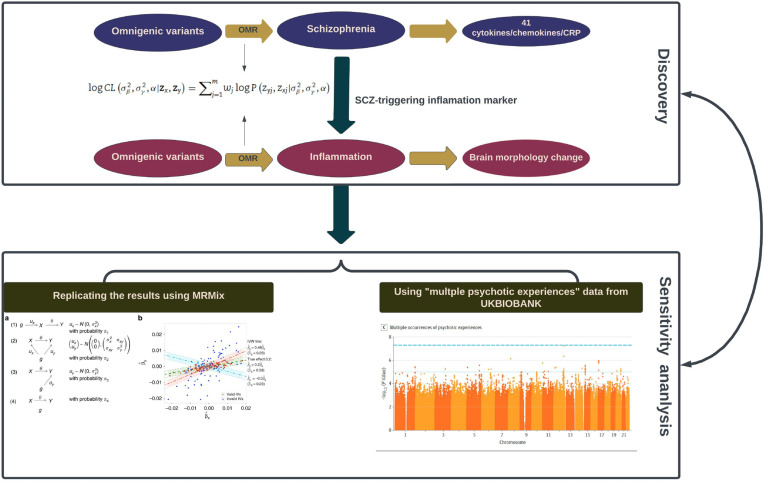
“For the first layer, we chose a different MR method, ‘ MRMix ’ , a multiple-variant approach (Qi & Chatterjee, 2019), to re-run the analysis on the inflammation markers showing a signi fi cant causal link with longitudinal brain changes in the previous step.”
MethodBoerrigter, D., Weickert, T. W., Lenroot, R., O’Donnell, M., Galletly, C., Liu, D., Burgess, M., Cadiz, R., Jacomb, I., Catts, V. S., et al. (2017) · Journal of Neuroinflammation · doi:10.1186/s12974-017-0962-y · Cited by 171 · cited 1×
“Our analysis of SCZ and inflammation indicated a positive causal effect of schizophrenia on IL-8, implying that schizophrenia could lead to increased IL-8 level, a finding in line with previous studies (Boerrigter et al., 2017; Brown et al., 2004).”
ResultRaz, N., Yang, Y., Dahle, C. L., & Land, S. (2012) · Biochimica et Biophysica Acta (BBA) - Molecular Basis of Disease · doi:10.1016/j.bbadis.2011.08.007 · Cited by 166 · cited 1×
“Prior research has proposed that inflammation could cause abnormalities in white matter, including lesions (Wu, 2012) and WMV changes (Raz, Yang, Dahle, & Land, 2012).”
BackgroundGiovannelli, A., Limatola, C., Ragozzino, D., Mileo, A. M., Ruggieri, A., Ciotti, M. T., Mercanti, D., Santoni, A., & Eusebi, F. (1998) · Journal of Neuroimmunology · doi:10.1016/s0165-5728(98)00192-1 · Cited by 153
Association of Genetic Liability to Psychotic Experiences With Neuropsychotic Disorders and Traits
Legge, S. E., Jones, H. J., Kendall, K. M., Pardiñas, A. F., Menzies, G., Bracher-Smith, M., Escott-Price, V., Rees, E., Davis, K. A. S., Hotopf, M., et al. (2019) · JAMA Psychiatry · doi:10.1001/jamapsychiatry.2019.2508 · Cited by 150 · cited 1×
“For the second layer, we selected a different dataset, GWAS of multiple psychotic experiences, to replicate the primary results of SCZ ⇒ inflammation (Legge et al., 2019).”
MethodLesh, T. A., Careaga, M., Rose, D. R., McAllister, A. K., Van de Water, J., Carter, C. S., & Ashwood, P. (2018) · Journal of Neuroinflammation · doi:10.1186/s12974-018-1197-2 · Cited by 149 · cited 1×
“…context of schizophrenia, researchers have found evidence of cytokines such as C-reactive protein (CRP), IL-1 β , IL-6, IL-12, interferon-γ , and tumor necrosis factor α (TNF-α ) being associated with endophenotypes and varying disease status of schizophrenia (Lesh et al., 2018; Lin et al., 2021).”
BackgroundCrucial biological functions of CCL7 in cancer
Liu, Y., Cai, Y., Liu, L., Wu, Y., & Xiong, X. (2018) · PeerJ · doi:10.7717/peerj.4928 · Cited by 139
Self-citationde Bartolomeis, A., Barone, A., Vellucci, L., Mazza, B., Austin, M. C., Iasevoli, F., & Ciccarelli, M. (2022) · Molecular Neurobiology · doi:10.1007/s12035-022-02976-3 · Cited by 113
Corlier, F., Hafzalla, G., Faskowitz, J., Kuller, L. H., Becker, J. T., Lopez, O. L., Thompson, P. M., & Braskie, M. N. (2018) · NeuroImage · doi:10.1016/j.neuroimage.2017.12.027 · Cited by 94 · cited 1×
“…changes in brain structure (Brouwer et al., 2022), and various studies have identified systemic inflammation as a predictor of brain aging (Corlier et al., 2018), which leads to our second question: (2) What is the impact of SCZ-triggering in fl ammatory markers on longitudinal brain…”
BackgroundInterleukin-8: An Autocrine Inflammatory Mediator
Siddiqui, R. A., Rahman, A., & Harvey, K. A. (1999) · Current Pharmaceutical Design · doi:10.2174/1381612805666230109213039 · Cited by 93
Cytokine profiling in healthy children shows association of age with cytokine concentrations
Decker, M., Gotta, V., Wellmann, S. M., & Ritz, N. (2017) · Scientific Reports · doi:10.1038/s41598-017-17865-2 · Cited by 84 · cited 1×
“Other factors can also confound the investigation of cytokine levels in the peripheral blood in schizophrenia, including antipsychotics, metabolites, comorbid in fl ammatory conditions, and age (Decker, Gotta, Wellmann, & Ritz, 2017; Himmerich, Patsalos, Lichtblau, Ibrahim, & Dalton, 2019).”
BackgroundInterleukin-8: An autocrine inflammatory mediator.
Rahman, A., Harvey, K. A., & Ra, S. (1999) · PubMed · Cited by 77
Kalaoja, M., Corbin, L. J., Tan, V. Y., Ahola‐Olli, A., Havulinna, A. S., Santalahti, K., Pitkänen, N., Lehtimäki, T. J., Lyytikäinen, L., Raitoharju, E., et al. (2021) · Obesity · doi:10.1002/oby.23060 · Cited by 70 · cited 1×
“For the inflammation outcomes, we used the summary statistics of GWAS of 41 cytokines/chemokines in the peripheral blood of 8293 healthy volunteers of European ancestry (Kalaoja et al., 2021) (online Supplementary Table S2).”
MethodCoutu, J., (ADNI), T. A. D. N. I., Goldblatt, A. E. A., Rosas, H. D., & Salat, D. H. (2015) · Journal of Alzheimer s Disease · doi:10.3233/jad-150306 · Cited by 58 · cited 1×
“A neuroimaging study found a strong association between white matter di ff usivity and ventricle volume in patients with Alzheimer ’ s disease (AD) (Coutu, Goldblatt, Rosas, Salat, & Alzheimer ’ s Disease Neuroimaging, 2016), which strongly suggests that further investigations are warranted to…”
BackgroundCheng, W., van der Meer, D., Parker, N., Hindley, G., O’Connell, K. S., Wang, Y., Shadrin, A. A., Alnæs, D., Bahrami, S., Lin, A., et al. (2022) · Molecular Psychiatry · doi:10.1038/s41380-022-01751-z · Cited by 47 · cited 1×
“…found that shared genetic loci peaked at the prenatal age, suggesting that the pathogenesis of schizophrenia, especially immunological aspects, could start around the perinatal period, potentially triggered or exacerbated by intrauterine infection or inflammation involving CRP (Cheng et al., 2022).”
BackgroundTakeuchi, H., Taki, Y., Nouchi, R., Yokoyama, R., Kotozaki, Y., Nakagawa, S., Sekiguchi, A., Iizuka, K., Yamamoto, Y., Hanawa, S., et al. (2017) · Scientific Reports · doi:10.1038/s41598-017-10104-8 · Cited by 46 · cited 1×
“Our study also established the causal link from CRP to the pallidum ’ s GMV longitudinal changes, which play a significant role in various mental functions (Klaassen, Heiniger, Vaca Sánchez, Harvey, & Rainer, 2021; Takeuchi et al., 2017).”
BackgroundLin, C., Chen, K., Yu, J., Feng, W., Fu, W., Yang, F., Zhang, X., & Chen, D. (2021) · BMC Psychiatry · doi:10.1186/s12888-021-03569-5 · Cited by 41 · cited 1×
“…context of schizophrenia, researchers have found evidence of cytokines such as C-reactive protein (CRP), IL-1 β , IL-6, IL-12, interferon-γ , and tumor necrosis factor α (TNF-α ) being associated with endophenotypes and varying disease status of schizophrenia (Lesh et al., 2018; Lin et al., 2021).”
BackgroundIncreased random exploration in schizophrenia is associated with inflammation
Cathomas, F., Klaus, F., Guetter, K., Chung, H.-K., Raja Beharelle, A., Spiller, T. R., Schlegel, R., Seifritz, E., Hartmann-Riemer, M. N., Tobler, P. N., et al. (2021) · npj Schizophrenia · doi:10.1038/s41537-020-00133-0 · Cited by 36 · cited 1×
“Cathomas et al., found a significantly lowered level of CCL7 in patients with SCZ, consistent with our estimates (Cathomas et al., 2021).”
ResultNew therapeutic avenues of MCSF for brain diseases and injuries
Pons, V., & Rivest, S. (2018) · Frontiers in Cellular Neuroscience · doi:10.3389/fncel.2018.00499 · Cited by 35 · cited 1×
“M-CSF, along with anti-inflammatory factors such as TNF-β , can polarize microglia towards anti-inflammatory (M2) directions (Pons & Rivest, 2018).”
BackgroundGuardians of the brain: how a special immune system protects our grey matter
Kwon, D. (2022) · Nature · doi:10.1038/d41586-022-01502-8 · Cited by 32 · cited 1×
“It is now accepted that the brain is not immune-privileged and that brain cells like neurons and microglia release cytokines essential for both normal function and disease states (Kwon, 2022).”
BackgroundRegression Analysis and Causal Inference: Cause for Concern?
Constantine, N. A. (2012) · Perspectives on Sexual and Reproductive Health · doi:10.1363/4413412 · Cited by 29 · cited 1×
“Linear regression implies causality only if the covariates are from a controlled experiment and the experiment isolates the hypothesized causal factor well (Constantine, 2012).”
BackgroundShang, Y., Li, T. X., Chen, T., Liu, X., Zhang, J., Liu, D., Wei, J., Fang, W., Chen, Y., & Shang, D. (2019) · Biochemical and Biophysical Research Communications · doi:10.1016/j.bbrc.2019.05.130 · Cited by 26 · cited 1×
“In the CNS, CXCL1 primarily binds to CXCR2 and promotes the proliferation of neuronal stem cells (NSCs) in both vitro and vivo, especially in the subventricular zone of the lateral ventricle (Shang et al., 2019).”
BackgroundSelf-citationKlaassen, A.-L., Heiniger, A., Sánchez, P. V., Harvey, M., & Rainer, G. (2021) · Proceedings of the National Academy of Sciences · doi:10.1073/pnas.2103642118 · Cited by 25 · cited 1×
“Our study also established the causal link from CRP to the pallidum ’ s GMV longitudinal changes, which play a significant role in various mental functions (Klaassen, Heiniger, Vaca Sánchez, Harvey, & Rainer, 2021; Takeuchi et al., 2017).”
BackgroundZhou, C., Chen, J., Tang, X., Feng, X., Yu, M., Sha, W., Wang, X., Zhang, X., Yi, H., & Zhang, X. (2018) · Psychiatry Research · doi:10.1016/j.psychres.2018.06.067 · Cited by 17 · cited 1×
“Several studies have demonstrated its signi fi cant differences in both gene expression and DNA methylation between patients with SCZ and healthy controls, as well as among different sub-types of schizophrenia (Zhou et al., 2018).”
BackgroundMendelian randomization under the omnigenic architecture
Wang, L., Gao, B., Fan, Y., Xue, F., & Zhou, X. (2021) · Briefings in Bioinformatics · doi:10.1093/bib/bbab322 · Cited by 17 · cited 7×
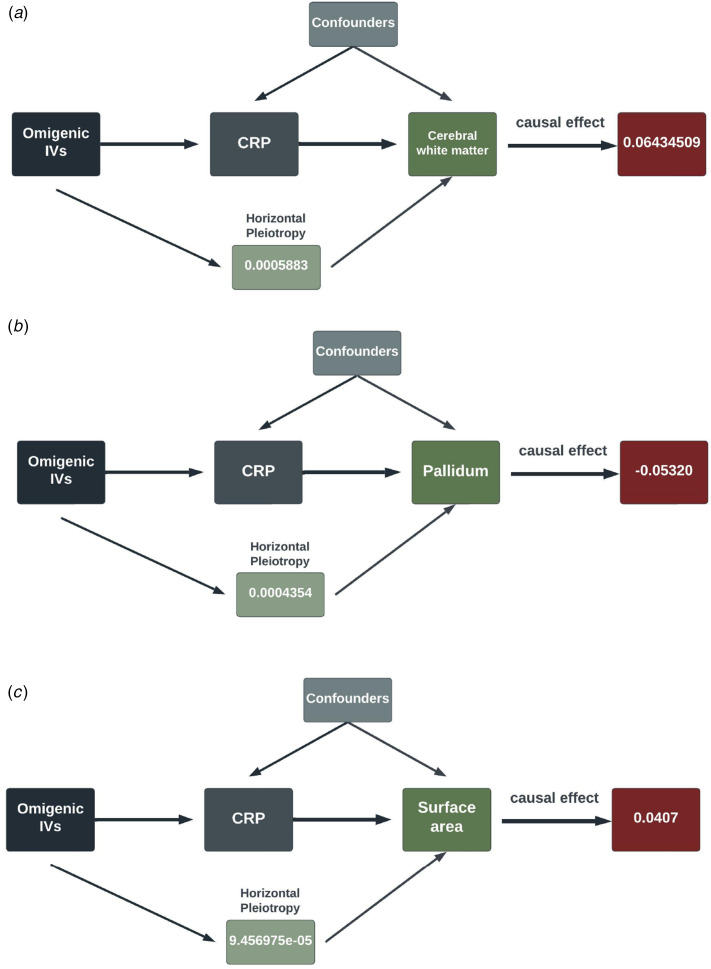
“Each OMR analysis output includes two primary parameters: the causal effect ( α ) and the proportion of SNP horizontal pleiotropy effect in the outcome variable ( γ ).”
MethodInfluentialGRK3 deficiency elicits brain immune activation and psychosis
Sellgren, C. M., Imbeault, S., Larsson, M. K., Oliveros, A., Nilsson, I. A. K., Codeluppi, S., Orhan, F., Bhat, M., Tufvesson‐Alm, M., Gracias, J., et al. (2021) · Molecular Psychiatry · doi:10.1038/s41380-021-01106-0 · Cited by 16 · cited 1×
“Despite abundant evidence supporting inflammation ’ s role in SCZ (Khandaker et al., 2015; Sellgren et al., 2021), determining specific in fl ammatory markers indicative of SCZ remains challenging.”
BackgroundZou, J., Zhou, J., Faller, S., Brown, R., Sankararaman, S., & Eskin, E. (2022) · G3 Genes Genomes Genetics · doi:10.1093/g3journal/jkac261 · Cited by 12 · cited 1×
“Unlike one-sample MR, two-sample MR does not require the effect of the IV-exposure association and the IV-outcome factor association to be collected from the same participant sample, potentially avoiding confounding factors such as the ‘ winner ’ s curse ’ (Zou et al., 2022).”
C-reactive protein and cerebral white matter lesions
Wu, Y. (2011) · Clinical Neurology and Neurosurgery · doi:10.1016/j.clineuro.2011.09.003 · Cited by 2 · cited 1×
“Prior research has proposed that inflammation could cause abnormalities in white matter, including lesions (Wu, 2012) and WMV changes (Raz, Yang, Dahle, & Land, 2012).”
Background
Cited by
Unraveling the potential of neuroinflammation and autophagy in schizophrenia
Tao, H., Wang, C., Zou, C., Zhu, H., & Zhang, W. (2025) · European Journal of Pharmacology · doi:10.1016/j.ejphar.2025.177469 · Cited by 7
Humble, M. B., Mobarrez, F., Eklund, D., Bejerot, S., & Wetterberg, L. (2025) · Schizophrenia Research · doi:10.1016/j.schres.2025.08.006 · Cited by 3
The Inflammation in Schizophrenia: Biomarkers and Association with Pathogenesis
Ermakov, E. A., Buneva, V. N., & Ivanova, S. A. (2024) · Springer eBooks · doi:10.1007/978-3-031-32035-4_112-1 · Cited by 1
Zhao, Z., Zhang, B., Gan, R., Xie, H., Shao, Y., Xu, K., & Jia, Z. (2025) · Journal of Affective Disorders · doi:10.1016/j.jad.2025.119469 · Cited by 2
Tian, Y., Zhuang, Y., Sun, L., Xue, J., Tang, P., Zhang, Y., Liu, L., Yao, X., Li, W., Xia, L., et al. (2026) · Frontiers in Psychiatry · doi:10.3389/fpsyt.2026.1802167 · Cited by 1
“Longitudinal studies have demonstrated that the increased CRP levels associated with schizophrenia may lead to differential alterations in white matter volume within speci fi c regions of the cerebrum and cerebellum (13).”
Self-citation
Metadata
- Authors
- Liu, Y., Ren, H., Zhang, Y., Deng, W., Ma, X., Zhao, L., Li, X., Sham, P., Wang, Q., & Li, T.
- Affiliations
- Sichuan University (CN)
- Hangzhou Seventh Peoples Hospital (CN)
- University of Hong Kong (HK)
- Corresponding author
- Wang, Qiang
- Li, Tao
- ORCID
- Venue
- Psychological Medicine
- Publisher
- Cambridge University Press (CUP)
- Published
- 2024-03-06
- Volume
- 54
- Issue
- 9
- Pages
- 2054-2062
- ISSN
- 0033-2917 (ISSN-L)
- 1469-8978
- PMC
- PMC11413356
- OpenAlex
- W4392511008
- Cited by
- 15
- References
- 51
- Citations by year
- 2026: 3 · 2025: 10 · 2024: 2
- FWCI
- 4.41
- Type
- journal article
- Language
- en
- Open access
- hybrid
- doi.org
- Locations
- Psychological Medicine (publishedVersion, cc-by)
- PubMed Central (publishedVersion, cc-by)
- PubMed (publishedVersion)
- The HKU Scholars Hub (University of Hong Kong) (submittedVersion, cc-by-nc-nd)
- Funders
- National Natural Science Foundation of China (82171499, 81 920108018, 2021ZD0200700)
- Sichuan Province Science and Technology Support Program (2023YFS0030)
- Topics
- Health Sciences › Medicine › Psychiatry and Mental health › Schizophrenia research and treatment
- Life Sciences › Neuroscience › Biological Psychiatry › Tryptophan and brain disorders
- Life Sciences › Biochemistry, Genetics and Molecular Biology › Genetics › Genetic Associations and Epidemiology
- Keywords
- schizophrenia, neuroinflammation, brain structure, longitudinal brain changes, C-reactive protein, cytokines, omnigenic model, Mendelian randomization, white matter, cerebellum, cerebrum
- MeSH terms
- Brain, C-Reactive Protein, Humans, Inflammation, Magnetic Resonance Imaging, Schizophrenia, Cytokines, Polymorphism, Single Nucleotide, Genome-Wide Association Study, Mendelian Randomization Analysis, White Matter
About these checks
Registry, retraction, Cites and statistics results are computed, not judged, with one exception: a printed reference that no index lists is read once by a model before it counts as a citation error. Claims are extracted by a model and kept only when their quote appears verbatim in the text; each cited source is then checked, with a model’s help, for whether it says what the claim relies on. Those verdicts can be wrong — read the claim’s quote and the cited source before relying on one.
Statistics and arithmetic are recomputed, not judged.
Confidence bands are shown only for fields calibrated on our annotated test set. None is calibrated yet, so no band is shown.
What counts as a claim ›How we measure confidence ›How we check this ›
Are you an author, or do you see a problem with this page? Request a review
Data sources
Bibliographic data: Semantic Scholar, OpenAlex, Crossref.
Contains information from the Semantic Scholar Academic Graph Datasets, made available under the ODC Attribution License (ODC-BY 1.0).
Semantic Scholar’s data is described in: Kinney, R., et al. (2023). The Semantic Scholar Open Data Platform. arXiv:2301.10140.
