

Cognitive behavioral interventions for depression and anxiety in adults with neurological disorders: a systematic review and meta-analysis
Open accessThe DOI matches its Crossref record; 105 of the 108 references it cites were found in a registry or an index; 7 of the 12 sources its claims cite were checked for support.
Abstract
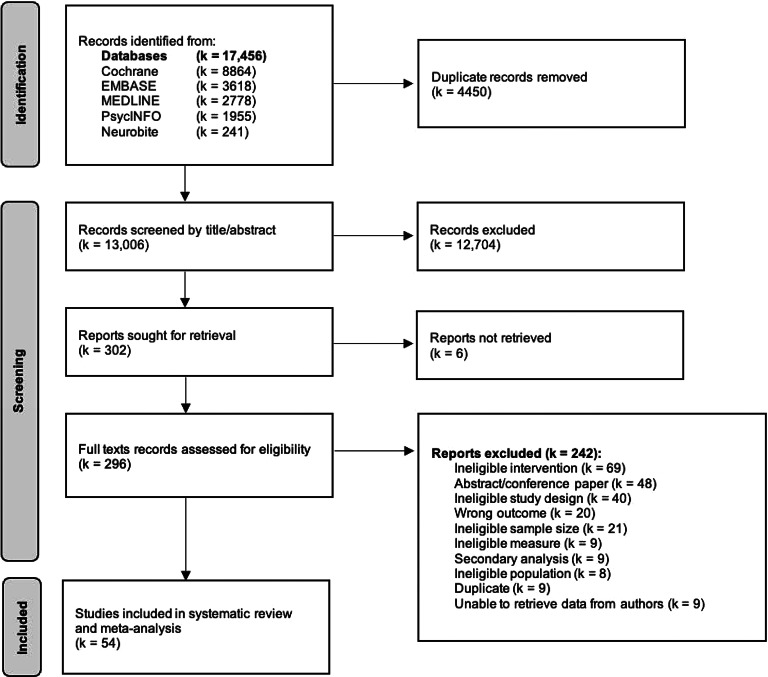
We examined the efficacy of cognitive and behavioral interventions for improving symptoms of depression and anxiety in adults with neurological disorders. A pre-registered systematic search of Cochrane Central Register of Controlled Trials, MEDLINE, PsycINFO, Embase, and Neurobite was performed from inception to May 2024. Randomized controlled trials (RCTs) which examined the efficacy of cognitive and behavioral interventions in treating depression and/or anxiety among adults with neurological disorders were included. Estimates were pooled using a random-effects meta-analysis. Subgroup analyses and meta-regression were performed on categorical and continuous moderators, respectively. Main outcomes were pre- and post-intervention depression and anxiety symptom scores, as reported using standardized measures. Fifty-four RCTs involving 5372 participants with 11 neurological disorders (including multiple sclerosis, epilepsy, stroke) were included. The overall effect of interventions yielded significant improvements in both depression (57 arms, Hedges' g = 0.45, 95% confidence interval [CI] 0.35-0.54) and anxiety symptoms (29 arms, g = 0.38, 95% CI 0.29-0.48), compared to controls. Efficacy was greater in studies which employed a minimum baseline symptom severity inclusion criterion for both outcomes, and greater in trials using inactive controls for depression only. There was also evidence of differential efficacy of interventions across the neurological disorder types and the outcome measure used. Risk of bias, intervention delivery mode, intervention tailoring for neurological disorders, sample size, and study year did not moderate effects. Cognitive and behavioral interventions yield small-to-moderate improvements in symptoms of both depression and anxiety in adults with a range of neurological disorders. © The Author(s), 2024.
Overview
CoChat Summary
TL;DR
This systematic review and meta-analysis found that cognitive and behavioral interventions were associated with small-to-moderate improvements in depression and small improvements in anxiety among adults with neurological disorders. Effects varied by neurological disorder and outcome measure, while delivery mode, tailoring, sample size, study year, and risk of bias did not moderate effects.
Key findings
- The review included 54 RCTs with 5,372 participants; the overall pooled effect was g = 0.45 for depression (95% CI 0.35–0.54, p < 0.001) across 57 treatment arms, and g = 0.38 for anxiety (95% CI 0.29–0.48, p < 0.001) across 29 treatment arms.
- Depression effects were substantially heterogeneous (I² = 64.60, p < 0.001), while anxiety effects showed low, nonsignificant heterogeneity (I² = 27.70, p = 0.09).
- Depression effects differed by neurological disorder, with the largest effects in Parkinson’s disease (g = 0.88, k = 7), multiple sclerosis (g = 0.57, k = 14), and migraine (g = 0.50, k = 4); smaller effects were found in epilepsy (g = 0.34, k = 9), TBI (g = 0.31, k = 7), and stroke (g = 0.28, k = 10).
- Anxiety effects also differed by disorder: Parkinson’s disease (g = 0.64, k = 6), multiple sclerosis (g = 0.41, k = 7), migraine (g = 0.42, k = 4), and epilepsy (g = 0.20, k = 5) were significant, but TBI was nonsignificant (g = 0.20, 95% CI −0.09 to 0.49; k = 4).
Methods
- Systematic review and meta-analysis conducted per PRISMA, with protocol prospectively registered on PROSPERO (CRD42022351547); databases searched were CENTRAL, MEDLINE, PsycINFO, Embase, and Neurobite from inception to May 2024.
- Included studies were RCTs of cognitive/behavioral interventions in adults with neurological disorders, with at least 20 participants per arm at randomization, targeting depression and/or anxiety with pre- and post-intervention standardized outcomes.
- Effect sizes were pooled using random-effects meta-analysis in Comprehensive Meta-Analysis v3.0, calculating Hedges’ g; moderators were tested with subgroup analyses and meta-regression, and publication bias was assessed with funnel plots, Egger’s test, and trim-and-fill.
Limitations
- The paper states that dropout was higher in intervention groups than controls (17% vs 11%), and 17 (30%) interventions had dropout rates ≥20%, raising concern for attrition bias.
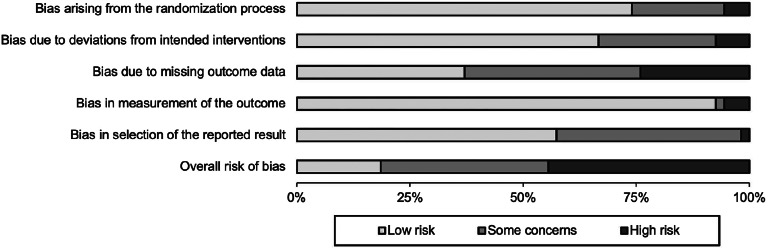
- The paper states that 43% of studies had high risk of bias, and that missing data handling/intent-to-treat analysis was not consistently done or clearly reported.
- Evidence evident from the text: subgroup analyses may be underpowered, follow-up periods varied too much to assess durability, and the authors could not include nine trials because of missing data; they also note limited diversity, with among studies reporting race, most participants being White/Caucasian (~86%).
Model-written summary. Check it against the paper before relying on it.
Integrity signals
Registry
Cites
Statistics
Figures
Verification
Claims the paper makes
6 Valid · 0 Not valid · 2 Not checked · 32 Own results and interpretations
The cited sources support only part of this claim — read each source’s verdict below.
In the paper
“The magnitude of these effects are consistent with several smaller disorder-specific meta-analyses in PD (Ghielen et al., 2019), MS (Hind et al., 2014), and epilepsy (Li et al., 2023), as well as in adults with long-term physical health conditions (Scott et al., 2023).”
§ Cognitive behavioral interventions for depression and anxiety in adults with neurological disorders: a systematic review and meta-analysis > Discussion
What the sources say
- Supportedcites Ghielen et al., 2019 matched to “The effects of cognitive behavioral and mindfulness-based therapies on psychological distress in patients with multiple sclerosis, Parkinson's disease and Huntington's disease: Two meta-analyses” (2019) source
The citation to Ghielen et al. supports the Parkinson’s disease part of the sentence, not the separately cited MS, epilepsy, or long-term-condition parts. Table 2 (section 4.2, page unavailable) reports a PD subgroup effect size of g = 0.37 from four studies, consistent with the claimed magnitude; its wide confidence interval (−0.55 to 1.29) makes that estimate uncertain. (LLM, conf=0.87)
- Supportedcites Hind et al., 2014 matched to “Cognitive behavioural therapy for the treatment of depression in people with multiple sclerosis: a systematic review and meta-analysis” (2014) source
The Discussion (Principal findings; page unavailable) describes a medium treatment effect of about 0.5 standard deviations for CBT on depression in people with MS. The Results (Synthesis; page unavailable) also reports an effect of 0.46 standard deviations after removal of an outlying study. This supports the citation’s use of Hind et al. as an MS-specific meta-analysis reporting an effect of that magnitude; it does not itself compare the citing paper’s effects. (LLM, conf=0.88)
- Not matchedcites Li et al., 2023
This doesn’t read as a citation we can look up.
plainstates an associationn = 5,372- Asserted: passes — The authors put it forward as true.
- Checkable: passes — It can be checked against evidence.
- Load-bearing: unclear — It is unclear whether the paper’s conclusions depend on it.
- Based: passes — The paper gives a reason why it holds.
- Supported
The sources with a verdict support this claim; the rest weren’t checked yet, have no full text we could read, or their verdicts aren’t rated yet.
In the paper
“Our effect size for depression was similar to that identified in a meta-analysis of antidepressants for NDs (Price et al., 2011), which mirrors the short-term clinical equivalence of psychological and pharmacological treatments observed in the general population (Cuijpers et al., 2023).”
§ Cognitive behavioral interventions for depression and anxiety in adults with neurological disorders: a systematic review and meta-analysis > Discussion
What the sources say
- Not checked — no full text of the sourcecites Price et al., 2011 matched to “Antidepressants for the treatment of depression in neurological disorders: a systematic review and meta-analysis of randomised controlled trials” (2011) source
- Supportedcites Cuijpers et al., 2023 matched to “Cognitive behavior therapy vs. control conditions, other psychotherapies, pharmacotherapies and combined treatment for depression: a comprehensive meta‐analysis including 409 trials with 52,702 patients” (2023) source
The Abstract and Discussion of Cuijpers et al. (2023) state that 'The effects of CBT did not differ significantly from those of pharmacotherapies at the short term' and that 'CBT appears to be as effective as pharmacotherapies at the short term, but more effective at the longer term', which is exactly the short-term psychological–pharmacological equivalence the citing sentence invokes. The Results section ('CBT versus pharmacotherapies and combined treatment') backs this with the head-to-head pooled estimate g=0.08 (95% CI: -0.07 to 0.24) across 38 comparisons in adults with depression (i.e. the general, non-neurological population). The paper's own conclusion qualifies the equivalence as short-term only, and the citing sentence carries the same 'short-term' qualifier, so no part of what is attributed is unsupported. (LLM, conf=0.85)
plainn = 5,372- Asserted: passes — The authors put it forward as true.
- Checkable: passes — It can be checked against evidence.
- Load-bearing: unclear — It is unclear whether the paper’s conclusions depend on it.
- Based: passes — The paper gives a reason why it holds.
The cited sources support only part of this claim — read each source’s verdict below.
In the paper
“Nevertheless, our benchmarks of observed clinical effects are more modest than the moderate effects observed for psychological interventions for people within the general or ‘healthy’ population (Cuijpers et al., 2023).”
§ Cognitive behavioral interventions for depression and anxiety in adults with neurological disorders: a systematic review and meta-analysis > Discussion
What the sources say
- Partly supportedcites Cuijpers et al., 2023 matched to “Cognitive behavior therapy vs. control conditions, other psychotherapies, pharmacotherapies and combined treatment for depression: a comprehensive meta‐analysis including 409 trials with 52,702 patients” (2023) sourceExperimental — accuracy not yet measured
Our copy of Cuijpers et al. (2023) reports moderate effect sizes for CBT only in subsets of people with depression — 'moderate effect (g=0.41)' for children and adolescents and 'small to moderate effect (g=0.45)' for unguided self-help CBT (Other comparisons; Table 5), with the main CBT-vs-control effect described as moderate to large (g=0.79, CBT versus control conditions; Table 2). It contains no benchmark for psychological interventions in the general or 'healthy' population: trials were selected only where CBT was given 'for people with depression' and 'Depression not inclusion criterion (n=484)' was an exclusion reason (Identification and selection of trials; Figure 1/PRISMA list). The unsupported part of the attributed claim is therefore the general/'healthy'-population comparison; only the 'moderate effects of psychological interventions' element is present, and in clinical/depressed samples. (LLM, conf=0.68)
plainstates an association- Asserted: passes — The authors put it forward as true.
- Checkable: passes — It can be checked against evidence.
- Load-bearing: passes — The paper’s conclusions depend on it.
- Based: passes — The paper gives a reason why it holds.
- Partly supported
A result the paper reports from its own data — it cites no other source for it, so there is none to check. The quote shows it is in the paper.
In the paper
“However, those requiring a diagnosis or symptoms above a clinical cut-off at baseline reported greater intervention effects, specifically moderate effects for both depression (g = 0.54, 95% CI 0.39–0.70) and anxiety (g = 0.51, 95% CI 0.35–0.67), compared to small effects observed in those without a baseline symptom criterion (g = 0.32, 95% CI 0.24–0.40; g = 0.28, 95% CI 0.18–0.39 respectively).”
§ Cognitive behavioral interventions for depression and anxiety in adults with neurological disorders: a systematic review and meta-analysis > Results > Moderator analyses
plainstates an association- Asserted: passes — The authors put it forward as true.
- Checkable: passes — It can be checked against evidence.
- Load-bearing: unclear — It is unclear whether the paper’s conclusions depend on it.
- Based: passes — The paper gives a reason why it holds.
A result the paper reports from its own data — it cites no other source for it, so there is none to check. The quote shows it is in the paper.
In the paper
“However, those requiring a diagnosis or symptoms above a clinical cut-off at baseline reported greater intervention effects, specifically moderate effects for both depression (g = 0.54, 95% CI 0.39–0.70) and anxiety (g = 0.51, 95% CI 0.35–0.67), compared to small effects observed in those without a baseline symptom criterion (g = 0.32, 95% CI 0.24–0.40; g = 0.28, 95% CI 0.18–0.39 respectively).”
§ Cognitive behavioral interventions for depression and anxiety in adults with neurological disorders: a systematic review and meta-analysis > Results > Moderator analyses
plainstates an association- Asserted: passes — The authors put it forward as true.
- Checkable: passes — It can be checked against evidence.
- Load-bearing: passes — The paper’s conclusions depend on it.
- Based: passes — The paper gives a reason why it holds.
11 more claims
Create a free account to see all 40 claims and to verify the 1 reference still open.
- It may state two separate claims as one. 18
- Probably not a substantial claim. 8
Self-check
Percentages, sums and reported differences re-computed from the paper’s own numbers.
Each contradiction between two passages listed here was confirmed by an independent check.
Rated minor: it would not touch a result — a value no result rests on, a p-value that stays on the same side of the significance level, or a conflict that is clerical, resolved elsewhere in the paper, or outside its own findings.
In the paper
§ Cognitive behavioral interventions for depression and anxiety in adults with neurological disorders: a systematic review and meta-analysis > Results > Risk of bias
“Most studies (k = 24; 44%) had an overall high risk of bias, 20 (37%) indicated some concern, and 10 (19%) were low risk.”
§ Cognitive behavioral interventions for depression and anxiety in adults with neurological disorders: a systematic review and meta-analysis > Discussion > Limitations
“However, this was not consistently done or clearly reported, contributing to many studies (43%) having a high RoB.”
Rated minor: it would not touch a result — a value no result rests on, a p-value that stays on the same side of the significance level, or a conflict that is clerical, resolved elsewhere in the paper, or outside its own findings.
In the paper
§ Cognitive behavioral interventions for depression and anxiety in adults with neurological disorders: a systematic review and meta-analysis > Results > Study characteristics
“Most studies used inactive control groups (k = 41; 76%), including 23 (43%) treatment-as-usual or usual care groups and 18 (33%) waitlist-control groups.”
§ Cognitive behavioral interventions for depression and anxiety in adults with neurological disorders: a systematic review and meta-analysis > Discussion
“Most studies utilized an inactive control group (k = 44; 76%). The remaining 12 studies used a form of active control, typically forms of education.”
Rated minor: it would not touch a result — a value no result rests on, a p-value that stays on the same side of the significance level, or a conflict that is clerical, resolved elsewhere in the paper, or outside its own findings.
In the paper
§ Cognitive behavioral interventions for depression and anxiety in adults with neurological disorders: a systematic review and meta-analysis > Results > Study characteristics
“Race/ethnicity was reported in 18 studies (52%), mostly from the USA (k = 14).”
§ Cognitive behavioral interventions for depression and anxiety in adults with neurological disorders: a systematic review and meta-analysis > Discussion > Limitations
“Finally, across 14 studies to report race, most reported a high proportion of White/Caucasian participants (~86%), which raises concerns about the diversity of samples.”
Rated minor: it would not touch a result — a value no result rests on, a p-value that stays on the same side of the significance level, or a conflict that is clerical, resolved elsewhere in the paper, or outside its own findings.
In the paper
§ Cognitive behavioral interventions for depression and anxiety in adults with neurological disorders: a systematic review and meta-analysis > Discussion > Limitations
“Despite contacting authors, we were unable to include nine trials due to missing data.”
§ Cognitive behavioral interventions for depression and anxiety in adults with neurological disorders: a systematic review and meta-analysis > Methods > Data extraction
“At least two attempted contacts were made with authors of 16 studies which were eligible but omitted data required for the meta-analysis; two authors were not contactable. Of the 14 successfully contacted, eight responded (57% response rate) with six of these providing data which was used in the analyses.”
Citations
Cites
The Cochrane Collaboration's tool for assessing risk of bias in randomised trials
Higgins, J. P. T., Altman, D. G., Gotzsche, P. C., Juni, P., Moher, D., Oxman, A. D., Savovic, J., Schulz, K. F., Weeks, L., Sterne, J. A. C., et al. (2011) · BMJ · doi:10.1136/bmj.d5928 · Cited by 33,817
PRISMA-P Group, Moher, D., Shamseer, L., Clarke, M., Ghersi, D., Liberati, A., Petticrew, M., Shekelle, P., & Stewart, L. A. (2015) · Systematic Reviews · doi:10.1186/2046-4053-4-1 · Cited by 26,223 · cited 1×
“This study was completed in compliance with the Preferred Reporting Items for Systematic Review and Meta-Analyses (PRISMA) Checklist (Moher et al., 2015).”
MethodRayyan-a web and mobile app for systematic reviews.
Ouzzani, M., Hammady, H., Fedorowicz, Z., & Elmagarmid, A. (2016) · Systematic Reviews · doi:10.1186/s13643-016-0384-4 · Cited by 26,092 · cited 1×
“One author (T.W.) screened all titles and abstracts using Rayyan (Ouzzani, Hammady, Fedorowicz, & Elmagarmid, 2016), with a random 20% blind reviewed by a second author (M.G.) to verify the accuracy of the screening process.”
MethodDermyshi, E., Wang, Y., Yan, C., Hong, W., Qiu, G., Gong, X., & Zhang, T. (2017) · Neonatology · doi:10.1159/000454668 · Cited by 24,451
Cochrane Handbook for Systematic Reviews of Interventions
(2019) · doi:10.1002/9781119536604 · Cited by 14,828
Duval, S., & Tweedie, R. (2000) · Biometrics · doi:10.1111/j.0006-341x.2000.00455.x · Cited by 14,099 · cited 1×
“Trim-and-fill analysis was used to estimate the number of unpub-lished studies and provide an adjusted effect estimate if they were included (Duval & Tweedie, 2000).”
Why Most Published Research Findings Are False
Ioannidis, J. P. A. (2005) · PLoS Medicine · doi:10.1371/journal.pmed.0020124 · Cited by 10,505
Simmons, J. P., Nelson, L. D., & Simonsohn, U. (2011) · Psychological Science · doi:10.1177/0956797611417632 · Cited by 6,567
Outlier and influence diagnostics for meta-analysis
Viechtbauer, W., & Cheung, M. W.-L. (2010) · Research Synthesis Methods · doi:10.1002/jrsm.11 · Cited by 2,949 · cited 1×
“The influence of outliers on the pooled effect was examined using the ‘ one study removed ’ procedure (Harrer et al., 2021; Viechtbauer & Cheung, 2010).”
MethodAnalysing data and undertaking meta‐analyses
Deeks, J. J., Higgins, J. P., Altman, D. G., & on behalf of the Cochrane Statistical Methods Group (2019) · Cochrane Handbook for Systematic Reviews of Interventions · doi:10.1002/9781119536604.ch10 · Cited by 2,672 · cited 2×
“We interpreted g values of 0.2, 0.5, and 0.8 to indicate small, moderate, and large effects, respectively (Deeks, Higgins, & Altman, 2019).”
Influential
Research works printed but not linked: 3
- Borenstein, M., Hedges, L., Higgins, J., & Rothstein, H. (2013). Comprehensive meta-analysis version 3. Englewood, NJ: Biostat.
- World Health Organisation. (2023). Intersectoral global action plan on epilepsy and other neurological disorders 2022–2031. Geneva: World Health Organisation: Licence: CC BY-NC-SA 3.0 IGO.
- Schröder, J., Brückner, K., Fischer, A., Lindenau, M., Köther, U., Vettorazzi, E., & Moritz, S. (2014). Efficacy of a psychological online intervention for depression in people with epilepsy: A randomized controlled trial. Epilepsia, 55(12), 2069- 2076. doi: 10.1111/epi.12833 25410633 · DOI · Paper page
Cited by
Liu, C., Mou, L., Zhang, Y., Zhang, M., Yang, P., Ma, S., Zhang, M., Huang, J., Xiao, X., & Liu, J. (2025) · Seizure · doi:10.1016/j.seizure.2025.01.004 · Cited by 6
Integral Brain Health: a collaborative approach for psychiatry and neurology
Wasserman, D., Iosue, M., Avan, A., & Hachinski, V. (2025) · World Psychiatry · doi:10.1002/wps.21367 · Cited by 4
Providing integrated mental health care as a neurologist
Gandy, M., Baslet, G. C., Bennett, S. D., & Clary, H. M. M. (2025) · Epilepsy & Behavior · doi:10.1016/j.yebeh.2025.110368 · Cited by 5
“The most evidence-based and available intervention approaches for PWE are those grounded in the principles of Cognitive-Behavioral Therapy (CBT) [59,72].”
Self-citationZhu, X., & Lv, Q. (2025) · Health engineering. · doi:10.26599/he.2025.9460010 · Cited by 5
Yin, X., Cheng, J., Tian, W., Wen, C., Jiang, S., Xuan, Y., & Feng, X. (2025) · Frontiers in Psychiatry · doi:10.3389/fpsyt.2025.1592038 · Cited by 2
“Addressing these central symptoms through targeted interventions, such as cognitive training to improve memory (46) and strategies to manage intrusive thoughts (47), may help break this cycle.”
Management of Post-Traumatic Brain Injury Neuropsychiatric Symptoms
Hotz, T., Long, J., Kosyakova, N., & Narapareddy, B. R. (2025) · Clinics in Sports Medicine · doi:10.1016/j.csm.2025.05.006 · Cited by 2
Gandy, M., Wu, W., Balakumar, T., Francis, H., Oxenham, V., Bisby, M. A., Titov, N., & Dear, B. F. (2026) · Journal of Affective Disorders · doi:10.1016/j.jad.2026.121403 · Cited by 2
Self-citationXiao, Y., Huang, B., Liu, Q., & Du, H. (2026) · Frontiers in Neurology · doi:10.3389/fneur.2026.1793682 · Cited by 1
Zhu, X., & Lv, Q. (2024) · medRxiv · doi:10.1101/2024.10.27.24316200 · Cited by 1
Zhou, Y., Zheng, Q., & Tian, J. H. (2025) · Psychological Medicine · doi:10.1017/s0033291724003180 · Cited by 1
Gandy, M., Woldhuis, T., Wu, W., Youssef, M., Bisby, M. A., Dear, B. F., Heriseanu, A. I., & Scott, A. J. (2025) · Psychological Medicine · doi:10.1017/s0033291725000613
Self-citationHu, F., Guo, L., Luo, Z., & Zeng, M. (2026) · Psycho-Oncologie · doi:10.18282/po4119
Digital psychological interventions in youth with neurological disorders: a systematic review
Keevers, Y., Sivaneswaran, A., Dudeney, J. E., Woldhuis, T., & Gandy, M. (2026) · Journal of Pediatric Psychology · doi:10.1093/jpepsy/jsaf109 · Cited by 1
“NDs were defined by the National Institute of Neurological Disorders and Stroke (NINDS) classification system and consistent with previous research focused on those NDs typically managed within neurological care settings (Gandy et al., 2024).”
InfluentialSelf-citationQuality of Life in Patients With Chronic Inflammatory Demyelinating Polyneuropathy
Blum, T. C., van der Wurp, H., Mengel, D., Fraune, L., Sommer, N., Stettner, M., Tackenberg, B., & Dodel, R. C. (2026) · Muscle & Nerve · doi:10.1002/mus.70232
Catubig, N., & Gandy, M. (2026) · Australian Psychologist · doi:10.1080/00050067.2026.2650151
Self-citationLived Experiences of Male Caregivers Supporting Individuals with Parkinson’s Disease
Lee, K., Yates, J., Johnson, A. M., Alvarez, L., & Holmes, J. D. (2026) · Healthcare · doi:10.3390/healthcare14121652
Meyer, B., Nelles, G., Betz, L. T., Bergmann, A., Jauch‐Chara, K., Krause, N., Riemann-Lorenz, K., von Glasenapp, B., & Heesen, C. (2026) · Multiple Sclerosis Journal - Experimental Translational and Clinical · doi:10.1177/20552173261475519 · Cited by 1
“4,5 Access to psychological and behavioural support is limited for many people with MS (pwMS) due to therapist shortages, geographical barriers, and disability-related constraints such as reduced mobility and fatigue.”
Giovannetti, A. M., Pakenham, K. I., Copetti, M., Brichetto, G., Filippo, M. D., Quartuccio, M. E., Grobberio, M., Micheli, M., Tavazzi, E., Confalonieri, P., et al. (2026) · Multiple Sclerosis Journal · doi:10.1177/13524585261464886 · Cited by 1
Metadata
- Authors
- Gandy, M., Woldhuis, T., Wu, W., Youssef, M., Bisby, M. A., Dear, B. F., Heriseanu, A. I., & Scott, A. J.
- Affiliations
- Macquarie University (AU)
- Corresponding author
- Gandy, Milena
- ORCID
- Venue
- Psychological Medicine
- Publisher
- Cambridge University Press (CUP)
- Published
- 2024-09
- Volume
- 54
- Issue
- 12
- Pages
- 3237-3250
- ISSN
- 0033-2917 (ISSN-L)
- 1469-8978
- PMC
- PMC11496241
- OpenAlex
- W4402842650
- Cited by
- 20
- References
- 108
- Citations by year
- 2026: 10 · 2025: 9 · 2024: 1
- FWCI
- 1.47
- Type
- journal article
- Language
- en
- Open access
- hybrid
- doi.org
- Locations
- Psychological Medicine (publishedVersion, cc-by)
- PubMed Central (publishedVersion, cc-by-nc-sa)
- PubMed (publishedVersion)
- Funders
- Multiple Sclerosis Australia
- Macquarie University
- Topics
- Social Sciences › Psychology › Experimental and Cognitive Psychology › Anxiety, Depression, Psychometrics, Treatment, Cognitive Processes
- Social Sciences › Psychology › Applied Psychology › Digital Mental Health Interventions
- Social Sciences › Psychology › Clinical Psychology › Psychological Treatments and Assessments
- Keywords
- cognitive behavioral therapy, depression, anxiety, neurological disorders, multiple sclerosis, epilepsy, stroke, treatment efficacy, symptom severity
About these checks
Registry, retraction, Cites and statistics results are computed, not judged, with one exception: a printed reference that no index lists is read once by a model before it counts as a citation error. Claims are extracted by a model and kept only when their quote appears verbatim in the text; each cited source is then checked, with a model’s help, for whether it says what the claim relies on. Those verdicts can be wrong — read the claim’s quote and the cited source before relying on one.
The claim verdicts this report counts are experimental: their accuracy is not yet measured.
A language model drew the claims from the paper on 2026-10-11, under version 3 of the claim definition (model deepseek-v4.1-flash, prompt extract-v3).
A second model labelled each claim on 2026-10-11 (model jev-1.13-20260917, definition revision gold-guideline-v0.2).
Cited sources are checked with a language model’s help (gpt-6-sol and qwen3.8-omni-flash).
Statistics and arithmetic are recomputed, not judged.
Confidence bands are shown only for fields calibrated on our annotated test set. None is calibrated yet, so no band is shown.
What counts as a claim ›How we measure confidence ›How we check this ›
Are you an author, or do you see a problem with this page? Request a review
Data sources
Bibliographic data: Semantic Scholar, OpenAlex, Crossref.
Contains information from the Semantic Scholar Academic Graph Datasets, made available under the ODC Attribution License (ODC-BY 1.0).
Semantic Scholar’s data is described in: Kinney, R., et al. (2023). The Semantic Scholar Open Data Platform. arXiv:2301.10140.
