

Serotonergic modulation of glutamate neurotransmission as a strategy for treating depression and cognitive dysfunction
Open accessThe DOI matches its Crossref record; 153 of the 153 references it cites were found in a registry or an index.
Abstract
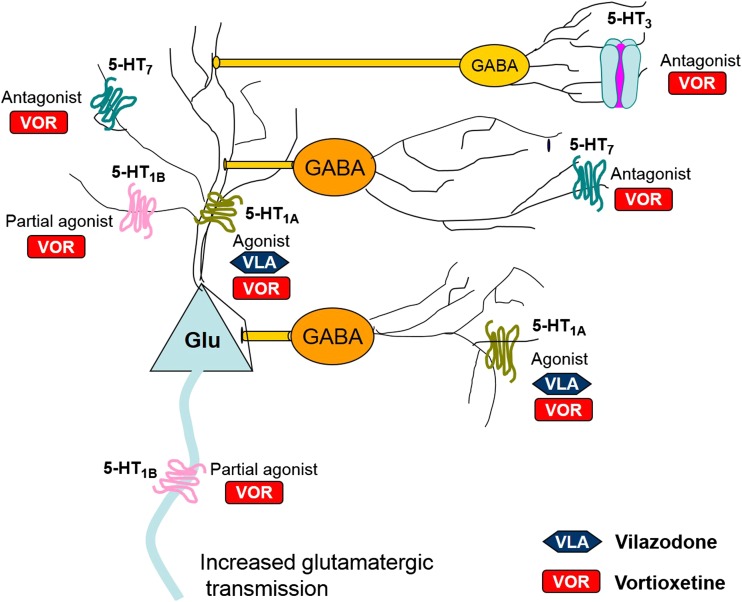
Monoamine-based treatments for depression have evolved greatly over the past several years, but shortcomings such as suboptimal efficacy, treatment lag, and residual cognitive dysfunction are still significant. Preclinical and clinical studies using compounds directly targeting glutamatergic neurotransmission present new opportunities for antidepressant treatment, with ketamine having a surprisingly rapid and sustained antidepressant effect that is presumably mediated through glutamate-dependent mechanisms. While direct modulation of glutamate transmission for antidepressant and cognition-enhancing actions may be hampered by nonspecific effects, indirect modulation through the serotonin (5-HT) system may be a viable alternative approach. Based on localization and function, 5-HT can modulate glutamate neurotransmission at least through the 5-HT 1A, 5-HT 1B, 5-HT 3, and 5-HT 7 receptors, which presents a rational pharmacological opportunity for modulating glutamatergic transmission without the direct use of glutamatergic compounds. Combining one or more of these glutamate-modulating 5-HT targets with 5-HT transporter inhibition may offer new therapeutic opportunities. The multimodal compounds vortioxetine and vilazodone are examples of this approach with diverse mechanisms, and their different clinical effects will provide valuable insights into serotonergic modulation of glutamate transmission for the potential treatment of depression and associated cognitive dysfunction.
Overview
The claims and statistics of this paper haven’t been checked yet.
Free: it reads the open-access text and checks the first 5 claims that cite a source we can check. Create a free account to check every claim.
Integrity signals
Registry
Cites
Statistics
Figures
Verification
Claims the paper makes
The claims and statistics of this paper haven’t been checked yet.
Free: it reads the open-access text and checks the first 5 claims that cite a source we can check. Create a free account to check every claim.
Claims other papers make about this one
Each is checked against this paper’s own text: does it say what the citing paper says it does?
The source backs part of the claim, not all of it — or backs it for a different population, condition or comparison.
In the citing paper
“Vortioxetine has been shown to improve a range of cognitive impairments in depressed patients (McIntyre et al 2014, Pehrson & Sanchez 2014, Sanchez et al 2015).”
From Prefrontal cortex executive processes affected by stress in health and disease (2018) · cites this paper as Pehrson & Sanchez 2014
Experimental — accuracy not yet measuredThe source backs part of the claim, not all of it — or backs it for a different population, condition or comparison.
In the citing paper
“Its blockage of the 5-HT3 receptors would improve the glutamatergic and serotoninergic transmission and also the firing of pyramidal neurons in prefrontal cortex, which plays a key role in the cognitive improvement.43”
From A Randomized Controlled Study of Efficacy and Cognitive Function Improvement of Vortioxetine and Escitalopram in Patients with Depression in Chinese Han Nationality (2024) · cites this paper as [43]
Experimental — accuracy not yet measuredThe cited source says what the claim attributes to it.
In the citing paper
“Evidence from recent preclinical cognitive behavioral models suggests vortioxetine has a beneficial effect on cognition (Pehrson et al, 2014; Sanchez et al, 2015).”
From A Randomized, Placebo-Controlled, Active-Reference, Double-Blind, Flexible-Dose Study of the Efficacy of Vortioxetine on Cognitive Function in Major Depressive Disorder (2015) · cites this paper as Pehrson et al, 2014
Experimental — accuracy not yet measuredIn the citing paper
“Furthermore, it has been postulated that vortioxetine may improve the cognitive symptoms of MDD through its effects on cognate serotoninergic receptors, which may modulate glutamatergic neurotransmission [90].”
From Cognitive remission: a novel objective for the treatment of major depression? (2016) · cites this paper as [90]
Self-check
Percentages, sums and reported differences re-computed from the paper’s own numbers.
The self-check needs the paper’s full text.
Citations
Cites
Antidepressant effects of ketamine in depressed patients
Berman, R. M., Cappiello, A., Anand, A., Oren, D. A., Heninger, G. R., Charney, D. S., & Krystal, J. H. (2000) · Biological Psychiatry · doi:10.1016/s0006-3223(99)00230-9 · Cited by 3,856
A randomized trial of an N-methyl-D-aspartate antagonist in treatment-resistant major depression.
Zarate, C. A., Singh, J. B., Carlson, P. J., Brutsche, N. E., Ameli, R., Luckenbaugh, D. A., Charney, D. S., & Manji, H. K. (2006) · Archives of General Psychiatry · doi:10.1001/archpsyc.63.8.856 · Cited by 3,766
mTOR-Dependent Synapse Formation Underlies the Rapid Antidepressant Effects of NMDA Antagonists
Li, N., Lee, B., Liu, R.-J., Banasr, M., Dwyer, J. M., Iwata, M., Li, X.-Y., Aghajanian, G., & Duman, R. S. (2010) · Science · doi:10.1126/science.1190287 · Cited by 2,881 · cited 2×
“In support of a role for AMPA receptors in treating depression, preclinical studies suggest that ketamine exerts its antidepressant-like effect through AMPA receptors,(39) and that fast action is accompanied by rapid neuronal and synaptic adaptation.(32,40) It is widely believed that neuroadaptive changes represent a…”
Cognitive vulnerability to emotional disorders
Mathews, A., & MacLeod, C. (2005) · Annual Review of Clinical Psychology · doi:10.1146/annurev.clinpsy.1.102803.143916 · Cited by 2,100 · cited 1×
“4,5 Moreover, some cognitive disturbances may predict the development of mood disorders, 6 and furthermore may persist beyond remission.”
Glutamate neurotoxicity in cortical cell culture
Choi, D., Maulucci-Gedde, M., & Kriegstein, A. (1987) · The Journal of Neuroscience · doi:10.1523/jneurosci.07-02-00357.1987 · Cited by 1,384
Cognitive deficits in depression: Possible implications for functional neuropathology
Austin, M.-P., Mitchell, P., & Goodwin, G. M. (2001) · British Journal of Psychiatry · doi:10.1192/bjp.178.3.200 · Cited by 1,154 · cited 1×
“attention, executive function, and speed of processing.(4,5) Moreover, some cognitive disturbances may predict the development of mood disorders,(6) and furthermore may persist beyond remission.”
Maeng, S., Zarate, C. A., Du, J., Schloesser, R. J., McCammon, J., Chen, G., & Manji, H. K. (2008) · Biological Psychiatry · doi:10.1016/j.biopsych.2007.05.028 · Cited by 1,103
Towards a glutamate hypothesis of depression
Sanacora, G., Treccani, G., & Popoli, M. (2012) · Neuropharmacology · doi:10.1016/j.neuropharm.2011.07.036 · Cited by 1,036
Glutamate receptor function in learning and memory
Riedel, G. (2003) · Behavioural Brain Research · doi:10.1016/s0166-4328(02)00272-3 · Cited by 962
Electrophysiological responses of serotoninergic dorsal raphe neurons to 5‐HT1A and 5‐HT1B agonists
Sprouse, J. S., & Aghajanian, G. K. (1987) · Synapse · doi:10.1002/syn.890010103 · Cited by 845
Research works printed but not linked: 1
- Westrich L, Pehrson A, Zhong H, etal In vitro and in vivo effects of the multimodal antidepressant vortioxetine (Lu AA21004) at human and rat targets. Int J Psychiatry Clin Pract. 2012; 5(suppl 1): 47– 47
Cited by
Items 101–175 of 175
Gil-Sánchez, A., Canudes, M., Valcheva, P., Nogueras, L., González‐Mingot, C., Hervás, J. V., Peralta, S., Solana, M. J., & Brieva, L. (2023) · CNS & Neurological Disorders - Drug Targets · doi:10.2174/1871527322666230321093133 · Cited by 10
Kim, H. K., Baik, S. Y., Kim, Y. W., & Lee, S. (2021) · Neuropsychopharmacology Reports · doi:10.1002/npr2.12220 · Cited by 10
Propriétés pharmacologiques de la vortioxetine et leurs conséquences pré-cliniques
David, D. J. P., Tritschler, L., Guilloux, J., Gardier, A. M., Sánchez, C., & Gaillard, R. (2016) · L Encéphale · doi:10.1016/s0013-7006(16)30015-x · Cited by 10
Huan, Y., Wei, J., Zhou, J., Liu, M., Yang, J., & Gao, Y. (2021) · Frontiers in Psychiatry · doi:10.3389/fpsyt.2021.700149 · Cited by 9
Tavakol, F., Amini-Khoei, H., Sureda, A., Zarean, E., & Lorigooini, Z. (2024) · The World Journal of Biological Psychiatry · doi:10.1080/15622975.2024.2424162 · Cited by 9
Javelot, H. (2015) · Annales Pharmaceutiques Françaises · doi:10.1016/j.pharma.2015.09.001 · Cited by 10
Sahafi, O. H., Rezayof, A., Ghasemzadeh, Z., Alijanpour, S., & Rahimian, S. (2022) · Brain Research · doi:10.1016/j.brainres.2022.148058 · Cited by 9
Zhang, Y., Zhang, H., Zheng, X., Hou, Y. M., Chang, X., Zhang, L., Wang, Y., & Chen, S. (2024) · Genomics · doi:10.1016/j.ygeno.2024.110901 · Cited by 9
[Antidepressants, stressors and the serotonin 1A receptor].
Kirilly, E., Gonda, X., & Bagdy, G. (2015) · Neuropsychopharmacologia Hungarica · Cited by 8
Neurologic Changes and Depression
Greene, R. D., & Wang, S. (2017) · Psychiatric Clinics of North America · doi:10.1016/j.psc.2017.10.009 · Cited by 9
Yu, Y., Li, J., He, X., Lai, Z., Hao, R., Qi, Y., Cao, D., Fu, M., Ma, H., Xie, Q., et al. (2022) · British Journal of Pharmacology · doi:10.1111/bph.15793 · Cited by 8
Inhibitory mechanism of vortioxetine on CYP450 enzymes in human and rat liver microsomes
Zhan, Y., Wang, A., Yu, Y., Chen, J., Xu, X., Nie, J., & Lin, J. (2023) · Frontiers in Pharmacology · doi:10.3389/fphar.2023.1199548 · Cited by 8
Radioprotective activity of glutathione on cognitive ability in X-ray radiated tumor-bearing mice
Lu, L., Li, Z., Zuo, Y., Zhao, L., & Liu, B. (2018) · Neurological Research · doi:10.1080/01616412.2018.1476080 · Cited by 8
García‐Alberca, J. M., de la Guía, P., Gris, E., Mendoza, S., de la Rica, M. L., Barbancho, M. Á., Lara, J. P., & Blanco‐Reina, E. (2024) · Journal of Personalized Medicine · doi:10.3390/jpm14090918 · Cited by 7
Laursen, B., Bundgaard, C. H., Graversen, C., Grupe, M., Sánchez, C., Leiser, S. C., Sørensen, H. B. D., Drewes, A. M., & Bastlund, J. F. (2017) · Brain Research · doi:10.1016/j.brainres.2017.03.024 · Cited by 6
Liu, B., Deng, A., Dong, C., Chen, W., Zhang, Q., Zhou, L., He, F., Xiang, X., Ou, W., Ma, M., et al. (2025) · Nature Mental Health · doi:10.1038/s44220-025-00386-7 · Cited by 6
Rech, T. D. S. T., Strelow, D. N., Krüger, L. D., Neto, J. S. S., Blödorn, G. B., Alves, D. A. C., Brüning, C. A., & Bortolatto, C. F. (2023) · Naunyn-Schmiedeberg s Archives of Pharmacology · doi:10.1007/s00210-023-02508-3 · Cited by 6
Subhas, N., Ang, J. K., Tan, K., & Ahmad, S. N. A. (2022) · International Journal of Psychiatry in Clinical Practice · doi:10.1080/13651501.2022.2149415 · Cited by 5
Williams, W. R. (2018) · Journal of Receptors and Signal Transduction · doi:10.1080/10799893.2018.1431279 · Cited by 5
Bang‐Andersen, B., Olsen, C. K., & Sánchez, C. (2016) · Wiley eBooks · doi:10.1002/9783527800315.ch9 · Cited by 4
Neuromodulation of Hippocampal Cells and Circuits
Lawrence, J. J., & Cobb, S. (2018) · Springer series in computational neuroscience · doi:10.1007/978-3-319-99103-0_7 · Cited by 4
Cumbo, E., & Migliore, D. (2025) · Journal of Alzheimer s Disease · doi:10.1177/13872877251340084 · Cited by 4
The efficacy of vortioxetine for the treatment of major depressive disorder
Dhir, A., & Sarvaiya, J. (2014) · Expert Review of Neurotherapeutics · doi:10.1586/14737175.2014.987131 · Cited by 4
Keefe, R. S. E., Nomikos, G. G., Zhong, W., Christensen, M. C., & Jacobson, W. (2018) · The International Journal of Neuropsychopharmacology · doi:10.1093/ijnp/pyy020 · Cited by 4
Tripathi, A. S., Fatima, N., Tripathi, P., Tripathi, R., Alka, Zaki, M. E. A., Mohapatra, L., Yasir, M., & Maurya, R. K. (2023) · Journal of Biochemical and Molecular Toxicology · doi:10.1002/jbt.23627 · Cited by 4
Pros and cons of 5-HT3 receptor antagonists in neuropsychiatric diseases
Rahimian, R., Fakhfouri, G., & Zirak, M. R. (2019) · Biomedicine & Pharmacotherapy · doi:10.1016/j.biopha.2019.109301 · Cited by 4
Estudio poblacional de Salud Mental, Sabaneta 2018
Torres, Y., Bernal, D. P. R., Pérez, G. A. C., Silva, J. B., Sierra-Hincapié, G. M., Zapata, C. S., & Salazar, C. B. (2018) · Repositorio CES · Cited by 4
Ye, X., Xu, P., Jiao, J., Zhao, H., Jin, K., Zhang, S., Pan, F., Chen, J., Jiang, H., Hu, J., et al. (2024) · Neuropsychiatric Disease and Treatment · doi:10.2147/ndt.s491768 · Cited by 3
Pharmacogenomics in Psychiatric Diseases
Kekić, A. (2023) · Springer eBooks · doi:10.1007/978-3-031-45903-0_9 · Cited by 3
Hu, S., Chen, K., Xu, Q., Wang, F., & Na, W.-Q. (2024) · General Hospital Psychiatry · doi:10.1016/j.genhosppsych.2024.09.001 · Cited by 3
Вербенко, В. А., & Shakina, T. (2019) · Vrach · doi:10.29296/25877305-2019-10-16 · Cited by 3
Caraci, F., & Sciascio, G. D. (2015) · Cited by 2
Potter, W. Z., & Brady, L. S. (2014) · CNS Spectrums · doi:10.1017/s1092852914000029 · Cited by 2
Psychopharmacological Treatment Issues in HIV/AIDS Psychiatry
Cozza, K. L., Wynn, G. H., Wortmann, G. W., Williams, S. G., & Rein, R. (2017) · Oxford University Press eBooks · doi:10.1093/med/9780199392742.003.0042 · Cited by 2
Vázquez-Estupiñán, F., Herrera, R., Mondragón-Herrera, J. A., Lara-Pérez, G., & Manjarrez‐Gutiérrez, G. (2019) · Open Journal of Depression · doi:10.4236/ojd.2019.81002 · Cited by 2
Ebrahimzadeh, M. A. (2021) · uO Research (University of Ottawa) · doi:10.20381/ruor-25985 · Cited by 2
Efectos del tratamiento antidepresivo en la cognición de pacientes con enfermedad de Alzheimer
García-Alberca, J. M. (2026) · Kranion · doi:10.24875/kranion.m23000048 · Cited by 1
Disfunção neuroquímica na depressão periparto
Rosa, C. E. (2017) · Digital Library of Theses and Dissertations (Universidade de São Paulo) · doi:10.11606/t.17.2017.tde-27072016-151947 · Cited by 1
Nomikos, G. G. (2019) · Handbook of behavioral neuroscience · doi:10.1016/b978-0-12-803161-2.00027-8 · Cited by 1
New Strategies to Improve Cognitive Symptom Domain in the Treatment of Schizophrenia
Barlati, S., Ariu, C., Garozzo, A., & Vita, A. (2022) · Springer eBooks · doi:10.1007/978-3-031-09058-5_2 · Cited by 1
Mason, N. L. (2021) · Research Publications (Maastricht University) · doi:10.26481/dis.20210608nm · Cited by 1
BOLAND, R. J., Gaud, K. G., & Keller, M. B. (2015) · Wiley eBooks · doi:10.1002/9781118753378.ch103 · Cited by 1
Wang, Q., Chen, S., Miao, X., Liu, Y., & Liu, B. (2025) · Bioinformatics · doi:10.1093/bioinformatics/btaf649 · Cited by 1
Vortioxetine and Cognition in Older Adults: A Mini Review
Chutia, P., & Srivastava, S. (2022) · Indian Journal of Clinical Psychiatry. · Cited by 1
No news without new scientific ideas
LOONEN, A. J. M. (2013) · CNS Spectrums · doi:10.1017/s1092852913000898 · Cited by 1
Duncan, E., Hersant, H., & Khairova, R. A. (2026) · Springer eBooks · doi:10.1007/978-3-032-15772-0_4
Özkan, A., & Koca, P. (2026) · Experimental Brain Research · doi:10.1007/s00221-026-07294-x
Pharmacological interventions for cognitive dysfunction
Baune, B. T. (2021) · Oxford University Press eBooks · doi:10.1093/med/9780198835554.003.0007
Marazziti, D., & Mucci, F. (2019) · Faculty Opinions – Post-Publication Peer Review of the Biomedical Literature · doi:10.3410/f.726867804.793557955
Bolić, T., Ručević, S., & Brezetić, S. (2025) · Primenjena psihologija · doi:10.19090/pp.v18i2.2568
Unipolar Depression And Its Treatment
Stahl, S. M. (2022) · Cambridge University Press eBooks · doi:10.1017/9781009241595.012
Envolvimento do óxido nítrico na metilação do DNA induzida por estresse
Maciel, I. D. S. (2018) · Digital Library of Theses and Dissertations (Universidade de São Paulo) · doi:10.11606/t.17.2018.tde-25072018-094208
Truncated Tyrosine Kinase Receptor B (TrkB.T1) plays a role in susceptibility to chronic stress
Khalaf, S. (2020) · Carleton University's Institutional Repository (MacOdrum Library, Carleton University) · doi:10.22215/etd/2020-14183
Bruzos-Cidón, C., Llamosas, N., Bengoetxea, H., Lafuente, J. V., Ugedo, L., & Torrecilla, M. (2026) · bioRxiv (Cold Spring Harbor Laboratory) · doi:10.64898/2026.01.05.697635
Rodríguez-López, A., Ibrahim, E. C., Gorgievski, V., Martín, M., Robledo, P., Maldonado, R. J., Tzavara, E. T., & Álvarez-Pérez, B. (2026) · Translational Psychiatry · doi:10.64898/2026.01.14.699270
Camacho, M. B. (2018) · Illinois Digital Environment for Access to Learning and Scholarship (University of Illinois at Urbana-Champaign)
Frenț, O. D., Marian, E., Vicaș, L. G., Dejeu, I. L., Dejeu, G. E., Ganea, M., Cicalău, G. I. P., Ciavoi, G., Cristea, R. A., Nagy, C., et al. (2026) · Biomedicines · doi:10.3390/biomedicines14051019
Störungen der Neurobiochemie und Signaltransduktion als Grundlage psychischer Erkrankungen
Riederer, P., Müller, W. E., Eckert, A., & Thome, J. (2017) · Springer eBooks · doi:10.1007/978-3-662-49295-6_8
Störungen der Neurobiochemie und Signaltransduktion als Grundlage psychischer Erkrankungen
Riederer, P., Müller, W. E., Eckert, A., & Thome, J. (2016) · Springer eBooks · doi:10.1007/978-3-642-45028-0_8-1
Zolmitriptan ameliorates memory impairment secondary to depression via 5-HT-1B/1D receptors
Afzal, A., Batool, Z., Rafiq, S., Agha, F., Nawaz, A., & Haider, S. (2026) · Next research. · doi:10.1016/j.nexres.2026.102204
Alomar, H. A. (2017) · University of Birmingham Institutional Research Archive (University of Birmingham)
The goal of specificity in psychotropic drug development: A lesson from Sisyphus?
Nutt, D. J. (2026) · Journal of Psychopharmacology · doi:10.1177/02698811261443683
Harnessing basic research to advance smoking cessation treatments: a perspective on new directions
Ur-Rehman, U., & Fang, Y. (2025) · The Journal of Smoking Cessation · doi:10.48130/jsc-0025-0002
Awinibuno, I. A. N., Amidu, N., Adams, Y., Dapare, P. P. M., & Akilla, M. A. (2024) · International Neuropsychiatric Disease Journal · doi:10.9734/indj/2024/v21i2426
Upadhyay, A., Mahakalkar, S. M., & Tiple, P. (2022) · International Journal of Pharmacological Research
Meccia, J. (2023) · eScholarship@McGill (McGill) · doi:10.82308/31606
Rôle du récepteur 5-HT3 dans la physiopathologie de la dépression et son traitement
Martin, V. (2016) · theses.fr (ABES) · doi:10.70675/561aa2e1z2972z4b1dz8597z8f4246e992c2
Cumbo, E., Adair, M., Åstrom, D. O., & Christensen, M. C. (2023) · doi:10.3389/fnagi.2022.1037816.s001
Neuroeconomic models: applications in psychiatry
Stratta, P. (2018) · Archivio Istituzionale della Ricerca - Università degli Studi dell Aquila
Kenney, T., Veltri, M., Heynen, J. P., Peñaherrera, M. S., Bain, U., Robinson, W. P., Oberlander, T. F., Montina, T., & Metz, G. A. S. (2026) · Research Square · doi:10.21203/rs.3.rs-10329547/v1
Conversão de defeito cognitivo ligeiro para demência papel modulador da sintomatologia depressiva
Cruz, S. D. M. D. (2020) · Portuguese National Funding Agency for Science, Research and Technology (RCAAP Project by FCT)
Special issue: potential therapeutic targets involving 5-HT6 and 5-HT7 receptors
Meneses, A., & Ponce-López, T. (2014) · Reviews in the Neurosciences · doi:10.1515/revneuro-2014-0020
Jurgaitis, K. (2018) · Lithuanian University of Health Sciences
Özsari, T., & Şahin, B. (2022) · Health Sciences Student Journal
Metadata
- Authors
- Pehrson, A. L., & Sanchez, C.
- Affiliations
- Lundbeck (United States) (US)
- ORCID
- Pehrson, Alan L.
- Venue
- CNS Spectrums
- Publisher
- Cambridge University Press (CUP)
- Published
- 2013-08-01
- Volume
- 19
- Issue
- 2
- Pages
- 121-133
- ISSN
- 1092-8529 (ISSN-L)
- 2165-6509
- PMC
- PMC3968911
- OpenAlex
- W2109860355
- Cited by
- 161
- References
- 153
- Citations by year
- 2026: 7 · 2025: 6 · 2024: 10 · 2023: 10 · 2022: 8 · 2021: 9 · 2020: 5 · 2019: 19 · 2018: 9 · 2017: 21 · 2016: 15 · 2015: 25 · 2014: 13 · 2013: 4
- FWCI
- 2.38
- Type
- journal article
- Language
- en
- Open access
- hybrid
- doi.org
- Licence
- Locations
- CNS Spectrums (publishedVersion, cc-by-nc-sa)
- Europe PMC (PubMed Central) (publishedVersion, cc-by-nc-sa)
- PubMed Central (publishedVersion, cc-by-nc-sa)
- PubMed (publishedVersion)
- Topics
- Health Sciences › Medicine › Pharmacology (medical) › Treatment of Major Depression
- Life Sciences › Neuroscience › Cellular and Molecular Neuroscience › Neuroscience and Neuropharmacology Research
- Life Sciences › Neuroscience › Cellular and Molecular Neuroscience › Neurotransmitter Receptor Influence on Behavior
- Keywords
- serotonergic modulation, glutamatergic neurotransmission, depression, cognitive impairment, 5-HT1A receptor, 5-HT1B receptor, 5-HT3 receptor, 5-HT7 receptor, vortioxetine, vilazodone, ketamine, antidepressant efficacy, multimodal antidepressant
- MeSH terms
- Animals, Cognition Disorders, Depression, Humans, Synaptic Transmission, Serotonin, Serotonin Agents, Glutamic Acid
About these checks
Registry, retraction, Cites and statistics results are computed, not judged, with one exception: a printed reference that no index lists is read once by a model before it counts as a citation error. Claims are extracted by a model and kept only when their quote appears verbatim in the text; each cited source is then checked, with a model’s help, for whether it says what the claim relies on. Those verdicts can be wrong — read the claim’s quote and the cited source before relying on one.
Statistics and arithmetic are recomputed, not judged.
Confidence bands are shown only for fields calibrated on our annotated test set. None is calibrated yet, so no band is shown.
What counts as a claim ›How we measure confidence ›How we check this ›
Are you an author, or do you see a problem with this page? Request a review
Data sources
Bibliographic data: Semantic Scholar, OpenAlex, Crossref.
Contains information from the Semantic Scholar Academic Graph Datasets, made available under the ODC Attribution License (ODC-BY 1.0).
Semantic Scholar’s data is described in: Kinney, R., et al. (2023). The Semantic Scholar Open Data Platform. arXiv:2301.10140.
