

Serotonergic modulation of glutamate neurotransmission as a strategy for treating depression and cognitive dysfunction
Open accessThe DOI matches its Crossref record; 153 of the 153 references it cites were found in a registry or an index.
Abstract
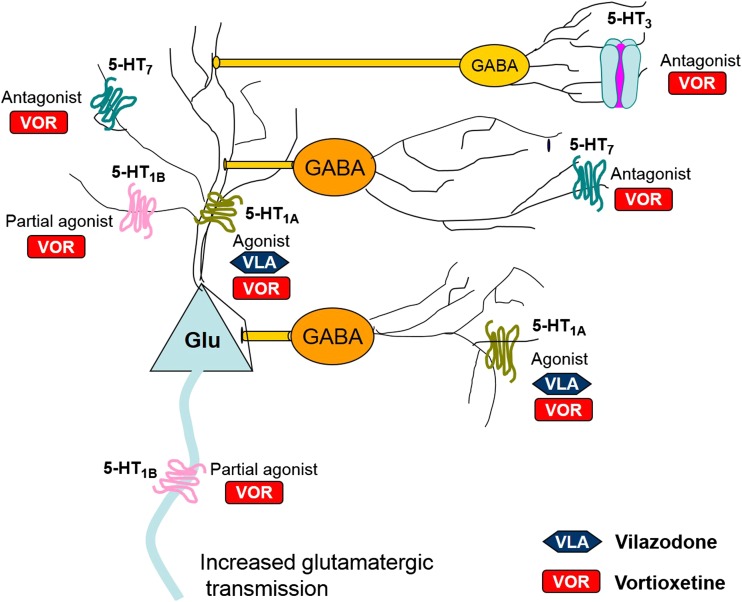
Monoamine-based treatments for depression have evolved greatly over the past several years, but shortcomings such as suboptimal efficacy, treatment lag, and residual cognitive dysfunction are still significant. Preclinical and clinical studies using compounds directly targeting glutamatergic neurotransmission present new opportunities for antidepressant treatment, with ketamine having a surprisingly rapid and sustained antidepressant effect that is presumably mediated through glutamate-dependent mechanisms. While direct modulation of glutamate transmission for antidepressant and cognition-enhancing actions may be hampered by nonspecific effects, indirect modulation through the serotonin (5-HT) system may be a viable alternative approach. Based on localization and function, 5-HT can modulate glutamate neurotransmission at least through the 5-HT 1A, 5-HT 1B, 5-HT 3, and 5-HT 7 receptors, which presents a rational pharmacological opportunity for modulating glutamatergic transmission without the direct use of glutamatergic compounds. Combining one or more of these glutamate-modulating 5-HT targets with 5-HT transporter inhibition may offer new therapeutic opportunities. The multimodal compounds vortioxetine and vilazodone are examples of this approach with diverse mechanisms, and their different clinical effects will provide valuable insights into serotonergic modulation of glutamate transmission for the potential treatment of depression and associated cognitive dysfunction.
Overview
The claims and statistics of this paper haven’t been checked yet.
Free: it reads the open-access text and checks the first 5 claims that cite a source we can check. Create a free account to check every claim.
Integrity signals
Registry
Cites
Statistics
Figures
Verification
Claims the paper makes
The claims and statistics of this paper haven’t been checked yet.
Free: it reads the open-access text and checks the first 5 claims that cite a source we can check. Create a free account to check every claim.
Claims other papers make about this one
Each is checked against this paper’s own text: does it say what the citing paper says it does?
The source backs part of the claim, not all of it — or backs it for a different population, condition or comparison.
In the citing paper
“Vortioxetine has been shown to improve a range of cognitive impairments in depressed patients (McIntyre et al 2014, Pehrson & Sanchez 2014, Sanchez et al 2015).”
From Prefrontal cortex executive processes affected by stress in health and disease (2018) · cites this paper as Pehrson & Sanchez 2014
Experimental — accuracy not yet measuredThe source backs part of the claim, not all of it — or backs it for a different population, condition or comparison.
In the citing paper
“Its blockage of the 5-HT3 receptors would improve the glutamatergic and serotoninergic transmission and also the firing of pyramidal neurons in prefrontal cortex, which plays a key role in the cognitive improvement.43”
From A Randomized Controlled Study of Efficacy and Cognitive Function Improvement of Vortioxetine and Escitalopram in Patients with Depression in Chinese Han Nationality (2024) · cites this paper as [43]
Experimental — accuracy not yet measuredThe cited source says what the claim attributes to it.
In the citing paper
“Evidence from recent preclinical cognitive behavioral models suggests vortioxetine has a beneficial effect on cognition (Pehrson et al, 2014; Sanchez et al, 2015).”
From A Randomized, Placebo-Controlled, Active-Reference, Double-Blind, Flexible-Dose Study of the Efficacy of Vortioxetine on Cognitive Function in Major Depressive Disorder (2015) · cites this paper as Pehrson et al, 2014
Experimental — accuracy not yet measuredIn the citing paper
“Furthermore, it has been postulated that vortioxetine may improve the cognitive symptoms of MDD through its effects on cognate serotoninergic receptors, which may modulate glutamatergic neurotransmission [90].”
From Cognitive remission: a novel objective for the treatment of major depression? (2016) · cites this paper as [90]
Self-check
Percentages, sums and reported differences re-computed from the paper’s own numbers.
The self-check needs the paper’s full text.
Citations
Cites
Antidepressant effects of ketamine in depressed patients
Berman, R. M., Cappiello, A., Anand, A., Oren, D. A., Heninger, G. R., Charney, D. S., & Krystal, J. H. (2000) · Biological Psychiatry · doi:10.1016/s0006-3223(99)00230-9 · Cited by 3,856
A randomized trial of an N-methyl-D-aspartate antagonist in treatment-resistant major depression.
Zarate, C. A., Singh, J. B., Carlson, P. J., Brutsche, N. E., Ameli, R., Luckenbaugh, D. A., Charney, D. S., & Manji, H. K. (2006) · Archives of General Psychiatry · doi:10.1001/archpsyc.63.8.856 · Cited by 3,766
mTOR-Dependent Synapse Formation Underlies the Rapid Antidepressant Effects of NMDA Antagonists
Li, N., Lee, B., Liu, R.-J., Banasr, M., Dwyer, J. M., Iwata, M., Li, X.-Y., Aghajanian, G., & Duman, R. S. (2010) · Science · doi:10.1126/science.1190287 · Cited by 2,881 · cited 2×
“In support of a role for AMPA receptors in treating depression, preclinical studies suggest that ketamine exerts its antidepressant-like effect through AMPA receptors,(39) and that fast action is accompanied by rapid neuronal and synaptic adaptation.(32,40) It is widely believed that neuroadaptive changes represent a…”
Cognitive vulnerability to emotional disorders
Mathews, A., & MacLeod, C. (2005) · Annual Review of Clinical Psychology · doi:10.1146/annurev.clinpsy.1.102803.143916 · Cited by 2,100 · cited 1×
“4,5 Moreover, some cognitive disturbances may predict the development of mood disorders, 6 and furthermore may persist beyond remission.”
Glutamate neurotoxicity in cortical cell culture
Choi, D., Maulucci-Gedde, M., & Kriegstein, A. (1987) · The Journal of Neuroscience · doi:10.1523/jneurosci.07-02-00357.1987 · Cited by 1,384
Cognitive deficits in depression: Possible implications for functional neuropathology
Austin, M.-P., Mitchell, P., & Goodwin, G. M. (2001) · British Journal of Psychiatry · doi:10.1192/bjp.178.3.200 · Cited by 1,154 · cited 1×
“attention, executive function, and speed of processing.(4,5) Moreover, some cognitive disturbances may predict the development of mood disorders,(6) and furthermore may persist beyond remission.”
Maeng, S., Zarate, C. A., Du, J., Schloesser, R. J., McCammon, J., Chen, G., & Manji, H. K. (2008) · Biological Psychiatry · doi:10.1016/j.biopsych.2007.05.028 · Cited by 1,103
Towards a glutamate hypothesis of depression
Sanacora, G., Treccani, G., & Popoli, M. (2012) · Neuropharmacology · doi:10.1016/j.neuropharm.2011.07.036 · Cited by 1,036
Glutamate receptor function in learning and memory
Riedel, G. (2003) · Behavioural Brain Research · doi:10.1016/s0166-4328(02)00272-3 · Cited by 962
Electrophysiological responses of serotoninergic dorsal raphe neurons to 5‐HT1A and 5‐HT1B agonists
Sprouse, J. S., & Aghajanian, G. K. (1987) · Synapse · doi:10.1002/syn.890010103 · Cited by 845
Research works printed but not linked: 1
- Westrich L, Pehrson A, Zhong H, etal In vitro and in vivo effects of the multimodal antidepressant vortioxetine (Lu AA21004) at human and rat targets. Int J Psychiatry Clin Pract. 2012; 5(suppl 1): 47– 47
Cited by
Sanchez, C., Asin, K. E., & Artigas, F. (2015) · Pharmacology & Therapeutics · doi:10.1016/j.pharmthera.2014.07.001 · Cited by 547
McIntyre, R. S., Lophaven, S., & Olsen, C. K. (2014) · The International Journal of Neuropsychopharmacology · doi:10.1017/s1461145714000546 · Cited by 433
Mahableshwarkar, A. R., Zajecka, J., Jacobson, W., Chen, Y., & Keefe, R. S. (2015) · Neuropsychopharmacology · doi:10.1038/npp.2015.52 · Cited by 307
Cognitive remission: a novel objective for the treatment of major depression?
Bortolato, B., Miskowiak, K. W., Köhler, C. A., Maes, M., Fernandes, B. S., Berk, M., & Carvalho, A. F. (2016) · BMC Medicine · doi:10.1186/s12916-016-0560-3 · Cited by 252
Pham, T. H., & Gardier, A. M. (2019) · Pharmacology & Therapeutics · doi:10.1016/j.pharmthera.2019.02.017 · Cited by 186
Depression and Cognition in the Elderly
Wang, S., & Blazer, D. G. (2015) · Annual Review of Clinical Psychology · doi:10.1146/annurev-clinpsy-032814-112828 · Cited by 178
Prefrontal cortex executive processes affected by stress in health and disease
Girotti, M., Adler, S. M., Bulin, S. E., Fucich, E. A., Paredes, D., & Morilak, D. A. (2018) · Progress in Neuro-Psychopharmacology and Biological Psychiatry · doi:10.1016/j.pnpbp.2017.07.004 · Cited by 176
Haase, J., & Brown, E. (2015) · Pharmacology & Therapeutics · doi:10.1016/j.pharmthera.2014.10.002 · Cited by 175
Role of calcium, glutamate and NMDA in major depression and therapeutic application
Deutschenbaur, L., Beck, J., Kiyhankhadiv, A., Mühlhauser, M., Borgwardt, S., Walter, M., Hasler, G., Sollberger, D., & Lang, U. E. (2015) · Progress in Neuro-Psychopharmacology and Biological Psychiatry · doi:10.1016/j.pnpbp.2015.02.015 · Cited by 171
Vortioxetine: Clinical Pharmacokinetics and Drug Interactions
Chen, G., Højer, A.-M., Areberg, J., & Nomikos, G. (2018) · Clinical Pharmacokinetics · doi:10.1007/s40262-017-0612-7 · Cited by 164
Major Depression: One Brain, One Disease, One Set of Intertwined Processes
Filatova, E. V., Shadrina, M. I., & Slominsky, P. A. (2021) · Cells · doi:10.3390/cells10061283 · Cited by 160
Pehrson, A., & Sanchez, C. (2015) · Drug Design, Development and Therapy · doi:10.2147/dddt.s62912 · Cited by 145
Self-citationCitrome, L. (2014) · International Journal of Clinical Practice · doi:10.1111/ijcp.12350 · Cited by 140
Nicosia, N., Giovenzana, M., Misztak, P., Mingardi, J., & Musazzi, L. (2024) · International Journal of Molecular Sciences · doi:10.3390/ijms25126521 · Cited by 135
“Traditional antidepressant drugs, such as selective serotonin reuptake inhibitors (SSRIs), primarily acting by increasing the synaptic bioavailability of monoamines, were also shown to modulate glutamatergic transmission [166,167].”
BackgroundVortioxetine: a novel antidepressant for the treatment of major depressive disorder
Gonda, X., Sharma, S. R., & Tarazi, F. I. (2019) · Expert Opinion on Drug Discovery · doi:10.1080/17460441.2019.1546691 · Cited by 123
Fakhfouri, G., Rahimian, R., Dyhrfjeld‐Johnsen, J., Zirak, M. R., & Beaulieu, J. (2019) · Pharmacological Reviews · doi:10.1124/pr.118.015487 · Cited by 114
Jensen, J. B., du Jardin, K. G., Song, D., Budac, D., Smagin, G., Sanchez, C., & Pehrson, A. L. (2014) · European Neuropsychopharmacology · doi:10.1016/j.euroneuro.2013.10.011 · Cited by 96
Self-citationDale, E., Zhang, H., Leiser, S. C., Xiao, Y., Lu, D., Yang, C. R., Plath, N., & Sanchez, C. (2014) · Journal of Psychopharmacology · doi:10.1177/0269881114543719 · Cited by 93
Pehrson, A. L., Leiser, S. C., Gulinello, M., Dale, E., Li, Y., Waller, J. A., & Sanchez, C. (2015) · European Journal of Pharmacology · doi:10.1016/j.ejphar.2014.07.044 · Cited by 91
Self-citationVortioxetine: A Review in Cognitive Dysfunction in Depression
Frampton, J. E. (2016) · Drugs · doi:10.1007/s40265-016-0655-3 · Cited by 90
Major depressive disorder: mechanism-based prescribing for personalized medicine
Lapolla, T., Saltiel, P., & Silvershein, D. (2015) · Neuropsychiatric Disease and Treatment · doi:10.2147/ndt.s73261 · Cited by 86
Cognition in major depressive disorder: a ‘Systemically Important Functional Index’ (SIFI)
McIntyre, R. S., & Lee, Y. (2016) · Current Opinion in Psychiatry · doi:10.1097/yco.0000000000000221 · Cited by 85
“Moreover, ketamine’s effects on measures of neural structures subserving cognitive functions provide a plausible mechanism for pro-cognitive effects of short-term exposure to ketamine [46].”
BackgroundLi, Y., Pehrson, A. L., Waller, J. A., Dale, E., Sánchez, C., & Gulinello, M. E. (2015) · Frontiers in Neuroscience · doi:10.3389/fnins.2015.00279 · Cited by 84
Self-citationKatzman, M., & Sternat, T. (2016) · Neuropsychiatric Disease and Treatment · doi:10.2147/ndt.s111818 · Cited by 83
“Dysfunction in LCSPT circuits and the associated neurotransmitter systems have been implicated as playing a key role in MDD. 19 Neuroimaging studies among depressed patients have demonstrated changes in the activity in LCSPT circuits in response to various treatments.”
InfluentialThe glycine site of NMDA receptors: A target for cognitive enhancement in psychiatric disorders
Peyrovian, B., Rosenblat, J. D., Pan, Z., Iacobucci, M., Brietzke, E. M., & McIntyre, R. S. (2019) · Progress in Neuro-Psychopharmacology and Biological Psychiatry · doi:10.1016/j.pnpbp.2019.02.001 · Cited by 83
Xu, P., Wang, K. Z., Lü, C., Dong, L., Zhai, J. L., Liao, Y. H., Aibai, S., Yang, Y., & Liu, X. M. (2016) · Journal of Ethnopharmacology · doi:10.1016/j.jep.2016.09.023 · Cited by 80
Culpepper, L., Muskin, P. R., & Stahl, S. M. (2015) · The American Journal of Medicine · doi:10.1016/j.amjmed.2015.07.001 · Cited by 77
Stahl, S. M. (2015) · CNS Spectrums · doi:10.1017/s1092852915000139 · Cited by 77
Vortioxetine for cognitive enhancement in major depression: From animal models to clinical research
Bennabi, D., Haffen, E., & Van Waes, V. (2019) · Frontiers in Psychiatry · doi:10.3389/fpsyt.2019.00771 · Cited by 75
“The blockade of 5-HT3 receptor–expressing GABAergic interneurons by vortioxetine increases glutamatedependent synaptic neurotransmission and enhances firing of pyramidal neurons (65, 66).”
BackgroundConnors, K. A., Valenti, T. W., Lawless, K., Sackerman, J., Onaivi, E. S., Brooks, B. W., & Gould, G. G. (2013) · Aquatic Toxicology · doi:10.1016/j.aquatox.2013.12.005 · Cited by 75
mGlu2/3 Receptor Antagonists as Novel Antidepressants
Chaki, S. (2017) · Trends in Pharmacological Sciences · doi:10.1016/j.tips.2017.03.008 · Cited by 73
Leiser, S. C., Pehrson, A. L., Robichaud, P. J., & Sanchez, C. (2014) · British Journal of Pharmacology · doi:10.1111/bph.12782 · Cited by 63
Self-citationThe 5-HT7 receptor as a potential target for treating drug and alcohol abuse
Hauser, S. R., Hedlund, P. B., Roberts, A. J., Sari, Y., Bell, R. L., & Engleman, E. A. (2015) · Frontiers in Neuroscience · doi:10.3389/fnins.2014.00448 · Cited by 61
Al-Sukhni, M., Maruschak, N. A., & McIntyre, R. S. (2015) · Expert Opinion on Drug Safety · doi:10.1517/14740338.2015.1046836 · Cited by 58
Freeman, M. P., Cheng, L. J., Moustafa, D., Davies, A. C., Sosinsky, A. Z., Wang, B. H., Petrillo, L. F., Hogan, C. S., & Cohen, L. S. (2017) · Annals of Clinical Psychiatry · doi:10.1177/104012371702900407 · Cited by 54
du Jardin, K. G., Müller, H. K., Elfving, B., Dale, E., Wegener, G., & Sanchez, C. (2016) · Progress in Neuro-Psychopharmacology and Biological Psychiatry · doi:10.1016/j.pnpbp.2016.05.007 · Cited by 53
5HT3 receptors: Target for new antidepressant drugs
Gupta, D., Prabhakar, V., & Radhakrishnan, M. (2016) · Neuroscience & Biobehavioral Reviews · doi:10.1016/j.neubiorev.2016.03.001 · Cited by 51
Subramaniapillai, M., Mansur, R. B., Zuckerman, H., Park, C., Lee, Y., Iacobucci, M., Cao, B., Ho, R., Lin, K., Phan, L., et al. (2019) · Comprehensive Psychiatry · doi:10.1016/j.comppsych.2019.07.006 · Cited by 49
Deardorff, W. J., & Grossberg, G. T. (2014) · Expert Opinion on Pharmacotherapy · doi:10.1517/14656566.2014.960842 · Cited by 49
Mitochondria: A Connecting Link in the Major Depressive Disorder Jigsaw
Sharma, S., & Akundi, R. S. (2018) · Current Neuropharmacology · doi:10.2174/1570159x16666180302120322 · Cited by 46
Millan, M. J., Rivet, J.-M., & Gobert, A. (2016) · Journal of Psychopharmacology · doi:10.1177/0269881116672342 · Cited by 45
Berhan, A., & Barker, A. (2014) · BMC Psychiatry · doi:10.1186/s12888-014-0276-x · Cited by 43
Biney, R. P., Benneh, C. K., Ameyaw, E. O., Boakye‐Gyasi, E., & Woode, E. (2016) · Journal of Ethnopharmacology · doi:10.1016/j.jep.2016.02.023 · Cited by 43
Stahl, S. M. (2015) · CNS Spectrums · doi:10.1017/s1092852915000346 · Cited by 40
Novel Targets to Treat Depression: Opioid-Based Therapeutics
Browne, C. A., Jacobson, M. L., & Lucki, I. (2020) · Harvard Review of Psychiatry · doi:10.1097/hrp.0000000000000242 · Cited by 40
Christensen, M. C., Schmidt, S. N., & Grande, I. (2023) · Journal of Affective Disorders · doi:10.1016/j.jad.2023.06.024 · Cited by 40
Brivio, P., Corsini, G., Riva, M. A., & Calabrese, F. (2019) · Pharmacological Research · doi:10.1016/j.phrs.2019.02.006 · Cited by 39
Chen, F., du Jardin, K. G., Waller, J. A., Sanchez, C., Nyengaard, J. R., & Wegener, G. (2016) · European Neuropsychopharmacology · doi:10.1016/j.euroneuro.2015.12.018 · Cited by 37
Fornaro, M., Solmi, M., Veronese, N., Berardis, D. D., Buonaguro, E. F., Tomasetti, C., Perna, G., Preti, A., & Carta, M. G. (2017) · International Review of Psychiatry · doi:10.1080/09540261.2017.1299695 · Cited by 37
Mansari, M. E., Lecours, M., & Blier, P. (2015) · Psychopharmacology · doi:10.1007/s00213-015-3870-9 · Cited by 36
Pehrson, A. L., Jeyarajah, T., & Sanchez, C. (2016) · CNS Spectrums · doi:10.1017/s1092852915000486 · Cited by 36
Self-citationBorhannejad, F., Shariati, B., Naderi, S., Shalbafan, M., Mortezaei, A., Sahebolzamani, E., Saeb, A., Mortazavi, S. H., Kamalzadeh, L., Aqamolaei, A., et al. (2020) · Journal of Clinical Pharmacy and Therapeutics · doi:10.1111/jcpt.13177 · Cited by 33
Hossain, R., Al-Khafaji, K., Khan, R. A., Sarkar, C. K., Islam, M. S., Dey, D., Jain, D., Faria, F., Akbor, R., Atolanı, O., et al. (2021) · Pharmaceuticals · doi:10.3390/ph14080721 · Cited by 31
Miyamoto, Y., Iegaki, N., Fu, K., Ishikawa, Y., Sumi, K., Azuma, S., Uno, K., Muramatsu, S., & Nitta, A. (2017) · The International Journal of Neuropsychopharmacology · doi:10.1093/ijnp/pyx078 · Cited by 31
Gómez‐Canela, C., Garcia-Sala, X., Martínez-Jerónimo, F., Marcé, R. M., & Barata, C. (2019) · Environmental Pollution · doi:10.1016/j.envpol.2019.113029 · Cited by 31
Wu, P., Kong, L., Zhou, Y., Deng, C., Wang, Z., Shen, Y., Wang, L. A., Tuo, Z., Liu, Y., Wang, Y., et al. (2025) · Molecular Psychiatry · doi:10.1038/s41380-025-03133-7 · Cited by 30
Jacobsen, P. L., Harper, L., Chrones, L., Chan, S., & Mahableshwarkar, A. R. (2015) · International Clinical Psychopharmacology · doi:10.1097/yic.0000000000000081 · Cited by 29
Li, I., Shih, J., Jhao, Y.-T., Chen, H., Chiu, C., Chen, C. F., Huang, Y., Shiue, C., & Ma, K. (2019) · Molecules · doi:10.3390/molecules24071344 · Cited by 31
Orsolini, L., Tomasetti, C., Valchera, A., Iasevoli, F., Buonaguro, E. F., Vellante, F., Fornaro, M., Fiengo, A. L. C., Mazza, M., Vecchiotti, R., et al. (2016) · Expert Review of Neurotherapeutics · doi:10.1586/14737175.2016.1173545 · Cited by 28
Guo, J., O’Flaherty, B. M., & Rainnie, D. G. (2017) · Neuropharmacology · doi:10.1016/j.neuropharm.2017.09.013 · Cited by 28
Dale, E., Grunnet, M., Pehrson, A. L., Frederiksen, K., Larsen, P. H., Nielsen, J., Stensbøl, T. B., Ebert, B., Yin, H., Lu, D., et al. (2018) · Brain Research · doi:10.1016/j.brainres.2017.12.025 · Cited by 27
Self-citationPehrson, A. L., Hillhouse, T. M., Haddjeri, N., Rovera, R., Porter, J. H., Mørk, A., Smagin, G. N., Song, D., Budac, D. P., Cajina, M., et al. (2016) · Journal of Pharmacology and Experimental Therapeutics · doi:10.1124/jpet.116.233924 · Cited by 27
Self-citationMachado-Santos, A. R., Loureiro‐Campos, E., Patrício, P., Araújo, B., Alves, N. D., Mateus‐Pinheiro, A., Correia, J. S., Morais, M., Bessa, J. M., Sousa, N., et al. (2022) · Cells · doi:10.3390/cells11030390 · Cited by 27
Treyer, V., Gietl, A. F., Suliman, H., Gruber, E., Meyer, R., Buchmann, A., Johayem, A., Unschuld, P. G., Nitsch, R. M., Buck, A., et al. (2020) · Brain and Behavior · doi:10.1002/brb3.1632 · Cited by 26
Waller, J. A., Chen, F., & Sánchez, C. (2016) · Neuropharmacology · doi:10.1016/j.neuropharm.2015.12.012 · Cited by 25
Vortioxetine for the treatment of major depressive disorder
Tritschler, L., Felice, D., Colle, R., Guilloux, J., Corruble, E., Gardier, A. M., & David, D. J. P. (2014) · Expert Review of Clinical Pharmacology · doi:10.1586/17512433.2014.950655 · Cited by 24
One‐week escitalopram intake alters the excitation–inhibition balance in the healthy female brain
Zsido, R. G., Molloy, E. N., Čėsnaitė, E., Zheleva, G., Beinhölzl, N., Scharrer, U., Piecha, F. A., Regenthal, R., Villringer, A., Nikulin, V. V., et al. (2022) · Human Brain Mapping · doi:10.1002/hbm.25760 · Cited by 23
Veldman, E. R., Svedberg, M. M., Svenningsson, P., & Lundberg, J. (2017) · European Neuropsychopharmacology · doi:10.1016/j.euroneuro.2017.02.011 · Cited by 23
Zhan, Y., Xia, J., & Wang, X. (2019) · International Journal of Neuroscience · doi:10.1080/00207454.2019.1684276 · Cited by 21
Xue, L., Bocharova, M., Young, A. H., & Aarsland, D. (2024) · Journal of Affective Disorders · doi:10.1016/j.jad.2024.06.003 · Cited by 20
Waller, J. A., Tamm, J. A., Abdourahman, A., Pehrson, A. L., Li, Y., Cajina, M., & Sánchez, C. (2017) · European Neuropsychopharmacology · doi:10.1016/j.euroneuro.2016.11.014 · Cited by 21
Self-citationIntegrated treatment of schizophrenia
Altamura, A. C., Fagiolini, A. M., Galderisi, S., Rocca, P., & Rossi, A. (2015) · Use Siena air (University of Siena) · Cited by 20
Uno, K., Miyanishi, H., Sodeyama, K., Fujiwara, T., Miyazaki, T., Muramatsu, S., & Nitta, A. (2019) · Behavioural Brain Research · doi:10.1016/j.bbr.2019.112227 · Cited by 19
Stan, T. L., Sousa, V. C., Zhang, X., Ono, M., & Svenningsson, P. (2015) · European Neuropsychopharmacology · doi:10.1016/j.euroneuro.2015.07.007 · Cited by 18
Serotonergic drugs for the treatment of neuropsychiatric symptoms in dementia
Magierski, R., & Sobów, T. (2016) · Expert Review of Neurotherapeutics · doi:10.1586/14737175.2016.1155453 · Cited by 18
Cumbo, E., Adair, M., Åström, D. O., & Christensen, M. C. (2023) · Frontiers in Aging Neuroscience · doi:10.3389/fnagi.2022.1037816 · Cited by 17
Evidence of an antidepressant-like effect of xylopic acid mediated by serotonergic mechanisms
Biney, R. P., Benneh, C. K., Adongo, D. W., Ameyaw, E. O., & Woode, E. (2021) · Psychopharmacology · doi:10.1007/s00213-021-05835-6 · Cited by 17
Biomarkers in Major Depressive Disorder: The Role of Mass Spectrometry
Woods, A. G., Iosifescu, D. V., & Darie, C. C. (2014) · Advances in experimental medicine and biology · doi:10.1007/978-3-319-06068-2_27 · Cited by 17
Mahableshwarkar, A. R., Zajecka, J., Jacobson, W., Chen, Y., & Keefe, R. S. (2016) · Neuropsychopharmacology · doi:10.1038/npp.2016.181 · Cited by 15
Kokras, N., Poulogiannopoulou, E., Sotiropoulos, M. G., Paravatou, R., Goudani, E., Dimitriadou, M., Papakonstantinou, E., Doxastakis, G., Perrea, D. N., Hloupis, G., et al. (2020) · Molecules · doi:10.3390/molecules25215000 · Cited by 15
Meccia, J., Lopez, J., & Bagot, R. C. (2022) · Psychopharmacology · doi:10.1007/s00213-022-06297-0 · Cited by 14
Yan, A. L., Wei, M., Gong, A. G. W., Song, P., Lou, J.-S., Bi, C. W. C., Xu, S. L., Xiong, A., Dong, T. T.-X., & Tsim, K. W. K. (2017) · Frontiers in Cell and Developmental Biology · doi:10.3389/fcell.2017.00118 · Cited by 14
Zhou, M.-H., Sun, F., Xu, C. S., Chen, H., Qiao, H., Cai, X., Ma, X., & An, S.-C. (2018) · Behavioural Brain Research · doi:10.1016/j.bbr.2018.06.021 · Cited by 14
Chakroborty, S., Geisbush, T. R., Dale, E., Pehrson, A. L., Sánchez, C., & West, A. R. (2017) · Frontiers in Pharmacology · doi:10.3389/fphar.2017.00764 · Cited by 13
“Given the abundant distribution of SERT and various 5-HT receptors in the above brain regions (Biegon et al., 1982; Pazos et al., 1985; Pehrson and Sanchez, 2014; Pehrson et al., 2016), it is likely that further characterization of the impact of vortioxetine and escitalopram on synaptic…”
Self-citationWesnes, K. A., Hopkins, S. C., Brooker, H. J., & Koblan, K. S. (2016) · CNS Spectrums · doi:10.1017/s1092852915000802 · Cited by 13
Tropisetron Facilitates Footshock Suppression of Compulsive Cocaine Seeking
Zhou, Y.-Q., Zhang, L.-Y., Yu, Z.-P., Zhang, X., Shi, J., & Shen, H. (2019) · The International Journal of Neuropsychopharmacology · doi:10.1093/ijnp/pyz023 · Cited by 13
Depression and Cerebrovascular Disease: Could Vortioxetine Represent a Valid Treatment Option?
Carta, M. G., Pala, A. N., Finco, G., Musu, M., & Moro, M. F. (2015) · Clinical Practice and Epidemiology in Mental Health · doi:10.2174/1745017901511010144 · Cited by 12
d’Andrea, G., Miuli, A., Pettorruso, M., Cavallotto, C., Marrangone, C., Cocco, A., Filippis, S. D., Martiadis, V., Andriola, I., Barlati, S., et al. (2024) · Journal of Affective Disorders · doi:10.1016/j.jad.2024.09.004 · Cited by 12
Yan, J., Li, G.-X., Sun, S., Cui, L.-Y., Yin, Y., & Li, Y. (2023) · Progress in Neuro-Psychopharmacology and Biological Psychiatry · doi:10.1016/j.pnpbp.2023.110911 · Cited by 12
Protein Biomarkers in Major Depressive Disorder: An Update
Woods, A. G., Wormwood, K. L., Iosifescu, D. V., Murrough, J. W., & Darie, C. C. (2019) · Advances in experimental medicine and biology · doi:10.1007/978-3-030-15950-4_35 · Cited by 12
Vortioxetina nel trattamento della depressione maggiore
de Bartolomeis, A., Fagiolini, A. M., & Maina, G. (2016) · Rivista di psichiatria · doi:10.1708/2596.26720 · Cited by 13
Stratilov, V. A., Potapova, S., Safarova, D., Tyulkova, E. I., & Vetrovoy, O. V. (2024) · International Journal of Molecular Sciences · doi:10.3390/ijms25115902 · Cited by 12
Herbal medicine for psychiatric disorders: Psychopharmacology and neuroscience-based nomenclature
Tang, S. W., Tang, W. H., & Leonard, B. E. (2019) · The World Journal of Biological Psychiatry · doi:10.1080/15622975.2017.1346279 · Cited by 11
Neurological Changes and Depression
Greene, R. D., Cook, A., Nowaskie, D. Z., & Wang, S. (2019) · Clinics in Geriatric Medicine · doi:10.1016/j.cger.2019.11.009 · Cited by 11
Neuroplasticity pathways and protein-interaction networks are modulated by vortioxetine in rodents
Waller, J. A., Nygaard, S. H., Li, Y., du Jardin, K. G., Tamm, J. A., Abdourahman, A., Elfving, B., Pehrson, A. L., Sánchez, C., & Wernersson, R. (2017) · BMC Neuroscience · doi:10.1186/s12868-017-0376-x · Cited by 11
Self-citationEbrahimzadeh, M. A., Mansari, M. E., & Blier, P. (2017) · Neuropharmacology · doi:10.1016/j.neuropharm.2017.10.036 · Cited by 11
Wei, Y., Xu, X., Guo, Q., Zhao, S., Qiu, Y., Wang, D., Yu, W., Liu, Y., & Wang, K. (2023) · Acta Pharmaceutica Sinica B · doi:10.1016/j.apsb.2023.11.024 · Cited by 10
Jacobson, W., Zhong, W., Nomikos, G. G., Christensen, M. C., Olsen, C. K., & Harvey, P. D. (2019) · Current Medical Research and Opinion · doi:10.1080/03007995.2019.1657692 · Cited by 10
Metadata
- Authors
- Pehrson, A. L., & Sanchez, C.
- Affiliations
- Lundbeck (United States) (US)
- ORCID
- Pehrson, Alan L.
- Venue
- CNS Spectrums
- Publisher
- Cambridge University Press (CUP)
- Published
- 2013-08-01
- Volume
- 19
- Issue
- 2
- Pages
- 121-133
- ISSN
- 1092-8529 (ISSN-L)
- 2165-6509
- PMC
- PMC3968911
- OpenAlex
- W2109860355
- Cited by
- 161
- References
- 153
- Citations by year
- 2026: 7 · 2025: 6 · 2024: 10 · 2023: 10 · 2022: 8 · 2021: 9 · 2020: 5 · 2019: 19 · 2018: 9 · 2017: 21 · 2016: 15 · 2015: 25 · 2014: 13 · 2013: 4
- FWCI
- 2.38
- Type
- journal article
- Language
- en
- Open access
- hybrid
- doi.org
- Licence
- Locations
- CNS Spectrums (publishedVersion, cc-by-nc-sa)
- Europe PMC (PubMed Central) (publishedVersion, cc-by-nc-sa)
- PubMed Central (publishedVersion, cc-by-nc-sa)
- PubMed (publishedVersion)
- Topics
- Health Sciences › Medicine › Pharmacology (medical) › Treatment of Major Depression
- Life Sciences › Neuroscience › Cellular and Molecular Neuroscience › Neuroscience and Neuropharmacology Research
- Life Sciences › Neuroscience › Cellular and Molecular Neuroscience › Neurotransmitter Receptor Influence on Behavior
- Keywords
- serotonergic modulation, glutamatergic neurotransmission, depression, cognitive impairment, 5-HT1A receptor, 5-HT1B receptor, 5-HT3 receptor, 5-HT7 receptor, vortioxetine, vilazodone, ketamine, antidepressant efficacy, multimodal antidepressant
- MeSH terms
- Animals, Cognition Disorders, Depression, Humans, Synaptic Transmission, Serotonin, Serotonin Agents, Glutamic Acid
About these checks
Registry, retraction, Cites and statistics results are computed, not judged, with one exception: a printed reference that no index lists is read once by a model before it counts as a citation error. Claims are extracted by a model and kept only when their quote appears verbatim in the text; each cited source is then checked, with a model’s help, for whether it says what the claim relies on. Those verdicts can be wrong — read the claim’s quote and the cited source before relying on one.
Statistics and arithmetic are recomputed, not judged.
Confidence bands are shown only for fields calibrated on our annotated test set. None is calibrated yet, so no band is shown.
What counts as a claim ›How we measure confidence ›How we check this ›
Are you an author, or do you see a problem with this page? Request a review
Data sources
Bibliographic data: Semantic Scholar, OpenAlex, Crossref.
Contains information from the Semantic Scholar Academic Graph Datasets, made available under the ODC Attribution License (ODC-BY 1.0).
Semantic Scholar’s data is described in: Kinney, R., et al. (2023). The Semantic Scholar Open Data Platform. arXiv:2301.10140.
