

Mental Disorder Symptoms during the COVID-19 Pandemic in Latin America—A Systematic Review and Meta-Analysis
Open accessPublished version of a preprint
The DOI matches its Crossref record; 91 of the 96 references it cites were found in a registry or an index.
Abstract
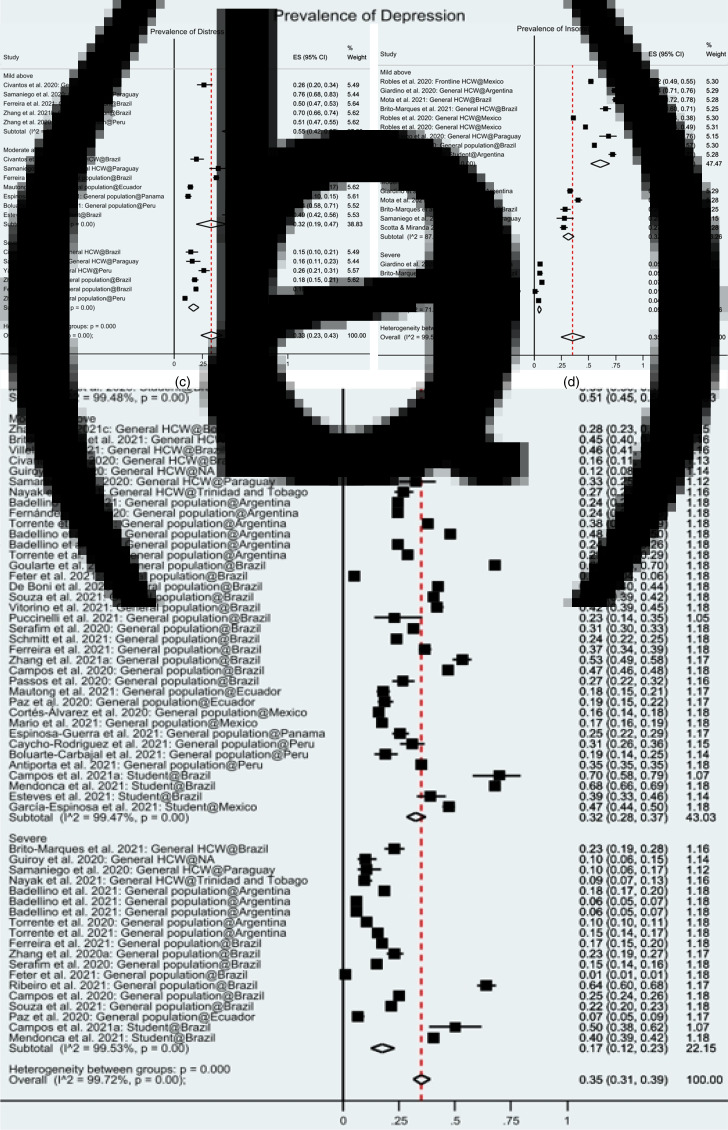
Aims: There is a lack of evidence related to the prevalence of mental health symptoms as well as their heterogeneities during the coronavirus disease 2019 (COVID-19) pandemic in Latin America, a large area spanning the equator. The current study aims to provide meta-analytical evidence on mental health symptoms during COVID-19 among frontline healthcare workers, general healthcare workers, the general population and university students in Latin America. Methods: Bibliographical databases, such as PubMed, Embase, Web of Science, PsycINFO and medRxiv , were systematically searched to identify pertinent studies up to August 13, 2021. Two coders performed the screening using predefined eligibility criteria. Studies were assigned quality scores using the Mixed Methods Appraisal Tool. The double data extraction method was used to minimise data entry errors. Results: A total of 62 studies with 196 950 participants in Latin America were identified. The pooled prevalence of anxiety, depression, distress and insomnia was 35%, 35%, 32% and 35%, respectively. There was a higher prevalence of mental health symptoms in South America compared to Central America (36% v . 28%, p < 0.001), in countries speaking Portuguese (40%) v. Spanish (30%). The pooled prevalence of mental health symptoms in the general population, general healthcare workers, frontline healthcare workers and students in Latin America was 37%, 34%, 33% and 45%, respectively. Conclusions: The high yet heterogenous level of prevalence of mental health symptoms emphasises the need for appropriate identification of psychological interventions in Latin America.
Overview
The claims and statistics of this paper haven’t been checked yet.
Free: it reads the open-access text and checks the first 5 claims that cite a source we can check. Create a free account to check every claim.
Integrity signals
Registry
Cites
Statistics
Figures
Verification
Claims the paper makes
The claims and statistics of this paper haven’t been checked yet.
Free: it reads the open-access text and checks the first 5 claims that cite a source we can check. Create a free account to check every claim.
Claims other papers make about this one
Each is checked against this paper’s own text: does it say what the citing paper says it does?
The source backs part of the claim, not all of it — or backs it for a different population, condition or comparison.
In the citing paper
“The most prevalent psychological disorders among healthcare personnel include burnout syndrome, chronic fatigue, depression, and anxiety [5,6].”
From Mental Health in Healthcare Workers Post-COVID-19: A Latin American Review and Insights into Personalized Management Strategies (2024) · cites this paper as [5]
Experimental — accuracy not yet measured
Self-check
Percentages, sums and reported differences re-computed from the paper’s own numbers.
The self-check needs the paper’s full text.
Citations
Cites
Meta-analysis in clinical trials
DerSimonian, R., & Laird, N. (1986) · Controlled Clinical Trials · doi:10.1016/0197-2456(86)90046-2 · Cited by 39,552
Liberati, A., Altman, D. G., Tetzlaff, J., Mulrow, C., Gøtzsche, P. C., Ioannidis, J. P. A., Clarke, M., Devereaux, P. J., Kleijnen, J., & Moher, D. (2009) · PLoS Medicine · doi:10.1371/journal.pmed.1000100 · Cited by 28,164
Liberati, A., Altman, D. G., Tetzlaff, J., Mulrow, C., Gotzsche, P. C., Ioannidis, J. P. A., Clarke, M., Devereaux, P. J., Kleijnen, J., & Moher, D. (2009) · BMJ · doi:10.1136/bmj.b2700 · Cited by 17,648
Cochrane Handbook for Systematic Reviews of Interventions
(2019) · doi:10.1002/9781119536604 · Cited by 14,828
Borenstein, M., Hedges, L. V., Higgins, J. P. T., & Rothstein, H. R. (2021) · doi:10.1002/9781119558378 · Cited by 9,799
The Mixed Methods Appraisal Tool (MMAT) version 2018 for information professionals and researchers
Hong, Q. N., Fàbregues, S., Bartlett, G., Boardman, F., Cargo, M., Dagenais, P., Gagnon, M.-P., Griffiths, F., Nicolau, B., O’Cathain, A., et al. (2018) · Education for Information · doi:10.3233/efi-180221 · Cited by 4,737 · cited 1×
“The Mixed Methods Appraisal Tool (MMAT) with seven questions was used as a quality assessment tool (Hong et al., 2018; Pablo et al., 2020; Usher et al., 2020).”
MethodPappa, S., Ntella, V., Giannakas, T., Giannakoulis, V. G., Papoutsi, E., & Katsaounou, P. (2020) · Brain Behavior and Immunity · doi:10.1016/j.bbi.2020.05.026 · Cited by 3,617 · cited 3×
“Recently, meta-analyses have provided early global evidence on the prevalence of mental health symptoms across groups, including healthcare workers, the general population and students (Batra et al., 2020; Luo et al., 2020; Pappa et al., 2020).”
BackgroundInfluentialTimely mental health care for the 2019 novel coronavirus outbreak is urgently needed
Xiang, Y.-T., Yang, Y., Li, W., Zhang, L., Zhang, Q., Cheung, T., & Ng, C. H. (2020) · The Lancet Psychiatry · doi:10.1016/s2215-0366(20)30046-8 · Cited by 3,598 · cited 1×
“The vulnerabilities of frontline healthcare workers are often attributed to a higher risk of infection, burnout, the more direct exposure to suffering or dying patients, fear of COVID-19 transmission to their family members and job loss (Xiang et al., 2020; Bhandari et al., 2021).”
BackgroundLiberati, A., Altman, D. G., Tetzlaff, J., Mulrow, C., Gøtzsche, P. C., Ioannidis, J. P. A., Clarke, M., Devereaux, P. J., Kleijnen, J., & Moher, D. (2009) · Italian Journal of Public Health · doi:10.2427/5768 · Cited by 3,374
Covid-19 pandemic and online learning: the challenges and opportunities
Adedoyin, O. B., & Soykan, E. (2023) · Interactive Learning Environments · doi:10.1080/10494820.2020.1813180 · Cited by 2,729 · cited 1×
“The greater prevalence of mental health symptoms among university students can be explained by the uncertainties surrounding the course of the pandemic and the sudden transition to online education (Adedoyin and Soykan, 2020; Batra et al., 2021).”
Background
Research works printed but not linked: 2
- Mier-Bolio JR, Arroyo-González JM, Baques-Guillén E, Valdez-Lopez JF, Torre-García ÁJ, Rodríguez-Rodríguez OE and Rivera-Arroyo G (2020) COVID-19 y ansiedad en oftalmólogos. Revista Mexicana de Oftalmologia 94, 223– 227.
- Espinosa-Guerra EA, Rodríguez-Barría ER, Donnelly CA and Carrera J-P (2021) Prevalence and associated factors with mental health outcomes among interns and residents physicians during COVID-19 epidemic in Panama: a cross-sectional study. medRxiv, 21254435.
Cited by
How COVID-19 shaped mental health: from infection to pandemic effects
Penninx, B. W. J. H., Benros, M. E., Klein, R. S., & Vinkers, C. H. (2022) · Nature Medicine · doi:10.1038/s41591-022-02028-2 · Cited by 445
Primary Health Care for Resilient Health Systems in Latin America
OECD (2022) · OECD Health Policy Studies · doi:10.1787/743e6228-en · Cited by 159
Witteveen, A. B., Young, S. Y., Cuijpers, P. J., Ayuso‐Mateos, J. L., Barbui, C., Bertolini, F., Cabello, M., Cadorin, C., Downes, N., Franzoi, D., et al. (2023) · PLoS Medicine · doi:10.1371/journal.pmed.1004206 · Cited by 163
“(Continued) Study End date search Studies Sample size Study designs Assessment Outcomes1 Study populations Countries/continents/ WHO regions AMSTAR 2 scores Critical Total Racine 2021 [63] Feb 2021 29 80,879 NR Validated self- report Dep Children, adolescents China, USA, Jordan, Ecuador, Italy, Spain, Portugal, Brazil…”
InfluentialChen, J., Zhang, S. X., Yin, A., & Yáñez, J. A. (2022) · Journal of Global Health · doi:10.7189/jogh.12.05011 · Cited by 100
Self-citationZhang, S. X., Chen, R. Z., Xu, W., Yin, A., Dong, R. K., Chen, B. Z., Delios, A. Y., Miller, S., McIntyre, R. S., Ye, W., et al. (2022) · International Journal of Environmental Research and Public Health · doi:10.3390/ijerph19021018 · Cited by 78
Self-citationRoberti, J. E., Leslie, H. H., Doubova, S. V., Medina-Ranilla, J., Mazzoni, A., Espinoza-Pajuelo, L., Calderón, R., Arsenault, C., García‐Elorrio, E., & Garcia, P. J. (2023) · The Lancet Global Health · doi:10.1016/s2214-109x(23)00488-6 · Cited by 111
Yang, J., Chen, Y., Tian, Y., Li, X., Yu, Q., Huang, C., Chen, Z., Ning, M., Li, S., He, J., et al. (2024) · International Journal of Mental Health Nursing · doi:10.1111/inm.13337 · Cited by 70
Zhang, S. X., & Chen, J. (2021) · European Journal of Psychotraumatology · doi:10.1080/20008198.2021.2001192 · Cited by 51
Self-citationTian, J., Yan, N., Hu, X., Tian, S., Wang, Y., Mackay, L. E., Luo, Y., Wang, Y., Wang, Y., Liu, Y., et al. (2025) · General Psychiatry · doi:10.1136/gpsych-2025-102278 · Cited by 48
“These findings indicate the urgent need for effective global strategies to prevent, treat and manage mental disorders in the postpandemic era to mitigate this growing public-health challenge.”
Boucher, V. G., Dahl, M., Lee, J., Faulkner, G., Beauchamp, M. R., & Puterman, E. M. (2025) · Journal of Affective Disorders · doi:10.1016/j.jad.2025.01.109 · Cited by 37
Chen, X., Chen, J., Zhang, M., Dong, R. K., Li, J., Dong, Z., Ye, Y., Tong, L., Zhao, R., Cao, W., et al. (2022) · Frontiers in Psychiatry · doi:10.3389/fpsyt.2022.833865 · Cited by 26
Self-citationMoya‐Salazar, J., Jaime‐Quispe, A., Cañari, B., Moya-Espinoza, J. G., & Contreras‐Pulache, H. (2023) · Frontiers in Psychiatry · doi:10.3389/fpsyt.2023.1136328 · Cited by 22
Diez‐Canseco, F., Carbonel, A., Bernabé‐Ortiz, A., Olivar, N., Gómez–Restrepo, C., Toyama, M., Uribe-Restrepo, J. M., Brusco, L. I., Hidalgo-Padilla, L., Ramirez-Meneses, D., et al. (2024) · Frontiers in Psychology · doi:10.3389/fpsyg.2024.1466378 · Cited by 32
The Association Between Exposure to COVID-19 and Mental Health Outcomes Among Healthcare Workers
Czepiel, D., Hoek, H. W., van der Markt, A., Rutten, B. P. F., Veling, W., Schirmbeck, F. N., Mascayano, F., Susser, E., & van der Ven, E. (2022) · Frontiers in Public Health · doi:10.3389/fpubh.2022.896843 · Cited by 22
Wadichar, A., Murarka, S., Shah, D., Bhurane, A. A., Sharma, M. D., Mir, H., & Acharya, U. R. (2023) · IEEE Access · doi:10.1109/access.2023.3330901 · Cited by 27
“United States of America, it is observed that 35% of adults have insomnia [3].”
BackgroundMuñoz-Ortega, S., Santamaría-Guayaquil, D., Pluas-Borja, J., Alvarado-Villa, G., Sandoval, V., Alvarado, R., Cherrez-Ojeda, I., & Faytong-Haro, M. (2024) · Journal of Personalized Medicine · doi:10.3390/jpm14070680 · Cited by 18
Solmi, M., Thompson, T., Estradé, A., Agorastos, A., Raduà, J., Cortese, S., Dragioti, E., Leisch, F., Vancampfort, D., Thygesen, L. C., et al. (2022) · Journal of Affective Disorders · doi:10.1016/j.jad.2022.12.022 · Cited by 20
“, 2021) and of specific groups (Chen et al., 2022; Dragioti et al., 2022; Leung et al., 2022; Zhang et al., 2022) of the population has been studied by several anonymous surveys.”
Espinoza-Turcios, E., Gonzales-Romero, R. M., Sosa-Mendoza, C. A., Sierra, M., Ramos, H. N. C., Zambrano, L. I., Pacheco, J. M. A., & Mejia, C. R. (2023) · Frontiers in Psychiatry · doi:10.3389/fpsyt.2023.1116881 · Cited by 18
“In Latin America the pooled prevalence of anxiety, depression, distress and insomnia was 35, 35, 32 and 35%, respectively (28).”
BackgroundCrisis due to war: anxiety, depression and stress in the population of 13 Latin American countries
Mejia, C. R., Álvarez-Risco, A., Chamorro–Espinoza, S. E., Castrillón-Lozano, J. A., Paucar, M. C., Padilla-F, V. J., Pacheco, J. M. A., Vilela-Estrada, M. A., Serna-Alarcón, V., Del-Aguila-Arcentales, S., et al. (2023) · Frontiers in Psychiatry · doi:10.3389/fpsyt.2023.1218298 · Cited by 22
Sun, L., Wang, X., Hong, Y., Li, C., Zeng, W., Liu, P., Xiong, Y., Chen, Y., Lian, Y., & Wang, Y. (2023) · Frontiers in Psychiatry · doi:10.3389/fpsyt.2023.1100242 · Cited by 16
“8% in this study, which was relatively lower than findings reported by previous studies, among which the prevalence of depression or anxiety during the COVID-19 pandemic ranged from 20 to 45% across diverse populations and geographic areas (13, 20, 24, 54, 55).”
ResultMac‐Ginty, S., Lira, D., Lillo, I., Moraga-Escobar, E. I., Cáceres, C., Araya, R., & Prina, M. A. (2024) · Adolescent Research Review · doi:10.1007/s40894-023-00230-y · Cited by 32
“According to some studies, university students had the highest pooled prevalence of depression (Yuan et al., 2022) and anxiety (Yuan et al., 2022; Zhang et al., 2022) compared to health-care workers and the general population.”
Health, psychosocial and cognitive factors associated with anxiety symptoms
Mendoza, L. S. M., Trujillo‐Güiza, M. L., Forero, D. A., & Báez, S. (2024) · Current Psychology · doi:10.1007/s12144-024-05998-3 · Cited by 27
“Research focusing on anxiety prevalence at time periods surrounding the COVID-19 pandemic have estimated an incidence between 31 and 35% (Chang et al., 2021 ; Deng et al., 2021 ; Zhang et al., 2022 ).”
Sigahi, T. F. A. C., Sznelwar, L. I., Rampasso, I. S., de Moraes, G. H. S. M., Júnior, G. G., Pinto, A., & Anholon, R. (2022) · Ergonomics · doi:10.1080/00140139.2022.2126895 · Cited by 18
Yi, X., Cao, J., Meimei, M., Jianhui, X., Hu, J., Ding, X., & Lihui, Z. (2023) · Frontiers in Psychiatry · doi:10.3389/fpsyt.2023.1123445 · Cited by 11
“Many previous studies have focused on the related effects of acute stress events on the mental and physical health of frontline nurses during the COVID-19 pandemic (8, 9), studies have rarely addressed non-frontline pediatric nurses.”
BackgroundLi, W., Zhao, Y.-J., Zhang, S.-F., Yang, B. X., Cheung, T. C. C., Jackson, T., Sha, S., & Xiang, Y. (2022) · Journal of Affective Disorders · doi:10.1016/j.jad.2022.08.074 · Cited by 11
Self-citationGiusti, G., Farrapo, A. C., Sigahi, T. F. A. C., Saltorato, P., Vieira, J. G. V., & Silva, D. A. L. (2023) · The International Journal of Life Cycle Assessment · doi:10.1007/s11367-023-02225-2 · Cited by 9
South American Validation of a Survey to Assess Eco-Anxiety in Adults (ECO-ANS-LATAM)
Mejia, C. R., Álvarez-Risco, A., Vizcardo, D. A. A., Sedano-Ochoa, L., Rivera, M. F. M., Jaramillo, C. S., Cedillo-Balcázar, J., Mamani-Benito, O. J., Esteban, R. F. C., Pacheco, J. M. A., et al. (2024) · Journal of Clinical Medicine · doi:10.3390/jcm13082398 · Cited by 10
“[20].”
Zou, Q., Tang, Y., Jiang, C., Lin, P., Tian, J., & Sun, S. (2022) · Frontiers in Psychology · doi:10.3389/fpsyg.2022.1024668 · Cited by 10
Hernández‐Fuentes, G. A., Romero-Michel, J. C., Guzmán-Sandoval, V. M., Diaz‐Martinez, J., Delgado‐Enciso, O. G., Garcia-Perez, R. R., Godínez-Medina, M., Zamora-Barajas, V., Hilerio-López, Á. G., Ceja-Espíritu, G., et al. (2024) · Diseases · doi:10.3390/diseases12120303 · Cited by 17
de Moraes, S. H. M., da Cunha, I. P., Lemos, E. F., Abastoflor, L. L. L., Oshiro, M. D. L., BOHRER, R. T. D. D. A., Sarubbi, V., de Souza, F. B., do Nascimento, D. D. G., & de Oliveira, S. M. D. V. L. (2023) · PLoS ONE · doi:10.1371/journal.pone.0274927 · Cited by 15
Galanis, P., Vraka, I. S., Katsiroumpa, A., Konstantakopoulou, O., Siskou, O. C., Zogaki, E., & Καϊτελίδου, Δ. (2023) · Vaccines · doi:10.3390/vaccines11020269 · Cited by 9
Cohen, M. M., Cardoso, R. B., Kerr, L. R. F. S., Kendall, C., de Almeida, R. L. F., Schneider, N. B., Viera, C. M., Zaduchliver, J. G., Castro, A. A., Júnior, F. M. L. P., et al. (2023) · Comprehensive Psychiatry · doi:10.1016/j.comppsych.2023.152402 · Cited by 13
Mao, B., Kanjanarat, P., Wongpakaran, T., Permsuwan, U., & O’Donnell, R. R. (2023) · Healthcare · doi:10.3390/healthcare11152174 · Cited by 8
Ayalew, M., Deribe, B., Hussen, S., Defar, S., Shimber, E. T., & Gedefaw, A. (2023) · Frontiers in Psychiatry · doi:10.3389/fpsyt.2023.1142926 · Cited by 11
de Vargas, D., Volpato, R. J., dos Santos, L. C., Pereira, C. F., de Oliveira, S. R., da Silva, R. R., Maciel, M. E. D., Fernandes, I. L., Santana, K. D. O., & Aguilar, T. F. (2023) · International Journal of Mental Health Nursing · doi:10.1111/inm.13274 · Cited by 8
Álvarez, C., de Araújo, E. S. A., Baumeister, E. G., Crespo, K. A. N., Kalergis, A. M., Muñoz‐Medina, J. E., Tsukayama, P., & Ugarte‐Gil, C. (2024) · COVID · doi:10.3390/covid4020017 · Cited by 8
Sifi, N., Benali, R., Dib, N., & Messaoudene, K. (2024) · Arabian Journal for Science and Engineering · doi:10.1007/s13369-024-09623-0 · Cited by 5
“In the United States, data shows that roughly 35% of adults grapple with insomnia, emphasizing the pervasive Influence of sleep disorders [4].”
Renzi, E., Imeshtari, V., Masud, D., Baccolini, V., Migliara, G., Gasperini, G., Vito, C. D., Marzuillo, C., Villari, P., & Massimi, A. (2023) · Frontiers in Psychiatry · doi:10.3389/fpsyt.2023.1083693 · Cited by 7
“In fact, during the global pandemic, anxiety was the most prevalent mental disorder in HCWs and prevalence was significantly higher than in the general population, with a similar distribution in the pooled prevalence across all geographic areas: global 42%, (25) Africa 49% (26), South America 35% (27), Eastern Europe…”
BackgroundSelak, Š., Lebar, M., Žvelc, G., Gabrovec, B., Šorgo, A., Cesar, K., & Crnkovič, N. (2024) · Frontiers in Psychology · doi:10.3389/fpsyg.2024.1461595 · Cited by 8
Wegner, L., & Liu, S. (2023) · Frontiers in Public Health · doi:10.3389/fpubh.2022.1067038 · Cited by 5
Zhang, S. X., & Kowalczuk, K. (2023) · Frontiers in Psychiatry · doi:10.3389/fpsyt.2023.1226793 · Cited by 7
Self-citationOhta, T., Ogawa, M., Kikuchi, N., Sasai, H., & Okamoto, T. (2023) · International Journal of Public Health · doi:10.3389/ijph.2023.1604647 · Cited by 5
Espinoza, C., Canessa, F., van der Veek, S., Alink, L. R. A., & van der Voort, A. (2024) · Child and Adolescent Psychiatry and Mental Health · doi:10.1186/s13034-024-00808-x · Cited by 5
“Further, most of the existing literature on predictors of mental health– during and in the wake of the pandemic-comes from studies conducted in highly developed countries [38], leaving most Latin American countries (with the exception of Brazil) outside the scope of research [39, 40].”
BackgroundTorales, J. C., Giuseppe, M. F. D., Almirón, M., O’Higgins, M. G., Amarilla, D., Caycho‐Rodríguez, T., Ventriglio, A., Castaldelli-Maia, J. M., & Barrios, I. (2024) · Biomedical Human Kinetics · doi:10.2478/bhk-2024-0033 · Cited by 5
Montenegro, M. C., Ramírez, A. C., Rodríguez, J. H., Villalobos, B. T., Garrido, G., Amigo, C., Valdez, D., Barrios, N., Cukier, S., Rattazzi, A., et al. (2023) · Frontiers in Psychiatry · doi:10.3389/fpsyt.2023.1283326 · Cited by 8
Andrade, R. M. R., & Agudelo‐Hernández, F. (2024) · Revista Panamericana de Salud Pública · doi:10.26633/rpsp.2024.10 · Cited by 4
“Mental health disorders are a major public health problem in Latin American countries (1).”
BackgroundAraujo-Contreras, R., Pinheiro, A., Ekenze, O. S., Sisto, J., Aparicio, H. J., Beiser, A., Himali, J. J., Lioutas, V., DeCarli, C. S., Seshadri, S. S., et al. (2025) · Journal of Affective Disorders · doi:10.1016/j.jad.2025.120089 · Cited by 3
Seo, J. H., Lee, M., Kang, S., Kim, S. J., Jung, I., & Kang, J. I. (2025) · Scientific Reports · doi:10.1038/s41598-025-12479-5 · Cited by 5
“…of the pandemic indicated an increase in psychological symptoms like depression and anxiety 22,23 , and there was an overall rise in stress throughout the pandemic period 12 , the prolonged impact of the pandemic appears to have had a limited influence on the new onset of mental disorders overall.”
Wang, W., Ji, X., Guo, H., Tao, M., Jin, L., Chen, M., Yuan, H., & Hui, P. (2023) · Frontiers in Psychiatry · doi:10.3389/fpsyt.2023.1019837 · Cited by 6
“The pooled prevalence of insomnia symptoms was 28% in Africa and 35% in Latin America (33, 34).”
BackgroundLópez‐Morales, H., Trudo, R. G., García, M. J., del Valle, M. V., Avincetto, M. M. Y., Poó, F. M., Bruna, O., Juric, L. C., & Urquijo, S. (2024) · Social Psychiatry and Psychiatric Epidemiology · doi:10.1007/s00127-024-02746-7 · Cited by 5
Yang, L., Luo, Y., Bi, Q., & Luo, B. (2025) · Frontiers in Public Health · doi:10.3389/fpubh.2025.1566240 · Cited by 5
“Furthermore, pre-pandemic trends suggest that regions with robust social safety nets experienced slower increases, whereas areas with fragmented systems (e.g., Latin America) faced compounding stressors (34).”
Caycho‐Rodríguez, T., Torales, J. C., Vilca, L. W., Barrios, I., Campos, M. W., Terrazas-Landivar, A., Viola, L., O’Higgins, M. G., Amarilla, D., Almirón‐Santacruz, J., et al. (2023) · Current Psychology · doi:10.1007/s12144-023-05004-2 · Cited by 2
“South America has a higher prevalence of mental health symptoms than Central America (Zhang et al., 2022 ).”
Associations between fear of COVID-19 and mental health in Ghana: A sequential mediation model
Ye, J., Huang, P., Adjaottor, E. S., Addo, F.-M., Griffiths, M. D., Ahorsu, D. K., & Lin, C. (2024) · Heliyon · doi:10.1016/j.heliyon.2024.e41407 · Cited by 3
John, L., Solís-Soto, M. T., & Radon, K. (2025) · Frontiers in Public Health · doi:10.3389/fpubh.2024.1490004 · Cited by 4
Faytong‐Haro, M., Camacho-Leon, G., Araujo-Contreras, R., Gallegos, S., Mautong, H., Robles‐Velasco, K., Dominguez, R., Colmenares, A. M., Espinoza, R., Peña, F., et al. (2025) · International Journal for Equity in Health · doi:10.1186/s12939-025-02612-1 · Cited by 4
Torrente, F. M., Ailán, D., Cerro, E. D., Negro, J. D., Gorodetzky, B., Slonimschik, D., Cetkovich, M., & López, P. L. (2023) · medRxiv · doi:10.1101/2023.02.18.23286126 · Cited by 2
“In comparison with the former metaanalysis of mental health in Latin America during COVID-19 (Zhang et al., 2022) our estimates were slightly lower for depressive symptoms (31% vs. 35”
ResultInfluentialStructural Inequity and Racial/Ethnic Disparities in Sleep Health During the COVID-19 Pandemic
Alhasan, D. M., Gaston, S. A., & Jackson, C. L. (2023) · Progress in Sleep Research · doi:10.1007/978-981-99-0240-8_10 · Cited by 4
Agudelo‐Hernández, F., Vélez-Botero, H., Plata‐Casas, L. I., & Reyes, A. C. D. (2025) · Discover Mental Health · doi:10.1007/s44192-025-00282-7 · Cited by 2
“In low-and middle-income countries, it is estimated that nearly one-third of the population experienced a mental health disorder during the COVID-19 pandemic [1].”
Borbor-Cordova, M. J., Searles, M. P., Roa-López, H., Cornejo-Rodriguez, M. D. P., Castillo, K., Orellana‐Manzano, A., & Campagna, C. D. (2026) · PLoS ONE · doi:10.1371/journal.pone.0343239 · Cited by 2
Sun, M., Li, X., Yao, J., Huang, X., Kang, Y., & Li, Z. (2023) · Frontiers in Public Health · doi:10.3389/fpubh.2023.1131971 · Cited by 1
“The incidence of depression, anxiety and sleep disorders were 36, 34, and 52%, respectively in Spanish medical personnel (37); 37, 23, and 34% in Latin America (38); 55, 51, and 28% in Africa (39); 34%, 46% (40), and 40% (41) in Eastern Europe.”
BackgroundResiliência de enfermeiros do Serviço de Atendimento Móvel de Urgência frente a pandemia da COVID-19
ROCHA, J. T. D. S., de Oliveira, A. L. C. B., da Costa, G. R., Barbosa, N. S., Menor, G. S. S., & Fernandes, M. A. (2023) · Contribuciones a las Ciencias Sociales · doi:10.55905/revconv.16n.11-193 · Cited by 2
Network analysis of pandemic fatigue symptoms in samples from five South American countries
Caycho‐Rodríguez, T., Torales, J. C., Ventura‐León, J., Barrios, I., Campos, M. W., Terrazas-Landivar, A., Viola, L., Vilca, L. W., & Toia, Á. M. D. C. (2024) · International Journal of Social Psychiatry · doi:10.1177/00207640231223430 · Cited by 1
“This reality is not foreign to Latin America, where high but heterogeneous levels of mental health symptom prevalence have been observed during the pandemic (Gallegos et al., 2022; Zhang & Chen, 2021; Zhang et al., 2022).”
BackgroundPetrozzi, B. P., Böttcher, F., Arévalo-Flores, M., Anculle-Arauco, V., & Krüger-Malpartida, H. (2024) · Revista Colombiana de Psiquiatría · doi:10.1016/j.rcp.2023.12.004 · Cited by 2
Vélez, G. F. P., Wiegel, H., Sapiains, R., & Azócar, G. (2025) · Springer eBooks · doi:10.1007/978-3-031-84433-1_24 · Cited by 2
Faro, A., Palhano, D. B., Silva, L. D. S., & Falk, D. (2025) · F1000Research · doi:10.12688/f1000research.167870.1
Young Healthcare Workers’ Employment Status and Mental Distress over SARS-CoV-2 in BoliviaPreprint
John, L., Solís-Soto, M. T., Mühlhäusser, M., & Radon, K. (2023) · medRxiv · doi:10.1101/2023.08.07.23293747 · Cited by 2
López‐Morales, H., Trudo, R. G., García, M. J., del Valle, M. V., Avincetto, M. M. Y., Poó, F. M., Bruna, O., Juric, L. C., & Urquijo, S. (2023) · Research Square · doi:10.21203/rs.3.rs-3382487/v1 · Cited by 1
Screening and early detection of diseases
OECD (2023) · OECD health policy studies · doi:10.1787/6536de2b-en
Routine care for underlying health conditions
OECD (2023) · OECD health policy studies · doi:10.1787/76f5503d-en
Conceptual framework for analysing the performance of primary health care
OECD (2023) · OECD health policy studies · doi:10.1787/8db11e99-en
Building resilient primary health care systems requires investments in health workforce
OECD (2023) · OECD health policy studies · doi:10.1787/33e24c4a-en
Espinoza-Turcios, E., Zambrano, L. I., Sosa-Mendoza, C. A., Ramos, H. N. C., Arias-Chávez, D., & Mejia, C. R. (2023) · medRxiv · doi:10.1101/2023.02.04.23285439
Key findings and recommendations
OECD (2023) · OECD health policy studies · doi:10.1787/8a7a59db-en
A FIOCRUZ Mato Grosso do Sul e o enfrentamento à covid-19
Guilhermino, J. D. F., Mendes, F. M. L., & Benevides, P. J. C. (2023) · doi:10.18310/9786554620390
Mejia, C. R., Cifuentes-Lívano, H. R., Vilcahuaman-Oscanoa, W. B., Arias-Chávez, D., Vilela-Estrada, M. A., Serna-Alarcón, V., Zambrano, L. I., Espinoza-Turcios, E., & Requena-Pastorelli, T. (2023) · Research Square · doi:10.21203/rs.3.rs-3044552/v1
Scazufca, M., Nakamura, C. A., Seward, N., Didone, T. V. N., Moretti, F. A., Pereira, L. A., da Costa, M. O., de Souza, C. H. Q., de Oliveira, G. M., Martins, M. M. D. S., et al. (2023) · medRxiv · doi:10.1101/2023.08.08.23293831
Carrillo, I., Poblete, R., Serpa, P., Martín-Delgado, J., Giménez, A., & Mira, J. J. (2023) · Frontiers in Psychology · doi:10.3389/fpsyg.2023.1215693 · Cited by 1
“This measure complements the studies on the emotional impact experienced by professionals during this period (Rosales Vaca et al., 2022; Zhang et al., 2022) and provides clues for future crises about the value of social support to cope with highly demanding situations, such as those experienced…”
Caycho‐Rodríguez, T., Rivera, R., Vilca, L. W., Carbajal‐León, C., Valencia, P. D., Yupanqui-Lorenzo, D. E., Gallegos, W. L. A., Reyes-Bossio, M. A., Oré-Kovacs, N., Rojas-Jara, C., et al. (2023) · OMEGA - Journal of Death and Dying · doi:10.1177/00302228231210148 · Cited by 2
“People residing in South American countries have a higher prevalence of mental health symptoms than people from Central American countries (Zhang et al., previous analyses of pandemic-related instruments have shown evidence of psychometric differences between South American countries (Caycho-Rodr´…”
Quiñones, M., & Càceres, R. A. (2024) · Iberoamerican Journal of Psychology and Public Policy · doi:10.56754/2810-6598.2024.0022
Gutiérrez-Murillo, R. S., & Grossi, P. K. (2024) · Journal of Population Ageing · doi:10.1007/s12062-024-09465-6 · Cited by 1
“Research highlighted the potential identification of psychosocial changes in older adults as a precursor to depression, burnout syndrome, and weakened social ties while cocooning during the pandemic (Bailey et al., 2021; Zhang et al., 2022).”
Schleef, J., Quijada-Mateluna, N., Olivera, M. P., Marilicán-Contreras, M. F., & Castellanos-Alvarenga, L. M. (2024) · Revista Latinoamericana de Psicología · doi:10.14349/rlp.2024.v56.18
Mental Health Symptom Reporting to a Virtual Triage Engine Prior to and During the COVID-19 Pandemic
Gellert, G. A., Kabat-Karabon, A., Price, T., Gellert, G. L., Kuszczyński, K., Nowak, M., & Orzechowski, P. M. (2024) · COVID · doi:10.3390/covid4120134
Ribeiro, D. K., Carbogim, F. D. C., Braz, P. R., Huarcaya, S. S. L., Oviedo, A. D., Bulgarelli, A. F., Santana, R. F., Pinto, I. C., Zacharias, F. C. M., & Cavalcante, R. B. (2025) · Revista Latino-Americana de Enfermagem · doi:10.1590/1518-8345.7580.4633
Cross-national prevalence of mental disorders in older adults exposed to COVID-19 information
Ribeiro, D. K., Carbogim, F. D. C., Braz, P. R., Huarcaya, S. S. L., Oviedo, A. D., Bulgarelli, A. F., Santana, R. F., Pinto, I. C., Zacharias, F. C. M., & Cavalcante, R. B. (2025) · Revista Latino-Americana de Enfermagem · doi:10.1590/1518-8345.7580.4632
Ribeiro, D. K., Carbogim, F. D. C., Braz, P. R., Huarcaya, S. S. L., Oviedo, A. D., Bulgarelli, A. F., Santana, R. F., Pinto, I. C., Zacharias, F. C. M., & Cavalcante, R. B. (2025) · Revista Latino-Americana de Enfermagem · doi:10.1590/1518-8345.7580.4631
Analysis of Emotions during Confinement: A Qualitative Study among Social Work Students
Robles, Y. D. L. F., Díaz-Jiménez, R. M., Caravaca-Sánchez, F., & Martín-Cano, M.-D.-C. (2025) · AMÉRICA LATINA HOY · doi:10.14201/alh.32081
Espinoza-Turcios, E., Zambrano, L. I., Sosa-Mendoza, C. A., Ramos, H. N. C., Arias-Chávez, D., & Mejia, C. R. (2025) · Critical Public Health · doi:10.1080/09581596.2025.2557016 · Cited by 1
“…the cOViD-19 crisis in latin america showed that anxiety levels were significantly higher than in other regions, such as china (25%; p < 0.001) (Zhang et al., 2022). there was also an increase in reported cases of domestic violence, particularly toward child abuse and intimate partner violence…”
InfluentialWang, Y., & Cui, W. (2025) · ISPRS International Journal of Geo-Information · doi:10.3390/ijgi14100376
Petrozzi, B. P., Böttcher, F., Arévalo-Flores, M., Anculle-Arauco, V., & Krüger-Malpartida, H. (2025) · Revista Colombiana de Psiquiatría (English ed ) · doi:10.1016/j.rcpeng.2025.10.002 · Cited by 1
Inostroza, C., Quijada, Y., Félix Cova, S., Lobos, K., Bustos, C., & Saldivia, S. (2025) · Springer eBooks · doi:10.1007/978-3-032-00025-5_16 · Cited by 1
Carrillo-Sarmiento, I. J., Caycho‐Rodríguez, T., Baños-Chaparro, J., & Dominguez-Palpa, F. A. (2026) · Revista del Nacional (Itaguá) · doi:10.18004/rdn2026.e1800105
Mejia, C. R., Vega-Useche, C., Serna-Alarcón, V., Cedillo-Balcázar, J., Chamorro–Espinoza, S. E., Yáñez, J. A., Davies, N. M., & Useche-de-Vega, D. S. (2026) · BMC Infectious Diseases · doi:10.1186/s12879-026-14042-7
“Beyond the highly virulent acute respiratory disease and the associated mortality, there is evidence of increased psychological disorders and adverse mental health effects [1–3].”
Yupanqui-Lorenzo, D. E., Diaz-Leon, I., Palao-Loayza, L., Reyes-Bossio, M. A., Carbajal‐León, C., Cárcamo-Zepeda, E., Lobos-Rivera, M. E., & Hernández, M. D. L. C. (2026) · European Journal of Mental Health · doi:10.5708/ejmh.21.2026.0059
Garrido, M. V., Zila-Velasque, J. P., Solis, L. A. Z., Rueda, D. A., Tamayo, M. J. C., Jiménez-Mozo, F., Chiguala, C. I. P., Valdiviezo-Morales, C. G., Alburqueque, E. S. B., Núñez, E. C. P., et al. (2026) · Chronic Stress · doi:10.1177/24705470261499781
Guzmán, D. M. P. H., Polanía, L. R., & Castillo, V. S. (2024) · Data & Metadata · doi:10.56294/dm202447
Metadata
- Authors
- Zhang, S. X., Batra, K., Xu, W., Liu, T., Dong, R. K., Yin, A., Delios, A. Y., Chen, B. Z., Chen, R. Z., Miller, S., Wan, X., Ye, W., & Chen, J.
- Affiliations
- The University of Adelaide (AU)
- University of Nevada, Las Vegas (US)
- University of Nottingham Ningbo China (CN)
- Southwest University (CN)
- University of South Australia (AU)
- Southeast University (CN)
- Oregon State University (US)
- Tongji University (CN)
- Jinan University (CN)
- Corresponding author
- Chen, Jiyao
- Venue
- Epidemiology and Psychiatric Sciences
- Publisher
- Cambridge University Press (CUP)
- Published
- 2022
- Volume
- 31
- Pages
- e23-e23
- ISSN
- 2045-7960 (ISSN-L)
- 2045-7979
- PMC
- PMC9069590
- OpenAlex
- W4224267277
- Cited by
- 95
- References
- 96
- Citations by year
- 2026: 5 · 2025: 18 · 2024: 22 · 2023: 39 · 2022: 10
- FWCI
- 3.70
- Type
- journal article
- Language
- en
- Open access
- gold
- doi.org
- Locations
- Epidemiology and Psychiatric Sciences (publishedVersion, cc-by)
- medRxiv (acceptedVersion)
- PubMed Central (publishedVersion, cc-by)
- PubMed (publishedVersion)
- White Rose Research Online (University of Leeds, The University of Sheffield, University of York) (acceptedVersion)
- Adelaide Research & Scholarship (AR&S) (University of Adelaide) (submittedVersion, cc-by)
- Digital Scholarship - UNLV (University of Nevada Reno) (submittedVersion, cc-by)
- UniSA Research Outputs Repository (University of South Australia) (submittedVersion, other-oa)
- Funders
- Oregon State University
- Topics
- Social Sciences › Psychology › Clinical Psychology › COVID-19 and Mental Health
- Health Sciences › Medicine › Psychiatry and Mental health › Mental Health Treatment and Access
- Health Sciences › Medicine › Public Health, Environmental and Occupational Health › Maternal Mental Health During Pregnancy and Postpartum
- Keywords
- COVID-19 pandemic, psychiatric symptoms, anxiety, depression, psychological distress, insomnia, frontline health workers, university students, prevalence, Latin America, South America, Central America, Portuguese-speaking countries, Spanish-speaking countries
- MeSH terms
- COVID-19, Mental Disorders, Depression, Health Personnel, Humans, Latin America, Pandemics
About these checks
Registry, retraction, Cites and statistics results are computed, not judged, with one exception: a printed reference that no index lists is read once by a model before it counts as a citation error. Claims are extracted by a model and kept only when their quote appears verbatim in the text; each cited source is then checked, with a model’s help, for whether it says what the claim relies on. Those verdicts can be wrong — read the claim’s quote and the cited source before relying on one.
Statistics and arithmetic are recomputed, not judged.
Confidence bands are shown only for fields calibrated on our annotated test set. None is calibrated yet, so no band is shown.
What counts as a claim ›How we measure confidence ›How we check this ›
Are you an author, or do you see a problem with this page? Request a review
Data sources
Bibliographic data: Semantic Scholar, OpenAlex, Crossref.
Contains information from the Semantic Scholar Academic Graph Datasets, made available under the ODC Attribution License (ODC-BY 1.0).
Semantic Scholar’s data is described in: Kinney, R., et al. (2023). The Semantic Scholar Open Data Platform. arXiv:2301.10140.
