

The DOI matches its Crossref record; 85 of the 85 references it cites were found in a registry or an index; 2 of the 39 sources its claims cite were checked for support.
Ynamide Coupling Reagents: Origin and Advances
Open accessAbstract
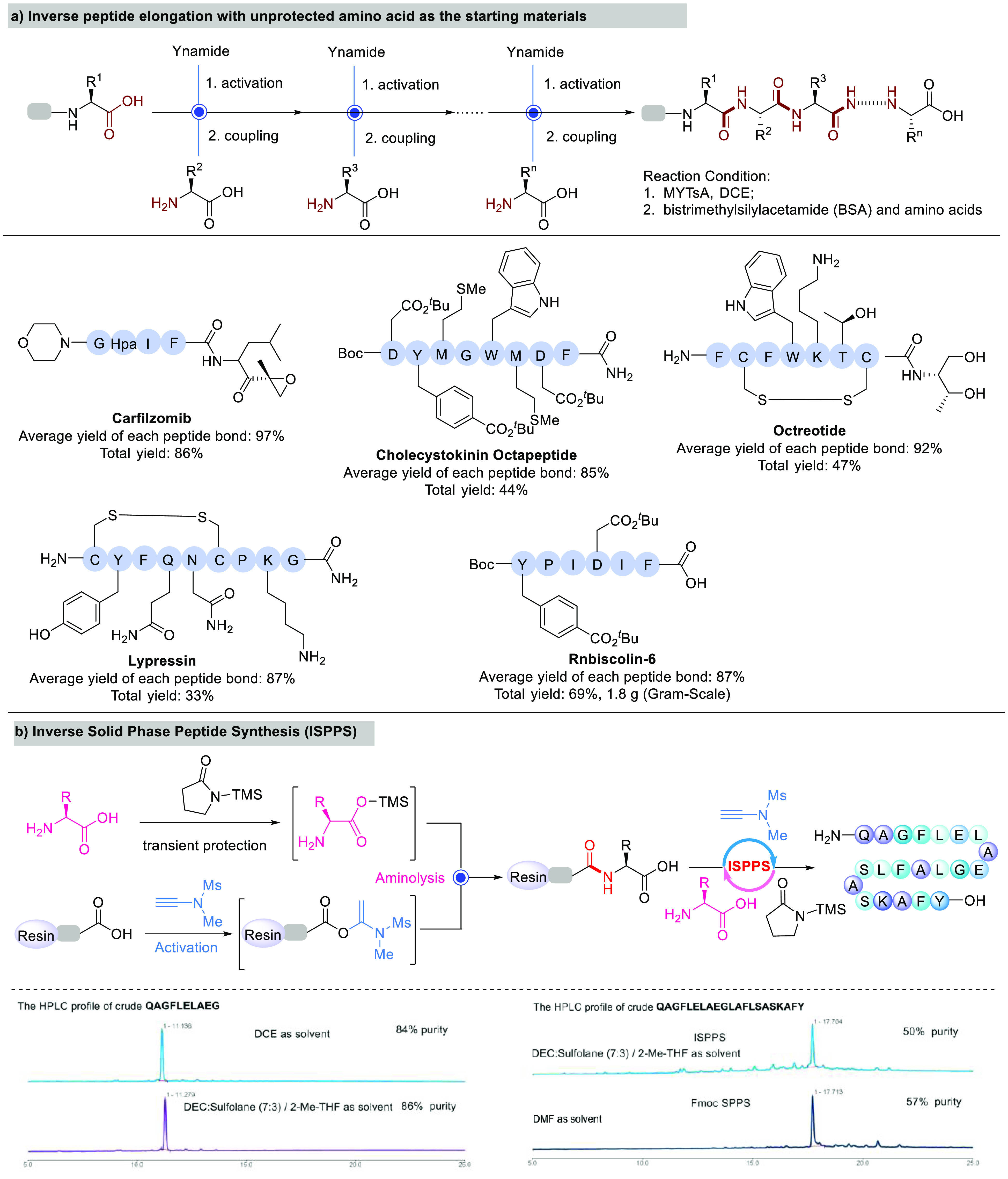
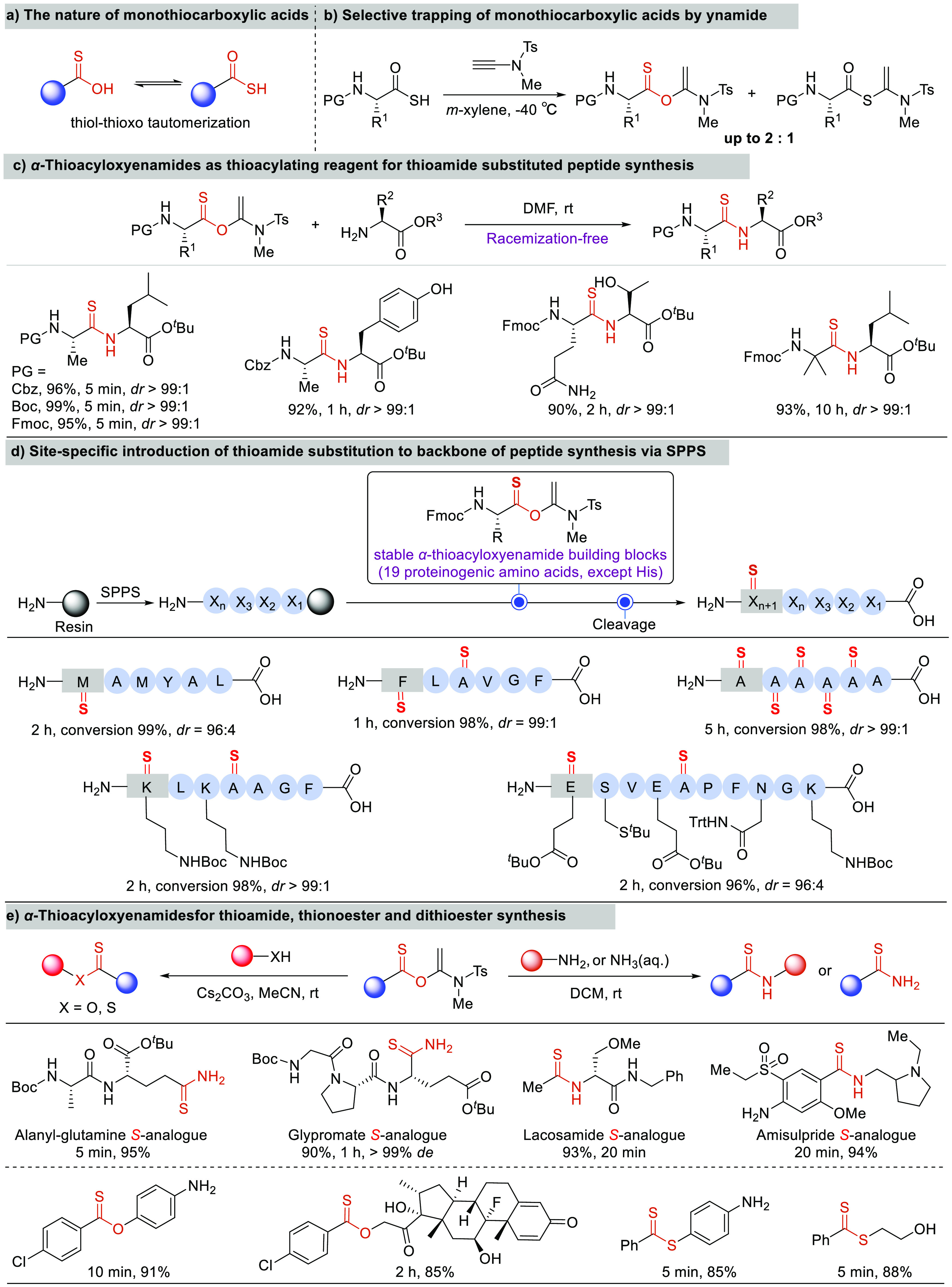
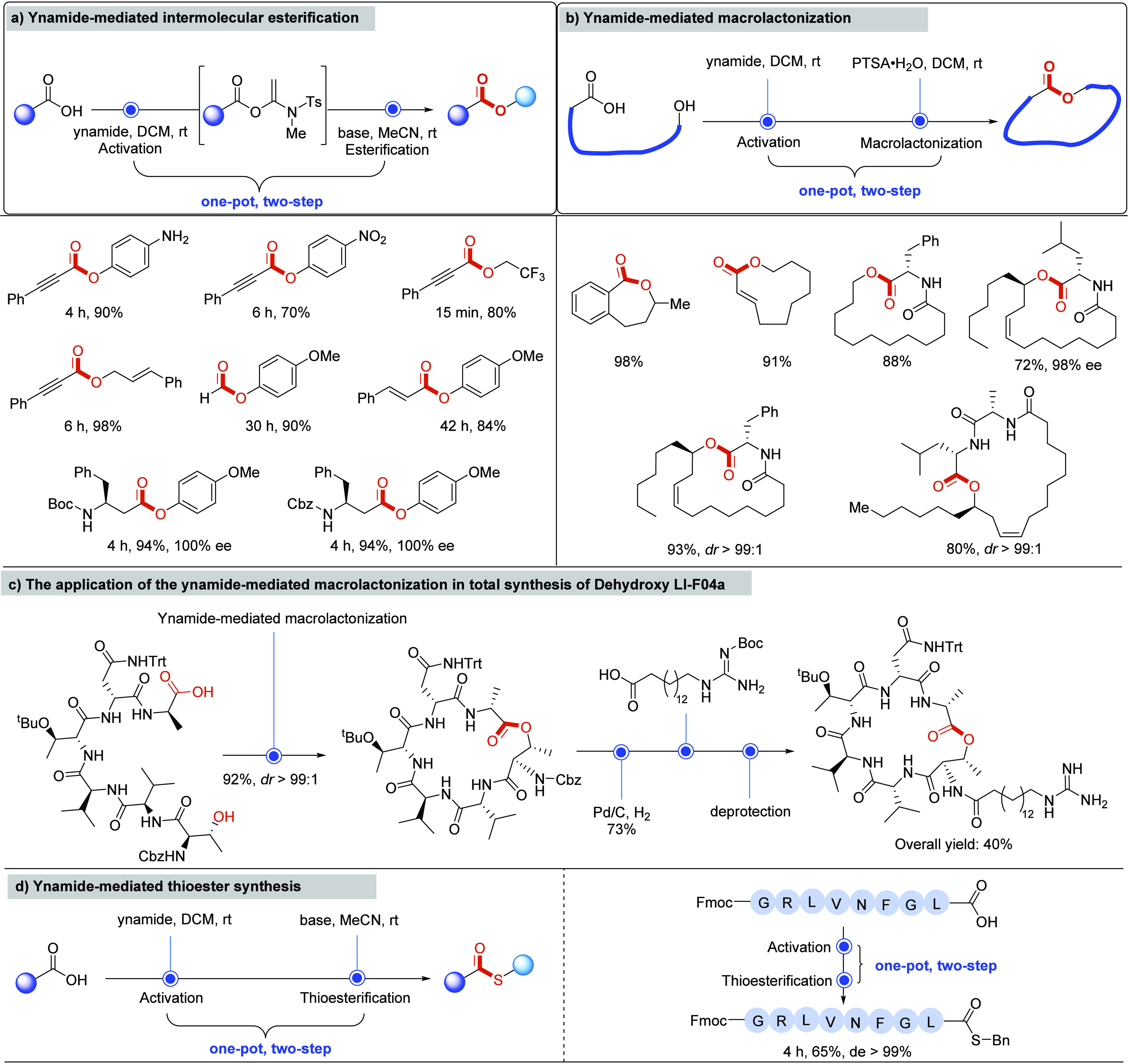
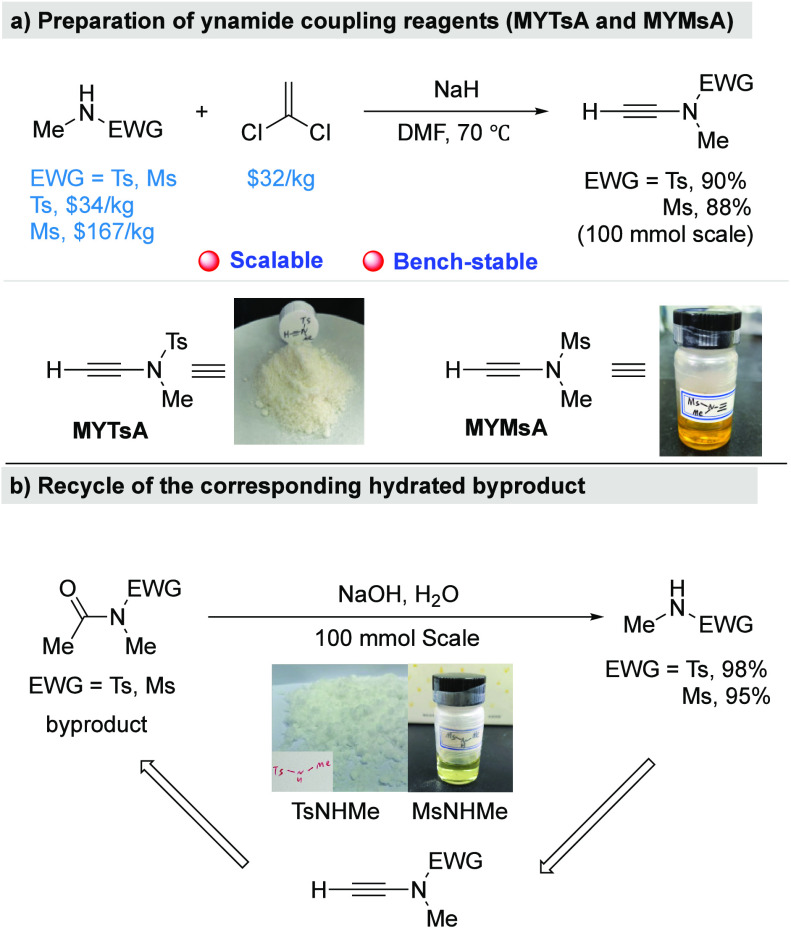
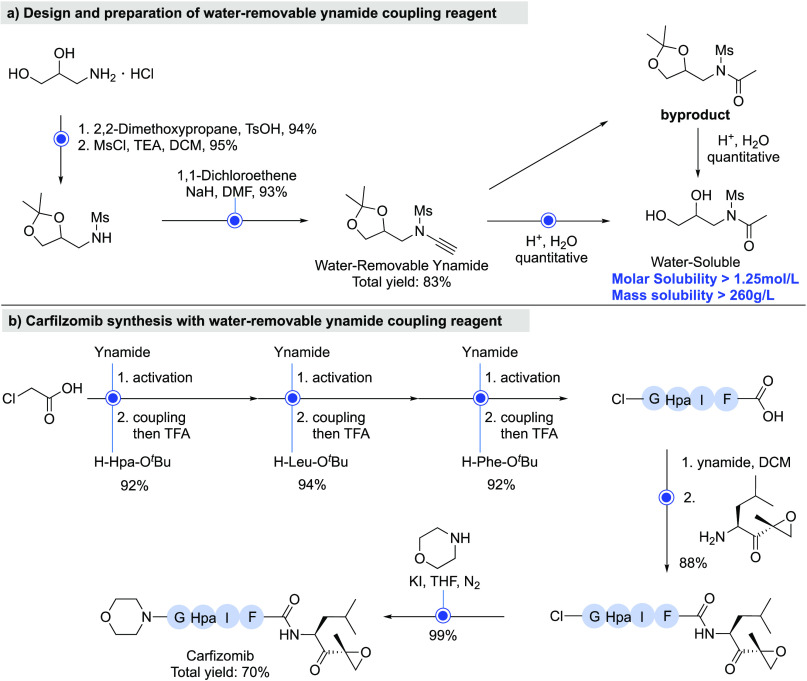
High Resolution Image Download MS PowerPoint Slide Conspectus Since the pioneering work of Curtius and Fischer, chemical peptide synthesis has witnessed a century’s development and evolved into a routine technology. However, it is far from perfect. In particular, it is challenged by sustainable development because the state-of-the-art of peptide synthesis heavily relies on legacy reagents and technologies developed before the establishment of green chemistry. Over the past three decades, a broad range of efforts have been made for greening peptide synthesis, among which peptide synthesis using unprotected amino acid represents an ideal and promising strategy because it does not require protection and deprotection steps. Unfortunately, C → N peptide synthesis employing unprotected amino acids has been plagued by undesired polymerization, while N → C inverse peptide synthesis with unprotected amino acids is retarded by severe racemization/epimerization owing to the iterative activation and aminolysis of high racemization/epimerization susceptible peptidyl acids. Consequently, there is an urgent need to develop innovative coupling reagents and strategies with novel mechanisms that can address the long-standing notorious racemization/epimerization issue of peptide synthesis. This Account will describe our efforts in discovery of ynamide coupling reagents and their application in greening peptide synthesis. Over an eight-year journey, ynamide coupling reagents have evolved into a class of general coupling reagents for both amide and ester bond formation. In particular, the superiority of ynamide coupling reagents in suppressing racemization/epimerization enabled them to be effective for peptide fragment condensation, and head-to-tail cyclization, as well as precise incorporation of thioamide substitutions into peptide backbones. The first practical inverse peptide synthesis using unprotected amino acids was successfully accomplished by harnessing such features and taking advantage of a transient protection strategy. Ynamide coupling reagent-mediated ester bond formation enabled efficient intermolecular esterification and macrolactonization with preservation of α-chirality and the configuration of the conjugated α,β -C–C double bond. To make ynamide coupling reagents readily available with reasonable cost and convenience, we have developed a scalable one-step synthetic method from cheap starting materials. Furthermore, a water-removable ynamide coupling reagent was developed, offering a column-free purification of the target coupling product. In addition, the recycle of ynamide coupling reagent was accomplished, thereby paving the way for their sustainable industrial application. As such, this Account presents the whole story of the origin, mechanistic insights, preparation, synthetic applications, and recycle of ynamide coupling reagents with a perspective that highlights their future impact on peptide synthesis.
Overview
CoChat Summary
TL;DR
This Account reviews the origin, mechanism, synthesis, recycling, and peptide/ester/thioester applications of ynamide coupling reagents, emphasizing their ability to suppress racemization/epimerization. It highlights that stable α-acyloxyenamide active esters enable racemization-free bond formation and have expanded ynamide chemistry into peptide synthesis, cyclization, fragment condensation, and inverse peptide synthesis.
Key findings
- Ynamide coupling reagents activate carboxylic acids through stable α-acyloxyenamide active esters; the activation step followed first-order kinetics in carboxylic acid and zero-order kinetics in ynamide, and deuterium labeling gave nondeuterated/monodeuterated/dideuterated products in an 8:84:8 ratio, supporting a stepwise rather than concerted process.
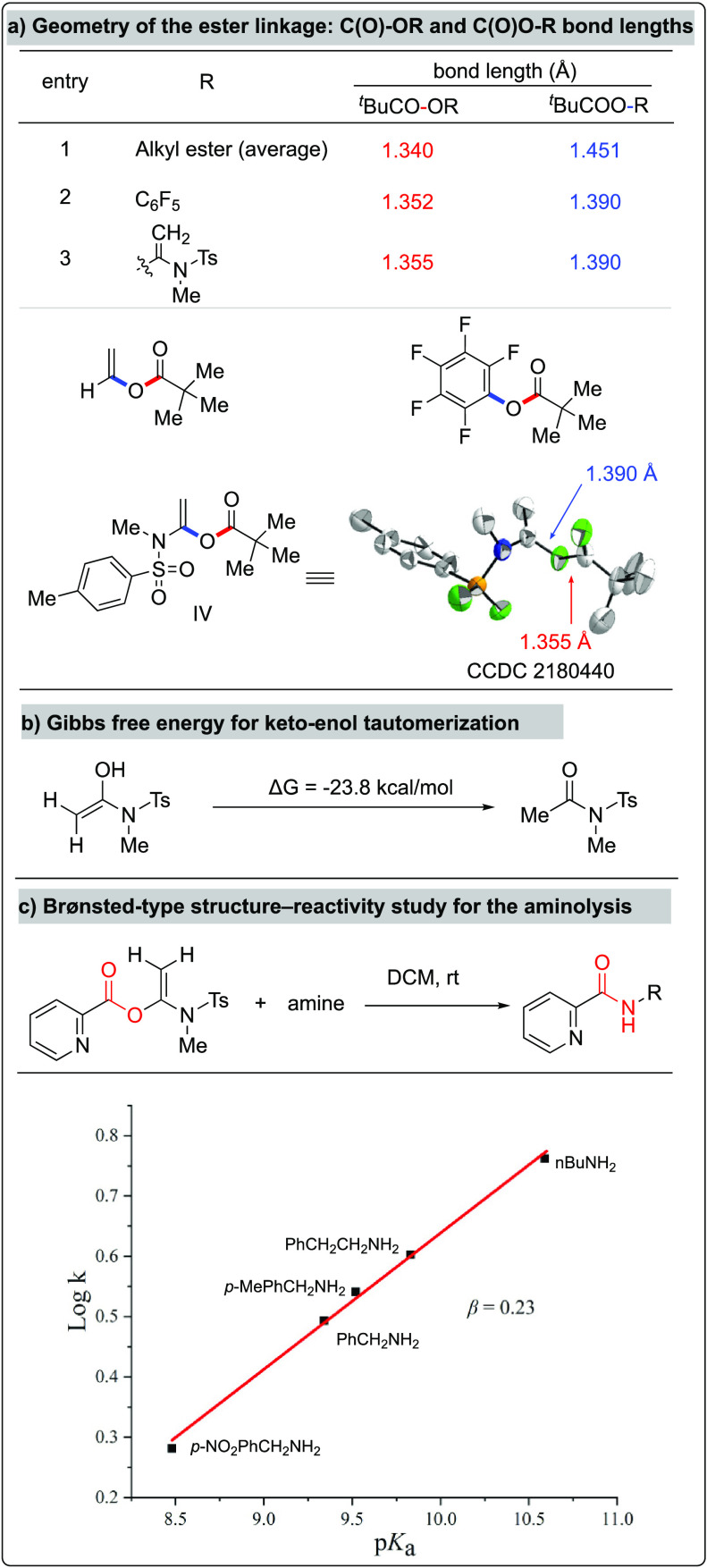
- In aminolysis, the reaction rate showed first-order dependence on both α-acyloxyenamide and amine; Brønsted analysis gave a β value of 0.23, consistent with a “superactive ester” behavior where tetrahedral intermediate formation is rate-limiting.
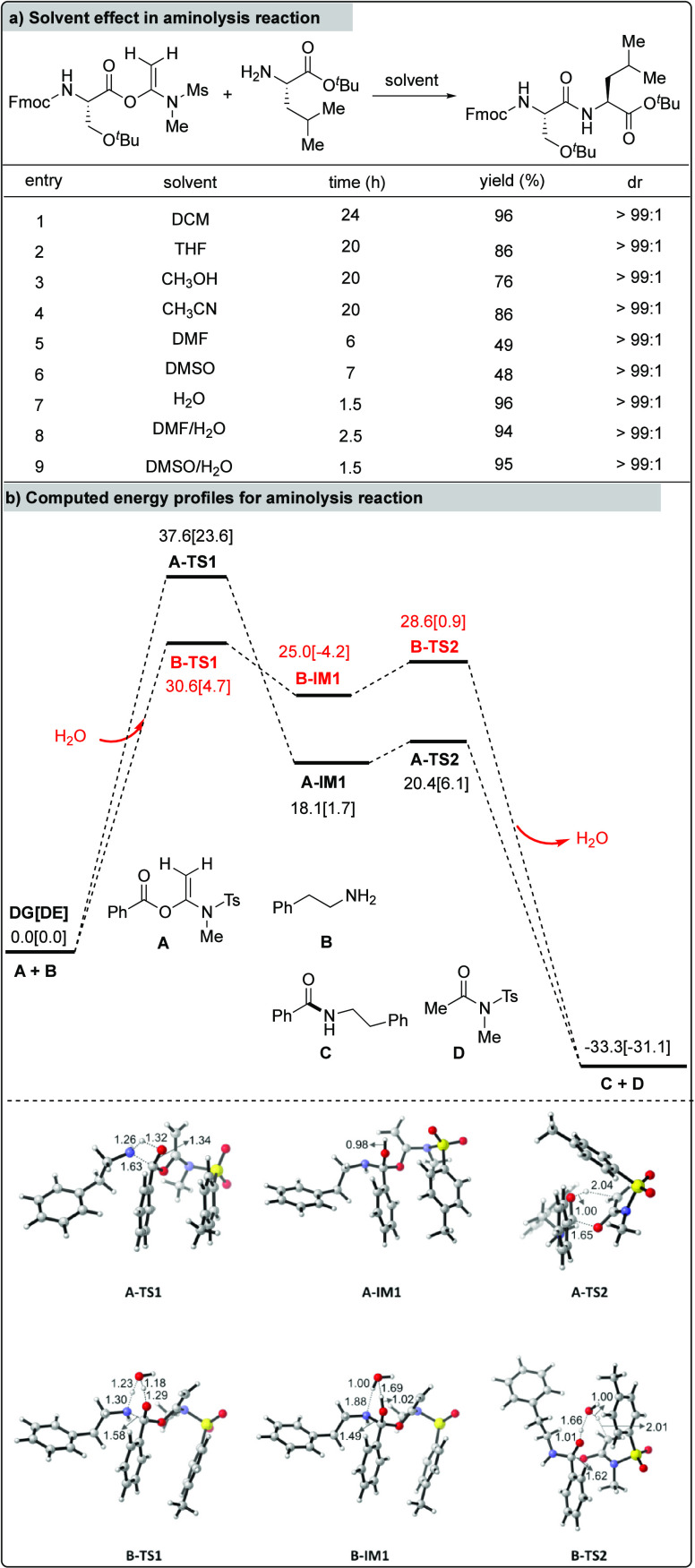
- Adding water or water/DMSO as solvent accelerated aminolysis dramatically, shortening reaction time from 24 h to 1–2 h.
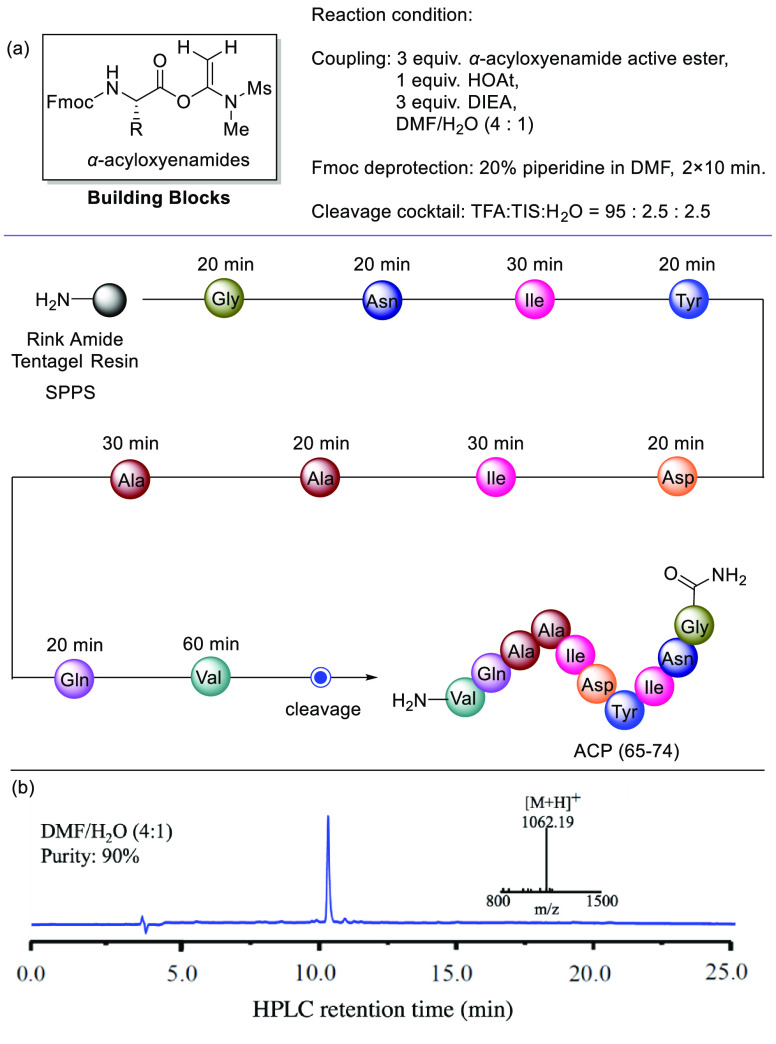
- In solid-phase peptide synthesis of ACP 65–74, addition of HOAt and DIEA shortened aminolysis to 20–30 min per amino acid, and the final peptide was obtained with 90% crude purity after cleavage from the resin.
Methods
- Mechanistic studies used kinetics measurements with in situ IR spectroscopy, deuterated ynamide labeling, X-ray analysis, and DFT calculations.
- Application studies used one-pot/two-step ynamide-mediated activation/aminolysis protocols in solution and on resin, including SPPS, fragment condensation, head-to-tail cyclization, inverse peptide synthesis, thioamide installation, esterification, and macrolactonization.
- The paper is an Account summarizing the authors’ prior work and related studies, not a single original standalone experiment.
Limitations
- The paper states that ynamide coupling reagents had “moderate activation capacity,” which retarded further applications, particularly in SPPS, because of prolonged reaction times.
- It notes that hydroacyloxylation/utility of ynamide reagents is substrate-dependent; for example, His as a carboxyl partner may give incomplete activation due to the imidazole side chain.
- Evident from the text: this is a narrative review/account, so many claims are supported by cited prior work rather than presented as a single unified dataset.
Model-written summary. Check it against the paper before relying on it.
Integrity signals
Registry
Cites
Statistics
Figures

Verification
Claims the paper makes
0 Valid · 7 Not valid · 33 Not checked · 73 Own results and interpretations
The cited sources that could be checked couldn’t confirm or dispute this claim.
In the paper
“Generally, at least two steps are involved in the synthesis of terminal ynamides.52”
§ Ynamide Coupling Reagents: Origin and Advances > Preparation and Recycling of Ynamide Coupling Reagents
What the sources say
- Could not verifycites [52] sourceExperimental — accuracy not yet measured
The Introduction (page unavailable) describes multistep preparation of thioacylating fragments, not terminal ynamides. Searches for terminal ynamides and their preparation found no passage in our copy stating how many steps their synthesis generally requires. (LLM, conf=0.75)
plain- Asserted: passes — The authors put it forward as true.
- Checkable: passes — It can be checked against evidence.
- Load-bearing: passes — The paper’s conclusions depend on it.
- Based: passes — The paper gives a reason why it holds.
- Could not verify
A result the paper states — it cites no source for it, so there is none to check. The quote shows it is in the paper.
In the paper
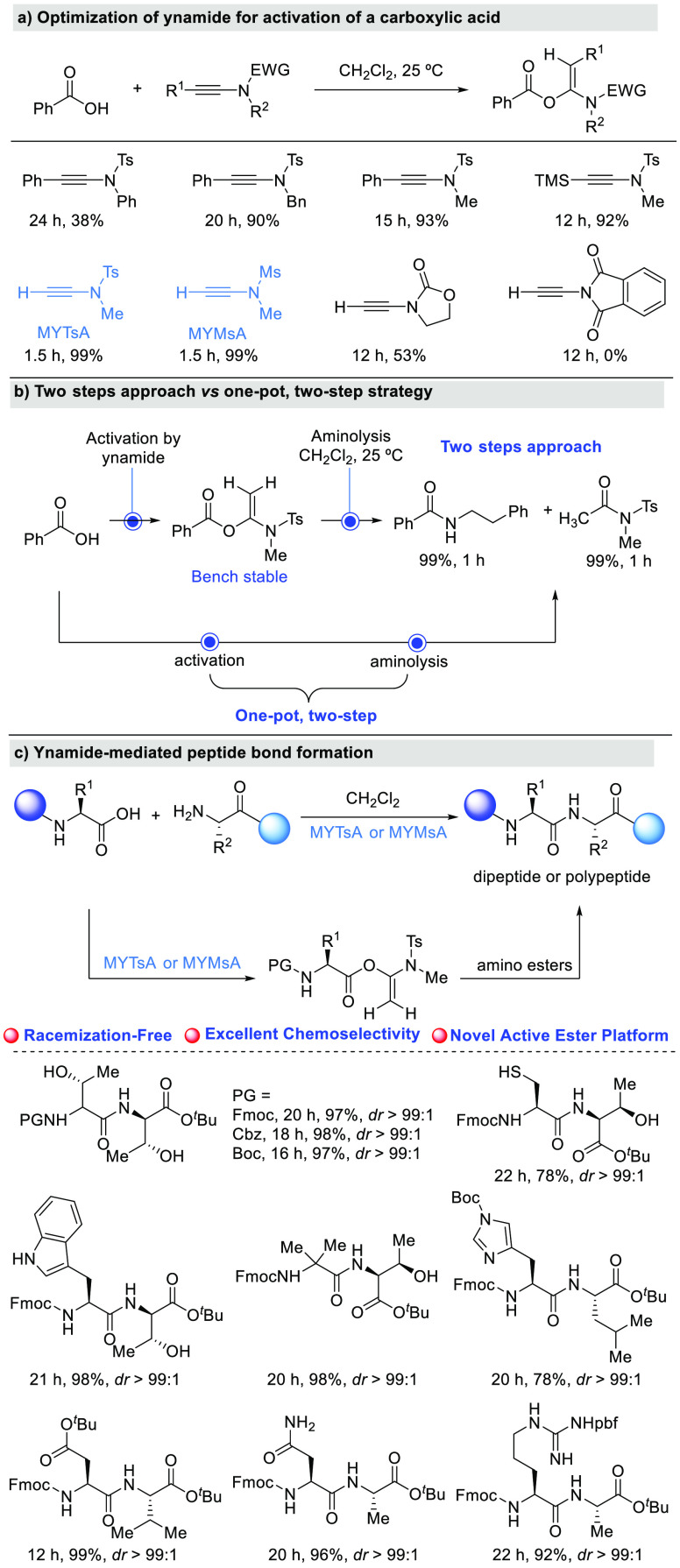
“Additionally, a sterically hindered coupling partner such as Aib, a typically challenging substrate for common peptide coupling, gives the target dipeptide in excellent yield.”
§ Ynamide Coupling Reagents: Origin and Advances > Origin of the Ynamide Coupling Reagent
plainstates a causeSingle case- Asserted: passes — The authors put it forward as true.
- Checkable: passes — It can be checked against evidence.
- Load-bearing: passes — The paper’s conclusions depend on it.
- Based: passes — The paper gives a reason why it holds.
A result the paper states — it cites no source for it, so there is none to check. The quote shows it is in the paper.
In the paper
“Importantly, no racemization/epimerization was observed when either MYTsA or MYMsA was used as the coupling reagent for peptide bond formation (Scheme 2c).”
§ Ynamide Coupling Reagents: Origin and Advances > Origin of the Ynamide Coupling Reagent
plain- Asserted: passes — The authors put it forward as true.
- Checkable: passes — It can be checked against evidence.
- Load-bearing: passes — The paper’s conclusions depend on it.
- Based: passes — The paper gives a reason why it holds.
The paper states this without a source or data behind it here, so there is nothing to check it against. The quote shows it is in the paper.
In the paper
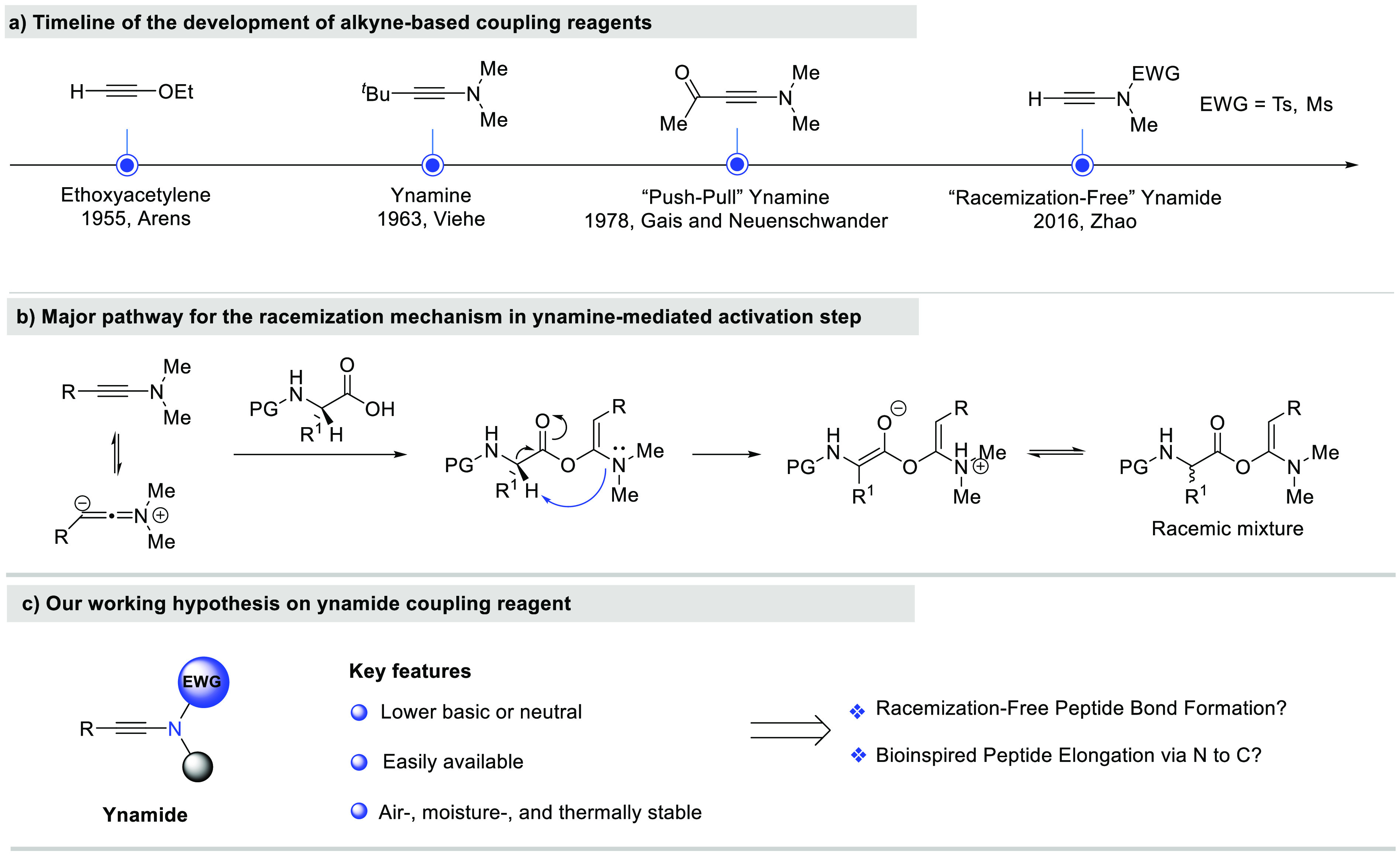
“What sets ynamide coupling reagents apart is their remarkable superiority, which is illustrated in their ability to prevent racemization/epimerization during the activation and subsequent aminolysis of α-chiral carboxylic acids.”
§ Ynamide Coupling Reagents: Origin and Advances > Introduction
boostedstates a cause- Asserted: passes — The authors put it forward as true.
- Checkable: passes — It can be checked against evidence.
- Load-bearing: passes — The paper’s conclusions depend on it.
- Based: unclear — It is unclear why the paper says it holds.
- Rests on an assumption not shown here.
A result the paper states — it cites no source for it, so there is none to check. The quote shows it is in the paper.
In the paper
“Solvent screening experiments demonstrated that the reaction rate steadily increased with an increase in solvent polarity, which is consist with our previous conclusion regarding the rate-limiting role of the tetrahedral intermediate formation and the ability of polar solvents to stabilize the charge-separated intermediate (Scheme 4a).”
§ Ynamide Coupling Reagents: Origin and Advances > Applications of the Ynamide Coupling Reagent > Peptide Bond Formation in Aqueous Media
boostedstates a cause- Asserted: passes — The authors put it forward as true.
- Checkable: passes — It can be checked against evidence.
- Load-bearing: passes — The paper’s conclusions depend on it.
- Based: passes — The paper gives a reason why it holds.
64 more claims
Create a free account to see all 113 claims and to verify the 1 reference still open.
- It may state two separate claims as one. 40
- Probably not a substantial claim. 5
Citations
Cites
Key green chemistry research areas—a perspective from pharmaceutical manufacturers
Constable, D. J. C., Dunn, P. J., Hayler, J. D., Humphrey, G. R., Leazer, Jr., Linderman, R. J., Lorenz, K., Manley, J., Pearlman, B. A., Wells, A., et al. (2007) · Green Chem. · doi:10.1039/b703488c · Cited by 1,554
A New Method of Forming Peptide Bonds
Sheehan, J. C., & Hess, G. P. (1955) · Journal of the American Chemical Society · doi:10.1021/ja01609a099 · Cited by 1,265 · cited 1×
“One such event occurred in 1955 when Arens and co-workers 22 introduced ethoxyacety-lene, a coupling reagent for peptide synthesis, at approximately the same time that the renowned dicyclohexylcarbodiimide 23 (DCC) coupling reagent was reported.”
BackgroundPeptide Coupling Reagents, More than a Letter Soup
El-Faham, A., & Albericio, F. (2011) · Chemical Reviews · doi:10.1021/cr100048w · Cited by 1,245
The Use of Esters of N-Hydroxysuccinimide in Peptide Synthesis
Anderson, G. W., Zimmerman, J. E., & Callahan, F. M. (1964) · Journal of the American Chemical Society · doi:10.1021/ja01063a037 · Cited by 1,240
Merrifield, B. (1986) · Science · doi:10.1126/science.3961484 · Cited by 1,005
Ynamides: A Modern Functional Group for the New Millennium
DeKorver, K. A., Li, H., Lohse, A. G., Hayashi, R., Lu, Z., Zhang, Y., & Hsung, R. P. (2010) · Chemical Reviews · doi:10.1021/cr100003s · Cited by 886
Macrocyclic Peptides as Drug Candidates: Recent Progress and Remaining Challenges
Vinogradov, A. A., Yin, Y., & Suga, H. (2019) · Journal of the American Chemical Society · doi:10.1021/jacs.8b13178 · Cited by 848
Ynamides: Versatile Tools in Organic Synthesis
Evano, G., Coste, A., & Jouvin, K. (2010) · Angewandte Chemie International Edition · doi:10.1002/anie.200905817 · Cited by 812
Key Green Chemistry research areas from a pharmaceutical manufacturers’ perspective revisited
Bryan, M. C., Dunn, P. J., Entwistle, D., Gallou, F., Koenig, S. G., Hayler, J. D., Hickey, M. R., Hughes, S., Kopach, M. E., Moine, G., et al. (2018) · Green Chemistry · doi:10.1039/c8gc01276h · Cited by 614
THE SYNTHESIS OF AN OCTAPEPTIDE AMIDE WITH THE HORMONAL ACTIVITY OF OXYTOCIN
Vigneaud, V. D., Ressler, C., Swan, C. J. M., Roberts, C. W., Katsoyannis, P. G., & Gordon, S. (1953) · Journal of the American Chemical Society · doi:10.1021/ja01115a553 · Cited by 584
Cited by
Isoxazoles as efficient alkyne amination reagents in divergent heterocycle synthesis
Zhu, X.-K., Meng, Z.-X., Zhou, B., et al. (2025) · Chemical Society Reviews · doi:10.1039/d4cs01329h · Cited by 43
Cao, S., Guo, H., Zhong, Z., Chen, D., Song, W., Liu, Y., & Wan, J. (2025) · Science Advances · doi:10.1126/sciadv.aea4120 · Cited by 46
“…for peptide synthesis since the discovery of dicyclohexyl carbodiimide (DCC) ( 46 ), the heavy metal utilization, high cost, tedious linear synthetic procedure, exposure hazards, and/or occurrence of racemization/epimerization are still rigid challenges besetting peptide synthesis ( 47 – 52 ).”
Sarkar, D., Deswal, S., Das, R. C., et al. (2024) · Chemical Science · doi:10.1039/d4sc03893b · Cited by 36
Chen, H.-H., Jiang, J., Yang, Y.-N., Ye, L., & Zhou, B. (2025) · Angewandte Chemie International Edition · doi:10.1002/anie.202505167 · Cited by 35
Chen, H.-H., Chen, Y., Gao, J.-Z., et al. (2024) · Angewandte Chemie International Edition · doi:10.1002/anie.202411709 · Cited by 28
Metadata
- Authors
- Hu, L., & Zhao, J.
- Affiliations
- Guangzhou Medical University (CN)
- Corresponding author
- Zhao, Junfeng
- Venue
- Accounts of Chemical Research
- Publisher
- American Chemical Society (ACS)
- Published
- 2024-03-07
- Volume
- 57
- Issue
- 6
- Pages
- 855-869
- ISSN
- 0001-4842 (ISSN-L)
- 1520-4898
- PMC
- PMC10956395
- OpenAlex
- W4392542388
- Cited by
- 89
- References
- 85
- Citations by year
- 2026: 31 · 2025: 40 · 2024: 18
- FWCI
- 12.07
- Type
- journal article
- Language
- en
- Open access
- hybrid
- doi.org
- Licence
- Locations
- Accounts of Chemical Research (publishedVersion, cc-by-nc-nd)
- PubMed (publishedVersion)
- Funders
- Guangzhou Municipal Science and Technology Bureau (2024A04J02468)
- National Natural Science Foundation of China (22277015, 22307023)
- Topics
- Physical Sciences › Chemistry › Organic Chemistry › Chemical Synthesis and Analysis
- Physical Sciences › Chemistry › Organic Chemistry › Advanced Synthetic Organic Chemistry
- Physical Sciences › Chemistry › Organic Chemistry › Click Chemistry and Applications
- Keywords
- peptide synthesis, green chemistry, racemization suppression, epimerization, unprotected amino acids, peptide cyclization, ester bond formation, macrolactonization, transient protection
- MeSH terms
- Amides, Amino Acids, Esters, Indicators and Reagents, Peptides
About these checks
Registry, retraction, Cites and statistics results are computed, not judged, with one exception: a printed reference that no index lists is read once by a model before it counts as a citation error. Claims are extracted by a model and kept only when their quote appears verbatim in the text; each cited source is then checked, with a model’s help, for whether it says what the claim relies on. Those verdicts can be wrong — read the claim’s quote and the cited source before relying on one.
The claim verdicts this report counts are experimental: their accuracy is not yet measured.
A language model drew the claims from the paper on 2026-10-10, under version 3 of the claim definition (model deepseek-v4.1-flash, prompt extract-v3).
A second model labelled each claim on 2026-10-10 (model jev-1.13-20260917, definition revision gold-guideline-v0.2).
Cited sources are checked with a language model’s help (gpt-6-sol).
Statistics and arithmetic are recomputed, not judged.
Confidence bands are shown only for fields calibrated on our annotated test set. None is calibrated yet, so no band is shown.
What counts as a claim ›How we measure confidence ›How we check this ›
Are you an author, or do you see a problem with this page? Request a review
How to cite
Cite CoChat for the checks on this page, and the paper for its own findings.
- This page
- CoChat. (2026). Citation check: Ynamide Coupling Reagents: Origin and Advances. https://app.cochat.ai/papers/10.1021/acs.accounts.3c00743
- The paper
- Hu, L., & Zhao, J. (2024). Ynamide Coupling Reagents: Origin and Advances. Accounts of Chemical Research. https://doi.org/10.1021/acs.accounts.3c00743
Data sources
Bibliographic data: Semantic Scholar, OpenAlex, Crossref.
Contains information from the Semantic Scholar Academic Graph Datasets, made available under the ODC Attribution License (ODC-BY 1.0).
Semantic Scholar’s data is described in: Kinney, R., et al. (2023). The Semantic Scholar Open Data Platform. arXiv:2301.10140.
