

Ynamide Coupling Reagents: Origin and Advances
Open accessThe DOI matches its Crossref record; 85 of the 85 references it cites were found in a registry or an index; 2 of the 39 sources its claims cite were checked for support.
Abstract
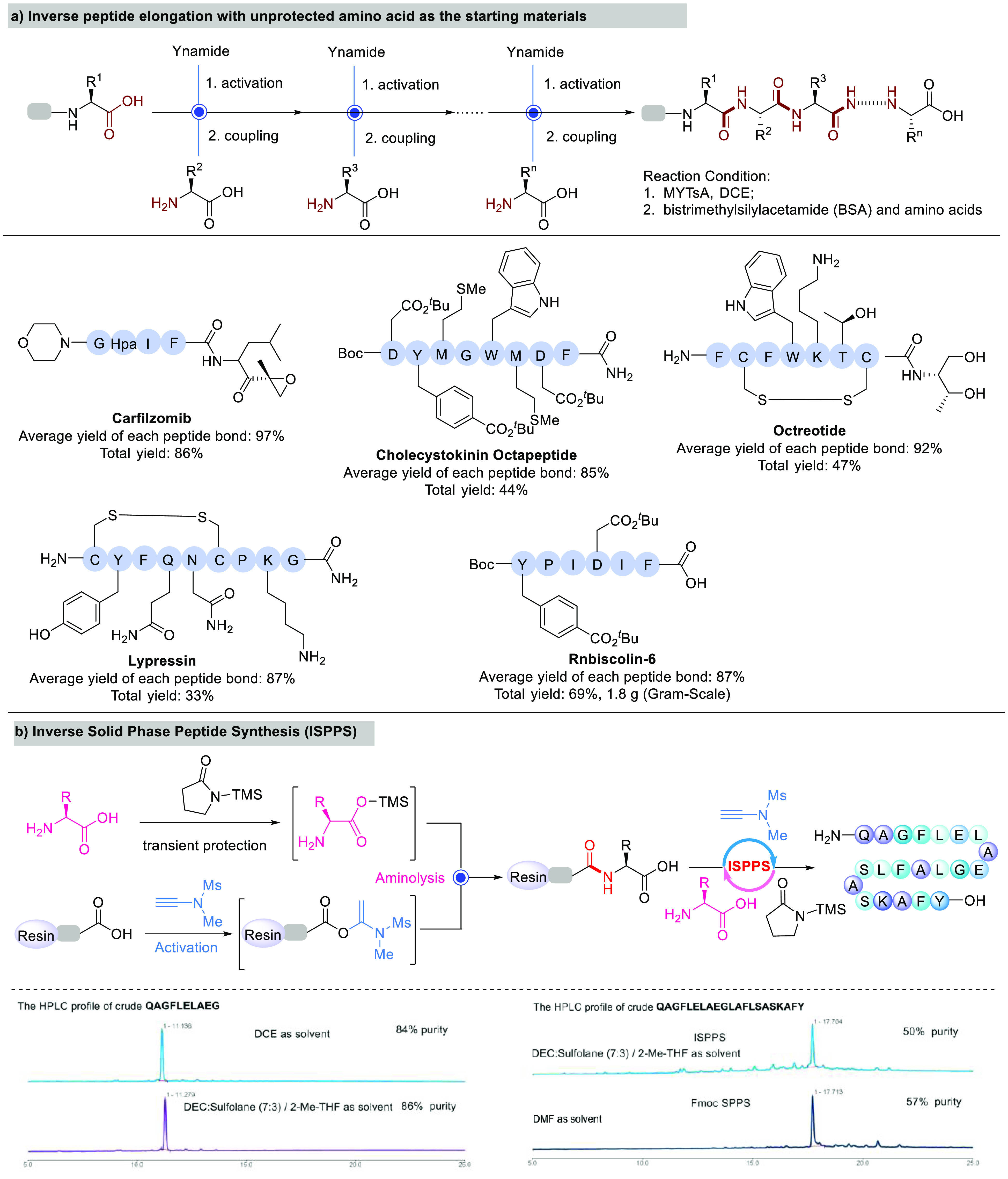
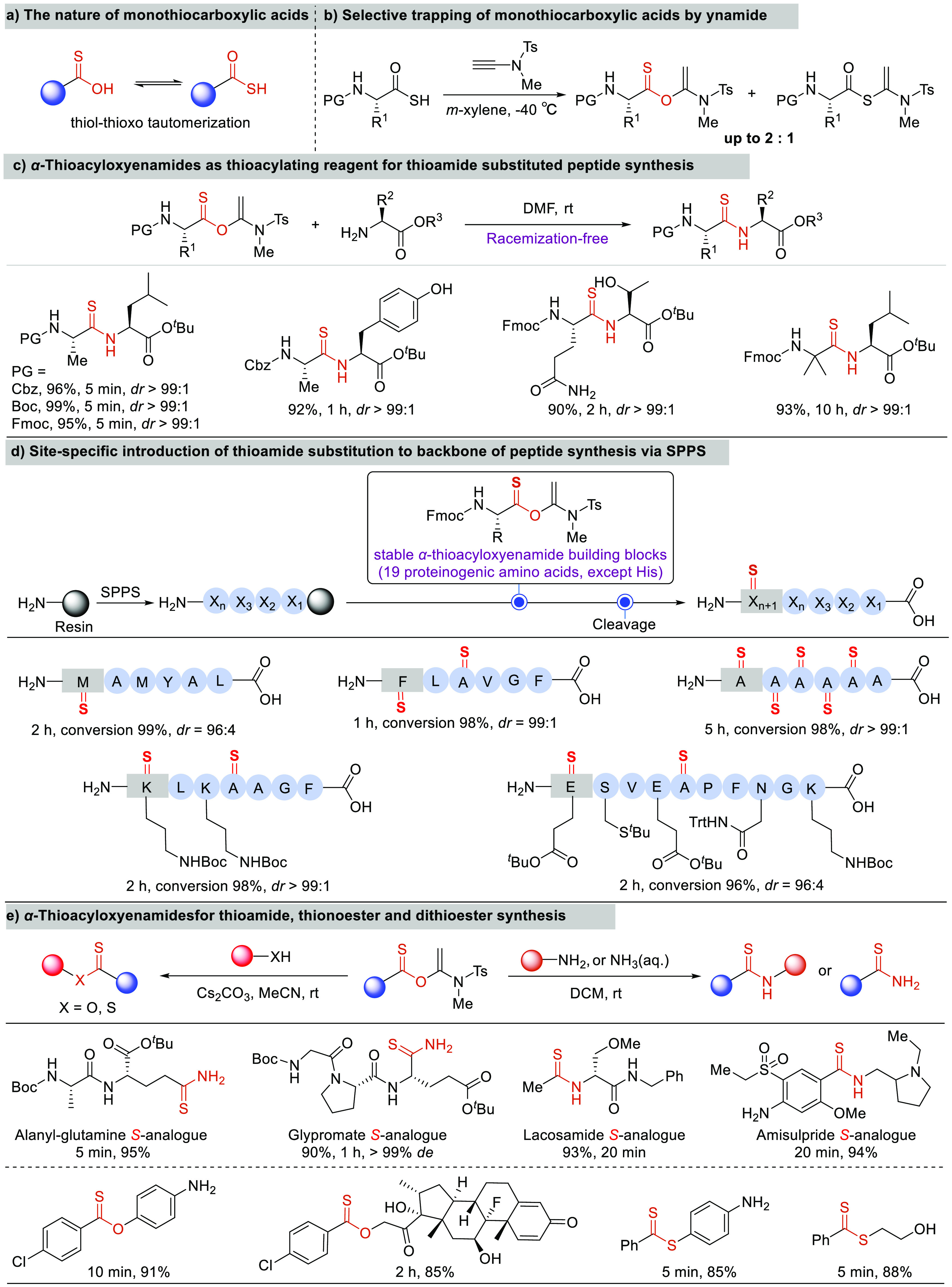
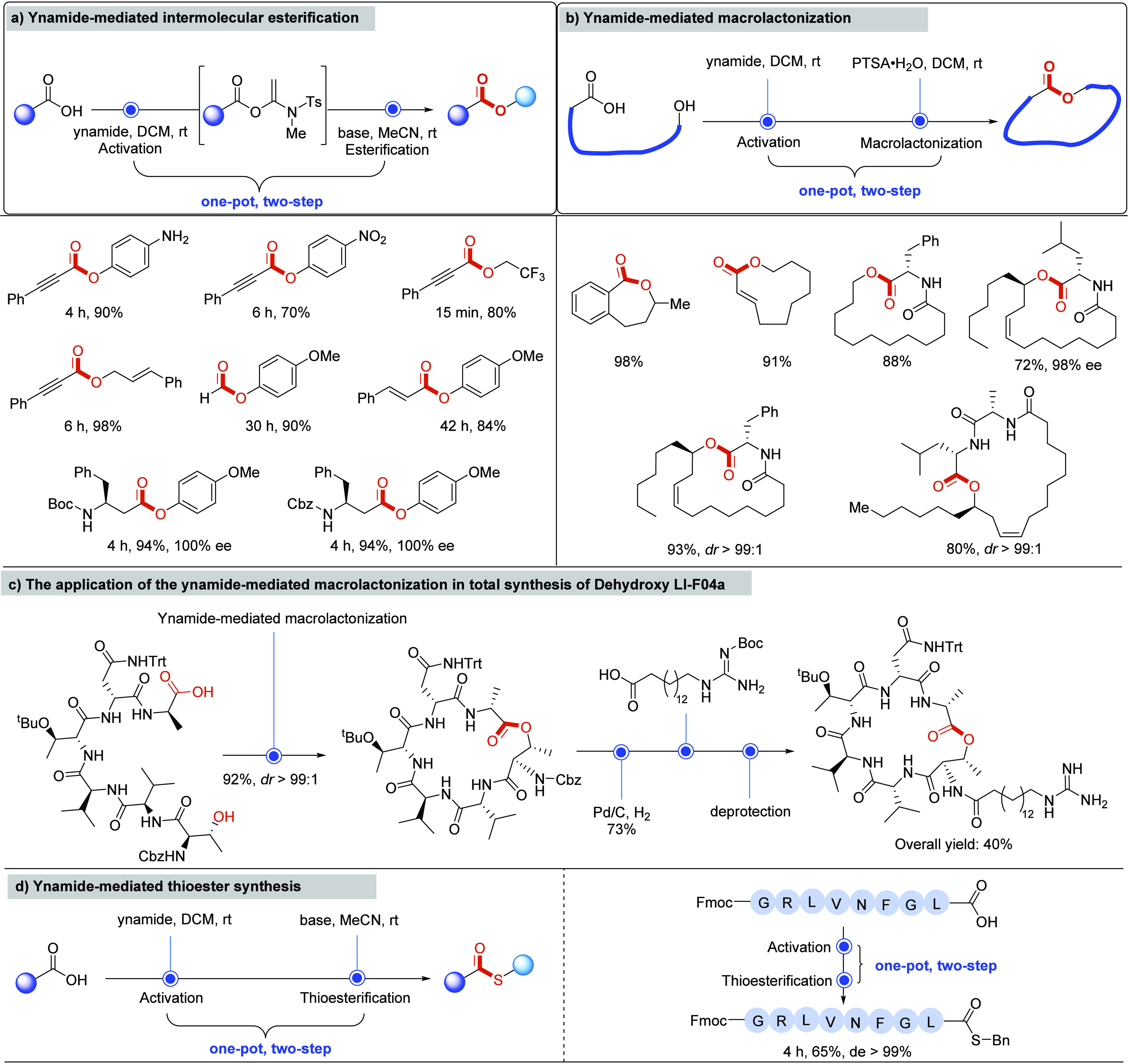
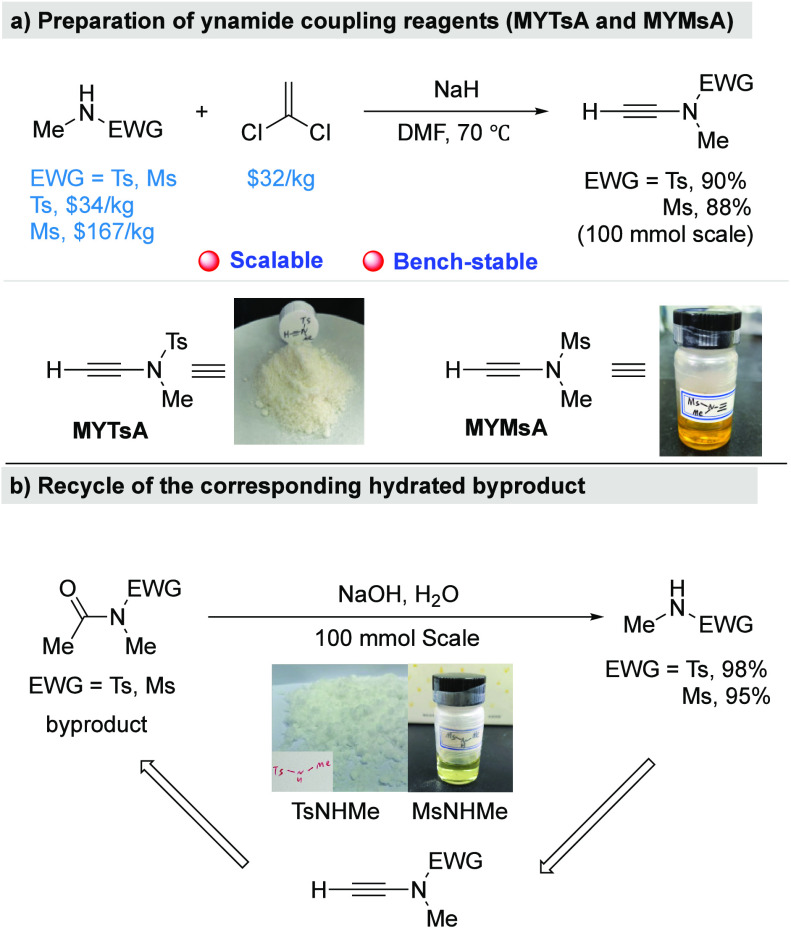
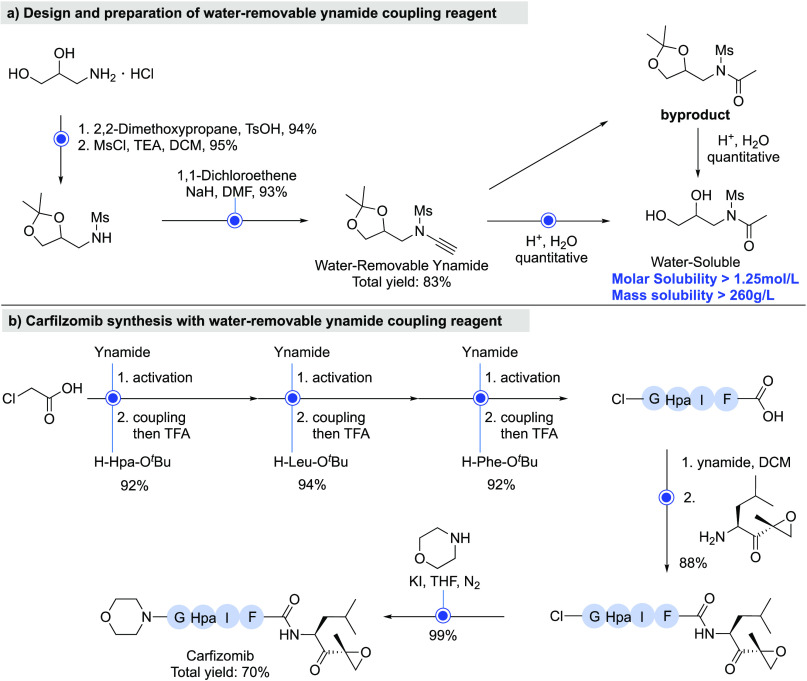
High Resolution Image Download MS PowerPoint Slide Conspectus Since the pioneering work of Curtius and Fischer, chemical peptide synthesis has witnessed a century’s development and evolved into a routine technology. However, it is far from perfect. In particular, it is challenged by sustainable development because the state-of-the-art of peptide synthesis heavily relies on legacy reagents and technologies developed before the establishment of green chemistry. Over the past three decades, a broad range of efforts have been made for greening peptide synthesis, among which peptide synthesis using unprotected amino acid represents an ideal and promising strategy because it does not require protection and deprotection steps. Unfortunately, C → N peptide synthesis employing unprotected amino acids has been plagued by undesired polymerization, while N → C inverse peptide synthesis with unprotected amino acids is retarded by severe racemization/epimerization owing to the iterative activation and aminolysis of high racemization/epimerization susceptible peptidyl acids. Consequently, there is an urgent need to develop innovative coupling reagents and strategies with novel mechanisms that can address the long-standing notorious racemization/epimerization issue of peptide synthesis. This Account will describe our efforts in discovery of ynamide coupling reagents and their application in greening peptide synthesis. Over an eight-year journey, ynamide coupling reagents have evolved into a class of general coupling reagents for both amide and ester bond formation. In particular, the superiority of ynamide coupling reagents in suppressing racemization/epimerization enabled them to be effective for peptide fragment condensation, and head-to-tail cyclization, as well as precise incorporation of thioamide substitutions into peptide backbones. The first practical inverse peptide synthesis using unprotected amino acids was successfully accomplished by harnessing such features and taking advantage of a transient protection strategy. Ynamide coupling reagent-mediated ester bond formation enabled efficient intermolecular esterification and macrolactonization with preservation of α-chirality and the configuration of the conjugated α,β -C–C double bond. To make ynamide coupling reagents readily available with reasonable cost and convenience, we have developed a scalable one-step synthetic method from cheap starting materials. Furthermore, a water-removable ynamide coupling reagent was developed, offering a column-free purification of the target coupling product. In addition, the recycle of ynamide coupling reagent was accomplished, thereby paving the way for their sustainable industrial application. As such, this Account presents the whole story of the origin, mechanistic insights, preparation, synthetic applications, and recycle of ynamide coupling reagents with a perspective that highlights their future impact on peptide synthesis.
Overview
CoChat Summary
TL;DR
This Account reviews the origin, mechanism, synthesis, recycling, and peptide/ester/thioester applications of ynamide coupling reagents, emphasizing their ability to suppress racemization/epimerization. It highlights that stable α-acyloxyenamide active esters enable racemization-free bond formation and have expanded ynamide chemistry into peptide synthesis, cyclization, fragment condensation, and inverse peptide synthesis.
Key findings
- Ynamide coupling reagents activate carboxylic acids through stable α-acyloxyenamide active esters; the activation step followed first-order kinetics in carboxylic acid and zero-order kinetics in ynamide, and deuterium labeling gave nondeuterated/monodeuterated/dideuterated products in an 8:84:8 ratio, supporting a stepwise rather than concerted process.
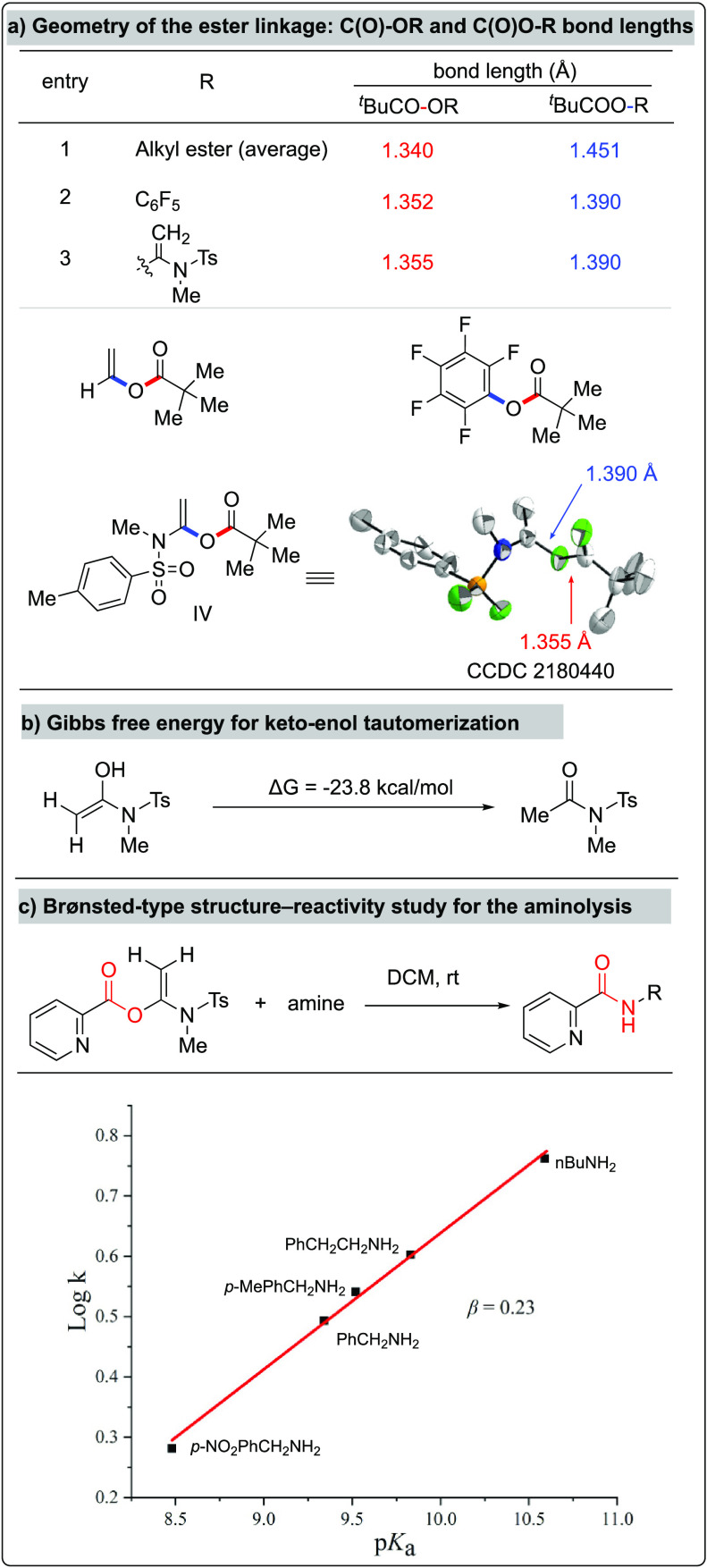
- In aminolysis, the reaction rate showed first-order dependence on both α-acyloxyenamide and amine; Brønsted analysis gave a β value of 0.23, consistent with a “superactive ester” behavior where tetrahedral intermediate formation is rate-limiting.
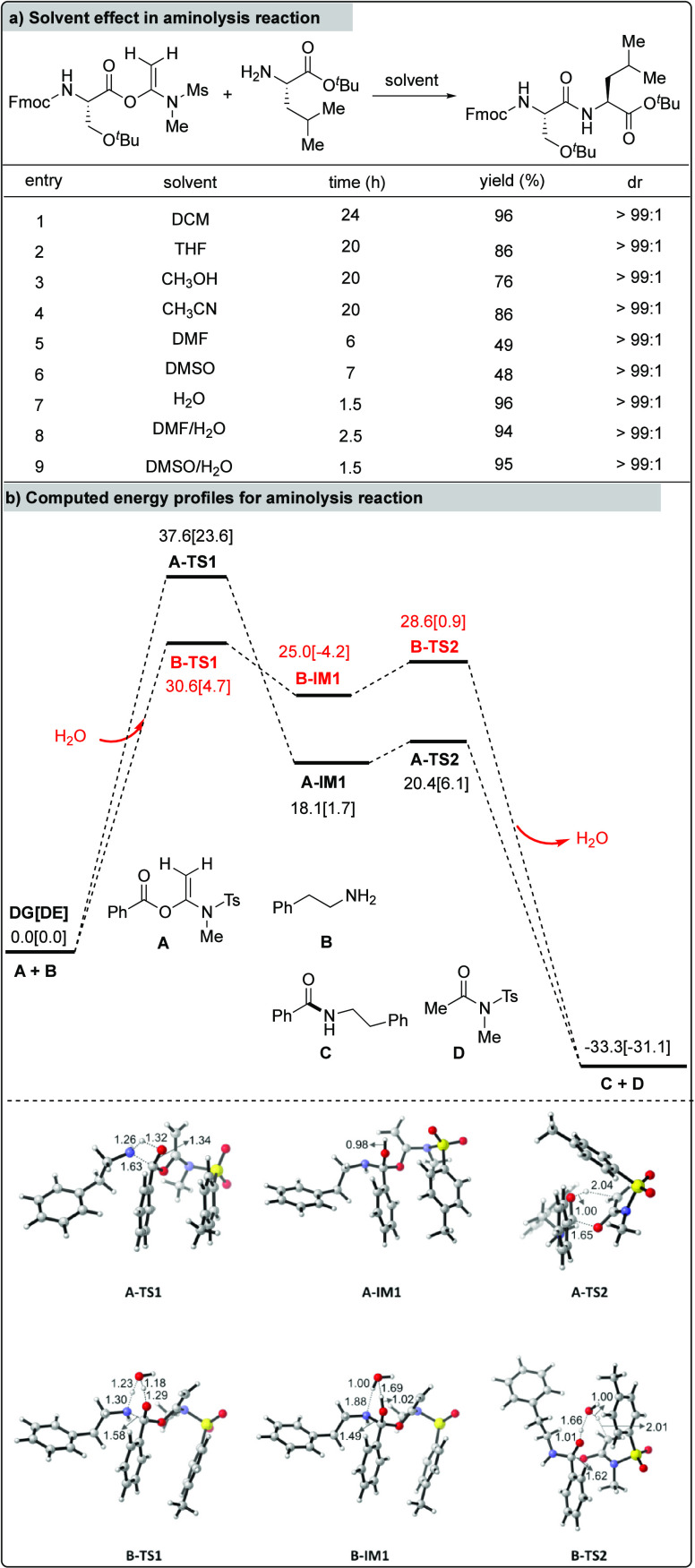
- Adding water or water/DMSO as solvent accelerated aminolysis dramatically, shortening reaction time from 24 h to 1–2 h.
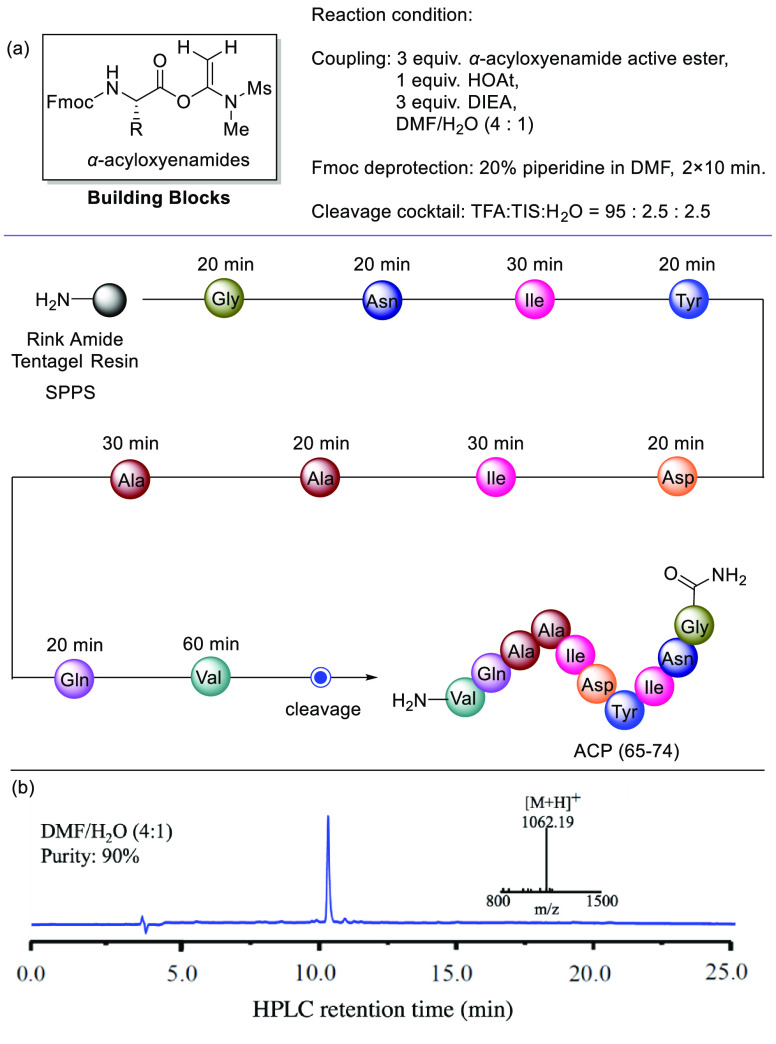
- In solid-phase peptide synthesis of ACP 65–74, addition of HOAt and DIEA shortened aminolysis to 20–30 min per amino acid, and the final peptide was obtained with 90% crude purity after cleavage from the resin.
Methods
- Mechanistic studies used kinetics measurements with in situ IR spectroscopy, deuterated ynamide labeling, X-ray analysis, and DFT calculations.
- Application studies used one-pot/two-step ynamide-mediated activation/aminolysis protocols in solution and on resin, including SPPS, fragment condensation, head-to-tail cyclization, inverse peptide synthesis, thioamide installation, esterification, and macrolactonization.
- The paper is an Account summarizing the authors’ prior work and related studies, not a single original standalone experiment.
Limitations
- The paper states that ynamide coupling reagents had “moderate activation capacity,” which retarded further applications, particularly in SPPS, because of prolonged reaction times.
- It notes that hydroacyloxylation/utility of ynamide reagents is substrate-dependent; for example, His as a carboxyl partner may give incomplete activation due to the imidazole side chain.
- Evident from the text: this is a narrative review/account, so many claims are supported by cited prior work rather than presented as a single unified dataset.
Model-written summary. Check it against the paper before relying on it.
Integrity signals
Registry
Cites
Statistics
Figures

Verification
Claims the paper makes
0 Valid · 7 Not valid · 33 Not checked · 73 Own results and interpretations
The cited sources that could be checked couldn’t confirm or dispute this claim.
In the paper
“Generally, at least two steps are involved in the synthesis of terminal ynamides.52”
§ Ynamide Coupling Reagents: Origin and Advances > Preparation and Recycling of Ynamide Coupling Reagents
What the sources say
- Could not verifycites [52] sourceExperimental — accuracy not yet measured
The Introduction (page unavailable) describes multistep preparation of thioacylating fragments, not terminal ynamides. Searches for terminal ynamides and their preparation found no passage in our copy stating how many steps their synthesis generally requires. (LLM, conf=0.75)
plain- Asserted: passes — The authors put it forward as true.
- Checkable: passes — It can be checked against evidence.
- Load-bearing: passes — The paper’s conclusions depend on it.
- Based: passes — The paper gives a reason why it holds.
- Could not verify
A result the paper states — it cites no source for it, so there is none to check. The quote shows it is in the paper.
In the paper
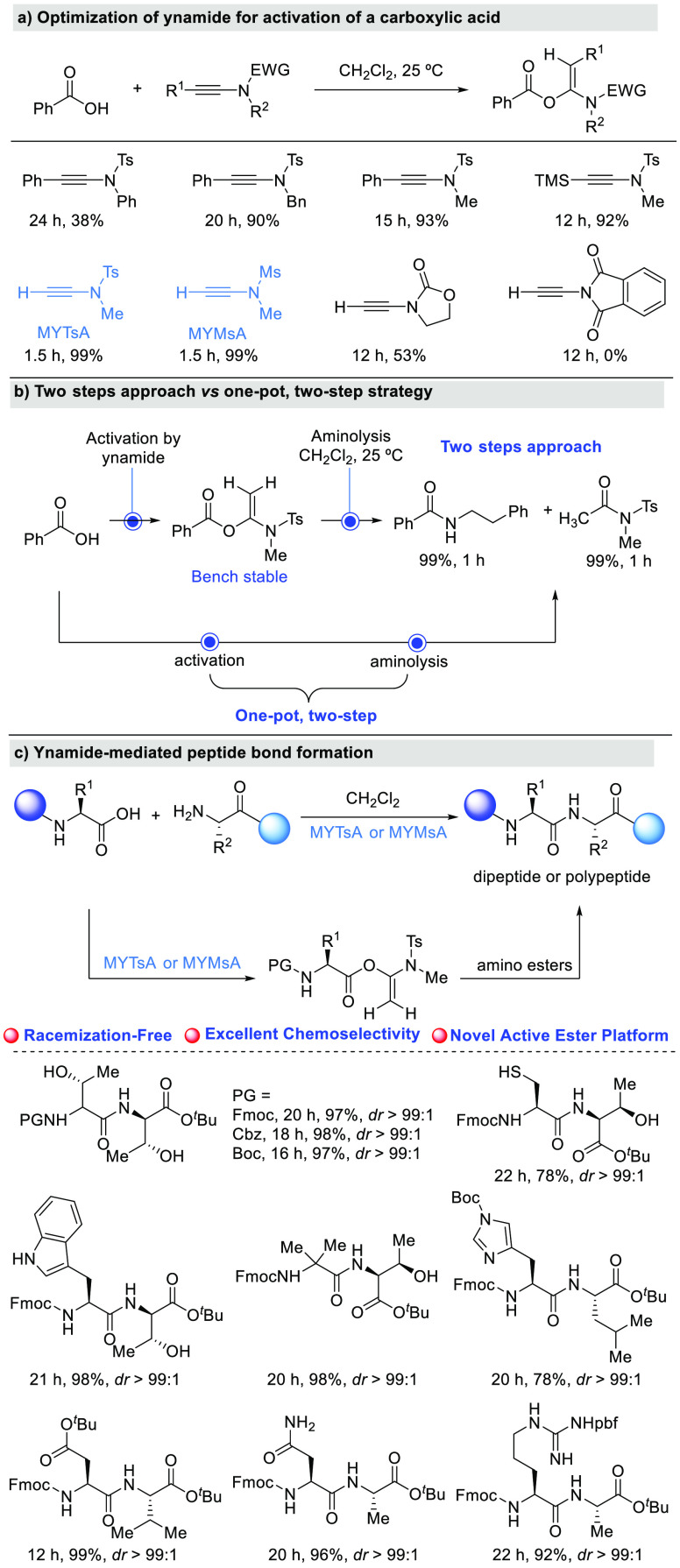
“Additionally, a sterically hindered coupling partner such as Aib, a typically challenging substrate for common peptide coupling, gives the target dipeptide in excellent yield.”
§ Ynamide Coupling Reagents: Origin and Advances > Origin of the Ynamide Coupling Reagent
plainstates a causeSingle case- Asserted: passes — The authors put it forward as true.
- Checkable: passes — It can be checked against evidence.
- Load-bearing: passes — The paper’s conclusions depend on it.
- Based: passes — The paper gives a reason why it holds.
A result the paper states — it cites no source for it, so there is none to check. The quote shows it is in the paper.
In the paper
“Importantly, no racemization/epimerization was observed when either MYTsA or MYMsA was used as the coupling reagent for peptide bond formation (Scheme 2c).”
§ Ynamide Coupling Reagents: Origin and Advances > Origin of the Ynamide Coupling Reagent
plain- Asserted: passes — The authors put it forward as true.
- Checkable: passes — It can be checked against evidence.
- Load-bearing: passes — The paper’s conclusions depend on it.
- Based: passes — The paper gives a reason why it holds.
The paper states this without a source or data behind it here, so there is nothing to check it against. The quote shows it is in the paper.
In the paper
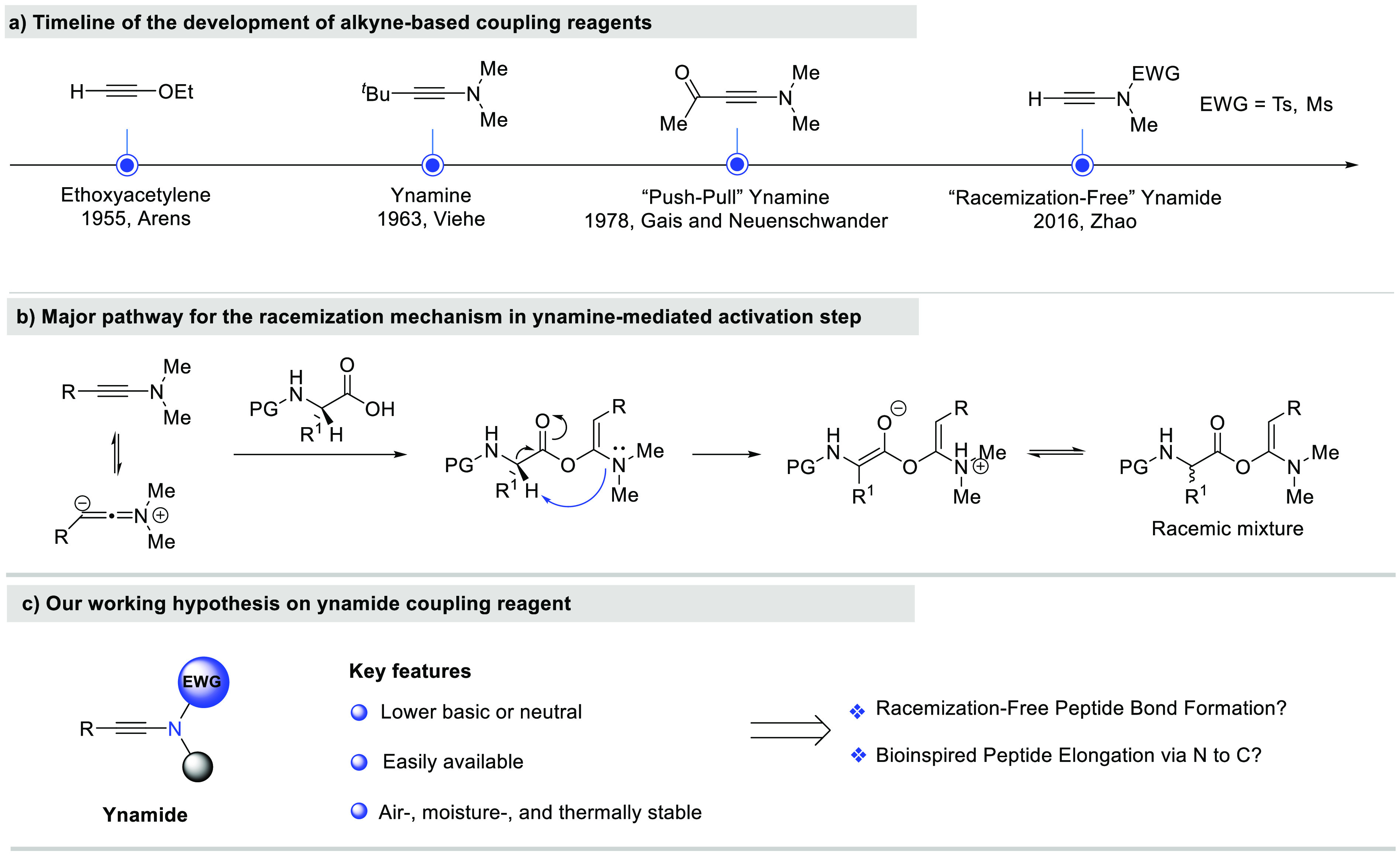
“What sets ynamide coupling reagents apart is their remarkable superiority, which is illustrated in their ability to prevent racemization/epimerization during the activation and subsequent aminolysis of α-chiral carboxylic acids.”
§ Ynamide Coupling Reagents: Origin and Advances > Introduction
boostedstates a cause- Asserted: passes — The authors put it forward as true.
- Checkable: passes — It can be checked against evidence.
- Load-bearing: passes — The paper’s conclusions depend on it.
- Based: unclear — It is unclear why the paper says it holds.
- Rests on an assumption not shown here.
A result the paper states — it cites no source for it, so there is none to check. The quote shows it is in the paper.
In the paper
“Solvent screening experiments demonstrated that the reaction rate steadily increased with an increase in solvent polarity, which is consist with our previous conclusion regarding the rate-limiting role of the tetrahedral intermediate formation and the ability of polar solvents to stabilize the charge-separated intermediate (Scheme 4a).”
§ Ynamide Coupling Reagents: Origin and Advances > Applications of the Ynamide Coupling Reagent > Peptide Bond Formation in Aqueous Media
boostedstates a cause- Asserted: passes — The authors put it forward as true.
- Checkable: passes — It can be checked against evidence.
- Load-bearing: passes — The paper’s conclusions depend on it.
- Based: passes — The paper gives a reason why it holds.
64 more claims
Create a free account to see all 113 claims and to verify the 1 reference still open.
- It may state two separate claims as one. 40
- Probably not a substantial claim. 5
Citations
Cites
Key green chemistry research areas—a perspective from pharmaceutical manufacturers
Constable, D. J. C., Dunn, P. J., Hayler, J. D., Humphrey, G. R., Leazer, Jr., Linderman, R. J., Lorenz, K., Manley, J., Pearlman, B. A., Wells, A., et al. (2007) · Green Chem. · doi:10.1039/b703488c · Cited by 1,554
A New Method of Forming Peptide Bonds
Sheehan, J. C., & Hess, G. P. (1955) · Journal of the American Chemical Society · doi:10.1021/ja01609a099 · Cited by 1,265 · cited 1×
“One such event occurred in 1955 when Arens and co-workers 22 introduced ethoxyacety-lene, a coupling reagent for peptide synthesis, at approximately the same time that the renowned dicyclohexylcarbodiimide 23 (DCC) coupling reagent was reported.”
BackgroundPeptide Coupling Reagents, More than a Letter Soup
El-Faham, A., & Albericio, F. (2011) · Chemical Reviews · doi:10.1021/cr100048w · Cited by 1,245
The Use of Esters of N-Hydroxysuccinimide in Peptide Synthesis
Anderson, G. W., Zimmerman, J. E., & Callahan, F. M. (1964) · Journal of the American Chemical Society · doi:10.1021/ja01063a037 · Cited by 1,240
Merrifield, B. (1986) · Science · doi:10.1126/science.3961484 · Cited by 1,005
Ynamides: A Modern Functional Group for the New Millennium
DeKorver, K. A., Li, H., Lohse, A. G., Hayashi, R., Lu, Z., Zhang, Y., & Hsung, R. P. (2010) · Chemical Reviews · doi:10.1021/cr100003s · Cited by 886
Macrocyclic Peptides as Drug Candidates: Recent Progress and Remaining Challenges
Vinogradov, A. A., Yin, Y., & Suga, H. (2019) · Journal of the American Chemical Society · doi:10.1021/jacs.8b13178 · Cited by 848
Ynamides: Versatile Tools in Organic Synthesis
Evano, G., Coste, A., & Jouvin, K. (2010) · Angewandte Chemie International Edition · doi:10.1002/anie.200905817 · Cited by 812
Key Green Chemistry research areas from a pharmaceutical manufacturers’ perspective revisited
Bryan, M. C., Dunn, P. J., Entwistle, D., Gallou, F., Koenig, S. G., Hayler, J. D., Hickey, M. R., Hughes, S., Kopach, M. E., Moine, G., et al. (2018) · Green Chemistry · doi:10.1039/c8gc01276h · Cited by 614
THE SYNTHESIS OF AN OCTAPEPTIDE AMIDE WITH THE HORMONAL ACTIVITY OF OXYTOCIN
Vigneaud, V. D., Ressler, C., Swan, C. J. M., Roberts, C. W., Katsoyannis, P. G., & Gordon, S. (1953) · Journal of the American Chemical Society · doi:10.1021/ja01115a553 · Cited by 584
Merrifield, R. B. (1965) · Science · doi:10.1126/science.150.3693.178 · Cited by 540
Macrolactonizations in the Total Synthesis of Natural Products
Parenty, A., Moreau, X., & Campagne, J.-M. (2006) · Chemical Reviews · doi:10.1021/cr0301402 · Cited by 492
Sustainability Challenges in Peptide Synthesis and Purification: From R&D to Production
Isidro-Llobet, A., Kenworthy, M. N., Mukherjee, S., Kopach, M. E., Wegner, K., Gallou, F., Smith, A. G., & Roschangar, F. (2019) · The Journal of Organic Chemistry · doi:10.1021/acs.joc.8b03001 · Cited by 473
Synthesis of proteins by automated flow chemistry
Hartrampf, N., Saebi, A., Poskus, M., Gates, Z. P., Callahan, A. J., Cowfer, A. E., Hanna, S., Antilla, S., Schissel, C. K., Quartararo, A. J., et al. (2020) · Science · doi:10.1126/science.abb2491 · Cited by 367
A platform for the discovery of new macrolide antibiotics
Seiple, I. B., Zhang, Z., Jakubec, P., Langlois-Mercier, A., Wright, P. M., Hog, D. T., Yabu, K., Allu, S. R., Fukuzaki, T., Carlsen, P. N., et al. (2016) · Nature · doi:10.1038/nature17967 · Cited by 351
Ynamides as Racemization-Free Coupling Reagents for Amide and Peptide Synthesis
Hu, L., Xu, S., Zhao, Z., Yang, Y., Peng, Z., Yang, M., Wang, C., & Zhao, J. (2016) · Journal of the American Chemical Society · doi:10.1021/jacs.6b07230 · Cited by 267
Self-citationSanger, F. (1959) · Science · doi:10.1126/science.129.3359.1340 · Cited by 255
Biosynthesis and Chemical Applications of Thioamides
Mahanta, N., Szantai-Kis, D. M., Petersson, E. J., & Mitchell, D. A. (2019) · ACS Chemical Biology · doi:10.1021/acschembio.8b01022 · Cited by 218
Update 1 of: Macrolactonizations in the Total Synthesis of Natural Products
Parenty, A., Moreau, X., Niel, G., & Campagne, J.-M. (2013) · Chemical Reviews · doi:10.1021/cr300129n · Cited by 216
Macrocyclization strategies for cyclic peptides and peptidomimetics
Bechtler, C., & Lamers, C. (2021) · RSC Medicinal Chemistry · doi:10.1039/d1md00083g · Cited by 211
Kimmerlin, T., & Seebach, D. (2005) · The Journal of Peptide Research · doi:10.1111/j.1399-3011.2005.00214.x · Cited by 190
Ueber einige Derivate des Glykocolls
Fischer, E., & Fourneau, E. (1901) · Berichte der deutschen chemischen Gesellschaft · doi:10.1002/cber.190103402249 · Cited by 189
Chemical Synthesis of Circular Proteins
Tam, J. P., & Wong, C. T. T. (2012) · Journal of Biological Chemistry · doi:10.1074/jbc.r111.323568 · Cited by 172
Synthetische Versuche mit Hippurazid
Curtius, T. (1902) · Berichte der deutschen chemischen Gesellschaft · doi:10.1002/cber.190203503125 · Cited by 169
Esterification: Methods, Reactions, and Applications
Otera, J., & Nishikido, J. (2009) · doi:10.1002/9783527627622 · Cited by 164
Liquid-Phase Peptide Synthesis (LPPS): A Third Wave for the Preparation of Peptides
Sharma, A., Kumar, A., de la Torre, B. G., & Albericio, F. (2022) · Chemical Reviews · doi:10.1021/acs.chemrev.2c00132 · Cited by 162
Kamiński, Z. J., Kolesińska, B., Kolesińska, J., Sabatino, G., Chelli, M., Rovero, P., Błaszczyk, M., Główka, M. L., & Papini, A. M. (2005) · Journal of the American Chemical Society · doi:10.1021/ja054260y · Cited by 155
Thiopeptide Synthesis. α-Amino Thionoacid Derivatives of Nitrobenzotriazole as Thioacylating Agents
Shalaby, M. A., Grote, C. W., & Rapoport, H. (1996) · The Journal of Organic Chemistry · doi:10.1021/jo961245q · Cited by 133
Wenschuh, H., Beyermann, M., Krause, E., Brudel, M., Winter, R., Schuemann, M., Carpino, L. A., & Bienert, M. (1994) · The Journal of Organic Chemistry · doi:10.1021/jo00091a011 · Cited by 114
Ynamide‐Mediated Thiopeptide Synthesis
Yang, J., Wang, C., Xu, S., & Zhao, J. (2019) · Angewandte Chemie International Edition · doi:10.1002/anie.201811586 · Cited by 100
Self-citationPalladium-catalyzed hydroacyloxylation of ynamides
Smith, D. L., Goundry, W. R. F., & Lam, H. W. (2012) · Chem. Commun. · doi:10.1039/c1cc13595c · Cited by 95
Xu, S., Liu, J., Hu, D., & Bi, X. (2015) · Green Chemistry · doi:10.1039/c4gc01328j · Cited by 91
Terminal ynamides: synthesis, coupling reactions, and additions to common electrophiles
Cook, A. M., & Wolf, C. (2015) · Tetrahedron Letters · doi:10.1016/j.tetlet.2015.03.111 · Cited by 88
The aminolysis of N-hydroxysuccinimide esters. A structure-reactivity study
Cline, G. W., & Hanna, S. B. (1987) · Journal of the American Chemical Society · doi:10.1021/ja00244a035 · Cited by 85
Fu, H., Li, Z.-L., Zhao, Y., & Tu, G. (1999) · Journal of the American Chemical Society · doi:10.1021/ja980662c · Cited by 82
Ynamide-Mediated Macrolactonization
Yang, M., Wang, X., & Zhao, J. (2020) · ACS Catalysis · doi:10.1021/acscatal.0c00523 · Cited by 80
Self-citationWang, Z., Wang, X., Wang, P., & Zhao, J. (2021) · Journal of the American Chemical Society · doi:10.1021/jacs.1c04614 · Cited by 77
Self-citationTotal Synthesis and Structural Revision of (+)-Amphidinolide W
Ghosh, A. K., & Gong, G. (2004) · Journal of the American Chemical Society · doi:10.1021/ja049754u · Cited by 74
Efficient Site-Specific Incorporation of Thioamides into Peptides on a Solid Support
Mukherjee, S., Verma, H., & Chatterjee, J. (2015) · Organic Letters · doi:10.1021/acs.orglett.5b01484 · Cited by 71
[(9-Fluorenylmethyl)oxy]carbonyl (Fmoc) amino acid chlorides in solid-phase peptide synthesis
Carpino, L. A., Chao, H. G., Beyermann, M., & Bienert, M. (1991) · The Journal of Organic Chemistry · doi:10.1021/jo00008a012 · Cited by 69
Thion (RCSOH), Selenon (RCSeOH), and Telluron (RCTeOH) Acids as Predominant Species
Kato, S., Kawahara, Y., Kageyama, H., Yamada, R., Niyomura, O., Murai, T., & Kanda, T. (1996) · Journal of the American Chemical Society · doi:10.1021/ja953035l · Cited by 64
A Robust One-Step Approach to Ynamides
Tu, Y., Zeng, X., Wang, H., & Zhao, J. (2017) · Organic Letters · doi:10.1021/acs.orglett.7b03665 · Cited by 61
Self-citationKatritzky, A. R., Suzuki, K., & Singh, S. K. (2004) · Synthesis · doi:10.1055/s-2004-831255 · Cited by 60
Mechanism of partitioning of the intermediates formed in the hydrolysis of phenyl imidates
Satterthwait, A. C., & Jencks, W. P. (1974) · Journal of the American Chemical Society · doi:10.1021/ja00829a035 · Cited by 59
Inverse Peptide Synthesis Using Transient Protected Amino Acids
Liu, T., Peng, Z., Lai, M., Hu, L., & Zhao, J. (2024) · Journal of the American Chemical Society · doi:10.1021/jacs.4c00314 · Cited by 58 · cited 1×
“3,56 Inspired by the design concept of ynamide coupling reagents, we have also developed a new class of racemization-free allenone coupling reagents for mediating peptide bond formation.”
MethodSelf-citationUeber einige neue der Hippursäure analog constituirte, synthetisch dargestellte Amidosäuren
Curtius, T. (1882) · Journal für praktische Chemie · doi:10.1002/prac.18820260112 · Cited by 54
Brown, Z. Z., & Schafmeister, C. E. (2008) · Journal of the American Chemical Society · doi:10.1021/ja806063k · Cited by 52
Reaction of Secondary Acetamides with N‐Dichloromethylene‐N,N‐dimethylammonium Chloride
Janoušek, Z., Collard, J., & Viehe, H. G. (1972) · Angewandte Chemie International Edition in English · doi:10.1002/anie.197209171 · Cited by 50 · cited 1×
“Since the pioneering work of Viehe et al., 51 which marked the inception of ynamide chemistry, a diverse array of synthetic methods have been developed for ynamides.”
BackgroundYnamide‐Mediated Peptide Bond Formation: Mechanistic Study and Synthetic Applications
Xu, S., Jiang, D., Peng, Z., Hu, L., Liu, T., Zhao, L., & Zhao, J. (2022) · Angewandte Chemie International Edition · doi:10.1002/anie.202212247 · Cited by 46
Self-citation“Push‐Pull”‐Acetylene für die Peptid‐Synthese
Lienhard, U., Fahrni, H., & Neuenschwander, M. (1978) · Helvetica Chimica Acta · doi:10.1002/hlca.19780610511 · Cited by 42
Patent Review of Manufacturing Routes to Oncology Drugs: Carfilzomib, Osimertinib, and Venetoclax
Hughes, D. L. (2016) · Organic Process Research & Development · doi:10.1021/acs.oprd.6b00374 · Cited by 41
Peptide‐Chain Elongation Using Unprotected Amino Acids in a Micro‐Flow Reactor
Fuse, S., Masuda, K., Otake, Y., & Nakamura, H. (2019) · Chemistry – A European Journal · doi:10.1002/chem.201903531 · Cited by 41
Peptide coupling of unprotected amino acids through in situ p-nitrophenyl ester formation
Gagnon, P., Huang, X., Therrien, E., & Keillor, J. W. (2002) · Tetrahedron Letters · doi:10.1016/s0040-4039(02)01840-3 · Cited by 40
Hofmann, K. H., Thompson, T. A., Yajima, H., Schwartz, E. T., & Inouye, H. (1960) · Journal of the American Chemical Society · doi:10.1021/ja01499a062 · Cited by 40
Li, S., Zhang, P., Xu, F., Hu, S., Liu, J.-C., Tan, Y., Tu, Z., Sun, H., Zhang, Z., He, Q., et al. (2022) · Journal of Medicinal Chemistry · doi:10.1021/acs.jmedchem.2c00272 · Cited by 40
The chemistry of acetylenic ethers XIII: Acetylenic ethers as reagents for the preparation of amides
Arens, J. F. (1955) · Recueil des Travaux Chimiques des Pays-Bas · doi:10.1002/recl.19550740616 · Cited by 39
Nitroalkanes as thioacyl equivalents to access thioamides and thiopeptides
Wang, X., Xu, S., Tang, Y., Lear, M. J., He, W., & Li, J. (2023) · Nature Communications · doi:10.1038/s41467-023-40334-6 · Cited by 38
Synthesis and Stereochemical Assignment of FR252921, a Promising Immunosuppressant
Falck, J. R., He, A., Fukui, H., et al. (2007) · Angewandte Chemie International Edition · doi:10.1002/anie.200700321 · Cited by 36
Transition-Metal-Free One-Step Synthesis of Ynamides
Zeng, X., Tu, Y., Zhang, Z., You, C., Wu, J., Ye, Z., & Zhao, J. (2019) · The Journal of Organic Chemistry · doi:10.1021/acs.joc.8b03192 · Cited by 36
Self-citationYnamide-Mediated Thionoester and Dithioester Syntheses
Yao, C., Yang, J., Lu, X., Zhang, S., & Zhao, J. (2020) · Organic Letters · doi:10.1021/acs.orglett.0c02402 · Cited by 35
Self-citationSynthesis of a Promising Immunosuppressant: FR252921
Amans, D., Bellosta, V., & Cossy, J. (2007) · Organic Letters · doi:10.1021/ol702110k · Cited by 35
Direct Amidation of Carboxylic Acids through an Active α-Acyl Enol Ester Intermediate
Xu, X., Feng, H., Huang, L., & Liu, X. (2018) · The Journal of Organic Chemistry · doi:10.1021/acs.joc.8b00819 · Cited by 35
KAMIŃSKI, Z. J. (1994) · International Journal of Peptide and Protein Research · doi:10.1111/j.1399-3011.1994.tb00396.x · Cited by 32
Kanemura, S., Kondoh, A., Yasui, H., Yorimitsu, H., & Oshima, K. (2008) · Bulletin of the Chemical Society of Japan · doi:10.1246/bcsj.81.506 · Cited by 30
Tang, Z., Li, J., Peng, L., Xu, F., Tan, Y., He, X., Zhu, C., Zhang, Z., Zhang, Z., Sun, P., et al. (2024) · Journal of Medicinal Chemistry · doi:10.1021/acs.jmedchem.3c01608 · Cited by 29
Liu, T., Zhang, X., Peng, Z., & Zhao, J. (2021) · Green Chemistry · doi:10.1039/d1gc03498g · Cited by 27
Self-citationKovacs, J., Holleran, E. M., & Hui, K. Y. (1980) · The Journal of Organic Chemistry · doi:10.1021/jo01294a029 · Cited by 27
Construction of Thioamide Peptides from Chiral Amino Acids
Liao, Y., Zhang, S., & Jiang, X. (2023) · Angewandte Chemie International Edition · doi:10.1002/anie.202303625 · Cited by 27
Practical N-to-C peptide synthesis with minimal protecting groups
(2023) · doi:10.1038/s42004-023-01030-0 · Cited by 27
Ynamide-Mediated Thioamide and Primary Thioamide Syntheses
Wang, C., Han, C., Yang, J., Zhang, Z., Zhao, Y., & Zhao, J. (2022) · The Journal of Organic Chemistry · doi:10.1021/acs.joc.1c03076 · Cited by 27
Self-citationBenzyne-Mediated Esterification Reaction
Zhao, J., Shi, J., & Li, Y. (2021) · Organic Letters · doi:10.1021/acs.orglett.1c02702 · Cited by 26
Self-citationElectrophilic Sulfonium-Promoted Peptide and Protein Amidation in Aqueous Media
Wan, C., Feng, Y. P., Hou, Z., Lian, C., Zhang, L. N., An, Y., Sun, J., Yang, D., Jiang, C., Yin, F., et al. (2021) · Organic Letters · doi:10.1021/acs.orglett.1c04017 · Cited by 24
Multigram-Scale Synthesis of Short Peptides via a Simplified Repetitive Solution-Phase Procedure
Meneses, C., Nicoll, S. L., & Trembleau, L. (2010) · The Journal of Organic Chemistry · doi:10.1021/jo902116p · Cited by 22
Ynamide-Mediated Thioester Synthesis
Wang, X., Zhao, Y., Yang, J., Yan-xi, L., Luo, Y., Xu, M., & Zhao, J. (2021) · The Journal of Organic Chemistry · doi:10.1021/acs.joc.1c01949 · Cited by 22
Self-citationOne-Pot Synthesis of α-Ketoamides from α-Keto Acids and Amines Using Ynamides as Coupling Reagents
Ma, J., Cui, X., Xu, J., Tan, Y., Wang, Y., Wang, X., & Li, Y. (2022) · The Journal of Organic Chemistry · doi:10.1021/acs.joc.1c02453 · Cited by 20
Convenient Peptide Synthesis without Protection of C-Terminals
Noguchi, T., Tehara, N., Uesugi, Y., Jung, S., & Imai, N. (2011) · Chemistry Letters · doi:10.1246/cl.2012.42 · Cited by 19
Shen, Y., Li, Q., Xu, G., & Cui, S. (2018) · Organic Letters · doi:10.1021/acs.orglett.8b02134 · Cited by 19
4‐Dimethylamino‐3‐butyn‐2‐one as Activating Agent for Peptide Synthesis
Gais, H. (1978) · Angewandte Chemie International Edition in English · doi:10.1002/anie.197805971 · Cited by 19 · cited 1×
“Later, Gais 25 and Neuenschwander, 26 independently, anchored an electron-withdrawing group (EWG) to the C − C triple bond to stabilize ynamine by taking advantage of the electron push − pull effect.”
BackgroundPhototriggered Dehydration Condensation Using an Aminocyclopropenone
Mishiro, K., Yushima, Y., & Kunishima, M. (2017) · Organic Letters · doi:10.1021/acs.orglett.7b02383 · Cited by 19
Side Reactions in Peptide Synthesis
Bodanszky, M. (1993) · Springer eBooks · doi:10.1007/978-3-642-78056-1_5 · Cited by 19
Kurasaki, H., Nagaya, A., Kobayashi, Y., Matsuda, A., Matsumoto, M., Morimoto, K., Taguri, T., Takeuchi, H., Handa, M., Cary, D. R., et al. (2020) · Organic Letters · doi:10.1021/acs.orglett.0c02984 · Cited by 18
Zhao, Y., Duan, K., Fan, Y., Li, S., Huang, L., Tu, Z., Sun, H., Cook, G. M., Yang, J. H., Sun, P., et al. (2024) · Communications Chemistry · doi:10.1038/s42004-024-01107-4 · Cited by 15
Yang, Y. T. (2015) · Elsevier eBooks · doi:10.1016/b978-0-12-801009-9.00011-2 · Cited by 13
Ynamide Coupling Reagent for the Chemical Cross-Linking of Proteins in Live Cells
Li, S., Zhu, C., Zhao, Q., Zhang, Z., Sun, P., & Li, Z. (2023) · ACS Chemical Biology · doi:10.1021/acschembio.3c00149 · Cited by 13
Peptide Syntheses with Alkynylamines
Buijle, R., & VIEHE, H. G. (1964) · Angewandte Chemie International Edition in English · doi:10.1002/anie.196405822 · Cited by 10 · cited 1×
“24 As expected, ynamines were more reactive than alkoxyacetylene.”
Background
Cited by
Isoxazoles as efficient alkyne amination reagents in divergent heterocycle synthesis
Zhu, X.-K., Meng, Z.-X., Zhou, B., et al. (2025) · Chemical Society Reviews · doi:10.1039/d4cs01329h · Cited by 43
Cao, S., Guo, H., Zhong, Z., Chen, D., Song, W., Liu, Y., & Wan, J. (2025) · Science Advances · doi:10.1126/sciadv.aea4120 · Cited by 46
“…for peptide synthesis since the discovery of dicyclohexyl carbodiimide (DCC) ( 46 ), the heavy metal utilization, high cost, tedious linear synthetic procedure, exposure hazards, and/or occurrence of racemization/epimerization are still rigid challenges besetting peptide synthesis ( 47 – 52 ).”
Sarkar, D., Deswal, S., Das, R. C., et al. (2024) · Chemical Science · doi:10.1039/d4sc03893b · Cited by 36
Chen, H.-H., Jiang, J., Yang, Y.-N., Ye, L., & Zhou, B. (2025) · Angewandte Chemie International Edition · doi:10.1002/anie.202505167 · Cited by 35
Chen, H.-H., Chen, Y., Gao, J.-Z., et al. (2024) · Angewandte Chemie International Edition · doi:10.1002/anie.202411709 · Cited by 28
Metadata
- Authors
- Hu, L., & Zhao, J.
- Affiliations
- Guangzhou Medical University (CN)
- Corresponding author
- Zhao, Junfeng
- Venue
- Accounts of Chemical Research
- Publisher
- American Chemical Society (ACS)
- Published
- 2024-03-07
- Volume
- 57
- Issue
- 6
- Pages
- 855-869
- ISSN
- 0001-4842 (ISSN-L)
- 1520-4898
- PMC
- PMC10956395
- OpenAlex
- W4392542388
- Cited by
- 89
- References
- 85
- Citations by year
- 2026: 31 · 2025: 40 · 2024: 18
- FWCI
- 12.07
- Type
- journal article
- Language
- en
- Open access
- hybrid
- doi.org
- Licence
- Locations
- Accounts of Chemical Research (publishedVersion, cc-by-nc-nd)
- PubMed (publishedVersion)
- Funders
- Guangzhou Municipal Science and Technology Bureau (2024A04J02468)
- National Natural Science Foundation of China (22277015, 22307023)
- Topics
- Physical Sciences › Chemistry › Organic Chemistry › Chemical Synthesis and Analysis
- Physical Sciences › Chemistry › Organic Chemistry › Advanced Synthetic Organic Chemistry
- Physical Sciences › Chemistry › Organic Chemistry › Click Chemistry and Applications
- Keywords
- peptide synthesis, green chemistry, racemization suppression, epimerization, unprotected amino acids, peptide cyclization, ester bond formation, macrolactonization, transient protection
- MeSH terms
- Amides, Amino Acids, Esters, Indicators and Reagents, Peptides
About these checks
Registry, retraction, Cites and statistics results are computed, not judged, with one exception: a printed reference that no index lists is read once by a model before it counts as a citation error. Claims are extracted by a model and kept only when their quote appears verbatim in the text; each cited source is then checked, with a model’s help, for whether it says what the claim relies on. Those verdicts can be wrong — read the claim’s quote and the cited source before relying on one.
The claim verdicts this report counts are experimental: their accuracy is not yet measured.
A language model drew the claims from the paper on 2026-10-10, under version 3 of the claim definition (model deepseek-v4.1-flash, prompt extract-v3).
A second model labelled each claim on 2026-10-10 (model jev-1.13-20260917, definition revision gold-guideline-v0.2).
Cited sources are checked with a language model’s help (gpt-6-sol).
Statistics and arithmetic are recomputed, not judged.
Confidence bands are shown only for fields calibrated on our annotated test set. None is calibrated yet, so no band is shown.
What counts as a claim ›How we measure confidence ›How we check this ›
Are you an author, or do you see a problem with this page? Request a review
Data sources
Bibliographic data: Semantic Scholar, OpenAlex, Crossref.
Contains information from the Semantic Scholar Academic Graph Datasets, made available under the ODC Attribution License (ODC-BY 1.0).
Semantic Scholar’s data is described in: Kinney, R., et al. (2023). The Semantic Scholar Open Data Platform. arXiv:2301.10140.
