

A Framework for Estimating Global River Discharge From the Surface Water and Ocean Topography Satellite Mission
Open accessPublished version of a preprint
The DOI matches its Crossref record; 80 of the 80 references it cites were found in a registry or an index; 1 of the 55 sources its claims cite were checked for support.
Abstract
The Surface Water and Ocean Topography (SWOT) mission will vastly expand measurements of global rivers, providing critical new data sets for both gaged and ungaged basins. SWOT discharge products (available approximately 1 year after launch) will provide discharge for all river that reaches wider than 100 m. In this paper, we describe how SWOT discharge produced and archived by the US and French space agencies will be computed from measurements of river water surface elevation, width, and slope and ancillary data, along with expected discharge accuracy. We present for the first time a complete estimate of the SWOT discharge uncertainty budget, with separate terms for random (standard error) and systematic (bias) uncertainty components in river discharge time series. We expect that discharge uncertainty will be less than 30% for two‐thirds of global reaches and will be dominated by bias. Separate river discharge estimates will combine both SWOT and in situ data; these “gage‐constrained” discharge estimates can be expected to have lower systematic uncertainty. Temporal variations in river discharge time series will be dominated by random error and are expected to be estimated within 15% for nearly all reaches, allowing accurate inference of event flow dynamics globally, including in ungaged basins. We believe this level of accuracy lays the groundwork for SWOT to enable breakthroughs in global hydrologic science.
Overview
CoChat Summary
TL;DR
This paper documents the planned framework for producing global river discharge from SWOT measurements of water surface elevation, width, and slope, with flow-law parameters estimated by the SWOT Science Team and operational discharge produced by the space agencies. It estimates that SWOT discharge uncertainty will be less than 30% for two-thirds of global reaches, dominated by systematic bias, while temporal variations will be within 15% for nearly all reaches.
Key findings
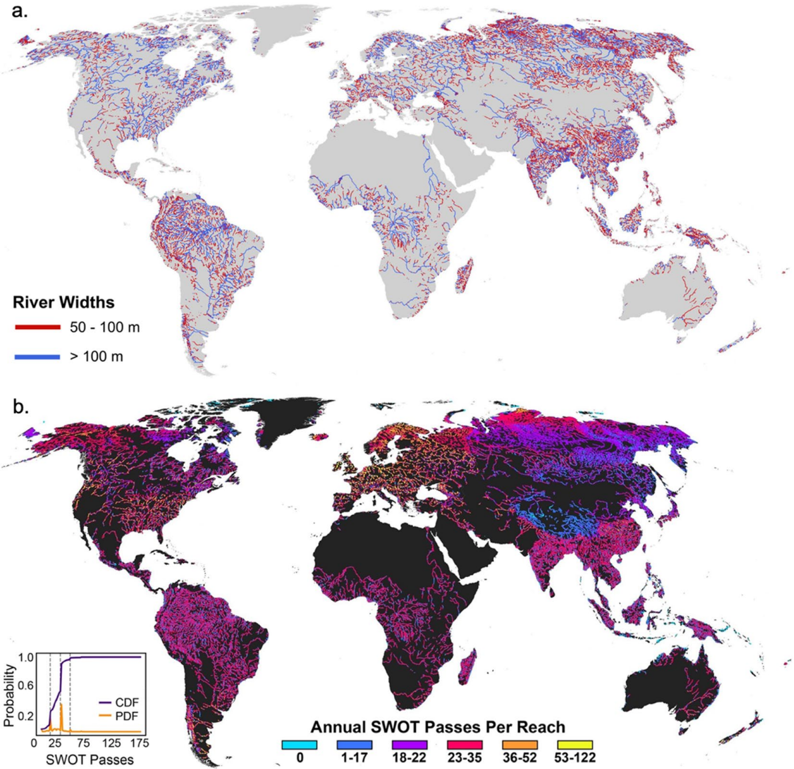
- SWOT discharge will be produced for rivers wider than 100 m; there are 62,809 SWORD reaches wider than 100 m and 122,684 wider than 50 m, while 1,360 reaches wider than 100 m are never observed due to coverage gaps.
- Expected discharge uncertainty is less than 30% for two-thirds of global reaches and is dominated by bias; temporal variations in discharge are expected to be estimated within 15% for nearly all reaches.
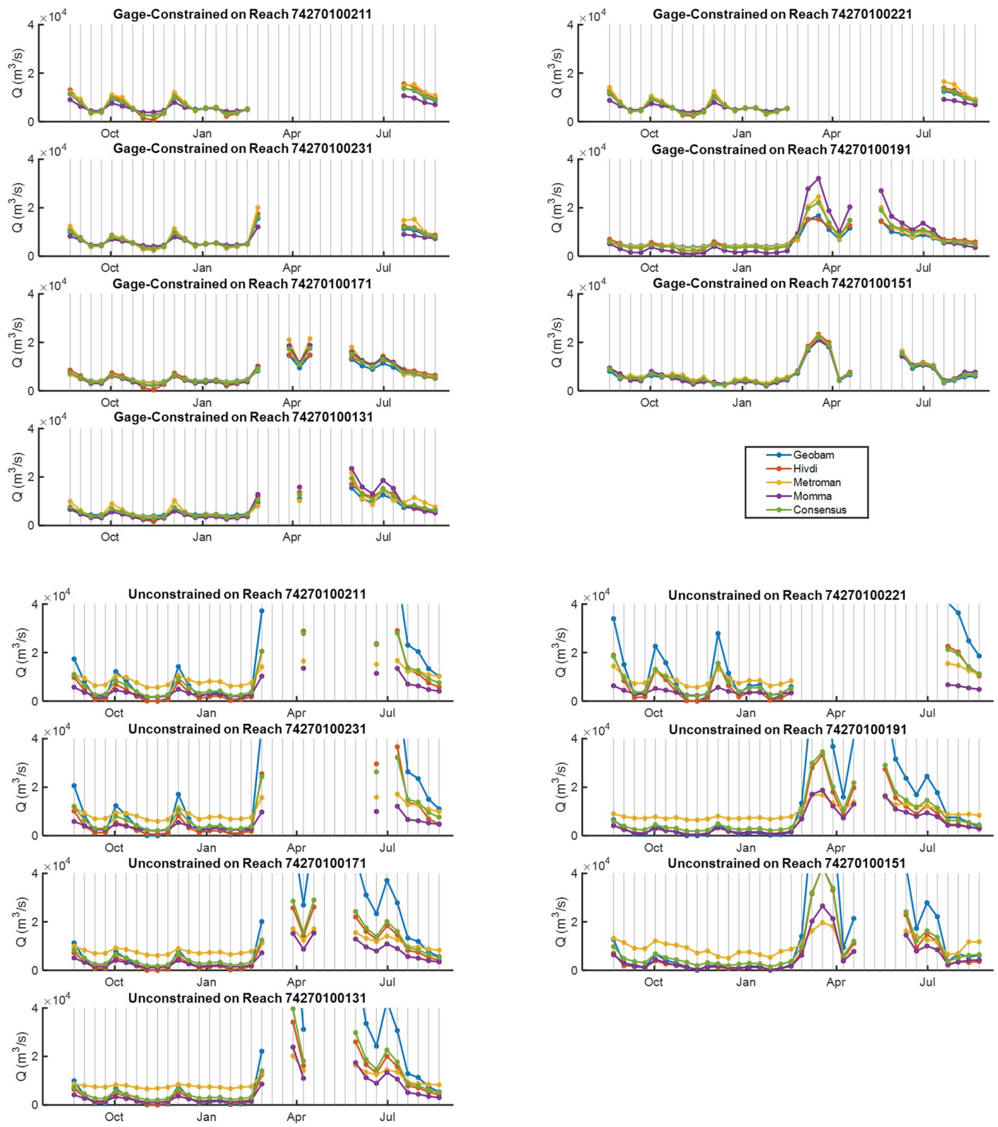
- Gage-constrained estimates should have lower systematic uncertainty; in the Alaska example, unconstrained mean flow is expected within 30%, gage-constrained mean flow within 20% near gages, and combined random plus systematic single-pass uncertainty can be as low as or lower than 35% for most reaches.
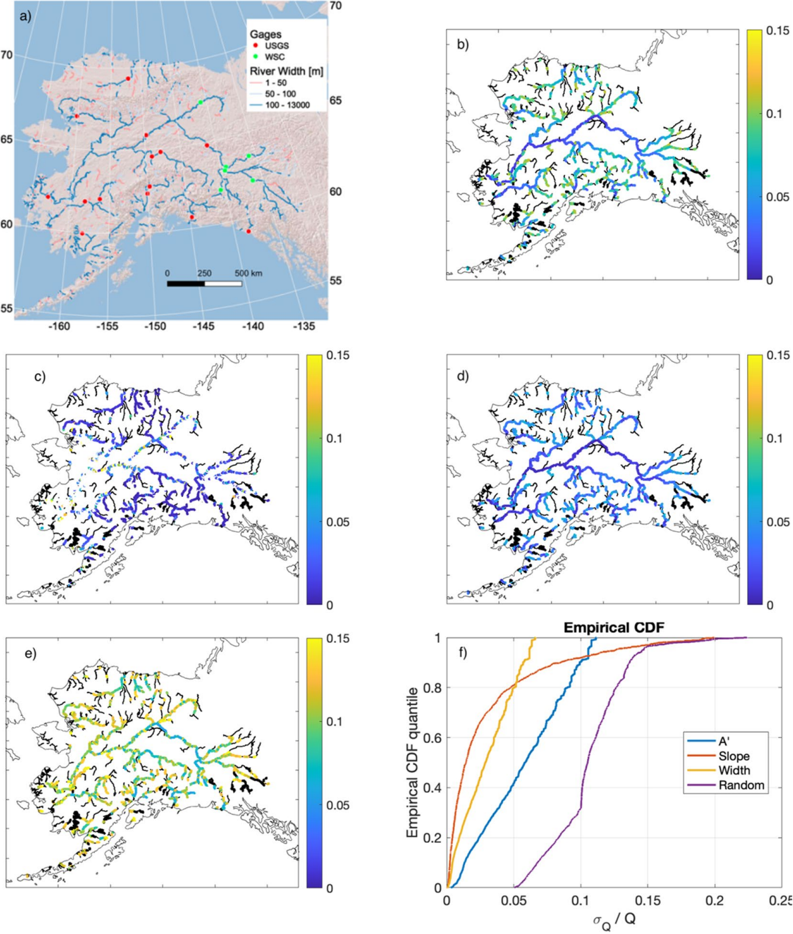
- In the Alaska example, total random error has a 67th percentile of 0.12 and more than 95% of reaches have random error less than 0.15; systematic uncertainty dominates total uncertainty for 90% of reaches in the gage-constrained domain.
Methods
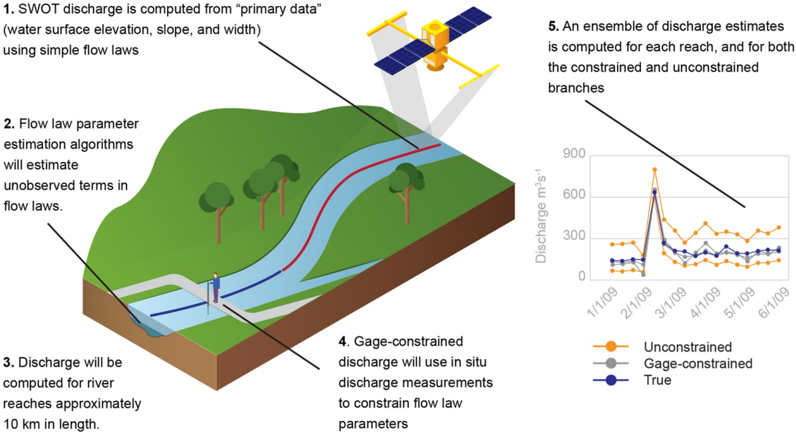
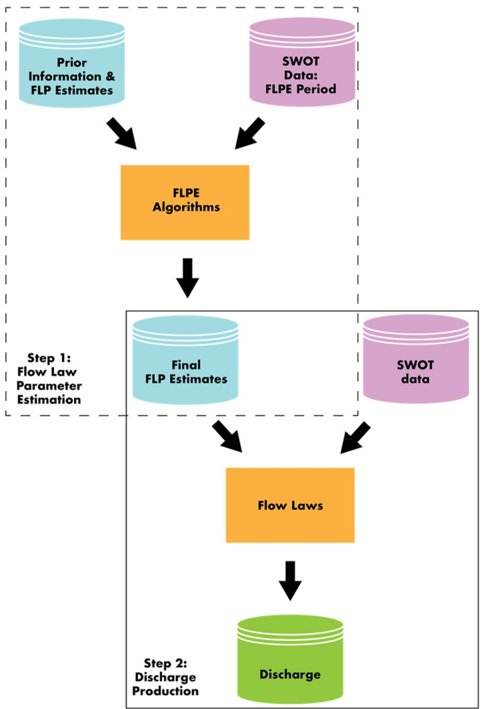
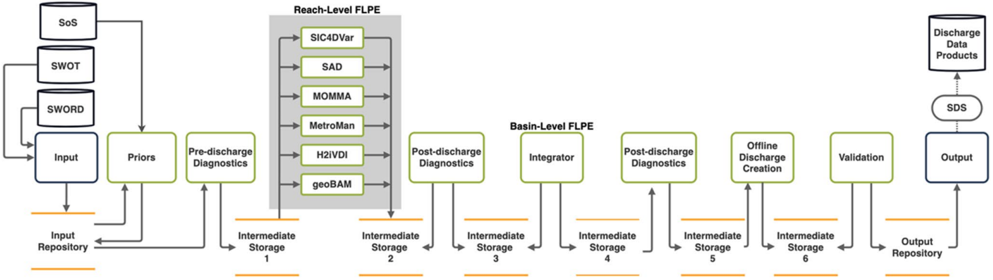
- The framework uses a two-step process: Science Team algorithms estimate flow-law parameters (FLPs) via Confluence, then agencies compute discharge operationally using a modified Manning flow law with SWOT observations and ancillary data.
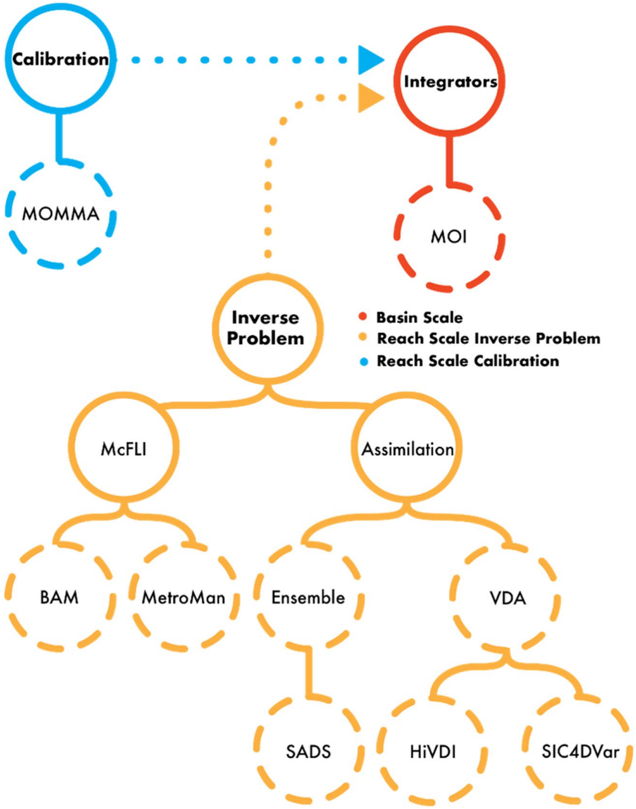
- Planned FLPE algorithms include reach-scale calibration (MOMMA), reach-scale inverse/McFLI methods (geoBAM/BAM, MetroMan), variational data assimilation (HiVDI, SIC4DVar), SAD, and the basin-scale MOI integrator; priors come from WBM for unconstrained and GRADES for gage-constrained products, with in situ gages used for constraints and validation.
- Example results use an end-to-end simulation with the Ohio River Community HEC-RAS model and synthetic SWOT sampling/errors, plus MOI over Alaska assuming 40% FLP systematic uncertainty, 5% flow-law approximation error, 5% gage mean annual flow uncertainty, and 0.7 inter-reach error correlation.
Limitations
- Stated: the uncertainty analysis assumes observations and flow-law approximation contribute only random error and parameters only systematic error; mapping FLP uncertainty to systematic discharge error is not trivial; McFLI algorithms do not adequately account for errors in prior mean annual flow; gage discharge itself has non-trivial uncertainty; sparse sampling may not fully resolve hydrographs, especially for smaller and flashier rivers; discharge is not computed for ice-covered rivers, lakes, dam reaches, or reaches too narrow/obstructed/unreliable in topology.
- Evident from the text: expected accuracy and uncertainty are based on simulations, algorithm intercomparison, and example domains (Alaska, Mississippi/Ohio), not on real SWOT discharge validation; the paper states results will be updated with real SWOT data and that other basins are expected to vary.
Model-written summary. Check it against the paper before relying on it.
Integrity signals
Registry
Cites
Statistics
Figures







Verification
Claims the paper makes
0 Valid · 10 Not valid · 46 Not checked · 97 Own results and interpretations
The cited sources that could be checked couldn’t confirm or dispute this claim.
In the paper
“Indeed, the discharge uncertainties for 𝐴𝐴 𝐴𝐴 ′ and width are approximately linear in their CDFs, despite the underlying width data following the usual long-tail exponential distribution over the domain (Frasson et al., 2019).”
§ A Framework for Estimating Global River Discharge From the Surface Water and Ocean Topography Satellite Mission > 5.5.1. Random Discharge Uncertainty
What the sources say
- Could not verifycites Frasson et al., 2019 matched to “Global Relationships Between River Width, Slope, Catchment Area, Meander Wavelength, Sinuosity, and Discharge” (2019) sourceExperimental — accuracy not yet measured
Our copy of Frasson et al. (2019) contains no statement about cumulative distribution functions of discharge uncertainties, nor about them being approximately linear, and no mention of a long-tail exponential width distribution or of an adjusted catchment area A'. The closest content is the Results and Discussion (p. ~3) noting right-skewed histograms and quantiles of global river width (Figure 2a) and the passage in Section 3 stating that the normalized interquartile range of width varied from 85% to 165% across discharge classes 100-5,000 m3/s (Table S2) as an indication of discharge-width relationship uncertainty. Searched: 'CDF/cumulative distribution function linear uncertainties', 'A-prime catchment area adjustment', 'long-tail exponential width distribution', 'discharge uncertainty' — none address the claim's point. (LLM, conf=0.68)
plainstates an association- Asserted: passes — The authors put it forward as true.
- Checkable: passes — It can be checked against evidence.
- Load-bearing: unclear — It is unclear whether the paper’s conclusions depend on it.
- Based: passes — The paper gives a reason why it holds.
- Could not verify
A result the paper states — it cites no source for it, so there is none to check. The quote shows it is in the paper.
In the paper
“Temporal variations in river discharge time series will be dominated by random error and are expected to be estimated within 15% for nearly all reaches, allowing accurate inference of event flow dynamics globally, including in ungaged basins.”
§ A Framework for Estimating Global River Discharge From the Surface Water and Ocean Topography Satellite Mission > Abstract
hedged- Asserted: passes — The authors put it forward as true.
- Checkable: passes — It can be checked against evidence.
- Load-bearing: passes — The paper’s conclusions depend on it.
- Based: passes — The paper gives a reason why it holds.
A result the paper states — it cites no source for it, so there is none to check. The quote shows it is in the paper.
In the paper
“We expect that discharge uncertainty will be less than 30% for two-thirds of global reaches and will be dominated by bias.”
- Also stated in: § 2. SWOT Discharge Philosophy · plain
“two-thirds of global reaches and will be dominated by a systematic bias.”
§ A Framework for Estimating Global River Discharge From the Surface Water and Ocean Topography Satellite Mission > Abstract
plain- Asserted: passes — The authors put it forward as true.
- Checkable: passes — It can be checked against evidence.
- Load-bearing: passes — The paper’s conclusions depend on it.
- Based: passes — The paper gives a reason why it holds.
- Also stated in: § 2. SWOT Discharge Philosophy · plain
The paper states this without a source or data behind it here, so there is nothing to check it against. The quote shows it is in the paper.
In the paper
“Temporal variations in river discharge time series will be dominated by random error and are expected to be estimated within 15% for nearly all reaches, allowing accurate inference of event flow dynamics globally, including in ungaged basins.”
§ A Framework for Estimating Global River Discharge From the Surface Water and Ocean Topography Satellite Mission > Abstract
plain- Asserted: passes — The authors put it forward as true.
- Checkable: passes — It can be checked against evidence.
- Load-bearing: passes — The paper’s conclusions depend on it.
- Based: unclear — It is unclear why the paper says it holds.
78 more claims
Create a free account to see all 153 claims and to verify the 40 references still open.
- It may state two separate claims as one. 46
- Probably not a substantial claim. 34
Claims other papers make about this one
Each is checked against this paper’s own text: does it say what the citing paper says it does?
The cited source says what the claim attributes to it.
In the citing paper
“The median of the absolute value of the bias is 56%, which is larger than predicted in pre‐launch studies (Durand et al., 2023)”
From A First Look at River Discharge Estimation From SWOT Satellite Observations (2025) · cites this paper as Durand et al., 2023
In the citing paper
“The results reflect version 3 of the SWOT discharge product Consensus, which is one stage in a framework explicitly designed for iterative algorithm refinement and improvement (Durand et al., 2023).”
From SWOT Discharge Accuracy Benchmarked in South America (2026) · cites this paper as Durand et al., 2023
In the citing paper
“In isolation, SWOT's simultaneous observations of river elevation, slope, and width, leading to global reach-specific estimates of discharge (Durand et al., 2023), can be expected to provide novel insights into hydrologic dynamics (Biancamaria et al., 2016).”
From Bidirectional Translations Between Observational and Topography‐Based Hydrographic Data Sets: MERIT‐Basins and the SWOT River Database (SWORD) (2025) · cites this paper as Durand et al., 2023
In the citing paper
“Despite the existence of other global river vector data sets, we opt to base our data product on MB given its existing links to a priori discharge estimates for the SWOT mission (e.g., GRADES; Durand et al., 2023;Lin et al., 2019) and its widespread application to hydrologic modeling and analysis (Collins et al., 2024;Feng et al., 2021Feng et al., , 2022;;Lin et al., 2019;Yang et al., 2021;Yin et”
From Bidirectional Translations Between Observational and Topography‐Based Hydrographic Data Sets: MERIT‐Basins and the SWOT River Database (SWORD) (2025) · cites this paper as Durand et al., 2023
In the citing paper
“This level of performance, and a modest improvement in the prior bias, is well within expectations laid out prior to launch (Durand et al., 2023).”
From A First Look at River Discharge Estimation From SWOT Satellite Observations (2025) · cites this paper as Durand et al., 2023
5 more claims about this paper
Create a free account to see every claim other papers make about this one.
Self-check
Percentages, sums and reported differences re-computed from the paper’s own numbers.
Each contradiction between two passages listed here was confirmed by an independent check.
Rated minor: it would not touch a result — a value no result rests on, a p-value that stays on the same side of the significance level, or a conflict that is clerical, resolved elsewhere in the paper, or outside its own findings.
In the paper
§ A Framework for Estimating Global River Discharge From the Surface Water and Ocean Topography Satellite Mission > 5.5.3. Combined Discharge Uncertainty
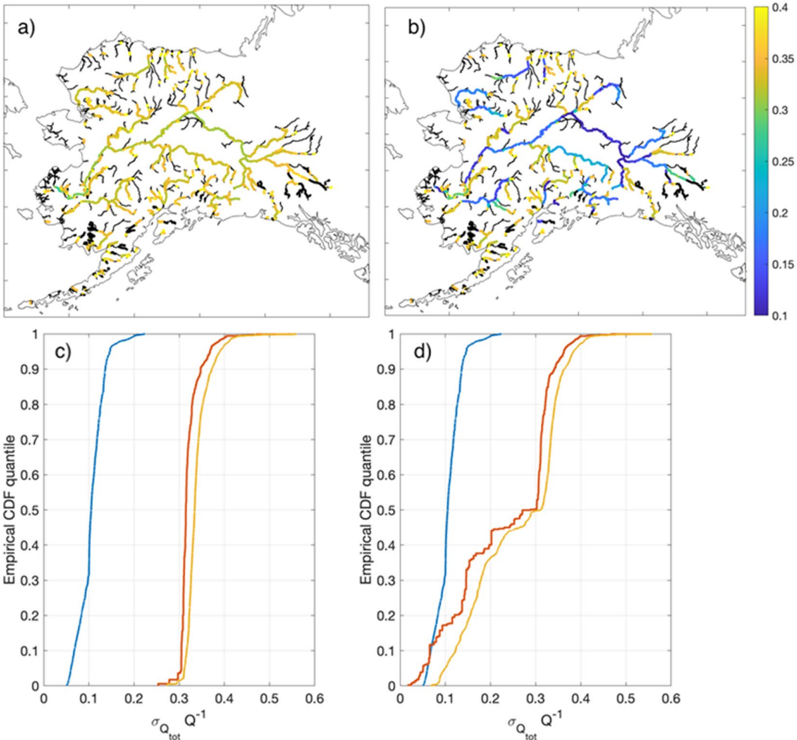
“This is still true most of the time for the gage-constrained case (Figure 10d)”
§ A Framework for Estimating Global River Discharge From the Surface Water and Ocean Topography Satellite Mission > 6. Conclusion
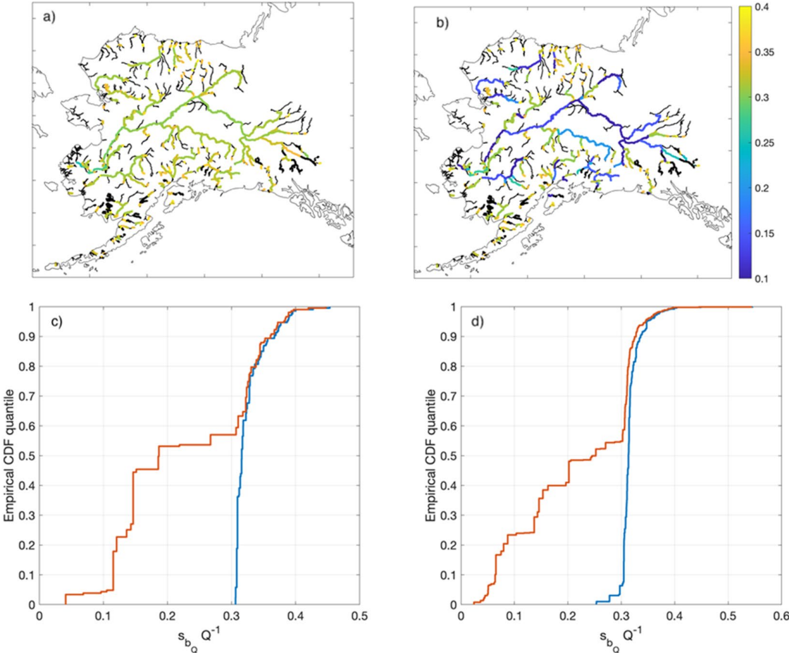
“Cumulative distribution functions (CDFs) of random (blue), systematic (red), and total uncertainty (gold) for the (c) unconstrained and (d) unconstrained discharge estimates.”
Rated minor: it would not touch a result — a value no result rests on, a p-value that stays on the same side of the significance level, or a conflict that is clerical, resolved elsewhere in the paper, or outside its own findings.
In the paper
§ A Framework for Estimating Global River Discharge From the Surface Water and Ocean Topography Satellite Mission > 5.5.2. Systematic Discharge Uncertainty
“Figure 9c shows the comparison of the 𝐴𝐴 𝐴𝐴𝑏𝑏 𝑄𝑄 cdf for the Yukon River for the constrained and unconstrained cases.”
§ A Framework for Estimating Global River Discharge From the Surface Water and Ocean Topography Satellite Mission > 6. Conclusion
“The difference between unconstrained (blue) and constrained (red) values of 𝐴𝐴 𝐴𝐴𝑏𝑏 𝑄𝑄 for the (c) rivers north of the Yukon basin and (d) Yukon River basin.”
Rated minor: it would not touch a result — a value no result rests on, a p-value that stays on the same side of the significance level, or a conflict that is clerical, resolved elsewhere in the paper, or outside its own findings.
In the paper
§ A Framework for Estimating Global River Discharge From the Surface Water and Ocean Topography Satellite Mission > 3.2.1. Spatial Characteristics
“SWOT discharge will be produced and is expected to be of good quality for all rivers greater than 100 m.”
§ A Framework for Estimating Global River Discharge From the Surface Water and Ocean Topography Satellite Mission > 3.2.2. Temporal Characteristics
“A total of 1,360 river that reaches wider than 100 m (2% of the total) are never observed due to small gaps in SWOT coverage.”
Citations
Cites
The Global Precipitation Measurement Mission
Hou, A. Y., Kakar, R. K., Neeck, S., Azarbarzin, A. A., Kummerow, C. D., Kojima, M., Oki, R., Nakamura, K., & Iguchi, T. (2014) · Bulletin of the American Meteorological Society · doi:10.1175/bams-d-13-00164.1 · Cited by 2,766
The development and evaluation of the Earth Gravitational Model 2008 (EGM2008)
Pavlis, N. K., Holmes, S. A., Kenyon, S. C., & Factor, J. K. (2012) · Journal of Geophysical Research: Solid Earth · doi:10.1029/2011jb008916 · Cited by 2,641 · cited 1×
“Note that the SWOT mission has two phases, marked by different orbits and resulting spatiotemporal sampling.”
BackgroundMERIT Hydro: A High‐Resolution Global Hydrography Map Based on Latest Topography Dataset
Yamazaki, D., Ikeshima, D., Sosa, J., Bates, P. D., Allen, G. H., & Pavelsky, T. M. (2019) · Water Resources Research · doi:10.1029/2019wr024873 · Cited by 1,392
Self-citationUncertainty Quantification: Theory, Implementation, and Applications
Smith, R. C. (2013) · Society for Industrial and Applied Mathematics eBooks · doi:10.1137/1.9781611973228 · Cited by 1,138
American Geophysical Union, Fall Meeting 2014
Fakhruddin, S. H. M. (2014) · ResearchSpace (University of Auckland) · Cited by 995
Global extent of rivers and streams
Allen, G. H., & Pavelsky, T. M. (2018) · Science · doi:10.1126/science.aat0636 · Cited by 970
Self-citationA physically based description of floodplain inundation dynamics in a global river routing model
Yamazaki, D., Kanae, S., Kim, H., & Oki, T. (2011) · Water Resources Research · doi:10.1029/2010wr009726 · Cited by 932
Integrated Multi-satellite Retrievals for the Global Precipitation Measurement (GPM) Mission (IMERG)
Huffman, G. J., Bolvin, D. T., Braithwaite, D., Hsu, K.-L., Joyce, R. J., Kidd, C., Nelkin, E. J., Sorooshian, S., Stocker, E. F., Tan, J., et al. (2020) · Advances in Global Change Research · doi:10.1007/978-3-030-24568-9_19 · Cited by 748
Benchmarking observational uncertainties for hydrology: rainfall, river discharge and water quality
McMillan, H., Krueger, T., & Freer, J. (2012) · Hydrological Processes · doi:10.1002/hyp.9384 · Cited by 522
Global Reconstruction of Naturalized River Flows at 2.94 Million Reaches
Lin, P., Pan, M., Beck, H. E., Yang, Y., Yamazaki, D., Frasson, R., David, C. H., Durand, M., Pavelsky, T. M., Allen, G. H., et al. (2019) · Water Resources Research · doi:10.1029/2019wr025287 · Cited by 511
Self-citation
Research works printed but not linked: 3
- JPL Internal Document, 2017, SWOT project mission performance and error budget
- Riggs, R. M., Allen, G. H., Wang, J., & Sikder, M. S. (2022). Using SWOT observed lake storage change to constrain river inflow and outflow discharge. American Geophysical Union.
- Wang, J., Riggs, R. M., Allen, G. H., Sikder, M. S., Durand, M. T., Gleason, C. J., & Pavelsky, T. (2021). Preliminary results for "Lakeflow", an algorithm to improve SWOT flow-law parameters through integrating river-lake mass conservation. H12I-05: Surface Water Hydrology from SWOT, NISAR, and ICESat-2 II eLightning. American Geophysical Union.
Cited by
Fu, L., Pavelsky, T. M., Crétaux, J., Morrow, R. A., Farrar, J. T., Vaze, P. V., Sengenes, P., Vinogradova‐Shiffer, N., Sylvestre‐Baron, A., Picot, N., et al. (2024) · Geophysical Research Letters · doi:10.1029/2023gl107652 · Cited by 497
Self-citationA 30 m global flood inundation model for any climate scenario
Wing, O. E. J., Bates, P. D., Quinn, N. D., Savage, J. T. S., Uhe, P. F., Cooper, A., Collings, T. P., Addor, N., Lord, N. S., Hatchard, S., et al. (2024) · Water Resources Research · doi:10.1029/2023wr036460 · Cited by 85
Self-citationA First Look at River Discharge Estimation From SWOT Satellite Observations
Andreadis, K. M., Coss, S. P., Durand, M., Gleason, C. J., Simmons, T. T., Tebaldi, N., Bjerklie, D. M., Brinkerhoff, C., Dudley, R. W., Gejadze, I., et al. (2025) · Geophysical Research Letters · doi:10.1029/2024gl114185 · Cited by 110
Self-citationYang, Y., Feng, D., Beck, H. E., Hu, W., Abbas, A., Sengupta, A., Monache, L. D., Hartman, R. K., Lin, P., Shen, C., et al. (2025) · Water Resources Research · doi:10.1029/2024wr039764 · Cited by 72
Self-citationPatidar, G., Indu, J., & Karmakar, S. (2025) · Geophysical Research Letters · doi:10.1029/2025gl115804 · Cited by 62
Becker, M., Seeger, K., Paszkowski, A., Marcos, M., Papa, F., Almar, R., Bates, P., France‐Lanord, C., Hossain, M. S., Khan, M. J. U., et al. (2024) · Reviews of Geophysics · doi:10.1029/2024rg000846 · Cited by 59
Self-citationLin, P., Feng, D., Gleason, C. J., Pan, M., Brinkerhoff, C. B., Yang, X., Beck, H. E., & de Moraes Frasson, R. P. (2023) · Remote Sensing of Environment · doi:10.1016/j.rse.2023.113489 · Cited by 58
Self-citationThe Potential of Hydrogeodesy to Address Water‐Related and Sustainability Challenges
Jaramillo, F., Aminjafari, S., Castellazzi, P., Fleischmann, A. S., Fluet‐Chouinard, E., Hashemi, H., Hübinger, C., Martens, H. R., Papa, F., Schöne, T., et al. (2024) · Water Resources Research · doi:10.1029/2023wr037020 · Cited by 51
Self-citationA new look at Earth’s water and energy with SWOT
Vinogradova, N. T., Pavelsky, T. M., Farrar, J. T., Hossain, F., & Fu, L.-L. (2025) · Nature Water · doi:10.1038/s44221-024-00372-w · Cited by 33
Self-citationEffects of climate change on river and groundwater nutrient inputs to the coastal ocean
Richardson, C., Peucker‐Ehrenbrink, B., Wyatt, S. N., Bourbonnais, A., Hatje, V., Frey, C., Sanders, T., Varela, D. E., & Paytan, A. (2025) · Communications Earth & Environment · doi:10.1038/s43247-025-02594-6 · Cited by 46
The SWOT mission will reshape our understanding of the global terrestrial water cycle
Getirana, A., Kumar, S. V., Bates, P., Boone, A. A., Lettenmaier, D. P., & Munier, S. (2024) · Nature Water · doi:10.1038/s44221-024-00352-0 · Cited by 35
Self-citationTursun, A., Xie, X., Wang, Y., Peng, D., Liu, Y., Zheng, B., Wu, X., & Nie, C. (2024) · Water Resources Research · doi:10.1029/2023wr036853 · Cited by 34
Yu, B., Zheng, Y., He, S., Xiong, R., & Wang, C. (2025) · Journal of Hydrology · doi:10.1016/j.jhydrol.2025.133052 · Cited by 30
Asmara, B., & Randhir, T. O. (2024) · The Science of The Total Environment · doi:10.1016/j.scitotenv.2024.172456 · Cited by 27
Remote Sensing of River Discharge From Medium‐Resolution Satellite Imagery Based on Deep Learning
Hao, Z., Xiang, N., Cai, X., Zhong, M., Jin, J., Du, Y., & Ling, F. (2024) · Water Resources Research · doi:10.1029/2023wr036880 · Cited by 26
Scherer, D., Schwatke, C., Dettmering, D., & Seitz, F. (2024) · Remote Sensing of Environment · doi:10.1016/j.rse.2024.114434 · Cited by 26
Satellite Requirements to Capture Water Propagation in Earth's Rivers
Cerbelaud, A., David, C. H., Pavelsky, T., Biancamaria, S., Garambois, P. ‐., Kittel, C., Papa, F., Bates, P., Tourian, M. J., Durand, M., et al. (2025) · Reviews of Geophysics · doi:10.1029/2024rg000871 · Cited by 25
Self-citationUnveiling the First Impressions of the Wide‐Swath Altimetry SWOT Mission Over the Ganga River, India
Dhote, P. R., Agarwal, A., Paris, A., Singhal, G., Thakur, P. K., Oubanas, H., Moreira, D. M., Gal, L., Garg, V., Kumar, P., et al. (2025) · Geophysical Research Letters · doi:10.1029/2025gl115402 · Cited by 20
Self-citationSaki, S., Sofia, G., & Anagnostou, E. N. (2023) · Journal of Hydrology · doi:10.1016/j.jhydrol.2023.130336 · Cited by 24
SWOT Captures Hydrologic Waves Traveling Down Rivers
Thurman, H. R., Allen, G. H., Williams, B. A., Cerbelaud, A., & David, C. H. (2025) · Geophysical Research Letters · doi:10.1029/2024gl113875 · Cited by 24
Self-citationTurning Lakes Into River Gauges Using the LakeFlow Algorithm
Riggs, R., Allen, G. H., Brinkerhoff, C., Sikder, M. S., & Wang, J. (2023) · Geophysical Research Letters · doi:10.1029/2023gl103924 · Cited by 23
Self-citationDhote, P. R., Agarwal, A., Singhal, G., Calmant, S., Thakur, P. K., Oubanas, H., Paris, A., & Singh, R. P. (2024) · IEEE Journal of Selected Topics in Applied Earth Observations and Remote Sensing · doi:10.1109/jstars.2024.3379874 · Cited by 23
Self-citationBonassies, Q., Fatras, C., Luque, S. P., Dubois, P., Piacentini, A., Cassan, L., Ricci, S., & Nguyen, T. H. (2025) · Remote Sensing of Environment · doi:10.1016/j.rse.2025.115101 · Cited by 23
Rong, Y., Bates, P., & Neal, J. C. (2024) · Water Resources Research · doi:10.1029/2023wr036128 · Cited by 22
Self-citationWide-swath altimetry maps bank shapes and storage changes in global rivers
Cerbelaud, A., Wade, J., David, C. H., Durand, M. T., Frasson, R. P. D. M., Pavelsky, T. M., & Oubanas, H. (2026) · Nature · doi:10.1038/s41586-026-10218-y · Cited by 23
Self-citationPre-failure operational anomalies of the Kakhovka Dam revealed by satellite data
Yang, Q., Shen, X., He, K., Zhang, Q., Helfrich, S., Straka, W. C., Kellndorfer, J., & Anagnostou, E. N. (2024) · Communications Earth & Environment · doi:10.1038/s43247-024-01397-5 · Cited by 20
Vlah, M., Ross, M. R. V., Rhea, S., & Bernhardt, E. S. (2024) · Hydrology and earth system sciences · doi:10.5194/hess-28-545-2024 · Cited by 19
Cerbelaud, A., David, C. H., Biancamaria, S., Wade, J., Tom, M., Frasson, R. P. D. M., & Blumstein, D. (2024) · Geophysical Research Letters · doi:10.1029/2024gl109220 · Cited by 18
Self-citationThe Unexploited Treasures of Hydrological Observations Beyond Streamflow for Catchment Modeling
Wagner, P. D., Duethmann, D., Kiesel, J., Pool, S., Hrachowitz, M., Ceola, S., Herzog, A., Houska, T., Loritz, R., Spieler, D., et al. (2025) · Wiley Interdisciplinary Reviews Water · doi:10.1002/wat2.70018 · Cited by 18
Enhancing discharge estimation from SWOT satellite data in a tropical tidal river environment
do Amaral, F. R., Pellarin, T., Trung, T. N., Tu, T. A., & Gratiot, N. (2024) · PLOS Water · doi:10.1371/journal.pwat.0000226 · Cited by 17
Observing river discharge from space: Challenges and opportunities
Huang, C., Li, Y., Tarpanelli, A., Wang, N., & Chen, Y. (2024) · The Innovation Geoscience · doi:10.59717/j.xinn-geo.2024.100076 · Cited by 16
Self-citationLin, H., Cheng, X., Liu, J., Shi, Q., Li, T., Zheng, L., Hou, X., & Du, J. (2024) · Remote Sensing of Environment · doi:10.1016/j.rse.2024.114266 · Cited by 17
Larnier, K., Garambois, P., Emery, C., Pujol, L., Monnier, J., Gal, L., Paris, A., Yesou, H., Ledauphin, T., & Calmant, S. (2025) · Water Resources Research · doi:10.1029/2024wr038455 · Cited by 14
Self-citationSiting Considerations for Satellite Observation of River Discharge
Eggleston, J. R., Mason, C. A., Bjerklie, D., Durand, M., Dudley, R. W., & Harlan, M. E. (2024) · Water Resources Research · doi:10.1029/2023wr034583 · Cited by 14
Self-citationUsing river hypsometry to improve remote sensing of river discharge
Durand, M., Dai, C., Moortgat, J., Yadav, B., Frasson, R. P. D. M., Li, Z., Wadkwoski, K., Howat, I., & Pavelsky, T. M. (2024) · Remote Sensing of Environment · doi:10.1016/j.rse.2024.114455 · Cited by 15
Self-citationLedauphin, T., Garambois, P., Larnier, K., Azzoni, M., Emery, C., Picot, N., Amzil, S., Fjørtoft, R., Maxant, J., & Yesou, H. (2025) · Earth and Space Science · doi:10.1029/2025ea004309 · Cited by 14
Self-citationWorden, M. A., Bilir, T. E., Bloom, A. A., Fang, J., Klinek, L., Konings, A. G., Levine, P. A., Milodowski, D. T., Quetin, G. R., Smallman, T. L., et al. (2025) · Global Change Biology · doi:10.1111/gcb.70462 · Cited by 13
Self-citationMonitoring Reservoir Storage Using SWOT Satellite Observations and a Reservoir Operation Model
Ma, X., Wang, J., Gharari, S., Mizukami, N., & Lettenmaier, D. P. (2026) · Water Resources Research · doi:10.1029/2025wr041223 · Cited by 14
Self-citationEstimating Riverine Total Suspended Solids From Spatiotemporal Satellite Sensor Fusion
Friedmann, E., Gleason, C. J., Feng, D., & Langhorst, T. (2024) · IEEE Journal of Selected Topics in Applied Earth Observations and Remote Sensing · doi:10.1109/jstars.2024.3443756 · Cited by 12
Self-citationEhlers, F., Slobbe, C., Schlembach, F., Kleinherenbrink, M., & Verlaan, M. (2024) · Remote Sensing of Environment · doi:10.1016/j.rse.2024.114479 · Cited by 12
Yao, J., Zhao, Z., Pan, M., Yang, Y., LI, X., Liu, T., Wen, Z., xu, N., & Lu, H. (2026) · npj natural hazards. · doi:10.1038/s44304-026-00176-w · Cited by 12
Self-citationFrasson, R. P. D. M., Turmon, M., Durand, M., & David, C. H. (2022) · Journal of Hydrometeorology · doi:10.1175/jhm-d-22-0078.1 · Cited by 12
Self-citationGehring, J., Beighley, R. E., & Stubbins, A. (2023) · Frontiers in Earth Science · doi:10.3389/feart.2023.1201711 · Cited by 12
Durand, M., Johnson, J. T., Dechow, J., Tsang, L., Borah, F. K., & Kim, E. (2024) · The Cryosphere · doi:10.5194/tc-18-139-2024 · Cited by 15
Self-citationKinzel, P. J., Legleiter, C. J., & Gazoorian, C. L. (2024) · Water · doi:10.3390/w16131870 · Cited by 11
Remote Sensing of River Discharge Based on Critical Flow Theory
Legleiter, C. J., Grant, G. E., Bae, I., Fasth, B. G., Yager, E. M., White, D. C., Hempel, L., Harlan, M. E., Leonard, C. M., & Dudley, R. W. (2025) · Geophysical Research Letters · doi:10.1029/2025gl114851 · Cited by 12
Self-citationLiu, Y., Wortmann, M., Hawker, L., Neal, J. C., Yin, J., Santos, M. S., Anderson, B. J., Boothroyd, R., Nicholas, A., Smith, G. H. S., et al. (2026) · Nature Communications · doi:10.1038/s41467-026-76433-3 · Cited by 11
Two decades of river discharge from multi-mission multispectral data
Filippucci, P., Sahoo, D. P., & Tarpanelli, A. (2025) · Remote Sensing of Environment · doi:10.1016/j.rse.2025.114919 · Cited by 10
Self-citationKechnit, D., Tshimanga, R. M., Ammari, A., & Trigg, M. A. (2024) · Hydrological Sciences Journal · doi:10.1080/02626667.2024.2378486 · Cited by 10
Li, M., Zhao, C., Duan, Z., Cheng, H., Lian, Y., & Wang, G. (2024) · Journal of Hydrology · doi:10.1016/j.jhydrol.2024.131913 · Cited by 9
Shaik, E., & Fan, D. (2025) · Journal of Hydrology · doi:10.1016/j.jhydrol.2025.133924 · Cited by 9
Braided Rivers From SWOT: Water Surface Dynamics Over the Multi‐Channel Brahmaputra River
Franze, S. E., Köhn, S. J., Chewning, C., & Nielsen, K. (2025) · Geophysical Research Letters · doi:10.1029/2025gl116488 · Cited by 9
Optimizing Height Above Nearest Drainage parameters to enable rapid flood mapping in North Carolina
Richardson, C. A., & Beighley, R. E. (2024) · Frontiers in Water · doi:10.3389/frwa.2023.1296434 · Cited by 9
ExtendinG SUb-DAily River Discharge data over INdia (GUARDIAN)
Patidar, G., Indu, J., & Karmakar, S. (2024) · Scientific Data · doi:10.1038/s41597-024-03923-8 · Cited by 9
Wade, J., David, C. H., Altenau, E. H., Collins, E. L., Oubanas, H., Coss, S., Cerbelaud, A., Tom, M., Durand, M., & Pavelsky, T. M. (2025) · Water Resources Research · doi:10.1029/2024wr038633 · Cited by 8
Self-citationEvaluation of SWOT Water Surface Elevation Product Along the Middle Paraná River
Weibel, C. L., Walker, E., Szupiany, R. N., Venturini, V., Ellis, J. S., Oberg, K. A., García, C. M., Lozada, J. M. D., Zaffaroni, P. T., Jobbagy, E. G., et al. (2024) · IEEE Biennial Congress of Argentina (ARGENCON) · doi:10.1109/argencon62399.2024.10735715 · Cited by 8
Self-citationRemote Sensing of Discharge Ratios at River Channel Bifurcations
Wang, B., & Smith, L. C. (2025) · Geophysical Research Letters · doi:10.1029/2024gl114045 · Cited by 9
Nguyen, T. H., Ricci, S., Boy, F., Piacentini, A., Munier, S., Luque, S. P., Fatras, C., Cassan, L., & Suquet, R. R. (2025) · Journal of Hydrology · doi:10.1016/j.jhydrol.2025.134013 · Cited by 8
Yamazaki, D. (2025) · Geoscience Letters · doi:10.1186/s40562-025-00452-z · Cited by 8
Tebaldi, N., Gleason, C. J., Durand, M., Coss, S., & Simmons, T. (2026) · Environmental Modelling & Software · doi:10.1016/j.envsoft.2026.106916 · Cited by 9
Self-citationPotential Legacy of SWOT Mission for the Estimation of Flow–Duration Curves
Domeneghetti, A., Ceola, S., Pugliese, A., Persiano, S., Palazzoli, I., Castellarin, A., Marinelli, A., & Brath, A. (2024) · Remote Sensing · doi:10.3390/rs16142607 · Cited by 8
Li, M., Zhao, C., Huang, Q., Pan, T., Yesou, H., Nerry, F., & Li, Z.-L. (2025) · Remote Sensing of Environment · doi:10.1016/j.rse.2025.114610 · Cited by 8
A Kalman Filter Approach for Estimating Daily Discharge Using Space‐Based Discharge Estimates
Ke, S., Tourian, M. J., Sneeuw, N., Frasson, R. P. D. M., de Paiva, R. C. D., Durand, M., Gleason, C. J., Elmi, O., Malaterre, P., & David, C. H. (2025) · Water Resources Research · doi:10.1029/2024wr037667 · Cited by 7
Self-citationRiver Network Routing and Discharge Partitioning on a Multichannel River Network
Collins, E. L., Altenau, E. H., Pavelsky, T. M., David, C. H., Getirana, A., & Johnson, E. (2025) · Water Resources Research · doi:10.1029/2025wr041417 · Cited by 8
Self-citationMeasuring the world’s rivers with videos from Space
Everard, N., Randall, M., Schumann, G. J.-P., Sarkar, S., Dixon, H., Hagensieker, R., & Dolokov, A. (2025) · Scientific Reports · doi:10.1038/s41598-025-22413-4 · Cited by 7
Meem, T. H., Rhoads, B. L., Wang, J., & Frasson, R. P. D. M. (2026) · Geophysical Research Letters · doi:10.1029/2025gl119167 · Cited by 7
Self-citationQuantifying river morphological changes using multi‐satellite observations and in situ measurements
Bhattarai, T. N., Moreno-Rodenas, A., Giri, S., Bakker, M., Omer, A., & Bateman, A. (2026) · Earth Surface Processes and Landforms · doi:10.1002/esp.70263 · Cited by 7
Flood Inundation Modeling Using the Surface Water Ocean Topography Mission
Neal, J. C., Chuter, S., Archer, L., Hawker, L., Bates, P., Savage, J. T. S., Wilkinson, H., & Rougier, J. (2026) · Water Resources Research · doi:10.1029/2025wr041527 · Cited by 7
Self-citationBoulenc, H., Bouclier, R., Garambois, P., & Monnier, J. (2025) · Inverse Problems · doi:10.1088/1361-6420/adb0e7 · Cited by 7
Self-citationHouse, E. B., Kim, K., Muste, M., Meselhe, E. A., & Demir, İ. (2025) · Flow Measurement and Instrumentation · doi:10.1016/j.flowmeasinst.2025.102979 · Cited by 7
Doing hydrology when no in-situ data exists: Surrogate River discharge Model (SRM)
Yoon, H. N., Marshall, L. A., Sharma, A., & Kim, S. (2025) · Environmental Modelling & Software · doi:10.1016/j.envsoft.2025.106334 · Cited by 6
Wade, J., David, C. H., Collins, E. L., Denbina, M., Cerbelaud, A., Tom, M., Reager, J. T., Frasson, R. P. D. M., Famiglietti, J. S., Lee, T., et al. (2025) · Geophysical Research Letters · doi:10.1029/2024gl113052 · Cited by 6
Self-citationLiu, Q., Chen, Y., Brêda, J. P. L. F., Cui, H., Duan, H., & Huang, C. (2025) · International Journal of Applied Earth Observation and Geoinformation · doi:10.1016/j.jag.2025.104433 · Cited by 6
SWOT Mission with Wide-Swath Altimetry: Observations and Insights into India’s Inland Waterbodies
Dhote, P. R., Thakur, P. K., Gaur, K. K., Garg, V., Kumar, P., & Singh, R. P. (2025) · Journal of the Indian Society of Remote Sensing · doi:10.1007/s12524-025-02234-8 · Cited by 6
Peng, K., Wright, D. B., Derin, Y., Alexander, G. A., Pradhan, A., Zoccatelli, D., Hartke, S. H., Li, Z., & Tan, J. (2025) · Journal of Advances in Modeling Earth Systems · doi:10.1029/2025ms004953 · Cited by 7
Riggs, R. M., Dickinson, J. E., Brinkerhoff, C. B., Sikder, M. S., Wang, J., Gao, H., & Allen, G. H. (2026) · Environmental Research Letters · doi:10.1088/1748-9326/ae436e · Cited by 3
Self-citationOperational Near Real Time Global Riverine Sediment Flux Estimates From Space
Lucchese, L. V., Daroya, R., Simmons, T., Prum, P., Tebaldi, N., Pavelsky, T. M., Maji, S., Gardner, J., & Gleason, C. J. (2026) · Geophysical Research Letters · doi:10.1029/2025gl120407 · Cited by 6
Self-citationAssimilation of SWOT Altimetry Data for Riverine Flood Reanalysis: From Synthetic to Real Data
Bonassies, Q., Nguyen, T. H., Cassan, L., Piacentini, A., Ricci, S., Emery, C., Fatras, C., Luque, S. P., & Suquet, R. R. (2026) · IEEE Journal of Selected Topics in Applied Earth Observations and Remote Sensing · doi:10.1109/jstars.2026.3659808 · Cited by 6
The representation of rivers in operational ocean forecasting systems: a review
Matte, P., Wilkin, J., & Staneva, J. V. (2025) · State of the Planet · doi:10.5194/sp-5-opsr-19-2025 · Cited by 5
Self-citationTague, C., Barnard, H., Harpold, A. A., Heckman, C. J., Johnson, K., Knowles, J. F., Lininger, K. B., Lowman, L. E. L., Navarre‐Sitchler, A. K., Parrish, E., et al. (2025) · Hydrological Processes · doi:10.1002/hyp.70325 · Cited by 5
Verma, K., Munier, S., Boone, A. A., & Moigne, P. L. (2026) · Water Resources Research · doi:10.1029/2025wr040888 · Cited by 5
Remote sensing and the new global river science
Feng, D., Yang, X., Pavelsky, T. M., Allen, G. H., Bates, P., Gleason, C. J., Gardner, J., Lehner, B., Wang, J., Cooley, S., et al. (2026) · Nature Water · doi:10.1038/s44221-026-00665-2 · Cited by 5
Self-citationDhote, P. R., Bansal, J. K., Garg, V., Thakur, P. K., & Agarwal, A. (2025) · Hydrological Sciences Journal · doi:10.1080/02626667.2024.2430387 · Cited by 5
Hydrologic Science Opportunities to Better Understand Floods: A Community Perspective
Getirana, A., Passalacqua, P., & David, C. H. (2026) · doi:10.69925/ubea6800 · Cited by 5
Self-citationIshikawa, Y., Yamazaki, D., & Yang, Y. (2025) · Geophysical Research Letters · doi:10.1029/2024gl114191 · Cited by 4
Majumder, P., Das, K., Chakraborty, M., & Mukherjee, A. (2025) · Hydrological Processes · doi:10.1002/hyp.70162 · Cited by 4
Xiao, Y., Shao, D., Wu, S., Cai, Y., Li, H., Zhuang, L., Xu, Y., Fan, Y., & Ke, C. (2026) · IEEE Journal of Selected Topics in Applied Earth Observations and Remote Sensing · doi:10.1109/jstars.2026.3653452 · Cited by 4
Cerbelaud, A., David, C. H., Biancamaria, S., Wade, J., Tom, M., Frasson, R. P. D. M., Allen, G. H., Thurman, H. R., & Blumstein, D. (2025) · Water Resources Research · doi:10.1029/2024wr038444 · Cited by 4
Self-citationHeberger, M. G., Aires, F., & Pellet, V. (2025) · Journal of Hydrology · doi:10.1016/j.jhydrol.2025.133825 · Cited by 3
Matthews, G., Cloke, H., Dance, S. L., & Prudhomme, C. (2025) · Hydrology and earth system sciences · doi:10.5194/hess-29-6157-2025 · Cited by 4
Xu, J., Yuan, Z., Xu, Y., & Lin, P. (2026) · ISPRS Journal of Photogrammetry and Remote Sensing · doi:10.1016/j.isprsjprs.2026.03.034 · Cited by 3
Self-citationSWOT: Reviewing Challenges and Opportunities in Hydrological Applications to Inland Waters
Beltrão, D., Cicerelli, R. E., Lappicy, T., Sales, L. O., Teixeira, A. D. A., da Cunha, L. S., Fassoni‐Andrade, A. C., & de Almeida, T. (2026) · IEEE Access · doi:10.1109/access.2026.3690929 · Cited by 3
Yoon, Y., Getirana, A., Kumar, S. V., Collins, E. L., & Wegiel, J. (2026) · Geophysical Research Letters · doi:10.1029/2026gl122610 · Cited by 3
Self-citationSWOT Discharge Accuracy Benchmarked in South America
Jover, L., Getirana, A., Gleason, C., An, H., Crisanti, S., Dose, E., Eylander, J. B., Hellwig, I., Lavado, W., Martinez, J., et al. (2026) · Geophysical Research Letters · doi:10.1029/2026gl122871 · Cited by 2
Self-citationSatellite Hydrology Programmes: Capabilities and Benefits
Ndehedehe, C. E. (2023) · Springer climate · doi:10.1007/978-3-031-37727-3_4 · Cited by 3
Robinett, T., Kolassa, J., Zhao, M., Liu, Y., Shiklomanov, A., & Konings, A. G. (2026) · Journal of Advances in Modeling Earth Systems · doi:10.1029/2025ms005019 · Cited by 2
A generalized framework for inferring river bathymetry from image-derived velocity fields
Legleiter, C. J., & Kinzel, P. J. (2025) · Geomorphology · doi:10.1016/j.geomorph.2025.109732 · Cited by 2
Where to build altimetry-based stage-discharge rating curves? Insights from Sentinel-3
Zhao, Y., & Jiang, L. (2025) · GIScience & Remote Sensing · doi:10.1080/15481603.2025.2530802 · Cited by 2
Durand, M., Gómez, D. D., Pavelsky, T. M., Coss, S., Bates, P., Bjerklie, D. M., David, C. H., Dudley, R. W., Frasson, R. P. D. M., Garambois, P., et al. (2026) · Water Resources Research · doi:10.1029/2025wr042313 · Cited by 2
Self-citationWater Surface Slope in the Bermejo River: Insights from the SWOT Satellite Mission
Weibel, C. L., Walker, E., Ruben, L. D., Szupiany, R. N., & Venturini, V. (2025) · Workshop on Information Processing and Control · doi:10.1109/rpic67987.2025.11260700 · Cited by 2
Metadata
- Authors
- Durand, M., Gleason, C. J., Pavelsky, T. M., Prata de Moraes Frasson, R., Turmon, M., David, C. H., Altenau, E. H., Tebaldi, N., Larnier, K., Monnier, J., Malaterre, P. O., Oubanas, H., Allen, G. H., Astifan, B., Brinkerhoff, C., Bates, P. D., Bjerklie, D., Coss, S., Dudley, R., Fenoglio, L., Garambois, P., Getirana, A., Lin, P., Margulis, S. A., Matte, P., Minear, J. T., Muhebwa, A., Pan, M., Peters, D., Riggs, R., Sikder, M. S., Simmons, T., Stuurman, C., Taneja, J., Tarpanelli, A., Schulze, K., Tourian, M. J., & Wang, J.
- Affiliations
- Byrd Polar and Climate Research Center (US)
- University of Massachusetts Amherst (US)
- University of North Carolina at Chapel Hill (US)
- Jet Propulsion Laboratory California Institute of Technology Pasadena CA USA
- California Institute of Technology (US)
- Space Department CS Corporation Toulouse France
- INSA Toulouse—Math. Institute of Toulosue (IMT) Toulouse France
- Centre de Coopération Internationale en Recherche Agronomique pour le Développement (FR)
- Virginia Tech (US)
- National Oceanic and Atmospheric Administration (US)
- University of Bristol (GB)
- United States Geological Survey (US)
- Department of Geodesy and Geoinformation University of Bonn Bonn Germany
- Aix-Marseille Université (FR)
- Goddard Space Flight Center (US)
- Peking University (CN)
- University of California, Los Angeles (US)
- Environment and Climate Change Canada (CA)
- Cooperative Institute for Research in Environmental Sciences (US)
- Kansas State University (US)
- Scripps Institution of Oceanography (US)
- Texas A&M University (US)
- Research Institute for Geo-Hydrological Protection (IT)
- University of Bonn (DE)
- University of Stuttgart (DE)
- Corresponding author
- Coss, Stephen
- ORCID
- Durand, Michael
- Gleason, Colin J.
- Pavelsky, Tamlin M.
- Prata de Moraes Frasson, Renato
- Turmon, Michael
- David, Cédric H.
- Altenau, Elizabeth H.
- Tebaldi, Nikki
- Larnier, Kevin
- Malaterre, Pierre Olivier
- Oubanas, Hind
- Allen, George H.
- Brinkerhoff, Craig
- Bates, Paul D.
- Bjerklie, David
- Coss, Stephen
- Dudley, Robert
- Fenoglio, Luciana
- Garambois, Pierre‐André
- Getirana, Augusto
- Lin, Peirong
- Margulis, Steven A.
- Matte, Pascal
- Minear, J. Toby
- Muhebwa, Aggrey
- Pan, Ming
- Peters, Daniel
- Riggs, Ryan
- Sikder, Md Safat
- Simmons, Travis
- Taneja, Jay
- Tarpanelli, Angelica
- Schulze, Kerstin
- Tourian, Mohammad J.
- Wang, Jida
- Venue
- Water Resources Research
- Publisher
- American Geophysical Union (AGU)
- Published
- 2023-04
- Volume
- 59
- Issue
- 4
- ISSN
- 0043-1397 (ISSN-L)
- 1944-7973
- OpenAlex
- W4361000981
- Cited by
- 184
- References
- 79
- Citations by year
- 2026: 67 · 2025: 61 · 2024: 37 · 2023: 18
- FWCI
- 13.90
- Type
- journal article
- Language
- en
- Open access
- hybrid
- doi.org
- Licence
- Locations
- Water Resources Research (publishedVersion, cc-by-nc)
- Explore Bristol Research (publishedVersion, cc-by-nc)
- VTechWorks (Virginia Tech) (submittedVersion, cc-by-nc)
- HAL (submittedVersion, cc-by-nc)
- CNR ExploRA (submittedVersion)
- NOAA Institutional Repository (submittedVersion, cc-by-nc)
- Funders
- Jet Propulsion Laboratory
- Earth Sciences Division (80NSSC20K1143, 80NSSC20K1141, 80NSSC20K1339)
- Royal Society
- Centre National d’Etudes Spatiales
- Topics
- Physical Sciences › Environmental Science › Water Science and Technology › Hydrology and Watershed Management Studies
- Physical Sciences › Environmental Science › Global and Planetary Change › Flood Risk Assessment and Management
- Physical Sciences › Environmental Science › Environmental Engineering › Soil Moisture and Remote Sensing
- Keywords
- river discharge estimation, systematic bias, random error, ungauged basins, global hydrology
About these checks
Registry, retraction, Cites and statistics results are computed, not judged, with one exception: a printed reference that no index lists is read once by a model before it counts as a citation error. Claims are extracted by a model and kept only when their quote appears verbatim in the text; each cited source is then checked, with a model’s help, for whether it says what the claim relies on. Those verdicts can be wrong — read the claim’s quote and the cited source before relying on one.
The claim verdicts this report counts are experimental: their accuracy is not yet measured.
A language model drew the claims from the paper on 2026-11-18, under version 3 of the claim definition (model deepseek-v4.1-flash, prompt extract-v3).
A second model labelled each claim on 2026-11-18 (model jev-1.13-20260917, definition revision gold-guideline-v0.2).
Cited sources are checked with a language model’s help (qwen3.8-omni-flash).
Statistics and arithmetic are recomputed, not judged.
Confidence bands are shown only for fields calibrated on our annotated test set. None is calibrated yet, so no band is shown.
What counts as a claim ›How we measure confidence ›How we check this ›
Are you an author, or do you see a problem with this page? Request a review
Data sources
Bibliographic data: Semantic Scholar, OpenAlex, Crossref.
Contains information from the Semantic Scholar Academic Graph Datasets, made available under the ODC Attribution License (ODC-BY 1.0).
Semantic Scholar’s data is described in: Kinney, R., et al. (2023). The Semantic Scholar Open Data Platform. arXiv:2301.10140.
