

Drying Over Eastern China Driven by the Depletion of Arctic Stratospheric Ozone During Boreal Spring
Open accessThe DOI matches its Crossref record; 45 of the 45 references it cites were found in a registry or an index.
Abstract
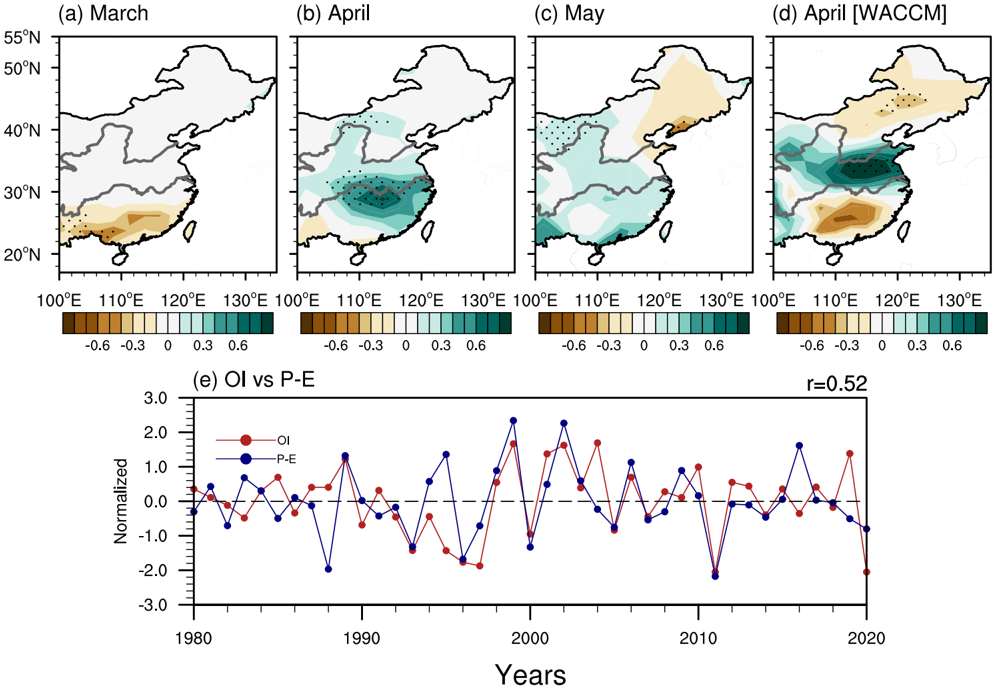
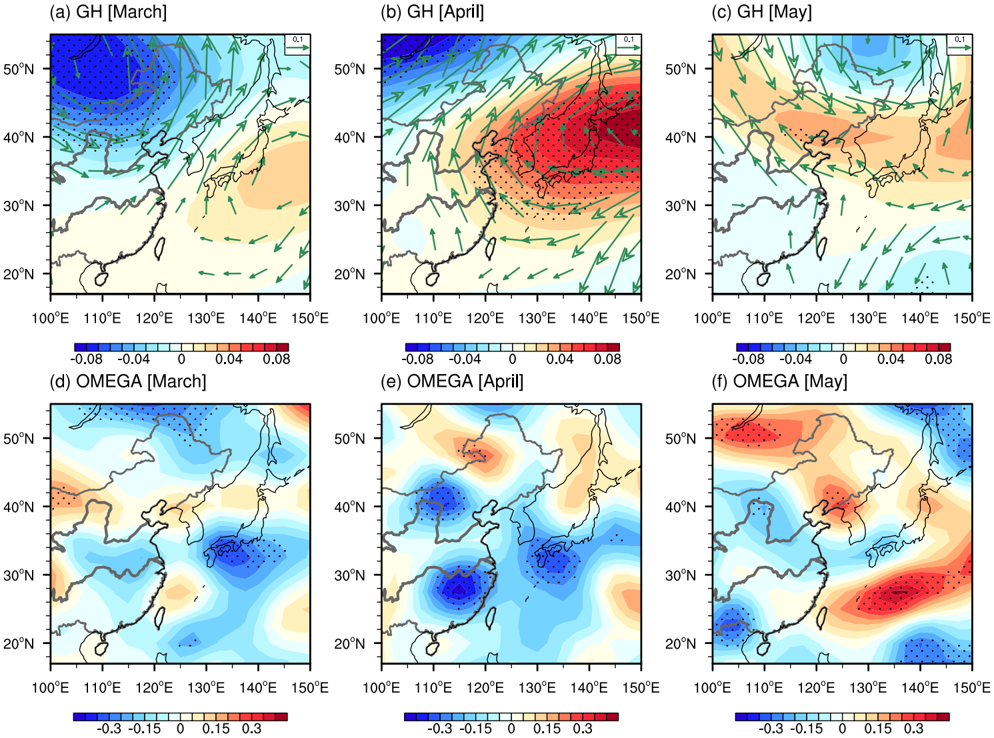
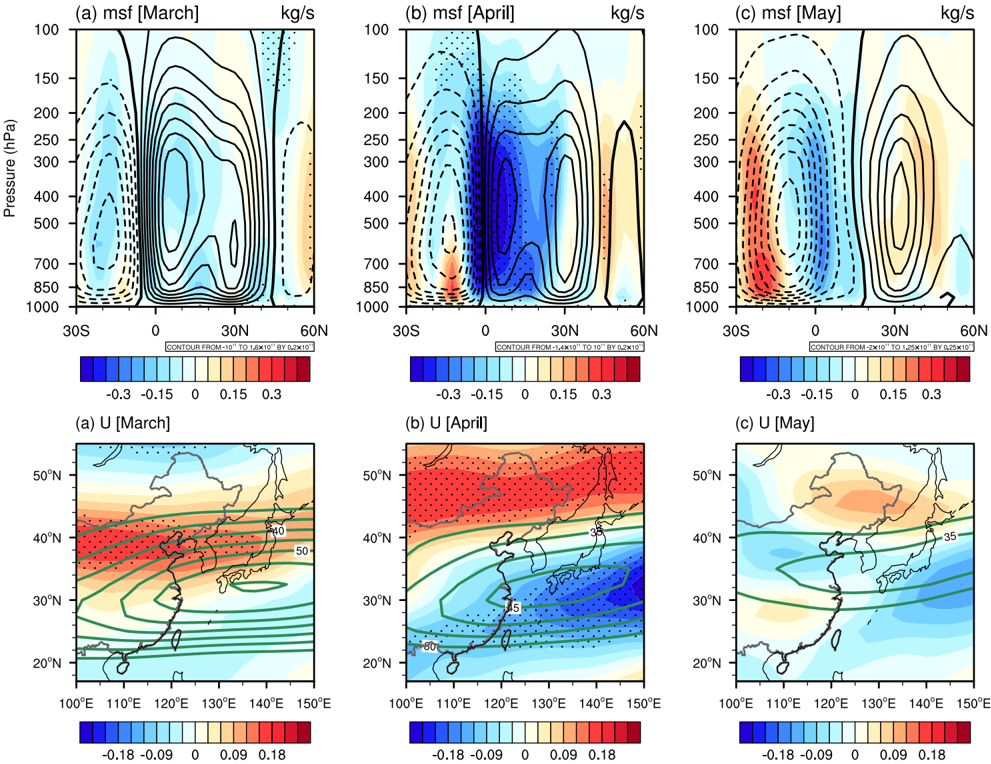
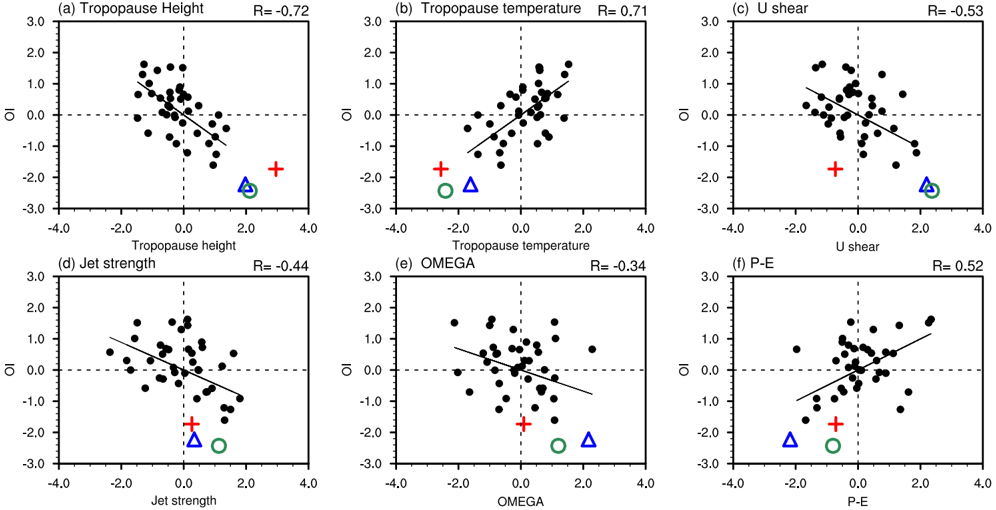
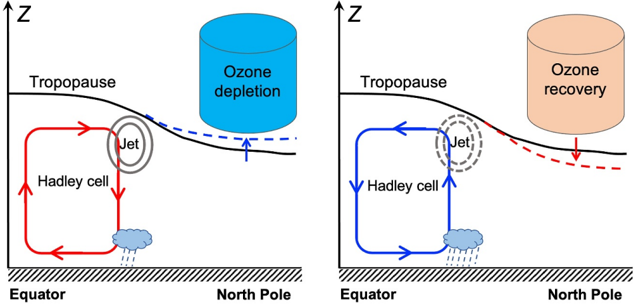
Given the significant importance of spring precipitation for agricultural production in China and the presence of the spring predictability barrier, scientists have dedicated extensive efforts to understand the factors influencing spring precipitation variability and explore new predictors. However, the effects of Arctic stratospheric ozone (ASO) on precipitation in China during boreal spring, if any, and the underlying mechanisms remain unclear. We found the robust influences of March ASO on the differences in the precipitation and evaporation in April over Eastern China during 1980–2020. When ASO decreases in March, it tends to result in a higher and colder tropopause in the polar, a stronger subtropical jet stream, an intensified local Hadley circulation accompanied by anomalous downward motion over Eastern China, and consequently, drying in this region, and vice versa. These findings suggest that the likelihood of April moistening over East Asia may be potentially predicted by employing the ASO index.
Overview
The claims and statistics of this paper haven’t been checked yet.
Free: it reads the open-access text and checks the first 5 claims that cite a source we can check. Create a free account to check every claim.
Integrity signals
Registry
Cites
Statistics
Figures




Verification
Claims the paper makes
The claims and statistics of this paper haven’t been checked yet.
Free: it reads the open-access text and checks the first 5 claims that cite a source we can check. Create a free account to check every claim.
Claims other papers make about this one
Each is checked against this paper’s own text: does it say what the citing paper says it does?
The source backs part of the claim, not all of it — or backs it for a different population, condition or comparison.
In the citing paper
“However, the spatial extent and magnitude of the observed correlations between precipitation and ozone are currently not fully reproduced by the climate models used in these studies.”
From Environmental consequences of interacting effects of changes in stratospheric ozone, ultraviolet radiation, and climate: UNEP Environmental Effects Assessment Panel, Update 2024 (2025) · cites this paper as [12]
Experimental — accuracy not yet measuredThe cited source says what the claim attributes to it.
In the citing paper
“There is new evidence that strong stratospheric ozone depletion in the Arctic during spring is associated with less precipitation in East Asia.”
The cited source says what the claim attributes to it.
In the citing paper
“Specifically, observations have shown that a decrease in Arctic stratospheric ozone during March is correlated with decreased precipitation over Eastern China due to changes in atmospheric circulation [11, 12].”
Self-check
Percentages, sums and reported differences re-computed from the paper’s own numbers.
The self-check needs the paper’s full text.
Citations
Cites
The NCEP/NCAR 40-Year Reanalysis Project
Kalnay, E., Kanamitsu, M., Kistler, R., Collins, W., Deaven, D., Gandin, L., Iredell, M., Saha, S., White, G., Woollen, J., et al. (1996) · Bulletin of the American Meteorological Society · doi:10.1175/1520-0477(1996)077<0437:tnyrp>2.0.co;2 · Cited by 28,360 · cited 1×
“We included the monthly temperature, geopotential height (GH), horizontal winds, vertical velocity, and surface level pressure from NCEP1, which has a horizontal resolution of 2.5° × 2.5° (Kalnay et al., 1996).”
MethodInfluentialThe Modern-Era Retrospective Analysis for Research and Applications, Version 2 (MERRA-2)
Gelaro, R., McCarty, W., Suárez, M. J., Todling, R., Molod, A., Takacs, L., Randles, C. A., Darmenov, A., Bosilovich, M. G., Reichle, R., et al. (2017) · Journal of Climate · doi:10.1175/jcli-d-16-0758.1 · Cited by 9,010 · cited 2×
“May from ERA5 (Figure S3 in Supporting Information S1) are consistent with those between the March ASO from MERRA2 and observational precipitation (Figures 1a–1c).”
MethodInfluentialClimate Extremes: Observations, Modeling, and Impacts
Easterling, D. R., Meehl, G. A., Parmesan, C., Changnon, S. A., Karl, T. R., & Mearns, L. O. (2000) · Science · doi:10.1126/science.289.5487.2068 · Cited by 4,867 · cited 1×
“May) in China is one of the critical and prolonged extreme events that can induce serious economic losses and casualties (e.g., Easterling et al., 2000).”
BackgroundAdler, R. F., Huffman, G. J., Chang, A., Ferraro, R., Xie, P.-P., Janowiak, J., Rudolf, B., Schneider, U., Curtis, S., Bolvin, D., et al. (2003) · Journal of Hydrometeorology · doi:10.1175/1525-7541(2003)004<1147:tvgpcp>2.0.co;2 · Cited by 3,808
Pacific–East Asian Teleconnection: How Does ENSO Affect East Asian Climate?
Wang, B., Wu, R., & Fu, X. (2000) · Journal of Climate · doi:10.1175/1520-0442(2000)013<1517:peathd>2.0.co;2 · Cited by 2,916 · cited 2×
“Previous studies have indicated that the spring precipitation can be influenced by El Niño–Southern Oscillation (ENSO) (Feng & Li, 2011; Wang et al., 2000), the Indian Ocean (e.g., Feng et al., 2014; S.‐P. Xie et al., 2009), snow cover over Eurasian‐Tibetan Plateau (e.g., Wu & Kirtman, 2007; Zuo et…”
BackgroundIndian Ocean Capacitor Effect on Indo–Western Pacific Climate during the Summer following El Niño
Xie, S.-P., Hu, K., Hafner, J., Tokinaga, H., Du, Y., Huang, G., & Sampe, T. (2009) · Journal of Climate · doi:10.1175/2008jcli2544.1 · Cited by 2,030 · cited 3×
“…can be influenced by El Niño–Southern Oscillation (ENSO) (Feng & Li, 2011; Wang et al., 2000), the Indian Ocean (e.g., Feng et al., 2014; S.‐P. Xie et al., 2009), snow cover over Eurasian‐Tibetan Plateau (e.g., Wu & Kirtman, 2007; Zuo et al., 2012), the North Atlantic Oscillation (Sun & Yang,…”
BackgroundMonsoon and Enso: Selectively Interactive Systems
Webster, P. J., & Yang, S. (1992) · Quarterly Journal of the Royal Meteorological Society · doi:10.1002/qj.49711850705 · Cited by 1,971 · cited 2×
“The presence of the SPB has prompted scientists to explore new predictive factors for spring precipitation variability.”
BackgroundSvoboda, M., LeComte, D., Hayes, M., Heim, R., Gleason, K., Angel, J., Rippey, B., Tinker, R., Palecki, M., Stooksbury, D., et al. (2002) · Bulletin of the American Meteorological Society · doi:10.1175/1520-0477-83.8.1181 · Cited by 1,256
Climate Change from 1850 to 2005 Simulated in CESM1(WACCM)
Marsh, D. R., Mills, M. J., Kinnison, D. E., Lamarque, J.-F., Calvo, N., & Polvani, L. M. (2013) · Journal of Climate · doi:10.1175/jcli-d-12-00558.1 · Cited by 1,081 · cited 2×
“WACCM model replicates April precipitation responses to March ASO over YRB, albeit with a slightly northward location and larger magnitude (Figure 1d) compared to the reanalysis.”
MethodInfluentialSignatures of the Antarctic ozone hole in Southern Hemisphere surface climate change
Thompson, D. W. J., Solomon, S., Kushner, P. J., England, M. H., Grise, K. M., & Karoly, D. J. (2011) · Nature Geoscience · doi:10.1038/ngeo1296 · Cited by 1,005 · cited 2×
“Stratospheric ozone has been demonstrated to play a significant role in shaping tropospheric climate projection at mid‐latitudes in the Southern Hemisphere (SH) (e.g., Kang et al., 2011; Son et al., 2008; Thompson et al., 2011).”
Background
Research works printed but not linked: 11
- 10.1175/1525‐7541(2003)004<1147:TVGPCP>2.0.CO;2 · doi:10.1175/1525-7541(2003)004 · Paper page
- 10.1175/JCLI‐D‐16‐0758.1 · DOI · Paper page
- Guo, Y., Li, J., Feng, J., Xie, F., Sun, C., & Zheng, J. (2016). The multidecadal variability of the asymmetric mode of the boreal autumn Hadley circulation and its link to the Atlantic Multidecadal Oscillation. Journal of Climate, 29(15), 5625-5641. https://doi.org/10.1175/JCLI-D-15- 0025. · doi:10.1175/jcli-d-15-
- 10.1175/JCLI‐D‐18‐0306.1 · DOI
- 10.1175/1520‐0469(1998)055<2437:HCAAMO>2.0.CO;2 · doi:10.1175/1520-0469(1998)055
- 10.1175/1520‐0477(1996)077<0437:TNYRP>2.0.CO;2 · doi:10.1175/1520-0477(1996)077
- Kang, S. M., Polvani, L. M., Fyfe, J. C., & Sigmond, M. (2011). Impact of polar ozone depletion on subtropical precipitation. Science, 332(6032), 951-954. https://doi.org/10.1126/science.120213 · doi:10.1126/science.120213
- 10.1175/JCLI‐D‐14‐00701.1 · DOI
- 10.1175/JCLI‐D‐12‐00558.1 · DOI · Paper page
- 10.1175/1520‐0442(2000)013<1517:PEATHD>2.0.CO;2 · doi:10.1175/1520-0442(2000)013
- World Meteorological Organization (WMO). (1957). Meteorology: A three-dimensional science, Second session of the commission for aerology. WMO Bulletin, 6(4), 134-138.
Cited by
Neale, P. J., Hylander, S., Banaszak, A. T., Häder, D.-P., Rose, K. C., Vione, D., Wängberg, S.-Å., Jansen, M. A. K., Busquets, R., Andersen, M. P. S., et al. (2025) · Photochemical & Photobiological Sciences · doi:10.1007/s43630-025-00687-x · Cited by 32
“Specifically, observations have shown that a decrease in Arctic stratospheric ozone during March is correlated with decreased precipitation over Eastern China due to changes in atmospheric circulation [11, 12].”
Hu, D., Liu, M., Guan, Z., Tian, W., & Yin, Z. (2025) · Journal of Geophysical Research Atmospheres · doi:10.1029/2024jd042299 · Cited by 8
“…have explored the impacts of strength of stratospheric polar vortex (SPV) on the tropospheric and even surface climate and weather anomalies (Baldwin & Dunkerton, 2001; Ding et al., 2022; He et al., 2024; Hu et al., 2021, 2024; Lu et al., 2021; Nakagawa & Yamazaki, 2006; Zhang et al., 2022).”
Self-citationDuan, J., Jiang, S., Qin, H., Yin, H., Zhang, R., & Luo, J. (2026) · Atmospheric and Oceanic Science Letters · doi:10.1016/j.aosl.2026.100785 · Cited by 1
Assessment of the extremely low TOC at three European stations during February 2023
Tichopád, D., Láska, K., Čížková, K., Novotná, M., Svendby, T., & Vorobeva, E. (2026) · Polar Science · doi:10.1016/j.polar.2026.101434 · Cited by 1
Significant contribution of UTLS ozone variations on precipitation over Western Europe
Xiang, X., Xie, F., Xia, Y., & Liu, N. (2024) · Climate Dynamics · doi:10.1007/s00382-024-07363-3 · Cited by 1
“Recent research further suggested that the extreme Arctic stratospheric ozone loss events tend to result in a decrease in precipitation in boreal spring in eastern China (Hu et al. 2024 ).”
Qiao, N., Guan, Z., Lu, C., Hu, Y., & Zhong, L. (2026) · Atmospheric Research · doi:10.1016/j.atmosres.2026.108925
Self-citationChen, Z., Luo, R., Liu, J. J., Qie, X., Bian, J., Jiang, R., Li, D., Bai, Z., Zhang, H., Xie, Y., et al. (2026) · Journal of Geophysical Research Atmospheres · doi:10.1029/2025jd045067
Stratospheric Intrusions Over Hong Kong: Key Dynamical Mechanisms in Summer
Xie, Y., Chen, Z., Zeng, X., Luo, R., Su, J., Jiang, R., Liu, J. J., Qie, X., Bian, J., Li, D., et al. (2026) · Journal of Geophysical Research Atmospheres · doi:10.1029/2026jd046869
“…O 3 enhancements, intruded stratospheric airmasses may also influence new particle formation, cloud physics, and radiative processes, further complicating the interplay of synoptics and chemistry over longer timescales (Chen, Su, et al., 2025; Hu et al., 2024; Xie et al., 2025; Zhang et al., 2024).”
Hu, D., Zhao, C., & Zhang, H. (2026) · Atmospheric Research · doi:10.1016/j.atmosres.2026.109246
Self-citation
Metadata
- Authors
- Hu, D., Zhang, Z., & Guan, Z.
- Affiliations
- Key Laboratory of Meteorological Disasters of China Ministry of Education (KLME)/Joint International Research Laboratory of Climate and Environment Change (ILCEC)/Collaborative Innovation Center on Forecast and Evaluation of Meteorological Disasters (CIC‐FEMD) Nanjing University of Information Science &Technology Nanjing China
- Corresponding author
- Hu, Dingzhu
- Venue
- Geophysical Research Letters
- Publisher
- American Geophysical Union (AGU)
- Published
- 2024-04-24
- Volume
- 51
- Issue
- 8
- ISSN
- 0094-8276 (ISSN-L)
- 1944-8007
- OpenAlex
- W4395116600
- Cited by
- 9
- References
- 43
- Citations by year
- 2026: 6 · 2025: 2 · 2024: 1
- FWCI
- 1.59
- Type
- journal article
- Language
- en
- Open access
- gold
- doi.org
- Licence
- cc-by-nc-nd
- creativecommons.org/licenses/by-nc-nd/4.0/ (vor)
- doi.wiley.com/10.1002/tdm_license_1.1 (tdm)
- Locations
- Geophysical Research Letters (publishedVersion, cc-by-nc-nd)
- DOAJ (DOAJ: Directory of Open Access Journals) (submittedVersion, cc-by-sa)
- Funders
- National Natural Science Foundation of China (42394125, 42175072)
- Topics
- Physical Sciences › Environmental Science › Global and Planetary Change › Climate variability and models
- Physical Sciences › Earth and Planetary Sciences › Atmospheric Science › Atmospheric Ozone and Climate
- Physical Sciences › Environmental Science › Global and Planetary Change › Hydrology and Drought Analysis
- Keywords
- tropopause temperature, subtropical jet, Hadley circulation, downward motion, spring predictability barrier
About these checks
Registry, retraction, Cites and statistics results are computed, not judged, with one exception: a printed reference that no index lists is read once by a model before it counts as a citation error. Claims are extracted by a model and kept only when their quote appears verbatim in the text; each cited source is then checked, with a model’s help, for whether it says what the claim relies on. Those verdicts can be wrong — read the claim’s quote and the cited source before relying on one.
Statistics and arithmetic are recomputed, not judged.
Confidence bands are shown only for fields calibrated on our annotated test set. None is calibrated yet, so no band is shown.
What counts as a claim ›How we measure confidence ›How we check this ›
Are you an author, or do you see a problem with this page? Request a review
Data sources
Bibliographic data: Semantic Scholar, OpenAlex, Crossref.
Contains information from the Semantic Scholar Academic Graph Datasets, made available under the ODC Attribution License (ODC-BY 1.0).
Semantic Scholar’s data is described in: Kinney, R., et al. (2023). The Semantic Scholar Open Data Platform. arXiv:2301.10140.
