

The DOI matches its Crossref record; 54 of the 54 references it cites were found in a registry or an index.
Domain-general enhancements of metacognitive ability through adaptive training.
Open accessPublished version of a preprint
Abstract
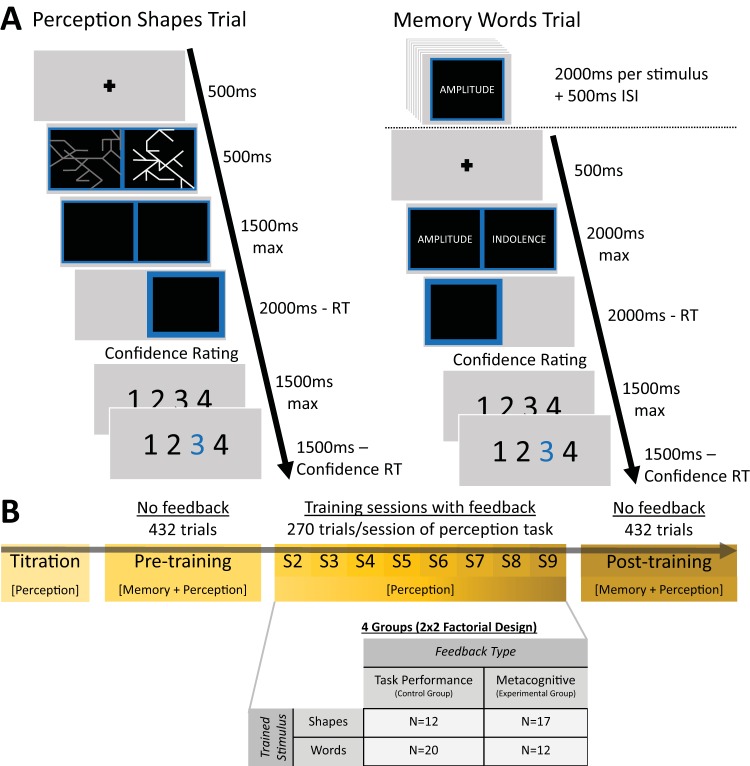
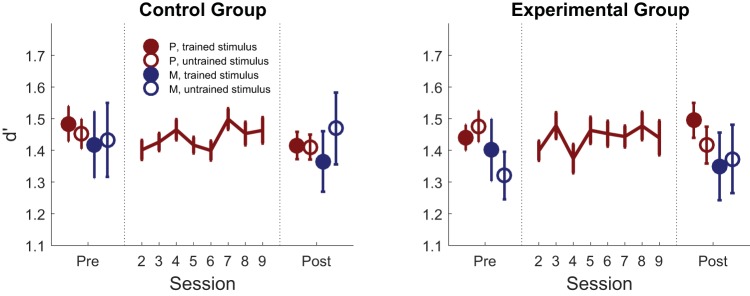
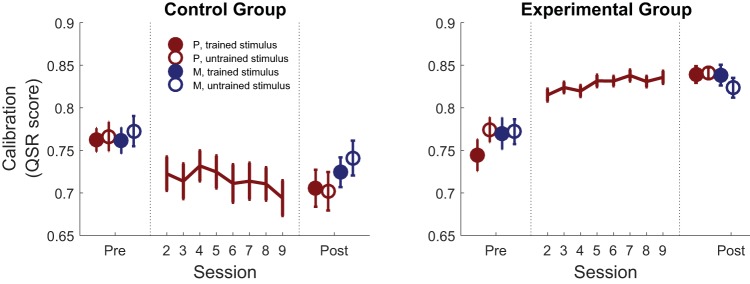
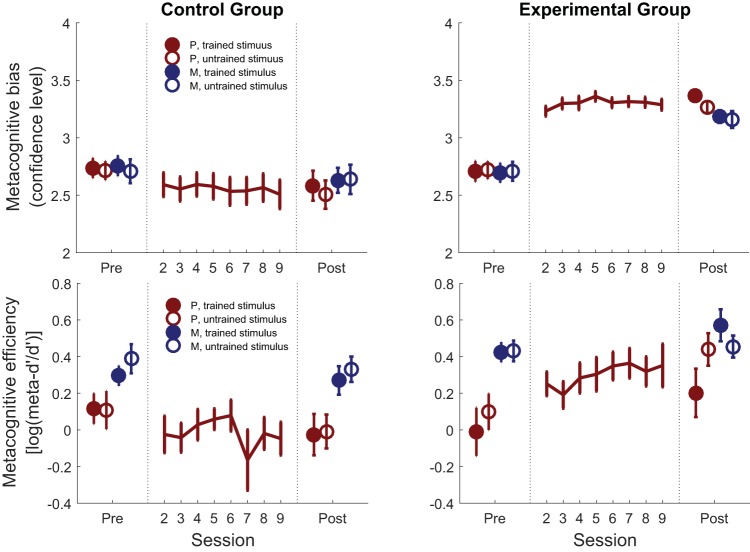
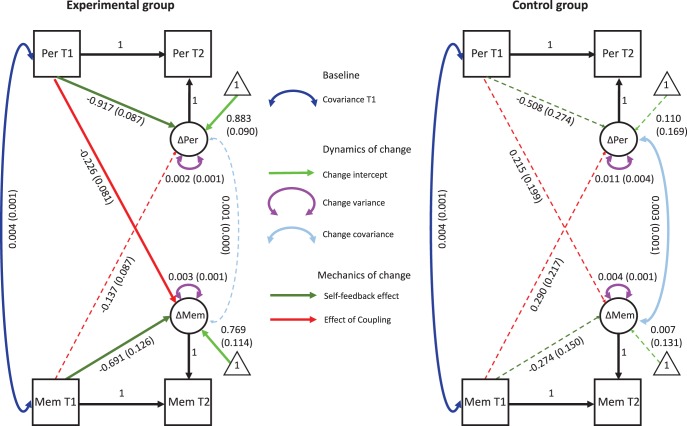
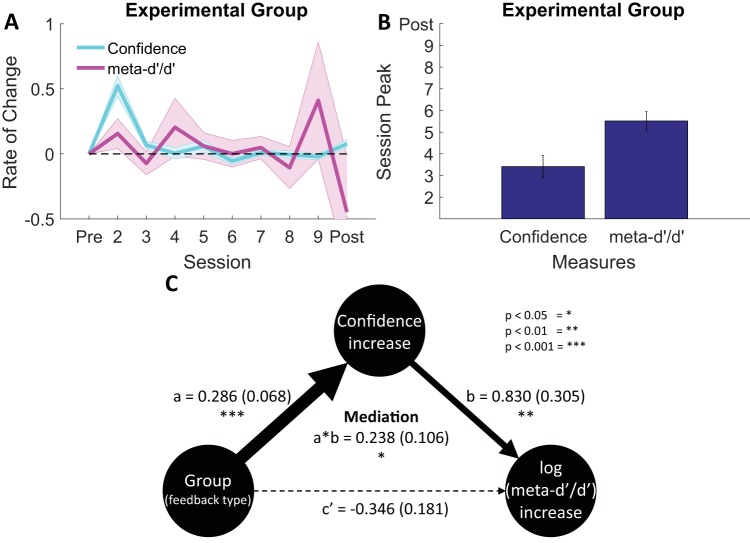
The metacognitive ability to introspect about self-performance varies substantially across individuals. Given that effective monitoring of performance is deemed important for effective behavioral control, intervening to improve metacognition may have widespread benefits, for example in educational and clinical settings. However, it is unknown whether and how metacognition can be systematically improved through training independently of task performance, or whether metacognitive improvements generalize across different task domains. Across 8 sessions, here we provided feedback to two groups of participants in a perceptual discrimination task: an experimental group (n = 29) received feedback on their metacognitive judgments, while an active control group (n = 32) received feedback on their decision performance only. Relative to the control group, adaptive training led to increases in metacognitive calibration (as assessed by Brier scores), which generalized both to untrained stimuli and an untrained task (recognition memory). Leveraging signal detection modeling we found that metacognitive improvements were driven both by changes in metacognitive efficiency (meta-d'/d') and confidence level, and that later increases in metacognitive efficiency were positively mediated by earlier shifts in confidence. Our results reveal a striking malleability of introspection and indicate the potential for a domain-general enhancement of metacognitive abilities. (PsycINFO Database Record (c) 2018 APA, all rights reserved).
Overview
The claims and statistics of this paper haven’t been checked yet.
Run the check — free, no account needed. It reads the open-access text and checks the sources it cites.
Integrity signals
Registry
Cites
Statistics
Figures
Verification
Claims the paper makes
The claims and statistics of this paper haven’t been checked yet.
Run the check — free, no account needed. It reads the open-access text and checks the sources it cites.
Claims other papers make about this one
Each is checked against this paper’s own text: does it say what the citing paper says it does?
The source backs part of the claim, not all of it — or backs it for a different population, condition or comparison.
In the citing paper
“As another example, delivering feedback to improve confidence calibration over a period of two weeks shows promise in elevating metacognitive efficiency not only on the trained task but also more broadly (Carpenter et al. 2019).”
From Metacognition and Confidence: A Review and Synthesis (2024) · cites this paper as Carpenter et al. 2019
Experimental — accuracy not yet measuredThe cited source says what the claim attributes to it.
In the citing paper
“Metacognitive interventions, such as training through feedback on metacognitive performance [30], can, for example, increase judgment accuracy-the ability to distinguish between one's own correct and incorrect metacognitive processing.”
From The Metacognitive Demands and Opportunities of Generative AI (2024) · cites this paper as [30]
Self-check
Percentages, sums and reported differences re-computed from the paper’s own numbers.
The self-check needs the paper’s full text.
Citations
Cites
Schermelleh-Engel, K., Moosbrugger, H., & Müller, H. (2003) · Department of Psychology - University of Koblenz-Landau · doi:10.23668/psycharchives.12784 · Cited by 8,975
The Psychology of Learning and Motivation
Ross, B. H. (2012) · Cited by 2,631
Metamemory: A Theoretical Framework and New Findings
Nelson, T. O. (1990) · Psychology of Learning and Motivation · doi:10.1016/s0079-7421(08)60053-5 · Cited by 2,583
Default Bayes factors for ANOVA designs
Rouder, J. N., Morey, R. D., Speckman, P. L., & Province, J. M. (2012) · Journal of Mathematical Psychology · doi:10.1016/j.jmp.2012.08.001 · Cited by 1,800
Is working memory training effective? A meta-analytic review
Melby-Lervåg, M., & Hulme, C. (2013) · Developmental Psychology · doi:10.1037/a0028228 · Cited by 1,782
Training and plasticity of working memory
Klingberg, T. (2010) · Trends in Cognitive Sciences · doi:10.1016/j.tics.2010.05.002 · Cited by 1,585
Fleming, S. M., & Lau, H. C. (2014) · Frontiers in Human Neuroscience · doi:10.3389/fnhum.2014.00443 · Cited by 1,408 · cited 5×
“The QSR provides a metric for how closely confidence ratings track accuracy (Staёl von Holstein, 1970), and is equal to one minus the Brier score (Fleming & Lau, 2014).”
BackgroundInfluentialSelf-citationManiscalco, B., & Lau, H. (2012) · Consciousness and Cognition · doi:10.1016/j.concog.2011.09.021 · Cited by 883
Self-citationRelating Introspective Accuracy to Individual Differences in Brain Structure
Fleming, S. M., Weil, R. S., Nagy, Z., Dolan, R. J., & Rees, G. (2010) · Science · doi:10.1126/science.1191883 · Cited by 809
Self-citationThe neural basis of metacognitive ability
Fleming, S. M., & Dolan, R. J. (2012) · Philosophical Transactions of the Royal Society B: Biological Sciences · doi:10.1098/rstb.2011.0417 · Cited by 747 · cited 5×
“…monitoring across a range of tasks (Fleming et al., 2010; McCurdy et al., 2013; Baird et al., 2013; Allen et al., 2016; Cortese et al., 2017; see Fleming & Dolan, 2012, for a review), suggesting the potential for targeted modulation of metacognition independently of changes in first-order…”
BackgroundInfluentialSelf-citation
Research works printed but not linked: 2
- Kass R. E., & Raftery A. E. (1995). Bayes factors. Journal of the American Statistical Association, 90, 773– 795.
- Rosseel Y. (2012). Lavaan: An R package for structural equation modeling and more. Version 0.5-12 (BETA). Journal of Statistical Software, 48, 1– 36.
Cited by
Sorted by citations
The Metacognitive Demands and Opportunities of Generative AI
Tankelevitch, L., Kewenig, V., Simkute, A., Scott, A. E., Sarkar, A., Sellen, A., & Rintel, S. (2024) · Proceedings of the CHI Conference on Human Factors in Computing Systems · doi:10.1145/3613904.3642902 · Cited by 493
“Metacognitive interventions, such as training through feedback on metacognitive performance [30], can, for example, increase judgment accuracy—the ability to distinguish between one’s own correct and incorrect metacognitive processing.”
BackgroundMetacognition and Confidence: A Review and Synthesis
Fleming, S. M. (2024) · Annual Review of Psychology · doi:10.1146/annurev-psych-022423-032425 · Cited by 256
“As another example, delivering feedback to improve confidence calibration over a period of two weeks shows promise in elevating metacognitive efficiency, not only on the trained task, but also more broadly (Carpenter et al., 2019).”
Self-citationKnowing Ourselves Together: The Cultural Origins of Metacognition
Heyes, C., Bang, D., Shea, N., Frith, C. D., & Fleming, S. M. (2020) · Trends in Cognitive Sciences · doi:10.1016/j.tics.2020.02.007 · Cited by 232
Self-citationMetacognition: ideas and insights from neuro- and educational sciences
Fleur, D. S., Bert Bredeweg, A., & van den Bos, W. (2021) · npj Science of Learning · doi:10.1038/s41539-021-00089-5 · Cited by 265
Abnormalities of confidence in psychiatry: an overview and future perspectives
Hoven, M., Lebreton, M., Engelmann, J. B., Denys, D., Luigjes, J., & van Holst, R. J. (2019) · Translational Psychiatry · doi:10.1038/s41398-019-0602-7 · Cited by 171
Metadata
- Authors
- Carpenter, J., Sherman, M. T., Kievit, R. A., Seth, A. K., Lau, H., & Fleming, S. M.
- Affiliations
- University of California, Los Angeles (US)
- Wellcome Centre for Human Neuroimaging (GB)
- University of Sussex (GB)
- Corresponding author
- Fleming, Stephen M.
- Venue
- Journal of Experimental Psychology: General
- Published
- 2019-01
- Volume
- 148
- Issue
- 1
- Pages
- 51-64
- ISSN
- 0096-3445 (ISSN-L)
- 1939-2222
- PMC
- PMC6390881
- OpenAlex
- W2953011441
- Cited by
- 174
- References
- 54
- Citations by year
- 2026: 14 · 2025: 21 · 2024: 21 · 2023: 36 · 2022: 28 · 2021: 24 · 2020: 17 · 2019: 12
- FWCI
- 8.04
- Type
- journal article
- Language
- en
- Open access
- hybrid
- doi.org
- Licence
- Locations
- Journal of Experimental Psychology General (publishedVersion, cc-by)
- bioRxiv (Cold Spring Harbor Laboratory) (acceptedVersion, cc-by-nc-nd)
- Europe PMC (PubMed Central) (publishedVersion, cc-by)
- PubMed Central (publishedVersion, cc-by)
- PubMed (publishedVersion)
- Sussex Research Online (University of Sussex) (submittedVersion, cc-by)
- UCL Discovery (University College London) (submittedVersion)
- Figshare (submittedVersion, cc-by)
- Apollo (University of Cambridge) (submittedVersion, cc-by)
- Apollo (cc-by)
- Funders
- National Institutes of Health (R01NS088628)
- Wellcome Trust (206648/Z/17/Z)
- Topics
- Life Sciences › Neuroscience › Cognitive Neuroscience › Memory Processes and Influences
- Life Sciences › Neuroscience › Cognitive Neuroscience › Neural and Behavioral Psychology Studies
- Life Sciences › Neuroscience › Cognitive Neuroscience › Visual perception and processing mechanisms
- Keywords
- metacognition, metacognitive calibration, metacognitive training, self-reflection, metacognitive efficiency, confidence, feedback, perceptual discrimination, recognition memory, signal detection theory, Brier score
- MeSH terms
- Metacognition, Adult, Female, Humans, Male, Middle Aged, Models, Psychological, Practice, Psychological, Task Performance and Analysis, Feedback, Psychological, Young Adult
About these checks
Registry, retraction, Cites and statistics results are computed, not judged, with one exception: a printed reference that no index lists is read once by a model before it counts as a citation error. Claims are extracted by a model and kept only when their quote appears verbatim in the text; each cited source is then checked, with a model’s help, for whether it says what the claim relies on. Those verdicts can be wrong — read the claim’s quote and the cited source before relying on one.
Statistics and arithmetic are recomputed, not judged.
Confidence bands are shown only for fields calibrated on our annotated test set. None is calibrated yet, so no band is shown.
What counts as a claim ›How we measure confidence ›How we check this ›
Are you an author, or do you see a problem with this page? Request a review
