

The DOI matches its Crossref record; 44 of the 44 references it cites were found in a registry or an index.
K+ regulates Ca2+ to drive inflammasome signaling: dynamic visualization of ion flux in live cells
Open accessAbstract
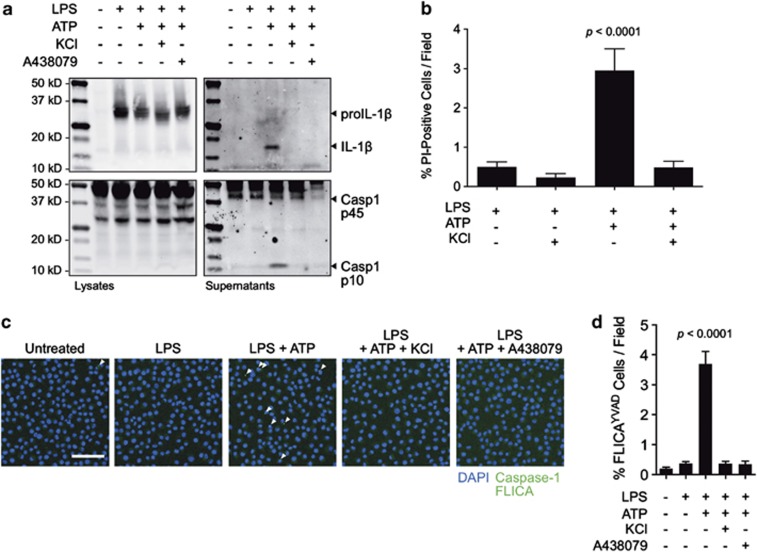
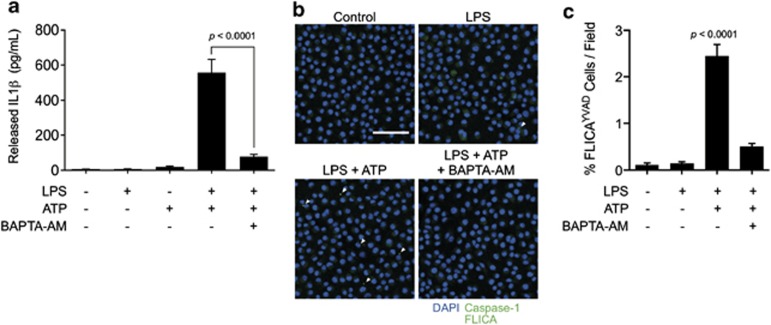
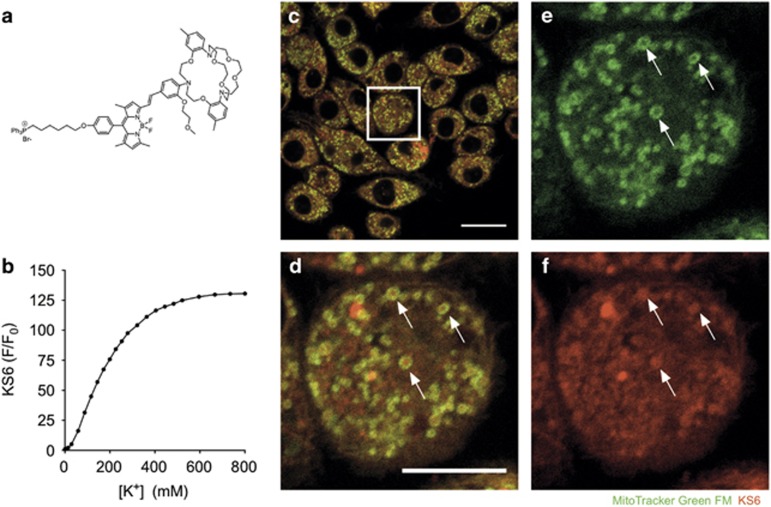
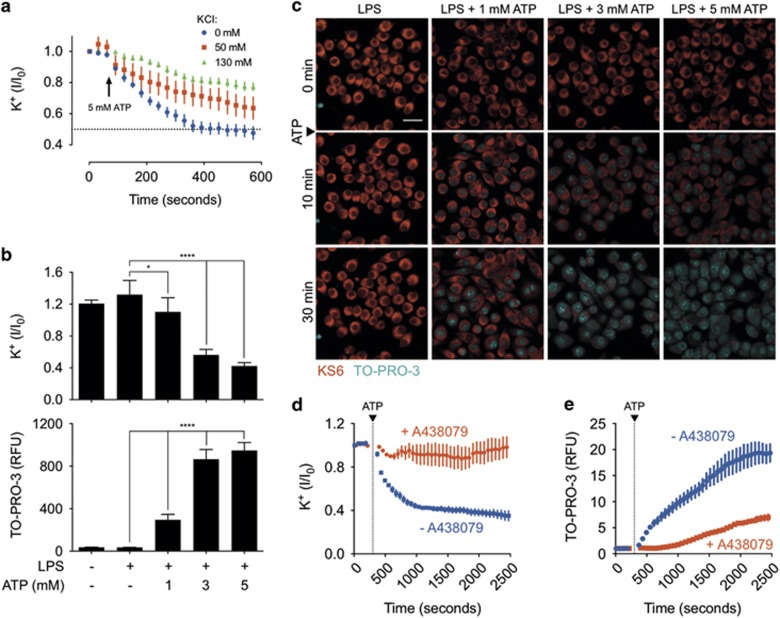
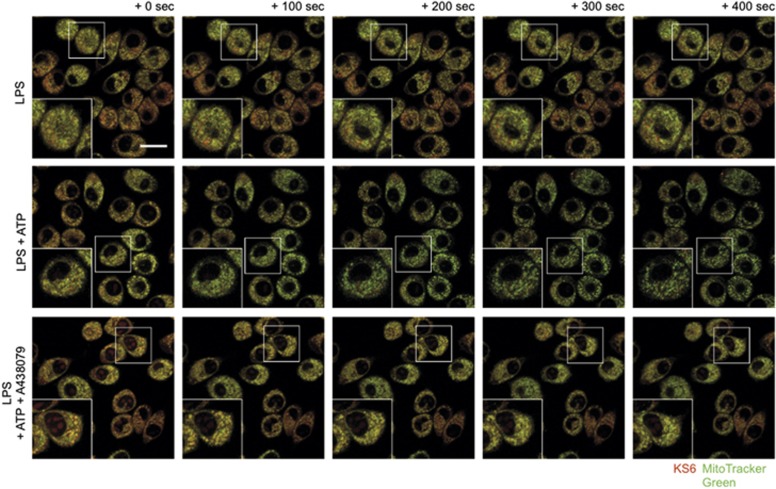
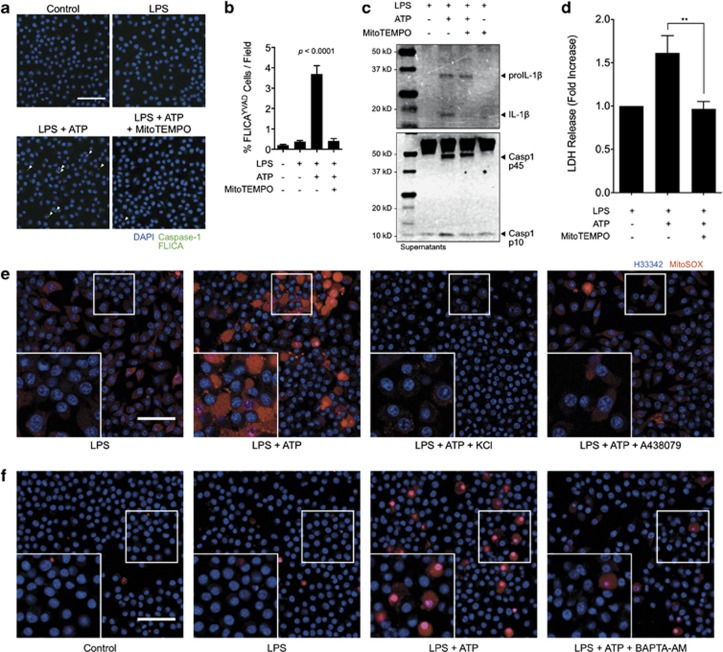
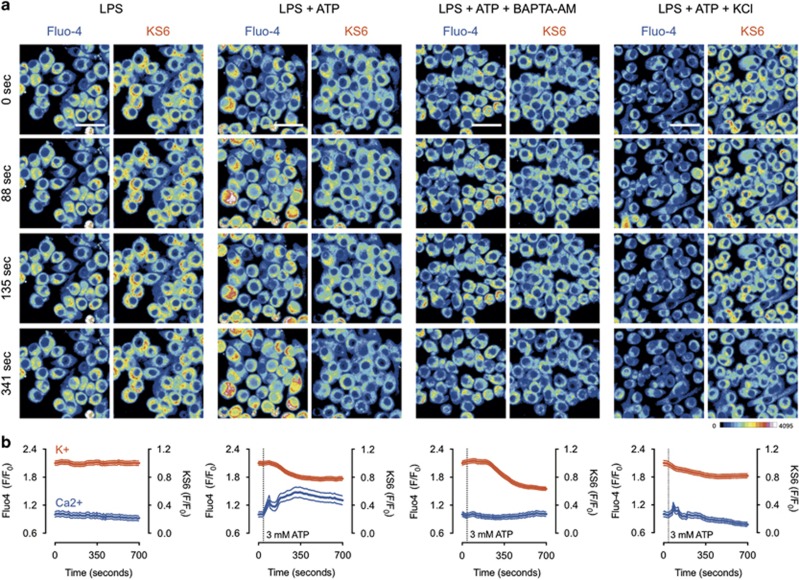
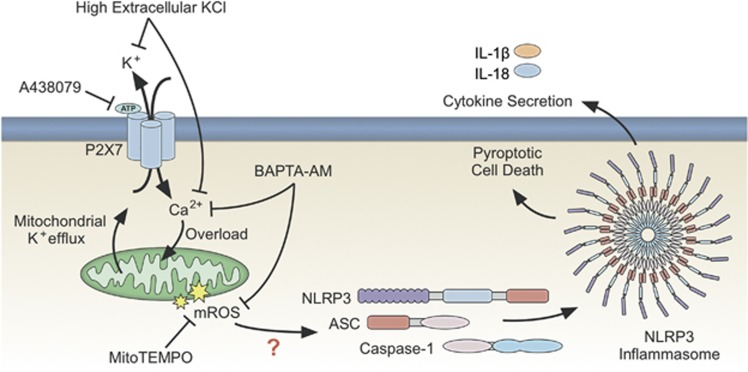
P2X7 purinergic receptor engagement with extracellular ATP induces transmembrane potassium and calcium flux resulting in assembly of the NLRP3 inflammasome in LPS-primed macrophages. The role of potassium and calcium in inflammasome regulation is not well understood, largely due to limitations in existing methods for interrogating potassium in real time. The use of KS6, a novel sensor for selective and sensitive dynamic visualization of intracellular potassium flux in live cells, multiplexed with the intracellular calcium sensor Fluo-4, revealed a coordinated relationship between potassium and calcium. Interestingly, the mitochondrial potassium pool was mobilized in a P2X7 signaling, and ATP dose-dependent manner, suggesting a role for mitochondrial sensing of cytosolic ion perturbation. Through treatment with extracellular potassium we found that potassium efflux was necessary to permit sustained calcium entry, but not transient calcium flux from intracellular stores. Further, intracellular calcium chelation with BAPTA-AM indicated that P2X7-induced potassium depletion was independent of calcium mobilization. This evidence suggests that both potassium efflux and calcium influx are necessary for mitochondrial reactive oxygen generation upstream of NLRP3 inflammasome assembly and pyroptotic cell death. We propose a model wherein potassium efflux is necessary for calcium influx, resulting in mitochondrial reactive oxygen generation to trigger the NLRP3 inflammasome.
Overview
The claims and statistics of this paper haven’t been checked yet.
Run the check — free, no account needed. It reads the open-access text and checks the sources it cites.
Integrity signals
Registry
Cites
Statistics
Figures
Verification
Claims the paper makes
The claims and statistics of this paper haven’t been checked yet.
Run the check — free, no account needed. It reads the open-access text and checks the sources it cites.
Claims other papers make about this one
Each is checked against this paper’s own text: does it say what the citing paper says it does?
In the citing paper
“this has been shown to elicit activation of the NLRP3 inflammasome in LPS-stimulated macrophages, which causes secretion of IL-18 (but also of the pro-inflammatory cytokine IL-1β) and may thus promote maintenance and function of the epithelial barrier (Mariathasan et al., 2006; Sutterwala et al., 2014; 2006; Yaron et al., 2015).”
From Understanding the Holobiont: How Microbial Metabolites Affect Human Health and Shape the Immune System (2017) · cites this paper as Yaron et al., 2015
Self-check
Percentages, sums and reported differences re-computed from the paper’s own numbers.
The self-check needs the paper’s full text.
Citations
Cites
Fiji: an open-source platform for biological-image analysis
Schindelin, J., Arganda-Carreras, I., Frise, E., Kaynig, V., Longair, M., Pietzsch, T., Preibisch, S., Rueden, C., Saalfeld, S., Schmid, B., et al. (2012) · Nature Methods · doi:10.1038/nmeth.2019 · Cited by 66,890
A role for mitochondria in nlrp3 inflammasome activation
Zhou, R., Yazdi, A. S., Menu, P., & Tschopp, J. (2011) · Nature · doi:10.1038/nature09663 · Cited by 5,602
Gout-associated uric acid crystals activate the NALP3 inflammasome
Martinon, F., Pétrilli, V., Mayor, A., Tardivel, A., & Tschopp, J. (2006) · Nature · doi:10.1038/nature04516 · Cited by 5,326
Cryopyrin activates the inflammasome in response to toxins and ATP
Mariathasan, S., Weiss, D. S., Newton, K., McBride, J., O'Rourke, K., Roose-Girma, M., Lee, W. P., Weinrauch, Y., Monack, D. M., & Dixit, V. M. (2006) · Nature · doi:10.1038/nature04515 · Cited by 3,080
Thioredoxin-interacting protein links oxidative stress to inflammasome activation
Zhou, R., Tardivel, A., Thorens, B., Choi, I., & Tschopp, J. (2010) · Nature Immunology · doi:10.1038/ni.1831 · Cited by 2,708 · cited 3×
“Mitochondrial dysfunction and loss of mitochondrial membrane potential lead to a rapid increase in mROS production, which has been described to activate the inflammasome through the activity of thioredoxin-interacting protein (TXNIP).(16) In support of this mechanism, most known NLRP3-activating stimuli induce ROS gen…”
BackgroundMuñoz-Planillo, R., Kuffa, P., Martínez-Colón, G. J., Smith, B. L., Rajendiran, T. M., & Núñez, G. (2013) · Immunity · doi:10.1016/j.immuni.2013.05.016 · Cited by 2,167
Activation of the NALP3 inflammasome is triggered by low intracellular potassium concentration
Pétrilli, V, Papin, S., Dostert, C., Mayor, A., Martinon, F., & Tschopp, J. (2007) · Cell Death & Differentiation · doi:10.1038/sj.cdd.4402195 · Cited by 1,445 · cited 3×
“Despite the proposed link between potassium efflux and mitochondrial signaling resulting in inflammasome assembly, this association had yet to be observed.(1,18,19,27) Further, there has been limited evidence regarding the relationship between calcium and potassium.”
BackgroundMethodThe calcium-sensing receptor regulates the NLRP3 inflammasome through Ca2+ and cAMP
Lee, G., Subramanian, N., Kim, A. I., Aksentijevich, I. A., Goldbach‐Mansky, R. T., Sacks, D. B., Germain, R. N., Kastner, D. L., & Chae, J. J. (2012) · Nature · doi:10.1038/nature11588 · Cited by 1,077 · cited 1×
“A previous study has shown that intracellular calcium chelation with BAPTA-AM suppresses IL-1β processing and release upon ATP-induced inflammasome activation.(14) In agreement with this observation, we found that BAPTAAM significantly suppressed ATP-induced IL-1β processing and release as indicated by ELISA in J774A.”
Critical role for calcium mobilization in activation of the NLRP3 inflammasome
Murakami, T., Öckinger, J., Yu, J., Byles, V., McColl, A., Hofer, A. M., & Horng, T. (2012) · Proceedings of the National Academy of Sciences · doi:10.1073/pnas.1117765109 · Cited by 961 · cited 1×
“calcium response is indicative of the kinetics associated with rapid, endoplasmic reticulum-stored calcium ahead of plasma membrane-localized calcium entry from the extracellular environment.(26) Importantly, potassium flux occurred concurrently with the second phase of calcium influx, but was stable through the initi…”
BackgroundSyk kinase signalling couples to the Nlrp3 inflammasome for anti-fungal host defence
Groß, O., Poeck, H., Bscheider, M., Dostert, C., Hannesschläger, N., Endres, S., Hartmann, G., Tardivel, A., Schweighoffer, E., Tybulewicz, V. L. J., et al. (2009) · Nature · doi:10.1038/nature07965 · Cited by 947
Research works printed but not linked: 1
- Murakami T, Ockinger J, Yu J, Byles V . Critical role for calcium mobilization in activation of the NLRP3 inflammasome. Proc Natl Acad Sci USA 2012; 109: 11282–11287. · DOI
Cited by
Sorted by citations
The NLRP3 inflammasome: molecular activation and regulation to therapeutics
Swanson, K. V., Deng, M., & Ting, J. P.-Y. (2019) · Nature Reviews Immunology · doi:10.1038/s41577-019-0165-0 · Cited by 4,884
An update on the regulatory mechanisms of NLRP3 inflammasome activation
Paik, S., Kim, J. K., Silwal, P., Sasakawa, C., & Jo, E. (2021) · Cellular and Molecular Immunology · doi:10.1038/s41423-021-00670-3 · Cited by 943
“Several studies have shown a cooperative relationship between K efflux and Ca flux, contributing to the idea of a greater influence on mtROS generation.(99,107) However, other studies have shown that K efflux-mediated NLRP3 inflammasome signaling is not associated with cytosolic Ca flux.”
Postler, T. S., & Ghosh, S. (2017) · Cell Metabolism · doi:10.1016/j.cmet.2017.05.008 · Cited by 876
“Importantly, this has been shown to elicit activation of the NLRP3 inflammasome in LPS-stimulated macrophages, which causes secretion of IL-18 (but also of the pro-inflammatory cytokine IL-1b) and may thus promote maintenance and function of the epithelial barrier (Mariathasan et al., 2006; Sutterwala et al., 2006, 20…”
BackgroundDiverse stimuli engage different neutrophil extracellular trap pathways
Kenny, E. F., Herzig, A., Krüger, R., Muth, A., Mondal, S., Thompson, P. R., Brinkmann, V., von Bernuth, H., & Zychlinsky, A. (2017) · eLife · doi:10.7554/elife.24437 · Cited by 833
“A23187 is a calcium ionophore that causes a massive influx of calcium and nigericin stimulates potassium effluxes in cells which also results in the influx of calcium demonstrating the similarity between the ionophores in their mechanism of NET induction (Yaron et al., 2015).”
BackgroundInflammation in gout: mechanisms and therapeutic targets
So, A. K.-L., & Martinon, F. (2017) · Nature Reviews Rheumatology · doi:10.1038/nrrheum.2017.155 · Cited by 633
Targeting the NLRP3 Inflammasome in Severe COVID-19
Freeman, T. L., & Swartz, T. H. (2020) · Frontiers in Immunology · doi:10.3389/fimmu.2020.01518 · Cited by 413
The links between gut microbiota and obesity and obesity related diseases
Geng, J., Ni, Q., Sun, W., Li, L., & Feng, X. (2022) · Biomedicine & Pharmacotherapy · doi:10.1016/j.biopha.2022.112678 · Cited by 422
The P2X7 receptor: A main player in inflammation
Adinolfi, E., Giuliani, A. L., De Marchi, E., Pegoraro, A., Orioli, E., & Di Virgilio, F. (2018) · Biochemical Pharmacology · doi:10.1016/j.bcp.2017.12.021 · Cited by 385
“Reactive oxygen species (ROS) formation may also play a role in inducing inflammasome aggregation and IL-1β secretion downstream to P2X7R activation [110-113].”
The Toxicity of Silica Nanoparticles to the Immune System
Chen, L., Liu, J., Zhang, Y., Zhang, G., Kang, Y., Chen, A., Feng, X., & Shao, L. (2018) · Nanomedicine · doi:10.2217/nnm-2018-0076 · Cited by 326
Zhang, L., Sun, Y., Zeng, H., Wang, Q., Jiang, X., Shang, W., Wu, Y., Li, S., Zhang, Y., Hao, Z., et al. (2020) · Cell Discovery · doi:10.1038/s41421-020-00235-0 · Cited by 316
NLRP3 cages revealed by full-length mouse NLRP3 structure control pathway activation
Andreeva, L., David, L., Rawson, S., Shen, C., Pasricha, T., Pelegrin, P., & Wu, H. (2021) · Cell · doi:10.1016/j.cell.2021.11.011 · Cited by 292
“Because almost all NLRP3-activating stimuli converge to K efflux (Muñoz-Planillo et al., 2013; Yaron et al., 2015), it is reasonable”
BackgroundHow location and cellular signaling combine to activate the NLRP3 inflammasome
Akbal, A., Dernst, A., Lovotti, M., Mangan, M., McManus, R. M., & Latz, E. (2022) · Cellular and Molecular Immunology · doi:10.1038/s41423-022-00922-w · Cited by 259
“Furthermore, P2X7 facilitates sodium and calcium influx that, in turn, modulates TWIK2 to enhance potassium efflux [13], which together trigger NLRP3 activation [22].”
BackgroundThe role of inflammasomes in human diseases and their potential as therapeutic targets
Yao, J., Sterling, K., Wang, Z., Zhang, Y., & Song, W. (2024) · Signal Transduction and Targeted Therapy · doi:10.1038/s41392-023-01687-y · Cited by 260
Ma, Q. (2023) · Pharmacological Reviews · doi:10.1124/pharmrev.122.000629 · Cited by 260
P2X7 receptor and the NLRP3 inflammasome: Partners in crime
Pelegrín, P. (2020) · Biochemical Pharmacology · doi:10.1016/j.bcp.2020.114385 · Cited by 253
Orchestration of NLRP3 Inflammasome Activation by Ion Fluxes
Gong, T., Yang, Y., Jin, T., Jiang, W., & Zhou, R. (2018) · Trends in Immunology · doi:10.1016/j.it.2018.01.009 · Cited by 250
The NLRP3 and Pyrin Inflammasomes: Implications in the Pathophysiology of Autoinflammatory Diseases
de Torre‐Minguela, C., Mesa-del-Castillo, P., & Pelegrín, P. (2017) · Frontiers in Immunology · doi:10.3389/fimmu.2017.00043 · Cited by 251
Orecchioni, M., Kobiyama, K., Winkels, H., Ghosheh, Y., McArdle, S., Mikulski, Z., Kiosses, W. B., Fan, Z., Wen, L., Jung, Y., et al. (2022) · Science · doi:10.1126/science.abg3067 · Cited by 240
Extracellular ATP and adenosine: The Yin and Yang in immune responses?
Faas, M. M., Sáez, T., & de Vos, P. (2017) · Molecular Aspects of Medicine · doi:10.1016/j.mam.2017.01.002 · Cited by 216
Origin and Consequences of Necroinflammation
Sarhan, M., Land, W. G., Tonnus, W., Hugo, C., & Linkermann, A. (2018) · Physiological Reviews · doi:10.1152/physrev.00041.2016 · Cited by 217
Mitochondria and the NLRP3 inflammasome: physiological and pathological relevance
Yu, J., & Lee, M. (2016) · Archives of Pharmacal Research · doi:10.1007/s12272-016-0827-4 · Cited by 209
“Furthermore, a recent study showed that K efflux mediates the influx of Ca, which causes mitochondrial Ca overload, resulting in mitochondrial dysfunction (Yaron et al. 2015).”
BackgroundUpdated insights into the molecular networks for NLRP3 inflammasome activation
Paik, S., Kim, J. K., Shin, H. J., Park, E., Kim, I. S., & Jo, E. (2025) · Cellular and Molecular Immunology · doi:10.1038/s41423-025-01284-9 · Cited by 222
Münzer, P., Negro, R., Fukui, S., Meglio, L. D., Aymonnier, K., Chu, L., Cherpokova, D., Gutch, S., Sorvillo, N., Shi, L. S., et al. (2021) · Frontiers in Immunology · doi:10.3389/fimmu.2021.683803 · Cited by 197
Recent insights into the molecular mechanisms of the NLRP3 inflammasome activation
Próchnicki, T., Mangan, M., & Latz, E. (2016) · F1000Research · doi:10.12688/f1000research.8614.1 · Cited by 174
“Finally, one study proposed that Ca 2+ influx into the cytosol follows K + efflux caused by NLRP3 stimuli and that this Ca 2+ flux promotes activation of the inflammasome by enhancing mitochondrial ROS generation 52 .”
BackgroundHan, S., Gao, H., Chen, S., Wang, Q., Li, X., Du, L., Li, J., Luo, Y., Li, J.-X., Zhao, L., et al. (2019) · Scientific Reports · doi:10.1038/s41598-019-51614-x · Cited by 165
Transplantation and Damage-Associated Molecular Patterns (DAMPs)
Land, W. G., Agostinis, P., Gasser, S., Garg, A. D., & Linkermann, A. (2016) · American Journal of Transplantation · doi:10.1111/ajt.13963 · Cited by 171
The NLRP3 inflammasome and COVID-19: Activation, pathogenesis and therapeutic strategies
Zhao, N., Di, B., & Xu, L. (2021) · Cytokine & Growth Factor Reviews · doi:10.1016/j.cytogfr.2021.06.002 · Cited by 161
“Subsequently, K efflux promotes the release of ER-linked Ca2+ stores [36].”
BackgroundMastrocola, R., Penna, C. R. R., Tullio, F., Femminò, S., Nigro, D., Chiazza, F., Serpe, L., Collotta, D., Alloatti, G., Cocco, M., et al. (2016) · Oxidative Medicine and Cellular Longevity · doi:10.1155/2016/5271251 · Cited by 161
The mechanisms of NLRP3 inflammasome/pyroptosis activation and their role in diabetic retinopathy
Zheng, X., Wan, J., & Tan, G. (2023) · Frontiers in Immunology · doi:10.3389/fimmu.2023.1151185 · Cited by 153
“Subsequently, the release of ER-linked Ca is promoted by K efflux (32, 52).”
BackgroundGenetically encoded fluorescent indicators for imaging intracellular potassium ion concentration
Shen, Y., Wu, S.-Y., Rančić, V., Aggarwal, A., Qian, Y., Miyashita, S.-I., Ballanyi, K., Campbell, R. E., & Dong, M. (2019) · Communications Biology · doi:10.1038/s42003-018-0269-2 · Cited by 155
Arbore, G., & Kemper, C. (2016) · European Journal of Immunology · doi:10.1002/eji.201546131 · Cited by 145
Mitochondrial dysfunction: A fatal blow in depression
Song, Y., Cao, H., Zuo, C., Gu, Z., Huang, Y., Miao, J., Fu, Y., Guo, Y., Jiang, Y., & Wang, F. (2023) · Biomedicine & Pharmacotherapy · doi:10.1016/j.biopha.2023.115652 · Cited by 141
Inflammasome biology, molecular pathology and therapeutic implications
Awad, F., Assrawi, E., Louvrier, C., Jumeau, C., Georgin‐Lavialle, S., Grateau, G., Amselem, S., Giurgea, I., & Karabina, S. (2018) · Pharmacology & Therapeutics · doi:10.1016/j.pharmthera.2018.02.011 · Cited by 138
“The most prevailing inflammasome activating mechanism involves changes in cytosolic K+ concentration (Pétrilli et al., 2007; Yaron et al., 2015).”
BackgroundYap, J. K. Y., Pickard, B. S., Chan, E. W. L., & Gan, S. Y. (2019) · Molecular Neurobiology · doi:10.1007/s12035-019-1638-7 · Cited by 130
Principles of inflammasome priming and inhibition: implications for psychiatric disorders
Herman, F. J., & Pasinetti, G. M. (2018) · Brain, Behavior, and Immunity · doi:10.1016/j.bbi.2018.06.010 · Cited by 115
Purinergic 2X7 receptor/NLRP3 pathway triggers neuronal apoptosis after ischemic stroke in the mouse
Ye, X., Shen, T., Hu, J., Zhang, L., Zhang, Y., Bao, L., Cui, C., Jin, G., Zan, K., Zhang, Z., et al. (2017) · Experimental Neurology · doi:10.1016/j.expneurol.2017.03.002 · Cited by 121
“The NLR family, pyrin domain-containing 3 (NLRP3) inflammasome, the best characterized member of Nod-like receptor family, is a multiprotein complex that contains the NLRP3, adaptor protein apoptosis-associated speck-like protein containing a CARD (ASC) and the precursor caspase-1 (Davis et al., 2011; Schroder and Tsc…”
Mitochondrial Quality Control and Restraining Innate Immunity
Moehlman, A. T., & Youle, R. J. (2020) · Annual Review of Cell and Developmental Biology · doi:10.1146/annurev-cellbio-021820-101354 · Cited by 125
Pike, A. F., Longhena, F., Faustini, G., van Eik, J.-M., Gombert, I., Herrebout, M. A. C., Fayed, M. M. H. E., Sandre, M., Varanita, T., Teunissen, C. E., et al. (2022) · Journal of Neuroinflammation · doi:10.1186/s12974-022-02410-4 · Cited by 124
Therapeutic regulation of the NLRP3 inflammasome in chronic inflammatory diseases
Seok, J. K., Kang, H. C., Cho, Y., Lee, H. S., & Lee, J. Y. (2021) · Archives of Pharmacal Research · doi:10.1007/s12272-021-01307-9 · Cited by 122
NLRP inflammasomes in health and disease
Xu, Z., Kombe, A. J. K., Deng, S., Zhang, H., Wu, S., Ruan, J., Zhou, Y. Y., & Jin, T. (2024) · Molecular Biomedicine · doi:10.1186/s43556-024-00179-x · Cited by 131
A central role for P2X7 receptors in human microglia
Janks, L., Sharma, C. V. R., & Egan, T. M. (2018) · Journal of Neuroinflammation · doi:10.1186/s12974-018-1353-8 · Cited by 114
“K efflux triggers Cl channel-mediated dye uptake In mouse macrophages, P2X7Rs are thought to trigger dye uptake by depleting intracellular K [66].”
BackgroundMitochondria, Microglia, and the Immune System—How Are They Linked in Affective Disorders?
Culmsee, C., Michels, S., Scheu, S., Arolt, V., Dannlowski, U., & Alferink, J. (2019) · Frontiers in Psychiatry · doi:10.3389/fpsyt.2018.00739 · Cited by 110
“A recent study demonstrated in macrophages that K efflux and Ca2+ influx through P2x7 were required for sustained reduction of the mitochondrial membrane potential and generation of mitochondrial ROS formation upstream of NLRP3 inflammasome assembly and pyroptotic cell death (35).”
BackgroundNegash, A. A., Olson, R. M., Griffin, S. D. C., & Gale, M. (2019) · PLoS Pathogens · doi:10.1371/journal.ppat.1007593 · Cited by 111
Han, Y., Liu, X., Jin, M., Sun, H., & Kwon, T. (2023) · Inflammation Research · doi:10.1007/s00011-023-01790-4 · Cited by 114
Annett, S., Moore, G., & Robson, T. (2020) · Pharmacology & Therapeutics · doi:10.1016/j.pharmthera.2020.107623 · Cited by 104
Calzaferri, F., Ruiz‐Ruiz, C., de Diego, A. M. G., de Pascual, R., Méndez‐López, I., Cano‐Abad, M. F., Maneu, V., Ríos, C. D. L., Gandía, L., & de Diego, A. M. G. (2020) · Medicinal Research Reviews · doi:10.1002/med.21710 · Cited by 101
“In addition, Na influx accompanied by water influx diminishes the cytosolic K concentration below the threshold, leading to inflammasome activation.(79) Notably, reactive oxygen species (ROS) induce inflammasome aggregation and IL‐1β release, secondary to P2X7R activation.”
BackgroundOrioli, E., Marchi, E. D., Giuliani, A. L., & Adinolfi, E. (2017) · Current Medicinal Chemistry · doi:10.2174/0929867324666170303161659 · Cited by 99
The AIM2 and NLRP3 inflammasomes trigger IL-1–mediated antitumor effects during radiation
Han, C., Godfrey, V., Liu, Z., Han, Y., Liu, L., Peng, H., Weichselbaum, R. R., Zaki, H., & Fu, Y. (2021) · Science Immunology · doi:10.1126/sciimmunol.abc6998 · Cited by 92
“Radiation treatment increases ROS production and releases mitochondrial DNA into cytosol (37, 38) and induces Ca2+ and K+ influx, which can activate the NLRP3 inflammasome (39).”
BackgroundEffects of Microglial Activation and Polarization on Brain Injury After Stroke
Dong, R., Huang, R., Wang, J., Liu, H., & Xu, Z. (2021) · Frontiers in Neurology · doi:10.3389/fneur.2021.620948 · Cited by 87
Advances in the molecular mechanisms of NLRP3 inflammasome activators and inactivators
Liu, D., Zeng, X., Li, X., Cui, C., Hou, R., Guo, Z., Mehta, J. L., & Wang, X. (2020) · Biochemical Pharmacology · doi:10.1016/j.bcp.2020.113863 · Cited by 88
Mitochondrial dysfunction and oxidative stress: Role in chronic kidney disease
Srivastava, A., Tomar, B., Sharma, D., & Rath, S. K. (2023) · Life Sciences · doi:10.1016/j.lfs.2023.121432 · Cited by 89
Inherent P2X7 Receptors Regulate Macrophage Functions during Inflammatory Diseases
Ren, W.-J., Rubini, P., Tang, Y., Engel, T., & Illés, P. (2021) · International Journal of Molecular Sciences · doi:10.3390/ijms23010232 · Cited by 70
“This process is related to several other immunological functions, especially in inflammasome activation [58,59].”
BackgroundCamilli, G., Bohm, M., Piffer, A. C., Lavenir, R., Williams, D. L., Neven, B., Grateau, G., Georgin‐Lavialle, S., & Quintin, J. (2020) · Journal of Clinical Investigation · doi:10.1172/jci134778 · Cited by 81
Nuclear Receptors in the Control of the NLRP3 Inflammasome Pathway
Duez, H., & Pourcet, B. (2021) · Frontiers in Endocrinology · doi:10.3389/fendo.2021.630536 · Cited by 85
“K efflux also controls Ca release from the ER demonstrating the interconnection between the different activating signals (43, 44).”
BackgroundNie, L., Fei, C.-J., Fan, Y., Dang, F., Zhao, Z., Zhu, T., Wu, X., Dai, T., Balasubramanian, A., Pan, J., et al. (2024) · Molecular Cell · doi:10.1016/j.molcel.2024.08.001 · Cited by 85
Endothelial Pannexin 1 Channels Control Inflammation by Regulating Intracellular Calcium
Yang, Y., DeLalio, L. J., Best, A. K., Macal, E. H., Milstein, J. A., Donnelly, I., Miller, A. M., McBride, M., Shu, X. H., Koval, M. H., et al. (2020) · The Journal of Immunology · doi:10.4049/jimmunol.1901089 · Cited by 81
“…cells can also signal locally through paracrine receptors (e.g. P2X7) to promote K+ release leading to uptake of extracellular Ca2+, which is associated with an increase in the expression and release of cytokines including IL-1β (Jantaratnotai et al., 2009; Wilson et al., 2007; Yaron et al., 2015).”
BackgroundFrom Mitochondria to Atherosclerosis: The Inflammation Path
Suarez-Rivero, J. M., Pastor‐Maldonado, C. J., Povea-Cabello, S., Álvarez-Córdoba, M., Villalón-García, I., Talaverón-Rey, M., Suárez-Carrillo, A., Munuera-Cabeza, M., & Sánchez-Alcázar, J. A. (2021) · Biomedicines · doi:10.3390/biomedicines9030258 · Cited by 78
“Extracellular ATP, a well-known NLRP3 activator, binds to the P2X7 receptor, inducing K+ efflux, which could cause mitochondrial disruption [127].”
BackgroundVisentin, A. P. V., Colombo, R., Scotton, E., Fracasso, D. S., Rosa, A. R., Branco, C. S., & Salvador, M. M. (2020) · Oxidative Medicine and Cellular Longevity · doi:10.1155/2020/2972968 · Cited by 77
“This depolarizes the mitochondrial membrane, generating ROS and oxidized mitochondrial DNA (ox-mtDNA), which reactivates NLRP3 [46, 47].”
BackgroundInfluentialInflammasomes: Mechanisms of Action and Involvement in Human Diseases
Bulté, D., Rigamonti, C., Romano, A., & Mortellaro, A. (2023) · Cells · doi:10.3390/cells12131766 · Cited by 83
Targeting NLRP3 inflammasome for neurodegenerative disorders
Yao, J., Wang, Z., Song, W., & Zhang, Y. (2023) · Molecular Psychiatry · doi:10.1038/s41380-023-02239-0 · Cited by 81
Cellular Models and Assays to Study NLRP3 Inflammasome Biology
Zito, G., Buscetta, M., Cimino, M., Dino, P., Bucchieri, F., & Cipollina, C. (2020) · International Journal of Molecular Sciences · doi:10.3390/ijms21124294 · Cited by 80
“1 cells have been used by Yaron and collaborators to demonstrate that K+ efflux is upstream of Ca2+ influx in the production of mtROS, thus beginning the cascade of events leading to NLRP3 inflammasome activation [75].”
BackgroundGordon, E. M., Yao, X., Xu, H., Karkowsky, W., Kaler, M. M., Kalchiem‐Dekel, O., Barochia, A. V., Gao, M., Keeran, K. J., Jeffries, K. R., et al. (2019) · Journal of Allergy and Clinical Immunology · doi:10.1016/j.jaci.2019.02.027 · Cited by 70
Engineering nanomaterial physical characteristics for cancer immunotherapy
Lee, D., Huntoon, K. M., Lux, J., Kim, B. Y. S., & Jiang, W. (2023) · Nature Reviews Bioengineering · doi:10.1038/s44222-023-00047-3 · Cited by 71
A mini-review on ion fluxes that regulate NLRP3 inflammasome activation
Li, C., Chen, M., He, X., & Ouyang, D. (2020) · Acta Biochimica et Biophysica Sinica · doi:10.1093/abbs/gmaa155 · Cited by 65
The NLRP3 inflammasome: role in the pathobiology of chronic pain
Chen, C., & Smith, M. T. (2023) · Inflammopharmacology · doi:10.1007/s10787-023-01235-8 · Cited by 64
Pal, P. B., Sonowal, H., Shukla, K., Sk, S., & Ramana, K. V. (2017) · Endocrinology · doi:10.1210/en.2017-00294 · Cited by 63
The Mechanism and Regulation of the NLRP3 Inflammasome during Fibrosis
Artlett, C. M. (2022) · Biomolecules · doi:10.3390/biom12050634 · Cited by 62
Role of ATP in Extracellular Vesicle Biogenesis and Dynamics
Lombardi, M., Gabrielli, M., Adinolfi, E., & Verderio, C. (2021) · Frontiers in Pharmacology · doi:10.3389/fphar.2021.654023 · Cited by 63
Olfactory receptors in macrophages and inflammation
Orecchioni, M., Matsunami, H., & Ley, K. F. (2022) · Frontiers in Immunology · doi:10.3389/fimmu.2022.1029244 · Cited by 59
Liu, Z., Wang, C., & Lin, C. (2023) · Life Sciences · doi:10.1016/j.lfs.2023.121498 · Cited by 57
Promise of the NLRP3 Inflammasome Inhibitors in In Vivo Disease Models
Das, B., Sarkar, C., Rawat, V. S., Kalita, D., Deka, S., & Agnihotri, A. (2021) · Molecules · doi:10.3390/molecules26164996 · Cited by 60
“An increment in cellular Ca2+ can evoke NLRP3 activation by processes that are still nebulous; on the other hand, calcium channel inhibition precludes NLRP3 stimulation [262,263].”
BackgroundLeu, W., Chen, J.-C., & Guh, J. (2019) · Frontiers in Pharmacology · doi:10.3389/fphar.2019.00573 · Cited by 59
“Furthermore, the binding of P2X7 purinergic receptor with extracellular ATP results in an efflux of intracellular K+ that induces assembly and activation of NLRP3 inflammasome in LPS-primed macrophages (Yaron et al., 2015).”
BackgroundActivation and Pharmacological Regulation of Inflammasomes
Chen, C., & Xu, P. (2022) · Biomolecules · doi:10.3390/biom12071005 · Cited by 59
Gao, R., Hao, C., Xu, L., Xu, X., Zhao, J., Sun, M., Wang, Q., Kuang, H., & Xu, C. (2023) · ACS Nano · doi:10.1021/acsnano.3c08791 · Cited by 54
Fernández, M. V. P., Torres, J. S. S., Garzón, N. A. L., Pachon-Bueno, J. S., Tamayo-Giraldo, F. J., Rojas-Gómez, M. C., Arias-Intriago, M., Gaibor-Pazmiño, A., López‐Cortés, A., & Izquierdo‐Condoy, J. S. (2025) · Frontiers in Immunology · doi:10.3389/fimmu.2025.1624770 · Cited by 56
Live cell imaging of signaling and metabolic activities
Depaoli, M. R., Bischof, H., Eroğlu, E., Burgstaller, S., Ramadani‐Muja, J., Rauter, T., Schinagl, M., Waldeck‐Weiermair, M., Hay, J., Graier, W. F., et al. (2019) · Pharmacology & Therapeutics · doi:10.1016/j.pharmthera.2019.06.003 · Cited by 53
Alharthi, J., Bayoumi, A., Thabet, K., Pan, Z., Gloss, B., Latchoumanin, O., Lundberg, M., Twine, N. A., McLeod, D. J., Alenizi, S., et al. (2022) · Nature Communications · doi:10.1038/s41467-022-35158-9 · Cited by 49
Pike, A. F., Szabó, I., Veerhuis, R., & Bubacco, L. (2022) · npj Parkinson s Disease · doi:10.1038/s41531-022-00293-z · Cited by 50
NLRP3-Mediated Inflammation in Atherosclerosis and Associated Therapeutics
Lu, N., Cheng, W., Liu, D., Liu, G., Cui, C., Feng, C., & Wang, X. (2022) · Frontiers in Cell and Developmental Biology · doi:10.3389/fcell.2022.823387 · Cited by 55
“K efflux promotes ER Ca efflux followed by plasma Ca channels activation (Yaron et al., 2015).”
BackgroundDifferential Ca2+ mobilization and mast cell degranulation by FcεRI- and GPCR-mediated signaling
Chen, Y., Chang, Y.-C., Chang, H.-A., Lin, Y.-S., Tsao, C.-W., Shen, M., & Chiu, W. (2017) · Cell Calcium · doi:10.1016/j.ceca.2017.08.002 · Cited by 49
Spotlight on NLRP3 Inflammasome: Role in Pathogenesis and Therapies of Atherosclerosis
Jiang, C., Xie, S., Yang, G., & Wang, N. (2021) · Journal of Inflammation Research · doi:10.2147/jir.s344730 · Cited by 49
Liu, H., Gu, C., Liu, M., Liu, G., & Wang, Y. (2020) · Biochemical Pharmacology · doi:10.1016/j.bcp.2020.113998 · Cited by 50
ATP-Gated P2X7 Receptors Require Chloride Channels To Promote Inflammation in Human Macrophages
Janks, L., Sprague, R. S., & Egan, T. M. (2019) · The Journal of Immunology · doi:10.4049/jimmunol.1801101 · Cited by 45
“This increased permeability is linked to facilitation of P2X7R currents (33) and several other physiological functions such as inflammasome activation (34, 35), inhibition of phagocytosis (36), activation of p38 MAPK (37, 38), and the production of nitrites and reactive oxygen species (ROS) (39).”
BackgroundMicrobe-metabolite-host axis, two-way action in the pathogenesis and treatment of human autoimmunity
Meng, X. L., Zhou, H., Shen, H., Lufumpa, E., Li, X., Guo, B., & Li, B. (2019) · Autoimmunity Reviews · doi:10.1016/j.autrev.2019.03.006 · Cited by 46
NLRP3 inflammasome activation, metabolic danger signals, and protein binding partners
Leu, S., Tsang, Y.-L., Ho, L., Yang, C.-C., Shao, A., Chang, C.-Y., Lin, H.-K., Tsai, P.-J., Sung, J., & Tsai, Y.-S. (2023) · Journal of Endocrinology · doi:10.1530/joe-22-0184 · Cited by 46
Ma, C., Liu, S., Zhang, S., Xu, T., Yu, X. L., Gao, Y., Zhai, C., Li, C., Lei, C., Fan, S., et al. (2018) · International Journal of Molecular Medicine · doi:10.3892/ijmm.2018.3911 · Cited by 44
Basso, P., Wallet, P., Elsen, S., Soleilhac, E., Henry, T., Faudry, É., & Attrée, I. (2017) · Environmental Microbiology · doi:10.1111/1462-2920.13841 · Cited by 43
“Indeed, the efflux of cellular ions such as the potassium ions through the toxins pores, and the subsequent decrease of cellular potassium concentration, activate the NLRP3 inflammasome (Yaron et al., 2015), leading to pyroptosis (Fink and Cookson, 2006).”
BackgroundP2X7 Receptor Antagonism as a Potential Therapy in Amyotrophic Lateral Sclerosis
Ruiz‐Ruiz, C., Calzaferri, F., & Garcı́a, A. G. (2020) · Frontiers in Molecular Neuroscience · doi:10.3389/fnmol.2020.00093 · Cited by 41
“This is supported by experiments showing that not only ATP, but also other agents that induce K+ efflux, such as the ionophore nigericin or crystalline molecules, elicit inflammasome activation too (Compan et al., 2012; Yaron et al., 2015).”
BackgroundAssessing NLRP3 Inflammasome Activation by Nanoparticles
Sharma, B., McLeland, C. B., Potter, T. M., Stern, S. T., & Adiseshaiah, P. P. (2017) · Methods in molecular biology · doi:10.1007/978-1-4939-7352-1_12 · Cited by 39
The role of caloric load and mitochondrial homeostasis in the regulation of the NLRP3 inflammasome
Traba, J., & Sack, M. N. (2016) · Cellular and Molecular Life Sciences · doi:10.1007/s00018-016-2431-7 · Cited by 37
“Interestingly, high extracellular levels of K inhibit the influx of Ca during inflammasome induction, suggesting a role of K during inflammasome activation may be, in part, via the control of intracellular Ca levels [65, 69].”
BackgroundMüller, B., Zhdanov, A. V., Borisov, S. M., Foley, T., Okkelman, I. A., Tsytsarev, V., Tang, Q., Erzurumlu, R. S., Chen, Y., Zhang, H., et al. (2018) · Advanced Functional Materials · doi:10.1002/adfm.201704598 · Cited by 38
Napodano, C., Carnazzo, V., Basile, V., Pocino, K., Stefanile, A., Gallucci, S., Natali, P., Basile, U., & Marino, M. (2023) · International Journal of Molecular Sciences · doi:10.3390/ijms242316556 · Cited by 38
Feng, S., Zhang, Z., Mo, Y., Tong, R., Zhong, Z., Chen, Z., He, D., Wan, R., Gao, M., Mo, Y., et al. (2020) · Toxicology in Vitro · doi:10.1016/j.tiv.2020.104967 · Cited by 35
NLPR3 Inflammasomes and Their Significance for Atherosclerosis
Poznyak, A. V., Melnichenko, A. А., Wetzker, R., Владимировна, Г. Е., & Orekhov, A. N. (2020) · Biomedicines · doi:10.3390/biomedicines8070205 · Cited by 36
“Then, it induces the overburden of mitochondrial Ca2+ and culminates in mitochondrial dysfunction [36].”
BackgroundThe Role of NLRP3 Inflammasome in Radiation-Induced Cardiovascular Injury
Huang, S., Che, J., Chu, Q., & Zhang, P. (2020) · Frontiers in Cell and Developmental Biology · doi:10.3389/fcell.2020.00140 · Cited by 33
“As such, Ca2+ influx and K+ efflux are often found to be coordinated in NLRP3 activation (Yaron et al., 2015).”
BackgroundRen, G., Zhou, Q., Lü, M., & Wang, H. (2021) · Canadian Journal of Physiology and Pharmacology · doi:10.1139/cjpp-2020-0321 · Cited by 33
Core Hydrophobicity of Supramolecular Nanoparticles Induces NLRP3 Inflammasome Activation
Nandi, D., Shivrayan, M., Gao, J., Krishna, J., Das, R., Liu, B., Thayumanavan, S., & Kulkarni, A. A. (2021) · ACS Applied Materials & Interfaces · doi:10.1021/acsami.1c14082 · Cited by 34
Hallberg, L. A. E., Barlous, K., & Hawkins, C. L. (2023) · Antioxidants · doi:10.3390/antiox12020478 · Cited by 34
“In contrast, nigericin is a K+ ionophore, which promotes the influx of Ca2+ by inducing the efflux of mitochondrial K+ [57].”
BackgroundChu, F.-X., Wang, X., Li, B., Xu, L., & Di, B. (2024) · Inflammation Research · doi:10.1007/s00011-023-01831-y · Cited by 33
NLRP3 Inflammasome Activation in Liver Disorders: From Molecular Pathways to Therapeutic Strategies
Ma, W., Wang, Y., & Liu, J. (2025) · Journal of Inflammation Research · doi:10.2147/jir.s532908 · Cited by 38
“28 Subsequent caspase-1 activation promotes pyroptosis and IL-1β/IL-18 release, perpetuating chronic inflammation and fibrosis through hepatic stellate cells (HSCs) activation.”
Metadata
- Authors
- Yaron, J. R., Gangaraju, S., Rao, M. Y., Kong, X., Zhang, L., Su, F., Tian, Y., Glenn, H. L., & Meldrum, D. R.
- Affiliations
- Arizona State University (US)
- Corresponding author
- Meldrum, D R
- Venue
- Cell Death & Disease
- Published
- 2015-10-29
- Volume
- 6
- Issue
- 10
- Pages
- e1954-e1954
- ISSN
- 2041-4889 (ISSN-L)
- PMC
- PMC5399176
- OpenAlex
- W2212334792
- Cited by
- 212
- References
- 44
- Citations by year
- 2026: 11 · 2025: 22 · 2024: 20 · 2023: 25 · 2022: 21 · 2021: 22 · 2020: 25 · 2019: 18 · 2018: 23 · 2017: 14 · 2016: 11
- FWCI
- 6.94
- Type
- journal article
- Language
- en
- Open access
- gold
- doi.org
- Locations
- Cell Death and Disease (publishedVersion, cc-by)
- Europe PMC (PubMed Central) (publishedVersion, cc-by)
- PubMed Central (publishedVersion, cc-by)
- PubMed (publishedVersion)
- Funders
- National Institutes of Health
- National Human Genome Research Institute (P50HG002360)
- National Cancer Institute (U01CA164250)
- Common Fund
- Topics
- Life Sciences › Biochemistry, Genetics and Molecular Biology › Molecular Biology › Inflammasome and immune disorders
- Life Sciences › Biochemistry, Genetics and Molecular Biology › Physiology › Adenosine and Purinergic Signaling
- Life Sciences › Biochemistry, Genetics and Molecular Biology › Physiology › Calcium signaling and nucleotide metabolism
- Keywords
- P2X7 receptor, NLRP3 inflammasome, potassium efflux, calcium influx, Fluo-4, mitochondrial reactive oxygen species, pyroptosis, macrophages, LPS priming, extracellular ATP, BAPTA-AM
- MeSH terms
- Adenosine Triphosphate, Animals, Calcium, Cell Line, Macrophages, Mitochondria, Models, Biological, Potassium, Reactive Oxygen Species, Calcium Signaling, Mice, Receptors, Purinergic P2X7, Inflammasomes
About these checks
Registry, retraction, Cites and statistics results are computed, not judged, with one exception: a printed reference that no index lists is read once by a model before it counts as a citation error. Claims are extracted by a model and kept only when their quote appears verbatim in the text; each cited source is then checked, with a model’s help, for whether it says what the claim relies on. Those verdicts can be wrong — read the claim’s quote and the cited source before relying on one.
Statistics and arithmetic are recomputed, not judged.
Confidence bands are shown only for fields calibrated on our annotated test set. None is calibrated yet, so no band is shown.
What counts as a claim ›How we measure confidence ›How we check this ›
Are you an author, or do you see a problem with this page? Request a review
