

Explosive cell lysis as a mechanism for the biogenesis of bacterial membrane vesicles and biofilms
Open accessThe DOI matches its Crossref record; 67 of the 67 references it cites were found in a registry or an index.
Abstract
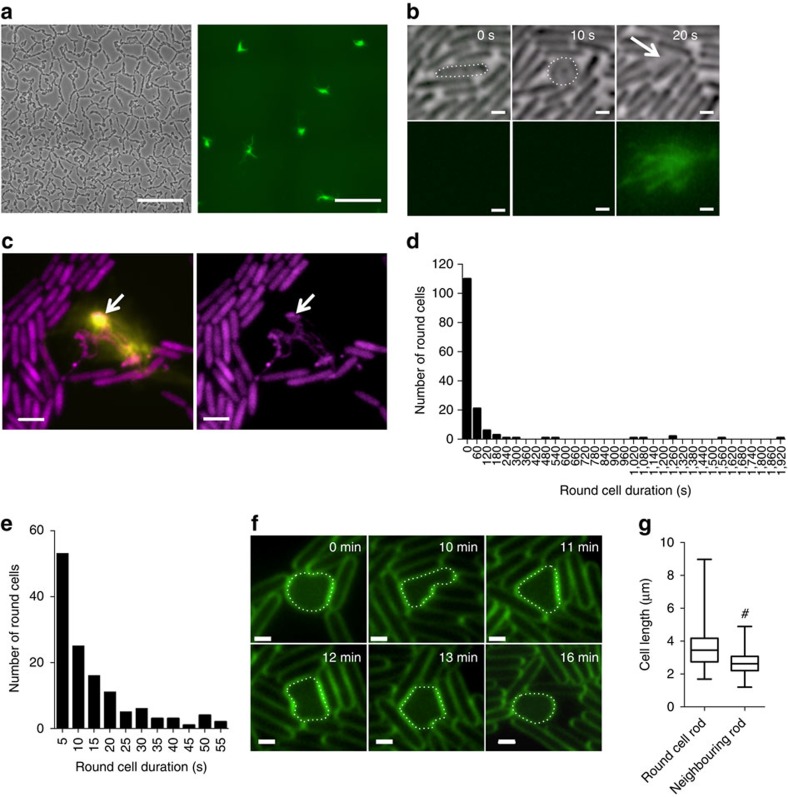
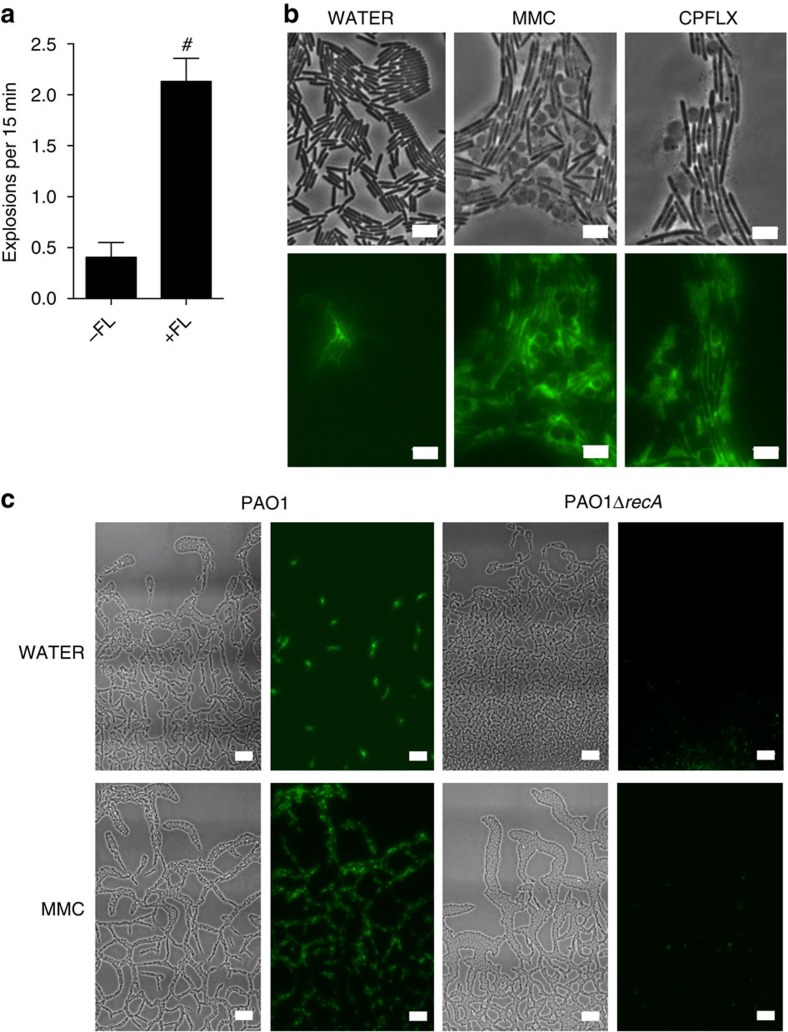
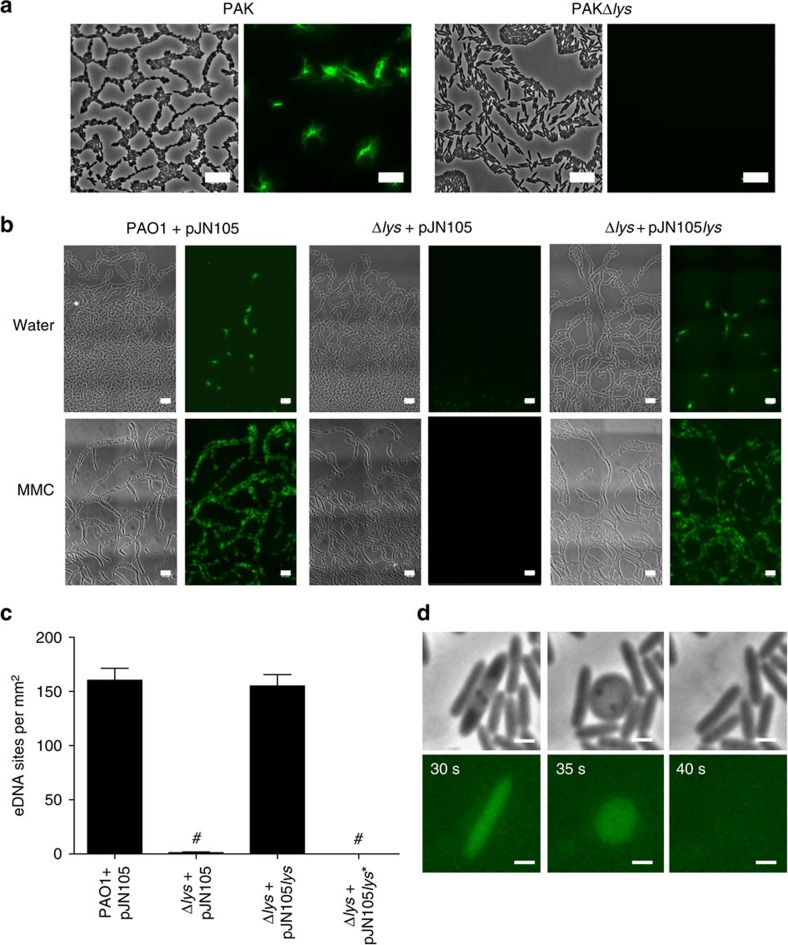
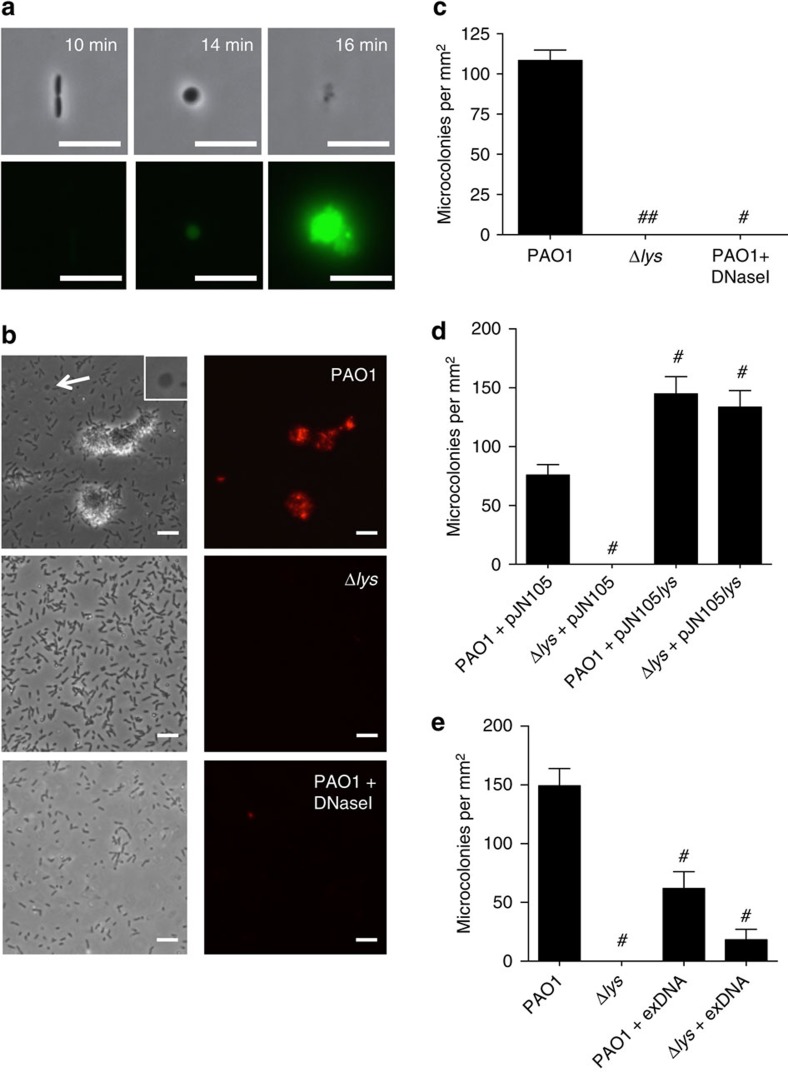
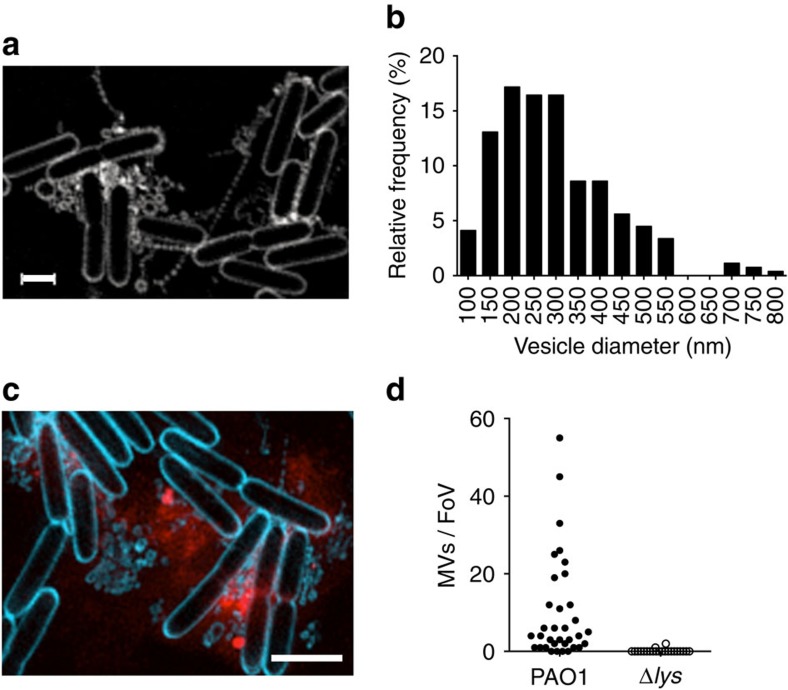
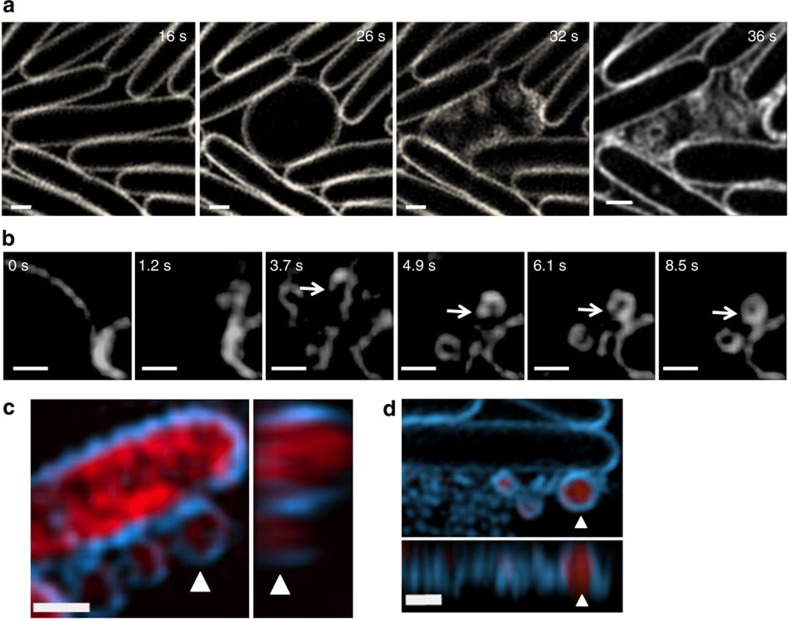
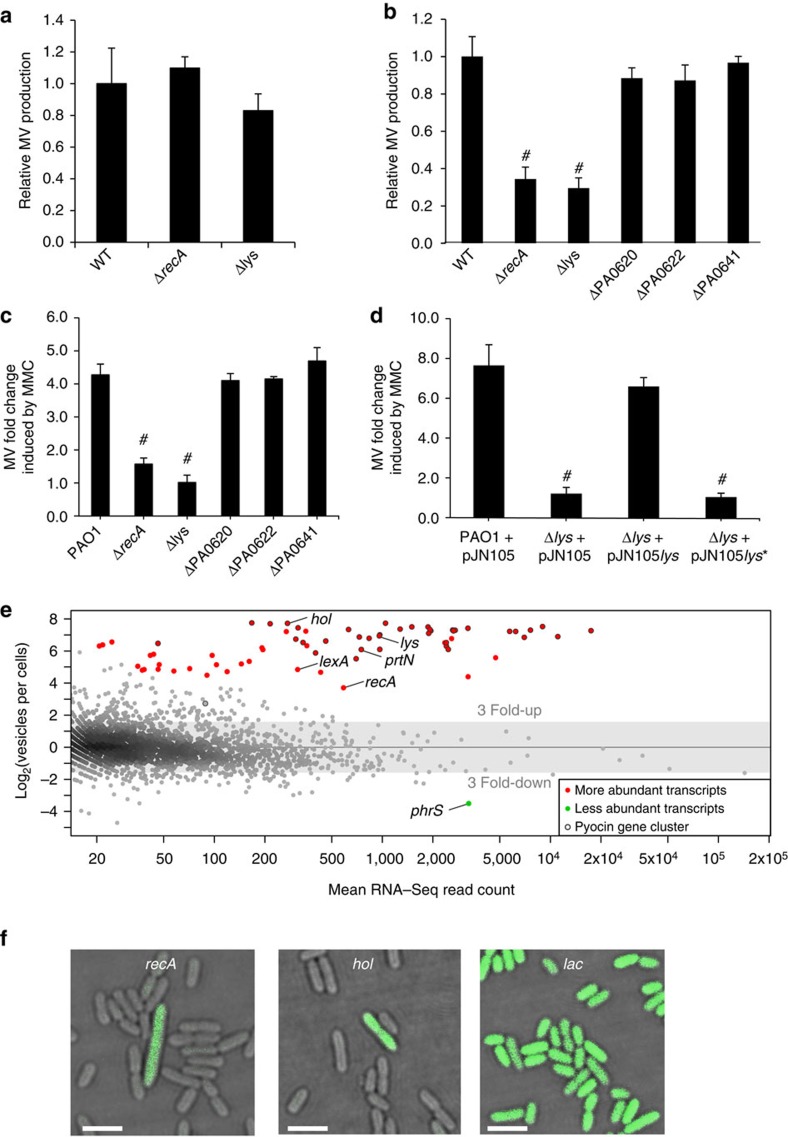
Many bacteria produce extracellular and surface-associated components such as membrane vesicles (MVs), extracellular DNA and moonlighting cytosolic proteins for which the biogenesis and export pathways are not fully understood. Here we show that the explosive cell lysis of a sub-population of cells accounts for the liberation of cytosolic content in Pseudomonas aeruginosa biofilms. Super-resolution microscopy reveals that explosive cell lysis also produces shattered membrane fragments that rapidly form MVs. A prophage endolysin encoded within the R- and F-pyocin gene cluster is essential for explosive cell lysis. Endolysin-deficient mutants are defective in MV production and biofilm development, consistent with a crucial role in the biogenesis of MVs and liberation of extracellular DNA and other biofilm matrix components. Our findings reveal that explosive cell lysis, mediated through the activity of a cryptic prophage endolysin, acts as a mechanism for the production of bacterial MVs.
Overview
The claims and statistics of this paper haven’t been checked yet.
Free: it reads the open-access text and checks the first 5 claims that cite a source we can check. Create a free account to check every claim.
Integrity signals
Registry
Cites
Statistics
Figures
Verification
Claims the paper makes
The claims and statistics of this paper haven’t been checked yet.
Free: it reads the open-access text and checks the first 5 claims that cite a source we can check. Create a free account to check every claim.
Claims other papers make about this one
Each is checked against this paper’s own text: does it say what the citing paper says it does?
The cited source says what the claim attributes to it.
In the citing paper
“In P. aeruginosa, explosive cell lysis of a subpopulation of cells, driven by the bacteriophage-like endolysin Lys, rapidly releases extracellular vesicles and liberates extracellular DNA into the biofilm matrix.229”
From The dental plaque biofilm matrix (2021) · cites this paper as [229]
In the citing paper
“eDNA, released by cellular lysis84,85, promotes biofilm formation, stability and tolerance towards positively charged antibiotics such as aminoglycosides and antimicrobial peptides.”
From Pseudomonas aeruginosa: ecology, evolution, pathogenesis and antimicrobial susceptibility (2025) · cites this paper as [85]
Self-check
Percentages, sums and reported differences re-computed from the paper’s own numbers.
The self-check needs the paper’s full text.
Citations
Cites
Fiji: an open-source platform for biological-image analysis
Schindelin, J., Arganda-Carreras, I., Frise, E., Kaynig, V., Longair, M., Pietzsch, T., Preibisch, S., Rueden, C., Saalfeld, S., Schmid, B., et al. (2012) · Nature Methods · doi:10.1038/nmeth.2019 · Cited by 66,890
A Threshold Selection Method from Gray-Level Histograms
Otsu, N. (1979) · IEEE Transactions on Systems, Man, and Cybernetics · doi:10.1109/tsmc.1979.4310076 · Cited by 43,398
A new mathematical model for relative quantification in real-time RT-PCR
Pfaffl, M. W. (2001) · Nucleic Acids Research · doi:10.1093/nar/29.9.e45 · Cited by 34,610
Differential expression analysis for sequence count data
Anders, S., & Huber, W. (2010) · Genome Biology · doi:10.1186/gb-2010-11-10-r106 · Cited by 15,581
Flemming, H.-C., & Wingender, J. (2010) · Nature Reviews Microbiology · doi:10.1038/nrmicro2415 · Cited by 10,137
Protein structure prediction on the Web: a case study using the Phyre server
Kelley, L. A., & Sternberg, M. J. E. (2009) · Nature Protocols · doi:10.1038/nprot.2009.2 · Cited by 4,175
Extracellular DNA Required for Bacterial Biofilm Formation
Whitchurch, C. B., Tolker-Nielsen, T., Ragas, P. C., & Mattick, J. S. (2002) · Science · doi:10.1126/science.295.5559.1487 · Cited by 2,203
Self-citationOuter-membrane vesicles from Gram-negative bacteria: biogenesis and functions
Schwechheimer, C., & Kuehn, M. J. (2015) · Nature Reviews Microbiology · doi:10.1038/nrmicro3525 · Cited by 1,922
Gustafsson, M. G. L., Shao, L., Carlton, P. M., Wang, C. J. R., Golubovskaya, I. N., Cande, W. Z., Agard, D. A., & Sedat, J. W. (2008) · Biophysical Journal · doi:10.1529/biophysj.107.120345 · Cited by 1,557
Schermelleh, L., Carlton, P. M., Haase, S., Shao, L., Winoto, L., Kner, P., Burke, B., Cardoso, M. C., Agard, D. A., Gustafsson, M. G. L., et al. (2008) · Science · doi:10.1126/science.1156947 · Cited by 1,123
Research works printed but not linked: 2
- Vallotton P.. in Image and Vision Computing New Zealand, 2009 IVCNZ '09 24th International Conference (IEEE) (2009).
- He X.-C. & Yung N. H. in Pattern Recognition, 2004. ICPR 2004. Proceedings of the 17th International Conference on. 791-794 (IEEE).
Cited by
Items 101–200 of 747
Castillo Pedraza, M. C., Novais, T. F., Faustoferri, R. C., Quivey, R. G., Terekhov, A., Hamaker, B. R., & Klein, M. I. (2017) · Biofouling · doi:10.1080/08927014.2017.1361412 · Cited by 70
“In some bacterial species, such as Enterococcus faecalis and Pseudomonas aeruginosa , part of the biofilm population sacrifices itself for the community, via cell lysis, and releases eDNA into the biofilm milieu (Thomas et al. 2009; Turnbull et al. 2016).”
A novel decoy strategy for polymyxin resistance in Acinetobacter baumannii
Park, J.-E., Kim, M.-S., Shin, B., Kang, M., Yang, J.-H., Lee, T. K., & Park, W. (2021) · eLife · doi:10.7554/elife.66988 · Cited by 77
Hirayama, S., & Nakao, R. (2020) · Microbial Biotechnology · doi:10.1111/1751-7915.13572 · Cited by 75
“Recently, a novel mechanism of MV formation by ‘explosive’ cell lysis was proposed, which is initiated by the action of a phagederived peptidoglycan-degrading enzyme, endolysin (Turnbull et al., 2016; Toyofuku, 2019).”
BackgroundResultAugustyniak, D., Olszak, T., & Drulis‐Kawa, Z. (2022) · Viruses · doi:10.3390/v14010121 · Cited by 71
“This is important insofar as naturally produced vesicles differ in composition from those formed by lysis of phage-sensitive cells [42,61] or obtained by the French press procedure, as was done by other teams [42].”
ResultImmunomodulatory Effects of Probiotic-Derived Extracellular Vesicles: Opportunities and Challenges
Chen, X., Li, Q., Xie, J., & Nie, S. (2024) · Journal of Agricultural and Food Chemistry · doi:10.1021/acs.jafc.4c04223 · Cited by 74
Opportunities and challenges of bacterial extracellular vesicles in regenerative medicine
Guo, J., Huang, Z., Wang, Q., Wang, M., Ming, Y., Chen, W., Huang, Y., Tang, Z., Huang, M., Liu, H., et al. (2025) · Journal of Nanobiotechnology · doi:10.1186/s12951-024-02935-1 · Cited by 69
Lynch, J. B., & Alegado, R. ʻ. (2017) · Journal of Bacteriology · doi:10.1128/jb.00012-17 · Cited by 72
IgA-enhancing effects of membrane vesicles derived from Lactobacillus sakei subsp. sakei NBRC15893
Yamasaki-Yashiki, S., Miyoshi, Y., NAKAYAMA, T., Kunisawa, J., & Katakura, Y. (2018) · Bioscience of Microbiota Food and Health · doi:10.12938/bmfh.18-015 · Cited by 72
“In addition, it has been reported that explosive cell lysis produces membrane fragments that rapidly form MVs through the activity of a cryptic prophage endolysin [22].”
Bos, J., Cisneros, L. H., & Mazel, D. (2021) · Science Advances · doi:10.1126/sciadv.abd1033 · Cited by 67
Autolysis‐mediated membrane vesicle formation in Bacillus subtilis
Abe, K., Toyofuku, M., Nomura, N., & Obana, N. (2021) · Environmental Microbiology · doi:10.1111/1462-2920.15502 · Cited by 70
Self-citationMandal, P. K., Ballerin, G., Nolan, L. M., Petty, N. K., & Whitchurch, C. B. (2021) · Microbiology · doi:10.1099/mic.0.001021 · Cited by 65
“aeruginosa [10, 27] and is likely to also be occurring as a consequence of the holinendolysin systems of lytic T4 and T7 phage in E.”
BackgroundInfluentialSelf-citationEmerging role of bacterial outer membrane vesicle in gastrointestinal tract
Tian, C., Yang, M., Xu, H., Zhu, M., Zhang, Y., Yao, J., Wang, L., Liang, Y.-J., & Li, D. (2023) · Gut Pathogens · doi:10.1186/s13099-023-00543-2 · Cited by 67
Pseudomonas aeruginosa is capable of natural transformation in biofilms
Nolan, L. M., Turnbull, L., Katrib, M., Osvath, S. R., Losa, D., Lazenby, J., & Whitchurch, C. B. (2020) · Microbiology · doi:10.1099/mic.0.000956 · Cited by 69
Self-citationImmunomodulatory roles and novel applications of bacterial membrane vesicles
Gilmore, W. J., Johnston, E. L., Zavan, L., Bitto, N. J., & Kaparakis‐Liaskos, M. (2021) · Molecular Immunology · doi:10.1016/j.molimm.2021.02.027 · Cited by 66
Cassin, E. K., & Tseng, B. S. (2019) · Journal of Bacteriology · doi:10.1128/jb.00050-19 · Cited by 71
“A mutant lacking the prophage endolysin that is responsible for explosive cell lysis formed deficient biofilms (71).”
BackgroundZu, M., Liu, G., Xu, H., Zhu, Z., Zhen, J., Li, B., Shi, X., Shahbazi, M., Reis, R. L., Kundu, S. C., et al. (2024) · Advanced Materials · doi:10.1002/adma.202409138 · Cited by 66
Bacterial extracellular vesicles at the interface of gut microbiota and immunity
Melo-Marques, I., Cardoso, S. M., & Empadinhas, N. (2024) · Gut Microbes · doi:10.1080/19490976.2024.2396494 · Cited by 67
“29 This category includes explosive outer membrane vesicles (EOMV), explosive outer-inner membrane vesicles (EOIMV), these two in the case of Gram-negative bacteria, or CMV again in Gram-positive, but in this case derived from bubbling cell death, called explosive cytoplasmic membrane vesicles…”
BackgroundRelease mechanisms and molecular interactions of Pseudomonas aeruginosa extracellular DNA
Sarkar, S. (2020) · Applied Microbiology and Biotechnology · doi:10.1007/s00253-020-10687-9 · Cited by 70
Jurcisek, J. A., Brockman, K. L., Novotny, L. A., Goodman, S. D., & Bakaletz, L. O. (2017) · Proceedings of the National Academy of Sciences · doi:10.1073/pnas.1705508114 · Cited by 62
“Conversely, once formed, 86% of large rounded Pseudomonas cells survive for <60 s before lysing (36).”
BackgroundInfluentialVacheron, J., Heiman, C. M., & Keel, C. (2021) · Communications Biology · doi:10.1038/s42003-020-01581-1 · Cited by 66
Bacterial extracellular vesicles and their interplay with the immune system
Doré, É., & Boilard, É. (2023) · Pharmacology & Therapeutics · doi:10.1016/j.pharmthera.2023.108443 · Cited by 66
Bacterial extracellular vesicles: An emerging postbiotic
Xie, J., Li, Q., & Nie, S. (2023) · Trends in Food Science & Technology · doi:10.1016/j.tifs.2023.104275 · Cited by 63
Biofilm through the Looking Glass: A Microbial Food Safety Perspective
Dass, S. C., & Wang, R. (2022) · Pathogens · doi:10.3390/pathogens11030346 · Cited by 70
Bacterial Outer Membrane Vesicles and Immune Modulation of the Host
Charpentier, L. A., Dolben, E. F., Hendricks, M. R., Hogan, D. A., Bomberger, J. M., & Stanton, B. A. (2023) · Membranes · doi:10.3390/membranes13090752 · Cited by 62
“In this model, a high amount of stress on the bacterial cell can lead to a breakdown in membrane integrity and a subsequent release of large amounts of cytoplasmic and periplasmic contents, including membrane fragments [24,25].”
BackgroundLuo, Z., Cheng, X., Feng, B., Fan, D., Liu, X., Xie, R., Luo, T., Wegner, S. V., Ma, D., Chen, F., et al. (2024) · Advanced Science · doi:10.1002/advs.202400049 · Cited by 67
Li, Q., Ou, Z., Lin, J., Tang, D., He, B., Wu, Y., Huang, X., Huang, X., Ru, B., Wang, Q., et al. (2025) · Nature Communications · doi:10.1038/s41467-025-58676-8 · Cited by 65
Xiong, Y. Q., Estellés, A., Li, L., Abdelhady, W., Gonzales, R., Bayer, A. S., Tenorio, E., Leighton, A., Ryser, S., & Kauvar, L. M. (2017) · Antimicrobial Agents and Chemotherapy · doi:10.1128/aac.00904-17 · Cited by 62
“The importance of eDNA in the biofilm matrix, which appears to arise primarily from stochastic programmed lysis of bacterial cells (13), has been well established by showing that the DNA-degrading enzyme, DNase, disrupts established biofilms (14, 15).”
BackgroundBaeza, N., Delgado, L., Comas, J., & Mercadé, E. (2021) · Frontiers in Microbiology · doi:10.3389/fmicb.2021.713669 · Cited by 63
The Role of Bacterial Membrane Vesicles in Human Health and Disease
Villageliú, D. N., & Samuelson, D. R. (2022) · Frontiers in Microbiology · doi:10.3389/fmicb.2022.828704 · Cited by 67
Characterizing interactions of Leptospira interrogans with proximal renal tubule epithelial cells
Yamaguchi, T., Higa, N., Okura, N., Matsumoto, A., Hermawan, I., Yamashiro, T., Suzuki, T., & Toma, C. (2018) · BMC Microbiology · doi:10.1186/s12866-018-1206-8 · Cited by 59
A Critical Role for Extracellular DNA in Dental Plaque Formation
Rostami, N., Shields, R. C., Yassin, S. A., Hawkins, A. R., Bowen, L., Luo, T. L., Rickard, A. H., Holliday, R., Preshaw, P. M., & Jakubovics, N. S. (2017) · Journal of Dental Research · doi:10.1177/0022034516675849 · Cited by 56
“More recently it has been shown that subpopulations of P. aeruginosa undergo explosive cell lysis, releasing DNA either in free form or encapsulated within membrane vesicles (Turnbull et al. 2016).”
BackgroundBhar, S., Edelmann, M. J., & Jones, M. K. (2020) · Journal of Proteomics · doi:10.1016/j.jprot.2020.103994 · Cited by 57
Engineered bacterial extracellular vesicles for central nervous system diseases
Ji, N., Wang, F., Wang, M., Zhang, W. C., Liu, H., & Su, J. (2023) · Journal of Controlled Release · doi:10.1016/j.jconrel.2023.10.027 · Cited by 58
Hoefler, B. C., Stubbendieck, R. M., Josyula, N., Moisan, S. M., Schulze, E. M., & Straight, P. D. (2017) · Cell chemical biology · doi:10.1016/j.chembiol.2017.08.008 · Cited by 58
Parducho, K. R., Beadell, B., Ybarra, T. K., Bush, M. C., Escalera, E., Trejos, A. T., Chieng, A., Mendez, M., Anderson, C., Park, H., et al. (2020) · Frontiers in Immunology · doi:10.3389/fimmu.2020.00805 · Cited by 57
Biomimetic Bacterial Membrane Vesicles for Drug Delivery Applications
Fazal, S., & Lee, A. (2021) · Pharmaceutics · doi:10.3390/pharmaceutics13091430 · Cited by 54
“In Gram-negative bacteria, the action of endolysin leads to membrane instability that causes explosive cell lysis and eventual vesiculation [52,65].”
BackgroundInfluentialGodeux, A.-S., Svedholm, E., Samuel, B., Potron, A., Venner, S., Charpentier, X., & Laaberki, M.-H. (2022) · mBio · doi:10.1128/mbio.02631-21 · Cited by 63
Horizontal Gene Transfer Systems for Spread of Antibiotic Resistance in Gram‐Negative Bacteria
Wachino, J. (2025) · Microbiology and Immunology · doi:10.1111/1348-0421.13222 · Cited by 59
Guillaume, O., Butnarasu, C., Visentin, S., & Reimhult, E. (2022) · Biofilm · doi:10.1016/j.bioflm.2022.100089 · Cited by 51
“In addition, PCR analyses proved the similarity of eDNA to the bacterial genome, and eDNA seems to be released from PA voluntarily through an “explosive” mechanism, including a pronounced change in cell shape and release of cytosol and membrane material [49].”
BackgroundVillard, A., Boursier, J., & Andriantsitohaina, R. (2021) · American Journal of Physiology-Gastrointestinal and Liver Physiology · doi:10.1152/ajpgi.00362.2020 · Cited by 55
Li, P., Luo, W., Xiang, T., Jiang, Y., Liu, P., Wei, D., Fan, L., Huang, S., Liao, W., Liu, Y., et al. (2022) · Frontiers in Microbiology · doi:10.3389/fmicb.2022.945972 · Cited by 59
“It is well known that genetic material is exchanged between bacteria via HGT through three widely described pathways: transformation, conjugation, and transduction (Turnbull et al., 2016; Redondo-Salvo et al., 2020).”
BackgroundAhmed, A. A. Q., Besio, R., Xiao, L., & Forlino, A. (2023) · International Journal of Molecular Sciences · doi:10.3390/ijms24108542 · Cited by 51
“However, one exception was reported, which described the vesicle formation mechanism by the “explosive” cell lysis that is initiated via a prophage endolysin [27].”
BackgroundBacterial communication through membrane vesicles
Toyofuku, M. (2019) · Bioscience Biotechnology and Biochemistry · doi:10.1080/09168451.2019.1608809 · Cited by 54
“tion which process is called explosive cell lysis [14].”
BackgroundInfluentialSelf-citationKikuchi, Y., Obana, N., Toyofuku, M., Kodera, N., Soma, T., Ando, T., Fukumori, Y., Nomura, N., & Taoka, A. (2020) · Nanoscale · doi:10.1039/c9nr10850e · Cited by 54
Self-citationBacterial RNA in extracellular vesicles: A new regulator of host-pathogen interactions?
Lécrivain, A.-L., & Beckmann, B. M. (2020) · Biochimica et Biophysica Acta (BBA) - Gene Regulatory Mechanisms · doi:10.1016/j.bbagrm.2020.194519 · Cited by 52
Bacteriocins Targeting Gram-Negative Phytopathogenic Bacteria: Plantibiotics of the Future
Rooney, W. M., Chai, R., Milner, J. J., & Walker, D. (2020) · Frontiers in Microbiology · doi:10.3389/fmicb.2020.575981 · Cited by 53
Latest Update on Outer Membrane Vesicles and Their Role in Horizontal Gene Transfer: A Mini-Review
Marinacci, B., Krzyżek, P., Pellegrini, B., Turacchio, G., & Grande, R. (2023) · Membranes · doi:10.3390/membranes13110860 · Cited by 52
“Explosive cell lysis is another, alternative route of secretion of EVs [22].”
BackgroundVeith, P. D., Luong, C., Tan, K. H., Dashper, S. G., & Reynolds, E. C. (2018) · Journal of Proteome Research · doi:10.1021/acs.jproteome.8b00153 · Cited by 51
Bacterial outer membrane vesicles in cancer: Biogenesis, pathogenesis, and clinical application
Li, D., Zhu, L., Wang, Y., Zhou, X., & Li, Y. (2023) · Biomedicine & Pharmacotherapy · doi:10.1016/j.biopha.2023.115120 · Cited by 51
Zeng, B., Li, Y., Xia, J., Xiao, Y., Khan, N., Jiang, B., Liang, Y., & Duan, L. (2024) · Bioengineering & Translational Medicine · doi:10.1002/btm2.10623 · Cited by 52
“53 During this process, bacteria can release EVs containing bacteriophage receptors into anti-infective cells, leading to a new round of cell autolysis.”
BackgroundBacterial extracellular vesicles: Vital contributors to physiology from bacteria to host
Nie, X., Li, Q., Chen, X., Onyango, S. O., Xie, J., & Nie, S. (2024) · Microbiological Research · doi:10.1016/j.micres.2024.127733 · Cited by 52
David, A., Tahrioui, A., Tareau, A.-S., Forge, A., Gonzalez, M., Bouffartigues, E., Lesouhaitier, O., & Chevalier, S. (2024) · Antibiotics · doi:10.3390/antibiotics13080688 · Cited by 51
“Cell lysis occurs through prophage induction [108] and via the BfmRS TCS [109].”
BackgroundExtracellular Vesicles: An Overlooked Secretion System in Cyanobacteria
Lima, S., Matinha‐Cardoso, J., Tamagnini, P., & Oliveira, P. (2020) · Life · doi:10.3390/life10080129 · Cited by 48
“This is the case for EOMVs, which are EVs formed as a consequence of cell lysis, triggered by phage-derived endolysins that degrade the peptidoglycan, after which the cell rounds up and explodes [41,73,74].”
BackgroundMultiple holins contribute to extracellular DNA release in Pseudomonas aeruginosa biofilms
Hynen, A. L., Lazenby, J., Savva, G. M., McCaughey, L. C., Turnbull, L., Nolan, L. M., & Whitchurch, C. B. (2021) · Microbiology · doi:10.1099/mic.0.000990 · Cited by 49
“While we have previously demonstrated that exogenous stress increases the frequency of cells undergoing explosive cell lysis, exogenous stress per se is not required for this phenomenon to occur [19].”
BackgroundMethodResultSelf-citationMosby, C. A., Bhar, S., Phillips, M. B., Edelmann, M. J., & Jones, M. K. (2022) · Journal of Extracellular Vesicles · doi:10.1002/jev2.12172 · Cited by 47
“…by explosive cell lysis have cytoplasmic proteins and genomic material in their cargo, while OMVs produced by outer membrane blebbing have periplasmic proteins and outer membrane-associated proteins only and primarily lack cytoplasmic proteins (Toyofuku et al., 2019; Turnbull et al., 2016).”
Niu, G., Jian, T., Gai, Y., & Chen, J. (2023) · Advanced Drug Delivery Reviews · doi:10.1016/j.addr.2023.114774 · Cited by 48
Rath, S., Fatma, S., & Das, S. (2025) · Critical Reviews in Biochemistry and Molecular Biology · doi:10.1080/10409238.2025.2497270 · Cited by 49
“…in P. aeruginosa, also coordinated the release of OMvs. the release process is also reported to be enhanced by the recA -mediated SOS response (turnbull et al. 2016). the involvement of multiple genetic elements in the intricate processes of OMv production and eDNA release suggests a highly…”
Garling, A., Auvray, F., Epardaud, M., Oswald, É., & Branchu, P. (2025) · Journal of Extracellular Vesicles · doi:10.1002/jev2.70150 · Cited by 52
“Their production was first reported in 2016 (Turnbull et al. 2016).”
InfluentialReciprocal cross-species induction of outer membrane vesicle biogenesis via secreted factors
Horspool, A. M., & Schertzer, J. W. (2018) · Scientific Reports · doi:10.1038/s41598-018-28042-4 · Cited by 47
An, H., Tian, T., Wang, Z., Jin, R., & Zhou, J. (2021) · The Science of The Total Environment · doi:10.1016/j.scitotenv.2021.151184 · Cited by 45
L-form conversion in Gram-positive bacteria enables escape from phage infection
Wohlfarth, J. C., Feldmüller, M., Schneller, A., Kilcher, S., Burkolter, M., Meile, S., Pilhofer, M., Schuppler, M., & Loessner, M. J. (2023) · Nature Microbiology · doi:10.1038/s41564-022-01317-3 · Cited by 62
Omran, B. A., Tseng, B. S., & Baek, K.-H. (2024) · Microbiological Research · doi:10.1016/j.micres.2024.127656 · Cited by 44
Luo, R., Chang, Y., Liang, H., Zhang, W., Song, Y., Li, G., & Cao, Y. (2023) · iMeta · doi:10.1002/imt2.86 · Cited by 47
“…addition, recent studies have revealed another type of OMV, called outer ‐ inner membrane vesicles (OIMVs), which are formed by fission of a protrusion of the outer and plasma membranes or explosive cell lysis and entrap both periplasmic and cytoplasmic components, including DNA and ATP [41 – 44].”
BackgroundElawady, R., Aboulela, A., Gaballah, A. H., Ghazal, A. A. E. R., & Amer, A. N. (2024) · BMC Infectious Diseases · doi:10.1186/s12879-024-09790-3 · Cited by 47
“The SOS response, which can be triggered by genotoxic stressors such as UV light, can also be triggered by sub-MIC fluoroquinolone antimicrobial agents such as ciprofloxacin, which was found to induce explosive cell lysis [69].”
BackgroundNew insights of the bacterial response to exposure of differently sized silver nanomaterials
Lu, J., Zhang, S., Gao, S.-H., Wang, P., Bond, P. L., & Guo, J. (2019) · Water Research · doi:10.1016/j.watres.2019.115205 · Cited by 45
Zhu, C., Ji, Z., Ma, J., Ding, Z., Shen, J., & Wang, Q. (2021) · Pharmaceutics · doi:10.3390/pharmaceutics13070940 · Cited by 45
“OMVs can be obtained by explosive cell lysis [61].”
BackgroundDelivery of Toxins and Effectors by Bacterial Membrane Vesicles
Macion, A., Wyszyńska, A., & Godlewska, R. A. (2021) · Toxins · doi:10.3390/toxins13120845 · Cited by 49
Morales-Soto, N., Dunham, S. J. B., Baig, N. F., Ellis, J. F., Madukoma, C. S., Bohn, P. W., Sweedler, J. V., & Shrout, J. D. (2018) · Journal of Biological Chemistry · doi:10.1074/jbc.ra118.002605 · Cited by 38
“aeruginosa communities is attributed to packaging and transport in outer membrane vesicles (28, 29), yet cell lysis could also contribute to their release (30).”
BackgroundMaking the Best of Aggression: The Many Dimensions of Bacterial Toxin Regulation
González, D., & Mavridou, D. A. I. (2019) · Trends in Microbiology · doi:10.1016/j.tim.2019.05.009 · Cited by 50
“Release of many diffusible toxins, like colicins or pyocins, occurs through lysis and death of the producing cells [17,21,22].”
BackgroundVitse, J., & Devreese, B. V. (2020) · Frontiers in Microbiology · doi:10.3389/fmicb.2020.00630 · Cited by 48
“Compelling evidence was provided that OIMV production in Pseudomonas aeruginosa is dependent on the action of a prophage endolysin, resulting in a phenomenon referred to as phage endolysin-triggered cell lysis (Turnbull et al., 2016).”
BackgroundJones, E. J., Stentz, R., Telatin, A., Savva, G. M., Booth, C., Baker, D., Rudder, S. J., Knight, S. C., Noble, A., & Carding, S. R. (2021) · Genes · doi:10.3390/genes12101636 · Cited by 45
“BEVs are naturally produced by both Gram-negative and Gram-positive bacteria as a result of budding or blebbing of inner/outer cell membranes or explosive cell lysis [10,11].”
BackgroundBacterial Extracellular Vesicles in Gastrointestinal Tract Cancer: An Unexplored Territory
Amatya, S. B., Salmi, S., Kainulainen, V., Karihtala, P., & Reunanen, J. (2021) · Cancers · doi:10.3390/cancers13215450 · Cited by 45
Aktar, S., Okamoto, Y., Ueno, S., Tahara, Y. O., Imaizumi, M., Shintani, M., Miyata, M., Futamata, H., Nojiri, H., & Tashiro, Y. (2021) · Frontiers in Microbiology · doi:10.3389/fmicb.2021.747606 · Cited by 45
Barreira, D. D. S., Lapaquette, P., Ducassou, J. N., Couté, Y., Guzzo, J., & Rieu, A. (2022) · mBio · doi:10.1128/mbio.02375-22 · Cited by 55
“Vesicles were shown to play a large number of physiological roles: they are involved in stress resistance, biofilm formation (15, 77, 78), HGT (6, 9, 79), antibiotic (66–68, 71), and phage resistance (80).”
BackgroundBaeza, N., & Mercadé, E. (2020) · Microbial Ecology · doi:10.1007/s00248-020-01614-6 · Cited by 43
Castillo‐Juárez, I., López-Jácome, L. E., Soberón‐Chávez, G., Tomás, M., Lee, J., Castañeda-Támez, P., Hernandez-Barragan, I. A., Cruz-Muñiz, M. Y., Maeda, T., Wood, T. K., et al. (2017) · Current Topics in Medicinal Chemistry · doi:10.2174/1568026617666170105144104 · Cited by 44
“An alternative mechanism for providing eDNA for biofilm formation not involving quinolones also involves lysis as a result of explosive lysis mediated by cryptic phage endolysins and the formation of membrane vesicles [50].”
BackgroundGafri, H. F. S., Zuki, F. M., Aroua, M. K., & Hashim, N. A. (2018) · Reviews in Chemical Engineering · doi:10.1515/revce-2017-0006 · Cited by 44
Detection and Quantification of eDNA-Associated Bacterial Membrane Vesicles by Flow Cytometry
Puca, V., Ercolino, E., Celia, C., Bologna, G., Marzio, L. D., Mincione, G., Marchisio, M., Miscia, S., Muraro, R., Lanuti, P., et al. (2019) · International Journal of Molecular Sciences · doi:10.3390/ijms20215307 · Cited by 44
“demonstrated that the EVs’ biogenesis is associated with a rearrangement of the bacterial membranes, derived from lysed cells, which incorporate soluble molecules [4,5].”
BackgroundDeng, B., Ghatak, S., Sarkar, S., Singh, K., Ghatak, P. D., Mathew‐Steiner, S. S., Roy, S., Khanna, S., Wozniak, D. J., McComb, D. W., et al. (2020) · iScience · doi:10.1016/j.isci.2020.100827 · Cited by 46
Campoccia, D., Montanaro, L., & Arciola, C. R. (2021) · Biofouling · doi:10.1080/08927014.2021.2002987 · Cited by 45
Pathogen-derived extracellular vesicles coordinate social behaviour and host manipulation
Ofir‐Birin, Y., Heidenreich, M., & Regev‐Rudzki, N. (2017) · Seminars in Cell and Developmental Biology · doi:10.1016/j.semcdb.2017.03.004 · Cited by 45
“The DNA present in purified bacteria-derived EVs was found to contain sequences, which covered the entire genome [57, 58].”
BackgroundLee, Y., Song, S., Sheng, L., Zhu, L., Kim, J., & Wood, T. K. (2018) · Frontiers in Microbiology · doi:10.3389/fmicb.2018.00030 · Cited by 47
“…where excessive phage production is deleterious for biofilm formation, previous work has shown that explosive cell lysis via an endolysin from cryptic prophage is beneficial for biofilm formation since it produces extracellular DNA that helps to initiate biofilm production (Turnbull et al., 2016).”
BackgroundResultRole of Bacterial Extracellular Vesicles in Manipulating Infection
Zhao, G., & Jones, M. K. (2023) · Infection and Immunity · doi:10.1128/iai.00439-22 · Cited by 42
“However, it is now known that vesicles can also be generated through explosive cell lysis, leading to differences in both vesicle content and structure compared to those of vesicles formed via membrane blebbing (9, 10).”
BackgroundBarreira, D. D. S., Laurent, J., Lourenço, J., Ducassou, J. N., Couté, Y., Guzzo, J., & Rieu, A. (2023) · Scientific Reports · doi:10.1038/s41598-023-27959-9 · Cited by 45
Bacterial extracellular vesicles: biotechnological perspective for enhanced productivity
Muñoz-Echeverri, L. M., Benavides-López, S., Geiger, O., Trujillo‐Roldán, M. A., & Valdez‐Cruz, N. A. (2024) · World Journal of Microbiology and Biotechnology · doi:10.1007/s11274-024-03963-7 · Cited by 45
“Explosive cell lysis is triggered by the action of endolysins encoded in cryptic prophages, which are activated by DNA damage, and their role is to degrade PG in P. aeruginosa (Toyofuku et al. 2019; Turnbull et al. 2016).”
BackgroundInfluentialThe emerging role of bacterial extracellular vesicles in human cancers
Liang, A., Korani, L., Yeung, C. L. S., Tey, S. K., & Yam, J. W. P. (2024) · Journal of Extracellular Vesicles · doi:10.1002/jev2.12521 · Cited by 45
“Both OMVs and OIMVs can further be classified as explosive OMVs/OIMVs (EOMVs/EOIMVs) if they are produced through a burst-like process (Aktar et al., 2021; Kulp & Kuehn, 2010; Turnbull et al., 2016).”
BackgroundRapid detection of Escherichia coli using bacteriophage-induced lysis and image analysis
Yang, X., Wisuthiphaet, N., Young, G. M., & Nitin, N. (2020) · PLoS ONE · doi:10.1371/journal.pone.0233853 · Cited by 40
“Bacterial host cells that undergo phageinduced lysis in Fig 1 illustrate a significant change in their cellular morphology, proposed as “rod-to-round” transition [20], followed by intracellular to extracellular DNA release, defined as environmental DNA (eDNA).”
BackgroundBajire, S. K., Jain, S., Johnson, R. P., & Shastry, R. P. (2021) · Applied Microbiology and Biotechnology · doi:10.1007/s00253-021-11637-9 · Cited by 41
“Thus, the lysed cells stimulate the secretion of cellular materials, such as nucleic acid, leading to the progression of biofilm (Turnbull et al. 2016).”
BackgroundBisht, K., Luecke, A. R., & Wakeman, C. A. (2023) · Frontiers in Microbiology · doi:10.3389/fmicb.2022.1032520 · Cited by 43
Booth, S. C., & Rice, S. A. (2020) · Biofilm · doi:10.1016/j.bioflm.2020.100035 · Cited by 40
“aeruginosa uses type IV pili (TFP) for twitching based motility on surfaces (including agar) [41] and TFP have also been shown to be important for structure formation during flow cell biofilm development”
BackgroundInfluentialJiang, M., Wang, Z., Xia, F., Wen, Z., Chen, R., Zhu, D., Wang, M., Zhuge, X., & Dai, J. (2022) · PLoS Pathogens · doi:10.1371/journal.ppat.1010908 · Cited by 44
“A newer view, the “explosive cell lysis” model, offers another possible mechanism for the formation of ExPEC EVs [24].”
BackgroundInfluentialZavan, L., Fang, H., Johnston, E. L., Whitchurch, C. B., Greening, D. W., Hill, A. F., & Kaparakis‐Liaskos, M. (2023) · PROTEOMICS · doi:10.1002/pmic.202200464 · Cited by 43
“explosive cell lysis that can be packaged in E-OMVs [8].”
BackgroundMethodResultSelf-citationJoseph, A., Anton, L., Guan, Y., Ferguson, B., Mirro, I., Meng, N., France, M., Ravel, J., & Elovitz, M. A. (2024) · npj Biofilms and Microbiomes · doi:10.1038/s41522-024-00502-y · Cited by 39
Immunoactive Clostridial Membrane Vesicle Production Is Regulated by a Sporulation Factor
Obana, N., Nakao, R., Nagayama, K., Nakamura, K., Senpuku, H., & Nomura, N. (2017) · Infection and Immunity · doi:10.1128/iai.00096-17 · Cited by 40
“In Gram-negative bacteria, endolysin and the ABC transporter system positively affect MV production via different molecular mechanisms (45, 46).”
BackgroundSelf-citationGrüll, M. P., Mulligan, M. E., & Lang, A. S. (2018) · FEMS Microbiology Letters · doi:10.1093/femsle/fny192 · Cited by 39
Bacterial membrane vesicles as promising vaccine candidates
Jiang, L., Schinkel, M., van Essen, M. J., & Schiffelers, R. M. (2019) · European Journal of Pharmaceutics and Biopharmaceutics · doi:10.1016/j.ejpb.2019.09.021 · Cited by 38
Rima, M., Dakramanji, M., Hayek, E. E., Khoury, T. E., Fajloun, Z., & Rima, M. (2025) · Heliyon · doi:10.1016/j.heliyon.2025.e42509 · Cited by 41
Bacterial extracellular vesicles in osteoarthritis: a new bridge of the gut-joint axis
Niu, L., Chen, W., Yin, Z., Tan, H., Cui, J., & Su, J. (2025) · Gut Microbes · doi:10.1080/19490976.2025.2489069 · Cited by 40
Das, J., Mokrzan, E. M., Lakhani, V., Rosas, L. E., Jurcisek, J. A., Ray, W. C., & Bakaletz, L. O. (2017) · mBio · doi:10.1128/mbio.01466-17 · Cited by 38
“The origin of eDNA in bacterial biofilms remains unclear, but it is often attributed to bacterial autolysis (18) or release of outer membrane vesicles.”
BackgroundTarashi, S., Zamani, M. S., Omrani, M. D., Fateh, A., Moshiri, A., Saedisomeolia, A., Siadat, S. D., & Kubow, S. J. (2022) · Journal of Immunology Research · doi:10.1155/2022/8092170 · Cited by 43
“These latter EVs contrast to bacterial EVs formed during phage endolysin-triggered cell lysis as bacteria-derived EVs originating from membrane blebbing of living cells are structurally di ff erent from EVs derived from cell lysis [8 – 12].”
Metadata
- Authors
- Turnbull, L., Toyofuku, M., Hynen, A. L., Kurosawa, M., Pessi, G., Petty, N. K., Osvath, S. R., Cárcamo-Oyarce, G., Gloag, E. S., Shimoni, R., Omasits, U., Ito, S., Yap, X., Monahan, L. G., Cavaliere, R., Ahrens, C. H., Charles, I. G., Nomura, N., Eberl, L., & Whitchurch, C. B.
- Affiliations
- University of Technology Sydney (AU)
- University of Tsukuba (JP)
- University of Zurich (CH)
- ETH Zurich (CH)
- SIB Swiss Institute of Bioinformatics (CH)
- Corresponding author
- Toyofuku, Masanori
- Eberl, Leo
- Whitchurch, Cynthia B.
- ORCID
- Venue
- Nature Communications
- Published
- 2016-04-14
- Volume
- 7
- Issue
- 1
- Pages
- 11220-11220
- ISSN
- 2041-1723 (ISSN-L)
- PMC
- PMC4834629
- OpenAlex
- W2335807995
- Semantic Scholar
- 3d17bfdccde091cef9d1dc95ffc365ecfed053da
- Cited by
- 709
- References
- 67
- Citations by year
- 2026: 86 · 2025: 87 · 2024: 91 · 2023: 83 · 2022: 67 · 2021: 88 · 2020: 64 · 2019: 38 · 2018: 41 · 2017: 45 · 2016: 18
- FWCI
- 24.61
- Type
- journal article
- Language
- en
- Open access
- gold
- doi.org
- Licence
- cc-by
- creativecommons.org/licenses/by/4.0 (tdm)
- creativecommons.org/licenses/by/4.0 (vor)
- Locations
- Nature Communications (publishedVersion, cc-by)
- PubMed Central (publishedVersion, cc-by)
- PubMed (publishedVersion)
- Institutional Repositories DataBase (IRDB) (publishedVersion, cc-by)
- Zurich Open Repository and Archive (University of Zurich) (acceptedVersion, cc-by)
- RePEc: Research Papers in Economics (submittedVersion)
- DOAJ (DOAJ: Directory of Open Access Journals) (submittedVersion, cc-by-sa)
- UTS ePRESS (University of Technology Sydney) (submittedVersion)
- Terrestrial Environment Research Center (University of Tsukuba) (submittedVersion, cc-by)
- UEA Digital Repository (University of East Anglia) (submittedVersion)
- Repository for Publications and Research Data (ETH Zurich) (submittedVersion, cc-by)
- Zurich Open Repository and Archive (University of Zurich) (submittedVersion, cc-by)
- ETH Zürich Research Collection (cc-by)
- Zurich Open Repository and Archive (University of Zurich)
- Funders
- National Science Foundation
- Ministry of Education, Culture, Sports, Science and Technology (25701012, 60292520, CREST)
- Schweizerischer Nationalfonds zur Förderung der Wissenschaftlichen Forschung (143773, 31003A, 130723)
- Monash University
- National Health and Medical Research Council (571905)
- Japan Society for the Promotion of Science (25701012)
- Japan Science and Technology Agency (CREST, 60292520, 25701012)
- Comisión Nacional de Investigación Científica y Tecnológica
- Core Research for Evolutional Science and Technology
- Exploratory Research for Advanced Technology
- Advanced Low Carbon Technology Research and Development Program
- Topics
- Life Sciences › Biochemistry, Genetics and Molecular Biology › Molecular Biology › Bacterial biofilms and quorum sensing
- Life Sciences › Biochemistry, Genetics and Molecular Biology › Genetics › Bacterial Genetics and Biotechnology
- Life Sciences › Immunology and Microbiology › Virology › Bacteriophages and microbial interactions
- Keywords
- membrane vesicles, bacterial biofilms, Pseudomonas aeruginosa, extracellular DNA, biofilm matrix, super-resolution microscopy
- MeSH terms
- Bacteriolysis, Organelle Biogenesis, Cell Membrane, DNA, Bacterial, Extracellular Space, Endopeptidases, Pseudomonas aeruginosa, Pyocins, Stress, Physiological, Quinolones, Biofilms
About these checks
Registry, retraction, Cites and statistics results are computed, not judged, with one exception: a printed reference that no index lists is read once by a model before it counts as a citation error. Claims are extracted by a model and kept only when their quote appears verbatim in the text; each cited source is then checked, with a model’s help, for whether it says what the claim relies on. Those verdicts can be wrong — read the claim’s quote and the cited source before relying on one.
Statistics and arithmetic are recomputed, not judged.
Confidence bands are shown only for fields calibrated on our annotated test set. None is calibrated yet, so no band is shown.
What counts as a claim ›How we measure confidence ›How we check this ›
Are you an author, or do you see a problem with this page? Request a review
Data sources
Bibliographic data: Semantic Scholar, OpenAlex, Crossref.
Contains information from the Semantic Scholar Academic Graph Datasets, made available under the ODC Attribution License (ODC-BY 1.0).
Semantic Scholar’s data is described in: Kinney, R., et al. (2023). The Semantic Scholar Open Data Platform. arXiv:2301.10140.
