

Microglia and monocytes synergistically promote the transition from acute to chronic pain after nerve injury
Open accessThe DOI matches its Crossref record; 54 of the 54 references it cites were found in a registry or an index.
Abstract
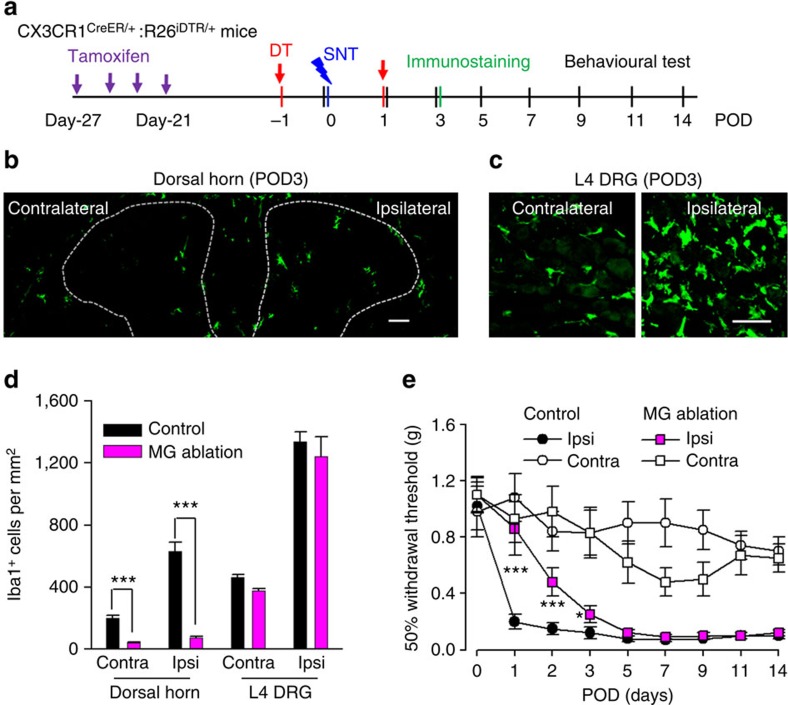
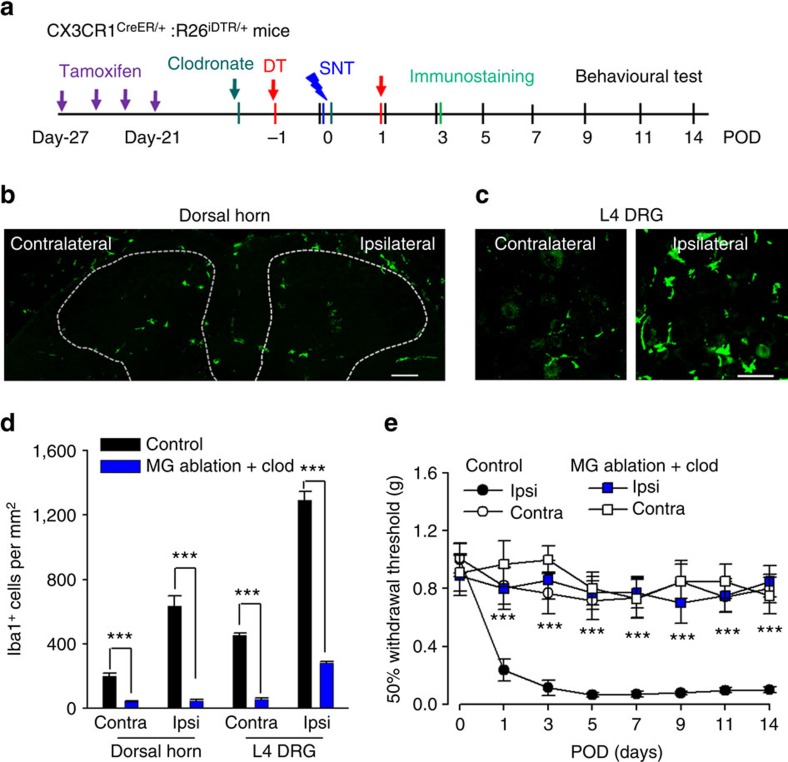
Microglia and peripheral monocytes contribute to hypersensitivity in rodent models of neuropathic pain. However, the precise respective function of microglia and peripheral monocytes has not been investigated in these models. To address this question, here we combined transgenic mice and pharmacological tools to specifically and temporally control the depletion of microglia and monocytes in a mouse model of spinal nerve transection (SNT). We found that although microglia and monocytes are required during the initiation of mechanical allodynia or thermal hyperalgesia, these cells may not be as important for the maintenance of hypersensitivity. Moreover, we demonstrated that either resident microglia or peripheral monocytes are sufficient in gating neuropathic pain after SNT. We propose that resident microglia and peripheral monocytes act synergistically to initiate hypersensitivity and promote the transition from acute to chronic pain after peripheral nerve injury.
Overview
The claims and statistics of this paper haven’t been checked yet.
Free: it reads the open-access text and checks the first 5 claims that cite a source we can check. Create a free account to check every claim.
Integrity signals
Registry
Cites
Statistics
Figures
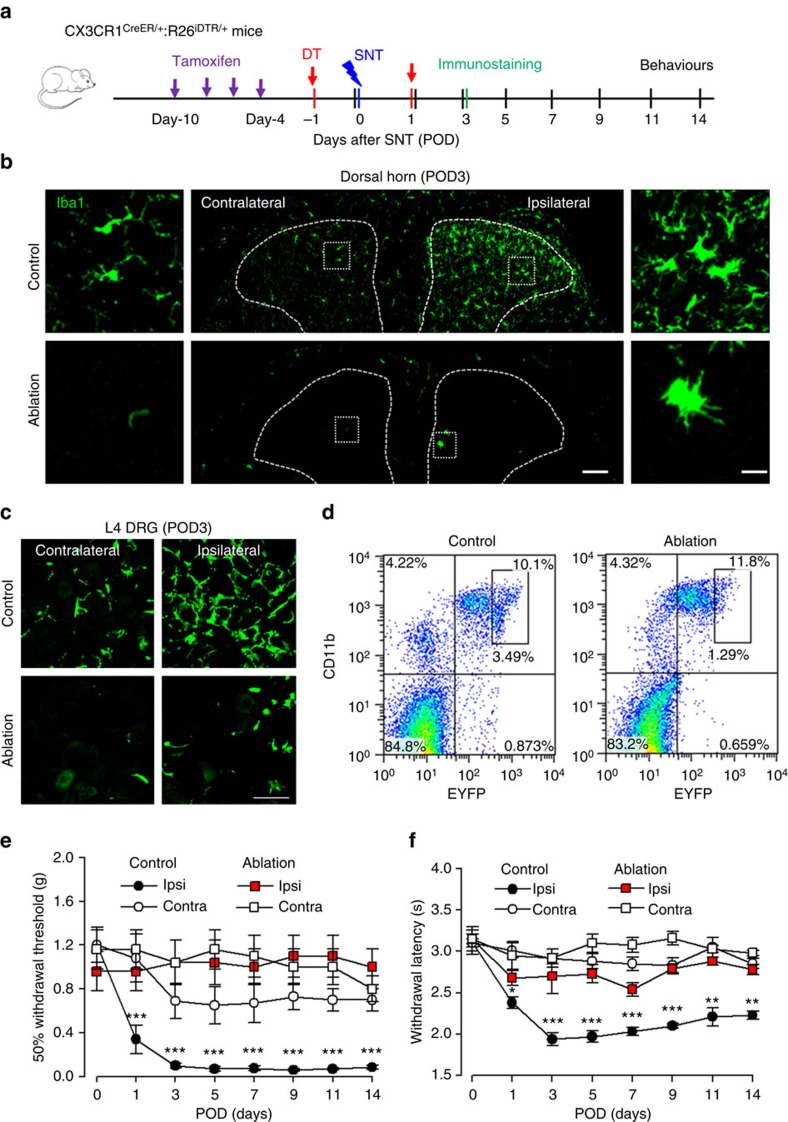
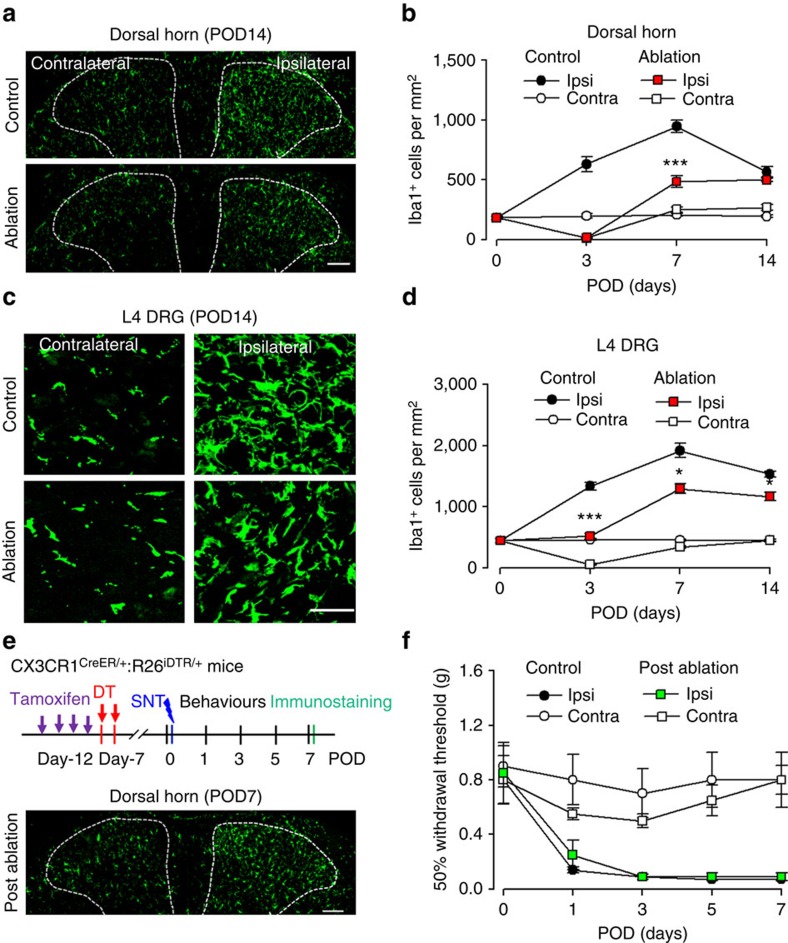
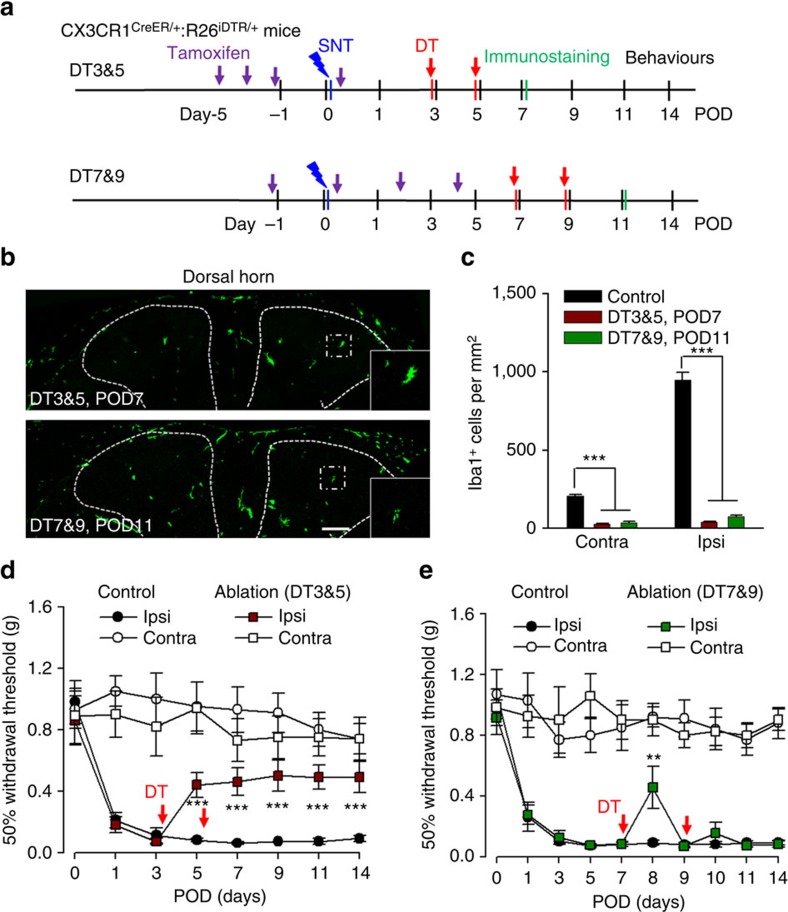
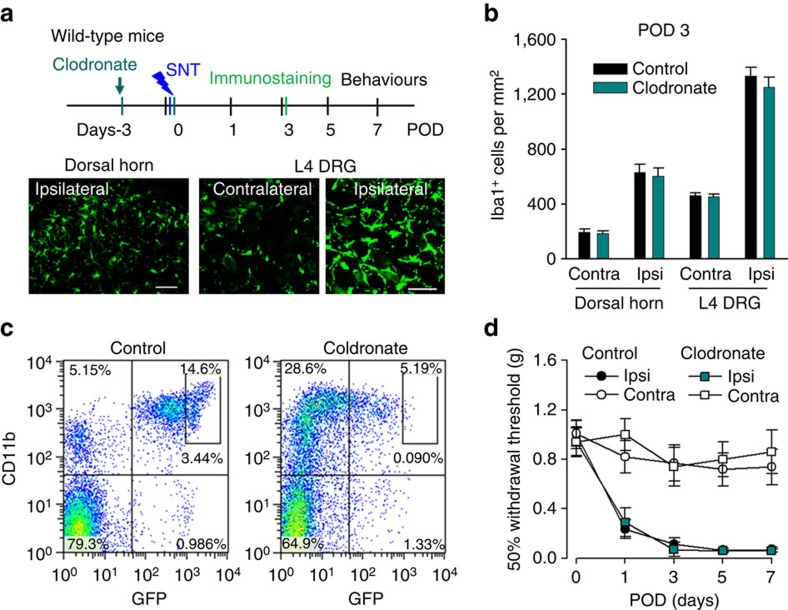
Verification
Claims the paper makes
The claims and statistics of this paper haven’t been checked yet.
Free: it reads the open-access text and checks the first 5 claims that cite a source we can check. Create a free account to check every claim.
Claims other papers make about this one
Each is checked against this paper’s own text: does it say what the citing paper says it does?
The source backs part of the claim, not all of it — or backs it for a different population, condition or comparison.
In the citing paper
“Intrathecal injection of minocycline (microglia inhibitor) significantly attenuated the neuropathic pain (Peng et al., 2016).”
From Picroside Ⅱ attenuates neuropathic pain by regulating inflammation and spinal excitatory synaptic transmission (2024) · cites this paper as Peng et al., 2016
Experimental — accuracy not yet measuredIn the citing paper
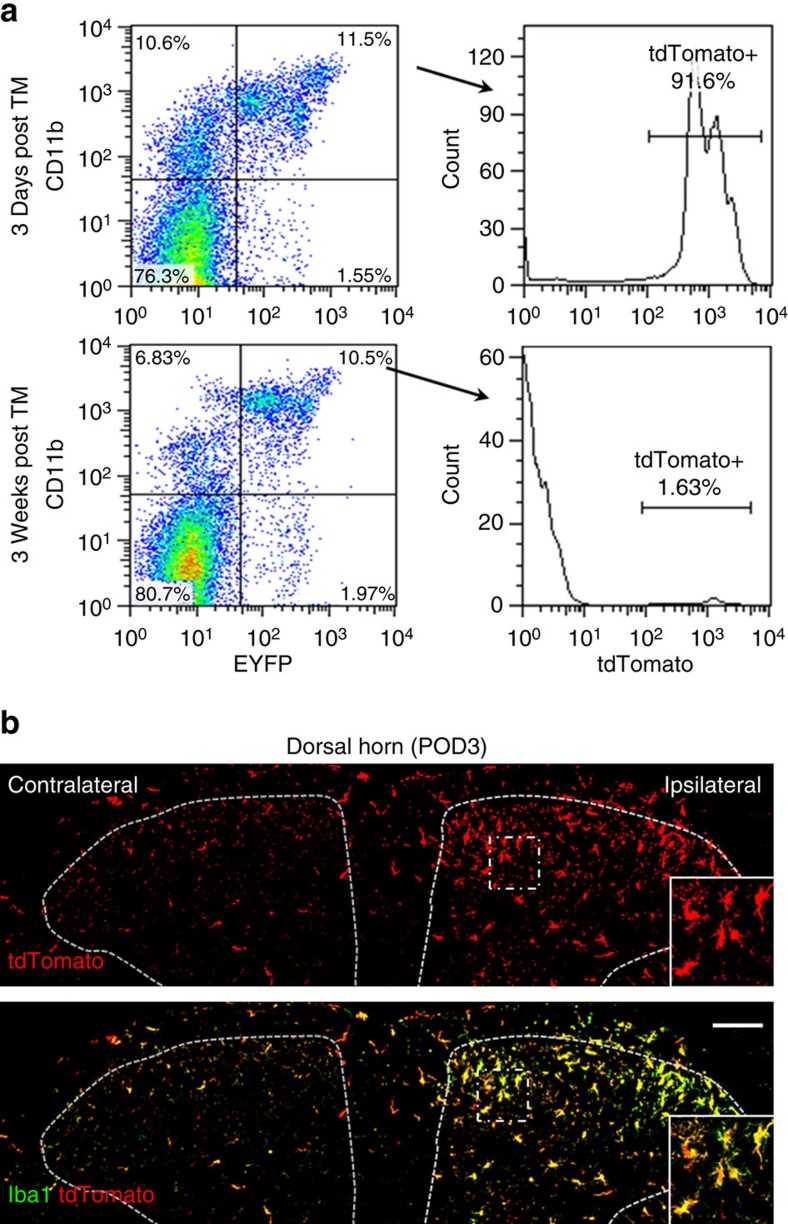
“Although most studies using Cx3cr1Cre/ERT2 lines to target microglia suggest that a 3-week washout period will result in microglia specificity (Bedolla et al., 2023; Costa et al., 2021; Peng et al., 2016; Mo et al., 2019; Hohsfield et al., 2021; Y. Yang et al., 2023), evidence confirming the clearance of peripheral cells with Cre-mediated recombination at this time point is lacking.”
From Novel floxed cannabinoid receptor 2 mouse line combines knockout capability with dual fluorescent reporters (2025) · cites this paper as Peng et al., 2016
Self-check
Percentages, sums and reported differences re-computed from the paper’s own numbers.
The self-check needs the paper’s full text.
Citations
Cites
Quantitative assessment of tactile allodynia in the rat paw
Chaplan, S. R., Bach, F. W., Pogrel, J. W., Chung, J. M., & Yaksh, T. L. (1994) · Journal of Neuroscience Methods · doi:10.1016/0165-0270(94)90144-9 · Cited by 7,697
Resting microglial cells are highly dynamic surveillants of brain parenchyma in vivo
Nimmerjahn, A., Kirchhoff, F., & Helmchen, F. (2005) · Science · doi:10.1126/science.1110647 · Cited by 5,827
ATP mediates rapid microglial response to local brain injury in vivo
Davalos, D., Grutzendler, J., Yang, G., Kim, J. V., Zuo, Y., Jung, S., Littman, D. R., Dustin, M. L., & Gan, W.-B. (2005) · Nature Neuroscience · doi:10.1038/nn1472 · Cited by 3,913
Self-citationSex, gender, and pain: a review of recent clinical and experimental findings
Fillingim, R. B., King, C. D., Ribeiro-Dasilva, M. C., Rahim-Williams, B., & Riley, J. L. (2009) · The Journal of Pain · doi:10.1016/j.jpain.2008.12.001 · Cited by 2,766
Treede (2008) · doi:10.1212/01.wnl.0000282763.29778.59 · Cited by 2,746
Jung, S., Aliberti, J., Graemmel, P., Sunshine, M. J., Kreutzberg, G. W., Sher, A., & Littman, D. R. (2000) · Molecular and Cellular Biology · doi:10.1128/mcb.20.11.4106-4114.2000 · Cited by 2,632
Microglia promote learning-dependent synapse formation through brain-derived neurotrophic factor
Parkhurst, C. N., Yang, G., Ninan, I., Savas, J. N., Yates, J. R., Lafaille, J. J., Hempstead, B. L., Littman, D. R., & Gan, W.-B. (2013) · Cell · doi:10.1016/j.cell.2013.11.030 · Cited by 2,599
Self-citationElmore, M. R. P., Najafi, A. R., Koike, M. A., Dagher, N. N., Spangenberg, E. E., Rice, R. A., Kitazawa, M., Matusow, B., Nguyen, H., West, B. L., et al. (2014) · Neuron · doi:10.1016/j.neuron.2014.02.040 · Cited by 1,968
The neuropathic pain triad: neurons, immune cells and glia
Scholz, J., & Woolf, C. J. (2007) · Nature Neuroscience · doi:10.1038/nn1992 · Cited by 1,732
Local self-renewal can sustain CNS microglia maintenance and function throughout adult life
Ajami, B., Bennett, J. L., Krieger, C., Tetzlaff, W., & Rossi, F. M. V. (2007) · Nature Neuroscience · doi:10.1038/nn2014 · Cited by 1,643
Cited by
Pain regulation by non-neuronal cells and inflammation
Ji, R.-R., Chamessian, A., & Zhang, Y.-Q. (2016) · Science · doi:10.1126/science.aaf8924 · Cited by 1,314
Microglia in neuropathic pain: cellular and molecular mechanisms and therapeutic potential
Inoue, K., & Tsuda, M. (2018) · Nature Reviews Neuroscience · doi:10.1038/nrn.2018.2 · Cited by 908
Microglia in Pain: Detrimental and Protective Roles in Pathogenesis and Resolution of Pain
Chen, G., Zhang, Y.-Q., Qadri, Y. J., Serhan, C. N., & Ji, R.-R. (2018) · Neuron · doi:10.1016/j.neuron.2018.11.009 · Cited by 780
Qualitative sex differences in pain processing: emerging evidence of a biased literature
Mogil, J. S. (2020) · Nature Reviews Neuroscience · doi:10.1038/s41583-020-0310-6 · Cited by 691
Yu, X., Liu, H., Hamel, K. A., Morvan, M. G., Yu, S., Leff, J., Guan, Z., Braz, J. M., & Basbaum, A. I. (2020) · Nature Communications · doi:10.1038/s41467-019-13839-2 · Cited by 506
Metadata
- Authors
- Peng, J., Gu, N., Zhou, L., B Eyo, U., Murugan, M., Gan, W.-B., & Wu, L.-J.
- Affiliations
- Rutgers, The State University of New Jersey (US)
- New York University (US)
- Corresponding author
- Wu, Long-Jun
- Venue
- Nature Communications
- Published
- 2016-06-28
- Volume
- 7
- Issue
- 1
- Pages
- 12029-12029
- ISSN
- 2041-1723 (ISSN-L)
- PMC
- PMC4931235
- OpenAlex
- W2469773095
- Cited by
- 300
- References
- 54
- Citations by year
- 2026: 17 · 2025: 22 · 2024: 27 · 2023: 31 · 2022: 32 · 2021: 48 · 2020: 40 · 2019: 29 · 2018: 28 · 2017: 21 · 2016: 5
- FWCI
- 22.28
- Type
- journal article
- Language
- en
- Open access
- gold
- doi.org
- Licence
- cc-by
- creativecommons.org/licenses/by/4.0 (tdm)
- creativecommons.org/licenses/by/4.0 (vor)
- Locations
- Nature Communications (publishedVersion, cc-by)
- Europe PMC (PubMed Central) (publishedVersion, cc-by)
- PubMed Central (publishedVersion, cc-by)
- PubMed (publishedVersion)
- RePEc: Research Papers in Economics (submittedVersion)
- DOAJ (DOAJ: Directory of Open Access Journals) (submittedVersion, cc-by-sa)
- Funders
- Alzheimer's Association
- New Jersey Commission on Spinal Cord Research (CSCR15ERG015)
- McKnight Foundation
- National Institute of Neurological Disorders and Stroke (R01NS088627, R01NS087198)
- National Institute of Environmental Health Sciences (T32ES007148)
- National Institute of Dental and Craniofacial Research (R21DE025689)
- Topics
- Health Sciences › Medicine › Physiology (medical) › Pain Mechanisms and Treatments
- Life Sciences › Neuroscience › Neurology › Neuroinflammation and Neurodegeneration Mechanisms
- Health Sciences › Medicine › Anesthesiology and Pain Medicine › Pain Management and Treatment
- Keywords
- microglia, peripheral blood monocytes, neuropathic pain, chronic pain, acute to chronic pain transition, spinal nerve transection, mechanical allodynia, thermal hyperalgesia, hyperalgesia, microglial depletion, monocyte depletion, peripheral nerve injury
- MeSH terms
- CX3C Chemokine Receptor 1, Animals, Female, Male, Mice, Transgenic, Monocytes, Spinal Nerves, Microglia, Mice, Peripheral Nerve Injuries, Chronic Pain
About these checks
Registry, retraction, Cites and statistics results are computed, not judged, with one exception: a printed reference that no index lists is read once by a model before it counts as a citation error. Claims are extracted by a model and kept only when their quote appears verbatim in the text; each cited source is then checked, with a model’s help, for whether it says what the claim relies on. Those verdicts can be wrong — read the claim’s quote and the cited source before relying on one.
Statistics and arithmetic are recomputed, not judged.
Confidence bands are shown only for fields calibrated on our annotated test set. None is calibrated yet, so no band is shown.
What counts as a claim ›How we measure confidence ›How we check this ›
Are you an author, or do you see a problem with this page? Request a review
Data sources
Bibliographic data: Semantic Scholar, OpenAlex, Crossref.
Contains information from the Semantic Scholar Academic Graph Datasets, made available under the ODC Attribution License (ODC-BY 1.0).
Semantic Scholar’s data is described in: Kinney, R., et al. (2023). The Semantic Scholar Open Data Platform. arXiv:2301.10140.
