

Local quantum thermal susceptibility
Open accessThe DOI matches its Crossref record; 51 of the 52 references it cites were found in a registry or an index.
Abstract
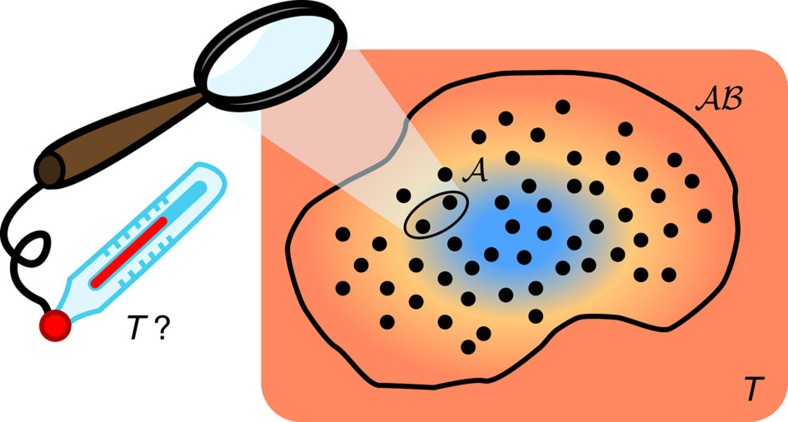
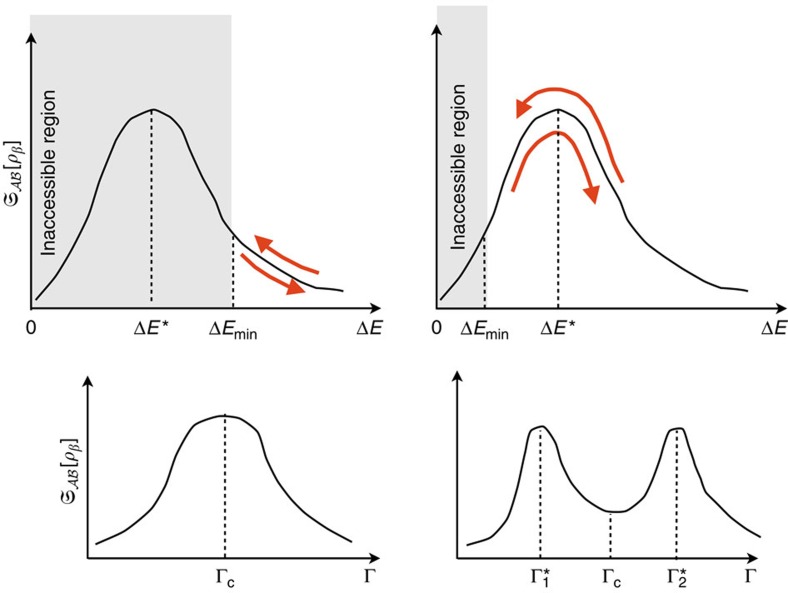
Thermodynamics relies on the possibility to describe systems composed of a large number of constituents in terms of few macroscopic variables. Its foundations are rooted into the paradigm of statistical mechanics, where thermal properties originate from averaging procedures which smoothen out local details. While undoubtedly successful, elegant and formally correct, this approach carries over an operational problem, namely determining the precision at which such variables are inferred, when technical/practical limitations restrict our capabilities to local probing. Here we introduce the local quantum thermal susceptibility, a quantifier for the best achievable accuracy for temperature estimation via local measurements. Our method relies on basic concepts of quantum estimation theory, providing an operative strategy to address the local thermal response of arbitrary quantum systems at equilibrium. At low temperatures, it highlights the local distinguishability of the ground state from the excited sub-manifolds, thus providing a method to locate quantum phase transitions.
Overview
The claims and statistics of this paper haven’t been checked yet.
Free: it reads the open-access text and checks the first 5 claims that cite a source we can check. Create a free account to check every claim.
Integrity signals
Registry
Cites
Statistics
Figures
Verification
Claims the paper makes
The claims and statistics of this paper haven’t been checked yet.
Free: it reads the open-access text and checks the first 5 claims that cite a source we can check. Create a free account to check every claim.
Claims other papers make about this one
Each is checked against this paper’s own text: does it say what the citing paper says it does?
In the citing paper
“For a system of which the Hamiltonian has no interaction terms, the relation above still holds for its subsystems [102].”
From Quantum Fisher information matrix and multiparameter estimation (2020) · cites this paper as [102]
Self-check
Percentages, sums and reported differences re-computed from the paper’s own numbers.
The self-check needs the paper’s full text.
Citations
Cites
Non-adiabatic crossing of energy levels
Zener, C. (1932) · Proceedings of the Royal Society of London Series A Containing Papers of a Mathematical and Physical Character · doi:10.1098/rspa.1932.0165 · Cited by 4,572
Giovannetti, V., Lloyd, S., & Maccone, L. (2011) · Nature Photonics · doi:10.1038/nphoton.2011.35 · Cited by 3,894
Self-citationSachdev, S. (2000) · Cambridge University Press eBooks · doi:10.1017/cbo9780511622540 · Cited by 3,408
Statistical distance and the geometry of quantum states
Braunstein, S. L., & Caves, C. M. (1994) · Physical Review Letters · doi:10.1103/physrevlett.72.3439 · Cited by 3,176
Bhatia, R. (1996) · Cited by 2,847
Bhatia, R. (1997) · Graduate Texts in Mathematics · doi:10.1007/978-1-4612-0653-8 · Cited by 2,336
Nanometre-scale thermometry in a living cell
Kucsko, G., Maurer, P. C., Yao, N. Y., Kubo, M., Noh, H. J., Lo, P. K., Park, H., & Lukin, M. D. (2013) · Nature · doi:10.1038/nature12373 · Cited by 1,951 · cited 13×
“Therefore, both the heat capacity of the global system5,6 and the LQTS of its subsystems are expected to be extremely sensitive to the presence of critical regions in the Hamiltonian parameter space.”
BackgroundInfluentialFidelity for Mixed Quantum States
Jozsa, R. (1994) · Journal of Modern Optics · doi:10.1080/09500349414552171 · Cited by 1,911
Mathematical Methods of Statistics.
David, F. N., & Cramer, H. (1947) · Biometrika · doi:10.2307/2332454 · Cited by 1,769
The ‘transition probability’ in the state space of a—algebra
Uhlmann, A. (1976) · Reports on Mathematical Physics · doi:10.1016/0034-4877(76)90060-4 · Cited by 1,649
Quantum estimation for quantum technology
PARIS, M. G. A. (2009) · International Journal of Quantum Information · doi:10.1142/s0219749909004839 · Cited by 1,632 · cited 2×
“We then observe that, by construction, the vector |rbi of equation (4), besides being a purification of rb, is also a particular purification of rb .”
BackgroundMathematical Methods of Statistics (PMS-9)
Cramér, H. (1946) · Princeton University Press eBooks · doi:10.1515/9781400883868 · Cited by 1,330
Colloquium: Quantum fluctuation relations: Foundations and applications
Campisi, M., Hänggi, P., & Talkner, P. (2011) · Reviews of Modern Physics · doi:10.1103/revmodphys.83.771 · Cited by 1,275
Opportunities for mesoscopics in thermometry and refrigeration: Physics and applications
Giazotto, F., Heikkilä, T. T., Luukanen, A., Savin, A. M., & Pekola, J. P. (2006) · Reviews of Modern Physics · doi:10.1103/revmodphys.78.217 · Cited by 1,058
Leipnik, R. B., & Huang, K. (1964) · Journal of the American Statistical Association · doi:10.2307/2282652 · Cited by 940
Quantum Thermodynamics: A Dynamical Viewpoint
Kosloff, R. (2013) · Entropy · doi:10.3390/e15062100 · Cited by 837
(2004) · Lecture Notes in Physics · doi:10.1007/b98673 · Cited by 823
High-Precision Nanoscale Temperature Sensing Using Single Defects in Diamond
Neumann, P., Jakobi, I., Dolde, F., Burk, C., Reuter, R., Waldherr, G., Honert, J., Wolf, T., Brunner, A., Shim, J. H., et al. (2013) · Nano Letters · doi:10.1021/nl401216y · Cited by 785
Fundamental limitations for quantum and nanoscale thermodynamics
Horodecki, M., & Oppenheim, J. (2013) · Nature Communications · doi:10.1038/ncomms3059 · Cited by 780
Stability of quantum motion in chaotic and regular systems
Peres, A. (1984) · Physical Review A · doi:10.1103/physreva.30.1610 · Cited by 657
Carbon nanothermometer containing gallium
Gao, Y., & Bando, Y. (2002) · Nature · doi:10.1038/415599a · Cited by 560
Information-Theoretic Differential Geometry of Quantum Phase Transitions
Zanardi, P., Giorda, P., & Cozzini, M. (2007) · Physical Review Letters · doi:10.1103/physrevlett.99.100603 · Cited by 506 · cited 6×
“which can be cast into equation (5) by simply exploiting the fact that the system is symmetric with respect to the exchange of AB with A0B0.”
BackgroundInfluentialQuantum Thermodynamics: Emergence of Thermodynamic Behavior Within Composite Quantum Systems
Gemmer, J., Michel, M., & Mahler, G. (2004) · Lecture Notes in Physics · doi:10.1007/b98082 · Cited by 355
Quantum criticality as a resource for quantum estimation
Zanardi, P., Paris, M. G. A., & Campos Venuti, L. (2008) · Physical Review A · doi:10.1103/physreva.78.042105 · Cited by 314
Individual Quantum Probes for Optimal Thermometry
Correa, L. A., Mehboudi, M., Adesso, G., & Sanpera, A. (2015) · Physical Review Letters · doi:10.1103/physrevlett.114.220405 · Cited by 306
A Different Approach to Nanothermodynamics
Hill, T. L. (2001) · Nano Letters · doi:10.1021/nl010027w · Cited by 260 · cited 1×
“Moreover, it enables to rewrite the LQTS in equation (15) as”
BackgroundStatistical Mechanics, 2nd Edition
Huang, K. (1963) · Cited by 208
Thermodynamics of small systems
Amar, H. (1965) · Journal of the Franklin Institute · doi:10.1016/0016-0032(65)90349-2 · Cited by 189
Unknown Quantum States and Operations, a Bayesian View
Fuchs, C. A., & Schack, R. (2004) · arXiv (Cornell University) · doi:10.48550/arxiv.quant-ph/0404156 · Cited by 181
Extraction of Work from a Single Thermal Bath in the Quantum Regime
Allahverdyan, A. E., & Nieuwenhuizen, T. M. (2000) · Physical Review Letters · doi:10.1103/physrevlett.85.1799 · Cited by 179
Nieuwenhuizen, T. M., & Allahverdyan, A. E. (2002) · Physical Review E · doi:10.1103/physreve.66.036102 · Cited by 163
Kliesch, M., Gogolin, C., Kastoryano, M. J., Riera, A., & Eisert, J. (2014) · MPG.PuRe (Max Planck Society) · doi:10.17169/refubium-21442 · Cited by 144
Quantum metrology in Lipkin-Meshkov-Glick critical systems
Salvatori, G., Mandarino, A., & Paris, M. G. A. (2014) · Physical Review A · doi:10.1103/physreva.90.022111 · Cited by 136
Spin Gradient Thermometry for Ultracold Atoms in Optical Lattices
Weld, D. M., Medley, P., Miyake, H., Hucul, D., Pritchard, D. E., & Ketterle, W. (2009) · Physical Review Letters · doi:10.1103/physrevlett.103.245301 · Cited by 128
Stace, T. M. (2010) · Physical Review A · doi:10.1103/physreva.82.011611 · Cited by 122
Bures metric over thermal state manifolds and quantum criticality
Zanardi, P., Campos Venuti, L., & Giorda, P. (2007) · Physical Review A · doi:10.1103/physreva.76.062318 · Cited by 118
Qubit thermometry for micromechanical resonators
Brunelli, M., Olivares, S., & Paris, M. G. A. (2011) · Physical Review A · doi:10.1103/physreva.84.032105 · Cited by 116 · cited 10×
“Multiplying equation (23) by X 1 on the right side and repeating the same operation on the left side, we get:”
BackgroundInfluentialExistence of Temperature on the Nanoscale
Hartmann, M., Mahler, G., & Hess, O. (2004) · Physical Review Letters · doi:10.1103/physrevlett.93.080402 · Cited by 99
Qubit-assisted thermometry of a quantum harmonic oscillator
Brunelli, M., Olivares, S., Paternostro, M., & Paris, M. G. A. (2012) · Physical Review A · doi:10.1103/physreva.86.012125 · Cited by 88
Precision measurements of temperature and chemical potential of quantum gases
Marzolino, U., & Braun, D. (2013) · Physical Review A · doi:10.1103/physreva.88.063609 · Cited by 75
Thermometry precision in strongly correlated ultracold lattice gases
Mehboudi, M., Moreno-Cardoner, M., Chiara, G. D., & Sanpera, A. (2015) · New Journal of Physics · doi:10.1088/1367-2630/17/5/055020 · Cited by 74
System-bath entanglement in quantum thermodynamics
Hilt, S., & Lutz, E. (2009) · Physical Review A · doi:10.1103/physreva.79.010101 · Cited by 63
Testing the violation of the Clausius inequality in nanoscale electric circuits
ALLAHVERDYAN, A. E., & Nieuwenhuizen, T. M. (2002) · Physical review. B, Condensed matter · doi:10.1103/physrevb.66.115309 · Cited by 61
Single Quantum Dot as an Optical Thermometer for Millikelvin Temperatures
Haupt, F., Imamoglu, A., & Kroner, M. (2014) · Physical Review Applied · doi:10.1103/physrevapplied.2.024001 · Cited by 48
Local versus global thermal states: Correlations and the existence of local temperatures
Hartmann, M. J., Günter Mahler, A., & Hess, O. G. (2004) · Physical Review E · doi:10.1103/physreve.70.066148 · Cited by 40
Intensive temperature and quantum correlations for refined quantum measurements
Ferraro, A., García-Sáez, A., & Acín, A. (2012) · Europhysics Letters (EPL) · doi:10.1209/0295-5075/98/10009 · Cited by 31
Measurable consequences of the local breakdown of the concept of temperature
Hartmann, M. J., & Mahler, G. (2005) · Europhysics Letters (EPL) · doi:10.1209/epl/i2004-10518-5 · Cited by 29
Seilmeier, F., Hauck, M., Schubert, E., Schinner, G. J., Beavan, S. E., & Högele, A. (2014) · Physical Review Applied · doi:10.1103/physrevapplied.2.024002 · Cited by 27
Local temperature in quantum thermal states
García-Sáez, A., Ferraro, A., & Acín, A. (2009) · Physical Review A · doi:10.1103/physreva.79.052340 · Cited by 26
Quantum interferometric measurements of temperature
Jarzyna, M., & Zwierz, M. (2015) · Physical Review A · doi:10.1103/physreva.92.032112 · Cited by 23
Effective thermodynamics of strongly coupled qubits
Williams, N. S., Hur, K. L., & Jordan, A. N. (2011) · Journal of Physics A Mathematical and Theoretical · doi:10.1088/1751-8113/44/38/385003 · Cited by 23
Cited by
Quantum Fisher information matrix and multiparameter estimation
Liu, J., Yuan, H., Lu, X.-M., & Wang, X. (2020) · Journal of Physics A: Mathematical and Theoretical · doi:10.1088/1751-8121/ab5d4d · Cited by 802
“For a system of which the Hamiltonian has no interaction terms, the relation above still holds for its subsystems [102].”
BackgroundGeometry of quantum phase transitions
Carollo, A., Valenti, D., & Spagnolo, B. (2020) · Physics Reports · doi:10.1016/j.physrep.2019.11.002 · Cited by 192
“Quantum parameter estimation finds applications in a wide variety of fields, from fundamental physics [292, 293, 294, 295, 296], to gravitational wave interferometry [297, 298], thermometry [299, 300], spectroscopy [301, 302], imaging [303, 304, 305], to name a few.”
BackgroundThermometry in the quantum regime: recent theoretical progress
Mehboudi, M., Sanpera, A., & Correa, L. A. (2019) · Journal of Physics A: Mathematical and Theoretical · doi:10.1088/1751-8121/ab2828 · Cited by 189
Quantum thermal machines and batteries
Bhattacharjee, S., & Dutta, A. (2021) · The European Physical Journal B · doi:10.1140/epjb/s10051-021-00235-3 · Cited by 183
Genuine quantum correlations in quantum many-body systems: a review of recent progress
De Chiara, G., & Sanpera, A. (2018) · Reports on Progress in Physics · doi:10.1088/1361-6633/aabf61 · Cited by 171
Metadata
- Authors
- De Pasquale, A., Rossini, D., Fazio, R., & Giovannetti, V.
- Affiliations
- Scuola Normale Superiore (IT)
- Venue
- Nature Communications
- Published
- 2016-09-29
- Volume
- 7
- Issue
- 1
- Pages
- 12782-12782
- ISSN
- 2041-1723 (ISSN-L)
- PMC
- PMC5056999
- OpenAlex
- W2413286105
- Cited by
- 113
- References
- 52
- Citations by year
- 2026: 4 · 2025: 6 · 2024: 8 · 2023: 11 · 2022: 12 · 2021: 14 · 2020: 11 · 2019: 21 · 2018: 15 · 2017: 8 · 2016: 1
- FWCI
- 7.09
- Type
- journal article
- Language
- en
- Open access
- gold
- doi.org
- Licence
- cc-by
- creativecommons.org/licenses/by/4.0 (tdm)
- creativecommons.org/licenses/by/4.0 (vor)
- Locations
- Nature Communications (publishedVersion, cc-by)
- Europe PMC (PubMed Central) (publishedVersion, cc-by)
- PubMed Central (publishedVersion, cc-by)
- PubMed (publishedVersion)
- arXiv (Cornell University) (submittedVersion)
- RePEc: Research Papers in Economics (submittedVersion)
- CINECA IRIS Institutial research information system (University of Pisa) (submittedVersion, cc-by)
- DOAJ (DOAJ: Directory of Open Access Journals) (submittedVersion, cc-by-sa)
- Scuola Normale Superiore di Pisa (submittedVersion, cc-by)
- arXiv (Cornell University)
- Funders
- Ministero dell’Istruzione, dell’Università e della Ricerca (RBFR12NLNA)
- Topics
- Physical Sciences › Physics and Astronomy › Atomic and Molecular Physics, and Optics › Quantum many-body systems
- Physical Sciences › Physics and Astronomy › Atomic and Molecular Physics, and Optics › Quantum Information and Cryptography
- Physical Sciences › Physics and Astronomy › Statistical and Nonlinear Physics › Advanced Thermodynamics and Statistical Mechanics
- Keywords
- temperature estimation, quantum estimation theory, quantum phase transitions, quantum thermodynamics, local measurements
About these checks
Registry, retraction, Cites and statistics results are computed, not judged, with one exception: a printed reference that no index lists is read once by a model before it counts as a citation error. Claims are extracted by a model and kept only when their quote appears verbatim in the text; each cited source is then checked, with a model’s help, for whether it says what the claim relies on. Those verdicts can be wrong — read the claim’s quote and the cited source before relying on one.
Statistics and arithmetic are recomputed, not judged.
Confidence bands are shown only for fields calibrated on our annotated test set. None is calibrated yet, so no band is shown.
What counts as a claim ›How we measure confidence ›How we check this ›
Are you an author, or do you see a problem with this page? Request a review
Data sources
Bibliographic data: Semantic Scholar, OpenAlex, Crossref.
Contains information from the Semantic Scholar Academic Graph Datasets, made available under the ODC Attribution License (ODC-BY 1.0).
Semantic Scholar’s data is described in: Kinney, R., et al. (2023). The Semantic Scholar Open Data Platform. arXiv:2301.10140.
