

Adding control to arbitrary unknown quantum operations
Open accessThe DOI matches its Crossref record; 42 of the 42 references it cites were found in a registry or an index.
Abstract
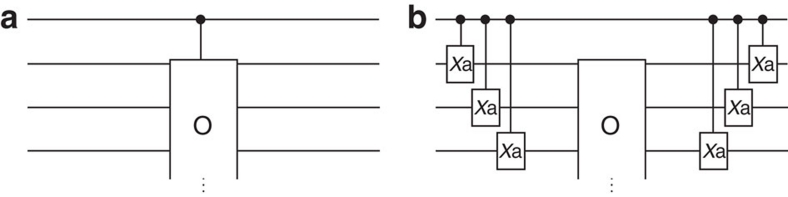
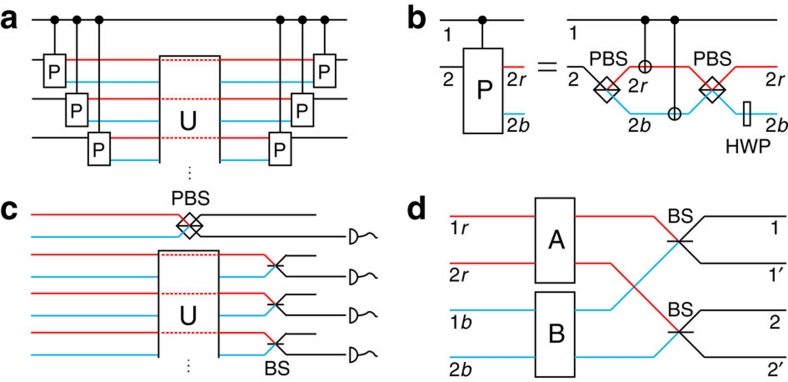
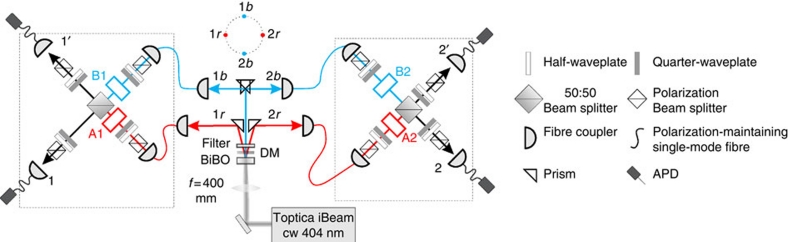
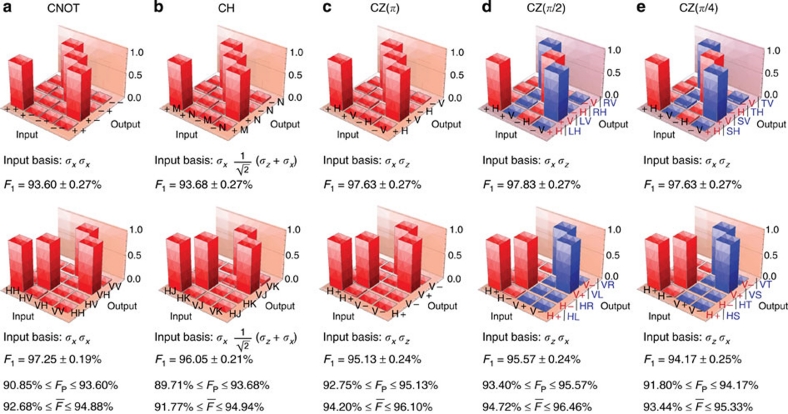
Although quantum computers promise significant advantages, the complexity of quantum algorithms remains a major technological obstacle. We have developed and demonstrated an architecture-independent technique that simplifies adding control qubits to arbitrary quantum operations—a requirement in many quantum algorithms, simulations and metrology. The technique, which is independent of how the operation is done, does not require knowledge of what the operation is, and largely separates the problems of how to implement a quantum operation in the laboratory and how to add a control. Here, we demonstrate an entanglement-based version in a photonic system, realizing a range of different two-qubit gates with high fidelity. Quantum computing has advantages over conventional computing, but the complexity of quantum algorithms creates technological challenges. Here, an architecture-independent technique, that simplifies adding control qubits to arbitrary quantum operations, is developed and demonstrated.
Overview
The claims and statistics of this paper haven’t been checked yet.
Free: it reads the open-access text and checks the first 5 claims that cite a source we can check. Create a free account to check every claim.
Integrity signals
Registry
Cites
Statistics
Figures
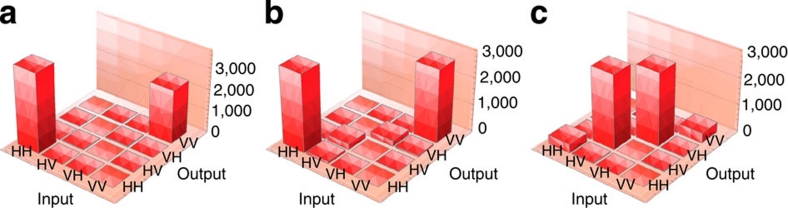
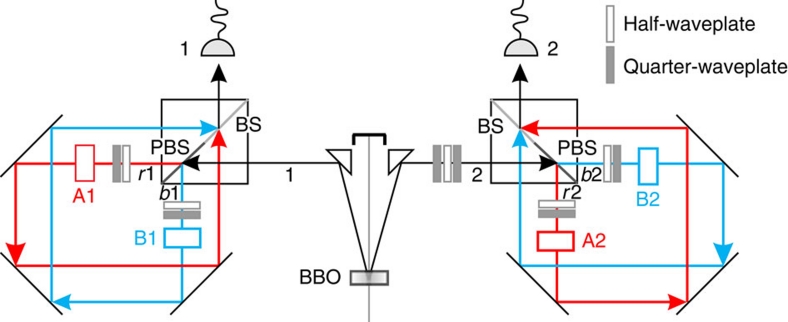
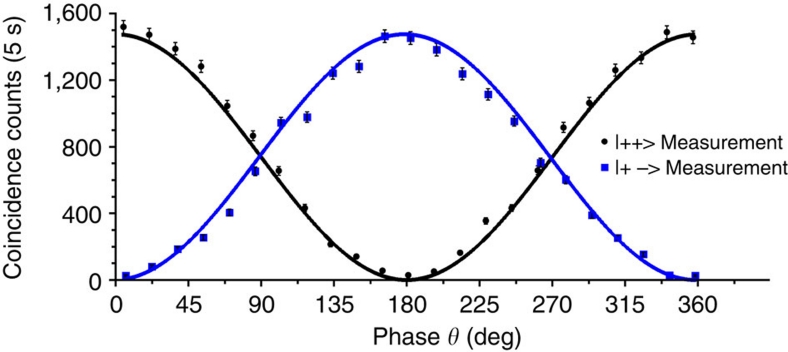
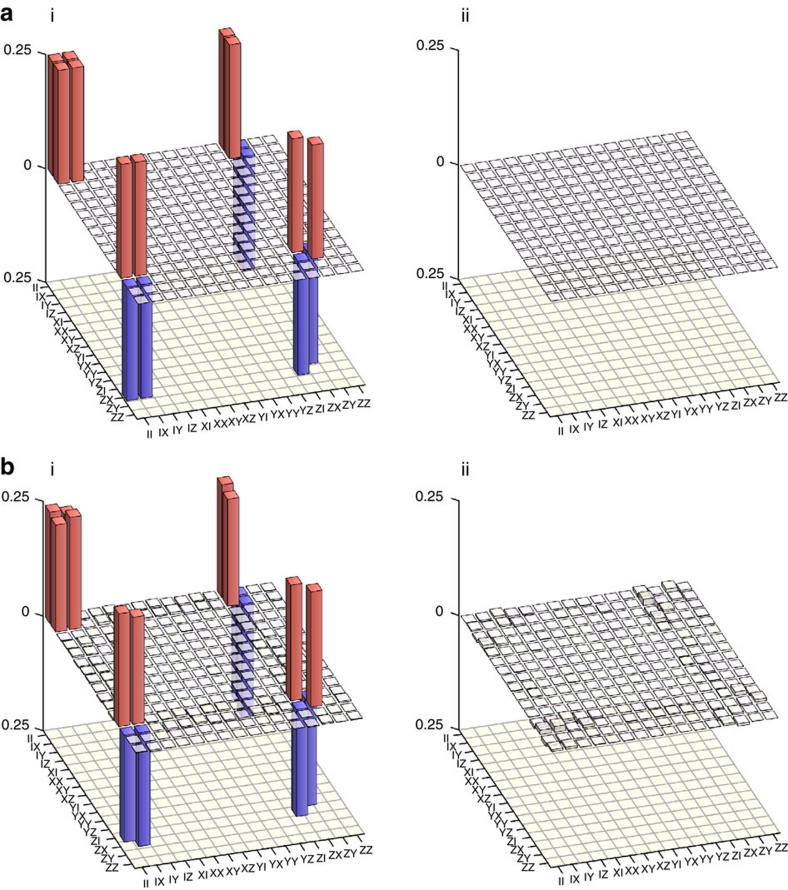
Verification
Claims the paper makes
The claims and statistics of this paper haven’t been checked yet.
Free: it reads the open-access text and checks the first 5 claims that cite a source we can check. Create a free account to check every claim.
Claims other papers make about this one
Each is checked against this paper’s own text: does it say what the citing paper says it does?
The source backs part of the claim, not all of it — or backs it for a different population, condition or comparison.
In the citing paper
“In principle, efficient quantum computation can be achieved using single-photon sources, linear optics, and single-photon detectors [25, 29, 30].”
From Experimental Quantum Computing to Solve Systems of Linear Equations (2013) · cites this paper as [25]
Experimental — accuracy not yet measuredIn the citing paper
“The technique of coherently controlling multiple qubits and executing complex, multiple-gate quantum circuits presents an advance on linear optics quantum computation [21, 25] and allows to test other similar quantum algorithms such as solving differential equations [26, 27] and data fitting [28].”
From Experimental Quantum Computing to Solve Systems of Linear Equations (2013) · cites this paper as [25]
Self-check
Percentages, sums and reported differences re-computed from the paper’s own numbers.
The self-check needs the paper’s full text.
Citations
Cites
Quantum Computation and Quantum Information
Nielsen, M. A., Chuang, I., & Grover, L. K. (2002) · American Journal of Physics · doi:10.1119/1.1463744 · Cited by 21,895
Quantum computation and quantum information
Law, J. (2001) · ACM SIGSOFT Software Engineering Notes · doi:10.1145/505482.505499 · Cited by 18,842
Algorithms for quantum computation: discrete logarithms and factoring
Shor, P. W. (2002) · Proceedings 35th Annual Symposium on Foundations of Computer Science · doi:10.1109/sfcs.1994.365700 · Cited by 8,713
Gisin, N., Ribordy, G., Tittel, W., & Zbinden, H. (2002) · Reviews of Modern Physics · doi:10.1103/revmodphys.74.145 · Cited by 8,515
Simulating physics with computers
Feynman, R. P. (1982) · International Journal of Theoretical Physics · doi:10.1007/bf02650179 · Cited by 7,691
A scheme for efficient quantum computation with linear optics
Knill, E., Laflamme, R., & Milburn, G. J. (2001) · Nature · doi:10.1038/35051009 · Cited by 5,880 · cited 1×
“This entanglement-based scheme would be useful for small-scale applications as well as subroutines in larger calculations, and it could be made deterministic, following the original prescription for linear optical quantum computatio”
MethodRaussendorf, R., & Briegel, H. J. (2001) · Physical Review Letters · doi:10.1103/physrevlett.86.5188 · Cited by 4,477 · cited 1×
“We then show that the equivalent operation can be achieved by exploiting an entangled initial state—reminiscent, but distinct from, cluster state quantum computin”
BackgroundQuantum Mechanics Helps in Searching for a Needle in a Haystack
Grover, L. K. (1997) · Physical Review Letters · doi:10.1103/physrevlett.79.325 · Cited by 4,306 · cited 1×
“Then two spatial modes 1r,1b (2r,2b) of photon 1 (2) are combined at a Bs.”
BackgroundLadd, T. D., Jelezko, F., Laflamme, R., Nakamura, Y., Monroe, C., & O’Brien, J. L. (2010) · Nature · doi:10.1038/nature08812 · Cited by 3,592
Self-citationHansen, H. M., Hurwitz, W. N., & Madow, W. G. (1953) · Wiley eBooks · Cited by 1,614
Cited by
A variational eigenvalue solver on a photonic quantum processor
Peruzzo, A., McClean, J., Shadbolt, P., Yung, M.-H., Zhou, X.-Q., Love, P. J., Aspuru-Guzik, A., & O’Brien, J. L. (2014) · Nature Communications · doi:10.1038/ncomms5213 · Cited by 4,552
Self-citationPhotonic quantum information processing: a concise review
Slussarenko, S., & Pryde, G. J. (2019) · Applied Physics Reviews · doi:10.1063/1.5115814 · Cited by 644
Large-scale silicon quantum photonics implementing arbitrary two-qubit processing
Qiang, X., Zhou, X., Wang, J., Wilkes, C. M., Loke, T., O’Gara, S., Kling, L., Marshall, G. D., Santagati, R., Ralph, T. C., et al. (2018) · Nature Photonics · doi:10.1038/s41566-018-0236-y · Cited by 516
Self-citationQuantum-assisted quantum compiling
Khatri, S., LaRose, R., Poremba, A., Cincio, L., Sornborger, A. T., & Coles, P. J. (2019) · Quantum · doi:10.22331/q-2019-05-13-140 · Cited by 382
Experimental realization of Shor's quantum factoring algorithm using qubit recycling
Martín-López, E., Laing, A., Lawson, T., Alvarez, R., Zhou, X.-Q., & O'Brien, J. L. (2012) · Nature Photonics · doi:10.1038/nphoton.2012.259 · Cited by 349
“The eCNOT gate is driven by pre-entanglement 24 from the polarisation entangled SPDC source in the state | 1 H,U (cid:105) | 1 H,L (cid:105) + | 1 V,U (cid:105) | 1 V,L (cid:105) (where H/V denotes horizontally/vertically polarised light and U/L denotes upper/lower path) which is then converted to…”
BackgroundMethodSelf-citationExperimental superposition of orders of quantum gates
Procopio, L. M., Moqanaki, A., Araújo, M., Costa, F., Alonso Calafell, I., Dowd, E. G., Hamel, D. R., Rozema, L. A., Brukner, Č., & Walther, P. (2015) · Nature Communications · doi:10.1038/ncomms8913 · Cited by 309
“The use of multiple degrees of freedom of a single photon is a well-known tool in photonic quantum computing, which has allowed for many high-precision implementations of quantum information protocols [16–19].”
MethodComputational Advantage from Quantum-Controlled Ordering of Gates
Araújo, M., Costa, F., & Brukner, Č. (2014) · Physical Review Letters · doi:10.1103/physrevlett.113.250402 · Cited by 293
“This algorithm is not usually applied to blackbox unitaries, but this can be done us-ing the techniques in [ 8 – 10 ].”
BackgroundMethodExperimental verification of an indefinite causal order
Rubino, G., Rozema, L. A., Feix, A., Araújo, M., Zeuner, J. M., Procopio, L. M., Brukner, Č., & Walther, P. (2017) · Science Advances · doi:10.1126/sciadv.1602589 · Cited by 265
Experimental quantum Hamiltonian learning
Wang, J., Paesani, S., Santagati, R., Knauer, S., Gentile, A. A., Wiebe, N., Petruzzella, M., O’Brien, J. L., Rarity, J. G., Laing, A., et al. (2017) · Nature Physics · doi:10.1038/nphys4074 · Cited by 247
“Then the idler photon is prepared in the state |ψi〉 and undergoes an arbitrary unitary evolution, Û or V̂, conditional upon the logical state of the signal photon [29].”
BackgroundSelf-citationWitnessing eigenstates for quantum simulation of Hamiltonian spectra
Santagati, R., Wang, J., Gentile, A. A., Paesani, S., Wiebe, N., McClean, J. R., Morley-Short, S., Shadbolt, P. J., Bonneau, D., Silverstone, J. W., et al. (2018) · Science Advances · doi:10.1126/sciadv.aap9646 · Cited by 211
Self-citationExperimental Quantum Computing to Solve Systems of Linear Equations
Cai, X.-D., Weedbrook, C., Su, Z.-E., Chen, M.-C., Gu, M., Zhu, M.-J., Li, L., Liu, N.-L., Lu, C.-Y., & Pan, J.-W. (2013) · Physical Review Letters · doi:10.1103/physrevlett.110.230501 · Cited by 173
Patel, R. B., Ho, J., Ferreyrol, F., Ralph, T. C., & Pryde, G. J. (2016) · Science Advances · doi:10.1126/sciadv.1501531 · Cited by 156
Self-citationEfficient Quantum Algorithms for GHZ and W States, and Implementation on the IBM Quantum Computer
Cruz, D., Fournier, R., Gremion, F., Jeannerot, A., Komagata, K., Tosic, T., Thiesbrummel, J., Chan, C. L., Macris, N., Dupertuis, M., et al. (2019) · Advanced Quantum Technologies · doi:10.1002/qute.201900015 · Cited by 126
Quantum circuits cannot control unknown operations
Araújo, M., Feix, A., Costa, F., & Brukner, Č. (2014) · New Journal of Physics · doi:10.1088/1367-2630/16/9/093026 · Cited by 119
Quantum Krylov subspace algorithms for ground- and excited-state energy estimation
Cortes, C. L., & Gray, S. K. (2022) · Physical Review A · doi:10.1103/physreva.105.022417 · Cited by 175
Communication through coherent control of quantum channels
Abbott, A. A., Wechs, J., Horsman, D., Mhalla, M., & Branciard, C. (2020) · Quantum · doi:10.22331/q-2020-09-24-333 · Cited by 169
Implementing quantum control for unknown subroutines
Friis, N., Dunjko, V., Dür, W., & Briegel, H. J. (2014) · Physical Review A · doi:10.1103/physreva.89.030303 · Cited by 121
Efficient quantum walk on a quantum processor
Qiang, X., Loke, T., Montanaro, A., Aungskunsiri, K., Zhou, X., O’Brien, J. L., Wang, J. B., & Matthews, J. C. F. (2016) · Nature Communications · doi:10.1038/ncomms11511 · Cited by 108
“We built a configurable two-qubit photonics quantum processor (Figure 2(C)), adapting the entanglementbased technique presented in [49], and implemented CTQWs onK4 graph with various evolving times and initial states.”
MethodSelf-citationA two-qubit photonic quantum processor and its application to solving systems of linear equations
Barz, S., Kassal, I., Ringbauer, M., Lipp, Y. O., Dakić, B., Aspuru-Guzik, A., & Walther, P. (2014) · Scientific Reports · doi:10.1038/srep06115 · Cited by 100
Communication through coherent control of quantum channelsPreprint
Abbott, A. A., Wechs, J., Horsman, D. C., Mhalla, M., & Branciard, C. (2018) · Cited by 94
Advances in Silicon Quantum Photonics
Adcock, J. C., Bao, J., Chi, Y., Chen, X., Bacco, D., Gong, Q., Oxenløwe, L. K., Wang, J., & Ding, Y. (2020) · IEEE Journal of Selected Topics in Quantum Electronics · doi:10.1109/jstqe.2020.3025737 · Cited by 105
Emulating quantum cubic nonlinearity
Yukawa, M., Miyata, K., Yonezawa, H., Marek, P., Filip, R., & Furusawa, A. (2013) · Physical Review A · doi:10.1103/physreva.88.053816 · Cited by 78
Causal Boxes: Quantum Information-Processing Systems Closed under Composition
Portmann, C., Matt, C., Maurer, U. M., Renner, R., & Tackmann, B. (2017) · IEEE Transactions on Information Theory · doi:10.1109/tit.2017.2676805 · Cited by 93
“8 1.5 Related work . . . . . 10 1.6 Structure of this paper 11”
InfluentialCoherent controlization using superconducting qubits
Friis, N., Melnikov, A. A., Kirchmair, G., & Briegel, H. J. (2015) · Scientific Reports · doi:10.1038/srep18036 · Cited by 72
Creating a Superposition of Unknown Quantum States
Oszmaniec, M., Grudka, A., Horodecki, M., & Wójcik, A. (2016) · Physical Review Letters · doi:10.1103/physrevlett.116.110403 · Cited by 76
Demon-like algorithmic quantum cooling and its realization with quantum optics
Xu, J.-S., Yung, M.-H., Xu, X.-Y., Boixo, S., Zhou, Z.-W., Li, C.-F., Aspuru-Guzik, A., & Guo, G.-C. (2014) · Nature Photonics · doi:10.1038/nphoton.2013.354 · Cited by 70
Quantum inverse iteration algorithm for programmable quantum simulators
Kyriienko, O. (2020) · npj Quantum Information · doi:10.1038/s41534-019-0239-7 · Cited by 86
Efficient Experimental Estimation of Fidelity of Linear Optical Quantum Toffoli Gate
Mičuda, M., Sedlák, M., Straka, I., Miková, M., Dušek, M., Ježek, M., & Fiurášek, J. (2013) · Physical Review Letters · doi:10.1103/physrevlett.111.160407 · Cited by 69
Quantum plug n’ play: modular computation in the quantum regime
Thompson, J. E., Modi, K. K., Vedral, V., & Gu, M. (2017) · New Journal of Physics · doi:10.1088/1367-2630/aa99b3 · Cited by 74
Calculating unknown eigenvalues with a quantum algorithm
Zhou, X.-Q., Kalasuwan, P., Ralph, T. C., & O'Brien, J. L. (2013) · Nature Photonics · doi:10.1038/nphoton.2012.360 · Cited by 58
Self-citationQuantum Data Compression of a Qubit Ensemble
Rozema, L. A., Mahler, D. H., Hayat, A., Turner, P. S., & Steinberg, A. M. (2014) · Physical Review Letters · doi:10.1103/physrevlett.113.160504 · Cited by 72
The resurgence of the linear optics quantum interferometer — recent advances & applications
Tan, S.-H., & Rohde, P. P. (2019) · Reviews in Physics · doi:10.1016/j.revip.2019.100030 · Cited by 64
Higher-Order Quantum OperationsPreprint
Taranto, P., Milz, S., Murao, M., Quintino, M. T., & Modi, K. K. (2025) · arXiv (Cornell University) · doi:10.48550/arxiv.2503.09693 · Cited by 71
Experimental aspects of indefinite causal order in quantum mechanics
Rozema, L. A., Strömberg, T., Cao, H., Guo, Y., Liu, B., & Walther, P. J. (2024) · Nature Reviews Physics · doi:10.1038/s42254-024-00739-8 · Cited by 83
“[21] where the authors experimentally transformed a black-box unitary into a controlled version of itself (Fig.”
Quantum operations with indefinite time direction
Chiribella, G., & Liu, Z. (2022) · Communications Physics · doi:10.1038/s42005-022-00967-3 · Cited by 52
“A similar situation arises in the implementation of controlled gates of the form I⊗|0〉〈0|+U ⊗|1〉〈1|, which are often used in quantum computing: while such gates cannot be synthesised from an unknown and uncontrolled gate U [51–53], they can be directly realised with photons [54] and ions [55] by taking advantage of na…”
BackgroundHigh Performance Quantum Modular MultipliersPreprint
Rines, R., & Chuang, I. L. (2018) · arXiv (Cornell University) · doi:10.48550/arxiv.1801.01081 · Cited by 59
“This methodology generally requires an additional qubit register serving as an auxiliary “quantum cache” [26]; however, in the case of in-place quantum multiplication, we can bypass this requirement at the cost of O(n) additional Fredkin [27] (controlled-swap) gates.”
MethodVariational quantum process tomography of unitaries
Xue, S., Liu, Y., Wang, Y., Zhu, P., Guo, C., & Wu, J. (2022) · Physical Review A · doi:10.1103/physreva.105.032427 · Cited by 49
High-capacity device-independent quantum secure direct communication based on hyper-encoding
Zeng, H. J., Du, M., Zhong, W., Zhou, L., & Sheng, Y. (2023) · Fundamental Research · doi:10.1016/j.fmre.2023.11.006 · Cited by 55
“Hyper-encoding serves as a good testing platform for quantum information experiments, such as implementing quantum logic gates [53,54] , adding control to arbitrary quantum operations [55] , and implementing the high-capacity quantum secure communication [56–58] and quantum re-peaters [59,60] .”
Hamiltonian Operator Approximation for Energy Measurement and Ground-State Preparation
Bespalova, T. A., & Kyriienko, O. (2021) · PRX Quantum · doi:10.1103/prxquantum.2.030318 · Cited by 56
Highly Efficient Processing of Multi-photon States
Lin, Q., & He, B. (2015) · Scientific Reports · doi:10.1038/srep12792 · Cited by 43
Deterministic Hyperparallel Control Gates with Weak Kerr Effects
Du, F., Fan, G., Ren, X., & Ma, M. (2023) · Advanced Quantum Technologies · doi:10.1002/qute.202300201 · Cited by 41
Systematic Approaches for Precise and Approximate Quantum State Runtime Assertion
Liu, J., & Zhou, H. (2021) · IEEE International Symposium on High-Performance Computer Architecture (HPCA) · doi:10.1109/hpca51647.2021.00025 · Cited by 51
Linear Optical Universal Quantum Gates with Higher Success Probabilities
Liu, W., & Wei, H. (2023) · Advanced Quantum Technologies · doi:10.1002/qute.202300009 · Cited by 43
Vanrietvelde, A., Kristjánsson, H., & Barrett, J. (2021) · Quantum · doi:10.22331/q-2021-07-13-503 · Cited by 55
“Theorem 15.”
BackgroundMethodInfluentialA photonic entanglement filter with Rydberg atoms
Ye, G.-S., Xu, B., Chang, Y., Shi, S., Shi, T., & Li, L. (2023) · Nature Photonics · doi:10.1038/s41566-023-01194-0 · Cited by 44
“070(12) by more than one order of magnitude.”
BackgroundQuantum Computing with black-box SubroutinesPreprint
Thompson, J. E., Gu, M., Modi, K. K., & Vedral, V. (2013) · arXiv (Cornell University) · doi:10.48550/arxiv.1310.2927 · Cited by 40
Dong, Q., Nakayama, S., Soeda, A., & Murao, M. (2019) · arXiv (Cornell University) · doi:10.48550/arxiv.1911.01645 · Cited by 44
“For example, for optical interferometer systems, implementations of a controlled unitary operation are proposed using the vacuum degree of freedom [20, 21, 26].”
MethodWigner process tomography: Visualization of spin propagators and their spinor properties
Leiner, D., & Glaser, S. J. (2018) · Physical Review A · doi:10.1103/physreva.98.012112 · Cited by 33
Universal Quantum Multi‐Qubit Entangling Gates with Auxiliary Spaces
Liu, W., Wei, H., & Kwek, L. C. (2022) · Advanced Quantum Technologies · doi:10.1002/qute.202100136 · Cited by 35
High-dimensional quantum information processing on programmable integrated photonic chips
Chi, Y., Yu, Y., Gong, Q., & Wang, J. (2023) · Science China Information Sciences · doi:10.1007/s11432-022-3602-0 · Cited by 34
Control power of high-dimensional controlled dense coding
Duan, W.-X., & Wang, T.-J. (2022) · Physical Review A · doi:10.1103/physreva.105.052417 · Cited by 31
Highly stable polarization independent Mach-Zehnder interferometer
Mičuda, M., Doláková, E., Straka, I., Miková, M., Dušek, M., Fiurášek, J., & Ježek, M. (2014) · Review of Scientific Instruments · doi:10.1063/1.4891702 · Cited by 31
Quantum processing by remote quantum control
Qiang, X., Zhou, X., Aungskunsiri, K., Cable, H. V., & O’Brien, J. L. (2017) · Quantum Science and Technology · doi:10.1088/2058-9565/aa78d6 · Cited by 36
Self-citationQuantum parameter estimation on coherently superposed noisy channels
Chapeau‐Blondeau, F. (2021) · Physical Review A · doi:10.1103/physreva.104.032214 · Cited by 28
“For instance, in practice, based on the present analysis, a unitary process invincibly hidden in a fully depolarizing noise, could become amenable to estimation via its duplication and insertion in a interferometric setup as in [10, 11, 4] experimentally realizing the controlled coherent superposition.”
BackgroundReconfigurable controlled two-qubit operation on a quantum photonic chip
Li, H. W., Przeslak, S., Niskanen, A. O., Matthews, J. C. F., Politi, A., Shadbolt, P., Laing, A., Lobino, M., Thompson, M. G., & O’Brien, J. L. (2011) · New Journal of Physics · doi:10.1088/1367-2630/13/11/115009 · Cited by 34
Self-citationQuantum conditional operations
Bisio, A., Dall’Arno, M., & Perinotti, P. (2016) · Physical Review A · doi:10.1103/physreva.94.022340 · Cited by 26
Witnessing latent time correlations with a single quantum particle
Kristjánsson, H., Mao, W., & Chiribella, G. (2021) · Physical Review Research · doi:10.1103/physrevresearch.3.043147 · Cited by 24
High‐Fidelity and Low‐Cost Hyperparallel Quantum Gates for Photon Systems via Λ‐Type Systems
Du, F., Wu, Y., Fan, G., & Ma, Z. (2022) · Annalen der Physik · doi:10.1002/andp.202200507 · Cited by 22
Experimental realization of SWAP operation on hyper-encoded qubits
Stárek, R., Miková, M., Straka, I., Dušek, M., Ježek, M., Fiurášek, J., & Mičuda, M. (2018) · Optics Express · doi:10.1364/oe.26.008443 · Cited by 23
Experimental Demonstration of Input-Output Indefiniteness in a Single Quantum Device
Guo, Y., Liu, Z., Tang, H., Hu, X., Liu, B., Huang, Y., Li, C., Guo, G., & Chiribella, G. (2024) · Physical Review Letters · doi:10.1103/physrevlett.132.160201 · Cited by 23
Quantum Algorithm for Universal Implementation of the Projective Measurement of Energy
Nakayama, S., Soeda, A., & Murao, M. (2015) · Physical Review Letters · doi:10.1103/physrevlett.114.190501 · Cited by 31
Universal control of quantum processes using sector-preserving channels
Vanrietvelde, A., & Chiribella, G. (2021) · Quantum Information and Computation · doi:10.26421/qic21.15-16-5 · Cited by 21
“For example, photonic implementations [23, 24] achieve coherent control of certain optical devices, such as polarisation rotators, by exploiting the fact that such devices are passive, and therefore transform the vacuum state into itself.”
BackgroundAlternation in Quantum Programming: From Superposition of Data to Superposition of ProgramsPreprint
Ying, M., Yu, N., & Feng, Y. (2014) · arXiv (Cornell University) · doi:10.48550/arxiv.1402.5172 · Cited by 26
Modular quantum computation in a trapped ion system
Zhang, K., Thompson, J. E., Zhang, X., Shen, Y., Lu, Y., Zhang, S., Ma, J., Vedral, V., Gu, M., & Kim, K. (2019) · Nature Communications · doi:10.1038/s41467-019-12643-2 · Cited by 19
Are controlled unitaries helpful?Preprint
Tang, E., & Wright, J. (2025) · arXiv (Cornell University) · doi:10.48550/arxiv.2508.00055 · Cited by 21
Modern Quantum Theory: From Quantum Mechanics to Entanglement and Quantum Information
Bertlmann, R. A., & Friis, N. (2023) · doi:10.1093/oso/9780199683338.001.0001 · Cited by 52
Experimental superposition of a quantum evolution with its time reverse
Strömberg, T., Schiansky, P., Quintino, M. T., Antesberger, M., Rozema, L. A., Agresti, I., Brukner, Č., & Walther, P. J. (2024) · Physical Review Research · doi:10.1103/physrevresearch.6.023071 · Cited by 18
Enhanced Photonic Maxwell's Demon with Correlated Baths
Zanin, G. L., Antesberger, M., Jacquet, M. J., Ribeiro, P. H. S., Rozema, L. A., & Walther, P. J. (2022) · Quantum · doi:10.22331/q-2022-09-20-810 · Cited by 18
“For example, the photon that the demon subtracts could be used to trigger a unitary (and hence reversible) controlled-path gate [57] that operates on multiparticle input states.”
MethodSingle‐Photon Based Three‐Party Quantum Secure Direct Communication with Identity Authentication
Zhang, Q., Du, M., Zhong, W., Sheng, Y., & Zhou, L. (2023) · Annalen der Physik · doi:10.1002/andp.202300407 · Cited by 17
On the Definition of Quantum Programming Modules
Sánchez, P., & Alonso, D. (2021) · Applied Sciences · doi:10.3390/app11135843 · Cited by 22
“As long as the computation does not interfere with the relative phases of the output registers, the information can survive the uncompute step [30].”
BackgroundMethodExperimental investigation of a four-qubit linear-optical quantum logic circuit
Stárek, R., Mičuda, M., Miková, M., Straka, I., Dušek, M., Ježek, M., & Fiurášek, J. (2016) · Scientific Reports · doi:10.1038/srep33475 · Cited by 18
“Starting from the optimal witness (13) for the canonical GHZ state GHZ0 , and considering its application to the filtered state ρ, we arrive at the following witness for the original state ρ,”
BackgroundReassessing the computational advantage of quantum-controlled ordering of gates
Renner, M. J., & Brukner, Č. (2021) · Physical Review Research · doi:10.1103/physrevresearch.3.043012 · Cited by 16
Mapping indefinite causal order processes to composable quantum protocols in a spacetime
Salzger, M., & Vilasini, V. (2025) · New Journal of Physics · doi:10.1088/1367-2630/ad9d6f · Cited by 20
“For example, the coherently controlled application of an unknown unitary to a target system was shown to be impossible in theoretical formalisms that do not model the vacuum, but has been experimentally realised due to the physical possibility of such ‘vacuum’ superpositions [31, 32].”
Mansell, C., & Bergamini, S. (2014) · New Journal of Physics · doi:10.1088/1367-2630/16/5/053045 · Cited by 15
Learning the Structure of Any Hamiltonian from Minimal Assumptions
Zhao, A. (2025) · ACM Symposium on Theory of Computing (STOC) · doi:10.1145/3717823.3718115 · Cited by 37
“While various approaches for controlization have been proposed [51, 85, 33, 66, 30, 25], we employ the one described by Odake, Kristjánsson, Taranto, and Murao [69] due to its simplicity and universal applicability.”
Quantum communication through devices with indefinite input-output direction
Liu, Z., Yang, M., & Chiribella, G. (2023) · New Journal of Physics · doi:10.1088/1367-2630/acc8f2 · Cited by 20
Luo, M.-X., Li, H.-R., & Lai, H. (2016) · Scientific Reports · doi:10.1038/srep29939 · Cited by 14
Quantum Recursion and Second QuantisationPreprint
Ying, M. (2014) · arXiv (Cornell University) · doi:10.48550/arxiv.1405.4443 · Cited by 14
“. Furthermore, the single-step walk operatorWcan be seen as the quantum choice TL[p]⊕H[d] TR[p]. Recently, physicists have been very interested in implementing quantum control for unknown subroutines [23], [7], [12], which is essentially a quantum “if...then...else”or a quantum choice. 2.2 Quantum Case Statement and Q…”
BackgroundInfluentialDetecting the degree of macroscopic quantumness using an overlap measurement
Jeong, H., Noh, C., Bae, S., Angelakis, D. G., & Ralph, T. C. (2014) · Journal of the Optical Society of America B · doi:10.1364/josab.31.003057 · Cited by 16
Self-citationTopological obstructions to implementing controlled unknown unitariesPreprint
Gavorová, Z., Seidel, M., & Touati, Y. (2020) · arXiv (Cornell University) · Cited by 13
Verification of quantum-gate teleportation based on Bell nonlocality in a black-box scenario
Wang, Z.-Q., & Wang, T.-J. (2023) · Physical Review A · doi:10.1103/physreva.108.012434 · Cited by 12
Experimental ancilla-assisted phase estimation in a noisy channel
Sbroscia, M., Gianani, I., Mancino, L., Roccia, E., Huang, Z., Maccone, L., Macchiavello, C., & Barbieri, M. (2018) · Physical Review A · doi:10.1103/physreva.97.032305 · Cited by 12
Remote-controlled quantum computing by quantum entanglement
Wang, D., Liu, Y., Ding, J., Qiang, X., Liu, Y., Huang, A., Fu, X., Xu, P., Deng, M., Yang, X., et al. (2020) · Optics Letters · doi:10.1364/ol.401921 · Cited by 15
Quantum Generative Adversarial Networks in a Silicon Photonic Chip with Maximum Expressibility
Ma, H., Ye, L., Guo, X., Ruan, F., Zhao, Z., Li, M., Wang, Y., & Yang, J. (2024) · Advanced Quantum Technologies · doi:10.1002/qute.202400171 · Cited by 13
Optical parity gate and a wide range of entangled states generation
Lin, Q. (2014) · Science China Physics Mechanics and Astronomy · doi:10.1007/s11433-014-5620-0 · Cited by 9
Quantum context-aware recommendation systems based on tensor singular value decomposition
Wang, X., Gu, L., Lee, J. H. W., & Zhang, G. (2021) · Quantum Information Processing · doi:10.1007/s11128-021-03131-y · Cited by 15
“Specifically, based on themethod proposed in [61], the number of additional operations required to add a control to each U (m) SVE will generally be far less than the cost of the constructed U (m) SVE, so we next focus on estimating the cost of achieving U (m) SVE,m = 0, .”
MethodControlled beam splitter gate transparent to dominant ancilla errors
Pietikäinen, I., Černotík, O., Puri, S., Filip, R., & Girvin, S. M. (2022) · Quantum Science and Technology · doi:10.1088/2058-9565/ac760a · Cited by 12
Chardonnet, K., de Visme, M., Valiron, B., & Vilmart, R. (2025) · Logical Methods in Computer Science · doi:10.46298/lmcs-21(2:13)2025 · Cited by 9
“…quantum conditionals are known to be impossible to implement due to some no-go theorems [AFCB14], however, some implementations actually exists [ZRK + 11], this apparent contradiction can be solved by introducing a notion of sectors [VC21] to show that in the former the controlled operation was…”
Process-fidelity estimation of a linear optical quantum-controlled- Z gate: A comparative study
Mičuda, M., Sedlák, M., Straka, I., Miková, M., Dušek, M., Ježek, M., & Fiurášek, J. (2014) · Physical Review A · doi:10.1103/physreva.89.042304 · Cited by 10
Patel, R. B., Ho, J., Ferreyrol, F., Ralph, T. C., & Pryde, G. J. (2016) · Frontiers in Optics · doi:10.1364/fio.2016.ff1c.3 · Cited by 8
Self-citationGeneralized Indefinite Causal Orders in an Integrated Quantum Switch
Deng, Y., Liu, S., Chen, X., Fu, Z., Bao, J., Zheng, Y., Gong, Q., He, Q., & Wang, J. (2025) · Physical Review Letters · doi:10.1103/39vh-84n1 · Cited by 11
Programmable silicon-photonic quantum simulator based on a linear combination of unitaries
Yu, Y., Chi, Y., Zhai, C., Huang, J., Gong, Q., & Wang, J. (2024) · Photonics Research · doi:10.1364/prj.517294 · Cited by 8
Diagrammatic Reasoning with Control as a Constructor, Applications to Quantum Circuits
Delorme, N., & Perdrix, S. (2026) · Lecture notes in computer science · doi:10.1007/978-3-032-22730-0_12 · Cited by 7
Wave-Particle Duality Relation with a Quantum Which-Path Detector
Wang, D., Wu, J., Ding, J., Liu, Y., Huang, A., & Yang, X. (2021) · Entropy · doi:10.3390/e23010122 · Cited by 8
“According to the explanation for condition 1, when the HWP2 in Figure 2a is set as an arbitrary angle α, the propagation of the quanton photon is in the superposition between Figure 2b,c, This is shown as the superposition between the clockwise red lines and the counterclockwise blue lines inside the displaced Sagnac…”
MethodAssisted quantum simulation of open quantum systems
Liang, J., Lv, Q.-Q., Wang, Z., & Fei, S.-M. (2023) · iScience · doi:10.1016/j.isci.2023.106306 · Cited by 8
“In general, decomposing an arbitrary quantum circuit into a sequence of basic operations is a significant challenge [67].”
BackgroundExperimental superposition of time directionsPreprint
Strömberg, T., Schiansky, P., Quintino, M. T., Antesberger, M., Rozema, L. A., Agresti, I., Brukner, Č., & Walther, P. J. (2022) · arXiv (Cornell University) · doi:10.48550/arxiv.2211.01283 · Cited by 7
General quantum Bernoulli factory: framework analysis and experiments
Liu, Y., Jiang, J., Zhu, P., Wang, D., Ding, J., Qiang, X., Huang, A., Xu, P., Zhang, J., Tian, G., et al. (2021) · Quantum Science and Technology · doi:10.1088/2058-9565/ac2061 · Cited by 6
Efficient graph state generation and operation error detection with a controlled-path gate
Lin, Q., & He, B. (2013) · Journal of Physics B Atomic Molecular and Optical Physics · doi:10.1088/0953-4075/46/5/055502 · Cited by 6
Fiurášek, J., & Sedlák, M. (2014) · Physical Review A · doi:10.1103/physreva.89.012323 · Cited by 7
Duality in entanglement of macroscopic states of light
Lee, S., Lee, C.-W., Kurzyński, P., Kaszlikowski, D., & Kim, J. (2016) · Physical Review A · doi:10.1103/physreva.94.022314 · Cited by 6
Metadata
- Authors
- Zhou, X.-Q., Ralph, T. C., Kalasuwan, P., Zhang, M., Peruzzo, A., Lanyon, B. P., & O'Brien, J. L.
- Affiliations
- The University of Queensland (AU)
- University of Bristol (GB)
- Cornell University (US)
- Universität Innsbruck (AT)
- Venue
- Nature Communications
- Published
- 2011-08-02
- Volume
- 2
- Issue
- 1
- Pages
- 413-413
- ISSN
- 2041-1723 (ISSN-L)
- PMC
- PMC3267055
- OpenAlex
- W2134719239
- Cited by
- 173
- References
- 42
- Citations by year
- 2026: 6 · 2025: 8 · 2024: 11 · 2023: 42 · 2022: 10 · 2021: 15 · 2020: 8 · 2019: 9 · 2018: 8 · 2017: 6 · 2016: 15 · 2015: 6 · 2014: 18 · 2013: 9 · 2012: 1
- FWCI
- 8.53
- Type
- journal article
- Language
- en
- Open access
- hybrid
- doi.org
- Licence
- cc-by-nc-nd
- creativecommons.org/licenses/by-nc-nd/3.0/ (tdm)
- creativecommons.org/licenses/by-nc-nd/3.0/ (vor)
- Locations
- Nature Communications (publishedVersion, cc-by-nc-nd)
- Europe PMC (PubMed Central) (publishedVersion, cc-by-nc-nd)
- PubMed Central (publishedVersion, cc-by-nc-nd)
- PubMed (publishedVersion)
- arXiv (Cornell University) (submittedVersion)
- UWA Profiles and Research Repository (UWA) (submittedVersion, cc-by)
- RePEc: Research Papers in Economics (submittedVersion)
- RMIT Research Repository (RMIT University Library) (submittedVersion)
- Figshare (submittedVersion)
- Explore Bristol Research (submittedVersion)
- Bristol Research (University of Bristol) (submittedVersion)
- arXiv (Cornell University)
- Funders
- Leverhulme Trust
- Intelligence Advanced Research Projects Activity
- Engineering and Physical Sciences Research Council (EP/F010524/1)
- Topics
- Physical Sciences › Computer Science › Artificial Intelligence › Quantum Computing Algorithms and Architecture
- Physical Sciences › Physics and Astronomy › Atomic and Molecular Physics, and Optics › Quantum Information and Cryptography
- Physical Sciences › Physics and Astronomy › Atomic and Molecular Physics, and Optics › Quantum Mechanics and Applications
- Keywords
- quantum photonics, two-qubit gates, gate fidelity, quantum algorithms
About these checks
Registry, retraction, Cites and statistics results are computed, not judged, with one exception: a printed reference that no index lists is read once by a model before it counts as a citation error. Claims are extracted by a model and kept only when their quote appears verbatim in the text; each cited source is then checked, with a model’s help, for whether it says what the claim relies on. Those verdicts can be wrong — read the claim’s quote and the cited source before relying on one.
Statistics and arithmetic are recomputed, not judged.
Confidence bands are shown only for fields calibrated on our annotated test set. None is calibrated yet, so no band is shown.
What counts as a claim ›How we measure confidence ›How we check this ›
Are you an author, or do you see a problem with this page? Request a review
Data sources
Bibliographic data: Semantic Scholar, OpenAlex, Crossref.
Contains information from the Semantic Scholar Academic Graph Datasets, made available under the ODC Attribution License (ODC-BY 1.0).
Semantic Scholar’s data is described in: Kinney, R., et al. (2023). The Semantic Scholar Open Data Platform. arXiv:2301.10140.
