

The DOI matches its Crossref record; 48 of the 48 references it cites were found in a registry or an index.
Symptomatic atherosclerosis is associated with an altered gut metagenome
Open accessAbstract
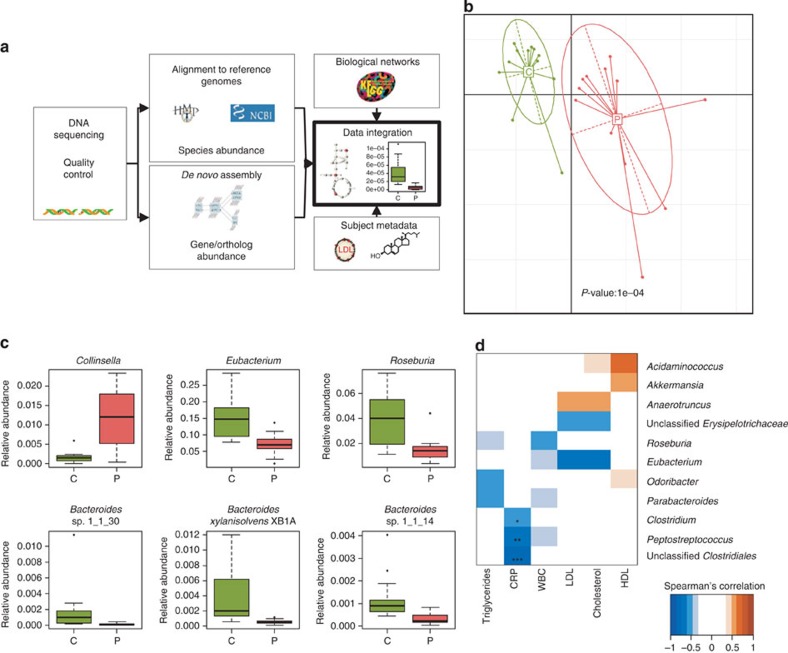
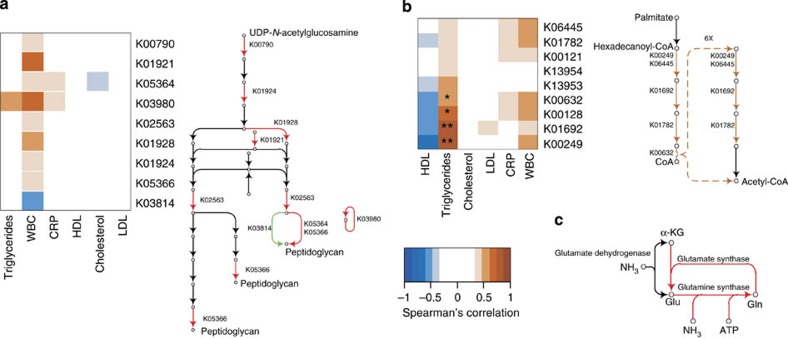
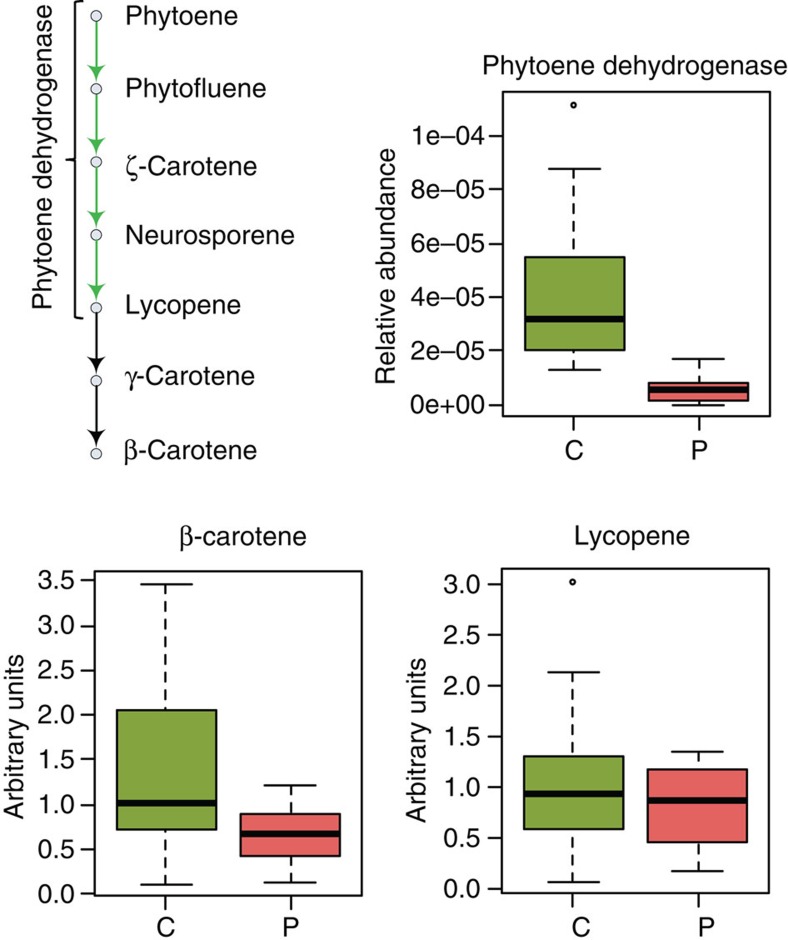
Recent findings have implicated the gut microbiota as a contributor of metabolic diseases through the modulation of host metabolism and inflammation. Atherosclerosis is associated with lipid accumulation and inflammation in the arterial wall, and bacteria have been suggested as a causative agent of this disease. Here we use shotgun sequencing of the gut metagenome to demonstrate that the genus Collinsella was enriched in patients with symptomatic atherosclerosis, defined as stenotic atherosclerotic plaques in the carotid artery leading to cerebrovascular events, whereas Roseburia and Eubacterium were enriched in healthy controls. Further characterization of the functional capacity of the metagenomes revealed that patient gut metagenomes were enriched in genes encoding peptidoglycan synthesis and depleted in phytoene dehydrogenase; patients also had reduced serum levels of β-carotene. Our findings suggest that the gut metagenome is associated with the inflammatory status of the host and patients with symptomatic atherosclerosis harbor characteristic changes in the gut metagenome. The gut microbiota has emerged as an environmental factor that can influence the development of obesity and diabetes. Here, Karlsson et al. report compositional and functional alterations of the gut metagenome in patients with symptomatic atherosclerosis.
Overview
The claims and statistics of this paper haven’t been checked yet.
Run the check — free, no account needed. It reads the open-access text and checks the sources it cites.
Integrity signals
Registry
Cites
Statistics
Figures
Verification
Claims the paper makes
The claims and statistics of this paper haven’t been checked yet.
Run the check — free, no account needed. It reads the open-access text and checks the sources it cites.
Claims other papers make about this one
Each is checked against this paper’s own text: does it say what the citing paper says it does?
In the citing paper
“Short chain fatty acids are produced by microbiota from dietary fibers, effect host body energy homeostasis, and are protective against metabolic syndrome, type 2 diabetes mellitus, and atherosclerosis.15,45–47”
From The Gut Microbiome Contributes to a Substantial Proportion of the Variation in Blood Lipids (2015) · cites this paper as [45]
In the citing paper
“Our results indicated increased abundances of bacteria exhibiting the potential to produce TMA (by about a factor of 2) in the patient group where the abundances of key genes of both pathways were elevated (median values of 0.39 and 0.11% (patient group) versus 0.22 and 0% (controls) for cutC and cntA, respectively, as a percentage of bacteria calculated to exhibit the genes) (Additional file 8).”
From Uncovering the trimethylamine-producing bacteria of the human gut microbiota (2017) · cites this paper as [12]
In the citing paper
“Reanalysis of the dataset provided by Karlsson and colleagues [12] indicated elevated abundances of potential TMA producers in atherosclerosis patients”
From Uncovering the trimethylamine-producing bacteria of the human gut microbiota (2017) · cites this paper as [12]
In the citing paper
“a metagenomic study suggested that symptomatic atherosclerosis was associated with an altered gut microbiome.8”
From Dysbiosis of gut microbiota with reduced trimethylamine-N-oxide level in patients with large-artery atherosclerotic stroke or transient ischemic attack (2015) · cites this paper as [8]
In the citing paper
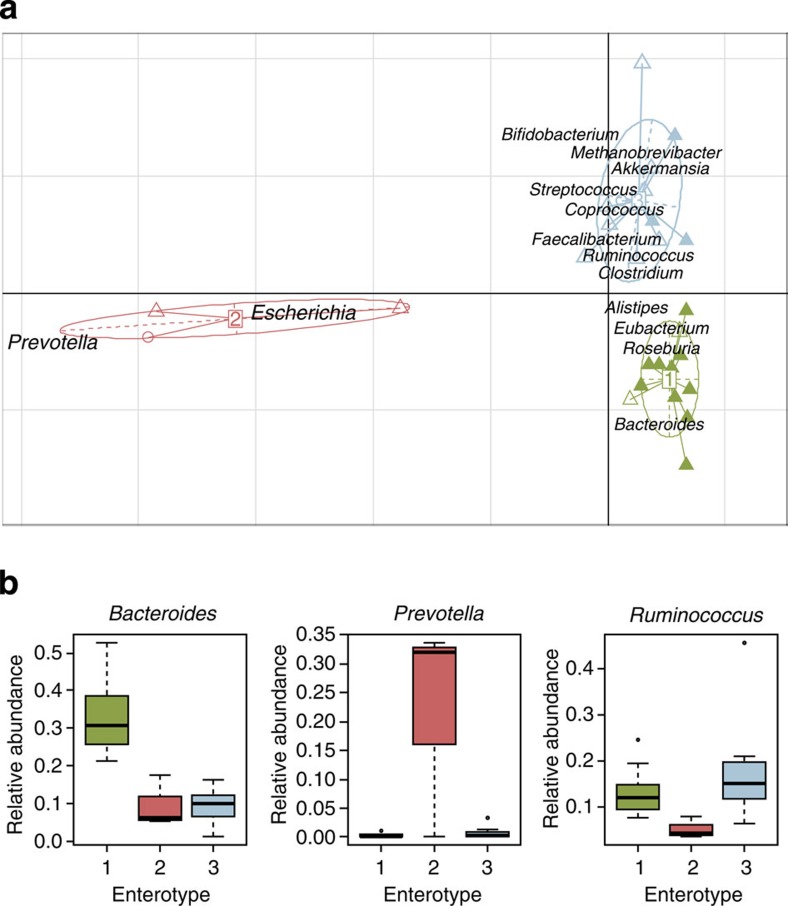
“Individuals classified as enterotype 3, which is characterized by low levels of Bacteroides, 8 have a higher incidence of symptomatic atherosclerosis.1,9”
From Bacteroides vulgatus and Bacteroides dorei Reduce Gut Microbial Lipopolysaccharide Production and Inhibit Atherosclerosis (2018) · cites this paper as [9]
In the citing paper
“Furthermore, diseases linked to dyslipidemia, such as non-alcoholic liver disease and atherosclerosis, are associated with changes in gut microbiota profile.”
From Dietary lipids, gut microbiota and lipid metabolism (2019) · cites this paper as [41]
In the citing paper
“By contrast, only a very small number of samples from patients with cardiovascular diseases have been analyzed10.”
From The gut microbiome in atherosclerotic cardiovascular disease (2017) · cites this paper as [10]
Self-check
Percentages, sums and reported differences re-computed from the paper’s own numbers.
The self-check needs the paper’s full text.
Citations
Cites
Controlling the False Discovery Rate: A Practical and Powerful Approach to Multiple Testing
Benjamini, Y., & Hochberg, Y. (1995) · Journal of the Royal Statistical Society Series B: Statistical Methodology · doi:10.1111/j.2517-6161.1995.tb02031.x · Cited by 109,482
MUSCLE: multiple sequence alignment with high accuracy and high throughput
Edgar, R. C. (2004) · Nucleic Acids Research · doi:10.1093/nar/gkh340 · Cited by 44,662
Ultrafast and memory-efficient alignment of short DNA sequences to the human genome.
Langmead, B., Trapnell, C., Pop, M., & Salzberg, S. L. (2009) · Genome Biology · doi:10.1186/gb-2009-10-3-r25 · Cited by 21,849
Search and clustering orders of magnitude faster than BLAST
Edgar, R. C. (2010) · Bioinformatics · doi:10.1093/bioinformatics/btq461 · Cited by 21,098
Structure, function and diversity of the healthy human microbiome
The Human Microbiome Project Consortium (2012) · Nature · doi:10.1038/nature11234 · Cited by 11,726
A human gut microbial gene catalogue established by metagenomic sequencing
MetaHIT Consortium, Qin, J., Li, R., Raes, J., Arumugam, M., Burgdorf, K. S., Manichanh, C., Nielsen, T., Pons, N., Levenez, F., et al. (2010) · Nature · doi:10.1038/nature08821 · Cited by 11,624
Velvet: Algorithms for de novo short read assembly using de Bruijn graphsPreprint
Zerbino, D. R., & Birney, E. (2008) · Genome Research · doi:10.1101/gr.074492.107 · Cited by 9,587
Human gut microbes associated with obesity
Ley, R. E., Turnbaugh, P. J., Klein, S., & Gordon, J. I. (2006) · Nature · doi:10.1038/4441022a · Cited by 8,785
Inflammation, Atherosclerosis, and Coronary Artery Disease
Hansson, G. K. (2005) · New England Journal of Medicine · doi:10.1056/nejmra043430 · Cited by 8,773
A core gut microbiome in obese and lean twins
Turnbaugh, P. J., Hamady, M., Yatsunenko, T., Cantarel, B. L., Duncan, A., Ley, R. E., Sogin, M. L., Jones, W. J., Roe, B. A., Affourtit, J. P., et al. (2009) · Nature · doi:10.1038/nature07540 · Cited by 7,823
Cited by
Sorted by citations
The gut microbiota--masters of host development and physiology
Sommer, F., & Bäckhed, F. (2013) · Nature Reviews Microbiology · doi:10.1038/nrmicro2974 · Cited by 3,681
Self-citationThe Human Intestinal Microbiome in Health and Disease
Lynch, S. V., & Pedersen, O. (2016) · New England Journal of Medicine · doi:10.1056/nejmra1600266 · Cited by 3,637
Gut metagenome in European women with normal, impaired and diabetic glucose control
Karlsson, F. H., Tremaroli, V., Nookaew, I., Bergström, G., Behre, C. J., Fagerberg, B., Nielsen, J., & Bäckhed, F. (2013) · Nature · doi:10.1038/nature12198 · Cited by 3,115
Self-citationRole of the normal gut microbiota
Jandhyala, S. M. (2015) · World Journal of Gastroenterology · doi:10.3748/wjg.v21.i29.8787 · Cited by 3,001
Alterations of the human gut microbiome in liver cirrhosis
Qin, N., Yang, F., Li, A., Prifti, E., Chen, Y., Shao, L., Guo, J., Le Chatelier, E., Yao, J., Wu, L., et al. (2014) · Nature · doi:10.1038/nature13568 · Cited by 2,177
Metadata
- Authors
- Karlsson, F. H., Fåk, F., Nookaew, I., Tremaroli, V., Fagerberg, B., Petranovic, D., Bäckhed, F., & Nielsen, J.
- Affiliations
- Chalmers University of Technology (SE)
- University of Gothenburg (SE)
- Corresponding author
- Bäckhed, Fredrik
- Nielsen, Jens
- ORCID
- Venue
- Nature Communications
- Published
- 2012-12-04
- Volume
- 3
- Issue
- 1
- Pages
- 1245-1245
- ISSN
- 2041-1723 (ISSN-L)
- PMC
- PMC3538954
- OpenAlex
- W2163940893
- Semantic Scholar
- fa78fbe4819f11f57f8abcdc9460b2aceded402d
- Cited by
- 1,371
- References
- 48
- Citations by year
- 2026: 83 · 2025: 138 · 2024: 139 · 2023: 137 · 2022: 160 · 2021: 143 · 2020: 126 · 2019: 98 · 2018: 97 · 2017: 73 · 2016: 51 · 2015: 59 · 2014: 37 · 2013: 29
- FWCI
- 16.08
- Type
- journal article
- Language
- en
- Open access
- hybrid
- doi.org
- Licence
- cc-by-nc-nd
- www.springer.com/tdm (unspecified)
- Locations
- Nature Communications (publishedVersion, cc-by-nc-nd)
- PubMed Central (publishedVersion, cc-by-nc-nd)
- PubMed (publishedVersion)
- RePEc: Research Papers in Economics (submittedVersion)
- Lund University Publications (Lund University) (submittedVersion)
- Chalmers Publication Library (Chalmers University of Technology) (submittedVersion)
- Chalmers Research (Chalmers University of Technology) (submittedVersion)
- Funders
- Stiftelsen för Strategisk Forskning
- Knut och Alice Wallenbergs Stiftelse
- Vetenskapsrådet
- Sahlgrenska Universitetssjukhuset
- Göteborgs Universitet
- Fondation Chalmers
- Topics
- Life Sciences › Biochemistry, Genetics and Molecular Biology › Molecular Biology › Gut microbiota and health
- Health Sciences › Dentistry › Periodontics › Oral microbiology and periodontitis research
- Health Sciences › Medicine › Public Health, Environmental and Occupational Health › Nutritional Studies and Diet
- Keywords
- gut microbiota, gut metagenome, Collinsella, Roseburia, Eubacterium, carotid artery stenosis, cerebrovascular disease, peptidoglycan biosynthesis, phytoene desaturase, beta-carotene, inflammation, lipid accumulation
- MeSH terms
- Aged, Eubacterium, Female, Humans, Inflammation, Male, Oxidoreductases, Peptidoglycan, Case-Control Studies, beta Carotene, Actinobacteria, Gastrointestinal Tract, Atherosclerosis, Metagenome
About these checks
Registry, retraction, Cites and statistics results are computed, not judged, with one exception: a printed reference that no index lists is read once by a model before it counts as a citation error. Claims are extracted by a model and kept only when their quote appears verbatim in the text; each cited source is then checked, with a model’s help, for whether it says what the claim relies on. Those verdicts can be wrong — read the claim’s quote and the cited source before relying on one.
Statistics and arithmetic are recomputed, not judged.
Confidence bands are shown only for fields calibrated on our annotated test set. None is calibrated yet, so no band is shown.
What counts as a claim ›How we measure confidence ›How we check this ›
Are you an author, or do you see a problem with this page? Request a review
