

Enriched environment reduces glioma growth through immune and non-immune mechanisms in mice
Open accessThe DOI matches its Crossref record; 44 of the 44 references it cites were found in a registry or an index.
Abstract
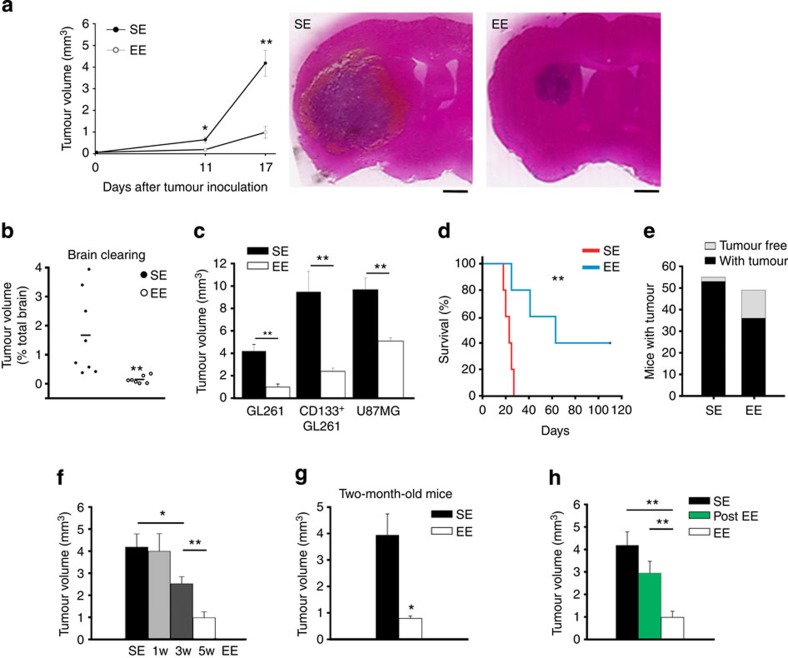
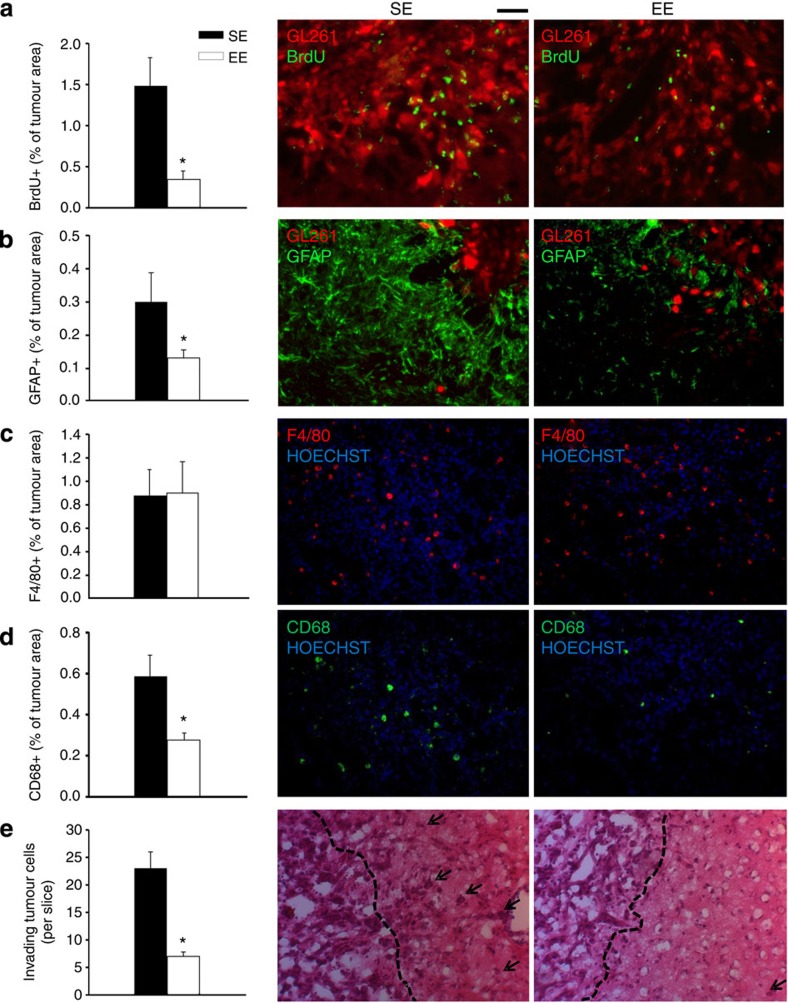
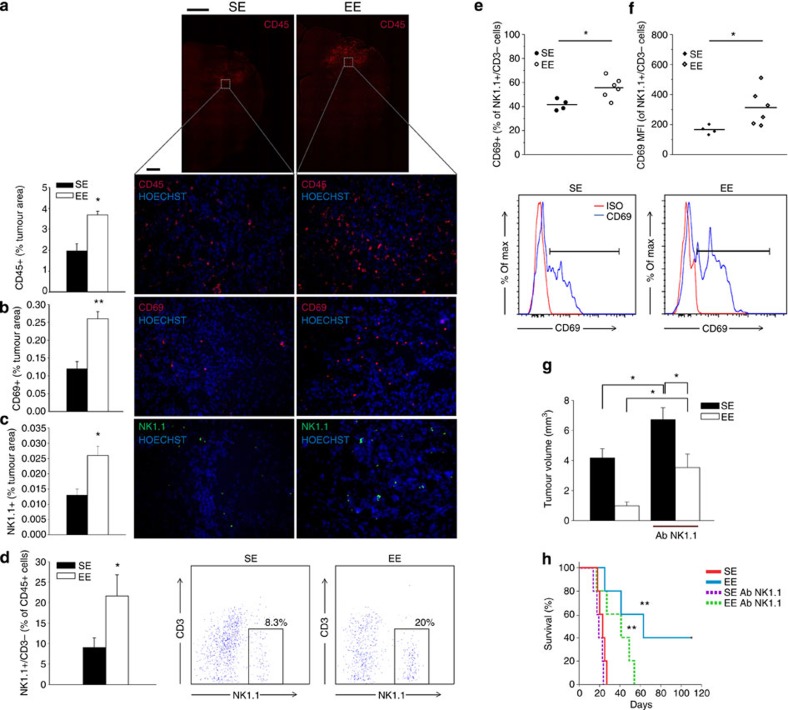
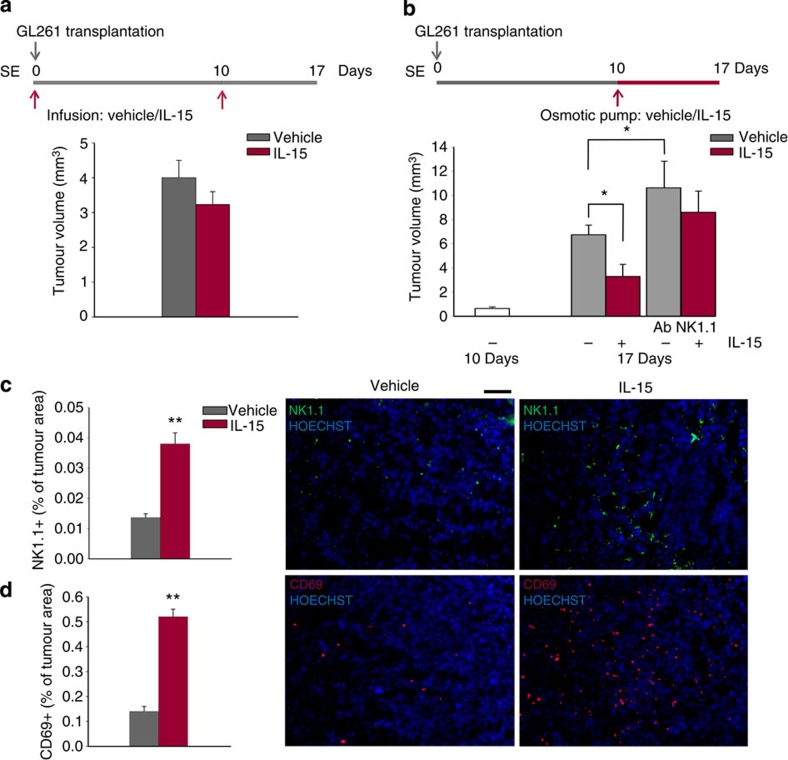
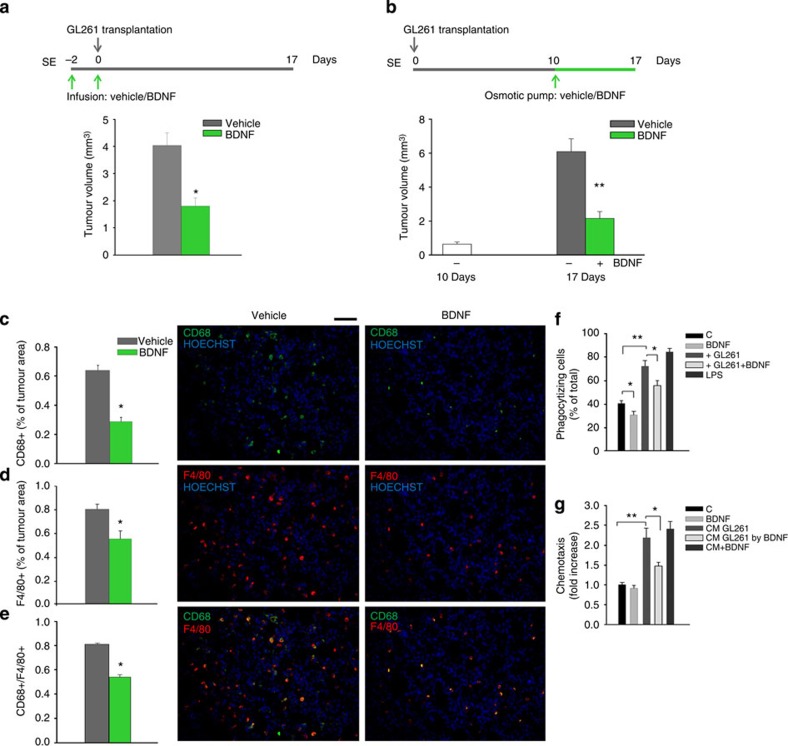
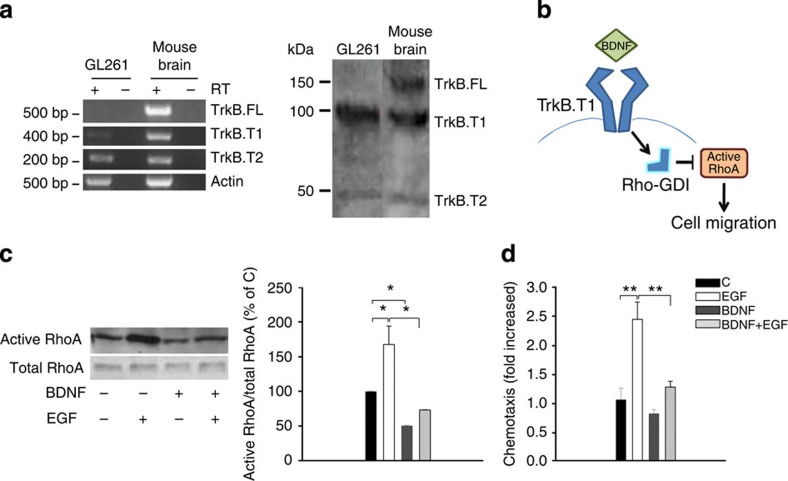
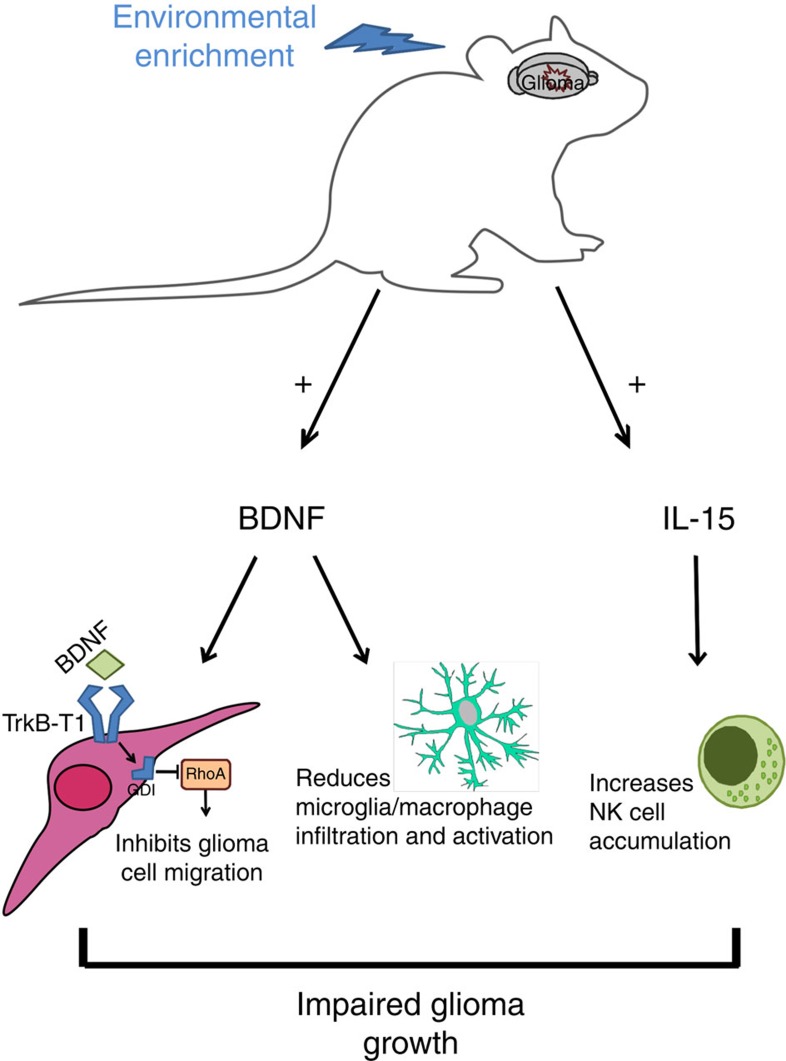
Mice exposed to standard (SE) or enriched environment (EE) were transplanted with murine or human glioma cells and differences in tumour development were evaluated. We report that EE exposure affects: (i) tumour size, increasing mice survival; (ii) glioma establishment, proliferation and invasion; (iii) microglia/macrophage (M/Mφ) activation; (iv) natural killer (NK) cell infiltration and activation; and (v) cerebral levels of IL-15 and BDNF. Direct infusion of IL-15 or BDNF in the brain of mice transplanted with glioma significantly reduces tumour growth. We demonstrate that brain infusion of IL-15 increases the frequency of NK cell infiltrating the tumour and that NK cell depletion reduces the efficacy of EE and IL-15 on tumour size and of EE on mice survival. BDNF infusion reduces M/Mφ infiltration and CD68 immunoreactivity in tumour mass and reduces glioma migration inhibiting the small G protein RhoA through the truncated TrkB.T1 receptor. These results suggest alternative approaches for glioma treatment.
Overview
The claims and statistics of this paper haven’t been checked yet.
Free: it reads the open-access text and checks the first 5 claims that cite a source we can check. Create a free account to check every claim.
Integrity signals
Registry
Cites
Statistics
Figures
Verification
Claims the paper makes
The claims and statistics of this paper haven’t been checked yet.
Free: it reads the open-access text and checks the first 5 claims that cite a source we can check. Create a free account to check every claim.
Claims other papers make about this one
Each is checked against this paper’s own text: does it say what the citing paper says it does?
The cited source says what the claim attributes to it.
In the citing paper
“BDNF binding the TrkB.T1 receptor signals to the Rho protein dissociation inhibitor (RhoGDI), the latter detaches from TrkB.T1 and binds to the small G protein RhoA, leading to its inhibition.”
From Neurotrophic Factor BDNF, Physiological Functions and Therapeutic Potential in Depression, Neurodegeneration and Brain Cancer (2020) · cites this paper as [259]
The cited source says what the claim attributes to it.
In the citing paper
“However, recently another study showed that exposing mice to an enriched environment is able to decrease the growth of intracranial glioma, decreasing proliferation and invasion, and improving overall survival.”
From Neurotrophic Factor BDNF, Physiological Functions and Therapeutic Potential in Depression, Neurodegeneration and Brain Cancer (2020) · cites this paper as [259]
The cited source says what the claim attributes to it.
In the citing paper
“Thus, showing that at least in part, BDNF accounts for the oncolytic effect elicited by the enriched environment [259].”
From Neurotrophic Factor BDNF, Physiological Functions and Therapeutic Potential in Depression, Neurodegeneration and Brain Cancer (2020) · cites this paper as [259]
The cited source says what the claim attributes to it.
In the citing paper
“When mice bearing the glioma and not housed in enriched environments were infused with BDNF, they reduced tumor size and macrophage infiltration.”
From Neurotrophic Factor BDNF, Physiological Functions and Therapeutic Potential in Depression, Neurodegeneration and Brain Cancer (2020) · cites this paper as [259]
The cited source says what the claim attributes to it.
In the citing paper
“Such an effect is achieved by means of both indirect and direct mechanisms. The former acts via natural killer cells of the innate immune system, whereas the latter utilizes BDNF stimulation of its truncated receptor TrkB.T1 on glioma cancer cells.”
From Neurotrophic Factor BDNF, Physiological Functions and Therapeutic Potential in Depression, Neurodegeneration and Brain Cancer (2020) · cites this paper as [259]
Self-check
Percentages, sums and reported differences re-computed from the paper’s own numbers.
The self-check needs the paper’s full text.
Citations
Cites
Analyzing real-time PCR data by the comparative CT method
Schmittgen, T. D., & Livak, K. J. (2008) · Nature Protocols · doi:10.1038/nprot.2008.73 · Cited by 26,190
Running enhances neurogenesis, learning, and long-term potentiation in mice
van Praag, H., Christie, B. R., Sejnowski, T. J., & Gage, F. H. (1999) · Proceedings of the National Academy of Sciences · doi:10.1073/pnas.96.23.13427 · Cited by 2,904
Microglia promote learning-dependent synapse formation through brain-derived neurotrophic factor
Parkhurst, C. N., Yang, G., Ninan, I., Savas, J. N., Yates, J. R., Lafaille, J. J., Hempstead, B. L., Littman, D. R., & Gan, W.-B. (2013) · Cell · doi:10.1016/j.cell.2013.11.030 · Cited by 2,599
Neural consequences of enviromental enrichment
van Praag, H., Kempermann, G., & Gage, F. H. (2000) · Nature Reviews Neuroscience · doi:10.1038/35044558 · Cited by 2,468
Enriched environments, experience-dependent plasticity and disorders of the nervous system
Nithianantharajah, J., & Hannan, A. J. (2006) · Nature Reviews Neuroscience · doi:10.1038/nrn1970 · Cited by 1,771
Computer Control of Microscopes Using µManager
Edelstein, A., Amodaj, N., Hoover, K., Vale, R., & Stuurman, N. (2010) · Current Protocols in Molecular Biology · doi:10.1002/0471142727.mb1420s92 · Cited by 1,670
Ca2+ Influx Regulates BDNF Transcription by a CREB Family Transcription Factor-Dependent Mechanism
Tao, X., Finkbeiner, S., Arnold, D. B., Shaywitz, A. J., & Greenberg, M. E. (1998) · Neuron · doi:10.1016/s0896-6273(00)81010-7 · Cited by 1,561
Ultramicroscopy: three-dimensional visualization of neuronal networks in the whole mouse brain
Dodt, H.-U., Leischner, U., Schierloh, A., Jährling, N., Mauch, C. P., Deininger, K., Deussing, J. M., Eder, M., Zieglgänsberger, W., & Becker, K. (2007) · Nature Methods · doi:10.1038/nmeth1036 · Cited by 1,238
Neeper, S. A., Gómez-Pinilla, F., Choi, J., & Cotman, C. W. (1996) · Brain Research · doi:10.1016/0006-8993(96)00273-9 · Cited by 1,014
Three-dimensional imaging of solvent-cleared organs using 3DISCO
Ertürk, A., Becker, K., Jährling, N., Mauch, C. P., Hojer, C. D., Egen, J. G., Hellal, F., Bradke, F., Sheng, M., & Dodt, H.-U. (2012) · Nature Protocols · doi:10.1038/nprot.2012.119 · Cited by 992
Cited by
Colucci-D’Amato, L., Speranza, L., & Volpicelli, F. (2020) · International Journal of Molecular Sciences · doi:10.3390/ijms21207777 · Cited by 991
Tissue clearing and its applications in neuroscience
Ueda, H. R., Ertürk, A., Chung, K., Gradinaru, V., Chédotal, A., Tomancak, P., & Keller, P. J. (2020) · Nature Reviews Neuroscience · doi:10.1038/s41583-019-0250-1 · Cited by 609
Microglial cell dysregulation in brain aging and neurodegeneration
von Bernhardi, R., Eugenín-von Bernhardi, L., & Eugenín, J. (2015) · Frontiers in Aging Neuroscience · doi:10.3389/fnagi.2015.00124 · Cited by 556
“Although most of reports are related to the effect of BDNF on neuron function and survival, there are reports on its effect on inhibiting activation of microglia (Garofalo et al., 2015).”
BackgroundTargeting the Notch-regulated non-coding RNA TUG1 for glioma treatment
Katsushima, K., Natsume, A., Ohka, F., Shinjo, K., Hatanaka, A., Ichimura, N., Sato, S., Takahashi, S., Kimura, H., Totoki, Y., et al. (2016) · Nature Communications · doi:10.1038/ncomms13616 · Cited by 352
Radiation-Induced Targeted Nanoparticle-Based Gene Delivery for Brain Tumor Therapy
Erel-Akbaba, G., Carvalho, L. A., Tian, T., Zinter, M., Akbaba, H., Obeid, P. J., Chiocca, E. A., Weissleder, R., Kantarci, A. G., & Tannous, B. A. (2019) · ACS Nano · doi:10.1021/acsnano.8b08177 · Cited by 202
Wang, Z., Zhang, C., Liu, X., Wang, Z., Sun, L., Li, G., Liang, J., Hu, H., Liu, Y., Zhang, W., et al. (2016) · OncoImmunology · doi:10.1080/2162402x.2016.1196310 · Cited by 193
NK cells are never alone: crosstalk and communication in tumour microenvironments
Zhou, Y., Cheng, L., Liu, L., & Li, X. (2023) · Molecular Cancer · doi:10.1186/s12943-023-01737-7 · Cited by 172
“For example, EE positively regulates the maturation, proliferation, cytotoxicity, and tumour infiltration capacity of NK cells, and mice exposed to EE exhibited an antitumour phenotype [190].”
BackgroundGarofalo, S., Cocozza, G., Porzia, A., Inghilleri, M., Raspa, M., Scavizzi, F., Aronica, E., Bernardini, G., Peng, L., Ransohoff, R. M., et al. (2020) · Nature Communications · doi:10.1038/s41467-020-15644-8 · Cited by 170
Self-citationCommunication in Neural Circuits: Tools, Opportunities, and Challenges
Lerner, T. N., Ye, L., & Deisseroth, K. (2016) · Cell · doi:10.1016/j.cell.2016.02.027 · Cited by 159
Golia, M. T., Poggini, S., Alboni, S., Garofalo, S., Ciano Albanese, N., Viglione, A., Ajmone-Cat, M. A., St-Pierre, A., Brunello, N., Limatola, C., et al. (2019) · Brain, Behavior, and Immunity · doi:10.1016/j.bbi.2019.07.003 · Cited by 155
Self-citationRegulation of natural killer cell activity by glucocorticoids, serotonin, dopamine, and epinephrine
Capellino, S., Claus, M., & Watzl, C. (2020) · Cellular and Molecular Immunology · doi:10.1038/s41423-020-0477-9 · Cited by 156
D'Alessandro, G., Antonangeli, F., Marrocco, F., Porzia, A., Lauro, C., Santoni, A., & Limatola, C. (2020) · European Journal of Immunology · doi:10.1002/eji.201948354 · Cited by 134
Self-citationEnvironmental enrichment and mouse models: Current perspectives
Bayne, K. A. L. (2018) · Animal Models and Experimental Medicine · doi:10.1002/ame2.12015 · Cited by 136
Alboni, S., Poggini, S., Garofalo, S., Milior, G., El Hajj, H., Lecours, C., Girard, I., Gagnon, S., Boisjoly-Villeneuve, S., Brunello, N., et al. (2016) · Brain, Behavior, and Immunity · doi:10.1016/j.bbi.2016.07.155 · Cited by 111
“Live CD11b+ cells were identified by flow cytometry (FACS) as previously indicated (Garofalo et al., 2015).”
Self-citationXu, H., Gelyana, E., Rajsombath, M., Yang, T., Li, S., & Selkoe, D. (2016) · Journal of Neuroscience · doi:10.1523/jneurosci.1023-16.2016 · Cited by 109
Mathios, D., Park, C., Marcus, W. D., Alter, S., Rhode, P. R., Jeng, E. K., Wong, H. C., Pardoll, D. M., & Lim, M. K. (2015) · International Journal of Cancer · doi:10.1002/ijc.29686 · Cited by 106
“Thus, there is a strong rationale for the use of IL-15 over IL-2 as a superior immunostimulatory cytokine for cancer treatment and especially for gliomas as shown recently.(19) However, the therapeutic efficacy of IL-15 in cancer had not been tested until recently, partially due to difficulties in the production of IL…”
BackgroundLepore, F., D’Alessandro, G., Antonangeli, F., Santoro, A., Esposito, V., Limatola, C., & Trettel, F. (2018) · Frontiers in Immunology · doi:10.3389/fimmu.2018.02750 · Cited by 110
Self-citationAll Wrapped Up: Environmental Effects on Myelination
Forbes, T. A., & Gallo, V. (2017) · Trends in Neurosciences · doi:10.1016/j.tins.2017.06.009 · Cited by 101
“Early EE studies demonstrated widespread effects on numerous CNS cell types and under varied physiological conditions in both small and large mammals [84,85,86,87,88].”
BackgroundSong, Y., Gan, Y., Wang, Q., Meng, Z., Li, G., Shen, Y., Wu, Y., Li, P., Yao, M., Gu, J., et al. (2017) · Cancer Research · doi:10.1158/0008-5472.can-16-2143 · Cited by 102
Milior, G., Di Castro, M. A., Sciarria, L. P., Garofalo, S., Branchi, I., Ragozzino, D., Limatola, C., & Maggi, L. (2016) · Scientific Reports · doi:10.1038/srep38242 · Cited by 99
Self-citationA guidebook for DISCO tissue clearing
Molbay, M., Kolabas, Z. I., Todorov, M. I., Ohn, T., & Ertürk, A. (2021) · Molecular Systems Biology · doi:10.15252/msb.20209807 · Cited by 96
“…ScaleA2 (Decroix et al, 2015) Endogenous GFP, Ab labeling Cancer Lung carcinoma CUBIC (Cuccarese et al, 2017) Endogenous GFP, RFP, Ab labeling 3DISCO (Garofalo et al, 2015) Ab labeling Glioma vDISCO (Pan et al, 2019) Endogenous mCherry, Ab labeling Whole body CUBIC (Kubota et al, 2017) Endogenous…”
MethodTissue clearing to examine tumour complexity in three dimensions
Almagro, J., Messal, H. A., Thin, M. Z., van Rheenen, J., & Behrens, A. (2021) · Nature reviews. Cancer · doi:10.1038/s41568-021-00382-w · Cited by 94
Targeting the BDNF/TrkB pathway for the treatment of tumors (Review)
Meng, L., Liu, B., Ji, R., Jiang, X. M., Yan, X., & Xin, Y. (2018) · Oncology Letters · doi:10.3892/ol.2018.9854 · Cited by 122
BDNF: An Oncogene or Tumor Suppressor?
(2017) · Anticancer Research · doi:10.21873/anticanres.11783 · Cited by 70
Identification of PIEZO1 as a potential prognostic marker in gliomas
Zhou, W., Liu, X., van Wijnbergen, J. W. M., Yuan, L., Liu, Y., Zhang, C., & Jia, W. (2020) · Scientific Reports · doi:10.1038/s41598-020-72886-8 · Cited by 70
KCa3.1 inhibition switches the phenotype of glioma-infiltrating microglia/macrophages
Grimaldi, A., D'Alessandro, G., Golia, M. T., Grössinger, E. M., Di Angelantonio, S., Ragozzino, D., Santoro, A., Esposito, V, Wulff, H., Catalano, M., et al. (2016) · Cell Death & Disease · doi:10.1038/cddis.2016.73 · Cited by 69
“CD11b+ cell purity (99%) was verified as reported.(42)”
BackgroundMethodSelf-citationXiao, R., Bergin, S. M., Huang, W., Slater, A. M., Liu, X., Judd, R. T., Lin, E.-J. D., Widstrom, K. J., Scoville, S. D., Yu, J., et al. (2016) · Cancer Immunology Research · doi:10.1158/2326-6066.cir-15-0297 · Cited by 70
“A recent report from others has shown that NK cells play a critical role in the anticancer effect of an EE in a mouse model of glioma (36).”
ResultElevated Na/H exchanger 1 (SLC9A1) emerges as a marker for tumorigenesis and prognosis in gliomas
Guan, X., Luo, L., Begum, G., Kohanbash, G., Song, Q., Rao, A., Amankulor, N., Sun, B., Sun, D., & Jia, W. (2018) · Journal of Experimental & Clinical Cancer Research · doi:10.1186/s13046-018-0923-z · Cited by 66
“Tumor volume was calculated as described previously (multiplying the sum of tumor area measurement by the height including section thickness and the z gap between slices) [29].”
MethodPsychological distress and eustress in cancer and cancer treatment: Advances and perspectives
Wu, Y., Zhou, L., Zhang, X., Yang, X., Niedermann, G., & Xue, J. (2022) · Science Advances · doi:10.1126/sciadv.abq7982 · Cited by 74
“By up-regulating brain IL-15, EE enhanced antitumor activity and levels of NK cells both in TME and peripheral blood of mice with intracranial glioma (86).”
BackgroundInfluentialGuan, X., Hasan, M. N., Begum, G., Kohanbash, G., Carney, K. E., Pigott, V. M., Persson, A. I., Castro, M. G., Jia, W., & Sun, D. (2018) · Cell Death and Disease · doi:10.1038/s41419-018-1062-3 · Cited by 64
Environmental stimuli shape microglial plasticity in glioma
Garofalo, S., Porzia, A., Mainiero, F., Di Angelantonio, S., Cortese, B., Basilico, B., Pagani, F., Cignitti, G., Chece, G., Maggio, R., et al. (2017) · eLife · doi:10.7554/elife.33415 · Cited by 58
“Having previously shown that NK cells actively participate in the process of tumor reduction induced by EE (Garofalo et al., 2015), we wondered whether NK cells could contribute to the EE-induced phenotypic switch of CD11b+ cells.”
InfluentialSelf-citationTantillo, E., Vannini, E., Cerri, C., Spalletti, C., Colistra, A., Mazzanti, C. M., Costa, M., & Caleo, M. (2020) · Neurobiology of Disease · doi:10.1016/j.nbd.2020.104942 · Cited by 63
Garofalo, S., Cocozza, G., Mormino, A., Bernardini, G., Russo, E., Ielpo, D., Andolina, D., Ventura, R., Martinello, K., Renzi, M., et al. (2023) · Nature Communications · doi:10.1038/s41467-023-38899-3 · Cited by 60
Self-citationMarrocco, F., Carpini, M. D., Garofalo, S., Giampaoli, O., Felice, E. D., Castro, M. A. D., Maggi, L., Scavizzi, F., Raspa, M., Marini, F., et al. (2022) · Communications Biology · doi:10.1038/s42003-022-03468-9 · Cited by 63
Self-citationThe role of myokines in cancer: crosstalk between skeletal muscle and tumor
Park, S.-Y., Hwang, B.-O., & Song, N. (2023) · BMB Reports · doi:10.5483/bmbrep.2023-0064 · Cited by 58
KCa3.1 channel inhibition sensitizes malignant gliomas to temozolomide treatment
D’Alessandro, G., Grimaldi, A., Chece, G., Porzia, A., Esposito, V., Santoro, A., Salvati, M., Mainiero, F., Ragozzino, D., Angelantonio, S. D., et al. (2016) · Oncotarget · doi:10.18632/oncotarget.8761 · Cited by 53
“U87MG, GL261 and GL261-RFPcells (obtained as previously described, [46]) were cultured in DMEM supplemented with 10-20% heat-inactivated FBS, 100 IU/ml penicillin G, 100 μg/ml streptomycin, 2.”
Self-citationLong-term environmental enrichment affects microglial morphology in middle age mice
Ali, S., Liu, X., Queen, N. J., Patel, R. S., Wilkins, R. K., Mo, X. M., & Cao, L. (2019) · Aging · doi:10.18632/aging.101923 · Cited by 55
Astrocytic proBDNF and Tonic GABA Distinguish Active versus Reactive Astrocytes in Hippocampus
Chun, H., An, H., Lim, J., Woo, J., Lee, J., Ryu, H., & Lee, C. J. (2018) · Experimental Neurobiology · doi:10.5607/en.2018.27.3.155 · Cited by 54
Waele, J. D., Marcq, E., Audenaerde, J. R. M. V., Loenhout, J. V., Deben, C., Zwaenepoel, K., de Kelft, E. V., der Planken, D. V., Menovsky, T., den Bergh, J. M. J. V., et al. (2017) · OncoImmunology · doi:10.1080/2162402x.2017.1407899 · Cited by 50
Sinha, S., Patro, N., & Patro, I. K. (2018) · Frontiers in Neuroscience · doi:10.3389/fnins.2018.00966 · Cited by 46
Bai, P., Chen, S., Jia, D., Pan, L., Liu, C., Liu, J., Luo, W., Yang, Y., Sun, M., Wan, N., et al. (2022) · Science Advances · doi:10.1126/sciadv.abm3436 · Cited by 42
“These studies suggest that the mechanisms through which EE improves disease outcomes at least partially involve its regulatory effects on macrophages ( 9 , 10 ).”
The Glycoside Oleandrin Reduces Glioma Growth with Direct and Indirect Effects on Tumor Cells
Garofalo, S., Grimaldi, A., Chece, G., Porzia, A., Morrone, S., Mainiero, F., D’Alessandro, G., Esposito, V., Cortese, B., Angelantonio, S. D., et al. (2017) · Journal of Neuroscience · doi:10.1523/jneurosci.2296-16.2017 · Cited by 39
“01), confirming previous data on murine glioma (Garofalo et al., 2015).”
BackgroundResultSelf-citationXiao, R., Bergin, S. M., Huang, W., Mansour, A. G., Liu, X., Judd, R. T., Widstrom, K. J., Queen, N. J., Wilkins, R. K., Siu, J. J., et al. (2018) · Brain Behavior and Immunity · doi:10.1016/j.bbi.2018.09.028 · Cited by 41
Pisapia, D. J. (2017) · Archives of Pathology & Laboratory Medicine · doi:10.5858/arpa.2016-0493-ra · Cited by 45
Implementation of environmental enrichment after middle age promotes healthy aging
McMurphy, T. B., Huang, W., Queen, N. J., Ali, S., Widstrom, K. J., Liu, X., Xiao, R., Siu, J. J., & Cao, L. (2018) · Aging · doi:10.18632/aging.101502 · Cited by 40
“The anticancer effects of EE have been confirmed and expanded by other researchers to breast cancer [14], pancreatic cancer [15], and glioma [16].”
BackgroundCopy number profiling across glioblastoma populations has implications for clinical trial design
Cimino, P. J., McFerrin, L. G., Wirsching, H., Arora, S., Bolouri, H., Rabadán, R., Weller, M., & Holland, E. C. (2018) · Neuro-Oncology · doi:10.1093/neuonc/noy108 · Cited by 40
Old Stars and New Players in the Brain Tumor Microenvironment
Parmigiani, E., Scalera, M., Mori, E., Tantillo, E., & Vannini, E. (2021) · Frontiers in Cellular Neuroscience · doi:10.3389/fncel.2021.709917 · Cited by 35
Jiang, S., Zhang, X.-X., Hu, L.-P., Wang, X., Li, Q., Zhang, X., Li, J., Gu, J., & Zhang, Z. (2020) · Frontiers in Cell and Developmental Biology · doi:10.3389/fcell.2020.586757 · Cited by 38
High Level of METTL7B Indicates Poor Prognosis of Patients and Is Related to Immunity in Glioma
Xiong, Y., Li, M., Bai, J., Sheng, Y., & Zhang, Y. (2021) · Frontiers in Oncology · doi:10.3389/fonc.2021.650534 · Cited by 39
Progression of motor deficits in glioma-bearing mice: impact of CNF1 therapy at symptomatic stages
Vannini, E., Maltese, F., Olimpico, F., Fabbri, A., Costa, M., Caleo, M., & Baroncelli, L. (2017) · Oncotarget · doi:10.18632/oncotarget.15328 · Cited by 41
Wang, P., Zeng, Z. R., Shen, X., Tian, X., & Ye, Q. (2020) · DNA and Cell Biology · doi:10.1089/dna.2019.5148 · Cited by 35
“The studies on melanoma (Xiao et al. , 2016) and glioma (Garofalo et al. , 2015) suggested its anticancer roles by augmenting T cell cytotoxicity.”
Hylander, B. L., Eng, J. W. ‐., & Repasky, E. A. (2017) · Advances in experimental medicine and biology · doi:10.1007/978-3-319-67577-0_12 · Cited by 35
“[133] found that the improved tumor control can involve immune (innate) and non-immune mechanisms, however the role of β-adrenergic signaling was not addressed in these studies and this will be important to compare in the future.”
BackgroundSMaRT lncRNA controls translation of a G‐quadruplex‐containing mRNA antagonizing the DHX36 helicase
Martone, J., Mariani, D., Santini, T., Setti, A., Shamloo, S., Colantoni, A., Capparelli, F., Paiardini, A., Dimartino, D., Morlando, M., et al. (2020) · EMBO Reports · doi:10.15252/embr.201949942 · Cited by 30
“The cassette was subsequently inserted in the ePB-BSDPGK-Int-RFP [55] linearized with XhoI-BglII restriction enzymes (Thermo Scientific) with the In-Fusion HD Cloning Kit (Clontech).”
Cheng, Q., Duan, W., He, S., Li, C., Cao, H., Liu, K., Ye, W., Yuan, B., & Xia, Z. (2021) · Frontiers in Cell and Developmental Biology · doi:10.3389/fcell.2021.686909 · Cited by 31
Histone‐deacetylase 8 drives the immune response and the growth of glioma
Mormino, A., Cocozza, G., Fontemaggi, G., Valente, S., Esposito, V., Santoro, A., Bernardini, G., Santoni, A., Fazi, F., Mai, A., et al. (2021) · Glia · doi:10.1002/glia.24065 · Cited by 30
“Accordingly, we report that HDAC8 inhibition enhances the cytotoxic activity of NK cells in vitro, and increases the infiltration of NKG2D+ and CD69+ NK cells in the tumor mass, in vivo (Garofalo et al., 2015; Nath et al., 2019).”
BackgroundSelf-citationCeacam1L Modulates STAT3 Signaling to Control the Proliferation of Glioblastoma-Initiating Cells
Kaneko, S., Nakatani, Y., Takezaki, T., Hide, T., Yamashita, D., Ohtsu, N., Ohnishi, T., Terasaka, S., Houkin, K., & Kondo, T. (2015) · Cancer Research · doi:10.1158/0008-5472.can-15-0412 · Cited by 29
“It has been shown that CD68 þ cells increased in high-grade gliomas (48), and that CD68 þ in fi ltrating microglias/macrophages were involved in gliomagenesis (49).”
BackgroundConstruction and imaging of a neurovascular unit model
Dong, T., Wang, J., Li, M., Gao, F., & Wei, P. (2021) · Neural Regeneration Research · doi:10.4103/1673-5374.332131 · Cited by 27
“However, stem cells (embryonic stem cells, neural stem cells, induced multifunctional stem cells, and bone marrow mesenchymal stem cells (MSCs)) have also been used to model the BBB in simulations of the NVU (Garofalo et al., 2015).”
MethodAgnihotri, T. G., Salave, S., Shinde, T., Srikanth, I., Gyanani, V., Haley, J. C., & Jain, A. (2023) · Journal of the National Cancer Center · doi:10.1016/j.jncc.2023.08.001 · Cited by 33
“In another study, it was also proven that BDNF was responsible for the stimulation of IL-15 leading to interferon-𝛾 production and NK cells.”
Background3D imaging for driving cancer discovery
van Ineveld, R. L., van Vliet, E. J., Wehrens, E. J., Alieva, M., & Rios, A. C. (2022) · The EMBO Journal · doi:10.15252/embj.2021109675 · Cited by 31
“Tumours are inherently heterogeneous and constantly evolving to not only expand, but also adapt to selective pressure inflicted by their TME, as well as treatments.”
InfluentialWhole-organ analysis of TGF-β-mediated remodelling of the tumour microenvironment by tissue clearing
Kubota, S. I., Takahashi, K., Mano, T., Matsumoto, K., Katsumata, T., Shi, S., Tainaka, K., Ueda, H. R., Ehata, S., & Miyazono, K. (2021) · Communications Biology · doi:10.1038/s42003-021-01786-y · Cited by 27
Enhancing Effects of Environmental Enrichment on the Functions of Natural Killer Cells in Mice
Xiao, R., Ali, S., Caligiuri, M. A., & Cao, L. (2021) · Frontiers in Immunology · doi:10.3389/fimmu.2021.695859 · Cited by 31
“Studies of EE’s effects on macrophages have been reported, as well (30).”
BackgroundInfluentialCope, E. C., Opendak, M. M., LaMarca, E. A., Murthy, S. S., Park, C. Y., Olson, L. B., Martinez, S., Leung, J. M., Graham, A. L., & Gould, E. (2018) · Hippocampus · doi:10.1002/hipo.23033 · Cited by 29
“…environment living has been shown to have impacts on the immune system by enhancing its ability to fight infection (Brod et al., 2017) and tumors (Garofalo et al., 2015), as well as diminishing inflammatory effects in certain brain regions (Mlynarik, Johansson, & Jezova, 2004; Williamson et al.,…”
BackgroundConsorti, A., Marco, I. D., & Sansevero, G. (2021) · Frontiers in Molecular Neuroscience · doi:10.3389/fnmol.2021.710303 · Cited by 28
Meng, Z., Liu, T., Song, Y., Wang, Q., Xu, D., Jiang, J., Li, M., Qiao, J., Luo, X., Gu, J., et al. (2018) · Brain Behavior and Immunity · doi:10.1016/j.bbi.2018.12.017 · Cited by 24
Takai, D., Abe, A., Miura, H., Tanaka, S., & Komura, J. (2019) · EXPERIMENTAL ANIMALS · doi:10.1538/expanim.19-0055 · Cited by 23
“Since 2010, some studies demonstrated that environmental enrichment has effects to enhance reduction and eradication of tumors [7, 12, 14, 21, 36].”
Wu, Y., Gan, Y., Yuan, H., Wang, Q., Fan, Y., Li, G., Zhang, J., Yao, M., Gu, J., & Tu, H. (2016) · Biochemical and Biophysical Research Communications · doi:10.1016/j.bbrc.2016.03.128 · Cited by 21
The etiopathogenesis of diffuse low-grade gliomas
Darlix, A., Gozé, C., Rigau, V., Bauchet, L., Taillandier, L., & Duffau, H. (2016) · Critical Reviews in Oncology/Hematology · doi:10.1016/j.critrevonc.2016.11.014 · Cited by 26
Metcalf, C. S., Huntsman, M., Garcia, G., Kochanski, A. K., Chikinda, M., Watanabe, E., Underwood, T. K., Vanegas, F., Smith, M. D., White, H. S., et al. (2019) · Frontiers in Neurology · doi:10.3389/fneur.2019.00277 · Cited by 25
“Music and EE-based interventions may serve as preclinical surrogate for developing adjunct digital therapeutics for cancer patients (43, 58, 127), since music can lower cancer-treatment biomarker IL-6 (94, 112, 145) while EE and physical exercise can reduce tumor size and increase lifespan in cancer animal models (127…”
BackgroundCTX-CNF1 Recombinant Protein Selectively Targets Glioma Cells In Vivo
Vannini, E., Mori, E., Tantillo, E., Schmidt, G., Caleo, M., & Costa, M. (2021) · Toxins · doi:10.3390/toxins13030194 · Cited by 27
“Images were processed with ImageJ software (National Institute of Health) and the density of proliferating cells was expressed as the fraction of area occupied by KI67+ cells with respect to total glioma area [34].”
Xu, L., Zhang, Y., Zhang, R., Zhang, H., Song, P., Ma, T., Li, Y., Wang, X., Hou, X., Li, Q., et al. (2019) · International Immunopharmacology · doi:10.1016/j.intimp.2019.105722 · Cited by 19
Enriched environment inhibits breast cancer progression in obese models with intact leptin signaling
Foglesong, G. D., Queen, N. J., Huang, W., Widstrom, K. J., & Cao, L. (2019) · Endocrine Related Cancer · doi:10.1530/erc-19-0075 · Cited by 23
Role of Infiltrating Microglia/Macrophages in Glioma
Catalano, M., D’Alessandro, G., Trettel, F., & Limatola, C. (2020) · Advances in experimental medicine and biology · doi:10.1007/978-3-030-30651-9_14 · Cited by 21
Self-citationTantillo, E., Colistra, A., Baroncelli, L., Costa, M., Caleo, M., & Vannini, E. (2020) · International Journal of Environmental Research and Public Health · doi:10.3390/ijerph17165667 · Cited by 28
“, BDNF, IGF1), whose release is activated by running, might act to slow down glioma growth [4,12,19,40].”
BackgroundInfluentialYang, R., Deng, F., Yang, Y., Tian, Q. C., Huangfu, S., Yang, L., Hou, J., Yang, G., Pang, W., Lu, J., et al. (2023) · Biomaterials · doi:10.1016/j.biomaterials.2023.122186 · Cited by 18
Grech, A. M., Ratnayake, U., Hannan, A. J., van den Buuse, M., & Hill, R. (2018) · Frontiers in Behavioral Neuroscience · doi:10.3389/fnbeh.2018.00227 · Cited by 17
“, 2012), delay of disease progression (Garofalo et al., 2015) and recovering of disease symptoms, with learning and memory also modulated by EE (Burrows et al.”
BackgroundKusuhara, M., Maruyama, K., Ishii, H., Masuda, Y., Sakurai, K., Tamai, E., & Urakami, K. (2019) · Integrative Cancer Therapies · doi:10.1177/1534735419845139 · Cited by 18
Chronic stress as an emerging risk factor for the development and progression of glioma
Yi, L., Lin, X., She, X., Gao, W. Q., & Wu, M. (2024) · Chinese Medical Journal · doi:10.1097/cm9.0000000000002976 · Cited by 17
“[68,69] However, little attention has been paid to the upstream mechanisms that contribute to glioma development and progression.”
BackgroundNext-gen tools in cancer neuroscience
Thiel, V., Sur, D., Picoli, C. C., McErlain, T., Couto, K., Simon, D. J., Pan, Y., Dixon, K. O., Kulkarni, R. P., Talbot, S., et al. (2025) · Cell Reports · doi:10.1016/j.celrep.2025.116258 · Cited by 19
Wang, H., Wang, Y., Chai, Y., Zhang, H., Chang, Q., Li, J., Zhang, R., & Bao, J. (2024) · Poultry Science · doi:10.1016/j.psj.2024.104100 · Cited by 14
“Studies have demonstrated that EE can in fl u-ence the expression of cytokines, various immune components, and glial cells, suggesting a potential mechanism for modulating brain function (Garofalo et al., 2015).”
BackgroundKuang, Y., Jiang, B., Zhu, H., Zhou, Y., Huang, H., Li, C., Zhang, W., Li, X., & Cao, Y. (2023) · Frontiers in Immunology · doi:10.3389/fimmu.2023.1102094 · Cited by 17
A Review of the Effects of Some Extrinsic Factors on Mice Used in Research
Gozalo, A. S., & Elkins, W. R. (2023) · Comparative Medicine · doi:10.30802/aalas-cm-23-000028 · Cited by 19
Crosstalk Between the Nervous System and Colorectal Cancer
Li, X., Ye, C., Wang, M., Kwan, P., Tian, X., & Zhang, Y. (2024) · Neuroscience Bulletin · doi:10.1007/s12264-024-01238-7 · Cited by 17
“Mechanistically, environmental enrichment can enhance the body’s immune surveillance and defense capabilities, which can increase the proportion of CD8 + cytotoxic T lymphocytes and play a defensive role [52, 53].”
Castro, M. A. D., Garofalo, S., Mormino, A., Carbonari, L., Pietro, E. D., Felice, E. D., Catalano, M., Maggi, L., & Limatola, C. (2023) · Brain Behavior and Immunity · doi:10.1016/j.bbi.2023.11.015 · Cited by 14
“In a syngeneic glioma mouse model, microglial-derived IL-15 increases the infiltration of NK cells in the tumor mass and reduces the tumor volume, enhancing the mice survival (Garofalo et al., 2015, 2017; Mormino et al., 2021).”
BackgroundSelf-citationMormino, A., Bernardini, G., Cocozza, G., Corbi, N., Passananti, C., Santoni, A., Limatola, C., & Garofalo, S. (2021) · Frontiers in Immunology · doi:10.3389/fimmu.2021.730128 · Cited by 15
“In glioma, we have recently demonstrated that 5 weeks of EE exposure reduce the tumor volume, further hampering the glioma insurgence in mouse models (20).”
BackgroundSelf-citationMechanisms Underlying the Rarity of Skeletal Muscle Cancers
Kump, D. S. (2024) · International Journal of Molecular Sciences · doi:10.3390/ijms25126480 · Cited by 11
“…into a glioma-bearing mouse brain suppressed tumor growth, which depended on intensified intra-tumoral infiltration of natural killer cells [204], and in a mouse model of pancreatic cancer, IL-15 limited tumor growth and improved survival; further, low-intensity treadmill exercise…”
BackgroundBergin, S. M., Xiao, R., Huang, W., Judd, R. T., Liu, X., Mansour, A. G., Queen, N. J., Widstrom, K. J., Caligiuri, M. A., & Cao, L. (2021) · Brain Behavior and Immunity · doi:10.1016/j.bbi.2021.05.005 · Cited by 13
Ketogenic diet induces an inflammatory reactive astrocytes phenotype reducing glioma growth
Rosito, M., Maqbool, J., Reccagni, A., Mangano, M., D’Andrea, T., Rinaldi, A., Peruzzi, G., Silvestri, B., Rosa, A., Trettel, F., et al. (2025) · Cellular and Molecular Life Sciences · doi:10.1007/s00018-025-05600-4 · Cited by 10
Self-citationInnovative optical imaging strategies for monitoring immunotherapy in the tumor microenvironments
Um‐e‐Kalsoom, Wang, S., Qu, J., & Liu, L. (2024) · Cancer Medicine · doi:10.1002/cam4.70155 · Cited by 8
The Nervous System Contributes to the Tumorigenesis and Progression of Human Digestive Tract Cancer
Dai, D., & Liu, H. (2022) · Journal of Immunology Research · doi:10.1155/2022/9595704 · Cited by 10
Chronic Stress Does Not Influence the Survival of Mouse Models of Glioblastoma
Lopes, M., de Castro, J. V., Pojo, M., Gonçalves, C. S., Martins, E. P., Coimbra, B., Sotiropoulos, I., Sousa, N., Rodrigues, A. J., & Costa, B. M. (2022) · Frontiers in Oncology · doi:10.3389/fonc.2022.856210 · Cited by 8
“This is evidence that the brain microenvironment can be modulated by environmental factors, such as prolonged sensory, social and physical experiences, ultimately influencing the aggressiveness of brain cancer (45).”
BackgroundHow Does an Enriched Environment Impact Hippocampus Brain Plasticity?
Zarif, H., Nicolas, S., Petit-Paitel, A., Chabry, J., & Guyon, A. (2018) · InTech eBooks · doi:10.5772/intechopen.71426 · Cited by 14
“These innovative studies paved the way for future investigations of other immune cells, including but not limited to natural killer cells [83], B cells [84], macrophages [73] and monocytes [85], and their putative roles in modulating the effects of EE on hippocampal plasticity.”
BackgroundHassan, Q. N., Queen, N. J., & Cao, L. (2020) · Translational Cancer Research · doi:10.21037/tcr.2020.02.39 · Cited by 9
“Since the first report of an anticancer effect of EE, others have also demonstrated that EE is effective in pancreatic cancer (10,11), glioma (12), and lung cancer (10) models, with similar and additional mechanisms beyond the HSA axis.”
BackgroundPerspectives on miRNAs directly targeting BDNF for cancer diagnosis and treatment (Review)
Xie, Z., Xu, X., Cao, W., He, L., Kou, C., He, J., Guo, Y., Yue, M., & Mo, S. (2023) · International Journal of Oncology · doi:10.3892/ijo.2023.5478 · Cited by 8
An Enriched Environment Alters DNA Repair and Inflammatory Responses After Radiation Exposure
Sakama, S., Kurusu, K., Morita, M., Oizumi, T., Masugata, S., Oka, S., Yokomizo, S., Nishimura, M., Morioka, T., Kakinuma, S., et al. (2021) · Frontiers in Immunology · doi:10.3389/fimmu.2021.760322 · Cited by 9
“Other researchers have shown that EEupgrades immune functions such as improvements in NK cell activity (42, 44, 45) and macrophage phagocytosis (31, 46); our results support these findings.”
BackgroundResultQueen, N. J., Hong, D., Huang, W., Mo, X. M., Wilkins, R. K., Zhu, T., Wu, X., & Cao, L. (2021) · Cancer Prevention Research · doi:10.1158/1940-6207.capr-21-0085 · Cited by 7
“The EEinduced slowing of cancer growth is thought to occur due in part to induction of hypothalamic BDNF, which improves metabolic health and systemic immune function (9, 15, 16).”
BackgroundEnvironmental enrichment counteracts the effects of glioma in primary visual cortex
Castro, M. A. D., Garofalo, S., Felice, E. D., Meneghetti, N., Pietro, E. D., Mormino, A., Mazzoni, A., Caleo, M., Maggi, L., & Limatola, C. (2022) · Neurobiology of Disease · doi:10.1016/j.nbd.2022.105894 · Cited by 8
Self-citationMassenzio, F., Cambiaghi, M., Marchiotto, F., Boriero, D., Limatola, C., D’Alessandro, G., & Buffelli, M. (2022) · Frontiers in Cellular Neuroscience · doi:10.3389/fncel.2022.1002487 · Cited by 6
“Murine glioma GL261-RFP cells, obtained as previously described (Garofalo et al., 2015) were cultured in DMEM supplemented with 20% heat-inactivated FBS, 1% of penicillin/streptomycin (All the reagents are from Invitrogen).”
MethodSelf-citationDialogue among Lymphocytes and Microglia in Glioblastoma Microenvironment
Mormino, A., & Garofalo, S. (2022) · Cancers · doi:10.3390/cancers14112632 · Cited by 7
“In vivo, the rAAV2-IL-15 microglial cells infiltrate GBM mass and increase the recruitment of IFN-γ+ NK cells in GBM-bearing mice, with effects on tumor growth [32,33,119], highlighting the fundamental role of IL-15 in the tumor core to boost immune reaction.”
BackgroundSelf-citationOtaki, M., Hirano, T., Yamaguchi, Y., Kaida, K., Koshika, S., Nagata, K., Nishimura, M., Kakinuma, S., Shimada, Y., & Kobayashi, Y. (2018) · International Immunopharmacology · doi:10.1016/j.intimp.2018.09.037 · Cited by 7
Garofalo, S., D’Alessandro, G., & Limatola, C. (2024) · Advances in neurobiology · doi:10.1007/978-3-031-55529-9_28 · Cited by 5
Self-citation
Metadata
- Authors
- Garofalo, S., D’Alessandro, G., Chece, G., Brau, F., Maggi, L., Rosa, A., Porzia, A., Mainiero, F., Esposito, V., Lauro, C., Benigni, G., Bernardini, G., Santoni, A., & Limatola, C.
- Affiliations
- Istituto Pasteur (IT)
- Sapienza University of Rome (IT)
- Istituto Neurologico Mediterraneo (IT)
- Corresponding author
- Limatola, Cristina
- ORCID
- Venue
- Nature Communications
- Published
- 2015-03-30
- Volume
- 6
- Issue
- 1
- Pages
- 6623-6623
- ISSN
- 2041-1723 (ISSN-L)
- PMC
- PMC4389244
- OpenAlex
- W2044528599
- Cited by
- 129
- References
- 44
- Citations by year
- 2026: 6 · 2025: 5 · 2024: 6 · 2023: 13 · 2022: 15 · 2021: 19 · 2020: 14 · 2019: 9 · 2018: 18 · 2017: 10 · 2016: 11 · 2015: 3
- FWCI
- 7.84
- Type
- journal article
- Language
- en
- Open access
- gold
- doi.org
- Licence
- cc-by
- creativecommons.org/licenses/by/4.0 (tdm)
- creativecommons.org/licenses/by/4.0 (vor)
- Locations
- Nature Communications (publishedVersion, cc-by)
- PubMed Central (publishedVersion, cc-by)
- PubMed (publishedVersion)
- IRIS Research product catalog (Sapienza University of Rome) (submittedVersion, cc-by)
- RePEc: Research Papers in Economics (submittedVersion)
- Funders
- Sapienza Università di Roma
- Associazione Italiana per la Ricerca sul Cancro (IG-2014, IG2012)
- Topics
- Health Sciences › Medicine › Oncology › Glioma Diagnosis and Treatment
- Life Sciences › Biochemistry, Genetics and Molecular Biology › Cancer Research › Cancer, Stress, Anesthesia, and Immune Response
- Life Sciences › Neuroscience › Neurology › Neuroinflammation and Neurodegeneration Mechanisms
- Keywords
- environmental enrichment, glioma, tumor growth, microglia/macrophage activation, natural killer cells, IL-15, brain-derived neurotrophic factor, RhoA, glioma invasion, tumor immunology, NK cell depletion
- MeSH terms
- CD68 Molecule, Animals, Environment, Glioma, Humans, Killer Cells, Natural, Macrophage Activation, Macrophages, Neoplasm Invasiveness, Neoplasm Transplantation, Physical Stimulation, Play and Playthings, Social Environment, Antigens, Differentiation, Myelomonocytic, Antigens, CD, Survival Rate, Microglia, Brain-Derived Neurotrophic Factor, Interleukin-15, rho GTP-Binding Proteins, rhoA GTP-Binding Protein, Receptor, trkB, Cell Line, Tumor, Tumor Burden, Cell Proliferation, Mice
About these checks
Registry, retraction, Cites and statistics results are computed, not judged, with one exception: a printed reference that no index lists is read once by a model before it counts as a citation error. Claims are extracted by a model and kept only when their quote appears verbatim in the text; each cited source is then checked, with a model’s help, for whether it says what the claim relies on. Those verdicts can be wrong — read the claim’s quote and the cited source before relying on one.
Statistics and arithmetic are recomputed, not judged.
Confidence bands are shown only for fields calibrated on our annotated test set. None is calibrated yet, so no band is shown.
What counts as a claim ›How we measure confidence ›How we check this ›
Are you an author, or do you see a problem with this page? Request a review
Data sources
Bibliographic data: Semantic Scholar, OpenAlex, Crossref.
Contains information from the Semantic Scholar Academic Graph Datasets, made available under the ODC Attribution License (ODC-BY 1.0).
Semantic Scholar’s data is described in: Kinney, R., et al. (2023). The Semantic Scholar Open Data Platform. arXiv:2301.10140.
