

Enriched environment reduces glioma growth through immune and non-immune mechanisms in mice
Open accessThe DOI matches its Crossref record; 44 of the 44 references it cites were found in a registry or an index.
Abstract
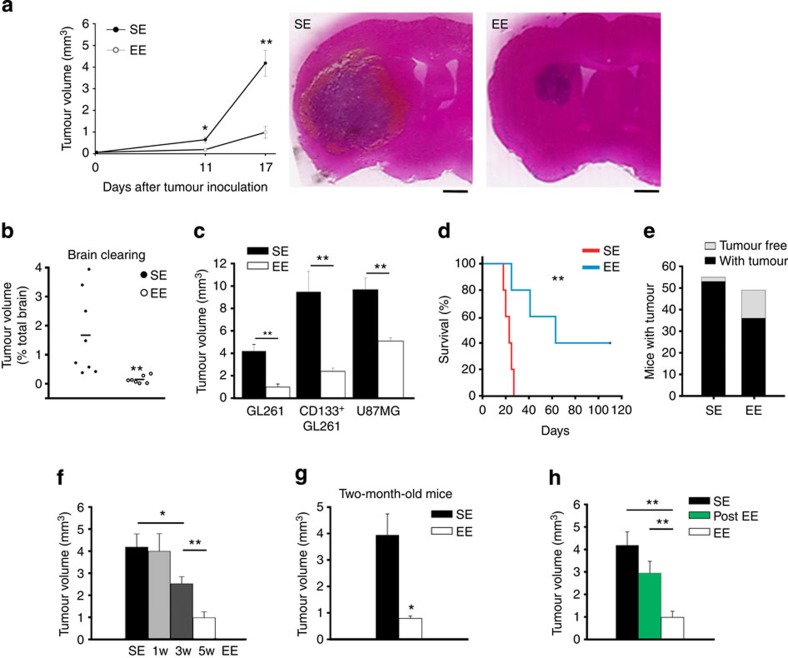
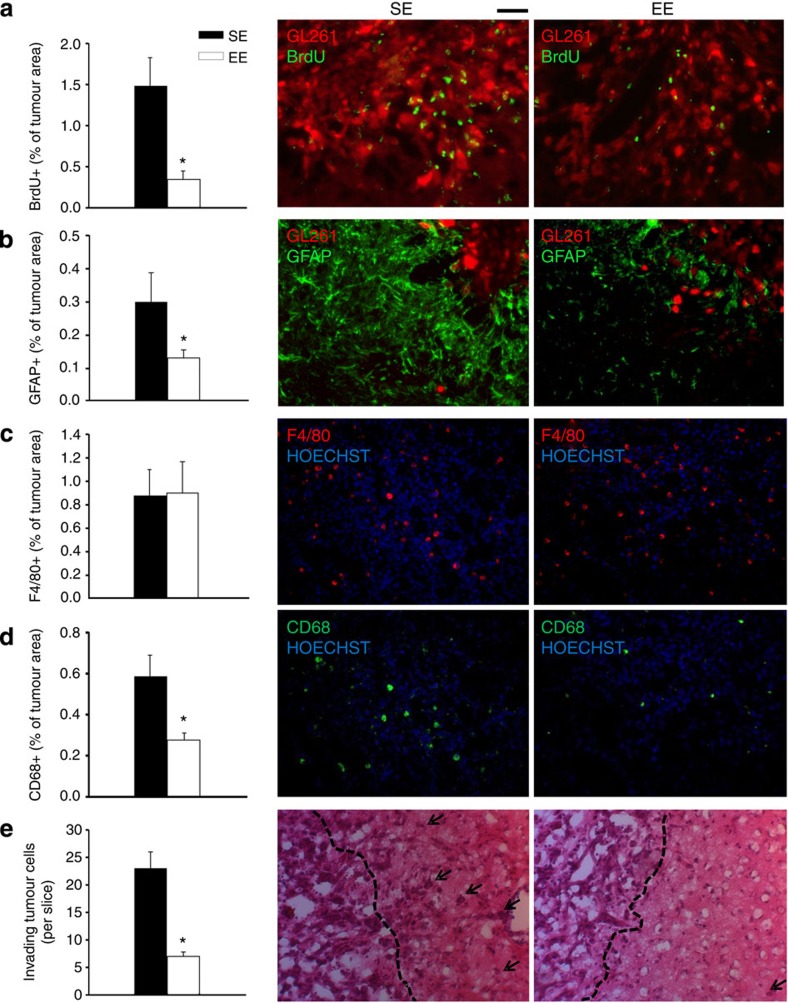
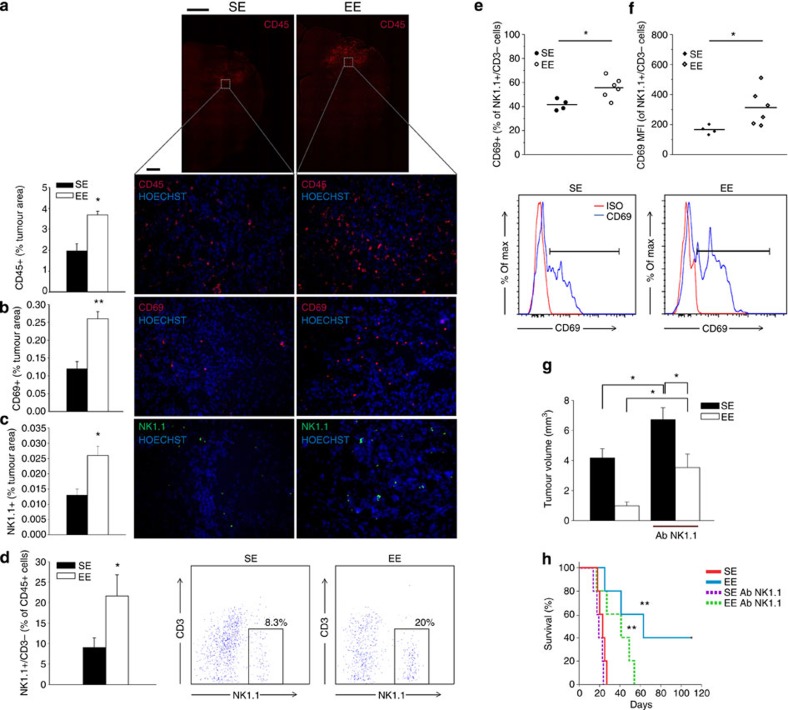
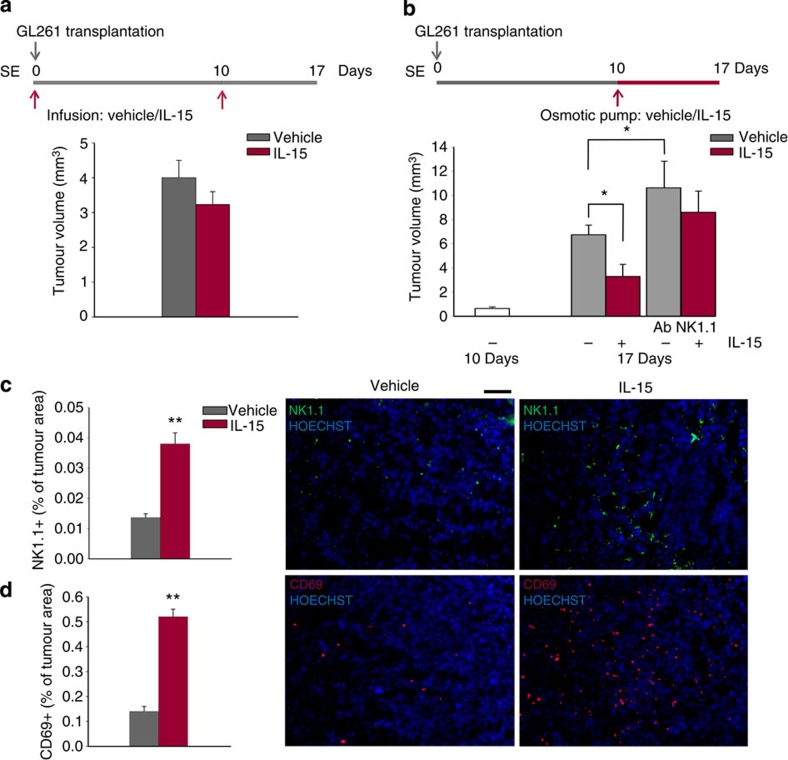
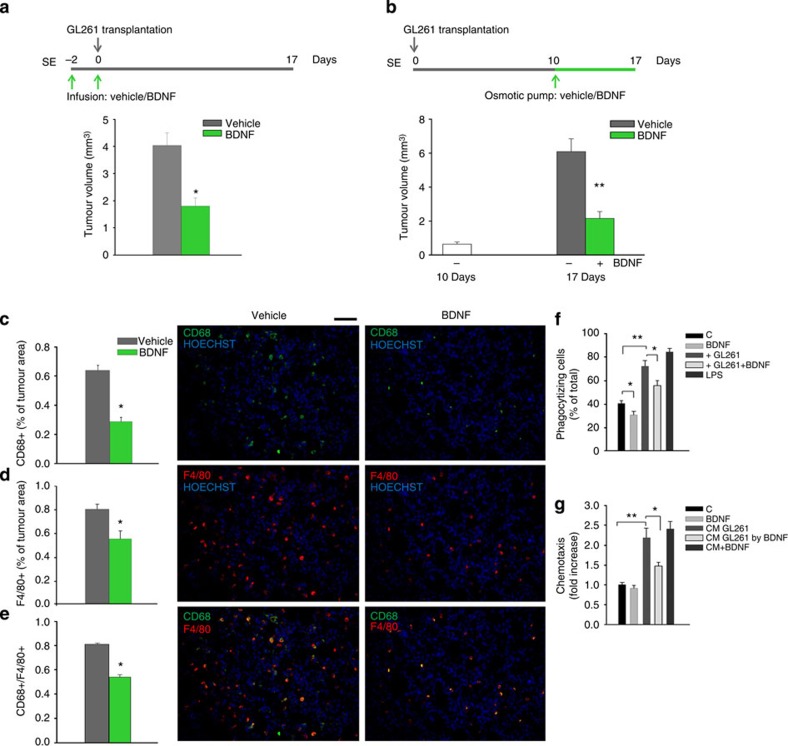
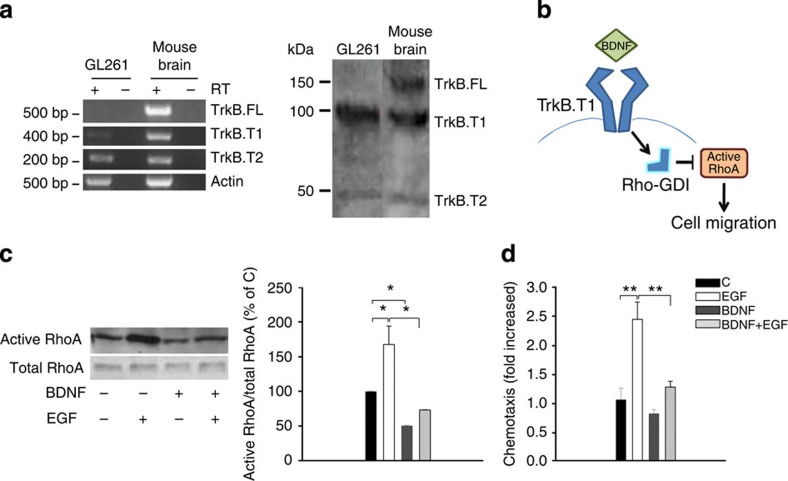
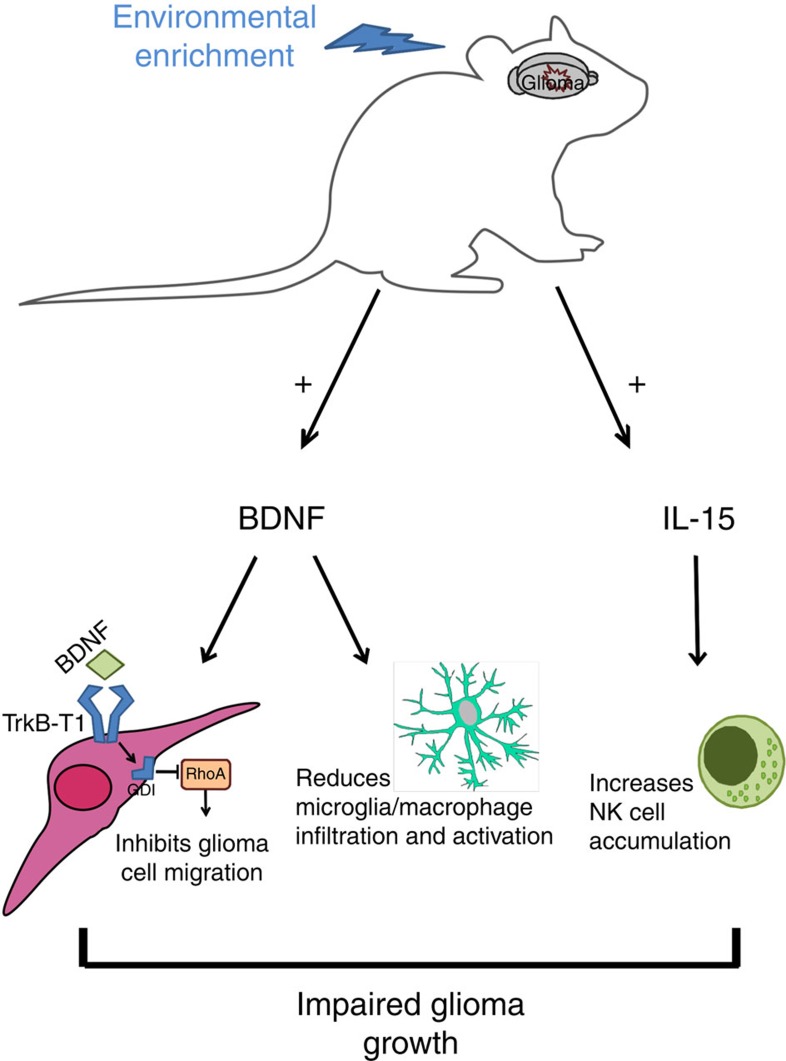
Mice exposed to standard (SE) or enriched environment (EE) were transplanted with murine or human glioma cells and differences in tumour development were evaluated. We report that EE exposure affects: (i) tumour size, increasing mice survival; (ii) glioma establishment, proliferation and invasion; (iii) microglia/macrophage (M/Mφ) activation; (iv) natural killer (NK) cell infiltration and activation; and (v) cerebral levels of IL-15 and BDNF. Direct infusion of IL-15 or BDNF in the brain of mice transplanted with glioma significantly reduces tumour growth. We demonstrate that brain infusion of IL-15 increases the frequency of NK cell infiltrating the tumour and that NK cell depletion reduces the efficacy of EE and IL-15 on tumour size and of EE on mice survival. BDNF infusion reduces M/Mφ infiltration and CD68 immunoreactivity in tumour mass and reduces glioma migration inhibiting the small G protein RhoA through the truncated TrkB.T1 receptor. These results suggest alternative approaches for glioma treatment.
Overview
The claims and statistics of this paper haven’t been checked yet.
Free: it reads the open-access text and checks the first 5 claims that cite a source we can check. Create a free account to check every claim.
Integrity signals
Registry
Cites
Statistics
Figures
Verification
Claims the paper makes
The claims and statistics of this paper haven’t been checked yet.
Free: it reads the open-access text and checks the first 5 claims that cite a source we can check. Create a free account to check every claim.
Claims other papers make about this one
Each is checked against this paper’s own text: does it say what the citing paper says it does?
The cited source says what the claim attributes to it.
In the citing paper
“BDNF binding the TrkB.T1 receptor signals to the Rho protein dissociation inhibitor (RhoGDI), the latter detaches from TrkB.T1 and binds to the small G protein RhoA, leading to its inhibition.”
From Neurotrophic Factor BDNF, Physiological Functions and Therapeutic Potential in Depression, Neurodegeneration and Brain Cancer (2020) · cites this paper as [259]
The cited source says what the claim attributes to it.
In the citing paper
“However, recently another study showed that exposing mice to an enriched environment is able to decrease the growth of intracranial glioma, decreasing proliferation and invasion, and improving overall survival.”
From Neurotrophic Factor BDNF, Physiological Functions and Therapeutic Potential in Depression, Neurodegeneration and Brain Cancer (2020) · cites this paper as [259]
The cited source says what the claim attributes to it.
In the citing paper
“Thus, showing that at least in part, BDNF accounts for the oncolytic effect elicited by the enriched environment [259].”
From Neurotrophic Factor BDNF, Physiological Functions and Therapeutic Potential in Depression, Neurodegeneration and Brain Cancer (2020) · cites this paper as [259]
The cited source says what the claim attributes to it.
In the citing paper
“When mice bearing the glioma and not housed in enriched environments were infused with BDNF, they reduced tumor size and macrophage infiltration.”
From Neurotrophic Factor BDNF, Physiological Functions and Therapeutic Potential in Depression, Neurodegeneration and Brain Cancer (2020) · cites this paper as [259]
The cited source says what the claim attributes to it.
In the citing paper
“Such an effect is achieved by means of both indirect and direct mechanisms. The former acts via natural killer cells of the innate immune system, whereas the latter utilizes BDNF stimulation of its truncated receptor TrkB.T1 on glioma cancer cells.”
From Neurotrophic Factor BDNF, Physiological Functions and Therapeutic Potential in Depression, Neurodegeneration and Brain Cancer (2020) · cites this paper as [259]
Self-check
Percentages, sums and reported differences re-computed from the paper’s own numbers.
The self-check needs the paper’s full text.
Citations
Cites
Analyzing real-time PCR data by the comparative CT method
Schmittgen, T. D., & Livak, K. J. (2008) · Nature Protocols · doi:10.1038/nprot.2008.73 · Cited by 26,190
Running enhances neurogenesis, learning, and long-term potentiation in mice
van Praag, H., Christie, B. R., Sejnowski, T. J., & Gage, F. H. (1999) · Proceedings of the National Academy of Sciences · doi:10.1073/pnas.96.23.13427 · Cited by 2,904
Microglia promote learning-dependent synapse formation through brain-derived neurotrophic factor
Parkhurst, C. N., Yang, G., Ninan, I., Savas, J. N., Yates, J. R., Lafaille, J. J., Hempstead, B. L., Littman, D. R., & Gan, W.-B. (2013) · Cell · doi:10.1016/j.cell.2013.11.030 · Cited by 2,599
Neural consequences of enviromental enrichment
van Praag, H., Kempermann, G., & Gage, F. H. (2000) · Nature Reviews Neuroscience · doi:10.1038/35044558 · Cited by 2,468
Enriched environments, experience-dependent plasticity and disorders of the nervous system
Nithianantharajah, J., & Hannan, A. J. (2006) · Nature Reviews Neuroscience · doi:10.1038/nrn1970 · Cited by 1,771
Computer Control of Microscopes Using µManager
Edelstein, A., Amodaj, N., Hoover, K., Vale, R., & Stuurman, N. (2010) · Current Protocols in Molecular Biology · doi:10.1002/0471142727.mb1420s92 · Cited by 1,670
Ca2+ Influx Regulates BDNF Transcription by a CREB Family Transcription Factor-Dependent Mechanism
Tao, X., Finkbeiner, S., Arnold, D. B., Shaywitz, A. J., & Greenberg, M. E. (1998) · Neuron · doi:10.1016/s0896-6273(00)81010-7 · Cited by 1,561
Ultramicroscopy: three-dimensional visualization of neuronal networks in the whole mouse brain
Dodt, H.-U., Leischner, U., Schierloh, A., Jährling, N., Mauch, C. P., Deininger, K., Deussing, J. M., Eder, M., Zieglgänsberger, W., & Becker, K. (2007) · Nature Methods · doi:10.1038/nmeth1036 · Cited by 1,238
Neeper, S. A., Gómez-Pinilla, F., Choi, J., & Cotman, C. W. (1996) · Brain Research · doi:10.1016/0006-8993(96)00273-9 · Cited by 1,014
Three-dimensional imaging of solvent-cleared organs using 3DISCO
Ertürk, A., Becker, K., Jährling, N., Mauch, C. P., Hojer, C. D., Egen, J. G., Hellal, F., Bradke, F., Sheng, M., & Dodt, H.-U. (2012) · Nature Protocols · doi:10.1038/nprot.2012.119 · Cited by 992
Wang, H.-X. (2002) · American Journal of Epidemiology · doi:10.1093/aje/155.12.1081 · Cited by 967
Long-Term Environmental Enrichment Leads to Regional Increases in Neurotrophin Levels in Rat Brain
Ickes, B. R., Pham, T. M., Sanders, L. A., Albeck, D. S., Mohammed, A. H., & Granholm, A.-C. (2000) · Experimental Neurology · doi:10.1006/exnr.2000.7415 · Cited by 541
Benaroya‐Milshtein, N., Hollander, N., Apter, A., Kukulansky, T., Raz, N., Wilf, A., Yaniv, I., & Pick, C. G. (2004) · European Journal of Neuroscience · doi:10.1111/j.1460-9568.2004.03587.x · Cited by 439
Environment and Brain Plasticity: Towards an Endogenous Pharmacotherapy
Sale, A., Berardi, N., & Maffei, L. (2014) · Physiological Reviews · doi:10.1152/physrev.00036.2012 · Cited by 402
Brain-derived neurotrophic factor: a dynamic gatekeeper of neural plasticity.
Cowansage, K., LeDoux, J., & Monfils, M.-H. (2010) · Current Molecular Pharmacology · doi:10.2174/1874467211003010012 · Cited by 372
Cao, L., Liu, X., Lin, E.-J. D., Wang, C., Choi, E. Y., Riban, V., Lin, B., & During, M. J. (2010) · Cell · doi:10.1016/j.cell.2010.05.029 · Cited by 369
Interleukin-15 biology and its therapeutic implications in cancer
Steel, J. C., Waldmann, T. A., & Morris, J. C. (2012) · Trends in Pharmacological Sciences · doi:10.1016/j.tips.2011.09.004 · Cited by 361
Oliff, H. S., Berchtold, N. C., Isackson, P., & Cotman, C. W. (1998) · Molecular Brain Research · doi:10.1016/s0169-328x(98)00222-8 · Cited by 361
The molecular profile of microglia under the influence of glioma
Li, W., & Graeber, M. B. (2012) · Neuro-Oncology · doi:10.1093/neuonc/nos116 · Cited by 340
Tao, X., West, A. E., Chen, W. G., Corfas, G., & Greenberg, M. E. (2002) · Neuron · doi:10.1016/s0896-6273(01)00561-x · Cited by 339
Nithianantharajah, J., & Hannan, A. J. (2009) · Progress in Neurobiology · doi:10.1016/j.pneurobio.2009.10.001 · Cited by 320
Marlatt, M. W., Potter, M. C., Lucassen, P. J., & van Praag, H. (2012) · Developmental Neurobiology · doi:10.1002/dneu.22009 · Cited by 314
On whether the environmental enrichment may provide cognitive and brain reserves
Petrosini, L., De Bartolo, P., Foti, F., Gelfo, F., Cutuli, D., Leggio, M. G., & Mandolesi, L. (2009) · Brain Research Reviews · doi:10.1016/j.brainresrev.2009.07.002 · Cited by 233
Glioma Grade Is Associated with the Accumulation and Activity of Cells Bearing M2 Monocyte Markers
Prosniak, M., Harshyne, L. A., Andrews, D. W., Kenyon, L. C., Bedelbaeva, K., Apanasovich, T. V., Heber-Katz, E., Curtis, M. T., Cotzia, P., & Hooper, D. C. (2013) · Clinical Cancer Research · doi:10.1158/1078-0432.ccr-12-1940 · Cited by 203
Rosa, A., & Brivanlou, A. H. (2011) · The EMBO Journal · doi:10.1038/emboj.2010.319 · Cited by 198
Self-citationRegulation of Mitogen-Activated Protein Kinases in Cardiac Myocytes through the Small G Protein Rac1
Clerk, A., Pham, F. H., Fuller, S. J., Sahai, E. A., Aktories, K., Marais, R., Marshall, C., & Sugden, P. H. (2001) · Molecular and Cellular Biology · doi:10.1128/mcb.21.4.1173-1184.2001 · Cited by 171
The p75 Neurotrophin Receptor Is a Central Regulator of Glioma Invasion
Johnston, A. L. M., Lun, X., Rahn, J. J., Liacini, A., Wang, L., Hamilton, M. G., Parney, I. F., Hempstead, B. L., Robbins, S. M., Forsyth, P. A., et al. (2007) · PLoS Biology · doi:10.1371/journal.pbio.0050212 · Cited by 167
Chemokine CX3CL1 protects rat hippocampal neurons against glutamate-mediated excitotoxicity
Limatola, C., Lauro, C., Catalano, M., Ciotti, M. T., Bertollini, C., Di Angelantonio, S., Ragozzino, D., & Eusebi, F. (2005) · Journal of Neuroimmunology · doi:10.1016/j.jneuroim.2005.03.023 · Cited by 153
Self-citationBone marrow versus thymic pathways of natural killer cell development
Di Santo, J. P., & Vosshenrich, C. A. J. (2006) · Immunological Reviews · doi:10.1111/j.1600-065x.2006.00461.x · Cited by 119
Impact of brief exercise on peripheral blood NK cell gene and microRNA expression in young adults
Radom‐Aizik, S., Zaldivar, F. P., Haddad, F., & Cooper, D. M. (2013) · Journal of Applied Physiology · doi:10.1152/japplphysiol.01341.2012 · Cited by 118
Targeting glioblastoma with NK cells and mAb against NG2/CSPG4 prolongs animal survival
Poli, A., Wang, J., Domingues, O., Planagumà, J., Yan, T., Rygh, C. B., Skaftnesmo, K. O., Thorsen, F., McCormack, E., Hentges, F., et al. (2013) · Oncotarget · doi:10.18632/oncotarget.1291 · Cited by 115
IL-15 is chemotactic for natural killer cells and stimulates their adhesion to vascular endothelium
Allavena, P., Giardina, G., Bianchi, G., & Mantovani, A. (1997) · Journal of Leukocyte Biology · doi:10.1002/jlb.61.6.729 · Cited by 101
Johnson, R. A., & Mitchell, G. S. (2003) · Brain Research · doi:10.1016/s0006-8993(03)03039-7 · Cited by 96
Amaral, O. B., Vargas, R. S., Hansel, G., Izquierdo, I., & Souza, D. O. (2007) · Physiology & Behavior · doi:10.1016/j.physbeh.2007.09.009 · Cited by 82
Estess, P., Nandi, A., Mohamadzadeh, M., & Siegelman, M. H. (1999) · The Journal of Experimental Medicine · doi:10.1084/jem.190.1.9 · Cited by 80
Effects of Enriched Environment on COX-2, Leptin and Eicosanoids in a Mouse Model of Breast Cancer
Nachat, R., Pinel, A., Combe, K., Lamas, B., Farges, M., Rossary, A., Gonçalves-Mendes, N., Caldefie‐Chezet, F., Vasson, M., & Basu, S. (2012) · PLoS ONE · doi:10.1371/journal.pone.0051525 · Cited by 79
ProBDNF and its receptors are upregulated in glioma and inhibit the growth of glioma cells in vitro
Xiong, J., Zhou, L., Yang, M., Lim, Y. P., Zhu, Y., Fu, D., Li, Z., Zhong, J., Xiao, Z., & Zhou, X. (2013) · Neuro-Oncology · doi:10.1093/neuonc/not039 · Cited by 79
TrkB-T1 regulates the RhoA signaling and actin cytoskeleton in glioma cells
Ohira, K., Homma, K. J., Hirai, H., Nakamura, S., & Hayashi, M. (2006) · Biochemical and Biophysical Research Communications · doi:10.1016/j.bbrc.2006.02.033 · Cited by 72
Forsyth, P. A., Krishna, N., Lawn, S., Valadez, J. G., Qu, X., Fenstermacher, D. A., Fournier, M., Potthast, L., Chinnaiyan, P., Gibney, G. T., et al. (2014) · Journal of Biological Chemistry · doi:10.1074/jbc.m113.513762 · Cited by 67
Nithianantharajah, J., & Hannan, A. J. (2010) · Progress in Neuro-Psychopharmacology and Biological Psychiatry · doi:10.1016/j.pnpbp.2010.10.026 · Cited by 66
Bengoetxea, H., Ortuzar, N., Bulnes, S., Rico-Barrio, I., Lafuente, J. V., & Argandoña, E. G. (2012) · Neural Plasticity · doi:10.1155/2012/305693 · Cited by 55
Mature BDNF promotes the growth of glioma cells in vitro
XIONG, J., ZHOU, L., LIM, Y., YANG, M., ZHU, Y.-H., LI, Z.-W., ZHOU, F. H., XIAO, Z.-C., & ZHOU, X.-F. (2013) · Oncology Reports · doi:10.3892/or.2013.2746 · Cited by 45
Environmental Enrichment Augments the Efficacy of Idiotype Vaccination for B-cell Lymphoma
Benaroya-Milshtein, N., Apter, A., Yaniv, I., Kukulansky, T., Raz, N., Haberman, Y., Halpert, H., Pick, C. G., & Hollander, N. (2007) · Journal of Immunotherapy · doi:10.1097/cji.0b013e31804efc5e · Cited by 28
Environmental enrichment does not impact on tumor growth in mice
Westwood, J. A., Darcy, P. K., & Kershaw, M. H. (2013) · F1000Research · doi:10.12688/f1000research.2-140.v1 · Cited by 23
Cited by
Colucci-D’Amato, L., Speranza, L., & Volpicelli, F. (2020) · International Journal of Molecular Sciences · doi:10.3390/ijms21207777 · Cited by 991
Tissue clearing and its applications in neuroscience
Ueda, H. R., Ertürk, A., Chung, K., Gradinaru, V., Chédotal, A., Tomancak, P., & Keller, P. J. (2020) · Nature Reviews Neuroscience · doi:10.1038/s41583-019-0250-1 · Cited by 609
Microglial cell dysregulation in brain aging and neurodegeneration
von Bernhardi, R., Eugenín-von Bernhardi, L., & Eugenín, J. (2015) · Frontiers in Aging Neuroscience · doi:10.3389/fnagi.2015.00124 · Cited by 556
“Although most of reports are related to the effect of BDNF on neuron function and survival, there are reports on its effect on inhibiting activation of microglia (Garofalo et al., 2015).”
BackgroundTargeting the Notch-regulated non-coding RNA TUG1 for glioma treatment
Katsushima, K., Natsume, A., Ohka, F., Shinjo, K., Hatanaka, A., Ichimura, N., Sato, S., Takahashi, S., Kimura, H., Totoki, Y., et al. (2016) · Nature Communications · doi:10.1038/ncomms13616 · Cited by 352
Radiation-Induced Targeted Nanoparticle-Based Gene Delivery for Brain Tumor Therapy
Erel-Akbaba, G., Carvalho, L. A., Tian, T., Zinter, M., Akbaba, H., Obeid, P. J., Chiocca, E. A., Weissleder, R., Kantarci, A. G., & Tannous, B. A. (2019) · ACS Nano · doi:10.1021/acsnano.8b08177 · Cited by 202
Metadata
- Authors
- Garofalo, S., D’Alessandro, G., Chece, G., Brau, F., Maggi, L., Rosa, A., Porzia, A., Mainiero, F., Esposito, V., Lauro, C., Benigni, G., Bernardini, G., Santoni, A., & Limatola, C.
- Affiliations
- Istituto Pasteur (IT)
- Sapienza University of Rome (IT)
- Istituto Neurologico Mediterraneo (IT)
- Corresponding author
- Limatola, Cristina
- ORCID
- Venue
- Nature Communications
- Published
- 2015-03-30
- Volume
- 6
- Issue
- 1
- Pages
- 6623-6623
- ISSN
- 2041-1723 (ISSN-L)
- PMC
- PMC4389244
- OpenAlex
- W2044528599
- Semantic Scholar
- 9273d47446b62d31a34089c4fdd65d16f92af68c
- Cited by
- 129
- References
- 44
- Citations by year
- 2026: 6 · 2025: 5 · 2024: 6 · 2023: 13 · 2022: 15 · 2021: 19 · 2020: 14 · 2019: 9 · 2018: 18 · 2017: 10 · 2016: 11 · 2015: 3
- FWCI
- 7.84
- Type
- journal article
- Language
- en
- Open access
- gold
- doi.org
- Licence
- cc-by
- creativecommons.org/licenses/by/4.0 (tdm)
- creativecommons.org/licenses/by/4.0 (vor)
- Locations
- Nature Communications (publishedVersion, cc-by)
- PubMed Central (publishedVersion, cc-by)
- PubMed (publishedVersion)
- IRIS Research product catalog (Sapienza University of Rome) (submittedVersion, cc-by)
- RePEc: Research Papers in Economics (submittedVersion)
- Funders
- Sapienza Università di Roma
- Associazione Italiana per la Ricerca sul Cancro (IG-2014, IG2012)
- Topics
- Health Sciences › Medicine › Oncology › Glioma Diagnosis and Treatment
- Life Sciences › Biochemistry, Genetics and Molecular Biology › Cancer Research › Cancer, Stress, Anesthesia, and Immune Response
- Life Sciences › Neuroscience › Neurology › Neuroinflammation and Neurodegeneration Mechanisms
- Keywords
- environmental enrichment, glioma, tumor growth, microglia/macrophage activation, natural killer cells, IL-15, brain-derived neurotrophic factor, RhoA, glioma invasion, tumor immunology, NK cell depletion
- MeSH terms
- CD68 Molecule, Animals, Environment, Glioma, Humans, Killer Cells, Natural, Macrophage Activation, Macrophages, Neoplasm Invasiveness, Neoplasm Transplantation, Physical Stimulation, Play and Playthings, Social Environment, Antigens, Differentiation, Myelomonocytic, Antigens, CD, Survival Rate, Microglia, Brain-Derived Neurotrophic Factor, Interleukin-15, rho GTP-Binding Proteins, rhoA GTP-Binding Protein, Receptor, trkB, Cell Line, Tumor, Tumor Burden, Cell Proliferation, Mice
About these checks
Registry, retraction, Cites and statistics results are computed, not judged, with one exception: a printed reference that no index lists is read once by a model before it counts as a citation error. Claims are extracted by a model and kept only when their quote appears verbatim in the text; each cited source is then checked, with a model’s help, for whether it says what the claim relies on. Those verdicts can be wrong — read the claim’s quote and the cited source before relying on one.
Statistics and arithmetic are recomputed, not judged.
Confidence bands are shown only for fields calibrated on our annotated test set. None is calibrated yet, so no band is shown.
What counts as a claim ›How we measure confidence ›How we check this ›
Are you an author, or do you see a problem with this page? Request a review
Data sources
Bibliographic data: Semantic Scholar, OpenAlex, Crossref.
Contains information from the Semantic Scholar Academic Graph Datasets, made available under the ODC Attribution License (ODC-BY 1.0).
Semantic Scholar’s data is described in: Kinney, R., et al. (2023). The Semantic Scholar Open Data Platform. arXiv:2301.10140.
