

Potential therapeutic target for aging and age-related neurodegenerative diseases: the role of acid sphingomyelinase
Open accessThe DOI matches its Crossref record; 103 of the 105 references it cites were found in a registry or an index.
Abstract
Aging, which is associated with age-related changes in physiological processes, is the most significant risk factor for the development and progression of neurodegenerative diseases, including Alzheimer’s disease and Parkinson’s disease. Accumulating evidence has indicated that sphingolipids are significant regulators that are associated with pathogenesis in aging and several age-related neurodegenerative diseases. In particular, abnormal levels of acid sphingomyelinase (ASM), one of the significant sphingolipid-metabolizing enzymes, have been found in the blood and some tissues under various neuropathological conditions. Moreover, recent studies have reported the importance of ASM as a critical mediator that contributes to pathologies in aging and age-related neurodegenerative diseases. In this review, we describe the pathophysiological processes that are regulated by ASM, focusing on the age-related neurodegenerative environment. Furthermore, we discuss novel insights into how new therapeutics targeting ASM may potentially lead to effective strategies to combat aging and age-related neurodegenerative diseases.
Overview
The claims and statistics of this paper haven’t been checked yet.
Free: it reads the open-access text and checks the first 5 claims that cite a source we can check. Create a free account to check every claim.
Integrity signals
Registry
Cites
Statistics
Figures
Verification
Claims the paper makes
The claims and statistics of this paper haven’t been checked yet.
Free: it reads the open-access text and checks the first 5 claims that cite a source we can check. Create a free account to check every claim.
Claims other papers make about this one
Each is checked against this paper’s own text: does it say what the citing paper says it does?
The source backs part of the claim, not all of it — or backs it for a different population, condition or comparison.
In the citing paper
“Additionally, vascular cell adhesion molecule 1 (VCAM1) and acid sphingomyelinase (ASM) play a curcial role in destroying the cerebrovascular system,393,394 while cyclophilin A (CyPA) decreases the levels of synapse-related proteins such as the NMDAR subunit NR2B and synaptophysin.395”
From Antiageing strategy for neurodegenerative diseases: from mechanisms to clinical advances (2025) · cites this paper as [394]
Experimental — accuracy not yet measuredThe check wasn’t confident either way, so it gives no verdict — never disputed.
In the citing paper
“For example, loss of function of PS1, mutations of which cause early-onset AD, alkalinize lysosomes.128”
From The lysosome and proteostatic stress at the intersection of pediatric neurological disorders and adult neurodegenerative diseases (2025) · cites this paper as [128]
Experimental — accuracy not yet measured
Self-check
Percentages, sums and reported differences re-computed from the paper’s own numbers.
The self-check needs the paper’s full text.
Citations
Cites
López-Otín, C., Blasco, M. A., Partridge, L., Serrano, M., & Kroemer, G. (2013) · Cell · doi:10.1016/j.cell.2013.05.039 · Cited by 14,982
Autophagy: cellular and molecular mechanisms
Glick, D., Barth, S., & Macleod, K. F. (2010) · The Journal of Pathology · doi:10.1002/path.2697 · Cited by 3,802
Principles of bioactive lipid signalling: lessons from sphingolipids
Hannun, Y. A., & Obeid, L. M. (2008) · Nature Reviews Molecular Cell Biology · doi:10.1038/nrm2329 · Cited by 3,333
The Blood-Brain Barrier in Health and Chronic Neurodegenerative Disorders
Zlokovic, B. V. (2008) · Neuron · doi:10.1016/j.neuron.2008.01.003 · Cited by 3,280
Blood–brain barrier breakdown in Alzheimer disease and other neurodegenerative disorders
Sweeney, M. D., Sagare, A. P., & Zlokovic, B. V. (2018) · Nature Reviews Neurology · doi:10.1038/nrneurol.2017.188 · Cited by 3,076
Caveolin, a protein component of caveolae membrane coats
Rothberg, K. G., Heuser, J. E., Donzell, W. C., Ying, Y.-S., Glenney, J. R., & Anderson, R. G. W. (1992) · Cell · doi:10.1016/0092-8674(92)90143-z · Cited by 2,258
Blood-brain barrier breakdown in the aging human hippocampus
Montagne, A., Barnes, S. R., Sweeney, M. D., Halliday, M. R., Sagare, A. P., Zhao, Z., Toga, A. W., Jacobs, R. E., Liu, C. Y., Amezcua, L., et al. (2015) · Neuron · doi:10.1016/j.neuron.2014.12.032 · Cited by 2,102
Sphingolipids and their metabolism in physiology and disease
Hannun, Y. A., & Obeid, L. M. (2018) · Nature Reviews Molecular Cell Biology · doi:10.1038/nrm.2017.107 · Cited by 2,051
Understanding the odd science of aging
Kirkwood, T. B. L. (2005) · Cell · doi:10.1016/j.cell.2005.01.027 · Cited by 1,984
Establishment and Dysfunction of the Blood-Brain Barrier
Zhao, Z., Nelson, A. R., Betsholtz, C., & Zlokovic, B. V. (2015) · Cell · doi:10.1016/j.cell.2015.10.067 · Cited by 1,670
Cited by
Fakhri, S., Iranpanah, A., Gravandi, M. M., Moradi, S. Z., Ranjbari, M., Majnooni, M. B., Echeverría, J., Qi, Y., Wang, M., Liao, P., et al. (2021) · Phytomedicine · doi:10.1016/j.phymed.2021.153664 · Cited by 175
Antiageing strategy for neurodegenerative diseases: from mechanisms to clinical advances
Jiang, Q., Liu, J., Huang, S., Wang, X.-Y., Chen, X., Liu, G.-H., Ye, K., Song, W., Masters, C. L., Wang, J., et al. (2025) · Signal Transduction and Targeted Therapy · doi:10.1038/s41392-025-02145-7 · Cited by 165
“320,392 Additionally, vascular cell adhesion molecule 1 (VCAM1) and acid sphingomye-linase (ASM) play a curcial role in destroying the cerebrovascular system, 393,394 while cyclophilin A (CyPA) decreases the levels of synapse-related proteins such as the NMDAR subunit NR2B and synaptophysin.”
Role of ceramide/sphingomyelin (SM) balance regulated through “SM cycle” in cancer
Taniguchi, M., & Okazaki, T. (2021) · Cellular Signalling · doi:10.1016/j.cellsig.2021.110119 · Cited by 121
Primary cilia and ciliary signaling pathways in aging and age-related brain disorders
Ma, R., Kutchy, N. A., Chen, L., Meigs, D. D., & Hu, G. (2022) · Neurobiology of Disease · doi:10.1016/j.nbd.2021.105607 · Cited by 114
Breiden, B., & Sandhoff, K. (2021) · International Journal of Molecular Sciences · doi:10.3390/ijms22169001 · Cited by 73
Skácel, J., Slusher, B. S., & Tsukamoto, T. (2021) · Journal of Medicinal Chemistry · doi:10.1021/acs.jmedchem.0c01664 · Cited by 67
Mapping the serum proteome to neurological diseases using whole genome sequencing
Png, G., Barysenka, A., Repetto, L., Navarro, P., Shen, X., Pietzner, M., Wheeler, E., Wareham, N. J., Langenberg, C., Tsafantakis, E., et al. (2021) · Nature Communications · doi:10.1038/s41467-021-27387-1 · Cited by 55
Gadd, D. A., Hillary, R. F., McCartney, D. L., Shi, L., Stolicyn, A., Robertson, N., Walker, R. M., McGeachan, R. I., Campbell, A., Shen, X., et al. (2022) · Nature Communications · doi:10.1038/s41467-022-32319-8 · Cited by 48
Diverse roles of ceramide in the progression and pathogenesis of Alzheimer's disease
Chowdhury, M. R., Jin, H. K., & Bae, J.-S. (2022) · Biomedicines · doi:10.3390/biomedicines10081956 · Cited by 47
“The bioactive metabolites of sphingolipids, including ceramide, sphingomyelin, sphingosine, and sphingosine-1-phosphate (S1P) are synthesized by a variety of enzymatic biosynthesis pathways [6].”
BackgroundSelf-citationSickle cell disease as an accelerated aging syndrome
Idris, I. M., Botchwey, E. A., & Hyacinth, H. I. (2022) · Experimental Biology and Medicine · doi:10.1177/15353702211068522 · Cited by 46
Membrane lipid raft homeostasis is directly linked to neurodegeneration
Moll, T., Marshall, J. N. G., Soni, N., Zhang, S., Cooper‐Knock, J., & Shaw, P. J. (2021) · Essays in Biochemistry · doi:10.1042/ebc20210026 · Cited by 44
Ghassab, F. T., Mahmoudi, F. S., Tinjani, R. T., Meibodi, A. E., Zali, M. R., & Yadegar, A. (2024) · Life Sciences · doi:10.1016/j.lfs.2024.122748 · Cited by 41
Acid Sphingomyelinase Deficiency: A Clinical and Immunological Perspective
Pinto, C., Sousa, D., Ghilas, V., Dardis, A., Scarpa, M., & Macedo, M. F. (2021) · International Journal of Molecular Sciences · doi:10.3390/ijms222312870 · Cited by 40
“Regarding other effects of ASM, besides its role on the immune system, more details can be found in recent review papers, namely Henry et al. 2013, Park et al. 2020 and Perrotta et al. 2015 [44–46].”
BackgroundRajendran, P., Al‐Saeedi, F. J., Ammar, R. B., Abdallah, B. M., Ali, E. M., Abdulsalam, N. K. A., Tejavat, S., Althumairy, D., Veeraraghavan, V. P., Alamer, S. A., et al. (2024) · Aging · doi:10.18632/aging.205677 · Cited by 39
“Aging is a natural phenomenon associated with an increase in reactive oxygen species and then a dysfunction in the antioxidant defense system, leading to a higher risk of diseases such as Alzheimer’s, cancer and heart diseases [2].”
Choi, B. J., Park, M. H., Jin, H. K., & Bae, J. (2024) · Experimental & Molecular Medicine · doi:10.1038/s12276-024-01176-4 · Cited by 37
“Previous studies have demonstrated that high ASM expression or activity is associated with the induction and progression of these pathological features 15,18,19,21,24 – 26 .”
BackgroundInfluentialSelf-citationKim, S. Y., & Cheon, J. (2024) · Ageing Research Reviews · doi:10.1016/j.arr.2024.102446 · Cited by 36
Park, M. H., Park, K. H., Choi, B. J., Han, W. H., Yoon, H. J., Jung, H. Y., Lee, J., Song, I., Lim, D. Y., Choi, M., et al. (2022) · Proceedings of the National Academy of Sciences · doi:10.1073/pnas.2115082119 · Cited by 30
Self-citationSphingomyelinase modulates synaptic vesicle mobilization at the mice neuromuscular junctions
Tsentsevitsky, A. N., Gafurova, C. R., Mukhutdinova, K. A., Giniatullin, А. R., Fedorov, N. S., Malomouzh, A. I., & Petrov, A. M. (2023) · Life Sciences · doi:10.1016/j.lfs.2023.121507 · Cited by 27
Acid sphingomyelinase promotes SGK1-dependent vascular calcification
Luong, T. T. D., Tuffaha, R., Schuchardt, M., Moser, B., Schelski, N., Boehme, B., Gollmann‐Tepeköylü, C., Schramm, C., Holfeld, J., Pieske, B. M., et al. (2021) · Clinical Science · doi:10.1042/cs20201122 · Cited by 21
“ASM and ceramide are implicated in the development of endothelial dysfunction and atherosclerosis [65], as well as cardiac dysfunction [68].”
Rühling, M., Kersting, L., Wagner, F., Schumacher, F., Wigger, D., Helmerich, D. A., Pfeuffer, T., Elflein, R., Kappe, C., Sauer, M., et al. (2024) · Nature Communications · doi:10.1038/s41467-024-51874-w · Cited by 20
“Acid sphingomyelinase (ASM) is the best-studied variant because of its link to many prevalent diseases such as major depression 20,21 , cardiovascular 22 , or neurodegenerative 23 diseases.”
The Quest for Eternal Youth: Hallmarks of Aging and Rejuvenating Therapeutic Strategies
Nunkoo, V. S., Cristian, A., Jurcău, A., Diaconu, R. G., & Jurcău, M. C. (2024) · Biomedicines · doi:10.3390/biomedicines12112540 · Cited by 19
Zhang, T., Zhang, Y., Xie, J., Lu, D., Wang, L., Zhao, S., Zhou, J., Cheng, Y., Kou, T., Wang, J., et al. (2025) · Frontiers in Cell and Developmental Biology · doi:10.3389/fcell.2025.1577382 · Cited by 15
Signatures of adaptive evolution in platyrrhine primate genomes
Byrne, H., Webster, T. H., Brosnan, S. F., Izar, P., & Lynch, J. W. (2022) · Proceedings of the National Academy of Sciences · doi:10.1073/pnas.2116681119 · Cited by 16
Immunotherapy targeting plasma ASM is protective in a mouse model of Alzheimer’s disease
Choi, B. J., Park, M. H., Park, K. H., Han, W. H., Yoon, H. J., Jung, H. Y., Hong, J. Y., Chowdhury, M. R., Kim, K. Y., Lee, J., et al. (2023) · Nature Communications · doi:10.1038/s41467-023-37316-z · Cited by 15
Self-citationNanoreporter Identifies Lysosomal Storage Disease Lipid Accumulation Intracranially
Antman‐Passig, M., Yaari, Z. A., Goerzen, D., Parikh, R., Chatman, S., Komer, L. E., Chen, C., Grabarnik, E., Mathieu, M., Haimovitz‐Friedman, A., et al. (2023) · Nano Letters · doi:10.1021/acs.nanolett.3c02502 · Cited by 15
Epigenetic scores for the circulating proteome as tools for disease predictionPreprint
Gadd, D. A., Hillary, R. F., McCartney, D. L., Zaghlool, S. B., Stevenson, A. J., Nangle, C., Campbell, A., Flaig, R., Harris, S. E., Walker, R. M., et al. (2020) · bioRxiv (Cold Spring Harbor Laboratory) · doi:10.1101/2020.12.01.404681 · Cited by 15
“20 (Cataldo et al., 2004; Kamil et al., 2016; Lee et al., 2014; Park et al., 2020) and has been 387 shown to disrupt autophagic protein degradation and associate with accumulation of amyloid388”
BackgroundInfluentialNatural products as geroprotectors: An autophagy perspective
Raj, S. D., Fann, D. Y., Wong, E. S. P., & Kennedy, B. K. (2021) · Medicinal Research Reviews · doi:10.1002/med.21815 · Cited by 12
Aberrant CHCHD2-associated mitochondriopathy in Kii ALS/PDC astrocytes
Leventoux, N., Morimoto, S., Ishikawa, M., Nakamura, S., Ozawa, F., Kobayashi, R., Watanabe, H., Supakul, S., Okamoto, S., Zhou, Z., et al. (2024) · Acta Neuropathologica · doi:10.1007/s00401-024-02734-w · Cited by 11
“Aging is a major risk factor for neurodegenerative diseases [113].”
Bioactive Compounds of Algae: Potential Neuroprotective Agents in Neurodegenerative Disorders
Paranthaman, S., & Palraj, P. (2024) · Springer eBooks · doi:10.1007/978-981-99-7269-2_12 · Cited by 11
Choi, B. J., Park, K. H., Park, M. H., Huang, E. J., Kim, S. H., Bae, J., & Jin, H. K. (2022) · BMB Reports · doi:10.5483/bmbrep.2022.55.12.142 · Cited by 10
“have shown that the activity or expression of ASM increases in several neurodegenerative diseases, including Alzheimer’s disease, Parkinson’s disease, and ALS (14-17).”
BackgroundSelf-citationDas, S. K., Sen, K., Sanyal, T., Saha, A., & Madhu, N. R. (2024) · Springer eBooks · doi:10.1007/978-981-99-7269-2_11 · Cited by 8
He, G., Qiu, M., Yang, Z., Zhao, K., Liu, R., Mei, H., Zhao, X., Song, T., Liu, X., Zhang, M., et al. (2024) · Journal of Agricultural and Food Chemistry · doi:10.1021/acs.jafc.4c00014 · Cited by 8
Verma, B., Sinha, P., & Ganesh, S. (2022) · Journal of Ayurveda and Integrative Medicine · doi:10.1016/j.jaim.2022.100636 · Cited by 8
“Intriguingly, ageing is the most significant risk factor for neurodegenerative diseases, such as Alzheimer's disease and Parkinson's disease [8,9].”
BackgroundFeto, N. A., Asuzu, P., Wan, J. Y., Stentz, F. B., Dagogo-Jack, S. E., & Mandal, N. A. (2025) · Biogerontology · doi:10.1007/s10522-025-10244-9 · Cited by 7
“…enzyme that hydrolyzes SM to ceramides, has been speculated to have a role in maintaining plasma SM levels and may play important roles in SM, ceramide ratio in plasma and has been investigated as a target for novel therapies for age-associated diseases (Henry et al. 2013; Park et al. 2020, 2018).”
Increased acid sphingomyelinase levels in pediatric patients with obesity
Mameli, C., Carnovale, C., Ambrogi, F., Infante, G., Roux-Biejat, P., Napoli, A., Coazzoli, M., Calcaterra, V., Schneider, L. A., Perazzi, C., et al. (2022) · Scientific Reports · doi:10.1038/s41598-022-14687-9 · Cited by 7
In Silico Analysis of the Molecular-Level Impact of SMPD1 Variants on Niemann-Pick Disease Severity
Ancien, F., Pucci, F., & Rooman, M. J. (2021) · International Journal of Molecular Sciences · doi:10.3390/ijms22094516 · Cited by 7
“Moreover, as ceramide is a mediator involved in several signaling pathways, SMPD1 also plays an indirect role into downstream signaling processes including cell survival, proliferation, permeability and differentiation [3,4].”
BackgroundWang, M., Wei, T., Yu, C., Li, R., Yin, Y., Yang, H.-C., Di, R., Xia, X., Qin, Q., & Tang, Y. (2023) · Molecular Neurobiology · doi:10.1007/s12035-023-03840-8 · Cited by 6
“…of ion channels and neuronal surface receptors [9], also seem to be important for the development with AD, as patients with AD have significantly increased plasma acid sphingolipids (ASM) levels compared with healthy older adults, and restoring normal ASM levels can improve AD pathology [10].”
Mehrabi, M., Bijari, N., Akbari, V., Ranjbar, S., Karima, S., Sankian, M., Ojaghi, S., & Khodarahmi, R. (2023) · Current Protein and Peptide Science · doi:10.2174/1389203724666230530143704 · Cited by 5
Factors Associated with Plasma Malondialdehyde Levels in People over 40 Years
Meiyanti, M., Yohana, Y., Margo, E., Chudri, J., Pusparini, P., & Faradilla, M. A. (2023) · Journal of Drug Delivery and Therapeutics · doi:10.22270/jddt.v13i7.6142 · Cited by 5
Prosaposin Is Cleaved Into Saposins by Multiple Cathepsins in a Progranulin‐Regulated Fashion
Hodul, M., Lane‐Donovan, C., Cheang, E. S., Gao, V., Sampognaro, P. J., Mambou, E. A., Yang, Z., & Kao, A. W. (2026) · Journal of Neurochemistry · doi:10.1111/jnc.70357 · Cited by 4
Chen, Y., Liu, H., Luo, Z., Zhang, J., Dong, M., Yin, G., & Xie, Q. (2024) · Skeletal Muscle · doi:10.1186/s13395-024-00347-1 · Cited by 4
“…signaling pathway, regulated by ASM, has been implicated in various diseases such as cancer [17], cardiovascular diseases like atherosclerosis [18], neurological disorders including Alzheimer’s disease [19], and respiratory conditions like chronic obstructive pulmonary disease [20].”
BackgroundLane-Donovan, C., Paredes, M., & Kao, A. W. (2025) · Progress in Neurobiology · doi:10.1016/j.pneurobio.2025.102854 · Cited by 3
Biswas, P., Rahman, M. H., Tabassum, A., Shoyshob, T. Z., Jalouli, M., Tareq, M. M. I., Imtiaz, M., Dona, H. A., Harrath, A. H., & Rahman, M. A. (2025) · Advances in Pharmacological and Pharmaceutical Sciences · doi:10.1155/adpp/8847508 · Cited by 3
Ibrahim, M., Khalil, A. M., Attia, H., Alseekh, S., Mohamed, A. F., & El-Yamany, M. F. (2026) · Journal of Neuroimmune Pharmacology · doi:10.1007/s11481-025-10270-x · Cited by 3
“…2008), neurogenesis loss (Gulbins et al. 2013), BBB leakage ( Park et al. 2018 ), and inflammation (Chung et al. 2016; Bai and Guo 2017), indicating that ASM inhibition could be an important therapeutic target for addressing AD’s neuropathological features (Park et al. 2020; Park et al. 2022).”
Targeting immunometabolism in cancer through pharmacological and lifestyle interventions
Tan, R. J. Y., Liu, Y., Chen, W., Liang, Y., & Ling, G. S. (2026) · PLoS Biology · doi:10.1371/journal.pbio.3003617 · Cited by 3
“…that produces ceramide upon interaction with CD39 and CD161 on CD4 + T cells, is detectable at high levels in serum from older individuals [66]; the increased intracellular ceramide further signals STAT3 and mTOR activation and prompts T H 17 cell polarization, ultimately leading to…”
Artificial Cells for Cellular Behavior Mimicry Induced by Sphingomyelin Degradation
Wen, H.-Y., Zhu, H., Wen, H., Zhang, M., Wang, Z., & Liu, S. (2023) · Bioconjugate Chemistry · doi:10.1021/acs.bioconjchem.3c00123 · Cited by 3
Sheng, C., & Yue, R. (2025) · Journal of Ethnopharmacology · doi:10.1016/j.jep.2025.119338 · Cited by 2
Correlations between Aging, Telomeres, and Natural Compounds
Rakoczy, K., Wojdyło, L., Suwała, S., Klasen, K., Kuźnicki, J., Ziętek, M., & Kulbacka, J. (2025) · Aging and Disease · doi:10.14336/ad.2025.0853 · Cited by 2
Park, M. H., Jin, H., Choi, B. J., Yoon, H. J., Cheon, D. H., Jung, S., Kim, C., & Bae, J. (2025) · Critical Care · doi:10.1186/s13054-025-05814-9 · Cited by 2
“Moreover, future studies should also investigate the mechanistic role of ASM activation in endothelial injury and determine whether pharmacologic modulation of ASM activity can attenuate tissue damage and improve clinical outcomes in sepsis.”
Self-citationAin, Q., Schmeer, C. W., Wengerodt, D., Hofmann, Y., Witte, O. W., & Kretz, A. (2022) · International Journal of Molecular Sciences · doi:10.3390/ijms23063000 · Cited by 2
“Likewise, there are well-described aging-associated peculiarities in the lipid profile of CNS plasmalemma, arising from alterations in their biosynthesis, neuronal vesicle uptake, and inter- and intramembrane cholesterol trafficking, as well as the catabolism and content of glycosylated sphingolipids or gangliosides a…”
BackgroundDrug Development in the Field of Sphinogolipid Metabolism
Qu, Z., & Zhou, L. (2022) · Advances in experimental medicine and biology · doi:10.1007/978-981-19-0394-6_12 · Cited by 2
Multi-faceted small molecule for Alzheimer’s disease
Park, M. H., Jin, H. K., & Bae, J.-S. (2023) · Neural Regeneration Research · doi:10.4103/1673-5374.369110 · Cited by 1
“…enzyme is found in the blood and/or brain during neurodegenerative diseases, which contributes to a range of pathological features, including inflammation, apoptosis, neurogenesis loss, defective autophagy, and leakage of the BBB (Lee et al., 2014; Kornhuber et al., 2015; Park et al., 2018, 2020).”
Self-citationAcid sphingomyelinase downregulation alleviates diabetic myocardial fibrosis in mice
Chen, C., Ji, Y., Liu, H., Pang, L., Chen, J., Chen, H., Yao, Y., Ye, J., Wang, S., Liu, S., et al. (2025) · Molecular and Cellular Biochemistry · doi:10.1007/s11010-025-05206-1 · Cited by 1
“Of these, ASMase stands out as a pivotal enzyme with profound implications for lipid metabolism, its coding being governed by the SMPD1 gene [16].”
BRED: bioluminescence energy transfer to dye for monitoring ceramide trafficking in cellPreprint
Naseri, G., & Arenz, C. (2021) · bioRxiv (Cold Spring Harbor Laboratory) · doi:10.1101/2021.03.31.437878
Theme 04 - IN VIVO EXPERIMETAL MODELS
(2021) · Amyotrophic Lateral Sclerosis and Frontotemporal Degeneration · doi:10.1080/21678421.2021.1985790
Idrısoğlu, H. A., Günel, A., Çelik, R., & Korkut, Ş. V. (2021) · Amyotrophic Lateral Sclerosis and Frontotemporal Degeneration · doi:10.1080/21678421.2021.1985792
Sphingomyelinase as modulator of neuromuscular transmission via presynaptic mechanism
Gafurova, C. R., Tsentsevitsky, А. N., Mukhutdinova, K. A., Giniatullin, А. R., & Petrov, A. M. (2023) · Genes and Cells · doi:10.17816/gc623292
Chen, Y., Liu, H., Luo, Z., Zhang, J., Dong, M., Yin, G., & Xie, Q. (2024) · Figshare · doi:10.6084/m9.figshare.26333243
Genomics assessment of the impact of ionising radiation on the human brain
Ofosu-Dankwa, J. (2025) · Brunel University Research Archive (BURA) (Brunel University London)
Sodium ion-assisted structural lipidomics for sphingolipid profilingPreprint
Takeda, H., Asakawa, D., Takeuchi, M., & Tsugawa, H. (2026) · bioRxiv (Cold Spring Harbor Laboratory) · doi:10.64898/2026.02.02.703417
Qiang, L., Wang, N., Jia, Y., Xue, J., Jin, Y., Sun, L., Ni, X., Wang, Y., Feng, M., Gao, C., et al. (2026) · Arthritis Research & Therapy · doi:10.1186/s13075-026-03855-1
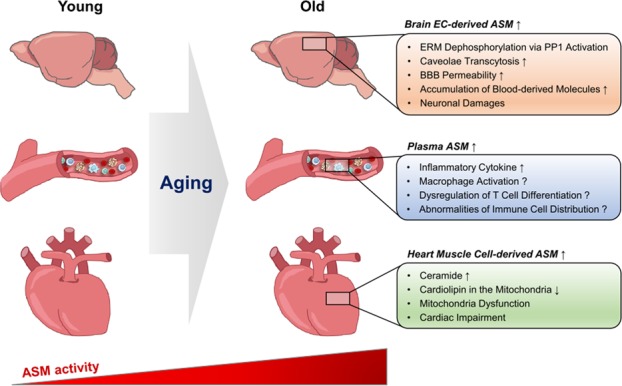
“Authoritative recent reviews indicate that acid sphingomyelinase (ASM) activity increases significantly with age in various tissues, including the brain, plasma, and heart, and represents a core driver of aging-related pathology [53, 54].”
Lakrami, S., Lakhlifi, S., & Khalki, H. (2026) · World Journal of Biology Pharmacy and Health Sciences · doi:10.30574/wjbphs.2026.27.2.0422
Impact of aging on neck vasculature and brain biochemistry in female mice
Jones, A. W., Jarrahi, A., Karpowich, K., Moody, E., Renner, L., Brown, L. P., Tressler, C. M., & Crouch, A. C. (2026) · Physiological Reports · doi:10.14814/phy2.71059
“Cholesterol is the main component of myelin and is synthesized in the central nervous system (CNS) shortly after birth (Alaamery et al., 2020; Giussani et al., 2021; Li & Kim, 2021; Lu et al., 2022; Park et al., 2020; Poitelon et al., 2020).”
Metadata
- Authors
- Park, M. H., Jin, H. K., & Bae, J.-S.
- Affiliations
- Kyungpook National University (KR)
- Corresponding author
- Bae, Jae-sung
- Venue
- Experimental & Molecular Medicine
- Published
- 2020-03
- Volume
- 52
- Issue
- 3
- Pages
- 380-389
- ISSN
- 1226-3613 (ISSN-L)
- 2092-6413
- PMC
- PMC7156489
- OpenAlex
- W3011605603
- Cited by
- 59
- References
- 105
- Citations by year
- 2026: 5 · 2025: 7 · 2024: 12 · 2023: 9 · 2022: 10 · 2021: 15 · 2020: 1
- FWCI
- 0.84
- Type
- journal article
- Language
- en
- Open access
- gold
- doi.org
- Licence
- cc-by
- creativecommons.org/licenses/by/4.0 (tdm)
- creativecommons.org/licenses/by/4.0 (vor, 12 d)
- Locations
- Experimental & Molecular Medicine (publishedVersion, cc-by)
- PubMed Central (publishedVersion, cc-by)
- PubMed (publishedVersion)
- DOAJ (DOAJ: Directory of Open Access Journals) (submittedVersion, cc-by-sa)
- Funders
- Korea Health Industry Development Institute
- Ministry of Science and ICT, South Korea (2017R1A4A1015652)
- Topics
- Life Sciences › Biochemistry, Genetics and Molecular Biology › Molecular Biology › Sphingolipid Metabolism and Signaling
- Health Sciences › Medicine › Genetics (clinical) › Lysosomal Storage Disorders Research
- Life Sciences › Neuroscience › Cellular and Molecular Neuroscience › Alzheimer's disease research and treatments
- Keywords
- acid sphingomyelinase, aging, age-related neurodegenerative diseases, Alzheimer's disease, Parkinson's disease, sphingolipids, sphingolipid metabolism, therapeutic target, enzyme inhibition
- MeSH terms
- Aging, Animals, Humans, Sphingomyelin Phosphodiesterase, Neurodegenerative Diseases
About these checks
Registry, retraction, Cites and statistics results are computed, not judged, with one exception: a printed reference that no index lists is read once by a model before it counts as a citation error. Claims are extracted by a model and kept only when their quote appears verbatim in the text; each cited source is then checked, with a model’s help, for whether it says what the claim relies on. Those verdicts can be wrong — read the claim’s quote and the cited source before relying on one.
Statistics and arithmetic are recomputed, not judged.
Confidence bands are shown only for fields calibrated on our annotated test set. None is calibrated yet, so no band is shown.
What counts as a claim ›How we measure confidence ›How we check this ›
Are you an author, or do you see a problem with this page? Request a review
Data sources
Bibliographic data: Semantic Scholar, OpenAlex, Crossref.
Contains information from the Semantic Scholar Academic Graph Datasets, made available under the ODC Attribution License (ODC-BY 1.0).
Semantic Scholar’s data is described in: Kinney, R., et al. (2023). The Semantic Scholar Open Data Platform. arXiv:2301.10140.
