

Regulated cell death pathways and their roles in homeostasis, infection, inflammation, and tumorigenesis
Open accessThe DOI matches its Crossref record; 137 of the 138 references it cites were found in a registry or an index.
Abstract
Pyroptosis, apoptosis, necroptosis, and ferroptosis, which are the most well-studied regulated cell death (RCD) pathways, contribute to the clearance of infected or potentially neoplastic cells, highlighting their importance in homeostasis, host defense against pathogens, cancer, and a wide range of other pathologies. Although these four RCD pathways employ distinct molecular and cellular processes, emerging genetic and biochemical studies have suggested remarkable flexibility and crosstalk among them. The crosstalk among pyroptosis, apoptosis and necroptosis pathways is more evident in cellular responses to infection, which has led to the conceptualization of PANoptosis. In this review, we provide a brief overview of the molecular mechanisms of pyroptosis, apoptosis, necroptosis, and ferroptosis and their importance in maintaining homeostasis. We discuss the intricate crosstalk among these RCD pathways and the current evidence supporting PANoptosis, focusing on infectious diseases and cancer. Understanding the fundamental processes of various cell death pathways is crucial to inform the development of new therapeutics against many diseases, including infection, sterile inflammation, and cancer.
Overview
The claims and statistics of this paper haven’t been checked yet.
Free: it reads the open-access text and checks the first 5 claims that cite a source we can check. Create a free account to check every claim.
Integrity signals
Registry
Cites
Statistics
Figures
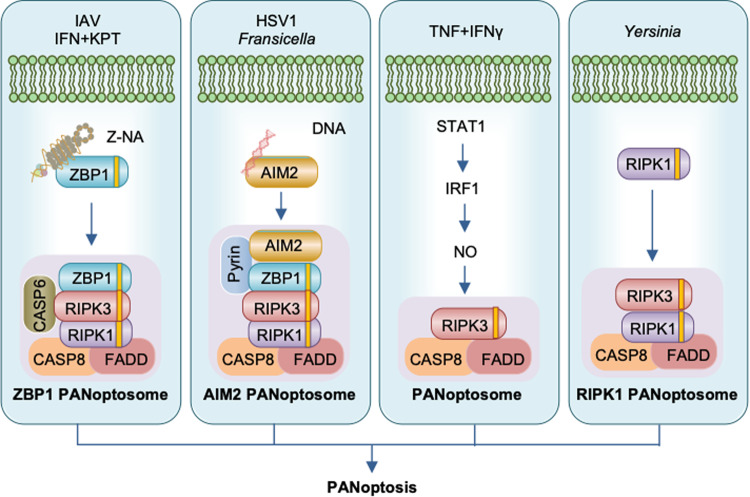
Verification
Claims the paper makes
The claims and statistics of this paper haven’t been checked yet.
Free: it reads the open-access text and checks the first 5 claims that cite a source we can check. Create a free account to check every claim.
Claims other papers make about this one
Each is checked against this paper’s own text: does it say what the citing paper says it does?
The cited source says what the claim attributes to it.
In the citing paper
“However, excessive activation of RCD can lead to pathological tissue injury and chronic inflammation [33].”
From Role of Regulated Cell Death Pathways in Snakebite Envenomation: Mechanisms, Crosstalk, and Therapeutic Opportunities (2026) · cites this paper as [33]
Self-check
Percentages, sums and reported differences re-computed from the paper’s own numbers.
The self-check needs the paper’s full text.
Citations
Cites
Hallmarks of Cancer: The Next Generation
Hanahan, D., & Weinberg, R. A. (2011) · Cell · doi:10.1016/j.cell.2011.02.013 · Cited by 66,590
Ferroptosis: An Iron-Dependent Form of Nonapoptotic Cell Death
Dixon, S. J., Lemberg, K. M., Lamprecht, M. R., Skouta, R., Zaitsev, E. M., Gleason, C. E., Patel, D. N., Bauer, A. J., Cantley, A. M., Yang, W. S., et al. (2012) · Cell · doi:10.1016/j.cell.2012.03.042 · Cited by 18,691
Apoptosis: A Basic Biological Phenomenon with Wideranging Implications in Tissue Kinetics
Kerr, J. F. R., Wyllie, A. H., & Currie, A. R. (1972) · British Journal of Cancer · doi:10.1038/bjc.1972.33 · Cited by 15,725
Li, P., Nijhawan, D., Budihardjo, I., Srinivasula, S. M., Ahmad, M., Alnemri, E. S., & Wang, X. (1997) · Cell · doi:10.1016/s0092-8674(00)80434-1 · Cited by 7,289
Galluzzi, L., Vitale, I., Aaronson, S. A., Abrams, J. M., Adam, D., Agostinis, P., Alnemri, E. S., Altucci, L., Amelio, I., Andrews, D. W., et al. (2018) · Cell Death & Differentiation · doi:10.1038/s41418-017-0012-4 · Cited by 6,680
Cleavage of GSDMD by inflammatory caspases determines pyroptotic cell death
Shi, J., Zhao, Y., Wang, K., Shi, X., Wang, Y., Huang, H., Zhuang, Y., Cai, T., Wang, F., & Shao, F. (2015) · Nature · doi:10.1038/nature15514 · Cited by 6,659
Copper induces cell death by targeting lipoylated TCA cycle proteins
Tsvetkov, P., Coy, S., Petrova, B., Dreishpoon, M., Verma, A., Abdusamad, M., Rossen, J., Joesch-Cohen, L., Humeidi, R., Spangler, R. D., et al. (2022) · Science · doi:10.1126/science.abf0529 · Cited by 4,932
Identification and inhibition of the ICE/CED-3 protease necessary for mammalian apoptosis
Nicholson, D. W., Ali, A., Thornberry, N. A., Vaillancourt, J. P., Ding, C. K., Gallant, M., Gareau, Y., Griffin, P. R., Labelle, M., Lazebnik, Y. A., et al. (1995) · Nature · doi:10.1038/376037a0 · Cited by 3,979
Caspase-11 cleaves gasdermin D for non-canonical inflammasome signalling
Kayagaki, N., Stowe, I. B., Lee, B. L., O’Rourke, K., Anderson, K., Warming, S., Cuellar, T., Haley, B., Roose-Girma, M., Phung, Q. T., et al. (2015) · Nature · doi:10.1038/nature15541 · Cited by 3,686
Inflammasome-activated gasdermin D causes pyroptosis by forming membrane pores
Liu, X., Zhang, Z., Ruan, J., Pan, Y., Magupalli, V. G., Wu, H., & Lieberman, J. (2016) · Nature · doi:10.1038/nature18629 · Cited by 3,202
Cited by
Items 101–182 of 182
Wen, T., Shi, J., Guo, M., Ma, B., Zhang, C., Zhao, Y., & Xu, F. (2026) · Journal of Advanced Research · doi:10.1016/j.jare.2026.05.011 · Cited by 3
Regulated cell death plasticity in cancer: thresholds, reversibility, and therapeutic failure
Jawwad, T., Baba, S. K., Surendranath, A., Chaudhary, E., Jeelani, G., Akil, A. S. A.-S., Menhali, A. A., Bhat, A. A., & Mirza, S. (2026) · Journal of Translational Medicine · doi:10.1186/s12967-026-08584-2 · Cited by 2
“Lee et al. described extensive biochemical crosstalk among apoptosis, pyroptosis, necroptosis, and ferropto-sis, and introduced the concept of PANoptosis, in which multiple death programs are activated together under strong stress or inflammatory signals [22].”
Systematic genetic analysis of GSDMD, GSDME, and MLKL in PANoptosis
Indari, O., Giri, P., Tweedell, R. E., & Kanneganti, T. (2026) · Journal of Biological Chemistry · doi:10.1016/j.jbc.2026.113370 · Cited by 3
PANoptosis: a new insight for oral diseases
Jiang, X., Fu, T., & Huang, L. (2024) · Molecular Biology Reports · doi:10.1007/s11033-024-09901-y · Cited by 2
“Recent findings indicate that these pathways exhibit a degree of crosstalk, suggesting they are not entirely independent [13].”
InfluentialPotential and value of rescuing dying neurons
You, W., Berendschot, T. T. J. M., Benedikter, B. J., Webers, C. A. B., Reutelingsperger, C. P. M., & Gorgels, T. G. M. F. (2025) · Neural Regeneration Research · doi:10.4103/nrr.nrr-d-24-01134 · Cited by 3
“Cell death generally occurs by regulated cell death programs, which lead to the removal of the cell by highly organized and orchestrated forms of suicide (Moujalled et al., 2021; Lee et al., 2023).”
Jiang, Z., Liu, D., Lv, J., Chen, X., Zhou, X., Sun, Q., & Yang, H. (2025) · Pharmacognosy Magazine · doi:10.1177/09731296251348747 · Cited by 3
“Consequently, strategies that induce apoptosis in tumor cells have the potential to overcome cancer resistance and offer new prospects for drug development (Lee et al., 2023).”
Li, R., Chen, Q., Yan, Y., Yang, Y., & Hu, R. (2025) · Scientific Reports · doi:10.1038/s41598-025-18867-1 · Cited by 1
Ferroptosis Inhibition Enhances Osteoblast Activity: The Role of Liproxstatin-1 and Coenzyme Q10
Valanezhad, A., Odatsu, T., Valanezhad, F., Abe, S., & Watanabe, I. (2025) · International Journal of Molecular Sciences · doi:10.3390/ijms262412059 · Cited by 1
“Recent research has revealed that different forms of regulated necrosis, including necroptosis, ferroptosis, and pyroptosis, are governed by distinct molecular mechanisms and play critical roles in both normal physiology and disease progression [5].”
Transcending cell death – The diverse roles of necroptosis signal adaptors in pathogen infection
Huang, F., Li, J., & Chan, F. K.-M. (2026) · Cell chemical biology · doi:10.1016/j.chembiol.2026.02.006 · Cited by 1
RCDRank: a web server to prioritize regulated cell death modalities
Zhou, N., Yin, T., Sun, H., Luo, Q., Zhang, Y., Shi, X., Bao, J., Peng, L., & Yuan, X. (2026) · BMC Bioinformatics · doi:10.1186/s12859-026-06428-w · Cited by 1
“Different RCD subroutines can be activated simultaneously or sequentially in response to cellular stress, and they may operate in parallel within the same cells or across different cell types [11].”
Feng, Y., Gan, L., Wang, Y., Pan, H., Lu, X., Ye, D., Wan, J., & Ye, J. (2026) · Biochemical Pharmacology · doi:10.1016/j.bcp.2026.117963 · Cited by 1
FoxO signaling in regulated cell death and its therapeutic implications in inflammation
Zhang, K., Mo, C., Wen, B., Ma, Z., & Ma, D. (2026) · International Immunopharmacology · doi:10.1016/j.intimp.2026.116830 · Cited by 2
ISG15 negatively regulates RIPK3-mediated cell death and viral pathogenesis
Perng, Y.-C., Warsaw, J. M. C., Bais, S. S., Hiller, B. E., Locke, M. C., Morales-Heil, D. J., Li, C., Young, A. R., Monte, K. J., Schmidt, R. E., et al. (2026) · Cell Reports · doi:10.1016/j.celrep.2026.117360 · Cited by 1
“2,4,41 Therefore, we evaluated the ability of ISG15 to regulate TNF-induced cell death.”
Sun, Y., Wei, R., Asiedu, R. K. F., (43671), B. L., & Hu, M. (2026) · Biomedicine & Pharmacotherapy · doi:10.1016/j.biopha.2026.119615 · Cited by 1
Chen, X., Xiong, Z., Xie, Y., Ruan, K., Huang, G., & Mao, J. (2026) · Pharmacological Research · doi:10.1016/j.phrs.2026.108308 · Cited by 4
Cheng, L., & Song, G. (2026) · Frontiers in Veterinary Science · doi:10.3389/fvets.2026.1874206 · Cited by 1
“Consistent with the stage-specific framework outlined in Section 3.4, the relative balance among pyroptosis, necroptosis, and ferroptosis-related injury is likely to shift with pathogen background and disease phase, rather than following a fixed acute-to-chronic sequence (57, 65, 68–70).”
InfluentialInterplay of oxidative stress and inflammatory mechanisms in doxorubicin-induced cardiomyopathy
Narasimhulu, C. A., Imaralu, O. E., Khan, M., & Singla, D. K. (2026) · American Journal of Physiology-Heart and Circulatory Physiology · doi:10.1152/ajpheart.00187.2026 · Cited by 2
Mouse models of Zika virus infection-induced placenta and fetal brain damage
Krishnamoorthy, C., & Natarajan, S. K. (2026) · Journal of Animal Science · doi:10.1093/jas/skag214 · Cited by 1
“Cell death is a biological process required for development, homeostasis, and regulating inflammatory responses in organisms (Lee et al. 2023; Kayagaki et al. 2024; Newton et al. 2024).”
Pyroptosis: Molecular mechanisms and function
Ajoolabady, A., Abdulkhaliq, A. A., Khan, J., Praticò, D., bahijri, S. M., Tuomilehto, J., Borai, A., Kim, B., & Ren, J. (2026) · Journal of Physiology and Biochemistry · doi:10.1007/s13105-026-01210-1 · Cited by 2
Advantages and disadvantages of mitochondrial mechanism (mitophagy) for cancer treatment
Herić, A., Silajdžić, A., & Zubčević, T. (2024) · World Journal of Biology Pharmacy and Health Sciences · doi:10.30574/wjbphs.2024.18.1.0180 · Cited by 1
“Apoptosis is crucial to maintain cell homeostasis [41, 42, 58, 59].”
BackgroundApoptosis: From Oncogenesis to Oncotherapy
Halder, K. (2024) · International Journal of experimental research and review · doi:10.52756/ijerr.2024.v40spl.017 · Cited by 1
Elgawad, H. A., Elmehankar, M. S., Nabih, N., Sheta, H., & Awad, S. I. (2025) · Acta Parasitologica · doi:10.1007/s11686-024-00969-x · Cited by 1
Al‐Yacoub, N., Almohanna, F., Alqassem, A., Awad, S. M., Almzroua, A., & Assiri, A. M. (2025) · bioRxiv (Cold Spring Harbor Laboratory) · doi:10.1101/2025.06.04.657829 · Cited by 1
Alangode, A., Rajasekhar, A., Sabu, J. J., Krishna, S., Anuja, D., Sreeja, A., Remesh, G., Kaladevi, A., & Nair, B. G. (2026) · International Journal of Molecular Sciences · doi:10.3390/ijms27156830
“However, excessive activation of RCD can lead to pathological tissue injury and chronic inflammation [33].”
Xiong, W., Tan, G., Chen, H., Chen, M., Wu, R.-H., Dai, S.-Z., Song, T., He, G.-S., Zheng, W.-P., & Huang, F. (2026) · Translational Oncology · doi:10.1016/j.tranon.2026.102779
Hewetson, S. A. (2024) · Carleton University's Institutional Repository (MacOdrum Library, Carleton University) · doi:10.22215/etd/2024-16162
Salmonella typhimurium infection increased the necrosis of diazoxon-exposed mononuclear cells
Girón‐Pérez, D. A., Ley-Arteaga, L. V., Covantes‐Rosales, C. E., Toledo‐Ibarra, G. A., Díaz‐Reséndiz, K. J. G., Bueno-Durán, A. Y., Benítez-Trinidad, A. B., Navidad-Murrieta, M. S., & Girón‐Pérez, M. I. (2025) · International Journal of Environmental Health Research · doi:10.1080/09603123.2025.2511798
“…as cell cycle arrest, loss of adhesion (LFA-1 and VLA-4), and a reduction in cellular signaling (phosphorylation decrease or protein coupling) (Matsumoto et al. 1994; Lee et al. 2023) The mechanism by which diazoxon may induce apoptosis is through mitochondrial dysfunction, affecting calcium flux.”
Mechanisms of Ferroptosis and Emerging Links to the Pathology of Metabolic Disorders
Singh, B., Srivastava, N., & Sharma, A. (2025) · Current Indian Science · doi:10.2174/012210299x394730250912071440
Hashemi, M., Salimian, N., Sharifi, N., Asheghabadi, P. S., Zarearandi, Z., Abdi, F., Akbar, S. S., Shirazi, R. M., Pozve, M. B., Nikdehqan, A., et al. (2025) · Cancer Cell International · doi:10.1186/s12935-025-03999-1
“This process critically influences numerous physiological domains, including organismal development, tissue homeostasis maintenance, infectious defense, and immunological response modulation [12].”
Filippi, N., Mertens, K., Loose, J. D., Benramdane, S., Hermans, R., Espadinha, M., Dirkx, L., Feijens, P., Nozal, V., Verhulst, E., et al. (2025) · Journal of Medicinal Chemistry · doi:10.1021/acs.jmedchem.5c02049
Photosensitization of colorectal carcinoma model systems mediated by the xanthene Rose Bengal
Ferreira, A. S. [. (2024) · LA Referencia (Red Federada de Repositorios Institucionales de Publicaciones Científicas)
Neuroinflammation: The dawn of a new era in clinical reasoning?
Pool‐Goudzwaard, A., & Ridehalgh, C. (2026) · Musculoskeletal Science and Practice · doi:10.1016/j.msksp.2026.103510
Peculiar Cat with Many Lives: PUMA in Viral Infections
Wyżewski, Z., Stępkowska, J., Pruchniak, P., Niedzielska, A., Gregorczyk-Zboroch, K. P., & Mielcarska, M. B. (2026) · Cells · doi:10.3390/cells15030278 · Cited by 1
Ma, X., Han, P., He, K., Wang, G., & Lu, Y. (2026) · Immunological Investigations · doi:10.1080/08820139.2026.2618636
“These pathways, including apoptosis, necroptosis, ferroptosis, and pyroptosis, are not merely mechanisms of cell demise but are active signaling platforms that profoundly influence tissue homeostasis and the immune response (Lee et al., 2023).”
Liu, Y., Ding, M., Huang, Q., Xie, C., Li, X., Zhang, J., Liang, H., Huang, Z., Chen, Y., Xie, C., et al. (2026) · Industrial Crops and Products · doi:10.1016/j.indcrop.2026.122936
Modulation of macrophage survival during Klebsiella pneumoniae infections
Nithya, N., Ali, A. M., P., S. K., Mehto, S., & Antony, C. (2026) · Frontiers in Cellular and Infection Microbiology · doi:10.3389/fcimb.2026.1757662 · Cited by 1
“RCD types include apoptosis, autophagy, necrosis, lysosome-dependent Recognition of pathogen-associated ligands by TLRs. TLR4,5,1/2 activates MyD88-dependent pathway.”
InfluentialLi, M., Xiangxi, Z., Shen, M., Bing, T., Li, X., Li, Y., Xing, T., & Yu, Y. (2026) · Chinese Chemical Letters · doi:10.1016/j.cclet.2026.112560
Avcı, S., & Sözen, M. E. (2026) · Reproductive Sciences · doi:10.1007/s43032-026-02062-2
Orchestrating Ovarian Dysfunction- The Role of Programmed Cell Death in PCOS
Chen, Y., Cheng, D., Mo, Z., Xie, Y., Wen, S., & Tan, Y. (2026) · Cell Biochemistry and Biophysics · doi:10.1007/s12013-026-02052-w
Cell death pathways and chemotherapy in brain tumors
Sahu, U., Venere, M., & Kaur, B. (2026) · Elsevier eBooks · doi:10.1016/b978-0-443-27356-8.00026-7
Cell death in kidney transplantation: Mechanisms and therapeutic perspectives
Zhang, Z., Wang, M., & Cai, M. (2026) · Biomedicine & Pharmacotherapy · doi:10.1016/j.biopha.2026.119236
Modes of programmed macrophage cell death govern outcome of cutaneous wound healingPreprint
Injarabian, L., Reiche, N., Willenborg, S., Welcker, D., Bai, Y., Schönenberg, E., Sanin, D. E., Tanevski, J., Pasparakis, M., Kashkar, H., et al. (2026) · bioRxiv (Cold Spring Harbor Laboratory) · doi:10.64898/2026.03.19.712831
“Emerging evidence reveals that different forms of RCD have context-dependent effects on tissue homeostasis and pathology (Blériot et al , 2015; Lee et al , 2023; Pasparakis & Vandenabeele, 2015).”
Landscape of Gene Essentiality in Cancer Cell Death Pathways
Li, S., Zhu, Z., Yang, C., Sun, N., Cheng, L., & Li, L. (2026) · Genes · doi:10.3390/genes17040491
Zhang, L., Luo, P., Liu, X., Guo, T., & Xie, H. (2026) · Frontiers in Neurology · doi:10.3389/fneur.2026.1763297
“(91) For instance, does the activation of inflammasomes associated with pyroptosis provide substrates for lipid peroxidation in ferroptosis, or do membrane rupture signals in necroptosis accelerate the propagation of ferroptosis?”
Gonella, A., Zampieri, L., Finos, L., Zuin, M., Perazzi, A., Covello, G., Giacomello, M., Centelleghe, C., Martines, E., & Peruffo, A. (2026) · Research in Veterinary Science · doi:10.1016/j.rvsc.2026.106249
Valenti, W. B., Ruzzene, S. T., Berry, A. R., Orozco-Fersiva, N. C., Stone, M. F., Gilmore, E. C., Holzer, J. P., Mollaian, J., Greiner, J. J., Garcia, V. P., et al. (2026) · Journal of Applied Physiology · doi:10.1152/japplphysiol.00291.2026
Xie, X., Liu, W., Fan, W., Tong, J., Tian, W., Zhang, X., Liu, N., Liu, Z., Zhou, X., Mu, S., et al. (2026) · Journal of Controlled Release · doi:10.1016/j.jconrel.2026.115085
Li, Y., Li, Z., Jiang, L., Cheng, X., Li, M., Su, J., Wang, X., & Liu, Q. (2026) · Research Square · doi:10.21203/rs.3.rs-9881615/v1
Zhou, R., Lv, W., Wang, J., Xiong, Y., Huang, H., & Lei, X. (2026) · Molecular Biology Reports · doi:10.1007/s11033-026-12133-x
“…cell loss [ 2, 38 ], autophagy affects stress responses and BTB stability [ 46 – 49 ], ferropto - sis causes lipid peroxidation and redox injury [ 19, 44, 55], pyroptosis increases inflammation [ 7, 17, 96 ], and effero - cytosis controls the clearance of apoptotic germ cells [ 8, 18, 33, 57, 58 ].”
PM2.5 as a driver of human health disorders: insights from the regulated cell death pathways
Khalilzad, M. A., Shoar, S. M. M., Abbasi, A., Falavarjani, M. S., Khalilzad, M., Naseri, A., & Najafi, S. (2026) · Military Medical Research · doi:10.1016/j.mmr.2026.100046 · Cited by 1
Krejčová, G., & Bajgar, A. (2026) · Frontiers in Immunology · doi:10.3389/fimmu.2026.1882514
Wang, L. P., Ma, Z., Ji, B., Liu, S., Terai, S., Tuo, B., Li, T., & Liu, X. (2026) · Molecular Medicine Reports · doi:10.3892/mmr.2026.13962
“…of cell death (2), respectively. complex signal crosstalk occurs among these three pathways and serves a notable role in disease progression (45,46). caSP‑8 serves as a pivotal factor in signal crosstalk between apoptosis, pyroptosis and necroptosis, and can inhibit riPK3‑ and MlKl‑mediated…”
Optimized chemogenetic ablation and regeneration of enteric nervous system neurons in zebrafish
Shah, M., Moran, K. K., Rueckert, H. E., Sharrock, A. V., Ackerley, D. F., Mumm, J. S., & Ganz, J. (2026) · Stem Cell Reports · doi:10.1016/j.stemcr.2026.102966 · Cited by 1
How to recognize if a cell dies from pyroptosis?
Gebuza, M., Bihl, W., Brawańska, K., Tomecka, P., Kulbacki, M., & Kulbacka, J. (2026) · Molecular Biology Reports · doi:10.1007/s11033-026-12347-z
“To provide the integration, innate immune sensors such as ZBP1, AIM2, and NLRC5 are necessary and detect, e.g., pathogen-or stress-derived signals, recruiting caspase-8, RIPKs, and inflammasome components to orchestrate coordinated death signaling [95, 96].”
Programmed cell death in autoimmune diseases
Cai, X., & Yao, Y. (2026) · Autoimmunity Reviews · doi:10.1016/j.autrev.2026.104145
Podzolkov, V. I., Bragina, A. E., Ponomareva, L. A., Popova, E. N., Ponomarev, A. B., Petrova, D. A., Ochalaeva, K. M., Karov, I. M., & Tarzimanova, A. I. (2026) · Terapevticheskii arkhiv · doi:10.26442/00403660.2026.06.203653
Jiang, Y., Qiang, Z., Zhu, L., Liang, S., Huang, Y., Xiao, L., Zhu, L., Du, Z., & Qiang, S. (2026) · Frontiers in Immunology · doi:10.3389/fimmu.2026.1881079
Immune cell death in sepsis: Linking resilience, dysbiosis, and EGFR signaling
Yip, Y.-Y., & Ho, K. M. (2026) · Journal of Critical Care · doi:10.1016/j.jcrc.2026.155698
He, Y., Zhang, X., Duan, J., Xi, R., Li, X., & Niu, X. (2026) · Reviews in Cardiovascular Medicine · doi:10.31083/rcm50122
“…by iron-dependent lipid peroxidation), necroptosis (mediated by receptor-interacting protein kinases), pyroptosis (initiated by inflammasome activation), and autophagy-dependent cell death—each characterized by unique molecular machinery, regulatory networks, and pathophysiological roles [ 8].”
Kumari, S., & Rai, S. K. (2026) · Frontiers in Physiology · doi:10.3389/fphys.2026.1908766
“…peroxidation (Liu et al., 2020); (2) autophagy, a lysosomal degradation pathway with a microenvironment dependent pro-survival or pro-death role (Lee et al., 2023); (3) caspase-dependent apoptosis (Wu et al., 2022); and (4) damage-associated molecular patterns (DAMPs) triggered immunogenic cell…”
Aridj, T., Zoudji, S., Dahou, S., Ali, K., Kadi, A., Boumendjel, A., Boudjelal, F., Messali, R., Benarradj, H., Bendjeffel, N. E., et al. (2026) · International Immunopharmacology · doi:10.1016/j.intimp.2026.117239
The role of PANoptosis in diabetes and its complications: mechanisms and therapeutic prospects
Yan, J., Wang, Q., & Chen, F. (2026) · Frontiers in Immunology · doi:10.3389/fimmu.2026.1902219
Li, X., Li, L., Liu, X., Liu, S., Yang, W., Gao, J., Kang, S., Wang, L., Li, J., Wang, X., et al. (2026) · Frontiers in Immunology · doi:10.3389/fimmu.2026.1865721
“The combined effects of in fi ltrating immune cells and local sterile in fl ammation may activate mitochondrial apoptosis and NOD-like receptor family pyrin domain-containing 3 (NLRP3) in fl ammasome-associ-ated pyroptosis, ultimately promoting PCD in target cells (16).”
InfluentialReprogramming immunometabolism: linking nutrient sensing, cell death, and therapeutic innovation
Sharma, P. (2026) · Immunologic Research · doi:10.1007/s12026-026-09831-w
Decoding ctDNA: biological insights for accurate clinical interpretation
Garcia, M., Spindler, K. G., Eslami‐S, Z., Pantel, K., & Alix‐Panabières, C. (2026) · Molecular Aspects of Medicine · doi:10.1016/j.mam.2026.101505
Lipid flip-flop in biological membranes: through the lens of TMEM16F
Shan, K. Z., Lowry, A. J., Torres, M. A. G., Seri, M. S., & Yang, H. (2026) · Physiological Reviews · doi:10.1152/physrev.00046.2025
de Almeida, D. L., Macedo, A. S., Campos, F. A., & Brito, A. C. (2026) · Revista Saúde dos Vales · doi:10.66104/da8e1h50
Du, X., & Qiao, H. (2026) · Frontiers in Cell and Developmental Biology · doi:10.3389/fcell.2026.1935200
“Among the diverse PRRs, Toll-like receptors (TLRs), nucleotide-binding oligomerization domain (NOD)-like receptors (NLRs), and cytosolic DNA sensors are some of the most important PRRs that modulate innate immune system activation during sepsis (Wiersinga and van der Poll, 2026; Lee et al., 2023).”
El-Shanbaky, H. M., Shetta, B. E., Estfanos, S., Mohamed, M. S., El-Hameed, R. H. A., Fatahala, S. S., & Mahgoub, S. (2026) · Journal of Molecular Structure · doi:10.1016/j.molstruc.2026.147685
Before the canonical antiviral response: How the host is fighting Zika virus
Lebeau, G., Turpin, J., Frumence, É., Hoarau, J., Viranaïcken, W., & Trotot, P. K. (2026) · Virology · doi:10.1016/j.virol.2026.111089
Wang, T., 朱曼玲, Wu, Z., Zhao, X., & Zhang, L. (2026) · Microorganisms · doi:10.3390/microorganisms14102241
“Although accumulating evidence suggests that bacterial infections can induce multiple forms of PCD [28,29], it remains unclear whether M. bovis systematically disrupts host metabolic networks to induce oxidative stress and coordinately activate distinct PCD pathways, as well as how these processes…”
Lee, I., Hsu, Y., Wang, Y., Feng, S., Vo, T. T. T., & Chow, T.-H. (2026) · Antioxidants · doi:10.3390/antiox15101299
“Stress responses, pathway cross-talk and secondary activation after membrane disruption can produce overlapping molecular signatures [61].”
Regulated Cell Death in Reproductive Biology: Mechanisms and Therapeutic Opportunities
Stavros, S., Moustakli, E., Kathopoulis, N., Dafopoulos, S., Sioutis, D., Zikopoulos, A., Anagnostaki, I., Potiris, A., Dafopoulos, K. C., & Drakakis, P. (2026) · Cells · doi:10.3390/cells15201837
“Molecular components of cell death pathways are increasingly being investigated as biomarkers of reproductive disorders, while multi-omics approaches provide a more comprehensive characterization of RCD-associated molecular profiles [6,7,26].”
Yang, H., Jia, Z., Sun, Z., Tian, Z., Lv, Z., Chen, X., Wang, H., Huang, C., Wei, X., Huang, Y., et al. (2026) · Computational Biology and Chemistry · doi:10.1016/j.compbiolchem.2026.109491
Programmed cell death in inflammation: interactions and holistic perspective
Zhang, W., Zhu, C., Li, C., Song, L., Liao, Y., Zhang, H., Yi, B., & Zou, Z. (2026) · Cellular and Molecular Immunology · doi:10.1038/s41423-026-01479-8
Κeramidas, P., Pitou, M., Aggeli, A., Varlamis, S., & Choli‐Papadopoulou, T. (2026) · FEBS Journal · doi:10.1111/febs.70763
The DAMP Awakens: The Role of Heme and Heme Oxygenase-1 in Organ Transplantation
Wagner, T. C., Thomas, M. N., & Otterbein, L. E. (2026) · Biomolecules · doi:10.3390/biom16101495
“Pyroptosis follows inflammasome activation and gasdermin pore formation and the recently described PANoptosis integrates elements of pyroptosis, apoptosis and necroptosis in a single coordinated program [37,38].”
Wu, Y., Zhu, H.-M., Lu, Z.-Y., Tang, Z.-H., Li, W., & Wu, M. (2026) · Frontiers in Oncology · doi:10.3389/fonc.2026.1985999
Chen, C.-H., Li, R.-F., Wu, Y., & Chen, W. (2026) · Experimental and Molecular Pathology · doi:10.1016/j.yexmp.2026.105095
Wang, Y., Chang, S., Zhou, S., Wanning, W. U., He, Y., 吴颢昕, Shen, S., & Zhu, B. (2026) · Journal of Ethnopharmacology · doi:10.1016/j.jep.2026.122608
Mohammad, A., Sakr, L., Habib, A., Mahfoud, I., Yazbeck, A., Younes, M., Rima, M., Wex, B., & Rizk, S. E. (2026) · Food and Chemical Toxicology · doi:10.1016/j.fct.2026.116488
Key nodes governing cell death fate in osteoarthritis: GPX4, caspase-8 and ESCRT-III
Du, H., Zhou, Y., Wang, Y., Du, G., Sun, J., Meng, F., Li, W., & Fan, J. (2026) · Frontiers in Immunology · doi:10.3389/fimmu.2026.1958325
Metadata
- Authors
- Lee, E., Song, C.-H., Bae, S.-J., Ha, K.-T., & Karki, R.
- Affiliations
- Seoul National University (KR)
- Kosin University (KR)
- Pusan National University (KR)
- Corresponding author
- Karki, Rajendra
- Venue
- Experimental & Molecular Medicine
- Published
- 2023-08-23
- Volume
- 55
- Issue
- 8
- Pages
- 1632-1643
- ISSN
- 1226-3613 (ISSN-L)
- 2092-6413
- PMC
- PMC10474065
- OpenAlex
- W4386098083
- Cited by
- 164
- References
- 138
- Citations by year
- 2026: 74 · 2025: 57 · 2024: 32 · 2023: 1
- FWCI
- 4.32
- Type
- journal article
- Language
- en
- Open access
- gold
- doi.org
- Licence
- cc-by
- creativecommons.org/licenses/by/4.0 (tdm)
- creativecommons.org/licenses/by/4.0 (vor)
- Locations
- Experimental & Molecular Medicine (publishedVersion, cc-by)
- PubMed Central (publishedVersion, cc-by)
- PubMed (publishedVersion)
- DOAJ (DOAJ: Directory of Open Access Journals) (submittedVersion, cc-by-sa)
- Seoul National University Open Repository (Seoul National University) (submittedVersion)
- Funders
- Seoul National University (3344-20230024)
- Korea Health Industry Development Institute
- Topics
- Life Sciences › Biochemistry, Genetics and Molecular Biology › Molecular Biology › Cell death mechanisms and regulation
- Life Sciences › Biochemistry, Genetics and Molecular Biology › Molecular Biology › Inflammasome and immune disorders
- Life Sciences › Biochemistry, Genetics and Molecular Biology › Cancer Research › Ferroptosis and cancer prognosis
- Keywords
- regulated cell death, pyroptosis, apoptosis, necroptosis, ferroptosis, PANoptosis, cell death crosstalk, homeostasis, host defense against infection, sterile inflammation, carcinogenesis, cancer therapeutics
- MeSH terms
- Regulated Cell Death, Cell Transformation, Neoplastic, Homeostasis, Humans, Inflammation, Carcinogenesis
About these checks
Registry, retraction, Cites and statistics results are computed, not judged, with one exception: a printed reference that no index lists is read once by a model before it counts as a citation error. Claims are extracted by a model and kept only when their quote appears verbatim in the text; each cited source is then checked, with a model’s help, for whether it says what the claim relies on. Those verdicts can be wrong — read the claim’s quote and the cited source before relying on one.
Statistics and arithmetic are recomputed, not judged.
Confidence bands are shown only for fields calibrated on our annotated test set. None is calibrated yet, so no band is shown.
What counts as a claim ›How we measure confidence ›How we check this ›
Are you an author, or do you see a problem with this page? Request a review
Data sources
Bibliographic data: Semantic Scholar, OpenAlex, Crossref.
Contains information from the Semantic Scholar Academic Graph Datasets, made available under the ODC Attribution License (ODC-BY 1.0).
Semantic Scholar’s data is described in: Kinney, R., et al. (2023). The Semantic Scholar Open Data Platform. arXiv:2301.10140.
