

Investigation of the long-term sustainability of changes in appetite after weight loss
Open accessThe DOI matches its Crossref record; 51 of the 52 references it cites were found in a registry or an index.
Abstract
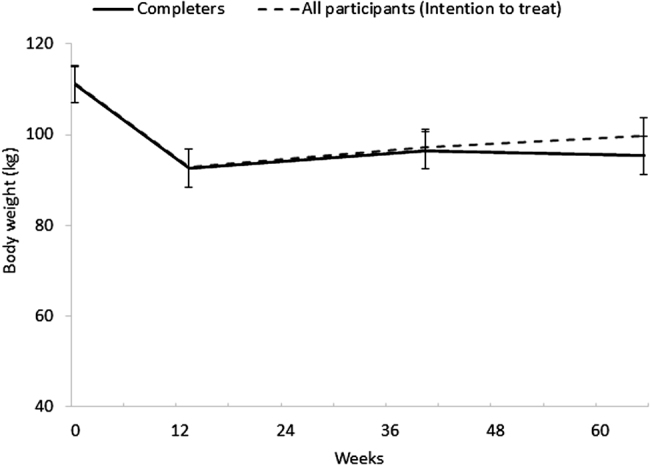
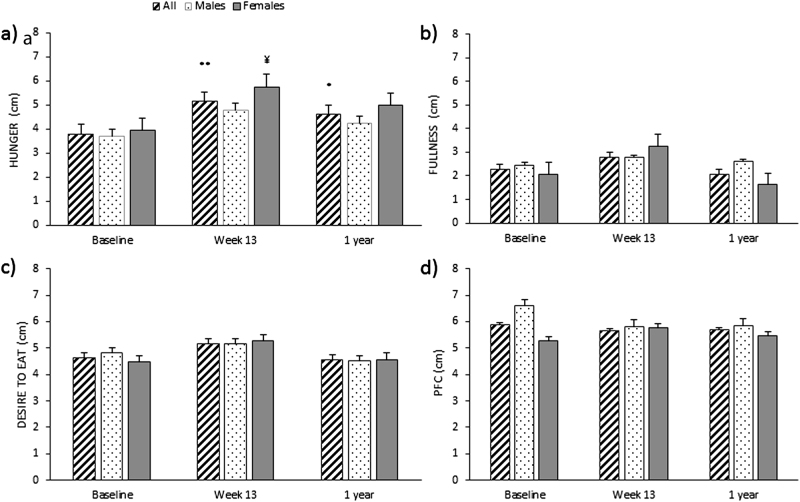
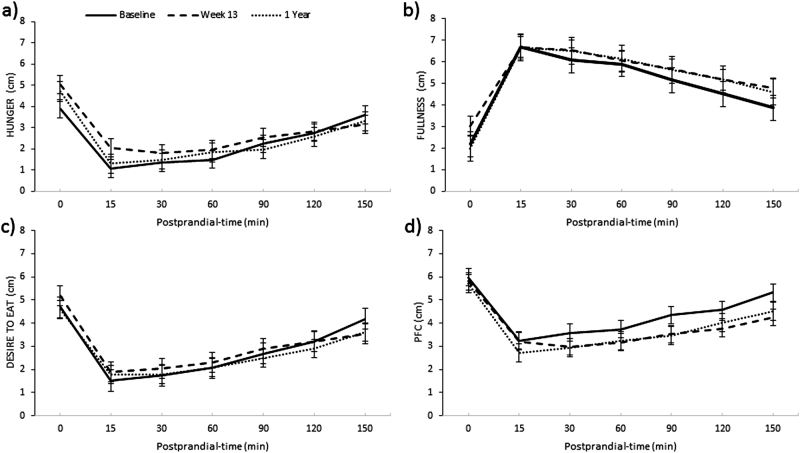
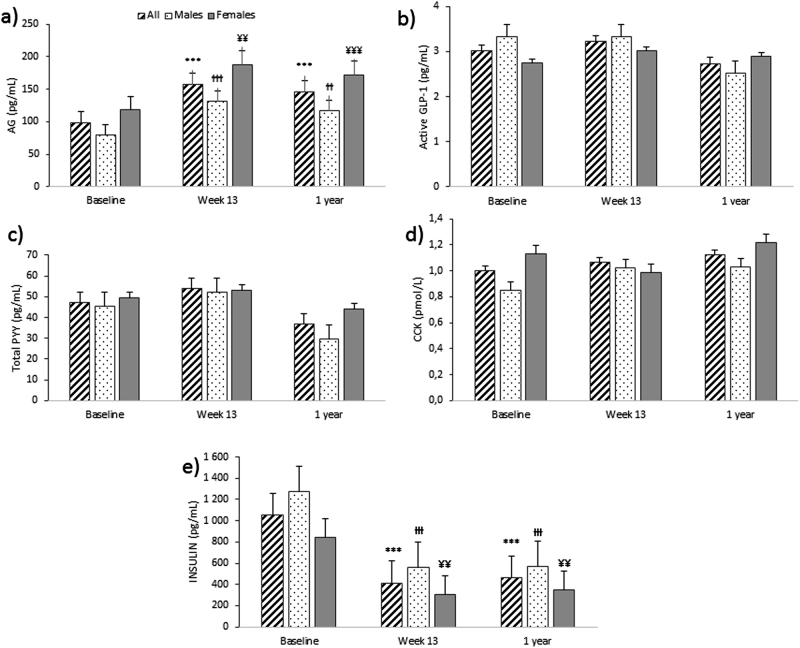
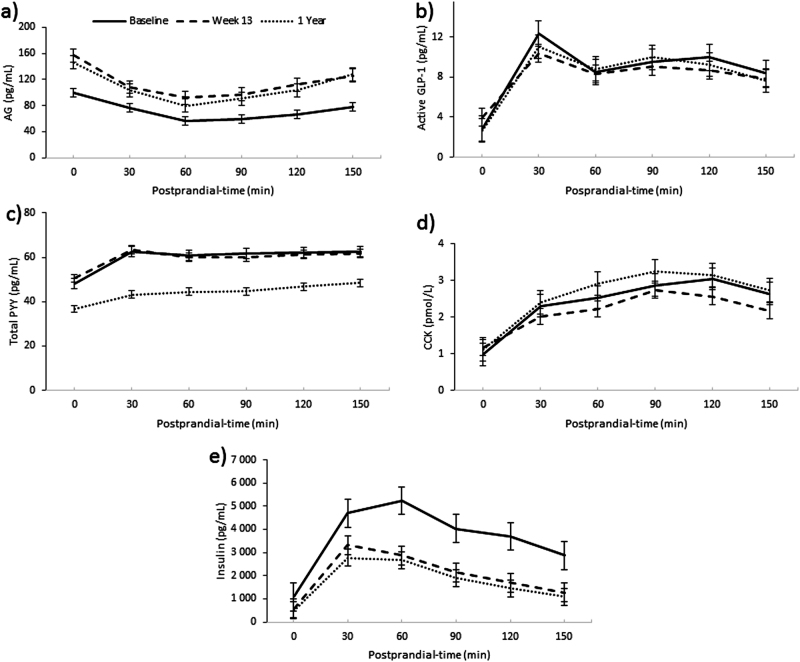
BACKGROUND/OBJECTIVE: Diet-induced weight loss (WL) leads to a compensatory increase in appetite and changes in the plasma concentration of appetite-regulating hormones are likely to play a role. Whether these changes are transient or sustained remains unclear. This study aimed to assess if changes in subjective and objective appetite markers observed with WL are sustained after 1 year (1Y). SUBJECTS/METHODS: , age: 43 ± 10 years) underwent 8 weeks (wks) of a very-low energy diet (VLED), followed by 4 wks refeeding, and a 1Y maintenance program. Fasting/postprandial subjective ratings of hunger, fullness, desire to eat, and prospective food consumption (PFC) were assessed, and plasma concentration of active ghrelin (AG), total peptide YY (PYY), active glucagon-like peptide 1, cholecystokinin (CCK), and insulin measured, at baseline, week 13 (Wk13) and 1Y. RESULTS: At Wk13, 16% WL (-18 ± 1 kg, P < 0.001) was associated with a significant increase in fasting and postprandial hunger ratings (P < 0.01 and P < 0.05, respectively), and postprandial fullness (P < 0.01) combined with a reduction in PFC (P < 0.001). These were accompanied by a significant rise in basal and postprandial AG concentrations (P < 0.001, for both), a reduction in postprandial CCK (P < 0.01) and in basal and postprandial insulin (P < 0.001). At 1Y follow-up, with sustained WL (15%; -16 ± 1 kg, P < 0.001), fasting hunger and postprandial fullness ratings remained increased (P < 0.05 for both), and postprandial PFC reduced (P < 0.001). Basal and postprandial AG remained elevated and insulin reduced (P < 0.001, for all), while postprandial CCK was increased (P < 0.01) and PYY decreased (P < 0.001). CONCLUSION: With a 15% sustained WL at 1Y, the drive to eat in the fasting state is increased, but this may be balanced out by raised postprandial feelings of fullness. To assist with WL maintenance, new strategies are required to manage increased hunger and drive to eat.
Overview
The claims and statistics of this paper haven’t been checked yet.
Free: it reads the open-access text and checks the first 5 claims that cite a source we can check. Create a free account to check every claim.
Integrity signals
Registry
Cites
Statistics
Figures
Verification
Claims the paper makes
The claims and statistics of this paper haven’t been checked yet.
Free: it reads the open-access text and checks the first 5 claims that cite a source we can check. Create a free account to check every claim.
Claims other papers make about this one
Each is checked against this paper’s own text: does it say what the citing paper says it does?
The source backs part of the claim, not all of it — or backs it for a different population, condition or comparison.
In the citing paper
“The mechanisms behind the weight regain seem to comprise biological reactions to weight loss, including decreases in resting and non-resting energy expenditure beyond what can be expected based on the actual loss of body mass2,3 along with changes in appetite-regulating hormones favoring increased food intake4–6.”
From Exploratory analysis of eating-and physical activity-related outcomes from a randomized controlled trial for weight loss maintenance with exercise and liraglutide single or combination treatment (2022) · cites this paper as [6]
Experimental — accuracy not yet measuredThe cited source says what the claim attributes to it.
In the citing paper
“The combination group had a substantial weight reduction of −12.1 kg compared with placebo26, which might in itself increase appetite6.”
In the citing paper
“These results support that weight loss induces an increase in appetite6,7,32 that persists for at least one year and seems to complicate adherence to lifestyle changes and cause weight regain.”
Self-check
Percentages, sums and reported differences re-computed from the paper’s own numbers.
The self-check needs the paper’s full text.
Citations
Cites
Controlling the False Discovery Rate: A Practical and Powerful Approach to Multiple Testing
Benjamini, Y., & Hochberg, Y. (1995) · Journal of the Royal Statistical Society Series B: Statistical Methodology · doi:10.1111/j.2517-6161.1995.tb02031.x · Cited by 109,482 · cited 1×
“The Benjamini–Hochberg method, which controls for the false discovery rate [29] was used to adjust for the large number of outcome variables.”
MethodPlasma Ghrelin Levels after Diet-Induced Weight Loss or Gastric Bypass Surgery
Cummings, D. E., Weigle, D. S., Frayo, R. S., Breen, P. A., Ma, M. K., Dellinger, E. P., & Purnell, J. Q. (2002) · New England Journal of Medicine · doi:10.1056/nejmoa012908 · Cited by 2,241
Changes in Energy Expenditure Resulting from Altered Body Weight
Leibel, R. L., Rosenbaum, M., & Hirsch, J. (1995) · New England Journal of Medicine · doi:10.1056/nejm199503093321001 · Cited by 2,012 · cited 1×
“to a reduction in TEE proportional to the new reduced body weight, even though some individuals may experience a larger than predicted reduction—a mechanism known as adaptive thermogenesis (AT) [10].”
BackgroundLong-term weight loss maintenance
Wing, R. R., & Phelan, S. (2005) · The American Journal of Clinical Nutrition · doi:10.1093/ajcn/82.1.222s · Cited by 1,941 · cited 1×
“Weight loss (WL) maintenance is now the most challenging part within obesity management as relapse is common and only 10–20% succeed in maintaining their lower body weight long-term [2, 3].”
BackgroundLong-term persistence of hormonal adaptations to weight loss
Sumithran, P., Prendergast, L. A., Delbridge, E., Purcell, K., Shulkes, A., Kriketos, A., & Proietto, J. (2011) · New England Journal of Medicine · doi:10.1056/nejmoa1105816 · Cited by 1,449 · cited 8×
“Even though ours and other studies tend to consistently show a sustained increase in subjective feelings of hunger, when using VAS, combined with an increase in ghrelin (either active or total) with long-term WL [15, 21], changes in postprandial fullness ratings and plasma concentrations of satiety peptides remain con…”
BackgroundMethodResultInfluentialS UCCESSFUL W EIGHT L OSS M AINTENANCE
Wing, R. R., & Hill, J. O. (2001) · Annual Review of Nutrition · doi:10.1146/annurev.nutr.21.1.323 · Cited by 1,382 · cited 1×
“Weight loss (WL) maintenance is now the most challenging part within obesity management as relapse is common and only 10–20% succeed in maintaining their lower body weight long-term [2, 3].”
BackgroundLong-term weight-loss maintenance: a meta-analysis of US studies
Anderson, J. W., Konz, E. C., Frederich, R. C., & Wood, C. L. (2001) · The American Journal of Clinical Nutrition · doi:10.1093/ajcn/74.5.579 · Cited by 1,351
Weight Loss and Improvement in Comorbidity: Differences at 5%, 10%, 15%, and Over
Ryan, D. H., & Yockey, S. R. (2017) · Current Obesity Reports · doi:10.1007/s13679-017-0262-y · Cited by 831
Stubbs, R. J., Hughes, D. A., Johnstone, A. M., Rowley, E., Reid, C., Elia, M., Stratton, R., Delargy, H., King, N., & Blundell, J. E. (2000) · British Journal Of Nutrition · doi:10.1017/s0007114500001719 · Cited by 674
Nordic Nutrition Recommendations 2012
Nordic Council of Ministers, N. C. O. M. (2008) · Nordic Nutrition Recommendations 2012 · doi:10.6027/nord2014-002 · Cited by 629
Cited by
Busetto, L., Bettini, S., Makaronidis, J., Roberts, C. A., Halford, J. C. G., & Batterham, R. L. (2021) · European Journal of Internal Medicine · doi:10.1016/j.ejim.2021.01.002 · Cited by 159
“However, even with ketogenic diets, increased ghrelin levels and hunger occur with re-introduction of a varied diet [12].”
BackgroundImpact of ketosis on appetite regulation—a review
Deemer, S. E., Plaisance, E. P., & Martins, C. (2020) · Nutrition Research · doi:10.1016/j.nutres.2020.02.010 · Cited by 95
Self-citationKoliaki, C. C., Liatis, S., Dalamaga, Μ., & Kokkinos, A. D. (2020) · Current Obesity Reports · doi:10.1007/s13679-020-00396-9 · Cited by 93
Casanova, N., Beaulieu, K., Finlayson, G., & Hopkins, M. (2019) · Proceedings of the Nutrition Society · doi:10.1017/s0029665118002811 · Cited by 71
“Limited evidence also suggests that these changes in appetite-related peptides may persist in the weight-reduced state((100,106,107)), with Sumithran et al.”
BackgroundKetogenic diets and appetite regulation
Roekenes, J. A., & Martins, C. (2021) · Current Opinion in Clinical Nutrition & Metabolic Care · doi:10.1097/mco.0000000000000760 · Cited by 74
Self-citationThom, G., Dombrowski, S. U., Brosnahan, N., Algindan, Y. Y., Rosario Lopez-Gonzalez, M., Roditi, G., Lean, M. E. J., & Malkova, D. (2020) · European Journal of Clinical Nutrition · doi:10.1038/s41430-020-0568-9 · Cited by 49
“Other studies have used appetite rating scales at set timepoints to coincide with blood collection for appetite hormone measurements [11, 18, 50].”
BackgroundResultMüllertz, A. L. O., Sandsdal, R. M., Jensen, S. B. K., & Torekov, S. S. (2024) · Obesity Reviews · doi:10.1111/obr.13717 · Cited by 46
“18,19 Weight loss decreases energy expenditure, increases sedentary behavior, and may affect appetite 20,21 with observations of increased appetite at least a year after diet-induced weight loss in some studies, 22 – 24 which makes sustained weight loss difficult.”
BackgroundThe influence of skeletal muscle on appetite regulation
Grannell, A., VITO, G. D., Murphy, J. C., & le Roux, C. W. (2019) · Expert Review of Endocrinology & Metabolism · doi:10.1080/17446651.2019.1618185 · Cited by 47
Jensen, S. B. K., Janus, C., Lundgren, J. R., Juhl, C. R., Sandsdal, R. M., Olsen, L. M., Andresen, A., Borg, S. A., Jacobsen, I. C., Finlayson, G., et al. (2022) · Nature Communications · doi:10.1038/s41467-022-32307-y · Cited by 42
Investigating the effect of sex and ketosis on weight-loss-induced changes in appetite
Lyngstad, A., Nymo, S., Coutinho, S. R., Rehfeld, J. F., Truby, H., Kulseng, B., & Martins, C. (2019) · The American Journal of Clinical Nutrition · doi:10.1093/ajcn/nqz002 · Cited by 40
“The primary outcome of the study was WL maintenance at 1 y, after an initial 8-wk VLED and these results are previously published (24).”
ResultSelf-citationDeBenedictis, J. N., Nymo, S., Ollestad, K. H., Boyesen, G. A., Rehfeld, J. F., Holst, J. J., Truby, H., Kulseng, B., & Martins, C. (2020) · The Journal of Clinical Endocrinology & Metabolism · doi:10.1210/clinem/dgaa202 · Cited by 40
“Moreover, an improved satiety response has also been shown after WL, with increased release of satiety peptides postprandially (10), as well as increased feelings of fullness (12).”
BackgroundMethodResultSelf-citationAukan, M. I., Skårvold, S., Brandsæter, I. Ø., Rehfeld, J. F., Holst, J. J., Nymo, S., Coutinho, S. R., & Martins, C. (2022) · Obesity · doi:10.1002/oby.23655 · Cited by 43
“Moreover, these changes seem to be sustained at 1-year follow-up [13, 14], even with partial weight regain [12].”
BackgroundSelf-citationTuricchi, J., O'Driscoll, R., Finlayson, G., Beaulieu, K., Deighton, K., & Stubbs, R. J. (2019) · Obesity Reviews · doi:10.1111/obr.12849 · Cited by 37
“Indeed, reductions in energy expenditure due to changes in body composition, alongside potentially greater‐than‐predicted reductions caused by a series of adaptive responses such as reductions in leptin, thyroid, and adrenal hormones, are also likely to contribute to weight regain,(94) as are increases in energy intak…”
BackgroundSainsbury, A., Wood, R. E., Seimon, R. V., Hills, A. P., King, N. A., Gibson, A. A., & Byrne, N. M. (2018) · Obesity Reviews · doi:10.1111/obr.12787 · Cited by 36
“While there is some evidence that adaptive responses to energy restriction persist unabated for as long as body weight is maintained at less than pre-diet levels (even up to one (17–20), three (21) or six (22) years after the diet), other evidence suggests that some adaptive responses to energy restriction in adults w…”
BackgroundInfluentialRevisiting the Ghrelin Changes Following Bariatric and Metabolic Surgery
Tuero, C., Valentí, V., Rotellar, F., Landecho, M. F., Cienfuegos, J. A., & Frühbeck, G. (2020) · Obesity Surgery · doi:10.1007/s11695-020-04601-5 · Cited by 45
Ketogenic Diets for Body Weight Loss: A Comparison with Other Diets
Dyńka, D., Rodzeń, Ł., Rodzeń, M., Pacholak-Klimas, A., Ede, G., Sethi, S., Łojko, D., Bartoń, K., Berry, K., Deptuła, A., et al. (2025) · Nutrients · doi:10.3390/nu17060965 · Cited by 47
Martins, C., Nymo, S., Truby, H., Rehfeld, J. F., Hunter, G. R., & Gower, B. A. (2020) · Obesity · doi:10.1002/oby.23011 · Cited by 30
“The primary outcome of the study was weight loss maintenance at 1 year, after an initial 8-week VLED, which has been published (10).”
BackgroundSelf-citationChuruangsuk, C., Lean, M. E. J., & Combet, E. (2020) · Proceedings of The Nutrition Society · doi:10.1017/s0029665120000105 · Cited by 37
“Ketone body production is a biochemically necessary accompaniment of weight loss, and appetite usually increases with energy restriction and starvation((90,91)), as a powerful survival mechanism.”
BackgroundThom, G., McIntosh, A., Messow, C., Leslie, W. S., Barnes, A. C., Brosnahan, N., McCombie, L., Malkova, D., Al-Mrabeh, A., Zhyzhneuskaya, S. V., et al. (2020) · Diabetes Obesity and Metabolism · doi:10.1111/dom.14274 · Cited by 37
Revisiting the Compensatory Theory as an explanatory model for relapse in obesity management
Martins, C., Dutton, G. R., Hunter, G. R., & Gower, B. A. (2020) · American Journal of Clinical Nutrition · doi:10.1093/ajcn/nqaa243 · Cited by 33
“a decrease in total PYY and no changes in active GLP-1 (17, 64).”
BackgroundResultInfluentialSelf-citationDifferences in gastrointestinal hormones and appetite ratings among obesity classes
Aukan, M. I., Nymo, S., Ollestad, K. H., Boyesen, G. A., DeBenedictis, J. N., Rehfeld, J. F., Coutinho, S. R., & Martins, C. (2022) · Appetite · doi:10.1016/j.appet.2022.105940 · Cited by 31
Self-citationThe (dys)regulation of energy storage in obesity
Levin, B. E., Geary, N., & Lutz, T. A. (2025) · Physiological Reviews · doi:10.1152/physrev.00002.2024 · Cited by 29
Physiological Predictors of Weight Regain at 1‐Year Follow‐Up in Weight‐Reduced Adults with Obesity
Nymo, S., Coutinho, S. R., Rehfeld, J. F., Truby, H., Kulseng, B. E., & Martins, C. (2019) · Obesity · doi:10.1002/oby.22476 · Cited by 25
“The lack of significant changes in postprandial fullness feelings reported here are likely to be due to lack of power, as we recently published (with a sample of n = 71) a significant increase in postprandial fullness ratings after a 16% WL, which was sustained at 1-year follow-up (11).”
BackgroundResultSelf-citationThe role of gut hormones in the pathogenesis and management of obesity
Makaronidis, J., & Batterham, R. L. (2019) · Current Opinion in Physiology · doi:10.1016/j.cophys.2019.04.007 · Cited by 26
Jin, Z., Li, J., Thackray, A. E., Shen, T., Deighton, K., King, J. A., & Stensel, D. J. (2025) · International Journal of Obesity · doi:10.1038/s41366-025-01726-4 · Cited by 20
“In the long-term, chronic CR has been shown to enhance perceived and physiological urges to eat [19, 20].”
Martins, C., Roekenes, J. A., Rehfeld, J. F., Hunter, G. R., & Gower, B. A. (2023) · American Journal of Clinical Nutrition · doi:10.1016/j.ajcnut.2023.10.010 · Cited by 22
Self-citationStubbs, R. J., & Turicchi, J. (2021) · Obesity Reviews · doi:10.1111/obr.13191 · Cited by 25
Stubbs, R. J., Duarte, C., O’Driscoll, R., Turicchi, J., & Michałowska, J. (2019) · Proceedings of The Nutrition Society · doi:10.1017/s0029665119001083 · Cited by 17
“Reports of changes in peripheral appetite peptides in response to 10–20 % WL produce results that can be interpreted as being consistent with WL increasing homeostatic increases in appetite((43,44,47,49,50)).”
BackgroundZhu, R., Fogelholm, M., Larsen, T. M., Poppitt, S. D., Silvestre, M. P., Vestentoft, P. S., Jalo, E., Navas-Carretero, S., Huttunen-Lenz, M., Taylor, M. A., et al. (2021) · Frontiers in Nutrition · doi:10.3389/fnut.2021.685648 · Cited by 16
“An increase in hunger has also been found in two studies during long-term weight-loss maintenance (WLM) achieved by a combination of energy-restricted diets and exercise (12, 13).”
BackgroundResultGetting energy balance right in an obesogenic world
Moore, J. B., & Boesch, C. (2019) · Proceedings of The Nutrition Society · doi:10.1017/s0029665118002720 · Cited by 16
“The last day of the conference emphasised clinical and public health considerations in the management of energy balance, beginning with a plenary that reviewed the role of appetite and behavioural compensation mechanisms in weight regain and the challenge of long-term energy balance after weight loss((8,9)).”
BackgroundBuso, M. E. C., Seimon, R. V., McClintock, S., Muirhead, R., Atkinson, F. S., Brodie, S., Dodds, J., Zibellini, J., Das, A., Wild-Taylor, A. L., et al. (2021) · Frontiers in Nutrition · doi:10.3389/fnut.2021.640538 · Cited by 17
“Indeed, adults with overweight and obesity have been shown to have lower circulating concentrations of ghrelin and perturbed concentrations of peptide YY compared to adults with a normal weight (19, 35, 36).”
BackgroundResultInfluentialMartins, C., Nymo, S., Coutinho, S. R., Rehfeld, J. F., Hunter, G. R., & Gower, B. A. (2023) · Journal of Nutrition · doi:10.1016/j.tjnut.2023.03.026 · Cited by 17
Self-citationTorres, S. Y. L., Aukan, M. I., Gower, B. A., & Martins, C. (2024) · Obesity · doi:10.1002/oby.24031 · Cited by 16
“Additionally, some studies have shown that weight loss leads to a reduction in the postprandial secretion of the satiety hormones peptide YY (PYY) and cholecystokinin (CCK) [20, 21], whereas others have reported an increase in CCK, PYY 3-36 , and total glucagon-like peptide-1 (GLP-1) [22, 23].”
BackgroundInfluentialSelf-citationGrannell, A., le Roux, C. W., & McGillicuddy, D. (2021) · Qualitative Health Research · doi:10.1177/10497323211040767 · Cited by 17
“Within these same PWO lower glucagon-like peptide-1 at baseline and after weight loss was associated with weight regain with the PWO not perceiving appetite changes unlike previous studies (Coutinho et al., 2018; Nymo et al., 2018; Sumithran et al., 2011).”
Näätänen, M., Kolehmainen, M., Laaksonen, D. E., Herzig, K., Poutanen, K. S., & Karhunen, L. J. (2020) · European Journal of Nutrition · doi:10.1007/s00394-020-02438-3 · Cited by 16
Lowe, M. R., Singh, S., Apple, D. E., Mayer, L., ROSENBAUM, M. S., Espel‐Huynh, H., Thomas, J. G., Neff, K. M. H., & Zhang, F. (2022) · European Eating Disorders Review · doi:10.1002/erv.2903 · Cited by 15
Association between habitual sleep duration/quality and appetite markers in individuals with obesity
Nymo, S., Kleppe, M. M., Coutinho, S. R., Rehfeld, J. F., Kulseng, B., & Martins, C. (2021) · Physiology & Behavior · doi:10.1016/j.physbeh.2021.113345 · Cited by 11
“Participants were recruited by newspaper advertising and St. Olavs Hospital and NTNU intranet.”
MethodSelf-citationPractical strategies to manage obesity in type 2 diabetes
Rodbard, H. W., Barnard-Kelly, K. D., Pfeiffer, A. F. H., Mauersberger, C., Schnell, O., & Giorgino, F. (2024) · Diabetes Obesity and Metabolism · doi:10.1111/dom.15556 · Cited by 10
“139 Therefore, it is crucial to support people at this stage with continued monitoring and care, through either face-to-face or virtual contacts.”
BackgroundSommersten, C. H., Gjerde, E. S., Laupsa‐Borge, J., Andersen, A. I., Lawrence‐Archer, L., McCann, A., Hansson, P., Raza, G. S., Herzig, K., Lied, G. A., et al. (2022) · Journal of Nutrition · doi:10.1016/j.tjnut.2022.12.030 · Cited by 13
Self-citationEmini, M., Bhargava, R., Aldhwayan, M., Chhina, N., Rodríguez-Flores, M., Aldubaikhi, G., Lababidi, M. A., Al‐Najim, W., Miras, A. D., Ruban, A., et al. (2024) · Journal of the Endocrine Society · doi:10.1210/jendso/bvae214 · Cited by 9
Truby, H., Bennett, C., & Martins, C. (2020) · Proceedings of The Nutrition Society · doi:10.1017/s0029665120007028 · Cited by 11
“Diet-induced weight loss leads to a significant increase in hunger feelings and the release of the orexigenic hormone ghrelin((51,52)) and this has been described in adults even when weight loss is minimal (1–2 kg)((53,54)).”
Self-citationLim, J. J., Liu, Y., Lu, L. W., Sequeira, I. R., & Poppitt, S. D. (2023) · Nutrients · doi:10.3390/nu15102399 · Cited by 11
Nymo, S., Lundanes, J., Eriksen, K., Aukan, M. I., Rehfeld, J. F., Holst, J. J., Johnsen, G., Græslie, H., Kulseng, B. E., Sandvik, J., et al. (2023) · Obesity Surgery · doi:10.1007/s11695-023-07028-w · Cited by 9
“…seen in the SWL group are likely a result of the higher body weight seen in this group, as lower ghrelin plasma concentrations have been reported in individuals with obesity compared with those with a normal weight [29], and WL is accompanied by increased ghrelin concentrations [30–32].”
BackgroundSelf-citationKramer, C. K., Zinman, B., Feig, D. S., & Retnakaran, R. R. (2026) · International Journal of Obesity · doi:10.1038/s41366-026-02042-1 · Cited by 4
“However, maintenance of weight loss following any intervention has been increasingly recognized as a key limiting factor for the long-term successful management of obesity as weight regain occurs after treatment discontinuation of virtually any non-surgical weight-loss therapy [3 – 7].”
InfluentialOptimizing Bariatric Surgery Outcomes: The Dual Benefits of Preoperative Very-Low-Calorie Diets
Xu, Y., Yang, S., Luo, R., Wu, L., Lin, Y., Xi, Y., Peng, H. C., & Fang, X. (2025) · Obesity Surgery · doi:10.1007/s11695-025-07996-1 · Cited by 4
“The success of bariatric surgery has been partially attributed to favorable alterations in gastrointestinal hormone secretion, which are crucial regulators of eating behavior and homeostatic appetite control [5–8].”
Krishnan, S., Adams, S. H., Witbracht, M. G., Woodhouse, L. R., Piccolo, B. D., Thomas, A. P., de Souza, E. C. L., Horn, W. F., Gertz, E., Loan, M. D. V., et al. (2020) · Journal of Nutrition · doi:10.1093/jn/nxaa327 · Cited by 7
“In another study, sustained weight loss (15% of body weight) increased the drive to eat in the fasting state, but this was countered with increased fullness in the postprandial state when compared with preintervention (9).”
ResultPrävention und Management von postinterventioneller Gewichtszunahme
Kruschitz, R., Fahrnberger, M., Felsenreich, D. M., Ress, C., Andersen, B. L., Aydınkoç-Tuzcu, K., Ciardi, C., Huber, S. L., & Kiefer, F. W. (2023) · Wiener klinische Wochenschrift · doi:10.1007/s00508-023-02273-6 · Cited by 4
The effect of low-fat diets on appetite: a systematic review of randomized clinical trials
Razmpoosh, E., Abdollahi, S., Sikaroudi, M. K., Sangsefidi, Z. S., Zeraattalab-Motlagh, S., Torabinasab, K., Hejazi, M., Meshkini, F., Motallaei, M., & Soltani, S. (2025) · BMC Public Health · doi:10.1186/s12889-025-23454-0 · Cited by 4
“In our review, the included studies showed weight loss below 10%, which was insufficient to induce appetite changes based on documented evidence [43].”
Reply to E Ravussin and L Redman
Martins, C., Roekenes, J. A., Salamati, S., Gower, B. A., & Hunter, G. R. (2020) · American Journal of Clinical Nutrition · doi:10.1093/ajcn/nqaa309 · Cited by 3
Self-citationDo we really know what drives relapse in obesity management?
Martins, C. (2021) · European Journal of Internal Medicine · doi:10.1016/j.ejim.2021.06.030 · Cited by 3
Self-citationMoore, H., White, M. J., Finlayson, G., & King, N. A. (2023) · British Journal of Health Psychology · doi:10.1111/bjhp.12693 · Cited by 3
Handa, T., Onoue, T., Maeda, R., Mizutani, K., Suzuki, K. A. O., Kobayashi, T., Miyata, T., Sugiyama, M., Hagiwara, D., Iwama, S., et al. (2025) · Nutrients · doi:10.3390/nu17020202 · Cited by 4
Makaronidis, J., & Batterham, R. L. (2024) · Wiley eBooks · doi:10.1002/9781119697473.ch11 · Cited by 2
Lecerf, J. (2021) · Médecine des Maladies Métaboliques · doi:10.1016/j.mmm.2021.10.015 · Cited by 1
Yevusiak, T., Weisman, A., Retnakaran, R. R., Wharton, S., Drucker, D. J., & Kramer, C. K. (2026) · PLoS ONE · doi:10.1371/journal.pone.0354237 · Cited by 1
“These effects may reflect a reduced compensatory response in appetite stimulation and energy conservation that typically follows rapid weight loss or abrupt cessation of therapy [17,20–22].”
Obesity: A Multi Perspective of Physiology and Neurobiology Energy Regulation
Meiliana, A., Dewi, N. M., & Wijaya, A. (2024) · The Indonesian Biomedical Journal · doi:10.18585/inabj.v16i1.2840 · Cited by 2
The effectiveness and health impact of fad diets on obese patients: a literature review
Kraszkiewicz, A., Zaliwska, D., Paduszyńska, N., Dąbrowska, A., Gonciarz, M. J., Czach, M., Strojny, A. A., Adamiec, D. K., Kamińska, M. A., & Do, M. K. (2024) · Quality in Sport · doi:10.12775/qs.2024.16.52872 · Cited by 2
“However, elevated levels of ghrelin and hunger returns when a patient comes back to a regular, non-fad diet [25].”
BackgroundA review of the uses of the ketogenic diet
Ahmed, Q. A., Abdullah, K., & Mutar, W. M. (2022) · Kirkuk University Journal-Scientific Studies · doi:10.32894/kujss.2022.132824.1058 · Cited by 3
Role of Incretin Mimetics in the Management of Obesity
Garcha, S. C., & Kalra, S. (2025) · Springer eBooks · doi:10.1007/978-981-96-1651-0_4 · Cited by 1
Tolbert, L., Borden, S., Leskowitz, J., Ramakrishnan, R., Reid, T. J., Krikhely, A., Bessler, M., & Körner, J. (2026) · Obesity Surgery · doi:10.1007/s11695-025-08473-5 · Cited by 1
Postprandial Glucose Level Decreases and Appetite in Adults Without Diabetes
Yao, J., Edney, S. M., Tan, L. W. L., Kao, S. L., Sim, X., Tai, E. S., Müller‐Riemenschneider, F., & van Dam, R. (2026) · JAMA Network Open · doi:10.1001/jamanetworkopen.2026.3426
Moore, H., Hopkins, M., Lazzer, S., Isacco, L., Pereira, B., Montaurier, C., Blundell, J. E., Boirie, Y., & Thivel, D. (2026) · Journal of Nutrition · doi:10.1016/j.tjnut.2026.101656 · Cited by 1
Cook, T. M., Bethea, M. M., Teixeira, S. D. S., Birznieks, C. L., McClennan, A., Hendrix, J., Benninger, R. K. P., Patti, M., & Sandoval, D. A. (2026) · Molecular Metabolism · doi:10.1016/j.molmet.2026.102399
“After weight loss stabilized, VSG mice did not compensate by increasing food intake (Supp 1B), in contrast to the increased food intake which often occurs after weight loss from caloric restriction [30 — 32].”
Launbo, N., Jalking, L., Jensen, M. M., Beaulieu, K., Finlayson, G., Blond, M. B., Wiggers, A., Rungby, J., NILSSON, M., Albrechtsen, N. J. W., et al. (2026) · EBioMedicine · doi:10.1016/j.ebiom.2026.106353 · Cited by 1
Parastika, T., Liu, J., Bhargava, R., Ng, W. I., Jialin, G., Rodríguez-Flores, M., Zhang, X., Emini, M., Li, W., Luur, S., et al. (2026) · medRxiv · doi:10.64898/2026.07.29.26359169
Melhorn, S. J., Valencia, A. P., Schenk, J. M., Garcia, J. M., Beatty, S. J., Konchan, A., Brandão, A. D. F., Acosta-Vega, N. L., Marcinek, D. J., Tong, J., et al. (2026) · PLoS ONE · doi:10.1371/journal.pone.0354678
“Prior research has documented increased hunger, decreased satiety [7,8] and increased food intake after a period of weight loss [9].”
Jeyakumar, Y., Retnakaran, R. R., Feig, D. S., Zinman, B., & Kramer, C. K. (2026) · Journal of the Endocrine Society · doi:10.1210/jendso/bvag216
Shakeel, T., Khan, A., & khan, S. (2026) · Research Square · doi:10.21203/rs.3.rs-11160634/v1
Metadata
- Authors
- Nymo, S., Coutinho, Sr., Eknes, P., Vestbostad, I., Rehfeld, J., Truby, H., Kulseng, B., & Martins, C.
- Affiliations
- Norwegian University of Science and Technology (NO)
- Monash University (AU)
- Corresponding author
- Nymo, S
- Venue
- International Journal of Obesity
- Published
- 2018-06-21
- Volume
- 42
- Issue
- 8
- Pages
- 1489-1499
- ISSN
- 0307-0565 (ISSN-L)
- 1476-5497
- PMC
- PMC6113192
- OpenAlex
- W2809431802
- Cited by
- 68
- References
- 52
- Citations by year
- 2026: 11 · 2025: 7 · 2024: 7 · 2023: 6 · 2022: 6 · 2021: 9 · 2020: 13 · 2019: 8 · 2018: 1
- FWCI
- 4.35
- Type
- journal article
- Language
- en
- Open access
- hybrid
- doi.org
- Licence
- cc-by
- creativecommons.org/licenses/by/4.0 (tdm)
- Locations
- International Journal of Obesity (publishedVersion, cc-by)
- Europe PMC (PubMed Central) (publishedVersion, other-oa)
- PubMed Central (publishedVersion, cc-by)
- PubMed (publishedVersion)
- Research at the University of Copenhagen (University of Copenhagen) (publishedVersion, cc-by)
- Monash University Research Portal (Monash University) (submittedVersion, other-oa)
- NORA - Norwegian Open Research Archives (submittedVersion, cc-by)
- Funders
- Norges Teknisk-Naturvitenskapelige Universitet
- Helse Midt-Norge
- Army Research Office
- Topics
- Life Sciences › Neuroscience › Endocrine and Autonomic Systems › Regulation of Appetite and Obesity
- Social Sciences › Psychology › Clinical Psychology › Eating Disorders and Behaviors
- Health Sciences › Medicine › Surgery › Bariatric Surgery and Outcomes
- Keywords
- weight loss, appetite regulation, ghrelin, cholecystokinin, peptide YY, glucagon-like peptide-1, insulin, very low calorie diet, refeeding, maintenance diet, prospective food consumption, satiety, appetite-regulating hormones, obesity treatment, bariatric surgery alternatives
- MeSH terms
- Adult, Appetite, Body Weight, Diet, Female, Humans, Longitudinal Studies, Male, Middle Aged, Weight Gain, Weight Loss, Postprandial Period, Peptide YY, Ghrelin
About these checks
Registry, retraction, Cites and statistics results are computed, not judged, with one exception: a printed reference that no index lists is read once by a model before it counts as a citation error. Claims are extracted by a model and kept only when their quote appears verbatim in the text; each cited source is then checked, with a model’s help, for whether it says what the claim relies on. Those verdicts can be wrong — read the claim’s quote and the cited source before relying on one.
Statistics and arithmetic are recomputed, not judged.
Confidence bands are shown only for fields calibrated on our annotated test set. None is calibrated yet, so no band is shown.
What counts as a claim ›How we measure confidence ›How we check this ›
Are you an author, or do you see a problem with this page? Request a review
Data sources
Bibliographic data: Semantic Scholar, OpenAlex, Crossref.
Contains information from the Semantic Scholar Academic Graph Datasets, made available under the ODC Attribution License (ODC-BY 1.0).
Semantic Scholar’s data is described in: Kinney, R., et al. (2023). The Semantic Scholar Open Data Platform. arXiv:2301.10140.
