

Associations between per-and polyfluoroalkyl substances (PFAS) and county-level cancer incidence between 2016 and 2021 and incident cancer burden attributable to PFAS in drinking water in the United States
Open accessThe DOI matches its Crossref record; 76 of the 76 references it cites were found in a registry or an index.
Abstract
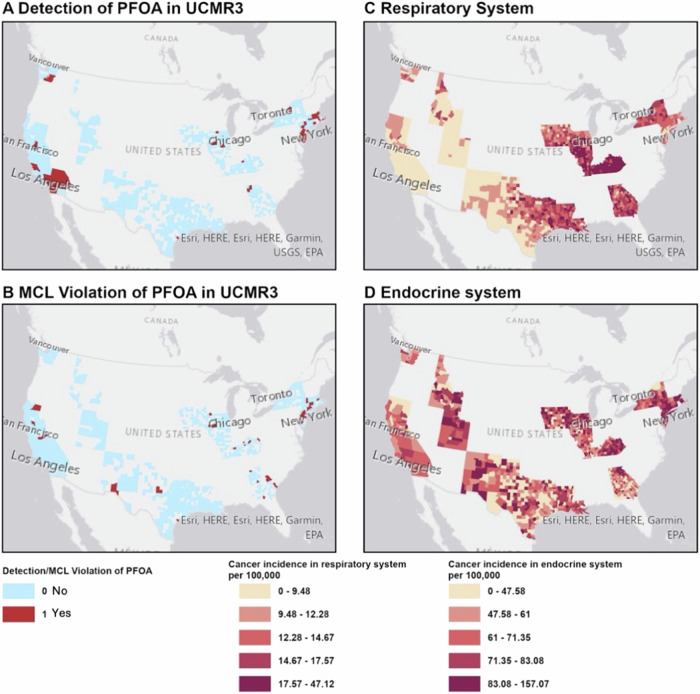
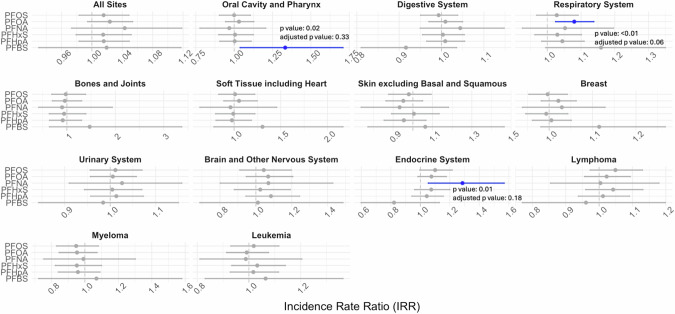
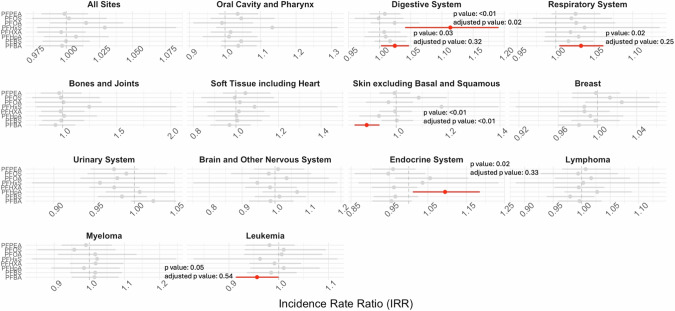
Background: Exposure to per- and polyfluoroalkyl substances (PFAS) has been linked with various cancers. Assessment of PFAS in drinking water and cancers can help inform biomonitoring and prevention efforts. Objective: To screen for incident cancer (2016–2021) and assess associations with PFAS contamination in drinking water in the US. Methods: We obtained county-level age-adjusted cancer incidence (2016–2021) from the Surveillance, Epidemiology, and End Results (SEER) Program. Data on PFAS levels in public drinking water systems were obtained from the Third (UCMR3; 2013–2015) and Fifth (UCMR5; 2023–2024) Unregulated Contaminant Monitoring Rule. UCMR3 measured PFOS, PFOA, PFNA, PFHxS, PFHpA, and PFBS. UCMR5 expanded measurements to include PFBA, PFHxA, PFPeA, and PFPeS. We created indicators of PFAS detection and, for UCMR5, concentrations above Maximum Contaminant Levels (MCLs). MCLs for PFOA and PFOS are 4 ng/L, and for PFNA and PFHxS are 10 ng/L. We used Poisson regression models to assess associations between PFAS detection or MCL violation and cancer incidence, adjusting for potential confounders. We estimated the number of attributable cancer cases. Results: PFAS in drinking water was associated with increased cancer incidence in the digestive, endocrine, oral cavity/pharynx, and respiratory systems. Incidence rate ratios (IRRs) ranged from 1.02 to 1.33. The strongest association was observed between PFBS and oral cavity/pharynx cancers (IRR: 1.33 [1.04, 1.71]). Among males, PFAS was associated with cancers in the urinary, brain, leukemia, and soft tissues. Among females, PFAS was associated with cancers in the thyroid, oral cavity/pharynx, and soft tissue. PFAS in drinking water is estimated to contribute to 4626 [95% CI: 1,377, 8046] incident cancer cases per year based on UCMR3 data and 6864 [95% CI: 991, 12,804] based on UCMR5. Impact statement: The ecological study examined the associations between PFAS in drinking water measured in two waves (2013–2015 and 2023–2024) and cancer incidence between 2016 and 2021. We found that PFAS in drinking water was associated with cancers in the organ system including the oral cavity/pharynx, lung, digestive system, brain, urinary system, soft tissue, and thyroid. Some cancers have not been widely studied for their associations with PFAS. We also observed sex differences in the associations between PFAS and cancer risks. This is the first ecological study that examined PFAS exposure in drinking water and various cancer risks.
Overview
The claims and statistics of this paper haven’t been checked yet.
Free: it reads the open-access text and checks the first 5 claims that cite a source we can check. Create a free account to check every claim.
Integrity signals
Registry
Cites
Statistics
Figures
Verification
Claims the paper makes
The claims and statistics of this paper haven’t been checked yet.
Free: it reads the open-access text and checks the first 5 claims that cite a source we can check. Create a free account to check every claim.
Self-check
Percentages, sums and reported differences re-computed from the paper’s own numbers.
The self-check needs the paper’s full text.
Citations
Cites
Siegel, R. L., Miller, K. D., Wagle, N. S., & Jemal, A. (2023) · CA: A Cancer Journal for Clinicians · doi:10.3322/caac.21763 · Cited by 16,303 · cited 1×
“It is estimated that there were 1.9 million new cancer cases and more than 600,000 deaths from cancers in the US in 2023 [5].”
InfluentialSunderland, E. M., Hu, X. C., Dassuncao, C., Tokranov, A. K., Wagner, C. C., & Allen, J. G. (2019) · Journal of Exposure Science & Environmental Epidemiology · doi:10.1038/s41370-018-0094-1 · Cited by 2,786
2013 NCHS Urban-Rural Classification Scheme for Counties.
Ingram, D. D., & Franco, S. J. (2012) · PubMed · Cited by 1,762
Global Estimates and Long-Term Trends of Fine Particulate Matter Concentrations (1998–2018)
Hammer, M. S., van Donkelaar, A., Li, C., Lyapustin, A., Sayer, A. M., Hsu, N. C., Levy, R. C., Garay, M. J., Kalashnikova, O. V., Kahn, R. A., et al. (2020) · Environmental Science & Technology · doi:10.1021/acs.est.0c01764 · Cited by 845
Self-citationBarry, V., Winquist, A., & Steenland, K. (2013) · Environmental Health Perspectives · doi:10.1289/ehp.1306615 · Cited by 764
Accumulation of perfluoroalkyl substances in human tissues
Pérez, F., Nadal, M., Navarro-Ortega, A., Fàbrega, F., Domingo, J. L., Barceló, D., & Farré, M. (2013) · Environment International · doi:10.1016/j.envint.2013.06.004 · Cited by 730
van Donkelaar, A., Martin, R. V., Li, C., & Burnett, R. T. (2019) · Environmental Science & Technology · doi:10.1021/acs.est.8b06392 · Cited by 715
Domingo, J. L., & Nadal, M. (2019) · Environmental Research · doi:10.1016/j.envres.2019.108648 · Cited by 688
Historical and current usage of per- and polyfluoroalkyl substances (PFAS): A literature review
Gaines, L. G. T. (2023) · American Journal of Industrial Medicine · doi:10.1002/ajim.23362 · Cited by 665
Environmental causes of cancer: endocrine disruptors as carcinogens
Soto, A. M., & Sonnenschein, C. (2010) · Nature Reviews Endocrinology · doi:10.1038/nrendo.2010.87 · Cited by 573 · cited 1×
“…chemicals like PFAS have been proposed as environmental risk factors for cancers through multiple mechanisms, such as alterations in male and female reproduction, epigenetic changes, and changes in neuroendocrinology, behavior, and metabolism which can lead to the development of cancers [6, 7].”
Research works printed but not linked: 3
- Guidance on PFAS exposure, testing, and clinical follow-up [Internet]. Washington, D.C.: National Academies Press; 2022 [cited 2023 Dec 10]. Available from: https://www.nap.edu/catalog/26156 35939564
- Areej Arif MFM, Dua Mahmood Ch KN. Water pollution and industries. Pure Appl Biol. 2020;9:2214–24.
- US EPA. Human health toxicity values for perfluorobutane sulfonic acid and related compound potassium perfluorobutane sulfonate [Internet]. 2021 [cited 2024 Jun 25]. Available from: https://cfpub.epa.gov/ncea/risk/recordisplay.cfm?deid=350888 36454928
Cited by
Yang, Y., Wang, J., Tang, S., Qiu, J., Luo, Y., Yang, C., Lai, X., Wang, Q., & Cao, H. Q. (2025) · Molecules · doi:10.3390/molecules30050994 · Cited by 65
Polymeric chemistry design for battery electrode binders
Jang, S., Ryou, M., Bae, J.-Y., Yu, S., Lee, S., & Bang, J. (2025) · Progress in Polymer Science · doi:10.1016/j.progpolymsci.2025.101987 · Cited by 44
Dehghani, M., Aghaei, M., Bashardoust, P., Ghalhari, M. R., Nayeri, D., Malekpoor, M., Sheikhi, S., & Shi, Z. (2025) · Environmental Sciences Europe · doi:10.1186/s12302-025-01122-9 · Cited by 55
Islam, M. A., Parvin, M. I., Nguyen, C., Alam, M. R., Kwong, P. C. W., Zhou, J. L., Hessel, V., & Ahmed, M. B. (2025) · Environmental Pollution · doi:10.1016/j.envpol.2025.127036 · Cited by 31
Golden‐Mason, L., Salomon, M. P., Matsuba, C., Wang, Y., Setiawan, V. W., Chatzi, L., & Maretti-Mira, A. C. (2025) · Environment International · doi:10.1016/j.envint.2025.109763 · Cited by 26
Self-citationScuto, M. C., Lombardo, C. M. G., Sasso, B. L., Fatta, E. D., Ferri, R., & Salinaro, A. T. (2025) · Toxics · doi:10.3390/toxics13060438 · Cited by 20
Briassoulis, G., Ilia, S., & Briassouli, E. (2025) · Life · doi:10.3390/life15071057 · Cited by 15
“Routine monitoring of water and soil in communities near industrial sites can guide interventions [5,123].”
Wang, Q., Xu, R., Zha, F., Xu, L., Kang, B., & Han, H. (2025) · Computers and Geotechnics · doi:10.1016/j.compgeo.2025.107461 · Cited by 12
Decontamination of PFAS-contaminated firefighting equipment - A review
Dahlbom, S. (2025) · Journal of Hazardous Materials · doi:10.1016/j.jhazmat.2025.138983 · Cited by 10
Membrane-Modifying Effects of Perfluoroalkyl Substances in Model Bacterial Membranes
Panella, M., Rabadi, A., Ceja-Vega, J., Said, J., Andersen, E., Mitchell, J., Ceja, J., & Lee, S. (2025) · ACS Omega · doi:10.1021/acsomega.5c04177 · Cited by 14
Azzouz, A., Hejji, L., & Kim, K.-H. (2025) · Progress in Materials Science · doi:10.1016/j.pmatsci.2025.101650 · Cited by 12
Pietropoli, E., Schumann, S., Moressa, A., Gallocchio, F., Zonta, G., Santovito, G., & Irato, P. (2025) · Chemosphere · doi:10.1016/j.chemosphere.2025.144413 · Cited by 9
Bakshi, S. O., Dakin, Z., Monaghan, M., & van Gerwen, M. A. G. (2025) · The Science of The Total Environment · doi:10.1016/j.scitotenv.2025.180711 · Cited by 15
Crini, G., Mongioví, C., Lichtfouse, É., Bradu, C., Picos‐Corrales, L. A., & Lacalamita, D. (2025) · Environmental Chemistry Letters · doi:10.1007/s10311-025-01890-z · Cited by 10
PFOS and PFOA exposure induces liver injury and sex-dependent immune effects in C57BL/6 mice
Blais, A., Loan, A., Cho, E., Woodtke, A., Moteshareie, H., Bradford, L. M., Zhang, G., Pelletier, G., Navarro, M., Meier, M. J., et al. (2026) · iScience · doi:10.1016/j.isci.2026.114693 · Cited by 9
“4,5 8 Among the primary biological targets of PFAS exposure are the immune and hepatic systems.”
Per- and polyfluoroalkyl substances (PFAS): persistence, toxicity, and emerging solutions
Ismanto, A., Hadibarata, T., Wahyuningsih, C., Maslukah, L., Wijaya, Y. J., Safinatunnajah, N., & Widyani, A. P. (2026) · Bioprocess and Biosystems Engineering · doi:10.1007/s00449-026-03317-7 · Cited by 16
Kosiarski, K., Veith, T. L., Kibuye, F. A., Fetter, J., Boser, S., Heuvel, J. P. V., Thompson, C. L., & Preisendanz, H. E. (2025) · Journal of Environmental Management · doi:10.1016/j.jenvman.2025.125863 · Cited by 11
Dalamaga, Μ., Rozani, S., & Petropoulou, D. (2026) · Current Obesity Reports · doi:10.1007/s13679-026-00700-z · Cited by 12
“Large ecological studies in the USA have reported associations between PFAS in drinking water and increased incidence of digestive system cancers overall, but not specifically for EOCRC; however, these findings are limited by study design and lack of individual-level exposure data [87 ].”
Kleja, D. B., Campos-Pereira, H., Kikuchi, J., Pettersson, M., Golovko, O., & Enell, A. (2025) · Environments · doi:10.3390/environments12060179 · Cited by 7
Collier, G. E., & Lavado, R. (2025) · Journal of Biochemical and Molecular Toxicology · doi:10.1002/jbt.70659 · Cited by 6
“Long‐chain PFAS, defined generally as carboxylic acids with carbons numbering C ≥ 7 or sulfonic acids with C ≥ 6 [3, 4], have been phased out due to their ability to bioaccumulate in humans and cause cancer in rodents, in favor of short‐chain and partially fluorinated alternative PFAS [5].”
Zhong, T., Fu, Y., Chen, Y., Wang, Q., Yi, Y., Chen, W., Wang, Y., Diao, Z., & Chen, Z. (2026) · Separation and Purification Technology · doi:10.1016/j.seppur.2026.136776 · Cited by 6
Khodasevich, D., Bozack, A. K., Needham, B. L., Rehkopf, D. H., & Cárdenas, A. (2025) · Environmental Research · doi:10.1016/j.envres.2025.121827 · Cited by 9
Hari, A., Balik-Meisner, M. R., Mav, D., Phadke, D. P., Scholl, E. H., Shah, R., Casey, W., Auerbach, S. S., Wallqvist, A., & Pannala, V. R. (2025) · Toxics · doi:10.3390/toxics13080684 · Cited by 9
“PFASs have gained interest as chemicals of concern due to their widespread use, chemical stability, bioaccumulation, and association with multiple adverse human health outcomes, including thyroid dysfunction, increased risk of cancer, neurotoxicity, and diminished reproductive health [1,5,7–12].”
Xiao, D., Cao, J., Wang, H., Dong, W., & Ma, F. (2026) · Chemical Engineering Journal · doi:10.1016/j.cej.2026.174010 · Cited by 5
A human next generation PBK model for PFOA
Pachoulide, C., Vogs, C., Ratier, A., Koster, J., Husøy, T., Vrijheid, M., Xu, Y., Georgelis, A., Forsell, K., Westerhout, J., et al. (2026) · Environment International · doi:10.1016/j.envint.2026.110161 · Cited by 7
Isukuru, E. J., Isaiah, O. W., Okpanachi, V. U., Okunade, M. T., Abejoye, A., Felix, A. O., Ojochegbe, A. F., Okoye, B. O., Nwakanobi, C. C., Ige, O. A., et al. (2026) · Water Air & Soil Pollution · doi:10.1007/s11270-026-09390-8 · Cited by 11
Kim, M. L., Otal, E. H., Ullah, A., Lee, S., Tanaka, H., Kimura, M., & Teshima, K. (2025) · ACS Applied Polymer Materials · doi:10.1021/acsapm.5c02791 · Cited by 4
Offiong, N. O., Okop, I. J., Shaibu, S. E., Akwaowo, E. S., Inyangudoh, A. I., Ibuotenang, N. D., Victor, I. A., Robert, G. A., Adegboyega, T. A., & Benson, N. U. (2025) · Environmental Chemistry · doi:10.1071/en24083 · Cited by 5
Does my patient need testing for PFAS ‘forever chemicals’?
Zuccaro, P., Valvi, D., & Vasiliou, V. (2025) · Cleveland Clinic Journal of Medicine · doi:10.3949/ccjm.92a.24082 · Cited by 4
Ortiz, D. M., Lee, H., Hoang, N. M.-H., Lee, H. J., Choi, J., & Park, K. (2025) · Toxicology and Applied Pharmacology · doi:10.1016/j.taap.2025.117628 · Cited by 4
Ashworth, D. J., Ramos, P., Schmidt, M. P., & Ibekwe, A. M. (2026) · Environmental Science & Technology · doi:10.1021/acs.est.5c12996 · Cited by 4
Xiao, D., Cao, J., Wang, H., Dong, W., & Ma, F. (2026) · Chemical Engineering Journal · doi:10.1016/j.cej.2026.177979 · Cited by 3
Gorini, F., Tonacci, A., Palazzo, M., Bustaffa, E., Minichilli, F., & Borghini, A. (2026) · Antioxidants · doi:10.3390/antiox15060718 · Cited by 3
“Such exposure levels have been associated with developmental, hepatic, renal, and hormonal, immunotoxic, carcinogenic and cardiometabolic disorders [18,23,26,39,40].”
Modaresahmadi, K., Mohamed, M. S., Modaresahmadi, S., Sooman, M., & Eltokhy, M. A. (2025) · The handbook of environmental chemistry · doi:10.1007/698_2025_1231 · Cited by 5
Liu, J., Yang, M. W., Liu, C., Qi, J., Liang, Y., Wei, W., Shao, P., Tian, S., Chen, X., Zhang, X., et al. (2025) · Microchemical Journal · doi:10.1016/j.microc.2025.114465 · Cited by 3
Wei, L., Sun, X., Deng, Z., Chen, S., Han, K., Wen, L., Tan, L., & Miao, T. (2025) · Food and Chemical Toxicology · doi:10.1016/j.fct.2025.115868 · Cited by 2
Williams, M. L., Fitzgerald, A., Alonso, D., Binkley, J., Hayes, J., Stebler, M., & Gionfriddo, E. (2026) · Analytica Chimica Acta · doi:10.1016/j.aca.2026.345389 · Cited by 3
Goyal, A., Kesmez, M., & Aykin‐Burns, N. (2026) · International Journal of Molecular Sciences · doi:10.3390/ijms27062723 · Cited by 3
“In bacterial models (as a proxy for conserved mechanisms), PFOS and PFOA are able to induce membrane disruption, a significant amount of reactive oxygen species (ROS) production, and DNA damage, hence proving that basic mitochondrial toxicity pathways are conserved between species [127].”
InfluentialHoang, H.-G., Chacha, W. E., Binh, Q. A., Mukherjee, S., Jiang, Y., Zhang, T., Tung, T. V., Tran, H.-T., & Naidu, R. (2026) · Journal of Environmental Management · doi:10.1016/j.jenvman.2026.129237 · Cited by 4
Dameris, L., Carberry, V., Seifert, C. W., Sherman, J., Hu, Y., Rebuli, M. E., Turpin, B. J., Surratt, J. D., Smith, G. J., & Rager, J. E. (2026) · Current Allergy and Asthma Reports · doi:10.1007/s11882-026-01273-6 · Cited by 4
Fang, X., Duan, Z.-M., Liu, Y., Liu, H. W., Wu, S.-Q., Wang, N., & Liu, C. (2026) · Journal of environmental chemical engineering · doi:10.1016/j.jece.2026.122920 · Cited by 2
Lacalamita, D., & Crini, G. (2026) · ACS ES&T Water · doi:10.1021/acsestwater.6c00042 · Cited by 2
Identification and quantification of PFAS in the tap water of a French City, Besançon
Crini, G., Mongioví, C., Bradu, C., Audonnet, N., Yquel, S., & Lacalamita, D. (2026) · Environmental Monitoring and Assessment · doi:10.1007/s10661-026-15483-y · Cited by 2
“A recent study on the exposure to PFAS in tap water in the United States has been associated with various cancers (Li et al., 2025).”
Minh, T. T., & Bui, D. N. (2026) · Journal of Coastal Conservation · doi:10.1007/s11852-026-01221-6 · Cited by 4
“…from PFAS contaminated regions has raised warnings about long term disease burdens, including cardiovascular and cancer mortality, reinforcing the need to understand dissemination pathways and the factors that increase PFAS bioavailability in the environment (Biggeri et al. 2024; Li et al. 2025).”
Toxicity and Health Risks of PFAS
Dhanasinghe, C., Lin, W., Kao, C., Surampalli, R. Y., & Zhang, T. C. (2025) · Wiley eBooks · doi:10.1002/9781394343935.ch9 · Cited by 2
Buol, B. M., Antwi-Boasiako, C., Mayorga, E. J., González-Alvarez, M. E., Baumgard, L. H., & Keating, A. F. (2025) · Journal of Animal Science · doi:10.1093/jas/skaf348 · Cited by 2
Sun, H., Li, J., Du, C., Zhou, K., Wu, Z., Deng, J. H., Chen, G., Liang, A., Yang, B., & Tang, D. (2025) · Scientific Reports · doi:10.1038/s41598-025-19590-7 · Cited by 2
Amankwaa, S., Prokofiev, J., Belikov, J., Srivastava, V., Ivask, A., Nefedova, A., Zhou, B., Liu, M., & Polivtseva, S. (2026) · Environmental Science Water Research & Technology · doi:10.1039/d6ew00223d · Cited by 1
Sfragano, P. S., Emanuele, A., Laschi, S., Ferraro, G., Fratini, E., & Palchetti, I. (2025) · Biosensors and Bioelectronics X · doi:10.1016/j.biosx.2025.100726 · Cited by 11
Lugo, C. C., de Navarro, M. G., & Quinete, N. (2026) · Environmental Research · doi:10.1016/j.envres.2026.123822 · Cited by 1
Kim, K. W., Kang, J., Cho, S.-Y., Yoon, S.-Y., Kim, D., & Park, H. W. (2026) · Annals of Occupational and Environmental Medicine · doi:10.35371/aoem.2026.38.e4 · Cited by 1
Recent advances in pretreatment technologies for the analysis of per- and polyfluoroalkyl substances
Jiang, J., Feng, Z.-Y., Meng, L., & Jin, B. (2026) · Analytical and Bioanalytical Chemistry · doi:10.1007/s00216-026-06317-4 · Cited by 1
Lou, W., Ren, W., Huang, S.-W., & Chen, B. P. (2026) · Toxicology Research · doi:10.1093/toxres/tfag015 · Cited by 1
Cheng, C., Tang, Z., Sun, S., Lin, Z., Cao, Z., Hu, Y., Zhao, J., Zhang, Q., Liu, X., & Liu, Z. (2026) · Ecotoxicology and Environmental Safety · doi:10.1016/j.ecoenv.2026.120067 · Cited by 1
Soares, A., Bertolo, R. A., Dias, M. A., Fregona, L. G. G., Romero, J. M. D., Villa, J. E. L., & Montagner, C. C. (2026) · Environmental Monitoring and Assessment · doi:10.1007/s10661-026-15411-0 · Cited by 1
“PFAS have been detected in the human blood, liver, and lung tissue samples worldwide (Ahrens & Bundschuh, 2014; Kaiser et al., 2021; Li et al., 2025; Shearer et al., 2021; Souza et al., 2020; White et al., 2011).”
Li, R., Liu, W., Zhang, L., & Tang, C. Y. (2026) · Journal of Membrane Science · doi:10.1016/j.memsci.2026.125798 · Cited by 1
Self-citationChemical exposures as risk factors for the development of thyroid cancer
Caretti, R., Arain, H. A., & Chen, H. (2026) · The Oncologist · doi:10.1093/oncolo/oyag299 · Cited by 1
D’Alessandro, N., Mannino, L., del Giudice, G., Ylä‐Outinen, L., Perho, N., Saarimäki, L. A., Lieto, E. D., Al-Abdulraheem, Z., Maia, M. T., Inkala, S., et al. (2026) · Environmental Science & Technology · doi:10.1021/acs.est.6c02707 · Cited by 1
Yu, L.-F., Tang, M., Zou, J., Gao, W., Zhang, Y., & Lian, H. (2026) · Materials · doi:10.3390/ma19163470 · Cited by 1
The Dangers of PFAS in the Textile Industry: Proposed Policy Approaches
Greenland, E., & Lewis, R. (2025) · Journal of Science Policy & Governance · doi:10.38126/jspg270104 · Cited by 1
“…between contaminated drinking water and the increased risk for other cancers, including endocrine, digestive, oral cavity, pharynx, skin, and respiratory system (Li et al. 2025), further emphasizing the importance for their regulation within the textile industry (Di Niso 2022, Sassano et al. 2025).”
Annamalai, S., Kim, N., & Hwang, S. S. (2026) · Journal of Hazardous Materials Organics · doi:10.1016/j.hazmo.2026.100014 · Cited by 1
Per- and polyfluoroalkyl substances in drinking water and cancer prevalence in the United States
Karasaki, S., Iyer, H. S., Phipps, A. I., & VoPham, T. (2026) · Environmental Health · doi:10.1186/s12940-026-01272-0 · Cited by 1
“In an ecological study in the US, Li et al. observed associations between eight PFAS in drinking water and increased cancer incidence at multiple sites [41].”
InfluentialHuang, T., Pang, H., Wang, J., Guo, J., Hu, K., & Zhou, H. (2026) · Frontiers in Public Health · doi:10.3389/fpubh.2026.1751125
Binczewski, N. R., Morimoto, L. M., Wiemels, J. L., Richardson, D. C., Bartell, S. M., Metayer, C., & Vieira, V. M. (2026) · Journal of Exposure Science & Environmental Epidemiology · doi:10.1038/s41370-026-00850-1
Albumin‐Assisted Supramolecular Probe for Ratiometric Detection of PFAS in Aqueous Medium
Joshi, S. A., Joshi, R., Kotkondawar, A. V., & Jadhao, M. (2026) · Analysis & Sensing · doi:10.1002/anse.202500207
Chen, Z., Wang, Y., Xie, Z., & Shen, Y. (2026) · International Journal of Environmental & Analytical Chemistry · doi:10.1080/03067319.2026.2648587
Mammino, L. (2026) · Elsevier eBooks · doi:10.1016/b978-0-443-13417-3.00003-2
PFAS co-positivities identified in more than 10,000 serum/plasma samples
Labay, L. M., & Blum, L. M. (2026) · Journal of Occupational and Environmental Hygiene · doi:10.1080/15459624.2025.2601605
“Exposure has been associated with numerous health effects including certain cancers, dyslipidemia, and developmental and reproductive issues (Blake and Fenton 2020; Kahn et al. 2020; Yilmaz et al. 2020; Li et al. 2025).”
Xuan, R., Liao, C., Kang, X., Li, J., Wang, J., Xu, J., Liu, X., Wang, Q., Liu, Y., Zhang, M., et al. (2026) · Water Research · doi:10.1016/j.watres.2026.126089
Quantitative Spatial Analysis of PFAS in Nine Biological Tissues from Mouse via MALDI-TIMS-MSI
Nikolopoulou, V., Stem, A. D., Alayyoub, M., Vasiliou, V., & Aalizadeh, R. (2026) · Environmental Science & Technology · doi:10.1021/acs.est.5c14803 · Cited by 2
Joseph, K. M., Rehm, S. J., Chappel, J. R., Crocker, D. E., Holser, R. R., da Costa, D. P., Khudyakov, J. I., & Baker, E. S. (2026) · Environment & Health · doi:10.1021/envhealth.5c00782 · Cited by 1
Neophytou, A. M., Magzamen, S. L., Moore, B. F., Alshawabkeh, A. N., Breton, C. V., Hipwell, A. E., Lyall, K. L., Meeker, J. D., O’Connor, T. G., Oken, E., et al. (2026) · American Journal of Epidemiology · doi:10.1093/aje/kwag131
Hong, J., Rong, X., Gao, J., Li, X., Zuo, Z., Zhou, R., Sun, H., & Huang, Z. (2026) · Environmental Sciences Europe · doi:10.1186/s12302-026-01398-5
“…studies have reported associations between PFAS exposure and lung cancer development, suggesting that PFOA may promote tumorigenesis through mechanisms involving oxidative stress, inflammation, DNA damage, and dysregulation of signaling pathways related to cell proliferation and apoptosis [14, 15].”
Messaoudi, N. E., Franco, D. S. P., Georgin, J., Azizi, A. E., Benjelloun, M. C., Miyah, Y., Yılmazoğlu, M., Messali, M., & Al-Msiedeen, A. M. (2026) · Applied Catalysis A General · doi:10.1016/j.apcata.2026.121097 · Cited by 1
Bifunctional Organosilane-Grafted Kaolinite for Enhanced PFAS Adsorption via Synergistic Mechanisms
Ke, Z.-W., Liu, Y.-X., Wan, Y.-L., & Li, Y.-C. (2026) · Environmental Science & Technology · doi:10.1021/acs.est.5c16272
Mahieu, A., Schepper, G. D., Devau, N., COGLIANDRO, F., Robert, T., & Goderniaux, P. (2026) · Journal of Contaminant Hydrology · doi:10.1016/j.jconhyd.2026.105039
Occurrence and dynamics of emerging contaminants in aquifers and its risk assessment
Rachna, Raj, B., Singh, K. K., Goswami, S., & Singh, U. K. (2026) · Advances in chemical pollution, environmental management and protection · doi:10.1016/bs.apmp.2026.06.005
Yildirim, H., Faraji, A., Adio, S. O., Birben, N. C., Zaker, Y., Gagliano, E., Falciglia, P. P., Roccaro, P., & Karanfil, T. (2026) · Journal of Hazardous Materials Letters · doi:10.1016/j.hazl.2026.100181 · Cited by 1
Mason, M., Masarone, S., Clelford, T., Atlas, E., Meier, M. J., Rowan‐Carroll, A., Pruteanu, L.-L., Trairatphisan, P., Schmidt, F., Lane, J., et al. (2026) · BMC Bioinformatics · doi:10.1186/s12859-026-06566-1
“This bioaccumulation poses a significant concern, as chronic exposure to PFAS has been increasingly linked to a range of adverse health outcomes, including immunotoxicity [2], endocrine disruption [3], increased risk of certain cancers [4], and hepatotoxicity [5].”
The magnetic removal of PFAS from water − from molecules to microplastics
Voß, J., Rockmann, L., Meyer, V., Unterweger, H., Bröse, D., Heinen, L., Müller, L., Gaß, H., Stein, R., Dreyer, L. S., et al. (2026) · Materials Today · doi:10.1016/j.mattod.2026.103471
Zhang, Y., & Liu, C. (2026) · Water · doi:10.3390/w18151852
Carrier-Mediated Selective Transport of PFAS across Liquid Membranes
Yang, Y., Jin, X., Pushpanandan, P., Zhang, Q., Yang, J., Gibbs, B., Youts, N., Behera, H., Jogdand, A., Riddington, I. M., et al. (2026) · Journal of the American Chemical Society · doi:10.1021/jacs.6c10023 · Cited by 1
Koval, A. M., Jenness, G. R., & Shukla, M. K. (2026) · Structural Chemistry · doi:10.1007/s11224-026-02881-8
Santhoshkumar, S., Liu, B.-Y., & Tseng, W. (2026) · Chemical Communications · doi:10.1039/d6cc03406c
Gottsmann, V., Schmidt, F., Poudel, P., Gyulai, A., Hosseini, M., Schacher, F. H., & Lux, S. F. (2026) · Journal of Materials Chemistry A · doi:10.1039/d6ta05890f
Weatherly, L. M., Baughman, N. N., Walsh, C. M., Jackson, L. G., Lukomska, E., Cooper, M. P., Ham, J. E., & Anderson, S. E. (2026) · Toxics · doi:10.3390/toxics14090756
“Individual epidemiological studies have also observed associations between PFHxS (~3.0 ng/mL) and certain types of cancers in humans [29,30].”
InfluentialEnvironmental factors related to pathogenesis of hepatocellular carcinoma
Jing, L.-B., & Li, Y. (2026) · Hepatobiliary & pancreatic diseases international · doi:10.1016/j.hbpd.2026.08.010 · Cited by 1
Metal-organic frameworks for the treatment of endocrine-disrupting chemicals
Thanh, N. C., Natarajan, A., & Công, N. T. (2026) · iScience · doi:10.1016/j.isci.2026.117274
“152 Because PFAS persist and accumulate in living things, they pose serious public health concerns.”
Liu, X., Li, H., Lu, H., Chi, J., & Zou, L. (2026) · Journal of Physics Conference Series · doi:10.1088/1742-6596/3322/1/012035
Yoo, M. H., Nguyen, Q. T., Lee, B., Han, J.-S., & Kim, Y.-B. (2026) · Journal of Hazardous Materials Advances · doi:10.1016/j.hazadv.2026.101621
Early-Onset Colorectal Cancer: Epidemiology, Etiologic Pathways, and Emerging Prevention Strategies
Syal, A., & Cohen, S. J. (2026) · Clinical Colorectal Cancer · doi:10.1016/j.clcc.2026.09.005
Exposure to per-and polyfluoroalkyl substances and early-onset cancers
van Gerwen, M. A. G., Monaghan, M., Boni, A., Puello, M. F., Petrick, L. M., & Leung, A. M. (2026) · Carcinogenesis · doi:10.1093/carcin/bgag051 · Cited by 1
Crini, G., Angonin, L., Mongioví, C., Elaissaoui, Z., Picos‐Corrales, L. A., Rousseau, J., Bradu, C., Lichtfouse, É., Ansell, G. K., Grzymsky, G., et al. (2026) · Environmental Chemistry Letters · doi:10.1007/s10311-026-01929-9
Liu, N., Zhu, H., Yan, G., Zhang, B., Lin, N., & Tan, B. (2026) · Journal of Environmental Sciences · doi:10.1016/j.jes.2026.105829
Min, F., Zhang, X., Wan, N., Li, M., 黄海, Lu, P., Shuai, L., Wu, Y., & Liu, Y. (2026) · Food Control · doi:10.1016/j.foodcont.2026.112706
Adjei, F. A., Manu, J., Frempong, B. K., & Afriyie, A. (2026) · Journal of American College Health · doi:10.1080/07448481.2026.2748346
Emerging environmental exposures and pulmonary diseases
Baig, H. Z., Karki, D., Gore, S. S., Gutierrez‐Gallegos, P., Murillo‐Torres, R. M., Rojas-Zapata, T. A., Lee‐Mateus, A. Y., Bajwa, A. A., Helgeson, S. A., & Lee, A. (2026) · Frontiers in Environmental Health · doi:10.3389/fenvh.2026.1964110
“…SEER registry data linked PFAS contamination in drinking water to increased lung cancer incidence across multiple organ systems, with a Swedish cohort further demonstrating that individuals residing in PFAS-contaminated water areas had a higher lung cancer risk in men compared to women (53).”
InfluentialBioinspired and biodegradable fluorine-free superhydrophobic coatings
Dhatt, P. S., Li, W., Chen, Y., Meng, X., Liu, M., Fei, C., Ragauskas, A. J., Dai, S. Y., & Yuan, J. S. (2026) · Matter · doi:10.1016/j.matt.2026.103068
Li, J., Yao, X., Qi, W., Shi, M., Xiao, S., Fang, M., Liu, X., Wu, Y., & Gong, Z. (2026) · Journal of Agricultural and Food Chemistry · doi:10.1021/acs.jafc.6c10939
Metadata
- Authors
- Li, S., Oliva, P., Zhang, L., Goodrich, J. A., McConnell, R., Conti, D. V., Chatzi, L., & Aung, M.
- Affiliations
- University of Southern California (US)
- Corresponding author
- Li, Shiwen
- Venue
- Journal of Exposure Science & Environmental Epidemiology
- Published
- 2025-01-09
- Volume
- 35
- Issue
- 3
- Pages
- 425-436
- ISSN
- 1559-0631 (ISSN-L)
- 1559-064X
- PMC
- PMC12069088
- OpenAlex
- W4406225184
- Cited by
- 101
- References
- 76
- Citations by year
- 2026: 69 · 2025: 32
- FWCI
- 30.21
- Type
- journal article
- Language
- en
- Open access
- hybrid
- doi.org
- Licence
- cc-by
- creativecommons.org/licenses/by/4.0 (tdm)
- creativecommons.org/licenses/by/4.0 (vor)
- Locations
- Journal of Exposure Science & Environmental Epidemiology (publishedVersion, cc-by)
- PubMed Central (publishedVersion, cc-by)
- PubMed (publishedVersion)
- Funders
- University of Southern California (R01ES030364, P30ES007048, U01HG013288, R01ES030691)
- Southern California Environmental Health Sciences Center (P30ES007048)
- USC Norris Comprehensive Cancer Center
- European Commission (R01ES030691, R01ES030364, P30ES007048, 874583, R01ES029944)
- National Institutes of Health
- National Human Genome Research Institute (U01HG013288)
- National Cancer Institute (P30CA014089)
- National Institute of Environmental Health Sciences (R01ES029944, R01ES030691, R01ES030364, P30ES007048, P42ES036506, R01ES036253)
- Topics
- Physical Sciences › Environmental Science › Environmental Chemistry › Per- and polyfluoroalkyl substances research
- Physical Sciences › Environmental Science › Water Science and Technology › Fluoride Effects and Removal
- Physical Sciences › Environmental Science › Health, Toxicology and Mutagenesis › Water Treatment and Disinfection
- Keywords
- per- and polyfluoroalkyl substances, PFAS, drinking water contamination, cancer incidence, oral cavity and pharynx cancer, PFBS, perfluorooctanoic acid, PFOS, maximum contaminant levels, SEER, sex differences in cancer risk, gastrointestinal cancer
- MeSH terms
- Adult, Environmental Exposure, Environmental Monitoring, Female, Fluorocarbons, Humans, Male, Middle Aged, Neoplasms, United States, Water Pollutants, Chemical, Incidence, SEER Program, Drinking Water
About these checks
Registry, retraction, Cites and statistics results are computed, not judged, with one exception: a printed reference that no index lists is read once by a model before it counts as a citation error. Claims are extracted by a model and kept only when their quote appears verbatim in the text; each cited source is then checked, with a model’s help, for whether it says what the claim relies on. Those verdicts can be wrong — read the claim’s quote and the cited source before relying on one.
Statistics and arithmetic are recomputed, not judged.
Confidence bands are shown only for fields calibrated on our annotated test set. None is calibrated yet, so no band is shown.
What counts as a claim ›How we measure confidence ›How we check this ›
Are you an author, or do you see a problem with this page? Request a review
Data sources
Bibliographic data: Semantic Scholar, OpenAlex, Crossref.
Contains information from the Semantic Scholar Academic Graph Datasets, made available under the ODC Attribution License (ODC-BY 1.0).
Semantic Scholar’s data is described in: Kinney, R., et al. (2023). The Semantic Scholar Open Data Platform. arXiv:2301.10140.
