

Fundamentals and comprehensive insights on pulsed laser synthesis of advanced materials for diverse photo- and electrocatalytic applications
Open accessThe DOI matches its Crossref record; 265 of the 265 references it cites were found in a registry or an index; 30 of the 218 sources its claims cite were checked for support.
Abstract
The global energy crisis is increasing the demand for innovative materials with high purity and functionality for the development of clean energy production and storage. The development of novel photo- and electrocatalysts significantly depends on synthetic techniques that facilitate the production of tailored advanced nanomaterials. The emerging use of pulsed laser in liquid synthesis has attracted immense interest as an effective synthetic technology with several advantages over conventional chemical and physical synthetic routes, including the fine-tuning of size, composition, surface, and crystalline structures, and defect densities and is associated with the catalytic, electronic, thermal, optical, and mechanical properties of the produced nanomaterials. Herein, we present an overview of the fundamental understanding and importance of the pulsed laser process, namely various roles and mechanisms involved in the production of various types of nanomaterials, such as metal nanoparticles, oxides, non-oxides, and carbon-based materials. We mainly cover the advancement of photo- and electrocatalytic nanomaterials via pulsed laser-assisted technologies with detailed mechanistic insights and structural optimization along with effective catalytic performances in various energy and environmental remediation processes. Finally, the future directions and challenges of pulsed laser techniques are briefly underlined. This review can exert practical guidance for the future design and fabrication of innovative pulsed laser-induced nanomaterials with fascinating properties for advanced catalysis applications.
Overview
CoChat Summary
TL;DR
This review covers pulsed laser synthesis (PLA/PLI in liquid) of advanced nanomaterials and their use in photo- and electrocatalysis. It emphasizes how laser wavelength, pulse width, fluence, repetition rate, focusing, and solvent control nanoparticle size, phase, composition, and catalytic performance.
Key findings
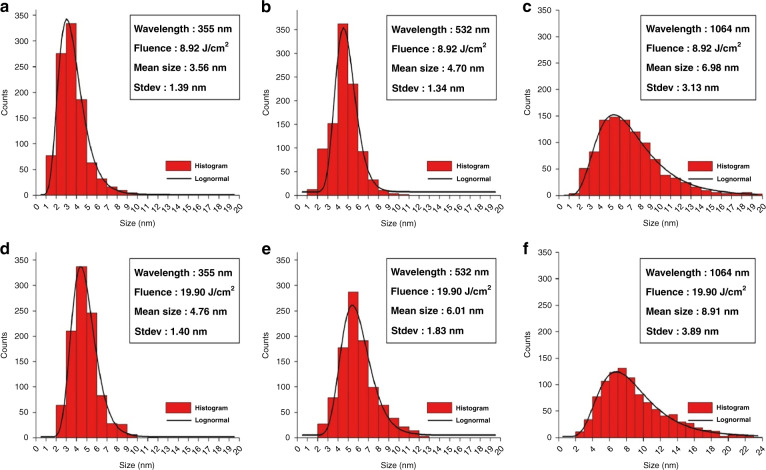
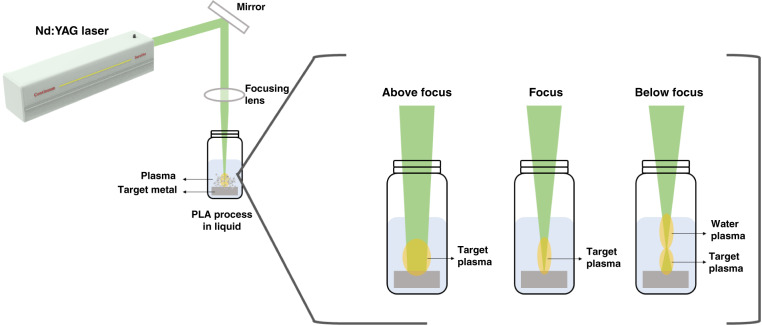
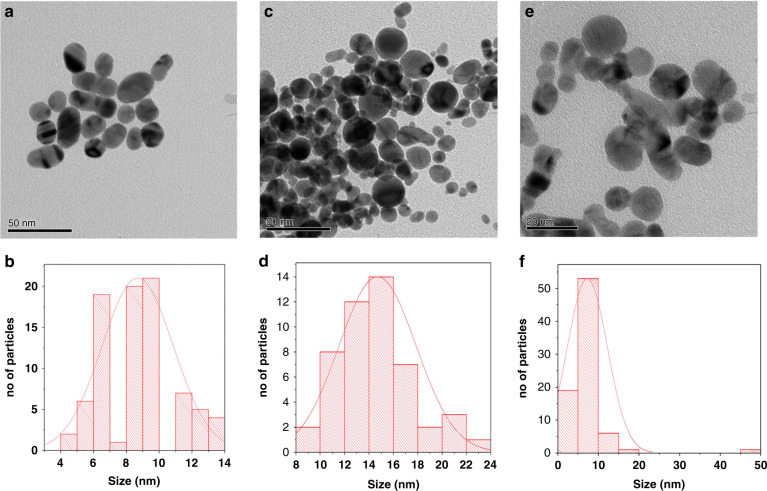
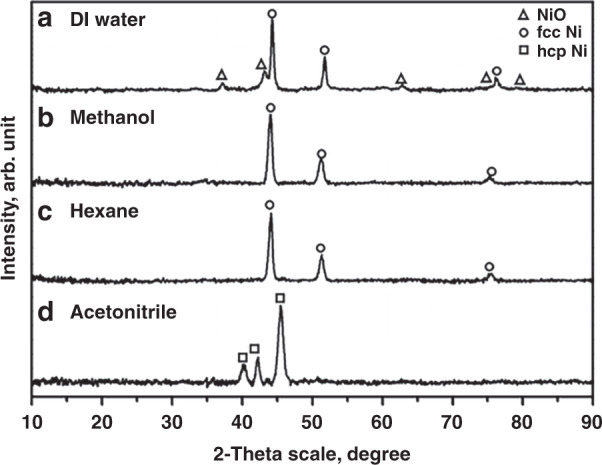
- Laser parameters strongly determine nanoparticle size and phase: Pd-NPs increased from 3.56 to 4.70 to 6.98 nm at 355, 532, and 1064 nm (19.90 J cm−2); Au-NPs were 8.6 nm above-focus, 8.9 nm at focus, and ~7.2 nm below-focus; Ni phase changed with solvent/LICB lifetime (e.g., fcc in methanol, hcp in ACN).
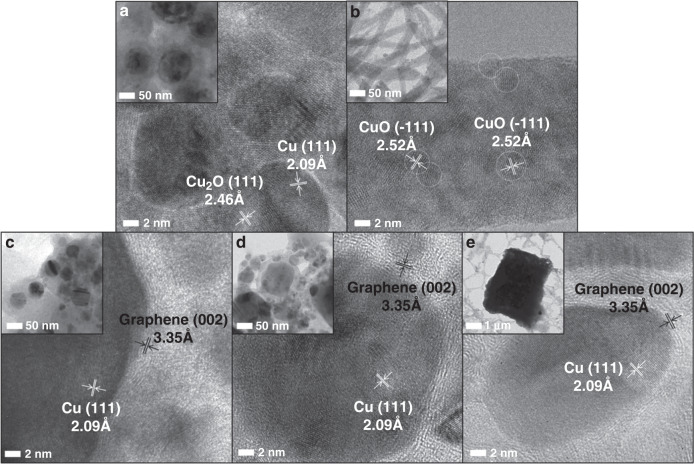
- Solvents can act as element sources: DMSO served as a sulfur source for ZnS; ACN served as a carbon/nitrogen source for Ni@NGC; Cu in ACN gave CuCN cubes, while ethanol/1-propanol/butanol/ethylene glycol gave fcc Cu-NPs and DI water/methanol gave Cu2O/CuO.
- Reported photocatalytic examples include TiO2/CdS DSSC efficiency 0.6%→4.3% and 82% MO degradation in 36 min; Cu2O-Cu 90% MB degradation in 50 min vs 51% for hydrothermal Cu2O-Cu; CdS/RGO 77% MB degradation (2.65× CdS); ZnO/rGO 86% RhB degradation vs ~40% for ZnO; ZnO/Au15/rGO5 95% MB degradation in 120 min.
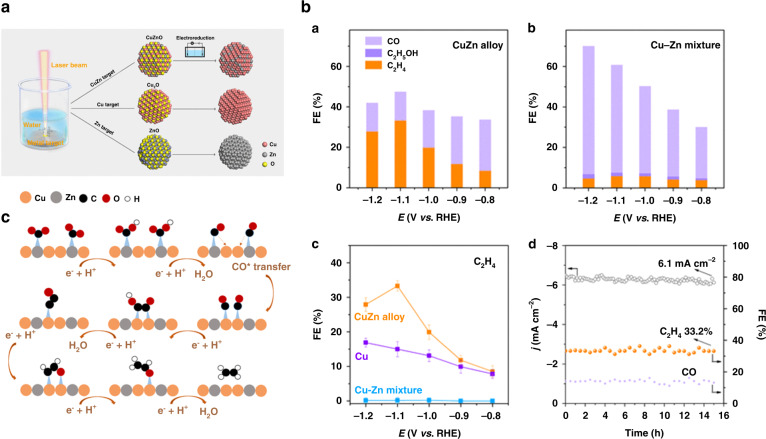
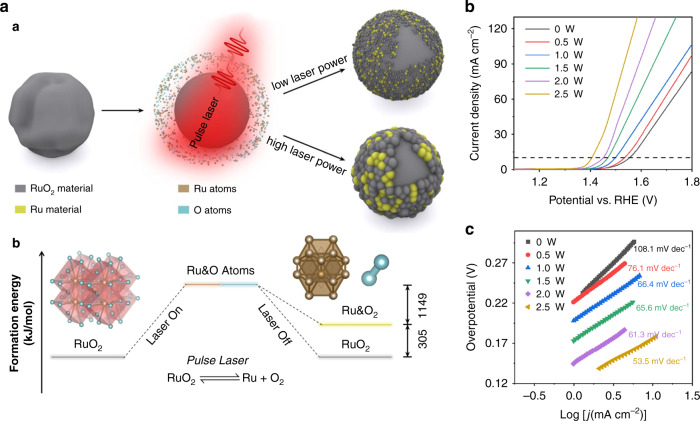
- Electrocatalysis examples include RuAu HER overpotential 24 mV@10 mA cm−2 vs Pt/C 46 mV; Ru@CN 11 mV vs Pt/C 37 mV; W@WS2 161 mV with Tafel slope 34.5 mV dec−1; RuO2 OER 172 mV in alkali and 219 mV in acid; CuZn CO2-to-ethylene Faradaic efficiency 33.3% at −1.1 V vs RHE; Ag-rGO CO2-to-CO 133.1 μmol g−1 h−1 in 6 h.
Methods
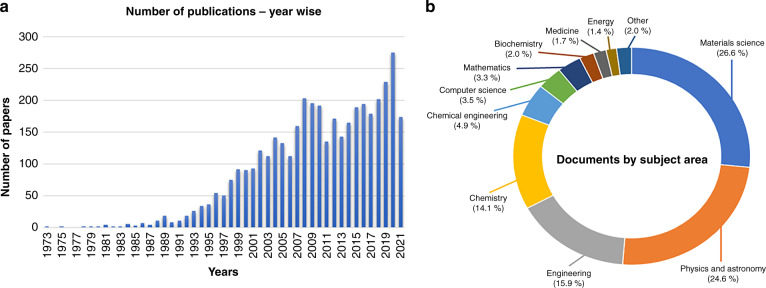
- Review article; a Scopus search for “pulsed laser synthesis” found 4074 publications from 1973 to 2021 (searched August 31, 2021).
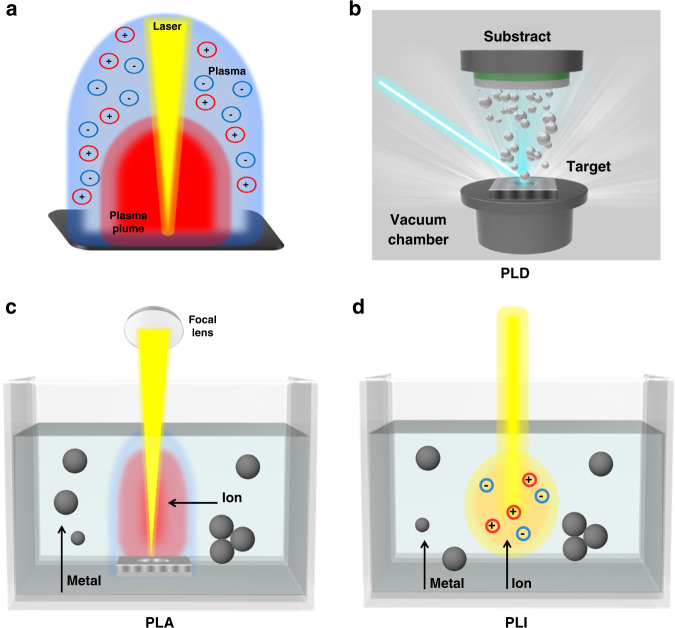
- Synthesizes reported PLAL/PLIL/PLD studies and tabulates laser sources, solvents, fluences, and irradiation times (Tables 3–7), with mechanistic discussion of thermal evaporation vs explosive ejection, cavitation, and solvent effects.
- No primary experimental dataset is reported; examples are drawn from cited literature.
Limitations
- Stated: pilot-scale production remains a limiting factor; more experimental-design advancement and automation are needed; real-time in-situ XRD/FT-IR/Raman/PL/UV-vis analysis should be performed; mechanistic aspects need more detail; extension to carbides, nitrides, and selenides is needed.
- Stated: long laser ablation can block laser energy/path by generated NPs, hindering the PLA rate.
- Evident: as a review, conclusions depend on cited studies; the provided text is a partial/fragmented version with some sections empty, so not all details are available.
Model-written summary. Check it against the paper before relying on it.
Integrity signals
Registry
Cites
Statistics
Figures
Verification
Claims the paper makes
26 Valid · 18 Not valid · 166 Not checked · 51 Own results and interpretations
Every source the paper cites for this claim was checked and supports it.
In the paper
“On the contrary, Au-NPs obtained by below-focus ablation shows a smaller average particle size (~7.2 nm) than those produced at the defocus and focus conditions, as shown in Fig. 5e, f, likely because when the target was ablated at the below-focus condition, the maximum amount of energy was absorbed by the liquid (water) medium, reducing the energy that reaches the target.”
§ Fundamentals and comprehensive insights on pulsed laser synthesis of advanced materials for diverse photo- and electrocatalytic applications > Fundamentals of the pulsed laser process > Laser-focusing parameters
What the sources say
- Supportedcites [30] Imam, H. et al. Effect of experimental parameters on the fabrication of gold nanoparticles via laser ablation. Opt. Photonics J. 2, 73–84 (2012). source
Section 3.3 (pp. 6–7) reports average sizes of 8.6 nm above focus, 8.9 nm at focus, and 7.2 nm below focus. It also explains that, below focus, water absorbs much of the energy before it reaches the target. (LLM, conf=0.94)
hedgedstates an association- Asserted: passes — The authors put it forward as true.
- Checkable: passes — It can be checked against evidence.
- Load-bearing: unclear — It is unclear whether the paper’s conclusions depend on it.
- Based: passes — The paper gives a reason why it holds.
- Supported
Every source the paper cites for this claim was checked and supports it.
In the paper
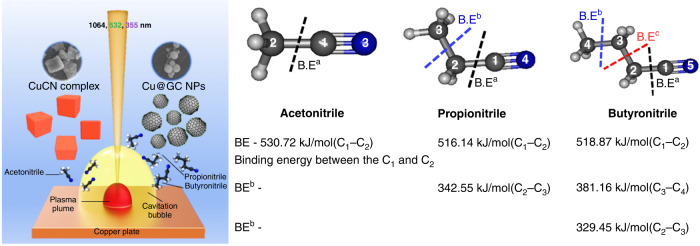
“The formation mechanism was also confirmed by the theoretical quantum chemical calculations on the binding energy of various nitrile solvents, as presented in Fig. 933.”
§ Fundamentals and comprehensive insights on pulsed laser synthesis of advanced materials for diverse photo- and electrocatalytic applications > Fundamentals of the pulsed laser process > Solvent medium
What the sources say
- Supportedcites [33] Begildayeva, T. et al. Facile one-pot synthesis of CuCN by pulsed laser ablation in nitrile solvents and mechanistic studies using quantum chemical calculations. Sci. Rep. 11, 14389 (2021). source
The Theoretical calculations section reports binding-energy calculations for acetonitrile, propionitrile, and butyronitrile (Tables 1–2). It says those calculations supported the experimental results and the proposed mechanism of CuCN formation in acetonitrile. (LLM, conf=0.93)
plainstates a cause- Asserted: passes — The authors put it forward as true.
- Checkable: passes — It can be checked against evidence.
- Load-bearing: unclear — It is unclear whether the paper’s conclusions depend on it.
- Based: passes — The paper gives a reason why it holds.
- Supported
The cited sources support only part of this claim — read each source’s verdict below.
In the paper
“Due to the excellent purity of the prepared single-layered MoS2 quantum dots, it finds plausible electrocatalytic application toward hydrogen evolution reaction.”
§ Fundamentals and comprehensive insights on pulsed laser synthesis of advanced materials for diverse photo- and electrocatalytic applications > Photo- and electrocatalytic materials: an overview > PLAL process
What the sources say
- Partly supportedcites [124] Li, B. et al. Preparation of monolayer MoS2 quantum dots using temporally shaped femtosecond laser ablation of bulk MoS2 targets in water. Sci. Rep. 7, 11182 (2017). sourceExperimental — accuracy not yet measured
The Results and Discussion section reports high-purity monolayer MoS2 quantum dots and supports their potential for hydrogen-evolution electrocatalysis. But it does not attribute that potential to purity; the Introduction points instead to active edge sites, surface area, conductivity, and hydrogen adsorption. The Methods specify that the hydrogen-evolution tests used composites containing nanosheets, nanoparticles, and quantum dots, not isolated quantum dots. (LLM, conf=0.88)
hedgedstates a possible cause- Asserted: passes — The authors put it forward as true.
- Checkable: passes — It can be checked against evidence.
- Load-bearing: unclear — It is unclear whether the paper’s conclusions depend on it.
- Based: passes — The paper gives a reason why it holds.
- Partly supported
Every source the paper cites for this claim was checked and supports it.
In the paper
“The Schottky barrier formed between the Au–Gr interface due to the higher work function of Au than Gr.”
§ Fundamentals and comprehensive insights on pulsed laser synthesis of advanced materials for diverse photo- and electrocatalytic applications > Applications of laser-assisted materials > Photocatalysis
What the sources say
- Supportedcites [191] Chen, L. H. et al. Photocatalytic properties of graphene/gold and graphene oxide/gold nanocomposites synthesized by pulsed laser induced photolysis. Nanomaterials (Basel) 10, 1985 (2020). source
Section 3.4, “Photocatalytic Activity of Synthesized Materials,” explicitly states that a Schottky barrier formed at the graphene–gold interface because Au has a higher work function than graphene. (LLM, conf=0.95)
plainstates a cause- Asserted: passes — The authors put it forward as true.
- Checkable: passes — It can be checked against evidence.
- Load-bearing: passes — The paper’s conclusions depend on it.
- Based: passes — The paper gives a reason why it holds.
- Supported
Every source the paper cites for this claim was checked and supports it.
In the paper
“Recently, PEDOT-derived conducting polymer nanowires were synthesized through PLI, which showed improved sensing suitable for ultrasensitive photosensors172.”
§ Fundamentals and comprehensive insights on pulsed laser synthesis of advanced materials for diverse photo- and electrocatalytic applications > Photo- and electrocatalytic materials: an overview > PLIL process
What the sources say
- Supportedcites [172] Sasaki, M. & Goto, M. A conductive polymer nanowire including functional quantum dots generated via pulsed laser irradiation for high-sensitivity sensor applications. Sci. Rep. 11, 11203 (2021). source
The Results and discussion report that quantum-dot-containing PEDOT-PEG nanowires made by pulsed laser irradiation responded strongly to light, unlike nanowires without quantum dots. The Conclusions identify ultrahigh-sensitivity photosensors as a prospective application; the paper does not claim to have built one. (LLM, conf=0.88)
plainstates a cause- Asserted: passes — The authors put it forward as true.
- Checkable: passes — It can be checked against evidence.
- Load-bearing: unclear — It is unclear whether the paper’s conclusions depend on it.
- Based: passes — The paper gives a reason why it holds.
- Supported
101 more claims · 4 with their cited sources checked
Create a free account to see all 261 claims and to verify the 14 references still open.
- Probably not a substantial claim. 46
- It may state two separate claims as one. 118
- The quote only partly states this claim. 4
Self-check
Percentages, sums and reported differences re-computed from the paper’s own numbers.
Each contradiction between two passages listed here was confirmed by an independent check.
Rated major: it would touch a result — a value a result rests on, reported and recomputed p-values on opposite sides of the significance level, two passages that conflict with no sign which is right, or a cited work retracted before this paper was published.
In the paper
§ Fundamentals and comprehensive insights on pulsed laser synthesis of advanced materials for diverse photo- and electrocatalytic applications > Fundamentals of the pulsed laser process > Solvent medium
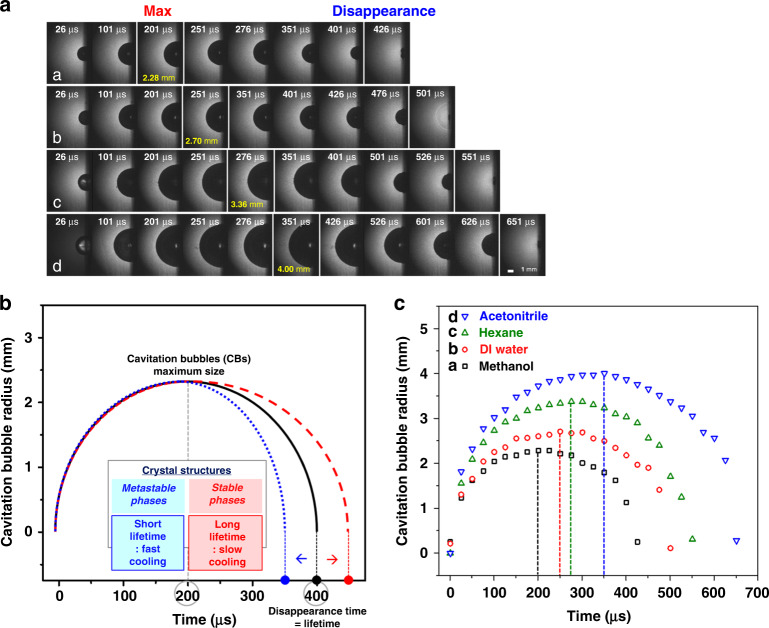
“Herein, the LICBs produced in the ACN medium showed a shorter lifetime, while the LICBs produced in methanol exhibited a larger longer lifetime.”
§ Fundamentals and comprehensive insights on pulsed laser synthesis of advanced materials for diverse photo- and electrocatalytic applications > Fundamentals of the pulsed laser process > Solvent medium
“the maximum size of LICBs (2.28, 2.70, 3.36, and 4.0 mm) reached at 201 μs (methanol), 251 μs (DI water), 276 μs (hexane), and 351 μs (ACN), respectively. Consequently, the LICBs began to collapse and disappeared completely at 426, 501, 551, and 651 μs, respectively”
Rated minor: it would not touch a result — a value no result rests on, a p-value that stays on the same side of the significance level, or a conflict that is clerical, resolved elsewhere in the paper, or outside its own findings.
In the paper
§ Fundamentals and comprehensive insights on pulsed laser synthesis of advanced materials for diverse photo- and electrocatalytic applications > Applications of laser-assisted materials > Electrocatalytic hydrogen evolution
“MoS2 QDs with ~4, 2.9, and 6 nm sizes were prepared by varying ablation duration (5, 10, and 20 min, respectively)”
§ Fundamentals and comprehensive insights on pulsed laser synthesis of advanced materials for diverse photo- and electrocatalytic applications > Applications of laser-assisted materials > Electrocatalytic hydrogen evolution
“at a constant laser energy of 40 mJ with an ablation duration of 5 min.”
Citations
Cites
Items 201–265 of 265
Ilyas, A.-M., Gondal, M. A., Yamani, Z. H., & Baig, U. (2017) · International Journal of Energy Research · doi:10.1002/er.3721 · Cited by 31 · cited 2×
“TiO2-based materials Ilyas et al.(186) reported the preparation of TiO2/CdS composite using PLAL process using 532 nm wavelength using an Nd:YAG laser.”
MethodDefects rich nanostructured black zinc oxide formed by nanosecond pulsed laser irradiation in liquid
Sharma Kanakkillam, S., Krishnan, B., Sepulveda Guzman, S., Amilcar Aguilar Martinez, J., Avellaneda Avellaneda, D., & Shaji, S. (2021) · Applied Surface Science · doi:10.1016/j.apsusc.2021.150858 · Cited by 31
Al-Jumaili, B. E., Talib, Z. A., Zakaria, A., Ramizy, A., Ahmed, N. M., Paiman, S. B., Ying, J. L., Bagudo, I. M., & Baqiah, H. (2018) · Applied Physics A · doi:10.1007/s00339-018-1995-5 · Cited by 31
Balati, A., Wagle, D., Nash, K. L., & Shipley, H. J. (2019) · Applied Nanoscience · doi:10.1007/s13204-018-0902-x · Cited by 30
Aazadfar, P., Solati, E., & Dorranian, D. (2018) · Optical Materials · doi:10.1016/j.optmat.2018.02.050 · Cited by 30 · cited 2×
“A classic example of AuCuO nanocomposite with different volumetric ratios of Au and CuO has been shown by Aazadfar et al.(159).”
MethodSeto, T., Kawakami, Y., Suzuki, N., Hirasawa, M., Kano, S., Aya, N., Sasaki, S., & Shimura, H. (2001) · Journal of Nanoparticle Research · doi:10.1023/a:1017951006545 · Cited by 30
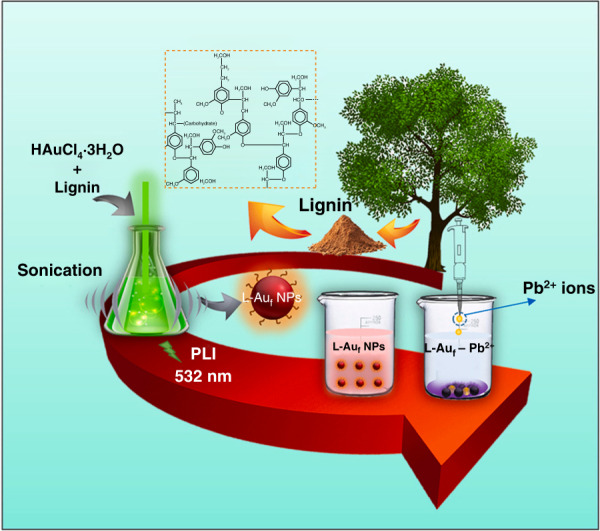
Chen, L.-H., Shen, H.-T., Chang, W.-H., Khalil, I., Liao, S.-Y., A. Yehye, W., Liu, S.-C., Chu, C.-C., & Hsiao, V. K. S. (2020) · Nanomaterials · doi:10.3390/nano10101985 · Cited by 30 · cited 3×
“Graphene oxide-based materials Chen et al.(191) reported the synthesis of graphene (Gr)/ Au and GO/Au nanocomposites through pulsed laserinduced photolysis in the presence of hydrogen peroxide, chloroauric acid (HAuCl4) along with Gr or GO in an aqueous solution.”
BackgroundNanocomposite ZnO/Au formation by pulsed laser irradiation
Bajaj, G., & Soni, R. K. (2010) · Applied Surface Science · doi:10.1016/j.apsusc.2010.04.024 · Cited by 29
Fuse, H., Koshizaki, N., Ishikawa, Y., & Światkowska-Warkocka, Ż. (2019) · Nanomaterials · doi:10.3390/nano9020198 · Cited by 29
Fabrication of Palladium Nanoparticles by Laser Ablation in Liquid
Nishi, T. (2010) · Journal of Laser Micro/Nanoengineering · doi:10.2961/jlmn.2010.03.0002 · Cited by 28
Boltaev, G. S., Ganeev, R. A., Krishnendu, P. S., Maurya, S. K., Redkin, P. V., Konda, S. R., Zhang, K., & Guo, C. (2018) · Applied Physics A · doi:10.1007/s00339-018-2195-z · Cited by 28
Modification of the surface state and doping of CdTe and CdZnTe crystals by pulsed laser irradiation
Gnatyuk, V. A., Aoki, T., Vlasenko, O. I., Levytskyi, S. N., Dauletmuratov, B. K., & Lambropoulos, C. P. (2009) · Applied Surface Science · doi:10.1016/j.apsusc.2009.04.096 · Cited by 27
Water oxidation electrocatalysis with iron oxide nanoparticles prepared via laser ablation
Pizzolato, E., Scaramuzza, S., Carraro, F., Sartori, A., Agnoli, S., Amendola, V., Bonchio, M., & Sartorel, A. (2016) · Journal of Energy Chemistry · doi:10.1016/j.jechem.2015.12.004 · Cited by 27
Hassan, M., Gondal, M. A., Cevik, E., Dastageer, M. A., Baig, U., Moqbel, R. A., Qahtan, T. F., Bozkurt, A., & Al Abass, N. (2021) · Colloids and Surfaces A: Physicochemical and Engineering Aspects · doi:10.1016/j.colsurfa.2021.126318 · Cited by 27
Begildayeva, T., Ahn, A., Naik, S. S., Lee, S. J., Theerthagiri, J., Kim, T. H., & Choi, M. Y. (2021) · Scientific Reports · doi:10.1038/s41598-021-93768-7 · Cited by 27
Self-citationSynthesis of Co Nanoparticles by Pulsed Laser Irradiation of Cobalt Carbonyl in Organic Solution
Robinson, I., Volk, M., Tung, L. D., Caruntu, G., Kay, N., & Thanh, N. T. (2009) · The Journal of Physical Chemistry C · doi:10.1021/jp9014564 · Cited by 26
Pradhan, G., Dey, P. P., Khare, A., & Sharma, A. K. (2021) · Journal of Applied Physics · doi:10.1063/5.0022833 · Cited by 25 · cited 2×
“Pradhan et al.206 prepared MoS2 QDs through the photo-exfoliation of solid MoS2 by PLA.”
MethodJi, L., Cao, H., Xing, W., Liu, S., Deng, Q., & Shen, S. (2021) · Journal of Materials Chemistry A · doi:10.1039/d1ta01094h · Cited by 25 · cited 1×
“Ji et al.(203) reported the one-step laser-assisted synthesis of W@WS2 core-shell nanospheres (CSNS) for electrochemical hydrogen evolution.”
BackgroundLaser Synthesis of Iridium Nanospheres for Overall Water Splitting
Wang, H.-B., Wang, J.-Q., Mintcheva, N., Wang, M., Li, S., Mao, J., Liu, H., Dong, C.-K., Kulinich, S. A., & Du, X.-W. (2019) · Materials · doi:10.3390/ma12183028 · Cited by 25 · cited 7×
“Wang et al.202 prepared a porous carbon composite that involved Ru and nitrogen (Ru@CN) from biomass honey using the laser conversion method.”
BackgroundInfluentialKao, H., Wu, R., Chen, T.-Y., et al. (2000) · Journal of Materials Chemistry · doi:10.1039/b004936k · Cited by 24
Swarnkar, R. K., Pandey, J. K., Soumya, K. K., Dwivedi, P., Sundaram, S., Prasad, S., & Gopal, R. (2016) · Applied Physics A · doi:10.1007/s00339-016-0232-3 · Cited by 24
Nanoparticles of antimony sulfide by pulsed laser ablation in liquid media
la Garza, D. D., Guillén, G. G., Palma, M. I. M., Avellaneda, D. A., Castillo, G. A., Roy, T. K. D., Krishnan, B., & Shaji, S. (2013) · Journal of Materials Science · doi:10.1007/s10853-013-7446-y · Cited by 24
Moqbel, R. A., Gondal, M. A., Qahtan, T. F., & Dastageer, M. A. (2018) · Materials Research Express · doi:10.1088/2053-1591/aab6ec · Cited by 23
Synthesis of Au–Ag Alloy Nanoparticles in Deionized Water by Pulsed Laser Ablation Technique
Shukri, W. N. W., Shukri, W. M., Bidin, N., Islam, S., & Krishnan, G. (2017) · Journal of Nanoscience and Nanotechnology · doi:10.1166/jnn.2018.15358 · Cited by 23
pathak, D., Bedi, R. K., & Kaur, D. (2010) · Journal of the Korean Physical Society · doi:10.3938/jkps.56.836 · Cited by 23
Santagata, A., Guarnaccio, A., Pietrangeli, D., Szegedi, Á., Valyon, J., Stefanis, A. D., Bonis, A. D., Teghil, R., Sansone, M., Mollica, D., et al. (2015) · Journal of Physics D Applied Physics · doi:10.1088/0022-3727/48/20/205304 · Cited by 23
Volpato, G. A., Muneton Arboleda, D., Brandiele, R., Carraro, F., Sartori, G. B., Cardelli, A., Badocco, D., Pastore, P., Agnoli, S., Durante, C., et al. (2019) · Nanoscale Advances · doi:10.1039/c9na00510b · Cited by 22
Schaumberg, C. A., Wollgarten, M., & Rademann, K. (2015) · Physical Chemistry Chemical Physics · doi:10.1039/c5cp01153a · Cited by 22
Zhou, R., Yin, Y., Long, D., Cui, J., Yan, H., Liu, W., & Pan, J. H. (2019) · Progress in Natural Science: Materials International · doi:10.1016/j.pnsc.2019.11.001 · Cited by 22
Oxidized single nickel atoms embedded in Ru matrix for highly efficient hydrogen evolution reaction
Shang, L., Wang, J.-Q., Cheng, C.-Q., Zhang, Y., Zhang, F.-F., Xie, Y.-M., Lu, J.-D., Mao, J., Guo, Q.-J., Dong, C.-K., et al. (2021) · Journal of Alloys and Compounds · doi:10.1016/j.jallcom.2021.159909 · Cited by 21 · cited 2×
“Shang et al.207 prepared single-atom catalysts (SAC) by embedding nickel atoms into Ru metal via PLA, resulting in NiRu SAC with an atomic-level interface with improved catalytic activity.”
MethodReshaping the tips of ZnO nanowires by pulsed laser irradiation
Wang, X., Ding, Y. L., Yuan, D., Hong, J., Liu, Y., Wong, C. P., Hu, C., & Wang, Z. L. (2012) · Nano Research · doi:10.1007/s12274-012-0222-5 · Cited by 21
Kyaw, K., Ichimaru, H., Kawagoe, T., Terakawa, M., Miyazawa, Y., Mizoguchi, D., Tsushida, M., & Niidome, T. (2017) · Nanoscale · doi:10.1039/c7nr06513b · Cited by 21
Hybrid nanostructures of Ag/Au-ZnO synthesized by pulsed laser ablation/irradiation in liquid
Kanakkillam, S. S., Krishnan, B., Peláez, R. F. C., Martinez, J. A. A., Avellaneda, D. A., & Shaji, S. (2021) · Surfaces and Interfaces · doi:10.1016/j.surfin.2021.101561 · Cited by 21
Eskandari, M. J., Shafyei, A., & Karimzadeh, F. (2020) · Optics & Laser Technology · doi:10.1016/j.optlastec.2020.106066 · Cited by 21
Morselli, D., Scarpellini, A., Athanassiou, A., & Fragouli, D. (2016) · RSC Advances · doi:10.1039/c5ra23125f · Cited by 21
Baig, U., Hawsawi, A., Gondal, M. A., & Dastageer, M. A. (2019) · Journal of Photochemistry and Photobiology A Chemistry · doi:10.1016/j.jphotochem.2019.112266 · Cited by 20
Preparation of transition metal chalcogenide thin films by pulsed laser ablation
Lee, H., Kanai, M., & Kawai, T. (1996) · Thin Solid Films · doi:10.1016/0040-6090(95)08022-8 · Cited by 20
Gong, W., Zheng, Z., Zheng, J., Gao, W., Hu, X., & Ren, X. (2008) · The Journal of Physical Chemistry C · doi:10.1021/jp711219e · Cited by 19
Jiang, Z. Y., Huang, R. B., Xie, S. Y., Xie, Z. X., & Zheng, L. S. (2001) · Journal of Solid State Chemistry · doi:10.1006/jssc.2001.9270 · Cited by 19
Fabrication of a Au/Si nanocomposite structure by nanosecond pulsed laser irradiation
Yoshida, Y., Watanabe, S., Nishijima, Y., Ueno, K., Misawa, H., & Kato, T. (2011) · Nanotechnology · doi:10.1088/0957-4484/22/37/375607 · Cited by 19
Nishi, T., Hayasaka, Y., Suzuki, T. M., Sato, S., Isomura, N., Takahashi, N., Kosaka, S., Nakamura, T., Sato, S., & Morikawa, T. (2018) · ChemistrySelect · doi:10.1002/slct.201800943 · Cited by 18
Saraj, C. S., Singh, S. C., Shukla, A., Yu, W., Fayaz, M. U., & Guo, C. (2021) · ChemElectroChem · doi:10.1002/celc.202001511 · Cited by 18
Lee, C., Wu, P., Hsu, I., Liu, T., Chong, W., Wu, C., Hsieh, T., Guo, L., Tsao, Y., Wu, P., et al. (2019) · Small · doi:10.1002/smll.201805086 · Cited by 17
Effect of pulsed laser irradiation on the thermal diffusivity of bimetallic Au/Ag nanoparticles
Simon, J., Anugop, B., Nampoori, V. P. N., & Kailasnath, M. (2021) · Optics & Laser Technology · doi:10.1016/j.optlastec.2021.106954 · Cited by 17
Jindal, A., Tashiro, K., Kotani, H., Takei, T., Reichenberger, S., Marzun, G., Barcikowski, S., Kojima, T., & Yamamoto, Y. (2019) · ACS Applied Energy Materials · doi:10.1021/acsaem.9b01103 · Cited by 16
Światkowska-Warkocka, Ż., Pyatenko, A., Shimizu, Y., Perzanowski, M., Zarzycki, A., Jany, B. R., & Marszalek, M. (2018) · Nanomaterials · doi:10.3390/nano8100790 · Cited by 16
Generation of NiTi Nanoparticles by Femtosecond Laser Ablation in Liquid
Chakif, M., Essaidi, A., Gurevich, E. L., Ostendorf, A., Prymak, O., & Epple, M. (2014) · Journal of Materials Engineering and Performance · doi:10.1007/s11665-014-1007-7 · Cited by 15
Li, Y., Li, S., He, C., Zhu, C., Li, Q., Li, X., Liu, K., & Zeng, X. (2021) · Journal of Alloys and Compounds · doi:10.1016/j.jallcom.2021.159062 · Cited by 13
Generation of CdS clusters using laser ablation: the role of wavelength and fluence
Álvarez-Ruiz, J., López-Arias, M., Nalda, R., Martín, M., Arregui, A., & Bañares, L. (2009) · Applied Physics A · doi:10.1007/s00339-008-4967-3 · Cited by 13
Gal, G., Monsa, Y., Ezersky, V., & Bar, I. (2018) · RSC Advances · doi:10.1039/c8ra07067a · Cited by 12
Morphology Control of Zinc Oxide Nanocrystals via Hybrid Laser/Hydrothermal Synthesis
Jayawardena, K. D. G. I., Fryar, J., Silva, S. R. P., & Henley, S. J. (2010) · The Journal of Physical Chemistry C · doi:10.1021/jp103356v · Cited by 12
Je, M., Jung, H. J., Koutavarapu, R., Lee, S. J., Lee, S. H., Kim, S. K., Choi, H. C., & Choi, M. Y. (2018) · Materials Chemistry and Physics · doi:10.1016/j.matchemphys.2018.06.069 · Cited by 11
Self-citationLi, S., Li, Y., Liu, K., Chen, M., Peng, W., Yang, Y., & Li, X. (2021) · Applied Surface Science · doi:10.1016/j.apsusc.2021.150470 · Cited by 11
Utilizing embedded ultra-small Pt nanoparticles as charge trapping layer in flashristor memory cells
Orak, İ., Eren, H., Bıyıklı, N., et al. (2018) · Applied Surface Science · doi:10.1016/j.apsusc.2018.10.213 · Cited by 10
A simple synthesis of ZnO:Co2O3 nanocomposites by pulsed laser irradiation in liquid
Kanakkillam, S. S., Krishnan, B., Avellaneda, D. A., & Shaji, S. (2020) · Materials Today: Proceedings · doi:10.1016/j.matpr.2020.08.533 · Cited by 10
Tsuji, M., Seto, T., & Ōtani, Y. (2012) · Journal of Nanoparticle Research · doi:10.1007/s11051-011-0674-7 · Cited by 10
A novel synthesis of CZTS quantum dots using pulsed laser irradiation
Najafi, V., Aghelifar, M., & Kimiagar, S. (2017) · Superlattices and Microstructures · doi:10.1016/j.spmi.2017.05.063 · Cited by 9
Laser Ablated Preparation of Noble Metal Nanoparticles in Liquid
Le, Y., 复旦大学化学系激光化学研究所, 上., Jia, Y., & Zheng-Wen, F. (2007) · Acta Physico-Chimica Sinica · doi:10.3866/pku.whxb20070630 · Cited by 8
Moqbel, R. A., Gondal, M. A., Qahtan, T. F., & Lais, A. (2018) · AIP Conference Proceedings · doi:10.1063/1.5042382 · Cited by 8
Caputo, G., Scarpellini, A., Palazón, F., et al. (2017) · ChemPhysChem · doi:10.1002/cphc.201700132 · Cited by 7
Al Abass, N., Qahtan, T. F., Gondal, M. A., & Bubshait, A. (2021) · International Journal of Energy Research · doi:10.1002/er.6824 · Cited by 5
Sasaki, M., & Goto, M. (2021) · Scientific Reports · doi:10.1038/s41598-021-90460-8 · Cited by 5
Minowa, Y., Suzuki, T., Setoura, K., Ito, S., Miyasaka, H., & Ashida, M. (2018) · Journal of Nanophotonics · doi:10.1117/1.jnp.13.012506 · Cited by 5
Formation of iron sulfide photocatalytic colloidal dispersion via pulsed laser ablation in liquids
Vála, L., Vavrůňková, V., Jandová, V., Pola, M., & Křenek, T. (2019) · IOP Conference Series Materials Science and Engineering · doi:10.1088/1757-899x/613/1/012034 · Cited by 5
Copper submicrospheres induced by pulsed laser-irradiation with enhanced tribology properties
Wang, L., Luo, T., Li, W., Wei, H., Chen, X., & Cao, B. (2019) · New Journal of Chemistry · doi:10.1039/c9nj03199e · Cited by 4
Cited by
Priya, M., Venkatesan, R., Deepa, S., Sana, S. S., Arumugam, S., Karami, A. M., Vetcher, A. A., & Kim, S.-C. (2023) · Scientific Reports · doi:10.1038/s41598-023-46002-5 · Cited by 168
Naik, S. S., Theerthagiri, J., Nogueira, F., Lee, S. J., Min, A., Kim, G., Maia, G., Pinto, L. M. C., & Choi, M. Y. (2023) · ACS Catalysis · doi:10.1021/acscatal.2c05017 · Cited by 142
Self-citationMahajan, U., Dhonde, M., Sahu, K., Ghosh, P., & Shirage, P. M. (2024) · Materials Advances · doi:10.1039/d3ma00965c · Cited by 166
Huang, K., Tang, K., Wang, M., Wang, Y., Jiang, T., & Wu, M. (2024) · Advanced Functional Materials · doi:10.1002/adfm.202315324 · Cited by 159
Oh, Y., Theerthagiri, J., Kumari, M. L. A., Min, A., Moon, C. J., & Choi, M. Y. (2024) · Journal of Energy Chemistry · doi:10.1016/j.jechem.2023.12.023 · Cited by 137
Self-citation
Metadata
- Authors
- Theerthagiri, J., Karuppasamy, K., Lee, S. J., Shwetharani, R., Kim, H.-S., Pasha, S. K. K., Ashokkumar, M., & Choi, M. Y.
- Affiliations
- Gyeongsang National University (KR)
- Dongguk University (KR)
- Jain University (IN)
- Vellore Institute of Technology University (IN)
- The University of Melbourne (AU)
- Corresponding author
- Choi, Myong Yong
- ORCID
- Venue
- Light: Science & Applications
- Published
- 2022-08-10
- Volume
- 11
- Issue
- 1
- Pages
- 250-250
- ISSN
- 2047-7538 (ISSN-L)
- PMC
- PMC9363469
- OpenAlex
- W4291285610
- Semantic Scholar
- 2d5f596fdcb98ca7a934f5ab060cb2e57dafd882
- Cited by
- 461
- References
- 264
- Citations by year
- 2026: 88 · 2025: 126 · 2024: 142 · 2023: 87 · 2022: 18
- FWCI
- 8.31
- Type
- journal article
- Language
- en
- Open access
- gold
- doi.org
- Licence
- cc-by
- creativecommons.org/licenses/by/4.0 (tdm)
- creativecommons.org/licenses/by/4.0 (vor)
- Locations
- Light Science & Applications (publishedVersion, cc-by)
- PubMed Central (publishedVersion, cc-by)
- PubMed (publishedVersion)
- DOAJ (DOAJ: Directory of Open Access Journals) (submittedVersion, cc-by-sa)
- Minerva Access (University of Melbourne) (submittedVersion, cc-by)
- Greater South Information System
- Funders
- Korea Basic Science Institute (2019R1A6C1010042, 2021R1A6C103A427)
- National Research Foundation of Korea (2019H1D3A1A01071209, 2020K2A9A1A06103609, 2022R1A2C2010686, 2021R1I1A1A01060380, 2020R1I1A1A01065748)
- Topics
- Physical Sciences › Materials Science › Materials Chemistry › Laser-Ablation Synthesis of Nanoparticles
- Physical Sciences › Energy › Renewable Energy, Sustainability and the Environment › Advanced Photocatalysis Techniques
- Physical Sciences › Physics and Astronomy › Acoustics and Ultrasonics › Ultrasound and Cavitation Phenomena
- Keywords
- pulsed laser synthesis, nanomaterials, metal nanoparticles, metal oxides, carbon materials, synthesis mechanism, structural optimization, defect engineering, energy storage, clean energy generation, environmental remediation
About these checks
Registry, retraction, Cites and statistics results are computed, not judged, with one exception: a printed reference that no index lists is read once by a model before it counts as a citation error. Claims are extracted by a model and kept only when their quote appears verbatim in the text; each cited source is then checked, with a model’s help, for whether it says what the claim relies on. Those verdicts can be wrong — read the claim’s quote and the cited source before relying on one.
The claim verdicts this report counts are experimental: their accuracy is not yet measured.
A language model drew the claims from the paper on 2026-10-10, under version 3 of the claim definition (model deepseek-v4.1-flash, prompt extract-v3).
A second model labelled each claim on 2026-10-10 (model jev-1.13-20260917, definition revision gold-guideline-v0.2).
Cited sources are checked with a language model’s help (gpt-6-sol).
Statistics and arithmetic are recomputed, not judged.
Confidence bands are shown only for fields calibrated on our annotated test set. None is calibrated yet, so no band is shown.
What counts as a claim ›How we measure confidence ›How we check this ›
Are you an author, or do you see a problem with this page? Request a review
Data sources
Bibliographic data: Semantic Scholar, OpenAlex, Crossref.
Contains information from the Semantic Scholar Academic Graph Datasets, made available under the ODC Attribution License (ODC-BY 1.0).
Semantic Scholar’s data is described in: Kinney, R., et al. (2023). The Semantic Scholar Open Data Platform. arXiv:2301.10140.
