

Plasmonic–perovskite solar cells, light emitters, and sensors
Open accessThe DOI matches its Crossref record; 210 of the 210 references it cites were found in a registry or an index.
Abstract
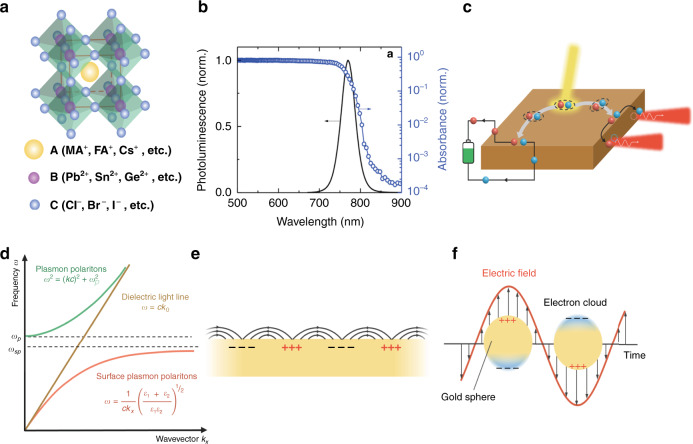
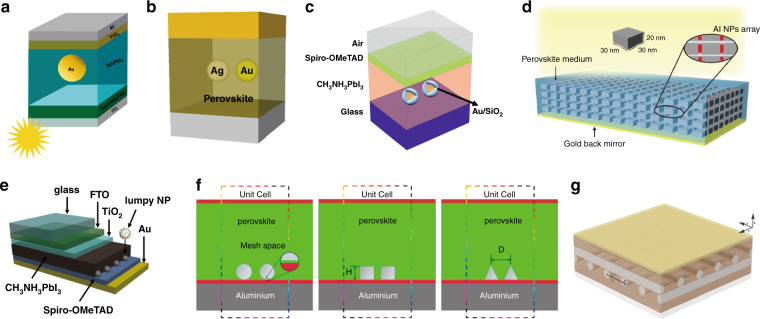
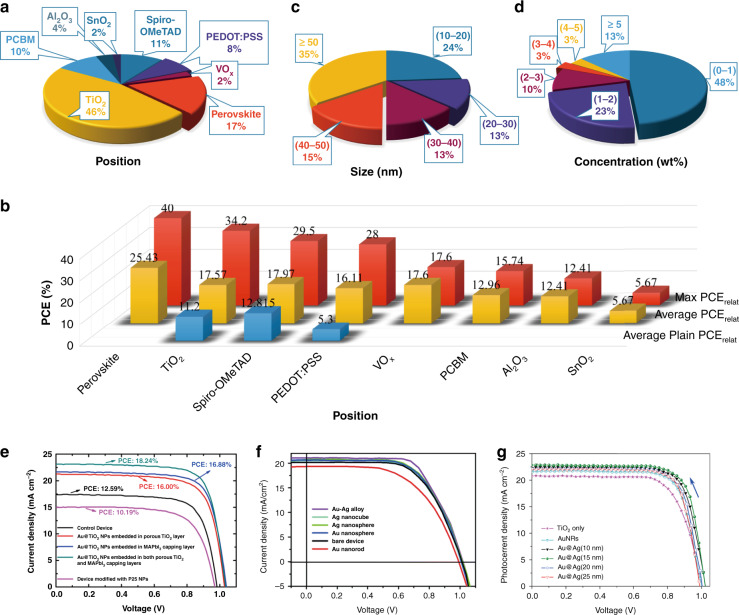
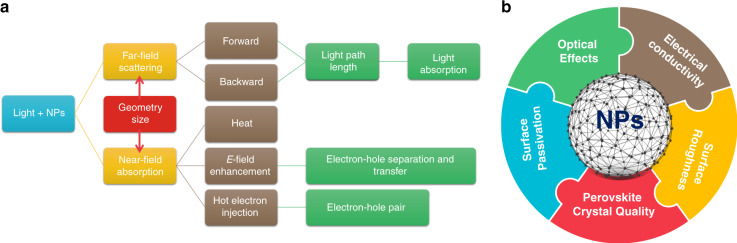
The field of plasmonics explores the interaction between light and metallic micro/nanostructures and films. The collective oscillation of free electrons on metallic surfaces enables subwavelength optical confinement and enhanced light–matter interactions. In optoelectronics, perovskite materials are particularly attractive due to their excellent absorption, emission, and carrier transport properties, which lead to the improved performance of solar cells, light-emitting diodes (LEDs), lasers, photodetectors, and sensors. When perovskite materials are coupled with plasmonic structures, the device performance significantly improves owing to strong near-field and far-field optical enhancements, as well as the plasmoelectric effect. Here, we review recent theoretical and experimental works on plasmonic perovskite solar cells, light emitters, and sensors. The underlying physical mechanisms, design routes, device performances, and optimization strategies are summarized. This review also lays out challenges and future directions for the plasmonic perovskite research field toward next-generation optoelectronic technologies.
Overview
The claims and statistics of this paper haven’t been checked yet.
Free: it reads the open-access text and checks the first 5 claims that cite a source we can check. Create a free account to check every claim.
Integrity signals
Registry
Cites
Statistics
Figures
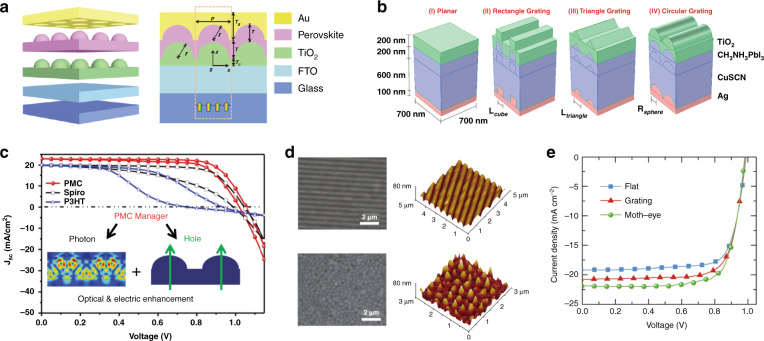
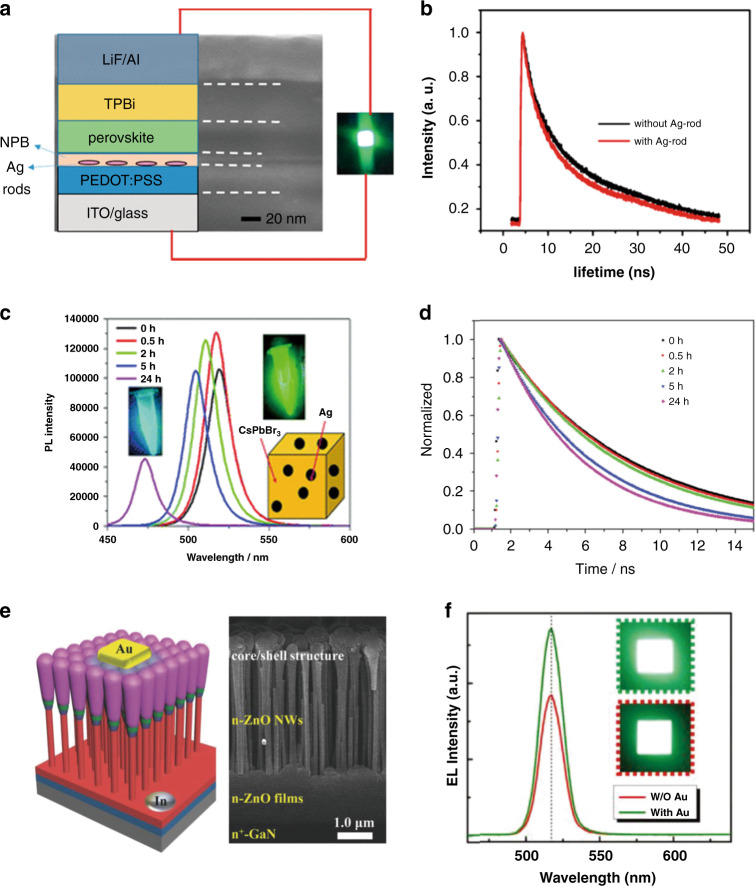
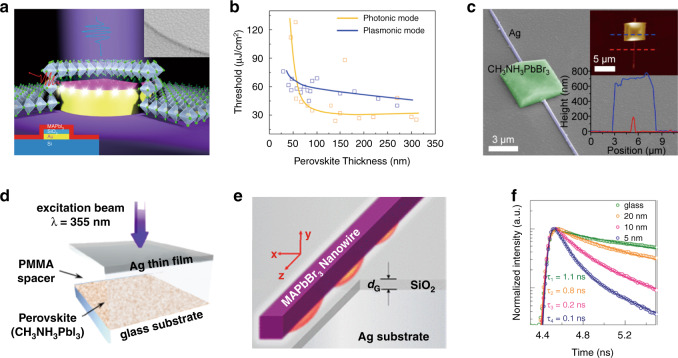
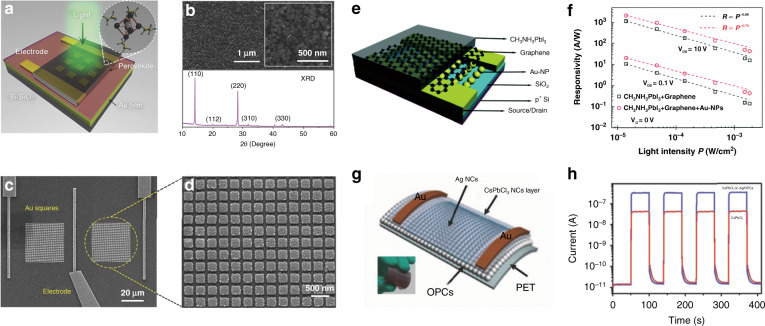
Verification
Claims the paper makes
The claims and statistics of this paper haven’t been checked yet.
Free: it reads the open-access text and checks the first 5 claims that cite a source we can check. Create a free account to check every claim.
Claims other papers make about this one
Each is checked against this paper’s own text: does it say what the citing paper says it does?
The source backs part of the claim, not all of it — or backs it for a different population, condition or comparison.
In the citing paper
“This distinctive structural arrangement not only defines their inherent stability but also underpins their remarkable electronic and optoelectronic properties [12,13].”
From Design Strategies and Emerging Applications of Perovskite-Based Sensors (2025) · cites this paper as [13]
Experimental — accuracy not yet measuredThe source backs part of the claim, not all of it — or backs it for a different population, condition or comparison.
In the citing paper
“Changes in light intensity alter carrier concentration and electrical properties (e.g., resistance, current), allowing light signal detection (Figure 2A) [13].”
From Design Strategies and Emerging Applications of Perovskite-Based Sensors (2025) · cites this paper as [13]
Experimental — accuracy not yet measuredThe source backs part of the claim, not all of it — or backs it for a different population, condition or comparison.
In the citing paper
“Additionally, perovskite sensors redefine manufacturing efficiency by offering low-cost, solution-processable fabrication that bypasses the complex, resource-intensive processes of conventional sensors, enabling scalable production and reducing environmental impact [9,13].”
From Design Strategies and Emerging Applications of Perovskite-Based Sensors (2025) · cites this paper as [13]
Experimental — accuracy not yet measuredThe check wasn’t confident either way, so it gives no verdict — never disputed.
In the citing paper
“Based on their sensing mechanisms, perovskite optical sensors can be divided into ion exchange type, electron transfer type, and fluorescence resonance energy transfer (FRET) type (Figure 2) [13,[34][35][36][37][38][39][40][41][42].”
From Design Strategies and Emerging Applications of Perovskite-Based Sensors (2025) · cites this paper as [13]
Experimental — accuracy not yet measured
Self-check
Percentages, sums and reported differences re-computed from the paper’s own numbers.
The self-check needs the paper’s full text.
Citations
Cites
Organometal Halide Perovskites as Visible-Light Sensitizers for Photovoltaic Cells
Kojima, A., Teshima, K., Shirai, Y., & Miyasaka, T. (2009) · Journal of the American Chemical Society · doi:10.1021/ja809598r · Cited by 23,090
Kim, H.-S., Lee, C.-R., Im, J.-H., Lee, K.-B., Moehl, T., Marchioro, A., Moon, S.-J., Humphry-Baker, R., Yum, J.-H., Moser, J. E., et al. (2012) · Scientific Reports · doi:10.1038/srep00591 · Cited by 8,092
Extraordinary optical transmission through sub-wavelength hole arrays
Ebbesen, T. W., Lezec, H. J., Ghaemi, H. F., Thio, T., & Wolff, P. A. (1998) · Nature · doi:10.1038/35570 · Cited by 7,687
Plasmonics: Merging Photonics and Electronics at Nanoscale Dimensions
Ozbay, E. (2006) · Science · doi:10.1126/science.1114849 · Cited by 4,558
Perovskite light-emitting diodes with external quantum efficiency exceeding 20 per cent
Lin, K., Xing, J., Quan, L. N., de Arquer, F. P. G., Gong, X., Lu, J., Xie, L., Zhao, W., Zhang, D., Yan, C., et al. (2018) · Nature · doi:10.1038/s41586-018-0575-3 · Cited by 3,355
Low-temperature solution-processed wavelength-tunable perovskites for lasing
Xing, G., Mathews, N., Lim, S. S., Yantara, N., Liu, X., Sabba, D., Grätzel, M., Mhaisalkar, S., & Sum, T. C. (2014) · Nature Materials · doi:10.1038/nmat3911 · Cited by 3,219
Lead halide perovskite nanowire lasers with low lasing thresholds and high quality factors
Zhu, H., Fu, Y., Meng, F., Wu, X., Gong, Z., Ding, Q., Gustafsson, M. V., Trinh, M. T., Jin, S., & Zhu, X.-Y. (2015) · Nature Materials · doi:10.1038/nmat4271 · Cited by 2,836
Solution-processed, high-performance light-emitting diodes based on quantum dots
Dai, X., Zhang, Z., Jin, Y., Niu, Y., Cao, H., Liang, X., Chen, L., Wang, J., & Peng, X. (2014) · Nature · doi:10.1038/nature13829 · Cited by 2,702
Efficient, stable and scalable perovskite solar cells using poly(3-hexylthiophene)
Jung, E. H., Jeon, N. J., Park, E. Y., Moon, C. S., Shin, T. J., Yang, T.-Y., Noh, J. H., & Seo, J. (2019) · Nature · doi:10.1038/s41586-019-1036-3 · Cited by 2,305
Jeon, N. J., Na, H., Jung, E. H., Yang, T.-Y., Lee, Y. G., Kim, G., Shin, H.-W., Il Seok, S., Lee, J., & Seo, J. (2018) · Nature Energy · doi:10.1038/s41560-018-0200-6 · Cited by 2,089
Research works printed but not linked: 3
- Jia Y Kerner RA Grede AJ Rand BP Giebink NC Continuous-wave lasing in an organic–inorganic lead halide perovskite semiconductor Nat. Photonics 2017 11 784 788 · DOI · Paper page
- Abdelraouf OAM Shaker A Allam NK All dielectric and plasmonic cross-grating metasurface for efficient perovskite solar cells Metamaterials Xi 2018 10671 1067120
- Zhang W Enhancement of perovskite-based solar cells employing core-shell metal nanoparticles Nano Lett. 2013 13 4505 4510 23947387 · DOI · Paper page
Cited by
Benchmarking recent advances in hydrogen production using g-C3N4-based photocatalysts
Nagella, S. R., Vijitha, R., Naidu, B. R., Rao, K. S. V. K., Ha, C., & Venkateswarlu, K. (2023) · Nano Energy · doi:10.1016/j.nanoen.2023.108402 · Cited by 120
Wang, Z., Yao, B., Xiao, Y., Tian, X., & Wang, Y. D. (2023) · Chemosensors · doi:10.3390/chemosensors11070405 · Cited by 96
Inorganic CsPbI 2 Br halide perovskites: from fundamentals to solar cell optimizations
Lim, E. L., Yang, J., & Wei, Z. (2023) · Energy & Environmental Science · doi:10.1039/d2ee03539a · Cited by 86
New Nanophotonics Approaches for Enhancing the Efficiency and Stability of Perovskite Solar Cells
Cheng, P., An, Y., Jen, A. K. ‐., & Lei, D. (2024) · Advanced Materials · doi:10.1002/adma.202309459 · Cited by 79
On current technology for light absorber materials used in highly efficient industrial solar cells
Chee, A. K.-W. (2022) · Renewable and Sustainable Energy Reviews · doi:10.1016/j.rser.2022.113027 · Cited by 47
Jana, A., Cho, S., Meena, A., Ahmed, A. T. A., Sree, V. G., Park, Y. S., Kim, H., Im, H., & Taylor, R. A. (2024) · InfoMat · doi:10.1002/inf2.12559 · Cited by 42
Danladi, E., Kashif, M., Ichoja, A., & Ayiya, B. B. (2022) · Transactions of Tianjin University · doi:10.1007/s12209-022-00343-w · Cited by 39
“Such timely and extraordinary advances in PCE are achieved by several modifications in these devices [6, 7].”
BackgroundDesign Strategies and Emerging Applications of Perovskite-Based Sensors
Li, Y., Ding, Y., Sun, J., Tan, S., Li, Y., Wang, X., Cai, J., Bai, J., Lv, X., Guo, W., et al. (2025) · SmartMat · doi:10.1002/smm2.70022 · Cited by 41
“Changes in light intensity alter carrier concentration and electrical properties (e.g., resistance, current), allowing light signal detection (Figure 2A) [13].”
InfluentialSingh, R. S., & Sarswat, P. K. (2023) · Materials Today Electronics · doi:10.1016/j.mtelec.2023.100033 · Cited by 41
Bahrami, M., Eskandari, M., & Fathi, D. (2024) · International Journal of Energy Research · doi:10.1155/2024/3921832 · Cited by 32
Magar, H. S., Nahrawy, A. M. E., Hassan, R. Y. A., & Hammad, A. B. A. (2024) · RSC Advances · doi:10.1039/d4ra06689h · Cited by 32
Perovskite solar cells enhancement by CZTS based hole transport layer
Xu, H., Lang, R., Gao, C., Yu, W., Lu, W., & Mohammadi, S. (2022) · Surfaces and Interfaces · doi:10.1016/j.surfin.2022.102187 · Cited by 32
Heat generation in perovskite/CZTSSe tandem solar cells
Bahrami, M., Najafali, M. M., Maleki, J., Khalaji, F., Kanani, M., Moaddeli, M., & Gorji, N. E. (2025) · Sustainable materials and technologies · doi:10.1016/j.susmat.2025.e01308 · Cited by 26
Jayan, K. D., & Babu, K. (2024) · Journal of Luminescence · doi:10.1016/j.jlumin.2024.120906 · Cited by 31
Rahimi, S., Eskandari, M., & Fathi, D. (2024) · Scientific Reports · doi:10.1038/s41598-024-55951-4 · Cited by 23
Advancements in halide perovskite photonics
Yu, W., Lee, K. J., Li, Y., Huang, Z., Zhou, R., Chen, A., & Guo, C. (2024) · Advances in Optics and Photonics · doi:10.1364/aop.531166 · Cited by 22
Zhang, J., Li, X., Liu, Y., Feng, J., Zhao, J., Geng, Y., Gao, H., Wang, T., Yang, W., Jiang, L., et al. (2022) · Advanced Materials · doi:10.1002/adma.202202119 · Cited by 22
Ligand Coverage and Exciton Delocalization Control Chiral Imprinting in Perovskite Nanoplatelets
Georgieva, Z. N., Zhang, Z., Zhang, P., Bloom, B. P., Beratan, D. N., & Waldeck, D. H. (2022) · The Journal of Physical Chemistry C · doi:10.1021/acs.jpcc.2c04192 · Cited by 21
An Overview of Current Printing Technologies for Large-Scale Perovskite Solar Cell Development
Valsalakumar, S., Roy, A., Mallick, T. K., Hinshelwood, J., & Sundaram, S. (2022) · Energies · doi:10.3390/en16010190 · Cited by 23
Samanta, S., Paul, S., & Debnath, T. (2024) · Small · doi:10.1002/smll.202311712 · Cited by 21
Chau, Y. C., Chen, S., Mahadi, A. H., Thotagamuge, R., Lim, C. M., & Kooh, M. R. R. (2025) · Sustainable materials and technologies · doi:10.1016/j.susmat.2025.e01833 · Cited by 20
Recent advancements of plasmonic sensor technologies in healthcare and electronics
Ratnesh, R. K., Chauhan, R. K., Kumar, R., Afroz, M., & Singh, J. (2025) · Journal of Molecular Structure · doi:10.1016/j.molstruc.2025.142945 · Cited by 21
Berri, S., & Bouarissa, N. (2023) · physica status solidi (b) · doi:10.1002/pssb.202300280 · Cited by 19
Investigation of n-ZnO/p-Si and n-TiO2/p-Si Heterojunction Solar Cells: TCAD + DFT
Gulomov, J., Accouche, O., Aliev, R., Ghandour, R., & Gulomova, I. (2023) · IEEE Access · doi:10.1109/access.2023.3268033 · Cited by 24
“nanoparticles [9] and quantum dots [10] are also incorporated into the solar cell to increase the optical absorption.”
BackgroundPlasmonics Meets Perovskite Photovoltaics: Innovations and Challenges in Boosting Efficiency
Wang, C., Wang, X., Luo, B., Shi, X., & Shen, X. (2024) · Molecules · doi:10.3390/molecules29215091 · Cited by 22
Tamm‐Plasmon Exciton‐Polaritons in Single‐Monolayered CsPbBr3 Quantum Dots at Room Temperature
Yen, M., Lee, C., Yao, Y.-C., Chen, Y., Wu, S., Hsu, H., Kajino, Y., Lin, G., Tamada, K., & Lee, Y. (2022) · Advanced Optical Materials · doi:10.1002/adom.202202326 · Cited by 20
Abdulmalik, M. O., Danladi, E., Obasi, R. C., Gyuk, P. M., Salifu, F. U., Magaji, S., Egbugha, A. C., & Thomas, D. (2022) · East European Journal of Physics · doi:10.26565/2312-4334-2022-4-12 · Cited by 17
Hamzah, H. M., Soin, N. B., Wahab, Y. A., Hossen, M., Soudagar, M. E. M., Nur‐E‐Alam, M., Islam, M. A., Xu, C., & Patel, M. (2025) · Scientific Reports · doi:10.1038/s41598-025-18509-6 · Cited by 15
Plasmonic Au nanoparticles enhanced photovoltaic characteristics of perovskite BiFeO3 nanostructures
Batoo, K. M., Ijaz, M. F., Imran, A., & Pandiaraj, S. (2024) · Journal of Materials Science Materials in Electronics · doi:10.1007/s10854-023-11902-9 · Cited by 15
Ibrayev, N. K., Seliverstova, E. V., Valiev, R. R., Kanapina, A., Ishchenko, A. A., Kulinich, A. V., Kurtén, T., & Sundholm, D. (2023) · Physical Chemistry Chemical Physics · doi:10.1039/d3cp03029f · Cited by 14
Chemically processed CdTe thin films for potential applications in solar cells – Effect of Cu doping
Butt, A. F., Azhar, M., Yousaf, H., Batoo, K. M., Khan, D., Noman, M., Chaudhry, M. U., Naseem, S., & Riaz, S. (2024) · Heliyon · doi:10.1016/j.heliyon.2024.e24492 · Cited by 17
“Solar cells [19], sensors, chemical and physical [20], diagnosting imaging [21], and detectors based on electromagnetic radiations including X-ray and gamma - ray [22] are just some of the many semiconductor devices that could benefit from this technology.”
BackgroundPhase transitions and degradation/oxidation mechanisms in lead-free CsSnI3 halide perovskites
Ivanova, A. B., Golikova, M., Luchnikov, L., Gostishchev, P., Shetinin, I., Voronov, V. V., Saranin, D. S., & Khovaylo, V. V. (2024) · Clean Energy · doi:10.1093/ce/zkae028 · Cited by 12
Zhang, Q., Zhao, M., Li, Y., Bian, A., El-Bashar, R., Abdelhamid, H., Obayya, S. S. A., Hameed, M. F. O., & Dai, J. (2024) · Optics Express · doi:10.1364/oe.529605 · Cited by 15
Optimizing Droplet‐Based Electricity Generator via a Low Sticky Hydrophobic Droplet‐Impacted Surface
Min, G., Wang, W., Li, H., Wang, T., Li, C., Xu, S., Xu, K., Shang, Y., Zhao, X. Q., Khandelwal, G., et al. (2024) · Small · doi:10.1002/smll.202402765 · Cited by 16
Omelianovych, O., Sandhu, S., Ewusi, M. A., Larina, L. L., Kim, B., Trinh, B., Szaniel, A., Yoon, I., Lee, J., & Choi, H.-S. (2024) · Advanced Functional Materials · doi:10.1002/adfm.202407343 · Cited by 12
H.‐E., M. M. S., & Alsobhi, B. O. (2024) · Journal of Physics and Chemistry of Solids · doi:10.1016/j.jpcs.2024.112246 · Cited by 12
Rahman, M. F., Jahan, N., Galib, T. A., Irfan, A., Chaudhry, A. R., Al‐Qaisi, S., & Hossain, M. F. (2025) · Computational Condensed Matter · doi:10.1016/j.cocom.2025.e01099 · Cited by 12
Danladi, E., Ichoja, A., Onoja, E. D., Adepehin, D. S., Onwoke, E. E., Ekwu, O. M., & Alfred, D. O. (2023) · Materials Research Innovations · doi:10.1080/14328917.2023.2204585 · Cited by 12
“80% to a record power conversion efficiency (PCE) >25% has been attained [1] [2,3].”
BackgroundOliveira, A. J. N., Teixeira, J. P., Relvas, M. S., Teixeira, A., Violas, A., Oliveira, K., Abalde‐Cela, S., Diéguez, L., Cortinhal, M. D., Barquinha, P. M. C., et al. (2024) · Solar RRL · doi:10.1002/solr.202400147 · Cited by 11
H.‐E., M. M. S., & Alsobhi, B. O. (2024) · Materials Today Communications · doi:10.1016/j.mtcomm.2024.110007 · Cited by 11
Sahu, D., Debnath, S., Ghosal, S., & Giri, P. K. (2024) · ACS Applied Materials & Interfaces · doi:10.1021/acsami.4c12822 · Cited by 10
Plasmon-enhanced organic field effect transistors
Kumar, N., Simpson, H. R. J., Rana, M. M., & Shankar, K. (2025) · Journal of Materials Chemistry C · doi:10.1039/d4tc04595e · Cited by 11
Fluorescence Lifetime Imaging Microscopy: Advances in Materials Science Research
Ali, F., & Kundu, S. (2025) · Chemistry of Materials · doi:10.1021/acs.chemmater.5c00666 · Cited by 14
The Use of Core-Shell Nanoparticles in Photovoltaics
Quandt, A., Wamwangi, D., & Kumalo, S. (2025) · Photonics · doi:10.3390/photonics12060555 · Cited by 10
Chfii, H., Bouich, A., Andrio, A., Torres, J. C., Soucase, B. M., Palacios, P., ABD-LEFDIL, M., & Compañ, V. (2023) · Nanomaterials · doi:10.3390/nano13162312 · Cited by 9
Ru Nanograting-Enhanced Ga 2 O 3 Solar-Blind Photodetectors via Localized Surface Plasmon Resonance
Wang, J., Yang, Y., Chen, Z., Liu, Z., Ji, X., Yue, J., Yan, J.-Y., Li, S., Tang, W., & Li, P. (2025) · ACS Applied Nano Materials · doi:10.1021/acsanm.4c06687 · Cited by 9
Kumar, R. S. N., Martulli, A., Lizin, S., & Deferme, W. (2025) · Progress in Materials Science · doi:10.1016/j.pmatsci.2025.101479 · Cited by 10
Rubtsov, S., Musin, A., Danchuk, V., Shatalov, M., Prasad, N., Zinigrad, M., & Yadgarov, L. (2023) · Nanomaterials · doi:10.3390/nano13192675 · Cited by 9
“Among the numerous studies of effects arising when plasmonic structures are coupled with perovskite materials [12,13], we can mention only a few works devoted to the application of spherical AuNPs in a TiO 2 environment [14].”
BackgroundChauhan, S., Sharma, A. K., Singha, N., Patel, A. K., & Prajapati, Y. K. (2025) · Journal of Optics · doi:10.1007/s12596-025-02514-z · Cited by 8
“Single-crystalline Si and gallium arsenide (GaAs) based solar cells have been found to have PCE i.e., 26.1% and 27.8%, respectively, but only at the cost of high expenditure and complex manufacturing [10].”
InfluentialZhang, J. Y., & Ma, C. (2025) · Nanomaterials · doi:10.3390/nano15110816 · Cited by 8
“However, it should be noted that metal nanoparticles also absorb a portion of the incident light and convert it into heat; excessive photothermal heating can raise the local temperature and potentially damage the perovskite, harming device performance [17,51].”
Recent advancements in materials for colored and semi-transparent perovskite solar cell applications
Limbani, T. A., & Mahesh, A. (2023) · Emergent Materials · doi:10.1007/s42247-023-00482-3 · Cited by 8
Internal conversion induced by external electric and magnetic fields
Valiev, R. R., Nasibullin, R. T., Merzlikin, B. S., Khoroshkin, K., Cherepanov, V. N., & Sundholm, D. (2024) · Physical Chemistry Chemical Physics · doi:10.1039/d3cp05409h · Cited by 8
Asad, A., Khaliq, H. S., Kim, M., Lee, J., & Kim, H. (2024) · Materials Advances · doi:10.1039/d3ma00953j · Cited by 7
Gafner, Y. Y., Gromov, D. G., Volkov, R. L., Владимирович, Д. С., Рыжкова, Д. А., Гафнер, С. Л., Череповская, А. А., Novikov, D. V., Grishin, T., & Боргардт, Н. И. (2024) · Surfaces and Interfaces · doi:10.1016/j.surfin.2024.105165 · Cited by 7
Eminent room-temperature temperature coefficient of resistivity in La0.76Ba0.24MnO3/LaAlO3 films
Wang, Y., Jiang, J., Wang, Z., Wang, H., Chen, Z., Liang, X., Pan, Z., Wang, J., Sun, J., Ma, J., et al. (2024) · Journal of Alloys and Compounds · doi:10.1016/j.jallcom.2024.176879 · Cited by 7
Yang, H., Hu, T., Yang, H., Li, J., Li, J., Tang, H., Qian, K., Wang, Z., Dong, H., & Zhang, L. (2025) · Advanced Materials Technologies · doi:10.1002/admt.202501183 · Cited by 7
Recent Progress of Plasmonic Perovskite Photodetectors
Kim, H., Lee, J., Lee, C., & Lee, Y. H. (2025) · Inorganics · doi:10.3390/inorganics13110351 · Cited by 8
“Recently, plasmonic-enhanced Pe-PDs have emerged as a promising strategy to sur-pass the limitations of conventional perovskite-based devices [51,52].”
Tütüncüoğlu, A., Yüce, M., & Kurt, H. (2024) · Crystals · doi:10.3390/cryst14090828 · Cited by 7
“The utilization of conventional plasmonic metal nanostructures was thoroughly investigated for light trapping and the plasmonic enhancement of solar cells [16–19].”
Plasmonic Mach-Zehnder Interferometers Based on Air-Gap Couplers
Wahsheh, R. A. (2023) · IEEE photonics journal · doi:10.1109/jphot.2023.3329940 · Cited by 7
“…[10], [11], Mach-Zehnder interferometers [12], [13], [14], [15], filters [16], [17], [18], [19], switches [20], [21], [22], [23], sensors [24], [25], [26], [27], wavelength division multiplexers [28], [29], [30], solar cells [31], [32], [33], [34], and photovoltaic devices [35], [36], [37], [38].”
Islam, O., Anik, M. H. K., Mahmud, S., Debnath, J., Habib, A., & Islam, S. (2024) · Journal of Physics Energy · doi:10.1088/2515-7655/ad249b · Cited by 7
“Also, an enhanced electric field accelerates the charge separation process as drift velocity is proportional to the electric field, and combining those effects resulted in a higher J sc and PCE value [51].”
BackgroundIlyes, H. M., Ghania, H., Manallah, A., & Ayadi, K. (2024) · Plasmonics · doi:10.1007/s11468-024-02537-5 · Cited by 6
Plasmonic nanoparticles boost low-current perovskite LEDs governed by photon recycling effects
Bueno, J., Jiménez‐Solano, A., Anaya, M., & Carretero‐Palacios, S. (2025) · RSC Advances · doi:10.1039/d5ra05461c · Cited by 7
“Other nanophotonic approaches managing surface plasmons (SPs) have also been studied to reduce the optical energy lost in surface plasmon polaritons modes at metallic – dielectric interfaces, and to accelerate spontaneous emission rate at the device, 53,54 featuring improved EQEs.”
Laser Induced Fast Topotactic Phase Transition in Freestanding Oxide Membranes
Saleem, M. S., Wang, Y., Nie, C., Zhang, X., Zhang, Y., Li, H., liu, K., Song, J., Cheng, M., Ma, S., et al. (2025) · Advanced Functional Materials · doi:10.1002/adfm.202524555 · Cited by 7
Zhou, C., Yu, Y., Zhang, Y., Lu, B., Xu, Y., Ye, Q., Yang, X., Zhong, J., Tang, J., & Mao, H. (2022) · Physical Chemistry Chemical Physics · doi:10.1039/d2cp00955b · Cited by 6
Chen, Y., Wang, J., Liu, W., Li, Z., & Du, C. (2023) · Optical Materials Express · doi:10.1364/ome.507869 · Cited by 6
Evadzi, W. K., Kuruppu, U. M., & Gangishetty, M. K. (2024) · ACS Applied Nano Materials · doi:10.1021/acsanm.4c00163 · Cited by 7
Plasmonic Nanoparticles’ Impact on Perovskite–Perovskite Tandem Solar Cells’ Thickness and Weight
Perrakis, G., Kakavelakis, G., Tasolamprou, A. C., Alharbi, E. A., Petridis, K., Kenanakis, G., & Kafesaki, M. (2024) · ACS Applied Energy Materials · doi:10.1021/acsaem.4c01991 · Cited by 6
Fytory, M., Khalid, S. A., Zaki, A. H., Fritzsche, W., & Azzazy, H. M. E.-S. (2024) · ACS Applied Bio Materials · doi:10.1021/acsabm.4c00877 · Cited by 6
Photoluminescence enhancement of quasi-2D perovskite films by plasmonic silver nanoparticles
delaCruz-Pina, E., Pareja‐Rivera, C., Zugasti‐Fernández, D., Rodríguez‐Gómez, A., Solís-Ibarra, D., & Reyes‐Esqueda, J. A. (2025) · Journal of Materials Chemistry C · doi:10.1039/d4tc04288c · Cited by 6
Photo-tribocatalysis in Sr2Bi4Ti5O18 for dye degradation
Rahul, Chauhan, V. S., & Vaish, R. (2025) · Materials Science and Engineering B · doi:10.1016/j.mseb.2025.118207 · Cited by 5
Sharapov, I., Omarova, G., Sadykova, A., & Seliverstova, E. V. (2025) · Eurasian Physical Technical Journal · doi:10.31489/2025n2/25-32 · Cited by 5
Alkahtani, M., Albaharinah, S. M., Alkhamis, S. A., Makki, Z. M., Alzahrani, Y., Almalki, I. S., Yafi, G. S., Alenzi, S. M., Aljuwayr, A., Alessa, A. M., et al. (2025) · Results in Engineering · doi:10.1016/j.rineng.2025.107704 · Cited by 5
Cabrera‐España, F. J., Kamuka, A., Khaled, A., Hameed, M. F. O., Obayya, S. S. A., & Rahman, B. M. A. (2024) · Energy Science & Engineering · doi:10.1002/ese3.1722 · Cited by 5
“23,24 17, 25 It has been reported that the Lambertian limit of light The use of NW array texturing patterns has been widely reported due to its advantages over other texturing patterns.”
BackgroundThe modelling and simulation of perovskite solar cell consisting textile-based electrodes
Rismanchi, A., Mottaghitalab, V., & SOLEIMANI, H. R. (2022) · Results in Surfaces and Interfaces · doi:10.1016/j.rsurfi.2022.100095 · Cited by 5
Ashrafi-Peyman, Z., Jafargholi, A., & Moshfegh, A. Z. (2025) · The Journal of Physical Chemistry C · doi:10.1021/acs.jpcc.5c03594 · Cited by 4
Jiang, Y., & Li, C. (2025) · Crystals · doi:10.3390/cryst15121023 · Cited by 4
Plasmon-enhanced downshifting and downconversion: Fundamentals and applications in photovoltaics
Joshi, A. U., & Rasskazov, I. L. (2024) · Reviews in Physics · doi:10.1016/j.revip.2024.100096 · Cited by 6
Liang, D., Xu, Z., Yang, Z., Xu, Z., & Tang, X. (2024) · Sensors and Actuators A Physical · doi:10.1016/j.sna.2024.116007 · Cited by 4
Moradbeigi, M., & Razaghi, M. (2025) · Solar Energy · doi:10.1016/j.solener.2025.113824 · Cited by 4
Nitrogen-rich carbon dots as the antisolvent additive for perovskite-based photovoltaic devices
Margaryan, I. V., Vedernikova, A. A., Borodina, L. N., Kuzmenko, N. K., Koroleva, A. V., Zhizhin, E. V., Zhang, X., Ushakova, E. V., Litvin, A. P., & Zheng, W. (2024) · Nanotechnology · doi:10.1088/1361-6528/ad6870 · Cited by 4
“A proper choice of organic molecules [7–10], carbon-based nanoparticles [11–14], or semiconductor nanoparticles [15, 16], introduced into a perovskite precursor solution allows to control perovskite crystallization, to passivate defects, and to improve stability.”
Mbrouk, O. A., Galal, H. R., Mohamed, W. A. A., Abdel-Mottaleb, M. S. A., & Hafez, H. S. (2025) · Energy Technology · doi:10.1002/ente.202401991 · Cited by 4
Abdolhay, A., Kashaninia, A., & Banihashemi, M. (2023) · physica status solidi (b) · doi:10.1002/pssb.202200482 · Cited by 4
Heterogeneous Nanoplasmonic Amplifiers for Photocatalysis’s Application: A Theoretical Study
Awada, C., Hajlaoui, T., Suliman, N. A., & Dab, C. (2022) · Catalysts · doi:10.3390/catal12070771 · Cited by 4
Rubtsov, S., Puravankara, A., Laufer, E. L., Sobolev, A. A., Kosenko, A., Shishkov, V., Shatalov, M., Danchuk, V., Zinigrad, M., Musin, A., et al. (2025) · Nanomaterials · doi:10.3390/nano15191501 · Cited by 3
“A range of plasmonic integration approaches, including the incorporation of nanoparticles into charge transport layers and the formation of composite oxide architectures, has shown promise in enhancing the efficiency of photovoltaic devices [8].”
Abed, S. M., Mohammad, S. M., Sifawa, A. A., Hassan, Z., Abdullah, M., & Naser, H. (2025) · Journal of Materials Science Materials in Electronics · doi:10.1007/s10854-025-15904-7 · Cited by 3
Composite ligand shells on gold nanoprisms – an ensemble and single particle study
Zámbó, D., Kovács, D., Südi, G., Zolnai, Z., & Deák, A. (2023) · RSC Advances · doi:10.1039/d3ra05548e · Cited by 3
Optical Sensing Using Hybrid Multilayer Grating Metasurfaces with Customized Spectral Response
Elshorbagy, M. H., Cuadrado, A., & Alda, J. (2024) · Sensors · doi:10.3390/s24031043 · Cited by 3
“An optoelectronic sensor is the next generation of this kind that combines both functions in one device by activating the surface of the pho-todetector to measure variations in the parameters of interest in the surrounding medium [14–16].”
MethodGenerative Model based Optical Response Prediction for Plasmonic Sensing
Datta, A., Bandyopadhyay, S., Chatterjee, S., Chakravarty, T., & Pal, A. (2025) · IEEE International Conference on Acoustics Speech and Signal Processing · doi:10.1109/icassp49660.2025.10888579 · Cited by 3
“Plasmon refers to the collective oscillations of free electrons present at the outer surface of metal [1].”
Metal/Perovskite Plasmonic–Photonic Heterostructures for Active and Passive Detection Devices
Kowal, D., Chen, Y., & Birowosuto, M. D. (2025) · Micromachines · doi:10.3390/mi16040424 · Cited by 3
“Plasmonic enhancements have been widely used in perovskite optoelectronic devices [13] and there are several works that have reported the use of metal/perovskite junctions for photodetection based on materials such as MAPbI 3 [14–16] or FA 1 − x Cs x PbI 3 [17].”
Novel Plasmonic Copper Nanostructures for High-Performance Ultra-Thin CIGS Solar Cells
Bahador, H. J., & Zarerasouli, P. (2025) · Plasmonics · doi:10.1007/s11468-025-03029-w · Cited by 3
“The most promising approach to enhance the efficiency of thin-film solar cells is to incorporate plasmonic metallic nanoparticles [7–9].”
Advances in Photovoltaic Technologies from Atomic to Device Scale
David, C., & Hussein, R. (2022) · Photonics · doi:10.3390/photonics9110837 · Cited by 3
Wu, Y., Juan, F., Wang, B., Sun, S., Jia, J., Wei, H., & Cao, B. (2022) · Optik · doi:10.1016/j.ijleo.2022.170229 · Cited by 3
Active control of surface plasmon polaritons with phase change materials
漆, Y.-Z. 元. Q., 蒋, Q. 瞧. J., Xiang, H., & Han, D. (2023) · Chinese Physics B · doi:10.1088/1674-1056/accd5a · Cited by 3
Asl, A. F., Afshari-Bavil, M., Liu, D., & Heidarzadeh, H. (2024) · Plasmonics · doi:10.1007/s11468-024-02637-2 · Cited by 3
“Studies are being conducted on various shapes, including spheres, stars, and dimers [40, 41].”
Zahmatkeshan, H., Karimi, M. J., Sadeghi, M., & Adelpour, Z. (2025) · Plasmonics · doi:10.1007/s11468-025-02822-x · Cited by 3
“Plasmonics is a subset of photonics [1] that plays an important role in designing sensors [2], demultiplexers [3], and solar cells [4].”
Exciton‐Phonon‐Plasmon Interplay in Hot Carrier Relaxation Dynamics in Perovskite Crystals
Banswar, D., Rastogi, S., Sahu, R. R., Gupta, S., Singh, R., Somay, S., Gupta, T. D., Sapra, S., Goswami, A., & Balasubramanian, K. (2025) · Small · doi:10.1002/smll.202502188 · Cited by 2
Hou, H., Ge, H., Zeng, X., Chen, J., Hu, X., Feng, S., Shen, Y., Li, Y., & Tang, J. (2025) · ACS Applied Materials & Interfaces · doi:10.1021/acsami.5c03812 · Cited by 2
MAPI–MoS 2 quantum dot composite films as active layers for efficient photovoltaics
Sadhu, S., Kambley, A. U., dos Santos, T. R. C., Ganguly, A., Dsouza, S. D., Padmanaban, D. B., Papakonstantinou, P., Maguire, P. D., Švrček, V., & Mariotti, D. (2025) · Nanoscale Advances · doi:10.1039/d5na00485c · Cited by 2
Ahmad, B. M., Rammoo, M. N. S., Abdulla, H. T., & Abdulkareem, N. A. (2025) · Physica Scripta · doi:10.1088/1402-4896/ae0bbf · Cited by 2
Surface modification of metal nanostructures toward electrically pumped perovskite microlasers
Yang, B., Liu, M., Xu, T., Wei, Y., Sha, S., Wan, P., Kan, C., Shi, D., & Jiang, M. (2025) · Science China Materials · doi:10.1007/s40843-025-3629-3 · Cited by 2
“As demonstrated in prior studies, surface modification of plasmonic metal nanostructures can enhance the fluorescence emission of perovskites [36,42].”
Metadata
- Authors
- Ai, B., Fan, Z., & Wong, Z. J.
- Affiliations
- Chongqing University (CN)
- Texas A&M University (US)
- Corresponding author
- Wong, Zi Jing
- ORCID
- Ai, Bin
- Venue
- Microsystems & Nanoengineering
- Published
- 2022-01-12
- Volume
- 8
- Issue
- 1
- Pages
- 5-5
- ISSN
- 2055-7434 (ISSN-L)
- PMC
- PMC8752666
- OpenAlex
- W4206044362
- Cited by
- 172
- References
- 210
- Citations by year
- 2026: 28 · 2025: 57 · 2024: 48 · 2023: 22 · 2022: 17
- FWCI
- 3.21
- Type
- journal article
- Language
- en
- Open access
- gold
- doi.org
- Licence
- cc-by
- creativecommons.org/licenses/by/4.0 (tdm)
- creativecommons.org/licenses/by/4.0 (vor)
- Locations
- Microsystems & Nanoengineering (publishedVersion, cc-by)
- PubMed Central (publishedVersion, cc-by)
- PubMed (publishedVersion)
- DOAJ (DOAJ: Directory of Open Access Journals) (submittedVersion, cc-by-sa)
- Funders
- Chongqing University
- Natural Science Foundation of Chongqing (cstc2020jcyj-msxmX0614, cstc2020jcyj)
- Fundamental Research Funds for the Central Universities (2021CDJQY-010)
- Topics
- Physical Sciences › Physics and Astronomy › Atomic and Molecular Physics, and Optics › Plasmonic and Surface Plasmon Research
- Physical Sciences › Engineering › Electrical and Electronic Engineering › Perovskite Materials and Applications
- Physical Sciences › Materials Science › Electronic, Optical and Magnetic Materials › Gold and Silver Nanoparticles Synthesis and Applications
- Keywords
- plasmonic sensors, plasmonic lasers, plasmonic photodetectors, plasmonic nanostructures, optoelectronic devices
About these checks
Registry, retraction, Cites and statistics results are computed, not judged, with one exception: a printed reference that no index lists is read once by a model before it counts as a citation error. Claims are extracted by a model and kept only when their quote appears verbatim in the text; each cited source is then checked, with a model’s help, for whether it says what the claim relies on. Those verdicts can be wrong — read the claim’s quote and the cited source before relying on one.
Statistics and arithmetic are recomputed, not judged.
Confidence bands are shown only for fields calibrated on our annotated test set. None is calibrated yet, so no band is shown.
What counts as a claim ›How we measure confidence ›How we check this ›
Are you an author, or do you see a problem with this page? Request a review
Data sources
Bibliographic data: Semantic Scholar, OpenAlex, Crossref.
Contains information from the Semantic Scholar Academic Graph Datasets, made available under the ODC Attribution License (ODC-BY 1.0).
Semantic Scholar’s data is described in: Kinney, R., et al. (2023). The Semantic Scholar Open Data Platform. arXiv:2301.10140.
