

Plasmonic–perovskite solar cells, light emitters, and sensors
Open accessThe DOI matches its Crossref record; 210 of the 210 references it cites were found in a registry or an index.
Abstract
The field of plasmonics explores the interaction between light and metallic micro/nanostructures and films. The collective oscillation of free electrons on metallic surfaces enables subwavelength optical confinement and enhanced light–matter interactions. In optoelectronics, perovskite materials are particularly attractive due to their excellent absorption, emission, and carrier transport properties, which lead to the improved performance of solar cells, light-emitting diodes (LEDs), lasers, photodetectors, and sensors. When perovskite materials are coupled with plasmonic structures, the device performance significantly improves owing to strong near-field and far-field optical enhancements, as well as the plasmoelectric effect. Here, we review recent theoretical and experimental works on plasmonic perovskite solar cells, light emitters, and sensors. The underlying physical mechanisms, design routes, device performances, and optimization strategies are summarized. This review also lays out challenges and future directions for the plasmonic perovskite research field toward next-generation optoelectronic technologies.
Overview
The claims and statistics of this paper haven’t been checked yet.
Free: it reads the open-access text and checks the first 5 claims that cite a source we can check. Create a free account to check every claim.
Integrity signals
Registry
Cites
Statistics
Figures
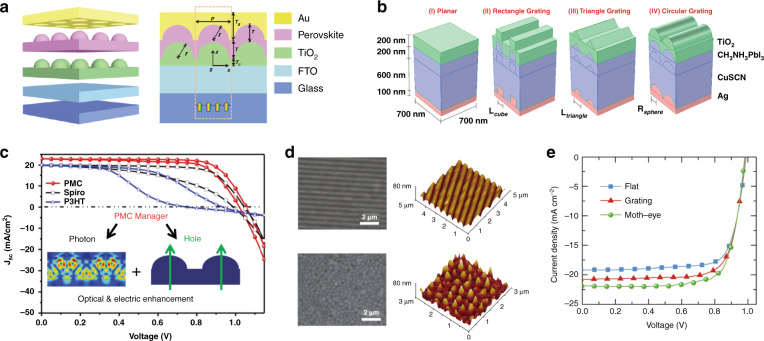
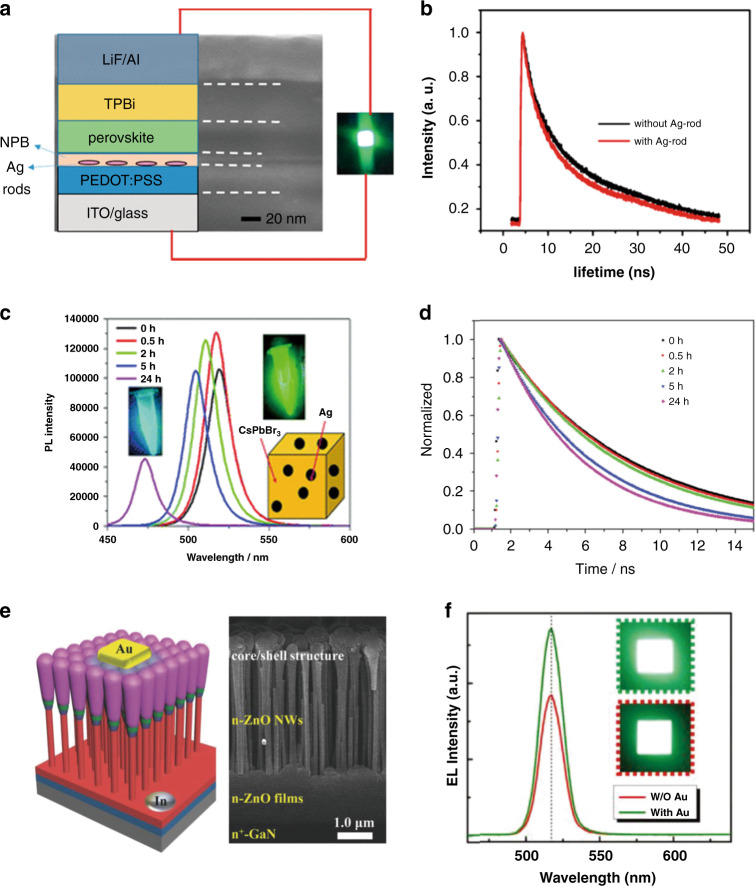
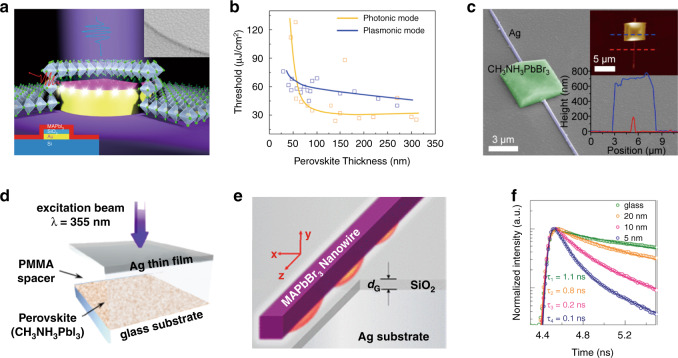
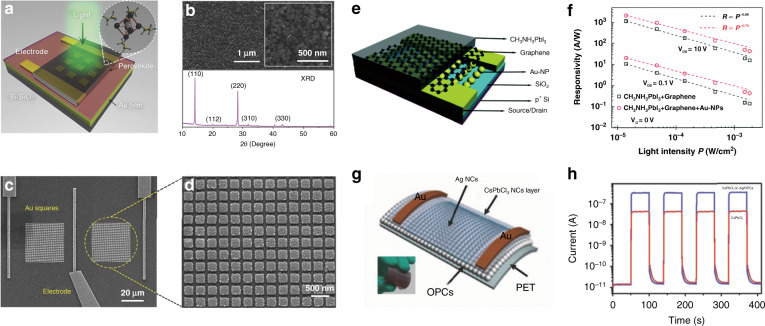
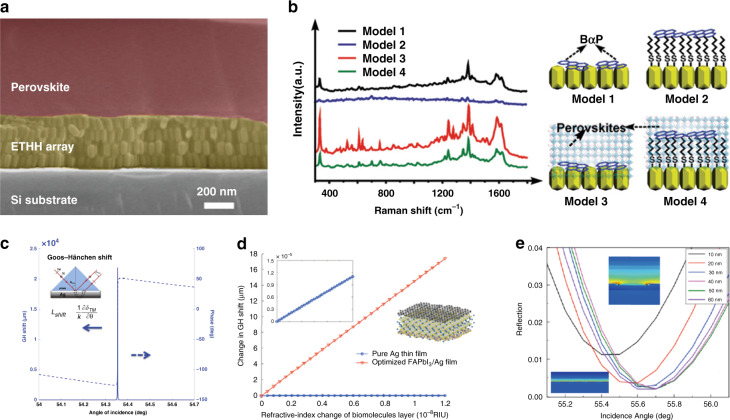
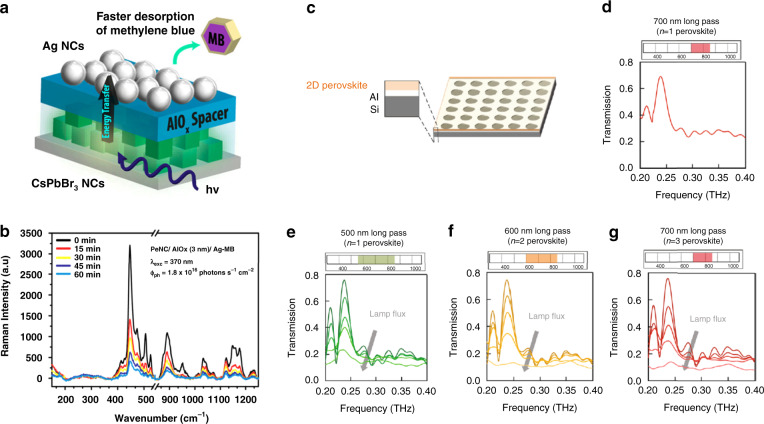
Verification
Claims the paper makes
The claims and statistics of this paper haven’t been checked yet.
Free: it reads the open-access text and checks the first 5 claims that cite a source we can check. Create a free account to check every claim.
Claims other papers make about this one
Each is checked against this paper’s own text: does it say what the citing paper says it does?
The source backs part of the claim, not all of it — or backs it for a different population, condition or comparison.
In the citing paper
“This distinctive structural arrangement not only defines their inherent stability but also underpins their remarkable electronic and optoelectronic properties [12,13].”
From Design Strategies and Emerging Applications of Perovskite-Based Sensors (2025) · cites this paper as [13]
Experimental — accuracy not yet measuredThe source backs part of the claim, not all of it — or backs it for a different population, condition or comparison.
In the citing paper
“Changes in light intensity alter carrier concentration and electrical properties (e.g., resistance, current), allowing light signal detection (Figure 2A) [13].”
From Design Strategies and Emerging Applications of Perovskite-Based Sensors (2025) · cites this paper as [13]
Experimental — accuracy not yet measuredThe source backs part of the claim, not all of it — or backs it for a different population, condition or comparison.
In the citing paper
“Additionally, perovskite sensors redefine manufacturing efficiency by offering low-cost, solution-processable fabrication that bypasses the complex, resource-intensive processes of conventional sensors, enabling scalable production and reducing environmental impact [9,13].”
From Design Strategies and Emerging Applications of Perovskite-Based Sensors (2025) · cites this paper as [13]
Experimental — accuracy not yet measuredThe check wasn’t confident either way, so it gives no verdict — never disputed.
In the citing paper
“Based on their sensing mechanisms, perovskite optical sensors can be divided into ion exchange type, electron transfer type, and fluorescence resonance energy transfer (FRET) type (Figure 2) [13,[34][35][36][37][38][39][40][41][42].”
From Design Strategies and Emerging Applications of Perovskite-Based Sensors (2025) · cites this paper as [13]
Experimental — accuracy not yet measured
Self-check
Percentages, sums and reported differences re-computed from the paper’s own numbers.
The self-check needs the paper’s full text.
Citations
Cites
Organometal Halide Perovskites as Visible-Light Sensitizers for Photovoltaic Cells
Kojima, A., Teshima, K., Shirai, Y., & Miyasaka, T. (2009) · Journal of the American Chemical Society · doi:10.1021/ja809598r · Cited by 23,090
Kim, H.-S., Lee, C.-R., Im, J.-H., Lee, K.-B., Moehl, T., Marchioro, A., Moon, S.-J., Humphry-Baker, R., Yum, J.-H., Moser, J. E., et al. (2012) · Scientific Reports · doi:10.1038/srep00591 · Cited by 8,092
Extraordinary optical transmission through sub-wavelength hole arrays
Ebbesen, T. W., Lezec, H. J., Ghaemi, H. F., Thio, T., & Wolff, P. A. (1998) · Nature · doi:10.1038/35570 · Cited by 7,687
Plasmonics: Merging Photonics and Electronics at Nanoscale Dimensions
Ozbay, E. (2006) · Science · doi:10.1126/science.1114849 · Cited by 4,558
Perovskite light-emitting diodes with external quantum efficiency exceeding 20 per cent
Lin, K., Xing, J., Quan, L. N., de Arquer, F. P. G., Gong, X., Lu, J., Xie, L., Zhao, W., Zhang, D., Yan, C., et al. (2018) · Nature · doi:10.1038/s41586-018-0575-3 · Cited by 3,355
Low-temperature solution-processed wavelength-tunable perovskites for lasing
Xing, G., Mathews, N., Lim, S. S., Yantara, N., Liu, X., Sabba, D., Grätzel, M., Mhaisalkar, S., & Sum, T. C. (2014) · Nature Materials · doi:10.1038/nmat3911 · Cited by 3,219
Lead halide perovskite nanowire lasers with low lasing thresholds and high quality factors
Zhu, H., Fu, Y., Meng, F., Wu, X., Gong, Z., Ding, Q., Gustafsson, M. V., Trinh, M. T., Jin, S., & Zhu, X.-Y. (2015) · Nature Materials · doi:10.1038/nmat4271 · Cited by 2,836
Solution-processed, high-performance light-emitting diodes based on quantum dots
Dai, X., Zhang, Z., Jin, Y., Niu, Y., Cao, H., Liang, X., Chen, L., Wang, J., & Peng, X. (2014) · Nature · doi:10.1038/nature13829 · Cited by 2,702
Efficient, stable and scalable perovskite solar cells using poly(3-hexylthiophene)
Jung, E. H., Jeon, N. J., Park, E. Y., Moon, C. S., Shin, T. J., Yang, T.-Y., Noh, J. H., & Seo, J. (2019) · Nature · doi:10.1038/s41586-019-1036-3 · Cited by 2,305
Jeon, N. J., Na, H., Jung, E. H., Yang, T.-Y., Lee, Y. G., Kim, G., Shin, H.-W., Il Seok, S., Lee, J., & Seo, J. (2018) · Nature Energy · doi:10.1038/s41560-018-0200-6 · Cited by 2,089
Research works printed but not linked: 3
- Jia Y Kerner RA Grede AJ Rand BP Giebink NC Continuous-wave lasing in an organic–inorganic lead halide perovskite semiconductor Nat. Photonics 2017 11 784 788 · DOI · Paper page
- Abdelraouf OAM Shaker A Allam NK All dielectric and plasmonic cross-grating metasurface for efficient perovskite solar cells Metamaterials Xi 2018 10671 1067120
- Zhang W Enhancement of perovskite-based solar cells employing core-shell metal nanoparticles Nano Lett. 2013 13 4505 4510 23947387 · DOI · Paper page
Cited by
Items 101–172 of 172
Carvalho, D. F., Conceição, P., Perdomo, A. P., Silva, R. M., Martins, M., Teixeira, J. P., Salomé, P. M. P., Fernandes, P. A., & Correia, M. R. (2026) · ACS Applied Materials & Interfaces · doi:10.1021/acsami.5c24570 · Cited by 2
Song, D., Fu, R., Fu, S., Wang, Y., Li, B., Shen, A., & Liu, Y. (2026) · Japanese Journal of Applied Physics · doi:10.35848/1347-4065/ae4436 · Cited by 3
Dong, H., Hu, W., Ji, P., Tao, W., Zhao, S., Zhang, Z., Qin, S., Liang, J., & Yang, S. (2026) · Microsystems & Nanoengineering · doi:10.1038/s41378-026-01197-1 · Cited by 2
“At the same time, they have the characteristic of localized electric fi eld enhancement, which is essential for enhancing the interaction between light and matter 3 – 5 .”
Yaqoob, M., Farhan, N. M., Murtaza, H., Ain, Q., Alkahtani, R. A., Munir, J., & Al-Buriahi, M. S. (2026) · RSC Advances · doi:10.1039/d6ra02893d · Cited by 2
“22 Perovskite halides possess long charge carrier di ff u-sion lengths, strong light absorption, and cost-e ff ective manufacturing, leading to a signi cant transformation in photovoltaic technology.”
Multiscale Optical Modeling of Perovskite-Si Tandem Solar Cells
Hägglund, C. (2022) · Frontiers in Photonics · doi:10.3389/fphot.2022.921438 · Cited by 2
“Such NPs may be of interest for enhancing the photocurrent generation via their localized surface plasmon resonance, as well as for improvedcontactconductivityinPSCs(Hägglundetal.,2016;Aietal., 2022).”
BackgroundThe Influence of Geometry on Plasmonic Resonances in Surface- and Tip-Enhanced Raman Spectroscopy
He, L., Zahn, D. R. T., & Madeira, T. I. (2023) · IntechOpen eBooks · doi:10.5772/intechopen.108182 · Cited by 2
Effect of silver nanoparticles on the photostability and aging of CsPbBr3 nanocrystals
Krukov, V., Patsinko, O. I., Ramanenka, A. A., Kulakovich, O. S., Canımkurbey, B., & Gaponenko, S. V. (2024) · Physica Scripta · doi:10.1088/1402-4896/ad8973 · Cited by 2
From RTA to conventional annealing: Impact on optical losses and metallic character of TiN films
Novaković, M. M., Jugović, D. M., & Popović, M. Č. (2025) · Optical Materials · doi:10.1016/j.optmat.2025.116718 · Cited by 2
Fractal, linear, and non-linear optical properties of Mn-based complex star-shaped nanostructure
Fakharpour, M., & Doost, H. A. (2025) · The European Physical Journal Special Topics · doi:10.1140/epjs/s11734-025-01655-3 · Cited by 2
Rakshit, S., Das, S. K., Samanta, A., Ghosh, T. N., Jana, P. C., & Saha, S. C. (2025) · Journal of Materials Science Materials in Electronics · doi:10.1007/s10854-025-15778-9 · Cited by 2
Petrovai, I., Todor-Boer, O., David, L., & Botiz, I. (2023) · Materials · doi:10.3390/ma16072625 · Cited by 2
Plasmonic Nanostructures - Basic Concepts, Optimization and Applications
Steglich, P. C. (2022) · IntechOpen eBooks · doi:10.5772/intechopen.97923 · Cited by 1
Saheed, M. S. M., Saheed, M. S. M., Singh, B. S. M., Saheed, M. S. M., & Jose, R. (2022) · Micromachines · doi:10.3390/mi13070999 · Cited by 2
Sharma, P. K., Yang, K., Li, L., Kumar, J., & Karak, S. (2024) · Energy Technology · doi:10.1002/ente.202401155 · Cited by 1
KUMAR, N. K., KAVITHA, M., Kavitha, V. S., & Pandi, P. (2024) · Surface Review and Letters · doi:10.1142/s0218625x25500787 · Cited by 1
Facile Synthesis of Stable and Highly Luminescent MAPbI3 Perovskite Quantum Dots
Tashpulatov, K., Norboyev, K., Toshpulatov, D., Magdiev, S., Nasimov, A., Mirzaev, S., Ruziev, J., & Yakubov, B. (2025) · Journal of Fluorescence · doi:10.1007/s10895-025-04258-2 · Cited by 1
Renormalized photon propagator in quantum electrodynamics of plasmonic cavities
Vallone, M. (2025) · New Journal of Physics · doi:10.1088/1367-2630/add496 · Cited by 1
Photonic Contributions to the Apparent Seebeck Coefficient of Plasmonic Metals
Zhao, B., Lee, A., Yim, J. E., Brawley, Z., Brass, E., & Sheldon, M. T. (2025) · Nano Letters · doi:10.1021/acs.nanolett.5c03028 · Cited by 1
Sachith, B. M., Xia, Y., Wang, T., Okamoto, T., Ito, S., Wang, L., Shi, X., Tamai, N., Miyasaka, H., Misawa, H., et al. (2025) · Journal of Materials Chemistry A · doi:10.1039/d5ta07443f · Cited by 1
Computational Methodology for the Analysis of SMS Interferometric Structures as Potential Biosensors
Lara-Davila, N. C., Montoya-Cardona, J. A., & Gonzalez‐Valencia, E. (2025) · International Electronic Conference on Sensors and Applications (ECSA) · doi:10.3390/ecsa-12-26491 · Cited by 1
John, M., Kumar, K., Agrawal, A. K., Chaturvedi, U., Das, A., Chaturvedi, V., & Dhawan, A. (2026) · ACS Applied Materials & Interfaces · doi:10.1021/acsami.5c21061 · Cited by 1
Kabát, J., Řepa, R., Hachtel, J. A., Kepič, P., Křápek, V., Konečná, A., Šikola, T., & Horák, M. (2026) · The Journal of Physical Chemistry C · doi:10.1021/acs.jpcc.6c01862 · Cited by 2
“Metallic nanostructures have been utilized to enhance the efficiency of photovoltaic devices, 1 catalytic reactions, 2 single-photon emitters, 3 and even the detection of individual molecules.”
Debnath, S., Saha, S., Zahin, K., Tsui, Y. Y., & Islam, M. Z. (2026) · Materials Advances · doi:10.1039/d6ma00364h · Cited by 1
“[72] Au nanoparticles in PEDOT:PSS showed 3.8-fold PL improvement in blue perovskite LEDs .”
InfluentialSilver-Doped CsPbI2Br Perovskite Semiconductor Thin Films
Kebede, T., Abebe, M., Mani, D., Thankappan, A., Thomas, S., & Kim, J. Y. (2024) · Electronic Materials · doi:10.3390/electronicmat5020005 · Cited by 1
“Metal halide perovskites (MHPs) are a next-generation semiconductor for electronics and optoelectronics, such as emerging photovoltaics (PVs), light-emitting diodes (LEDs), field-effect transistors (FETs), photodetectors, and sensors [1–5].”
BackgroundFDTD Design and Modelling of Ag/Au Nanoparticles for Field Enhancement
Jangid, M., Bhatnagar, A., & Janyani, V. (2024) · IEEE India Council International Subsections Conference (INDISCON) · doi:10.1109/indiscon62179.2024.10744383 · Cited by 1
Abu-Elmaaty, B. E., & Ismail, T. (2025) · Journal of Optics · doi:10.1007/s12596-025-02564-3 · Cited by 1
“Even though previous studies have integrated Si 3 N 4 -based materials and metal nanostructures [19–21], our innovative design surpasses them notably in efficiency.”
Investigation of Plasmonic Characteristics of a Perovskite-Based Metal-Insulator-Metal Nanostructure
He, X., Chu, S., & Sun, C. (2025) · Plasmonics · doi:10.1007/s11468-025-03262-3 · Cited by 1
Transparent conductive oxide plasmonics for the infrared
Castellano, E. M. (2022) · UPM Digital Archive (Technical University of Madrid) · doi:10.20868/upm.thesis.72287 · Cited by 3
Gaussian Gratings for Light Absorption Enhancement of Silicon Thin-Film Solar CellsPreprint
Eskandari, M. (2023) · SSRN Electronic Journal · doi:10.2139/ssrn.4588655
Mitigating non-radiative decay losses in the Purcell effect at sub-10 nm nanostructure proximitiesPreprint
Januar, M., Liu, B., Diau, E. W., Misawa, H., Hsiao, H., Shih, M., Liu, K., Cheng, J., Hatanaka, K., & Liu, K. (2023) · Research Square · doi:10.21203/rs.3.rs-3705811/v1
Asl, A. F., Afshari, M., Liu, D., & Heidarzadeh, H. (2024) · SSRN Electronic Journal · doi:10.2139/ssrn.4799536
Hybrid plasmonic nanomaterials for hydrogen production
Singh, B. K., Verma, R., Shaktawat, S., & Singh, J. (2024) · Elsevier eBooks · doi:10.1016/b978-0-443-21456-1.00012-6
Efficient Fabrication of Plasmonic Nanostructures Using Chloroform‐Mediated Heterogeneous Bonding
Noh, T.-G., Kim, J. H., Kang, M., Lee, T., & Jeong, M. Y. (2024) · Advanced Functional Materials · doi:10.1002/adfm.202407622
Modification of GaAs(001)-β2(2x4) surface by Pd-decoration: A DFT study
Dou, Y., Zhuang, Y., Aierken, A., Song, Q., Wang, Q., Zhang, Q., Zhang, H., Lu, W., & Yang, S. (2024) · Surfaces and Interfaces · doi:10.1016/j.surfin.2024.104711
Sepahvand, N., Dezfuli, A. G., & Bahrami, M. (2024) · Plasmonics · doi:10.1007/s11468-024-02385-3
“SLRs can become effective by improving the field intensity and reducing the line width along with increasing the quality factor in a wide range of applications such as nanolasers [10], sensors [11], SERS [12], and photovoltaics [13].”
Zhang, Z., Wen, H. F., Li, L., Zhang, Z., Guo, H., Li, Z., Ma, Z., Li, X., Tang, J., & Liu, J. (2024) · Japanese Journal of Applied Physics · doi:10.35848/1347-4065/ad82c4
Efficient light management of ultra-thin perovskite silicon tandem cells based on plasmonic nanoring
Wu, P., Hu, C., Wang, W., Zhou, Y., Qian, Y., Gu, Y., & Kuang, Y. (2024) · Global Intelligent Industry Conference (GIIC) · doi:10.1117/12.3032339
Рыжкова, Д. А., & Череповская, А. А. (2024) · Physical and Chemical Aspects of the Study of Clusters Nanostructures and Nanomaterials · doi:10.26456/pcascnn/2024.16.711
Sepahvand, N., Dezfuli, A. G., & Bahrami, M. (2025) · Plasmonics · doi:10.1007/s11468-024-02737-z
Modeling and Performance Analysis of Plasmonic-Enhanced Solar Cells: A MATLAB Approach
Mohammad, E. J., & Abdullah, G. H. (2025) · Plasmonics · doi:10.1007/s11468-025-02780-4
Awada, C., & Ruffino, F. (2025) · Journal of nano research · doi:10.4028/p-dorkp9
Dash, G., Das, S., Kumar, N., Arun Aravindakshan, K., V, & Viswanatha, R. (2025) · The Journal of Physical Chemistry Letters · doi:10.1021/acs.jpclett.5c01346
Chakma, U., Howlader, D., Shuhong, X., Guo, H., Yuxuan, W., Chen, K., Wang, C., & Kumer, A. (2025) · Molecular Simulation · doi:10.1080/08927022.2025.2517273
Kouhzadian, R., & Jamshidi, A. (2025) · SSRN Electronic Journal · doi:10.2139/ssrn.5354760
Arabi, M., Panahibakhsh, S., & Aliannezhadi, M. (2025) · Research Square · doi:10.21203/rs.3.rs-7337044/v1
Noor, T., Mahmud, F., Sharma, H., Suny, A. A., Bushra, A., & Chowdhury, M. H. (2025) · IEEE Region 10 Symposium (TENSYMP) · doi:10.1109/tensymp63728.2025.11145003
“Despite this, all the nanoparticles show significant performance enhancement compared to bare FaSnI 3 PSC owing to their significant plasmonic and scattering properties [27].”
Silver nanocube-assisted random lasing of perovskite materials
Woli, Y. B., Krause, B., & Hoang, T. B. (2025) · Journal of Materials Science Materials in Electronics · doi:10.1007/s10854-025-15791-y
“…perovs-kites are ideal for achieving optical gain in low-thresh-old lasing devices due to their simple structures, strong light absorption, tunable emission wavelengths, high carrier mobility, extended carrier diffusion length, easy preparation process, and excellent flexibility [2 – 6].”
Design and optimization of low-dimensional photonic devices
Verma, S., Sakda, N., Pathak, A. K., Cabrera‐España, F. J., & Rahman, B. M. A. (2025) · Elsevier eBooks · doi:10.1016/b978-0-443-24804-7.00004-0
Kailasa, S. K., & Vadia, F. Y. (2025) · Elsevier eBooks · doi:10.1016/b978-0-443-30270-1.00003-6
Enhanced photoluminescence and stability of CsPbBr3 perovskite nanocrystals through AuCl doping
Khorasani, A., & Mutlugün, E. (2026) · Journal of Materials Science Materials in Electronics · doi:10.1007/s10854-026-16622-4
“Thus, examining TRPL graphs and the optimal conditions to enhance the lifetimes of PeQDs by 5% align with other findings, confirming that the defect density or trap state is reduced, leading to improved crystallinity [32].”
Al-Namshah, K. S., & Irfan, M. (2026) · Materials Chemistry and Physics · doi:10.1016/j.matchemphys.2026.132199
Plasmonically Engineered All-Inorganic Lead-Free Tin-Doped High Performance Perovskite Solar Cells
Mahmud, F., Sharma, H., Noor, T., & Chowdhury, M. H. (2026) · International Conference on Electrical, Computer & Telecommunication Engineering (ICECTE) · doi:10.1109/icecte69292.2026.11429297
“…namely aluminum (Al), silver (Ag), titanium (Ti), copper (Cu), and gold (Au) have been widely employed in various configurations to enhance the performance of different solar cell technologies, including in Si, CdTe, organic, per-979-8-3315-6135-2 ovskite, and indium phosphide solar cells [5].”
Amanyi, M. I., Danladi, E., Salawu, A. O., Alhaji, A., Ogunmoye, K. A., Onah, O., & Ekwu, M. T. (2026) · Semiconductor Physics Quantum Electronics & Optoelectronics · doi:10.15407/spqeo29.01.105
Building high performance materials for solar cells from cubic nanobricks
Capitaine, A. (2023) · theses.fr (ABES) · doi:10.70675/ba16c0abzea81z49e8zae94ze7df5f5116b5 · Cited by 2
An integrated DFT–FDTD design of plasmon-enhanced lead-free CsSn x Ge 1− x I 3 perovskite LEDs
Debnath, S., Saha, S., Zahin, K., Tsui, Y. Y., & Islam, M. Z. (2026) · Materials Advances · doi:10.1039/d6ma00110f
“The presence of NR breaks the symmetry of the device stack, scattering previously trapped waveguided modes into the far field and adding directionality to the emission [60].”
Salym, I., Takassa, R., Farkad, O., Elfatouaki, F., Mouncharih, A. E., Elaatmani, M., Abouelaoualim, D., & Boujlaïdi, A. E. (2026) · Next Materials · doi:10.1016/j.nxmate.2026.102069
Genetic algorithm: Design of perovskite solar cells with broadband light-absorption optimization
Zhu, J., Liang, J., Jiang, F., & Lu, M. (2026) · Solar Energy Materials and Solar Cells · doi:10.1016/j.solmat.2026.114452
Omrani, R., Mahjoory, A., Teimouri, R., Shabani, S., Hosseini, H. R. M., Mohammadpour, R., & Kolahdouz, M. (2026) · Journal of Optics · doi:10.1007/s12596-026-03150-x
Nüßlein, J., Mondal, S., & Strehle, S. (2026) · ACS Omega · doi:10.1021/acsomega.6c00698
Jangjoy, A., & Ahmadi-Kandjani, S. (2026) · Solar Energy Materials and Solar Cells · doi:10.1016/j.solmat.2026.114516
Environmentally Friendly Synthesis of Inorganic Nanoparticles Using Plant Extracts
Azum, N., Kamal, T., Rub, M. A., Asad, M., Khan, A., Khan, A. A. P., Chani, M. T. S., Arshad, M. N., Alzahrani, K. A., & Marwani, H. M. (2026) · Colloid Journal · doi:10.1134/s1061933x25601489
“Nanomaterials also hold immense promise in energy applications, particularly in photovoltaics and solar thermal technologies [20, 21].”
Kannan, R., Kanagajothi, D., Karthika, K., Pavaiyarkarasi, R., Anthonisamy, A., & Kishore, O. K. (2026) · Journal of Optics · doi:10.1007/s12596-026-03172-5
Arabi, M., Panahibakhsh, S., & Aliannezhadi, M. (2026) · Results in Optics · doi:10.1016/j.rio.2026.101129
Wang, T., Sun, M., Chen, Y., Zhang, C., Liu, Y., Zhang, Y., Xu, Q., & Han, J. (2026) · Optics Express · doi:10.1364/oe.607875
Nanoparticle engineering in perovskite solar cells for high-efficiency energy applications: A review
AL‐Saleem, N. K., Almousa, J. H., Alyousef, Z. Z., Bosaleh, F. Y., Kroor, D. O., Alfardan, F. M., Ameereh, G. I., Alhashmi, A., Alzahrani, Y., & Alkahtani, M. (2026) · Results in Engineering · doi:10.1016/j.rineng.2026.112982
Photon management in ultra-thin perovskite solar cells using 1D diffraction gratings
Anvarhaghighi, N., Habibzadeh-Sharif, A., & Khalilzadeh, H. (2026) · Optics & Laser Technology · doi:10.1016/j.optlastec.2026.116442
Plasmonic non-toxic single junction CH3NH3SnI3 perovskite absorber based AR coated solar cell
Muntaha, I., & Qazi, G. (2026) · Journal of Optics · doi:10.1007/s12596-026-03313-w
Study of Spectrally Resolved Optical Waveguide Resonant Sensor Enhanced with Perovskite Thin Film
Lu, D. F., Li, M., Chen, L., Yang, C., Pengfan, Z. H. A. N., & Cao, C. (2026) · Coatings · doi:10.3390/coatings16101137
Chaudhuri, A., Datta, A., Chatterjee, S., Ghosh, N., Bandyopadhyay, S., & Pal, A. (2026) · IEEE International Conference on Electronics, Computing and Communication Technologies (CONECCT) · doi:10.1109/conecct68978.2026.11700691
“These sensors are attractive because they are compact, label-free, and compatible with on-chip integration [1]–[5].”
Farzin, B. Z., Ardebili, S. B. S., & Kim, J. S. (2026) · Nanotechnology · doi:10.1088/1361-6528/aeaf60
Magnetic nanomaterials for optoelectronic and photochemical devices
Aliyu, B. M., Musa, A., & Yelwa, J. M. (2026) · Elsevier eBooks · doi:10.1016/b978-0-443-36461-7.00017-7
Metadata
- Authors
- Ai, B., Fan, Z., & Wong, Z. J.
- Affiliations
- Chongqing University (CN)
- Texas A&M University (US)
- Corresponding author
- Wong, Zi Jing
- ORCID
- Ai, Bin
- Venue
- Microsystems & Nanoengineering
- Published
- 2022-01-12
- Volume
- 8
- Issue
- 1
- Pages
- 5-5
- ISSN
- 2055-7434 (ISSN-L)
- PMC
- PMC8752666
- OpenAlex
- W4206044362
- Cited by
- 172
- References
- 210
- Citations by year
- 2026: 28 · 2025: 57 · 2024: 48 · 2023: 22 · 2022: 17
- FWCI
- 3.21
- Type
- journal article
- Language
- en
- Open access
- gold
- doi.org
- Licence
- cc-by
- creativecommons.org/licenses/by/4.0 (tdm)
- creativecommons.org/licenses/by/4.0 (vor)
- Locations
- Microsystems & Nanoengineering (publishedVersion, cc-by)
- PubMed Central (publishedVersion, cc-by)
- PubMed (publishedVersion)
- DOAJ (DOAJ: Directory of Open Access Journals) (submittedVersion, cc-by-sa)
- Funders
- Chongqing University
- Natural Science Foundation of Chongqing (cstc2020jcyj-msxmX0614, cstc2020jcyj)
- Fundamental Research Funds for the Central Universities (2021CDJQY-010)
- Topics
- Physical Sciences › Physics and Astronomy › Atomic and Molecular Physics, and Optics › Plasmonic and Surface Plasmon Research
- Physical Sciences › Engineering › Electrical and Electronic Engineering › Perovskite Materials and Applications
- Physical Sciences › Materials Science › Electronic, Optical and Magnetic Materials › Gold and Silver Nanoparticles Synthesis and Applications
- Keywords
- plasmonic sensors, plasmonic lasers, plasmonic photodetectors, plasmonic nanostructures, optoelectronic devices
About these checks
Registry, retraction, Cites and statistics results are computed, not judged, with one exception: a printed reference that no index lists is read once by a model before it counts as a citation error. Claims are extracted by a model and kept only when their quote appears verbatim in the text; each cited source is then checked, with a model’s help, for whether it says what the claim relies on. Those verdicts can be wrong — read the claim’s quote and the cited source before relying on one.
Statistics and arithmetic are recomputed, not judged.
Confidence bands are shown only for fields calibrated on our annotated test set. None is calibrated yet, so no band is shown.
What counts as a claim ›How we measure confidence ›How we check this ›
Are you an author, or do you see a problem with this page? Request a review
Data sources
Bibliographic data: Semantic Scholar, OpenAlex, Crossref.
Contains information from the Semantic Scholar Academic Graph Datasets, made available under the ODC Attribution License (ODC-BY 1.0).
Semantic Scholar’s data is described in: Kinney, R., et al. (2023). The Semantic Scholar Open Data Platform. arXiv:2301.10140.
