

Adolescent exposure to Δ9-tetrahydrocannabinol alters the transcriptional trajectory and dendritic architecture of prefrontal pyramidal neurons
Open accessThe DOI matches its Crossref record; 65 of the 65 references it cites were found in a registry or an index.
Abstract
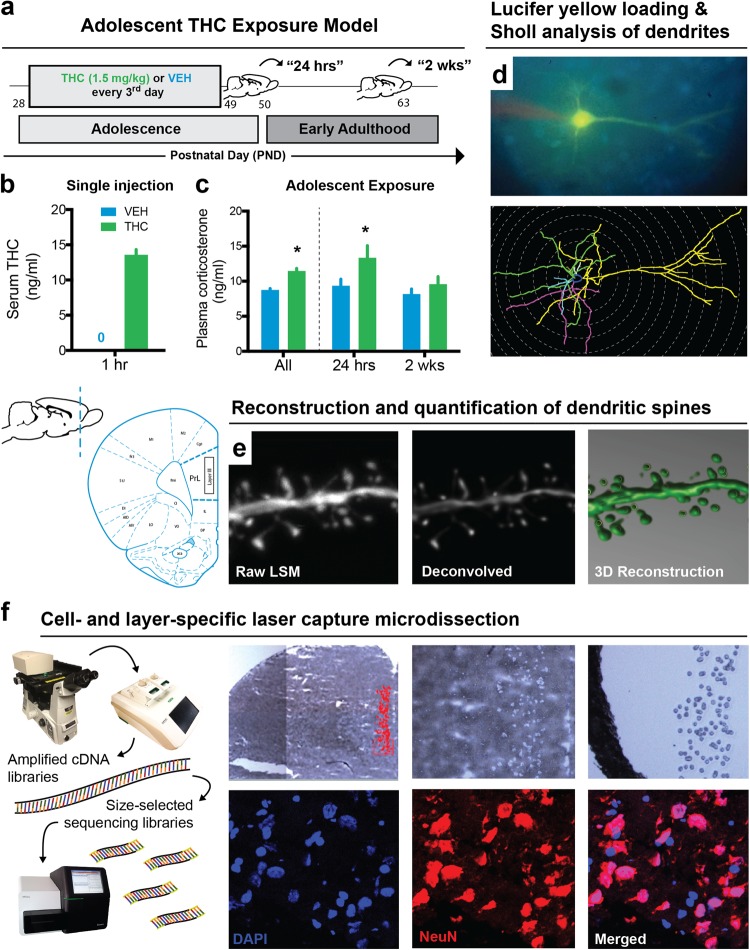
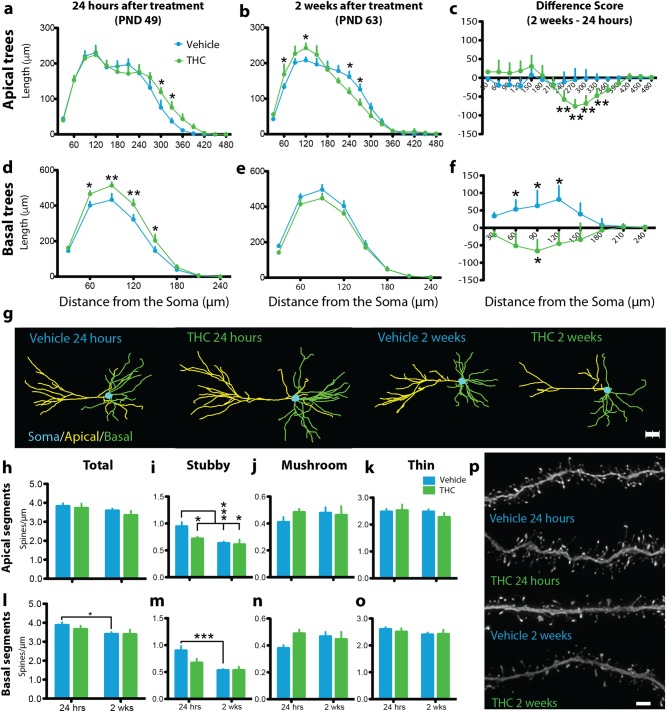
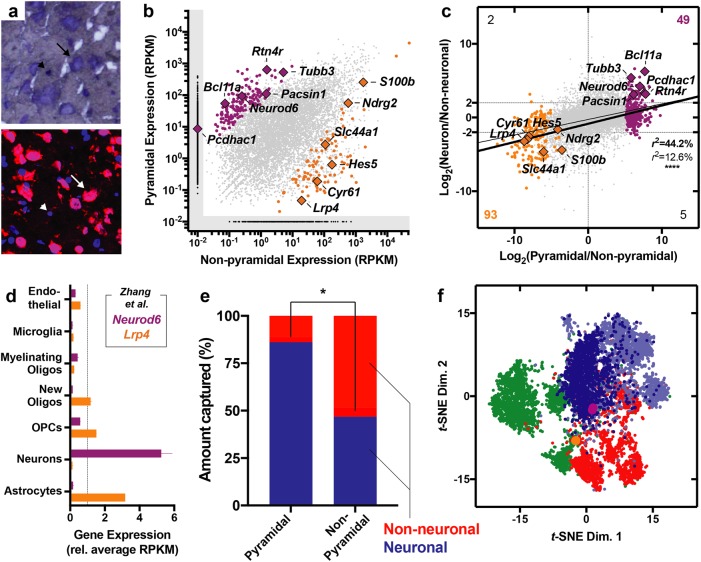
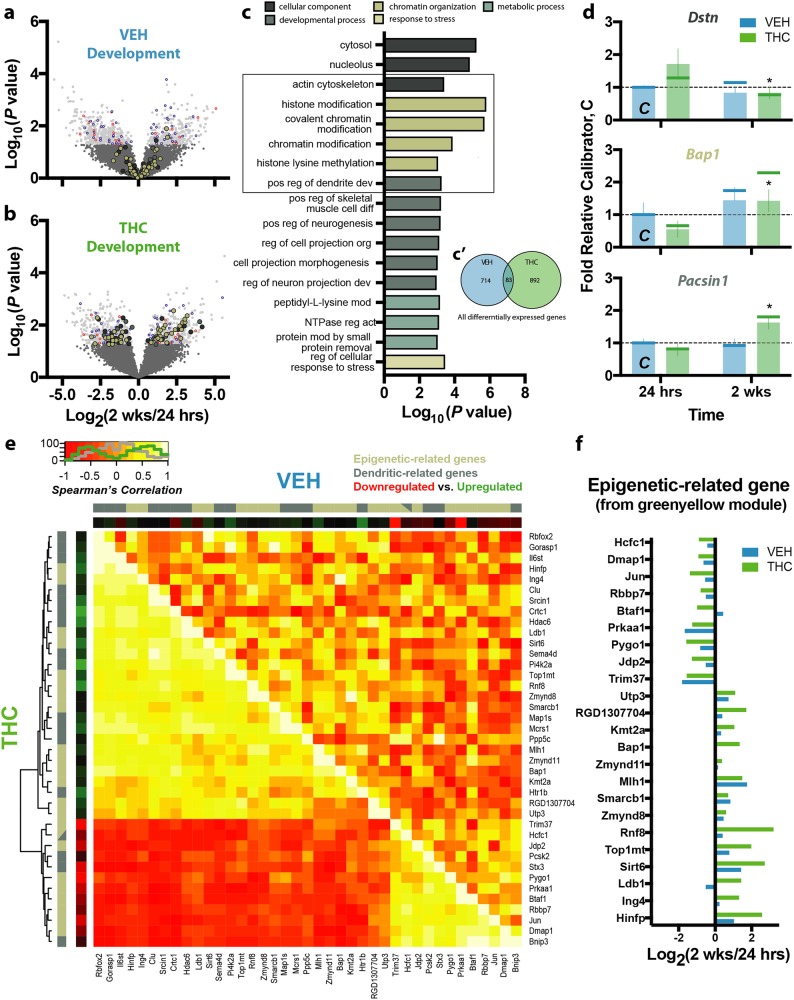
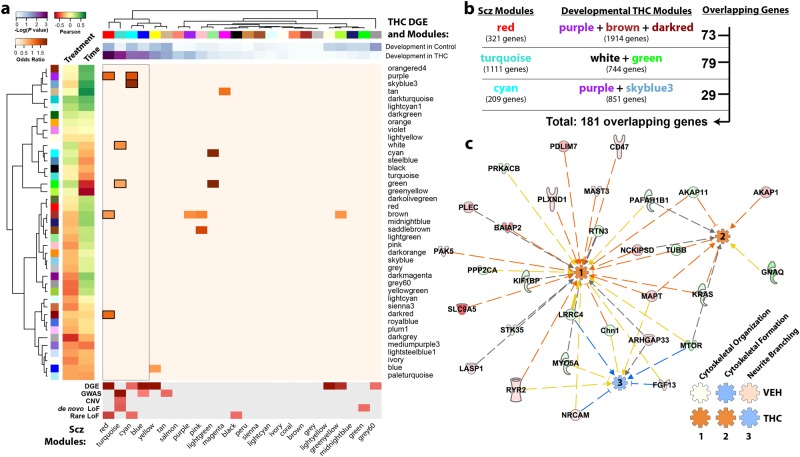
Neuronal circuits within the prefrontal cortex (PFC) mediate higher cognitive functions and emotional regulation that are disrupted in psychiatric disorders. The PFC undergoes significant maturation during adolescence, a period when cannabis use in humans has been linked to subsequent vulnerability to psychiatric disorders such as addiction and schizophrenia. Here, we investigated in a rat model the effects of adolescent exposure to Δ 9 -tetrahydrocannabinol (THC), a psychoactive component of cannabis, on the morphological architecture and transcriptional profile of layer III pyramidal neurons—using cell type- and layer-specific high-resolution microscopy, laser capture microdissection and next-generation RNA-sequencing. The results confirmed known normal expansions in basal dendritic arborization and dendritic spine pruning during the transition from late adolescence to early adulthood that were accompanied by differential expression of gene networks associated with neurodevelopment in control animals. In contrast, THC exposure disrupted the normal developmental process by inducing premature pruning of dendritic spines and allostatic atrophy of dendritic arborization in early adulthood. Surprisingly, there was minimal overlap of the developmental transcriptomes between THC- and vehicle-exposed rats. THC altered functional gene networks related to cell morphogenesis, dendritic development, and cytoskeleton organization. Marked developmental network disturbances were evident for epigenetic regulators with enhanced co-expression of chromatin- and dendrite-related genes in THC-treated animals. Dysregulated PFC co-expression networks common to both the THC-treated animals and patients with schizophrenia were enriched for cytoskeletal and neurite development. Overall, adolescent THC exposure altered the morphological and transcriptional trajectory of PFC pyramidal neurons, which could enhance vulnerability to psychiatric disorders.
Overview
The claims and statistics of this paper haven’t been checked yet.
Free: it reads the open-access text and checks the first 5 claims that cite a source we can check. Create a free account to check every claim.
Integrity signals
Registry
Cites
Statistics
Figures
Verification
Claims the paper makes
The claims and statistics of this paper haven’t been checked yet.
Free: it reads the open-access text and checks the first 5 claims that cite a source we can check. Create a free account to check every claim.
Claims other papers make about this one
Each is checked against this paper’s own text: does it say what the citing paper says it does?
The cited source says what the claim attributes to it.
In the citing paper
“the alterations in PFC networks observed in the THC-exposed animals were common to subjects with schizophrenia [157].”
From Consequences of adolescent drug use (2023) · cites this paper as [157]
Self-check
Percentages, sums and reported differences re-computed from the paper’s own numbers.
The self-check needs the paper’s full text.
Citations
Cites
voom: precision weights unlock linear model analysis tools for RNA-seq read counts
Law, C. W., Chen, Y., Shi, W., & Smyth, G. K. (2014) · Genome Biology · doi:10.1186/gb-2014-15-2-r29 · Cited by 6,155 · cited 1×
“animals), and simple treatment main-effects at each time point, were calculated using the Bioconductor package voom-limma [39] in R.”
MethodDynamic mapping of human cortical development during childhood through early adulthood
Gogtay, N., Giedd, J. N., Lusk, L., Hayashi, K. M., Greenstein, D., Vaituzis, A. C., Nugent, T. F., Herman, D. H., Clasen, L. S., Toga, A. W., et al. (2004) · Proceedings of the National Academy of Sciences · doi:10.1073/pnas.0402680101 · Cited by 5,604
Zhang, Y., Chen, K., Sloan, S. A., Bennett, M. L., Scholze, A. R., O'Keeffe, S., Phatnani, H. P., Guarnieri, P., Caneda, C., Ruderisch, N., et al. (2014) · The Journal of Neuroscience · doi:10.1523/jneurosci.1860-14.2014 · Cited by 4,875
Pharmacokinetics and Pharmacodynamics of Cannabinoids
Grotenhermen, F. (2003) · Clinical Pharmacokinetics · doi:10.2165/00003088-200342040-00003 · Cited by 1,511
Anatomical analysis of afferent projections to the medial prefrontal cortex in the rat
Hoover, W. B., & Vertes, R. P. (2007) · Brain Structure and Function · doi:10.1007/s00429-007-0150-4 · Cited by 1,365
Prefrontal cortex in the rat: Projections to subcortical autonomic, motor, and limbic centers
Gabbott, P. L. A., Warner, T. A., Jays, P. R. L., Salway, P., & Busby, S. J. (2005) · Journal of Comparative Neurology · doi:10.1002/cne.20738 · Cited by 1,227
Adolescent cortical development: A critical period of vulnerability for addiction
Crews, F., He, J., & Hodge, C. (2007) · Pharmacology Biochemistry and Behavior · doi:10.1016/j.pbb.2006.12.001 · Cited by 1,091
Gene expression elucidates functional impact of polygenic risk for schizophrenia
Fromer, M., Roussos, P., Sieberts, S. K., Johnson, J. S., Kavanagh, D. H., Perumal, T. M., Ruderfer, D. M., Oh, E. C., Topol, A., Shah, H. R., et al. (2016) · Nature Neuroscience · doi:10.1038/nn.4399 · Cited by 1,091 · cited 2×
“We interrogated the CMC sample data set consisting of 537 subjects (258 subjects with schizophrenia and 279 controls) with dorsolateral PFC RNA-seq data [41].”
MethodSelf-citationNeuronal subtypes and diversity revealed by single-nucleus RNA sequencing of the human brain
Lake, B. B., Ai, R., Kaeser, G. E., Salathia, N. S., Yung, Y. C., Liu, R., Wildberg, A., Gao, D., Fung, H.-L., Chen, S., et al. (2016) · Science · doi:10.1126/science.aaf1204 · Cited by 957
Meta-analysis of the Association Between the Level of Cannabis Use and Risk of Psychosis
Marconi, A., Di Forti, M., Lewis, C. M., Murray, R. M., & Vassos, E. (2016) · Schizophrenia Bulletin · doi:10.1093/schbul/sbw003 · Cited by 899
Cited by
Items 101–137 of 137
Les effets épigénétiques du cannabis/THC et leurs méfaits
Costentin, J. (2020) · La Presse Médicale Formation · doi:10.1016/j.lpmfor.2020.05.023 · Cited by 1
Bitanihirwe, B. K. Y., & Woo, T.-U. W. (2021) · Elsevier eBooks · doi:10.1016/b978-0-12-817986-4.00037-7 · Cited by 3
Rapport 22-03. Drogues licites et illicites et modifications de l’épigénome
Goullé, J., Hamon, M., Hauw, J., & Léger, J. (2022) · Bulletin de l Académie Nationale de Médecine · doi:10.1016/j.banm.2022.02.011 · Cited by 5
Zamberletti, E., Manenti, C., Gabaglio, M., Rubino, T., & Parolaro, D. (2022) · Elsevier eBooks · doi:10.1016/b978-0-12-823490-7.00005-8 · Cited by 1
Neurotoxicity and neuroprotection induced by plant-derived cannabinoids
Silva, M. H. (2024) · Elsevier eBooks · doi:10.1016/b978-0-443-23763-8.00071-3 · Cited by 3
Cannabinoid during adolescence phenocopies reelin haploinsufficiency in prefrontal cortex synapsesPreprint
Silva-Hurtado, T. J., Giua, G., Lassalle, O., Murphy, M. N., Wager‐Miller, J., Mackie, K., Manzoni, O. J., & Chavis, P. (2021) · bioRxiv (Cold Spring Harbor Laboratory) · doi:10.1101/2021.12.22.473793 · Cited by 2
“Exogenous cannabinoid exposure during adolescence results in persistent PFC-dependent behavioral alterations and abnormalities in prefrontal architecture and synaptic functions (Levine et al. 2017; Miller et al. 2019; Renard et al. 2017; Zamberletti et al. 2014).”
BackgroundVerdikt, R., Armstrong, A. A., Cheng, J. Y., Yang, X., & Allard, P. (2023) · eLife · doi:10.7554/elife.88795.1 · Cited by 2
Zuo, Y., Libster, A. M., Gurha, A., Formoli, N., Liaw, L., Sun, D., Turner, A. V., Iemolo, A., & Telese, F. (2025) · bioRxiv (Cold Spring Harbor Laboratory) · doi:10.1101/2025.04.03.646846 · Cited by 1
“For instance, THC exposure during adolescence significantly remodels dendritic structures within the prefrontal cortex 14,15 and persistently alters transcriptional profiles across multiple brain regions, affecting genes critical for synaptic function, neurodevelopment, and metabolism 11,14 .”
Neural Correlates of Reward Dysfunction in Adolescent Cannabis Use and DepressionPreprint
Nguyen, T. N. B., Ely, B. A., Stern, E. R., Tobe, R. H., & Gabbay, V. (2025) · medRxiv · doi:10.1101/2025.11.01.25339301 · Cited by 1
Cannabis and Psychosis: Association, Subtype, or Separate Disorder?
Coffman, B. A., Sklar, A. L., & López‐Caballero, F. (2026) · American Journal of Psychiatry · doi:10.1176/appi.ajp.20260508 · Cited by 1
Orihuel, J., Capellán, R., Roura‐Martínez, D., Ucha, M., Gómez-Rubio, L., Valverde, C., Casquero‐Veiga, M., Soto‐Montenegro, M. L., Desco, M., Oteo, M., et al. (2020) · bioRxiv (Cold Spring Harbor Laboratory) · doi:10.1101/2020.10.19.345322 · Cited by 1
Rodrigues, N. B. (2023) · FIU Undergraduate Research Journal · doi:10.25148/urj.010326
Distribution of the endocannabinoid system: Linking signaling and development
Dvořáková, M., & Kalinovsky, A. (2023) · Elsevier eBooks · doi:10.1016/b978-0-323-90877-1.00005-x
Identifying Cannabidiol (CBD) Research Priorities Relevant to Child and Adolescent Psychiatry
Hulvershorn, L. A., Weinstein, S. M., Bixler, K., Murray, O. K., Smoker, M. P., & Hammond, C. J. (2023) · Adolescent Psychiatry · doi:10.2174/2210676613666230901143219
Costentin, J. (2024) · Bulletin de l Académie Nationale de Médecine · doi:10.1016/j.banm.2024.02.009
Smith, G., McCoy, K., Prisco, G. V. D., Kuklish, A., Grant, E., Bhat, M., Patel, S., Mackie, K., Atwood, B. K., & Kalinovsky, A. (2025) · eNeuro · doi:10.1523/eneuro.0400-24.2025
“…eCB signaling result in axon misrouting, aberrant synaptic development, and motor, cognitive, and emotional de fi cits (Berghuis et al., 2005, 2007; Mulder et al., 2008; Wu et al., 2010; Guy et al., 2015; Khaliullina et al., 2015; Díaz-Alonso et al., 2017; Miller et al., 2019; Davies et al., 2022).”
Watt, G., & Karl, T. (2025) · Springer eBooks · doi:10.1007/978-3-031-87990-6_14
Altered reward-related resting-state network properties in adolescent cannabis use and depression
Nguyen, T. N. B., Tobe, R. H., Ely, B. A., & Gabbay, V. (2026) · Progress in Neuro-Psychopharmacology and Biological Psychiatry · doi:10.1016/j.pnpbp.2026.111839
Roles of eCB in adolescence and sensitive periods
Zamberletti, E., Gabaglio, M., & Rubino, T. (2025) · Handbook of behavioral neuroscience · doi:10.1016/b978-0-443-13908-6.00017-7
Mohamed, N., & Nguyen, J. (2025) · Undergraduate Research in Natural and Clinical Science and Technology (URNCST) Journal · doi:10.26685/urncst.763
GIUSTI, E. (2024) · Electronic Theses and Dissertations Repository (University of Pisa)
Psychological and neurobiological correlates of chronic cannabis use in adolescents
Wiedmann, M. F. (2023) · Qucosa (Saxon State and University Library Dresden)
Reelin in vulnerability and sex-dependent maturational trajectories of the prefrontal cortex
Silva-Hurtado, T. J. (2021) · theses.fr (ABES) · doi:10.70675/ecf0031ez1ac8z4688za735za4cd9acfc52c
Cannabinoid modulation of behavioral processes : from adolescence to adulthood
Ioannidou, C. (2021) · theses.fr (ABES) · doi:10.70675/85fe2023za70dz4d65z83c9z9828ec89522f
Rôle du noyau tegmental rostromédian dans la prise alimentaire
Schoukroun, F. (2023) · theses.fr (ABES) · doi:10.70675/b1abbffbz60e6z43e0za491ze42ae102ea6c
Age-Dependent Effects of Cannabinoids on Neurophysiological, Emotional, and Motivational States
Zamberletti, E., Gabaglio, M., & Rubino, T. (2026) · Springer eBooks · doi:10.1007/978-3-032-12239-1_11
Pasman, J. A., Gerring, Z. F., Thorp, J. G., Abdellaoui, A., Ori, A., Youssef, P., Smadi, M., Thijssen, A. B., Woodward, D., Wormington, B., et al. (2026) · medRxiv · doi:10.64898/2026.04.25.26351611
Adolescent Astrocyte Dysregulation Impairs Prefrontal Interneuron Maturation and Adult CognitionPreprint
Furrer, J., Beilmann, V., Cavaccini, A., Boesch, E., Schalbetter, S. M., Argunşah, A. Ö., Fischer, S., Portmann, A., Krzyzaniak, O., Moros, F. V., et al. (2026) · bioRxiv (Cold Spring Harbor Laboratory) · doi:10.64898/2026.04.26.720933
Developmental Trajectory of Synaptic Remodeling in the Mouse Prefrontal CortexPreprint
Furrer, J., Fischer, S., von Faber-Castell, A., Schalbetter, S. M., Beilmann, V., Boesch, E., Wyss, M. T., Meyer, U., Weber, B., & Notter, T. (2026) · bioRxiv (Cold Spring Harbor Laboratory) · doi:10.64898/2026.04.26.720930
The Alarming Rise in Alcohol and Substance Use amongst Children and Adolescents
Sajwani, H. S. (2026) · Annals of Psychiatry and Treatment · doi:10.17352/apt.000070
Antenatal Opioid Exposure and Cerebral Cortical Maturation in Newborns
Wu, Y., Merhar, S. L., Bann, C., Newman, J. E., Kapse, K. J., Asis‐Cruz, J. D., Davis, J. M., Ambalavanan, N., Mauro, S. B. D., Lorch, S. A., et al. (2026) · JAMA Network Open · doi:10.1001/jamanetworkopen.2026.14115
Cognitive performance recovery following marijuana cessation in NCAA division I athletes
Ally, B. A., Mentele, P., & Wylie, S. A. (2026) · Frontiers in Sports and Active Living · doi:10.3389/fspor.2026.1821656
“Preclinical data showing transcriptional and dendritic remodeling with THC exposure (18) provide plausible substrates for both impairment and recovery trajectories.”
Cote, C., Zilberman, M., Browne, C. J., & Boileau, I. (2026) · Progress in Neuro-Psychopharmacology and Biological Psychiatry · doi:10.1016/j.pnpbp.2026.111884
Rangel, I. F., Chaves, M., Pagnoncelli, I. B., Medeiros, I., Pinheiro, F., da Silva, L. F., Branco, L. A. C., Rocha, E. D., Carvalho, V. M., Lima, F. R. S., et al. (2026) · Journal of Neurochemistry · doi:10.1111/jnc.70559
Metadata
- Authors
- Miller, M. L., Chadwick, B., Dickstein, D. L., Purushothaman, I., Egervari, G., Rahman, T., Tessereau, C., Hof, P. R., Roussos, P., Shen, L., Baxter, M. G., & Hurd, Y. L.
- Affiliations
- Columbia University Irving Medical Center (US)
- New York University (US)
- Corresponding author
- Hurd, Yasmin L.
- ORCID
- Venue
- Molecular Psychiatry
- Published
- 2018-10-03
- Volume
- 24
- Issue
- 4
- Pages
- 588-600
- ISSN
- 1359-4184 (ISSN-L)
- 1476-5578
- PMC
- PMC6430678
- OpenAlex
- W2895263585
- Semantic Scholar
- 324a277b9595bdaf32899fcf360c3dc91ec21917
- Cited by
- 134
- References
- 65
- Citations by year
- 2026: 13 · 2025: 15 · 2024: 16 · 2023: 21 · 2022: 17 · 2021: 20 · 2020: 27 · 2019: 5
- FWCI
- 8.39
- Type
- journal article
- Language
- en
- Open access
- hybrid
- doi.org
- Licence
- cc-by
- creativecommons.org/licenses/by/4.0 (tdm)
- creativecommons.org/licenses/by/4.0 (vor)
- Locations
- Molecular Psychiatry (publishedVersion, cc-by)
- Europe PMC (PubMed Central) (publishedVersion, other-oa)
- PubMed Central (publishedVersion, cc-by)
- PubMed (publishedVersion)
- Funders
- U.S. Department of Health & Human Services | NIH | National Institute on Drug Abuse (R01-DA030359, R01-DA033660, F30-DA038954)
- U.S. Department of Health & Human Services | NIH | National Institute on Aging (R01-AG050986)
- U.S. Department of Health & Human Services | NIH | National Institute of Mental Health (R01-MH109677)
- Brain and Behavior Research Foundation (20540)
- Alzheimer's Association (NIRG-340998)
- U.S. Department of Veterans Affairs (BX002395)
- Topics
- Health Sciences › Medicine › Pharmacology (medical) › Cannabis and Cannabinoid Research
- Life Sciences › Neuroscience › Cellular and Molecular Neuroscience › Neuroscience and Neuropharmacology Research
- Health Sciences › Medicine › Psychiatry and Mental health › Schizophrenia research and treatment
- Keywords
- adolescent cannabis exposure, delta-9-tetrahydrocannabinol, prefrontal cortex, pyramidal neurons, dendritic branching, neuronal maturation, transcriptional trajectories, epigenetic regulators, cytoskeleton, schizophrenia vulnerability, mental illness, brain development
- MeSH terms
- Age Factors, Animals, Dendrites, Male, Neuronal Plasticity, Neurons, Dronabinol, Prefrontal Cortex, Pyramidal Cells, Rats, Long-Evans, Dendritic Spines, Rats
About these checks
Registry, retraction, Cites and statistics results are computed, not judged, with one exception: a printed reference that no index lists is read once by a model before it counts as a citation error. Claims are extracted by a model and kept only when their quote appears verbatim in the text; each cited source is then checked, with a model’s help, for whether it says what the claim relies on. Those verdicts can be wrong — read the claim’s quote and the cited source before relying on one.
Statistics and arithmetic are recomputed, not judged.
Confidence bands are shown only for fields calibrated on our annotated test set. None is calibrated yet, so no band is shown.
What counts as a claim ›How we measure confidence ›How we check this ›
Are you an author, or do you see a problem with this page? Request a review
Data sources
Bibliographic data: Semantic Scholar, OpenAlex, Crossref.
Contains information from the Semantic Scholar Academic Graph Datasets, made available under the ODC Attribution License (ODC-BY 1.0).
Semantic Scholar’s data is described in: Kinney, R., et al. (2023). The Semantic Scholar Open Data Platform. arXiv:2301.10140.
