

Adolescent exposure to Δ9-tetrahydrocannabinol alters the transcriptional trajectory and dendritic architecture of prefrontal pyramidal neurons
Open accessThe DOI matches its Crossref record; 65 of the 65 references it cites were found in a registry or an index.
Abstract
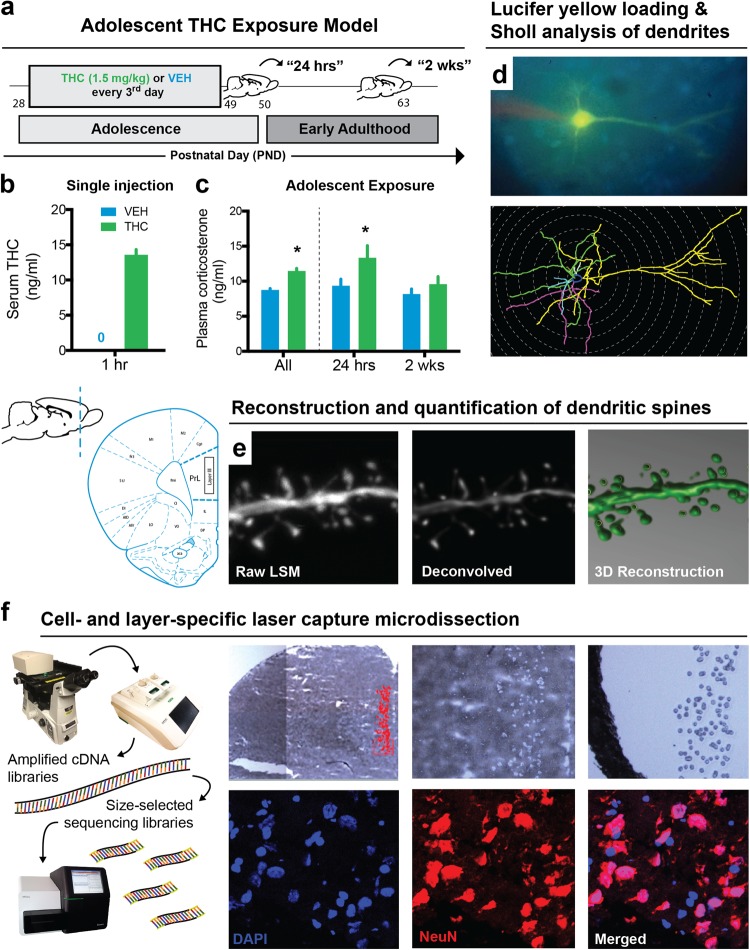
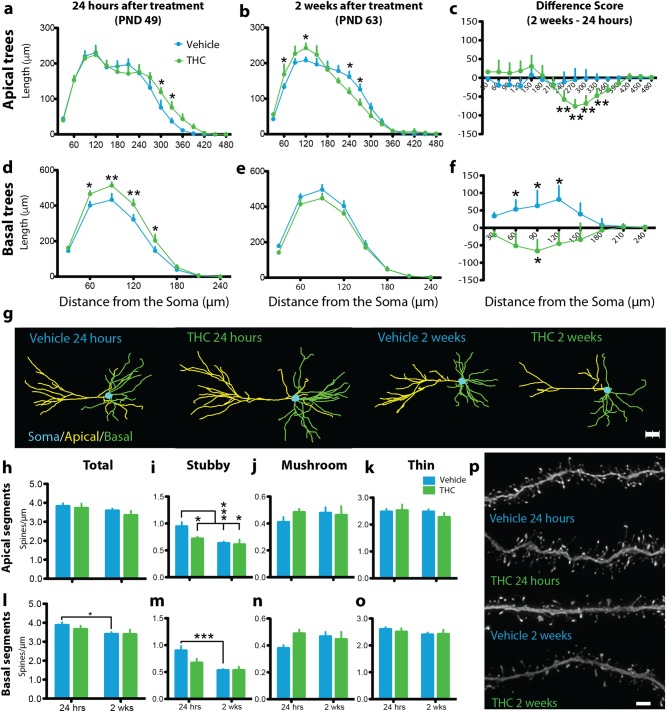
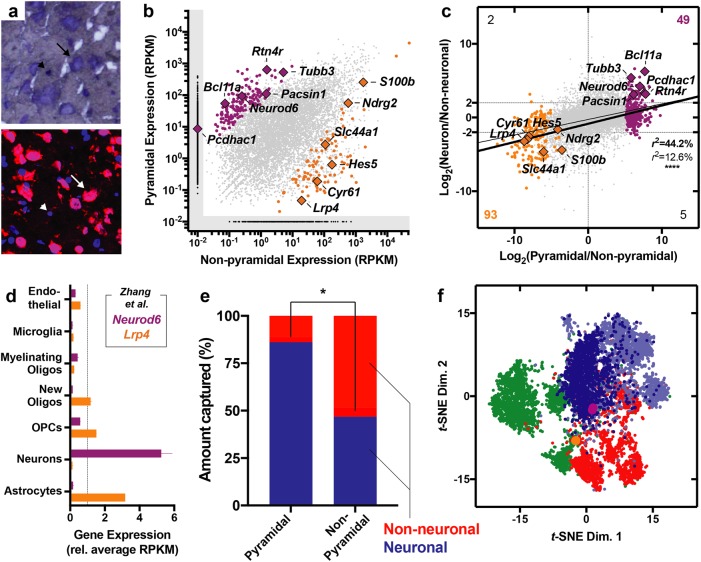
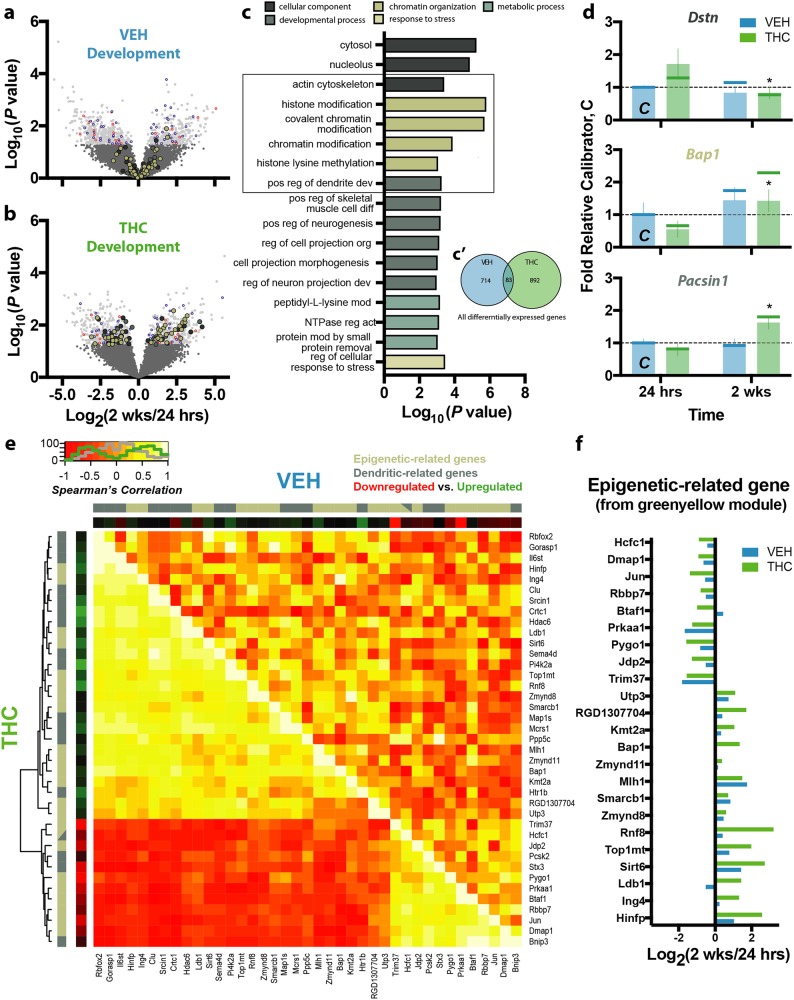
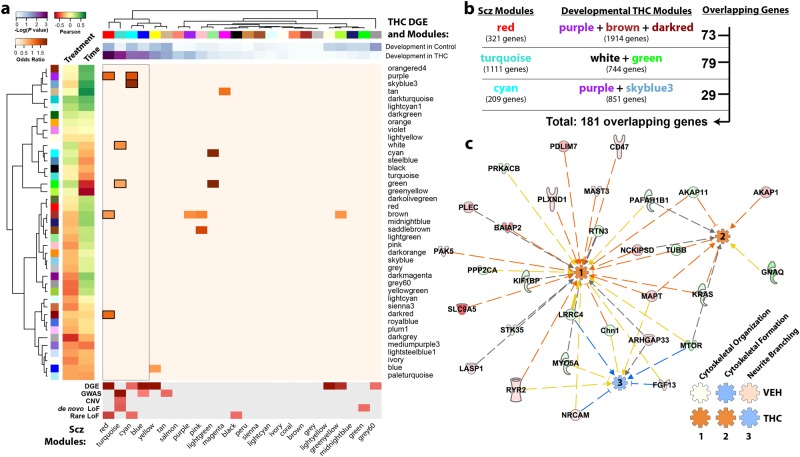
Neuronal circuits within the prefrontal cortex (PFC) mediate higher cognitive functions and emotional regulation that are disrupted in psychiatric disorders. The PFC undergoes significant maturation during adolescence, a period when cannabis use in humans has been linked to subsequent vulnerability to psychiatric disorders such as addiction and schizophrenia. Here, we investigated in a rat model the effects of adolescent exposure to Δ 9 -tetrahydrocannabinol (THC), a psychoactive component of cannabis, on the morphological architecture and transcriptional profile of layer III pyramidal neurons—using cell type- and layer-specific high-resolution microscopy, laser capture microdissection and next-generation RNA-sequencing. The results confirmed known normal expansions in basal dendritic arborization and dendritic spine pruning during the transition from late adolescence to early adulthood that were accompanied by differential expression of gene networks associated with neurodevelopment in control animals. In contrast, THC exposure disrupted the normal developmental process by inducing premature pruning of dendritic spines and allostatic atrophy of dendritic arborization in early adulthood. Surprisingly, there was minimal overlap of the developmental transcriptomes between THC- and vehicle-exposed rats. THC altered functional gene networks related to cell morphogenesis, dendritic development, and cytoskeleton organization. Marked developmental network disturbances were evident for epigenetic regulators with enhanced co-expression of chromatin- and dendrite-related genes in THC-treated animals. Dysregulated PFC co-expression networks common to both the THC-treated animals and patients with schizophrenia were enriched for cytoskeletal and neurite development. Overall, adolescent THC exposure altered the morphological and transcriptional trajectory of PFC pyramidal neurons, which could enhance vulnerability to psychiatric disorders.
Overview
The claims and statistics of this paper haven’t been checked yet.
Free: it reads the open-access text and checks the first 5 claims that cite a source we can check. Create a free account to check every claim.
Integrity signals
Registry
Cites
Statistics
Figures
Verification
Claims the paper makes
The claims and statistics of this paper haven’t been checked yet.
Free: it reads the open-access text and checks the first 5 claims that cite a source we can check. Create a free account to check every claim.
Claims other papers make about this one
Each is checked against this paper’s own text: does it say what the citing paper says it does?
The cited source says what the claim attributes to it.
In the citing paper
“the alterations in PFC networks observed in the THC-exposed animals were common to subjects with schizophrenia [157].”
From Consequences of adolescent drug use (2023) · cites this paper as [157]
Self-check
Percentages, sums and reported differences re-computed from the paper’s own numbers.
The self-check needs the paper’s full text.
Citations
Cites
voom: precision weights unlock linear model analysis tools for RNA-seq read counts
Law, C. W., Chen, Y., Shi, W., & Smyth, G. K. (2014) · Genome Biology · doi:10.1186/gb-2014-15-2-r29 · Cited by 6,155 · cited 1×
“animals), and simple treatment main-effects at each time point, were calculated using the Bioconductor package voom-limma [39] in R.”
MethodDynamic mapping of human cortical development during childhood through early adulthood
Gogtay, N., Giedd, J. N., Lusk, L., Hayashi, K. M., Greenstein, D., Vaituzis, A. C., Nugent, T. F., Herman, D. H., Clasen, L. S., Toga, A. W., et al. (2004) · Proceedings of the National Academy of Sciences · doi:10.1073/pnas.0402680101 · Cited by 5,604
Zhang, Y., Chen, K., Sloan, S. A., Bennett, M. L., Scholze, A. R., O'Keeffe, S., Phatnani, H. P., Guarnieri, P., Caneda, C., Ruderisch, N., et al. (2014) · The Journal of Neuroscience · doi:10.1523/jneurosci.1860-14.2014 · Cited by 4,875
Pharmacokinetics and Pharmacodynamics of Cannabinoids
Grotenhermen, F. (2003) · Clinical Pharmacokinetics · doi:10.2165/00003088-200342040-00003 · Cited by 1,511
Anatomical analysis of afferent projections to the medial prefrontal cortex in the rat
Hoover, W. B., & Vertes, R. P. (2007) · Brain Structure and Function · doi:10.1007/s00429-007-0150-4 · Cited by 1,365
Prefrontal cortex in the rat: Projections to subcortical autonomic, motor, and limbic centers
Gabbott, P. L. A., Warner, T. A., Jays, P. R. L., Salway, P., & Busby, S. J. (2005) · Journal of Comparative Neurology · doi:10.1002/cne.20738 · Cited by 1,227
Adolescent cortical development: A critical period of vulnerability for addiction
Crews, F., He, J., & Hodge, C. (2007) · Pharmacology Biochemistry and Behavior · doi:10.1016/j.pbb.2006.12.001 · Cited by 1,091
Gene expression elucidates functional impact of polygenic risk for schizophrenia
Fromer, M., Roussos, P., Sieberts, S. K., Johnson, J. S., Kavanagh, D. H., Perumal, T. M., Ruderfer, D. M., Oh, E. C., Topol, A., Shah, H. R., et al. (2016) · Nature Neuroscience · doi:10.1038/nn.4399 · Cited by 1,091 · cited 2×
“We interrogated the CMC sample data set consisting of 537 subjects (258 subjects with schizophrenia and 279 controls) with dorsolateral PFC RNA-seq data [41].”
MethodSelf-citationNeuronal subtypes and diversity revealed by single-nucleus RNA sequencing of the human brain
Lake, B. B., Ai, R., Kaeser, G. E., Salathia, N. S., Yung, Y. C., Liu, R., Wildberg, A., Gao, D., Fung, H.-L., Chen, S., et al. (2016) · Science · doi:10.1126/science.aaf1204 · Cited by 957
Meta-analysis of the Association Between the Level of Cannabis Use and Risk of Psychosis
Marconi, A., Di Forti, M., Lewis, C. M., Murray, R. M., & Vassos, E. (2016) · Schizophrenia Bulletin · doi:10.1093/schbul/sbw003 · Cited by 899
Cited by
Consequences of adolescent drug use
Steinfeld, M. R., & Torregrossa, M. M. (2023) · Translational Psychiatry · doi:10.1038/s41398-023-02590-4 · Cited by 237
“Furthermore, the alterations in PFC networks observed in the THC-exposed animals were common to subjects with schizophrenia [157].”
BackgroundCannabis and the Developing Brain: Insights into Its Long-Lasting Effects
Hurd, Y. L., Manzoni, O. J., Pletnikov, M. V., Lee, F. S., Bhattacharyya, S., & Melis, M. (2019) · The Journal of Neuroscience · doi:10.1523/jneurosci.1165-19.2019 · Cited by 218
“Research has shown that THC exposure during adolescence in male rats disrupts normal cortical development with structural remodeling of prelimbic pyramidal neurons reflected in the premature pruning of spines and protracted atrophy of distal apical trees (Miller et al., 2019).”
BackgroundMethodInfluentialSelf-citationCannabis and synaptic reprogramming of the developing brain
Bara, A., Ferland, J.-M. N., Rompala, G., Szutorisz, H., & Hurd, Y. L. (2021) · Nature Reviews Neuroscience · doi:10.1038/s41583-021-00465-5 · Cited by 215
Self-citationAssociation of Cannabis Use During Adolescence With Neurodevelopment
Albaugh, M. D., Ottino-Gonzalez, J., Sidwell, A., Lepage, C., Juliano, A., Owens, M. M., Chaarani, B., Spechler, P., Fontaine, N., Rioux, P., et al. (2021) · JAMA Psychiatry · doi:10.1001/jamapsychiatry.2021.1258 · Cited by 176
Deconstructing the neurobiology of cannabis use disorder
Ferland, J.-M. N., & Hurd, Y. L. (2020) · Nature Neuroscience · doi:10.1038/s41593-020-0611-0 · Cited by 100
Self-citationReece, A. S., & Hulse, G. K. (2019) · Clinical Pediatrics · doi:10.1177/0009922819861281 · Cited by 97
Smith, A. R., Kaufman, F. L., Sandy, M. S., & Cárdenas, A. (2020) · Current Environmental Health Reports · doi:10.1007/s40572-020-00275-4 · Cited by 115
Hollander, J. A., Cory-Slechta, D. A., Jacka, F. N., Szabo, S. T., Guilarte, T. R., Bilbo, S. D., Mattingly, C. J., Moy, S. S., Haroon, E., Hornig, M., et al. (2020) · Neuropsychopharmacology · doi:10.1038/s41386-020-0648-5 · Cited by 69
Reece, A. S., & Hulse, G. K. (2020) · Journal of Addiction Medicine · doi:10.1097/adm.0000000000000638 · Cited by 71
“Severe and premature pruning of dendritic arbors and synaptic boutons by adolescent cannabis exposure has been shown to be epigenetically mediated (Miller et al., 2019).”
BackgroundInfluentialDifferent Effects of Cannabis Abuse on Adolescent and Adult Brain
Dhein, S. (2020) · Pharmacology · doi:10.1159/000509377 · Cited by 73
Shanahan, L., Steinhoff, A., Bechtiger, L., Copeland, W., Ribeaud, D., Eisner, M., & Quednow, B. B. (2021) · Drug and Alcohol Dependence · doi:10.1016/j.drugalcdep.2021.109063 · Cited by 59
“…with poorer young adult outcomes, regardless of the legal or cultural context in which it occurs, given its effects on the brain and behavior/lifestyle during a vulnerable developmental period (Dahl et al., 2018; Fuhrmann et al., 2015; Miller et al., 2019; Rubino & Parolaro, 2008; Schneider, 2008).”
Ruiz, C. M., Torrens, A., Lallai, V., Castillo, E., Manca, L., Martinez, M. X., Justeson, D. N., Fowler, C. D., Piomelli, D., & Mahler, S. V. (2021) · Psychopharmacology · doi:10.1007/s00213-021-05976-8 · Cited by 56
Cui, Q., Hu, Z., Hu, Y., Chen, X., Wang, J., Mao, L., Lu, X., Ni, M., Chen, J., & Wang, F. (2020) · The EMBO Reports · doi:10.15252/embr.201947857 · Cited by 56
“Loss of stubby spines was the predominant driver of pruning during normal adolescent development [51].”
BackgroundCannabis in Adolescence: Lasting Cognitive Alterations and Underlying Mechanisms
Scheyer, A. F., Laviolette, S. R., Pélissier‐Alicot, A., & Manzoni, O. J. (2023) · Cannabis and Cannabinoid Research · doi:10.1089/can.2022.0183 · Cited by 58
In Vivo Imaging of Translocator Protein in Long-term Cannabis Users
Silva, T. M. S., Hafizi, S., Watts, J. J., Weickert, C. S., Meyer, J. H., Houle, S., Rusjan, P., & Mizrahi, R. (2019) · JAMA Psychiatry · doi:10.1001/jamapsychiatry.2019.2516 · Cited by 59
Preliminary in vivo evidence of lower hippocampal synaptic density in cannabis use disorder
D’Souza, D. C., Radhakrishnan, R., Naganawa, M., Ganesh, S., Nabulsi, N., Najafzadeh, S., Ropchan, J., Ranganathan, M., Cortes-Briones, J., Huang, Y., et al. (2021) · Molecular Psychiatry · doi:10.1038/s41380-020-00891-4 · Cited by 55
Cannabis as a Gateway Drug for Opioid Use Disorder
Williams, A. R. (2020) · The Journal of Law Medicine & Ethics · doi:10.1177/1073110520935338 · Cited by 61
Psychosis spectrum illnesses as disorders of prefrontal critical period plasticity
Vinogradov, S., Chafee, M. V., Lee, E. G., & Morishita, H. (2022) · Neuropsychopharmacology · doi:10.1038/s41386-022-01451-w · Cited by 55
“have recently shown, in a rat model, that adolescent THC exposure induces premature and irreversible pruning of dendritic spines, protracted atrophy of apical trees, and significant changes in the transcriptional patterns of pyramidal neurons [126].”
BackgroundCannabis, Endocannabinoids and Brain Development: From Embryogenesis to Adolescence
Rodrigues, R. J., Marques, J. M., & Köfalvi, A. (2024) · Cells · doi:10.3390/cells13221875 · Cited by 48
Stringfield, S. J., & Torregrossa, M. M. (2021) · Psychopharmacology · doi:10.1007/s00213-020-05684-9 · Cited by 41
“Adolescent cannabinoid exposure has been associated with long-lasting modifications to synaptic plasticity and cell firing patterns in the prefrontal cortex and hippocampus (Rubino et al. 2009b; Raver et al. 2013; Miller et al. 2019), and GABAergic and glutamatergic transmission throughout the brain (Cass et al.”
BackgroundNeurobiological mechanisms underlying cannabis-induced memory impairment
Prini, P., Zamberletti, E., Manenti, C., Gabaglio, M., Parolaro, D., & Rubino, T. (2020) · European Neuropsychopharmacology · doi:10.1016/j.euroneuro.2020.02.002 · Cited by 37
Gabaglio, M., Zamberletti, E., Manenti, C., Parolaro, D., & Rubino, T. (2021) · International Journal of Molecular Sciences · doi:10.3390/ijms22168899 · Cited by 34
“We focused our analysis on the PFC as previous studies identified this brain region as one of most affected by adolescent THC exposure [15,20].”
MethodEarly 5‐HT6 receptor blockade prevents symptom onset in a model of adolescent cannabis abuse
Berthoux, C., Hamieh, A. M., Rogliardo, A., Doucet, E. L., Coudert, C., Ango, F., Grychowska, K., Chaumont‐Dubel, S., Zajdel, P., Maldonado, R. J., et al. (2020) · EMBO Molecular Medicine · doi:10.15252/emmm.201910605 · Cited by 33
“…and protracted atrophy of distal apical trees associated with alteration of synaptic markers that might lead to a reduction in the complexity of pyramidal neurons and a reduced capacity for plasticity in neural circuits central for normal adult behavior (Rubino et al, 2015; Miller et al, 2019).”
BackgroundResultInfluentialGuma, E., Cupo, L., Ma, W., Gallino, D., Moquin, L., Gratton, A. P., Devenyi, G. A., & Chakravarty, M. M. (2022) · Progress in Neuro-Psychopharmacology and Biological Psychiatry · doi:10.1016/j.pnpbp.2022.110642 · Cited by 38
Ferland, J. N., Ellis, R. J., Betts, G., Silveira, M. M., de Firmino, J. B., Winstanley, C. A., & Hurd, Y. L. (2022) · JAMA Psychiatry · doi:10.1001/jamapsychiatry.2022.3915 · Cited by 35
Self-citationNoorbakhsh, S., Afzali, M. H., Boers, E., & Conrod, P. (2020) · Frontiers in Human Neuroscience · doi:10.3389/fnhum.2020.00095 · Cited by 35
“Several pre-clinical studies suggested that exposure to cannabis products during adolescence impacts neuromaturational processes in this region (Miller et al., 2019).”
BackgroundDisentangling the lasting effects of adolescent cannabinoid exposure
Stringfield, S. J., & Torregrossa, M. M. (2021) · Progress in Neuro-Psychopharmacology and Biological Psychiatry · doi:10.1016/j.pnpbp.2020.110067 · Cited by 32
Reece, A. S., & Hulse, G. K. (2022) · Environmental Epigenetics · doi:10.1093/eep/dvab015 · Cited by 32
Genome-wide analysis identifies novel shared loci between depression and white matter microstructure
Zhao, Q., Wang, S., Xiong, D., Liu, M., Zhang, Y., Zhao, G., Zhao, J., Shi, Z., Zhang, Z., Lei, M., et al. (2025) · Molecular Psychiatry · doi:10.1038/s41380-025-02932-2 · Cited by 31
García-Mompó, C., Curto, Y., Carceller, H., Gilabert‐Juan, J., Rodriguez-Flores, E., Guirado, R., & Nácher, J. (2020) · Translational Psychiatry · doi:10.1038/s41398-020-0853-3 · Cited by 31
Boer, O. D., Marroun, H. E., & Muetzel, R. L. (2024) · Molecular Psychiatry · doi:10.1038/s41380-024-02471-2 · Cited by 30
Zuo, Y., Iemolo, A., Montilla-Perez, P., Li, H.-R., Yang, X., & Telese, F. (2022) · Neuropsychopharmacology · doi:10.1038/s41386-022-01413-2 · Cited by 25
“Miller et al reported that adolescent exposure to THC in male rats was associated with gene expression changes related to cytoskeleton and chromatin regulation in the PFC 26 .”
BackgroundResultInfluentialFerland, J. N., Ellis, R. J., Rompala, G. R., Landry, J. A., Callens, J. E., Ly, A., Frier, M. D., Uzamere, T. O., & Hurd, Y. L. (2022) · Molecular Psychiatry · doi:10.1038/s41380-022-01467-0 · Cited by 25
Self-citationLi, X., Sun, H., Zhu, Y., Wang, F., Wang, X., Han, L., Cui, D., Luo, D., Zhai, Y., Zhuo, L., et al. (2022) · Frontiers in Molecular Neuroscience · doi:10.3389/fnmol.2022.1010152 · Cited by 27
“…to chronic adolescent social isolation stress show aberrant dendritic structures and spine ratios in medial prefrontal cortex pyramidal neurons According to previous studies, critical maturation of the PFC region continues throughout adolescence in both humans and rodents (Miller et al., 2019).”
Clark, S. L., Chan, R., Zhao, M., Xie, L. Y., Copeland, W. E., Aberg, K. A., & van den Oord, E. J. C. G. (2021) · Journal of the American Academy of Child & Adolescent Psychiatry · doi:10.1016/j.jaac.2021.02.008 · Cited by 23
The Developmental Trajectory to Cannabis Use Disorder
Hinckley, J. D., Ferland, J. N., & Hurd, Y. L. (2024) · American Journal of Psychiatry · doi:10.1176/appi.ajp.20231006 · Cited by 24
Self-citationOwens, M. M., Albaugh, M. D., Allgaier, N., Yuan, D., Robert, G., Cupertino, R. B., Spechler, P. A., Juliano, A., Hahn, S., Banaschewski, T., et al. (2022) · Translational Psychiatry · doi:10.1038/s41398-022-01956-4 · Cited by 22
“While noting again the caveats associated with inferring causation from human research, these findings complement other humans [1, 3, 4, 7, 41] and animal [5] research and add to the increasingly compelling evidence base that adolescent cannabis use affects brain development.”
BackgroundResultSynaptic Density in Early Stages of Psychosis and Clinical High Risk
Blasco, M. B., Aji, K. N., Ramos-Jiménez, C., Leppert, I. R., Tardif, C. L., Cohen, J. P., Rusjan, P., & Mizrahi, R. (2024) · JAMA Psychiatry · doi:10.1001/jamapsychiatry.2024.3608 · Cited by 24
Cannabinoid CB1 receptor-sensitive neurodevelopmental processes and trajectories
Tseng, K. Y., & Molla, H. M. (2025) · Molecular Psychiatry · doi:10.1038/s41380-025-03057-2 · Cited by 22
“At the structural level, adolescent Δ 9 - THC exposure can lead to premature dendritic spine pruning and negatively impact the maturation of synaptic connectivity and plasticity [116].”
Freels, T. G., Westbrook, S. R., Zamberletti, E., Kuyat, J. R., Wright, H. R., Malena, A. N., Melville, M. W., Brown, A. M., Glodosky, N. C., Ginder, D. E., et al. (2024) · Cannabis and Cannabinoid Research · doi:10.1089/can.2023.0014 · Cited by 22
Paraíso‐Luna, J., Aguareles, J., Martín, R., Ayo-Martin, A. C., Simón-Sánchez, S., García-Rincón, D., Costas‐Insua, C., García-Taboada, E., de Salas-Quiroga, A., Díaz-Alonso, J., et al. (2020) · Development · doi:10.1242/dev.192161 · Cited by 21
Coleman, J. R., Madularu, D., Ortiz, R. J., Athanassiou, M., Knudsen, A., Alkislar, I., Cai, X., Kulkarni, P. P., Cushing, B. S., & Ferris, C. F. (2022) · Addiction Biology · doi:10.1111/adb.13169 · Cited by 22
“The endocannabinoid system plays a critical role in the maturation of the prefrontal cortex during adolescent(46,49) and as such may be vulnerable to the influence of exposure to cannabis.(47,48,50) CB1 receptor expression and function are part of that maturation process.”
BackgroundCognitive Alterations in Addictive Disorders: A Translational Approach
Gasparyan, A., Sanchez, D. M., Navarrete, F., Sión, A., Navarro, D., García‐Gutiérrez, M. S., Rubio, G., Barba, R. J., & Manzanares, J. (2023) · Biomedicines · doi:10.3390/biomedicines11071796 · Cited by 21
“In addition, impaired dendritic arborization, spine density, and developmental trajectory of layer III pyramidal neurons [147] were found in adolescent male Long-Evans rats, which may be closely related to potential cognitive disturbances induced by ∆9-THC administration.”
BackgroundOladunjoye, A. F., Li, E., Aneni, K., & Onigu-Otite, E. (2023) · PLoS ONE · doi:10.1371/journal.pone.0292922 · Cited by 21
“Animal studies demonstrate that cannabis exposure in adolescence alters gene expression associated with the structural maturation of neuronal cells in the prefrontal cortex and with reward and stress reactivity in the amygdala [19,20].”
BackgroundEndocannabinoid-Epigenetic Cross-Talk: A Bridge toward Stress Coping
Rusconi, F., Rubino, T., & Battaglioli, E. (2020) · International Journal of Molecular Sciences · doi:10.3390/ijms21176252 · Cited by 22
“This behavioral picture is paralleled by alterations in brain neurocircuitry functionality, involving changes in gene expression [65,67].”
BackgroundHurd, Y. L. (2025) · American Journal of Psychiatry · doi:10.1176/appi.ajp.20250444 · Cited by 20
Self-citationZamberletti, E., & Rubino, T. (2020) · Biological Psychiatry Cognitive Neuroscience and Neuroimaging · doi:10.1016/j.bpsc.2020.06.013 · Cited by 20
IUPHAR-review: Targeting the cytoskeleton as a therapeutic approach to substance use disorders
Pandey, S., & Miller, C. A. (2024) · Pharmacological Research · doi:10.1016/j.phrs.2024.107143 · Cited by 21
Barrera-Conde, M., Ausín, K., Lachén‐Montes, M., Fernández‐Irigoyen, J., Galindo, L., Cuenca‐Royo, A., Fernández-Avilés, C., Pérez, V., de la Torre, R., Santamaría, E., et al. (2021) · Journal of Personalized Medicine · doi:10.3390/jpm11030160 · Cited by 18
“Indeed, protein metabolism via AKT/mTOR, cytoskeleton organization, and calcium signalling are affected in human samples from SCZ patients [2], and after cannabinoid exposure in cultured cells [21,22] and mice models [23,24].”
BackgroundCannabis et neurodéveloppement
Krebs, M., Demars, F., Frajerman, A., Kébir, O., & Jay, T. M. (2020) · Bulletin de l Académie Nationale de Médecine · doi:10.1016/j.banm.2020.04.002 · Cited by 22
The synaptic lipidome in health and disease
Vallés, A. S., & Barrantes, F. J. (2022) · Biochimica et Biophysica Acta (BBA) - Biomembranes · doi:10.1016/j.bbamem.2022.184033 · Cited by 17
Smiley, C. E., Saleh, H. K., Nimchuk, K. E., Garcia-Keller, C., & Gass, J. T. (2021) · Behavioural Brain Research · doi:10.1016/j.bbr.2021.113517 · Cited by 15
Ginder, D. E., Wright, H. R., & McLaughlin, R. J. (2021) · International review of neurobiology · doi:10.1016/bs.irn.2021.07.005 · Cited by 16
Vapor Cannabis Exposure Promotes Genetic Plasticity in the Rat Hypothalamus
Brutman, J. N., Zhang, S., Choi, P. P., Zhang, Y., Stotts, M. J., Michal, J. J., Jiang, Z., & Davis, J. F. (2019) · Scientific Reports · doi:10.1038/s41598-019-53516-4 · Cited by 16
Gicas, K. M., Cheng, A., Panenka, W. J., Kim, D. D., Yau, J. C., Procyshyn, R. M., Stubbs, J. L., Jones, A. A., Bains, S., Thornton, A. E., et al. (2020) · Progress in Neuro-Psychopharmacology and Biological Psychiatry · doi:10.1016/j.pnpbp.2020.110084 · Cited by 15
Coronado, C., Wade, N. E., Aguinaldo, L. D., Mejia, M. H., & Jacobus, J. (2020) · Journal of Pediatric Neuropsychology · doi:10.1007/s40817-020-00076-5 · Cited by 15
Machado, A. S., Bragança, M., & Vieira‐Coelho, M. A. (2024) · Drug and Alcohol Dependence · doi:10.1016/j.drugalcdep.2024.111401 · Cited by 15
Azarfarin, M., Ghadiri, T., Dadkhah, M., & Negah, S. S. (2024) · Cell Biochemistry and Function · doi:10.1002/cbf.4100 · Cited by 14
“71 It has been reported that repeated exposure to THC disturbs LTP at Schaffer ‐ CA 1 , through the eCB system.”
THC Exposure is Reflected in the Microstructure of the Cerebral Cortex and Amygdala of Young Adults
Cabeen, R. P., Allman, J. M., & Toga, A. W. (2020) · Cerebral Cortex · doi:10.1093/cercor/bhaa087 · Cited by 13
“Related work has shown similar changes in rodent dendritic spine morphology in prelimic cortex (Miller et al., 2019), and when combined in stress, THC reduced mushroom spines in the rodent amygdala and impaired fear extinction (Saravia et al.”
BackgroundForsyth, J. K., & Bearden, C. E. (2023) · American Journal of Psychiatry · doi:10.1176/appi.ajp.20230736 · Cited by 12
Felice, M. D., & Laviolette, S. R. (2021) · International Journal of Molecular Sciences · doi:10.3390/ijms22157861 · Cited by 12
“Indeed, THC exposure during adolescence has been found to alter the PFC pyramidal neurons, disrupting the gene networks associated with cell morphogenesis, cytoskeletal organization and dendritic development as well as provoking a premature pruning of dendritic spines [79].”
BackgroundCannabinoïdes et thérapeutique
Fabresse, N., Becam, J., Carrara, L., Descoeur, J., Mario, M. D., Drevin, G., Duval, T., Hannas, N., Lanot, T., Marillier, M., et al. (2019) · Annales de Toxicologie Analytique · doi:10.1016/j.toxac.2019.06.002 · Cited by 17
Neural substrates underlying the negative impact of cannabinoid exposure during adolescence
Molla, H. M., & Tseng, K. Y. (2020) · Pharmacology Biochemistry and Behavior · doi:10.1016/j.pbb.2020.172965 · Cited by 11
“Pyramidal neurons in the PFC also show premature developmental pruning and accompanied transcriptional changes (Miller et al., 2019), as well as decreased arborization of dendrites and spine numbers following adolescent cannabinoid exposure (Renard et al., 2016).”
BackgroundSubstance use and spine density: a systematic review and meta-analysis of preclinical studies
Oliva, H. N. P., Prudente, T. P., Nunes, E. J., Cosgrove, K., Radhakrishnan, R., Potenza, M. N., & Angarita, G. A. (2024) · Molecular Psychiatry · doi:10.1038/s41380-024-02519-3 · Cited by 11
Navarri, X., Robertson, D. N., Charfi, I., Wünnemann, F., do Nascimento, A. S. F., Trottier, G., Leclerc, S., Andelfinger, G., Cristo, G. D., Richer, L., et al. (2024) · Journal of Neuroscience · doi:10.1523/jneurosci.2256-23.2024 · Cited by 10
Tagne, A. M., Fotio, Y., Springs, Z. A., Su, S., & Piomelli, D. (2021) · European Neuropsychopharmacology · doi:10.1016/j.euroneuro.2021.07.007 · Cited by 10
Verdikt, R., Armstrong, A. A., Cheng, J. Y., Hwang, Y. S., Clark, A. T., Yang, X., & Allard, P. (2023) · eLife · doi:10.7554/elife.88795 · Cited by 9
“This indicates that Δ9-THC exposure significantly upregulated genes in EpiLCs that impact organelles structure, integrity and position, in agreement with several reports in the literature ( Lojpur et al., 2019 ; Miller et al., 2019 ).”
Vassall, M., Chakraborty, S., Feng, Y., Faheem, M., Wang, X., & Bhandari, R. K. (2023) · Journal of Xenobiotics · doi:10.3390/jox13020018 · Cited by 8
“Furthermore, THC impacts the levels of miRNA precursors and long non-coding RNAs in both total lymph node cells and CD4(+) T cells [15], promoting a compromised immunological state.”
BackgroundMorrison, P. D., & Murray, R. M. (2020) · Dialogues in Clinical Neuroscience · doi:10.31887/dcns.2020.22.3/pmorrison · Cited by 10
Tagne, A. M., Fotio, Y., Rashid, T. I., & Piomelli, D. (2021) · Journal of Pharmacology and Experimental Therapeutics · doi:10.1124/jpet.121.000740 · Cited by 8
“Previous work has shown that early-life exposure to Δ9-THC causes persistent molecular, morphological and functional changes in the developing brain (Blest-Hopley et al., 2020; Miller et al., 2019).”
BackgroundThe CB1 receptor: linking impulsivity and substance use disorder
Belmont, O. A., Becerril-Meléndez, L. A., & Méndez‐Díaz, M. (2025) · Frontiers in Neuroscience · doi:10.3389/fnins.2025.1621242 · Cited by 8
Developmental exposure to cannabis compromises dopamine system function and behavior
Solinas, M., & Melis, M. (2024) · Current Opinion in Behavioral Sciences · doi:10.1016/j.cobeha.2024.101442 · Cited by 8
“In fact, in rodents, adolescent exposure to cannabinoids disinhibits PFC network function [55] with consequent hyperactivity of subcortical dopaminergic activity accompanying a range of cognitive and affective phenotypes resembling those observed in psychiatric diseases, such as schizophrenia [56].”
BackgroundSoriano, D., Vacotto, M., Brusco, A., & Caltana, L. R. (2020) · Journal of Neuroscience Research · doi:10.1002/jnr.24694 · Cited by 8
“Chronic treatment with CB1R cannabinoid agonist during adolescence produces a decrease in arborization and spine density in pyramidal neurons of the prefrontal cortex (Miller et al., 2018; Renard et al., 2016) and in granular neurons of the hippocampus in the adult (Rubino et al., 2009).”
BackgroundSilva, M. H., & Kwok, R. K. (2022) · Current Research in Toxicology · doi:10.1016/j.crtox.2022.100064 · Cited by 8
“…neurodevelopmental effects in rodents and humans that lead to long term decrements in behavior, cognition, locomotor activity, birth weights and numerous other effects (Miller et al., 2019, de Salas ‐ Quiroga et al., 2020, Zamberletti and Rubino, 2021, Slotkin et al., 2020, Fergusson et al., 2002).”
BackgroundThe Role of Cannabis in the Development of Psychosis
Ertuğrul, A., & Türkoğlu, Ö. (2023) · Turkish Journal of Psychiatry · doi:10.5080/u27122 · Cited by 7
Silva-Hurtado, T. J., Giua, G., Lassalle, O., Makrini, L., Strauss, B., Wager‐Miller, J., Freyermuth, J., Mackie, K., Valjent, E., Manzoni, O. J., et al. (2024) · Biological Psychiatry Global Open Science · doi:10.1016/j.bpsgos.2024.100426 · Cited by 6
Role of cyclin-dependent kinase 5 in psychosis and the modulatory effects of cannabinoids
Barrera-Conde, M., Veza-Estévez, E., Gomis‐González, M., García-Quintana, J., Trabsa, A., Martínez-Sadurní, L., Pujades, M., Pérez, V., de la Torre, R., Bergé, D., et al. (2022) · Neurobiology of Disease · doi:10.1016/j.nbd.2022.105942 · Cited by 6
“These proteins have been associated with both CB1R and NMDAR functions and are strongly interrelated (Bianchetta et al., 2011; Morabito et al., 2004).”
BackgroundKapler, S., Adery, L. H., Hoftman, G. D., Amir, C., Grigoryan, V., Cooper, Z. D., & Bearden, C. E. (2023) · Psychological Medicine · doi:10.1017/s0033291723002994 · Cited by 6
“In animal models chronic exposure to exogenous cannabinoids during adolescence especially disrupts eCB-mediated cortical development (Dow-Edwards & Silva, 2017; Miller et al., 2019).”
Les effets épigénétiques du cannabis/tétrahydrocannabinol
Costentin, J. (2020) · Bulletin de l Académie Nationale de Médecine · doi:10.1016/j.banm.2020.04.004 · Cited by 10
“Le THC modifie la maturation normale en induisant un élagage prématuré des épines dendritiques et une atrophie des arborisations dendritiques à la phase précoce de la période adulte.”
Orihuel, J., Gómez-Rubio, L., Valverde, C., Capellán, R., Roura‐Martínez, D., Ucha, M., Ambrosio, E., & Higuera‐Matas, A. (2021) · Brain Research · doi:10.1016/j.brainres.2021.147480 · Cited by 5
Zamberletti, E., Manenti, C., Prini, P., Gabaglio, M., Grimaldi, A., Pulze, L., Grassi, R., & Rubino, T. (2025) · Pharmacological Research · doi:10.1016/j.phrs.2025.107758 · Cited by 4
Santoni, M., Mastio, A., Pistis, M., & Sagheddu, C. (2026) · Frontiers in Cellular Neuroscience · doi:10.3389/fncel.2026.1782731 · Cited by 4
Cannabis Use is Related to Anhedonia in Adolescents With Diverse Mood and Anxiety Symptoms
Nguyen, T. N. B., Ely, B. A., Vitale, A. D., Roske, C., Richard, J. T., Tobe, R. H., & Gabbay, V. (2025) · JAACAP Open · doi:10.1016/j.jaacop.2025.02.003 · Cited by 4
García‐Keller, C., Hohmeister, M., Seidling, K., Beloate, L. N., Chioma, V. C., Spencer, S. M., Kalivas, P. W., & Neuhofer, D. (2023) · Addiction Biology · doi:10.1111/adb.13286 · Cited by 4
Therapeutic and toxicological aspects of the use of cannabis and cannabinoids in medicine
Parolaro, D. (2021) · RENDICONTI LINCEI · doi:10.1007/s12210-020-00968-w · Cited by 4
“Interestingly, genes dysregulated by adolescent exposure to THC are also dysregulated in the prefrontal cortex of schizophrenia patients (Miller et al. 2019).”
BackgroundAssociation of Alcohol With Cortical Thickness in Adolescents—Reply
Albaugh, M. D., Owens, M. M., & Garavan, H. (2021) · JAMA Psychiatry · doi:10.1001/jamapsychiatry.2021.2790 · Cited by 4
Silva, M. H. (2023) · Journal of Exploratory Research in Pharmacology · doi:10.14218/jerp.2023.00017 · Cited by 4
Simón-Sánchez, S., den Boon, F. S., García-Rincón, D., Skrempou, G., Paraíso‐Luna, J., Aguilera, A. A., Nieto, M., Werkman, T. R., Guzmán, M., Chameau, P. J. P., et al. (2025) · Journal of Neuroscience · doi:10.1523/jneurosci.0120-25.2025 · Cited by 2
Multisystem regulation of reward and addiction: beyond the dopaminergic system
Arias-Carrión, Ó., Ortega‐Robles, E., Treviño, M., Guerra‐Crespo, M., Manjarrez, E., & Pöppel, E. (2026) · Frontiers in Pharmacology · doi:10.3389/fphar.2026.1840096 · Cited by 3
Skala, K., Trabi, T., Fuchs, M., Gößler, R., Haas-Stockmair, C.-W., Kriechbaumer, N., Leitner, M., Ortner, N., Reiter, M., Müller, C., et al. (2022) · Neuropsychiatrie · doi:10.1007/s40211-022-00424-1 · Cited by 2
Early onset frontotemporal dementia following cannabis abuse: a case report
Moshfeghinia, R., Oji, B., Hosseinzadeh, M., Pourfridoni, M., & Ahmadi, J. (2023) · BMC Psychiatry · doi:10.1186/s12888-023-04956-w · Cited by 2
“THC, as the main psychoactive factor of cannabis, is shown to cause cognitive dysfunction, psychosis, and alteration in cortical structure and function in adolescents [32, 33].”
BackgroundMazzantini, C., Curti, L., Lana, D., Masi, A., Giovannini, M. G., Magni, G., Pellegrini-Giampietro, D. E., & Landucci, E. (2025) · Biomedicine & Pharmacotherapy · doi:10.1016/j.biopha.2024.117797 · Cited by 4
Cannabinoid-based Pharmacology for the Management of Substance Use Disorders
Luján, M. Á., Kim, Y., Zhang, L., & Cheer, J. F. (2024) · Current topics in behavioral neurosciences · doi:10.1007/7854_2024_551 · Cited by 2
Gunten, M. V., Hoffman, S., Smartt, A. B., & Edwards, J. G. (2025) · Journal of Cannabis Research · doi:10.1186/s42238-025-00287-7 · Cited by 2
Cannabis effects on the adolescent brain
Murlanova, K., Hasegawa, Y., Kamiya, A., & Pletnikov, M. V. (2022) · Elsevier eBooks · doi:10.1016/b978-0-12-823490-7.00007-1 · Cited by 4
Noorbakhsh, S., Afzali, M. H., Boers, E., & Conrod, P. (2020) · Frontiers in Human Neuroscience · doi:10.3389/fnhum.2020.00239 · Cited by 2
Denson, R. K., Brooks, J. M., Pinna, G., & Crane, N. A. (2023) · Adolescent Psychiatry · doi:10.2174/0122106766233339230919143924 · Cited by 4
Reece, A. S., & Hulse, G. K. (2025) · Elsevier eBooks · doi:10.1016/b978-0-443-13492-0.00006-2 · Cited by 2
Mashayekhi‐Sardoo, H., Azadbakht, A. A., Hedayati‐Moghadam, M., Golkar, A., & Baghcheghi, Y. (2026) · Psychopharmacology · doi:10.1007/s00213-026-07070-3 · Cited by 1
Cannabis, psychosis, and violence: case reports and comprehensive evidence review
Finn, K. P., Murray, R. M., Stuyt, E. B., & Randall, K. (2026) · Frontiers in Psychiatry · doi:10.3389/fpsyt.2026.1824748 · Cited by 1
“…may cause early pruning of dendritic spines in prefrontal cortex pyramidal neurons and disrupt the balance of excitatory and inhibitory neurotransmission, affecting executive function, memory consolidation, sensory gating, and other cognitive processes impaired in schizophrenia (13, 14).”
Metadata
- Authors
- Miller, M. L., Chadwick, B., Dickstein, D. L., Purushothaman, I., Egervari, G., Rahman, T., Tessereau, C., Hof, P. R., Roussos, P., Shen, L., Baxter, M. G., & Hurd, Y. L.
- Affiliations
- Columbia University Irving Medical Center (US)
- New York University (US)
- Corresponding author
- Hurd, Yasmin L.
- ORCID
- Venue
- Molecular Psychiatry
- Published
- 2018-10-03
- Volume
- 24
- Issue
- 4
- Pages
- 588-600
- ISSN
- 1359-4184 (ISSN-L)
- 1476-5578
- PMC
- PMC6430678
- OpenAlex
- W2895263585
- Semantic Scholar
- 324a277b9595bdaf32899fcf360c3dc91ec21917
- Cited by
- 134
- References
- 65
- Citations by year
- 2026: 13 · 2025: 15 · 2024: 16 · 2023: 21 · 2022: 17 · 2021: 20 · 2020: 27 · 2019: 5
- FWCI
- 8.39
- Type
- journal article
- Language
- en
- Open access
- hybrid
- doi.org
- Licence
- cc-by
- creativecommons.org/licenses/by/4.0 (tdm)
- creativecommons.org/licenses/by/4.0 (vor)
- Locations
- Molecular Psychiatry (publishedVersion, cc-by)
- Europe PMC (PubMed Central) (publishedVersion, other-oa)
- PubMed Central (publishedVersion, cc-by)
- PubMed (publishedVersion)
- Funders
- U.S. Department of Health & Human Services | NIH | National Institute on Drug Abuse (R01-DA030359, R01-DA033660, F30-DA038954)
- U.S. Department of Health & Human Services | NIH | National Institute on Aging (R01-AG050986)
- U.S. Department of Health & Human Services | NIH | National Institute of Mental Health (R01-MH109677)
- Brain and Behavior Research Foundation (20540)
- Alzheimer's Association (NIRG-340998)
- U.S. Department of Veterans Affairs (BX002395)
- Topics
- Health Sciences › Medicine › Pharmacology (medical) › Cannabis and Cannabinoid Research
- Life Sciences › Neuroscience › Cellular and Molecular Neuroscience › Neuroscience and Neuropharmacology Research
- Health Sciences › Medicine › Psychiatry and Mental health › Schizophrenia research and treatment
- Keywords
- adolescent cannabis exposure, delta-9-tetrahydrocannabinol, prefrontal cortex, pyramidal neurons, dendritic branching, neuronal maturation, transcriptional trajectories, epigenetic regulators, cytoskeleton, schizophrenia vulnerability, mental illness, brain development
- MeSH terms
- Age Factors, Animals, Dendrites, Male, Neuronal Plasticity, Neurons, Dronabinol, Prefrontal Cortex, Pyramidal Cells, Rats, Long-Evans, Dendritic Spines, Rats
About these checks
Registry, retraction, Cites and statistics results are computed, not judged, with one exception: a printed reference that no index lists is read once by a model before it counts as a citation error. Claims are extracted by a model and kept only when their quote appears verbatim in the text; each cited source is then checked, with a model’s help, for whether it says what the claim relies on. Those verdicts can be wrong — read the claim’s quote and the cited source before relying on one.
Statistics and arithmetic are recomputed, not judged.
Confidence bands are shown only for fields calibrated on our annotated test set. None is calibrated yet, so no band is shown.
What counts as a claim ›How we measure confidence ›How we check this ›
Are you an author, or do you see a problem with this page? Request a review
Data sources
Bibliographic data: Semantic Scholar, OpenAlex, Crossref.
Contains information from the Semantic Scholar Academic Graph Datasets, made available under the ODC Attribution License (ODC-BY 1.0).
Semantic Scholar’s data is described in: Kinney, R., et al. (2023). The Semantic Scholar Open Data Platform. arXiv:2301.10140.
