

Adolescent exposure to Δ9-tetrahydrocannabinol alters the transcriptional trajectory and dendritic architecture of prefrontal pyramidal neurons
Open accessThe DOI matches its Crossref record; 65 of the 65 references it cites were found in a registry or an index.
Abstract
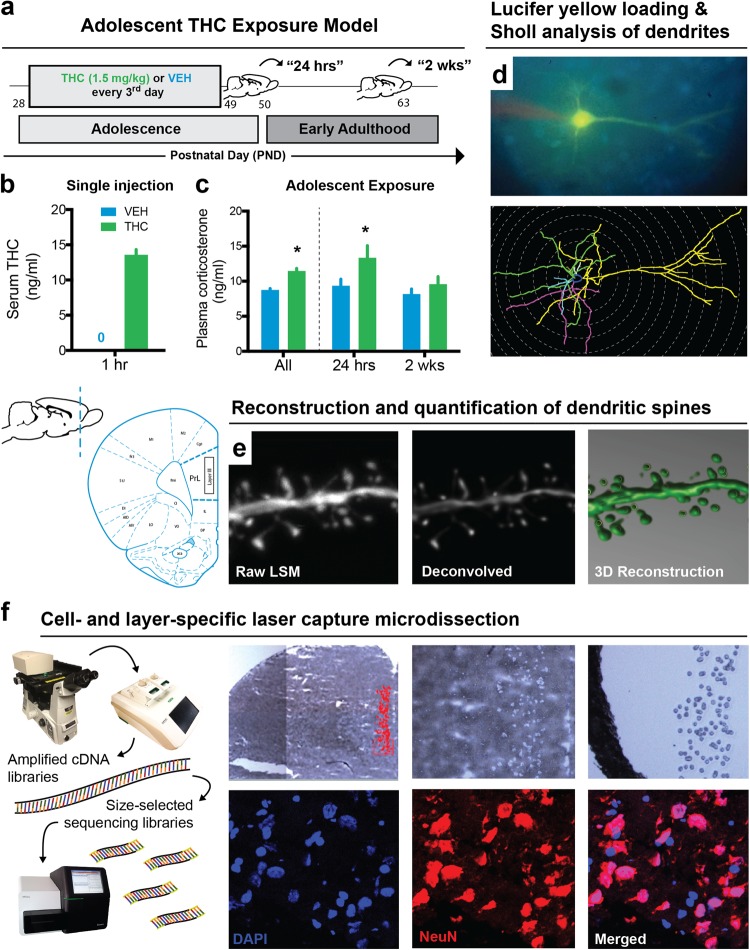
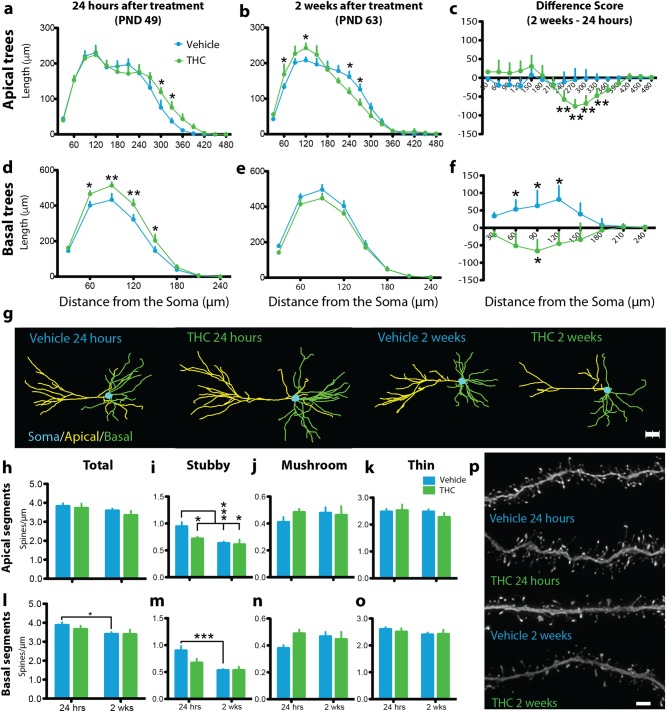
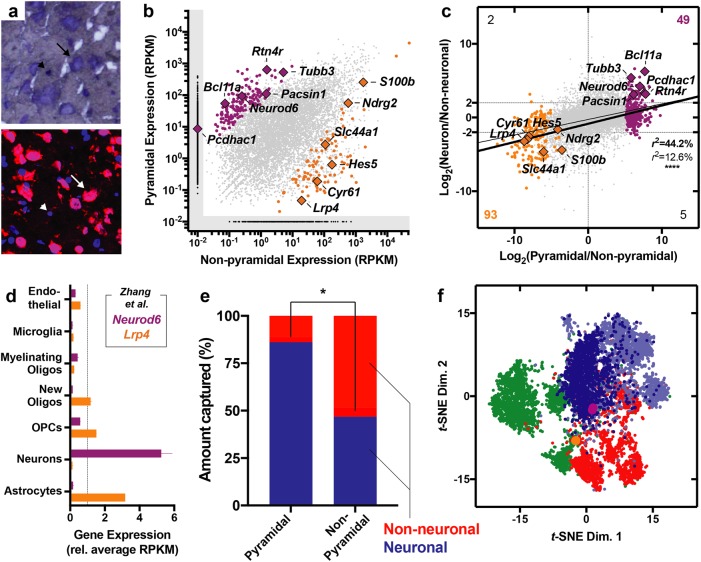
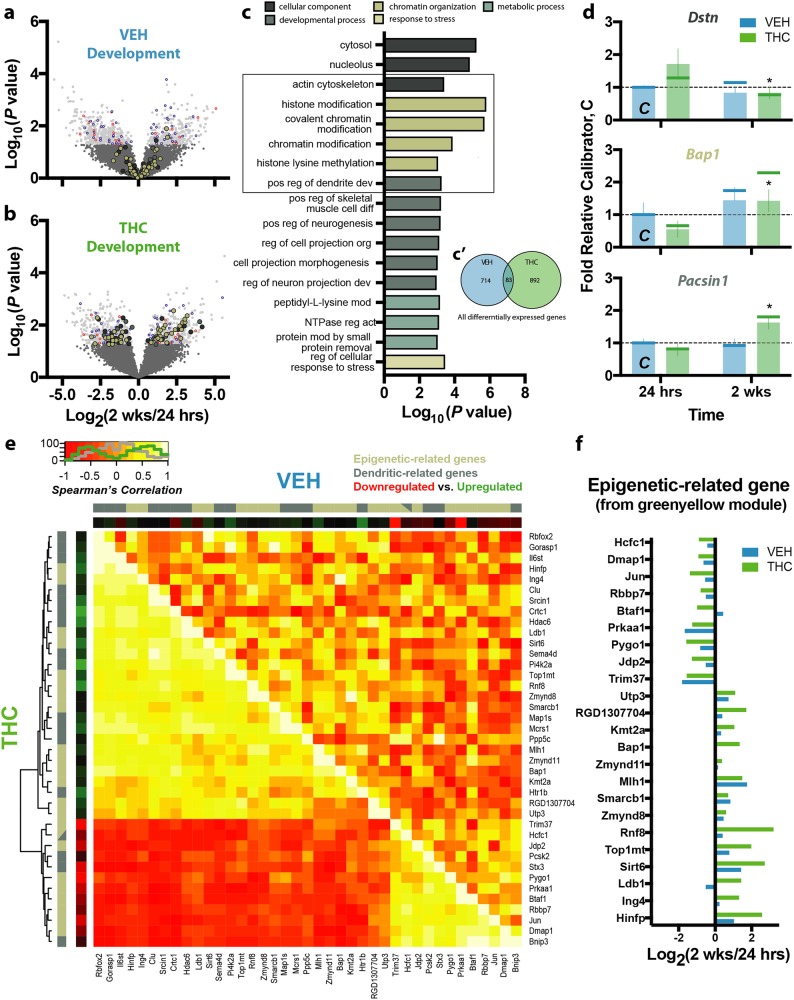
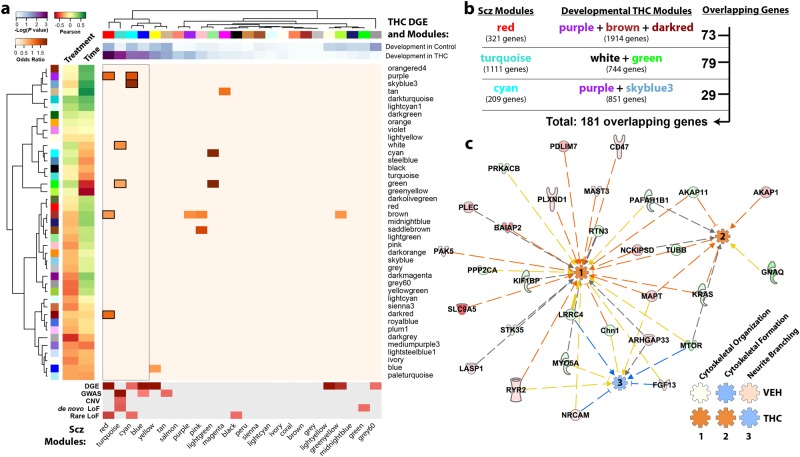
Neuronal circuits within the prefrontal cortex (PFC) mediate higher cognitive functions and emotional regulation that are disrupted in psychiatric disorders. The PFC undergoes significant maturation during adolescence, a period when cannabis use in humans has been linked to subsequent vulnerability to psychiatric disorders such as addiction and schizophrenia. Here, we investigated in a rat model the effects of adolescent exposure to Δ 9 -tetrahydrocannabinol (THC), a psychoactive component of cannabis, on the morphological architecture and transcriptional profile of layer III pyramidal neurons—using cell type- and layer-specific high-resolution microscopy, laser capture microdissection and next-generation RNA-sequencing. The results confirmed known normal expansions in basal dendritic arborization and dendritic spine pruning during the transition from late adolescence to early adulthood that were accompanied by differential expression of gene networks associated with neurodevelopment in control animals. In contrast, THC exposure disrupted the normal developmental process by inducing premature pruning of dendritic spines and allostatic atrophy of dendritic arborization in early adulthood. Surprisingly, there was minimal overlap of the developmental transcriptomes between THC- and vehicle-exposed rats. THC altered functional gene networks related to cell morphogenesis, dendritic development, and cytoskeleton organization. Marked developmental network disturbances were evident for epigenetic regulators with enhanced co-expression of chromatin- and dendrite-related genes in THC-treated animals. Dysregulated PFC co-expression networks common to both the THC-treated animals and patients with schizophrenia were enriched for cytoskeletal and neurite development. Overall, adolescent THC exposure altered the morphological and transcriptional trajectory of PFC pyramidal neurons, which could enhance vulnerability to psychiatric disorders.
Overview
The claims and statistics of this paper haven’t been checked yet.
Free: it reads the open-access text and checks the first 5 claims that cite a source we can check. Create a free account to check every claim.
Integrity signals
Registry
Cites
Statistics
Figures
Verification
Claims the paper makes
The claims and statistics of this paper haven’t been checked yet.
Free: it reads the open-access text and checks the first 5 claims that cite a source we can check. Create a free account to check every claim.
Claims other papers make about this one
Each is checked against this paper’s own text: does it say what the citing paper says it does?
The cited source says what the claim attributes to it.
In the citing paper
“the alterations in PFC networks observed in the THC-exposed animals were common to subjects with schizophrenia [157].”
From Consequences of adolescent drug use (2023) · cites this paper as [157]
Self-check
Percentages, sums and reported differences re-computed from the paper’s own numbers.
The self-check needs the paper’s full text.
Citations
Cites
voom: precision weights unlock linear model analysis tools for RNA-seq read counts
Law, C. W., Chen, Y., Shi, W., & Smyth, G. K. (2014) · Genome Biology · doi:10.1186/gb-2014-15-2-r29 · Cited by 6,155 · cited 1×
“animals), and simple treatment main-effects at each time point, were calculated using the Bioconductor package voom-limma [39] in R.”
MethodDynamic mapping of human cortical development during childhood through early adulthood
Gogtay, N., Giedd, J. N., Lusk, L., Hayashi, K. M., Greenstein, D., Vaituzis, A. C., Nugent, T. F., Herman, D. H., Clasen, L. S., Toga, A. W., et al. (2004) · Proceedings of the National Academy of Sciences · doi:10.1073/pnas.0402680101 · Cited by 5,604
Zhang, Y., Chen, K., Sloan, S. A., Bennett, M. L., Scholze, A. R., O'Keeffe, S., Phatnani, H. P., Guarnieri, P., Caneda, C., Ruderisch, N., et al. (2014) · The Journal of Neuroscience · doi:10.1523/jneurosci.1860-14.2014 · Cited by 4,875
Pharmacokinetics and Pharmacodynamics of Cannabinoids
Grotenhermen, F. (2003) · Clinical Pharmacokinetics · doi:10.2165/00003088-200342040-00003 · Cited by 1,511
Anatomical analysis of afferent projections to the medial prefrontal cortex in the rat
Hoover, W. B., & Vertes, R. P. (2007) · Brain Structure and Function · doi:10.1007/s00429-007-0150-4 · Cited by 1,365
Prefrontal cortex in the rat: Projections to subcortical autonomic, motor, and limbic centers
Gabbott, P. L. A., Warner, T. A., Jays, P. R. L., Salway, P., & Busby, S. J. (2005) · Journal of Comparative Neurology · doi:10.1002/cne.20738 · Cited by 1,227
Adolescent cortical development: A critical period of vulnerability for addiction
Crews, F., He, J., & Hodge, C. (2007) · Pharmacology Biochemistry and Behavior · doi:10.1016/j.pbb.2006.12.001 · Cited by 1,091
Gene expression elucidates functional impact of polygenic risk for schizophrenia
Fromer, M., Roussos, P., Sieberts, S. K., Johnson, J. S., Kavanagh, D. H., Perumal, T. M., Ruderfer, D. M., Oh, E. C., Topol, A., Shah, H. R., et al. (2016) · Nature Neuroscience · doi:10.1038/nn.4399 · Cited by 1,091 · cited 2×
“We interrogated the CMC sample data set consisting of 537 subjects (258 subjects with schizophrenia and 279 controls) with dorsolateral PFC RNA-seq data [41].”
MethodSelf-citationNeuronal subtypes and diversity revealed by single-nucleus RNA sequencing of the human brain
Lake, B. B., Ai, R., Kaeser, G. E., Salathia, N. S., Yung, Y. C., Liu, R., Wildberg, A., Gao, D., Fung, H.-L., Chen, S., et al. (2016) · Science · doi:10.1126/science.aaf1204 · Cited by 957
Meta-analysis of the Association Between the Level of Cannabis Use and Risk of Psychosis
Marconi, A., Di Forti, M., Lewis, C. M., Murray, R. M., & Vassos, E. (2016) · Schizophrenia Bulletin · doi:10.1093/schbul/sbw003 · Cited by 899
Do thin spines learn to be mushroom spines that remember?
Bourne, J., & Harris, K. M. (2007) · Current Opinion in Neurobiology · doi:10.1016/j.conb.2007.04.009 · Cited by 843
The addicted synapse: mechanisms of synaptic and structural plasticity in nucleus accumbens
Russo, S. J., Dietz, D. M., Dumitriu, D., Morrison, J. H., Malenka, R. C., & Nestler, E. J. (2010) · Trends in Neurosciences · doi:10.1016/j.tins.2010.02.002 · Cited by 654
D’Souza, D. C., Abi-Saab, W. M., Madonick, S., Forselius-Bielen, K., Doersch, A., Braley, G., Gueorguieva, R., Cooper, T. B., & Krystal, J. H. (2005) · Biological Psychiatry · doi:10.1016/j.biopsych.2004.12.006 · Cited by 617
Endocannabinoid signalling in reward and addiction
Parsons, L. H., & Hurd, Y. L. (2015) · Nature Reviews Neuroscience · doi:10.1038/nrn4004 · Cited by 481
Self-citationThe dendritic tree and brain disorders
Kulkarni, V. A., & Firestein, B. L. (2012) · Molecular and Cellular Neuroscience · doi:10.1016/j.mcn.2012.03.005 · Cited by 390
Chromatin remodelling factor Mll1 is essential for neurogenesis from postnatal neural stem cells
Lim, D. A., Huang, Y.-C., Swigut, T., Mirick, A. L., Garcia-Verdugo, J. M., Wysocka, J., Ernst, P., & Alvarez-Buylla, A. (2009) · Nature · doi:10.1038/nature07726 · Cited by 382
Repeated stress alters dendritic spine morphology in the rat medial prefrontal cortex
Radley, J. J., Rocher, A. B., Rodriguez, A., Ehlenberger, D. B., Dammann, M., McEwen, B. S., Morrison, J. H., Wearne, S. L., & Hof, P. R. (2008) · Journal of Comparative Neurology · doi:10.1002/cne.21588 · Cited by 378
Self-citationHuang, H.-S., Matevossian, A., Whittle, C., Kim, S. Y., Schumacher, A., Baker, S. P., & Akbarian, S. (2007) · The Journal of Neuroscience · doi:10.1523/jneurosci.3272-07.2007 · Cited by 352
Marijuana withdrawal among adults seeking treatment for marijuana dependence.
Budney, A. J., Novy, P. L., & Hughes, J. R. (1999) · Addiction · doi:10.1046/j.1360-0443.1999.94913114.x · Cited by 348
Wearne, S. L., Rodriguez, A., Ehlenberger, D. B., Rocher, A. B., Henderson, S. C., & Hof, P. R. (2005) · Neuroscience · doi:10.1016/j.neuroscience.2005.05.053 · Cited by 330
Self-citationYu, B. D., Hanson, R. D., Hess, J. L., Horning, S. E., & Korsmeyer, S. J. (1998) · Proceedings of the National Academy of Sciences · doi:10.1073/pnas.95.18.10632 · Cited by 302
Ellgren, M., Spano, S. M., & Hurd, Y. L. (2007) · Neuropsychopharmacology · doi:10.1038/sj.npp.1301127 · Cited by 287
Self-citationMultiple Forms of Short-Term Plasticity at Excitatory Synapses in Rat Medial Prefrontal Cortex
Hempel, C. M., Hartman, K. H., Wang, X.-J., Turrigiano, G. G., & Nelson, S. B. (2000) · Journal of Neurophysiology · doi:10.1152/jn.2000.83.5.3031 · Cited by 230
Ellgren, M., Artmann, A., Tkalych, O., Gupta, A., Hansen, H. S., Hansen, S. H., Devi, L. A., & Hurd, Y. L. (2008) · European Neuropsychopharmacology · doi:10.1016/j.euroneuro.2008.06.009 · Cited by 228
Self-citationEvidence for reduced experience-dependent dendritic spine plasticity in the aging prefrontal cortex
Bloss, E. B., Janssen, W. G., Ohm, D. T., Yuk, F. J., Wadsworth, S., Saardi, K. M., McEwen, B. S., & Morrison, J. H. (2011) · The Journal of Neuroscience · doi:10.1523/jneurosci.0839-11.2011 · Cited by 219
Epigenetic Effects of Cannabis Exposure
Szutorisz, H., & Hurd, Y. L. (2016) · Biological Psychiatry · doi:10.1016/j.biopsych.2015.09.014 · Cited by 215
Self-citationZhang, Z.-W. (2004) · Journal of Neurophysiology · doi:10.1152/jn.00855.2003 · Cited by 210
Cannabis use during adolescent development: Susceptibility to psychiatric illness
Chadwick, B., Miller, M. L., & Hurd, Y. L. (2013) · Frontiers in Psychiatry · doi:10.3389/fpsyt.2013.00129 · Cited by 210
Self-citationAdolescent exposure to THC in female rats disrupts developmental changes in the prefrontal cortex
Rubino, T., Prini, P., Piscitelli, F., Zamberletti, E., Trusel, M., Melis, M., Sagheddu, C., Ligresti, A., Tonini, R., Di Marzo, V., et al. (2015) · Neurobiology of Disease · doi:10.1016/j.nbd.2014.09.015 · Cited by 189
Interactive Effects of Stress and Aging on Structural Plasticity in the Prefrontal Cortex
Bloss, E. B., Janssen, W. G., McEwen, B. S., & Morrison, J. H. (2010) · The Journal of Neuroscience · doi:10.1523/jneurosci.0759-10.2010 · Cited by 187
The Impact of Exposure to Cannabinoids in Adolescence: Insights From Animal Models
Rubino, T., & Parolaro, D. (2016) · Biological Psychiatry · doi:10.1016/j.biopsych.2015.07.024 · Cited by 183
Heng, L., Beverley, J. A., Steiner, H., & Tseng, K. Y. (2011) · Synapse · doi:10.1002/syn.20844 · Cited by 178
Functional CB1 Receptors Are Broadly Expressed in Neocortical GABAergic and Glutamatergic Neurons
Hill, E. L., Gallopin, T., Férézou, I., Cauli, B., Rossier, J., Schweitzer, P., & Lambolez, B. (2007) · Journal of Neurophysiology · doi:10.1152/jn.00603.2006 · Cited by 176
Pattwell, S. S., Liston, C., Jing, D., Ninan, I., Yang, R. R., Witztum, J., Murdock, M. H., Dincheva, I., Bath, K. G., Casey, B. J., et al. (2016) · Nature Communications · doi:10.1038/ncomms11475 · Cited by 175 · cited 1×
“Pyramidal neurons in the PrL exhibit the most pronounced developmental pruning and the highest rate of spine turnover of PFC subdivisions during adolescence [25].”
BackgroundLittle, J. P., & Carter, A. G. (2013) · The Journal of Neuroscience · doi:10.1523/jneurosci.2385-13.2013 · Cited by 172
Regulation of histone H3K4 methylation in brain development and disease
Shen, E., Shulha, H., Weng, Z., & Akbarian, S. (2014) · Philosophical Transactions of the Royal Society B: Biological Sciences · doi:10.1098/rstb.2013.0514 · Cited by 163
Jakovcevski, M., Ruan, H., Shen, E. Y., Dincer, A., Javidfar, B., Ma, Q., Peter, C. J., Cheung, I., Mitchell, A. C., Jiang, Y., et al. (2015) · The Journal of Neuroscience · doi:10.1523/jneurosci.3004-14.2015 · Cited by 161
Medina, K. L., McQueeny, T., Nagel, B. J., Hanson, K. L., Yang, T. T., & Tapert, S. F. (2009) · Addiction Biology · doi:10.1111/j.1369-1600.2009.00166.x · Cited by 157
Adolescent exposure to cannabis as a risk factor for psychiatric disorders
Rubino, T., Zamberletti, E., & Parolaro, D. (2012) · Journal of Psychopharmacology · doi:10.1177/0269881111405362 · Cited by 153
Signaling via CNS cannabinoid receptors
Mackie, K. (2008) · Molecular and Cellular Endocrinology · doi:10.1016/j.mce.2008.01.022 · Cited by 142
van Eden, C. G., Kros, J. M., & Uylings, H. B. M. (1991) · Progress in brain research · doi:10.1016/s0079-6123(08)62680-1 · Cited by 135
Tomasiewicz, H. C., Jacobs, M. M., Wilkinson, M. B., Wilson, S. P., Nestler, E. J., & Hurd, Y. L. (2012) · Biological Psychiatry · doi:10.1016/j.biopsych.2012.04.026 · Cited by 130
Self-citationHill, M. N., Hillard, C. J., & McEwen, B. S. (2011) · Cerebral Cortex · doi:10.1093/cercor/bhq280 · Cited by 127
Page, T. L., Einstein, M., Duan, H., He, Y., Flores, T., Rolshud, D., ERWIN, J. M., Wearne, S. L., Morrison, J. H., & Hof, P. R. (2002) · Neuroscience Letters · doi:10.1016/s0304-3940(01)02428-4 · Cited by 107
Self-citationIñiguez, S. D., Aubry, A., Riggs, L. M., Alipio, J. B., Zanca, R. M., Flores-Ramirez, F. J., Hernandez, M. A., Nieto, S. J., Musheyev, D., & Serrano, P. A. (2016) · Neurobiology of Stress · doi:10.1016/j.ynstr.2016.07.001 · Cited by 105
Renard, J., Vitalis, T., Rame, M., Krebs, M., Lenkei, Z., Pen, G. L., & Jay, T. M. (2015) · European Neuropsychopharmacology · doi:10.1016/j.euroneuro.2015.11.005 · Cited by 95
Dickstein, D. L., Brautigam, H., Stockton, S. D., Schmeidler, J., & Hof, P. R. (2010) · Brain Structure and Function · doi:10.1007/s00429-010-0245-1 · Cited by 93
Self-citationAltered resting-state connectivity in adolescent cannabis users
Orr, C., Morioka, R., Behan, B., Datwani, S., Doucet, M., Ivanovic, J., Kelly, C., Weierstall, K., Watts, R., Smyth, B., et al. (2013) · The American Journal of Drug and Alcohol Abuse · doi:10.3109/00952990.2013.848213 · Cited by 86
Kolb, B., Gorny, G., Limebeer, C. L., & Parker, L. A. (2006) · Synapse · doi:10.1002/syn.20313 · Cited by 84
Subcellular connectivity underlies pathway-specific signaling in the nucleus accumbens
MacAskill, A. F., Little, J. P., Cassel, J. M., & Carter, A. G. (2012) · Nature Neuroscience · doi:10.1038/nn.3254 · Cited by 82
Eggan, S. M., Melchitzky, D. S., Sesack, S. R., Fish, K. N., & Lewis, D. A. (2010) · Neuroscience · doi:10.1016/j.neuroscience.2010.06.011 · Cited by 82
BA11 FKBP5 expression levels correlate with dendritic spine density in postmortem PTSD and controls
Young, K. A., Thompson, P. M., Cruz, D. A., Williamson, D. E., & Selemon, L. D. (2015) · Neurobiology of Stress · doi:10.1016/j.ynstr.2015.07.002 · Cited by 72
Filbey, F. M., McQueeny, T., DeWitt, S. J., & Mishra, V. (2015) · Developmental Cognitive Neuroscience · doi:10.1016/j.dcn.2015.10.001 · Cited by 69
Temporal changes in N‐acylethanolamine content and metabolism throughout the peri‐adolescent period
Lee, T. T. ‐., Hill, M. N., Hillard, C. J., & Gorzalka, B. B. (2013) · Synapse · doi:10.1002/syn.21609 · Cited by 68
Pouget, J. G., Gonçalves, V. F., Schizophrenia Working Group of the Psychiatric Genomics Consortium, Spain, S. L., Finucane, H. K., Raychaudhuri, S., Kennedy, J. L., & Knight, J. (2016) · Schizophrenia Bulletin · doi:10.1093/schbul/sbw059 · Cited by 66
Association of Cannabis Use during Adolescence, Prefrontal CB1 Receptor Signaling, and Schizophrenia
Caballero, A., & Tseng, K. Y. (2012) · Frontiers in Pharmacology · doi:10.3389/fphar.2012.00101 · Cited by 64
Native KCC2 interactome reveals PACSIN1 as a critical regulator of synaptic inhibition
Mahadevan, V., Khademullah, C. S., Dargaei, Z., Chevrier, J., Uvarov, P., Kwan, J., Bagshaw, R. D., Pawson, T., Emili, A., De Koninck, Y., et al. (2017) · eLife · doi:10.7554/elife.28270 · Cited by 64 · cited 4×
“development, notably pyramidal-enriched Pacsin1 [58], as”
InfluentialShollenbarger, S. G., Price, J. S., Wieser, J., & Lisdahl, K. M. (2015) · Developmental Cognitive Neuroscience · doi:10.1016/j.dcn.2015.07.004 · Cited by 61
Rat Models of Prenatal and Adolescent Cannabis Exposure
DiNieri, J. A., & Hurd, Y. L. (2012) · Methods in Molecular Biology · doi:10.1007/978-1-61779-458-2_14 · Cited by 58
Self-citationLi Shen, M. S. <. S. C. (2017) · NCI BioConductor · doi:10.18129/b9.bioc.geneoverlap · Cited by 50
SNAP25 Is Associated With Schizophrenia and Major Depressive Disorder in the Han Chinese Population
Wang, Q., Wang, Y., Ji, W., Zhou, G., He, K., Li, Z., Chen, J., Li, W., Wen, Z., Shen, J., et al. (2015) · The Journal of Clinical Psychiatry · doi:10.4088/jcp.13m08962 · Cited by 47
Wesley, M. J., Lile, J. A., Hanlon, C. A., & Porrino, L. J. (2015) · Psychopharmacology · doi:10.1007/s00213-015-4180-y · Cited by 46
Lee, T. T.-Y., Filipski, S. B., Hill, M. N., & McEwen, B. S. (2014) · Behavioural Brain Research · doi:10.1016/j.bbr.2014.05.064 · Cited by 19
Huttenlocher (1997) · doi:10.1002/(sici)1096-9861(19971020)387:2<167::aid-cne1>3.0.co;2-z
(1953) · Europe PMC (PubMed Central)
Cited by
Consequences of adolescent drug use
Steinfeld, M. R., & Torregrossa, M. M. (2023) · Translational Psychiatry · doi:10.1038/s41398-023-02590-4 · Cited by 237
“Furthermore, the alterations in PFC networks observed in the THC-exposed animals were common to subjects with schizophrenia [157].”
BackgroundCannabis and the Developing Brain: Insights into Its Long-Lasting Effects
Hurd, Y. L., Manzoni, O. J., Pletnikov, M. V., Lee, F. S., Bhattacharyya, S., & Melis, M. (2019) · The Journal of Neuroscience · doi:10.1523/jneurosci.1165-19.2019 · Cited by 218
“Research has shown that THC exposure during adolescence in male rats disrupts normal cortical development with structural remodeling of prelimbic pyramidal neurons reflected in the premature pruning of spines and protracted atrophy of distal apical trees (Miller et al., 2019).”
BackgroundMethodInfluentialSelf-citationCannabis and synaptic reprogramming of the developing brain
Bara, A., Ferland, J.-M. N., Rompala, G., Szutorisz, H., & Hurd, Y. L. (2021) · Nature Reviews Neuroscience · doi:10.1038/s41583-021-00465-5 · Cited by 215
Self-citationAssociation of Cannabis Use During Adolescence With Neurodevelopment
Albaugh, M. D., Ottino-Gonzalez, J., Sidwell, A., Lepage, C., Juliano, A., Owens, M. M., Chaarani, B., Spechler, P., Fontaine, N., Rioux, P., et al. (2021) · JAMA Psychiatry · doi:10.1001/jamapsychiatry.2021.1258 · Cited by 176
Deconstructing the neurobiology of cannabis use disorder
Ferland, J.-M. N., & Hurd, Y. L. (2020) · Nature Neuroscience · doi:10.1038/s41593-020-0611-0 · Cited by 100
Self-citation
Metadata
- Authors
- Miller, M. L., Chadwick, B., Dickstein, D. L., Purushothaman, I., Egervari, G., Rahman, T., Tessereau, C., Hof, P. R., Roussos, P., Shen, L., Baxter, M. G., & Hurd, Y. L.
- Affiliations
- Columbia University Irving Medical Center (US)
- New York University (US)
- Corresponding author
- Hurd, Yasmin L.
- ORCID
- Venue
- Molecular Psychiatry
- Published
- 2018-10-03
- Volume
- 24
- Issue
- 4
- Pages
- 588-600
- ISSN
- 1359-4184 (ISSN-L)
- 1476-5578
- PMC
- PMC6430678
- OpenAlex
- W2895263585
- Cited by
- 134
- References
- 65
- Citations by year
- 2026: 13 · 2025: 15 · 2024: 16 · 2023: 21 · 2022: 17 · 2021: 20 · 2020: 27 · 2019: 5
- FWCI
- 8.39
- Type
- journal article
- Language
- en
- Open access
- hybrid
- doi.org
- Licence
- cc-by
- creativecommons.org/licenses/by/4.0 (tdm)
- creativecommons.org/licenses/by/4.0 (vor)
- Locations
- Molecular Psychiatry (publishedVersion, cc-by)
- Europe PMC (PubMed Central) (publishedVersion, other-oa)
- PubMed Central (publishedVersion, cc-by)
- PubMed (publishedVersion)
- Funders
- U.S. Department of Health & Human Services | NIH | National Institute on Drug Abuse (R01-DA030359, R01-DA033660, F30-DA038954)
- U.S. Department of Health & Human Services | NIH | National Institute on Aging (R01-AG050986)
- U.S. Department of Health & Human Services | NIH | National Institute of Mental Health (R01-MH109677)
- Brain and Behavior Research Foundation (20540)
- Alzheimer's Association (NIRG-340998)
- U.S. Department of Veterans Affairs (BX002395)
- Topics
- Health Sciences › Medicine › Pharmacology (medical) › Cannabis and Cannabinoid Research
- Life Sciences › Neuroscience › Cellular and Molecular Neuroscience › Neuroscience and Neuropharmacology Research
- Health Sciences › Medicine › Psychiatry and Mental health › Schizophrenia research and treatment
- Keywords
- adolescent cannabis exposure, delta-9-tetrahydrocannabinol, prefrontal cortex, pyramidal neurons, dendritic branching, neuronal maturation, transcriptional trajectories, epigenetic regulators, cytoskeleton, schizophrenia vulnerability, mental illness, brain development
- MeSH terms
- Age Factors, Animals, Dendrites, Male, Neuronal Plasticity, Neurons, Dronabinol, Prefrontal Cortex, Pyramidal Cells, Rats, Long-Evans, Dendritic Spines, Rats
About these checks
Registry, retraction, Cites and statistics results are computed, not judged, with one exception: a printed reference that no index lists is read once by a model before it counts as a citation error. Claims are extracted by a model and kept only when their quote appears verbatim in the text; each cited source is then checked, with a model’s help, for whether it says what the claim relies on. Those verdicts can be wrong — read the claim’s quote and the cited source before relying on one.
Statistics and arithmetic are recomputed, not judged.
Confidence bands are shown only for fields calibrated on our annotated test set. None is calibrated yet, so no band is shown.
What counts as a claim ›How we measure confidence ›How we check this ›
Are you an author, or do you see a problem with this page? Request a review
Data sources
Bibliographic data: Semantic Scholar, OpenAlex, Crossref.
Contains information from the Semantic Scholar Academic Graph Datasets, made available under the ODC Attribution License (ODC-BY 1.0).
Semantic Scholar’s data is described in: Kinney, R., et al. (2023). The Semantic Scholar Open Data Platform. arXiv:2301.10140.
