

NMDA 2A receptors in parvalbumin cells mediate sex-specific rapid ketamine response on cortical activity
Open accessThe DOI matches its Crossref record; 77 of the 77 references it cites were found in a registry or an index.
Abstract
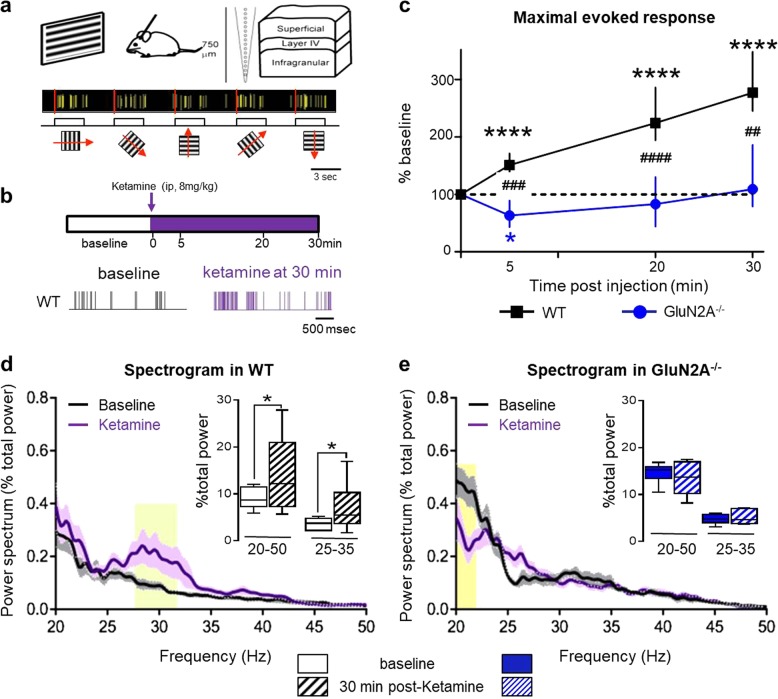
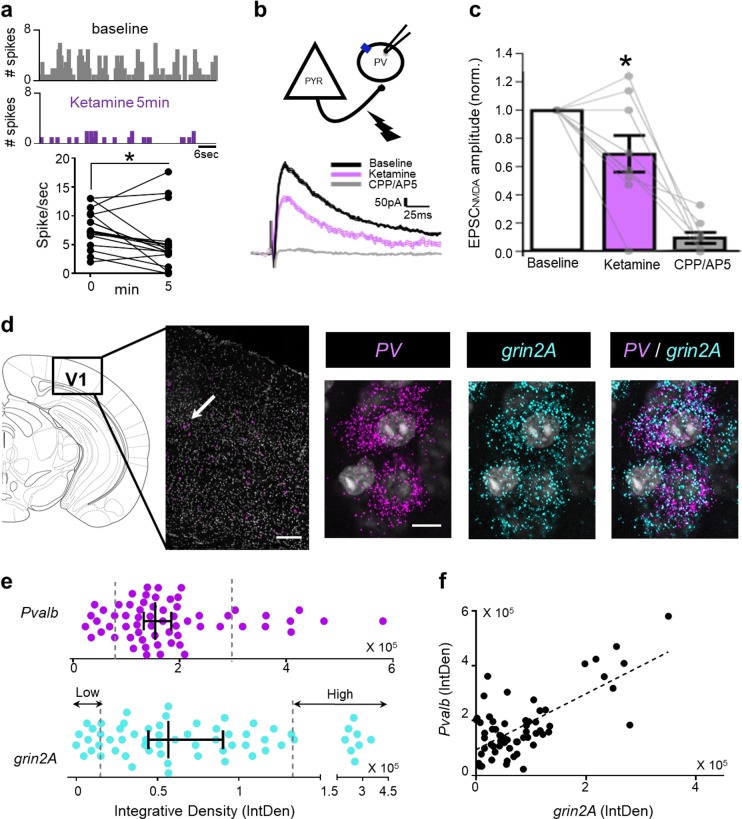
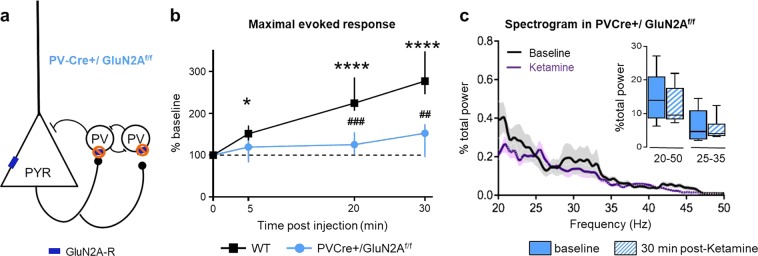
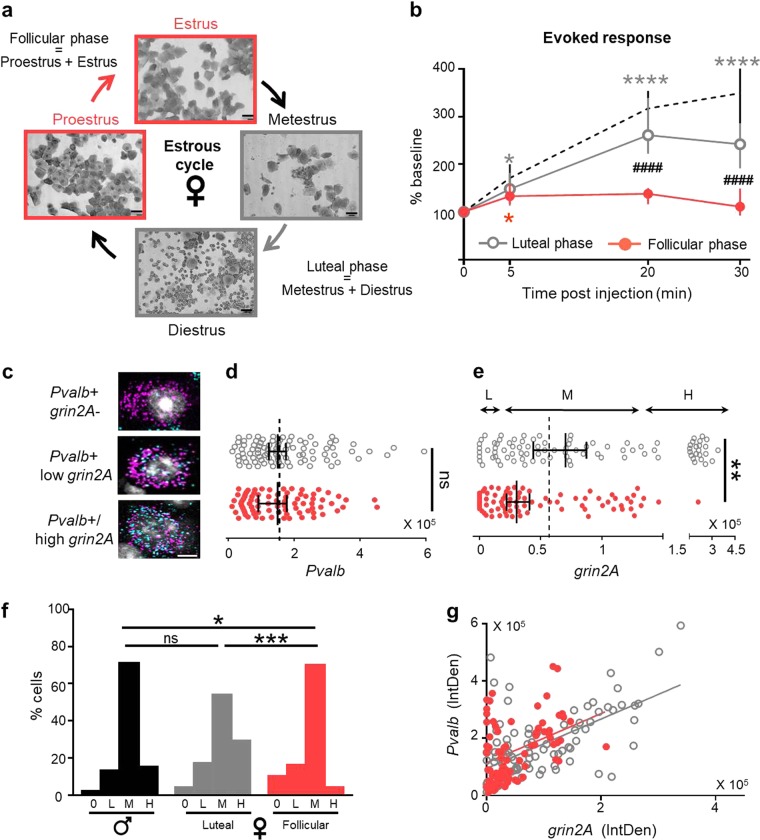
Ketamine has emerged as a widespread treatment for a variety of psychiatric disorders when used at sub-anesthetic doses, but the neural mechanisms underlying its acute action remain unclear. Here, we identified NMDA receptors containing the 2A subunit (GluN2A) on parvalbumin (PV)-expressing inhibitory interneurons as a pivotal target of low-dose ketamine. Genetically deleting GluN2A receptors globally or selectively from PV interneurons abolished the rapid enhancement of visual cortical responses and gamma-band oscillations by ketamine. Moreover, during the follicular phase of the estrous cycle in female mice, the ketamine response was transiently attenuated along with a concomitant decrease of grin2A mRNA expression within PV interneurons. Thus, GluN2A receptors on PV interneurons mediate the immediate actions of low-dose ketamine treatment, and fluctuations in receptor expression across the estrous cycle may underlie sex-differences in drug efficacy.
Overview
The claims and statistics of this paper haven’t been checked yet.
Free: it reads the open-access text and checks the first 5 claims that cite a source we can check. Create a free account to check every claim.
Integrity signals
Registry
Cites
Statistics
Figures
Verification
Claims the paper makes
The claims and statistics of this paper haven’t been checked yet.
Free: it reads the open-access text and checks the first 5 claims that cite a source we can check. Create a free account to check every claim.
Claims other papers make about this one
Each is checked against this paper’s own text: does it say what the citing paper says it does?
The cited source says what the claim attributes to it.
In the citing paper
“GluN2A containing NMDARs in PV interneurons are necessary for the rapid actions of ketamine on evoked firing of visual cortex pyramidal neurons and gamma-band oscillations in mice (Picard et al., 2019).”
From Mechanisms of ketamine and its metabolites as antidepressants (2022) · cites this paper as Picard et al., 2019
Self-check
Percentages, sums and reported differences re-computed from the paper’s own numbers.
The self-check needs the paper’s full text.
Citations
Cites
Antidepressant effects of ketamine in depressed patients
Berman, R. M., Cappiello, A., Anand, A., Oren, D. A., Heninger, G. R., Charney, D. S., & Krystal, J. H. (2000) · Biological Psychiatry · doi:10.1016/s0006-3223(99)00230-9 · Cited by 3,856
Parvalbumin neurons and gamma rhythms enhance cortical circuit performance
Sohal, V. S., Zhang, F., Yizhar, O., & Deisseroth, K. (2009) · Nature · doi:10.1038/nature07991 · Cited by 2,606
NMDA receptor subunit diversity: impact on receptor properties, synaptic plasticity and disease
Paoletti, P., Bellone, C., & Zhou, Q. (2013) · Nature Reviews Neuroscience · doi:10.1038/nrn3504 · Cited by 2,523
Synaptic mechanisms of synchronized gamma oscillations in inhibitory interneuron networks
Bartos, M., Vida, I., & Jonas, P. (2007) · Nature Reviews Neuroscience · doi:10.1038/nrn2044 · Cited by 2,070
NMDA receptor blockade at rest triggers rapid behavioural antidepressant responses
Autry, A. E., Adachi, M., Nosyreva, E., Na, E. S., Los, M. F., Cheng, P.-F., Kavalali, E. T., & Monteggia, L. M. (2011) · Nature · doi:10.1038/nature10130 · Cited by 1,926
NMDAR inhibition-independent antidepressant actions of ketamine metabolites
Zanos, P., Moaddel, R., Morris, P. J., Georgiou, P., Fischell, J., Elmer, G. I., Alkondon, M., Yuan, P., Pribut, H. J., Singh, N. S., et al. (2016) · Nature · doi:10.1038/nature17998 · Cited by 1,609
Pathological Changes Induced in Cerebrocortical Neurons by Phencyclidine and Related Drugs
Olney, J. W., Labruyere, J., & Price, M. T. (1989) · Science · doi:10.1126/science.2660263 · Cited by 1,237
Homayoun, H., & Moghaddam, B. (2007) · The Journal of Neuroscience · doi:10.1523/jneurosci.2213-07.2007 · Cited by 1,231
Highly selective receptive fields in mouse visual cortex
Niell, C. M., & Stryker, M. P. (2008) · The Journal of Neuroscience · doi:10.1523/jneurosci.0623-08.2008 · Cited by 1,081
Ketamine blocks bursting in the lateral habenula to rapidly relieve depression
Yang, Y., Cui, Y., Sang, K., Dong, Y., Ni, Z., Ma, S., & Hu, H. (2018) · Nature · doi:10.1038/nature25509 · Cited by 1,036
Cited by
Brain-Derived Neurotrophic Factor Signaling in Depression and Antidepressant Action
Castrén, E., & Monteggia, L. M. (2021) · Biological Psychiatry · doi:10.1016/j.biopsych.2021.05.008 · Cited by 540
The origin of NMDA receptor hypofunction in schizophrenia
Nakazawa, K., & Sapkota, K. (2020) · Pharmacology & Therapeutics · doi:10.1016/j.pharmthera.2019.107426 · Cited by 275
“…(PV)-positive neuron-specific genetic ablation of GluN2A, which is highly expressed in GABA neurons, was also sufficient to ablate ketamine-induced changes in pyramidal cell activity in mouse visual cortex, suggesting that ketamine binds to GluN2A-containing PV neurons (Picard et al., 2019).”
BackgroundMechanisms of ketamine and its metabolites as antidepressants
Hess, E. M., Riggs, L. M., Michaelides, M., & Gould, T. D. (2022) · Biochemical Pharmacology · doi:10.1016/j.bcp.2021.114892 · Cited by 175
Chari, T., Griswold, S., Andrews, N. A., & Fagiolini, M. (2020) · Frontiers in Behavioral Neuroscience · doi:10.3389/fnbeh.2020.00113 · Cited by 164
Self-citationVenturino, A., Schulz, R., De Jesús-Cortés, H., Maes, M. E., Nagy, B., Reilly-Andújar, F., Colombo, G., Cubero, R. J. A., Schoot Uiterkamp, F. E., Bear, M. F., et al. (2021) · Cell Reports · doi:10.1016/j.celrep.2021.109313 · Cited by 140
Potential Roles of Redox Dysregulation in the Development of Schizophrenia
Perkins, D. O., Jeffries, C. D., & Do, K. Q. (2020) · Biological Psychiatry · doi:10.1016/j.biopsych.2020.03.016 · Cited by 103
Hanson, J. E., Ma, K., Elstrott, J., Weber, M., Saillet, S., Khan, A. S., Simms, J., Liu, B., Kim, T. A., Yu, G.-Q., et al. (2020) · Cell Reports · doi:10.1016/j.celrep.2019.12.030 · Cited by 90
“Notably, GluN2D knockout mice or mice with global or PV interneuron-specific knockout of GluN2A lack ketamine-induced, schizophrenia-related phenotypes, including hyperlocomotion and excessive gamma oscillatory activity (Picard et al., 2019; Sapkota et al., 2016).”
Liu, H., Zhang, X., Shi, P., Yuan, J., Jia, Q., Pi, C., Chen, T., Xiong, L., Chen, J., Tang, J., et al. (2023) · Journal of Neuroinflammation · doi:10.1186/s12974-023-02768-z · Cited by 92
“For example, BDNF might trigger a mammalian target of the rapamycin protein (mTOR) signaling pathway, causing synaptogenesis [144, 145].”
BackgroundTang, X.-H., Zhang, G.-F., Xu, N., Duan, G.-F., Jia, M., Liu, R., Zhou, Z.-Q., & Yang, J.-J. (2020) · Journal of Neuroinflammation · doi:10.1186/s12974-020-01843-z · Cited by 79
Network Asynchrony Underlying Increased Broadband Gamma Power
Guyon, N., Zacharias, L. R., de Oliveira, E. F., Kim, H., Leite, J. P., Lopes‐Aguiar, C., & Carlén, M. (2021) · Journal of Neuroscience · doi:10.1523/jneurosci.2250-20.2021 · Cited by 85
Reimann, H. M., & Niendorf, T. (2020) · Frontiers in Systems Neuroscience · doi:10.3389/fnsys.2020.00008 · Cited by 82
GluN2A mediates ketamine-induced rapid antidepressant-like responses
Su, T., Lu, Y., Fu, C., Geng, Y., & Chen, Y. (2023) · Nature Neuroscience · doi:10.1038/s41593-023-01436-y · Cited by 64
Lv, S., Yao, K., Zhang, Y., & Zhu, S. (2022) · Neuropharmacology · doi:10.1016/j.neuropharm.2022.109378 · Cited by 61
Levinstein, M. R., Budinich, R. C., Bonaventura, J., Schatzberg, A. F., Zarate, C. A., & Michaelides, M. (2025) · American Journal of Psychiatry · doi:10.1176/appi.ajp.20240378 · Cited by 61
Wu, M., Minkowicz, S., Dumrongprechachan, V., Hamilton, P., Xiao, L., & Kozorovitskiy, Y. (2021) · eLife · doi:10.7554/elife.64041 · Cited by 51
“NMDA receptor antagonists, including ketamine, have been shown to rapidly enhance neuronal and dendritic activity of cortical pyramidal neurons through disinhibition ( Ali et al., 2020 ; Hare et al., 2020 ; Homayoun and Moghaddam, 2007 ; Picard et al., 2019 ; Zanos and Gould, 2018 ).”
Ji, M., Zhang, L., Mao, M., Zhang, H., Yang, J., & Qiu, L.-L. (2020) · Behavioural Brain Research · doi:10.1016/j.bbr.2020.112509 · Cited by 51
Blanco, I., & Conant, K. E. (2020) · European Journal of Neuroscience · doi:10.1111/ejn.14910 · Cited by 50
Prophylactic efficacy of 5-HT4R agonists against stress
Chen, B. K., Mendez‐David, I., Luna, V. M., Faye, C., Gardier, A. M., David, D. J. P., & Denny, C. A. (2019) · Neuropsychopharmacology · doi:10.1038/s41386-019-0540-3 · Cited by 46
Gawande, D. Y., Narasimhan, K. K. S., Shelkar, G. P., Pavuluri, R., Stessman, H. A. F., & Dravid, S. M. (2023) · Biological Psychiatry · doi:10.1016/j.biopsych.2023.03.020 · Cited by 42
Bygrave, A. M., Kilonzo, K., Kullmann, D. M., Bannerman, D. M., & Kätzel, D. (2019) · Frontiers in Psychiatry · doi:10.3389/fpsyt.2019.00835 · Cited by 43
Oláh, V. J., Goettemoeller, A. M., Rayaprolu, S., Dammer, E. B., Seyfried, N. T., Rangaraju, S., Dimidschstein, J., & Rowan, M. J. (2022) · eLife · doi:10.7554/elife.75316 · Cited by 38
“Similarly, reduced PV excitability can amplify gamma power in different cortical areas ( Picard et al., 2019 ) likely through disruption of feedback inhibitory circuits ( Sohal et al., 2009 ).”
Contribution of NMDA Receptors to Synaptic Function in Rat Hippocampal Interneurons
Booker, S. A., Sumera, A., Kind, P. C., & Wyllie, D. J. A. (2021) · eNeuro · doi:10.1523/eneuro.0552-20.2021 · Cited by 34
“This requirement of postsynaptic depolarization and presynaptic neurotransmitter release for NMDAR opening defines them as a coincidence detector, critical for the establishment of Hebbian plasticity (Seeburg et al., 1995).”
BackgroundAn integrative view on the cell-type-specific mechanisms of ketamine's antidepressant actions
Lewis, V., Rurak, G. M., Salmaso, N., & Aguilar‐Valles, A. (2024) · Trends in Neurosciences · doi:10.1016/j.tins.2023.12.004 · Cited by 33
Ketamine induces multiple individually distinct whole-brain functional connectivity signatures
Moujaes, F., Ji, J. L., Rahmati, M., Burt, J. B., Schleifer, C. H., Adkinson, B. D., Savić, A., Santamauro, N. P., Tamayo, Z., Diehl, C., et al. (2024) · eLife · doi:10.7554/elife.84173 · Cited by 34
A key requirement for synaptic Reelin signaling in ketamine-mediated behavioral and synaptic action
Kim, J., Herz, J., Kavalali, E. T., & Monteggia, L. M. (2021) · Proceedings of the National Academy of Sciences · doi:10.1073/pnas.2103079118 · Cited by 30
“Previous work has also shown that the antidepressant effects and molecular changes induced by ketamine were occluded in a genetic mouse model lacking GluN2A globally or in paralbumin interneurons or lacking GluN2B in excitatory neurons of broad forebrain regions, including the hippocampus (61, 62).”
ResultFitzgerald, P. J., Kounelis-Wuillaume, S., Gheidi, A., Morrow, J. D., Spencer-Segal, J. L., & Watson, B. O. (2021) · Stress · doi:10.1080/10253890.2021.1871600 · Cited by 27
“…al., 2019; Wright & Kabbaj, 2018), hyperactivity (McDougall et al., 2019; Wilson et al., 2005, 2007), neurohormonal regulation (Dossat et al., 2018; Picard et al., 2019; Saland et al., 2016; Wright et al., 2017), fear conditioning (Mastrodonato et al., 2018), and synaptic mechanisms (Sarkar &…”
BackgroundRen, L. (2024) · Progress in Neuro-Psychopharmacology and Biological Psychiatry · doi:10.1016/j.pnpbp.2023.110910 · Cited by 23
Cui, K., Yu, Z., Xu, L., Jiang, W., Wang, L., Wang, X., Zou, D., Gu, J., Gao, F., Zhang, X., et al. (2022) · Frontiers in Neuroscience · doi:10.3389/fnins.2022.1001869 · Cited by 22
“Particularly, the NMDAR (N-methyl-D-aspartate receptor) in PV interneurons had been demonstrated to be critical for expression of normal gamma rhythms (Carlén et al., 2012; Picard et al., 2019; Hudson et al., 2020).”
BackgroundAntos, Z., Żukow, X., Bursztynowicz, L., & Jakubów, P. (2024) · International Journal of Molecular Sciences · doi:10.3390/ijms252413658 · Cited by 21
“During the follicular phase, when estradiol levels are low, ketamine’s effects are transient and weaker compared to the luteal phase, where estradiol (active form of estrogen) levels are high [120].”
Immunotherapy for GRIN2A and GRIN2D-related epileptic encephalopathy
Hausman‐Kedem, M., Menascu, S., Greenstein, Y., & Fattal‐Valevski, A. (2020) · Epilepsy Research · doi:10.1016/j.eplepsyres.2020.106325 · Cited by 19
Pang, L., Cui, M., Dai, W., Kong, J., Chen, H., & Wu, S. (2020) · Frontiers in Pharmacology · doi:10.3389/fphar.2020.586104 · Cited by 19
Fagiolini, M., Patrizi, A., LeBlanc, J. J., Jin, L., Maezawa, I., Sinnett, S. E., Gray, S. J., Molholm, S., Foxe, J. J., Johnston, M. V., et al. (2020) · Neuroscience · doi:10.1016/j.neuroscience.2020.04.037 · Cited by 16
“This subanesthetic dose has been shown to specifically reduce NMDAR activity onto parvalbumin fast-spiking inhibitory neurons (Kinney et al., 2006; Behrens et al., 2007; Picard et al., 2019), a cell population whose maturation is accelerated in the absence of Mecp2 in mice, leading to increased innervation of pyramida…”
BackgroundSelf-citationSex-specific divergent maturational trajectories in the postnatal rat basolateral amygdala
Guily, P., Lassalle, O., Chavis, P., & Manzoni, O. J. (2022) · iScience · doi:10.1016/j.isci.2022.103815 · Cited by 15
“NMDAR activity or subunits mRNA expression can be modulated by gonadectomy in males (van den Buuse et al., 2017), estrous cycle in females (Picard et al., 2019), or sex (Damborsky & Winzer-Serhan, 2012; Qi et al., 2016).”
BackgroundLewis, E. M., Spence, H. E., Akella, N., & Buonanno, A. (2022) · Molecular Psychiatry · doi:10.1038/s41380-022-01747-9 · Cited by 15
Widman, A. J., & McMahon, L. L. (2020) · Advances in pharmacology · doi:10.1016/bs.apha.2020.05.001 · Cited by 15
Molecular Basis of GABA Hypofunction in Adolescent Schizophrenia-Like Animals
Wang, X., Hu, Y. C., Liu, W., Ma, Y., Chen, X., Xue, T., & Cui, D. (2021) · Neural Plasticity · doi:10.1155/2021/9983438 · Cited by 11
RetractedLanguage deficits in GRIN2A mutations and Landau–Kleffner syndrome as neural dysrhythmias
Benítez‐Burraco, A., Hoshi, K., & Murphy, E. (2023) · Journal of Neurolinguistics · doi:10.1016/j.jneuroling.2023.101139 · Cited by 10
Holter, K. M., Lekander, A., Pierce, B. E., Sands, L. P., & Gould, R. W. (2024) · Pharmaceuticals · doi:10.3390/ph17020237 · Cited by 9
“Cortical NMDA receptor expression fluctuates across the estrous cycle, and the luteal phase (metestrus/diestrus) as well as overall 17 β -estradiol deprivation in female rats leads to decreased NMDA receptor subunit gene and protein expression [58–62].”
BackgroundLiu, T., Wu, J., Huang, P., Cheng, W.-L., & Lai, C. (2025) · European Neuropsychopharmacology · doi:10.1016/j.euroneuro.2025.07.006 · Cited by 10
Rodents’ visual gamma as a biomarker of pathological neural conditions
Meneghetti, N., Vannini, E., & Mazzoni, A. (2024) · The Journal of Physiology · doi:10.1113/jp283858 · Cited by 8
“On the other hand, NMDA hypo-functions on inhibitory neurons triggered a disinhibition effect (as similarly observed by Picard et al. 2019), that increased gamma power: this phenomenon was proposed to be mainly associated with psychotic symptoms, especially hallucinations, hence implying a positive…”
BackgroundGlavonic, E., Dragić, M., Mitić, M., Aleksic, M., Lukić, I., Ivković, S., & Adžić, M. (2024) · Pharmaceuticals · doi:10.3390/ph17060669 · Cited by 7
“At the same time, GluN2A activation is necessary for ketamine-induced enhancement of cortical activity [75] and the behavioral effects of low-dose ketamine [76], which aligns to an extent with our findings.”
BackgroundBarrutieta-Arberas, I., Ortuzar, N., Vaquero-Rodríguez, A., Picó-Gallardo, M., Bengoetxea, H., Guevara, M., Gargiulo, P. A., & Lafuente, J. V. (2023) · Experimental Biology and Medicine · doi:10.1177/15353702231170007 · Cited by 6
Hosseini, H., Evans-Martin, S., & Jones, K. S. (2025) · Neurobiology of Disease · doi:10.1016/j.nbd.2025.106977 · Cited by 6
“While prior studies have provided insight into the consequences of PV-specific or age-restricted GluN2A deletion models (Cardis et al., 2018; Picard et al., 2019; Banke et al., 2024), genome-wide, constitutive ablation permits systems-level evaluation of GluN2A function across multiple interneuron…”
Sex differences in anxiety and threat avoidance in GAD65 knock-out mice
Ulrich, M., Pollali, E., Çalışkan, G., Stork, O., & Albrecht, A. (2023) · Neurobiology of Disease · doi:10.1016/j.nbd.2023.106165 · Cited by 5
Phillips, M. B., Povysheva, N. V., Neureiter, E. G., Nigam, A., Hartnett, K. A., Hell, J. W., Aizenman, E., & Johnson, J. W. (2026) · Science Advances · doi:10.1126/sciadv.aec3154 · Cited by 6
“…inhibition of GluN2A-containing receptors by memantine under nonexcitotoxic conditions also may contribute to the weaker antidepressant effects of memantine compared to ketamine: The antidepressant actions of ketamine have been linked to inhibition of GluN2A-containing NMDARs ( 92 , 98 , 99 ).”
Ascic, E., Marigo, M., David, L., Herrik, K. F., Grupe, M., Hougaard, C. Ø., Mørk, A., Jones, C. R., Badolo, L., Frederiksen, K., et al. (2024) · Journal of Medicinal Chemistry · doi:10.1021/acs.jmedchem.4c01477 · Cited by 4
Role of NMDA receptor-mediated abnormalities of GABAergic interneurons in psychiatric disorders.
Li, S., Zhang, G.-F., & Yang, J. (2020) · PubMed · doi:10.11817/j.issn.1672-7347.2020.190048 · Cited by 3
Li, C., Wang, Z., Ye, X., Lv, J., Chen, F., Zhang, Y., Liu, J., Li, X., Duan, J., Wang, Y., et al. (2025) · Frontiers in Psychiatry · doi:10.3389/fpsyt.2025.1692751 · Cited by 3
“…evidence has pinpointed the Glutamate receptor N-methyl-D-aspartate 2A (GLUN2A) on parvalbumin mediates the immediate effects of low doses of ketamine (42), while the GLUN2B-NMDAR on GABAergic interneurons stand as the focal point for the fast-acting antidepressant effects of ketamine (43).”
Morris, B. (2026) · Progress in Neuro-Psychopharmacology and Biological Psychiatry · doi:10.1016/j.pnpbp.2026.111628 · Cited by 2
“…evoked γ oscillations (Bianciardi and Uhlhaas, 2021; Dormann et al., 2023; Hiyoshi et al., 2014; Kittelberger et al., 2012; Lazarewicz et al., 2010; Picard et al., 2019; Raith et al., 2020; Rosenbrock et al., 2022; Sullivan et al., 2015), thus showing an opposite direction of change to the disease.”
Distinct Roles of NMDA Receptor GluN2 Subunits in the Effects of Ketamine and Its Enantiomers
Ide, S., & Ikeda, K. (2020) · Springer eBooks · doi:10.1007/978-981-15-2902-3_10 · Cited by 2
Increased peripheral CD4+ lymphocytes promote ketamine-induced abnormal behaviors in mice
Hu, J., Wang, P., Lin, Y., Jiang, Z., Zhang, Y., Shi, K., Wen, D., Ma, C., Liao, L., & Wang, X. (2025) · International Immunopharmacology · doi:10.1016/j.intimp.2025.115337 · Cited by 1
Sommer, G., Hussein, S. O., Milner, T. A., & Glass, M. J. (2025) · Neuroendocrinology · doi:10.1159/000549929 · Cited by 1
Carreño-Muñoz, M. I., Chama, A. G. C., Chehrazi, P., Chattopadhyaya, B., & Cristo, G. D. (2026) · European Journal of Neuroscience · doi:10.1111/ejn.70471 · Cited by 1
“For example, previous studies have shown that sub-anesthetic ketamine administration preferentially inhibits PV + interneurons, by targeting NMDA receptors containing the 2A subunit, and regulates evoked gamma-band oscillations in visual cortex (Picard et al. 2019).”
InfluentialProsvirova, T., Podolecka, W., Wróbel, J., & Hunt, M. J. (2026) · Neuropharmacology · doi:10.1016/j.neuropharm.2026.111012 · Cited by 1
Atomic insights into the physiological and functional diversity of NMDA receptors
(134879), K. X., Wu, S., & Zhu, S. (2026) · Trends in Neurosciences · doi:10.1016/j.tins.2026.05.004 · Cited by 1
Morris, B. (2026) · Molecular Neurobiology · doi:10.1007/s12035-026-05954-1 · Cited by 1
“This appears to be true for both resting and evoked γ oscillations [139–142], and to be mediated via GluN2D subunit-containing NMDA Rs [143], although there are also a few reports of acute NMDA R antagonist suppression of evoked γ oscillations [144, 145].”
Oláh, V. J., Witteveen, I. F., Banke, T. G., Leahy, A. M., Keable, R., Perszyk, R. E., Khayat, C. T., Nguyen, T. T., Bixler, B. J., Ghinger, F. G., et al. (2026) · Cell Reports · doi:10.1016/j.celrep.2026.117707 · Cited by 2
On the role of parvalbumin interneurons in neuronal network activity in the prefrontal cortex
Guyon, N. (2021) · Figshare
Sex-Specific Divergent Maturational Trajectories in the Post-Natal Rat Basolateral AmygdalaPreprint
Guily, P., Lassalle, O., & Manzoni, O. J. (2021) · SSRN Electronic Journal · doi:10.2139/ssrn.3931648
Wu, L., & Bosco, D. B. (2021) · Faculty Opinions – Post-Publication Peer Review of the Biomedical Literature · doi:10.3410/f.740425005.793587748
Schnell wirksame Antidepressiva
Şen, Z. D., Danyeli, L. V., & Walter, M. (2022) · Springer eBooks · doi:10.1007/978-3-662-65734-8_10
Role of the N-Methyl-D-Aspartate Receptor in Synchronous Neuronal Network Activity in the Gamma Band
Diaz, J. R. (2023) · Deep Blue (University of Michigan) · doi:10.7302/8160
Sex impacts on mismatch negativity under low-dose ketamine
Wehrman, J., & Sanders, R. D. (2025) · British Journal of Anaesthesia · doi:10.1016/j.bja.2025.01.005
draft of Basque Conference on Cyber Physical Systems and Artificial Intelligence
Graña, M. (2022) · Zenodo (CERN European Organization for Nuclear Research) · doi:10.5281/zenodo.6558473
Disruption of psychostimulant-associated memories by single, low dose ketamine in rats
Gonzalez, A. E., Ramos, J. D., Anderson, Z., Sewell, C. M., Modaberi, S., Hentges, S. T., Brown, T. E., & Sorg, B. A. (2026) · Neuropharmacology · doi:10.1016/j.neuropharm.2026.110912 · Cited by 1
“Most mPFC PV neurons contain NMDA receptors (Lewis et al., 2022), and ketamine rapidly reduces PV cell levels (Zhou et al., 2015) and visual cortical PV cell activity via NMDA receptor blockade (Picard et al., 2019).”
Decoding the molecular network communication mechanism of ketamine’s antidepressant effects
Li, Y., Cheng, Q., Lin, G., Duan, K., & Wang, S. (2026) · Psychopharmacology · doi:10.1007/s00213-026-07028-5
Différences sexuelles dans les synapses excitatrices de l’amygdale basolatérale de rat
Guily, P. (2021) · theses.fr (ABES) · doi:10.70675/3ce7db18z6a11z4e26z940fze421cc5e9733
Carmellini, P., Fagiolini, A. M., Pinzi, M., Magno, M., Martella, D., Nicchi, L., Rescalli, M. B., Tarantino, F., Tinturini, R., Scheggi, S., et al. (2026) · Psychiatry Research · doi:10.1016/j.psychres.2026.117184
Sex as a biological variable in amblyopia: implications for developmental plasticity and treatment
Murphy, K. M., Monteiro, L., Panday, M., & Barone, N. (2026) · Frontiers in Neuroscience · doi:10.3389/fnins.2026.1846268
Yang, X., Qin, J., & Xu, W. (2026) · Frontiers in Medicine · doi:10.3389/fmed.2026.1816437
Lauer, J., Poppke, J., Nickl‐Jockschat, T., Dieterich, D. C., Fendt, M., & Afzal, S. (2026) · Neuropsychopharmacology · doi:10.1038/s41386-026-02476-1
Lemeshova, A., Abdirahaman, F., Haidari, H., Zhao, C., Limbada, A., & Honeycutt, J. A. (2026) · bioRxiv (Cold Spring Harbor Laboratory) · doi:10.64898/2026.06.26.734907
Souza, I. N. D. O., Lecouflet, P., Okur, Z., Maldera, S., Potier, B., Pollegioni, L., Scheiffele, P., & Mothet, J. (2026) · bioRxiv (Cold Spring Harbor Laboratory) · doi:10.64898/2026.08.30.747826
Munoz, M. I. C., Chehrazi, P., Chama, A. G. C., Knoth, I., do Nascimento, S. A. F., Campbell, B., Csicsvari, J., Chattopadhyaya, B., Lippé, S., & Cristo, G. D. (2026) · bioRxiv (Cold Spring Harbor Laboratory) · doi:10.64898/2026.10.12.757951
“Tapers were defined as [TW,K]=[10,19], where TW is the time–bandwidth product controlling spectral concentration, and K is the number of orthogonal Slepian tapers used for estimation.”
Metadata
- Authors
- Picard, N., Takesian, A. E., Fagiolini, M., & Hensch, T. K.
- Affiliations
- Boston Children's Hospital (US)
- Corresponding author
- Fagiolini, Michela
- Hensch, Takao K.
- Venue
- Molecular Psychiatry
- Published
- 2019-01-29
- Volume
- 24
- Issue
- 6
- Pages
- 828-838
- ISSN
- 1359-4184 (ISSN-L)
- 1476-5578
- PMC
- PMC6756203
- OpenAlex
- W2911866952
- Cited by
- 71
- References
- 77
- Citations by year
- 2026: 14 · 2025: 7 · 2024: 7 · 2023: 7 · 2022: 6 · 2021: 13 · 2020: 14 · 2019: 3
- FWCI
- 5.58
- Type
- journal article
- Language
- en
- Open access
- hybrid
- doi.org
- Licence
- cc-by
- creativecommons.org/licenses/by/4.0 (tdm)
- creativecommons.org/licenses/by/4.0 (vor)
- Locations
- Molecular Psychiatry (publishedVersion, cc-by)
- PubMed Central (publishedVersion, cc-by)
- PubMed (publishedVersion)
- Funders
- U.S. Department of Health & Human Services | NIH | National Institute of Mental Health (1P50MH094271)
- Pfizer
- Nancy Lurie Marks Family Foundation
- U.S. Department of Health & Human Services | NIH | National Institute of Neurological Disorders and Stroke (R01 NS095959)
- U.S. Department of Health & Human Services | NIH | National Eye Institute (R01 EY013613)
- Topics
- Health Sciences › Medicine › Pharmacology (medical) › Treatment of Major Depression
- Life Sciences › Neuroscience › Cellular and Molecular Neuroscience › Neuroscience and Neuropharmacology Research
- Life Sciences › Neuroscience › Cellular and Molecular Neuroscience › Neurotransmitter Receptor Influence on Behavior
- Keywords
- NMDA receptor, GluN2A, parvalbumin interneurons, ketamine, sex differences, estrous cycle, gamma oscillations, visual cortex, cortical responses, GRIN2A, inhibitory interneurons, low-dose ketamine
- MeSH terms
- Animals, Female, Interneurons, Ketamine, Male, Mice, Inbred C57BL, Parvalbumins, Receptors, GABA-A, Sex Factors, Receptors, N-Methyl-D-Aspartate, N-Methylaspartate, Prefrontal Cortex, Estrous Cycle, Mice
About these checks
Registry, retraction, Cites and statistics results are computed, not judged, with one exception: a printed reference that no index lists is read once by a model before it counts as a citation error. Claims are extracted by a model and kept only when their quote appears verbatim in the text; each cited source is then checked, with a model’s help, for whether it says what the claim relies on. Those verdicts can be wrong — read the claim’s quote and the cited source before relying on one.
Statistics and arithmetic are recomputed, not judged.
Confidence bands are shown only for fields calibrated on our annotated test set. None is calibrated yet, so no band is shown.
What counts as a claim ›How we measure confidence ›How we check this ›
Are you an author, or do you see a problem with this page? Request a review
Data sources
Bibliographic data: Semantic Scholar, OpenAlex, Crossref.
Contains information from the Semantic Scholar Academic Graph Datasets, made available under the ODC Attribution License (ODC-BY 1.0).
Semantic Scholar’s data is described in: Kinney, R., et al. (2023). The Semantic Scholar Open Data Platform. arXiv:2301.10140.
