

Discontinuation of antidepressants after remission with antidepressant medication in major depressive disorder: a systematic review and meta-analysis
Open accessThe DOI matches its Crossref record; 66 of the 68 references it cites were found in a registry or an index; 6 of the 14 sources its claims cite were checked for support.
Abstract
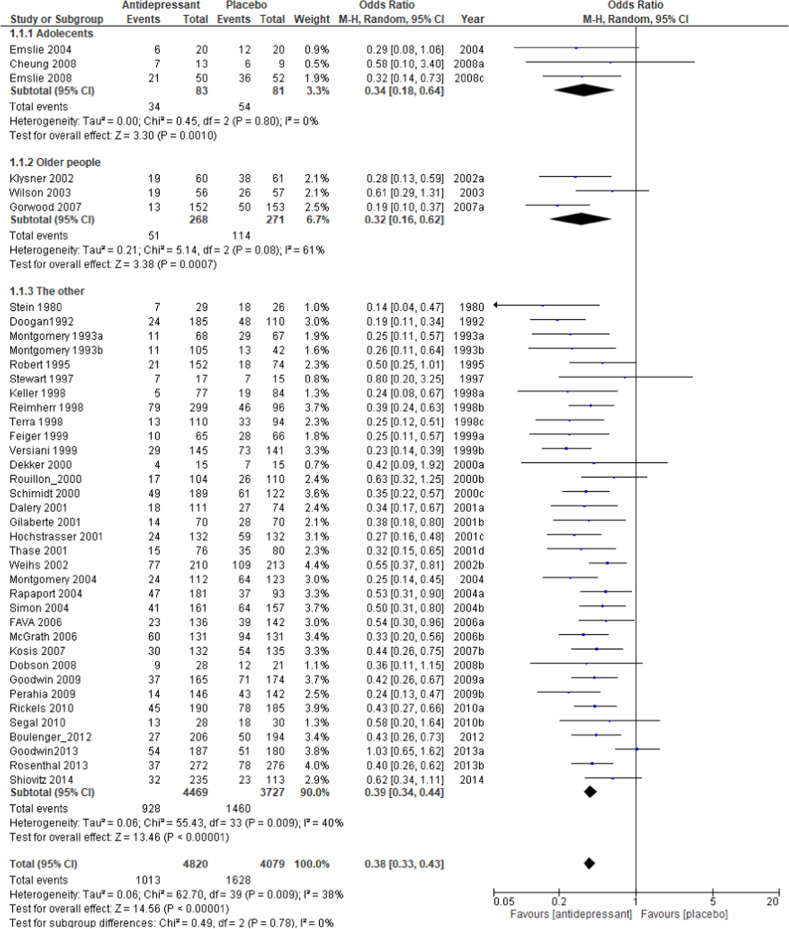
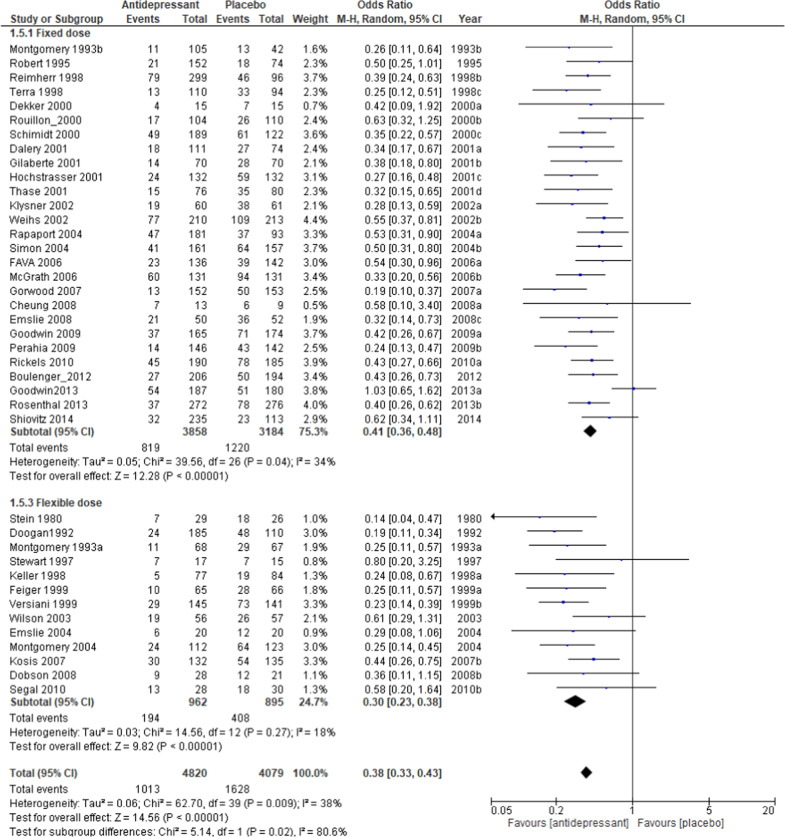
A significant clinical issue encountered after a successful acute major depressive disorder (MDD) treatment is the relapse of depressive symptoms. Although continuing maintenance therapy with antidepressants is generally recommended, there is no established protocol on whether or not it is necessary to prescribe the antidepressant used to achieve remission. In this meta-analysis, the risk of relapse and treatment failure when either continuing with the same drug used to achieved remission or switching to a placebo was assessed in several clinically significant subgroups. The pooled odds ratio (OR) (±95% confidence intervals (CI)) was calculated using a random effects model. Across 40 studies (n = 8890), the relapse rate was significantly lower in the antidepressant group than the placebo group by about 20% (OR = 0.38, CI: 0.33–0.43, p < 0.00001; 20.9% vs 39.7%). The difference in the relapse rate between the antidepressant and placebo groups was greater for tricyclics (25.3%; OR = 0.30, CI: 0.17–0.50, p < 0.00001), SSRIs (21.8%; OR = 0.33, CI: 0.28–0.38, p < 0.00001), and other newer agents (16.0%; OR = 0.44, CI: 0.36–0.54, p < 0.00001) in that order, while the effect size of acceptability was greater for SSRIs than for other antidepressants. A flexible dose schedule (OR = 0.30, CI: 0.23–0.48, p < 0.00001) had a greater effect size than a fixed dose (OR = 0.41, CI: 0.36–0.48, p < 0.00001) in comparison to placebo. Even in studies assigned after continuous treatment for more than 6 months after remission, the continued use of antidepressants had a lower relapse rate than the use of a placebo (OR = 0.40, CI: 0.29–0.55, p < 0.00001; 20.2% vs 37.2%). The difference in relapse rate was similar from a maintenance period of 6 months (OR = 0.41, CI: 0.35–0.48, p < 0.00001; 19.6% vs 37.6%) to over 1 year (OR = 0.35, CI: 0.29–0.41, p < 0.00001; 19.9% vs 39.8%). The all-cause dropout of antidepressant and placebo groups was 43% and 58%, respectively, (OR = 0.47, CI: 0.40–0.55, p < 0.00001). The tolerability rate was ~4% for both groups. The rate of relapse (OR = 0.32, CI: 0.18–0.64, p = 0.0010, 41.0% vs 66.7%) and all-cause dropout among adolescents was higher than in adults. To prevent relapse and treatment failure, maintenance therapy, and careful attention for at least 6 months after remission is recommended. SSRIs are well-balanced agents, and flexible dose adjustments are more effective for relapse prevention.
Overview
CoChat Summary
TL;DR
This systematic review and meta-analysis of 40 double-blind RCTs (n = 8,890) found that continuing the same antidepressant after remission in major depressive disorder reduced relapse and all-cause dropout versus switching to placebo. The benefit was seen overall and across many subgroups, with no significant difference in tolerability.
Key findings
- Across 40 studies (n = 8,890), relapse was lower with continued antidepressant treatment than placebo: 20.9% vs 39.7%, pooled OR 0.38 (95% CI 0.33–0.43; NNT = 6).
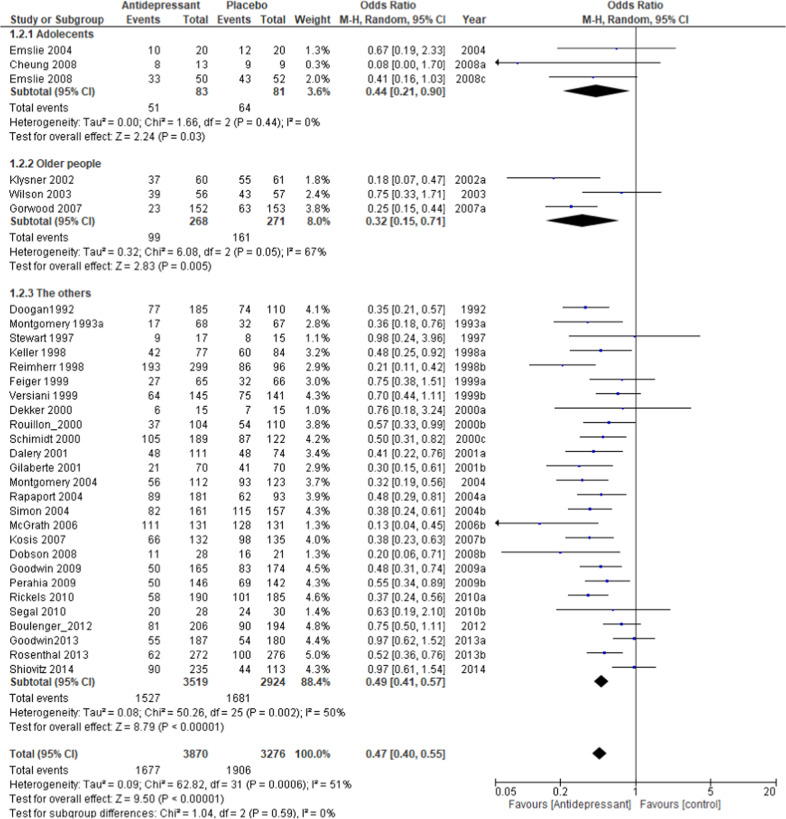
- All-cause dropout was also lower with antidepressant continuation in 32 studies (n = 7,146): 43.3% vs 58.2%, pooled OR 0.47 (95% CI 0.40–0.55; NNT = 7).
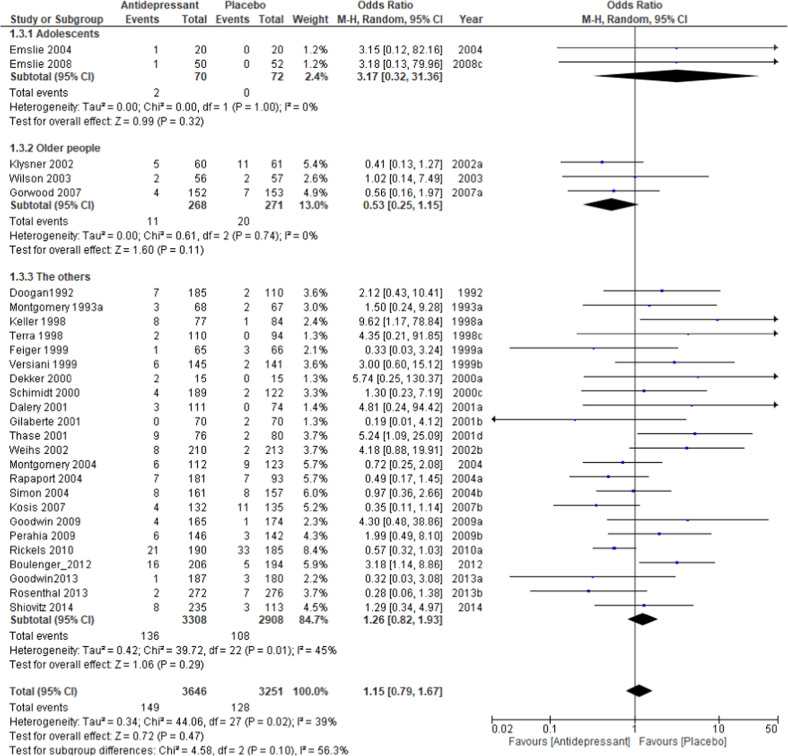
- Tolerability did not differ significantly in 28 studies (n = 6,897): 4.1% vs 3.9%, pooled OR 1.15 (95% CI 0.79–1.67).
- Subgroup results reported stronger relapse-prevention effects for tricyclics (25.3% difference; OR 0.30), SSRIs (21.8%; OR 0.33), and other newer agents (16.0%; OR 0.44); flexible dosing showed a larger effect than fixed dosing (OR 0.30 vs 0.41).
Methods
- Systematic review and meta-analysis of double-blind randomized controlled discontinuation trials (“enrichment design”) in patients with MDD who had remitted on antidepressant treatment; studies with ≥12 weeks after randomization were eligible.
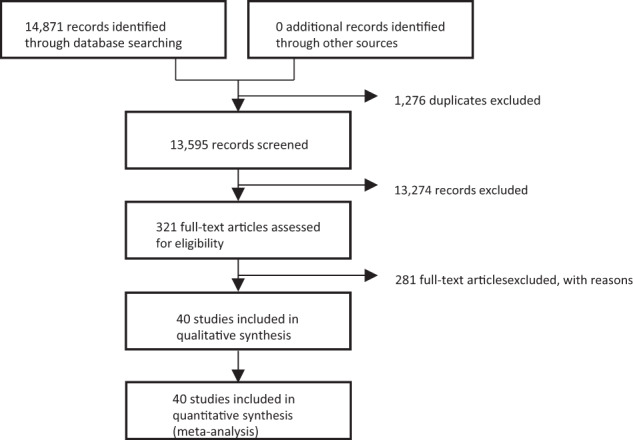
- Searches covered CENTRAL (to June 14, 2018), MEDLINE (to June 12, 2018), and EMBASE (to October 10, 2018); 40 studies met inclusion criteria.
- Main analysis used random-effects pairwise meta-analysis comparing continued antidepressant vs placebo, with odds ratios, risk differences, NNT, plus meta-regression and subgroup analyses.
Limitations
- The paper states that several relapse-risk factors could not be assessed because too few RCTs reported them, including number/severity/chronicity of episodes, difficult-to-treat episodes, comorbid psychiatric conditions, pre-existing medical conditions, and residual symptoms.
- The authors note a potential favorable bias from enrichment designs because only responders to acute treatment were randomized; this is an explicit limitation in the paper.
- The paper states that pharmacologic withdrawal effects could not be fully evaluated because relapse/dropout in the short 4–8 week period could not be assessed.
- The text also makes evident that relapse definitions varied across studies, which the authors say made subgroup analysis difficult.
Model-written summary. Check it against the paper before relying on it.
Integrity signals
Registry
Cites
Statistics
Figures
Verification
Claims the paper makes
5 Valid · 0 Not valid · 6 Not checked · 66 Own results and interpretations
The cited sources support only part of this claim — read each source’s verdict below.
In the paper
“Sim et al. included various types of maintenance therapy such as antidepressant monotherapy, polypharmacy, combination therapy (e.g., antidepressants plus psychotherapy, electroconvulsive therapy, and lithium) regardless of whether a study continued the same antidepressant used for acute treatment in the maintenance phase or switched to a new one.”
§ Discontinuation of antidepressants after remission with antidepressant medication in major depressive disorder: a systematic review and meta-analysis > Discussion
What the sources say
- Partly supportedcites [12] Sim K Lau WK Sim J Sum MY Baldessarini RJ Prevention of relapse and recurrence in adults with major depressive disorder: systematic review and meta-analyses of controlled trials Int J Neuropsychopharmacol 2015 19 1 13 PMC4772815 26152228 sourceExperimental — accuracy not yet measured
The Results tables (pages not provided) include antidepressant monotherapy and combinations with lithium, psychotherapy, and ECT; the Methods inclusion criteria also allow pharmacological and non-pharmacological treatments. However, the paper does not establish that studies switching to a new antidepressant after acute treatment were included, or explicitly state that switching was irrelevant to inclusion. (LLM, conf=0.85)
plain- Asserted: passes — The authors put it forward as true.
- Checkable: passes — It can be checked against evidence.
- Load-bearing: unclear — It is unclear whether the paper’s conclusions depend on it.
- Based: passes — The paper gives a reason why it holds.
- Partly supported
The cited sources support only part of this claim — read each source’s verdict below.
In the paper
“Moreover, they used the data from Borges et al.’s study which risks the possibility of duplicate analysis.”
§ Discontinuation of antidepressants after remission with antidepressant medication in major depressive disorder: a systematic review and meta-analysis > Discussion
What the sources say
- Partly supportedcites [12] Sim K Lau WK Sim J Sum MY Baldessarini RJ Prevention of relapse and recurrence in adults with major depressive disorder: systematic review and meta-analyses of controlled trials Int J Neuropsychopharmacol 2015 19 1 13 PMC4772815 26152228 sourceExperimental — accuracy not yet measured
The Results table under Continuation Trials of Antidepressants lists multiple Borges et al. (2014) comparisons in the pooled analysis, supporting that Sim et al. used data reported by Borges et al. The paper does not say that those comparisons duplicate data or identify a resulting risk of duplicate analysis; that is the citing authors’ inference. Page numbers are unavailable in our copy. (LLM, conf=0.84)
- Not checked — no full text of the sourcecites [11] Borges S Chen YF Laughren TP Temple R Patel HD David PA Review of maintenance trials for major depressive disorder: a 25-year perspective from the US Food and Drug Administration J Clin Psychiatry 2014 75 205 14 10.4088/JCP.13r08722 24717376 source
hedgedstates a possible cause- Asserted: passes — The authors put it forward as true.
- Checkable: passes — It can be checked against evidence.
- Load-bearing: passes — The paper’s conclusions depend on it.
- Based: passes — The paper gives a reason why it holds.
- Partly supported
The cited sources support only part of this claim — read each source’s verdict below.
In the paper
“In fact, a meta-analysis by Sim et al. showed that 6 of the 15 studies submitted to the FDA by Borges et al. had the same number of subjects as the other published studies included in their meta-analysis.”
§ Discontinuation of antidepressants after remission with antidepressant medication in major depressive disorder: a systematic review and meta-analysis > Discussion
What the sources say
- Partly supportedcites [12] Sim K Lau WK Sim J Sum MY Baldessarini RJ Prevention of relapse and recurrence in adults with major depressive disorder: systematic review and meta-analyses of controlled trials Int J Neuropsychopharmacol 2015 19 1 13 PMC4772815 26152228 sourceExperimental — accuracy not yet measured
Table 1 in Results > Continuation Trials of Antidepressants lists 15 comparisons attributed to Borges et al. (2014), and several have the same subject counts as separately listed published trials. The passages establish matching counts for at least five Borges entries, but do not establish the asserted total of six or explicitly say that Sim et al. identified six matches. Page numbers were not available in our copy. (LLM, conf=0.76)
- Not checked — no full text of the sourcecites [11] Borges S Chen YF Laughren TP Temple R Patel HD David PA Review of maintenance trials for major depressive disorder: a 25-year perspective from the US Food and Drug Administration J Clin Psychiatry 2014 75 205 14 10.4088/JCP.13r08722 24717376 source
plain- Asserted: passes — The authors put it forward as true.
- Checkable: passes — It can be checked against evidence.
- Load-bearing: passes — The paper’s conclusions depend on it.
- Based: passes — The paper gives a reason why it holds.
- Partly supported
A result the paper reports from its own data — it cites no other source for it, so there is none to check. The quote shows it is in the paper.
In the paper
“The difference in the relapse rate between the antidepressant and placebo groups was 25.3% (N = 4, n = 403, OR = 0.30, p < 0.00001) for classical antidepressants”
§ Discontinuation of antidepressants after remission with antidepressant medication in major depressive disorder: a systematic review and meta-analysis > Results > Meta-regression and subgroup analyses
plainn = 403 ·- Asserted: passes — The authors put it forward as true.
- Checkable: passes — It can be checked against evidence.
- Load-bearing: unclear — It is unclear whether the paper’s conclusions depend on it.
- Based: passes — The paper gives a reason why it holds.
A result the paper reports from its own data — it cites no other source for it, so there is none to check. The quote shows it is in the paper.
In the paper
“17.1% (N = 27, n = 7042, OR = 0.41, p < 0.00001) in the fixed dose setting”
§ Discontinuation of antidepressants after remission with antidepressant medication in major depressive disorder: a systematic review and meta-analysis > Results > Meta-regression and subgroup analyses
plainstates an associationn = 7,042 ·- Asserted: passes — The authors put it forward as true.
- Checkable: passes — It can be checked against evidence.
- Load-bearing: unclear — It is unclear whether the paper’s conclusions depend on it.
- Based: passes — The paper gives a reason why it holds.
41 more claims
Create a free account to see all 77 claims and every source verdict.
- Probably not a substantial claim. 8
- It may state two separate claims as one. 25
- The quote only partly states this claim. 2
Claims other papers make about this one
Each is checked against this paper’s own text: does it say what the citing paper says it does?
The cited source doesn’t support the claim as written.
In the citing paper
“Thus, the differences in relapse rates between individuals with MDD who continued antidepressants that were effective during acute treatment and those who discontinued the antidepressants are still unclear.”
From Relapse and its modifiers in major depressive disorder after antidepressant discontinuation: meta-analysis and meta-regression (2023) · cites this paper as [1]
Checked by a reasoning model — may be wrong.
Experimental — accuracy not yet measuredThe source backs part of the claim, not all of it — or backs it for a different population, condition or comparison.
In the citing paper
“Studies indicate that between one-fifth to one-half of patients in remission from a depressive episode will suffer a recurrence within 2 years.4–10”
Experimental — accuracy not yet measuredThe source backs part of the claim, not all of it — or backs it for a different population, condition or comparison.
In the citing paper
“However, numerous high-quality studies show that treatment effects wane and that the risk of relapse ranges from 29% to 51% in the first year after treatment completion 2-4 .”
From ChatGPT: five priorities for research (2023) · cites this paper as [3]
Experimental — accuracy not yet measuredThe cited source says what the claim attributes to it.
In the citing paper
“we found a significantly lower all-cause discontinuation rate (Fig. S9) in the maintenance group than in the discontinuation group”
From Relapse and its modifiers in major depressive disorder after antidepressant discontinuation: meta-analysis and meta-regression (2023) · cites this paper as [1]
The cited source says what the claim attributes to it.
In the citing paper
“According to this meta-analysis, the antidepressant maintenance group had a significantly lower relapse rate than the antidepressant discontinuation group (odds ratio = 0.38, 95% confidence interval = 0.33–0.43, p < 0.00001).”
From Antidepressants for the treatment of adults with major depressive disorder in the maintenance phase: a systematic review and network meta-analysis (2023) · cites this paper as [7]
7 more claims about this paper
Create a free account to see every claim other papers make about this one.
Citations
Cites
Bias in meta-analysis detected by a simple, graphical test
Egger, M., Smith, G. D., Schneider, M., & Minder, C. (1997) · BMJ · doi:10.1136/bmj.315.7109.629 · Cited by 56,722 · cited 1×
“No publication bias was presented in the present study by Egger’s analysis [60].”
Research Diagnostic Criteria: Rationale and Reliability
Spitzer, R. L. (1978) · Archives of General Psychiatry · doi:10.1001/archpsyc.1978.01770300115013 · Cited by 6,951
Diagnostic Criteria for Use in Psychiatric Research
Feighner, J. P. (1972) · Archives of General Psychiatry · doi:10.1001/archpsyc.1972.01750190059011 · Cited by 5,715
International Classification of Diseases
Jones, F. A. (1978) · Gut · doi:10.1136/gut.19.12.1175 · Cited by 2,911
Frank, E. (1991) · Archives of General Psychiatry · doi:10.1001/archpsyc.1991.01810330075011 · Cited by 1,959
The American Psychiatric Association (APA)
Strentz, T. (2017) · Psychological Aspects of Crisis Negotiation · doi:10.1201/9781315150581-3 · Cited by 1,850
Kennedy, S. H., Lam, R. W., McIntyre, R. S., Tourjman, S. V., Bhat, V., Blier, P., Hasnain, M., Jollant, F., Levitt, A. J., MacQueen, G. M., et al. (2016) · The Canadian Journal of Psychiatry · doi:10.1177/0706743716659417 · Cited by 1,181 · cited 9×
“In general, recurrent episodes, duration of maintenance period after reaching remission, subject age, type of antidepressant, dosing schedule, and discontinuation method are considered to be risk factors of relapse [9].”
InfluentialJudd, L. L., Akiskal, H. S., Maser, J. D., Zeller, P. J., Endicott, J., Coryell, W., Paulus, M. P., Kunovac, J. L., Leon, A. C., Mueller, T. I., et al. (1998) · Journal of Affective Disorders · doi:10.1016/s0165-0327(98)00138-4 · Cited by 590
Dobson, K. S., Hollon, S. D., Dimidjian, S., Schmaling, K. B., Kohlenberg, R. J., Gallop, R. J., Rizvi, S. L., Gollan, J. K., Dunner, D. L., & Jacobson, N. S. (2008) · Journal of Consulting and Clinical Psychology · doi:10.1037/0022-006x.76.3.468 · Cited by 560
Segal, Z. V., Bieling, P., Young, T., MacQueen, G., Cooke, R., Martin, L., Bloch, R., & Levitan, R. D. (2010) · Archives of General Psychiatry · doi:10.1001/archgenpsychiatry.2010.168 · Cited by 429
Research works printed but not linked: 1
- RevMan. Review Manager (RevMan). 5.3 edn. The Nordic Cochrane Centre, The Cochrane Collaboration2014.
Cited by
ChatGPT: five priorities for research
van Dis, E. A. M., Bollen, J., Zuidema, W., van Rooij, R., & Bockting, C. L. (2023) · Nature · doi:10.1038/d41586-023-00288-7 · Cited by 1,842
Time for united action on depression: a Lancet–World Psychiatric Association Commission
Herrman, H., Patel, V., Kieling, C., Berk, M., Buchweitz, C., Cuijpers, P., Furukawa, T. A., Kessler, R. C., Kohrt, B. A., Maj, M., et al. (2022) · The Lancet · doi:10.1016/s0140-6736(21)02141-3 · Cited by 1,104
Lam, R. W., Kennedy, S. H., Adams, C., Bahji, A., Beaulieu, S., Bhat, V., Blier, P., Blumberger, D. M., Brietzke, E., Chakrabarty, T., et al. (2024) · The Canadian Journal of Psychiatry · doi:10.1177/07067437241245384 · Cited by 369
Molecular mechanisms underlying the antidepressant actions of arketamine: beyond the NMDA receptor
Wei, Y., Chang, L., & Hashimoto, K. (2022) · Molecular Psychiatry · doi:10.1038/s41380-021-01121-1 · Cited by 248
“Delayed effects (lag time) and treatment failure through high nonresponse rates are the disadvantages of existing antidepressants such as selective serotonin-reuptake inhibitors and serotonin norepinephrine-reuptake inhibitors [3, 4].”
BackgroundCorrell, C. U., Cortese, S., Croatto, G., Monaco, F., Krinitski, D., Arrondo, G., Ostinelli, E. G., Zangani, C., Fornaro, M., Estradé, A., et al. (2021) · World Psychiatry · doi:10.1002/wps.20881 · Cited by 153
Brain-spleen axis in health and diseases: A review and future perspective
Wei, Y., Wang, T., Liao, L., Fan, X., Chang, L., & Hashimoto, K. (2022) · Brain Research Bulletin · doi:10.1016/j.brainresbull.2022.02.008 · Cited by 134
Kishi, T., Ikuta, T., Sakuma, K., Okuya, M., Hatano, M., Matsuda, Y., & Iwata, N. (2023) · Molecular Psychiatry · doi:10.1038/s41380-022-01824-z · Cited by 136
“In the present study, the term “relapse” is used for convenience rather than “recurrence” similar to the previous study [7], because few studies in this meta-analysis included cases in which worsening of symptoms during the study period was considered a recurrence.”
BackgroundMethodResultInfluentialMalhi, G. S., Bell, E., Singh, A., Bassett, D. L., Berk, M., Boyce, P. M., Bryant, R. A., Gitlin, M. J., Hamilton, A., Hazell, P., et al. (2020) · Bipolar Disorders · doi:10.1111/bdi.13035 · Cited by 131
Changes of gut microbiota reflect the severity of major depressive disorder: a cross sectional study
Hu, X., Li, Y., Wu, J., Zhang, H., Huang, Y., Tan, X., Wen, L., Zhou, X., Xie, P., Olasunkanmi, O. I., et al. (2023) · Translational Psychiatry · doi:10.1038/s41398-023-02436-z · Cited by 105
Jameson, A., Fylan, B., Bristow, G. C., Sagoo, G. S., Dalton, C., Cardno, A. G., Sohal, J., & McLean, S. L. (2021) · Frontiers in Genetics · doi:10.3389/fgene.2021.740216 · Cited by 89
Pharmacogenomics: A road ahead for precision medicine in psychiatry
Pardiñas, A. F., Owen, M. J., & Walters, J. (2021) · Neuron · doi:10.1016/j.neuron.2021.09.011 · Cited by 91
Gastaldon, C., Schoretsanitis, G., Arzenton, E., Raschi, E., Papola, D., Ostuzzi, G., Moretti, U., Seifritz, E., Kane, J. M., Trifirò, G., et al. (2022) · Drug Safety · doi:10.1007/s40264-022-01246-4 · Cited by 64
“This is indeed a clinically difficult differential diagnosis [2, 47, 50].”
BackgroundYang, H., Gao, S., Li, J., Yu, H., Xu, J., Lin, C., Yang, H., Teng, C., Ma, H., & Zhang, N. (2022) · Frontiers in Psychiatry · doi:10.3389/fpsyt.2022.915689 · Cited by 82
Xu, Z., Rasteh, A. M., Dong, A., Wang, P., & Liu, H. (2024) · Chinese Medicine · doi:10.1186/s13020-024-01018-5 · Cited by 71
Discontinuation of psychotropic medication: a synthesis of evidence across medication classes.
Vinkers, C. H., Kupka, R. W., Penninx, B. W., Ruhé, H. G., van Gaalen, J. M., van Haaren, P. C. F., Schellekens, A. F. A., Jauhar, S., Ramos-Quiroga, J. A., Vieta, E., et al. (2024) · Molecular Psychiatry · doi:10.1038/s41380-024-02445-4 · Cited by 51
“…of double-blind placebo-controlled discontinuation studies is their relatively short follow-up period (study duration averaging 40 weeks) and often rapid or abrupt antidepressant discontinuation, although the absolute relapse risk gradually decreases over time in discontinued patients [2, 15].”
BackgroundBenschop, L., Poppa, T., Medani, T., Shahabi, H., Baeken, C., Leahy, R. M., Pizzagalli, D. A., & Vanderhasselt, M. (2020) · Journal of Affective Disorders · doi:10.1016/j.jad.2020.12.081 · Cited by 55
“, 1986), no usage of psychotropic medications for at least 16 weeks before data collection (Kato et al., 2020).”
BackgroundEngineered bacterial extracellular vesicles for central nervous system diseases
Ji, N., Wang, F., Wang, M., Zhang, W. C., Liu, H., & Su, J. (2023) · Journal of Controlled Release · doi:10.1016/j.jconrel.2023.10.027 · Cited by 58
Chan, J. K. N., Solmi, M., Lo, H. K. Y., Chan, M. W. Y., Choo, L. L. T., Lai, E. T. H., Wong, C. S. M., Correll, C. U., & Chang, W. C. (2025) · World Psychiatry · doi:10.1002/wps.21354 · Cited by 66
“…the mixed findings reported in the literature concerning the association of antidepressant or electroconvulsive therapy (ECT) use with excess mortality in people with depression 26-45 , there has been no meta-analysis including the evaluation of the im pact of these treatments on mortality risk.”
The potential impact of Covid-19 on CNS and psychiatric sequels
Dehghani, A., Zokaei, E., Kahani, S. M., Alavinejad, E., Dehghani, M., Meftahi, G. H., & Afarinesh, M. R. (2022) · Asian Journal of Psychiatry · doi:10.1016/j.ajp.2022.103097 · Cited by 41
“aversion to activity, insomnia, and reduced motivation or ability to experience pleasure (anhedonia) (Kato et al., 2020; Liu et al., 2020; Pu et al., 2020; Shields et al., 2021).”
Liu, X., Molenaar, N. M., Agerbo, E., Momen, N. C., Rommel, A., Lupattelli, A., Bergink, V., & Munk‐Olsen, T. (2022) · PLoS Medicine · doi:10.1371/journal.pmed.1003895 · Cited by 39
“Discontinuation during pregnancy might be associated with an unplanned pregnancy, and women might more often stop immediately instead of gradually tapering off their medication, which is an identified risk factor for worsening of mood [37].”
BackgroundA bibliometric analysis of research on (R)-ketamine from 2002 to 2021
He, T., Wang, D., Wu, Z., Huang, C., Xu, X., Xu, X., Liu, C., Hashimoto, K., & Yang, C. (2022) · Neuropharmacology · doi:10.1016/j.neuropharm.2022.109207 · Cited by 40
Wu, H., Liu, R., Zhou, J., Feng, L., Wang, Y., Chen, X., Zhang, Z., Cui, J., Zhou, Y., & Wang, G. (2022) · Translational Psychiatry · doi:10.1038/s41398-022-02152-0 · Cited by 32
“However, compared with 12 weeks of treatment, shorter (<8 weeks) treatment might be related to a higher risk of developing relapse [33].”
BackgroundJayasooriya, N., Blackwell, J., Saxena, S., Bottle, A., Petersen, I., Creese, H., Hotopf, M., Pollok, R. C. G., & POP‐IBD study group (2022) · Alimentary Pharmacology & Therapeutics · doi:10.1111/apt.16820 · Cited by 27
“0001 Ex- smoker 1037 (23) 3752 (37) 6591 (11) <0.”
Robberegt, S. J., Brouwer, M. E., Kooiman, B., Stikkelbroek, Y. A. J., Nauta, M. H., & Bockting, C. (2022) · Journal of the American Academy of Child & Adolescent Psychiatry · doi:10.1016/j.jaac.2022.04.014 · Cited by 40
Kishi, T., Sakuma, K., Hatano, M., Okuya, M., Matsuda, Y., Kato, M., & Iwata, N. (2023) · Molecular Psychiatry · doi:10.1038/s41380-022-01920-0 · Cited by 26
“While the meta-analysis described above was conducted using the relapse rate at the endpoint of each DBRPCT for individuals with MDD including general adults, children and adolescents or older individuals (range of study duration: 14–100 weeks) [1], the current systematic review and pairwise meta-analysis included DBR…”
BackgroundMethodResultInfluentialSelf-citationCurrent and future directions of drug delivery for the treatment of mental illnesses
Brewster, P. R., Bari, S. M. I., Walker, G. M., & Werfel, T. A. (2023) · Advanced Drug Delivery Reviews · doi:10.1016/j.addr.2023.114824 · Cited by 30
Kato, M., Ogata, H., Tahara, H., Shimamoto, A., Takekita, Y., Koshikawa, Y., Nishida, K., Nonen, S., Higasa, K., & Kinoshita, T. (2022) · International Journal of Molecular Sciences · doi:10.3390/ijms23073873 · Cited by 23
“MDD is a chronic, often relapsing disease [11,12].”
BackgroundSelf-citationLiu, X., Momen, N. C., Molenaar, N. M., Rommel, A., Bergink, V., & Munk‐Olsen, T. (2021) · Journal of Affective Disorders · doi:10.1016/j.jad.2021.04.045 · Cited by 24
Using Machine Learning to Predict Antidepressant Treatment Outcome From Electronic Health Records
Xu, Z., Vekaria, V., Wang, F., Cukor, J., Su, C., Adekkanattu, P. M., Brandt, P., Jiang, G., Kiefer, R. C., Luo, Y., et al. (2023) · Psychiatric Research and Clinical Practice · doi:10.1176/appi.prcp.20220015 · Cited by 24
“The use of prediction tools in areas of medicine such as oncology, cardiology, and radiology has played an important role in the clinical decision ‐ making (5, 6), suggesting the potential utility for such tools in predicting antidepressant treatment efficacy.”
MethodLo, H. K. Y., Tong, C. C. H. Y., Chan, J. K. N., Kam, C. T. K., Wong, C. S. M., Cheng, C. P.-W., Ho, C., Leung, B. M. H., Wong, W. S. H., Yu, Z. H. S., et al. (2023) · Journal of Affective Disorders · doi:10.1016/j.jad.2023.10.055 · Cited by 16
Wang, X., Zhou, J., Jiang, T., & Xu, J. L. (2024) · Phytomedicine · doi:10.1016/j.phymed.2024.155584 · Cited by 19
(2024) · doi:10.1016/j.psychres.2024.115926 · Cited by 15
Determining maximal achievable effect sizes of antidepressant therapies in placebo‐controlled trials
Hieronymus, F., Lisinski, A., Hieronymus, M., Näslund, J., Eriksson, E., & Østergaard, S. D. (2021) · Acta Psychiatrica Scandinavica · doi:10.1111/acps.13340 · Cited by 14
Obsessive-Compulsive Disorders
Mathews, C. (2021) · CONTINUUM Lifelong Learning in Neurology · doi:10.1212/con.0000000000001011 · Cited by 43
Treatments for partial remission of major depressive disorder: a systematic review and meta-analysis
Gülpen, J., Brouwer, M. E., Geurtsen, G. J., van Dis, E. A. M., Denys, D. A. J. P., & Bockting, C. (2023) · BMJ Mental Health · doi:10.1136/bmjment-2023-300827 · Cited by 15
“47 Another explanation for limited long-term outcomes in our meta-analysis may be that individuals in partial remission of MDD represent a distinct population in which different mechanisms contribute to the maintenance of symptomatology and relapse.”
BackgroundGülpen, J., Breedvelt, J., van Dis, E. A. M., Geurtsen, G. J., Warren, F. C., Heeringen, C. V., Hitchcock, C., Holländare, F., Huijbers, M. J., Jarrett, R. B., et al. (2025) · Psychological Medicine · doi:10.1017/s0033291725000157 · Cited by 18
“Currently, antidepressant medication (ADM) is often the sole relapse prevention strategy used, despite persistently high relapse rates on ADM (Bockting et al., 2018; Kato et al., 2021).”
Zhao, X., Karkare, S. U., Nash, A. I., Sheehan, J. J., Aboumrad, M., Near, A. M., Banerji, T., & Joshi, K. (2022) · Journal of Affective Disorders · doi:10.1016/j.jad.2022.03.058 · Cited by 17
A Review of Treatments and Clinical Guidelines for Perinatal Depression
McDonald, M., & Alhusen, J. L. (2022) · The Journal of Perinatal & Neonatal Nursing · doi:10.1097/jpn.0000000000000661 · Cited by 15
“Women who have improved with medication treatment and show mild to no symptoms of depression for at least six months may be candidates for a medication taper with close monitoring for relapse.(82) For those with recurrent depression, providers are recommended to continue psychotropic medication and coordinate care to…”
BackgroundSingh, M. K., & Thase, M. E. (2025) · CNS Spectrums · doi:10.1017/s1092852925000094 · Cited by 18
“121 This meta-analysis also suggested that continuing antidepressants for another year led to lower relapse rates in patients with MDD, and flexible dose adjustment based on symptoms could help prevent relapse.”
Malhi, G. S., Bell, E., Stavdal, A., Wu, C., Naylor, A., & Kumari, V. (2026) · The Lancet · doi:10.1016/s0140-6736(26)00201-1 · Cited by 23
Robberegt, S. J., Kooiman, B., Albers, C. J., Nauta, M. H., Bockting, C., & Stikkelbroek, Y. A. J. (2022) · BMJ Open · doi:10.1136/bmjopen-2021-058560 · Cited by 13
Maß, R., Backhaus, K., Lohrer, K., Szelies, M., & Unkelbach, B. K. (2023) · Psychopharmacology · doi:10.1007/s00213-023-06417-4 · Cited by 13
Chin, T., Huyghebaert, T., Svrcek, C., & Oluboka, O. J. (2022) · Canadian Family Physician · doi:10.46747/cfp.6811807 · Cited by 15
Improving mental health care in depression: A call for action
Eder, J., Dom, G., Gorwood, P. A. P. M., Kärkkäinen, H., Decraene, A., Kumpf, U., Beezhold, J., Samochowiec, J., Kurimay, T., Gäebel, W., et al. (2023) · European Psychiatry · doi:10.1192/j.eurpsy.2023.2434 · Cited by 21
“However, the determination of the appropriate treatment duration is an area that requires further research [23].”
BackgroundSwitches and early discontinuations of antidepressant medication in young adults with depression
Lampela, P., Tanskanen, A. J., Lähteenvuo, M., Tiihonen, J., & Taipale, H. T. (2021) · Journal of Affective Disorders · doi:10.1016/j.jad.2021.09.034 · Cited by 15
Kazdin, A. E., Harris, M., Hwang, I. H., Sampson, N. A., Stein, D. J., Viana, M. C., Vigo, D., Wu, C., Aguilar‐Gaxiola, S., Alonso, J., et al. (2023) · Psychological Medicine · doi:10.1017/s0033291723002507 · Cited by 35
“Little attention has been accorded reports by individuals themselves who are taking ADMs in community contexts (Kato et al., 2021; Samples & Mojtabai, 2015).”
BackgroundJarčušková, D., Tkáč, I., Hlaváčová, N., Yaluri, A. S., Kozárová, M., Habalová, V., Klimčáková, L., Židzik, J., Javorský, M., & Bednářová, A. (2024) · BMC Psychiatry · doi:10.1186/s12888-024-06162-8 · Cited by 18
“The recurrence of symptoms remains high even among responders [5].”
BackgroundAlnsasra, H., Khalil, F. M., Perue, R. K., & Azab, A. N. (2023) · International Journal of Molecular Sciences · doi:10.3390/ijms241411270 · Cited by 17
“Nevertheless, despite the evidence attesting to the efficacy of these medications [2,39,41], a large percentage of patients do not respond to treatment, and/or suffer a plethora of unwanted side effects, resulting in low adherence to treatment and relapse of symptoms [2,40,43–47].”
BackgroundPrescribing behavior of antidepressants for depressive disorders: A systematic review
Lam, M. K., Lam, L. T.-M., Butler-Henderson, K. A., King, J., Clark, T., Slocombe, P., Dimarco, K., & Cockshaw, W. D. (2022) · Frontiers in Psychiatry · doi:10.3389/fpsyt.2022.918040 · Cited by 13
Factors associated with hospitalization times and length of stay in patients with bipolar disorder
Shi, X., Zhao, Y., Yang, H., Xu, X., Fang, Y., Yu, X., Tan, Q., Li, H., Sun, G., Wu, H., et al. (2023) · Frontiers in Psychiatry · doi:10.3389/fpsyt.2023.1140908 · Cited by 15
Aoki, Y., Takaesu, Y., Baba, H., Iga, J., Hori, H., Inoue, T., Mishima, K., Tajika, A., & Kato, M. (2022) · Neuropsychopharmacology Reports · doi:10.1002/npr2.12269 · Cited by 11
Self-citationYan, S., Liu, J., Zhang, T., Li, J., Zeng, J., Li, M., Aslam, M. S., Shen, J., Tong, T., You, Z., et al. (2025) · Molecular Brain · doi:10.1186/s13041-025-01247-1 · Cited by 11
“However, these pharmacotherapies are associated with various side effects, including low response rates, prolonged onset time, and high relapse rates [5].”
Using deep learning and pretreatment EEG to predict response to sertraline, bupropion, and placebo
Ravan, M., Noroozi, A., Gediya, H., Basco, K. J., & Hasey, G. (2024) · Clinical Neurophysiology · doi:10.1016/j.clinph.2024.09.002 · Cited by 8
Antipsychotics in the maintenance phase for psychotic depression
Al‐Wandi, A., Landén, M., & Nordenskjöld, A. (2023) · Acta Psychiatrica Scandinavica · doi:10.1111/acps.13628 · Cited by 9
“27 By contrast, the evidence supporting antipsychotics as maintenance treatment is limited.”
BackgroundMethodInfluentialFayoud, A. M., Orebi, H. A., Elshnoudy, I. A., Elsebaie, M. A. T., Elewidi, M. M. M., & Sabra, H. K. (2024) · Psychopharmacology · doi:10.1007/s00213-024-06611-y · Cited by 14
“Our finding was consistent with Kato et al. and Gunduz-Bruce et al. (Gunduz-Bruce et al. 2019; Kato et al. 2023a).”
BackgroundInfluentialWu, X.-D., Chen, T., Wang, K., Wei, X., Feng, J., & Zhou, J. (2023) · BMJ Open · doi:10.1136/bmjopen-2022-067082 · Cited by 11
Concomitant use of antidepressants and classic psychedelics: A scoping review
Tap, S. C., Thomas, K. L. H., Páleníček, T., Stenbæk, D. S., Oliveira-Maia, A. J., van Dalfsen, J. H., & Schoevers, R. A. (2025) · Journal of Psychopharmacology · doi:10.1177/02698811251368360 · Cited by 16
“These concerns are well-founded as AD discontinuation symptoms can increase the risk of MDD relapse by 40% (Kato et al., 2021) and affect approximately 56% of patients (Davies and Read, 2019).”
Zaccoletti, D., Mosconi, C., Gastaldon, C., Benedetti, L., Gottardi, C., Papola, D., Ponzi, O., Purgato, M., Naudet, F., Cristea, I. A., et al. (2025) · The Lancet Psychiatry · doi:10.1016/s2215-0366(25)00330-x · Cited by 13
Nutritional importance of tryptophan for improving treatment in depression and diabetes
Haleem, D. J. (2022) · Nutrition Reviews · doi:10.1093/nutrit/nuac042 · Cited by 10
Fi, B., Sumin, A. N., Garganeeva, N. P., Ларева, Н. В., Петрова, М. М., Петрунько, О. В., Попонина, Т. М., Repin, A. N., & Собенников, В. С. (2024) · Complex Issues of Cardiovascular Diseases · doi:10.17802/2306-1278-2024-13-3s-222-253 · Cited by 9
Yamato, K., Inada, K., Enomoto, M., Marumoto, T., Takeshima, M., & Mishima, K. (2021) · BMC Psychiatry · doi:10.1186/s12888-021-03046-z · Cited by 10
“However, a recent meta-analysis has reported differences in MDD relapse rates according to class of antidepressant therapy [25].”
BackgroundSelf-citationElectrophysiological phenotypes of suicidality predict prolonged response to oral ketamine treatment
Can, A., Schwenn, P., Isbel, B., Beaudequin, D. A., Bouças, A. P., Dutton, M., Jones, M., Gallay, C. C., Forsyth, G., Bennett, M. R., et al. (2022) · Progress in Neuro-Psychopharmacology and Biological Psychiatry · doi:10.1016/j.pnpbp.2022.110701 · Cited by 8
Wang, L., Liang, C., Chen, P., Cao, Y., & Zhang, Y. (2023) · Therapeutic Advances in Gastroenterology · doi:10.1177/17562848231155022 · Cited by 7
Iwamoto, K., Nakabayashi, T., Yamaguchi, A., Konishi, Y., Saji, M., Yoshimura, R., Kanemoto, K., Aoki, H., Ando, M., & Ozaki, N. (2023) · Neuropsychopharmacology Reports · doi:10.1002/npr2.12339 · Cited by 6
Kieseppä, V., Markkula, N., Taipale, H. T., Torniainen‐Holm, M., Jokela, M. M., Suvisaari, J., Tanskanen, A. J., Gissler, M., & Lehti, V. (2021) · Journal of Affective Disorders · doi:10.1016/j.jad.2021.12.071 · Cited by 7
Lam, R. W., Rnic, K., Nunez, J.-J., Ho, K., LeMoult, J., Nunes, A., Chakrabarty, T., Foster, J. A., Frey, B. N., Harkness, K. L., et al. (2025) · The Canadian Journal of Psychiatry · doi:10.1177/07067437251337603 · Cited by 6
Sakhvidi, M. N., salami, Z., Mosadegh, M., Bidaki, R., Fallahzadeh, H., Salehabadi, R., & Arjmandi, M. (2023) · The International Journal of Psychiatry in Medicine · doi:10.1177/00912174231210567 · Cited by 7
“5,6 Besides the depressed mood, many patients with MDD suffer from many other complaints such as physical complaints, anxiety and chronic pain.”
van der Wal, J. M., van Borkulo, C. D., Haslbeck, J. M. B., Slofstra, C., Klein, N. S., Blanken, T. F., Deserno, M. K., Lok, A., Nauta, M. H., & Bockting, C. (2023) · EClinicalMedicine · doi:10.1016/j.eclinm.2023.102329 · Cited by 8
“…DRD trial was time-related proportion of participants experiencing MDD relapse, as assessed by trained assessors blinded to treatment allocation at 3, 9, 15, and 24 months past baseline, using the Structured Clinical Interview for DSM-IV Axis-I Disorders (SCID) and retrospective parts of…”
Arıkan, M. K., İlhan, R., Pogarell, O. M., & Metin, B. (2023) · Journal of Affective Disorders · doi:10.1016/j.jad.2023.01.024 · Cited by 6
Videtta, G., Squarcina, L., Prunas, C., Brambilla, P., & Delvecchio, G. (2024) · Frontiers in Psychiatry · doi:10.3389/fpsyt.2023.1335706 · Cited by 7
Alegiry, M. H., Omri, A. E., Bayoumi, A. A. M., Alomar, M. Y., Rather, I. A., & Sabir, J. S. M. (2022) · Applied Sciences · doi:10.3390/app12115594 · Cited by 8
Depression and Anxiety Disorders
Karamustafalıoğlu, O., & Yumrukçal, H. (2025) · Wiley eBooks · doi:10.1002/9781119870203.mpg003.pub2 · Cited by 8
McChrystal, R., Lees, J. S., Gillies, K., McAllister, D., & Hanlon, P. (2025) · Trials · doi:10.1186/s13063-025-08794-x · Cited by 7
Chronopharmacokinetics of the antidepressant paroxetine: An in vitro and in vivo approach
Silva, S., Bicker, J., Falcão, A. C., Dallmann, R., & Fortuna, A. C. (2025) · Neuropharmacology · doi:10.1016/j.neuropharm.2025.110441 · Cited by 6
Bockting, C., Breedvelt, J., & Brouwer, M. E. (2021) · Elsevier eBooks · doi:10.1016/b978-0-12-818697-8.00224-7 · Cited by 6
Lee, S.-Y., Wang, L., Yang, Y., & Hsu, C. (2022) · Therapeutic Advances in Chronic Disease · doi:10.1177/20406223221098114 · Cited by 5
Tong, X., Zhao, K., Fonzo, G. A., Xie, H., Carlisle, N. B., Keller, C. J., Oathes, D. J., Sheline, Y. I., Nemeroff, C. B., Trivedi, M. H., et al. (2024) · medRxiv · doi:10.1101/2024.04.11.24305583 · Cited by 5
“…noted a significantly higher relapse rate with placebo compared to antidepressant medications after treatment discontinuation following remission 36-38 , we speculate that the greater variation in SC may contribute to the relatively persistent sertraline response, whereas the intermittent…”
Meta-Analysis of Brain Volumetric Abnormalities in Patients with Remitted Major Depressive Disorder
Xu, X., Zhou, Q., Wen, F., & Yang, M. X. (2024) · Depression and Anxiety · doi:10.1155/2024/6633510 · Cited by 10
Healthcare Providers' Perspectives on Antidepressant Discontinuation: A Focus Group Study
Bouarfa, S., Göttgens, W., Ligthart, S. A., Maarsingh, O. R., Vinkers, C. H., Ruhé, H. G., Bet, P. M., & Hugtenburg, J. G. (2025) · Basic & Clinical Pharmacology & Toxicology · doi:10.1111/bcpt.70051 · Cited by 5
Hen-Shoval, D., Indig-Naimer, T., Moshe, L., Kogan, N. M., Zaidan, H., Gaisler‐Salomon, I., Okun, E., Mechoulam, R., Shoval, G., Zalsman, G., et al. (2024) · Journal of Psychiatric Research · doi:10.1016/j.jpsychires.2024.04.033 · Cited by 3
Hwang, D.-J., Kim, J., Cho, J., Koo, J., Jang, Y., & Kim, T.-K. (2025) · Scientific Reports · doi:10.1038/s41598-025-98630-8 · Cited by 3
“These statistics highlight the limitations of the monoamine hypothesis in fully explaining the mechanisms of stress response and behavior abnormalities 13,15 .”
Tong, X., Zhao, K., Fonzo, G. A., Xie, H., Carlisle, N. B., Keller, C. J., Oathes, D. J., Sheline, Y. I., Nemeroff, C. B., Trivedi, M. H., et al. (2025) · Nature Mental Health · doi:10.1038/s44220-025-00541-0 · Cited by 8
“…noted a significantly higher relapse rate with placebo compared with antidepressant medications after treatment discontinuation following remission 45–47 , we speculate that the greater variation in SC may contribute to the relatively persistent sertraline response, whereas the intermittent…”
Remission is insufficient: predictors and mechanistic models of recurrence in late-life depression
Taylor, W. D., Gerlach, A., Szymkowicz, S. M., Gujral, S., & Andreescu, C. (2026) · Neuropsychopharmacology · doi:10.1038/s41386-026-02324-2 · Cited by 4
Lee, Y., Yeo, S., Kim, B., Holzapfel, W. H., & Kang, H. (2023) · Journal of Functional Foods · doi:10.1016/j.jff.2023.105692 · Cited by 7
Zhao, B., Wang, Y., Xu, N., Xu, J., & Yang, K. (2024) · BMJ Open · doi:10.1136/bmjopen-2023-078276 · Cited by 6
A bibliometric analysis of research on psychedelics for depression treatment
Hua, H., Fu, X., Wang, W., Wang, S., Wang, D., Wu, Z., Zhang, Q., He, T., & Yang, C. (2024) · Heliyon · doi:10.1016/j.heliyon.2024.e36886 · Cited by 3
“However, these medications are often associated with delayed therapeutic effects and high non-response rates, resulting in treatment failure for many patients [18,19].”
BackgroundYang, H., Wu, M., Huang, W., Yu, H., Teng, C., Yang, H., Liang, H., Zhang, Y., Wei, Z., Tang, Z., et al. (2024) · Journal of Affective Disorders · doi:10.1016/j.jad.2024.08.210 · Cited by 6
Santiago, A. N., Saval, J. C., Nguyen, P., Chung, H. M., Khan, S., Luna, V. M., Hen, R., & Chang, W.-L. (2026) · Neuropsychopharmacology · doi:10.1038/s41386-026-02345-x · Cited by 5
Ma, R., Zhang, W., Chen, L., & Tong, L. (2025) · BMC Complementary Medicine and Therapies · doi:10.1186/s12906-025-04939-2 · Cited by 2
“Although effective, these treatments are often associated with significant side effects and high relapse rates [6, 7].”
Top studies of 2021 relevant to primary care: From the PEER team
Moe, S. S., Perry, D., Thomas, B., Nickonchuk, T., Braschi, É., Dugré, N., Finley, C. R., Lindblad, A. J., Potter, J., & Allan, G. M. (2022) · Canadian Family Physician · doi:10.46747/cfp.6805329 · Cited by 2
Mashima, Y., Koizumi, T., Minegishi, S., Miyakoshi, M., Okada, M., Ogyu, K., Kusudo, K., Kiyohara, M., Kitada, S., Koyanagi, K., et al. (2022) · International Journal of Social Psychiatry · doi:10.1177/00207640221097509 · Cited by 2
Kato, M., Shiosakai, M., Kuwahara, K., Iba, K., Shimada, Y., Saito, M., Sekine, D., Aoki, K., Shiomi, Y., & Higuchi, T. (2024) · CNS Drugs · doi:10.1007/s40263-024-01124-w · Cited by 5
Self-citationSocial function scores and influencing factors in patients with residual depressive symptoms
Liao, Z.-L., Pu, X.-L., Zheng, Z.-Y., & Luo, J. (2024) · World Journal of Psychiatry · doi:10.5498/wjp.v15.i1.98630 · Cited by 2
Phan, T., & Kok, R. (2025) · Geriatrics · doi:10.3390/geriatrics10020057 · Cited by 2
“The risk of relapse or recurrence is considerably increased after discontinuation of antidepressants, antipsychotics, or mood stabilizers [23,24].”
Les meilleures études de 2021 adéquates pour les soins de première ligne: De l’équipe du groupe PEER
Moe, S. S., Thomas, B., Kolber, M. R., Korownyk, C. S., Lindblad, A. J., Dugré, N., Turgeon, R. D., Braschi, É., & Allan, G. M. (2022) · Canadian Family Physician · doi:10.46747/cfp.6805334 · Cited by 1
Meta-Analysis of Brain Volumetric Abnormalities in Patients with Remitted Major Depressive DisorderPreprint
Xu, X., Zhou, Q., Wen, F., & Yang, M. (2023) · SSRN Electronic Journal · doi:10.2139/ssrn.4613668 · Cited by 2
Regen, F., & Benkert, O. (2023) · Springer eBooks · doi:10.1007/978-3-662-67685-1_1 · Cited by 1
Bonnet, U. (2024) · Fortschritte der Neurologie · Psychiatrie · doi:10.1055/a-2332-6107 · Cited by 1
Gui, S., Liu, Y., Pu, J., Wang, D., Zhong, X., Chen, W., Chen, X., Chen, Y., Chen, X., Wei, T., et al. (2025) · Molecular Neurobiology · doi:10.1007/s12035-025-04766-z · Cited by 3
“However, current clinical antidepressants are often ineffective for many patients [4, 5].”
Kaiser, V., Diaz, G. B., Schaab, B. L., Calvetti, P. Ü., & Reppold, C. T. (2025) · Current Psychology · doi:10.1007/s12144-025-07536-1 · Cited by 2
“While antidepressant medications are generally effective in treat - ing MDD, they fail to achieve remission in approximately one-third of patients (Henssler et al., 2018, 2022; Kato et al., 2021).”
Metadata
- Authors
- Kato, M., Hori, H., Inoue, T., Iga, J., Iwata, M., Inagaki, T., Shinohara, K., Imai, H., Murata, A., Mishima, K., & Tajika, A.
- Affiliations
- Kansai Medical University (JP)
- University of Occupational and Environmental Health Japan (JP)
- Tokyo Medical University (JP)
- Tottori University (JP)
- Shiga University of Medical Science (JP)
- Kyoto University (JP)
- National Center of Neurology and Psychiatry (JP)
- Akita University (JP)
- Kyoto University Hospital (JP)
- Corresponding author
- Kato, Masaki
- ORCID
- Venue
- Molecular Psychiatry
- Published
- 2020-07-23
- Volume
- 26
- Issue
- 1
- Pages
- 118-133
- ISSN
- 1359-4184 (ISSN-L)
- 1476-5578
- PMC
- PMC7815511
- OpenAlex
- W3045212486
- Semantic Scholar
- 154eb58a8b397cff95048198e6f3da00376e54c3
- Cited by
- 152
- References
- 68
- Citations by year
- 2026: 22 · 2025: 29 · 2024: 26 · 2023: 29 · 2022: 29 · 2021: 15 · 2020: 2
- FWCI
- 2.45
- Type
- journal article
- Language
- en
- Open access
- hybrid
- doi.org
- Licence
- cc-by
- creativecommons.org/licenses/by/4.0 (tdm)
- creativecommons.org/licenses/by/4.0 (vor)
- Locations
- Molecular Psychiatry (publishedVersion, cc-by)
- PubMed Central (publishedVersion, cc-by)
- PubMed (publishedVersion)
- Funders
- Health and Labor Science Research Grants
- Topics
- Health Sciences › Medicine › Pharmacology (medical) › Treatment of Major Depression
- Health Sciences › Medicine › Psychiatry and Mental health › Mental Health Treatment and Access
- Social Sciences › Psychology › Experimental and Cognitive Psychology › Anxiety, Depression, Psychometrics, Treatment, Cognitive Processes
- Keywords
- major depressive disorder, antidepressant discontinuation, maintenance therapy, relapse, remission, tricyclic antidepressants, selective serotonin reuptake inhibitors, flexible dosing, treatment acceptability, antidepressant switching, treatment failure, depression recurrence prevention, antidepressant side effects, medication adherence
- MeSH terms
- Antidepressive Agents, Antidepressive Agents, Tricyclic, Depression, Major Depressive Disorder, Humans, Remission Induction, Selective Serotonin Reuptake Inhibitors, Controlled Clinical Trials as Topic
About these checks
Registry, retraction, Cites and statistics results are computed, not judged, with one exception: a printed reference that no index lists is read once by a model before it counts as a citation error. Claims are extracted by a model and kept only when their quote appears verbatim in the text; each cited source is then checked, with a model’s help, for whether it says what the claim relies on. Those verdicts can be wrong — read the claim’s quote and the cited source before relying on one.
The claim verdicts this report counts are experimental: their accuracy is not yet measured.
A language model drew the claims from the paper on 2026-10-02, under version 3 of the claim definition (model deepseek-v4.1-flash, prompt extract-v3).
A second model labelled each claim on 2026-10-02 (model jev-1.13-20260917, definition revision gold-guideline-v0.2).
Cited sources are checked with a language model’s help (gpt-6-sol).
Statistics and arithmetic are recomputed, not judged.
Confidence bands are shown only for fields calibrated on our annotated test set. None is calibrated yet, so no band is shown.
What counts as a claim ›How we measure confidence ›How we check this ›
Are you an author, or do you see a problem with this page? Request a review
Data sources
Bibliographic data: Semantic Scholar, OpenAlex, Crossref.
Contains information from the Semantic Scholar Academic Graph Datasets, made available under the ODC Attribution License (ODC-BY 1.0).
Semantic Scholar’s data is described in: Kinney, R., et al. (2023). The Semantic Scholar Open Data Platform. arXiv:2301.10140.
