

The blood-brain barrier in aging and neurodegeneration
Open accessThe DOI matches its Crossref record; 213 of the 213 references it cites were found in a registry or an index.
Abstract
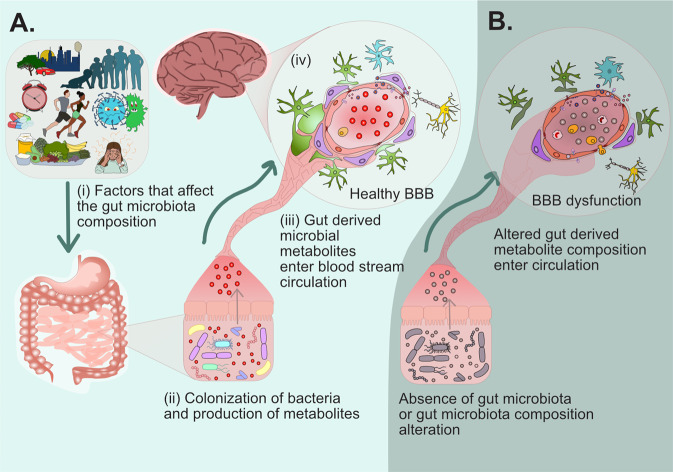
The blood-brain barrier (BBB) is vital for maintaining brain homeostasis by enabling an exquisite control of exchange of compounds between the blood and the brain parenchyma. Moreover, the BBB prevents unwanted toxins and pathogens from entering the brain. This barrier, however, breaks down with age and further disruption is a hallmark of many age-related disorders. Several drugs have been explored, thus far, to protect or restore BBB function. With the recent connection between the BBB and gut microbiota, microbial-derived metabolites have been explored for their capabilities to protect and restore BBB physiology. This review, will focus on the vital components that make up the BBB, dissect levels of disruption of the barrier, and discuss current drugs and therapeutics that maintain barrier integrity and the recent discoveries of effects microbial-derived metabolites have on BBB physiology.
Overview
The claims and statistics of this paper haven’t been checked yet.
Free: it reads the open-access text and checks the first 5 claims that cite a source we can check. Create a free account to check every claim.
Integrity signals
Registry
Cites
Statistics
Figures
Verification
Claims the paper makes
The claims and statistics of this paper haven’t been checked yet.
Free: it reads the open-access text and checks the first 5 claims that cite a source we can check. Create a free account to check every claim.
Claims other papers make about this one
Each is checked against this paper’s own text: does it say what the citing paper says it does?
The source backs part of the claim, not all of it — or backs it for a different population, condition or comparison.
In the citing paper
“Moreover, numerous studies have shown an increased BBB permeability in aged mice, which facilitates the infiltration of peripheral immune cells into the CNS.117,118”
From Role of neuroinflammation in neurodegeneration development (2023) · cites this paper as [117]
Experimental — accuracy not yet measuredThe cited source says what the claim attributes to it.
In the citing paper
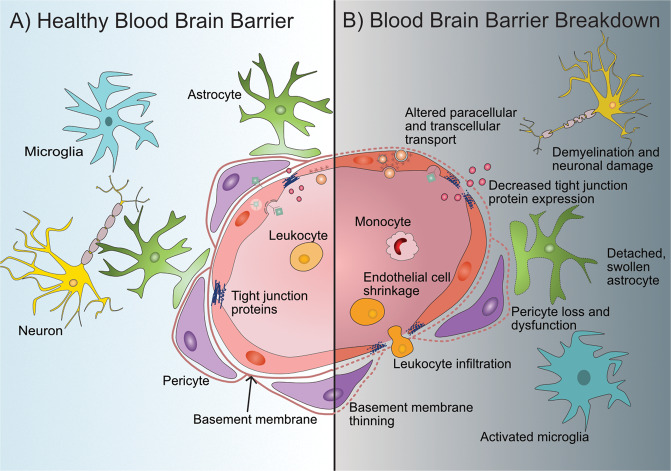
“These can include increased paracellular permeability by loss of TJs, degradation of ECs and pericytes, modification in thickness of the basement membrane, astrocyte degeneration, changes in the expression of transporters/receptors present in the BBB, and so forth [41].”
From Advances in Strategies to Transport Nanoparticles Across the Blood–Brain Barrier for Drug Delivery into the Brain for the Treatment of Alzheimer’s Disease (2026) · cites this paper as [41]
In the citing paper
“BBB disruption is well characterized in other neurodegenerative diseases, including PD, ALS, FTD, and HD.”
From Microbiota–gut–brain axis and its therapeutic applications in neurodegenerative diseases (2024) · cites this paper as [658]
In the citing paper
“Compromised BBB initiates the infiltration of peripheral immune cells and triggers microglial and astrocytic activation, ultimately resulting in synaptic and neuronal loss.”
From Microbiota–gut–brain axis and its therapeutic applications in neurodegenerative diseases (2024) · cites this paper as [658]
In the citing paper
“The structure and function of the BBB also undergo significant alterations with ageing, which contribute to the progression of neurodegenerative diseases and cognitive decline.153”
From Antiageing strategy for neurodegenerative diseases: from mechanisms to clinical advances (2025) · cites this paper as [153]
Self-check
Percentages, sums and reported differences re-computed from the paper’s own numbers.
The self-check needs the paper’s full text.
Citations
Cites
1 retracted
Items 201–213 of 213
Brain pericyte activation occurs early in Huntington's disease
Padel, T., Roth, M., Gaceb, A., Li, J., Björkqvist, M., & Paul, G. (2018) · Experimental Neurology · doi:10.1016/j.expneurol.2018.03.015 · Cited by 37
Singh, C. S. B., Choi, K. B., Munro, L., Wang, H. Y., Pfeifer, C. G., & Jefferies, W. A. (2021) · EBioMedicine · doi:10.1016/j.ebiom.2021.103503 · Cited by 36
Wittmann, G., Szabon, J., Mohácsik, P., Nouriel, S. S., Gereben, B., Fekete, C., & Lechan, R. M. (2015) · Endocrinology · doi:10.1210/en.2014-1830 · Cited by 35
Bohannon, D. G., Long, D., & Kim, W. (2021) · Cells · doi:10.3390/cells10040890 · Cited by 34 · cited 1×
“Distinguishing pericytes from vSMC is particularly challenging as they seem to have a shared, albeit heterogeneous origin [27], which leads to a continuous gradient of sub-types between canonical vSMC and canonical pericytes, with features of both cell types.”
BackgroundSystemic inflammation induces a profound long term brain cell injury in rats
Fan, L., Wang, T., Chang, L., Song, Y., Wu, Y., & Ma, D. (2014) · Acta Neurobiologiae Experimentalis · doi:10.55782/ane-2014-1995 · Cited by 33
Microbiome–host systems interactions: Protective effects of propionate upon the blood–brain barrier
Hoyles, L., Snelling, T., Umlai, U.-K., Nicholson, J. K., Carding, S. R., Glen, R. C., & McArthur, S. (2017) · bioRxiv (Cold Spring Harbor Laboratory) · doi:10.1101/170548 · Cited by 31
Wei, J., Fang, W., Sha, L., Han, D., Zhang, R., Hao, X., & Li, Y. (2013) · Neurochemical Research · doi:10.1007/s11064-013-1176-z · Cited by 29
Fei, Y.-X., Zhu, J., Zhao, B., Yin, Q., Fang, W., & Li, Y. (2020) · Brain Research Bulletin · doi:10.1016/j.brainresbull.2020.08.032 · Cited by 29
Lymphocyte transmigration in the brain: a new way of thinking
Lee, B. P.-L., & Imhof, B. A. (2008) · Nature Immunology · doi:10.1038/ni0208-117 · Cited by 27
Meucci, G., Rossi, G., Bettini, R., Montanaro, D., Gironelli, L., Voci, L., & Bianchi, F. (1993) · Journal of the Neurological Sciences · doi:10.1016/0022-510x(93)90248-w · Cited by 26
Zhao, B., Zhu, J., Fei, Y., Yin, Q., Shen, W., Liang, B., Zhu, X., & Li, Y. (2020) · Life Sciences · doi:10.1016/j.lfs.2020.118221 · Cited by 25 · cited 2×
“In primary cultured microvascular endothelial cells and in rats, JLX001 protects against glucose deprivation and reoxygenation [124].”
BackgroundMechanisms Underlying Astrocyte Endfeet Swelling in Stroke
Xiang, J., Tang, Y., Li, C., Su, E. J., Lawrence, D. A., & Keep, R. F. (2016) · Acta neurochirurgica. Supplementum · doi:10.1007/978-3-319-18497-5_4 · Cited by 21 · cited 1×
“The consequences and cause of the swelling are or not fully understood yet, but some hypothesize a swollen end foot may help cuff a damaged vessel [79].”
BackgroundStachulski, A. V., Knausenberger, T. B.-A., Shah, S. N., et al. (2022) · bioRxiv (Cold Spring Harbor Laboratory) · doi:10.1101/2022.01.11.475932 · Cited by 4 · cited 12×
“Earlier indications that the gut microbiota plays a role in affecting BBB integrity have been shown through the use of LPS from gram negative bacteria.”
BackgroundInfluential
Research works printed but not linked: 2
- Obermeier B, Daneman R, Ransohoff RM. Development, maintenance and disruption of the blood-brain barrier. Nat Med. 2013;19:1584–1596. · DOI · Paper page
- Goldenberg MM. Multiple sclerosis review. P T. 2012;37:175–184.
Cited by
Role of neuroinflammation in neurodegeneration development
Zhang, W., Xiao, D., Mao, Q., & Xia, H. (2023) · Signal Transduction and Targeted Therapy · doi:10.1038/s41392-023-01486-5 · Cited by 1,668
Microbiota–gut–brain axis and its therapeutic applications in neurodegenerative diseases
Loh, J. S., Mak, W. Q., Tan, L. K. S., Ng, C. X., Chan, H. H., Yeow, S. H., Foo, J. B., Ong, Y. S., How, C. W., & Khaw, K. Y. (2024) · Signal Transduction and Targeted Therapy · doi:10.1038/s41392-024-01743-1 · Cited by 1,193
Induced pluripotent stem cells (iPSCs): molecular mechanisms of induction and applications
Cerneckis, J., Cai, H., & Shi, Y. (2024) · Signal Transduction and Targeted Therapy · doi:10.1038/s41392-024-01809-0 · Cited by 452
Functionalized Nanomaterials Capable of Crossing the Blood–Brain Barrier
Zha, S., Liu, H., Li, H., Li, H., Wong, K.-L., & All, A. H. (2024) · ACS Nano · doi:10.1021/acsnano.3c10674 · Cited by 378
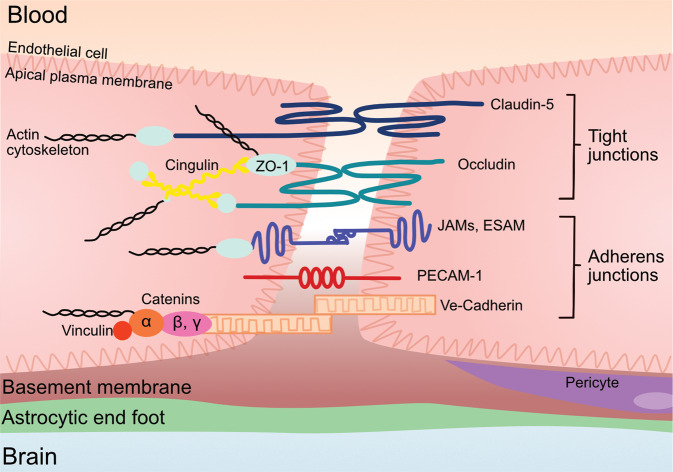
“21 Tight junctions consist of many different proteins in the cerebral microvasculature, including specific transmembrane and intra-cellular proteins.”
BackgroundInfluentialAburto, M. R., & Cryan, J. F. (2024) · Nature Reviews Gastroenterology & Hepatology · doi:10.1038/s41575-023-00890-0 · Cited by 359
Self-citation
Metadata
- Authors
- Knox, E. G., Aburto, M. R., Clarke, G., Cryan, J. F., & O’Driscoll, C. M.
- Affiliations
- University College Cork (IE)
- Venue
- Molecular Psychiatry
- Published
- 2022-03-31
- Volume
- 27
- Issue
- 6
- Pages
- 2659-2673
- ISSN
- 1359-4184 (ISSN-L)
- 1476-5578
- PMC
- PMC9156404
- OpenAlex
- W4220819957
- Cited by
- 738
- References
- 213
- Citations by year
- 2026: 199 · 2025: 233 · 2024: 183 · 2023: 96 · 2022: 27
- FWCI
- 13.86
- Type
- journal article
- Language
- en
- Open access
- hybrid
- doi.org
- Licence
- cc-by
- creativecommons.org/licenses/by/4.0 (tdm)
- creativecommons.org/licenses/by/4.0 (vor)
- Locations
- Molecular Psychiatry (publishedVersion, cc-by)
- PubMed Central (publishedVersion, cc-by)
- PubMed (publishedVersion)
- Lenus, The Irish Health Repository (Dr Steevens Hospital Library) (submittedVersion)
- Funders
- European Office of Aerospace Research and Development, Air Force Office of Scientific Research and 711 Human Performance Wing, Air Force Research Laboratory
- Science Foundation Ireland (SFI/12/RC/2273-P2)
- Topics
- Life Sciences › Neuroscience › Neurology › Barrier Structure and Function Studies
- Health Sciences › Medicine › Oncology › Drug Transport and Resistance Mechanisms
- Health Sciences › Medicine › Clinical Neurology › Cerebrospinal fluid and hydrocephalus
- Keywords
- blood-brain barrier, aging, neurodegeneration, blood-brain barrier disruption, brain homeostasis, gut microbiota, microbial metabolites
- MeSH terms
- Biological Transport, Blood-Brain Barrier, Brain, Homeostasis
About these checks
Registry, retraction, Cites and statistics results are computed, not judged, with one exception: a printed reference that no index lists is read once by a model before it counts as a citation error. Claims are extracted by a model and kept only when their quote appears verbatim in the text; each cited source is then checked, with a model’s help, for whether it says what the claim relies on. Those verdicts can be wrong — read the claim’s quote and the cited source before relying on one.
Statistics and arithmetic are recomputed, not judged.
Confidence bands are shown only for fields calibrated on our annotated test set. None is calibrated yet, so no band is shown.
What counts as a claim ›How we measure confidence ›How we check this ›
Are you an author, or do you see a problem with this page? Request a review
Data sources
Bibliographic data: Semantic Scholar, OpenAlex, Crossref.
Contains information from the Semantic Scholar Academic Graph Datasets, made available under the ODC Attribution License (ODC-BY 1.0).
Semantic Scholar’s data is described in: Kinney, R., et al. (2023). The Semantic Scholar Open Data Platform. arXiv:2301.10140.
