

Glucocorticoid-glucocorticoid receptor-HCN1 channels reduce neuronal excitability in dorsal hippocampal CA1 neurons
Open accessThe DOI matches its Crossref record; 96 of the 96 references it cites were found in a registry or an index.
Abstract
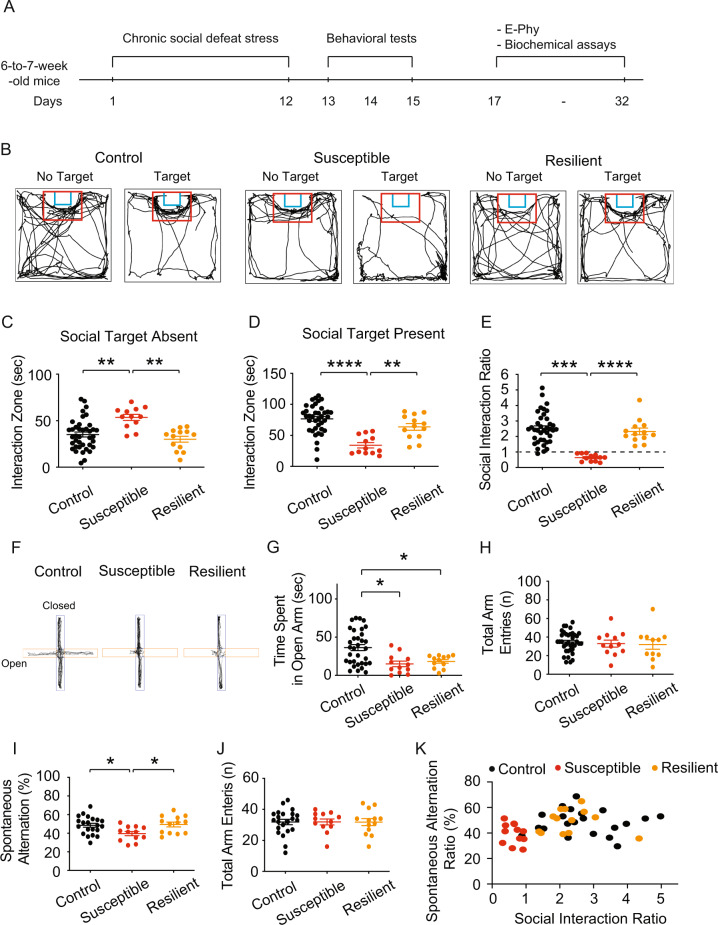
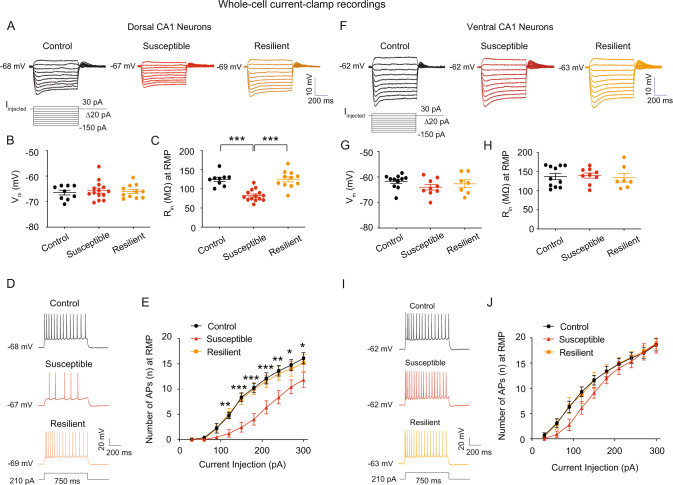
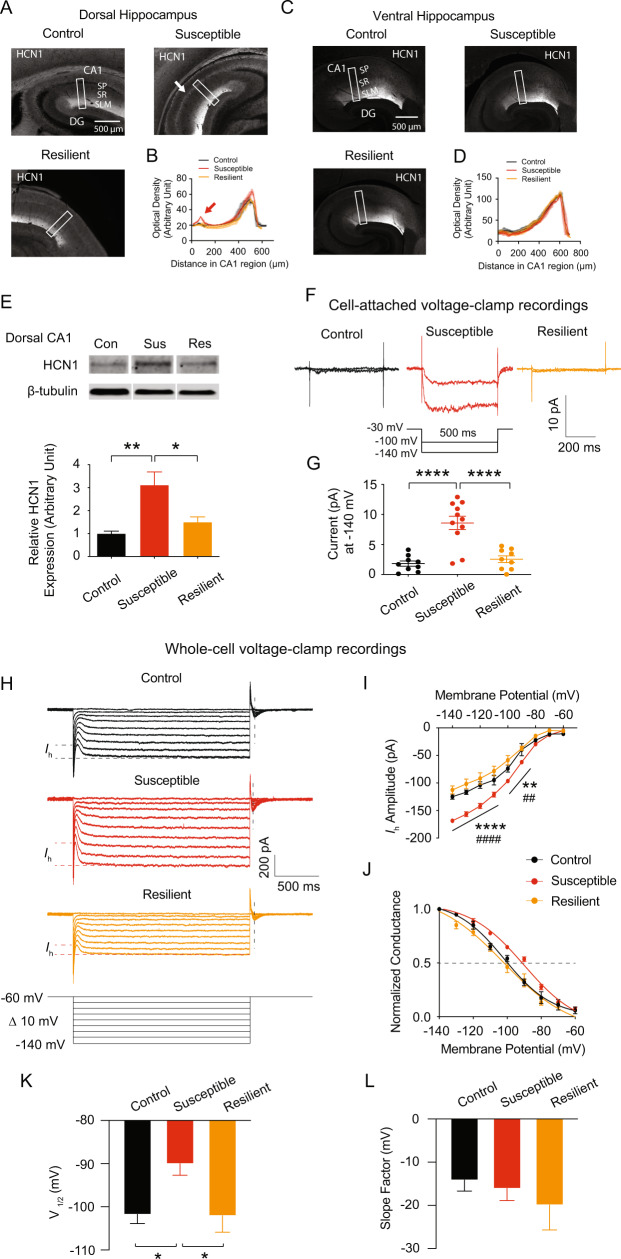
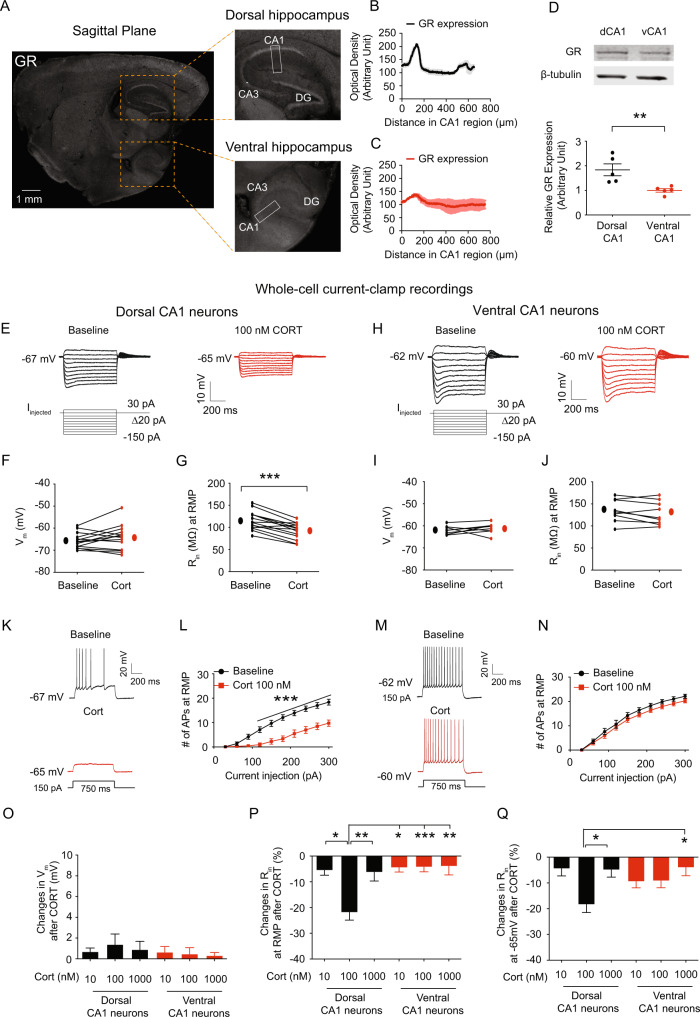
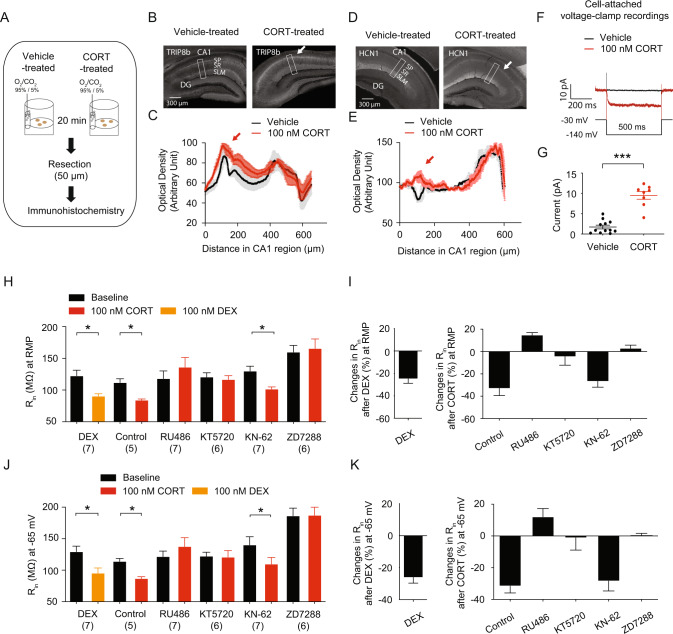
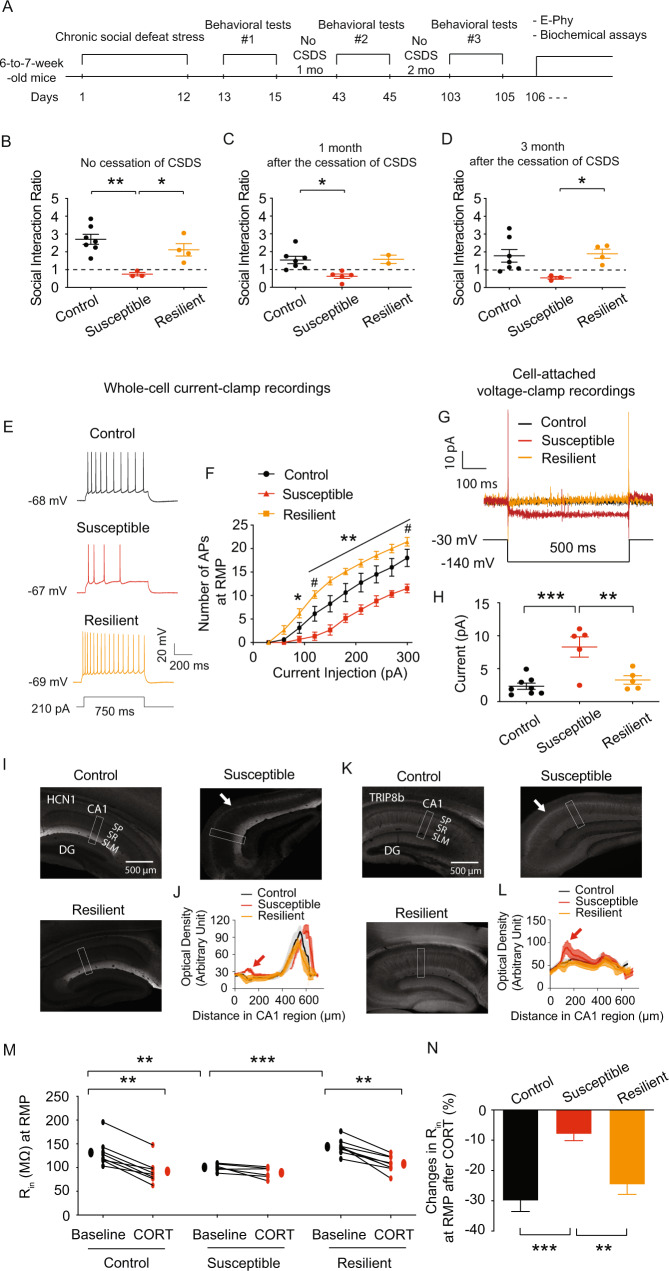
While chronic stress increases hyperpolarization-activated current (Ih) in dorsal hippocampal CA1 neurons, the underlying molecular mechanisms are entirely unknown. Following chronic social defeat stress (CSDS), susceptible mice displayed social avoidance and impaired spatial working memory, which were linked to decreased neuronal excitability, increased perisomatic hyperpolarization-activated cyclic nucleotide-gated (HCN) 1 protein expression, and elevated Ih in dorsal but not ventral CA1 neurons. In control mice, bath application of corticosterone reduced neuronal excitability, increased tetratricopeptide repeat–containing Rab8b-interacting protein (TRIP8b) and HCN1 protein expression, and elevated Ih in dorsal but not ventral CA1 region/neurons. Corticosterone-induced upregulation of functional Ih was mediated by the glucocorticoid receptor (GR), HCN channels, and the protein kinase A (PKA) but not the calcium/calmodulin-dependent protein kinase II (CaMKII) pathway. Three months after the end of CSDS, susceptible mice displayed persistent social avoidance when exposed to a novel aggressor. The sustained behavioral deficit was associated with lower neuronal excitability and higher functional Ih in dorsal CA1 neurons, both of which were unaffected by corticosterone treatment. Our findings show that corticosterone treatment mimics the pathophysiological effects of dorsal CA1 neurons/region found in susceptible mice. The aberrant expression of HCN1 protein along the somatodendritic axis of the dorsal hippocampal CA1 region might be the molecular mechanism driving susceptibility to social avoidance.
Overview
The claims and statistics of this paper haven’t been checked yet.
Free: it reads the open-access text and checks the first 5 claims that cite a source we can check. Create a free account to check every claim.
Integrity signals
Registry
Cites
Statistics
Figures
Verification
Claims the paper makes
The claims and statistics of this paper haven’t been checked yet.
Free: it reads the open-access text and checks the first 5 claims that cite a source we can check. Create a free account to check every claim.
Claims other papers make about this one
Each is checked against this paper’s own text: does it say what the citing paper says it does?
The check wasn’t confident either way, so it gives no verdict — never disputed.
In the citing paper
“Causal manipulations that attenuate default-mode drive reduce its pathological coupling: optogenetic silencing of the lateral habenula diminishes default mode network (DMN) hyperconnectivity in a depression model, while chemogenetic suppression of anterior cingulate cortex reconfigures DMN edges and improves behavior aligned with reduced rumination liability [284,285,286].”
From Synaptic Plasticity—Intrinsic Excitability and Antidepressant Discovery (2026) · cites this paper as [286]
Experimental — accuracy not yet measuredThe check wasn’t confident either way, so it gives no verdict — never disputed.
In the citing paper
“Causal manipulations that attenuate default-mode drive reduce its pathological coupling: optogenetic silencing of the lateral habenula diminishes default mode network (DMN) hyperconnectivity in a depression model, while chemogenetic suppression of anterior cingulate cortex reconfigures DMN edges and improves behavior aligned with reduced rumination liability [284,285,286].”
From Synaptic Plasticity—Intrinsic Excitability and Antidepressant Discovery (2026) · cites this paper as [286]
Experimental — accuracy not yet measured
Self-check
Percentages, sums and reported differences re-computed from the paper’s own numbers.
The self-check needs the paper’s full text.
Citations
Cites
Diagnostic and Statistical Manual of Mental Disorders
American Psychiatric Association (2013) · doi:10.1176/appi.books.9780890425596 · Cited by 116,369
Validation of open:closed arm entries in an elevated plus-maze as a measure of anxiety in the rat
Pellow, S., Chopin, P., File, S. E., & Briley, M. (1985) · Journal of Neuroscience Methods · doi:10.1016/0165-0270(85)90031-7 · Cited by 5,822
Hayes, S. C., Wilson, K. G., Gifford, E. V., Follette, V. M., & Strosahl, K. (1996) · Journal of Consulting and Clinical Psychology · doi:10.1037//0022-006x.64.6.1152 · Cited by 3,595
Are the Dorsal and Ventral Hippocampus Functionally Distinct Structures?
Fanselow, M. S., & Dong, H.-W. (2010) · Neuron · doi:10.1016/j.neuron.2009.11.031 · Cited by 3,358 · cited 1×
“The hippocampus of rodents can be separated anatomically and functionally into two brain regions: the dorsal hippocampus, which corresponds to the human posterior hippocampus, and the ventral hippocampus, which corresponds to the human anterior hippocampus [30, 31].”
BackgroundTwo receptor systems for corticosterone in rat brain: Microdistribution and differential occupation
REUL, J. M. H. M., & KLOET, E. R. D. (1985) · Endocrinology · doi:10.1210/endo-117-6-2505 · Cited by 2,580 · cited 1×
“When glucocorticoid levels are high, GR-expressing neurons in the hippocampus [58] and the hypothalamus [59], which have a low affinity for corticosterone, are likely to be the main target for negative feedback [60].”
BackgroundKrishnan, V., Han, M.-H., Graham, D. L., Berton, O., Renthal, W., Russo, S. J., LaPlant, Q., Graham, A., Lutter, M., Lagace, D. C., et al. (2007) · Cell · doi:10.1016/j.cell.2007.09.018 · Cited by 2,307 · cited 5×
“CSDS is a rodent model of psychosocial stress that causes social avoidance and anhedonia [14], indicators of human PTSD.”
BackgroundResultInfluentialHeim, C. (2000) · JAMA · doi:10.1001/jama.284.5.592 · Cited by 1,968
JACOBSON, L., & SAPOLSKY, R. (1991) · Endocrine Reviews · doi:10.1210/edrv-12-2-118 · Cited by 1,739 · cited 1×
“The hippocampus, which includes high amounts of mineralocorticoid receptor and GR, regulates HPA-axis activity among limbic brain structures [22].”
BackgroundPosttraumatic stress disorder: the burden to the individual and to society.
Kessler, R. C. (2000) · PubMed · Cited by 1,714
A standardized protocol for repeated social defeat stress in mice
Golden, S. A., Covington, H. E., Berton, O., & Russo, S. J. (2011) · Nature Protocols · doi:10.1038/nprot.2011.361 · Cited by 1,581 · cited 2×
“Mice with scores more than 1 were defined as “resilient” and those with scores less than 1 were defined as “susceptible” [47].”
BackgroundMethod
Cited by
Mitochondrial fission drives neuronal metabolic burden to promote stress susceptibility in male mice
Dong, W., Long, L., Deng, Q., Liu, D., Wang, J., Wang, F., & Chen, J. (2023) · Nature Metabolism · doi:10.1038/s42255-023-00924-6 · Cited by 97
The enigmatic HCN channels: A cellular neurophysiology perspective
Mishra, P., & Narayanan, R. (2025) · Proteins: Structure, Function, and Bioinformatics · doi:10.1002/prot.26643 · Cited by 40
Joëls, M., Karst, H., & Tasker, J. G. (2024) · Frontiers in Neuroendocrinology · doi:10.1016/j.yfrne.2024.101146 · Cited by 26
“The fast-onset corticosteroid actions generally do not change the passive membrane properties of target neurons, such as their resting membrane potential or input resistance (although see Kim et al., 2022).”
BackgroundLee, J., Wang, Z., Messi, M. L., Milligan, C., Furdui, C. M., & Delbono, O. (2024) · Acta Physiologica · doi:10.1111/apha.14123 · Cited by 15
“53 Disruption of EIF2 signaling is associated with various neurodegenerative disorders, 54,55 and has been observed in rodent models of anxiety.”
BackgroundTaylor, M. A., & Kokiko‐Cochran, O. N. (2024) · Frontiers in Cellular Neuroscience · doi:10.3389/fncel.2024.1351685 · Cited by 15
Arvind, A., Sreelekshmi, S., & Dubey, N. (2025) · Cellular and Molecular Neurobiology · doi:10.1007/s10571-025-01549-x · Cited by 24
“Major Depressive Disorder arises from the dynamicity of genetic, epigenetic, and environmental factors that collectively shape an individual’s vulnerability or resilience to stress.”
Rodrigues, B., Leitão, R. A., Santos, M., Трофимов, А. Н., Silva, M. M., Inácio, Â. S., Abreu, M., Nobre, R. J., Costa, J., Cardoso, A. L., et al. (2024) · Molecular Psychiatry · doi:10.1038/s41380-024-02715-1 · Cited by 14
“However, intrinsic neuronal properties may also be impacted by dexamethasone exposure, similar to what has been shown in diverse models of chronic stress [66 – 68].”
Enhanced Rap1 small GTPase activity in the ventral hippocampus drives stress-induced anxiety
Pan, H., Liu, W.-Z., Yang, C., Jiang, S.-Y., Zhang, M.-X., Hu, P., Yang, H.-T., Wang, Y., Li, Y.-Q., Tu, J., et al. (2025) · Science Advances · doi:10.1126/sciadv.adt3163 · Cited by 12
“Notably, there is also study indicating that chronic social defeat stress has a minimal effect on the intrinsic excitability of vCA1 PNs ( 42 ).”
Establishment of the Mouse Model of Social Avoidance Induced by Female-Directed Female Aggression
Kim, J., Pokharel, K., Michael, S., & Kim, C. S. (2022) · Chronic Stress · doi:10.1177/24705470221129288 · Cited by 9
“Social interaction test was performed as previously described.(8) Social interaction test was assessed at 24 hr after the last social defeat stress session.”
BackgroundMethodInfluentialSelf-citationKim, J., Michael, S., Pokharel, K., & Kim, C. S. (2025) · Biological Psychiatry · doi:10.1016/j.biopsych.2025.03.025 · Cited by 7
“HCN channels have been implicated in various neuropsychiatric and neurological disorders (3,20 – 25) due to their essential role in regulating neuronal excitability and synaptic plasticity.”
InfluentialSelf-citationMarghmaleki, V. S., Radahmadi, M., Alaei, H., & Khanahmad, H. (2024) · Metabolic Brain Disease · doi:10.1007/s11011-024-01399-4 · Cited by 5
“It is confirmed that HPA axis activ - ity had a pivotal role in modulating neural excitability in the CA1 area (Kim et al. 2022).”
Teng, Y., Tien-Wei, H., Peng, W.-H., Wu, C.-C., Chu, T., Lee, Y., Lee, M. T., & Ho, Y. (2026) · Antioxidants · doi:10.3390/antiox15010139 · Cited by 7
“Prolonged exposure to stress can disrupt hippocampal structure and function, leading to impaired emotional processing and an increased risk of mood disorders, including depression and anxiety [43,46].”
Time-Restricted Feeding in Adult Mice Improves Mood-Related Behaviors in a Sex-Dependent Manner
Bell, K. S., Darling, J. S., Prabhakar, A., Imad, S. T., Gaudet, A. D., & Fonken, L. K. (2025) · Behavioural Brain Research · doi:10.1016/j.bbr.2025.115867 · Cited by 6
Li, L., Zhang, S., Wang, H., Zhang, F. F., Dong, B., Yang, J., & Liu, X. (2024) · Cognitive Neurodynamics · doi:10.1007/s11571-024-10142-9 · Cited by 4
“These findings underscore that depression may affect neuronal electrophysiological properties through various mechanisms, decreasing membrane potential (Kim et al. 2022; Lei et al. 2020).”
Glucocorticoids Selectively Inhibit Hippocampal CA1 Pyramidal Neurons Activity Through HCN Channels
Li, C., Lu, T., Pan, C., & Hu, C. (2024) · International Journal of Molecular Sciences · doi:10.3390/ijms252211971 · Cited by 2
So, T. W., Choi, H. Y., Xu, H., Zhu, J., Shi, L., & Ip, J. P. K. (2025) · IBRO Neuroscience Reports · doi:10.1016/j.ibneur.2025.03.008 · Cited by 4
New insights into the molecular pathophysiology and treatment of depression
Chattaraj, B., Karmakar, S., & Jash, R. (2025) · Neuroscience · doi:10.1016/j.neuroscience.2025.08.013 · Cited by 3
Ye, M., Huang, C., Gu, Y., Lu, X., Zhu, T., & Zhang, Y. (2026) · Brain Behavior and Immunity · doi:10.1016/j.bbi.2026.106529 · Cited by 3
Self-citationWang, X., Luo, F., & Li, B. (2025) · Neurobiology of Disease · doi:10.1016/j.nbd.2025.107186 · Cited by 1
Du, S., Shang, G., Tian, X., Liu, Z., Yang, Y., Niu, H., Bian, J., Wu, Y., & Ma, J. (2024) · Animals · doi:10.3390/ani14172467 · Cited by 1
“These diseases are mainly caused by multiple factors in the body, including abnormalities in the HPA axis, damage to the limbic system, and imbalance of inflammatory cytokines [16,17].”
BackgroundMazaheri, M. M., Radahmadi, M., & Sharifi, M. R. (2024) · Metabolic Brain Disease · doi:10.1007/s11011-024-01487-5 · Cited by 4
“…current due to increased glucocorticoid secretion, diminished levels of Brain-derived neurotrophic factor (BDNF), and changes in neurotransmitter release in the brain (Buchanan et al. 2012; Kim et al. 2022; Mazza et al. 2016; Musazzi and Marrocco 2016; Radahmadi et al. 2015 ).”
Kim, J., & Kim, C. S. (2025) · bioRxiv (Cold Spring Harbor Laboratory) · doi:10.1101/2025.04.28.651027 · Cited by 1
“This is because physically, socially defeated mice specifically exhibit fear-based social avoidance and freezing behaviors in response to aggressors (Kim et al., 2022a; Kim et al., 2025; Kim et al., 2022b).”
InfluentialSelf-citationSynaptic Plasticity—Intrinsic Excitability and Antidepressant Discovery
Tanaka, M. (2026) · Biomedicines · doi:10.3390/biomedicines14061265
Wang, J., Zhang, L., Liu, J., Yang, Y., Wei, X., Jiang, X., Hua, Y., Zhu, T., Chen, G., & Zhou, C. (2025) · Molecular Psychiatry · doi:10.1038/s41380-025-03101-1
“For example, stress-induced social avoidance is more susceptible in the mice with higher hyperpolarization-activated currents (increased HCN1 protein expression) and lower neuronal excitability in dorsal CA1 neurons [8].”
The Role of HCN1 Channels in Resilience and Susceptibility to Witnessed Social Defeat Stress
Colmers, W. F., & Urban, J. H. (2025) · Biological Psychiatry · doi:10.1016/j.biopsych.2025.06.017
M'Mbijiwe, F. N. (2025) · SSRN Electronic Journal · doi:10.2139/ssrn.5375946
Xiong, J., Yu, Y., Zhu, L.-L., Wang, L.-Y., Zhang, X., Su, Y., Si, T., & Li, J. (2025) · Neurobiology of Disease · doi:10.1016/j.nbd.2025.107137
Liu, Z., Bi, J., Yu, Z., Tian, M., Chen, Z., Wei, R., Wang, M., Zha, H., Zhang, Y., Wang, H., et al. (2025) · Advanced Science · doi:10.1002/advs.202512170 · Cited by 1
Social valence dictates sex differences in identity recognition
Larosa, A., Xu, Q. W., Yaghoubi, M., Wong, B. W., Wong, A. S., Lee, J. Q., Brandon, M. P., & Wong, T. P. (2026) · Translational Psychiatry · doi:10.1038/s41398-026-03854-5 · Cited by 2
“Rodent studies revealed that dCA1 activity represented the spatial location [14, 15] and valence assignment of social targets [9, 12]. dCA1 neurons activated by social defeat, a form of negative social valence, were also more active in mice susceptible to this stressor [16] (but also see [17]).”
Kim, C. S., Kim, J., & Michael, S. (2026) · Translational Psychiatry · doi:10.1038/s41398-026-03871-4 · Cited by 1
“These testing windows are consistent with our previous work [15, 18, 24], ensuring methodological continuity across studies.”
InfluentialSelf-citationLevi, G., Sintov, A. C., Zohar, J., Todder, D., & Cohen, H. (2026) · Translational Psychiatry · doi:10.1038/s41398-026-03979-7 · Cited by 2
“We also investigated NPY and BDNF, both implicated in stress resilience and altered in PTSD [32, 61, 62].”
Kim, C. S., Banks, J., Miswakumari, L. A. D., & Kang, S. (2026) · bioRxiv (Cold Spring Harbor Laboratory) · doi:10.64898/2026.05.15.725448
Self-citationZhang, W., Zhao, M., Dai, J., Zhuo, L., Ye, H., Wang, J., & Wang, W. (2026) · Communications Biology · doi:10.1038/s42003-026-10457-9 · Cited by 3
Metadata
- Authors
- Kim, J., Lei, Y., Lu, X.-Y., & Kim, C. S.
- Affiliations
- Augusta University (US)
- Corresponding author
- Kim, Chung Sub
- Venue
- Molecular Psychiatry
- Published
- 2022-07-15
- Volume
- 27
- Issue
- 10
- Pages
- 4035-4049
- ISSN
- 1359-4184 (ISSN-L)
- 1476-5578
- PMC
- PMC9718682
- OpenAlex
- W4285493484
- Cited by
- 33
- References
- 96
- Citations by year
- 2026: 8 · 2025: 13 · 2024: 9 · 2023: 2 · 2022: 1
- FWCI
- 3.69
- Type
- journal article
- Language
- en
- Open access
- hybrid
- doi.org
- Licence
- cc-by
- creativecommons.org/licenses/by/4.0 (tdm)
- creativecommons.org/licenses/by/4.0 (vor)
- Locations
- Molecular Psychiatry (publishedVersion, cc-by)
- PubMed Central (publishedVersion, cc-by)
- PubMed (publishedVersion)
- Funders
- Startup Fund from the Medical College of Medicine at Augusta University
- Topics
- Life Sciences › Neuroscience › Behavioral Neuroscience › Stress Responses and Cortisol
- Life Sciences › Neuroscience › Cellular and Molecular Neuroscience › Neuroscience and Neuropharmacology Research
- Life Sciences › Biochemistry, Genetics and Molecular Biology › Molecular Biology › Ion channel regulation and function
- Keywords
- glucocorticoid receptor, HCN1 channels, hyperpolarization-activated current, neuronal excitability, chronic social defeat stress, corticosterone, TRIP8b, protein kinase A, social avoidance, stress vulnerability
- MeSH terms
- Animals, Corticosterone, Glucocorticoids, Hippocampus, Memory Disorders, Neurons, Receptors, Glucocorticoid, Potassium Channels, Mice, Calcium-Calmodulin-Dependent Protein Kinase Type 2, Cyclic Nucleotide-Gated Cation Channels, CA1 Region, Hippocampal, Hyperpolarization-Activated Cyclic Nucleotide-Gated Channels
About these checks
Registry, retraction, Cites and statistics results are computed, not judged, with one exception: a printed reference that no index lists is read once by a model before it counts as a citation error. Claims are extracted by a model and kept only when their quote appears verbatim in the text; each cited source is then checked, with a model’s help, for whether it says what the claim relies on. Those verdicts can be wrong — read the claim’s quote and the cited source before relying on one.
Statistics and arithmetic are recomputed, not judged.
Confidence bands are shown only for fields calibrated on our annotated test set. None is calibrated yet, so no band is shown.
What counts as a claim ›How we measure confidence ›How we check this ›
Are you an author, or do you see a problem with this page? Request a review
Data sources
Bibliographic data: Semantic Scholar, OpenAlex, Crossref.
Contains information from the Semantic Scholar Academic Graph Datasets, made available under the ODC Attribution License (ODC-BY 1.0).
Semantic Scholar’s data is described in: Kinney, R., et al. (2023). The Semantic Scholar Open Data Platform. arXiv:2301.10140.
