

Antidepressants for the treatment of adults with major depressive disorder in the maintenance phase: a systematic review and network meta-analysis
Open accessThe DOI matches its Crossref record; 54 of the 56 references it cites were found in a registry or an index; 13 of the 29 sources its claims cite were checked for support.
Abstract
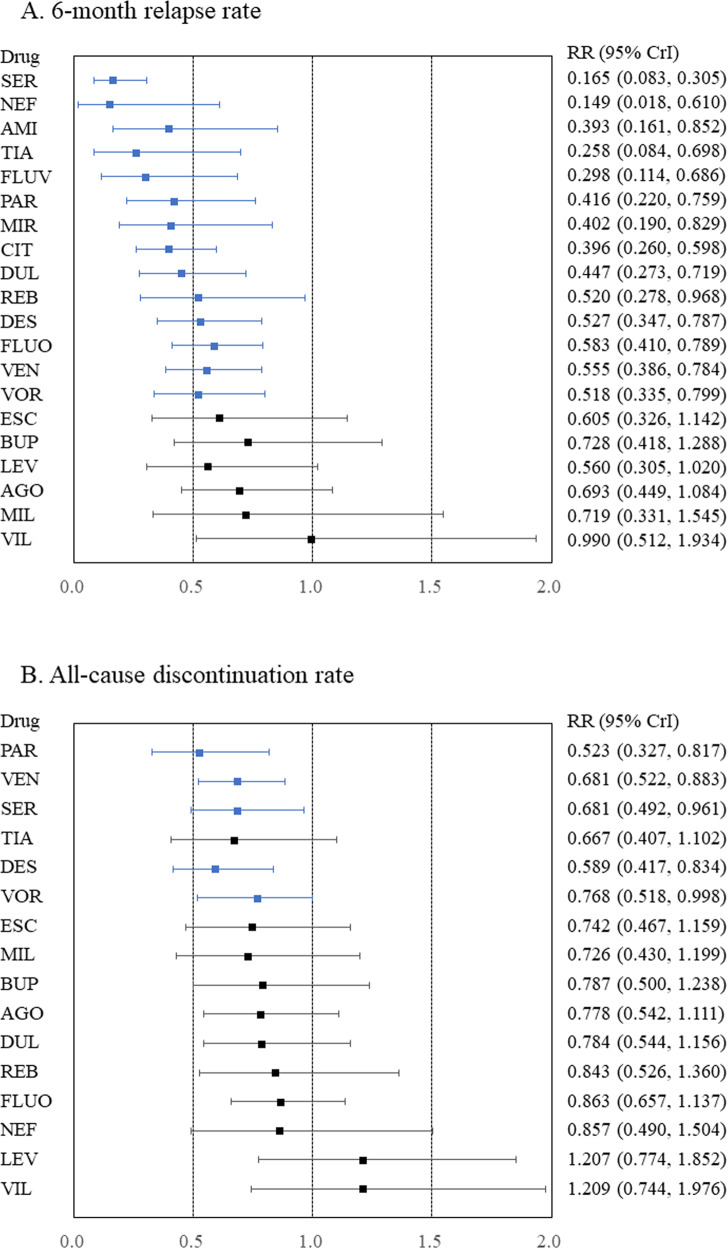
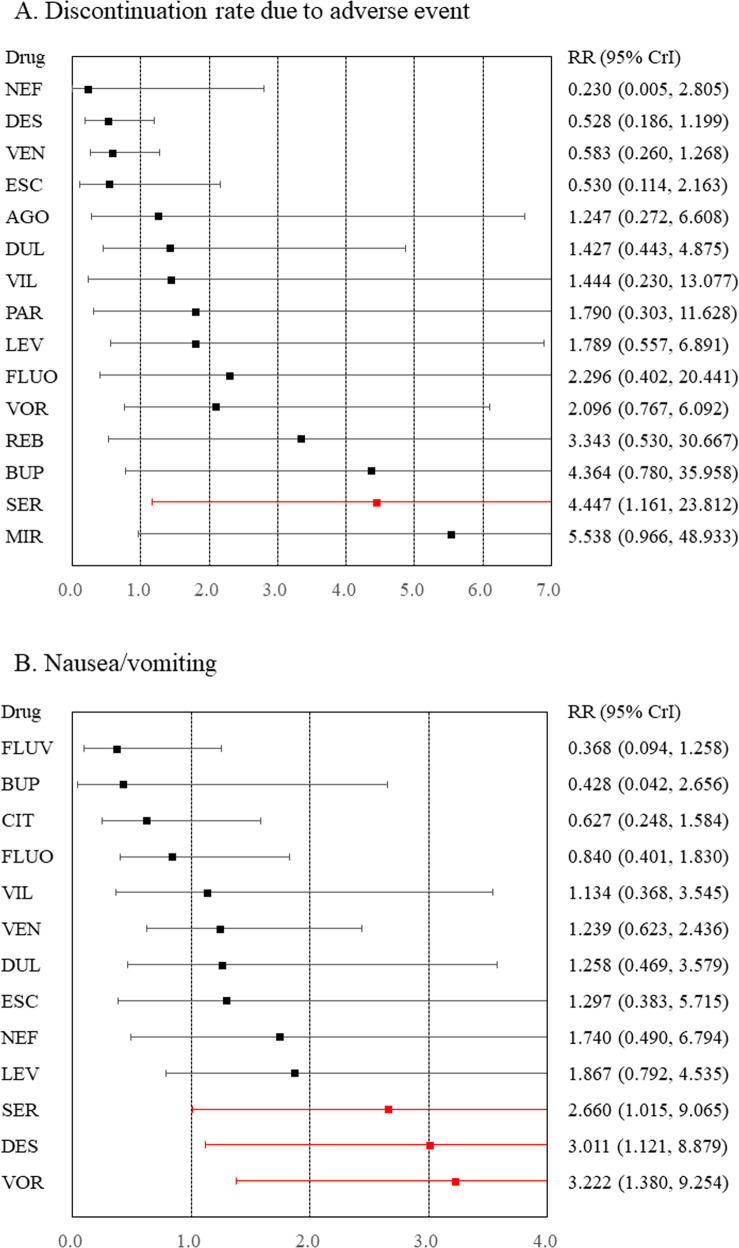
A systematic review and random-effects model network meta-analysis were conducted to compare the efficacy, acceptability, tolerability, and safety of antidepressants to treat adults with major depressive disorder (MDD) in the maintenance phase. This study searched the PubMed, Cochrane Library, and Embase databases and included only double-blind, randomized, placebo-controlled trials with an enrichment design: patients were stabilized on the antidepressant of interest during the open-label study and then randomized to receive the same antidepressant or placebo. The outcomes were the 6-month relapse rate (primary outcome, efficacy), all-cause discontinuation (acceptability), discontinuation due to adverse events (tolerability), and the incidence of individual adverse events. The risk ratio with a 95% credible interval was calculated. The meta-analysis comprised 34 studies (n = 9384, mean age = 43.80 years, and %females = 68.10%) on 20 antidepressants (agomelatine, amitriptyline, bupropion, citalopram, desvenlafaxine, duloxetine, escitalopram, fluoxetine, fluvoxamine, levomilnacipran, milnacipran, mirtazapine, nefazodone, paroxetine, reboxetine, sertraline, tianeptine, venlafaxine, vilazodone, and vortioxetine) and a placebo. In terms of the 6-month relapse rate, amitriptyline, citalopram, desvenlafaxine, duloxetine, fluoxetine, fluvoxamine, mirtazapine, nefazodone, paroxetine, reboxetine, sertraline, tianeptine, venlafaxine, and vortioxetine outperformed placebo. Compared to placebo, desvenlafaxine, paroxetine, sertraline, venlafaxine, and vortioxetine had lower all-cause discontinuation; however, sertraline had a higher discontinuation rate due to adverse events. Compared to placebo, venlafaxine was associated with a lower incidence of dizziness, while desvenlafaxine, sertraline, and vortioxetine were associated with a higher incidence of nausea/vomiting. In conclusion, desvenlafaxine, paroxetine, venlafaxine, and vortioxetine had reasonable efficacy, acceptability, and tolerability in the treatment of adults with stable MDD.
Overview
CoChat Summary
TL;DR
This systematic review and Bayesian network meta-analysis compared 20 antidepressants with placebo for maintenance treatment of adults with major depressive disorder, using double-blind randomized placebo-controlled trials with an enrichment design. Desvenlafaxine, paroxetine, venlafaxine, and vortioxetine had the best balance of efficacy, acceptability, and tolerability, though desvenlafaxine and vortioxetine carried a higher risk of nausea/vomiting.
Key findings
- The analysis included 34 double-blind randomized placebo-controlled trials with an enrichment design (n = 9,384; mean age = 43.80 years; 68.10% females) covering 20 antidepressants plus placebo.
- For the 6-month relapse rate, amitriptyline, citalopram, desvenlafaxine, duloxetine, fluoxetine, fluvoxamine, mirtazapine, nefazodone, paroxetine, reboxetine, sertraline, tianeptine, venlafaxine, and vortioxetine outperformed placebo, with risk ratios ranging from 0.149 (95% CrI 0.018–0.610) for nefazodone to 0.583 (95% CrI 0.410–0.789) for fluoxetine.
- Compared with placebo, desvenlafaxine, paroxetine, sertraline, venlafaxine, and vortioxetine had lower all-cause discontinuation, with risk ratios ranging from 0.523 (95% CrI 0.327–0.817) for paroxetine to 0.768 (95% CrI 0.518–0.998) for vortioxetine.
- Sertraline was associated with a higher rate of discontinuation due to adverse events; desvenlafaxine, sertraline, and vortioxetine were associated with higher nausea/vomiting, while venlafaxine was associated with lower dizziness.
Methods
- Systematic review and random-effects Bayesian network meta-analysis of double-blind, randomized, placebo-controlled trials with an enrichment design and minimum 12-week duration; patients were stabilized on the antidepressant of interest during open-label treatment and then randomized to the same antidepressant or placebo.
- Searched PubMed, Cochrane Library, and Embase; included 34 studies (n = 9,384) on 20 antidepressants and placebo. Outcomes were 6-month relapse rate (primary), all-cause discontinuation, discontinuation due to adverse events, and individual adverse events.
- Calculated risk ratios with 95% credible intervals; also performed pairwise meta-analyses, heterogeneity assessment, transitivity testing, meta-regression, ROB2 quality assessment, and CINeMA grading.
Limitations
- Stated: the number of participants and trials for some antidepressants, especially tricyclics, was small, and some results were based on only one study; the study did not cover important clinical issues such as monotherapy versus combination with nonpharmacological treatments, and did not include some side effects such as agitation due to lack of data.
- Stated: because no double-blind randomized placebo-controlled trials with an enrichment design existed for treatments such as lithium or psychotherapy, those treatments were not evaluated.
- Evident from the text: no head-to-head studies compared different antidepressants, so statistical incoherence could not be evaluated; publication bias was rated “suspected” for all comparisons because funnel plots had fewer than 10 studies; confidence in the evidence for the primary outcome was “very low” for all comparisons except vortioxetine versus placebo, which was “low”; 31 of 34 studies were industry-sponsored.
Model-written summary. Check it against the paper before relying on it.
Integrity signals
Registry
Cites
Statistics
Figures
Verification
Claims the paper makes
9 Valid · 1 Not valid · 8 Not checked · 49 Own results and interpretations
The cited sources support only part of this claim — read each source’s verdict below.
In the paper
“Thus, when comparing the efficacy of individual antidepressants, a network meta-analysis is likely to yield more robust results than a pairwise meta-analysis.”
§ Antidepressants for the treatment of adults with major depressive disorder in the maintenance phase: a systematic review and network meta-analysis > Discussion
What the sources say
- Not matchedcites [9] Higgins J, Thomas J, Chandler J, Cumpston M, Li T, Page M, et al. Cochrane Handbook for Systematic Reviews of Interventions version 6.2. wwwtrainingcochraneorg/handbook 2021.
Its entry has no title and year that we can search by.
- Supportedcites [58] Leucht S Chaimani A Cipriani AS Davis JM Furukawa TA Salanti G Network meta-analyses should be the highest level of evidence in treatment guidelines Eur Arch Psychiatry Clin Neurosci 2016 266 477 80 27435721 source
In the main text (page unavailable), the paper says network meta-analysis combines direct and indirect comparisons, increasing statistical power and precision beyond conventional pairwise meta-analysis. It also cites a network meta-analysis of antidepressants as an example. The advantage depends on the network being well connected and the evidence being consistent. (LLM, conf=0.87)
hedgedstates an association- Asserted: passes — The authors put it forward as true.
- Checkable: passes — It can be checked against evidence.
- Load-bearing: passes — The paper’s conclusions depend on it.
- Based: passes — The paper gives a reason why it holds.
- Not matched
The sources with a verdict support this claim; the rest weren’t checked yet, have no full text we could read, or their verdicts aren’t rated yet.
In the paper
“Moreover, the previous pairwise meta-analyses for individuals with MDD in the maintenance phase did not evaluate the risk of individual adverse events of antidepressants [7, 10, 11].”
§ Antidepressants for the treatment of adults with major depressive disorder in the maintenance phase: a systematic review and network meta-analysis > Introduction
What the sources say
- Supportedcites [7] Kato M Hori H Inoue T Iga J Iwata M Inagaki T Discontinuation of antidepressants after remission with antidepressant medication in major depressive disorder: a systematic review and meta-analysis Mol Psychiatry 2021 26 118 33 32704061 PMC7815511 source
The Methods section identifies this as a pairwise meta-analysis of antidepressants versus placebo. Its stated outcomes are relapse, all-cause dropout, and dropout due to adverse events; it does not assess risks of individual adverse events. The cited paper therefore exemplifies the type of earlier analysis described in the claim. (LLM, conf=0.88)
- Supportedcites [10] Sim K, Lau WK, Sim J, Sum MY, Baldessarini RJ. Prevention of relapse and recurrence in adults with major depressive disorder: systematic review and meta-analyses of controlled trials. Int J Neuropsychopharmacol 2015;19:pyv076. PMC4772815 26152228 source
The Methods > Data Extraction section (page unavailable) identifies relapse or recurrence rates and dropout rates as the extracted outcomes. Methods > Data Analysis (page unavailable) describes meta-analysis of treatment response, with no analysis of individual adverse-event risks. The claim accurately characterizes the scope of this review. (LLM, conf=0.88)
- Not checked — no full text of the sourcecites [11] Glue P Donovan MR Kolluri S Emir B Meta-analysis of relapse prevention antidepressant trials in depressive disorders Aust N. Z J Psychiatry 2010 44 697 705 20636190 source
plain- Asserted: passes — The authors put it forward as true.
- Checkable: passes — It can be checked against evidence.
- Load-bearing: passes — The paper’s conclusions depend on it.
- Based: passes — The paper gives a reason why it holds.
- Supported
Every source the paper cites for this claim was checked and supports it.
In the paper
“According to this meta-analysis, the antidepressant maintenance group had a significantly lower relapse rate than the antidepressant discontinuation group (odds ratio = 0.38, 95% confidence interval = 0.33–0.43, p < 0.00001).”
§ Antidepressants for the treatment of adults with major depressive disorder in the maintenance phase: a systematic review and network meta-analysis > Introduction
What the sources say
- Supportedcites [7] Kato M Hori H Inoue T Iga J Iwata M Inagaki T Discontinuation of antidepressants after remission with antidepressant medication in major depressive disorder: a systematic review and meta-analysis Mol Psychiatry 2021 26 118 33 32704061 PMC7815511 source
The Results section (‘Relapse, acceptability, and tolerability at study endpoint’) reports a pooled relapse odds ratio of 0.38 (95% CI 0.33–0.43, p < 0.00001) across 40 studies, favoring antidepressant continuation over placebo. This matches the cited comparison between maintenance and discontinuation. (LLM, conf=0.95)
plainstates a causen = 8,890- Asserted: passes — The authors put it forward as true.
- Checkable: passes — It can be checked against evidence.
- Load-bearing: passes — The paper’s conclusions depend on it.
- Based: passes — The paper gives a reason why it holds.
- Supported
A result the paper reports from its own data — it cites no other source for it, so there is none to check. The quote shows it is in the paper.
In the paper
“Thus, no clear evidence of violations of the transitivity assumption for any of the potential effect modifiers analyzed was found (Table S5 and Appendix S1).”
§ Antidepressants for the treatment of adults with major depressive disorder in the maintenance phase: a systematic review and network meta-analysis > Results > Efficacy
hedged- Asserted: passes — The authors put it forward as true.
- Checkable: passes — It can be checked against evidence.
- Load-bearing: passes — The paper’s conclusions depend on it.
- Based: passes — The paper gives a reason why it holds.
- Rests on an assumption not shown here.
A result the paper reports from its own data — it cites no other source for it, so there is none to check. The quote shows it is in the paper.
In the paper
“The distribution of potential effect modifiers was similar across the comparisons in the network (Table S5).”
§ Antidepressants for the treatment of adults with major depressive disorder in the maintenance phase: a systematic review and network meta-analysis > Results > Study characteristics
plain- Asserted: passes — The authors put it forward as true.
- Checkable: passes — It can be checked against evidence.
- Load-bearing: passes — The paper’s conclusions depend on it.
- Based: passes — The paper gives a reason why it holds.
25 more claims
Create a free account to see all 67 claims and every source verdict.
- It may state two separate claims as one. 20
- Probably not a substantial claim. 23
- The quote only partly states this claim. 3
Citations
Cites
Meta-analysis in clinical trials
DerSimonian, R., & Laird, N. (1986) · Controlled Clinical Trials · doi:10.1016/0197-2456(86)90046-2 · Cited by 39,552 · cited 1×
“Meta-analysis methods Both pairwise [14] and Bayesian network meta-analyses [15] were performed using the random-effects model [16].”
MethodHutton, B., Salanti, G., Caldwell, D. M., Chaimani, A., Schmid, C. H., Cameron, C., Ioannidis, J. P. A., Straus, S., Thorlund, K., Jansen, J. P., et al. (2015) · Annals of Internal Medicine · doi:10.7326/m14-2385 · Cited by 8,269 · cited 1×
“MATERIALS AND METHODS This study adhered to the Preferred Reporting Items for Systematic Reviews and Meta-Analyses (PRISMA) guidelines [12] (Table S1) and was registered on the Open Science Framework (https://osf.”
MethodCipriani, A., Furukawa, T. A., Salanti, G., Chaimani, A., Atkinson, L. Z., Ogawa, Y., Leucht, S., Ruhe, H. G., Turner, E. H., Higgins, J. P. T., et al. (2018) · The Lancet · doi:10.1016/s0140-6736(17)32802-7 · Cited by 3,541
CINeMA: an approach for assessing confidence in the results of a network meta-analysis
Nikolakopoulou, A., Higgins, J. P. T., Papakonstantinou, T., Chaimani, A., Del Giovane, C., Egger, M., & Salanti, G. (2020) · PLOS Medicine · doi:10.1371/journal.pmed.1003082 · Cited by 1,935
Evaluating the quality of evidence from a network meta-analysis
Salanti, G., Del Giovane, C., Chaimani, A., Caldwell, D. M., & Higgins, J. P. T. (2014) · PLoS ONE · doi:10.1371/journal.pone.0099682 · Cited by 1,402
Kennedy, S. H., Lam, R. W., McIntyre, R. S., Tourjman, S. V., Bhat, V., Blier, P., Hasnain, M., Jollant, F., Levitt, A. J., MacQueen, G. M., et al. (2016) · The Canadian Journal of Psychiatry · doi:10.1177/0706743716659417 · Cited by 1,181
Time for united action on depression: a Lancet–World Psychiatric Association Commission
Herrman, H., Patel, V., Kieling, C., Berk, M., Buchweitz, C., Cuijpers, P., Furukawa, T. A., Kessler, R. C., Kohrt, B. A., Maj, M., et al. (2022) · The Lancet · doi:10.1016/s0140-6736(21)02141-3 · Cited by 1,104 · cited 3×
“Therefore, maintenance therapy is necessary to avoid relapse/recurrence [1].”
BackgroundInfluentialConceptual and technical challenges in network meta-analysis
Cipriani, A., Higgins, J. P. T., Geddes, J. R., & Salanti, G. (2013) · Annals of Internal Medicine · doi:10.7326/0003-4819-159-2-201307160-00008 · Cited by 1,072 · cited 1×
“We determined whether the distribution differences were large enough to threaten the validity of the analysis by comparing the distribution of these possible effect modifiers across treatments included in the network meta-analysis using the Kruskal–Wallis test (continuous variables), the Pearson chi-squared test or th…”
MethodAutomating network meta‐analysis
van Valkenhoef, G., Lu, G., de Brock, B., Hillege, H., Ades, A. E., & Welton, N. J. (2012) · Research Synthesis Methods · doi:10.1002/jrsm.1054 · Cited by 786 · cited 1×
“Meta-analysis methods Both pairwise [14] and Bayesian network meta-analyses [15] were performed using the random-effects model [16].”
MethodPapakonstantinou, T., Nikolakopoulou, A., Higgins, J. P. T., Egger, M., & Salanti, G. (2020) · Campbell Systematic Reviews · doi:10.1002/cl2.1080 · Cited by 596
Research works printed but not linked: 2
- Baldessarin IR Chemotherapy in Psychiatry, 3rd edition. Springer Press 2013; New York.
- Dekker J Jonghe F Tuynman H The use of anti-depressants after recovery from depression Eur J Psychiatry 2000 14 207 12
Cited by
Pillinger, T., Howes, O. D., Correll, C. U., Leucht, S., Huhn, M., Schneider-Thoma, J., Gaughran, F., Jauhar, S., McGuire, P. K., Taylor, D. M., et al. (2023) · The Lancet Psychiatry · doi:10.1016/s2215-0366(23)00262-6 · Cited by 147
“43 This outcome was due to the modest number of included drugs in the meta-analysis, and concerns regarding the validity of meta-analytic and ordinal regression models, thereby precluding imputation.”
BackgroundTheta burst stimulation for depression: a systematic review and network and pairwise meta-analysis
Kishi, T., Ikuta, T., Sakuma, K., Hatano, M., Matsuda, Y., Wilkening, J., Goya-Maldonado, R., Tik, M., Williams, N. R., Kito, S., et al. (2024) · Molecular Psychiatry · doi:10.1038/s41380-024-02630-5 · Cited by 74
Self-citationPolypharmacology: promises and new drugs in 2022
Ryszkiewicz, P., Malinowska, B., & Schlicker, E. (2023) · Pharmacological Reports · doi:10.1007/s43440-023-00501-4 · Cited by 76
Zheng, X., Qiu, J., Gao, N., Jiang, T., Li, Z., Zhang, W., Gong, Y., Hong, Z., & Hong, H. (2023) · Drug Design Development and Therapy · doi:10.2147/dddt.s417598 · Cited by 57
Chan, J. K. N., Solmi, M., Lo, H. K. Y., Chan, M. W. Y., Choo, L. L. T., Lai, E. T. H., Wong, C. S. M., Correll, C. U., & Chang, W. C. (2025) · World Psychiatry · doi:10.1002/wps.21354 · Cited by 66
Clark, A., Tate, B., Urban, B., Schroeder, R., Gennuso, S. A., Ahmadzadeh, S., McGregor, D., Girma, B., Shekoohi, S., & Kaye, A. D. (2023) · Health Psychology Research · doi:10.52965/001c.81043 · Cited by 52
Shen, C., Wang, K., Wang, H., Gao, Y., Nie, K., Jiang, X., Su, H., Tang, Y., Lu, F., Dong, H., et al. (2024) · Pharmacological Research · doi:10.1016/j.phrs.2024.107090 · Cited by 38
Ishtiak‐Ahmed, K., Musliner, K. L., Christensen, K. S., Mortensen, E. L., Nierenberg, A. A., & Gasse, C. (2023) · American Journal of Psychiatry · doi:10.1176/appi.ajp.20230356 · Cited by 42
Tian, S., Liang, Z., Qui, F., Yu, Y., Wang, C., Zhang, M., & Wang, X. (2024) · Journal of Psychiatric Research · doi:10.1016/j.jpsychires.2024.06.031 · Cited by 42
Neuroinflammation and Natural Antidepressants: Balancing Fire with Flora
Figueiredo Godoy, A. C., Frota, F. F., Araújo, L. P., Valenti, V. E., Pereira, E. D. S. B. M., Detregiachi, C. R. P., Galhardo, C. M., Caracio, F. C., Haber, R. S. A., Fornari Laurindo, L., et al. (2025) · doi:10.20944/preprints202504.0573.v2 · Cited by 33
Neuroinflammation and Natural Antidepressants: Balancing Fire with Flora
Figueiredo Godoy, A. C., Frota, F. F., Araújo, L. P., Valenti, V. E., Pereira, E. D. S. B. M., Detregiachi, C. R. P., Galhardi, C. M., Caracio, F. C., Haber, R. S. A., Fornari Laurindo, L., et al. (2025) · Biomedicines · doi:10.3390/biomedicines13051129 · Cited by 32
Halstead, S., Yap, C. X., Warren, N., Agarwal, S. M., Brand, B. A., Chan, S. K. W., Cipriani, A., Correll, C. U., Crossley, N. A., D’Ambrosio, E., et al. (2025) · The Lancet Psychiatry · doi:10.1016/s2215-0366(25)00162-2 · Cited by 44
Solmi, M., Miola, A., Capone, F., Pallottino, S., Højlund, M., Firth, J., Siskind, D. J., Holt, R. I. G., Corbeil, O., Cortese, S., et al. (2024) · Expert Opinion on Drug Safety · doi:10.1080/14740338.2024.2396396 · Cited by 40
“Different medications have different effects on weight, depending on their receptor-binding profiles [49,108].”
Impact of Antidepressants on Weight Gain: Underlying Mechanisms and Mitigation Strategies
Mouawad, M., Nabipur, L., & Agrawal, D. K. (2025) · Archives of Clinical and Biomedical Research · doi:10.26502/acbr.50170450 · Cited by 39
“While effective, MAOIs, like TCAs, are generally used as a last resort due to dietary restrictions and potentially severe drug interactions [18].”
Zaidi, A., Shami, R., Sewell, I. J., Cao, X., Giacobbe, P., Rabin, J. S., Goubran, M., Hamani, C., Swardfager, W., Davidson, B., et al. (2024) · EClinicalMedicine · doi:10.1016/j.eclinm.2024.102760 · Cited by 32
Zhao, S., Liang, S., Tao, J., Ye, P., Chen, S., Wai, H. K.-F., Chung, F.-Y., Sin, Z. Y., Wong, M. K. L., Haqq, A. M., et al. (2024) · Nutrition Reviews · doi:10.1093/nutrit/nuad171 · Cited by 34
Johnson, E., Corrick, S., Isley, S., Vandermeer, B., Dolgoy, N., Bates, J., Godfrey, E., Soltys, C., Muir, C., Vohra, S., et al. (2024) · PLOS Digital Health · doi:10.1371/journal.pdig.0000435 · Cited by 24
Fagiolini, A. M., Cardoner, N., Pırıldar, Ş., Ittsakul, P., Ng, B., Duailibi, K., & Hindy, N. E. (2023) · Expert Opinion on Pharmacotherapy · doi:10.1080/14656566.2023.2242264 · Cited by 26
“Moreover, since treatments prescribed for an acute depressive episode are typically continued into maintenance treatment, it is important to also assess the treatment’s effectiveness and suitability for the maintenance phase [57,58].”
Sherpa, N. N., De Giorgi, R., Ostinelli, E. G., Choudhury, A., Dolma, T., & Dorjee, S. (2025) · European Neuropsychopharmacology · doi:10.1016/j.euroneuro.2024.10.004 · Cited by 22
“…to adverse events (tolerability), and the proportion of patients experiencing at least one adverse event (safety) reported on a pre-specified Side Effect Questionnaire (SEQ, Supplementary Material, S3) at study endpoint – as per several clinical trials (Cipriani et al. 2018; Kishi et al., 2023).”
BackgroundThe gut microbiota-brain connection: insights into major depressive disorder and bipolar disorder
Zhao, J. W., Liu, J., Feng, J., Liu, X., & Hu, Q. (2024) · Frontiers in Psychiatry · doi:10.3389/fpsyt.2024.1421490 · Cited by 30
Singh, N., Hazari, P. P., Mittal, P., Yadav, S. K., Kumar, N., Mishra, G., Dahiya, S., & Mishra, A. K. (2025) · European Journal of Pharmacology · doi:10.1016/j.ejphar.2025.177737 · Cited by 24
Antidepressants and Weight Gain: An Update on the Evidence and Clinical Implications
Moss, L., Laudenslager, M., Steffen, K. J., Sockalingam, S., & Coughlin, J. W. (2025) · Current Obesity Reports · doi:10.1007/s13679-024-00598-5 · Cited by 23
“When dulox-etine and venlafaxine were both examined in a large network meta-analysis ( n = 9,384) of adults, neither were associated with weight gain [42].”
Mansour, R. M., Rizk, N. I., Mageed, S. S. A., Alam-ElDein, K. M., Fahmy, H. A., Lutfy, R. H., Shafey, M. M., Mohamed, H. H., Nazmy, M. S., Farag, S. A., et al. (2025) · Metabolic Brain Disease · doi:10.1007/s11011-025-01730-7 · Cited by 21
Ratajczak, P., Martyński, J., Zięba, J. K., Świło, K., Kopciuch, D., Paczkowska, A., Zaprutko, T., & Kus, K. (2024) · Pharmaceutics · doi:10.3390/pharmaceutics16091144 · Cited by 21
Effect of venlafaxine on anhedonia and amotivation in patients with major depressive disorder
McIntyre, R. S., Agid, O., Biesheuvel, E., & Purushottamahanti, P. (2024) · CNS Spectrums · doi:10.1017/s1092852924000245 · Cited by 17
“57 Another network meta-analysis compared the efficacy and tolerability of 20 different antidepressants in the maintenance (cid:129) Reduced drive to perform activities (cid:129) Feeling of the objective not being worthy enough of the computed effort and action plan 65 The commonality – Reward salience (cid:129) Loss…”
BackgroundInfluentialThe real-world safety profile of sertraline: Pharmacovigilance analysis of the FAERS database
Shu, Y., Wu, Y., Guo, J., Cheng, F., Zhang, J., & Zhu, X. (2025) · Journal of Affective Disorders · doi:10.1016/j.jad.2025.03.017 · Cited by 14
Ginsenoside Rg1 alleviates chronic stress-induced depression in rats by targeting Cx43-YAP axis
Wang, H., Zheng, R., Ai, Q., Yang, S.-W., Yang, X., Chen, A., Yan, Q., Xu, Y., Zhang, Z., Xing, J., et al. (2025) · Acta Pharmacologica Sinica · doi:10.1038/s41401-025-01515-9 · Cited by 14
“Despite considerable advancements in antidepressant therapies, treatment resistance remains a signi fi cant challenge [4, 5].”
Malhi, G. S., Bell, E., Stavdal, A., Wu, C., Naylor, A., & Kumari, V. (2026) · The Lancet · doi:10.1016/s0140-6736(26)00201-1 · Cited by 23
Dobrea, C. M., Frum, A., Butucă, A., Morgovan, C., Stoicescu, L., Chiş, A. A., Arseniu, A. M., Rus, L. L., Gligor, F. G., & Vonica-Țincu, A. L. (2024) · Pharmaceuticals · doi:10.3390/ph17101278 · Cited by 13
Yuanyuan, H., Ma, J., Yu, Y., Yin, J., Gao, G., Yuan, Y., Ruan, H., Yan, X., Song, Z., & Chang, C. (2024) · Fundamental Research · doi:10.1016/j.fmre.2024.12.004 · Cited by 12
“SSRIs typically require 30–120 minutes for on-set and necessitate continuous administration due to metabolic processes [ 43 ], often leading to drug resistance and adverse effects [ 20 , 43 ].”
Matsuda, Y., Sakuma, K., Kishi, T., Esaki, K., Kito, S., Shigeta, M., & Iwata, N. (2023) · Brain stimulation · doi:10.1016/j.brs.2023.01.1680 · Cited by 11
Self-citationAlnsasra, H., Khalil, F. M., Perue, R. K., & Azab, A. N. (2023) · International Journal of Molecular Sciences · doi:10.3390/ijms241411270 · Cited by 17
Benatti, B., Girone, N., Conti, D., Cocchi, M., Achilli, F., Leo, S., Putti, G., Bosi, M. F., & Dell’Osso, B. M. (2023) · International Journal of Environmental Research and Public Health · doi:10.3390/ijerph20031994 · Cited by 13
“Factors that may predict treatment adherence are physician communication [30] and information given by healthcare personnel every time they see the patient [31], interpretation of illness and wellness [32], social support [33], scholastic education and employment [34], side effects [35], SUD [36].”
BackgroundMartiadis, V., Pessina, E., Cattaneo, C. I., Martini, A., Raffone, F., Prodi, T., Olivola, M., Berardis, D. D., Benatti, B., & Dell’Osso, B. M. (2025) · Frontiers in Psychiatry · doi:10.3389/fpsyt.2025.1617345 · Cited by 12
“Similarly, the network meta-analysis by Kishi et al. (32) con fi rmed an increased incidence of nausea and vomiting associated with vortioxetine compared with placebo.”
Fang, R., Zhou, Z., Chu, R., Guan, Q.-Y., He, F., Ge, M., Guo, P., Wu, H., Yao, L.-L., Wei, W., et al. (2024) · Acta Pharmacologica Sinica · doi:10.1038/s41401-024-01350-4 · Cited by 9
S-Adenosylmethionine (SAMe) for Central Nervous System Health: A Systematic Review
Baden, K. E. R., McClain, H., Craig, E., Gibson, N., Draime, J. A., & Chen, A. M. H. (2024) · Nutrients · doi:10.3390/nu16183148 · Cited by 12
Ni, S., Cong, S., Feng, J., Sun, X., Xie, H., Han, J., Wu, Y., Wang, M., & Zhang, A. (2025) · BMC Psychiatry · doi:10.1186/s12888-025-06976-0 · Cited by 12
Santi, N. S., Biswal, S. B., Naik, B. N., Sahoo, J. P., & Rath, B. (2023) · Cureus · doi:10.7759/cureus.37858 · Cited by 10
“Effective antidepressant action, according to a recent systematic review and network meta-analysis [20], calls for a high attrition rate, more frequent periodic visits with real-time interaction, multi-tool examination of depressed symptoms, and a lower incidence of adverse reactions.”
BackgroundResultManagement of Psychosis Associated with Graves’ Disease: A Rare Case Report
Williams, O. C. A., Abdulrahim, M., Davis, V., et al. (2022) · Case Reports in Psychiatry · doi:10.1155/2022/4685870 · Cited by 9
“In addition, mood stabilizers and antidepressant can be used for better control of symptoms [8, 10, 11].”
BackgroundKato, M., Nakagome, K., Baba, T., Sonoyama, T., Fukuju, H., Shimizu, R., Gomez, J. C., Motomiya, T., & Inoue, T. (2025) · Psychiatry and Clinical Neurosciences · doi:10.1111/pcn.13917 · Cited by 12
“31 The incidence of study drug discontinuation due to TEAEs was 1% in the zuranolone group.”
Multi-state neural dynamics encode antidepressant response: Fusion of resting and task networks
Peng, Y., (260119), Y. Y., Zhou, N., Fan, X., Jiang, L., He, G., Li, C., Yi, C., Yao, D., Shi, K., et al. (2026) · Brain Research Bulletin · doi:10.1016/j.brainresbull.2026.111999 · Cited by 14
Cao, J., Chen, Z., Wang, Y., Ma, Y., Yang, Z., Cai, J., Xiao, Z., & Xu, F. (2025) · Frontiers in Pharmacology · doi:10.3389/fphar.2024.1517546 · Cited by 11
An Overview of the Systematic Reviews About the Efficacy of Fluvoxamine on Depression
Dieckmann, L. H. J., Haddad, M., Viola, T. W., Scarante, F. F., da Silva, N. R., & Mari, J. D. J. (2025) · Pharmaceuticals · doi:10.3390/ph18050711 · Cited by 9
“…placebo included one high-quality review [49], one moderate-quality review [50], and one low-quality review [41] that were considered for the response to treatment analysis, while two high-quality reviews [49,52] and one moderate-quality review [50] were considered for the remission analysis.”
InfluentialThe alterations in CD4+Treg cells across various phases of major depression
Yu, X., Ye, L., Liang, H., Li, H., Gao, S., Xu, C., Yang, T., Shi, Y., Liu, L., & Huang, R. (2024) · Journal of Affective Disorders · doi:10.1016/j.jad.2024.07.037 · Cited by 9
Multiomic Network Analysis Identifies Dysregulated Neurobiological Pathways in Opioid Addiction
Sullivan, K. A., Kainer, D., Lane, M. J., Cashman, M., Miller, J. I., Garvin, M. R., Townsend, A., Quach, B. C., Willis, C., Kruse, P., et al. (2024) · Biological Psychiatry · doi:10.1016/j.biopsych.2024.11.013 · Cited by 10
From Perspective of Hippocampal Plasticity: Function of Antidepressant Chinese Medicine Xiaoyaosan
Zhang, W. T., Guo, Z.-X., Wang, Y., Fang, S., Wan, C., Yu, X., Guo, X., Chen, Y.-Y., Zhou, X., Huang, J., et al. (2024) · Chinese Journal of Integrative Medicine · doi:10.1007/s11655-024-3908-0 · Cited by 7
Sakhvidi, M. N., salami, Z., Mosadegh, M., Bidaki, R., Fallahzadeh, H., Salehabadi, R., & Arjmandi, M. (2023) · The International Journal of Psychiatry in Medicine · doi:10.1177/00912174231210567 · Cited by 7
Shao, Q., Li, Y., Jin, L., Zhou, S., Fu, X., Liu, T., Luo, G., Du, S., & Chen, C. (2024) · Frontiers in Pharmacology · doi:10.3389/fphar.2024.1491900 · Cited by 7
Depression and Anxiety Disorders
Karamustafalıoğlu, O., & Yumrukçal, H. (2025) · Wiley eBooks · doi:10.1002/9781119870203.mpg003.pub2 · Cited by 8
Research progress in sleep disorders associated with multiple sclerosis
Zhang, S., Wang, R., Zhang, G., & Zhao, X. (2025) · Multiple Sclerosis and Related Disorders · doi:10.1016/j.msard.2025.106639 · Cited by 8
Hamina, A., Pinzón-Espinosa, J., Taipale, H. T., Schneider‐Thoma, J., Radua, J., Efthimiou, O., Cardoner, N., Correll, C. U., Fusar‐Poli, P., Mittendorfer-Rutz, E., et al. (2026) · World Psychiatry · doi:10.1002/wps.70013 · Cited by 5
“The duration of follow-up was 6 months in the main analysis, which, in addition to the stabilization phase prior to cohort entry, corresponds to the typical duration of antidepressant RCTs 24 .”
Xi, Y. Q., Wang, Z., Li, G., Hao, Z. Q., Nie, J. H., Li, J., Tan, Y. T., Dong, X., Wang, G. W., Liu, S., et al. (2025) · Frontiers in Psychiatry · doi:10.3389/fpsyt.2024.1473418 · Cited by 10
Sala-Cîrtog, M., & Sîrbu, I. O. (2024) · International Journal of Molecular Sciences · doi:10.3390/ijms25021114 · Cited by 5
“…is due to the rather modest investments in mental health care, the social stigma associated with mental disorders, the financial burden, and the lack of education in the general population, manifested by the fear of side effects or addiction or the belief that medication is unnecessary [13,14].”
BackgroundKishi, T., Sakuma, K., Hatano, M., Okuya, M., & Iwata, N. (2023) · Asian Journal of Psychiatry · doi:10.1016/j.ajp.2023.103502 · Cited by 5
Self-citationKishi, T., Sakuma, K., Hatano, M., Hamanaka, S., Nishii, Y., & Iwata, N. (2025) · Psychological Medicine · doi:10.1017/s0033291725101578 · Cited by 5
“All-cause discontinuation is a critical outcome in DBRPCTs of pharmacological treatments for mental illnesses, as it reflects efficacy, tolerability, and other factors (Kishi et al., 2021, 2022; Kishi, Ikuta, et al., 2023; Kishi, Matsuda, Sakuma, Okuya, & Iwata, 2020; Kishi, Sakuma, et al., 2023).”
Self-citationPharmacological profiling of major depressive disorder-related multimorbidity clusters
Nagy, T., Gonda, X., Gézsi, A., Eszlári, N., Hullám, G., González, R., Mäkinen, H., Paajanen, T. I., Török, D., Gál, Z., et al. (2025) · European Neuropsychopharmacology · doi:10.1016/j.euroneuro.2025.05.007 · Cited by 3
“…identifying the optimal pharmaceutical intervention considering the significant inter-individual variation in drug response (Barlati et al., 2023; Kishi et al., 2023), which is likely underlined by a divergent neurobiological background, in part reflected in distinct patterns of psychiatric and…”
Weiss, F., Pacciardi, B., D’Alessandro, G., Caruso, V., Maremmani, I., Pini, S., & Perugi, G. (2024) · Journal of Clinical Medicine · doi:10.3390/jcm13020531 · Cited by 4
“Safety and tolerability are probably the main strengths of this drug [165–167].”
BackgroundIshtiak‐Ahmed, K., Rohde, C., Otte, C., Gasse, C., & Köhler‐Forsberg, O. (2024) · General Hospital Psychiatry · doi:10.1016/j.genhosppsych.2024.02.002 · Cited by 5
A Randomized Controlled Trial Comparing Efficacy and Safety of Antidepressant Monotherapy
Santi, N. S., Biswal, S. B., Naik, B. N., Sahoo, J. P., & Rath, B. (2024) · Cureus · doi:10.7759/cureus.59074 · Cited by 6
Vortioxetine as an alternative treatment for somatic symptom disorder: case report
Furutani, N., & Nagoshi, Y. (2024) · Frontiers in Psychiatry · doi:10.3389/fpsyt.2024.1496072 · Cited by 5
“However, no clinical evidence currently supports the notion that VOR induces less nausea compared to SSRIs (68, 69).”
Zhao, Z., Chen, J., Zhan, H., Fang, C.-R., Hua, L., Deng, H.-Y., Xiang, Z., Yang, Y., Huang, L., & Liu, Y. (2024) · NeuroMolecular Medicine · doi:10.1007/s12017-024-08818-w · Cited by 5
“This has driven researchers to explore novel treatment strategies, with a particular focus on non-pharmacological interventions that may provide personalized care with fewer adverse effects (Kishi et al., 2023).”
Nishii, Y., Sakuma, K., Hamanaka, S., Iwata, N., & Kishi, T. (2025) · Neuropsychopharmacology Reports · doi:10.1002/npr2.70034 · Cited by 4
Self-citationPotential use of psilocybin drugs in the treatment of depression
Śladowska, K., Kawalec, P., Brzostek, T., & Pilc, A. (2023) · Expert Opinion on Emerging Drugs · doi:10.1080/14728214.2023.2264180 · Cited by 4
Zhong, L., Hu, L., Li, Y., Wang, T., Chen, S., Gao, Y., Yuan, Y., & Shao, H. (2024) · Journal of Psychopharmacology · doi:10.1177/02698811241278779 · Cited by 3
Uncovering safety signals of duloxetine: Real-world evidence from the FAERS database
Liu, D., Li, N., Liu, L., Qiu, L., Zhou, Z., & Wu, J. (2025) · Journal of Affective Disorders · doi:10.1016/j.jad.2025.119517 · Cited by 5
Li, S., Feng, J., & Zhang, S. (2026) · Journal of Affective Disorders · doi:10.1016/j.jad.2026.121336 · Cited by 5
Liu, H., Zhu, T., Zhang, L., Li, F., Zheng, M., Chen, B., Zhu, H., Ren, J., Lu, X., & Huang, C. (2024) · Behavioural Pharmacology · doi:10.1097/fbp.0000000000000774 · Cited by 3
“…most studies are focusing on the development of drugs to ameliorate the symptoms of the disease that have already developed, and fortunately, various types of drugs targeting monoamine dysfunction are successfully used in the clinic to treat depression (Huang et al ., 2022b; Kishi et al ., 2023).”
Background„Deprescribing“ in DGPPN-S3-Leitlinien – eine systematische Analyse
Seitz, S., Hasan, A., Strube, W., Wagner, E. M., Leucht, S., & Halms, T. (2024) · Der Nervenarzt · doi:10.1007/s00115-024-01671-z · Cited by 4
Zhu, X., Li, Y., Luo, H., et al. (2024) · Frontiers in Pharmacology · doi:10.3389/fphar.2024.1486856 · Cited by 3
Min, G., Zhang, Y., Zhu, G., Gao, W., Kang, Y., Yu, K., & Yue, J. (2025) · Psychopharmacology · doi:10.1007/s00213-025-06825-8 · Cited by 3
Switching concerns: Bipolar disorder and the antidepressant dilemma
Nielsen, R. E. (2024) · Acta Psychiatrica Scandinavica · doi:10.1111/acps.13738 · Cited by 2
He, Y., Wang, J., Yao, F., Lu, P., Xie, Y., Li, X., Liu, Q., Liu, Y., Cao, D., Liang, J., et al. (2024) · Drugs in R&D · doi:10.1007/s40268-024-00470-w · Cited by 2
Pittman, R. D. (2025) · International Clinical Psychopharmacology · doi:10.1097/yic.0000000000000604 · Cited by 2
Hayakawa, T., Sanagawa, A., Ohashi, K., Kotoge, K., Matsui, R., Tamura, T., Monma‐Otaki, J., Furukawa‐Hibi, Y., & Hattori, T. (2025) · The Journal of Toxicological Sciences · doi:10.2131/jts.50.547 · Cited by 2
Sakuma, K., Kishi, T., Sanji, S., Nomura, I., Hatano, M., Okuya, M., & Iwata, N. (2023) · Psychiatry and Clinical Neurosciences · doi:10.1111/pcn.13537 · Cited by 2
Self-citationDama, M. H., Wu, M., Tassone, V. K., Demchenko, I., Frey, B. N., Milev, R. V., Ravindran, A. V., Parikh, S. V., Rotzinger, S., Lou, W. Y. W., et al. (2023) · Psychiatry Research · doi:10.1016/j.psychres.2023.115222 · Cited by 2
Zhang, Y., Liu, X., Tang, P., & Zhang, Z. (2023) · Lecture notes in computer science · doi:10.1007/978-981-99-7074-2_28 · Cited by 2
Zhang, Y., Liu, X., Tang, P., & Zhang, Z. (2023) · Lecture notes in computer science · doi:10.1007/978-981-99-8070-3_3 · Cited by 4
Rodrigues‐Ribeiro, L., Resende, B. L., Dias, M. L. P., Lopes, M. R., de Barros, L. L. M., Moraes, M. A., Verano‐Braga, T., & Souza, B. R. (2024) · Advances in experimental medicine and biology · doi:10.1007/978-3-031-50624-6_6 · Cited by 4
A clinical case of the new-onset bipolar affective disorder in the postcovid period
Dmitriev, M. N., Baeva, D. O., & Slavgorodskaya, M. (2024) · S S Korsakov Journal of Neurology and Psychiatry · doi:10.17116/jnevro2024124031125 · Cited by 2
Zhou, T. H., Jin, T. Y., Wang, X., & Wang, L. (2025) · PLoS ONE · doi:10.1371/journal.pone.0316021 · Cited by 4
Pittman, R. D., Sutton, S. S., Magagnoli, J., & Cummings, T. H. (2025) · Journal of Comparative Effectiveness Research · doi:10.57264/cer-2024-0187 · Cited by 2
Nour, I. M., Badrawy, M., Hasan, M., & El‐Abassy, O. M. (2025) · Luminescence · doi:10.1002/bio.70143 · Cited by 2
Discontinuation symptoms of antidepressants
Lewis, G., & Lewis, G. (2024) · The Lancet Psychiatry · doi:10.1016/s2215-0366(24)00174-3 · Cited by 2
NSC689857, an inhibitor of Skp2, produces antidepressant-like effects in mice
Liu, Q., Cheng, L., Li, F., Zhu, H., Lu, X., Huang, C., & Yuan, X. (2024) · Behavioural Pharmacology · doi:10.1097/fbp.0000000000000773 · Cited by 1
“In the clinic, drugs developed according to the monoamine dysfunction hypothesis, such as the selective serotonin reuptake inhibitors and the selective serotonin-norepinephrine reuptake inhibitors, are used to treat this type of illness (Yuan et al ., 2020; Kishi et al ., 2023).”
MethodBonnet, U. (2024) · Fortschritte der Neurologie · Psychiatrie · doi:10.1055/a-2332-6107 · Cited by 1
“…meta-analysis that included only placebo-controlled trials with an enrichment design in which patients were stabilized with an AD of interest in an open-label trial before being randomized to receive either the same AD or placebo (primary outcome criterion: 6-month prevalence of relapse [5].”
MethodBello, O., & Kearney, K. (2025) · Archives of Psychiatric Nursing · doi:10.1016/j.apnu.2025.151968 · Cited by 2
Choi, W.-S., Woo, Y. S., Bahk, W., Kim, N.-Y., Park, S., Kim, W., Lee, J. G., Yang, C.-M., Sung, H. M., Wang, S., et al. (2025) · 신경정신의학 · doi:10.4306/jknpa.2025.64.3.178 · Cited by 1
Poveda-López, J. L., Jiménez‐Sánchez, C., Lafuente-Ureta, R., Marco-Gómez, B., Villagrasa-Cantín, A., Pérez-Mansilla, S., Guarch-Rubio, M., & Delgado, J. F. R. (2025) · PLoS ONE · doi:10.1371/journal.pone.0326012 · Cited by 1
Zhu, J., Liu, M., Lu, Z., Dong, X., Zhou, Y., Kang, Y., Cheng, A. S. K., & Xie, J. (2025) · Journal of Psychiatric Research · doi:10.1016/j.jpsychires.2025.12.027 · Cited by 3
Polymer/Titania Composites for the Remediation of Water from Pharmaceuticals: A Review
Kraskouski, A. N., Nealy, S. L., & Kharlampieva, E. (2026) · ACS Omega · doi:10.1021/acsomega.5c09526 · Cited by 2
Li, X., Xu, Z., Ju, P., Dong, M., Wang, Y., Chen, J., Jiang, K., & Sheng, J. (2026) · Phytomedicine · doi:10.1016/j.phymed.2026.157934 · Cited by 2
Stark, C., Beck, J., Oswald, A., Rogausch, A., Schreiner, A.-K., Cody, R., Hohberg, V., Knappe, F., Kreppke, J.-N., Ludyga, S., et al. (2026) · Trials · doi:10.1186/s13063-026-09500-1 · Cited by 1
“However, antidepressant use is frequently accompanied by side effects — such as nausea, weight gain, incontinence, and sexual dysfunction [24, 25] — as well as low adherence rates [26] and limited efficacy [27, 28].”
Abdusalam, A., You, C., Du, P., Fu, X., Cheng, L., Gao, J., Zhang, Y., Qin, J., & Li, X. (2026) · ACS ES&T Water · doi:10.1021/acsestwater.5c01166 · Cited by 1
Pedro, L. C., Carvalho, R. F., Maciel, L. R., Martinello, N. S., Niero, F. S., Pereira, J. G., Ribeiro, C. D. B., Danielski, L. G., Gava, F. F., Petronilho, F. C., et al. (2026) · Experimental Brain Research · doi:10.1007/s00221-026-07290-1 · Cited by 1
“…the availability of several antidepressant classes, their limitations (such as delayed onset of action, side effects, and low remission rates) highlight the need for complementary therapeutic strategies, including physical exercise (Kishi et al. 2023; Tsugiyama et al. 2023; Gujral et al. 2017).”
Yang, L., Dai, H., Zhu, M., Mengtai, F., Li, S., Wang, J. L., Wang, Z., Ren, H., Zhang, M., Gu, S., et al. (2026) · Molecular Psychiatry · doi:10.1038/s41380-026-03633-0 · Cited by 1
Mertens, L. J., Betzler, F., Brand, M., Evens, R., Jungaberle, A., Jungaberle, H., Kärtner, L., Majić, T., Schmitz, C. N., Ströhle, A., et al. (2026) · Psychotherapy and Psychosomatics · doi:10.1159/000552272 · Cited by 5
Yang, Y., Xie, Y., Hou, L., & Liu, X. (2026) · Neurotherapeutics · doi:10.1016/j.neurot.2026.e00973 · Cited by 2
“A meta-analysis of 34 clinical trials has demonstrated its efficacy in preventing relapse and reducing depressive symptoms [12].”
Efectos terapéuticos de las plantas medicinales en los trastornos de ansiedad. Revisión exploratoria
Estela-Zape, J. L., Libreros-Chica, D. C., Noreña-Buitrón, L. D., & Olea, J. (2024) · Psiquiatría Biológica · doi:10.1016/j.psiq.2024.100495 · Cited by 3
Rückfallprophylaxe der Depression: welches Antidepressivum ist am besten?
Klein, P. (2023) · PSYCH up2date · doi:10.1055/a-2016-1986
Metadata
- Authors
- Kishi, T., Ikuta, T., Sakuma, K., Okuya, M., Hatano, M., Matsuda, Y., & Iwata, N.
- Affiliations
- Fujita Health University (JP)
- University of Mississippi (US)
- Jikei University School of Medicine (JP)
- Corresponding author
- Kishi, Taro
- Venue
- Molecular Psychiatry
- Published
- 2022-10-17
- Volume
- 28
- Issue
- 1
- Pages
- 402-409
- ISSN
- 1359-4184 (ISSN-L)
- 1476-5578
- PMC
- PMC9812779
- OpenAlex
- W4306404458
- Cited by
- 136
- References
- 56
- Citations by year
- 2026: 34 · 2025: 41 · 2024: 39 · 2023: 21 · 2022: 1
- FWCI
- 3.66
- Type
- journal article
- Language
- en
- Open access
- hybrid
- doi.org
- Licence
- cc-by
- creativecommons.org/licenses/by/4.0 (tdm)
- creativecommons.org/licenses/by/4.0 (vor)
- Locations
- Molecular Psychiatry (publishedVersion, cc-by)
- PubMed Central (publishedVersion, cc-by)
- PubMed (publishedVersion)
- Funders
- Eli Lilly and Company
- Japan Agency for Medical Research and Development
- Kissei
- Eisai
- Shionogi
- Fujita Health University
- Kansai Medical University
- Japan Society for the Promotion of Science (21K15738)
- Topics
- Health Sciences › Medicine › Pharmacology (medical) › Treatment of Major Depression
- Health Sciences › Medicine › Psychiatry and Mental health › Mental Health Treatment and Access
- Social Sciences › Psychology › Experimental and Cognitive Psychology › Anxiety, Depression, Psychometrics, Treatment, Cognitive Processes
- Keywords
- antidepressants, major depressive disorder, maintenance therapy, relapse prevention, relapse rate, treatment discontinuation, adverse events, dizziness, nausea, venlafaxine, desvenlafaxine, paroxetine, vortioxetine, sertraline, agomelatine, mirtazapine, bupropion
- MeSH terms
- Duloxetine Hydrochloride, Desvenlafaxine Succinate, Venlafaxine Hydrochloride, Reboxetine, Vortioxetine, Mirtazapine, Adult, Amitriptyline, Antidepressive Agents, Major Depressive Disorder, Female, Fluoxetine, Humans, Thiazepines, Citalopram, Randomized Controlled Trials as Topic, Fluvoxamine, Paroxetine, Sertraline
About these checks
Registry, retraction, Cites and statistics results are computed, not judged, with one exception: a printed reference that no index lists is read once by a model before it counts as a citation error. Claims are extracted by a model and kept only when their quote appears verbatim in the text; each cited source is then checked, with a model’s help, for whether it says what the claim relies on. Those verdicts can be wrong — read the claim’s quote and the cited source before relying on one.
The claim verdicts this report counts are experimental: their accuracy is not yet measured.
A language model drew the claims from the paper on 2026-10-10, under version 3 of the claim definition (model deepseek-v4.1-flash, prompt extract-v3).
A second model labelled each claim on 2026-10-10 (model jev-1.13-20260917, definition revision gold-guideline-v0.2).
Cited sources are checked with a language model’s help (gpt-6-sol).
Statistics and arithmetic are recomputed, not judged.
Confidence bands are shown only for fields calibrated on our annotated test set. None is calibrated yet, so no band is shown.
What counts as a claim ›How we measure confidence ›How we check this ›
Are you an author, or do you see a problem with this page? Request a review
Data sources
Bibliographic data: Semantic Scholar, OpenAlex, Crossref.
Contains information from the Semantic Scholar Academic Graph Datasets, made available under the ODC Attribution License (ODC-BY 1.0).
Semantic Scholar’s data is described in: Kinney, R., et al. (2023). The Semantic Scholar Open Data Platform. arXiv:2301.10140.
