

Acute dose-dependent effects of lysergic acid diethylamide in a double-blind placebo-controlled study in healthy subjects
Open accessThe DOI matches its Crossref record; 42 of the 42 references it cites were found in a registry or an index.
Abstract
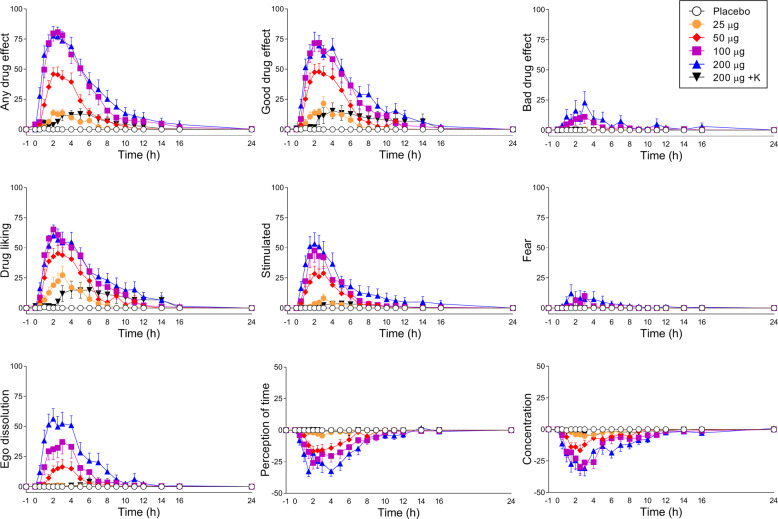
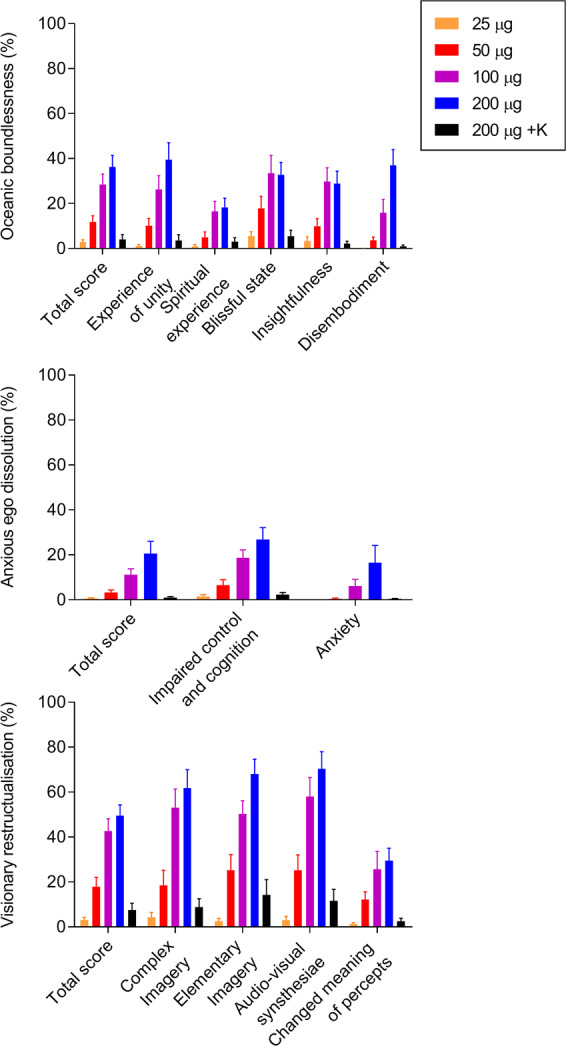
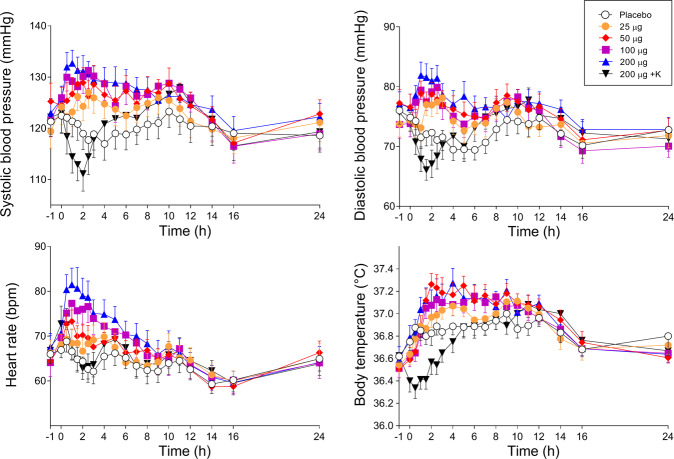
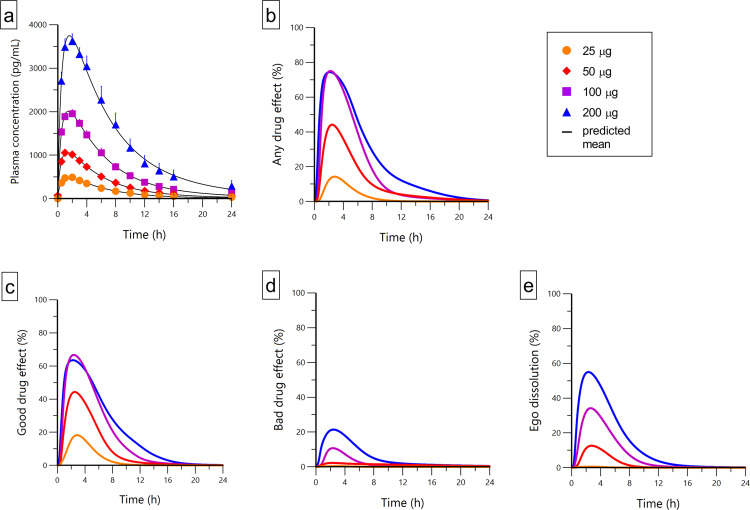
Growing interest has been seen in using lysergic acid diethylamide (LSD) in psychiatric research and therapy. However, no modern studies have evaluated subjective and autonomic effects of different and pharmaceutically well-defined doses of LSD. We used a double-blind, randomized, placebo-controlled, crossover design in 16 healthy subjects (eight women, eight men) who underwent six 25 h sessions and received placebo, LSD (25, 50, 100, and 200 µg), and 200 µg LSD 1 h after administration of the serotonin 5-hydroxytryptamine-2A (5-HT 2A ) receptor antagonist ketanserin (40 mg). Test days were separated by at least 10 days. Outcome measures included self-rating scales that evaluated subjective effects, autonomic effects, adverse effects, plasma brain-derived neurotrophic factor levels, and pharmacokinetics up to 24 h. The pharmacokinetic-subjective response relationship was evaluated. LSD showed dose-proportional pharmacokinetics and first-order elimination and dose-dependently induced subjective responses starting at the 25 µg dose. A ceiling effect was observed for good drug effects at 100 µg. The 200 µg dose of LSD induced greater ego dissolution than the 100 µg dose and induced significant anxiety. The average duration of subjective effects increased from 6.7 to 11 h with increasing doses of 25–200 µg. LSD moderately increased blood pressure and heart rate. Ketanserin effectively prevented the response to 200 µg LSD. The LSD dose–response curve showed a ceiling effect for subjective good effects, and ego dissolution and anxiety increased further at a dose above 100 µg. These results may assist with dose finding for future LSD research. The full psychedelic effects of LSD are primarily mediated by serotonin 5-HT 2A receptor activation.
Overview
The claims and statistics of this paper haven’t been checked yet.
Free: it reads the open-access text and checks the first 5 claims that cite a source we can check. Create a free account to check every claim.
Integrity signals
Registry
Cites
Statistics
Figures
Verification
Claims the paper makes
The claims and statistics of this paper haven’t been checked yet.
Free: it reads the open-access text and checks the first 5 claims that cite a source we can check. Create a free account to check every claim.
Claims other papers make about this one
Each is checked against this paper’s own text: does it say what the citing paper says it does?
The source backs part of the claim, not all of it — or backs it for a different population, condition or comparison.
In the citing paper
“In a cross-over study in healthy participants (n = 18) that were treated with single doses of LSD (25, 50, 100, and 200 μg) over six sessions, with 10 days in-between administrations, findings showed that blood plasma BDNF levels were dose-dependently elevated compared with placebo (49).”
From Psychedelics and Neuroplasticity: A Systematic Review Unraveling the Biological Underpinnings of Psychedelics. (2021) · cites this paper as [49]
Experimental — accuracy not yet measuredThe source backs part of the claim, not all of it — or backs it for a different population, condition or comparison.
In the citing paper
“The subjective response was partially prevented by administering a 5-HT2A/C receptor antagonist (ketanserin) 1 h before LSD treatment, as demonstrated by a “25 μg-dose response” after administration of 200 μg of LSD plus ketanserin (49).”
From Psychedelics and Neuroplasticity: A Systematic Review Unraveling the Biological Underpinnings of Psychedelics. (2021) · cites this paper as [49]
Experimental — accuracy not yet measuredThe source backs part of the claim, not all of it — or backs it for a different population, condition or comparison.
In the citing paper
“Six hours after administering 200 μg, participants reported ego dissolution and anxiety, in parallel with increased plasma BDNF (49).”
From Psychedelics and Neuroplasticity: A Systematic Review Unraveling the Biological Underpinnings of Psychedelics. (2021) · cites this paper as [49]
Experimental — accuracy not yet measuredThe cited source says what the claim attributes to it.
In the citing paper
“Evidence from four randomized, placebo-controlled studies investigating the acute and subacute, but not long-term effects, of a single dose of psychedelics on a molecular level show that a single treatment with ayahuasca or LSD can, but does not always, increase circulating BDNF in healthy volunteers and TRD patients (47–50) (Table 2).”
From Psychedelics and Neuroplasticity: A Systematic Review Unraveling the Biological Underpinnings of Psychedelics. (2021) · cites this paper as [49]
The cited source says what the claim attributes to it.
In the citing paper
“Similarly, findings from clinical studies showed that blood BDNF levels were directly elevated in healthy participants that were treated with a single dose of LSD.”
From Psychedelics and Neuroplasticity: A Systematic Review Unraveling the Biological Underpinnings of Psychedelics. (2021) · cites this paper as [49]
Self-check
Percentages, sums and reported differences re-computed from the paper’s own numbers.
The self-check needs the paper’s full text.
Citations
Cites
Griffiths, R. R., Johnson, M. W., Carducci, M. A., Umbricht, A., Richards, W. A., Richards, B. D., Cosimano, M. P., & Klinedinst, M. A. (2016) · Journal of Psychopharmacology · doi:10.1177/0269881116675513 · Cited by 2,201
Ross, S., Bossis, A., Guss, J., Agin-Liebes, G., Malone, T., Cohen, B., Mennenga, S. E., Belser, A., Kalliontzi, K., Babb, J., et al. (2016) · Journal of Psychopharmacology · doi:10.1177/0269881116675512 · Cited by 1,698
Griffiths, R. R., Richards, W. A., McCann, U., & Jesse, R. (2006) · Psychopharmacology · doi:10.1007/s00213-006-0457-5 · Cited by 1,684
Psychedelics promote structural and functional neural plasticity
Ly, C., Greb, A. C., Cameron, L. P., Wong, J. M., Barragan, E. V., Wilson, P. C., Burbach, K. F., Soltanzadeh Zarandi, S., Sood, A., Paddy, M. R., et al. (2018) · Cell Reports · doi:10.1016/j.celrep.2018.05.022 · Cited by 1,207
Roseman, L., Nutt, D. J., & Carhart-Harris, R. L. (2018) · Frontiers in Pharmacology · doi:10.3389/fphar.2017.00974 · Cited by 808
Gasser, P., Holstein, D., Michel, Y., Doblin, R., Yazar-Klosinski, B., Passie, T., & Brenneisen, R. (2014) · Journal of Nervous & Mental Disease · doi:10.1097/nmd.0000000000000113 · Cited by 750
The Therapeutic Potential of Psychedelic Drugs: Past, Present, and Future
Carhart-Harris, R. L., & Goodwin, G. M. (2017) · Neuropsychopharmacology · doi:10.1038/npp.2017.84 · Cited by 706
Psychometric evaluation of the altered states of consciousness rating scale (OAV)
Studerus, E., Gamma, A., & Vollenweider, F. X. (2010) · PLoS ONE · doi:10.1371/journal.pone.0012412 · Cited by 683
Validation of the revised Mystical Experience Questionnaire in experimental sessions with psilocybin
Barrett, F. S., Johnson, M. W., & Griffiths, R. R. (2015) · Journal of Psychopharmacology · doi:10.1177/0269881115609019 · Cited by 637
The Standardized Psychometric Assessment of Altered States of Consciousness (ASCs) in Humans
Dittrich, A. (1998) · Pharmacopsychiatry · doi:10.1055/s-2007-979351 · Cited by 577
Research works printed but not linked: 1
- Passie T The science of microdosing psychedelics 2019 London Psychedelic Press
Cited by
Items 201–257 of 257
Husain, M. I., Umer, M., & Mulsant, B. H. (2022) · Expert Opinion on Drug Safety · doi:10.1080/14740338.2022.2063274 · Cited by 2
“guish psychedelics [2] while pre-medicating with a 5HT2A antagonist, such as ketanserin, prevents them [3,4].”
BackgroundVogt, S. B., & Liechti, M. E. (2025) · International review of neurobiology · doi:10.1016/bs.irn.2025.02.003 · Cited by 2
Self-citationVilliger, D. (2025) · Kennedy Institute of Ethics journal · doi:10.1353/ken.2025.a978176 · Cited by 3
Luoma, J. B., LeJeune, J. T., Pilecki, B. C., Yi, K., & Lear, M. K. (2026) · Neuroethics · doi:10.1007/s12152-026-09631-x · Cited by 1
Koning, E., Gamberg, S., & Keshen, A. R. (2026) · Behavioral Sciences · doi:10.3390/bs16030376 · Cited by 1
Stocker, K., Hartmann, M., Barrett, F. S., Richards, W., Sepeda, N. D., Straumann, I., Klaiber, A., Vogt, S. B., Erne, L., Ley, L., et al. (2026) · Religion Brain & Behavior · doi:10.1080/2153599x.2026.2635353 · Cited by 2
Self-citationNonclinical Characterization of ACP-204, a Novel Selective 5-HT2A Receptor Inverse Agonist
Burstein, E. S., Olsson, R., Sköld, N., Jansen, K. E., Azar, M. R., Sandiego, C., Ridler, K., Rabiner, E. A., Rhodes, G., Dey, P. M., et al. (2026) · Journal of Pharmacology and Experimental Therapeutics · doi:10.1016/j.jpet.2026.104932 · Cited by 1
Blocking 5-HT2B receptors abolishes psilocybin’s efficacy in the rat forced swim test
Seillier, L., Seillier, A., Zvolska, M. A., & Šlamberová, R. (2026) · Journal of Psychopharmacology · doi:10.1177/02698811261458349 · Cited by 1
Postránecká, Z., Lucký, M., Mravčík, V., & Páleníček, T. (2026) · Journal of Psychedelic Studies · doi:10.1556/2054.2026.00514 · Cited by 1
Cellular mechanisms of serotonergic psychedelics - apical hypercontextualisation
Kaup, K., Jiménez, J. H., & Aru, J. (2026) · Neuroscience & Biobehavioral Reviews · doi:10.1016/j.neubiorev.2026.106876 · Cited by 3
Ring-closing metathesis in the synthesis of fused indole structures
Boghlemeshi, F. K., Hosseini, M., Bagheri, M., & Gholamzadeh, P. (2022) · Advances in heterocyclic chemistry · doi:10.1016/bs.aihch.2022.10.003 · Cited by 2
Lysergic acid diethylamide: In search of the wonder drug
Avram, M., Müller, F., & Borgwardt, S. (2023) · Oxford University Press eBooks · doi:10.1093/med/9780192863607.003.0005 · Cited by 1
Self-citationLet’s Take a Trip into Mental Health
Castello, A. (2022) · Berkeley Scientific Journal · doi:10.5070/bs326157110
Caldararo, N. (2022) · Springer eBooks · doi:10.1007/978-3-031-13745-7_2
Reissmann, S., Hartmann, M., Kist, A., Liechti, M. E., & Stocker, K. (2023) · Frontiers in Psychiatry · doi:10.3389/fpsyt.2023.1197697 · Cited by 4
Self-citationPeled-Avron, L., Hamilton, H., Kalafateli, A. L., Woolley, J., & Aday, J. (2024) · Frontiers research topics · doi:10.3389/978-2-8325-5054-0
Ketamine and Psilocybin Differentially Impact Sensory Learning During the Mismatch NegativityPreprint
Allohverdi, S. G., Soltanzadeh, M., Schmidt, A., Charlton, C. E., Hauke, D. J., Karvelis, P., Vollenweider, F. X., & Diaconescu, A. O. (2024) · bioRxiv (Cold Spring Harbor Laboratory) · doi:10.21203/rs.3.rs-4492873/v1 · Cited by 1
Anaesthetic implications of psilocybin and lysergic acid diethylamide: what is old is now new
Dave, M., Shore, R., Cupido, T., Haley, C., & Clinkard, D. (2025) · European Journal of Anaesthesiology · doi:10.1097/eja.0000000000002138 · Cited by 1
eLife Assessment: Psilocin fosters neuroplasticity in iPSC-derived human cortical neurons
Soiza‐Reilly, M. (2025) · eLife · doi:10.7554/elife.104006.1.sa3
Religion and the Brain - on Consciousness and AttentionPreprint
Bronkhorst, J. (2025) · Preprints.org · doi:10.20944/preprints202504.2087.v1
Li, D., & Yang, J. B. (2025) · Aesthetic Plastic Surgery · doi:10.1007/s00266-025-04948-z
“Patients with different underlying health conditions (e.g., blood pressure and coagulation) may respond differently to tranexamic acid [3].”
Gunten, M. V., Russell, T., Stirland, I., Parks, S., Jenkins, T. G., & Edwards, J. G. (2025) · bioRxiv (Cold Spring Harbor Laboratory) · doi:10.1101/2025.06.12.658958 · Cited by 1
Managing ‘bad trips’: Nursing considerations and safety of psychedelic ‘trip killers’
Costa, M. L., & Wheeler, M. (2025) · Nursing · doi:10.1097/nsg.0000000000000208
Psilocibina e LSD no tratamento do transtorno depressivo maior
Assunção, L. F. D. A., do Nascimento, A. L. T., de Azevedo, A. F., de Goes, M. B. M., Bezerra, K. S. R., Rocha, L. G. D. D. S., Dantas, A. M. P. D. A., & Soares, A. L. F. D. H. (2025) · RAMB Revista da Associação Médica Brasileira Junior Doctors · doi:10.5327/2965-0682-20256108
Psychedelics‐Inspired Drug Discovery
Gibbs, A., & Khan, T. A. (2025) · Wiley eBooks · doi:10.1002/9783527844678.ch3
Murphy, R. J., Wardlaw, M., Smith, T., Noorani, T. N., Evans, W., Reynolds, L., Menkes, D. B., Sumner, R. L., & Muthukumaraswamy, S. D. (2025) · Journal of Humanistic Psychology · doi:10.1177/00221678251382624
Roseby, W., & Moar, C. O. (2025) · Psychoactives · doi:10.3390/psychoactives4040041
“The acute experiential changes induced by psychedelics are rich, varied, and dependent on the drug, dose, and the context in which they are taken [46].”
Hepburn, H., Ellenbroek, B. A., & Youn, J. (2025) · Psychedelics · doi:10.1016/j.psyche.2025.100005
The Potential Therapeutic Effects of MEAI in the Treatment of Alcohol Use Disorder
Ekhlasi, M., Frytz, A., & Nia, A. B. (2025) · Current Addiction Reports · doi:10.1007/s40429-025-00700-4
“Pharmacokinetic studies indicate that in a dose range of 85–200 µg, maximal plasma concentrations ranged from 1.3 ng/mL to 4.3 ng/mL (Cmax) after 1.4–2.5 h (Tmax), with a mean elimination half-life of 2.5–4.1 h [76, 103, 105, 107].”
InfluentialCheng, M., Brakha, T. A., Buchard, A., Anastasova, R., Girani, L., Breitenmoser, A., Alaux, S., Mabilais, C., Amberger, C., Seragnoli, F., et al. (2025) · Psychology International · doi:10.3390/psycholint8010001
“These patterns are also supported by prior research showing higher rates of tachycardia with high-dose LSD (e.g., 200 µ g) compared to typical psilocybin doses (Holze et al., 2021).”
Changing minds: bioethical dimensions of psychedelic-assisted psychotherapy
Jacobs, E. (2025) · Oxford University Research Archive (ORA) (University of Oxford) · doi:10.5287/ora-qq0qxrok6
Lane, C. P. (2025) · eScholarship@McGill (McGill) · doi:10.82308/37282
Psilosybiinin vaikutus neuroplastisiteettiin
Anttonen, P., & Ylönen, E. (2024) · UTUPub (University of Turku)
Diehl, V. J., Calder, A. E., & Hasler, G. (2025) · Journal of Psychopharmacology · doi:10.1177/02698811251397306 · Cited by 1
“Similar to other psyche-delics, the effectiveness of MDMA-AP likely depends on factors such as the therapeutic setting and the individual’s mindset (Carbonaro et al., 2016; Carhart-Harris et al., 2018; Haijen et al., 2018; Holze et al., 2021).”
Effects of Serotonergic Psychedelics on Synaptic Function and Neuroplasticity
Petrušková, A. (2026) · OPUS FAU (Kooperativer Bibliotheksverbund Berlin-Brandenburg (KOBV), on behalf of the Universitätsbibliothek Erlangen-Nürnberg) · doi:10.25593/open-fau-2619
Wittenkeller, L. M., Gudelsky, G. G., Winhusen, T. M., & Amato, D. (2026) · Research Square · doi:10.21203/rs.3.rs-8544354/v1
Psilocin fosters neuroplasticity in iPSC-derived human cortical neuronsPreprint
Schmidt, M., Hoffrichter, A., Davoudi, M., Horschitz, S., Lau, T., Meinhardt, M. W., Spanagel, R., Ladewig, J., Köhr, G., & Koch, P. J. (2026) · eLife · doi:10.7554/elife.104006.2 · Cited by 1
Psychedelics are associated with changes in spiritual beliefs and orientations in US veteransPreprint
Brown, R. E., Shinozuka, K., Kaloiani, I., Kozyr, L., Orion, D., Faerman, A., & Adamson, M. M. (2026) · Research Square · doi:10.21203/rs.3.rs-8960226/v1
Trip killers: Addressing a critical knowledge gap in psychedelic research
O’Mahony, B. W., Harrington, C., Harkin, A., & Lally, N. (2026) · Journal of Psychopharmacology · doi:10.1177/02698811261431056
“Ketanserin pretreatment has been shown to prevent the acute effects of LSD (Holze et al., 2021; Preller et al., 2017), psilocybin (Carter et al., 2005; Quednow et al., 2012; Vollenweider et al., 1998) and mescaline (Klaiber et al., 2024) and to reverse the response to LSD (Becker et al., 2023).”
eLife Assessment: Psilocin fosters neuroplasticity in iPSC-derived human cortical neurons
Soiza‐Reilly, M. (2026) · eLife · doi:10.7554/elife.104006.3.sa0
Veysi, A., Atanasovski, D., Ardalan, M., Motamed, N., & Eriksson, E. (2026) · Acta Neuropsychiatrica · doi:10.1017/neu.2026.10075
“Also for other psychedelics, such as lysergic acid (LSD), 5-HT2A receptor activation appears to be the primary mechanism of action (Preller et al. , 2017; Holze et al. , 2021).”
Zhang, T., Lin, C., & Wang, X. (2026) · ACS Pharmacology & Translational Science · doi:10.1021/acsptsci.6c00146
Hampsey, E., Martin, K., Kalfas, M., Benson, L. E., Wihlborg, S., Jelen, L. A., Young, A. H., & Rucker, J. (2026) · Journal of Psychopharmacology · doi:10.1177/02698811261453938
“Interindividual variability in LSD exposure may partly reflect pharmacogenetic differences in metabolic capacity, as CYP2D6 poor metaboliser status has been linked to increased exposure and prolonged effects, with dose reductions of approximately 50% proposed (Vizeli et al., 2021).”
Ten practical suggestions for setting up a psychedelic study
Caulfield, A., Butler, M., & Mehta, M. A. (2026) · Journal of Psychopharmacology · doi:10.1177/02698811261458350
“When administered orally, the subjective effects of LSD last up to 14 hours, which presents additional logistical challenges for day-case studies (Holze et al., 2021).”
Calder, A. E., Diehl, V. J., Lietz, M. P., Yousefi, P., Friedli, N., Coviello, F., Rouaud, A., Beichmann, K., Eckert, A., & Hasler, G. (2026) · Neuropsychopharmacology · doi:10.1038/s41386-026-02454-7
Self-citationLos, A. P. M., Szkodziński, K., Jakubczyk, I., Maternia, J., Majowicz-Czaszyńska, K. B., Pempuś, W., Król, N., Tomaszek, B., Blok, A., Wiater, D., et al. (2026) · International Journal of Innovative Technologies in Social Science · doi:10.31435/ijitss.2(50).2026.5755
Rubenstein, E. P. (2026) · International Journal For Multidisciplinary Research · doi:10.36948/ijfmr.2026.v08i04.84804
“…and dose-response studies describe effects lasting many hours; mescaline controlled data show dose-dependent subjective duration from 6.4 to 14 hours; and inhaled 5-MeO-DMT is described as beginning within seconds and lasting up to about 20 minutes in reviewed human studies [5,12,14,15,16].”
InfluentialJaeckel, L., Logvinski, D., Kanana, M., Müller, F., Rohner, N., Becker, A. M., Liechti, M. E., & Sterzer, P. (2026) · Neuroscience of Consciousness · doi:10.1093/nc/niag050
“Instead, the task was administered during the plateau phase, where subjective drug effects remain relatively stable while plasma LSD levels have declined to ∼ 60%–80% of the peak ( Family et al. 2020, Holze et al. 2021a, 2021b).”
InfluentialSelf-citationXiao, W. (2025) · Brock University Digital Repository (Brock University)
Psilocybin-induced changes in electroencephalography link acute and long-term effects
Nikolič, M., Froese, T., Mediano, P. A. M., Koudelka, V., Horáček, J., Tylš, F., & Páleníček, T. (2026) · Journal of Psychopharmacology · doi:10.1177/02698811261473445
Effets, motifs, impacts et contexte de l’usage non-médical de substances psychédéliques
Leclerc, C.-A. (2025) · Le dépôt institutionnel (Université du Québec à Trois-Rivières)
Cubała, W. J. (2026) · Expert Review of Neurotherapeutics · doi:10.1080/14737175.2026.2744754
Exploring motivations, experiences, & consequences of psychedelic use in Aotearoa New Zealand
Mills, E. (2024) · Otago University Research Archive (University of Otago)
Chiorean, A., Kim, H. K., Lustig, A., & Husain, M. I. (2026) · Journal of Psychopharmacology · doi:10.1177/02698811261488460
Miranda-Azpiazu, P., Díez-Alarcia, R., Arrate, I. M., García‐Bea, A., Maldonado, R. J., Morentín, B., González‐Maeso, J., & Meana, J. J. (2026) · Neurochemistry International · doi:10.1016/j.neuint.2026.106285
Metadata
- Authors
- Holze, F., Vizeli, P., Ley, L., Müller, F., Dolder, P., Stocker, M., Duthaler, U., Varghese, N., Eckert, A., Borgwardt, S., & Liechti, M. E.
- Affiliations
- University of Basel (CH)
- Corresponding author
- Liechti, Matthias E.
- ORCID
- Venue
- Neuropsychopharmacology
- Published
- 2020-10-15
- Volume
- 46
- Issue
- 3
- Pages
- 537-544
- ISSN
- 0893-133X (ISSN-L)
- 1740-634X
- PMC
- PMC8027607
- OpenAlex
- W3093375227
- Semantic Scholar
- 1522c76068d8aa0f10282789654a2c39b93aa2ee
- Cited by
- 245
- References
- 42
- Citations by year
- 2026: 27 · 2025: 57 · 2024: 44 · 2023: 34 · 2022: 49 · 2021: 32 · 2020: 2
- FWCI
- 11.64
- Type
- journal article
- Language
- en
- Open access
- hybrid
- doi.org
- Licence
- cc-by
- creativecommons.org/licenses/by/4.0 (tdm)
- creativecommons.org/licenses/by/4.0 (vor)
- Locations
- Neuropsychopharmacology (publishedVersion, cc-by)
- PubMed Central (publishedVersion, cc-by)
- PubMed (publishedVersion)
- Funders
- Schweizerischer Nationalfonds zur Förderung der Wissenschaftlichen Forschung (32003B_185111)
- Topics
- Social Sciences › Psychology › Clinical Psychology › Psychedelics and Drug Studies
- Life Sciences › Neuroscience › Cellular and Molecular Neuroscience › Neurotransmitter Receptor Influence on Behavior
- Life Sciences › Pharmacology, Toxicology and Pharmaceutics › Pharmacology › Alkaloids: synthesis and pharmacology
- Keywords
- lysergic acid diethylamide, LSD, dose-response relationship, 5-HT2A receptor, ketanserin, ego dissolution, anxiety, subjective effects, autonomic effects, blood pressure, heart rate, brain-derived neurotrophic factor, pharmacokinetics, ceiling effect, psychedelic effects, dose-finding
- MeSH terms
- Double-Blind Method, Female, Hallucinogens, Humans, Ketanserin, Lysergic Acid Diethylamide, Male, Healthy Volunteers
About these checks
Registry, retraction, Cites and statistics results are computed, not judged, with one exception: a printed reference that no index lists is read once by a model before it counts as a citation error. Claims are extracted by a model and kept only when their quote appears verbatim in the text; each cited source is then checked, with a model’s help, for whether it says what the claim relies on. Those verdicts can be wrong — read the claim’s quote and the cited source before relying on one.
Statistics and arithmetic are recomputed, not judged.
Confidence bands are shown only for fields calibrated on our annotated test set. None is calibrated yet, so no band is shown.
What counts as a claim ›How we measure confidence ›How we check this ›
Are you an author, or do you see a problem with this page? Request a review
Data sources
Bibliographic data: Semantic Scholar, OpenAlex, Crossref.
Contains information from the Semantic Scholar Academic Graph Datasets, made available under the ODC Attribution License (ODC-BY 1.0).
Semantic Scholar’s data is described in: Kinney, R., et al. (2023). The Semantic Scholar Open Data Platform. arXiv:2301.10140.
